Loading summary
Transcript98 lines
- [00:01]
Zibby Owens
Hi, this is Zibby Owens, and you're listening to Totally Booked with Zibby, formerly Moms don't have Time to Read Books. In my daily show, I interview today's latest best selling, buzziest or underrated authors and story creators whose work I think is worth your time. As a bookstore owner, publisher, author, and obviously podcaster, I get a comprehensive look at everything that's coming out and spend my time curating the best books so you don't have to stay in the know, get insider insights and connect with guests like I do every single day. For more information, go to zibbymedia.com and follow me on Instagram ibeowens.
- [00:45]
Fiona Davis
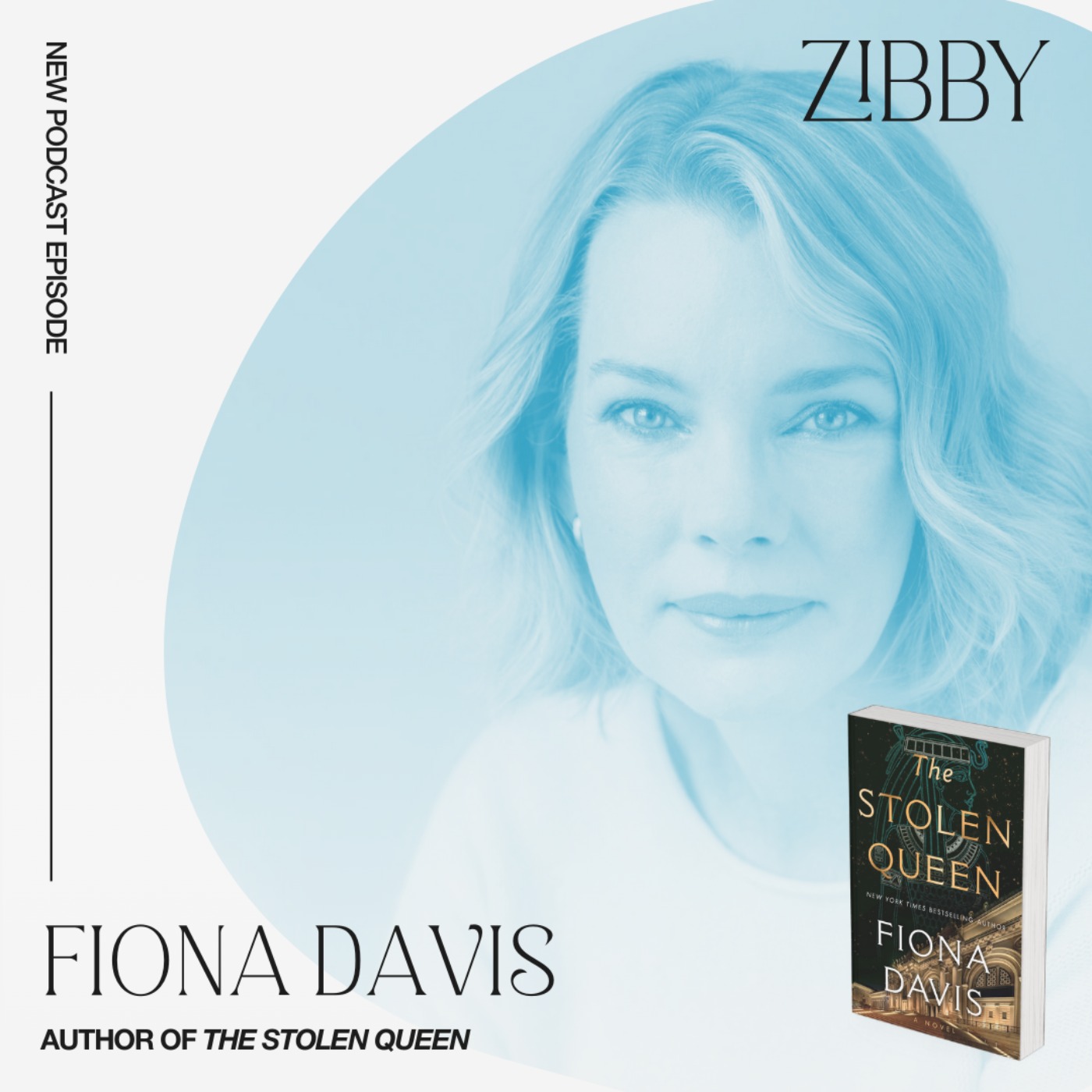
Fiona Davis is the author of the Stolen Queen.
- [00:48]
Zibby Owens
She is also the New York Times.
- [00:50]
Fiona Davis
Bestselling author of several novels, including the.
- [00:53]
Zibby Owens
Spectacular the Magnolia palace and the Lions of Fifth Avenue, which was a Good Morning America book club. She is a graduate of the Columbia Journalism School and is based in New York City.
- [01:03]
Fiona Davis
Welcome, Fiona. Thank you for coming back on my show for, like, the millionth time because you just keep writing books so quickly.
- [01:10]
Thank you for helping us, you know, keep getting the word out about them. I truly appreciate that.
- [01:15]
Of course, of course. I mean, all these New York City landmarks, how could I not? I mean, we've gone from the Chelsea Hotel to the New York Public Library. I mean, we're all over the place. And now here we are at the Met. So, yeah, I might as well just take caps everywhere. You write books and, you know, do a Fiona Davis in New York Day. Actually. Have you done that? Have you done something like that?
- [01:34]
There is a book club in Boston that comes down every year. They come in a bus. There's like 45 of them. They're from South Boston, so they show up. They've been, you know, drinking the whole way. And we do tours. We. We. We go all the different places that were mentioned in whatever book it was that year. They've come every year. It's so much fun.
- [01:51]
That's really cool. Really creative. Okay, well, this year you're taking us into the Met and going back a couple decades. I mean, maybe more than just a couple.
- [02:02]
I know. It feels like a couple to me.
- [02:04]
Right. I mean, what is 1978 is when it starts, Right?
- [02:07]
Exactly.
- [02:08]
I'm like, well, I was alive. This isn't historical fiction. So there you go. Okay, Annie and Charlotte, take us away. Go. Where did this come from? Tell us the whole story.
- [02:16]
Sure, sure. So the idea for this book actually came from this article in the New York Times about The met gala in 2018, when Kim Kardashian showed up in this beautiful gold dress. It was all sparkly and fitted. It was beautiful. And she stood next to this sarcophagus that the Met had just acquired the year before for $4 million. And the sarcophagus was covered in gold just as she was. It was this cool photo went viral to the point where the smuggler who had robbed that sarcophagus saw it and mentioned to an undercover informant that he hadn't gotten paid. And then it got to the Manhattan DA's office, and they investigated, and it turns out the export papers had been forged and the Met was forced to return it. And I just thought, what a weird mix of pop culture, ancient art, all embodied in one building. And what a fun thing to try and explore. Although Kim Kardashian does not show up in the book.
- [03:06]
Did you send her the book?
- [03:07]
No, not yet. That's a good idea. I hadn't thought of that.
- [03:11]
She could have blurbed it. I mean, come on. Well, that's great. So when you started the deep dive into the Met, like, where did you start? Who did you call first? How do you go about that?
- [03:23]
Yeah, so I reached out to the communications department, and they were lovely, and they gave me a great behind the scenes tour where we went down to the basement where Staff Calf, where everybody eats, and there's these hallways and these signs everywhere that say, yield to art in transit. And so if a painting's being wheeled down the hallway, everybody plasters themselves against the wall because the art comes first. It was very cool. And I just interviewed docents and security guards and curators and handlers and technicians and people who'd worked at the Met Gala today and in 1970s. And so it was just this deep dive into what's almost like a little city here within New York City.
- [04:01]
Wow. What did you find behind the scenes, aside from the sign? Like, what did you see? I did a behind the scenes tour of the American Museum of Natural History, and I remember just seeing, like, bones laying about and things that they were literally still, like, taking the dust off and unwrapping from their last dig and all of that. And I was like, this is insane that this is all here in New York. What other gems did you find back there?
- [04:24]
Yeah, so there's all these storage areas, including there's these ancient tunnels from the old aqueduct that used to supply water to New York, and they're still there. The museum was basically built on top of them, and they have so much stuff they have 1.5 million objects in their collection and they only show 6% at any one time. So there's all these art like you say, there's all these artifacts and statues and furniture and clothing all tucked beneath the building. It, it was really incredible. It was, it was very cool. And just to, to learn about the different departments and how it works, if you're a security guard or that there's this job called Lampers and they're the ones who walk around and take the light bulbs and replace them. They just walk around looking for bulbs that are blown out. It's just the coolest little place I little. It's just, it's really an incredible, awe inspiring building. And what I loved in this book is following a couple artifacts that are really in the museum and learning about the stories behind them. Because I think the museum is more than just the objects. It's about the stories and taking you back to the time and the place that those objects were found. And that's what I try to do in the book.
- [05:33]
And tell me about how you developed your characters.
- [05:37]
Yeah, so I knew I wanted to set part of it in the Egyptian art collection. So I came up with Charlotte, who's this very serious, enigmatic associate curator who's been working there for years. She had gone to Egypt in the 30s and we briefly go back there and see what it was like when she was a 19 year old, you know, archeology student. And because of a certain tragedy, she's never gone back to Egypt and she's really devoted herself to the Met and then. And she's very serious, very, you know, she, she runs the show and for strange reasons she has teamed up with Annie, who is this over eager 19 year old assistant to Deanna Vreeland, who was the special consultant to the Met gala back then. And the two of them are very different. They're different in age, they're different in temperament, but they're very unwillingly partnered up in order to track down a stolen artifact that they're both very personally invested in. And so I like to say it's like Thelma and Louise meets Indiana Jones meets the Devil Wears Prada.
- [06:35]
Plus a little of Patrick Bringley's new book. Have you read that?
- [06:38]
Yes.
- [06:39]
Behind the scenes.
- [06:40]
Isn't it great? Yes, yes. He's incredible. And he in fact took me on a tour. We talked about what it was like. He was a security guard and wrote this beautiful memoir, all the Beauty in the World. Yeah, he, he was, he, he was my person. I, I'd reach out to and, you know, if I had a. What. What exact color are the uniforms? Are they navy or black? And he would, you know, be able to tell me exactly. He was great. I relied on him very much.
- [07:02]
Oh, I. I feel like not responsible is too big a word, but I definitely, like, had him on my podcast, thought the book was really great, happy to support, had him here for some event, and then just recently, Barnes and Noble picked it up and I was like, see, look at that.
- [07:18]
It hit the New York Times list.
- [07:20]
I know. So, lady, you know, you know who.
- [07:22]
Emailed you about his book?
- [07:24]
Was it you? Oh, my gosh, Fiona.
- [07:26]
I remember.
- [07:27]
Such a moron. I'm so sorry.
- [07:29]
No, no, no, no, no. It was so long ago. And I remember talking to him and thinking, he has to get out there. Who do I get him to? And I thought Zibby. And so I emailed you and your people picked him right up. And yeah, I think that he's now doing a one man show that might be coming to New York.
- [07:44]
Oh, interesting. Okay, well, my people is basically me, so I. I know. And my producer, Chelsea, who like, uploads all the files and helps keep everything straight. But yeah, but yeah, he has a.
- [07:58]
Fan club in both of us, no question.
- [08:00]
Okay, well, sorry about that. I hate when I do that. And I'm like, hey, no, no, no. I'm like at a party, I'm like, do you two know each other? And they're like, not only are we best friends, but we, like, introduced you. So anyway. But anyway, it happens. That's my memory.
- [08:12]
There's so many people I know. The book club is very small.
- [08:15]
That's true. The book club, the book world is very small. So going into each of these projects, you have your agenda and what you want to get out of it and all of that. With this particular one, was there something unexpected that came your way? Like something you learned or a new way of looking at life or looking at art or looking at history? Or are you now skeptical about every piece of export paper in the world? Or. Tell me about that.
- [08:40]
Yeah, it was interesting talking about this repatriation concept, which I really, you know, I'd heard that there were issues, but I didn't really dig into it until I started writing the book. And that museums all over the world, including the Met, but all the museums have these pieces that might have been taken unfairly from the country of origin. And it's a huge question about what do you do? Should you send them all back and what if they don't have proper storage. What if they don't have a museum for it? What if, you know, to make money, they might sell it to a billionaire who then puts it in his house and researchers and scholars and students can't see it. And so there's all these questions being floated around, and museums are definitely grappling with them. And so that was a thing I wanted to bring up. Not to solve the problem, because that's not possible, but just bring up those questions and have that explored. And then another thing was really exploring mothers and daughters and female friendships. I don't have children, and so I wanted to see if I could pull it off in terms of what some, you know, a mother and what does that mean? And if you're. I don't want to give anything away, but. But, yeah, just to explore that. That sort of relationship as well. And of course, there's deadly curses and hidden secrets and all that good stuff. And it. For me, the fun was going back to Egypt or going to Egypt for the first time, seeing the pyramids, you know, floating down the Nile on a boat for three days and just learning. There's particularly a female pharaoh called Hatshepsut, who my pharaoh in the book named Hathor Kari is inspired by. And it's this woman who walked the Earth and ruled Egypt very successfully and then, for certain reasons, was erased from history and then kind of reviled in the 50s. The Met catalog described her as this vain, unscrupulous woman and a detested stepmother. And then in the end, it was determined that she, you know, was this really important figure and kind of she was restored. And I thought, that's so interesting because so many females, I think, have been lost to history. Either they're. They're historians or archaeologists or pharaohs. And by reclaiming them, we can reexamine what history is all about and where women stand in history.
- [10:51]
Oh, I love that. That's amazing.
- [10:53]
Zibby Owens
Today's episode has been sponsored by Wayfair. I don't know about you, but I am so excited to get rid of all the holiday clutter and make room for spring refresh in my own home and office. I trust Wayfair more than any other brand, and I'm probably their most frequent.
- [11:11]
Fiona Davis
Shopper because I decorated all of zy's.
- [11:14]
Zibby Owens
Bookshop on Wayfair and then all of the Zibby Media offices in New York City on Wayfair, plus my own home. I am obsessed. Wayfair has stuff for everyone and everything. Think carpets, Think comfy poofs for kids. Think couches and tables and office chairs and cute knickknacks and everything you can need to make your space feel refreshed and and cozy and wonderful. Plus, it comes so fast and the prices are amazing. There's something for every style and every home and office, no matter your space or your budget. Wayfair will make it easy to tackle all your New Year's home goals with endless inspiration for every space and budget, whether you need a light refresh or an organization overhaul. So give your home the refresh it needs with wayfair. Head to wayfair.com right now. That's W A Y F A I R.com Wayfair Every style, every Home Today's episode is sponsored by Acorns. Acorns makes it easy to start automatically saving and investing so your money has a chance to grow for you, your kids and your retirement. You don't need to be an expert. Acorns will recommend a diversified portfolio that fits you and your money goals. Acorns lets you invest with the spare money you've got right now. You can start with $5 or even just your spare change so you don't need to feel like financial wellness is impossible. Acorns gives you small, simple steps to get you and your money back on track. And it's the New Year when we all make New Year's resolutions. Last year I made a resolution to go to the gym more often. I tried to say I would go once a week. Basically, I think I've gone to the gym like three times in the whole last year. But I am not giving up on my resolutions. And saving money and making smart financial decisions is a resolution that Acorns makes.
- [13:17]
Fiona Davis
It really easy to keep.
- [13:19]
Zibby Owens
By the way, I invested with Acorns in 2023 and in my portfolio I am up 20.24%, which is really awesome. So you should do it too.
- [13:30]
Fiona Davis
It's amazing.
- [13:31]
Zibby Owens
Head to acorns.com books or download the Acorns app to start saving and investing for your future today. Paid client endorsement compensation provides incentive to positively promote Acorns Tier 1 compensation, provided investing involves risk. Acorn Advisors LLC and SEC registered investment advisor. View important disclosures@acorns.com books so how many.
- [13:55]
Fiona Davis
Times did you go to the Met in the writing of this book?
- [13:58]
Many.
- [13:58]
It was 125.
- [14:01]
That's a good question, you know, because I did tours with Patrick as a security guard, tours with the communications head, tours with Dr. Carlene Darnell, who's a Egyptologist. And so I'd go back and get a different perspective from each expert I was talking to and then go back to check. Okay, the broad color. Where is it exactly? What does it look like? That's an important piece in the book. There's a piece fragment of a queen's face that's this beautiful part of a statue that's also featured in the book. Yeah. So I would have to go back to just say, okay, how do I describe this exactly? And to be able to do that, because it's right across the park, it was great.
- [14:38]
Do you ever think to yourself, I wish I had just made this place up and then I wouldn't have to keep going back?
- [14:45]
I think as a former journalist, I need the history and I need the facts, and I need that as a scaffolding that then I can layer this fictional story and artifact and heist over and then explain very clearly in the author's note what's real and what's. What's made up.
- [15:02]
Yeah.
- [15:02]
Because I know readers love to know that and go down those same rabbit holes that I did. But, yeah, you know, I am in awe of authors like you who can sit down and just make something up out of thin air. I, you know, I need that research. That's. That's my crutch. I love doing it, but I. That's the way I have to write. I don't think I could do what you do.
- [15:20]
I mean, I only did it once.
- [15:24]
It's hard.
- [15:25]
It's hard.
- [15:26]
Zibby Owens
I know it's hard.
- [15:28]
Fiona Davis
Plus, I was, you know, I'm writing in, like, contemporary life. It's not so different. All I really basically made up was like, a house, and I basically just came up with my dream kitchen. So there you go.
- [15:40]
So I like that.
- [15:41]
Not as much.
- [15:43]
Yes.
- [15:43]
Not as much historical stuff needed. Okay, so where are some other places we can expect to see some books from you about?
- [15:52]
Yeah. So the next one is I'm working on now, and it's set at this little known museum that no one has heard of. It's here in Manhattan. It's the oldest house in Manhattan. It's called the Morris Jumel Mansion. It's up on 160th Street. It's this huge mansion with, you know, white pillars in the middle of this beautiful garden. And no one has heard of it. George Washington headquartered there. During the Revolutionary War, the woman who lived there was born to the daughter of a prostitute and became the richest woman in New York through her real estate acumen. And she ended up marrying Aaron Burr as her second Husband. Oh, and Lin Manuel Miranda wrote part of Hamilton in Burr's bedroom to try and channel him. And so there's just all this fun stuff to play with. And so that's still in the early stages, but it's fun to work on. And then at the same time, when you're writing a book, there's this lag between publishing and turning it in. And so revisiting the Stolen Queen is like. It's like seeing old friends again, you know, being able to talk about it and being asked questions about it. It's like, oh, yeah, Annie and Charlotte, I just. You know, they were so much fun to write and to team up, and their lives really took off on their own in the way that characters do. And so it's nice to revisit them now.
- [17:06]
I was interviewing somebody a couple of days ago, and I was like, tell me a little bit about when the father gets sick. And she goes back like, what were you trying to illustrate there? And she was like, I don't remember. She's like, I wrote this a couple of years ago. I worked on it for seven years. I don't even know. And I was like, okay, well, here's what I took out of it.
- [17:27]
Oh, no. I have to say, I've been at author talks, and people have asked about characters in other books, and it takes me a moment of sheer panic as I'm like, wait, who's Steve? Like, what? Because the books, you know, this was so long ago at this point. I think I'm on number eight. This is number eight. And. And so, yeah, and there's usually two plot lines in every book. And so that's 14, 16. I don't do math. That's 16 stories.
- [17:53]
What do you do with all the notes that you must take? Is it on your computer, or do you have, like, a file cabinet behind you just, like, overstuffed with all these different papers?
- [18:02]
I love writing on a notebook. Like, it has to be a legal pad, a yellow legal pad and a pencil. And that's where I start the first notes. As I'm reading books and, you know, interviewing people, I'll interview them on my. I'll type on the computer, but I'll just write down notes, like an idea for a character or something, a date. That's important. And that legal pad is the most crucial thing. If I lost it, I'd be in big trouble because that's got really, the genesis of the plot. And, you know, the early days of, you know, when you're first writing a book, it's like going to be the most perfect book because you haven't had to make any choices in your head. It's like, oh, it's going to be amazing. And then start making choices. And so that notepad really reflects all those choices as you narrow it down and you think, okay, here's the characters, here's what they want, here's their strengths, what are their weaknesses, and let's let them go at it.
- [18:51]
So do you have all of them saved?
- [18:53]
Yeah, yeah, they're just all in a bookcase, like, you know, underneath a bookcase, stored up. I don't know why. I mean.
- [19:04]
No, no, it's great. I always wonder, like, I'm. I'm not particularly organized with my papers. Like, everything is shoved in places. Like I'm organized with my emails, but not my actual mail. Like, well, look at this filing system here in the Internet world. So I always wonder about how people store all their. All their back content because you never know, you might need some gems from there again.
- [19:27]
Yeah, and it's funny, with each book though, that back content gets smaller and smaller because I do rely on the computer more. I use Scrivener, which is a great program for writing books, especially if there's a lot of research, because you can access it very easily. So most of it is now in Scrivener.
- [19:41]
Amazing. So while you're writing your books, are you able to read? Like, totally. Like, some people don't like to read in their genre and they don't want to jinx themselves. Like, are you like that? And what do you, what, what's your guilty pleasure? Like? What do you do when you're, you know, cheating on the book, so to speak.
- [20:00]
I like that. Yeah. I don't mind reading other books and I often get asked to blurb historical fiction and so that's fun just to see what someone else is playing with. Like, I just did Martha Hall Kelly's book, which is set on in the Vineyard. And so they're very different. You know, they're often different times, different places. So I'm, I'm fine with reading historical fiction. What is my guilty pleasure? Going to the theater? You know, I just love going to New York theater and seeing what's playing. And I like straight dramas and musicals are fine, but I like a really good, well written drama because I can't imagine how you do that, how you just take something and just wr dialogue and create a whole thing from it. You know, as an author, you have. We can describe rooms, we can describe an author, a character's, mood. But in a play, all it is is what they say. And I think that's such an interesting way to approach a story.
- [20:54]
They do have the lighting manager. I mean, he's got to have a big.
- [20:58]
And the set designer.
- [20:59]
And the set designer, you know.
- [21:02]
Right. Exactly.
- [21:03]
What do you do when you get totally stuck and you can't figure out where the next scene should go? Do you get up and walk around? Do you plow through or do you go back to another scene or something else?
- [21:14]
Yeah, No. I find being in motion is key. So if I'm on the subway, I won't read or look at my phone. I'll just sit there. And sometimes the answer comes to me when I'm just, you know, not thinking about it in a way. Or I'll go for a run along the river. That something about water, I think, is really crucial to having ideas flow. And if I'm really stuck, I go to my boyfriend Greg, who's a writer as well, and I say, okay, here's my problem. The plot needs to do this, but right now it's doing this. And usually when we do this back and forth, you know, the other one will say, well, what about this? And it's something you never would have imagined, but it's the simplest way to fix an issue, and that's really helpful. He reads the first draft of everything I do, so I can go back to him and say, wait, how do I do this? And that's a fun thing to have because we each have our offices, but we check in during the day, and it's a great way to solve problems.
- [22:02]
Oh, I love that. That's so nice. Very collaborative. Yes, and a lot. Awesome. Well, do you have any advice for aspiring authors?
- [22:11]
I would say finish the first draft. I think a lot of times we write something and about 75% of the way through, you get stuck. And I think that's true for anything. If you're painting or writing a poem, there's just a point where you're. It's sticky. And for me, that happens every book. So now I realize, oh, right, I'm there where I want to throw it out the window. But if you plow through, then you have something to play with. You have something you can meld, and you can see how it's gone from A to Z and figure out if it works or not. As opposed to kind of being attracted by a shiny new project and going off to that one. I say finish that draft. Even if it goes in a drawer. That's Perfectly fine.
- [22:47]
Excellent. Yes, I have some stocked drawers. And then finally, what are all the plans for the promotion? Where are you going? What does the tour look like? And are you doing anything at the Met?
- [22:58]
Yeah, not at the Met yet, but they've been wonderful. They've been really incredible. And they'll be selling it in the bookstore, which is so cool. But yeah, in January, I'll be doing 11 states in 10 days, which is. I know. And. And then there's a lot going on the. Over the next through. Through March. It's pretty incredible. And. And crazy. And a lot of traveling, which will be great. I'm gearing up for that and trying to figure out how you pack in winter for a book tour like that. And then. And then things calm down a little bit. But, yeah, I'll be all over the place, from Key west to Kansas, New York City, of course. So, yeah, and it's all on my website, on the events page.
- [23:39]
Amazing. Well, congratulations on yet another book and another place that I love to go in New York. So thank you for the Stolen Queen and. Yeah, congratulations.
- [23:50]
Thank you. And thank you for being. We've, you know, from the very beginning, I feel like we kind of grew up together in this.
- [23:55]
I know.
- [23:55]
Thank you for being by my side all this way. I truly appreciate it.
- [23:59]
I'm like, how many books is it now? Oh, my gosh. I feel like there weren't that many when I started interviewing you, like seven years ago or something.
- [24:06]
You know, I don't have kids, and so I have time to kind of, you know, play around with the book if I want. There's no. There's no distractions, which is both good and bad, I think if you kind of monomaical about it, but it's, you know, it gets the job done. If I have a deadline, I can meet it.
- [24:24]
There are plenty of people who don't have kids who have not written a million novels in the last decade. So, you know, feel good about that.
- [24:32]
I will. Thank you.
- [24:34]
All right. Okay. Bye, Fiona. Thank you.
- [24:37]
Bye.
- [24:38]
Zibby Owens
Thank you for listening to Totally booked with Zibby, formerly Moms don't have time to read Books. If you loved the show, tell a friend, leave a review, follow me on Instagram, ibbeowens and spread the word. Thanks so much. Oh, and buy the books.