Loading summary
Transcript102 lines
- [00:00]
Boost Mobile Advertiser
The longer you stay alive, the longer you can enjoy Boost Mobile's unlimited plan with a price that never goes up. So here are some tips. Do not parallel park on a cliff if you want to enjoy an unlimited plan with a price that never goes up. Do not mistake a wasp nest for a pinata if you want to enjoy an unlimited plan with a price that never goes up. Do not microwave a hard boiled egg if you want to enjoy an unlimited plan with the price that never goes up. Stay alive and enjoy Unlimited Wireless for $25 a month forever with Boost Mobile. After 30 gigs, customers may experience lower speeds. Customers will pay $25 a month as long as they remain active on the Boost Mobile unlimited plan.
- [00:30]
Big news. Boost Mobile is now sending experts nationwide to deliver and set up customers new phones at home or work.
- [00:35]
Wait, we're going on tour?
- [00:37]
Not a tour. We're delivering and setting up customers phones so it's easier to upgrade.
- [00:41]
Let's get in the tour bus and hit the road.
- [00:43]
No, not a tour bus. It's a regular car we use to deliver and set up customers phones at home or work.
- [00:47]
Capital One Advertiser
Are you a groupie on this tour?
- [00:49]
Boost Mobile Advertiser
We deliver and set up phones. It's not a tour.
- [00:51]
Oh you're definitely a groupie.
- [00:53]
Introducing store to door switch and get
- [00:55]
a new device with expert setup and
- [00:56]
delivery wherever you're at.
- [00:58]
Delivery available for select devices purchased@boostmobile.com
- [01:03]
Saba Sams
Today's
- [01:03]
Zibby Owens
episode is sponsored by Nutrafol.
- [01:05]
Nutrafol Advertiser
Do you ever worry about your hair?
- [01:07]
Zibby Owens
I was convinced that my hair had gotten a little bit thinner once I reached a certain age, which had me in a complete panic. So I started taking Nutrafol and it helped. Nutrafol is the number one dermatologist recommended hair growth supplement and the number one hair growth supplement brand personally used by dermatologists. Nutrafol offers multiple formulas for men and women tailored to different life stages like postpartum or menopause and lifestyle factors. For all of you who abide by a plant based diet, I do not. Adding Nutrafol to your daily routine is easy. You just order online, no prescription needed. You get automated deliveries and free shipping to keep you on track. Plus, with a Nutrafol subscription you can save 20% and get added perks to support your hair health journey. You just take four supplements a day and you'll be on your way. Let your hair be one less thing to worry about. See visibly thicker, stronger, faster Growing hair in three to six months with Nutrafol and for a limited time, Nutrafol is offering our listeners $10 off your first month subscription and free shipping when you visit nutrafol.com and enter promo code Zibby. That's nutrafol.com sports spelled N U T R A F O L.com, promo code Zibby.
- [02:25]
Nutrafol Advertiser
Go do it.
- [02:27]
Zibby Owens
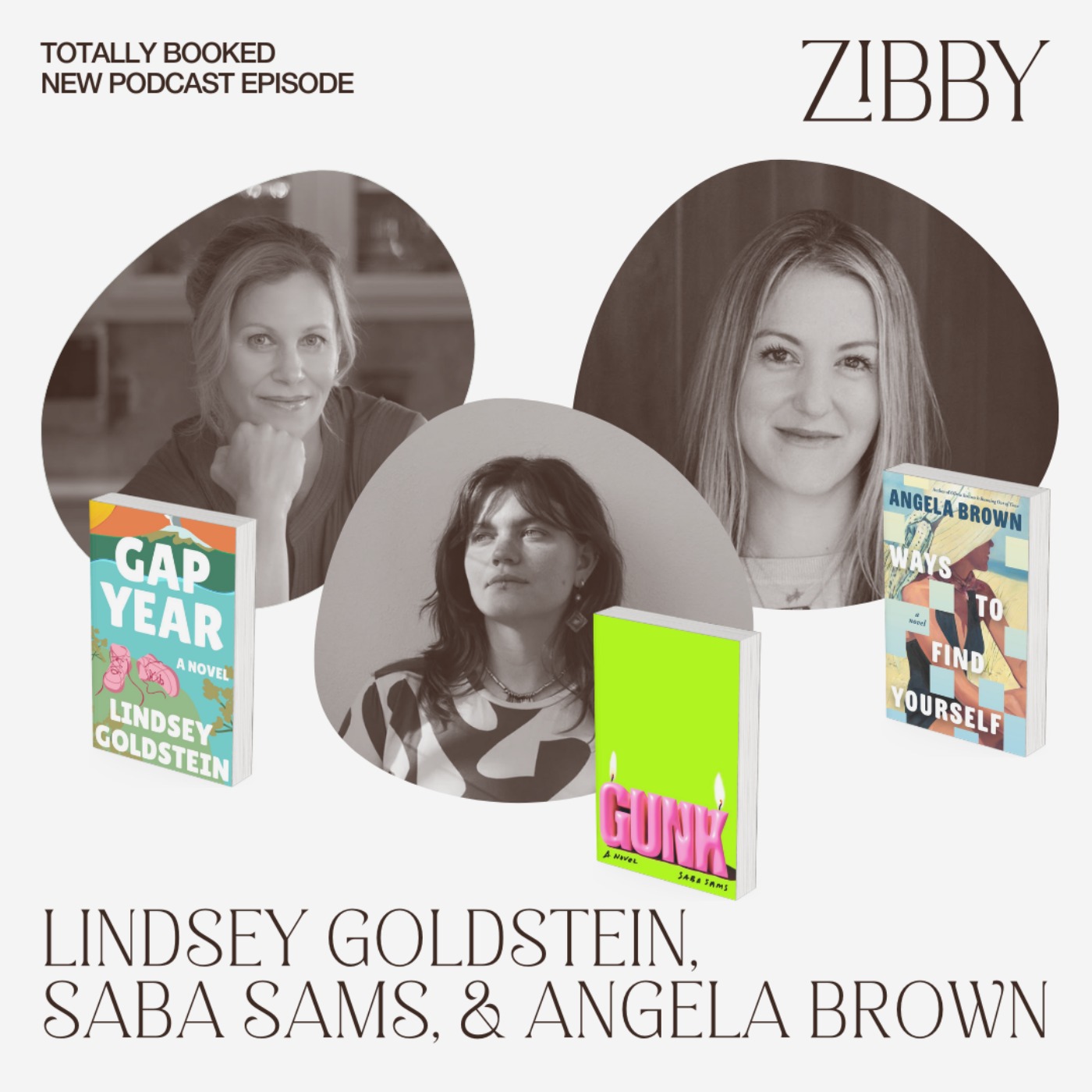
Hi, this is Zibby Owens and you're listening to Totally Booked with Zibby, formerly Moms don't have Time to Read Books in my daily show, I interview today's latest best selling, buzziest or underrated authors and story creators whose work I think is worth your time. As a bookstore owner, publisher, author and obviously podcaster, I get a comprehensive look at everything that's coming out and spend my time curating the best books so you don't have to stay in the know, get insider insights and connect with guests like I do every single day. For more information, go to zibbymedia.com and follow me on Instagram Ibbeowens Today's episode is going to be a little bit different, unique and special. I hope that you all enjoy it too. I know I really enjoyed making it. I happened to interview three novelists on the same day in within a couple hours of each other, and all the books had to do with a different piece of motherhood. And I learned different things from reading the books. I learned different things from talking to the authors. But I thought the most interesting part was just how all those books related to each other, even though they might not have thought they would if the author saw them on the shelves. The first one is Ways to Find Yourself by Angela Brown, and while this book is about a woman who loses her mother and goes back to a town that has a lot of meaning to her and meets different versions of herself at different ages, there is a big infertility plot line in the story that I found very moving and compelling and really was the undercurrent of the whole plot. So I want to start today hearing a little bit from Angela Brown and the infertility piece of the book. Then we're going to move on to Saba Sams, who wrote a book called Gunk, which already came out in the uk. This is about found motherhood, how you don't have to give birth to be a mother. It's about a failed marriage and a nightclub owner and a woman who gets pregnant too young, a woman who can't get pregnant. But a big part of the book in our conversation was about actually giving birth and the moments leading up to that and the delivery and the physicality of it all, which is really interesting. So then I'm gonna weave in Saba Sams discussion that she and I had about the motherhood and the act of giving birth and all of that. And then we're gonna fast forward through motherhood to talk to Lindsey Goldstein, who wrote a book called Gap Year, which is fabulous, and it's her debut novel, and it's about a woman who is just about embarking on the emptiness. So we're fast forwarding through the kids at home years to what happens when they leave. So we have before the kids come and right after they leave, which is a trajectory many of us have been through or will go through or have seen others go through. And this book is about a woman who her husband leaves her. All three books have relationships that end in pretty big ways. And in this one, her husband leaves her in the very beginning. Her daughter goes off to a year in Spain, and she is left to figure out what to do with her life and decides to quit her job and travel and go on the adventure she's always wanted to go on. But while she's doing that, she's still parenting her daughter from afar, of course, but also finding herself again, which is another very common theme in the empty nest part of life. I hate that expression, empty nest, but whatever. So I'm going to weave together these three conversations, which were all so interesting about the different phases of the motherhood experience. And I think that after you listen to snippets from all three, you'll get another glimpse, another take, another three takes on what it means to be a mother. And I hope that that is something that you find interesting and that you can take away some tidbits from to inform your own life and maybe how you interact with your own parents or children today. I hope you like it open to feedback.
- [06:46]
Saba Sams
Always.
- [06:47]
Zibby Owens
Let me know. So we're going to kick things off now with excerpts from my conversation with Angela Brown about ways to find yourself. Welcome, Angela. Thank you for coming back on Totally Booked to talk about Ways to Find Yourself, your most recent novel. Congratulations.
- [07:03]
Angela Brown
Thank you so much for having me. Zibby. I'm so happy to be back here with you.
- [07:07]
Zibby Owens
Oh, it's such a pleasure. And this is such a unique concept for a book and execution as well. And thank you for taking me outside. As we're talking now, there's snow surrounding all of us, and instead we got to go to the seaside and walk on the beach.
- [07:22]
Saba Sams
Thank you for that.
- [07:23]
Zibby Owens
I really love doing that. So thanks.
- [07:26]
Angela Brown
Ready to live inside of the setting of this book again. And be in the sun and the beach and all of those things.
- [07:33]
Zibby Owens
Yes, that would be lovely. Tell listeners about what the book's about.
- [07:39]
Angela Brown
So Ways to Find Yourself is the story of a 30something woman named Grace who we meet at really the worst moment of her life. After years of fertility troubles, her husband has up and left, her writing career is hanging on by a thread, and her mother, who is her only living family member, dies very suddenly one night. So when we meet Grace, she's incredibly lost and, and unsure how to move forward in her life. So when an opportunity presents itself for her to return for one week to the beach cottage that she used to stay at every year of her life with her mother, she takes it, hoping a few days in the salt air might help her find her way again. And when she arrives, what she ends up finding is all over this beach setting from her past are past versions of herself. So, you know, her teenage self and her college age self and all these different versions of her waiting there to kind of help her find her, her way back to herself again.
- [08:38]
Zibby Owens
I love when she's like, wait, am I dehydrated? Like, what is going on with me? What would my therapist think about this? Like, I don't understand,
- [08:47]
Saba Sams
but I love,
- [08:48]
Zibby Owens
I love this concept so much because sometimes it's the places that we go and we're just like, but I'm still walking the same path. Like sometimes I walk on the street here in New York and I'm just like, but this is the same block I walked on when I was like three years old going to preschool. Like, if only I could just go back, meet her or see her on the same sidewalk. So I feel like your book just like lived out that fantasy of mine.
- [09:11]
Angela Brown
I'm so glad to hear that. Yeah, the setting is definitely, I think, what made the book really come to life in so many different ways. It's, you know, inspired by a setting that's very important to me and that has seen a lot of versions of myself over the years too. But I think, I hope when readers read it that they discover or it makes them think about a place in their own lives that, that has seen so many versions of them because I think a lot of us probably have, whether it's a, you know, vacation spa or there's often a place that we return to year after year or and, you know, see ourselves there again. So, yeah, I love this setting very much.
- [09:55]
Zibby Owens
I know that Grace goes through this and at times is creepy when she's, like, when she meets one version of cece. And she's like, could you, like, why are you touching me? What are you doing? Talk to me also about the infertility, fertility struggles in the book, because that is a big through line as well. That's another thing that is not going at all well for her. It has destroyed, essentially, her marriage. And, you know, sometimes the grief of that is too much to bear. And you explore that, like, very delicately. And, you know, I. I won't give anything away. I found the way you chose to end it, like, super interesting. Anyway, just tell me a little bit about that piece of the puzzle.
- [10:40]
Angela Brown
Yeah. So in the story, we learn that Grace, for a number of years, has dealt with fertility troubles, more or less. She. Every test she's had, every time she's been poked and prodded, you know, she keeps learning there's nothing, you know, tangibly wrong, so to speak. It's just she keeps losing the pregnancies, and it just keeps happening. And it does, as you said, it tears her marriage apart. So a lot of this was taken from my own life. I had never before written about fertility hardships on the page, and I'd always wanted to, but I never really had a protagonist that it made sense. Like, it didn't serve the story in any way. And with Grace, I knew from very early on, like, this, this is part of her. Her story for sure. And, yeah, I mean, in my personal life, I have two children now. I have a daughter who will be 10 in two weeks and a three and a half year old. But it took me so many years to arrive at that point in motherhood where, you know, this little door closed in my heart. And I said, yep, family's complete. Like, we're all good here. And like Grace, every time I would have a loss, you know, the doctors were like, there's nothing actually wrong. This is just, you know, it's not the right time. And for a woman going through that, that's about the worst thing you could possibly hear. So I wanted very much to take those feelings that I had experienced and to almost find a purpose later in life for them and put them on the page in the hopes that maybe somebody else reading it will see a little bit of themselves somewhere in there. Because I think for Grace, she is a character who I think had a very clear vision for her life. Like, this is what my life will look like. I will be a mother. I will be married. I will be a writer. And her thoughts about eventually being a mother, I think, are so much a part of her identity. So when it doesn't happen. She loses a lot of herself in that too. So, yeah, it was really interesting to explore on the page, and it was really funny. As we were editing it, there was this one moment in edits where my editor left a note, something like. And it was a very good note. It made perfect sense. Like, you know, do you think we should describe, like, is something wrong that this keeps happening to her? Like, do you think readers will want to know? Like, but medically, like, what was the issue?
- [13:05]
Saba Sams
I was.
- [13:05]
Angela Brown
Like, for some people, it's just nothing, and that's.
- [13:08]
Boost Mobile Advertiser
That's part of it.
- [13:08]
Angela Brown
Like, I'd like very much for that to actually be part of her story. So, yeah, it was. It was surprisingly satisfying for me to put some of those experiences down on the page because I never done it before.
- [13:21]
Saba Sams
So.
- [13:22]
Boost Mobile Advertiser
Yeah.
- [13:23]
Zibby Owens
So if you could. If you could sort of summarize, like, the. What do you want readers to take away from this about motherhood?
- [13:33]
Angela Brown
To me, it's very much a love letter between a mother and a daughter. But for me, it's also a lot about knowing which voices to trust in your life. And for Grace, I think that voice is her mother's. She, again, has a husband who's left and some other characters who come and go and. And, you know, I think that's true to life. You're never really sure which of the voices are the ones that are guiding you the right way. So I hope readers take a lot out of the mother daughter narrative and this idea that even when someone's gone, like, her mother's still very much there and guiding her, and that that's a very important piece to her story.
- [14:14]
Zibby Owens
Okay, now we're gonna move on to Saba Sam's, where she talks about motherhood and the physicality of it and all of that. Your book has gotten so much attention. I loved your whole feature in British Vogue. How do you feel being, like, this new sort of it literary girl?
- [14:33]
Saba Sams
I don't think I feel like that. I think I feel like a. Like a frazzled mom who occasionally gets time to, like, vomit some words into my laptop. And then occasionally you, like, open British Vogue and you're there, and it's just like some kind of matrix or something.
- [14:53]
Zibby Owens
Well, I can relate to all of the duality of being a mom with a career and all of it. And your book was so immersive, and you have such a unique voice, so I'm not surprised you're getting attention. I loved how you wrote gunk in this style, and we had to figure out why the mother had that, why she wasn't really the mother, what was going on, the seedy sort of nightclub scene meets postpartum, meets friendship, meets coming of age. All the things. Maybe you should explain it a little better. Why don't you tell the listeners what it's about?
- [15:35]
Saba Sams
I mean, I will, but I also love that description because it is. It was supposed to be messy. Like, for me, that's what GUNK is. And I too find it really hard to explain because of that. I was trying to like, push back against kind of like every boundary that I understood about like love and motherhood and family and relationships. But basically, as. As I can explain it as best I can, which is that it follows Jules, who is approaching 40 and has been kind of dreaming of motherhood and it hasn't happened for her, and is working in gunk, which is this like grotty student nightclub that her really useless ex husband Leon runs. And she. Well, I say runs. He doesn't run, he owns it. She runs it. And they hire Nim to work the bar, who's this like 19 year old with a shaved head. And there's this kind of electricity between Jules and Nim that they can't really explain. And then Nim falls pregnant and their relationship kind of progresses around the pregnancy. And yeah, it's set in Brighton in
- [16:39]
Zibby Owens
her becoming a mom. What do you want us to take away from that, aside from just the chaos of it all?
- [16:45]
Saba Sams
It's funny when I think about, like the trajectory of the book. Jules was actually, you know, she's. She's the narrator and the protagonist and she came in like last. She was kind of the last character to arrive for me. And really I wrote a birth scene from the perspective of Nim. I just really wanted to write a birth scene that was kind of just intense and visceral and long. I wanted it to take up multiple chapters. I was just like, let's force my readers to witness this birth scene. And there's this kind of scene in the book where Nim's just about to give birth and they get in a taxi and the taxi driver's like, ah, don't get in my car. Like, go away. And like, that was a kind of stand in for the way that we all refuse to witness birth in kind of day to day life. You know, it's like closed away and you don't have to think about it unless you're in the room. And so I kind of wanted to put my reader in the room, basically. Anyway, I tried to write this birth scene, it's impossible. I could not write a birth scene from the perspective of a character giving birth. And I also had this idea of, like, making it kind of radicalizing and, like, you know, you're kind of like you're producing a body from your body, and therefore, you feel so much more, like, interrelated and dependent on the people that you're around. And anyway, I'm trying to make this birthing character draw, like, political conclusions, and it's just falling apart, and there's no narrative. And so I needed a witness in the book. I realized this. I needed Jules. I needed someone who wasn't giving birth, but who was still, like, becoming a mother and somehow on the journey. And that's where she came in. And it was like I had written. You know, I'd written this scene that I knew was part of the book, and I had kind of come up with a plot around this scene, but then all of that had to go away because I had Jules there, and everything had to be from her perspective. And, yeah, I just. I wanted to explore how you could become a mother without giving birth or, you know, without being pregnant.
- [18:50]
Zibby Owens
And do you feel it's important for us to always be remembering sort of the trauma and the. And the details of giving birth? Like, do you feel that we don't talk about it enough?
- [19:06]
Nutrafol Advertiser
Today's episode has been sponsored by Wayfair. Refresh your space and make your home better for you with Wayfair. From furniture and decor to organization solutions and outdoor essentials, Wayfair makes it easy to find exactly what fits your style and needs. I recently upgraded a space space of my own by helping my mother redo her guest room after my kids wanted a little bit of a refresh from sort of a more outdated. Oh, gosh, she's gonna hear this room into something a little more modern. So we went on Wayfair. We got new beds, side tables, carpet, lamps, the whole room, and it looks absolutely amazing. It all arrived within a week. And we are obsessed with any unique style that you have. Wayfair can help you bring your vision to life. It is so easy to use. The search and reviews and filters and visual tools all made it so easy for my mom and me to agree on what we should buy. And it all came so fast and in such great condition, and we are absolutely thrilled. So you will be able to do the same from Wayfair and fit it into your home and lifestyle. Find furniture, decor, and essentials that fit your unique style and budget. Head to Wayfair.com right now to shop all things home. That's W a Y F A I R.com Wayfair Every style, every Home Today's episode has been sponsored by Quince. These days I am all about quality over quantity, especially in my closet. If it's not well made and versatile, I am just not wearing it and not worth it to me. That's why I love Quince. The fabrics feel elevated, the cuts are thoughtful and the pricing actually makes sense. Quince makes high quality wardrobe staples using premium fabrics like 100% European linen, 100% silk and organic cotton poplin. Lightweight cotton cashmere sweater is perfect for the changing seasons and can't miss. Seasonal colors and prints for spring are amazing. They're versatile, well made pieces that make getting dressed simple. Quince clothing is consistently rated 4.5 to 5 stars by thousands of customers. I personally would rank them five stars. That's just me. Real people wearing these pieces every day are actually loving them and they work with safe ethical factories and cut out the middleman. So it's just quality clothing. As I have told you all and post on Instagram, my winter coat is Quince so I think about Quince every single day. It is my go to and has gotten me through the this dreary, terrible winter that we've all had and that I can't wait to be over right now. Go to quince.com zivy for free shipping and 365 day returns. That's a full year to wear it and love it. And you will now available in Canada too. Don't keep settling for clothes that don't last. Go to q-u I n c e.com zibby for free shipping and 365 day returns. Quince.com/zibby
- [22:07]
Capital One Advertiser
with no fees or minimums on checking accounts, it's no wonder the Capital One bank guy is so passionate about banking with Capital One. If he were here, he wouldn't just tell you about no fees or minimums. He'd also talk about how most Capital One cafes are open seven days a week to assist with your banking needs. Yep, even on weekends it's pretty much all he talks about in a good way. What's in your wallet? Terms apply. See capitalone.com bank capital1NA member FDIC.
- [22:41]
Saba Sams
That's an interesting question. I think when I wrote it I was writing it for myself having been pregnant and not having given birth because I hadn't really read a birth scene in fiction and I had looked for one when I was Pregnant and not found anyone, not found anything. That. That really kind of touched me, and that's why I was doing it. I was just trying to, like, put the detail on paper. But I do also feel that we don't talk about it enough and that it should be talked about more. And also that it's not necessarily a subject just for people who are pregnant. You know, Like, I, of course, like, you can go to the antenatal class and you can talk about birth in all its detail and you can see all the gory photos. But I was kind of like, no, I want all the men to read about it, too. And I want men who aren't thinking about being fathers ever to read about it, too. I wanted to, like, just embed it in a book that also wasn't necessarily a book, you know, because it's about this grotty student nightclub. It doesn't. It almost doesn't belong. And I kind of, like. I wanted it to feel that it could take you by surprise and that it was given its own space just to, like, breathe and be there without. You know, it's very different to, like, looking up kind of, which I did a lot when I was pregnant, is like, accounts of birth. You know, like, that's something that's very possible, but to kind of, like, embed it in a novel felt it did feel. It did feel like it hasn't been done enough to me.
- [24:18]
Zibby Owens
So do you have advice for aspiring authors on sort of not giving up or pursuing it or. Why pursue publication versus writing for yourself?
- [24:27]
Saba Sams
I think the. I guess pursuing publication rather than writing for yourself is like. It's a sticky one, isn't it? Because since being published, it's also. Writing is also harder for me. It feels like I've, you know, like,
- [24:45]
Zibby Owens
if it's the other side of the
- [24:46]
Saba Sams
wall, I'm now the other side of the wall. And when I think about writing my first book before I got my book deal and I wasn't thinking about being published at all, there was, like, something so energetic and juicy and secretive about it that was just, like, really special. And I, like, I miss those times a lot sometimes. But then also I get to do this thing that is, like, incredible for me personally. Like, it just feels so good, and I get to do it for my job, and that's, like, obviously the dream. So. Yeah, as much as it's. Sometimes I feel like I've, like, ruined myself by monetizing my hobby, it's also, like, the most magical thing that's ever happened to me.
- [25:27]
Zibby Owens
So well, from someone else who has monetized a hobby of reading, I am with you, and I think it's pretty awesome. And now we're gonna wrap things up with Lindsay Goldstein's gap year, told from the empty nest point of view and how life does not end when you have children. Welcome, Lindsay, thank you so much for coming on Totally Booked to talk about Gap Year, your debut novel.
- [25:50]
Boost Mobile Advertiser
Congrats.
- [25:51]
Zibby Owens
Thank you.
- [25:52]
Boost Mobile Advertiser
I'm excited to be here and excited to talk about it.
- [25:56]
Zibby Owens
I have twin 18 year olds, FYI, in addition to younger kids, so this was particularly relevant for me reading at this time of life and at this exact moment of transition. So I deeply appreciated the sentiments, the texts. Just feeling so pulled, wanting her to go. Anyway, why don't you tell listeners what the book is about?
- [26:18]
Boost Mobile Advertiser
So it's about Jane, who's 46. She has a daughter, Liza, who is going on a gap year of her own to Spain. And her husband, on the way out of the airport, lets her know that he thinks he's fallen in love with another woman. Their marriage has sort of not crumbled, but they've become distant over the years, haven't really connected. So that coupled with her, her boss at her job as a CPA lets her know that he's offering her a promotion that he thinks she'll want. But she realizes she never really liked her job as a cpa, so she decides that she wants to take an adult version of a gap year in Ecuador, someplace she'd always wanted to go when she was in her 20s, never got to life got in the way. And so off she goes to climb this volcano that she feels like is going to help her reinvent herself and figure out who she wants to be in the next chapter of her life.
- [27:15]
Zibby Owens
Amazing. Well, it's such a fun read because not only do we get the domestic stuff at home and navigating when her husband, the demise of their marriage this week and Liza leaving, but then you also take us on this really fun trip. We have to climb up to the top bunk at a hostel and deal with the disgusting bathrooms. And then next thing you know, we're like, you know, passing out on a mountain or whatever. And then we're in the Galapagos. I mean, we're just all over. It's quite a ride. It's really, really fun. And it feels like a very satisfying adventure at the end of it.
- [27:52]
Boost Mobile Advertiser
Thank you. Thank you.
- [27:53]
Zibby Owens
So this notion of the chapter not necessarily ending when your kids go to college, but actually starting like that, that it can be seen as this period of reinvention and sort of a liftoff instead of a. I don't know what the opposite of a liftoff. Sort of like the coming to an end of something, but instead being a beginning.
- [28:13]
Boost Mobile Advertiser
Can you.
- [28:14]
Zibby Owens
Can you speak to that? Because it's so important to keep that in mind.
- [28:17]
Boost Mobile Advertiser
Yes. So I actually did my first signing last night and I saw you went to Pages. I had so much fun. But so this question came up and what I talked about is, you know, I can't speak to being a man, obviously, but as a woman who's a mother and a wife, I feel like a lot of times we kind of forget who we were before all of that happened, before we became mothers, before we became wives. And so now our kids leave and we have to figure out who were we or who do we want to be going forward. So that's what I really wanted to impart in this book is that it's not too late and everyone has, I think, more than two chapters of their lives. You keep reinventing yourself as different. You know, things come up in your life. It doesn't have to be negative, it doesn't have to be positive, but just a different direction and there's always new possibilities. So that was really the main message I wanted to put out, that especially as women, it doesn't come to an end because our kids leave. There's always more. Like I said, there's a hearkening back to who we were. Or you can figure out, hey, I have totally different interests and I want to go in this direction now. So I hope that's what people get out of this.
- [29:36]
Zibby Owens
And I feel like trying to remember who you were before is almost irrelevant because even if you hadn't had kids over an 18 year period, you've basically become somebody else anyway with just life experience and how we all change over time. So we're definitely not going back to who that was. So that's why there has to be some sort of new identity forged.
- [29:56]
Saba Sams
But.
- [29:56]
Zibby Owens
But it doesn't have to. It doesn't have to be a depressing identity, necessarily.
- [30:01]
Boost Mobile Advertiser
No, no. I think that like you said, you have gained all this life experience, but there's always something new on the horizon. I mean, I saw my own mother do it. When. Cause I'm the youngest. When I left home and I saw her struggle for a few months, I was in Ecuador and it was expensive to call, so I only spoke to them maybe once a month. But when I did those first few months, I felt like she was not sure what to do now. And then she really figured it out and went in her own direction and became sort of had a whole new set of interests that she started pursuing. And it was exciting for me to see. So.
- [30:43]
Zibby Owens
Yeah, that's interesting. My mom did that too. At 40, she, like, took up golf and she did all these new things and got remarried. And I think when we have role models like, that makes it feel more attainable. But you're still married to your first husband.
- [30:57]
Boost Mobile Advertiser
I had a starter marriage that was in my. When I was 29, but I am still married to the same person I've been with for 20 years.
- [31:06]
Zibby Owens
You put that in there for Jane and Liza, that we should only talk once a month, but we can text the rest of the time. And I was like, what? Like, I already FaceTime with my daughter, like, I don't know, six times a day. Like, literally. So I'm like, once a month. Why would they do that?
- [31:24]
Boost Mobile Advertiser
Oh, well, I guess, I mean, part of that was I wanted not only Liza to have some sense of independence and, you know, cut the umbilical cord from her mother, but. And this is not any reflection.
- [31:39]
Zibby Owens
No, it's okay. I shouldn't be doing it so much. I get it. I need to cut my own cord more. I guess that's.
- [31:45]
Boost Mobile Advertiser
I mean, this was really Jane's story that she had to figure out her sense of independence from her daughter, who she's very close to. So. Yeah, I'm sure there will be some readers who don't like that aspect, but.
- [31:59]
Zibby Owens
No, it's funny. I mean, I don't think so. Do you have friends who have done empty nest adventures like this? Gap years of their own in midlife. Midlife gap year.
- [32:13]
Boost Mobile Advertiser
None of my friends. Yeah, none of my friends. Kids have all gone off to college yet. But I have met people who have told. I actually just met someone yesterday at my side who told me that she was thinking of doing something like this. And I met, actually another woman came to my signing who I hadn't met before, who said that she and her husband actually started writing together and they just did a retreat in the UK to take some writing classes and to start putting the structure down of their story. And so I've met other people, and that was after their kids had left. So I. I am inspired by that. I think that I don't know if I'll be brave enough to do that.
- [33:00]
Zibby Owens
You're going to have a lot of people watching after this book, you know, like, okay, chop, chop, let's get to it. Where's the.
- [33:08]
Boost Mobile Advertiser
I know I have had people ask me, my husband's name is Thomas. Like, is. Is he like Clark? I said, no, he is not like Clark.
- [33:17]
Zibby Owens
And if he was, you probably wouldn't say it to anybody, right? You wouldn't want to admit that.
- [33:22]
Boost Mobile Advertiser
Yeah. No, but he is not. I'm kidding. He's far more of an Alan
- [33:29]
Zibby Owens
Al, as they say. That's great. You know that sometimes starting over is not pretty. I think that's sort of. It's encapsulated. It's like encapsulates the theme of it. You can start something new, but it, it's not going to be all roses and sunshine at the beginning. Anyway. Well, congratulations on gap year. Truly enjoyed it. Got a lot out of it. Do you follow Grown and Flown the website and community place?
- [33:56]
Saba Sams
You should.
- [33:57]
Boost Mobile Advertiser
I don't.
- [33:57]
Zibby Owens
You should. You need to check it out. You should write an article for them or something. And I bet it would be. Yeah, it would be a good audience for your book.
- [34:04]
Boost Mobile Advertiser
That's my take, but I'll look it up after we hang up.
- [34:07]
Saba Sams
Okay.
- [34:08]
Zibby Owens
All right. Well, thank you so much. Lindsay and I hope to meet you in person in LA one of these days.
- [34:13]
Boost Mobile Advertiser
I would love that. Thank you so much.
- [34:15]
Zibby Owens
SIBI so that wraps up some excerpts from these three novels and novelists today. Angela Brown, Saba Sams, Lindsey Goldstein and their three books, which you can learn more about in the show Notes. I hope you've enjoyed this walk through motherhood today. Let me know. Thank you for listening to Totally Booked with sibi formerly Moms don't have Time to Read Books. If you loved the show, tell a friend, leave a review. Follow me on Instagram, ibbeowens and spread the word. Thanks so much. Oh, and buy the books.
- [34:52]
Capital One Advertiser
With no fees or minimums on checking accounts. It's no wonder the Capital One bank guy is so passionate about banking with Capital One. If he were here, he wouldn't just tell you about no fees or minimums. He'd also talk about how most Capital One cafes are open seven days a week to assist with your banking needs. Yep, even on weekends it's pretty much all he talks about. In a good way. What's in your wallet? Terms apply. See capital1.com bank capital1NA member FDIC. Quick choose a meal deal with McValue, the $5 McChicken meal deal, the $6 McDouble meal deal, or the new $7 Daily Double meal deal, each with its own small Fries drink and Four Piece McNuggets.
- [35:32]
Zibby Owens
There no rush. I'm just excited for McDonald's for a limited time only.
- [35:35]
Capital One Advertiser
Prices and participation may vary.
- [35:36]
Boost Mobile Advertiser
Not badly for McDelivery parents when you visit California. Childhood Rules if you don't remember how awesome childhood is, just ask yourself, what would kids do? Dance to a giant organ played by ocean waves? Yep. Camp in floating tree houses hundreds of
- [35:52]
Zibby Owens
feet off the ground?
- [35:53]
Saba Sams
Check.
- [35:54]
Boost Mobile Advertiser
Jump in a big tub of mud on purpose?
- [35:56]
Zibby Owens
Call it rejuvenation, we don't care.
- [35:59]
Boost Mobile Advertiser
Just pack your fun pants and let childhood rule your family vacation. Discover why California is the ultimate playground at visitcalifornia. Com.