Loading summary
Transcript69 lines
- [00:00]
Ad Voice
Grief doesn't keep a calendar. Anxiety doesn't clock out after five. Depression doesn't care if it's your busy season. But support can still fit into your life. With Grow, you can find a therapist who meets you where you are. They connect you with thousands of independent licensed therapists across the US offering both virtual and in person sessions. You can search by insurance provider, specialty treatment methods and more to find a therapist who works for you. And if it's not the right fit, Switching is easy. There are no subscriptions, no long term commitments. You just pay per session. Find therapy on your time, evenings, weekends, and Cancel up to 24 hours in advance at no cost. Whatever challenges you're facing, GrowTherapy is here to help. Sessions average about $21 with insurance and some pay as little as $0 depending on their plan. Visit growththerapy.com acast today to get started. That's GrowthTherapy. Do growtherapy.com acast availability and coverage vary by state and insurance plan.
- [01:08]
Host (Sydney)
You know how everything's a subscription now? Music, movies, even socks.
- [01:13]
James Frey
I swear if it to continue this ad, please upgrade to premium plus platinum. What?
- [01:17]
Ad Voice
No.
- [01:17]
Host (Sydney)
Anyway, Blue Apron.
- [01:19]
James Frey
This is a pay per listen ad. Please confirm your billing.
- [01:21]
Host (Sydney)
Oh, that's annoying. At least with the new Blue Apron, there's no subscription needed. Get delicious meals delivered without the weekly plan.
- [01:27]
James Frey
Wait, no subscription?
- [01:29]
Host (Sydney)
Keep the flavor. Ditch the subscription. Get 20% off your first two orders with code APRON20. Terms and conditions apply. Visit blueapron.com terms for more.
- [01:41]
Guest Co-hosts (Russell and Christine)
Hey, everyone, it's Russell and Christine. So I just found this mobile game everyone's talking about. Royal Match. Gorgeous graphics and super fun puzzles.
- [01:50]
Host (Sydney)
Bro, you're late. I'm already at level 700. I play it every day on the subway because it doesn't need wi fi.
- [01:56]
James Frey
Wait, what?
- [01:57]
Guest Co-hosts (Russell and Christine)
I've got to catch up.
- [01:58]
Host (Sydney)
Oh, and they just added new minigames. They make it even more fun and challenging.
- [02:02]
Guest Co-hosts (Russell and Christine)
All right, show's over.
- [02:03]
Host (Sydney)
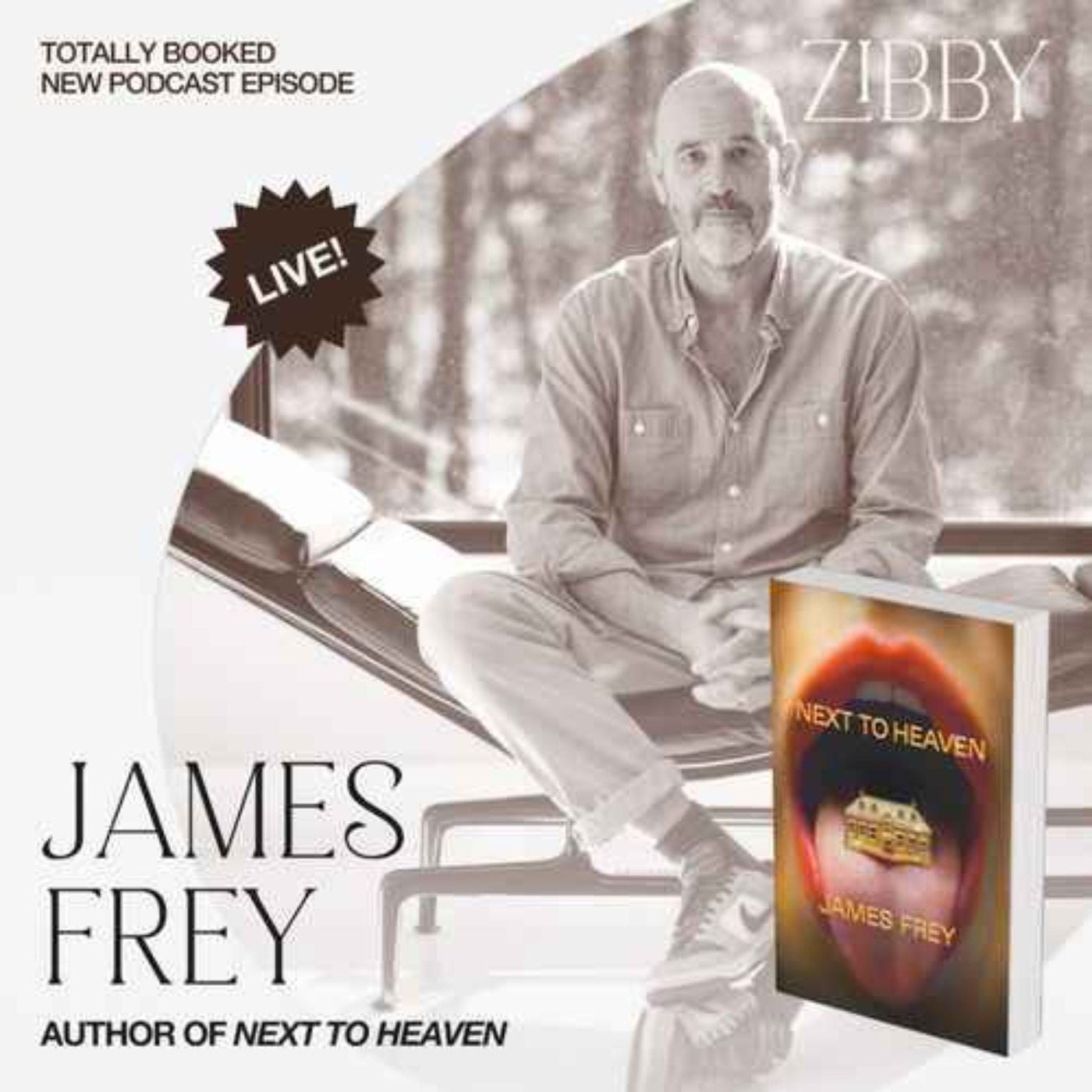
I'm gonna go play Download Royal Match on the App Store or Google Play. Today, in honor of the holidays, we are releasing the 10 most downloaded Totally Booked episodes of 2025. Today is number 10. We will be working our way up to number one over the next two weeks. If you miss them, now's the chance. Enjoy. Hi, I'm Zibby Owens. Welcome to Totally Booked, where I get to talk to my favorite authors and hopefully yours too. Today, we are so lucky to have James Fry, who is back on the podcast. Yay.
- [02:44]
James Frey
Thank you for having me stoked to be here.
- [02:49]
Host (Sydney)
I'm gonna Read a little bit about the author here. Okay. James was called America's Most Notorious by Time magazine and the bad boy of American literature by the New York Times. He has written multiple global bestsellers, including A Million Little Pieces, Bright Shiny Morning, and the Final Testament of the Holy Bible. He has sold more than 30 million books, and his work is published in 42 languages. He lives in a small town in Connecticut. And the book is next to. To Heaven, which is not the COVID This is the Arc. Congratulations.
- [03:28]
James Frey
Thank you. The cover's way dirtier when you actually get to see the real cover.
- [03:34]
Host (Sydney)
I was just saying that, you know, the fact that we're giving out books to everybody in this audience just. It should come with a rating, warning, just. Anyway, just throwing it out.
- [03:46]
James Frey
What rating are you giving me?
- [03:47]
Host (Sydney)
I don't know. No, like, you know, like an NC17.
- [03:51]
James Frey
Or a triple X. Which one do I get?
- [03:53]
Host (Sydney)
Don't listen on Audible in the car with your kids. Kind of like, you know, that's all people should know. Okay, James, tell everybody. What is this book about?
- [04:04]
James Frey
The book is about wealth. The book is about money. The book is about how money. I believe that money is the most addictive drug on the face of the planet. It is the most addictive, it is the most destructive, and it is the most damaging. I also happened to live in what from 1880 to 2015 was the wealthiest town in the United States and is currently the second. And I'm not claiming I'm poor, but I wrote a book about rich people and about sort of the insulated bubble that wealth exists in in contemporary America and sort of what goes on within those insulated bubbles. The one I live in, New Canaan, Connecticut, is not particular. There are these little bubbles all over the country. The plot of the book is, it's a murder mystery that revolves around a swinger's party at a billionaire's house. Right. Bored rich people decide they want to fucking do some crazy shit, and they don't think that there might be repercussions or maybe they know they're going to be repercussions and that's why they do it. But, you know, it's supposed to be a funny, sharp, dangerous, highly entertaining book. I wrote it when somebody in Hollywood asked me to. A producer asked me to read Hollywood Wives by Jackie Collins. And I read it, and I thought it was spectacular. I'd never read Jackie Collins, but I loved it. I thought it was funny and bold and dirty and actually very true to the culture out there. In certain ways. The book has Certainly aged. But then I read a couple more Jackie Collins books and then I read a couple different Danielle Steele books and they were fucking good. And they're entertaining and funny and cool. And I was like, well, what would it look like if I wrote a book like that? Right? A funny, entertaining soap opera. The difference is I have the freedom of being able to be because I am America's most notorious author. I have the freedom to do whatever I want and I have the freedom to make the book as bold and as dirty and as dangerous as I want. And that's what I did.
- [06:25]
Host (Sydney)
Yes, he did. I would have said yes. Okay, it's about wealth, that's true. But it's about marriage, it's about relationships and it's about.
- [06:37]
James Frey
I mean, listen, I write books about human things. I write books about love and art and sex and human emotions. When I write a book, the goal is never to write a book. It's to create something, to string words together in ways that provide a reader with an experience that they have never fucking had before. Right. I try to make books that are unlike anything that exists. I try to write. I don't try. I do write in a way that's absolutely singular. If you read a page of any book I've written, you know, it's me. And so, yeah, it's the same thing I do in other ways, just cloaked in something else. But the goal is from the moment a reader starts reading it till the moment they stop, for them not to be able to put it down, stop thinking about it, stop talking about it, stop telling their friends about it. I seek to always overwhelm a reader with language, with emotions, with virtuosity, with boldness. And that's what I tried to do here. I just made it probably a little lighter and funnier than the other books I've written. It's definitely not the final testament of the Holy Bible.
- [08:03]
Host (Sydney)
Well, stylistically there are some things you do every time. Like you don't. You have a thing against quotation marks, which punctuation, which is great. You repeat words every so often to drive them home. It's very poetic in a way, how you narrate, essentially.
- [08:19]
James Frey
Yeah, I mean, the goal is to write. Listen. A lot of what I do comes from art. Right. My education is much more in art than anything else. I'm a self taught writer and so I don't follow rules. A lot of what I do is very specifically designed to do certain things to the reader and it mimics language, but not written language. Right. When we speak. We don't have all these fucking rules. I don't put quotation marks around shit. When I talk, I don't say, well, I'm gonna say and then say it. I just talk. And so in my books, I remove the artifice of all that shit that we're supposedly required to use when we write, but doesn't do anything but slow a book down, make it more cumbersome, diminish the reader's experience. You know, we live in a world that's fast. We live in a world where we're bombarded with information, where we have very little time to do or think or pause. And literature and art should always be a reflection of the time we exist in. And mine is, I write fast, I bombard you, I overwhelm you. I don't give you a chance to take a fucking breath. It's bam, bam, bam, bam. And so all of the things that I do stylistically are designed to do things to the reader. There are no paragraph indentations because that half second it takes for your eye to move slows you down, right? There are no quotation marks because they're unnecessary, they're cumbersome, they slow you down, and they don't in any way mimic actual language. It's just some arbitrary bullshit somebody said we have to do. Well, I don't accept it. So I wrote the way I write.
- [10:14]
Host (Sydney)
It's like the ultimate rebellion.
- [10:16]
James Frey
I don't know if it's rebellion. It's trying to do something unlike anything else. It's trying to be singular. The greatest artists, the greatest writers, the greatest musicians, the greatest businessmen, the greatest business women are absolutely singular people who altered the world because of what they did and how they did it. And that's the goal for me as a writer and an artist. It's to leave the world differently. It's to write in a way that's unlike anything anyone's ever seen. It's so that when a reader picks up my book, like I said, I don't want them to stop. And when they're done with it, I want them to say, I can't believe he did that. I can't believe he writes like that. I can't believe he says what he says. And I can't believe he does it without apology. That was the coolest fucking thing I've ever read. That was the most fun I've ever had with a book. It was the most intense reading experience I've ever had with the book. And that's the goal. And there shouldn't be rules or impositions placed upon me. And when they are, I don't accept them.
- [11:28]
Host (Sydney)
So I know we talked about this when I talked to you about Katerina a few years ago. And I know this question has gotten you in trouble in the past. But is this true at all?
- [11:39]
James Frey
So I get this question a lot. I'm getting a lot now. I'll say a few things. Truth is a subjective word, right? And I've been saying that for 30 years. And suddenly the rest of the world understands what the fuck I'm talking about, right? We have fact. And a fact is a documentation of a verifiable event. Truth is however anyone interprets that event. And you and I will interpret this event differently. I think we'll both think it's cool. Cause you're an old friend and I adore you and I'm happy to be back. But everybody else here will interpret however they want. And that's what truth is. It's like love and God, man. We all have our own and. Okay, is it factual? And for this book, I just say what I always say, which is, if a publisher wants to publish me as nonfiction, what happens is journalists and readers. Some readers, not many, but mostly journalists. And people in the media tear it apart to figure out what's not true. And if I write a novel, they tear it apart to try to figure out what is true. And the point of what I do, the subjective nature of how I fuck with the word truth, which is different than the word fact, is that I don't allow you to know, right? I think of what I do as a painting. Like, when you look at a painting, do you say, well, painter, is that a nonfiction painting? Or is that a fiction painting? You don't. You say, that is a work of art. And I am going to interpret it how I feel I should. I'm going to interpret it in what it does to me and what it makes me think and feel and how it changes me or how I can reject it easily. And that's how I think of the books I write. Other people can call them whatever the fuck they want, and it's meaningless to me. I write books. I make art with words. I tell stories that are designed to thrill and terrify and turn on and break readers, right? I try to do things like I said, so that when you're finished with the book, I read. And I don't know if any of you have read my books, I'm gonna guess you probably have. But when you're done with the book that I read, that I write. I don't want you to be the same, and I don't want you to think of books to be the same, and I don't want you to think of reading to be the same and. And I want you to hold everything else you ever read to the standard that I fucking set, right? I want you to say, you know what, that was great, but it wasn't James fucking Fry, right? And I did that with this book. Like, I don't write a lot. Part of that is because writing takes part of me away. Part of it is because I'm isolationist and solitary and very private. And part of it is because I only write when I'm ready to fucking bring it, right? I'm not going to be a writer who just pumps shit out to get a paycheck or to get my name in a newspaper. I write shit when I'm ready to bring what I've got. And I think with every book I've written, I've brought it. And I think I brought it this time. It's a little different. It should be more fun, it should be more laughable. It's way, way dirtier. But I think if you've read anything I've written in the past and you've enjoyed it, you'll dig this probably more. And hopefully I find new readers and hopefully I bring new viewers to your podcast with all the crazy shit that I say.
- [15:43]
Host (Sydney)
Like, okay, mental exercise of where I cannot put this podcast. No, I'm kidding. I'm just kidding. The book deals a lot with disappointment. All the characters are really disappointed in the way their lives have turned out in some way. Whether it's the choice of spouse or what they're doing, or just their life in general, nobody is overly happy with who they are. And I was just wondering, are you disappointed with your life?
- [16:10]
James Frey
No, very much the opposite. But I have a great life. I have a life that I have built in very specific ways to bring myself the peace that is important to me. I live in a black house at the end of a dead end road in the woods, right? I meditate, I read, I write, I listen to tunes, I look at art, and I hang out with my children. I'm a father of three. I think I've had a dream life. I've had the life that when I was young I used to read about other people having and I would say, holy shit, for all the madness of my life, I've had a crazy life. I had addiction very young. I had problems with the law very young. I had insane fame. I had insane controversy. I was married to a woman I loved for a long time. I have three children. I love. I've met all kinds of cool, crazy people. I've had to the life of my fucking dreams for all the good and for all the bad. Like, it's what I signed up for and it's what I chased and it's what I dreamed of. So I have no, no regrets. You know, people ask that a lot, like, do you regret? And I always say no. And if you look back at the earliest interviews I've ever given, I always said I said the same thing I will say today, which is, I came into this to be the most controversial, most influential, most widely read writer of my time, right? You can look at data and ask if I did it or not. That'll tell you one story. But the real story won't be told while I'm here, right? History and time will decide if I pulled it off. But that's always been the goal.
- [18:08]
Ad Voice
Grief doesn't keep a calendar. Anxiety doesn't clock out after five. Depression doesn't care if it's your busy season. But support can still fit into your life. With grow, you can find a therapist who meets you where you are. They connect you with thousands of independent, licensed therapists across the US Offering both virtual and in person sessions. You can search by insurance provider, specialty treatment methods and more to find a therapist who works for you. And if it's not the right fit, switching is easy. There are no subscriptions, no long term commitments. You just pay per session. Find therapy on your time, evenings, weekends, and Cancel up to 24 hours in advance at no cost. Whatever challenges you're facing, GrowTherapy is here to help. Sessions average about $21 with insurance, and some pay as little as $0 depending on their plan. Visit growtherapy.com acast today to get started. That's growtherapy.growtherapy.com acast growtherapy.com acast availability and coverage vary by state and insurance plan.
- [19:16]
Guest Co-hosts (Russell and Christine)
Dog owners we love to spoil our pups, and more than anything, we want them to live long, healthy, comfortable lives. But here's the thing A lot of us don't realize when our dogs are trying to tell us something's wrong. Constant paw licking, rubbing on the couch, or obsessively eating grass can all be signs of allergies. Because 90% of a dog's immune system lives in the gut, supporting digestion is key. That's where better wild allergy Relief Soft chews come in these veterinarian approved chews use an ancestral blend of wolf probiotics called Ancestral Advantage to strengthen your dog's natural defenses. Better Wild even offers chews for joint support, dental health and a digestive meal Topper all science backed solutions to help your dog feel their best. Right now Better Wild is offering our listeners up to 40% off of your order@betterwild.com podcast that's betterwild.com podcast for up to 40% off your order. Betterwild.com podcast ever find yourself bored or.
- [20:18]
James Frey
Trying to kill time? We have finally found a solution for you. Royal Match don't believe me? Let's hear what people say.
- [20:25]
Guest Co-hosts (Russell and Christine)
Royal Match is such a fun puzzle game. There are over 10,000 levels. Also a bunch of mini games which makes it super exciting.
- [20:32]
Ad Voice
My favorite part, it doesn't need wi fi. I play on my commute, on flights, even while waiting in line.
- [20:38]
Host (Sydney)
And honestly, no ads. Not a single one. That's why I'm so into it.
- [20:43]
James Frey
So there you have it. A relaxing, challenging, totally ad free game that goes wherever you go. Download Royal Match and see why everyone loves it.
- [20:55]
Host (Sydney)
So with the characters in the book, should we take away that? Because a lot of them end up making changes. And of course fiction is like the illustration of change.
- [21:06]
James Frey
I mean, listen, I will say that to get back to the disappointment, I got sidetracked. I live in this incredibly wealthy place with these people who have all the money in the world. And I don't say money's bad, I don't think money's bad at all. But I see the disappointment that they feel in their lives. And largely because I live in an environment with some of the highest achieving people in the world, some of the wealthiest people in the world, some of the most A type people in the world, and they've done extraordinary things and they're still not happy. And there's also a theme in the book of more, more, more, more, more, and you're not going to find happiness. You know, there's a saying from the Tao Te ching which is 4,000 years old and it is if you chase after money, your heart will never unclench. And I think that's a theme of the book, that people have extraordinary means and assets and they're still not happy with the life they live. And I do think that I see a lot of disappointment that I meet and see people all the time. I'm like, why can't you smile? Why are you still working? You have $400 million. Why aren't you spending every second you can with your 12 year old son. And I see these things and I don't directly comment them on that, but one of the things I've also said for a long time about what I do and how I write and why I write what I write is my job as an artist is a. To hold a mirror up to the society I live in. And I hold that mirror up and I don't pass judgment on what I reflect. I don't generally interpret it for people. I don't tell them what it should mean and what it shouldn't mean. I hold up a mirror and I tell them to look at it. A lot of times it's real uncomfortable for people to look at it. A lot of times it makes them feel not particularly good things. And that's all I've done here again is I've held a mirror up to the society that I live in. And I find the society I live in, like the book I hope to be filled with extraordinary wealth and privilege. I find it to be utterly absurd. I find it to be terrifying. I find it to be thrilling. I find it to be humorous. I find it to be ridiculous and terrifying and sad. And so hopefully the book is all of those things. Hopefully it makes everybody who reads it feel all of those emotions. And it's just me holding a mirror up.
- [23:46]
Host (Sydney)
How do you think it's gonna go over? Oh, sorry, go ahead.
- [23:49]
James Frey
How do I think it's gonna go over? With the.
- [23:51]
Host (Sydney)
I'm saying, how do you think it's gonna go over? Like in the neighborhood, you have the two grocery stores in town here, as you're pushing your cart, getting, you know, lettuce.
- [23:59]
James Frey
I mean, it's been interesting. Certainly when the book first got announced, people around town started talking about it. A woman I know who works at the bookstore in New Canaan is here today and you can ask her. But yeah, everywhere New Canaan now, people, like ask me questions or they do the same thing. Who's it based on? Who's it based on? I'm like, fucking no one, man. I hope it stirs the town a little. The town needs it, man. Do you agree?
- [24:36]
Ad Voice
I agree.
- [24:38]
James Frey
Am I accurate in my description that people, like, if I go to town, people stop me and talk to me about it and I don't say much. I'm like, it'll be out in June, man. Give it a read, come by the library. I'll be giving a talk. I hope it stirs everyone everywhere who reads it. Right. Not just the Town I live in. I hope it sells a billion copies. I hope everybody reads it. I hope everybody loves it. Will they? No. Will it sell a billion copies? No. But, like, I can't control any of that anymore. Right now. It's in the world. I'm doing this kind of stuff. I haven't done this kind of stuff in a long time. I think you were the only person I spoke to for Katarina in the United States. I hope the book does well. I have publisher that I love who's been nothing but like a dream. We'll see. I know it's not the last of them, right? Like, I sort of detoured and went a bunch, did a bunch of things. I was a CEO twice and I had big fancy jobs. But I missed being a writer. I missed being alone in a room with an empty screen in front of me. I missed, at the end of the day, seeing that that screen wasn't empty anymore. I missed the challenge of writing books. I missed the intensity of writing books. I missed the fever dream of the experience of writing the books. That's almost why I do it more. I can pontificate on all this bullshit, but at this point in my life, I write books because the experience of writing them for me is like this deeply personal, deeply intense, like, magical thing I've said before. I don't read books that I write. I've never read a book that I've written. My memories of my books are not the words on the page, but the experiences I had writing them. And each of them has been very, very different. And I describe them usually with single words. So A Million Little Pieces is probably the book people in this room have read. And I describe that book as a long scream. Some guy screaming bloody fucking murder for as long as he can. I describe this book as a little giggle. That's what it was. I sat at home and I listened to great tunes and I was in a comfortable chair and my house is mostly glass. I looked out at, like, these beautiful trees and I literally listened to the birds sing and I put on music and I wrote and I laughed and I did things like, simply because I can and because they made me laugh and because they made me feel good. There's this weird. It's been written about now a few times, this weird poem in the book, O Connecticut. I don't really remember what I said. I wrote about, like, trees and birds and shit. But just to do that, I don't remember what I wrote. But I remember when I was writing it and I was sitting in this chair. And it was probably two in the morning and I was just high from working so long and staring at a screen. I'd probably been working for 14 or 16 hours or something. And it's at the beginning of a chapter and I had finished this chapter at like 2 in the morning and I thought, oh, Connecticut. And so I just kept writing and it was just delicious. And I hope when readers read the book that it's just fucking delicious.
- [28:19]
Host (Sydney)
By the time you get to that, that's pretty far along. You've already interspersed the chapters with these short excerpts that seemed so real about the town that I was like, should I be Googling New Bethlehem? I mean, I live in New York City. Have I never heard of this place?
- [28:33]
James Frey
I mean, the town is New Canaan, Connecticut, right? I changed it to New Bethlehem to give myself the freedom to fuck around, right? Even I've changed it. You're like, well, what's real? Imagine if I had called at New Canaan and some motherfucker's going to come up to me while I'm trying to buy like, you know, shampoo, and they're gonna be like, you got it wrong. Waveney Park's trail is this. Not this. So I called it New Bethlehem. And when people wanna complain, I'm just gonna like lift the fingers and be like, fuck off, man, it's a book.
- [29:05]
Host (Sydney)
Speaking of the trail, I love how you have Devin and Belle, who are like regrouping on everything sorted and so salacious that happened the night before and they're sharing all of their stories and they kept passing other people up, being like, oh, hi Val, hi Roz. And then like, wait, 30 seconds, keep going. Hi, Rosalie. Hi, whoever.
- [29:27]
James Frey
It's how it works at the parks in New Canaan. We have these huge parks. We have a park there that's almost as large as Central Park. It's called Wavney. It's a Lapham. The family that founded Texaco had a 700 acre estate that they donated to the town and their trails. And I walk it all the time. If any of you follow me on Instagram, and I don't presume that you do, but if you do, you would have seen yesterday morning I posted a video of me and my friend Mordecai Rubinstein, who's a very well known fashion dude, walking in Waveney Park. And literally we do the same shit. We're like fucking gossiping and. And we see people where. No, I'll be like, morty. We look up and we go like, hey, what's up, man. And then we just keep fucking going. And the women do it, too. We all do it. It's like you have your bullshit, your walking buddies. I walk alone most of the time, but, like, probably once or twice a week. My girlfriend, who's not in the country right now, she walks with me a lot, but when she's gone. But me and Morty were walking, doing the same thing, Right? It's what happens there. I mean, there are a lot of things in the book, the gossip, which I call the T. I was going.
- [30:39]
Host (Sydney)
To say your Greek chorus of voices. I told him and he told her and did it.
- [30:43]
James Frey
Literally how it works, right? New Canaan's a town of 17,000 people. If this statistic is still accurate, I think there are 41 billionaires in a town of 17,000 people. It's an extraordinary sort of bubble. And information moves in that bubble. Not in ways that are probably any different than the world or other towns, but, like, I just thought it was funny. So I tried to write funny, weird shit about how it works. Janie tells June, June tells Amy. Amy tells Mary, Mary tells Alice, Alice tells. Right. And the story gradually gets twisted with each telling of it. As we were discussing truth earlier, Right. But yeah, I tried to again hold a mirror up to the town. That's where I live. And I will say the people who have. A lot of the people who have read it in the town, I don't think there are that many. Maybe 20. And again, we can ask, generally think that it's a pretty accurate reflection of the place. Would you agree? Yes. Right. One of the people I had read it, one of my sons, one of my son's closest friends, is the son of one of the very high ranking police officials in town. He was literally the first person to read it in town. And I gave him the book. And I was like, check this out, man. Let me know what you think. He called me maybe a week later. He was like, I fucking loved it. And he goes, half the town is going to pat you on the back and shake your hand. And half the town's gonna think you're a piece of fucking shit. And I sort of giggled. And I was like, perfect, man. Just the way I like it.
- [32:32]
Host (Sydney)
James, thank you so much.
- [32:34]
James Frey
Thank you. It's so good to see you again. Thank you all for coming. And if you read my book, I hope you dig it.
- [32:43]
Host (Sydney)
Amazing.
- [32:44]
James Frey
Thank you. Thank you. And hey, we should all thank Zibby. Books and culture are fading and to have somebody who's so passionate as a writer to have somebody who's so passionate about what we do and for so many writers. You have done so much and just as a writer, I say thank you for all you do.
- [33:11]
Host (Sydney)
Thank you for listening to Totally Booked with Sydney formerly Moms don't have Time to Read Books. If you loved the show, tell a friend, leave a review, follow me on Instagram ibioens and Spread the word. Thanks so much. Oh and buy the books.
- [33:33]
Ad Voice
Hi, this is Kim and Pen Holderness from Laugh Lines and today we want to talk to you about Boost Mobile.
- [33:38]
Guest Co-hosts (Russell and Christine)
Yeah, you know the holidays are full of joy, aren't they? But let's be honest, a little chaos too. Between family gatherings, travel and all the shopping, it's easy to forget yourself in the mix.
- [33:49]
Ad Voice
Boost Mobile helps make things simple with a $25 unlimited plan giving you unlimited talk, text and data for just $25 a month. No trade ins, no contracts, no stress, just straightforward savings that keep your wallet feeling very merry and bright.
- [34:06]
Guest Co-hosts (Russell and Christine)
Yeah, because the holidays are about connecting with the people you love and Boost Mobile makes that part pretty easy.
- [34:11]
Ad Voice
Visit boostmobile.com to start saving.
- [34:14]
Guest Co-hosts (Russell and Christine)
After 30 gigabytes, customers may experience lower speeds. Customers will pay 25 dol per month as long as they remain active on the Boost Unlimited plan.
- [34:21]
Host (Sydney)
You know what they say early bird gets the ultimate vacation home. Book early and save over $530 on a week long stay with VRBO because early gets you closer to the action, whether it's waves lapping at the shore or snoozing in a hammock that overlooks, well, whatever you want it to so you can all enjoy the payoff come summer with Verpos. Early booking deals Rise and Shine Average savings $550 select homes only Minimum 7.
- [34:49]
Greenlight Infinity Ad Voice
Day stay required did you know 39% of teen drivers admit to texting while driving? Even scarier, those who text are more likely to speed and run red lights. Shockingly, 94% know it's dangerous, but do it anyway. As a parent, you can't always be in the car, but you can stay connected to their safety with Greenlight Infinity's driving reports. Monitor their driving habits, see if they're using their phone, speeding and more. These reports provide real data for meaningful conversations about safety. Plus, with weekly updates, you can track their progress over time. Help keep your teens safe. Sign up for Greenlight infinity@Greenlight.com podcast.