← Totally Booked with Zibby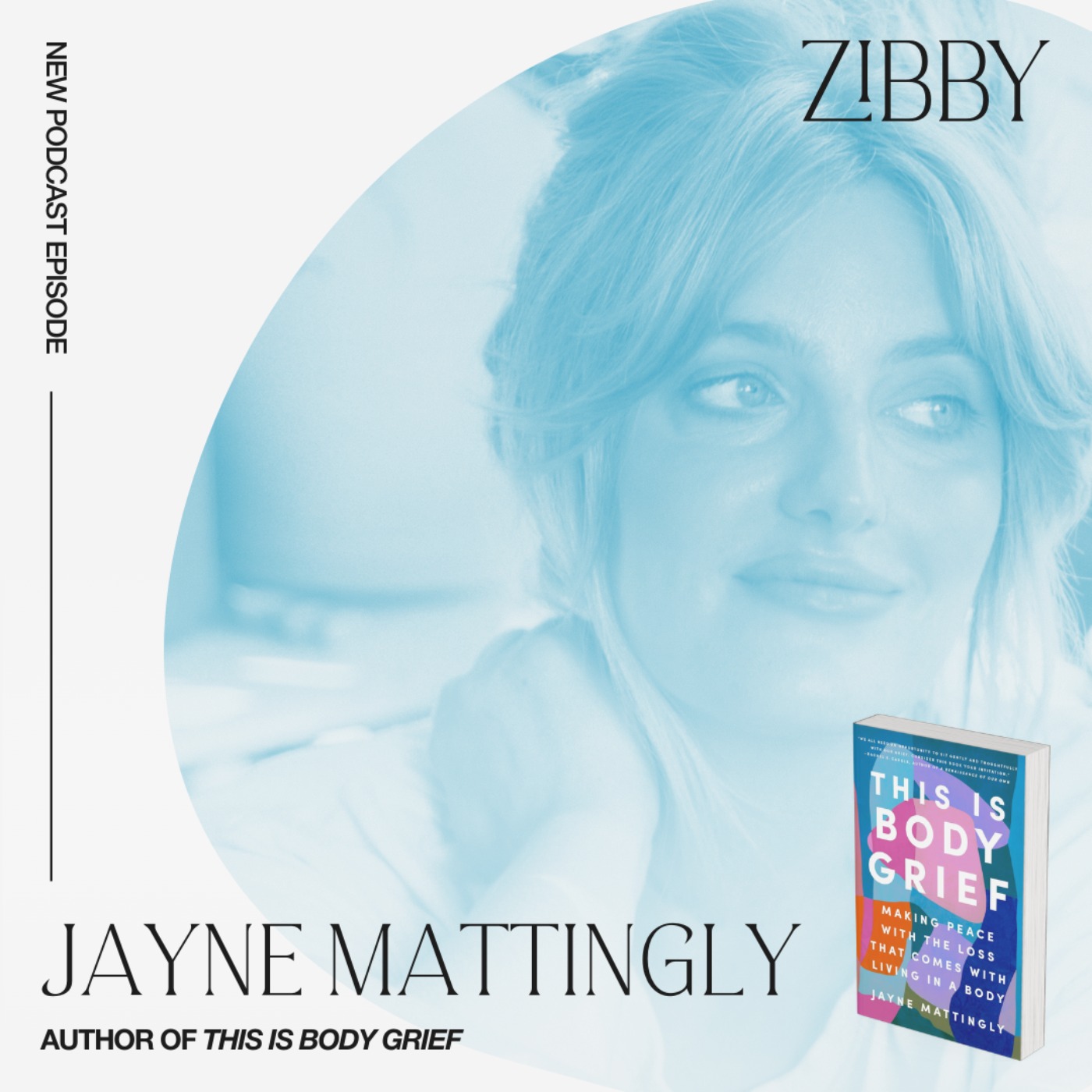
Totally Booked with Zibby
Jayne Mattingly, THIS IS BODY GRIEF: Making Peace with the Loss That Comes with Living in a Body
00:25:35
Loading summary
Transcript50 lines
- [00:01]
Great Wolf Lodge Advertiser
At Great Wolf Lodge, there's adventure for the whole family. You and your pet can splash away in the indoor water park where it's always 84 degrees. There's a wave pool, a lazy river and a bunch of massive water slides, including ones your family can all enjoy together. They even have adventure packed attractions from the Northern Lights Arcade to delicious dining. And you can't miss the nightly family dance parties. With 23 lodges across the country, you're always only a short drive away from adventure, so bring your pack together at a lodge near you. Learn more@greatwolf.com greatwolf.com and strengthen the pack.
- [00:39]
Jane Mattingly
Race the rudders, Race the sails. Race the sails. Captain, an unidentified ship is approaching. Over Roger, wait. Is that an enterprise sales solution?
- [00:51]
Zibby Owens
Reach sales professionals, not professional sailors.
- [00:54]
Jane Mattingly
With LinkedIn ads, you can target the right people by industry, job title and more. We'll even give you a $100 credit on your next campaign. Get started today at LinkedIn LinkedIn.com results terms and conditions apply.
- [01:08]
Zibby Owens
Worried about what ingredients are hiding in your groceries? Let us take the guesswork out. We're Thrive Market, the online grocery store with the highest quality standards in the industry. We restrict 1000 plus ingredients so you can trust that you'll only find the best high quality, organic and sustainable brands, all free of the junk. With savings up to 30% off and fast carbon neutral shipping. You get top trusted groceries at your door and you can stop worrying about what your kids get their hands on. Start shopping@thrivemarket.com podcast for 30% off your first order and a free gift. Hi, this is Zibby Owens and you're listening to Totally Booked with Zibby. Formerly Moms don't have Time to Read Books. In my daily show, I interview today's latest best selling, buzziest or underrated authors and story creators whose work I think is worth your time. As a bookstore owner, publisher, author, and obviously podcaster, I get a comprehensive look at everything that's coming out and spend my time curating the best books so you don't have to stay in the know. Get insider insights and connect with guests like I do every single day. For more information, go to zibbymedia.com and follow me on Instagram Ibbeowens Jane Mattingly is the author of this is Body Making Peace with the Loss that Comes with Living in a Body. Jane is a disability advocate and eating disorder recovery coach. She is the CEO of Recovery Love and Care, a global virtual eating disorder recovery coaching curriculum and training program. She is also the founder of the nonprofit the and Initiative, which aims to provide inspiration, advocacy, resources, support and the gifting mobility aids to those with chronic illness and and physical disabilities. Jane lives in South Carolina with her husband and pets. Welcome, Jane. Thank you so much for coming on Totally Booked with Zimmy to talk about this is body Making peace with the loss that comes with living in a body.
- [03:08]
Jane Mattingly
Thank you so much for having me.
- [03:10]
Zibby Owens
My gosh, it's my pleasure. Thank you so much also for sharing your story in this book. Naming something that heretofore was not named and giving sort of this, this way of talking about things to the many people out there who have gone through any sort of physical setback, disability, on and on. And, you know, all of us are just one step away from this potentially being our lives and having all of this. And of course, as we age, everybody, you know, is giving up their bodily stuff. So anyway, a long introduction to say how absolutely relevant and helpful for everybody on this planet this book is.
- [03:57]
Jane Mattingly
Oh my gosh, thank you so much. Yeah, it is. Body grief is something that I really do believe is universal. I think that it's something that, especially now in this climate too, when we talk about just like loss of bodily autonomy wherever we are, it's something that.
- [04:10]
Zibby Owens
I think we can all relate to 100%. Okay, so do you mind? I know you wrote this in the book, but tell a little bit about the story of your own body situation.
- [04:20]
Jane Mattingly
Yes. To make a really long story short, I was once a non disabled, identified as a non disabled, you know, woman, and quote, unquote, healthy person, whatever that may be. You know, and I had a lot of internalized ableism. You know, ableism, for those that don't know, is just when we really kind of project our, you know, beliefs of what is, you know, we might think of as able bodied. You know, the world is made for people who are able bodied, whether it's architecturally, societally. And I had a lot of that in me where I just didn't know what being disabled really even was. I thought being disabled meant you were just paralyzed. I really never was exposed to what being disabled was. So I had an eating disorder when I was nine years old. It went undiagnosed. That's very common. And I went through recovery when I was 20, 22. And so I was made it my passion, my problem, into my purpose and went and got my clinical mental health counseling. Sorry, my service dog is alerting me right now. Just subtle. So I went and got my master's in clinical mental health counseling when I was 22 years old, and I was like, I'm going to make my problem into my purpose. And I worked with eating disorders, and I started kind of screaming from the top of my lungs at events saying, work out for what your body can do. Work out for what your body can do. Love your body for what it can do. Little did I know how ableist that was, because then I found myself disabled. I found myself in a bar class, and I lost my sight. And that led me down a series of brain surgeries and spine surgeries. Six years later, I have had 19 brain and spine surgeries and a total hysterectomy. I was diagnosed with a rare neurological disorder called intracranial hypertension. And I realized as I was getting all of these surgeries and I was in the hospital, and I was like, shoot, now that my body can't do, how am I supposed to love it? How am I supposed to do all of this? And here I was telling all these people these things, and that was a very ableist thing. And I realized, this is body grief. I'm grieving the life that I used to live. I'm grieving the body that I used to have. And as I spoke these words to people of all ages, to my clients, they were like, wait, I have that too. I identify with this whether it was through menopause, whether it was through injury, whether it was through aging, whether it was through, you know, infertility, pregnancy loss. And so I started to study it, and I started to hear people's stories. And then came this book.
- [07:03]
Zibby Owens
Wow. And you also. Not to make you catalog your medical stuff, but you also.
- [07:08]
Jane Mattingly
No, I would be happy to do whatever.
- [07:09]
Zibby Owens
And you have a genetic condition that you do. Yes. Which also. Which interplayed with that. And now tell. Tell everybody what your, like, what your mobility is like.
- [07:22]
Jane Mattingly
So Ehlers Danlos syndrome is what I was diagnosed with that really kind of is like the primary diagnosis. EDS is a genetic illness, and it's known as a rare diagnosis. But really, they're kind of saying. Now geneticists are saying it's the most common diagnosis that no one has ever heard about, which I think is a really important thing to put out there, because it's a genetic diagnosis that we're born with. But then again, I don't think people are really. You don't know you have it until later on in life. There's 14 types. I have hypermobile type, and it's a spectrum disorder. So you can be asymptomatic. And then you can also look like me, who's had all these surgeries and I'm in a wheelchair now. I rely on my service dog. I can no longer drive. I live in a one level household. And you know, I was climbing mountains and skiing in Jackson Hole, Wyoming, and I was a dancer and taking spin classes, very active. And now I am disabled and in a wheelchair and I live a very wonderful life. But it looks so different. I mean, me and my husband are now in an interabled relationship and there's so much grief. And in this book, this is Body Grief, it talks about, you know, how we can live through our body grief. And if we heal it and we work on healing it, there's joy and there's gratitude and if we feel our feelings, we can feel, feel that. But if we don't, then we use our maladaptive coping skills. And you know, it might look like an eating disorder, it might look like addiction, it might look like, you know, a lot of different things. And that's what it looked like for me when I wasn't really, really kind of feeling the feelings and naming my grief. Yeah, but for me it's been a rocky ride, it's been a really bumpy ride. And I want people to know too that it doesn't have to be like this hierarchy of suffering, you know, Like, I think sometimes people look at my story and they're like, oh, well, that's not me. So I don't have body grief. You know, like I haven't had an incomplete spinal cord injury. I don't have 19 surgeries, so that's not me. When like really, like the common cold could even be body grief where it's like you have this cold and you're like, you wanted to go to your favorite concert. You know, that could be body grief too, that can bring up grief. Because you're like, why is my body betraying me? Why do I feel like this is happening to me? And it's like, this is what happens when our bodies don't act like we thought and we were promised they were entitled to do so.
- [09:51]
Zibby Owens
Can I read a little section of the book, please? Because I feel like this speaks to how relationships have to change, how so much is impacted and this like deep seated sort of devastation that. Anyway, let me, let me read and whatever you can comment, he said. As I learned to live with my condition, I continued to find myself always apologizing for something. My lack of mobility, the extra space my mobility aids took up, how damn slow I had gotten, my inability to participate in inaccessible places My chair, my mobility service dog, even the time it took for me to get from the car to a restaurant. There was no more running to the store or hopping in the shower for me. I needed others to help me do the simplest things, but it just felt like too much to ask others to adjust on my behalf. And I was oh so very apologetic about being such a burden the first time I was able to overcome. This was a game changer for me. I had moved from Chicago to Charleston at age 25 and hadn't been home in a while. There were lots of reasons for this, but the changes to my body due to the brain and spine surgeries I had undergone, coupled with the restrictions of the pandemic, made it much harder to travel. This was heartbreaking, and my mom coming to visit me regularly felt like the only option we had. It was on one of these trips that she asked if I would be home that summer. I froze. We were sitting in the sun on my back porch. I didn't want to hurt her feelings, but I knew that I had to be honest. I want more than anything to come home and visit Mom, I told her, my eyes starting to well up with tears. I tilted my head back so they wouldn't fall down my cheeks. But the house is not accessible. I can't walk up and down the stairs. It's just too dangerous. And I know it worries you all, too. I expected her to be hurt or even get defensive. I didn't want to inconvenience my family or be a burden on them. But instead, she replied immediately, well, maybe we should get a stairlift. My eyes lit up. I couldn't believe what I was hearing. Really? You would do that? Oh, no.
- [11:46]
Jane Mattingly
Oh, my gosh. First of all, it's surreal to hear you read this to me because the book, you know, is still not out yet, so. And to hear like Zibby Owens read that is wild. But that is the thing about body grief, is that it's continual, it's multi cyclical, and it never is grieved. Right. Like that is one thing I kind of drive home in the book. And so I even kind of tear up hearing that, because as we have our new grievances and as we, you know, name our new grievances, we kind of always continue to go through it. It's just we, you know, with hindsight, continue to compound what we learn. And just a couple days ago, I was there. I was at apology. And so you. You read that and I'm like, oh my God, I was doing that again. You know, but I learned from it, and I build on my body trust, and then I kind of catch myself in it, and I'm like, you know what? Here I am again. Here I am again. Here I am again. And I do my breathing and I take my skills and I learn from it, and I get through my phases a little bit quicker. And that's what this whole framework is about. But, oh, my gosh, it sucks. It just sucks. And what the reality is, is, I think, like, we need to talk about how it kind of sucks living in a body sometimes, you know, if only for another alternative. Right. Like, it just. I mean, I think the pandemic taught us that. I think, you know, I would assume being a mother has, you know, taught so many people that, but it's also beautiful, you know, I. I think mental illness teaches us that. You know, where it's just like, I want out. I want out. You know, there's. You know, a couple days ago, I was in the ER and I was like, I have in the book here, one of the skills is to throw a tantrum. To just throw a tantrum. Because when did we stop doing that? When society told us we couldn't. And, you know, it's. It's a regulated tantrum, you know, not in a public space. You know, when you were doing a kid with a kid, you know, and I did. I threw one in the car, and my husband was like, just do it. You know, But I was so angry because I was like, why? Why is this happening again and again, again? And it allows me to get out of these places where I'm just constantly apologizing or. Because that's not a healthy way for your brain to just go there to apologize for taking up space that you will always be taking up.
- [14:20]
Zibby Owens
Well, it also did not happen that long ago. I mean, this wasn't something that you had as a child, and now you're fully grown. Like, this was in the last, what, eight years?
- [14:30]
Jane Mattingly
Six. I mean, six and a half years.
- [14:32]
Zibby Owens
Six and a half years. So most. I mean, when you think about grief over losing someone, for any other types of grief, right, they're not gone within six and a half years. Like, you're still processing. And the anger is something that comes with all of it, right? Because when things aren't fair, it's. It's, you know, how can you not get angry? It's not fair.
- [14:56]
Jane Mattingly
It's not fair. Exactly. Yes. It's not fair. And then I think there's this, like, cognitive dissonance in this, because Also, being a part of the disability community is a beautiful thing too.
- [15:08]
Zibby Owens
Of course, I'm sure.
- [15:09]
Jane Mattingly
Yes. And so then there's this piece where it's like, oh, my gosh, this community is so beautiful. And the more I use my mobility aids, I'm able to actually be more independent. And this is amazing and beautiful. And I miss my old life.
- [15:25]
Zibby Owens
Yeah.
- [15:26]
Jane Mattingly
And so that's tough. That's tough. And there's truth to all of it. I think it's. That's when it's like, it's both. And. And, you know, as I lean into community and community truly is the antidote to body grief. It really is. Because as I lean into community, I feel like I'm embraced and I feel like I can learn and I can become just like a student of it. All. Right. And I can, you know, learn from people that have been disabled their whole life. Right. Or even, like with my hysterectomy journey and I went through surgical menopause, you know, and I can learn from people that, you know, are older than me, that have been through menopause. Right. And just be like, okay, I can lean into this too. But then there's also grief being like, why am I going through menopause in my 30s? And then there's the anger again. Right.
- [16:18]
Zibby Owens
So what made you take all of this and write a book about it? Today's episode has been sponsored by Quince. It is spring and I have so many travel plans, from book touring to travel with my kids to everything else. So this year I am treating myself to the luxe upgrades I deserve with Quince's high quality travel essentials at fair prices. And seriously, these prices are amazing. Whether you get this beautiful cashmere blue throw, which I got because, you know, how nice is it to wrap yourself in a cozy blanket? Because airplanes don't give you blankets anymore and a navy blue suitcase. They have this fabulous hard shell carry on suitcase that I am just so excited to use. The best part about quints, all items are 50 to 80% less than similar brands. By partnering with top factories, Quince cuts out the cost of the middleman and passes the savings on to us. And Quince only works with factories that use safe, ethical and responsible manufacturing practices and premium fabrics and finishes, which I just love. So for your next trip, treat yourself to the luxe upgrades you deserve from Quince. Go to Quince.com Zibby for 365 day returns plus free shipping on your order. That's Q-U I N C E.com Zivi to get free shipping and 365 day returns. Quince.com Zivi today's episode has been sponsored by Wayfair. I don't know about you, but I love taking on a home design project. I love improving the house and making houses feel like homes. So it reflects who we are as a family and makes it work better for us. Right now it's home project season and if you have not used Wayfair, and I'm saying this from the bottom of my heart, I love Wayfair. This is like my go to spot for absolutely everything. Why? The price is great. It is so fast. The delivery is so fast and so reliable and the quality is really great and it holds up. What else could you possibly want in in in home design? Recently we've gotten a bunch of new runners for this house that we're in now in Santa Monica. And it changed a hallway from something impersonal to something full of color and full of us. And it's just great. So if you have any sort of spring home goal or you're trying to make someplace new feel like you, this is the place to go shop the best selection of home improvement online. Get renovating with wayfair. Head to wayfair.com right now. That's W A Y-F A I R.com wayfair every style, every home.
- [19:15]
Great Wolf Lodge Advertiser
At Great Wolf Lodge, there's adventure for the whole family. You and your pet can splash away in the indoor water park where it's always 84 degrees. There's a wave pool, a lazy river, and a bunch of massive water slides, including ones your family can all enjoy together. They even have adventure packed attractions from the Northern Lights arcade to delicious dining. And you can't miss the nightly family dance parties. With 23 lodges across the country, you're always only a short drive away from adventure. So bring your pack together at a lodge near you. Learn more@greatwolf.com greatwolf.com and strengthen the pack.
- [19:56]
Jane Mattingly
Well, I think I realized a huge.
- [20:00]
Zibby Owens
As I sigh a big sigh.
- [20:03]
Jane Mattingly
I'm so proud of it. And a huge reason was when I was working with the eating with the eating disorder community, so much of recovery of body image and eating disorders is body grief. So much of that is body grief and that's, you know, a niche community. But also so many people struggle with disordered eating and body image. I don't know one person in this world that doesn't struggle with their bodies or dieting. And that population in itself is struggling with grief. Of being like, I miss how my body used to be. I miss the life I was once promised. And I was like, this needs to be written about. And then I also started to talk to people in the chronic illness community with autoimmune and they. The disability. And one of the main themes and one of the biggest reasons I wrote this book was I wanted a book that people could take into therapy. And I hope this reaches people, because when people talk about despair and hopelessness, I've talked to so many people saying they're scared to talk to their therapists because they're scared to use language. Like, I'm feeling hopeless. I'm feeling fearful that I don't want to wake up in the morning. But that is an everyday experience. For someone who is experiencing body grief, it doesn't mean that they're actively wanting to end their life. It just means that they want to be heard. And so I was writing a book like this so that professionals and clients could sit down and have a real conversation about it without fearful that they would need to be committed or go to a higher level of care. And because I worked in that field. And then as I started writing the book, I was like, wait, this is so much bigger than just, like, the clinical world. This is everybody. And so, you know, in the book, there's gender dysphoria and there's racial inequity. And it really became like, a book about systems of oppression. And, you know, so much. You know, there's puberty, and, you know, I have a story in there about my dad. You know, there's injury. And so it became a lot bigger than I realized it would be interesting.
- [22:32]
Zibby Owens
And was it therapeutic for you? I know you did it as a sort of a mitzvah for others, but was it?
- [22:38]
Jane Mattingly
Yeah, it was. It really was, because it was my first book, and to have Penguin, you know, take this was a huge deal. But it was really magical. Like, the whole experience was so magical. I would keep saying that, and, you know, my husband would come home and be like, all right, what version of Jade am I getting today? Because she's probably grieving a whole nother part of the story. But I learned to be able to kind of set boundaries with that, leave it on the porch. I'd write it on my porch in Charleston and then kind of separate that because I was reliving everything that I was going through. But, yeah, I think another thing, too, is that grief and gratitude go together. They are symbiotic, just like hope and hopelessness. They can't exist without the other. Yep.
- [23:26]
Zibby Owens
I love that. Oh, my gosh. This is a totally irrelevant question, but for anyone listening, Jane has, like, the best hair I've ever seen. How. Tell me about your hair. What products are we using? What hair dryer? I'm looking at these, like, cascading waves, like aloe vera or something, and I'm very jealous.
- [23:49]
Jane Mattingly
Well, okay. I have genetically, I was given amazing hair. And I always make the joke. Like, I was bout. I thank God I was given genetically something good because the rest wasn't so great. And my parents are always, like, rolling their eyes at that joke because they're like, this isn't funny. But, yeah, my mom has, like, the best hair. Her dad passed with, like, a full head of beautiful hair. So genetically, we were blessed with hair, but I think it's really just genetics. I hate to say that satin pillowcases are the way to go. And I, like, douse my hair and conditioner, like, this much conditioner, like, up two handfuls.
- [24:35]
Zibby Owens
Okay, well, anyway, yeah, back to you. I had to talk about the superficial. I mean, we are talking about our bodies, the good and bad.
- [24:41]
Jane Mattingly
I mean, I am. The lore behind my hair goes so far back. We. My mother is like, I think it. Actually, some people are like, if I remember once my therapist was like, I would like to go into this a little bit more. And I was like, please don't. Please. Like, let me just. Can I just keep this as, like, a nice, sweet memory? Because my mom used to curl our hair every morning, like, even when we were, like, three years old. And she's like, I would like to delve in deeper. And I was like, let's not. Like, I have an eating disorder. I have chronic illness. Like, I would like to keep this, but thank you for that.
- [25:19]
Zibby Owens
Sure. You know, one time, one part of the book you were talking about, you know, with your body and that you could be grieving, that it's. You know, that your illness can make you gain weight or lose weight and you feel out of control, and there are all these spiraling things and what do you do? And all of your references, of course, to eating disorders and all of that. Where do you fall on the fact, like, having body acceptance for weight in the middle of body functionality and all the rest. It's not like you can take it away.
- [25:51]
Jane Mattingly
Right. So there's this, you know, body positivity and body acceptance and body neutrality and all the things. There's all these movements. Right. Body positivity was a movement in the 1980s, actually, that was Made by black and bipoc women, fat women who are also disabled. And it was actually kind of like co opted by white women in like the 2000s and so which tends to happen, right? Like white women do that. So we kind of took it over and we were like, body positive. And I actually didn't know about that until like a couple years into my Instagram journey. And then I was like, oh, this, we did this. We kind of took this over. So being positive about your body, I think is wonderful. Being neutral about your body, I think is great, but I think is actually kind of unattainable for some people, right? I think being accepting of your body is also great, but it is a little unattainable, right? Because look, if some of us can't like use our bodies, if some of us are grieving our bodies and can't, you know, are constantly losing our abilities, if we're always sick or if we're, you know, just constantly in the grieving cycle of something, it's very hard to be like, just be neutral about it, you know, just love your body. So I think it's okay to say, like, I'm working on healing, I'm working on, you know, I'm in grief, but I'm working on healing. And I dip my toe into body trust whenever I can. And I think that's the most realistic way we can go about it. I don't think it's, you know, I applaud anyone that is anywhere else. But for me, having been through over a decade of recovery, I can positively say that I am in recovery, I am recovered. And you know, I also have all of these other ailments. And, you know, there's some days where I literally can't walk and it's incredibly hard to eat and my body rejects food and so I gotta trust my body. I have to nourish my body, I have to water my body. And it's also hard af. So it's just a constant process. When I, you know, was talking about this book with Penguin, I was like, the thing with self help that's so hard is, you know, in the publishing world they want like kind of a fix it at the end. I was like, this isn't going to be that, you know, this isn't going to be a band aid grieved situation. And that's what I loved about them, is that they were like, that's okay. That's more just realistic. This is just a constant process. It's nonlinear and cyclical.
- [28:38]
Zibby Owens
Wow. Well, how great to have you as this stunning ambassador for this, you know, because, you know, you get people to pay attention. Right.
- [28:47]
Jane Mattingly
Oh, thank you.
- [28:49]
Zibby Owens
True. I mean, your words are stunning. The whole thing. No, it's great. And it's great that you have developed this whole platform on Instagram and that you have your community behind you and that you're sharing, like, the ups and the downs and that there are good days and bad days, and it's not all just behind this curtain, and, you know, it's okay and, like, it should be known and watched and understood because it's so important.
- [29:17]
Jane Mattingly
Yeah. It's just kind of every day is different, right?
- [29:19]
Zibby Owens
Yeah.
- [29:20]
Jane Mattingly
Yeah.
- [29:20]
Zibby Owens
And sometimes it just sucks.
- [29:22]
Jane Mattingly
And sometimes it just sucks. But even then, like, we can have our good moments, you know, I romanticize every little bit of my life. So, you know, like, yesterday I made. We were having some, you know, issues after a colonoscopy, and then we went to the ER because the doctor said we had to. And of course, like, the hottest doctor came in the ER and he walked out of the room, and my husband was like, oh, my God. I know. I don't know if you watch Modern. I don't know if you watch Modern Family, but he was like, this is like Cam and Mitch with the hot firefighters. And I was like, are you Cam or are you Mitchell? So, like, it was the worst day. We waited seven hours in the ER after a colonoscopy, and then we were laughing, you know, like, you just have to make it work.
- [30:13]
Zibby Owens
Oh, my gosh. Jane, thank you so much. Thank you for. This is Body Grief. Thank you so much for coming on today. And, yeah, it's been just such a pleasure. So thank you. Thank you.
- [30:23]
Jane Mattingly
I appreciate it.
- [30:25]
Zibby Owens
Okay. All right. Best of luck with everything. Thank you. Okay. All right, take care. Bye. Bye. Thank you for listening to Totally Booked with Zibby, formerly Moms don't have Time to Read Books. If you loved the show, tell a friend, leave a review. Follow me on Instagram, ibyowens and spread the word. Thanks so much. Oh, and buy the books.
- [30:54]
Jane Mattingly
G'day America. It's Tony and Ryan from the Tony and Ryan Podcast from Down Under. Today, we want to talk to you about Boost Mobile, the newest 5G network in the country. These guys are no longer the prepaid wireless company you might remember. They've invested billions into building their own 5G towers across America, transforming the carrier into America's fourth major network alongside the other big dogs. Yep. They're challenging the competitors by working harder and smarter, like this amazing new network they've literally built the Boost Mobile network together with their roaming partners covers 99% of the US population, but 5G speeds not available in all areas. Yep, they have blazing fast Internet and plans for all the latest devices. Visit your nearest Boost mobile store or.
- [31:39]
Great Wolf Lodge Advertiser
Find them online at boostmobile.com@1800-flowers.com we know that connections are at the heart of being human. Whether celebrating life's joys or comforting during tough times, 1-800-Flowers helps you express what words can't for nearly 50 years, millions have trusted 1-800-Flowers to deliver thoughtful gifts that help create lasting bonds. Because it's more than just a gift it's your way of showing you care. Visit 1-800-Flowers.com acast and connect today. That's 1-800-Flowers.Com acast. Everyone has a reason to change. Growing old, heartbreak, a fresh start. Whatever it may be, Peloton is here to get you through life's biggest moments with workouts you can do on your time and motivation that keeps you coming back. Peloton's tread and All Access membership help you track progress in classes from runs to Pilates, making you stronger and your fitness goals a reality. Find your push Find your power peloton visit1peloton.com.