Loading summary
Transcript62 lines
- [00:00]
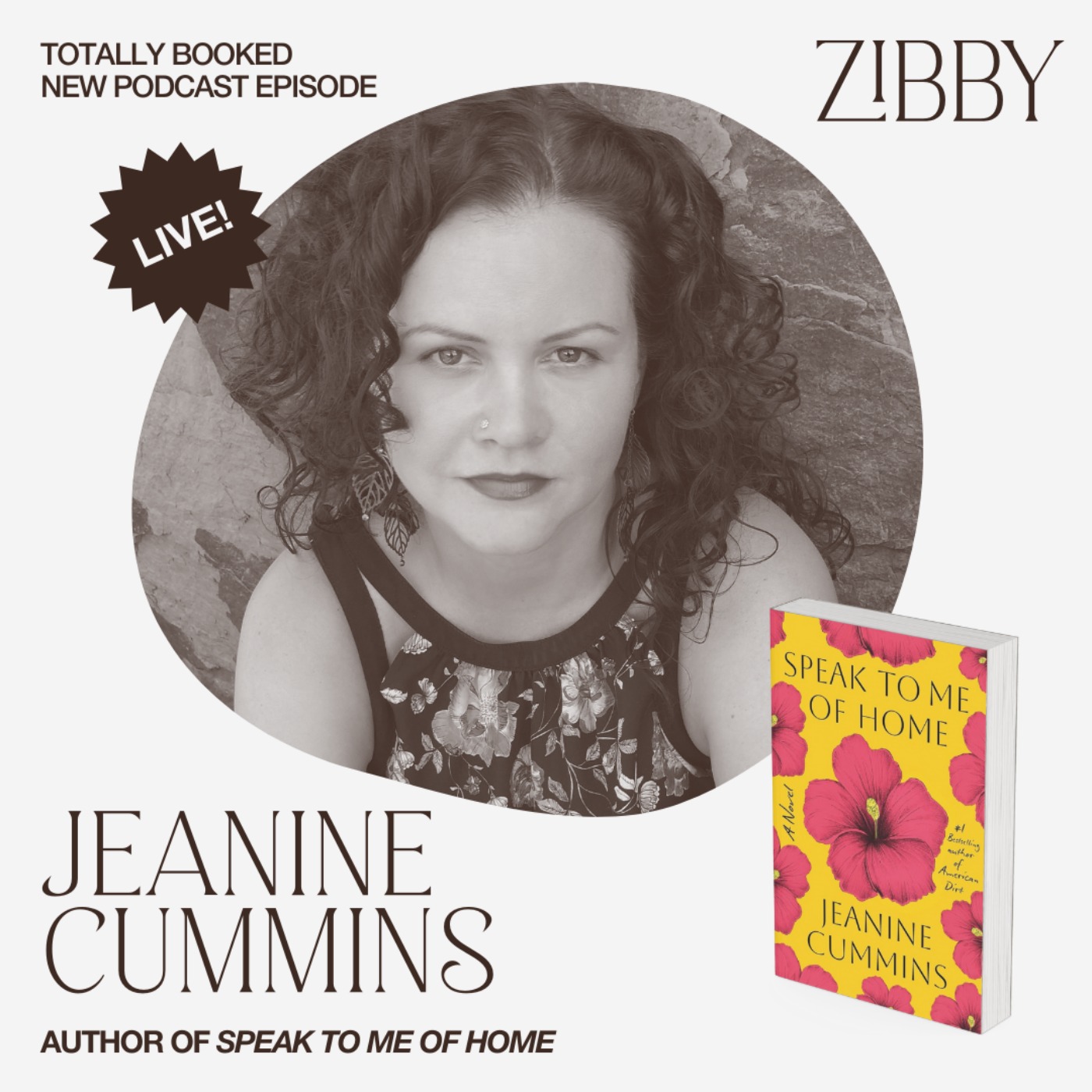
Jeanine Cummins
The new McCrispy strip is here. Dip approved by Ketchup Tangy Barbecue, Honey mustard, honey mustard, Sprite, McFlurry, Big Mac sauce, Double dipped in Buffalo and Ranch, More ranch and creamy chili. McCrispy strip dip now at McDonald's.
- [00:16]
LinkedIn Advertiser
Race the rudders. Race the sails. Race the sails. Captain, an unidentified ship is approaching.
- [00:22]
Jeanine Cummins
Over.
- [00:23]
LinkedIn Advertiser
Roger, wait. Is that an enterprise sailor sales solution? Reach sales professionals, not professional sailors. With LinkedIn ads, you can target the right people by industry, job title, and more. We'll even give you a $100 credit on your next campaign. Get started today at LinkedIn.com results. Terms and conditions apply.
- [00:45]
Hannah Berner
If you're anything like us, you love attention. And my favorite way to get all eyes on me is with next level shiny, glossy hair.
- [00:52]
Giggly Squad Co-Host
Which is why we're so excited to tell y' all about the new Lamellar Gloss collection from the girl Tresemme and Gigglers.
- [01:00]
Hannah Berner
We've got you too, because Tresemme partnered with us to bring you 1-800-gloss, a special bonus episode of Giggly Squad where Hannah and I give advice on all things hair and giving gloss. Check out the episode and grab the Lamellar gloss collection today because I'm officially declaring this spring gloss season.
- [01:21]
Zibby Owens
Hi, this is Zibby Owens and you're listening to Totally Booked with Zibby, formerly Moms don't have time to read Books in my daily show, I today's latest best selling buzziest or underrated authors and story creators whose work I think is worth your time. As a bookstore owner, publisher, author, and obviously podcaster, I get a comprehensive look at everything that's coming out and spend my time curating the best books so you don't have to stay in the know, get insider insights and connect with guests like I do every single day. For more information, go to zibbymedia.com and follow me on Instagram ibbyoens.
- [02:04]
Welcome back to Totally Booked with Zibi. I am so excited to be here with Jeanine Cummins to talk about her latest novel, Speak to Me of Home. This is so exciting. Welcome, Jeanine.
- [02:15]
Jeanine Cummins
Thank you Zippy. I'm so happy to be back.
- [02:17]
Zibby Owens
Yay. I'll just read you a little bit about Jeanine. In case you don't know, Jeanine Cummins is the number one New York Times best selling author. We have to talk about how that feels of American Dirt, which was an Oprah's Book Club and a Barnes and Noble Book Club selection as well as a number one indie next pick. The novel has been translated into 37 languages. I don't think I could name 37 languages. And sold more than three and a half million copies worldwide. Her other works include the memoir A Rip in Heaven and the novels the Outside Boy and the Crooked Branch. She lives in New York with her husband, two daughters, and their dogs. Welcome.
- [02:57]
Jeanine Cummins
Thank you.
- [02:58]
Zibby Owens
Oh, my gosh. Okay. This book was so good. You were such a great writer. I know you know that I'm such a huge, huge fan of yours, but oh, my gosh. Tell everybody what Speak to Me of.
- [03:09]
Jeanine Cummins
Home is about the hardest question, right? 100,000 words distilled to, like, a couple sentences. Yes.
- [03:15]
Zibby Owens
Elevator pitch. Go.
- [03:16]
Jeanine Cummins
Yes. I'm not good at this part, but it's three generations of a family very similar to my own grandmother, born and raised in Puerto Rico. Her child, the middle generation mother, Ruth, is back and forth, spends her childhood back and forth between Puerto Rico and St. Louis, which was my father's experience growing up. And then the third generation, Daisy and her siblings, who have, like, a hope of sort of returning to their roots and all the ways that these three generations love and misunderstand each other.
- [03:55]
Zibby Owens
Amazing. Where did this come from? And how did you decide this would be the next book?
- [04:01]
Jeanine Cummins
Well, I think in the wake of the publication of American Dirt, which you may have heard was a little bit rocky, it took me a minute to figure out what I wanted to write again, whether I wanted to write again. And in that time, I think I started doing a little bit of sort of self exploration. There was much made of my ethnicity at that time, and I started asking myself questions about how I got here, how did I get here? How did I get to this moment where my identity is under a microscope? Am I doing something wrong? And that question led me into the exploration of my family history.
- [04:53]
Zibby Owens
So do you want. Because not everybody may know what happened with American Dirt that led you to explore your identity? Do you want to just.
- [05:01]
Jeanine Cummins
What's the nutshell version? I mean, there were so many things that created the controversy, but the publication of that novel was extremely controversial in ways that I did not anticipate. And much of the controversy was predicated on the fact that I wrote a novel wherein most of the characters were Mexican and Central American, and I am not, but I am Latina. And sort of asserting that I was Latina was problematic for. For some people, not least of all because I also identify as white. And I didn't understand that in 2020, I would still have to explain to people that Latinos come in different colors. These two things are not mutually Exclusive. I can be both. But my identity has always been not simple. And so I. I started asking myself, you know, what is it about that? What is fascinating about it to people? What is interesting about it to me? Which of the three generations has the most sort of legitimate claim to the way they feel about their heritage or their identity? Spoiler alert. All of them do. There is no wrong way to be who you are. And so that was the sort of exploration, I think, that was going on in the background.
- [06:38]
Zibby Owens
Well, that whole thing, so to speak, has changed how people write. And it has given, sadly, such a level of fear of exploring what it feels like to be in someone else's shoes. And that act of empathy, writing from someone else's perspective. Maybe you're not their same race, maybe you're not their same gender. Maybe you're from a different city or a different town. Like, I think that exercise is super valuable to do to put yourself in someone else's shoes. So anyway, unfortunately, it has caused a movement where we can only write from our own shoes and our own experience, which I find quite limiting.
- [07:22]
Jeanine Cummins
It is limiting, but it's also temporary because fiction cannot exist within the confines of that locked box. So it's not sustainable. And I do think that this is just a moment in time and probably a reckoning that needed to happen because certain voices were always elevated over other voices. And there was a legitimate backlog of frustration among writers of color who felt overlooked and undervalued and underpaid. And it was a very complicated moment that I found myself in the crosshairs of. That really was not actually about me.
- [08:01]
Zibby Owens
Well, as you know, at the time, I was such a huge. Am a huge fan of American Dirt, and I wrote a whole thing in your defense because I was like, but this book is so amazing. Not that I didn't understand the broader implications, but I felt that was one of the best books I've ever read. And you are such a talented author. And that is why I was so, so excited when you had a new book out and so excited to delve into the pages and meet the characters and feel the Ruth's heartbreak when something happens to her daughter Daisy. And even the pain of throwing a party in the park and not understanding in this culture that people drop their kids off at parties versus stay, enjoy all these little moments. Big, small are so powerful. So when you decided to write this book and have this book be next, which did you know there would be, like, how did you structure it? What was the thing? Were you like, there's going to be an accident or there's going to be this, or how can I tell the story? Like, how did you even approach it? Because there's so much in this book.
- [09:04]
Jeanine Cummins
Yeah, I think my first entry into the book was my grandmother Maria. So the character of Raffaella in the book is based very much on my grandmother Maria. So she. They're completely different characters. Rafaela is a much nicer lady than my grandmother was. She's more adventurous. But Maria was a difficult woman, but she also had a very, very difficult life. And it wasn't until I had children of my own that I started questioning why was she the way she was. The circumstances of Rafaela's life are exactly the same circumstances that my grandmother experienced in her young adulthood. In her childhood, she grew up the beloved oldest daughter of a very elite family in Puerto Rico. They were very well to do. They had live in servants. They were the cream of the crop, so to speak. And when she was 16, her dad lost everything and she was shipped out to Trinidad to get a job on a naval base. And she spent the entire rest of her life angry about it, you know. And then she met my Irish grandfather on the naval base there and they got married. They had eight children. My dad was the oldest. And they were back and forth between St. Louis and Puerto Rico for the first, I don't know, maybe 10 years of my dad's life. He went to elementary school there. I think he was born in Missouri, but he made his first trip to Puerto Rico when he was three months old. And Maria spent the rest of her life sort of affronted by the way people treated her. And not least of all because she was like, don't you know who I am? Don't you know who I am? And of course, in St. Louis, they treated her like a Puerto Rican. And she was like, but I'm not one of those Puerto Ricans. So my dad and his siblings ingested a lot of self loathing growing up. A lot of shame. So I wanted to unpack all of that. They never talked about it. My dad never talked about what his childhood was like. I knew it was bad, but he never discussed it. And I found myself and you know, my siblings and I have always been so proud to be Puerto Rican. So proud. And then I understand also that, like, we don't really know what it means to be Puerto Rican. We did not grow up in a Puerto Rican community. We were very. My grandmother lived in a white community. There were no mixed communities in St. Louis in the 50s when they were living there. So it was just like a very difficult thing for her. And all she wanted was for her children to pass. And then she succeeded, largely. Her children grew up to be kind of white people. They all married white people. They had us. And to varying degrees, we are all, like, so proud and wanting to return to the roots. And we're like, we're Puerto Rican. And sometimes our parents are like, are you, Are you, though? So I wanted to explore all of that, and I wanted to give my grandmother a do over. I wondered, how would her life have been different, better, happier, if she had had more support, if she had experienced less racism, if she had felt welcomed in St. Louis? How would my dad and his siblings have been different if they were not made to feel ashamed of their ethnicity when they were growing up? I mean, it really was like a fundamental cornerstone of, like, how our family was built was this experience, and one that we never really talk about. So I wanted to get into it, and I wanted to understand too, like, how my feelings. How my feelings are so different from my father's and his were so different from his mother's, and the interplay between those things and how we ended up here. You know, many of the anecdotes in the story are true. Many of them. The country club scene, was that true?
- [13:31]
Zibby Owens
Yeah.
- [13:32]
Jeanine Cummins
So my grandmother, my grandfather joined a country Club in St. Louis, hoping to help my grandmother make friends. And they would not give her a locker in the ladies locker room because it was a whites only club. So they. The compromise was that they gave her a locker in the staff room. And this was a thing I didn't know about until, you know, I was an adult. And of course, I grew up generation X on the East Coast. So my immediate reaction is like, why did they stand for it? They went to that country club for years, and my poor grandmother would, like, go downstairs to the staff room and get into her bathing suit. And no wonder she was mad. No wonder she was a bad mother, like I would have been, too. She was. What she suffered at that time. It was not a thing that anyone talked about or acknowledged. She just went. She just got through it, you know, so. You know, the thing that I love about fiction maybe more than anything else is is that it has this magical way of providing a framework to difficult conversations, right? Because you're unlikely to sit down over a glass of wine with your girlfriends and just tackle racism, like, just out of the blue, right? But if you've all read the same novel and racism is, at its core, suddenly you can start to have these conversations about the people in the novel who you've come to care about without really having to make a political claim, without really having to show your hand. But you can start to get at the humanity of these issues and maybe find common ground. This is what I love about a good novel.
- [15:32]
Zibby Owens
So true.
- [15:35]
Today's episode has been sponsored by Wayfair. Oh my gosh, it is so nice outside. Today is one of the first spring days and it makes me so excited to just get outside and soak up the sunshine as the days get longer and warmer. And it makes me want to refresh my outdoor space and make it feel more mine. I don't know if you feel the same way, but with summer on the way, I have found some so many great things on the Wayfarer site to spruce up my outdoors. There are these adorable throw pillows that I love that are blue and white. Blue is my favorite color and they have these fabulous outdoor games like Connect 4 and Croquet and things from my childhood that I am so excited for my kids to play with too. Delivery is always fast free and hassle free, which makes life so easy. I can always trust Wayfair to deliver. So if you're looking for outdoor seating or outdoor structures and gazebos or something small like, I don't know, a patio cushion, Wayfair has everything. And it's everything your home needs. During the warm weather season too. Wayfair makes it easy to tackle all your home summer goals. So shop a huge selection of outdoor furniture online this summer. Get outside with Wayfair. Head to Wayfair.com right now. That's W-A Y-F-A-I R.com Wayfair Every style, every Home.
- [17:07]
LinkedIn Advertiser
Does it ever feel like you're a marketing professional just speaking into the void? Well, with LinkedIn ads you can know you're reaching the right decision makers. You can even target buyers by job title, industry company seniority skills. Wait, did I say job title yet? Get started today and see how you can avoid the void and reach the right buyers with LinkedIn ads. We'll even give you a $100 credit on your next campaign. Get started at LinkedIn.com results. Terms and conditions apply.
- [17:37]
Giggly Squad Co-Host
Hi guys, it's Hannah from Giggly Squad with some around the corner. I wanted to tell you guys how I'm staying comfy and stylish. Lululemon is my secret weapon. There are plenty of copycats out there, but nothing compares to the Lululemon fabrics and fit. I've literally had my pair of Lululem since college and I'm out of college. I know I don't look it, but I am. The quality is next level. I especially love the Lululemon Align collection. It's made with this weightless, buttery, soft nulou fabric that feels like next to nothing. It's so soft. Whether you're in Align pants, shorts, a bra, tank, skirt, a dress, you get non stop flexibility in every direction so you can stretch the summer limits. Align. Even wicks sweat. And as a sweaty girl, I love this. You know, it's going to be my best friend when I play tennis this summer. Shop the Align collection online@lululemon.com or your nearest Lululemon store.
- [18:35]
Zibby Owens
I mean, that's what talking about books is all about.
- [18:38]
Jeanine Cummins
Yeah.
- [18:38]
Zibby Owens
It's a way to talk about life in general.
- [18:40]
Jeanine Cummins
Yes.
- [18:41]
Zibby Owens
We're not actually talking about books right now. This is all a facade.
- [18:45]
Jeanine Cummins
That's right.
- [18:46]
Zibby Owens
It's all about. It's how to find ways to live and make sense of the world. And we look to fiction and memoir and everything to help as our guideposts in a way.
- [18:57]
Jeanine Cummins
Absolutely. And that is one of the reasons why I am so worried about the current trend towards censorship from both sides. But really, I mean, from the far right, the absolute spike in book bans is terrifying. And what I keep saying to, like, books are never the problem. Never ever. Even the books that we find, like Mein Kampf is not the problem. You know, the problem is ignorance. Books are the cure. So even the books that we find problematic or scary or bad, for whatever reason, we should be reading them and then we should be talking about them. The conversations that can open from reading any book, whether it's problematic or offensive or not, those conversations are where progress can happen. Like, the books are the answer. So I just, I worry about this trend and authoritarianism trend in censorship, which is not only coming from the far right. As you talked about at the beginning of this conversation. Many, many, many people in our industry now are afraid to say what they think. If it diverges at all from the party line, they're not saying it because it's too risky. And that is really frightening. We are supposed to be the bastions of free speech. Right. It's not happening right now.
- [20:41]
Zibby Owens
Well, the way you articulated that is so great. It's, without books, what do we have left? Without people's stories, without the diversity of thought, without all of the different perspectives, how can we all coexist?
- [20:55]
Jeanine Cummins
Right.
- [20:56]
Zibby Owens
So I totally agree with that.
- [20:58]
Jeanine Cummins
Yes. I knew you would.
- [21:04]
Zibby Owens
I Mean, what author is going to be like, no, I'm actually all for book bands. I mean, let's just strike them from the list everywhere for you. Back to the book for a second. Is this one of the things that happened to you? Not to say, like, did this happen? Did that happen? But in the home, English Spanish was not allowed after Benita was having trouble in school, and they said, okay, forget it, it's your fault, and no more Spanish. And there was a sense of loss in that as well, because in that decision came this sort of loss of culture, loss of identity, loss of so much. So much so that when the family would try to have conversations later and Spanish would be so difficult as a result, and then it made them feel less a part of things.
- [21:54]
Jeanine Cummins
Yes.
- [21:54]
Zibby Owens
Talk about that moment, because I feel like, in a way, that was a pivotal moment for the family.
- [22:00]
Jeanine Cummins
It was. And that was a moment again from my own childhood. So I did not expect to feel emotional answering this question. But Spanish was my first language. I was born in Spain and to a Puerto Rican father, so my mother is white. But they saw the opportunity to have bilingual kids and they took it. So we spoke Spanish first. And when we came to the United States, we moved to California. And it was the 70s, and people were different then and a little mean. They're still mean sometimes. But my brother was in, I guess, first or second grade. He's three years older than me, and he had a hard time in school, and his teacher called him stupid. And he was grade level in every way, but he did not speak good English. And so my dad got into it with the teacher. The family story goes that he called the teacher stupid because she couldn't recite her colors in Spanish. And apparently her name was Mrs. Garcia, which is an extra level of irony to this story. But, yeah, he pulled my brother out of that school, and then they came home and said, no more Spanish at home. We have to kick it up into English here. And we lost our language, all three of us. And to this day, my brother, who at one point in his life could not speak English, doesn't have a word of Spanish. Not a word. So I spent, like the last 10 years of my life studying Spanish. I am conversationally adept at this point. I will never say fluent. I'm not fluent, but I can hold my own in a conversation with Spanish. But I'm aware that my Spanish is broken. And so one of the things that happened in the wake of American Dirt was that I was ridiculed for my broken Spanish. And to Be someone who at like, the two bookends of my life. Early in my life, I was sort of in a position where I was made to feel ashamed or humiliated for not speaking English, and then 40 years later, to be made to feel humiliated because I didn't speak Spanish well enough. That also was like, a major entryway into this book for me. I was like, how can both of these things be true in one life? And in fact, I think they're true very frequently in one life. Like, I think that this is a thing that many Latino people contend with, and many people who are bicultural or grow up with an identity that is not simple. I think it's quite. I think there's a lot in here that people will relate to, whether or not they are Puerto Rican, whether or not they are Latino, whether or not they are bicultural. I think there are ways in which women in particular are always made to feel as though no matter what they're doing, they're doing it wrong. And that is at the crux of this story, I think, like, you can't win in a way.
- [25:19]
Zibby Owens
Where is the hope, though?
- [25:22]
Jeanine Cummins
The hope is that at the end of the day, it doesn't matter. Because what really matters is the lives we build together, the love that we have for each other, and the coming home to ourselves at a certain age, maybe, where we understand that it doesn't matter at all what way other people perceive us, because we know who we are. And that, I think, is where the hope is. I think Rafaela learns that in spades throughout the telling of this story. Ruth comes to that at some point, and with Daisy, she's young, she's like. She's on her way, you know. But I think the three women in the story are all trying to come to the point with each other, where they understand each other and they. They discover through the hardships that they bear, that all of the peripheral worries that they have about the ways that they perform their identities or feel or inhabit their identities are really, like, absolutely secondary to their identity as a family. You know, Rafaela's position as matriarch is the most important identity that she has. Ruth's position as daughter and mother, those are the things that matter most.
- [26:48]
Zibby Owens
And we feel that so much in the love for family, in the fear, in what do you do when you can't reach your child in an emergency? I mean, some of these are the most sort of baseline, unifying feelings there are. Like, to be a parent, to love someone, to have that fear circulating, and you make us feel that way, you put us right there. And I'm very sorry. I know. Stop.
- [27:19]
Alloy Women's Health Advertiser
Thanks a lot.
- [27:21]
Jeanine Cummins
You know, I think it's a hallmark of all my books accidentally, because I've had a lot of trauma in my life, which we don't need to get into. But I have had a lot. And I've had that experience more than once in my life, where you're bopping along on a regular day and there's a portal and you go through it and suddenly your life will never be the same. That sort of devastating moment where everything that matters can change in an instant seems to accidentally be at the heart of every novel that I've written and my memoir, which is about this very thing. So I think that's always going to be there in the fiction that I am creating because it's so deeply a part of who I am as a writer.
- [28:09]
Zibby Owens
And isn't that the thing that everyone in the world needs the most help with? Right. That's why your fiction is so powerful. We all go through life and at any moment know if it hasn't happened to us yet, that it can. That from one moment to the next, life can change completely. And yet we have to walk around and pretend like that's not the case, whether something happens to us or someone we love. So how do we hold that and still go out and email and do whatever we have to do in a day?
- [28:40]
Jeanine Cummins
Yeah. Rum helps.
- [28:45]
Zibby Owens
Jeanine, thank you so much. Thank you for coming on. Thank you for speak to me of home. Thank you for being such a warrior and not staying quiet. There are so many people who would have just said, I am out. I am done with this industry. I am not publishing again. I'm not subjecting myself to all this. And you are back in with a beautiful new book like you deserve a standing ovation. Thank you so much and I am so proud of you.
- [29:11]
Jeanine Cummins
Thank you. Thank you. It's been a pleasure.
- [29:14]
Zibby Owens
Thank you for listening to Totally Booked with Zibby, formerly Moms don't have time to read books. If you loved the show, tell a friend, leave a review, follow me on Instagram, ibbyoens and spread the word. Thanks so much. Oh, and buy the books.
- [29:31]
Jeanine Cummins
Foreign.
- [29:36]
Giggly Squad Co-Host
Hi, guys, it's Hannah from Giggly Squad with some around the corner. I wanted to tell you guys how I'm staying comfy and stylish. Lululemon is my secret weapon. There are plenty of copycats out there, but nothing compares to the Lululemon fabrics and fit. I've literally had my pair of Lululemon leggings since college and I'm out of college. I know I don't look it, but I am. The quality is next level. I I especially love the Lululemon Align Collection. It's made with this weightless, buttery, soft nulou fabric that feels like next to nothing. It's so soft. Whether you're in Align pants, shorts, a bra, tank, skirt, a dress, you get non stop flexibility in every direction so you can stretch the summer limits. Align even wicks sweat and as a sweaty girl, I love this. You know it's going to be my best friend when I play tennis this summer. Shop the Align collection online@lululemon.com or your nearest lululem.
- [30:32]
Hannah Berner
If you're anything like us, you love attention. And my favorite way to get all eyes on me is with next level shiny glossy hair.
- [30:39]
Giggly Squad Co-Host
Which is why we're so excited to tell y' all about the new Lamellar Gloss collection from the girlies at Tresemme and Gigglers.
- [30:46]
Hannah Berner
We've got you too, because Tresemme partnered with us to bring you 1-800-gloss, a special bonus episode of Giggly Squad, where Hannah and I give advice on all things hair and giving gloss. Check out the episode and grab the Lamellar Gloss Collection today because I'm officially declaring this spring gloss season.
- [31:04]
Alloy Women's Health Advertiser
Struggling with hot flashes, brain fog or midlife weight gain? You're not alone, but why wait years for relief? Nearly half of women suffer for as much as three years before seeking help for menopause symptoms, often because they don't know where to turn. Alloy Women's Health offers science backed physician guided treatment plans for your hormonal symptoms as well as skin, hair and sexual wellness treatments. And Alloy now offers access to competitively priced GLP1 prescription medication to help manage midlife weight gain. Join the 95% of women who tried Alloy and saw relief in the first two weeks. Visit myalloid.com alloy20 today and use code alloy20 to get $20 off your first order. Start feeling like yourself again.