← Totally Booked with Zibby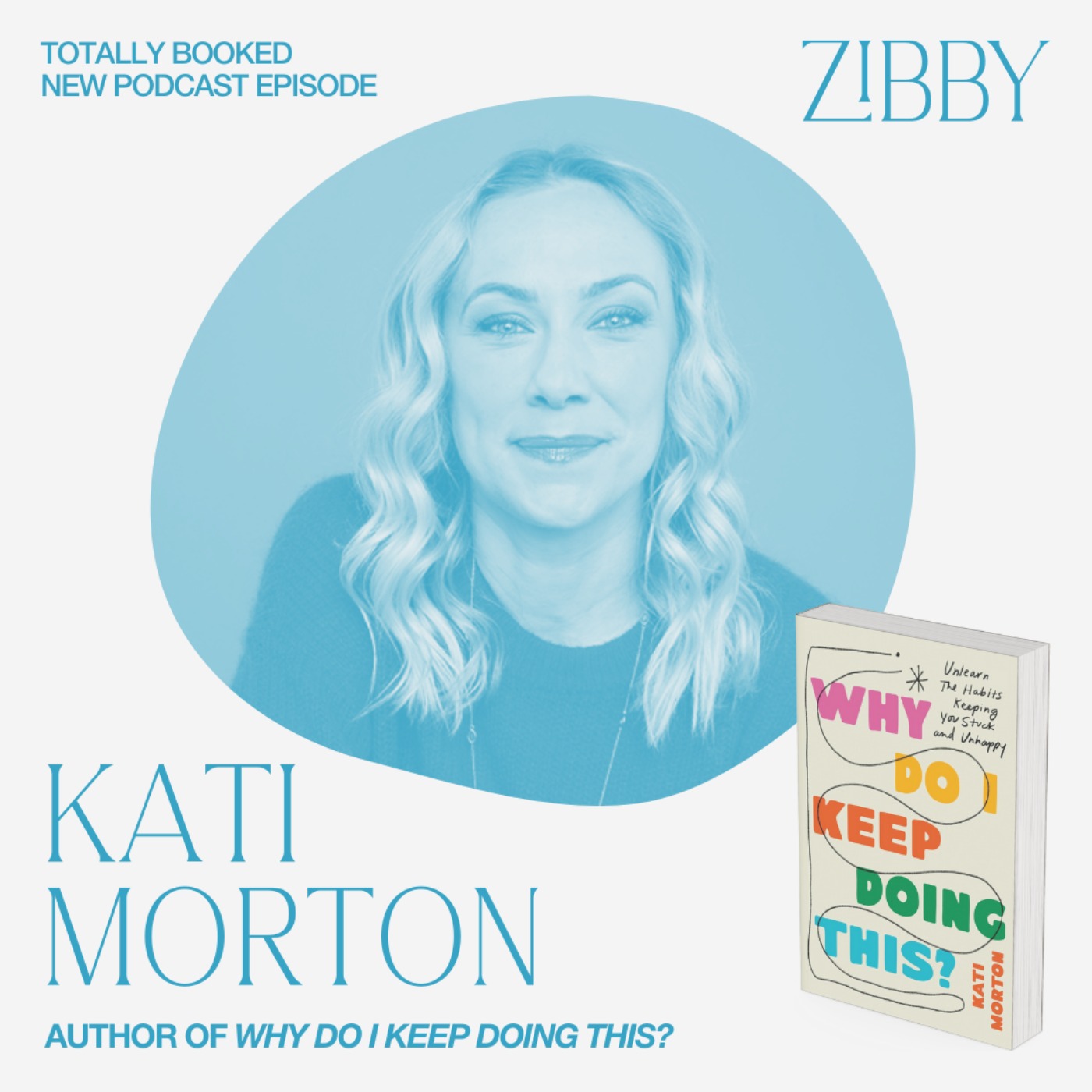
Totally Booked with Zibby
Kati Morton, WHY DO I KEEP DOING THIS?: Unlearn the Habits Keeping You Stuck and Unhappy
00:27:54
Loading summary
Transcript74 lines
- [00:01]
Podcast Advertiser
Saving Abigail is the true story of the global fight to rescue a three year old child stolen this holiday season. Give a gift like no other. Give a real life miracle you can hold in your hands by Saving Abigail. The unforgettable story you won't want to put down. You know you've reached peak couple energy when your undies match. Meundies Match Me has you both covered literally in super soft ultramodal undies, socks, PJs and loungewear. Festive prints? Check. Cozy vibes? Double check. And right now it's deal season. Get up to 50% off site wide for Black Friday and Cyber Monday. Take your couple game to the next level with Meundies Match Me. To get deals up to 50% off, go to Meundies.com acast Enter promo code acast that's Meundies.com acast code acast Dear.
- [00:58]
Kati Morton
Career Ladder, you've had your moment. You're linear and one dimensional. Ambition doesn't just go up anymore, it zigs and zags and squiggles. We're CEOs, executives, founders. We're advising companies, launching side hustles, taking breaks, defining our next act ambition on our terms. The possibilities are endless. Chief Lead on join us@chief.com.
- [01:36]
Zibby Owens
Hi, this is Zibby Owens and you're listening to Totally Booked with Zibby, formerly Moms don't have time to read books. In my daily show, I interview today's latest best selling buzziest or underrated authors and story creators whose work I think is worth your time. And as a bookstore owner, publisher, author and obviously podcaster, I get a comprehensive look at everything that's coming out and spend my time curating the best books so you don't have to stay in the know, get insider insights and connect with guests like I do every single day. For more information, go to zibbymedia.com and follow me on Instagram Ibbeowensk Kati Morton is the author of why Do I Keep doing Unlearn the habits keeping you stuck and unhappy. She is a licensed marriage and family therapist, best selling author and highly sought after speaker in the mental health field. With a Master's in Clinical Psychology from Pepperdine University, Katie has delivered impactful talks at prestigious events and platforms worldwide. She has been at the forefront of the mental health movement since 2011, sharing powerful videos that that demystify mental health and replace stigmas with understanding. Her influential YouTube channel, with over 1.5 million subscribers and 130 million views, has made her a prominent figure in translating complex Mental health concepts into accessible language. An accomplished author of two bestselling books. Are you a guide to caring for your mental health. And identify, understand and cope with PTSD and emotional stress. Katie's dedication to dismantling barriers to mental health services and fostering a supportive global community. And is unmatched. Welcome, Katie. Thanks so much for coming on. Totally booked to talk about why do I keep doing this? Unlearn the habits keeping you stuck and unhappy. Congratulations.
- [03:26]
Kati Morton
Thank you. Such a pleasure to be here.
- [03:27]
Podcast Advertiser
You too.
- [03:28]
Zibby Owens
I feel like I should start out by saying, like, you don't want to hear this. You're not going to want to hear this. But, you know, because you start so many of your things dispelling a myth that maybe we have in our heads about our behavior or our emotions or whatever, and you just, like, shred it right away. Talk a little bit about the book and about your whole mission of helping people in this way that you do.
- [03:53]
Kati Morton
Yeah. My book, why do I keep doing this? Honestly? Was kind of just born out of conversation with my team about what. What I was excited and interested in. Essentially, we thought that it would be a book about eating disorders. And hang with me. You're gonna be like, how did you get to this?
- [04:08]
Zibby Owens
There was. There were. There was a passage. There were some about eating disorders in there.
- [04:12]
Kati Morton
Yep. There is a chunk. And the reason that it kind of took the shape that it did is because as I was talking, I work mainly with women. Not really by design, but probably just because they're my people and I, you know, I'm fortunate that way. And we were chatting about it, and they were like, oh, my God, me too. I do this and. Yes, and I do that. And perfectionism. Yeah, yeah, yeah. And we were just kind of all commiserating in the shared experience around the illusion of control. And as we kept talking, my literary agent, Jael, who I love dearly, was like, you know, I don't know if it needs to be about eating disorders. And I was like, I know. I think it's bigger. I think it's like a broader stroke. And that's how. Why do I keep doing this was born. Was essentially to shed a light on something we all deal with and manage or have the illusion of, and that is control in our lives. And how when things feel really chaotic, what do we do to try to take that back? And so that's really where this book came from. It's probably my most personal book because instead of me, there is some prescriptive. My editor wanted a little more prescriptive stuff in there. But the idea was essentially for me just to be like, you're a Sherpa, like, taking you along, like, here's what I know, but I don't know everything. And, like, here's what I'm still learning, and here are my struggles so that people don't think that they're alone with it. And also realize that just because I'm a therapist doesn't mean that I always do better. Maybe I know better. Maybe you know. And so that's where the book came to be as far as me becoming an online content creator, which is still kind of funny to say. It was almost by accident. And I don't mean it that, like, oh, I just created a video. It went viral. Not that kind of accident, more that. At the time, my. My boyfriend, now husband, had been to a conference, and he was, like, just so enthralled, so excited about the prospect of YouTube as a whole. And then he came back from it, and he was like, you talk about eating disorders all the time. You're working at this treatment center, and you complain that no one understands. What if we just put some stuff out to educate people? And that's how it was born. And, I mean, like many therapists out there, I initially was like, absolutely not. Isn't it cat videos and beauty and, like, I don't do either of those things. But over time, I came around to the idea and, yeah, here we are 14 years later.
- [06:18]
Zibby Owens
Oh, my gosh. Wow. Getting in early on YouTube. That's very impressive.
- [06:25]
Kati Morton
It's just so funny, though, because it comes with its own hangups, right? Like, we couldn't make money off of it at all. That was never the goal. That's a funny thing. People don't realize it. Also, we were definitely the first one to the party. So when we would reach out for collaborations early on, people are like, oh, my channel's not that serious, or, oh, I don't really talk about that stuff. You know, we definitely came into a lot of roadblocks that way.
- [06:46]
Zibby Owens
Interesting. Well, your content on YouTube is so well produced and so clear what each one is about and different visuals. And I was like, wow, this is really impressive. So yay for that husband.
- [06:57]
Kati Morton
He does all the post production. So nice.
- [07:00]
Zibby Owens
You had a line early in the book where you talked about what happened to you in 2023, and you said, I wasn't just exhausted. I was trapped in an endless cycle of trying to control everything around me. My to do lists, my emotions, my relationships. I was holding on so tightly That I didn't even realize how much I was suffocating myself. Tell listeners a little bit more about that.
- [07:20]
Kati Morton
Yes, I am a control freak, recovering control freak. And I think it got to a point where I was struggling so hard to keep everything going.
- [07:32]
Zibby Owens
You know?
- [07:32]
Kati Morton
Like, I feel like in life, especially as women, we spend lot of plates. Right? We have a lot of things that we manage, whether that's people, animals, everything in between. Right. As well as our own businesses. I think you could probably relate to a lot of this, too, right? Is that we're asked to do a lot of different things, to wear a lot of different hats, and many of us thrive, myself included, thrive in that. And I enjoy the challenge, But I can definitely get this. I don't even know how to really describe it. I can definitely get this almost, like, laser, like, focus, where I feel like I need to make decisions about everything and, like, nothing else matters, because I just need to move through this. Like, this needs to happen. So we're gonna do it my way. And I can get kind of. I mean, not kind of. I can get super controlling. And what I realized and why the book came to be in the book, you kind of learned this is like. What I realized is that in my urge to, like, do more, earn more, be better, you know, earn my worth, I strangled myself, because then I don't. There's no room for.
- [08:29]
Exploration. There's no room for joy. And that's really what that felt like is like in this effort to, like, work harder, make more money, be more successful, reach more people, do all the things I want to do. I, like, I suffocated myself. I didn't get to be the real Katie. It was like, only through work, if that makes sense.
- [08:49]
Podcast Advertiser
Yeah.
- [08:50]
Zibby Owens
Yeah. And how do you feel like you work with people who some mirrored back some of these emotions to you? How did. Seeing it sort of reflected? I know you have a lot about empathy in the book. Obviously, you're incredibly empathetic. You also go into toxic empathy. So talk a little bit about that muscle, so to speak, and then when it can become dangerous or not dangerous, but, you know, detrimental, toxic.
- [09:15]
Kati Morton
Right. Anything in excess. I think in general, empathy is really a superpower. Right. It's something that allows us to share with other people and feel for them. And that's so powerful for both. For the. The giver and the receiver. It's like that old adage or that old quote that, like, any joy shared is doubled and any sorrow shared is halved. And I think we can all kind of Feel that, that, like, if you get to go tell your best friend that something really good happened, you get really excited for him or her and they can really get it amped up with you. And then sorrow, you know, if we get to share in a tough time, it feels nice to know you're not alone and have somebody kind of carry that burden with you. And so in that case, empathy is really powerful and I think it's really important. I also think it makes me a better therapist because I can put myself in my patients positions. Also. I've been in therapy myself for many years, off and on since I was 15. And so I think in general.
- [10:09]
Empathy is powerful, however, when it is firing all the time and we feel for everything. Like, I just shared recently on a friend's podcast that like, when I was growing up, I had this like little hammock above my bed that I would put all my stuffed animals in. I think it's probably my era. I feel like everybody had them from my cousins and my friends anyway, I would rotate them regularly so that each one I got to play with equally and also was like closest to me when I slept, which, I mean, I realize, you know, now it's like, Katie, you know, I'm like, don't worry, I'm in therapy. But it, you know, when empathy's kind of out of control, I don't even.
- [10:50]
Zibby Owens
See anything wrong with that. Like, I, like I was like, that totally makes sense to me. So I'm on your, on your wavelength.
- [10:57]
Kati Morton
But you think of like the empathy for an inanimate object and how that can get in the way of us being able to do what's maybe best for us. And that's kind of where it turns toxic for me, where I end up. It's like people pleasing is a very, you know, people talk about this all the time now. It's a very common word, but the, the phrase itself really means that I can't be okay unless you're first. Okay? And so that gives all our power away, right? That means that my emotional regulation or my well being depends on you. And logically we can hear that and be like, that's not good, but we do it all the time, or I do it all the time. I should only speak for myself. But that's where the empathy kind of got away from me. And that's why there's a whole chapter just on people pleasing. Because it's such a thing that I struggle with and feel like it's like whack a mole. Like I learn different Ways that it's showing up in my life, and I'm like, oh, my God. It's way bigger and way more pervasive than I thought it was going to be. But again, you can't throw the baby out with the bathwater. Empathy itself is good, and it's a learned trait that we grow over time through our life, but we do have to have healthy boundaries, and that's kind of that.
- [12:11]
Zibby Owens
So you would not be an advocate of the expression, you're only as happy as your least happy child.
- [12:18]
Kati Morton
No, you have no power in that situation. We can't make anybody happy or unhappy.
- [12:24]
Zibby Owens
I'm gonna work on that.
- [12:25]
Kati Morton
I'm sorry.
- [12:26]
Zibby Owens
Gonna work on that.
- [12:29]
You had kind of a funny section. I don't know if it was intended to be funny about this interaction where you're dating someone and somebody tells you that, like, Katie, you're being a pufferfish. You're being, you know, you're prickly when someone comes close to you and talk a little bit about that. And whatever happened to that relationship.
- [12:47]
Kati Morton
Yeah, it ended probably okay.
- [12:50]
Zibby Owens
So sorry to hear.
- [12:51]
Kati Morton
No, it was okay. It wasn't intended for long term anyway. But yes, pufferfish has become one of my favorite. I should send my therapist a thank you card for that. She's retired since then, but because that term that she gave to me has been such a great way to describe the kind of like, anxiously attached people that I would say that I more am. Where vulnerability can feel a little bit risky sometimes, and letting people see the real you can be scary. And so when we feel somehow poked, like our soft underbelly gets poked a little bit, we protect ourselves. We throw our spines out like a puffer fish. And what you're sharing from the book was when my therapist made me aware of this term, and, I mean, I assume it's just something she came up with on the fly. I never really asked her. I don't know if she knows how impactful it was. But essentially her encouragement for me through this, I mean, I think I saw her for like two or three years through that period was to allow myself to be authentic, to show up as me, come what may. People who can hang can hang. People who won't, will leave. And I was so scared because this whole relationship was built on the fact that I wasn't me. And so when I tried to let little bits in. Oh, didn't like it. Or like when life was lifeing and things were happening and I would have to admit, like, oh, I'm scared. Or I'M sad. Or like, at the time my dad had gotten sick and I was like, oh, my dad is getting sick and this is really scary. I didn't want to let that person in. And then when he would try to get in, I would spines out. And so essentially that conversation that I had with her was her telling me that, you know, you can't have real relationships if you aren't real. Like, that connection can't exist if you keep puffer fishing people. And so her challenge was instead of what the us, the avoidant kind of anxious people do, we love to ghost, we love to just shut down. Not for better, but we do. And she had encouraged me to instead communicate, like, try to tell him that you're upset about this. And you didn't like that this is what happened. And I was like. And then I just went and did the opposite, as we sometimes do, our poor therapists from both sides. Anyway, by the time I saw her next, I was like, oh, I broke up with that stuff. No, no, no. You know, and that's when she said, no, you just puffer fished him. You didn't even give him an opportunity. Let's work on that.
- [15:19]
Zibby Owens
Wow. I mean, one thing that comes through in every piece of the story is that these instincts that we have are rooted in something positive. Like all of these adaptations that we've developed are coming from a place of trying to almost either self soothe, so self protect, build up a wall against our fears. If you grew up in a more chaotic environment, the need for control can escalate to make you feel better. So I feel that, you know, you lay out really clearly that while things can go to one extreme or become slightly maladaptive, it is from a place of trying to protect and do better and make the best of your world 100%.
- [16:02]
Kati Morton
It's kind of, I think part of healing always comes with this, this first piece of like, thankfulness and acknowledgement of your system. Because I. I just had a video that came out on my channel where I talk about, like, it's an old story, right? So that old story that I was telling myself, the reason I puffer fished is that being vulnerable and showing yourself isn't safe. And so because I believe that in some part of myself I'm going to act in this kind of way because my nervous system wants to protect me, brain and body are wired to keep me going. Right. It's evolutionary that, like, I continue forward and we do kind of have to, like, I always say this to my audience and to my patients. I'M like, you got to pat yourself on the back. Like, we are doing the best. We're trying to protect ourselves, but right now this is getting, like, toxic, right? The empathy is good, but now it's getting a little extreme or like, the protection makes sense. If I don't know somebody, I shouldn't share my whole life with them. But for someone who I'm close with, who I have an intimate relationship with, I should be able to share. And so it's finding that balance. But you are correct that it all comes out of self preservation in one form or another. And so it's.
- [17:09]
Zibby Owens
That's a better word. That was a better word. That's it.
- [17:12]
Kati Morton
What you said is it covers the gamut, right? And you can really feel it where you're like, yeah, I did feel at risk, right? Emotionally, physically, whatever. And so I'm just doing my best to protect. And yeah, it's really important to remember that because the thing that I never want people to. To think when we go through this process is, oh, I'm so stupid. Like, the shame. What's wrong with me? Why am I so messed up that I can't get this together? Because then that. That makes healing even more difficult.
- [17:37]
Zibby Owens
It's true. So true. Today's episode is sponsored by Aura Frames. Okay, who else is looking for easy, thoughtful, fabulous gifts to give people that you love? I mean, who is not looking for that? Well, I have the answer for you. Aura Frames is the answer to every holiday gifting moment. And you'll never have to struggle again to find the perfect gift. This is so personalized because you can load this digital frame with all photos of people you love, the recipients, people they love. All you have to do to get unlimited free photos and videos is download the Aura app, connect to WI Fi, and you can preload photos before it ships. And you can keep adding photos from anywhere, anytime, and add a message before it arrives so you can share your videos all year long. And yet you're giving it, right? For the holidays, a gift box is included. Every frame comes beautifully packaged in a premium gift box with no price tag. So don't wait. Win the holidays now with Aura Frames for a limited time. Save on the perfect gift by visiting auraframes.com to get $35 off Aura Frames bestselling carver matte frames named number one by Wirecutter by using promo code Zibby at checkout. That's a U R A frames.com promo code ZIBBY Z I B B Y. This deal is exclusive to listeners and frames sell out fast, so order yours now to get it in time for the holidays. Support the show by mentioning us at checkout. Terms and conditions apply.
- [19:14]
Podcast Advertiser
Now.
- [19:14]
Zibby Owens
Goodbye while I go fill another frame for a very lucky recipient in my family. Today's episode has been sponsored by Quint's. When it comes to holiday gifting, I want to give things people really love. Beautiful, timeless pieces they will wear for years. So that's why I'm going with Quince. From Mongolian cashmere sweaters to Italian wool coats, everything is premium quality at a price that actually makes sense. Quince has something for everyone. Soft cashmere sweaters for $50 that look and feel like designer pieces. Silk tops and skirts for dressing up, perfectly cut jeans for everyday wear and outerwear that actually keeps you warm. I've been wearing my new quince coat with this fur collar on social media so you should be able to see me wearing it on Instagram. Ibyowens I love it and of course it would make a great gift. The Italian wool coats are also amazing standout pieces. Beautifully tailored, soft to the touch and crafted to last for the seasons. Every piece is made with premium materials from ethical trusted factories and priced far below what other luxury brands charge. The craftsmanship really shows in every detail. The stitching, the fit, the drape, the it's elevated, timeless and made to wear on repeat. There are just so many options. I can totally see myself giving my friends one of their beautiful options like a sweater or one of their coats for someone really special. And as if that isn't enough, they also have stuff for home, bath, kitchen and travel. Come on, find gifts so good you'll want to keep them yourself with quince. Go to quince.com zibby for free shipping on your order and 300 returns. Now available in Canada too. That's Q-U-I-N-C-E.com zivi to get free shipping and 365 day returns. Quinn's.com zivi.
- [21:17]
Podcast Advertiser
Saving Abigail is the true story of the global fight to rescue a three year old child stolen this holiday season. Give a gift like no other. Give a real life miracle you can hold in your hands by Saving Abigail. The unforgettable story you won't want to put down.
- [21:35]
Zibby Owens
I'm curious and you don't have to answer this, but as someone who treats a lot of patients who have eating disorders and I used to work in eating disorder clinic and I had a background in this a little bit, but I'm wondering how the introduction of all of the GLP1s has affected your practice and how your clients are sort of wrestling with that.
- [21:51]
Kati Morton
It's very interesting. I have a lot of thoughts. I'm not against GLP1s. I'll just put that out there because I think for some people the food noise is so loud that it makes recovery maybe impossible, but at least very, very, very difficult. And I've seen it time and time again, like relapse rates and things like that. So I do want to acknowledge the fact and for people who don't know what food noise is, because I know that that's definitely very. An eating disorder word. Maybe it's essentially the fact that people with eating disorders, whether restrictive or binge, they're all in the same bucket. We can't stop thinking about food in one way or another. I used to call Food Network food porn and say, like, we have to limit our porn. You know, can't just watch food all day. But it's that noise. Like, imagine someone without an eating disorder could maybe relate to the fact that when you're hungry, you start thinking of like, what restaurants are around, what's open, where am I going to eat, or what do I have in the fridge, what am I going to cook? Imagine that going on 247 and GLP1s, from what I've heard from my community and other, even friends and colleagues of mine on GLP1s is it silences that. And so that's beautiful. I think that can really help when it comes to then doing the work. So this is where I would say that we have to be careful because much that like all research about mental illness will tell you that therapy plus medication gives you the best outcome. This is no different. I consider this a medication. And yes, it can take away the food noise, but I want you to also do the therapeutic work and realize why your eating disorder exists. Otherwise it's never really going to get better. You know, let's say one month you can't afford the GLP one or they're out of it, or you don't tolerate it. Well, whatever. Then. Then what? You know, then where are we? We're right back at square one. And so I really want people to still take action to better their relationship with food. Because a GLP one doesn't fix that, it just fixes the symptoms. And then the last little piece, I'll say, and we can talk about this as much as you want to discuss because I clearly have a lot of thoughts. I do have concern over essentially the overuse or the misuse, I would say, of GLP1s, like people in my body and weight, which I feel like is very normal and healthy for my age and my size would be on a GLP1 and become emaciated or unhealthily thin. And I'm not a doctor, so I'm not saying that I know their BMI or whatever's below. Also BMI is like not helpful. But I'm not saying they're underweight. I just. It doesn't look healthy. And I think that's very triggering and it kind of perpetuates the like, I don't know, our obsession with thinness.
- [24:29]
Zibby Owens
Interesting.
- [24:30]
Kati Morton
Yeah.
- [24:30]
Zibby Owens
I've been hearing about like micro dosing and all these ways of abusing. Right. As soon as you put something amazing out into the world, people mess it up and abuse it like always.
- [24:40]
Kati Morton
We can't have nice things, right?
- [24:42]
Zibby Owens
Oh my gosh. It's like unbelievable. Well, I find it really interesting too. And I'm on a GLP1 and has eliminated all, all the food noise for me, which I didn't realize was an eating disorder term. It was just like my life.
- [24:53]
Kati Morton
But anyway, because it is 24 7, that's what people don't realize and people without it. Because I've heard from my audience, people who don't have eating disorders are like, what do you mean by food noise? I'm like, oh, we have to. People don't know.
- [25:06]
Zibby Owens
It's amazing. Lucky them. Look, I have all this space in my brain now to have this conversation.
- [25:12]
Kati Morton
Right. And I think that's something people don't realize too. Is that like being in that eating disorder space where your head is. You're like constantly thinking about it really limits your ability to do other things fully and be present.
- [25:24]
Zibby Owens
Yeah. I mean, it's like. Yeah, you're like going through life with your feet tied together or whatever, like in an old fashioned potato race or something.
- [25:31]
Kati Morton
Yes.
- [25:33]
Zibby Owens
Tell me a little bit about writing this book. This is not your first rodeo. I know it's not your first book. Tell me about your career also as an author and how it's dovetailing with your practice and how you're sort of making a go of it with all of these different outlets.
- [25:47]
Kati Morton
Yeah. Book writing. It's interesting to talk about being an author because I never thought that that would happen for me. It's honestly such a privilege for this to be my third book. It feels almost like an out of body experience.
- [26:02]
My first book, Are youe Okay? Came out I think in 2017. If my memory serves. And it was probably the hardest thing I'd have ever done because I'd never done it before. And writing in general, I don't know. I mean, I think everybody you talk to is like, oh, my God, you wrote a book. Wow, that's a lot of work. It's a lot of work. And I think for me, it feels like I kind of wrung my brain out. Like I got no new thoughts, you know, Because I want every book to feel like me, like you're talking to me, like people see me online. So I want to, you know, it needs to be. I've never used a ghostwriter. Not that there's anything wrong with that. This is just like, written by me in my house, probably in my pajamas. And the first book really was just like, really difficult. That's the best way I can describe that. I don't know even other words to use other than just like, I was completely burnt out when I was finished. And then it got easier. The second book was a little less laborious, I think. Almost like it's a muscle maybe that I had done it before. I kind of knew what to prepare. It wasn't so unknown. I didn't start every chapter with like, imposter syndrome thoughts where I'm like, what the hell do I know? Why am I right? You know, are people even going to read this? I didn't have that much worry in that way. But this book also, I think was a little bit. I wouldn't say effortless. It was definitely still difficult, but I think it was a little easier on me because I was just sharing my stories. And not that it's hard to get the story figure out which one fits best, but once you're in it, then it's like, I'm just telling you, like we're sitting at lunch and I'm telling you, like, oh my God, I remember this time. And then I'm just recalling. And I think that that that in and of itself made it a little bit easier. It also felt, because it's more personal, it just felt I didn't worry so much about the research, like, traumatized. My second book was so research heavy for me because I'm not a trauma specialist. So I wanted to make sure I knew all of the terms and I talked to all the right people and I read all the right books. This one was more. I mean, I still read some books and did some things, but it was. It was just more research on me and hoping that that can help guide you. It's more Storytelling, I think.
- [28:03]
Zibby Owens
Yeah. It's always easier than all the reported stuff, right?
- [28:07]
Kati Morton
Because otherwise it feels like almost like a research article at school or something. Like, I just want to make sure I get it all right. And this I didn't feel. I honestly felt like in this book, I didn't care if it was all right. I actually kind of wanted it, some of it to be wrong and for us to learn together and for me to tell you how I'm messing things up. So you can be like, oh, me too. Or, oh, you could do this. Like, I kind of wanted it to feel like that.
- [28:28]
Zibby Owens
So how do you feel about your own mental health these days?
- [28:30]
Kati Morton
Off and on. I mean, in general, I think I work a lot, and I'm trying to get better at not keeping all those plates spinning and feeling so burnt out. And it comes and goes. I think something that I've learned. I was. I don't even know where I heard this, to be honest, but it was so impactful to me. There was this woman. She was speaking at a conference, and this is a clip.
- [28:50]
Zibby Owens
And I don't.
- [28:51]
Kati Morton
That's. I don't know where I watched this clip, but she was, like, talking about how she started her day, and, like, everything went wrong. And she's like. And I got in my car and was like, oh, my God, I'm full. Late for work. And then I spilled coffee on my arm, had her run back in the house, and little. And she's just running you through her day. And she said. And then I got back in the car, and I thought, stop for a second. This is not what I want for my day. I decide I'm in charge and I don't want this. And it was so impactful, it almost makes me get teary, because so often I just let the things happen, and I just feel along the way, I, like, ride the wave, and then I'll feel bad when that might not be what I want. And I'm not saying, obviously, I'm a therapist. I'm not saying, stuff your feelings down. I'm saying, you get to decide. I get to decide what kind of day I want to have. And I can choose ways to make that better or worse. And that was so impactful to me that every time I think, like, oh, this didn't go well, or, oh, that got canceled, like, I want to get really frustrated, really sad. I'm like, you know what? Like, rejection is redirection. I can choose to be upset about something I have no control over again. Going back to control. They're like, I can get upset about that or I can decide different. I can be like, no, I want today to be a great day. You know what? Today's gonna be a great day. And so I've been doing that more and it's been life changing. I wish I'd learned this before I wrote the book and then I would have put it in there. But it's been a new discovery in the last like six months. And so I would say that I'm feeling much better and I'm still allowing myself, obviously to I emotional person. My audience knows that I'm a total crier, but it allows for me to be me and then get to decide how much I want that to impact, like the things I don't have control over, how. How much access am I going to give them? I love that.
- [30:34]
Zibby Owens
Thank you for being so raw and open and vulnerable about it and because we all can relate to that so much. I mean, and the idea of even just taking back the narrative without being controlling. Right. Which you write a lot about as well, but just just taking it back, putting it in our, you know, reframing all the, all the tools. Yeah.
- [30:54]
Kati Morton
All the therapy things that you get.
- [30:55]
Zibby Owens
All the tools.
- [30:59]
Oh, my gosh. Do you have any advice for aspiring authors? Because you are an author, I know you must own it after three books.
- [31:09]
Kati Morton
For anybody who's aspiring to be an author, I guess the hardest part is starting. And so my encouragement is to just start. You're always going to second guess yourself. But it's like what I tell other people when they tell me, like, oh, I thought about starting a YouTube channel. I'm like, do it. We need different voices. We need different people. Not everyone's going to resonate with what I do or what somebody else does. That's why they're here on this earth, to put their voice out, to share their expertise, to share their experience, because it's incredibly valid. And so if anybody out there is an aspiring author, I encourage you to just start putting some words on paper. It doesn't have to be the book itself. It can be like the proposal stage where you're like, what would it be? And what would I cover? Like, start thinking about it. Because again, I just, I really think all variety of voices is important and valid. And I know it's a daunting task to consider, but it's just like anything in life, you know, one step at a time. It's like that old adage about like, you know, the climb to the top always starts with one step and so you can do it. If I can do it, you can do it. And you just never know who it's going to help. I also think it's really, really cool to be able to reach people in a medium that is in their head. Like when you eat, it's so internal. Like, I think that's something that I love about reading. Like, I mean, I read a ton of different books, but I read this Flavia Delu novels. They're like you're following an 11 year old and she's, she's a chemist and she like solves crimes and I like have a visual of her in my head and like what her house looks like and what her dad is like and like all these players. And I think that it's really cool to think that we can create something like that. You can build a world for people. It's such a privilege, it's such a beautiful thing to do. So do it.
- [32:52]
Zibby Owens
Amazing. Katie, thank you so much. Thanks for your time and for all the, all that you do to help other people. Thanks a lot.
- [32:58]
Kati Morton
Of course. Thank you so much for having me.
- [33:00]
Zibby Owens
My pleasure. All right, take care. Thank you. Okay, bye. Bye.
- [33:04]
Kati Morton
Thank you. Thanks.
- [33:05]
Zibby Owens
Bye. Thank you for listening to Totally booked with Zibby, formerly Moms don't have time to read books. If you loved the show, tell a friend, leave a review, follow me on Instagram ibbeowens and spread the word. Thanks so much. Oh, and buy the books.
- [33:28]
Podcast Advertiser
Saving Abigail is the true story of the global fight to rescue a three year old child stolen this holiday season. Give a gift like no other. Give a real life miracle you can hold in your hands by saving Abigail. The unforgettable story you won't want to put down. You know you've reached peak couple energy when your undies match. Meundies Match Me has you both covered, literally in super soft, ultra modal undies, socks, PJs and loungewear. Festive prints. Check. Cozy vibes. Double check. And right now, it's deal season. Get up to 50% off sitewide for Black Friday and Cyber Monday. Take your couple game to the next level with Meundies Match Me. To get deals up to 50% off, go to Meundies.com acast Enter promo code acast that's Meundies.com acast code acast.
- [34:25]
Kati Morton
Dear Career Ladder, you've had your moment. You're linear and one dimensional. Ambition doesn't just go up anymore. It zigs and zags and squiggles. We're CEOs executives founders. We're advising companies, launching side hustles, taking breaks, defining our next act, ambition on our terms. The possibilities are endless. Chief Lead on join us@chief.com.