← Totally Booked with Zibby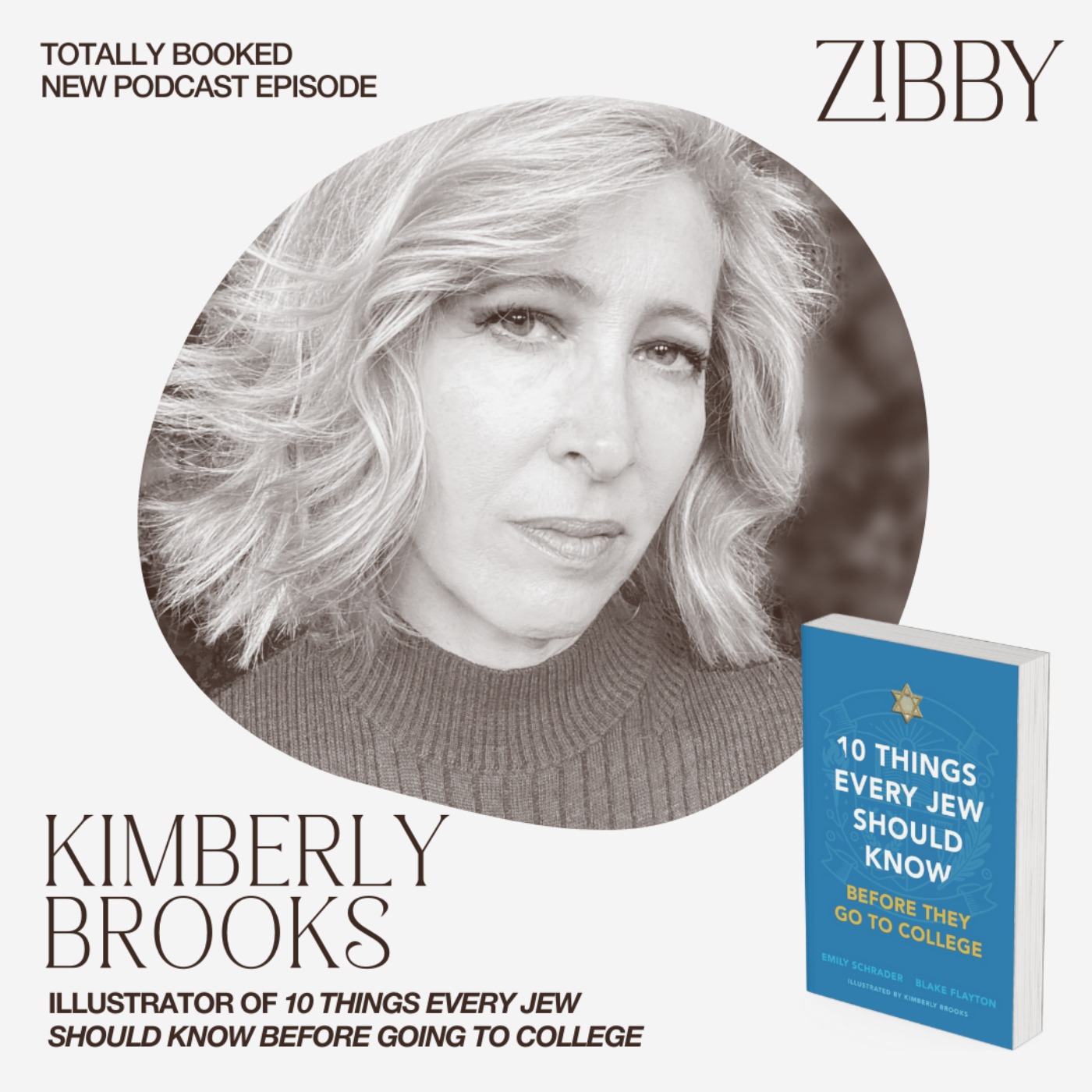
Totally Booked with Zibby
Kimberly Brooks, 10 THINGS EVERY JEW SHOULD KNOW BEFORE THEY GO TO COLLEGE
00:21:46
Loading summary
Transcript30 lines
- [00:00]
A
Hi listeners. We have totally booked live coming up this fall and I hope you'll be a part of it. We have three events in New York City, September 19th, 25th and 30th in New York where I'll be doing six interviews live each day. We also have a petite retreat in Greenwich on October 4th. Go to zibbemedia.com and event or and or eventbrite and search the events and please come. I can't wait to meet you in person.
- [00:31]
B
I can't tell you how often I hear oh, I'm a little ocd. I like things neat. That's not ocd. I'm Howie Mandel and I know this because I have ocd. Actual OCD causes relentless unwanted thoughts. What if I did something terrible and forgot? What if I'm a bad person? Why am I thinking this terrible thing? It makes you question absolutely everything and you'll do anything to feel better. OCD is debilitating, but it's also highly treatable with the right kind of therapy. Regular talk therapy doesn't cut it. OCD needs specialized therapy. That's why I wanna tell you about NO cd. NOCD is the world's largest virtual therapy provider for ocd. Their licensed therapists provides specialized therapy virtually and it's covered by insurance for over 155 million Americans. If you think you might be struggling with OCD, visit nocd.com to schedule a free 15 minute call and learn more. That's n o c d.com.
- [01:34]
A
Today's episode has been sponsored by Digipod. As someone who's passionate about books and authors, I'm always excited to share resources that can help bring your stories to life. That's why I am thrilled to tell you about Digipod, a print on demand company that truly understands what authors need to make that happen. Here's what I love about Digipod. They don't just print your books and send you on your way. Their team holds your hand throughout the entire process with incredible customer service. They deliver professional grade printing quality, consistently beat their competitors turnaround times, and they can handle rush orders. They simplify the whole printing process and make it incredibly easy. To achieve your vision for your books. Head over to digipod Zibby that's dash I g g y p o d dot com Zibby set up a free 15 minute printing consultation and get 10% off your first print order. You'll talk with their experts who will walk you through exactly how to set up your print job and answer all your questions. And by the way I've seen the books and they are amazing looking. If you've been thinking about printing your book, this is the support you want. Again, that's digipod.com Zibby for your free consultation. Today's episode is sponsored by Gab. When my kids are at school and I can't believe it's almost back to school time. How is this even possible? I don't want social media or phones to distract them from learning and friendship. But with all the logistics of pickups and practice and drop offs and rehearsals and whatever, our kids need a phone. And I think all parents feel this way. We want our kids to be able to get ahold of us when they need to and frankly, we want the peace of mind that comes from knowing we can reach them. But teens spend an average of 9 hours a day on screens outside of school and that's basically a full time job just scrolling mindlessly, which is obviously terrible. The US Surgeon General warns that kids who spend more than three hours a day online are twice as likely to have depression and anxiety. I don't want my kids to have depression and anxiety. And it's unbelievable. 45% of girls and 32% of boys feel overwhelming stress from being on social media. So here's the good news. A company called Gab has solved this problem by doing something no one else is doing. Their approach is tech in steps. Tech and Steps works by providing kids safe phones and watches with no social media. Tailored to every age. Offering the right device at the right time. From GPS tracking enabled watches for young kids to increased features and parent enabled apps on the phones for tweens and teens, each device allows them to safely grow their independence. By the way, it also looks just like a real adult phone, but it's a Gab phone and so my kids are super excited about it. And I'm excited because I get constant communication. The app even tells me when their batteries are running low. And it's all so easy to use. Bottom line, you don't have to give your kid a device that was made for an adult. This school year, get them Gab, which keeps them socially connected safely. This means no social media and no Internet apps. I really can't recommend Gab enough. Use my code to get the best deal on something that will make parenting easier and give you peace of mind throughout the school year. Visit gab.com totallybooked and use code totallybooked for a special back to school offer. That's G A B B G A B B Gab hi this is Zibbee Owens and you're listening to Totally Booked with Zibby, formerly Moms don't have Time to Read Books. In my daily show, I interview today's latest best selling, buzziest or underrated authors and story creators whose work I think is worth your time. The As a bookstore owner, publisher, author and obviously podcaster, I get a comprehensive look at everything that's coming out and spend my time curating the best books so you don't have to stay in the know, get insider insights and connect with guests like I do every single day. For more information, go to zibbymedia.com and follow me on Instagram ibbeowens Kimberly Brooks is The illustrator of 10 Things Every Jew Should Know before they Go to College An Illustrated Guide. She is an American artist and author known for her oil paintings addressing subjects of history, memory and identity, who exhibits in museums and galleries internationally. Her illustrated book the New Oil Painting is a regular bestseller in this category. She has two Jewish children who attended college recently, which also inspired her to partner with Schrader and Flayton to create this book. Welcome Kimberly. Thank you so much for coming on Totally Booked with Zippy to talk about 10 things every Jew Should Know before they Go to College. It's by Emily Schrader and Blake Flayton, illustrated by you, Kimberly Brooks.
- [06:28]
C
Correct.
- [06:29]
A
Congratulations.
- [06:30]
C
And edited and conceived by it was my brainchild.
- [06:33]
A
Okay, start from the beginning. Okay. One day you thought about it and just jump right in. How did this come to be?
- [06:39]
C
Well, I was promoting a book that I had written about painting. I'm an artist and I work in series and Judaism has never been my beat, although I am Jewish. And so it was in the middle of the pandemic and I had this book coming out called the New Oil Painting and this was basically something that really frustrated me about painting, that many painters don't know the materials that they're working with. So it was sort of like just basic information like the scaffolding that you should know. So the pandemic happened and I thought, oh no, I'm not going to be able to go to bookstores or art schools or anything. I can't tour nothing. And it sort of was a crushing, ominous feeling as an author. So I said to my publisher, can we delay the publication of this? They said no. So I said all right, okay, I'll try this clubhouse thing, which was a non visual medium and that is sort of like this amazing platform where people could speak, almost like a party line. For those of you who didn't Experience it during the pandemic. It was the only real true social media where it was completely unfiltered so you could really hear what people were thinking. They weren't curating their digital portraits, they weren't putting filters on. It was just direct. You could hear what they were thinking. So while I was presenting this book, Hamas started firing rockets into Israel. And so a war, basically a skirmish was breaking out. So I started wandering into the Middle Eastern rooms and all the rooms to find out what was going on. And, you know, when I paint, I listened to music or books and I thought, so instead I really listened to Clubhouse. It was like CB radio almost, but just with thousands of people talking to each other from all different nationalities and walks of life. And that's when I learned, oh my goodness, people are telling so many lies about Jews. People and American Jews didn't know just the basics. I mean, many Jews actually were just sort of learning about what it meant to be Jewish or anything like that. So a lot of people say, oh, I'm an October 8th Jew. I was more like a 2021 Jew. I was a Clubhouse Jew. Like, you know, and so I met these people that knew so much, and I just kept learning more and more. And I became more and more fascinated and interested in the subject. And I thought, you know, there really needs to be a book like the book I wrote for the new oil painting, but for Jews, because I have like a couple superpowers. One is that I paint, you know, that's like I'm quite, you know, quite a good painter. But the other one is that I know how to take very complex information and break it down into the smallest, simplest parts. And because I think visually I make these whimsical drawings that kind of aerate what would otherwise be a dense subject. I mean, I think you've skimmed through the book perhaps, so you know what I'm talking about. So really thorny subjects such as the United nations or the occupation or unwa, and then also just, you know, what it means to be a Jew. They're all kind of very methodically laid out in little bite sized chunks, like very easy to use information. And at the time that I was working on this book, I partnered with brilliant experts because I'm not an expert on the subject. Emily Schrader and Blake Flayton and I had two kids in college at the time, and they had. Blake had just published a piece in the New York Times about his experience. I believe it was at George Washington. Emily had, you know, I had met her and she was telling me what she experienced at USC with the apartheid wall and this big month long carnival they have around it. And I thought, what is going on on campus? I mean, as a parent, I have no idea. We didn't experience this as a Gen X kid, you know, I didn't experience it. So I wrote it really for anybody that's going to confront a morass of misinformation which, namely my kids, you know, and everybody's kids and why didn't you.
- [10:54]
A
Want to put your name on the book? I mean, as more than not that being an illustrator is by any means not enough. But it sounds like you were much more involved than just that.
- [11:04]
C
I was the ed, I'm the editor. I didn't put it on the COVID It's on the inside because it wasn't my field of expertise. So they wrote, I herded the content and made illustrations for it. It would not have been appropriate. I think, you know, they were the ones that there were the ones that had the knowledge, like I did not ghost write or whatever. I would just say, I would say to them, what do you mean? Hamas is using the pipes of water in Gaza for rockets and that's why they don't have a safe water supply. You know what I mean? I was more like the teaser out of information. A lot of people have said, oh, this book should be for everybody. A lot of people that have read the book said, I learned so many things that everybody should know. Why don't you just call it 10 Things Every Jew Should Know? And I thought, well, I don't want to compete with Tolushkin, you know, the rabbi who wrote those incredible books. But also that title to me could be brisket recipes. You know, like the title needed to be acute because the crisis really is that for many of us is that we are raising our kids in these safe, warm, cozy environments. We're sending them to maybe private school or public school, it doesn't matter. But when they go to college, they're entering a sawmill of misinformation. And it's crept into their history books, it's crept into their curriculum, and now it's starting even earlier. So it's, you know, especially after the last couple weeks that we've experienced, which is in the aftermath of several attacks on Jews in the United States. Like the temperature keeps getting higher and this problem isn't getting better, it's getting worse. So I really think, I think it's one of the most important things I've ever done. And I also believe that I'm really excited to report that they're turning it into a textbook for many different temples and schools. And it just covers such a really wide swath and an important set of information so that Jews, when they do go to college, can defend themselves, just intellectually understand what they're being attacked for and on about, especially when it comes to these really subtle historical subjects such as the occupation and what international law says. So I think it's like it should be in every toolkit for every person going to college or about to go to college and their parents.
- [13:44]
A
So what did you learn that you feel like people definitely didn't know for the most part, before going to college? Like, what are some of the things that you're. Like this. Well, this obviously, I'm gonna put in the book.
- [13:57]
C
Well, one of the biggest thing was the existence of a refugee agency called unwa, which basically is the only refugee agency that purpose isn't to settle refugees, it's to just create more refugees. And they get a per head price per refugee. So they're deincentivized to ever settle any refugees. And that any Palestinian person who identifies as Palestinian living anywhere is considered a refugee. And they raise money through the un, through our tax dollars, to fund this totally corrupt agency which has recently been defunded from America anyway. And that that money uses rockets to kill Jews. So that kept me up at night. Like, I was like, wait a minute, wait a minute. My money is going to an agency that builds rockets to kill Jews and indoctrinates kids to hate Jews from the time that they're born. So that's chapter five. It's called the Stick up, because people need to understand it. It's this. It's sort of inside baseball. But a lot of people, people that are very well informed, like in the news or whatever, in the beginning, especially right after October 7th, I was like, do you know about UNWA and how it works and how different than the United nations agency? So that was a big one, and it's a whole chapter. The other one was the occupation chapter. A lot of people don't realize that the term Palestinian, the branding of this people, was coined and created in 1964 by Yasser Arafat and that it formally applied to Jews who had emigrated to the area. You know, there were so many fascinating things. Just like if you look at the map of Israel, which is admittedly weird, with this sort of like elephant ear cut out of it, the Jews were sold the land that had malaria in it. They didn't get the Good stuff. And this is in the 1900s. So the map was based on what the land that nobody wanted and that nobody could live in. They got the desert and the swamps, you know, but they deployed their engineering prowess and they turned, you know, they turned it into the land of milk and honey. And then that's what also created this huge resentment. Oh, I now want it back, you know, so it wasn't. So There were many, many fascinating things. And the other thing that I think I was really surprised about was the United nations and the degree to which the United nations has become just this twisted. Like, it started off with good intentions, but it has become this really radicalized, twisted theater of dictatorships, that virtue signal. And they push all the ayes away from them by making, like, a ridiculous proportion of their votes against the evil Israel, which is not true. And it's insane. It's literally insane. It's laughable. Almost the United Nations. So how. That's three. I could go on and on.
- [17:07]
A
Oh, my gosh. Today's episode has been sponsored by Quince. As summer winds down, I am all about refreshing my wardrobe with staple pieces for the season ahead. Quince totally nails it with luxe essentials that feel effortless and look polished, perfect for layering and mixing. Their styles are so versatile, I find myself reaching for them again and again. In fact, you'll see me wearing them all over my Instagram feed. Think cashmere and cotton sweaters starting at $40, washable silk tops and classic denim pants. The best part is that everything with Quince is half the cost of similar brands. By working directly with top artisans and cutting out the middlemen, Quince gives you luxury without the markup. And Quince only works with factories that use safe, ethical and responsible manufacturing practices and premium fabrics and finishes you'll see on Instagram. I love my Quince skirt. I've been wearing it all summer and it is fabulous fabric. It's long, the pattern's amazing, and it's just amazing. Plus, the price was great, so I just absolutely adore it. Elevate your fall wardrobe essentials with Quince. Go to Quince.com Zibby for free shipping on your order and 365 day returns. That's Q-U-I-N-C-E.com Zibby to get free shipping and 365 day returns. Quince.com, sL Zippy.
- [18:34]
B
I can't tell you how often I hear, oh, I'm a little ocd. I like things neat. That's not ocd I'm Howie Mandel and I know this because I have ocd. Actual OCD causes relentless unwanted thoughts. What if I did something terrible and forgot? What if I'm a bad person? Why am I thinking this terrible thing? It makes you question absolutely everything and you'll do anything to feel better. OCD is debilitating, but it's also highly treated with the right kind of therapy. Regular talk therapy doesn't cut it. OCD needs specialized therapy. That's why I want to tell you about NO cd. NOCD is the world's largest virtual therapy provider for ocd. Their licensed therapist provides specialized therapy virtually and it's covered by insurance for over 155 million Americans. If you think you might be struggling with OCD, visit nocd.com to schedule a free 15 minute call and learn more. That's nocd.com.
- [19:36]
A
Okay, what, here's my question, like, what do we do about all of this misinformation? Right? It's out there. It looks like it's going into public record. It's in other textbooks. It's, as you said, in the curriculum, as we see all over Instagram and people's, you know, you know, all these parents were like, look what my kid is being taught and all of that. Yes, there's raising awareness, which your book does beautifully. What else can we do to help this problem before it gets worse?
- [20:07]
C
Well, unfortunately, it's going to get a lot worse because in the biggest school districts in America, like the lausd, they've inserted this poison ethnic studies curriculum, which is basically a mask, in my opinion, for creating an oppressor, oppressed narrative. And so they've just voted like 9 to 1 to not work with the ADL or the traditional. So that means theoretically the book should be called 10 Things Every Jew Should Know before they Start Kindergarten. Because if you teach a school district that has 600,000 people in it to hate Jews from an early age, we're going to be. It's going to be a disaster. It's already a disaster, I would say. So what can be done is, I want to say this book, it has 590 citations. It is not political. It is not left, it is not right. It's just citations of facts of how, of what the truth is. It's not, you know, it's just not political. So I think that as a shield, and there's a shield on the COVID with a Jewish star on it, I feel like it's the one shield that we can offer to protect our kids so that they don't become indoctrinated. You know, there's a lot of grandchildren of Holocaust survivors that are swinging free Palestine flags because they've been indoctrinated. Ironically, the same indoctrination that was happening in UNWA schools is now going to. Is happening in America under the guise of this ethnic studies curriculum. So, you know, and there's a very interesting book that I recently read by David Bernstein called Woke Anti Semitism. And it was published in 2022, before October 7, which makes it all the more remarkable and in documents, in great detail, how many Jewish organizations were captured by this ideology that creates Jews as this, you know, we're talking Jewish educational organizations. So now people have woken up a little bit to the problem of this paradigm that we're, you know, infesting, infecting whatever you want to say, but we just, I think that knowledge is power. This to me is a shortcut to the knowledge. There's so many citations. You can always learn more on any subject. But it also prepares kids for what kind of misinformation they're going to hear, how to solve. The bigger problem is the fact that we're such a small minority, we're never going to be able to. We're never going to be able to protect ourselves from all the libels that MSNBC and cnn, the New York Times. And I mean, every day there's a story that's twisted, that puts out there, and every organization does it. Like it's, you know, as I said at the beginning, we just had such a week, and it was a week where so much misinformation was out there. They were claiming that Israeli soldiers were shooting at civilians at a humanitarian site. And then, of course, you know, two days later, Molotov cocktails are being thrown on people praying for the hostages safe return in Colorado. I mean, it's all unacceptable. And when people say, oh, Jews don't have a good public relations strategy, we are so small that it's not really fair. It's asymmetrical warfare, really. So, you know, I never expected to be in this space because I'm an artist and I happen to be Jewish. I've never painted about the subject. I've never, you know, I work in series and I cover all kinds of subjects. Motherhood, childhood. I, you know, I make these large historical landscapes. And, you know, but, but here I am talking to you because the house is on fire, you know, so. So I think on some level, Reform Jewish education has failed. And I think we all need to kind of take stock in that, that we don't. That there's too many things that we don't know about our own religion even. And I think that some of the points that this book touches upon will strengthen our connection, which I think is important. So, like I said, I think it's one of the most important things I've ever done at a very perilous time.
- [24:45]
A
Well, hats off to you for doing it because it is so helpful. I'm giving this. I have two juniors in high school, so they're each getting their own copy. And I'll be like, homework. This is our dinnertime quiz as we read it this summer. But we need this. And I think that people are often intimidated because the other has so much information all the time. Right. They're getting fed it, like, constantly soundbites this, this. And they feel like bullied and ill equipped, like, oh, well, I don't have an answer, so I can't engage in this dialogue. And so they don't. And that's the, that's such a fear, right? You have to get in, you have to be armed with the information or how can you fight? So I love your shield.
- [25:33]
C
Yeah. And honestly, the more that you learned, the more that I learned, the more I realized that, the more furious I became that, that of how much, how deep the lies are. Like, I was like, whoa, you have one people that's been holding an olive branch consistently for decades and decades and decades. And the other one. It's hard for the Western mind to comprehend that there exists a people and an ideology. Not everybody, but there's people within this ideology that want Jews either converted or dead. That's hard to. That's almost impossible to fathom. And that they may act or pose as if they're trying to work on a solution in the interim so that they can get more weapons or whatever, but ultimately they don't want peace. There's a group of people that don't want peace. And Jews are the first in line. It goes from the Christians are next. They say, first the Saturday people, then the Sunday people. So anyway, I hope I'm not sounding so alarmist, but when I was working on this three years ago, starting three years ago, a lot of people were like, oh, that's kind of curious. Now they get it.
- [26:55]
A
What price have you paid personally, if any, for doing this book and being outspoken?
- [27:03]
C
I don't feel like I've paid a price. I think the art world has its own issues with antisemitism and I, I feel very fortunate because I live in a city with a lot of Jews. So there's. I have a good community around me. So I feel very blessed to have grown up in this golden age of America where all the. When you, when you read the New York Times bestseller list, you didn't. I was an English major. I'm a huge reader. Nobody said, oh, this is a Jewish author.
- [27:35]
A
Right.
- [27:35]
C
They were just an author that happened to be Jewish or an artist that happened to be Jewish. Now a lot of curriculums are denuding the curriculums of Western civilization of their Jews because they're Jews, which is wild to me that the great ideas are going to be marginalized just because of somebody's religion or race. It's really the opposite of what I think the good intentions of many people who propose were proponents of diversity and what of what voices? It's the opposite of what they intended. So I'm sad for that.
- [28:17]
A
Wow. Well, Kimberly, thank you so much for this. I hope they sell it in every campus bookstore, by the way, in case you get to college and you missed it. Like there's still time. Like there's no expiration date on the book. So congratulations. Thank you for the alarm bells needed to be sound sounded. So I'm glad that you continue to ring them and make everybody pay attention because it is such an urgent issue and this book is a fabulous way to combat a lot of the misinformation and hate. So thank you. Thank you for all that you do.
- [28:52]
C
And thank you for having me.
- [28:54]
A
My pleasure. Okay, thank you, Kimberly.
- [28:56]
C
Bye bye.
- [28:58]
A
Thank you for listening to Totally Booked with Sibi, formerly Moms don't have Time to read books. If you loved the show, tell a friend, leave a review. Follow me on Instagram, ippyowens and Spread the word. Thanks so much. Oh, and buy the books.
- [29:21]
C
Acast powers the world's best podcasts. Here's a show that we recommend.
- [29:34]
D
Hello everyone. I'm James Richardson and I host the Totally Football show four times a week. If you're not familiar with it, perhaps you'd care to give it a listen in the season ahead because we cover all the big stuff. Premier League, Champions League, in depth, European League coverage, Football League, and more. We've got insights and analysis from the best reporters in the industry and we've got quizzes and nostalgia, too. Plus, we're going to be bigger and broader than ever for the season ahead. So check out the Totally Football show wherever you get your podcast. The rest is not as good as the Totally Football Show.
- [30:10]
C
Acast helps creators launch, grow and Monetize their podcasts everywhere. Acast.com.