Loading summary
Transcript70 lines
- [00:01]
Zibby Owens
Hey everyone, it's Zivi. I am so excited to tell you about something I've created just for you, the Zip Membership program. ZIP stands for Zivi's Important People. It's for anyone who loves books, stories and wants a little peek behind the scenes at what I'm up to and what's on my mind as a Zip member. You'll get exclusive essays, a new podcast called Zivvy's Voice Notes. No interviews, just usually discounts. At Zibby's Bookshop, a free ebook, and more perks. I wanted to create a space to connect authentically and deeply, and I'd love for you to be part of it. If that sounds like your kind of thing, become a zip today. You're already important to me. Now let's make it official. Go to zibioens.com and click subscribe. And if you already subscribe, you can upgrade to the membership program. And now onto today's episode of Totally Booked with Zibby. Thanks for listening.
- [00:56]
Capital One Advertiser
With no fees or minimums on checking accounts, it's no wonder the Capital One bank guy is so passionate about banking with Capital One. If he were here, he wouldn't just tell you about no fees or minimums. He'd also talk about how most Capital One cafes are open seven days a week to assist with your banking needs. Yep, even on weekends, it's pretty much all he talks about. In a good way. What's in your wallet? Terms apply. See capitalone.com bank capital1NA member FDIC.
- [01:26]
Zibby Owens
You open the fridge, there's nothing there. So what's it gonna be? Greasy pizza? Sad Drive Thru Burgers? Dish by Blue Apron is for nights like that.
- [01:37]
Blue Apron Advertiser
These are the pre made meals of your dreams.
- [01:41]
Zibby Owens
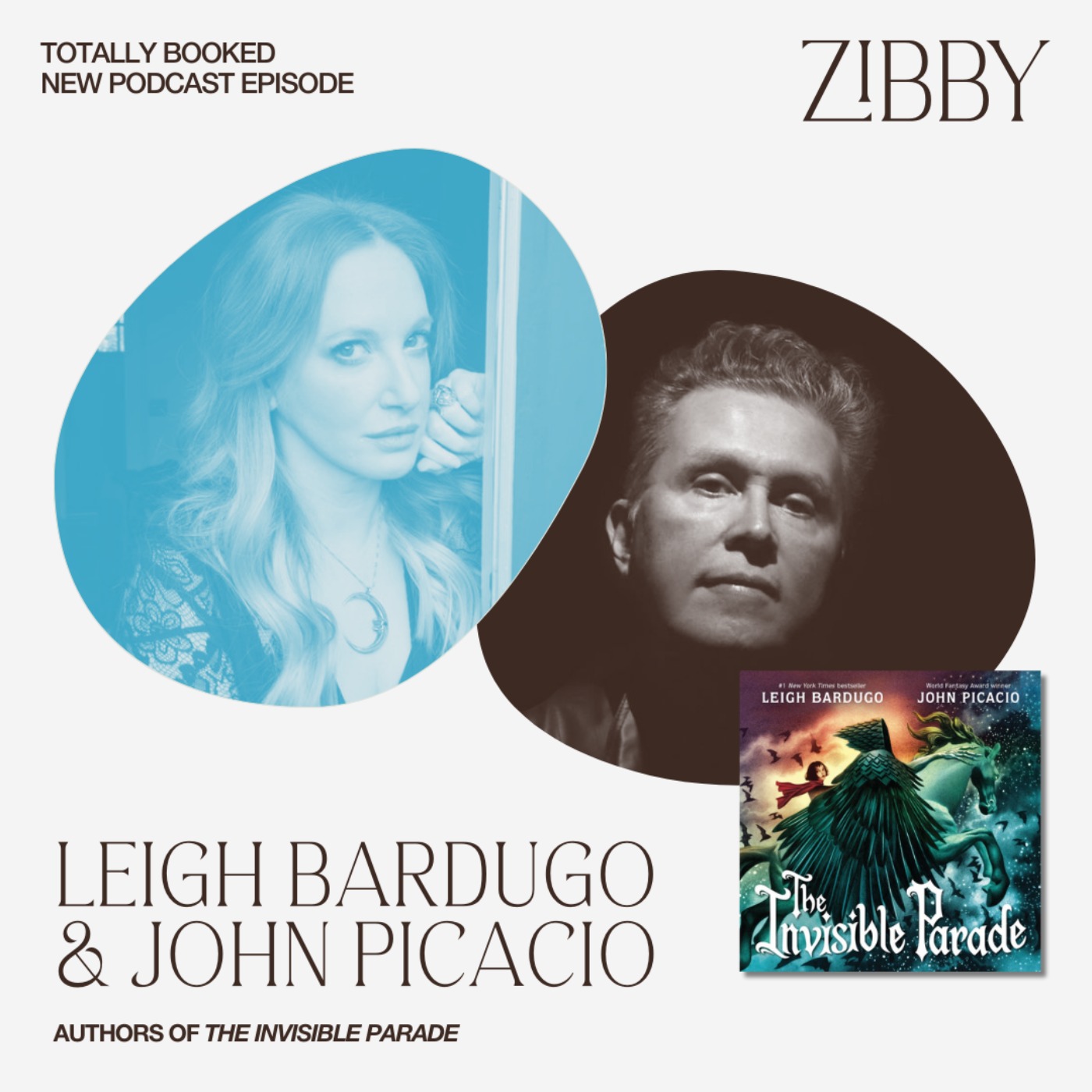
At least 20 grams of protein. No artificial flavors or colors. No chopping, no clean cleanup. No guilt. Keep the flavor, ditch the subscription. Get 20 off your first two orders with code APRON. 20 terms and conditions apply. Visit blueapron.com terms for more better help. Online Therapy bought this 30 second ad to remind you right now, wherever you are, to unclench your jaw, relax your shoulders, take a deep breath. Breath in and out. Feels better, right? That's 15 seconds of self care. Imagine what you could do with more. Visit betterhelp.com randompodcast for 10% off your first month of therapy. No pressure, just help. But for now, just relax. Hi, this is Zibby Owens and you're listening to Totally Booked with Zibby. Formerly Moms don't have Time to read Books in my daily show. I interview today's latest best selling, buzziest or underrated authors and story creators whose work I think is worth your time. As a bookstore owner, publisher, author and obviously podcaster, I get a comprehensive look at everything that's coming out and spend my time curating the best books so you don't have to stay in the know. Get insider insights and connect with guests like I do every single day. For more information, go to zibbymedia.com and follow me on Instagram. Ibyoans Leigh Bardugo and John Picassio are the author illustrator of the Invisible Parade. Leigh Bardugo is the number one New York Times bestselling author of the Familiar Ninth House and the creator of the Grishaverse Now, a Netflix original series which spans the Shadow and Bone Trilogy, the Six of Crows, Duology, the King of Scars, Duology, and much more. Her short fiction has appeared in multiple anthologies including the Best American Science Fiction and Fantasy. She lives in Los Angeles and is an Associate Fellow of Pauli Murray College at Yale University. John Picassio is a World Fantasy Award and Hugo Award winning artist who has created book illustrations for major works by George R.R. martin, Rebecca Roanhorse, and many more. He is the founder of the Mexican X Initiative, spearheading the journeys of more than 40 Mexican and Mexican American creators into the wider awareness of fantasy and science fiction audiences. John lives in San Antonio. Welcome John and Lee. Thank you so much for coming to talk about the Invisible Parade. Congratulations on your fabulous book. I want to call it children's book, but it's kind of not just a children's book, so I'll say a picture book. How about that?
- [04:39]
John Picacio
That's great works.
- [04:42]
Zibby Owens
Why don't you tell me a little bit about why the two of you collaborated, how the two of you came to collaborate. I know you write about it in the book and what the book's really about.
- [04:52]
Leigh Bardugo
I mean, John and I met a long time ago. We met at a worldcon in Reno and it was my first worldcon. I was there as a fan and I had gone to this party for the George R.R. martin Fan Club, the Brotherhood Without Banners. If you ever wanted to see my nerd credentials, Zibby, they are now on full display and I really didn't know anybody. I hadn't been published yet. I wasn't being published until the next year. I was pretty nervous and and John was like one of the con superstars that year. He had done this incredible calendar for A Song of Ice and Fire and I went up to him at this party and I just told him sort of in that very, like, ducking fangirl way that's just like, I'm so sorry to bother you. So sorry to bother you, but I really loved the illustration you did of Bran on the battlements. It was so beautiful and so poignant and I don't want to bother you. And I was ready to sort of skulk away into the shadows. And, you know, most people would just be like, thank you so much. Bye. And John instead turned around and was like, what's your deal? What are you doing here? What's your story? And so we started talking and we ended up chatting for a really long time at this party. And I showed him the comps for the COVID of Shadow and Bone, my first novel, and he really treated me as a peer as opposed to a nobody, and one that made a huge impression on me about the right way to behave as a person in the literary world and how much that kindness means. And it sort of set the stage for us being friends for many years after.
- [06:31]
John Picacio
Yeah, I mean, the energy was just electric when she walked up. It was just kind of electric. I mean, she had. She had intentions in the room, but she was also very genuine, you know, when she came up with the, you know, she was just starting. I guess you was. Did you have your comps for Shadow and Bone? I seem to remember that, but I.
- [06:48]
Leigh Bardugo
Think we had the covers, but that was all we had. And we actually didn't end up with either of those covers.
- [06:53]
John Picacio
No, no.
- [06:55]
Leigh Bardugo
I remember us sitting down to you being like, well.
- [07:00]
John Picacio
But I was just really impressed. I mean, the way she just had this really solid approach. She was a solid pro right from the go. She was electric, and I just enjoyed. I was there with a bunch of friends and they just kind of floated away, and we were just kind of left with each other there talking. And I was enjoying her more than my company that I had at the time, honestly.
- [07:19]
Leigh Bardugo
And we stuck together about your friends.
- [07:24]
John Picacio
And we stuck together during that con. We had good, good talks. But the thing is, is that at the conventions over the next five years, we would always make time for each other. And let's remember, that is Shadow and Bone. So this woman takes off like a rocket from. From the go, which is extremely unusual, as we know, but well deserved because that book was amazing. And as each subsequent book in that trilogy came out, she was just bigger and bigger, and so she was making time for me, let's just be honest, as the next few years come along. But we did cut that time for Each other. So I'm working on this thing called Loteria. At the time, I'm doing lots and lots of book covers for science fiction, fantasy, and working on these new interpretations of Mexican bingo cards. And as I'm doing that, this idea where this picture book comes in my head, and I. And I'm thinking, well, I'm working on Loteria, and it's kind of a lonely road doing this. This book right now. I don't want to work on two lonely roads at the same time. I want someone who I'm going to have fun with. I want to be with someone who I laugh with. I want to be with someone I trust, and I want to do this story with that person. And she was the one. And I called her and I said, listen, I got this idea for this story. And the breathing was just very different.
- [08:33]
Capital One Advertiser
I remember.
- [08:33]
Leigh Bardugo
Wait, wait, wait, wait. John, that's not what you said. Okay? You said, I think we should write a book together. And I was like, oh, no. Oh, no. Because at that point, we were pretty far on at that point. I think it was. Was it around 2017, 26, 2015? Ish?
- [08:51]
John Picacio
I think now that I thought it was 16, but now I look back at notes. I don't know.
- [08:55]
Leigh Bardugo
We're too old to remember.
- [08:56]
John Picacio
No, it's there. Yeah, it's about 2015. Ish. But we're talking.
- [09:00]
Leigh Bardugo
We're far enough along that people have started coming to me and being like, we should write a book together. I have a great idea. You do all the work. We'll split it 70, 30. I'm being generous, you know, like it was. And, like, a doctor literally did this to me when I was in the hospital. So I'm not kidding. So I was very wary. And my first thought was, oh, God, how are we gonna stay friends when I say no to this? But then John said something else.
- [09:31]
John Picacio
Yeah, I said, I'm thinking about a story that's like the wizard of Oz in a graveyard. And that's when a little bit different.
- [09:39]
Leigh Bardugo
Yeah. Started breathing again. I was like, wait a minute. Go on.
- [09:44]
John Picacio
So we went. Yeah. I pitched this idea of this girl in a graveyard. Now, she wasn't grieving her grandfather at the time. That pivot was not there yet. That came from Lee. But it was this girl who was grieving, and she meets these four riders on the night of Dia de Muertos. I will say that I had pitched it more as a story about a girl trying to overcome sort of the fear of death. But when Lee gets a hold of it not only does it become, you know, she brings in a very, very important pivot of this girl grieving her grandfather, which is coming from Lee's biography, but I would say that it becomes a story about how we process grief, which is far more Mexican. And really, I think that. That, you know, as much as people are gonna maybe lead to the conclusion that comes from me being the Mexican American in the unit. No, I came from Lee. And I think the story became more profoundly personal and even cultural, culturally resonant as far as Mexican culture. So, yeah, that's kind of true. I think our collaboration. It's funny how the lines blur as far as what people think comes from me versus what comes from her.
- [10:49]
Leigh Bardugo
Yeah. Wow.
- [10:50]
Zibby Owens
What a story. Thanks for taking me back to the rooms where it happened. The novel, the book deals with grief in a very unique way. I feel like, compared to most ways that kids in particular are spoken to about loss and the puppy dogs and sunshine of it all. And this is a darker and yet inspiring take you take us through where spirits reside, essentially, how to keep people alive, how to, you know, what can you do to. What foods can you cook to bring people back. Like, what do the Four Horsemen even mean? How can we become friends with death? I mean, this is like, you know, not playground material. And yet you package it in such a way that any child who, of course, has these complicated. Not complicated, but advanced thoughts a lot of the time and gets spoken down to talk a little bit about. About that. And just writing. Do you feel like you wrote this for children? Do you feel like you wrote it for grownups? Like it is a work of art in addition to just a story? I mean, it's both.
- [11:56]
Leigh Bardugo
I mean, I started out in young adults, and we would get questions a lot about sort of how you pivot in storytelling from YA to adult and so forth. But I think the reality is the story kind of tells you what it wants to be. And I think John and I are now at an age where we are coping with all of the ideas about mortality that loss brings. But I think for me, it was about. I think there's a kind of. When my dad passed away, there's all this noise, right? When somebody dies, there's a kind of. There's all these people around you. There's all these logistics to handle. There's people calling you and offering condolence. And then all of a sudden, it goes so quiet. And so we started thinking about what that silence would mean for a kid, where they want to connect to their family and to These traditions and to the celebr and the grief around them. You know, they want to share in this with the people around them, but they don't know how to reach out because they're in pain. And we thought too, about people who want to reach out to people who are lonely, who are grieving, but don't know what to say. And so you. You don't send that text or you don't make that call when the person needs it the most. Not because you don't care, because you literally don't know what to say. And so this book for us was a way of trying to offer a different conversation that didn't feel as, like, heavy and bogged down with sort of philosophical thoughts about grief. You can go there if you want to with this book, but that offered a story and an adventure and a journey for you to go on with Kyla. And that was our hope. Yeah. Whether for kids or for adults.
- [13:28]
John Picacio
Yeah, I think. Yeah. When you said, is it for kids or for adults? It's both. I mean, but we, it was important to us that this was an adventure story. And, you know, we, we weren't just. It wasn't just Lee doing the words, me doing the picture. She had so much input in how we designed our horsemen. And I mean, it was. It was both of us working together. It almost feels weird even saying she had input. It's like, you know, we were. As I'm sculpting and building these things, I'm showing her stuff and I'm saying, what do you think of these things? And, you know, it was the same with the words. And. But I would say that, you know, when we, when we're doing this stuff, we are thinking that we're kind of writing a story for ourselves. And I know I was, because I know as I have these family members that are hitting these twilight years or year, I'm having to sort of almost write a story for myself as well as for my own kid. You know, I'm a dad of a. Of a daughter here who's, who's got these questions. And when we started this, I mean, she was single digits. She's in elementary school. And, you know, when you're saying, you know, kids have these complicated questions, or maybe they're not complicated. I think they are, you know, but it's. It's up to us to kind of articulate a way to be able to communicate that there's a. There's a tool, there's a toolkit for how to. Or at least our toolkit for how you process these things and doing it.
- [14:46]
Blue Apron Advertiser
Through Story Today's episode is sponsored by Wayfair. The new year is here. It's time to get back into an at home routine that you love and you can elevate your space with Wayfair. As you all probably know, Wayfair is like my favorite brand and I actually have a whole new storefront that I put together of all of my favorites which you can check out on my Instagram and then go to Wayfair.com to explore. From bedding and mattresses to storage solutions for every room in your house, Wayfair is your one stop shop. Refresh your living room with accent pillows, mirrors and even faux plants. For way Less I've refreshed some of my kids rooms with carpets and mirrors and blankets and it's so easy and convenient. Everything that Wayfair has for your home is easy to find and there is a huge selection. Get organized, refreshed and back on track this new year. For Way less head to Wayfair.com right now to shop all things home. That's W-A-Y-F-A-I-R.com Wayfair every style, every home and don't forget to check out my storefront. Today's episode is sponsored by Quince Starting the year with a wardrobe refresh. Quince has you covered with luxe essentials that feel effortless and look polished. They're perfect for layering, mixing and building a wardrobe that lasts. Their versatile styles make it easy to reach for them day after day. Quince really has all the staples covered from soft Mongolian cashmere sweaters that feel like designer pieces without the markup to 100% silk tops and skirts for easy dressing up to perfectly cut denim for everyday wear. Their wardrobe essentials are crafted to last season after season. Their Italian wool coats are real standouts. They're beautifully tailored, soft to the touch and built to carry you through years of wear, not just one season. The quality shows in every detail. The stitching, the fit, the fabrics. Every piece is thoughtfully designed to be your new wardrobe essential. And like everything from Quince, each piece is made from premium materials in ethical, trusted factories, then priced far below what other luxury brands charge. You've heard me say this before because I'm obsessed with Quince, but I love my winter coat which I wear every day. And I actually just got a blue cashmere sweater as a gift from Quince this holiday season and I am obsessed. Refresh your wardrobe with Quince. Don't wait. Go to quince.com zibby for free shipping on your order and 365 day returns. Now available in Canada too. That's Q-U I N C E.com zibby to get free shipping and 365 day returns. Quince.com.
- [17:37]
Capital One Advertiser
With no fees or minimums on checking accounts, it's no wonder the Capital One bank guy is so passionate about banking with Capital One. If he were here, he wouldn't just tell you about no fees or minimums. He'd also talk about how most Capital One cafes are open seven days a week to assist with your banking needs. Yep. Even on weekends, it's pretty much all he talks about. In a good way. What's in your wallet? Terms apply. See capitalone.com bank capital1NA member FDIC.
- [18:10]
John Picacio
I think color was really important to both of us, too. Right, Lee? I would say. Why don't you talk about color?
- [18:16]
Zibby Owens
Le.
- [18:17]
Leigh Bardugo
Oh, no. You talk about color. I love that John includes me so much in this. And he's like, she's on the other. I'm like, john. This is John's genius on the page and his hard work on the page. And we. We did. I'll speak, I think, to the horsemen, and then maybe you can address the color. Because the horsemen each represents a lesson for Kala. But we didn't want it to feel like a lesson. We wanted to feel like it was part of her story and her adventure. And each of those horsemen represent one. The fear that we bring to that can cycle around death, the fear of getting sick, fear of loss, what it means when we see somebody going hungry. And also how we can do good in the world instead of just turning away from it. And so each of those horsemen that she meets, you know, what would be the equivalent of the Scarecrow and the Tin man and the Lion? They have lessons to impart, but they're different kinds of lessons. And we hoped that they would be ways for kids to address their fears that come up around grief and come up around loss. So it's not just simply, I'm scared of death. It's. It's all the things that come up that keep little kids up at night. And frankly, they keep me up at night some nights, too. So that, for me, thematically, was sort of where we really had to work on the story. And then John did this really interesting thing with color.
- [19:39]
John Picacio
I don't know. I remember it's both of us, but then again, that's the way my mind blurs. Right? I mean, I see it as, you Know, the idea that the color is just as important as the words and the silhouettes and the designs, because if you strip away all that stuff and just look at the color palette for the story tells you Kala's emotional journey. You know, we. We start off with a. With a sepia tone, with this spot red on her scarf to. To call out that scarf, and. Because it's a very important tether that. That pulls us through the story. But that. That sepia is about Paula's numbness. The.
- [20:13]
Zibby Owens
The.
- [20:13]
John Picacio
The way when we're depressed, when we're grieving, we can't feel, we can't taste, we can't hear.
- [20:18]
Zibby Owens
It's.
- [20:18]
John Picacio
It's just. It's almost like we're underwater. At least I am when I feel this way. And so we let our color palette describe her emotions as the family is celebrating and everything is building toward this. This happy reunion, but she's not feeling that. And as she goes to the graveyard and she encounters each horseman, a new color starts to emerge, and with each horseman, new shade. And by the time we hit death. Technicolor. Because now she's starting to hit sort of a. I don't. I wouldn't say. I would say sort of a bit of revelation where she's starting to see clarity, I guess, and.
- [20:55]
Zibby Owens
And.
- [20:56]
John Picacio
And. Go ahead.
- [20:58]
Leigh Bardugo
Well, Zibby is showing some of these illustrations now, and I think this is so important. She's at the gatefold, and to us, this was the moment of catharsis, right? Like, this is the moment where Kala has entered the world of the dead. She's walked through those cemetery gates, and in doing that, she's reconnected with the living. And this is the explanation. Explosion through her eyes of life and color and the return of all the things John talked about. Appetite, joy, connection. And so that gatefold was sort of the. That was the anchor of the entire book, was how this was going to operate. And I remember seeing these images for the first time before they even had color and how explosive they were. And we hope that, you know, for a kid reading this with their parent, that they're gonna be able to go into the iconography of this, the history of this, but also the emotional resonance of this. You know, when you see La Mariposa, like, that's a beautiful image, and it's something that people can connect to instantly, even if they aren't connected to this particular culture. So that, for us, was this sort of welcoming moment. And then you can see Kala is back in Kahla's world.
- [22:08]
John Picacio
I think it's also important. I think one thing that makes this book differ from maybe some other Dia de Muertos books is the idea that we wanted this to not just be so much a girl connecting with her culture in a traditional sense, but the idea that she's finding herself. She's discovering herself. She's discovering her own way of connecting with her culture on her own terms. And personally, I don't see as many of those kinds of that kind of perspective in a lot of the. The other Muerto stories that I encounter. And I thought that that was something that was. It's important to me as a dad, and I think that's important to lead just as a person. You know, the idea of communicating people, finding their way to deal with the world on their own terms, as opposed to someone else's terms.
- [22:52]
Leigh Bardugo
I mean, I can say that, you know, when I lost my dad, I didn't deal with it in particularly healthy ways. And I was sort of lost for a while. And a friend of mine reached out to me. I lost him in April, and she reached out to me in October as we were heading into this season, and she invited me to come with her family to their Dia de Muertos celebration. And it was like she was throwing me a lifeline and inviting me into this space and a very different way of looking at death. And when, you know, when John and I started working on this project, he pointed me to this book, this Octavio Baz book. It was, I think, the Mexican way of death or. And it. All of that sort of came together for me in the way we were thinking about this and the kind of way we can rope off culture or we can open those doors and say, come with me and let's be here together in communion, and let's see the way these cultures interact. And we wanted to make our own story. And so the Four Horsemen are very much not a part of Mexican iconography in terms of that tradition, but we wanted to tell our own story that, again, could invite both kids and adults, whether you're looking. I think it's also sort of. I know we're talking about really heavy stuff, but the goth in me loves the Halloween aspect of this book, loves the spooky aspects of this, loves the humor in it. And that way of brushing up against heavy themes, but also doing it with a little bit of a wink, I think is. And I think kids respond to that. I don't think Halloween is just about candy. I mean, it is about candy. Let's Be real. But it's not just about candy. It's about being the monster, right? Facing the monster and fighting it, or getting to be monstrous for a day. And all of that, I hope is built into these pages so that even kids who are not in a place where they need to think deeply on these things can brush up against them without feeling frightened.
- [24:52]
Zibby Owens
Wow, that's so inspiring to hear you talk about the way another culture can help you. I feel like we all can feel so alone in grief and not know how to handle it. And I don't know what the unhealthy things were, but there's like not, there are no great ways to handle the loss. A loss like that, you know, and having, having something that gives a lot of comfort in whatever, from wherever you can take it. Great. You know, even if you didn't grow up with it. I think that's amazing. And I think, John, it's so, it's, it's like an act of generosity to say, like, hey, take this. You know, this is what, how my culture celebrates it. Like, come on, it might make you feel better and come, come join the party like you say on the book. So it's really quite beautiful.
- [25:38]
John Picacio
Thank you. I think one of my favorite. I'll just say this one of my favorite comments I've seen on social media. This happened shortly after the, on November 1st or November 1st and 2nd. There was a guy in Baltimore, not Mexican American, Jewish as I, As I remember, 56 year old guy says, I'm 56 years old. I bought the book when it came out, but I was saving it for today because today is the one year anniversary of mom's death and I needed this so bad. And he says, I'm crying, but I just wanted to let you know that this, this was what I was waiting, this was what I was saving this book for. Thank you for making it. I was like, that's, that's why we're doing this. And so it's, it is for me, it is for. We wanted this story to be for kids, but it's for all of us. And so those kinds of comments, which I do see a lot of, tell me that Leah and I weren't wrong that you know, a book like this is, is important, is needed right now. I think it's always needed. It's just there's not enough of it. Anyway, thank you.
- [26:32]
Leigh Bardugo
That is scary. And I think it's the kind of thing that we often dance around that we don't speak directly to. And I always say grief is the dirty fighter. Like, you think you've. You think you've knocked it out. You think you're past it. All, right, good. And then all of a sudden, you're crying in a Panda Express parking lot. Like, it's. It comes at you from places you didn't expect. You know, I lost my dad over a decade ago, but it still hits me like a ton of bricks, you know, just. And I think, for me, there's. Kala is. Kala reads with her grandfather, which is something I did with my grandfather. That was my entryway to books and storytelling. And they're reading this book that they. That she thinks she'll never get to finish because he passes before they can. And the idea of getting to finish that story, I hope, is meaningful. Like, I hope that metaphor at the center of the story resonates with people and that if they need a little touchstone, they can go back and walk through those gates with Kala.
- [27:30]
Zibby Owens
Essentially, our story with so many people is cut short, right? Like, that's the. That's. That's life. Not to oversimplify, but if only. If only some of these stories could continue, and how do we bring them back to life and make peace with that, in a way. And I feel like.
- [27:47]
Leigh Bardugo
And keep people alive, keep their stories alive, keep the things they loved alive. So much of Dia is about. Is about remembering the dead through the things they loved and the way they connected with us in the world. And that, I think, is such a powerful idea because it's not just about our relationship to them. It's about the way they moved through the world and the things they loved and they desired and. And by sharing them with the dead, we are. It's like we're breaking bread with them again.
- [28:14]
Zibby Owens
Lee, what meal? There's a meal that gets made for the. The grandmother says she's good at making this meal, and it's really for the grandfather. Like, what meal would you make your dad?
- [28:25]
Leigh Bardugo
Oh, my gosh. Oh, God. My dad. So my dad grew up in the south. He was Lebanese, but he grew up in the south, and he. He loved fruitcake the most. Disgusted. Every year, his mother would send him a giant. This thing weighed. This was a fabulous murder weapon. Like, it just weighed. The size of it, I don't even know. And. And he would make this thing last forever. And I remember once as a kid being like, let me try it. And then having major regrets, but that would absolutely be on his ofrenda. Like, that is. That is the cake that would bring him back from the beyond. And I Would not need to share it with him, but I would try.
- [29:04]
Zibby Owens
What about you, John? Who's somebody who you would make a meal for?
- [29:08]
John Picacio
My grandpa, my father's side grandpa. Picasso is literally my inner voice. That's literally the voice. Like, when things are going well, he says, don't get a big head when things are bad. He says, get up. And it's that growl, that gruff voice that I hear every day. I mean, it is my inner voice. He's easy. I mean, that guy's Schlitz malt liquor, tamales, pork tamales, by the way, and chili pequins. I mean, he used to pick the chili pequins and say, here, have some strawberries. That's what he called them. Strawberries. They're not strawberries. Y' all know those. Those can be serious business. But, yeah, that. That. Those were his jams. So, yeah, Schlitz malt liquor, pork tamales, chili pequins.
- [29:45]
Zibby Owens
Who knew?
- [29:48]
Leigh Bardugo
What about you, Zibby?
- [29:50]
Zibby Owens
A meal I would make for someone. I recently lost my stepfather in the last month, and he was like a meatloaf, mashed potatoes, root beer float kind of guy. So he would. He would definitely want that.
- [30:03]
Leigh Bardugo
I love that.
- [30:03]
Zibby Owens
I remember my mom, like, when they first started dating. This is like 30 years ago. She made that meal at home, and she's like, yes, tonight we're having meatloaf. And I'm like, mom, what are you doing?
- [30:12]
Leigh Bardugo
Like, you don't eat meatloaf.
- [30:14]
Zibby Owens
We don't eat meatloaf here.
- [30:15]
Leigh Bardugo
We're the meatloaf family now.
- [30:17]
Zibby Owens
I know. I'm like, no, no, no, no, no. None of this. I'm gonna call you out for all of this. I'm sure that was really helpful. But anyway, yeah, thanks for asking. Are the two of you teaming up on more books? I can't imagine this is the end of your fabulous relationship here.
- [30:31]
Leigh Bardugo
Right now, we are both recovering, I think, from the journey of this book and promoting it. We were on tour. We got to go to the National Book Festival. And I'm right now going back and trying to catch up on the novel I'm very behind on. But I have no doubt we will work together in the future, I think. I don't know if it will be another book, but I know there are more stories for me and John to tell. For sure.
- [30:55]
Zibby Owens
Amazing. Fabulous. Well, I'm so glad. And I love that you started off with that story of just showing grace to someone you meet, grace to strangers. That John was so nice to you. I mean, in that one act. Look, at all the good that has come. And we all have those opportunities every day to be nice and generous to somebody we talk to or to be dismissive. And as soon as you open the door, like great things happen even 10 years later or whatever, you just have to like put it out there. So I love that it started with that and ended with this. And it's just a really great full circle story with a lot of heart and soul, which is no surprise after reading the book. So thank you guys so much for coming on.
- [31:38]
Leigh Bardugo
Thank you for having us. Thank you so much.
- [31:40]
Zibby Owens
Thank you.
- [31:41]
John Picacio
Appreciate you.
- [31:42]
Zibby Owens
Okay, take care. Bye.
- [31:44]
John Picacio
See you guys.
- [31:45]
Zibby Owens
Thank you for listening to Totally Booked with Zibby, formerly Moms don't have Time to Read Books. If you loved the show, tell a friend, leave a review, follow me on Instagram ibbyowens and spread the word. Thanks so much. Oh, and buy the books.
- [32:07]
Capital One Advertiser
With no fees or minimums on checking accounts, it's no wonder the Capital One bank guy is so passionate about banking. With Capital One, if he were here, he wouldn't just tell you about no fees or minimums. He'd also talk about how most Capital One cafes are open seven days a week to assist with your banking needs. Yep, even on weekends it's pretty much all he talks about in a good way. What's in your wallet? Terms apply. See capitalone.com bank capital1na member FDIC influencer marketing isn't what it used to be. We're shifting from reach to resonance, from impressions to impact. It's no longer about how many people see your content, it's how deeply you connect with them. And nothing creates that connection quite like podcasts. Acast's podcast pulse 2025 report reveals how podcast creators are redefining influence through resonance multi platform fandoms and their ability to shape culture. So if you're a marketer who's tired of vanity metrics and looking for meaningful results, podcasts are where you need to be. Download the full research free at podcastpulse2025.com.