Loading summary
Transcript74 lines
- [00:01]
Zibby Owens
Hey, everyone, it's Zivi. I am so excited to tell you about something I've created just for you, the zip membership program. Zip stands for Zivi's Important People. It's for anyone who loves books, stories, and wants a little peek behind the scenes at what I'm up to and what's on my mind as a Zip member. You'll get exclusive essays, a new podcast called Zivvy's Voice Notes. No interviews, just usually discounts at Zibby's Bookshop, a free ebook, and more perks. I wanted to create a space to connect authentically and deeply, and I'd love for you to be part of it. If that sounds like your kind of thing, become a zip today. You're already important to me. Now let's make it official. Go to zibioens.com and click subscribe. And if you already subscribe, you can upgrade to the membership program. And now onto today's episode of Totally Booked with Zibvie. Thanks for listening.
- [00:56]
Capital One Bank Announcer
With no fees or minimums on checking accounts, it's no wonder the Capital One bank guy is so passionate about banking with Capital One. If he were here, he wouldn't just tell you about no fees or minimums. He'd also talk about how most Capital One cafes are open seven days a week to assist with your banking needs. Yep, even on weekends, it's pretty much all he talks about. In a good way. What's in your wallet? Terms apply. See capitalone.com bank capital1na member FDIC.
- [01:26]
Sarah Gibson Tuttle
Hi. Who here loves when their nails are perfectly done?
- [01:30]
Dr. Jennifer Reed
Me.
- [01:31]
Sarah Gibson Tuttle
I'm Sarah Gibson Tuttle, and I started Olive in June because, let's be real, we all deserve to have gorgeous nails. But who wants to spend a fortune or half their day at the salon? And that's why I created the Mani system. So you can have that salon perfect manicure right at home. And guess what? This the best part. Each mani only costs $2. Yup, you heard me. $2. No more. 30, 40, $50. Salon trips that eat up your day. Now you can paint your nails whenever you want, wherever you want. And trust me, you're gonna be obsessed with your nails. And everyone is gonna ask you, where did you get your nails done? And here's a little something extra. Head over to oliveandjune.com and get 20% off your first mani system with code perfectmanny20@oliveandjune.com perfectmanny20. That's code perfectmanny20 for 20% off at ol june.com perfectmanny 20. You're all set for a nail glow up. Let's get those nails looking fabulous, shall we?
- [02:26]
Zibby Owens
Was January supposed to be your big fresh start? Well, sometimes the pressure to fix everything at once just can leave you feeling stuck. Growtherapy makes it easier to reset at your own pace. With therapy that's covered by insurance and built around your life, you can search by what matters like insurance, specialty, identity or availability and get started in as little as two days. And if something comes up, you can Cancel up to 24 hours in advance at no cost. Whatever challenges you're facing, Growth Therapy is here to help grow accepts over 100 insurance plans, including Medicaid in some states. Sessions average about $21 with insurance and some pay as little as $0 depending on their plan. Visit growtherapy.com acast to get started. That's growtherapy.com acast growtherapy.com acast availability and coverage vary by state and insurance plan Hi, this is Zibby Owens and you're listening to Totally Booked with Zibby. Formerly Moms don't have Time to Read Books in my daily show, I interview today's latest best selling, buzziest or underrated authors and story creators whose work I.
- [03:47]
Event Host / Interviewer
Think is worth your time.
- [03:49]
Zibby Owens
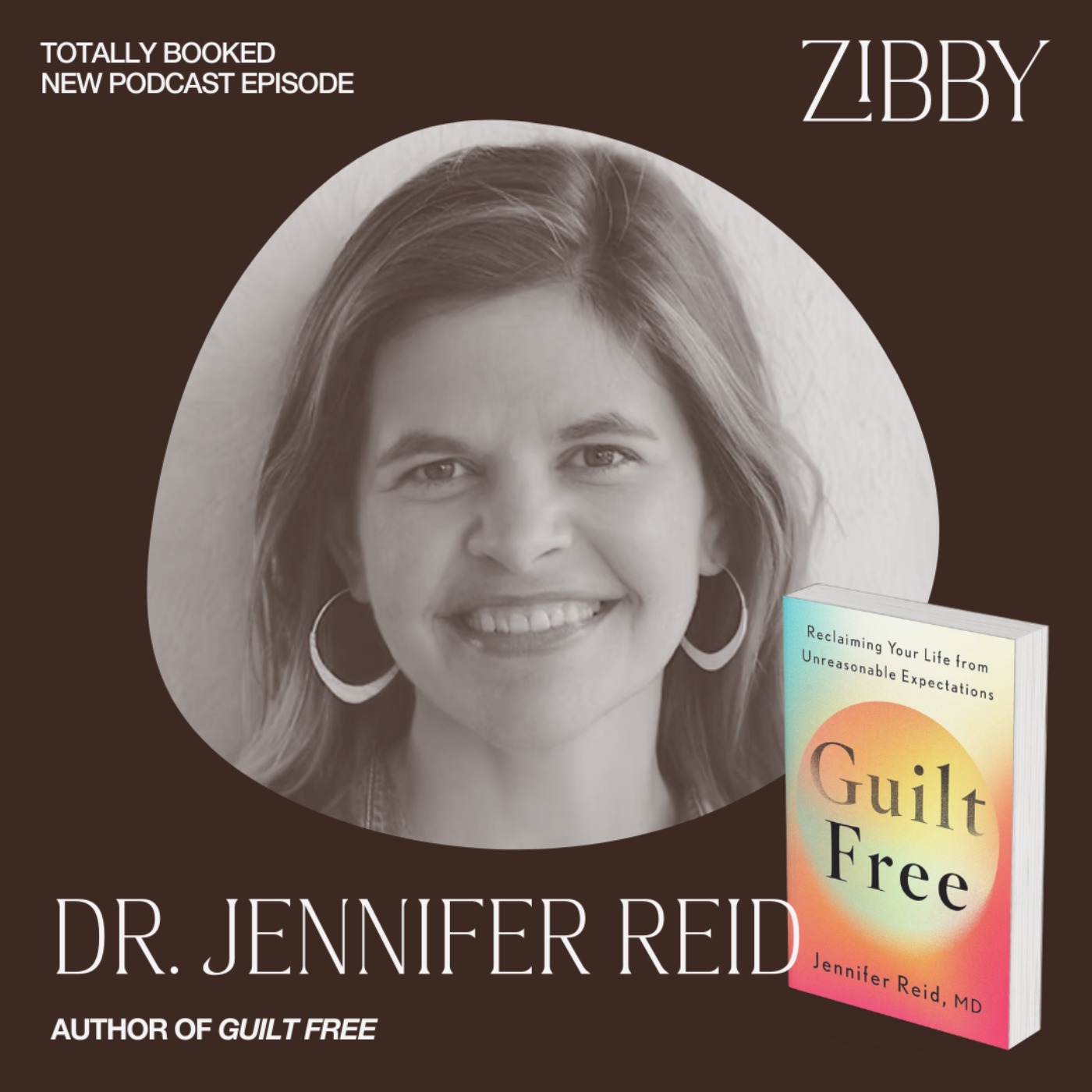
As a bookstore owner, publisher, author and obviously podcaster, I get a comprehensive look at everything that's coming out and spend my time curating the best books so you don't have to stay in the know. Get insider insights and connect with guests like I do every single day. For more information, go to zibbymedia.com and follow me on Instagram ibbyowens. I really enjoyed interviewing Dr. Jennifer Reed at my kids school which is where I host a sort of twice a year interview series for the Parent Association. This is how I get my volunteer credit. Basically. Jennifer Reed came up from the Philadelphia area to do the event at school with us and we had such a great time. There was a lovely crowd that showed up to hear and to want to feel less guilt. Her book is Guilt Free, Reclaiming youg Life from Unreasonable Expectations and I thought it would be a good fit for the type a audience of parents at the school. Dr. Reed is a psychiatrist. She's the creator and host of A Mind of Her Own podcast and substack and as I mentioned, author of Guilt Free. She's a regular contributor to Psychology Today and an assistant professor at the University of Pennsylvania where she teaches the next generation of psychiatrists. She lives outside Philadelphia with her husbands and two sons.
- [05:14]
Event Host / Interviewer
Welcome Dr. Reeb thank you so much for coming on.
- [05:18]
Dr. Jennifer Reed
Totally Booked to discuss your book guilt free. Thank you so much for having me. Zibby, this is really a treat to do it in front of a live audience.
- [05:25]
Event Host / Interviewer
Well, and congratulations. How does it feel to have your book in the world?
- [05:28]
Dr. Jennifer Reed
It feels amazing. We're one day out and it already feels like it's a whole new world.
- [05:33]
Zibby Owens
Round of applause for pub day. Pub week, rather.
- [05:39]
Event Host / Interviewer
So a couple years ago I met a friend of mine named Andrea for coffee and I was like, how's everything going? And she's like, actually, it's great. I've decided I'm not going to feel guilty anymore. And I was like, what are you talking about? She's like, yeah, I just decided I'm just going to do my thing and I'm going to work in the city some days I'm going to be with my kids and I'm just not going to feel guilty about it. And now I'm like so happy. And I was like, I didn't realize you could decide not to feel guilty. Like, I didn't realize that was an option. Is that an option? Tell us about guilt.
- [06:08]
Dr. Jennifer Reed
Oh, I wish that were an option. I'd love a follow up interview with your friend.
- [06:12]
Event Host / Interviewer
Okay, I'll get her on.
- [06:13]
Dr. Jennifer Reed
Okay, perfect, perfect. No, I think that it is something that I was hearing in my practice. I was hearing from friends, from family. I was experiencing myself sort of constant state of just feeling like I wasn't doing enough, I wasn't productive enough, I wasn't doing enough for my children, for my spouse, for my body, for my future. And I found that when I started asking other people about was showing up in all of our different roles as women. And I think we wear a lot of hats, right? We're daughters, we're mothers, we're sisters, we're colleagues, we're teachers, we're volunteers. And it was showing up kind of across the board and was really this very broad, generalized, heavy, burdensome guilt, which is very different from sort of guilt that we evolved to experience, which actually can be quite adaptive, in fact.
- [07:02]
Event Host / Interviewer
So how do you know when you have maladaptive guilt?
- [07:06]
Dr. Jennifer Reed
Well, I think the most adaptive guilt is based on some specific situation. So something happened, maybe someone else was harmed in some way. I recognize that I played a part in that. And what I want to do now, I feel really badly. I'm empathizing with you. You're feeling badly, I'm feeling badly. Let me see if I can repair, apologize, move toward you, try and make it Better. That's the healthy type of guilt. That's what actually allowed us over the years to connect and inform community. Because you're saying, I notice you, I see that you're hurting, and I care, and I want to try and make it better. But what I'm finding with the kind of guilt I write about in the book, it's this just constant sense. I'm just not doing enough. That word comes up a lot should. Comes up a lot. Words like, I'm never able to do this, or I'm always doing this. We find that we speak in hyperbole. And that's the kind of guilt that I think can be so toxic because it's just everywhere. It sort of, you know, pervades our entire lives, particularly as women.
- [08:06]
Event Host / Interviewer
I feel like there's some men here who might feel guilty about things.
- [08:09]
Dr. Jennifer Reed
Absolutely.
- [08:10]
Event Host / Interviewer
Okay, we got a few nods. Maybe I'm just calling them out. Is it more pervasive or is it women talk about it more?
- [08:16]
Dr. Jennifer Reed
That's a good way to put that. You know, I think that certainly in my experience, clinically and personally, women seem to experience a disproportionate amount of this kind of guilt. Of course men feel guilty. And interestingly, I think there are differences in particular, maybe work culture. So someone who works in health care, for example, as my husband does, or teaches, or some other caregiving, caretaking profession, there can be a lot of guilt that can come up there because the sense of enough becomes elusive. What is actually enough when it comes to caretaking? And I think you certainly can. Doesn't, you know, define by one particular gender. You don't find it only in men and women, but I think women face a different level of expectations that can create some guilt and can certainly talk about how expectations shape our guilt as men, as women, as any of us.
- [09:11]
Event Host / Interviewer
And before we get into more of the tactics of addressing guilt, how would you feel about your own level of guilt these days? Do you still feel guilty about things, and if so, what?
- [09:21]
Dr. Jennifer Reed
I still have guilty thoughts about everything. It hasn't gone away. I think that what I've been able to do is. Is apply the techniques that I wrote about. Sometimes your writing brain knows things that your thinking brain doesn't. Being able to write down, it created something called the guilt equation. I just really like math, and I like the concrete aspect of it because the brain is so complex. The equation essentially is guilt is based on our expectations. The difference between those we can talk about all the places those come from. The difference between our expectations and our Perceived reality. Do we believe we're meeting these expectations? And if not, how do we feel like we're missing them? How do we feel like we're falling behind? And for me, those guilty thoughts come up a lot. My son called me, oh, Mom, I'm going to walk home because dad is not going to get off on work in time to come pick me up. And it's pretty cold out, but I guess I'll do it because I know you're at this podcast. I may have felt a little guilt when that came up, but the equation allows me to plug that in and say, what are the expectations here? That I will be available to him 24 hours a day until when? Right. At some point, I do hope that he goes out and lives an independent life. So if I'm there for him 100% of the time, even when he could do it very well on his own, he was doing great. He was telling me about his day while he was trekking through the snow. I think recognizing my expectations were unfair and also paying attention to my perceived reality. What am I noticing about the world around me? What am I noticing about my own contributions? Because we tend particularly women, again, not always, not only, but there's this I write about kind of tearing the scale. If you've done any baking, there's a scale that you put a bowl on and you press the tear button and immediately the bowl weight goes to zero. So you can actually weigh your dry ingredients. And I think we do that particularly as women. We dismiss all of the things that we're already doing, all the ways that we're already showing up for our family. So the fact that my son was walking home from school on a cold night, I had made sure he had a warm coat and that he took a hat and gloves this morning, and that we lived in a safe neighborhood and that there were probably neighbors around that might check in on him as he's coming home. I've done a lot of different things to make sure when he's gaining some independence and I'm not available, he's still going to be safe and relatively happy. Though, again, that's not in my control either, is it?
- [11:48]
Event Host / Interviewer
So give us some of the secrets to how to do more effective self talk. When it comes to guilt, when you feel it coming up, I'm here at the podcast. I'm not there one way is what you were just suggesting. What are other ways?
- [12:02]
Dr. Jennifer Reed
I think just even noticing it, even catching yourself with some of this language, because the way you speak to yourself is so Important. And you may not even notice it. It may just be automatic. There I go again. I can't believe I didn't get to the gym today. I can't believe I didn't cook dinner tonight. I'm not being as productive as I should be. If we're saying always, never, we're speaking with these kind of sort of extreme language. Catch yourself and really think, okay, what are the expectations driving this moment right now? What are the expectations creating guilt for me and where did they come from? This is important. It's not because we ourselves are setting these absolutely sky high unreasonable expectations in a vacuum. We're existing in the culture of our time and place. And in this culture, women in particular face four key expectations. One is that constant caretaking, that in all of our different roles as a child of aging parents, women are often tasked in being the caretaker there. As the parent of children. Certainly that's the case even as a friend or as a colleague at work. If any of you have been asked, could you just plan the office party or would you mind checking in on that colleague, but they're not doing as well or you know, it's wonderful that we can be caretakers, but I think when the expectation is there that that's how we are good enough women, that can really cause a lot of guilt. So it's constant caretaking. It's hyper accountability. This one I'm very guilty of. I really work. I've been working on it. I think I can control someone else's emotions. I worked so hard to make sure that party perfect.
- [13:38]
Event Host / Interviewer
Yes. Can't we all?
- [13:40]
Dr. Jennifer Reed
I cleaned the house so that my mother wouldn't be disappointed. Right? Or I planned this party so that my son would be so happy. Of course we want to have our loved ones experience these positive emotions, but we can't truly control that. And putting ourselves in a place where we believe we should is a recipe for guilt. So that's the second one. Third one, Just seeking perfection and self control. How much I eat? Do I drink? How are my moods? How is my relationship with others? How's my productivity? Seeking perfection across all these different areas of our lives. And the last one is just the sort of idea that we can have it all and balance it all and that we should balance it all effortlessly. Yeah, of course I work and I have kids or I have kids and I volunteer. I do all these different things and I'm able to do all of that effortlessly. And that's what it means that I'm a good enough woman. And those Four areas of expectations. If you can catch yourself experiencing them, it's really a good indication that this is creating guilt. It doesn't have to stay that way. We don't have to hang on to these unfair expectations for ourselves. And adjusting that variable in the guilt equation, so to speak, can help, really help lower our guilt.
- [14:52]
Event Host / Interviewer
But what do we do about things that, like, for example, I was just talking to someone, I said, I don't feel like you have a lot of the mom guilt. And she said, no, I don't have a lot of the mom guilt, but I feel guilty that I don't.
- [15:04]
Dr. Jennifer Reed
Read more.
- [15:05]
Event Host / Interviewer
What do we do with that? Like, there are things you want to do more. You feel like you should do more. I know you talked about shoulds. What do we do with those feelings?
- [15:13]
Dr. Jennifer Reed
I think you'll find that guilt can be really sticky because we do use it for motivation sometimes. And it can work in the short term, right? I can't believe I'm not reading enough. I'm just not a very studious person, let's say. Or I'd really like to read more, but I just. I never seem to get around to it. Creating that guilt might spur us to go and do the thing that we're thinking of, but it's actually a pretty expensive way to motivate ourselves. It's costly because it means we're starting from behind. I'm telling myself I've already failed and now I need to make a change because I blew it. Instead of the slogan of Nike is just do it. And instead it's like, I can't believe I didn't do this already. That's not a very good slogan. It's not very motivating. But we do use that. It turns out when we look into the data and thank goodness that self compassion actually is a far better motivator than guilt and self criticism. If you've learned anything about self compassion, this is not just saying I'm only going to pay attention to the things that are good. It's really getting a curious and clear view of what are we actually doing in this situation. How can I be kind to myself, see myself as part of sort of a broader community? Other women who are experiencing these emotions and be present in that moment. So practicing mindfulness, those are sort of the three tenets of self compassion. So yes, we could use guilt to manipulate ourselves, we could use it to manipulate others. But we all know how awful that feels, right? When someone in our life uses guilt to manipulate us, we might do what they want but it's going to create some negative feelings and eventually sort of pull you apart. So I want to really be careful about using guilt as a motivator in that, like that situation of reading and could it be, you know, I haven't been reading as much as I would like to. I'm going to try and make a change to that. I would like to make a change to that is a lot different than saying, I can't believe I'm not doing that. And like, why do I keep making these New Year's resolutions and then not sticking to them? I never keep them. This language, it really is powerful and we have to be careful about how we're speaking to ourselves.
- [17:23]
Zibby Owens
Today's episode is sponsored by Wayfair. The new year is here and it is time to get back into an at home routine you love and elevate your space with Wayfair. From bedding and mattresses to storage solutions for every room in your house, Wayfair is your one stop shop. I actually have used Wayfair so much because over the holidays I stayed with my mother in Arizona and told her it was definitely time to redo the guest room where she has my kids stay because she hasn't touched it in decades and it needed a refresh. And I said, you know what, Wayfair? So we got beds, lamps, side tables. We've been doing the whole room. It looks amazing. Everything came within a few days in perfect shape. It has been so fun. Wayfair has everything like the most enormous selection of home decor items and exactly what we wanted for the space we had. And it's still a work in progress. And I will share some pictures on Instagram. We're obsessed so you should get organized, refreshed and and back on track this new year as well. For way less, head to Wayfarer.com right now to shop all things home. That's W A Y-F A I R.com Wayfair Every style, every home. Today's episode is sponsored by Quince. Quince is all about elevated essentials that feel effortless. Designed for layering and mixing, each piece helps build a timeless wardrobe made to last with versatile silhouettes and thoughtful details. They're the kind of styles you wear again and again. I have not taken off my quince parka this entire winter season. There's been a huge snowstorm lately. I wore it in and out of the snow every day. I mean, I just wear it every day. It's amazing. Quince has wardrobe staples with quality that is made to last like 100% organic cotton sweaters, premium denim with stretch for all day comfort luxe cotton cashmere which blends perfectly for changing seasons and basically everything you need for a wardrobe that last. Quince works directly with safe ethical factories and cuts out the middlemen. So you're not paying for brand markup, just high quality clothing. Quince uses the highest quality materials like 100% European linen and organic cotton. Speaking of which, my podcast producer Chelsea, who is undoubtedly listening, got a new comforter off of Quince, which she also loves. We are both Quince fans, so refresh your wardrobe with quints. Go to Quince.com Zibby for free shipping on your order and 365 day returns. Now available in Canada too. That's Q-U-I-N-C-E.com Zivi to get free shipping and 365 day returns. Quince.com Zivvy.
- [20:20]
Capital One Bank Announcer
With no fees or minimums on checking accounts, it's no wonder the Capital One bank guy is so passionate about banking with Capital One. If he were here, he wouldn't just tell you about no fees or minimums. He'd also talk about how most Capital One cafes are open seven days a week to assist with your banking needs. Yep, even on weekends it's pretty much all he talks about in a good way. What's in your wallet? Terms apply. See capitalone.com bank capital1NA member FDIC.
- [20:53]
Event Host / Interviewer
And what do we do if someone else is making us feel guilty about something? I'm just going to have you be a therapist.
- [21:00]
Dr. Jennifer Reed
Absolutely. It's such a big question and one I'm asked often and really thinking about first noticing. Noticing okay, this person in my life, maybe you hang up the phone with them and you always feel kind of awful. You feel sort of guilty. You feel like I'm not doing enough for them, I've messed something up, I'm not present enough. When you're feeling that kind of manipulation, this is where the importance of boundaries actually come in. And you may have heard about boundaries, read about boundaries before, but I really want to be clear that boundaries are not putting up a wall between you and someone else. Boundaries are creating this safe structure that allow you to have free communication. It's creating a safe space for the two of you to be able to communicate. And if someone's really pushing against your boundaries, it's going to feel really bad. It may create some guilt. But again, being consistent about those boundaries, being really clear about why you're setting them, and really important to Keep in mind, you're setting them in part if you want to maintain this relationship. You're setting them to strengthen the relationship, because boundaries actually do that. They're not a wall between you and someone else. They're actually a structure, and that allows you to communicate. So if you're feeling that manipulative guilt trying to set those boundaries, recognizing that the person you're setting them with may have some real pushback. Family systems we learn early on in our residency training, families push back. So these systems and a family system might be an office environment. It may be a group of friends are going to push back when you try and set new boundaries and really consistently reinforce those boundaries. But they're still really important to do and to edit as need be as you grow and change.
- [22:42]
Event Host / Interviewer
So let's say a patient comes in, like one of the many who you give anecdotes about in the book. For example, someone who said, the only time I'm not feeling guilty is when I'm asleep. Like when someone comes into your practice and sits on the couch or the chair, whatever, and starts saying that. Where do you go from there? Do you explore the causes of the guilt or do you do, like, some CBT therapy? How do you address that?
- [23:07]
Dr. Jennifer Reed
Yeah, well, I think recognizing that we each have fairly unique guilt triggers, I try to express what are the common expectations that come into play or the ways we're minimizing. But when it comes to your unique experience, I was trying to be really careful to give you tools to examine your own guilt. Because if I tell you my dress size and you go shopping, that's not going to help you very much decide what you want to buy. You really need to know your own measurements. In that case, you need to know your own guilt triggers. So it's just. It's an examination. It's. Okay, let's think of a particular example. Because sometimes, you know, I always. I feel guilty. All the time when I'm awake, I feel guilty. Okay, we'll start there, but let's come up with a particular example, and then we can start exploring what those expectations are. I felt so guilty after I spent some time with my mother. Okay, what do you think was brought up? Well, she asked me when I was going to finally have some kids. She asks me that every time. And then I think to myself, okay, a good daughter wouldn't disappoint her mother because she decided she didn't want to have kids. A good daughter would make sure that she ended every call with her mother feeling good and feeling Happy with the discussion and the choices that she was making as a daughter. Right. And that can just create this really difficult situation. So we start by learning what are their specific triggers. And I think that's what I'm hoping this book can do, is just prompt people to start considering their own, because I can't tell you what yours are, but it's so important for you to understand what they may be.
- [24:38]
Event Host / Interviewer
And just one more question on the specifics of this brand of mom guilt, or maybe dad guilt, or wanting to be with them, spend time with them, like show love in terms of minutes or available minutes spent, or some sort of equation. Like we're all doing some sort of calculus.
- [24:55]
Dr. Jennifer Reed
Yeah.
- [24:56]
Event Host / Interviewer
Maybe we're not. Maybe it's just me. I feel like I'm often doing some sort of calculus, like feeling guilty if I use my time to do something else. Even if it's work. I feel like that can. So does anybody not feel guilty about this stuff? How do we. How do we come to terms with this?
- [25:12]
Dr. Jennifer Reed
I think in. In modern times, we are really faced with this magnified view of all the uncertainty, all of the challenges that are going on in the world. We have a front row seat to all of these difficult things that are happening. And I think as parents and in many other roles, but as parents, there's this desire to have some kind of control over those uncertainties. And I think this is partly what is triggering this kind of increased intensity of parenting, because there's this sense that if I get it right, they will be happy and productive and safe and I won't have to regret anything. Right. And I think there's this pressure that we then are putting on ourselves because we're trying to wrest control from periods that feel really chaotic or feel really scary. It's hard as a parent to let your child go out into the world just walking around with a piece of you. And so I think part of the guilt, it seems counterintuitive, but it's a way for us to feel like we have some control. Because if it's something I've done wrong, then I just have to change, make it better, do it right, and my child will be happy, safe, successful, et cetera. And so I think that is. It's a broader thought process to go through, but so important to do that. This is me trying to manage my uncertainty. I can't control how they turn out, how happy they are, how safe they are. Truly. What are the things that I really value, the connections that I really want to make with them. And how do I actually participate the best way I can in that relationship, knowing I can't be there always. I can't prevent disappointment or sadness or being bullied at school as much as I want to. But they're going to run into challenges. I'm there to hear them and validate those experiences, do what I can, but I can't truly prevent them.
- [27:05]
Event Host / Interviewer
So you could probably write many books with what you hear in your practice. Can you share any other secrets that you hear? What other issues are coming up a lot with your clientele?
- [27:15]
Dr. Jennifer Reed
Well, one thing I really that I find helpful in managing my own confidence and feelings of guilt is sitting across the room from so many accomplished, just wonderful, beautiful women who are so hard on themselves. And I see them in such a different light. And it reminds me, okay, the way that we view ourselves is so harsh. It's so, for the most part, so much harder than we would view, say, a friend. And so one of the self compassion exercises that I love and I try to teach everyone in sessions is how would you speak to a friend in this situation? It sounds very simple, but it really is powerful because it gives us just a little objectivity. For example, if I'm saying to myself, oh my God, these pants, they do not fit me anymore. They used to fit me 10 years ago when I worked in that job. This is a real experience for me. By the way, why don't they fit anymore? Right? What would I say to a friend who said that? I would say, well, of course, girl, you've changed, you've grown, you're maturing, you've been doing barre class. So you know, that's increased sizes of certain things. Like that's a positive, you're strong. That's what I would say to a friend. What do I say to me, oh my gosh, what are you doing? Right? So I think trying that as a self compassion exercise can be really powerful. And I do it in my own head quite often because that script of self criticism is something that we just live in and we use with each other too. It's a currency in our relationships of we better criticize ourselves as a way to demonstrate that we're not feeling too confident. And I just love being around women who are just like, this is it, I've got it all top to bottom. I mean, we don't know many of them, but what a refreshing feeling when you really see that confidence in someone else. It's beautiful. So that's a secret.
- [29:06]
Event Host / Interviewer
Do you find differences? Earlier we were talking about where you were from and all of that. Does anyone want to take a guess at what state Dr. Reed is from? Just like throw out a state. It's a surprising state. That's why I'm playing this game.
- [29:19]
Dr. Jennifer Reed
You don't have to take a guess. Alaska? Nope.
- [29:23]
Event Host / Interviewer
Not Alaska.
- [29:24]
Dr. Jennifer Reed
Missouri? Missouri.
- [29:25]
Event Host / Interviewer
Not Missouri.
- [29:28]
Dr. Jennifer Reed
No.
- [29:29]
Event Host / Interviewer
Okay, we'll stop playing.
- [29:30]
Zibby Owens
You can tell them now.
- [29:32]
Dr. Jennifer Reed
North Dakota.
- [29:33]
Event Host / Interviewer
Has anyone ever met anyone from North Dakota before?
- [29:35]
Dr. Jennifer Reed
You have.
- [29:36]
Event Host / Interviewer
You have. I have not. Anyway, now we all have. Isn't this exciting?
- [29:40]
Dr. Jennifer Reed
Here we are.
- [29:40]
Event Host / Interviewer
Are your family and friends from North Dakota plagued by all the same issues or is it the parts of society we live in? Is it certain pieces of the culture? Is it pervasive?
- [29:51]
Dr. Jennifer Reed
It really is pervasive. And I think that's another reason for writing the book is I've lived and worked in North Dakota, in Wisconsin, in Los Angeles, in New York, in Philadelphia. It's everywhere. It may shift a little bit in what those specific expectations are of what a woman should be doing, but it exists everywhere and it exists across time. In fact, I was interviewing a woman who was in her 80s, was still writing books. She's just a phenomenon. And I was telling her about writing the book and I said, but you probably have it figured out. And she was like, it just, it never goes away. I still have guilt all the time. And it was just that really struck me that both sort of geographically, but also generationally. And my mother, she's read my book and said, it's really given me some new insights. She was a stay at home mom and she's like, I realized how guilty I felt that I wasn't out working because my mother was a nurse. And I thought, well, maybe that's what I should be doing because that was my upbringing. That was my understanding of a good woman. So it is everywhere, but it's based on our individual experiences mixed with the culture of the time and place. But there's no one free from it. Unfortunately, not yet. Maybe soon, thanks to Guilt Free the.
- [31:07]
Event Host / Interviewer
Book, you will soon be freed from these expectations.
- [31:10]
Dr. Jennifer Reed
Wouldn't that be lovely?
- [31:12]
Event Host / Interviewer
Do you envision a world in which everyone has read your book and. And we all feel calm and happy and go off and do whatever? Do you think that's a possibility?
- [31:20]
Dr. Jennifer Reed
I don't know that I've imagined that. That does sound utopian. But I have imagined people really sitting down, women sitting down, women saying, me too. Absolutely. I felt that. You felt that. I felt that. Right. Because sometimes when you're talking about guilt, it's just like I've messed something up. You don't maybe want to share that. You don't want to say to other people that critical voice that's in your head. But I think if other women are saying, me too, this sense that we can actually really build together and create sort of this sort of intergenerational transmission of agency, of confidence, of this kind of change that could kind of cross boundaries. I mean, when I'm really in my dream, dream zone there, that's what I come up with is women being able to kind of remove this overlay of guilt so that they can go out and do the things that we need to change the world. Because, you know, we need to do that these days more than ever.
- [32:12]
Event Host / Interviewer
Dr. Reed, thank you so much for coming on Totally Booked.
- [32:15]
Dr. Jennifer Reed
Thank you for having me. This was so fun.
- [32:19]
Zibby Owens
Thank you for listening to Totally Booked with Zibby, formerly Moms don't have Time to Read Books. If you loved the show, tell a friend, leave a review. Follow me on Instagram, ibbeowens and Spread the Word. Thanks so much. Oh, and buy the books.
- [32:41]
Capital One Bank Announcer
With no fees or minimums on checking accounts, it's no wonder the Capital One bank guy is so passionate about banking with Capital One. If he were here, he wouldn't just tell you about no fees or minimums. He'd also talk about how most Capital One cafes are open seven days a week to assist with your banking needs. Yep, even on weekends, it's pretty much all he talks about in a good way. What's in your wallet? Terms apply see capitalone.com bank capital1na member FDIC.
- [33:12]
Sarah Gibson Tuttle
We interrupt this program to bring you an important Wayfair message.
- [33:16]
Dr. Jennifer Reed
Wayfair's got style tips for every home.
- [33:19]
Sarah Gibson Tuttle
This is Stiles MacKenzie helping you make those rooms sing. Today's style tip when it comes to making a statement, treat bold patterns like neutrals go wild. Like an untamed animal. Print area rug under a rustic farmhouse table from wayfair.com this has been your Wayfair style tip to keep those interiors superior.
- [33:39]
Dr. Jennifer Reed
Wayfair Every style, Every home, day or night. VRBoCare is here 247 to help make every part of your stay seamless. If anything comes up or you simply need a little guidance, support is ready whenever you reach out. From the moment you book to the moment you head home.
- [34:00]
Sarah Gibson Tuttle
We're here to help things run smoothly.
- [34:03]
Dr. Jennifer Reed
Because a great trip starts with the right support. And hey, a good playlist doesn't hurt either.