Loading summary
Transcript31 lines
- [00:01]
A
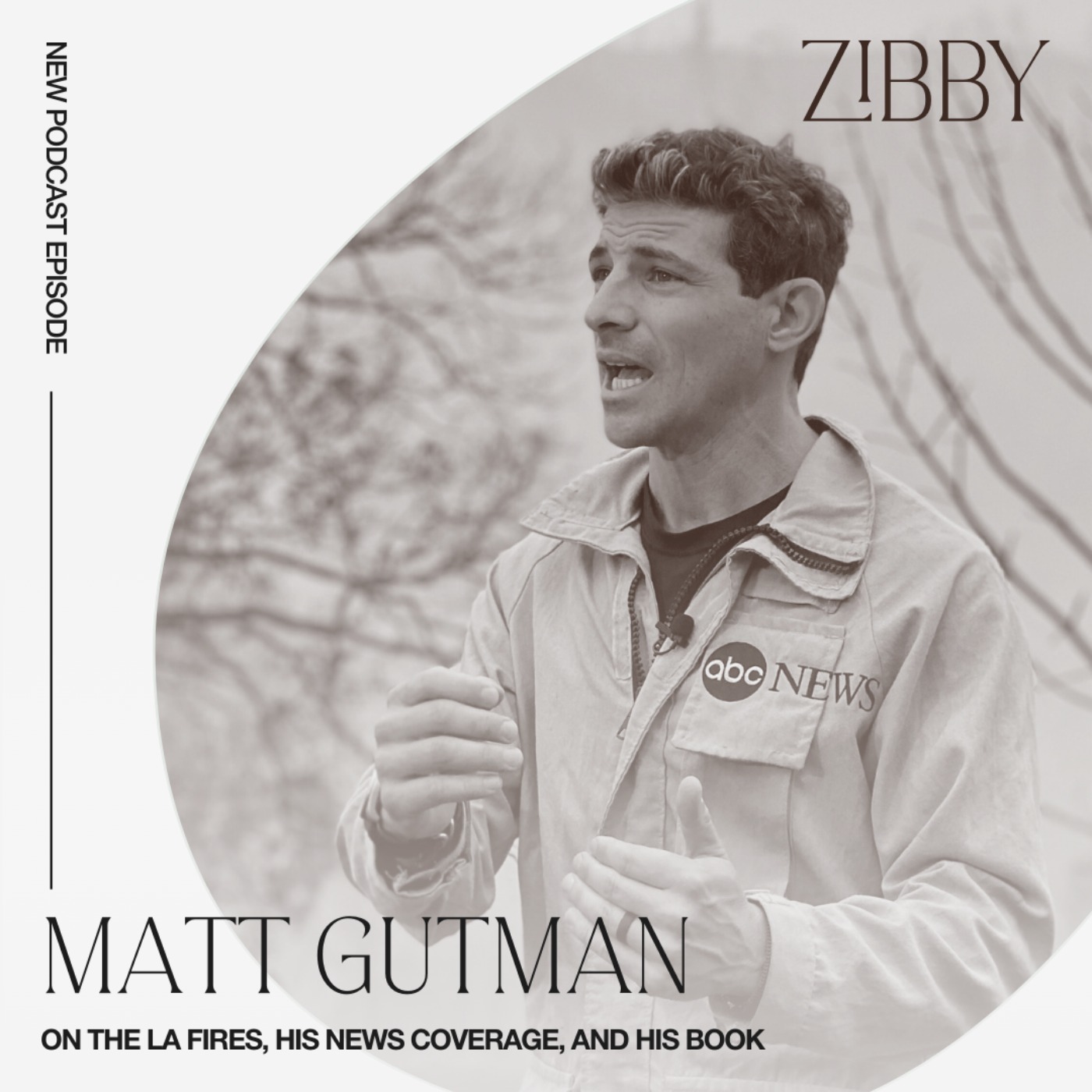
Hi, this is Zibby Owens and you're listening to Totally Booked with Zibby, formerly Moms don't have Time to Read Books. In my daily show, I interview today's latest best selling buzziest or underrated authors and story creators whose work I think is worth your time. As a bookstore owner, publisher, author and obviously podcaster. I get a comprehensive look at everything that's coming out and spend my time curating the best books so you don't have to stay in the know, get insider insights and connect with guests like I do every single day. For more information, go to zibbymedia.com and follow me on Instagram. Iby Owens Matt Gutman is ABC News's chief national correspondent. He was on this podcast for his book no Time to Panic, but I wanted to have him back on because I was watching his phone and coverage of the fires in Los Angeles the whole time from my couch and just couldn't believe he was out there risking his life to report on what was going on and informing the rest of us about it. So I wanted to ask him about it. That's what this episode is about. Yes, it's about his anxiety, which he wrote about in his book, but it's about how he navigated that and everything that was going on in the world as a reporter and how he feels about LA. Now listen in his bio. Matt Gutman is ABC News's Chief national correspondent. A multi award winning reporter, Gutman contributes regularly to world news tonight, 2020, Good Morning America and Nightline. He has reported from 50 countries across the globe and is the author of the Boys in the Cave Deep Inside the Impossible Rescue in Thailand. He lives in Los Angeles with his wife and two children. Welcome back, Matt. Thank you so much for coming back on last time you were here to talk about your book no Time to Panic and we talked all about your panic attacks and different remedies that and ways you've come to manage it and to put it into sort of national historical context and all of that. So I knew all of that. And then I watched you on TV dealing with all of the fires in California and I was thinking to myself, how is he doing this? Like, how is he doing this? So anyway, I asked you back on to discuss your experience pairing panic and anxiety. When real life things happen that are even worse than things that we could.
- [02:22]
B
Imagine, it's always good to be on with you. You know, it's funny to talk about this stuff. People often ask me that question. You know, you've spent time in Gaza, you've seen the most horrific things. You were in Israel on October 8th, just, you know, very shortly after the October 7th attack. You've experienced such trauma and horror in your day job and yet you have anxiety that sometimes has been crippling. How does this work? And the answer is that when the shit is hitting the fan, so to speak, I'm at my most lucid because I don't have time for anxiety. You are so focused on the task at hand and the thing that you're seeing, that you're witnessing is so much bigger than you or your personal worries that all that stuff goes by the wayside and it's just focusing on doing whatever it is or telling the story of people's whose community is burning down before your eyes. Community that I knew very, very well. Know very well. My aunt lives there, my cousins grew up there, I have other cousins there. People like you. So yeah, it's like it's, it's, it's strange how you handle like the stress of like reporting when a fire is consuming a community and towns and there's actual physical danger that could affect you and dealing with anxiety. But I bet if you ask most people who have anxiety, they'll say oh no, no. In times when stuff was real, that's when I was my most clear, that's when I had the least amount of anxiety, that's when I performed the best.
- [04:01]
A
Interesting. Yeah, it's like adrenaline fueled focus or something.
- [04:05]
B
Yeah, I mean I think there is adrenaline too, but it's also the narrowing down of options. I mean one of the things that always has bothered me in terms or caused me anxiety and sometimes a panic attack is the expectations. Right. But when you're forced to deal with just one thing, you. I don't have time to worry about what school my kids are going to go to or, or yeah, or you know, my son with his ADHD and you know, haranguing me about that one thing that the app he wants and we're trying to limit the apps on, on the iPad or whatever it is that he has. And I'm like, no, you know, like those little worries, what we're going to eat? Did I work out? Did I overeat? Did I under eat? Did like what are my colleagues think? No, you've got to focus on this one thing. And the clarity that comes with this hyper focus, especially for someone like me who has adhd, is actually a relief. So I've always found that, I mean there's a flag behind me and that's a FEDEIN SADDAM flag I'll move out of the way. And I got that in 2003 in Iraq. The US invaded Iraq, obviously in 2003. It toppled Saddam Huss. And nobody wanted to take that thing because it was believed at the time that the US was using depleted uranium to take down buildings that belonged to the Saddam regime. We weren't quite sure about it, but this. This pretty awesome flag was there at the building that housed the personal militia of Saddam Hussein. And I'm like, I gotta get that thing. So, like, I scrambled up and took it. And it's like, you know, it's things that, like, other people would say are like, really stressful and end up being moderate not. But they end up being easier for some people like me because of the way our brains work. And so again, it's like the dealing with the stress of what should be super stressful times is actually the most clarifying moments that some of us have. And there is something too, because of the bigness of it. Sippy. Right? Like, you know. You know that you're witnessing history and the bad kind of history. And there's also something that is called negative awe, which we know, the awe we experience when we see the Grand Canyon or a beautiful vista or a sunset with a loved one that is sort of branded in our memories. But there's also the inverse of that, which is negative awe. When you see a fire and you see it move so fast that it takes your breath away. And that's what you see when you close your eyes for days afterwards. And it's a form of imprinting and it's a form of trauma. But it is also something that we are, I think, evolutionarily programmed to sort of be able to deal with when we have to. I mean, I want to ask you, you know, so we almost. We. We sort of evacuated, then we came back. We didn't leave. We were one block away from an evacuation from a mandatory evacuation zone, and we were in evacuation warning area. And my wife and I debated, but we ended up staying. When we watched the fire move away from our community, then sino we. Which is just over the Santa Monica Mountains from the Palisades and Brentwood. So I wanted to ask you, like, what was it like to experience through that nest video watching your house nearly burn down?
- [07:20]
A
No, I'm asking you questions. Well, it was horrific. I mean, it's still horrific. You talk about, like, imprinting on your brain, but as we were. And we were in New York at the time, and as we were there watching TV and then watching you reporting for days and everything and telling us what was going on when we felt so helpless, Right. There was no information, there was no email being like, oh, here's what's going on with your street or here, you know, so we, like everybody, we're dependent on the news and watching people like you who are bravely going out. And that's when I DM'd you. I was like, oh, my gosh, you're doing such a good job. But I wanted to know what it felt like being there. And I'm sure that's just too big a question. And you've been through so many things, as you've said and as you wrote about in the book, but what was it like there then? If you, you know. Yeah. What was it like?
- [08:10]
B
Okay, so the first day I got there, the fire started at 10:30. And it's so funny, when you did that hit on CBS you mentioned, and I think that was January 9th or 8th, I think.
- [08:23]
A
Yeah, maybe. I don't know, actually. 8th or 9th. Yeah, yeah, one of those.
- [08:25]
B
Very soon after the fire started.
- [08:27]
A
I think it was the eighth. It was the day. It was the next day, it was the eighth.
- [08:30]
B
Right. And you mentioned that they're right next to you had been a fire on New Year's Day. And it turned out that they believe, it's suspected that that fire was the fire that started the Palisades fire, that it was sort of. It had gone subterranean. Firefighters thought they put it out, but it turns out, you know, fires can live underground, and what they need is fuel. And the fuel can come in different ways. It can be wood, but it also can be wind. And once that wind event kicked it up, it just ignited this inferno.
- [09:02]
A
I did ask firemen about this, though, and they said that that was not the case and that they never leave a fire unless it's cold.
- [09:10]
B
But they don't know sometimes if it's underground, they would never leave. They do incredible work. But fires can live underground for weeks, buried in the roots. So it's still being investigated.
- [09:21]
A
Okay, I was just saying that was it because I was dying to know.
- [09:25]
B
And so it's definitely something that's being investigated. But it's interesting that you, like you there, were there and you experienced it and you saw what may have been the start of that fire and that you did experience evacuation. So I was there. The fire started at 10:30. I was in the Palisades by like 12, 12, 15. I saw the Paul Revere School down the hill just a couple of Miles away, being evacuated. And I was like, okay, that's big. And, you know, driving in, I saw the fire sort of cantilevered or the smoke cantilevered over Pacific Palisades. And so, you know, that's bad because that means there's a lot of wind pushing it. If the column of smoke is straight up, you know, something's burning, it's chewing through fuel and wood and. And the. The chaparral of. Of the. The Santa Monica Mountains and Southern California is famous for, which is highly flammable. But when it's like, instead of straight up, it's going sideways. That's really bad. And so we got to the Palisades, and it was just gridlock on Sunset Boulevard, which is the main thoroughfare in the town. And my aunt lives in the Palisades. She happened to be away, but she lives just off Sunset, so, you know, the fire wasn't there. I looked down the street at her house because you can see it from sunset, and it was okay. And then we did reporting, and we were just. We couldn't get anywhere in the Palisades because the gridlock was so bad and people were freaking out, and it was terrifying. And so I actually got out of the truck and had my producer drive, and I was sort of doing Tetris with the cars to move people aside to get the. To try to get fire trucks through and for us to get to the fire, and it was mayhem. And you knew that this was going to be bad because of the gridlock anyway, so reporting throughout the day, and it's, you know, it is a firestorm. The wind is fueling fire, and it's making the fire bounce ahead of the actual main body of the flames by hundreds of yards, sometimes even more than a mile, in this case. And eventually I went back to my aunt's house later that day, and I. She was away, and I spoke to my cousin, and he told me where the spare key was. And I ran into the house because the street that the. The. The apartment complex, the condo complex across the street from her was already ablaze. And so I knew that it was just a matter of time. And so I managed to get out some of her art, some of her most prized possessions, but not everything. And so, like, I'm. It was. So here's. Here's where I actually got scared because I'm so used to being outside of homes that are physically burning, right? And I don't have that fear. I know how to gauge fires. I've been doing this for a long time. But you're very rarely inside a house that's darkened in a place with no electricity, where everything around is burning. And that was scary. And the fire alarms going off, and there's smoke inside the house. And every alarm inside your head, you know, the ones that gave me panic attacks is like, this is not good. This is not good. Get out of here. This is a dumb idea. Even though, like, I kind of, like, I. I thought I was safe because the house wasn't on fire yet, but the houses across the street were. And so I got out some of her paintings, and they're, like, big. And I like, I'm putting these very expensive, treasured pieces of art that are just so meaningful to my aunt. And, like, the flatbed of this pickup that I rented, and I'm like, oh, this. This is not how they should be treated. But at least I'm getting them out because they couldn't fit inside the cab. And so I fit other stuff in the cab. And then my cousin's like. I'm like, where are the documents? Where are most important documents? And she's like. He's like, she keeps them in the freezer. I'm like, the freezer? Is that a thing? Did you know about that?
- [13:04]
A
No, but that's not a bad idea. Interesting.
- [13:06]
B
Yeah. Apparently I like it. Keep the important documents in the freezer. So I start, I'm, like, going through the freezer, and I'm like, I don't have time. And, like, casseroles and meat and, like, breads and, like, stuff's going on the floor. And she's famous, my aunt, for chocolate chip cookies, and she makes the best. So, like, I see the chocolate chip cookies, and I'm like, all right, those go in the fire jacket. So I'm stuffing them in the jacket, still looking for the documents. I get the documents, I put them in the coat. I take the stuff out, and I'm like, what if her house doesn't burn down? And I just left. All this food that now is. Was frozen is now going to melt on her floor and make a stink. So I run back inside because I'm like, I don't want to leave a mess. And I start, like, putting it either back in the freezer or in the sink, and then I run back out, and that's like 8pm and I'm back in the neighborhood at 3pm and I drive by Sunset, and at this point, it's like a total inferno. It looks like a tunnel of fire across Sunset. And it was one of the absolute scariest drives I've ever done just getting to work that day. Because by now most of the town had burned. And just the difference between seeing the 8pm burn, which was catastrophic to the 3am or 2:45, it was just then you knew the town was gone. And at that point, firefighters didn't have numbers and the city was saying, you know, we just own dozens of homes. But look, I'd seen with my own eyes hundreds and hundreds of homes. And so I went to go see my aunt's house and it was completely gone. It was, it was, it was just, it had burned so fast. That whole neighborhood. This was the Alphabet she lives off of Via Delapaz and Sunset. And so it's right behind Palisades Village. The, the, the, the mall, the sort of the open air, nice mall, which was saved by an army of private firefighters, but the whole area behind it, the entire neighborhood was gone. And my house, my aunt's house was gone too. It was crazy because it was. There was just. It already almost completely burned out in just five hours or six hours. So I was happy that I was able to save some things, but I wish I'd taken more. And I was kicking myself. And then I have to go to do my job. Like, I've got to go on air. We've got to find where we're going to go from. And there's no signal because the electricity is out. So there was no power, there was no signal to go live with. So we were just like running around like crazy trying to hook up a starlink, which is the, the Elon Musk satellite link up. And that was, that was just the first morning. And then it continued for day after day. But by the end of that morning, once sun, the sun came up, it had become pretty apparent to us that this town was gone. And then we started to realize that Altadena, which had started burning later that evening, the day before, was also gone. It may have even been worse. And, you know, it became ever more apparent that this was a significant cataclysm that will likely change the face of LA for a very long time.
- [16:12]
A
Oh my gosh. Well, thank you for putting yourself at risk and being on the ground and going literally the extra mile to find the spots to. I know this is your job, but this is like heroic in the same way that the firemen were out there doing it. So thank you. So you do have this sort of recurring images or like, how do you get past this? I mean, I have recurring images just from seeing all the footage. You were in the middle of it, like, how do you go to sleep? Today's episode is sponsored by Wayfair. My personal style is simple, classic, elegant and timeless. And with Wayfair, I'm able to achieve all of that in all of my home and office design needs. Recently, my tween daughter wanted to get a vanity for her bedroom and I said, okay, well let's go on Wayfair and check it out. And she said, well, let me look at all these other sites. And I said, no, no, no Wayfair. So she googled it and guess what came up? The perfect product on Wayfair, which we ordered and we got in our home within two days. Like everything I get from Wayfair, this item is durable, great quality, looks great, and fits in with our whole style aesthetic in our home, which is classic and elegant. It goes with her wallpaper and I'm just obsessed with it. As I've said on this podcast before, I've gotten all my office furniture from Wayfair and I am honestly such a huge, huge fan. So head over to Wayfair.com and find something that's just your style today. That's W A Y F A I R.com Wayfair Every style, every home. Today's episode is sponsored by Acorns. Acorns is a financial wellness app that makes it easy to start saving and investing for your future. You don't need to be an expert. Acorns will recommend a diversified portfolio that matches you and your money goals. You don't need to be rich. Acorns lets you get started with the spare money you've got right now, even if all you've got is spare change. Here's a fact that may not surprise you. 66% of men are investing in the stock market compared to just 48% of women. Here's another one that won't surprise you either. Multiple studies have shown that women are better investors than men. Why? Because men are overconfident and women actually do their research. The investing gap means less women have the chance to build wealth now and can have huge repercussions down the road when it comes time for them to retire. The good news is that Acorns makes it easy for everyone to start investing, even kids. I have my kids invest their allowance in Acorns and they get to see it grow over time, which is really exciting and empowering for them and unites us as a family. Sign up now and join the over 13 million all time customers who have already saved and invested over $22 billion with Acorns. Head to acorns.com books or download the Acorns app to get started. Paid client endorsement compensation provides incentive to positively promote Acorns tier one compensation provided investing involves risk. Acorn Advisors LLC and SEC registered investment advisor. View important disclosures@acorns.com books I mean, for.
- [19:29]
B
The first couple of days I didn't sleep very much and I didn't sleep very well. And I was telling my kids I have another cousin's house who his house survived, but I kept checking on that house as well. But I couldn't, when I closed my eyes, I couldn't stop seeing the images of the fires for a really long time. Just like it just, you see stuff burning and just, you know, time. So eventually I was able to catch up on sleep. It took a while because Gmail hits or begins at 7am Eastern. That's Good Morning America and that's 4am on the West Coast. So in order to be ready at 4am to go live on TV, my team and I are often up at 1:30. So that's why even when I talk about being exhausted or not sleeping much, that's why, I mean our hours were totally messed up. And then we tried to like nap in the car in the fire zone if we could, but typically there wasn't time because we were just on round the clock. So I don't know. You know, I, I, I wrote about it, I journaled about it, I talked to a lot of people and actually one of the cathartic things that I ended up doing two weeks ago was going back with my aunt and showing her, going with her to her house for the first time. And so I'd been through there and again and I got some sculptures, outdoor stuff that I managed to get out. And then I went through her safe. Also the day after I'm burying the lead, I went through her safe. The next day after the house had burned and it was still sort of on fire and the documents inside were still cooking and glowing. And my team and I were sort of picking out hot jewelry and anything that we could before it melted completely. And we were able to get that to her. And she was so grateful. And so that, that felt good to be able to help someone who's close to you. It felt very close to home. And so going back with her, I know it was cathartic for her, but I don't know if she knows if it was as cathartic for me. And it was, it was really important to go back and to walk through the wreckage with her. And she was able to salvage, you know, a couple of knickknacks, but not. Nothing really. So what happens? The fire cooks everything so thoroughly that even ceramics that you think may have survived, you end up picking them up and they just crumble in your hand. So, you know, there's not much that can be salvaged from those fires when they burn so hot. But it was important for her to see it because she knew that there was nothing left. And we spent a couple of hours digging through and, you know, just ensuring that she felt complete with it. And that's the things that be. I don't know if people like her are going to move back. You know, she's almost 75, right. And, you know, do you wait five years or 10 years for the rebuild and, you know, do you want to live in a, in a, you know, single, in a. In a house like that at that age? I don't know. You know, so it's. These are tough questions a lot of people in the community are going to face. But at least for me, going back with her, being able to get through the checkpoints and take her through, she's a resident, was very meaningful and she wanted me to film. She's very private, but she actually wanted me to film her doing it, which I haven't posted, but it was just. It was really an important thing. And, you know, driving with her through this town that she'd been living in for 40 years, you know, that's the village school where her kids went to school, and that's the supermarket she used to go to for all those years. And these are her friends and those are her neighbors. And that's the tree she planted. You know, that was for me a form of very important therapy enclosure.
- [23:05]
A
Did she find somewhere else to go? Is she all settled somewhere?
- [23:08]
B
She did. She's okay. Yeah. And I have to say, insurance took care of her. And her sons were incredibly helpful in navigating the sometimes Byzantine and labyrinthine hoops that insurance companies make people jump through. But the insurance company was great to her. And she's. She's going to be fine. Right? You know, she's. She's been made whole. She had old school insurance. She didn't have to have the fair plan. We know people who weren't insured at all. So she's definitely one of the lucky ones and admits it. But, you know, it's. And I think you mentioned it too, on cbs, it's. It, yes. It's stuff that you lose but if you've lived with that stuff, you know, whether it's Altadena or Northern California or, you know, a house that's been buried under sludge in a flood in Beaumont, Texas, people live with their stuff and they love it. And the family heirlooms, you don't even think about, you know, a knife that your mother left you that doesn't mean anything to anybody else, but it's a thing that you thought of or you. Every time you picked up that knife that your mother, who's passed gave you, you think of your mother and it brings up those memories that one cherishes. And so it's less about it being stuff as it is about being prompts to important and cherished memories. And that's the kind of stuff that people lose. And I'm sure you did, and I know my aunt did, and that's what makes it hard. It's not about the monetary loss. It's. It's the stuff that you can't replace.
- [24:34]
A
Oh, my gosh. Okay. I don't mean to make you some sort of expert in Palisades redevelopment or anything like that, but you've seen, I'm sure you've seen this happen throughout the world, right? Areas that have such devastation and then rebuild. Do you have hope for this area coming back?
- [24:49]
B
I think so. I think so. And I'll tell you why. It's so beautiful. And yes, like, it's in a tough place. The Santa Monica Mountains are just to the north of it. And the way the Santa Ana winds are in our part of Southern California, they blow northeasterly so basically towards the southwest. And there is a mountain range with lots of fuel to the north of Pacific Palisades, which means it's a place that is fire prone, even as damp and as lush and as temperate as it is, because it's one of the most comfortable places in Los Angeles. My aunt didn't have air conditioning until a few years ago because she claimed she never needed it. They didn't even have mosquitoes. It was like this perfect place. But that's the thing. It's beautiful. It will remain beautiful. It will be beautiful again. It's right off the coast. It's sort of hilly. It's got the combination of coast and mountains and shore and really nice, lovely people. And I think people are going to want to go back to that. And I don't think it'll be abandoned. And I think there's, there's a lot of intent and intention into sort of recreating it. It'll be different. I don't know what it will look like, but I imagine that it won't be abandoned for very long. I know that people are coming back and people are investing in. And the same thing with Altadena, also a lovely place, also backed up against a very large mountain range that can produce devastating wildfires and mudslides, as we saw in both places. So, you know, the natural and environmental hazards are not insignificant, but the beauty in these places is great, and people are still going to want to pay for it. I think the issue that all of us are facing in Southern California and in many parts of the country is, including Texas and Florida, is insurance. Insurance premiums are going to go up. And significantly, there are experts we talk to who say, you know, we're looking at an uninsurable future or a future in which insurance premiums become prohibitive. But I still think people will be willing to pay for it. In places like the Palisades, it's just. It is so nice, it's so comfortable to live there, and people with money will always want to go back. So that's. That's my guess. And, and. And, you know, a lot of people give Caruso. Rick Caruso is the. The very big Californian developer who's behind Palisades Village and who hired or whose insurance company hired this, essentially a private firefighting army to defend this mall. And he got a lot of grief for it, but I know he also personally lost a lot. He's also investing a lot in the rehabilitation of the Palisades. And, you know, the flip side of Palisades Village being saved is that now there is an anchor, there is a set piece that is ready to go as soon as people want to come back and can come back that will be able to accommodate commerce and tourism, and that could be the start of something wonderful in Pacific Palisades. So I think, you know, hopefully it'll be a really good thing. And it's nice to see that there are still buildings standing, so really important that that's there. And, you know, hopefully that is sort of the kernel, the seed that starts the rest of the rebirth of that community.
- [28:12]
A
Wow.
- [28:13]
B
Have you guys been back to LA since?
- [28:15]
A
We have and we drove up there. Our house is still there, but every other house, like the firefighters came early, which we saw on the nest, and we thought that after that the fire had come back, and it ended up. They put it out enough and got things wet enough that our house was saved, but we won't be able to live in it for years and years. You know, there's so much damage. And anyway, the whole neighborhood is just like, what am I going to do? Live at the top of a destroyed hillside where every other neighbor is? I mean, it's so. It's like a haunted house that. Anyway. Yeah, so that's.
- [28:50]
B
That's the problem for people whose houses survived. And so people are like, oh, you're so lucky your home survived. But it's not exactly like that.
- [28:57]
A
The air quality and nobody knows. And anyway.
- [29:00]
B
Exactly.
- [29:01]
A
So. And the town, as you said, is just gone. So it's just beyond depressing. But anyway, thank you so much for telling me. I was. I've been thinking of you this whole time. And thanks for being on the ground and for sharing your experiences today and all of that. So thank you.
- [29:16]
B
Thanks, Siby. Good to be with you.
- [29:18]
A
You too. Thank you for listening to Totally Booked with Siby, formerly Moms don't have Time to Read Books. If you loved the show, tell a friend, leave a review, follow me on Instagram, ibbeowens and spread the word. Thanks so much. Oh, and buy the books.