Loading summary
Transcript68 lines
- [00:00]
Mimi Nichter
Mom.
- [00:01]
Blue Apron Advertiser
I saw Dylan's dad make dinner like actually cook and it was straight fire. He said it was Blue Apron assemble and Bake. All the ingredients showed up pre chopped and he just laid it out on a baking sheet and no cap. Dinner was on the table in like 25 minutes. Apparently it's chef design and it has like over 40 grams of protein. That's a lot, right? So maybe we try it.
- [00:21]
Sponsor Voice (Wayfair)
Just saying.
- [00:22]
Blue Apron Advertiser
You can be the next Dylan's dad. Blue Apron get $50 off your first two orders plus free shipping with code STIR50 Terms and conditions apply. Visit blue apron.com terms for more history
- [00:31]
Sponsor Voice (Grow Therapy)
shows Women keep showing up for everyone every day. But who's showing up for you? Grow Therapy helps you put your mental health first with therapy that's covered by insurance and built to support you whether it's your first time in therapy or your 50th. Grow makes it easier to find a therapist who fits you, not the other way around. You can search by what matters like insurance, specialty, identity or availability and get started in as little as two days. 3. There are no subscriptions, no long term commitments. You just pay per session. Grow helps you find therapy on your time. Whatever challenges you're facing, Grow Therapy is here to help. Grow accepts over 100 insurance plans, including Medicaid in some states. Sessions average about $21 with insurance and some pay as little as $0 depending on their plan. Visit growththerapy.com acast to get started. That's growththerapy.com acast growtherapy. Availability and coverage vary by state and insurance plan.
- [01:42]
Narrator/Interviewer
Today's episode is sponsored by Nutrafol.
- [01:44]
Sponsor Voice (Wayfair)
Do you ever worry about your hair?
- [01:46]
Narrator/Interviewer
I was convinced that my hair had gotten a little bit thinner once I reached a certain age, which had me in a complete panic. So I started taking Nutrafol and it helped. Nutrafol is the number one dermatologist recommended hair growth supplement and the number one hair growth supplement brand personally used by dermatologists. Nutrafol offers multiple formulas for men and women tailored to different life stages like postpartum or menopause and lifestyle factors for all of you who abide by a plant based diet, I do not. Adding Nutrafol to your daily routine is easy. You just order online, no prescription needed. You get automated deliveries and free shipping to keep you on track. Plus, with a Nutrafol subscription you can save 20% and get added perks to support your hair hair health journey. You just take four supplements a day and you'll be on your way. Let your hair be one less thing to worry about. See visibly thicker, stronger, faster Growing hair in three to six months with Nutrafol and for a limited time, Nutrafol is offering our listeners $10 off your first month subscription and free shipping when you visit nutrafol.com and enter promo code Zibby that's nutrafol.com spelled N U T R A F O L.com promo code Zibby Go do it.
- [03:06]
Zibby Owens
Hi, this is Zibby Owens and you're listening to Totally Booked with Zibby, formerly Moms don't have Time to Read Books in my daily show, I interview today's latest best selling buzziest or underrated authors and story creators whose work I think is worth your time. As a bookstore owner, publisher, author and obviously podcaster, I get a comprehensive look at everything that's coming out and spend my time curating the best books so you don't have to stay in the know, get insider insights and connect with guests like I do every single day. For more information, go to zibbymedia.com and follow me on Instagram. Ibby Owens
- [03:50]
Narrator/Interviewer
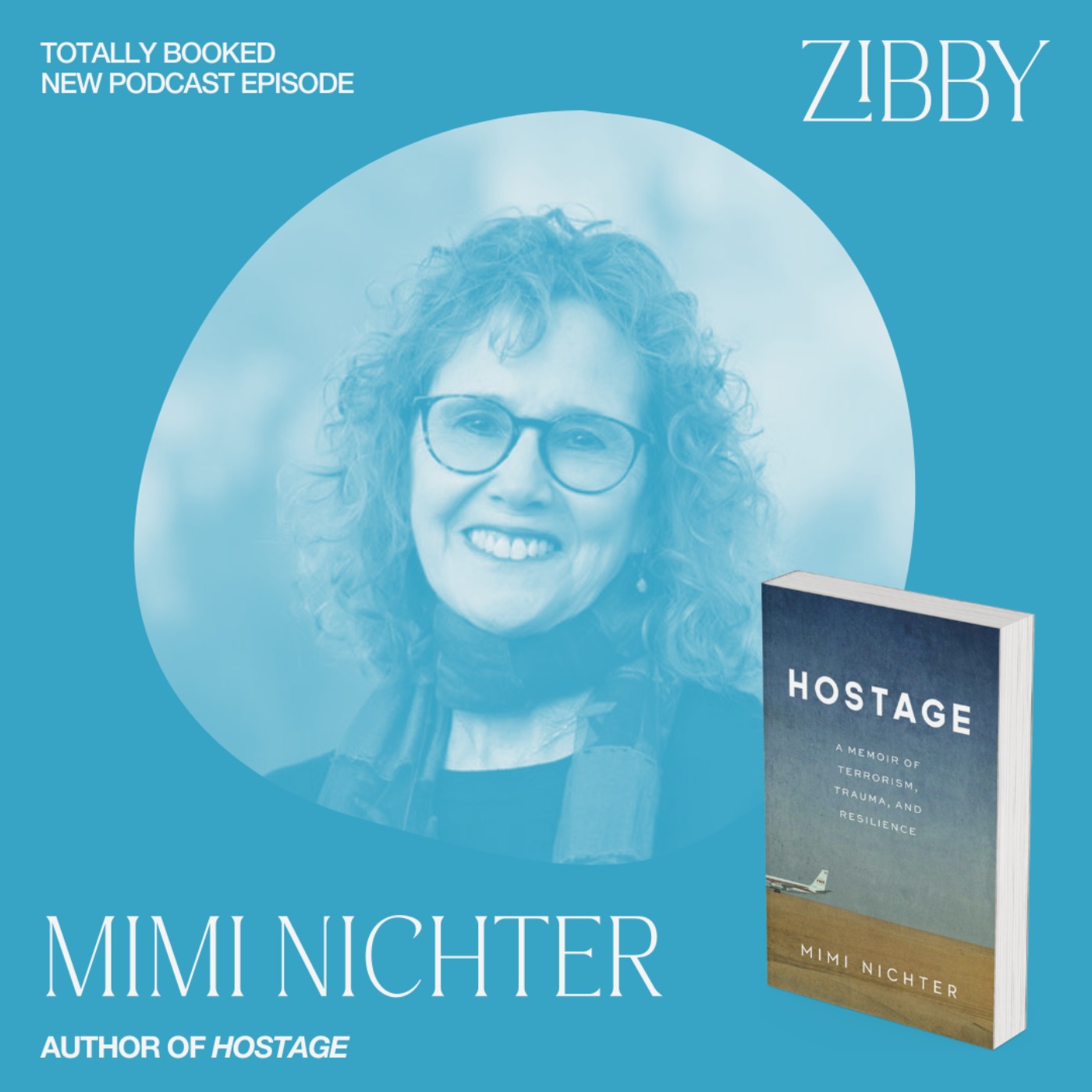
Mimi Nichter is the author of A Memoir of Terrorism, Trauma and Resilience. This is not related to the current day hostage situation. This applies to something that happened in 1970 and is a situation that I read about in the book, learned all about, didn't even know about. I'm embarrassed to admit, even though it happened before I was born. But you know, history.
- [04:16]
Sponsor Voice (Wayfair)
I should have known.
- [04:16]
Narrator/Interviewer
Mimi gives us a front row seat and what it was like for her when she was 20 years old going through this horrific experience on flight from Israel back to the States when her plane was hijacked and she was taken hostage. However, it sounds depressing.
- [04:32]
Zibby Owens
It's really inspiring.
- [04:34]
Narrator/Interviewer
Mimi sort of shoved down these memories for many, many years and is just now writing and talking about it. And it's amazing. Also sad how little things have changed, but also inspiring by how everybody can get through everything. Not everybody.
- [04:49]
Zibby Owens
Well, you know what I mean.
- [04:50]
Narrator/Interviewer
Here's her bio. Mimi Nichter is a cultural and medical anthropologist, public speaker, and a Professor emerita of Anthropology at the University of Arizona. She is the author and co author of four anthropology related books and the recipient of the Margaret Mead Award and the George Foster Practicing Medical Anthropology Award. Her essays have appeared in HuffPost, Newsweek, and Brevity.
- [05:11]
Zibby Owens
Welcome Mimi, thank you so much for coming on Totally Booked to talk about your memoir. A Memoir of Terrorism, Trauma and Resilience. Oh my gosh, what a book.
- [05:24]
Narrator/Interviewer
What a story.
- [05:26]
Zibby Owens
I can't even believe it. Thank you for writing this.
- [05:28]
Mimi Nichter
Thank you for having me and for giving me the opportunity to talk about it. And. Yeah, it's a big story. It's a big story. That's an old story. And so I actually thought I might just start with a few minutes to situate people. Yeah. Okay. So the story in a nutshell is it's 1970. Long time ago. I'm 20 years old. I'm wearing a green mini dress, and I get on the plane. I'm coming home from Israel. I've spent the summer in Tel Aviv on a kibbutz, picking pears. And I'm so excited to get home. I'm going back to college to be a senior at George Washington University, and then, you know, start my other life, whatever that happens next, and get on the plane, sit on the plane, and we're flying. You know, we flew for a couple hours, and then we were flying over Brussels, and the pilot says, well, we'll be back in New York in about eight hours. So I kind of settle in. And then a few minutes later, a man and a woman run down the aisle, and he has a gun, she has a grenade, and they. They kind of kick on the cockpit door, and they enter, and then a few minutes later, they get on the. The loudspeaker and they say, this is a hijacking. We're from the Popular Front for the Liberation of Palestine, and we're taking you to a friendly country. And honestly, I didn't know enough to be afraid. This was the first incident of international terrorism. And I was just like, what is this? And so, you know, I kind of turned to my neighbor, and he really became a rock for me over the next sort of week and longer. But that was sort of how it began. And then, if I can continue for a moment or two, go.
- [07:10]
Zibby Owens
Yes, go.
- [07:11]
Mimi Nichter
We flew the plane after they said that, really, the plane turned around midair, and these bags and things just sort of. The tilt was so intense that the bags that were under people's seats just fell into the aisle. And we flew for another, I don't know, maybe six hours. And then they got on the. The plane was kind of silent then. We didn't know what was going to happen. And then they got on the loudspeaker again, and they said. Again, they said, well, now they said, we're going to be landing in Jordan soon. This is a friendly country. Nobody will harm you. And then the pilot started circling and circling, and my neighbor looked out the window, and he was in the middle Seat. I was in the aisle, and there was an Indian man sitting on the window. He was sleeping the whole time. And my neighbor looked out, and he looked down, and he said, there's nothing there. It was just sunset. And so he had enough light to see. He said, we're in a desert. There's no Runway here. There's no terminal. There's just some cans with torches in it. And I don't know. And I was like, what? Finally, the pilot landed, and the man next to Mice, the third person in the row, got up and said, new York. We just kind of laughed and we looked out the window and we saw what was there. All these men in khakis or robes with their heads covered in guns. Lots and lots of guns. And that's really when I got afraid.
- [08:38]
Zibby Owens
Oh, my gosh. Well, the way that you write the story, you start off by telling us that you didn't talk about this piece of your life for decades, that you kept it hidden, sort of under wraps, having read to the end. You did, you know, you came back as, like, this quasi celebrity. But then, you know, it quickly passed. You didn't want to do interviews, and you just, like, wanted to go back to your life, and so it faded. And then you just didn't bring it up. Like, somehow you just stifled it until it came up again, and you had to confront it when one of the other hostages was doing a project about it. Talk a little bit about that. And just the craziness of being in such a unique, horrific situation and so terrifying, and then having to just come back, A, to college life, but B, to the rest of your life, knowing that this was sort of tucked away for you.
- [09:35]
Mimi Nichter
Yeah, I think the experience was so frightening for me that. Especially when I. Well, this is a complex question, so thank you for asking it. But I think on a personal level, it was something I was used to, not talking about things. Even though I'm a friendly person, an outgoing person, There were many things that I grew up with in my Jewish Brooklyn household that were kind of out of the norm. My brother had mental health problems, and we learned from a very early age not to talk about those problems, to just kind of put on a sort of a normal face and just if anyone asked what was wrong with him, say, or how he was, because they could tell that there was something wrong with him. We were just supposed to say he was fine. And so when you've been coached in that way from the age of, you know, really from the age of seven or eight, that becomes a way you deal with things that you find abnormal. And certainly this trauma that I had was out of the ordinary and I didn't have the words for it at home. When I came home, my parents didn't really ask me about it because we, we didn't talk about things. And I think that's an important cultural point to remember that in 1970 we didn't talk about things like that. We didn't talk about trauma in the way we talk about both mental health and personal trauma today. They were topics that were kept sort of under wraps culturally, maybe taken to an extent, you know, far extent to my family, but certainly for women not to say too much. And I think even for example, there was no concept of ptsd. And that came later. And soldiers even who came home from war were just supposed to go home. Like when I came home from my being hijacked and being a hostage, I didn't have any therapy or any kind of, you know, help. I just went back to my parents house and then shortly after I went back to college where my friends, this was another turning point for me, where my friends was a time of anti Vietnam activists and I was in D.C. so there was a lot going on and people naively thought that my experience was far out. I had been with real revolutionaries. It sounds kind of unbelievable now, but that's that they saw it like, oh, you know, wow, tell us about that. Cool, man. And it was, it was just so stupid, you know, naively naive, I suppose that give them credit for that. You know, those were the days that I just. That kept me inside as well. So there were personal cultural reasons for it. And then why now? Why should I suddenly, you know, write a book about it? Well, the world really changed, you know, now it became more acceptable to talk about our mental health. And we realized that, you know, even though many people won't have a hostage situation, they'll have one. Many people will have all kinds of traumas that they carry with them. And so there was a lot, I think that I learned through the experience and through the years of not talking about it that sort of brought me out to want to talk about it and see, you know, I think we're losing a lot of history and I think this is important to remember. There are very few people who remember this event.
- [13:03]
Zibby Owens
I mean, I have to tell you, I did not even know about this event. And I'm really embarrassed to say that I'd heard obviously, you know, soon after this was the Munich Olympics and obviously I've heard about that. I Mean, it's. I've watched multiple movies about it at this point, but this incident I just had never heard of. And it was one of the most jarring things, was how little it feels like things have changed since 1970. I'm like, this is such an echo, obviously, to October 7th and that hostage situation and some of the same issues which have not been resolved and continue to go on today. And that was a little bit depressing, to be honest.
- [13:51]
Mimi Nichter
Absolutely, it's very depressing. It doesn't surprise me that you didn't know about it. Many people immediately want to look it up. What should I look up? I said, well, maybe look up Dawson's Field. That's the name of the place where we were held. Even though it wasn't an actual Runway or anything like that, but the British had used it during World War II. But then when you start reading about it, you realize, well, it was on the COVID of Time. It was on the COVID of Newsweek. It's a big international. And as I said earlier, it is. Was the first of these sort of things. And it was. It was a mastermind thing. You know, they took. Actually, they took four airplanes and they blew ours up. And just moments after taking us off, something similar had happened in Egypt in Cairo airport. I mean, it was an unbelievable event. And it was way before we had metal detectors. And it was, in fact, why we have metal detectors today, because right after that, Nixon put them into place in airports, but before then, they just got on the plane with their paraphernalia, their guns, their grenades.
- [15:00]
Zibby Owens
On the other hand, it was a lot faster to get through the airport.
- [15:05]
Mimi Nichter
That is very true.
- [15:07]
Sponsor Voice (Wayfair)
Yes.
- [15:07]
Mimi Nichter
Yes.
- [15:09]
Zibby Owens
I hate to even joke at all in this episode because the content is so dark, but yet even through it, you were joking. I mean, you were joking with your buddy Mike in the seat, and you had to. Some gallows humor to really survive when you were in the apartment later and, like, dealing with that and. Oh, my gosh. So I think we use whatever coping we can, because it's just so horrible.
- [15:34]
Mimi Nichter
Yes, laughter was very important. It was even important in my home. Even though, as I said, we didn't talk about things, but we could joke about things. We would joke about feelings. We would talk about other people and make jokes about them. That was kind of acceptable. So this kind of outward joking was something that was familiar to me. And I like to tell. You know, I like to laugh. Right. We're laughing together now, which is great. But I really felt that laughter was something that helped me get through laughter and making and bonding with people on the plane was something that was so important. You know, one of the first things we did, as you read about in the book, was play with the children who were so frightened. And so a few, two of us women got made a camp, you know, and like a summer camp, you know, and sang songs with kids and whatever games. They had cards, you know, we had the playing cards. We had Mad Libs, you know, they had Mad Libs. So we played with those things just to pass the time because six days on an airplane in the desert with people with guns on board was extremely stressful and there were so many kids on board. Laughter and the gallows humor later on, laughing about our own death was something that took us out of the space we were really in.
- [17:00]
Sponsor Voice (Wayfair)
Today's episode has been sponsored by Wayfair. Refresh your space and make your home better for you with Wayfair. From furniture and decor to organizations solutions and outdoor essentials, Wayfair makes it easy to find exactly what fits your style and needs. I recently upgraded a space of my own by helping my mother redo her guest room after my kids wanted a little bit of a refresh from sort of a more outdated, oh gosh, she's gonna hear this room into something a little more modern.
- [17:31]
Narrator/Interviewer
So we went on Wayfair.
- [17:32]
Sponsor Voice (Wayfair)
We got new beds, side tables, carpet, lamps, the whole room and it looks absolutely amazing. It all arrived within a week and we are obsessed with any unique style that you have. Wayfair can help you bring your vision to life. It is so easy to use. The search and reviews and filters and visual tools all made it so easy for my mom and me to agree on what we should buy. And it all came so fast and in such great condition and we are absolutely thrilled. So you will be able to do the same from Wayfair and fit it into your home and lifestyle. Find furniture, decor and essentials that fit your unique style and budget. Head to Wayfair.com right now to shop all things home. That's W-A-Y-F-A-I-R.com Wayfair Every style, every home. Today's episode has been sponsored by Quince. These days I am all about quality over quantity, especially in my closet. If it's not well made and versatile, I am just not wearing it and it's not worth it to me. That's why I love Quince. The fabrics feel elevated, the cuts are thoughtful, and the pricing actually makes sense. Quince makes high quality wardrobe staples using premium fabrics like 100% European linen, 100% silk and organic cotton poplin. Lightweight cotton cashmere sweater is perfect for the changing seasons and can't miss. Seasonal colors and prints for spring are amazing. They're versatile, well made pieces that make getting dressed simple. Quinn's clothing is consistently rated 4.5 to 5 stars by thousands of customers. I personally would rank them five stars. That's just me. Real people wearing these pieces every day are actually loving them and they work with safe ethical factories and cut out the middleman. So it's just quality clothing. As I have told you all and post on Instagram, My winter coat is Quince so I think about Quince every single day. It is my go to and has gotten me through this dreary, terrible winter that we've all had and that I can't wait to be over right now. Go to quince.com zibby for free shipping and 365 day returns. That's a full year to wear it and love it. And you will now available in Canada too. Don't keep settling for clothes that don't last. Go to quince.com zibby for free shipping and 365 day returns. Quinns.com zibby.
- [20:01]
Sarah (Olive and June Founder)
Hi, it's Sarah. I'm the founder of Olive and June and can I tell you the one thing that always makes my day better? A fresh manicure. But who has the time or the money to go to the salon every week? That's why we created the Olive and June Gel Mani system. It gives you that same mani that you get at a salon for so much less. It comes with everything you need. A pro level lamp, salon grade tools, our damage free gel polish that lasts up to 21 days. All you do is prep, paint, cure and you're good to go. And the best part? It's super easy and so affordable. Each mani breaks down to $2 so let's skip that $80 salon appointment and get the salon quality look at home for so much less. And on your schedule head to oliveandjune.com DIYgel20 and use code DIYgel20 for 20% off your first gel. Man, that's oliveannjune.com DIYgel20 code DIYgel20 for 20 percent off your first gel mani system.
- [21:01]
Zibby Owens
It felt like you only really cried when you were in that gymnasium or the auditorium. When they were like this is an international thing. You're a pawn in it.
- [21:13]
Mimi Nichter
Good luck.
- [21:14]
Zibby Owens
Door closed and you're like now what?
- [21:17]
Mimi Nichter
But that was the thing too. When you're on a plane with so many people, you know, for those. All those days on the plane, days and nights, you couldn't cry, really. I couldn't cry. I mean, I'd been taught to always put on a positive face, so that was what I did. But to cry would have affected others, and we had to stay. I felt I had to stay strong for everybody, because if people saw me crying, well, they might cry, too, you know, and we. Of course people did cry. They cried when their husbands were taken off the plane in the middle of the night at gunpoint, you know, but that was the thing. You didn't want to. With so many people initially, you didn't want to cry.
- [21:56]
Zibby Owens
Well, you also have that scene later in the apartment where the older woman, I can't remember her name, Susan maybe, who was married to the rabbi, got so upset, thinking, you know, like, I need to see my husband. I'm sure he's. And she was just so out of her mind with grief and worry, as she should have, as we all could understand. So much so that the hostage keepers actually went and got him, which I couldn't even believe happened. But to see the power of what happens when one of you in your small circle breaks down and the effect it had on the rest of you.
- [22:35]
Mimi Nichter
That's right, yes, absolutely. Yeah. And they were. He went to get him because they were trying to keep us hidden away. And if they. People heard her cries, her shrill cries for her husband, she was yelling out his name, and, you know, she was so longing for him and so worried about him and his health that they didn't know how to make her quiet. So. And he was being held nearby, so he was able to get him. He just made it. You know, I think it speaks to an issue of humanity, that there was humanity. He saw her pain, and he could do something for her in that moment, and he did.
- [23:19]
Zibby Owens
And the difference in this, because I've also read Elishevi's hostage book. Did you read that?
- [23:25]
Mimi Nichter
Yes.
- [23:25]
Zibby Owens
So now we are far enough from the Holocaust, and some of the kids, not kids, but younger people that Elie, for example, was down there with, they didn't have that as fresh in their minds as some of the people who literally on the plane had survived not so long ago. At 1970, it was still relatively fresh. And there was one moment where you say something about where they were separating the Jews from the non Jews, and you even spoke back to a German man on the plane. And to have that come so close to the aftermath of the horrors of that time, which also were not as widely discussed, was just wild.
- [24:06]
Mimi Nichter
That's right. But there were people on the plane who had survived the Holocaust.
- [24:10]
Zibby Owens
Yes.
- [24:11]
Mimi Nichter
And those people understood what was happening, in a way, the potential of what was happening right away. And, yes, that man, a German man on the plane, wanted to pay his way off, you know, just get his life, you know, out of there. And it wasn't me. It was actually a woman who had survived the Holocaust who. Who said, you know, you're not going to be able to buy your way out of this. You're going to have to suffer with us now. And, you know, there the, I guess, maybe overcast of the Holocaust, which had been a long time before, and as you rightly say, people didn't talk about that either. Like, when I was growing up, you know, it was already not a story that was going to be told. And even people who had survived the Holocaust, when they came back, did not find a welcome talk. You know, people wanted to keep it distant. And I write a little bit about that in the book. Learning that history was extremely upsetting also. And so I think those things woven together made me feel like this story had to be written.
- [25:13]
Zibby Owens
Yeah, I'm so glad you wrote it. I'm so glad I read it. I mean, it's wild to me that I've now interviewed two Jewish hostages. Just as a Jewish woman myself. It just gives me goosebumps, you know, like, it's not so far away. These things are literally right there in front of us, and they're not necessarily ever going away.
- [25:34]
Mimi Nichter
Yeah, they're present. And I mean, I think that in my writing, though, I mean, I'm talking about a very different time. And I was clear in my. I tried to be clear in my book that this was something that happened a long time ago. And for people like you, like, really interested readers to see those connections and to see this is something that's. There are elements that are so similar, although, as you say, much more violent. Now, even we knew that if this had happened to us just a few years later, we wouldn't have survived just like, you know, what happened at the Munich Olympics. But we were, I guess, very fortunate. And I really did feel that when I was writing it, how fortunate we were that we came back alive. We all came back alive.
- [26:21]
Zibby Owens
What does it mean to you to be Jewish now? How do you feel about that?
- [26:26]
Mimi Nichter
You know, I feel. Well, I'm going to talk about this a little bit in relation to the book. I feel like my experience taught Me about, you know, othering and well, about seeing a divisive world. Like we were on this side. Like the Palestinians saw me, our captors, the FLP saw me as an imperialist, someone who was a strict Zionist, who was someone who had taken their land. Now I was a 20 year old woman who was a grown up religious. But by this time I was already moving into a more secular Jewish life. And that's not who I perceive myself as. I was a college student and I loved Israel, I had a wonderful time there. But they just saw me in one way and I realized already grown up that way too, in a very black and white world. If anything I took away from my experience was that this othering of people thinking they're this way or that way, you know, it's kind of mirrored the same divisiveness is so difficult and so, you know, what side are you on kind of thing. That's not how I wrote about the book. That's not the voice that I wanted. It's a story that is a memoir, but maybe reads a little bit like a novel, especially the part on the plane. And I wanted it to be that. I tried to give it the voice of a woman looking back. And being a Jewish woman today is a difficult thing. Not because I'm not proud of my Jewish identity, I am. But people don't seem to understand this complexity and what's happened to the world today and how we think people are this way or that way and you're not. We hate you, we hate you. And it's so much more complex than that. And I know that from my own life. As an anthropologist, I've lived in so many cultures and worked so closely with people and talk to them. And I know that history is very complicated and you really have to sort of look carefully. So if anything, I try to bring that to the story and to my life as well. Like really kind of read about things and try to understand.
- [28:41]
Zibby Owens
What do you hope? What are your hopes for the book?
- [28:43]
Mimi Nichter
Oh, well, I hope a lot of people read it, of course. I hope that many people who read it, of course, will not have been a hostage. And I hope they never are and they never have that experience. But, but to get a little bit, I wanted to offer people like a panoramic view of being on that plane and being a hostage and what it's like also to sit with trauma and to not talk about it. And I think there's a lot of people who are in that position. And I think because I never talked about this, even in therapy, it wasn't like I didn't talk about other things. But I hope that we learn what we're capable of, how much we can rise to an occasion. We have more resources than we think we do. And I think it doesn't matter. Of course, as I said, you're not going to have been a hostage, most probably, in that kind of the sense that I was. But you can be a hostage to your own trauma. Trauma. Like, for example, taking your child to an ER because they've swallowed a bottle of vitamin gummies. Right. And that's a very powerful trauma. The risk of something terrible is happening to your child or. Or you're stuck in a subway for hours because you're. And you're in a dark tunnel, and you're absolutely freaking out. And we carry these things with us, and I really live with that. So I hope people take away that message that, you know, we can be a lot more and we can live. We can carry these things. We can open up at some time, at any time in our life, and it makes a difference. It really. It helps.
- [30:20]
Zibby Owens
I love that. Mimi, thank you for the book. Thank you for deciding to open up. Oh, I had one last question. You didn't do a PS in the epilogue about your family. Whatever happened with your brother and your sister?
- [30:36]
Mimi Nichter
Well, my brother passed away, but my sister's still around wonderfully. And my brother, his mental health. Well, he wasn't diagnosed actually until his mid-20s, so. And. And he was finally diagnosed as a person living with schizophrenia. And he lived a long life for a schizophrenic. And eventually my sister and I became caretakers for him. And that was a wonderful experience because he had been hidden, and he had been sort of the shame of the family. And once we became the caretakers, we're like, you know, we want to know you. You know, we. We don't see you that way. We see you as, you know, a person and a person with a disability, and that's who you are, and we love you. And so I did write an article about it, which I'll send to you. It was in Huffington Post, personal. About him and about my experience with him and that shame growing up, how it impacted me and how I came out of that.
- [31:42]
Zibby Owens
Yeah, I would love to read that. I would love to read that. All right, well, thank you so much for your time. I really appreciate it.
- [31:47]
Sponsor Voice (VRBO and Mom Archie Podcast)
Okay.
- [31:48]
Zibby Owens
Okay, take care.
- [31:50]
Narrator/Interviewer
Bye.
- [31:50]
Zibby Owens
Thank you for listening to Totally Booked with Zibby, formerly Moms don't have Time to Read Books. If you loved the show, Tell a friend, leave a review, follow me on Instagram ibbeowens and spread the word. Thanks so much. Oh, and bye the Books.
- [32:13]
Sponsor Voice (VRBO and Mom Archie Podcast)
At vrbo, we understand that even the best of plans sometimes need a little support. So we plan for the plot twists. Every booking is automatically backed by our VRBO Care Guarantee, giving you confidence from the very start. Whenever you need help, it's ready before your stay, through the moments in between, and after your trip. Because a great trip starts with peace of mind and maybe a good playlist. But we've got the peace of mind part covered. At vrbo, we understand that even the best of plans sometimes need a little support, so we've planned for the plot twists. Every booking is automatically backed by our VRBO Care Guarantee, giving you confidence from the very start. Whenever you need help, it's ready before your stay, through the moments in between, and after your trip. Because a great trip starts with peace of mind and maybe a good playlist, but we've got the peace of mind part covered.
- [33:10]
Mimi Nichter
ACAST powers the world's best podcasts.
- [33:14]
Sponsor Voice (VRBO and Mom Archie Podcast)
Here's a show that we recommend. You're listening to Mom Archie. I'm Sarah. And I'm Tanya, and this is a podcast where two millennial moms get real about raising kids. In making sense of the world, we're
- [33:28]
Mimi Nichter
calling out the bs, breaking down the
- [33:30]
Sponsor Voice (VRBO and Mom Archie Podcast)
headlines, and laughing through the mess. Because honestly, what else can we do? So whether you're here to learn, vent, or just feel a little less alone, we're so glad you're here. Hit subscribe and let's navigate the chaos together. We are about to take the drama out of politics and the shame out of motherhood. Because this is monarchy.
- [33:51]
Narrator/Interviewer
ACAST helps creators launch, grow and monetize their podcast everywhere.
- [33:57]
Mimi Nichter
Acast. Com.