← Totally Booked with Zibby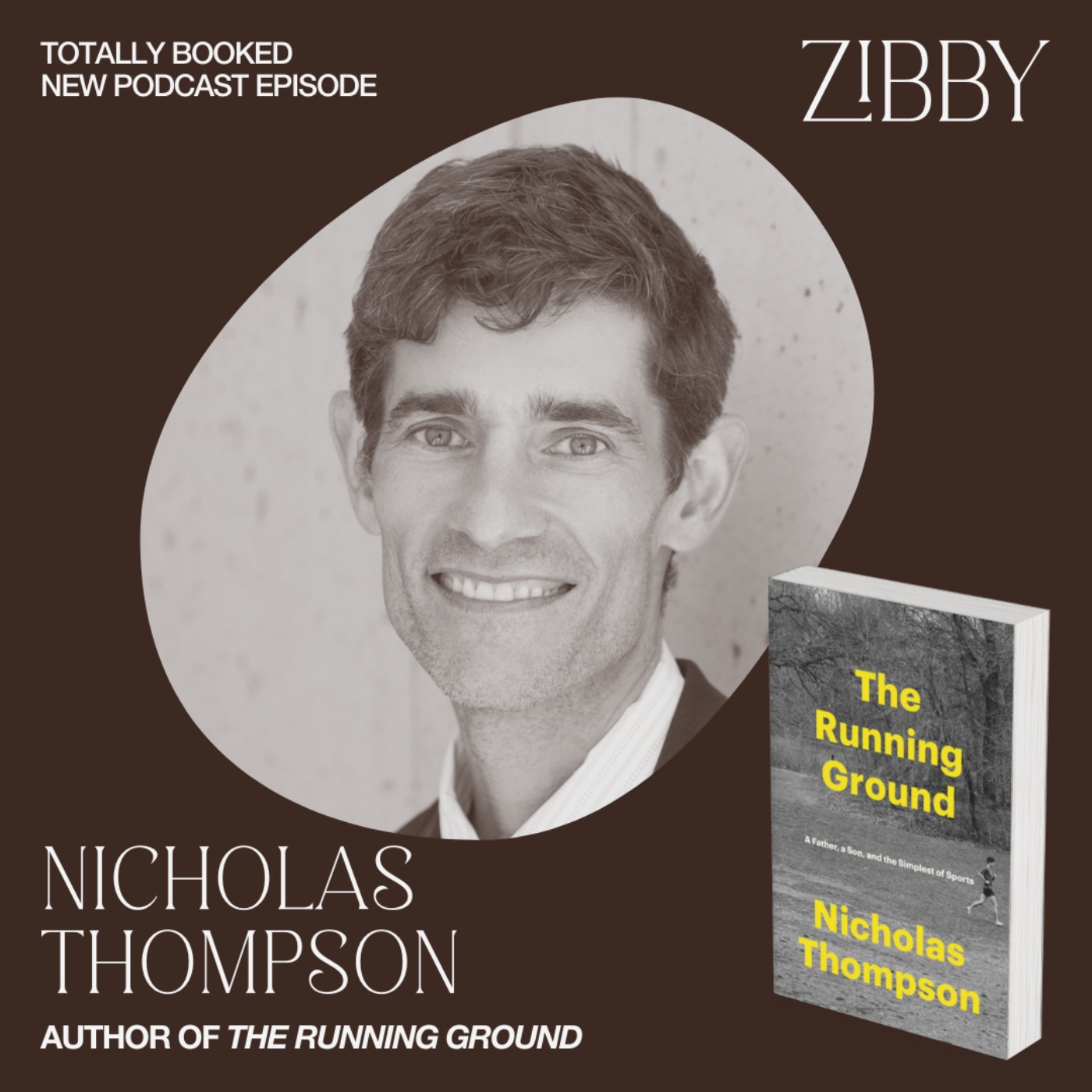
Totally Booked with Zibby
Nicholas Thompson Runs Publications, Runs Competitively, and Never Runs Out of Insights
00:23:20
Loading summary
Transcript41 lines
- [00:01]
Zibby Owens
Hey everyone, it's Zivi. I am so excited to tell you about something I've created just for you, the Zip Membership Program. ZIP stands for Zivi's Important People. It's for anyone who loves books, stories and wants a little peek behind the scenes at what I'm up to and what's on my mind as a Zip member. You'll get exclusive essays, a new podcast called Zivvy's Voice Notes. No interviews, just usually discounts at Zibby's Bookshop, a free ebook, and more perks. I wanted to create a space to connect authentically and deeply, and I'd love for you to be part of it. If that sounds like your kind of thing, become a Zip today. You're already important to me. Now let's make it official. Go to zibioens.com and click subscribe. And if you already subscribe, you can upgrade to the Membership program. And now onto today's episode of Totally Booked with Zibvie. Thanks for listening.
- [00:56]
Capital One Bank Announcer
With no fees or minimums on checking accounts, it's no wonder the Capital One bank guy is so passionate about banking with Capital One. If he were here, he wouldn't just tell you about no fees or minimums. He'd also talk about how most Capital One cafes are open seven days a week to assist with your banking needs. Yep, even on weekends, it's pretty much all he talks about in a good way. What's in your wallet? Terms apply. See capitalone.com bank capital1na member FDIC.
- [01:27]
Nick Thompson
We.
- [01:28]
Stiles MacKenzie
Interrupt this program to bring you an important Wayfair message. Wayfair's got style tips for every home. This is Stiles MacKenzie helping you make those rooms sing. Today's Style Tip when it comes to making a statement, treat bold patterns like neutrals. Go wild like an untamed animal. Print area rug under a rustic farmhouse table. From wayfair.com this has been your Wayfair style tip to keep those interiors superior.
- [01:54]
Zibby Owens
Wayfair Every Style, Every Home Zibby here. If you are looking to add another bookish podcast to your listening queue, I have the perfect recommendation. First Draft A dialogue on writing hosted by Mitzi Rapkin. First Draft goes deep with writers about the themes of their books, the creative process, and what it means to be alive in the world today. Each episode features the guest reading, a passage that influenced them and a challenging excerpt from their own work. Plus, they all answer the same five closing questions, including how do you handle rejection? With more than 500 in depth author interviews ranging in background and genre. First Draft is a celebration of creative writing and the individuals who are dedicated to bringing their carefully chosen words to print. Be sure to follow first a dialogue on writing wherever you are. Listening now. Hi, this is Zibby Owens and you're listening to Totally Booked with Zibby, formerly Moms don't have Time to Read Books in my daily show, I interview today's latest best selling, buzziest or underrated authors and story creators whose work I think is worth your time. As a bookstore owner, publisher, author, and obviously podcaster, I get a comprehensive look at everything that's coming out and spend my time curating the best books so you don't have to stay in the know, get insider insights and connect with guests like I do every single day. For more information, go to zibbymedia.com and follow me on Instagram ibeowens I truly, truly enjoyed talking to Nicholas Thompson, who wrote the Running A Father, A Son, and the Simplest of Sports. I devoured this book. It's not just about running. It's about life, endurance, persistence, overcoming odds, decision making, fatherhood, being a son, being a husband. I mean, there is a lot in this book and it is the type of memoir you can really sink your teeth into and I just loved it. Plus, I learned a lot. I love learning and I learned a lot about running and technique and the control you have over your mind and body and it was just great. So you have to check it out. Nick Thompson is the CEO of the Atlantic, an American magazine founded in 1857, which earned the top honor for magazine's General excellence at the National Magazine awards in both 2022 and 2023. In his time as CEO, the company has seen record subscriber growth and before joining the Atlantic, he was the Editor in Chief of Wired magazine. He's also a former contributor for CBS News and has previously served as editor. It doesn't say here, but he was also at the New Yorker for a while, which is a really pivotal point in the book. He has long been a competitive runner and in 2021 he set the American record for men 45 and up in the 50k race. Oh my gosh, 50k. Can't even walk like 50 blocks. But anyway, enjoy. Welcome Nick, thank you so much for coming on Totally Booked to discuss your amazing book about so many things from running to family to and parenting. And wow, you got a lot in there. I'm very impressed. Congratulations.
- [05:15]
Nick Thompson
Well, thank you. That was a lovely, lovely introduction to B and M. Thrilled to be here.
- [05:19]
Zibby Owens
Thanks. Okay, why don't you do a better job giving a little synopsis of your book? And also, why write a memoir? You have a lot going on. Why did you take the time to do it?
- [05:29]
Nick Thompson
Well, the reason to write the memoir was to explain a really interesting question about running. So, first off, the book's not totally a memoir, right? Like, I'm the CEO of the Atlantic. There's, like, two sentences about the Atlantic in the book. It's really about my life, running and relationship to my father. What happened was I trained really hard in my 30s and got stuck running 2.43marathon. And for people who aren't marathoners, it's like, a very good time. It's excellent, but it's not elite. And then in my 40s, I suddenly ran a 229, which is elite. And when I was thinking through, why did I make that change? Like, why did. Why did I improve like this? I realized the answer was pretty deep and pretty complicated. And it had to do with the ways I block myself about believing I could be faster than I had been when I was 29 years old, which was a period before I got very sick when I was 30. And I couldn't believe that I could be faster than I had been before I got sick. And once I realized that, I realized, wait, okay, running is kind of more interesting than I thought, right? It's not this math equation about your cardiovascular output and your efficiency of movement and your mass and your power dynamics. It's really. It's deep. It's spiritual. It's hard. And so I decided to write this story about my life running, my father's crazy life, his life running, and then other runners who teach you about pain, who teach you about life through the sport. So that's where the book came from.
- [06:54]
Zibby Owens
Amazing. And you shared so much about running. And, you know, like most people I run, everybody has run at some point or another, but I've never thought about it in the way that you put it in the book. And even things like, there was one race where you were like, I'm shaving my toes and scraping off dirt on the bottom of my shoes because maybe it would shave a second off my time. I was like, wow, right?
- [07:18]
Nick Thompson
I mean, well, then. And there's, like, interesting physics to that, right? Because if you think about your feet and you think about how they move, right? Weight at your center of mass, right around your hips kind of matters the least, right? And if you want to add weight while you're running, like, you want to store a gel or you carry water like putting at your center of mass is good extra weight either on your head or on your feet, which move like these little pendulums while you run, can actually have a big impact. And that's why having lighter shoes makes a big difference. Now, the main way you can get lighter shoes is buy lighter shoes, not scrape the dirt off them and cut your toenails. But, you know, I do all the things I can do.
- [07:55]
Zibby Owens
You do what you can. You write, as you mentioned, you went through cancer when you were 30, and you write about that whole ordeal. And I'm so sorry, how stressful. But it gave you a sort of outlook, not to be cliche, on life and recovery and endurance and all that. And I was hoping you could just share a little bit about that. And you have a scene where you're running past your son and it's two years later and you couldn't believe you could even do it. And sort of the victory behind that, and yet believing very strongly that you were definitely going to die, it was clear that's what you thought was happening. Just take us back to that. Take us back to that really traumatic time in your life, if you don't mind.
- [08:38]
Nick Thompson
Happy to. So in 2005, I run the New York City Marathon. And you know, I live in New York. It's this beautiful race. I run a243. I've for a long time been trying to break a three hour marathon. It's like, wow, it's amazing. I feel so strong. I feel so good. I feel so confident. I just, I get a great job. I sell this book proposal, like, everything is great in the fall of 2005. And then shortly after the marathon, like a couple of days, I get diagnosed with this lump in my throat. And it turns out, or the doctor identifies a lump in my throat, and then over the next six weeks, eight weeks, they determine that it indeed is thyroid cancer, which is a relatively benevolent form of cancer. But it's still very hard to get when you're 30 years old. And so I go through treatment, I have, you know, surgery. They take it out, they're not sure what it is, so they do surgery and they take out half my thyroid. And they're like, congratulations, it's not cancer, you're good. Yeah. And then two weeks later, like, sorry, we read the slide wrong, got to do surgery again. So I go back in again, there's another surgery, there's this medication you have to go on by titrating. It's really hard. You have to do a radiation treatment. And so I go through all that, and I'm pretty wiped out, you know, And I can't really walk around the block. I remember that I lived in park slope on 8th Avenue and Union street, and I remember 77 8th Avenue. I remember going out the door, taking a right, and then trying to go up Union and just like, not being able to do that. And for a guy who probably six months earlier had finished 110th place in the New York City Marathon, it was like, God, what on earth? And you know, the thing that was really relevant to the book is that I just felt like I had to run again, Right? That there was something about if I could run another marathon, I would feel like I was alive. And the moment I remember was it was at. It would have been like, six months after that. It was at the wedding of my cousin, who I know was a grade school classmate of yours, and she was getting married out in Aspen, Colorado. I remember going and running up this mountain, being able to run up at it, run down. You're saying, like, wow. You're like, I can still do this. I am still here. It was a really beautiful moment. And in fact, last week, I ran up the same mountain to Just to try to remember that moment. And then. So then in 2007, so two years after the diagnosis, I go back, I run the New York City Marathon again. And I run it 13 seconds faster than I had run it two years before. And it was just. It was incredible. And that's. It's a key moment in the book because it's about running. It's about life. It's about perspective you get as you get older. It's about post traumatic growth. There are a lot of pretty complicated themes that are tied up. It's also about my father, who is this very complicated, wonderful, weird man who. The most supportive parent you could have most times, but who ran away from danger and pain and wasn't actually supportive during that period. So there's a lot of hard stuff in there.
- [11:28]
Zibby Owens
I love that we watch you sort of untying the knots of all of your thoughts and memories with your dad and, like, coming to this very loving, sort of forgiving conclusion about the whole thing. Acceptance. I feel like you got to a point of completion. We did.
- [11:44]
Nick Thompson
You know, it's interesting about the writing process, which is that if you were to read. I went through a. I don't know, somebody asked me the other day how many drafts I did, and there were like four or five. I was like, no, probably actually 100. And if you. I went back. And I read the first draft, which I used maybe two years before I finished the manuscript. It wasn't as forgiving. And, you know, there was something about the writing process, the editing process, the documents I discovered as I went, the letters I found as I went. You know, he emailed me more or less every day of my adult life, you know, more of the reflections that I have of how I try to be as a father that made me accept him more. And just to give a brief synopsis, he's a guy who grows up in a relatively tough situation. Bust out, zooms up the American meritocracy, wins a Rhodes Scholarship. People say he's going to become president, and starts drinking too much. Life becomes really hard, comes out of the closet, blows up his family, goes bankrupt, and then more or less ends up running a brothel for men in Southeast Asia and complicated, messy life. And where I end up being, his financial support, which is not the way it's supposed to work. So let's go the other way around. Parents supposed to support the kids, right? We have a reverse father, son relationship. I'm like, dad, do your damn homework, and here's 100 bucks, right? And he, you know, is like, I don't want to do my homework, and I'm going out. So it's a. It was a hard and complicated and messy relationship, but he did a lot for me. You know, he loved me all the way through. He supported me. He believed in me like no one else, and he cared profoundly. And that's. That's a lot to ask for from a father. Wow.
- [13:12]
Zibby Owens
Beautiful. Another through line of the book that I really loved was your professional journey and how you woke that through, and your persistence in getting a position at the New Yorker, which I feel like was meant to be, because then there you were, and you could write about the Boston Marathon massacre. And that moment where David Remnant comes in your office and is like, you have an hour go. I loved that. I just loved that scene.
- [13:36]
Nick Thompson
Yeah. So, you know, there aren't that many. I worked at the New Yorker for six years. I adore that place. I really only focus on two moments. One is I was an editor at Wired. Really? Like the New Yorker, you know, then was just absolutely where I wanted to go. And I go in for an interview, I go through the process, and I don't get it right, but I go through, like, 15 hours of interviews, edit sets, and I don't get the job. And then maybe two months later, I'm at a party, and this woman who was an assistant to one of the top executives is pretty lit. And the job had gone to this guy named Nick Trotwine, who's awesome. And she's like, hi, I'm Nick Thompson. She's like, nick Thompson. Oh, my God, I'm at the New Yorker. They almost hired you. They're like, thompson, Trotwine. Thompson, Trotwine. And I was like, huh. So I came really close. And then I was about to leave. I was at Wired, and Wired was good, but I had gotten an offer. I'd gotten kind of a bunch of offers, and, like, all these different tracks, like, maybe be a TV news anchor. And I was gonna go be a tech writer somewhere. And I was like, you know, I'm not sure about this. And then there was this night I was up in the Catskills, and I pull a book off my shelf. The Survival of the Bark Canoe by John McFee. And I've got, like, little kids, so I can't sleep, right? And it's 2 o' clock in the morning, 3 o' clock in the morning. And I read this book cover to cover. I'm like, my God, like McPhee. God, I love John McPhee. And John McPhee writes for the New Yorker. And so at 3:00 clock that morning, I wrote to Pam McCarthy, and I was like, Dear Ms. McCarthy, she's the remnant deputy. Dear Ms. McCarthy, I know you didn't hire me, but I also know it was close. I'm going to go leave Wired right now, and I'm going to go work for one of your most serious competitors. You should hire me now, please. And she writes back. I remember she didn't write back for a couple days. And I was like, man, what a loser. Why did I send that note? You know, what a sort of impetuous, like, 3am thing to do. And then she writes back, and she's like, let's have lunch tomorrow. And so I have lunch with her, and then, you know, Remnant calls me in the next day, and then they hire me, like, more or less, like, within the week. And if you think back on my life, probably the most important email I ever sent. So then I go work at the New Yorker, and I come in as a senior editor. I'm editing these feature stories. I'm editing Steve Kahl, Califasani, all these awesome people. And then David recognizes that I have a little bit of a tech aptitude. Haven't come from Warren. I've gone to Stanford, worked for a computer company for a little bit. So he's like, you know what? You should run the website. We're going to have an ambitious website. It's all yours. And it's this, like, it's a great job. But nobody at the New Yorker wants to write for the website in 2020. It was kind of. I could describe it as like the Minsk desk in a place that also has a Paris office. But then the Boston Marathon happens and the bombing happens and like, we're on it, right? There's this woman, Amy Davidson, who's the executive editor, who's just like this machine. I've never seen anybody work harder or more efficiently. You know, she gets up, remember she. She and I went back and counted for the book. I don't think the stat is in the book, but I believe that in that there's like a three day period. I believe she and I exchanged 300 emails, right? More or less, 24 hours a day, and she's writing these stories. And then there's this moment where, you know, I'm editing, I'm coordinating, and Remnant comes in my office. So at the end of this hallway and we're at 42nd street and it's on the south side, I kind of look out over 42nd street and he comes in, he's like, hey, Nick. It's like, hi, David. It's like this Boston Marathon bombing. He's like, you're gonna write about him? And I was like, no, no, no, I'm not. Because I wasn't really confident as a writer. And I was like, nah. You know, we've got like, Murakami's filing, George Packer's writing. And he's like, nick, you grew up in Boston. You run marathons. You're going to write about this. And I was like, no, no, no. And he's like, here's what's going to happen, Nick. You're going to put down your phone and you're going to start typing. And in one hour I'm going to come back and I'm going to reopen the story and you are going to hand me your story. I was like, wow. And so I did it. Now I wrote a story. It's pretty good. Reread it, you know, when I was writing the book. But it's this incredible moment. It was an incredible moment for me both of like, David is more or less the most efficient person on the planet, probably the most efficient writer. Like, he'll be like, I have to write 9,000 words. Hold on, I'm going to close the door. And when I open it, I'll have 9,000 words for you. And he was teaching me a lesson about efficiency, about just doing it, and also about confidence as a writer. And it worked. And then it was also. So it's both this moment for Nick and then it's also this moment for the New Yorker website where suddenly we become relevant both within the institution and, and culturally because our coverage about the Boston Marathon bombing was awesome. Right. And it's a pretty big moment all the way around. And from that moment on, the website was not the Minsk desk anymore. It's like it's actually a real part of the organization and people care and pay as much and there's complications and there's tensions, but it's like a great moment for me professionally in a lot of ways. Wow.
- [18:17]
Zibby Owens
I love that story. Today's episode is sponsored by Wayfair. The new year is here and it is time to get back into an at home routine you love and elevate your space with Wayfair. From bedding and mattresses to storage solutions for every room in your house, Wayfair is your one stop shop. I actually have used Wayfair so much because over the holidays I stayed with my mother in Arizona and told her it was definitely time to redo the guest room where she has my kids stay because she hasn't touched it in Dec and it needed a refresh. And I said, you know what Wayfair? So we got beds, lamps, side tables. We've been doing the whole room. It looks amazing. Everything came within a few days in perfect shape. It has been so fun. Wayfair has everything like the most enormous selection of home decor items and exactly what we wanted for the space we had. And it's still a work in progress. And I will share some pictures on Instagram. We're obsessed so you should get organized, refreshed and back on track this new year as well. For way less, head to Wayfarer.com right now to shop all things home. That's W A Y-F A I R.com Wayfair Every style, every home.
- [19:40]
Capital One Bank Announcer
With no fees or minimums on checking accounts. It's no wonder the Capital One bank guy is so passionate about banking with Capital One. If he were here, he wouldn't just tell you about no fees or minimums. He'd also talk about how most Capital One cafes are open seven days a week to assist with your banking needs. Yep, even on weekends it's pretty much all he talks about in a good way. What's in your wallet? Terms apply. See capitalone.com bank capital1NA member FDIC.
- [20:13]
Zibby Owens
You also share with us your decision making process. And as someone who has trouble sometimes making decisions, I totally related to your ruminating on whether or not to take this path or that path. And you have this moment with your wife where you're like, wait a minute, what if I just had one way to decide and it's how good a dad I could be? And then you made a decision very easily. Talk a little bit about that.
- [20:39]
Nick Thompson
Yeah, that was. I almost started the book with that story. I was trying to figure out, like the book was a very hard thing to structure and there's a lot of complexity and how it's layered because I'm dealing with multiple chronologies. But that was in. It would have been December of 2016 and I had just, you know, just run the New York marathon. Had just done well, I actually had gone running with my kids who were then like 6 and 8. 6, 8 and 2. I'd gone with the 6 and the 8 year old, not the 2 year old. And I had this really hard job where Facebook had offered me a big job in the product department. And it was just after the 2016 election. I had been in there before the election talking about the algorithm, talking about fake news, talking about incentive systems. And they had seen what had happened in the way that the algorithm had led to a kind of politics that very much didn't match making the world more connected. And they were trying to hire people who would help counter that. And so I was offered this amazing job and I was like, wow, I guess I'm going to leave the New Yorker and do this. And then simultaneously, without Conde Nast knowing this, it was time to. There was opening as the editor in chief of Wired. And they're like, hey, do you want to be the editor in chief of Wired? I was like, oh my God. Right? Like, you know, you know, Conde Nast doesn't know things happen at Facebook. Facebook doesn't those things happen at Conde Nast. And both are quite both fast processes and secret processes. And so I like make all these lists. I'm trying to figure out where I'm going to live. You think about, you know, all the things you think about when you're making a big decision, like, okay, well, how much am I paid? What is the job after this? Like, how much am I going to enjoy this? And so I make all these lists and I can't talk to anybody and I get stuck. Right. It was after, remember the 2016 election in the New York Times? Had that, like, that, like the needle, right? And my wife would just make fun of me and she's like, oh, the needle. It looks like it's going towards Wired, looks like it's going towards Facebook. And so I'm just thinking it through. Thinking it through. Remember I was sitting in this purple chair. There's a picture of my dad running above me. And then I had this insight, which is like one of the best insights I've ever had. I was like, you know what? I'm trying to make these spreadsheets and I've got like 20 values and you can weight them however you want. Like, let's just choose the most important thing. Like, what is the job that will make me a better father to my kids? And, you know, that's still complicated because there are a lot of variables that go into that. But now I've very much simplified the problem, right? Because then you're not really thinking about money, you're not really thinking about the job afterwards. You're not really thinking about your own personal satisfaction. I was like, okay, well, if I go Wired, I'll be like, all these gadgets will be mailed to me. I'll be explaining how this stuff works. I'll be meeting all these interesting people. They'll get to be involved. And that turned out to be the case. I got to go on all these great trips and I brought my kids with me, and if I go to Facebook, it'd be harder and they won't really understand it. So I was like, you know what? At this point in their life, I just do the wire job, right? And so I said yes to Conde Nast, I said no to Facebook, and that it was a good way to make decisions. I haven't had to make a decision that hard since then or, like, have to use that same heuristic. And it's different. Depending on how old your kids are, different factors come in. But I do very much. I have definitely had situations where I'm really stuck. And then the question becomes, okay, you're really stuck. Boil it down to one variable, find the most important variable that's a hard process in itself, and then make the decision based on that variable.
- [24:01]
Zibby Owens
Love it. Well, I'm going to cling to that in future decision making moments in my life. You then include your kids in. In a lot of the later parts of the book where you have dialogue with your kids. And I love where you finish one race and you got this really fabulous time and you said something to your son like, okay, well, what do you think I'm going to get on my next race? And he made the time worse. And you're like, worse? He's like, you think you could ever do better than that? I don't think so.
- [24:27]
Nick Thompson
Well, you know the crazy thing about that? So that was 2019, and I had just had this amazing period where, again, these numbers won't mean anything to, like, 99% of listeners, but to the marathoners, they'll be like, whoa, you know, I ran 243, 238, 2:34, 229. Like, this incredible progression. I've just run 229, and I'm in the taxi coming back. My oldest son, Ellis, has come to cheer me on, and I'm like, what do you think I'm gonna run next? He's like, 235. I was like, what the hell, right? Like, I was thinking he's gonna say, like, 225 anyway, so, you know, just like. And he was. I don't know, how old was he? He would have been 11 years old at the time. Do you know what the fastest marathon I've run since that time is? 235. You know, I've run, like, 10 marathons, and, like, that's the best it's been.
- [25:09]
Zibby Owens
He knew it.
- [25:10]
Nick Thompson
He knew it. He knew that. Like, you know, dad, you've done great, but, man, like, they. They also say this to me, like, and they also. They give real talk. So I last in November, a couple months ago, I finished the New York Marathon. It was just. It was a mess. And I, like, came in way off my goal. But again, nobody knows what a marathon time is. I ran 306, right? I had Runif run 235, 240, and nobody knows. Nobody cares. And so everybody's texting, like, great job, Nick. I saw you on the course. You looked amazing, right? But meanwhile, runners like you miss your time by four seconds and you're pissed, right? And I missed by 30 minutes. I come home, and all I've got are these nice texts and, like, love emojis. And my son walks in the door right after me, my middle son, and he goes, dad, what was that? I was like, I don't know. Tough day. Respiratory infection. He's like, do not post that on Strava. Do not tell anybody you ran. Go enter another marathon immediately and bury that garbage, right? You're just like. You know, kids, like, they tell it to you the way it is. It was amazing.
- [26:09]
Zibby Owens
Oh, my gosh.
- [26:10]
Nick Thompson
Yeah.
- [26:11]
Zibby Owens
Well, I feel like Another sort of just through line of everything is this notion of the unexpected and overcoming challenges that you don't see coming that are always in your way. And you had this one moment before a race where you were ready to go and you were somewhere, I don't know, I can't remember, somewhere out west or wherever. And you just opened your door to run the marathon and there was snow everywhere and you were like, oh, my gosh, I have this one pair of sneakers and I'm not dressed for this and what am I going to do? And it ended up being fine. But I feel like that moment is like, sums up a lot of the book, which is like, you can do what you can to prepare, and then you open the door and, gosh, you just don't even know what's waiting for you.
- [26:49]
Nick Thompson
And, like, think back to, like, to the first question you. You asked about, like, you know, shaving the hair off my feet. Right. Like, you think about the obsession over the details you can control. God, I'm going to control all these details and I'll cut a second and then the weather changes and it adds like 15 minutes to your time. Right. And so you're in this, like, life is this constant balance of, like, try to identify the things you can do, optimize as much as you can on those things, and then be prepared for the nonsense that comes at you.
- [27:19]
Zibby Owens
That's a good way to wrap it up. Well, Nick, thank you so much. Thanks for coming on. Thanks for your fabulous book. I truly enjoyed it. I learned a lot and feel quite both inspired and more directed in my own life. So thank you.
- [27:34]
Nick Thompson
Amazing. Thank you so much, Zibby. It was an honor to be on with you and I love how closely you read it and how much you enjoyed it.
- [27:40]
Zibby Owens
Thank you. All right, take care.
- [27:41]
Nick Thompson
Thank you.
- [27:41]
Zibby Owens
Okay, bye. Bye.
- [27:42]
Nick Thompson
Bye.
- [27:43]
Zibby Owens
Thank you for listening to Totally Booked with Zibi, formerly Moms don't have time to read books. If you loved the show, tell a friend, leave a review, Follow me on Instagram, ippyowens and spread the word. Thanks so much. Oh, and buy the books.
- [28:05]
Capital One Bank Announcer
With no fees or minimums on checking accounts. It's no wonder the Capital One bank guy is so passionate about banking with Capital One. If he were here, he wouldn't just tell you about no fees or minimums. He'd also talk about how most Capital One cafes are open seven days a week to assist with your banking needs. Yep, even on weekends, it's pretty much all he talks about. In a good way. What's in your wallet terms apply. See capitalone.com bank capital1na member FDIC.
- [28:36]
Nick Thompson
We.
- [28:37]
Stiles MacKenzie
Interrupt this program to bring you an important Wayfair message. Wayfair's got Style Tips for Every Home this is Stiles MacKenzie helping you make those rooms sing today is Style Tip when it comes to making a statement, Treat bold patterns like neutrals. Go wild like an untamed animal. Print area rug under a rustic farmhouse table. From wayfair.com this has been your Wayfair Style tip to keep those interiors superior.
- [29:03]
Nick Thompson
Wayfair Every Style Every Home ACAST Powers the World's Best Podcasts Here's a show that we recommend.
- [29:15]
Zibby Owens
Christian Bale was preparing for his role in American Psycho, dressing the part, hitting the gym for the first time in his life, even getting his teeth redone. There was just one problem. He didn't actually have the part. Leonardo DiCaprio did. Listen to our podcast what Went Wrong? Every week as we unearth the chaos behind Hollywood's biggest movie flops and most shocking successes. Available wherever you get your podcasts.
- [29:46]
Nick Thompson
ACAST helps creators launch, grow and monetize their podcasts everywhere. Acast.com.