← Totally Booked with Zibby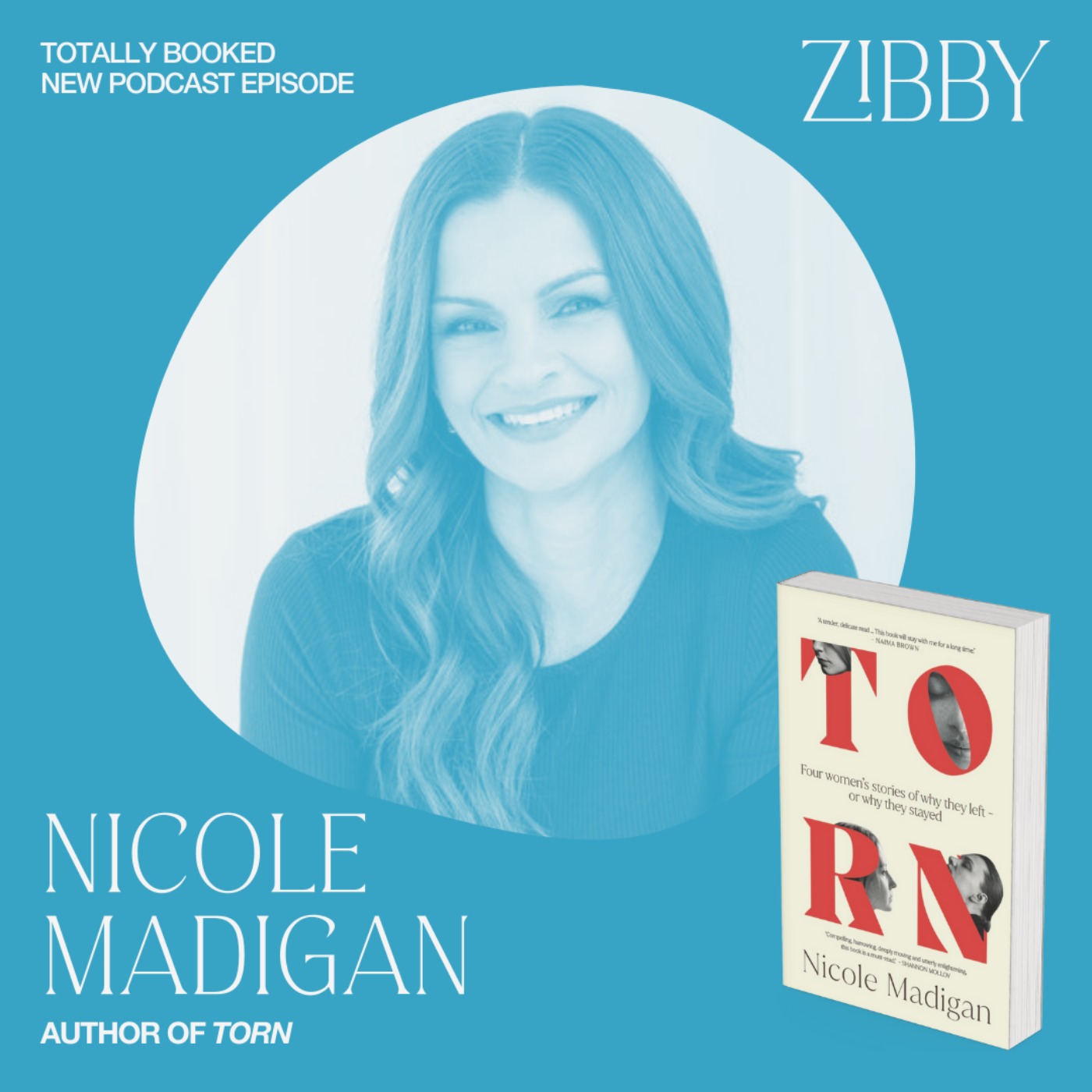
Totally Booked with Zibby
Nicole Madigan, TORN: Four Women's Stories of Why They Left – or Why They Stayed
00:19:19
Loading summary
Transcript83 lines
- [00:00]
Nicole Madigan
Ready to order?
- [00:01]
Zibby Owens
Yes.
- [00:02]
Nicole Madigan
We're earning unlimited 3% cash back on.
- [00:04]
Podcast Narrator/Host
Dining and entertainment with a Capital One Saver Card. So let's just get one of everything.
- [00:08]
Upwork Advertiser
Everything.
- [00:09]
Capital One Advertiser
Fire everything. The Capital One Saver card is at table 27 and they're earning unlimited 3% cash back.
- [00:15]
Nicole Madigan
Yes, Chef.
- [00:16]
Zibby Owens
This is so nice.
- [00:18]
Capital One Advertiser
Had a feeling you'd want 3% cash back on dessert.
- [00:20]
Nicole Madigan
Ooh, tiramisu.
- [00:22]
Capital One Advertiser
Earn unlimited 3% cash back on dining and entertainment with the Capital One Saver Card. Capital One what's in your wallet?
- [00:28]
Upwork Advertiser
Terms apply.
- [00:29]
Nicole Madigan
See capitalone.com for details.
- [00:30]
Upwork Advertiser
The market's uncertain, revenues tight and hiring on hold. That's why results driven companies are using upwork to keep work moving. Go to upwork.com today and start hiring proven freelance talent fast. No bulky overhead, no rigid long term contracts. Just the right expert right when you need them. Work smarter and faster with Upwork. Go to Upwork.com now and find your freelance expert via that's Upwork.com post a job for free and get started today.
- [01:03]
Podcast Narrator/Host
Today's episode is sponsored by the Foxed Page, a podcast and YouTube channel that dives deep into the very best books. It's basically your favorite college English class.
- [01:13]
Zibby Owens
But very relaxed and way more fun.
- [01:16]
Podcast Narrator/Host
No exams, no participation, and only books.
- [01:18]
Zibby Owens
You really want to read.
- [01:20]
Podcast Narrator/Host
Kimberly Ford, best selling author, one time professor and PhD in literature author offers up entertaining, often funny talks that will leave you feeling inspired and a little smarter. She digs right into everything from J.D. salinger to Miranda July, from Demon Copperhead to Madame Bovary, from Pride and Prejudice to Lessons in Chemistry. The talks on individual books are the heart of the podcast, but enriched read segments tackle ideas like unreliable narrators, while old favorite talks treat you to a fresh adult look at childhood gems like Harriet the Spy and Are you there God? It's me, Margaret. Want to get the most out of.
- [01:55]
Zibby Owens
What you read and be entertained along the way?
- [01:57]
Podcast Narrator/Host
The Foxed Page is for you. Hi, this is Zibby Owens and you're listening to Totally Booked with Zibby. Formerly Moms don't have time to read books. In my daily show, I interview today's latest best selling, buzziest or underrated authors and story creators whose work I think is worth your time. As a bookstore owner, publisher, author, and obviously podcaster, I get a comprehensive look at everything that's coming out and spend my time curating the best books so you don't have to stay in the know, get insider insights and connect with guests like I do every single day. For more information, go to zibbymedia.com and follow me on Instagram. Iby Owens Nicole Madigan is the author of four Women's Stories of why they Left or why they Stayed. Nicole Madigan is a writer, editor, journalist, author and advocate based in Brisbane, Australia. Previously a television reporter with the Nine Network, Nicole has spent the past 15 years writing investigative articles, news pieces and long form features for a wide range of publications. Nicole is a non executive Board Director of Friends With Dignity, a charity providing support to victim survivors of domestic violence, and is an ambassador for domestic violence violence advocacy group My Red Flags. Nicole's debut nonfiction book, Obsession A Journalist and Victim Investigation into Stalking, was released in 2023. She is also the author of two children's books. Her new book, Torn is out now. And by the way, I am obsessed with this book.
- [03:34]
Zibby Owens
Welcome Nicole, thank you so much for coming on Totally Booked to talk about Torn. I am so excited about this book. Yay.
- [03:43]
Nicole Madigan
Thank you so much for having me.
- [03:46]
Zibby Owens
So Nicole, tell listeners about both the backstory of yours I really want to get into and how you approach this project. What the book's about. Oh my gosh. So much to discuss.
- [03:59]
Nicole Madigan
Yeah. Okay, so the book Taunt essentially it's an exploration of that period of time in a long term relationship between when we first sort of get that that little feeling usually as a result of some sort of betrayal or some occurrence that takes place and when we decide whether or not we can live with what's happened and we stay in that relationship or we leave. So it's really about that middle period of indecision and I think that's sometimes the most painful period of all is just that not knowing what to do.
- [04:35]
Zibby Owens
And as you point out in the book, you don't want to necessarily share the grievances about somebody you're with because if you don't know if you're staying or leaving, you don't want to share and have people think poorly of the person or you don't want to air the dirty laundry if you're going to get back together. And so it's this crazy time of life which you illustrate so well through the women's stories.
- [04:56]
Nicole Madigan
Yeah, I think. And that's what makes it so confusing and so isolating is because when we're unsure, we're naturally wanting to keep those things to ourselves. If someone has had an affair or they've lied to us or they've hurt us in some way and we might stay, you want people to think badly of your partner so you don't tell anyone but by not telling anyone, you're not getting to sort of, you know, get a. Get a realistic viewpoint or get those feelings off your chest and, and you can be stuck in that really horrible. That kind of limbo purgatory period where you're just. You're not at peace. You just. You're in a state of sort of turmoil all the time.
- [05:33]
Zibby Owens
Yes. And as you also point out, the need to stay and have your life grounded is so really elementary to who we are as people. Right. It's calming to have things the same. We want that, we want that, but yet it doesn't always work out that way. So everything seems to be fighting that instinct in a way.
- [05:54]
Nicole Madigan
Yeah, I think you're right. And especially as women, I think it's so ingrained in us to protect our relationships. And it's really interesting I found when sort of looking at my own experience and then talking to these women and they were so honest and open with me, that sort of, you know, why do we. We fight so hard to maintain relationships when. When they're hurting us? But. But we do do it. And there are so many reasons and there are so many barriers to. To leaving a relationship that it can be really confusing to know when. Where. Where the feelings end, the real feelings and the feelings of love and. As opposed to feelings of attachment or feelings of obligation or fear of what's on the other side or your children or the list goes on. You know, when it comes to the. The conflicting feelings that we kind of go through when we're trying to make that decision and make the right, you know, quote unquote decision. And I think that weighs really heavily on. On most women is. Is doing the. The right thing.
- [06:57]
Podcast Narrator/Host
Yes.
- [06:58]
Zibby Owens
So tell listeners about your own story, which is in the introduction and which is not the focus of the book.
- [07:04]
Podcast Narrator/Host
But which sets the.
- [07:05]
Zibby Owens
The context for the stories that you tell.
- [07:07]
Nicole Madigan
Yeah, I guess, you know, I. My, you know, first marriage was. Was one to my childhood sweetheart. So we'd been together a really long time from when we were teenagers. And I always kind of thought, you know, growing up that relationships were quite black and white. You know, you either wanted to be in them or you didn't want to be in them. If someone cheated on me, I would leave. If someone hit me, I would leave. I had all these sort of ideas in my mind. And, you know, I write in the book about being a really young woman in my late 20s and talking to a woman who was. Was older than me and she had separated from her husband and mentioned that it had been on the cards for years, and at that time, I just couldn't get my head around that. Like, how could you be considering ending a relationship for years? But of course, you know, over the time, you know, things changed in my relationship and, you know, I found myself innately knowing that the behaviors weren't right and that it wasn't right for me, but completely unable to bring myself to tear apart my family. I had children and I had this really idealistic view of what I wanted for my family. I'd grown up in a really. I was very fortunate. I grew up in a really beautiful, stable home and my parents are still together and I wanted to give that to my kids. And so in the end, it took me years before I decided to leave that relationship. And I guess in terms of the inspiration behind the book was that unfortunately, fast forward 10 years and I thought that I'd found that fairytale ending for me and my children. But unfortunately, there was a big betrayal in that relationship that really took me by surprise and was very unexpected because I thought being an older person, I'd really got it right this time. And the prospect of this not working out was really terrifying to me and really devastating. And yeah, I guess it was consuming me and really, really affecting my. My mental health and my state of being. And I guess I kind of wanted to know if I was alone in this. And, you know, being a journalist, it's in my nature to kind of reach out and see what other people think. And that's where the idea for Foretorn came about.
- [09:27]
Zibby Owens
Wow. Well, I'm sorry for some of the experiences that led you to the book. And I had an event at my bookstore recently with a woman named Amber Ray. I told her about your book because her book is about her own story, but similar themes and all of that. And one by one, everyone in the audience was sort of sharing about this in between time and, you know, do they go? Do they stay? I mean, it's quite an emotional, very vulnerable time and topic that you've really captured in a beautiful, fast paced, introspective way with the women's story.
- [10:02]
Podcast Narrator/Host
So talk a little bit about the.
- [10:04]
Zibby Owens
Four women and how you picked them, how you were able to get them.
- [10:08]
Podcast Narrator/Host
To share so much.
- [10:09]
Zibby Owens
This has a lot of Three Women by Lisa Taddeo Shading. I don't know if you've read that book, but different. Yeah, the deep. The depth into which you go is really amazing. So anyway, talk about the four. The four women.
- [10:24]
Nicole Madigan
Yeah. So I guess, you know, when I was approaching the book and who I wanted to include. I guess it was important to me to reach all women. You know, I wanted to because this affects everyone, whether you're, you know, you could be a young woman in your 20s or a much older woman who's been married 40 or 50 years, where you're stuck in this period of in betweenness. So I wanted to explore different ages and different generations and also different, different reasons for that feeling of indecision. But you know, the theme I wanted to explore was that feeling of being torn. So we weren't. I wasn't looking for people who had just fallen out of love, which is its own complicated thing as well, because obviously there's still a lot of pressure to maintain a relationship where you've just simply fallen out of love. But I wanted to look more at sort of betrayals or things that have taken place where you know that it's not right, something about it isn't right, but you have to rather work through it and stay or work through it and leave. And so in this book we look at infidelity because infidelity is just unfortunately, you know, it's so common and so many people go through it and it seems so straightforward to most people, you know. You know, especially when you're younger, if someone cheats on you, you leave. But for a lot of women it's, and men it's so much more complic than that. When you actually find yourself there, it's not so easy to just leave up and leave. And I also looked at substance misuse and gambling. So those issues are sort of more complicated in other ways because there's that pressure to help and support people when they're going through things, which of course we need to do. But at the end of the day, the common theme really is deception and betrayal and the breaking of trust really at the end of the day and how, how we manage that. So yeah, I was really fortunate with the response I got when I reached out to my communities of people and I was really honest in what I wanted from the project. I wasn't a self help book. I wasn't trying to provide answers to people. This is what you need to do or not do, but really kind of just share what people are going through and allow people, other women to know that they're not alone in this conflicting kind of contradicting feelings that they might be feeling. You can feel just as strongly about is leaving as you do about staying. So it can be, you know, that's normal, I guess, you know, I wanted to show people that this, these experiences were universal and. Yeah, and I think once people start opening up about things like this, it's just amazing how willing they are to share what they've been going through. I think it can be really freeing because a lot of the time, as you pointed out before, we haven't seen spoken to anyone about it. We had to, we don't talk about it. And I think for these four women, they, they, they were really, just really vulnerable and open. And I think, you know, I was, I was really grateful that they were willing to trust me with their stories in this way because I think, you know, they just went through so much and I think, you know, I'm really honored to have been able to, to delve into their lives, you know, so intimately and have them share that with, with me and everybody else.
- [13:48]
Paige Desorbo
Hi, this is Paige desorbo and today I want to talk to you about Boost Mobile. So you're thinking about upgrading to the Amazing new iPhone 17 Pro, the most powerful iPhone yet with 8 times optical zoom. But are you also thinking about the traffic on your way to the store or transferring all your data? Well, good news. When you order a new iPhone online with Boost mobile, they'll send an expert to your home or work to deliver your brand new iPhone 17 Pro and get you all set up on Boost Mobile Mobile within minutes. No hassle. Visit boostmobile.com to get started. Delivery available for select devices purchased@boostmobile.com terms apply.
- [14:27]
Upwork Advertiser
The market's uncertain, revenues tight and hiring on hold. That's why results driven companies are using upwork to keep work moving. Go to upwork.com today and start hiring proven freelance talent fast. No bulky overhead, no rigid long term contracts. Just the right expert right when you need them. Work smarter and faster with Upwork. Go to Upwork.com now and find your freelance expert that's up w o r k.com Post a job for free and get started today.
- [14:57]
Greenlight Advertiser
Did you know adults 60 plus lose more than $60 billion each year to financial exploitation. Greenlight's new family shield plan empowers you to monitor your accounts for suspicious activity, protect yourself with up to $1 million identity theft coverage and reassure loved ones that you're safe with location sharing and place alerts. Get peace of mind today@greenlight.com protect that's greenlight.com protect.
- [15:24]
Zibby Owens
How did their spouses or the other people in their families feel about their inclusion in the book?
- [15:30]
Nicole Madigan
Yeah, so two of the people, two of the women I interviewed shared this with their spouse and two of the women did not share this with anyone at all, including their spouse. And I guess, you know, obviously that depends on whether or not they. They stayed with that person because of the. The nature of the things that they were talking about. And I think, you know, that privacy is what enabled them to be so forthright with how they felt about not only their own feelings, but about their partner and about their children and about their extended families and all of that sort of thing. So it was. It was a little bit mixed. So.
- [16:09]
Zibby Owens
Wow. Well, there's just so much shame around this. There's shame in leaving and not being the person you thought you were in a marriage, and the shame of having to spill the beans, so to speak, to your whole community. But then there's the shame in allowing certain things to happen and not knowing what you're supposed to like the whole. And it's so private. And I feel like the shame and secrets themselves are so corrosive in a way. And I feel like you do such a good job of exploring that. And so I'm not surprised that not everybody wanted to say that they had talked about it. What do you feel like you learned from your own feelings of shame, if you felt them, or leaving? Like, how do you make sense of that?
- [16:57]
Nicole Madigan
Yeah, I think it's really hard. And I think, you know, this is the sort of book that I would have liked to have read because it's even in. As my. My own life unfolded and the occurrences that took place were happening kind of simultaneous to when I was writing this book and speaking to these women. And it was really helpful to me too, because really shows you that we are all in this together and there is no shame in it because as you say, you know, especially for me in my second marriage, you know, I had put a lot, invested a lot into that em, and in all sorts of ways, including my children into this, you know, bringing this person into their lives and you think you're older and wiser and. And, you know, I work a lot in the domestic violence space and I feel like I've got a pretty good understanding of signs and all of this sort of thing. So it was. It was really difficult for me, especially when everyone sort of thought this person was. Was as incredible as I did. So it was. It was really difficult to. To accept what I was seeing because, you know, if that were the case and this marriage were to end, well, then here I am, 44 years old to two marriages behind me, and nobody wants that. You know, my kids have been. Then through it twice. You know, it's. It's really difficult. And even talking about it now and saying it out loud, you know, I don't find easy. But I don't want that for women. You know, I don't. I don't want, you know, even the language that you tend to use, like, you know, I tend to say, like, I couldn't believe, you know, I got it wr. But it's not really that, you know, you can't. It's not your fault if somebody lets you down and you put your faith and trust in somebody. But we do tend to blame ourselves. And I think the more we share, you know, the more that shame gets taken away. Yeah, I hope, anyway.
- [18:50]
Zibby Owens
Yeah. Wait, so, Nicole, tell me a little bit more about your career and becoming a journalist and getting to the point of writing this book.
- [18:59]
Nicole Madigan
Yeah, so I've been a journalist pretty much my entire working career. I started off as a young cadet journalist in the local newspapers that don't really exist anymore in Australia. We don't have them. I don't know about in the us but we don't have them anymore, sadly. But, yeah, that's where I started my career and just worked a few years in newspapers and then I moved into television. And then when I had my family, I moved out of television because the hours were too demanding, and I went. I went back into print and that's when I kind of got more into investigations and features and. And became much more interested in women's issues and domestic and family violence, which became a specialized area for me, which I'm really passionate about, and. And try to advocate in that area as much as I can. So, yeah, and then, yeah, I wrote my first book a couple of years ago, Obsession, and that was about stalking, both within relationships and outside of relationships. And, yeah, that's basically how I got here.
- [20:05]
Zibby Owens
Wow. And are you embarking on another new project at this point?
- [20:09]
Nicole Madigan
Well, I'm not sure. I'm thinking of maybe trying my hand at fiction and writing a novel if I find myself with any spare time. But, you know, it's one of those things for me that sometimes the issue, I come across it or it happens to me or I see something happening to someone I know, and I can't help but kind of delve in and investigate it. I think it's just that journalistic urge to find out more and then share that information. But, yeah, so you never know, something like that might come along. But until then, I think, yeah, I'll probably try my hand at something. Something a Bit lighter and maybe. Maybe fictional.
- [20:48]
Zibby Owens
Amazing. So the book came out already in Australia and it's available here in the US Online. Right. Is that the best way to get it?
- [20:56]
Nicole Madigan
Yeah, yeah. Ebook and the audiobooks coming out in October, but.
- [21:01]
Zibby Owens
And still there's a print book you can get as well?
- [21:04]
Nicole Madigan
There's absolutely a print book. Yes, that's right. Yeah. Online.
- [21:07]
Zibby Owens
Online, yeah. Well, I want to be able to sell it in my bookstore. Maybe we can talk after because that would be great. I really, really love this book and I've already recommended it to so many people in like the week since I read it. So yeah, I would love to, love to help with wider distribution with at least through the store and recommendations and everything. I think that a lot of people are going to really benefit from this and I'm excited for them to get to know you because you're such a superstar there and you deserve a bigger platform here.
- [21:37]
Nicole Madigan
Well, thank you so much. I would love that. I'm so grateful for the chance to have a chat with you. It's very exciting for me here. Australia?
- [21:45]
Zibby Owens
Oh yeah, I have to get to Australia. That is number one on my wish list. Everyone I meet, every Australian author I've met is so lovely. I mean, I know that's a mass generalization, but I feel like I would feel right at home there if we just.
- [21:59]
Nicole Madigan
Yeah, it is a really beautiful community, I've got to say. Like it's, it's one of the most supportive, I think industries around, you know, the author community. It doesn't feel competitive at all. It just feels so, yeah, so supportive and so, yeah, sort of close knit. It's really nice.
- [22:14]
Zibby Owens
And which part of Australia are you in?
- [22:16]
Nicole Madigan
I'm in Brisbane, Queensland. Yeah. So very warm all the time.
- [22:22]
Zibby Owens
Well, Nicole, thank you so much. Thank you for your book. Thanks for coming on late at night your time and yeah, congratulations. It's a really fabulous piece of writing.
- [22:32]
Nicole Madigan
Thank you so much. I appreciate you having me on.
- [22:34]
Greenlight Advertiser
Okay, take care.
- [22:35]
Zibby Owens
Thank you.
- [22:36]
Nicole Madigan
Thank you so much.
- [22:37]
Zibby Owens
Bye Bye. Bye.
- [22:39]
Podcast Narrator/Host
Thank you for listening to Totally Booked with Siby, formerly Moms don't have time to read Books. If you loved the show, tell a friend, leave a review, follow me on Instagram, ippyowens and spread the word. Thanks so much. Oh, and buy the books.
- [23:01]
Marc Maron
Hey folks, it's Marc Maron from WTF Today. I want to talk to you about Boost Mobile offering reliable nationwide coverage backed by a 30 day money back guaranteed. Love your service or get your money back, no questions asked. Boost Mobile offers the coverage network speed and service you're used to, but at more affordable prices. Why pay more if you don't have to? You can get an unlimited plan for $25 a month that will never increase in price, ever. No price hikes, no multi line requirements, no stress. Visit your nearest Boost Mobile store or find them online@boost mobile.com After 30 gigabytes, customers may experience slower speeds. Customers will $25 per month as long as they remain active on the Boost Unlimited Plan.
- [23:50]
Capital One Venture X Advertiser
If you love to travel, Capital One has a rewards credit card that's perfect for you. With the Capital One Venture X card, you earn unlimited double miles on everything you buy. Plus you get premium benefits at a collection of luxury hotels when you book on Capital One Travel. And with Venture X you get access to over 1000 airport lounge launches worldwide. Open up a world of travel possibilities with a Capital One Venture X card. What's in your wallet?
- [24:16]
Upwork Advertiser
Terms apply.
- [24:17]
Nicole Madigan
Lounge access is subject to change.
- [24:18]
Upwork Advertiser
See capital1.com for details.
- [24:20]
Paige Desorbo
Hey, I'm Paige Desorbo and I'm always thinking about underwear.
- [24:23]
Hannah Berner
I'm Hannah Berner and I'm also thinking about underwear, but I prefer full coverage. I like to call them my granny panties.
- [24:29]
Paige Desorbo
Actually, I never think about underwear. That's the magic of Tommy John.
- [24:34]
Nicole Madigan
Same.
- [24:34]
Hannah Berner
They're so light and so comfy. And if it's not comfortable, I'm not wearing it.
- [24:38]
Paige Desorbo
And the bras? Soft, supportive and actually breathable.
- [24:42]
Hannah Berner
Yes. Lord knows the girls need to breathe. Also, I need my PJs to breathe and be buttery, soft and stretchy enough for my dramatic tossing and turning at night. That's why I live in my Tommy John pajamas.
- [24:53]
Paige Desorbo
Plus they're so cute because they fit perfectly.
- [24:56]
Hannah Berner
Put yourself on to Tommy John.
- [24:58]
Paige Desorbo
Upgrade your drawer with Tommy John. Save 25% for a limited time at tommyjohn.com comfort. See site for details.