← Totally Booked with Zibby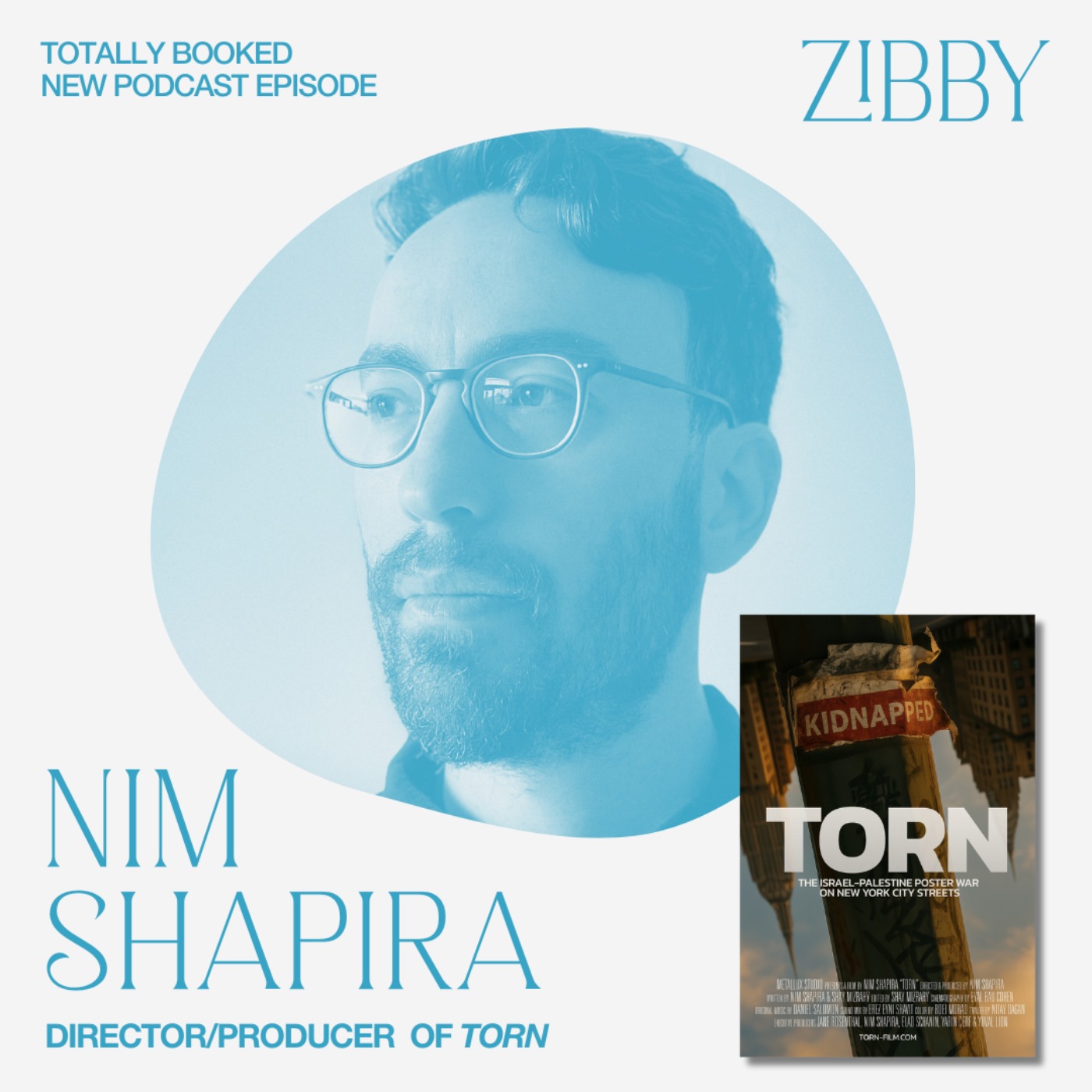
Totally Booked with Zibby
Nim Shapira, TORN: The Israel–Palestine Poster War on New York City Streets
00:25:32
Loading summary
Transcript51 lines
- [00:00]
Nim Shapira
Ready to order?
- [00:01]
Podcast Advertiser 1
Yes.
- [00:02]
Zibby Owens
We're earning unlimited 3% cash back on dining and entertainment with a Capital One Saver Card. So let's just get one of everything. Everything.
- [00:09]
Capital One Advertiser
Fire everything. The Capital One Saver card is at table 27, and they're earning unlimited 3% cash back.
- [00:15]
Alex Strauss
Yes, chef.
- [00:16]
Zibby Owens
This is so nice.
- [00:18]
Capital One Advertiser
Had a feeling you'd want 3% cash back on dessert.
- [00:20]
Zibby Owens
Ooh, tiramisu.
- [00:22]
Capital One Advertiser
Earn unlimited 3% cash back on dining and entertainment with the Capital One Saver Card. Capital One what's in your wallet?
- [00:28]
Nim Shapira
Terms apply. See capitalone.com for details.
- [00:30]
Podcast Advertiser 1
You know you've reached peak couple energy when your undies match. Meundies Match Me has you both covered literally in super soft, ultra modal undies, socks, PJs, and loungewear. Festive prints. Check. Cozy vibes. Double check. And right now, it's deal season. Get up to 50% off site wide for Black Friday and Cyber Monday. Take your couple game to the next level with Meundies Match Me. To get deals up to 50% off, go to Meundies.com acast Enter promo code acast that's Meundies.com acast code acast Did.
- [01:11]
Nim Shapira
I talk too much? Can't I just let it go?
- [01:20]
Podcast Advertiser 1
Take a breath. You're not alone.
- [01:22]
Zibby Owens
Let's talk about what's going on.
- [01:24]
Podcast Advertiser 1
Counseling helps you sort through the noise with qualified professionals, and online therapy makes it convenient. See if it's for you. Visit betterhelp.com randompodcast for 10% off your first month of online therapy and let life feel better.
- [01:44]
Zibby Owens
Hi, this is Zibby Owens and you're listening to Totally Booked with Zibby, formerly Moms don't have Time to Read Books. In my daily show show, I interview today's latest best selling, buzziest or underrated authors and story creators whose work I think is worth your time. As a bookstore owner, publisher, author, and obviously podcaster, I get a comprehensive look at everything that's coming out and spend my time curating the best books so you don't have to stay in the know. Get insider insights and connect with guests like I do every single day. For more information, go to zibbymedia.com and follow me on Instagram IBBEowens. We have a special episode today because I did not host this. I was supposed to host this conversation, which was a talk back with Nim Shapira. After the screening of his documentary Torn, we hosted an On Being Jewish now event in New York City and screened the movie and then had a talk back. I Unfortunately, was totally sick in bed right after the death of my stepfather. And I just. My body shut down and I had a. Anyway, it doesn't matter. I couldn't do it. So Alex Strauss, who's one of the contributors to On Being Jewish now, the anthology, and Stacy Eagle, I knew who was another contributor. Both of them are authors in their own right. I panicked and asked the two of them could they host the whole event and interview Nim and also Mandana Dayani, which will be a different episode. And they said yes. And so what follows is a conversation, a talk back with Nim Shapiro about his movie Torn with Alex Strauss. Enjoy.
- [03:23]
Alex Strauss
Hi, everybody. I'm Alex Strauss filling in for Zibby Owens. And we've just watched Torn, which was just a dramatic, extraordinary account of what transpired since October 7th and how new Yorkers handled things and the ripple effect that it had both here in New York and clearly around the world. And I'm here with the director and producer, Nim Chapira. Did I do that right? I was just saying, it's. After watching this extraordinary documentary was. I mean, there were almost no words. But to have this conversation, I feel so privileged to experience this with you and with all of you. And I, I guess, first, if you would introduce yourself and just tell us a little bit about how you got started and how this came to be.
- [04:20]
Nim Shapira
So I'm an Israeli American. I moved here 13 years ago. So I'm a New Yorker. I know the streets of New York, I think, better than the streets of Tel Aviv. And I have been, you know, I have been in the advertising world and in the film world for 20 years, I would say. And when October 7th happened, I was in Israel right from the start. Actually, not right from the start, because the first few hours, we all thought, it's just rockets. And then the rumors started. But very soon after, I started volunteering with the Hostage Family Forum, which wasn't titled that way. It was just, like, groups of people that have lost connection with their loved ones. They didn't know where they are, so. And I knew friends who lost their families. So I was, can I help you maybe make a video for your loved one or let the world know that they've gone missing? And again, like, fast forwarding, like, I realized that we're in this echo chamber. We are all so siloed. And I told myself that I continued volunteering with, like, different studios that did pro bono work, but I wanted to do something as a New Yorker that would penetrate the bubbles of people on the other Side, I wanted to make a film that is an invitation for a conversation, and mostly a film that asks more questions than it gives answers. And three questions that I led, you know, sitting with my editor in the editing room was, why is empathy a limited resource? Can we have dehumanization? Can we have disagreements without dehumanizations? And last and third question is, can multiple things be true at the same time? So these are the questions that led me. And it was important for me to finalize the film by the first anniversary of October 7th. So ever since, I've traveled with the film all over the States. And this is the first screening that I'm hosting, holding with the end credit titles that should be updated because the live hostages are out.
- [06:42]
Alex Strauss
Amen. When you look at what has transpired, was there also an inciting incident for you to say, I have to start documenting this? Because I think when you see things on Instagram, or Instaly, as I like to call it, you're seeing a moment and a snippet. But I think for so many of us, this was the first time we saw it all threaded together and the narrative and the story and what really transpired rather than a snippet. So was there an inciting incident that said, I need to start documenting this and I need to have a whole story so that there is something to really present to the world that says, look what happened.
- [07:27]
Nim Shapira
There were two parallel incidents or scenarios that happened. And I feel like everyone of us, like I always say, it's important for me to say that I'm not the victim. Like, there are people that lost their lives or they have hostages in Gaza. But I think all of our mental health has declined as we are on the kind of like, outer circles of what is happening. And for me, two things happen. One is that, you know, seeing the posters go up, I'm In Tel Aviv, October 7th happens. And then October 9th, I think the posters went up. And it was kind of like a silver lining, like, my city cares. And then very soon after, people started tearing down the posters, and I recognized every street corner. I'm like, this is where I get my coffee, and this is where I go to work. And so that was kind of like a very visceral memory of me sitting in Tel Aviv. And I couldn't even imagine that people are ripping down the posters. That was more, I would say, less personal. The more personal thing was I'm in this Venn diagram of being an artist, a vegan, and gay. So all of my.
- [08:51]
Alex Strauss
It's a big Order to fill.
- [08:53]
Nim Shapira
All of my communities that I called friends, you know, started saying that, you know, not all of the communities, but people that I personally know, people that I had drinks with, coffee with, worked with. They said that the hostages are AI. That the hostages are ectos. They said that the Israelis deserved it. And these are people that I considered on the front line of empathy. So I think. And these are people. And I also show it in the people that ripped down the posters. You know, I can't say that this was only young people or old people, only people from this ethnic background. Like, it's everyone. Everyone is tearing down the posters. So same for my friends. Like I saw, I had friends that were Lebanese and Moroccan and Iranian, but I also had friends from Belarusia and Sweden and Italy and friends from all over the United States. And those conversations or DMs, were on the first week of October 7th. And I was shocked that this is what they say or write to me. Someone like, I was also under rockets while they were texting me from their New York homes. So I think a lot of us in the Jewish community and the Israeli community that lives in New York have lost a lot of our social connections and reexamined our relationships. And the film, you know, a lot of people talk about the film being about the Middle East. The film is about America. The film is about not only the posters were torn, but the social fabric of the city was torn as well.
- [10:41]
Alex Strauss
I think what's so difficult to understand is for September 11th, and I was here as well, and I'm in New Yorker, born and raised, you would never tear down a photo of someone who died in September 11, or when we were looking for people we couldn't find. And I just don't understand what would cause people to tear down a photo of a baby that was stolen and women who were raped and horrible things and these poor people who were kidnapped. It is hard for me to get to that next level. And we escalated so quickly. What do you think that was from?
- [11:23]
Nim Shapira
I think that in the film, I specifically didn't want to ask the interviewees that I have, why are those people ripping down the posters? I really honestly wanted to have a conversation with the poster rippers and understand their pov, because I believe that, you know, there are, we say, like, two Jews, three opinions. So, like, so when we were talking to someone on the other side, like, we're not gonna agree on anything or at least on most of the things, but we at least agree, have to hear each other out or accept that There is a different narrative. And then try and bridge the divide. At least that's what I thought. I tried to talk to a lot of people that were doxxed and fired. I had their details because it was online, but they said that they already said everything they have to say or they just didn't respond. And that is why I kind of like weave throughout the film all of the reasons or excuses for why they are tearing down the posters. I want to give the poster rippers the benefit of the doubt to say that. And I really hope that you guys also accept that nothing or almost nothing in the world today or ever is black and white. There is a spectrum. So, yes, there are people that are anti Semitics and they are ripping down the posters. But there are also, on the other side, people that have only seen social media footage of what is happening in Gaza and they are sure that these posters are evil. Right? I'm not saying that, you know, they are entitled to rip down the posters. Like, ripping down a poster is ugly. It's anti freedom of speech and it's anti American. But I have heard stories about people that ripped down the posters and then repented. There is a story about an Indian living in America. He was filmed by an Israeli, and he told the Israeli, go back to your country. Right? They're both immigrants. And then the Indian guy was doxxed and fired, went back to India. When he came back, he really tried to find someone to talk to about what he did, and no one wanted to speak with him. So he went to a rabbi. Her name is Rabbi Sarah Raines. She's from Temple Emanuel. And she was very, very, you know, she didn't know what to do, but she was like, that's her calling, right? Like, someone showed up on her door, on her doorstep, and so she took him in and she gave him a list of books to read and a list of movies to watch. And not all of them are by Israeli or Jewish authors. And after he watched them and read the books, they had very difficult discussions. Then he started going to hostage vigils, and he even put posters himself. And that Yom Kippur of last year, he wrote an apology letter to the Jewish community, and she read it in temple. So I want to say that, yes, some of the poster ripples, we will never be able to talk to them. And they think of. So there's the BDS movement and there is a lot of boycott. And I think that boycott is doing exactly the opposite. Like, boycott is not advancing dialogue. We need more dialogue. We need to connect to people we disagree with and stop living in bubbles. So I do not believe in boycotts. And having said that, some of the people that ripped on the posters, if I will approach them, they will not talk to me just because of where I'm from or because of my religion or because of what I represent. Having said that, these are not my target audience. I don't think I would be able to talk to them. I want to talk to people that are the silent majority or I want to talk to people that, you know, maybe have second thoughts about what they did. So that's. That's my audience.
- [15:50]
Zibby Owens
Today's episode is sponsored by Wayfair. Oh my gosh, the holidays have come up so quickly. My kids all have given me their wish lists, but I have so many other gifts to give and also I need to just spruce up my home. And thanks to Wayfair, I have done that. I ended up just getting this adorable, adorable console table for our family room where I've put photos of my family and my late stepfather and a beautiful arrangement of flowers. And it has really just changed my whole room around. It's making it perfect to celebrate the holidays all together with my home. And by the way, it came so quickly, right when I needed it and was super easy to assemble. I am a huge fan of Wayfair and I've even posted a picture so you can check on Instagram to see this beautiful table that we have. And it was such a great value and has just every time I look at it, I'm so excited. There's really something for every style in every home, no matter your budget. And Wayfair makes it so easy to tackle your home goals and your gift list all at the same same time. So get last minute hosting essentials, gifts for all your loved ones and decor to celebrate the holidays for way less. Head to Wayfair.com right now to shop all things home. That's W A Y-F-A-I-R.com Wayfair Every style, every home. Today's episode is sponsored by Aura Frames. Okay, who else is looking for easy, thoughtful, fabulous gifts to give people that you love? I mean, who is not looking for that? Well, I have the answer for you. Aura Frames is the answer to every holiday gifting moment. And you'll never have to struggle again to find the perfect gift. This is so personalized because you can load this digital frame with all photos of people you love, the recipient people they love. All you have to do to get unlimited free photos and videos is download the Aura app, connect to WI Fi and you can preload photos before it ships. And you can keep adding photos from anywhere, anytime and add a message before it arrives so you can share your videos all year long. And yet you're giving it right for the holidays. A gift box is included. Every frame comes beautifully packaged in a premium gift box with no price tag, so don't wait. Win the holidays now with Aura Frames for a limited time. Save on the perfect gift by visiting auraframes.com to get $35 off Aura Frames bestselling carver mat frames named number one by Wirecutter by using promo code Zibby at checkout this that's a u r a frames.com promo code Zibby Z I V V Y this deal is exclusive to listeners and frames sell out fast, so order yours now to get it in time for the holidays. Support the show by mentioning us at checkout. Terms and conditions apply. Now. Goodbye while I go fill another frame for a very lucky recipient in my family. Today's episode has been sponsored by Quince. When it comes to holiday gifting, I want to give things people really love. Beautiful, timeless pieces they will wear for years. So that's why I'm going with Quince. From Mongolian cashmere sweaters to Italian wool coats, everything is premium quality at a price that actually makes sense. Quince has something for everyone. Soft cashmere sweaters for $50 that look and feel like designer pieces. Silk tops and skirts for dressing up, perfectly cut jeans for everyday wear and outerwear that actually keeps you warm. I've been wearing my new quince coat with this fur collar on social media, so you should be able to see me wearing it on Instagram. Ibyowens I love it and of course it would make a great gift. The Italian wool coats are also amazing standout pieces. Beautifully tailored, soft to the touch and crafted to last for the seasons. Every piece is made with premium materials from ethical, trusted factories and priced far below what other luxury brands charge. The craftsmanship really shows in every detail. The stitching, the fit, the drape. It's elevated, timeless and made to wear on repeat. There are just so many options. I can totally see myself giving my friends one of their beautiful options like a sweater or one of their coats for someone really special. And as if that isn't enough, they also have stuff for home, bath, kitchen and travel. Come on, find gifts so good you'll want to keep them yourself with Quince. Go to Quince.com Zibby for free shipping on your order and 365 day returns now available in Canada too. That's Q-U-I-N-C-E.com Zibby to get free shipping and 365 day returns. Quince.com Zibby.
- [20:49]
Alex Strauss
When you started to film everything, did you reach out to other people and ask for clips that they could share with you? Did you document all this yourself? How did this all get edited together, if you will?
- [21:03]
Nim Shapira
It was very hard to work on a film while the war is still going on and while the hostages are not out. I didn't have, like, an ending because.
- [21:11]
Alex Strauss
This really felt minute to minute. I mean, I don't think any of us have ever had an opportunity to see really a sequential experience of what transpired. And I think that's one of the most powerful elements of this, aside from, obviously, the sensitive material and being horrified by what went on. But we've not had that opportunity to have that narrative or story told. So was it you doing all of the threading together? Did people send you clips? Did you videotape everything yourself?
- [21:45]
Nim Shapira
Yeah. So I chose to focus on the first three months of the war, winter 2023. I wanted to do it because I felt like I don't know how this war would end. I don't know what's going to happen with the hostages. What I know is that these posters would not last. Like, the sun would bleach them, the rain would wash them away, and people would put stuff on top of them, but also people rip them down. So I just wanted to document that horrible era for us Jewish New Yorkers. And my film was always about Jewish grief. Like, when people commend me for making a neutral film, I say, nothing is neutral in this life. Like, I am a Jewish Israeli and I'm trying to zigzag between the narratives. But of course, that it's from my perspective. And I see myself in each one of my interviewees. So I had that period of time, and then I started looking for who I'm going to interview. And each of the interviewees, I see myself in them. They are, you know, I feel like they represent most of Jewish New Yorkers, like Ashkenazi and Sephardic, young and old, religious and secular, liberal and conservative. And they honestly, you know, all of us had to do something. When October 7th happened, this was kind of like my process in, like, answering some of the questions that I had. So I think the collecting all of the videos that people ripped down, that was just combing the Internet and going through hundreds and hundreds of videos and finding the ones that don't have minors in them, for example, or people understand that they are being filmed just for legal reasons. And then there was so much footage online and also in news editions. I took every news edition that I could find, also to talk about how we are siloed and echo chambered. So I have Al Jazeera and Fox News and CNN and MSNBC and cbs. And the last question, kind of like ingredient, which is the most important one, was I interviewed dozens of people and I ended up with these amazing interviewees because I felt like they are the heart of the story. So each of them was filmed a few hours. And yeah, the editing, I think, was the most. The hardest part, just because, you know, we made the editing while the encampments were happening. And I thought, should this be in the film? And I decided not, because that's another film and it talks about other. Yeah, I have to focus on one thing again, because it's not just about, you know, I made the film as a tool to talk about the fact that we are so divided, but of course also to call for the urgent release of the hostages. And now that all the living hostages are out, we still have 19 of our brothers in Gaza. And that's why, if you ask me, we shouldn't stop wearing the pin or advocating for them. It's also part of the ceasefire deal and Hamas is breaching their side of the deal and they should release the hostage bodies.
- [25:16]
Alex Strauss
The remains.
- [25:17]
Nim Shapira
The remains. But. But putting that aside for a second, it's a film about. You're seeing what's happening now with the elections in New York. We are more divided than ever. And I just wanna say about the upcoming elections that I've seen more posters about Israel and Gaza in the past two years. Then I've seen posters about who's going to be the next male of New York. Same goes for yesterday's debate. The second or third question was about what's happening between Israel and the Palestinians. It wasn't a question about what's going to be. What's your take on education? Right. Or what's your take on the rats on the streets?
- [26:11]
Alex Strauss
So a whole different environment and everybody's priorities seem very skewed. So it's so difficult. I feel like we're at war at so many different spots.
- [26:23]
Nim Shapira
Yeah.
- [26:25]
Alex Strauss
I'm wondering also, how did this experience change you? And what did you learn about both yourself and where we are in the world by doing this?
- [26:36]
Nim Shapira
So there is the saying of, like, you can't Go into the same river twice because you're not the same person and it's not the same river. And I feel like every time I watch the film I am not the same person. The news change, but I also change. I will say that I started working on the film asking myself, why are they ripping down the poster of Kfir Bibas, who is the symbol for the kidnapped posters? And I think that, you know, I would never understand why people rip down Phil's photo or see in a nine month old baby the kind of like the image of the Zionist entity. Like if you see something so evil in a photo of a nine month old baby, your action shouldn't be remove it. Your action should be like look inside of yourself and ask yourself why. But I will say that this was.
- [27:38]
Alex Strauss
That the most surprising element too of uncovering all this documentation, that even though they were children and babies, that there was this inhumane, almost sociopathic behavior to rip them down and erase them.
- [27:55]
Nim Shapira
I think the most surprising element was the fact that when they tear down the posters, they are erasing our grief. They are taking away our grief. Maybe because they don't want to acknowledge that the kidnapping of 251 humans that were from over 40 nationalities, Hindus and Buddhists and Christians and Muslims and Jews, was done by the so called Hamas resistance movement, which is of course a terrorist movement. So maybe taking down the posters, maybe the posters remind them that this act was done and that's maybe why they're taking it down. But you know, I chose to end the film with the fact that there are enough street lamps and walls in New York so we can, you know, if we can't have peace, at least we can acknowledge that there is enough walls that we can cover our grief with the posters of our loved ones. There are New Yorkers that have skin in the game. There is a huge Jewish community and there's also a very large Muslim community. And I'm not going to argue with a Palestinian American that lost her family members in Gaza because of an Israeli airstrike. No matter if Hamas embeds themselves within the citizens or not, like the bottom line is that her family.
- [29:27]
Alex Strauss
Yes, loss is loss.
- [29:28]
Nim Shapira
Absolutely. Loss is lost.
- [29:29]
Alex Strauss
Yes.
- [29:30]
Nim Shapira
But you asked me what surprised me the most. What surprised me the most is the fact that people can't hold to thoughts and can't understand. And I'm showing it, I'm trying to as much as I can not to show that the vocal people on the other side can't hold two thoughts in their brain. And I think that's what hurt me the most, the fact that they cannot say there are daily rockets and missiles on Israelis throughout the past two years. There are hostages that have been kidnapped and their only sin was being at the wrong place at the wrong time. There is like so many things that have happened. And I think that the, that if they would acknowledge, and I'm not saying there are no Palestinian voices that acknowledge this, but I'd say that a lot of Palestinian voices do not acknowledge the Israeli suffering or what we are going through. And, you know, I showed Alana on the stage talking about how and she has the most direct skin in the game.
- [30:36]
Alex Strauss
Yes, of course. And I think part of what makes this film so humane and so thoughtful was really you and your desire to do that. I think that was certainly felt throughout watching this, that there were two sides and you were doing your best to try to understand everybody's story while still protecting, you know, how you feel and where you come from. We're shockingly out of time. I know 20 minutes went by very fast and I know so many of us are still digesting what we just saw. And I just. We can't thank you enough for being here and to. For making this piece of beautiful. And it's hard to even use the word beautiful when you're looking at this, but this documentation that really will live forever and hopefully people will get a better understanding. Thank you so much.
- [31:28]
Nim Shapira
And yeah, if you want to let your friends and family know, the film is streaming on torn-film.com and yeah, we are trying to win an Oscar with the best documentary. I hope you do. It's a long way. Odds are against us, but we'll go as far as we can.
- [31:50]
Alex Strauss
We're here to support you. So thank you for being here.
- [31:53]
Nim Shapira
Thank you, thank you.
- [31:55]
Zibby Owens
Thank you for listening to Totally Booked with Zibi, formerly Moms don't have time to read books. If you loved the show, tell a friend, leave a review, follow me on Instagram ibyoens and spread the word. Thanks so much. Oh, and buy the books.
- [32:18]
Capital One Travel Advertiser
If you love to travel, Capital One has a rewards credit card that's perfect for you. With the Capital One Venture X card, you earn unlimited double miles on everything you buy. Plus you get pretty premium benefits at a collection of luxury hotels when you book on Capital One Travel. And with Venture X, you get access to over 1,000 airport lounges worldwide. Open up a world of travel possibilities with a Capital One Venture X card. What's in your wallet terms apply.
- [32:44]
Nim Shapira
Lounge access is subject to change. See capital1.com for details.
- [32:47]
Podcast Advertiser 1
You know you've reached Peak Couple energy when your undies match Meundies Match Me has you both covered, literally in super soft, ultra modal undies, socks, PJs and loungewear. Festive prints? Check. Cozy vibes? Double check. And right now, it's deal season. Get up to 50% off site wide for Black Friday and Cyber Monday. Take your couple game to the next level with Meundies Match Me. To get deals up to 50% off, go to Meundies.com Acasta Enter promo code acast that's Meundies.com Acast code acast we.
- [33:29]
Trusted House Sitters Advertiser
All love our pets, but we love to travel too, and sadly, they can't always come along for the ride. Don't stress. Trusted House Sitters connects you with verified sitters who'll stay in your home and care for your pets, all in exchange for a place to stay on their travels. So while you're off exploring, your pets get to stay safe and happy at home, right where they belong. Find a loving in Home Pet Sitter today at trustedhousesitters.
- [33:57]
Nim Shapira
Com.