Loading summary
Transcript91 lines
- [00:00]
Zibby Owens
Hi listeners, we have totally booked live coming up this fall and I hope you'll be a part of it.
- [00:06]
Podcast Co-host/Announcer
We have three events in New York.
- [00:08]
Zibby Owens
City, September 19th, 25th and 30th in.
- [00:11]
Podcast Co-host/Announcer
New York where I'll be doing six interviews live each day. We also have a petite retreat in.
- [00:16]
Zibby Owens
Greenwich on October 4th.
- [00:18]
Podcast Co-host/Announcer
Go to zibbemedia.com and event or and or eventbrite and search the events and please come.
- [00:25]
Zibby Owens
I can't wait to meet you in person.
- [00:31]
Podcast Co-host/Announcer
Why does every recipe I try need 18 ingredients, including a jar of something paste I'll never use again but will sit in my fridge for nine months?
- [00:38]
Zibby Owens
I just want dinner in the oven fast.
- [00:41]
Podcast Co-host/Announcer
That's why I love Blue Apron's new one Pan Assemble and Bake meals. They send you fresh ingredients that are already chopped. All you do is put it all together and bake. That's it. No chopping, no weird leftovers. Just delicious, easy to make meals. Get 20% off your first two orders with code APRON20. Terms and conditions apply. Visit Blue Apron for more.
- [01:01]
Zibby Owens
If you love to travel, Capital One.
- [01:03]
Podcast Co-host/Announcer
Has a rewards credit card that's perfect for you. With the Capital One Venture X card.
- [01:07]
Zibby Owens
You earn unlimited double miles on everything you buy.
- [01:10]
Podcast Co-host/Announcer
Plus you get premium benefits at a collection of luxury hotels when you book on Capital One Travel. And with Venture X you get access to over 1,000 airport lounges worldwide. Open up a world of travel possibilities with a Capital One Venture X card.
- [01:26]
Zibby Owens
What's in your wallet?
- [01:27]
Sam Sussman
Terms apply.
- [01:28]
Podcast Co-host/Announcer
Lounge access is subject to change.
- [01:29]
Zibby Owens
See capitalone.com for details.
- [01:34]
Podcast Co-host/Announcer
Today's episode is sponsored by the Foxed Page, a podcast and YouTube channel that dives deep into the very best books. It's basically your favorite college English class.
- [01:44]
Zibby Owens
But very relaxed and way more fun.
- [01:46]
Podcast Co-host/Announcer
No exams, no participation, and only books you really want to read.
- [01:50]
Zibby Owens
Kimberly Ford, best selling author, one time.
- [01:52]
Podcast Co-host/Announcer
Professor and PhD in literature, offers up.
- [01:56]
Zibby Owens
Entertaining, often funny talks that will leave.
- [01:58]
Podcast Co-host/Announcer
You feeling inspired and a little smarter. She digs right into everything from J.D. salinger to Miranda July, from Demon Copperhead to Madame Bovary, from Pride and Prejudice to Lessons in Chemistry. The talks on individual books are the heart of the podcast, but Enriched Read segments tackle ideas like unreliable narrators, while old favorite talks treat you to a fresh adult look at childhood gems like Harriet the Spy and Are you there God? It's me, Margaret. Want to get the most out of.
- [02:26]
Zibby Owens
What you read and be entertained along the way? The Foxed page is for you. Hi, this is Zibby Owens and you're.
- [02:35]
Podcast Co-host/Announcer
Listening to Totally Booked with Zibby, formerly.
- [02:38]
Zibby Owens
Moms don't have Time to Read Books in my daily show, I interview today's.
- [02:42]
Podcast Co-host/Announcer
Latest best selling, buzziest or underrated authors and story creators whose work I think.
- [02:48]
Zibby Owens
Is worth your time. As a bookstore owner, publisher, author and obviously podcaster, I get a comprehensive look at everything that's coming out and spend my time curating the best books so you don't have to stay in the know, get insider insights and connect with guests like I do every single day. For more information, go to zibbymedia.com and.
- [03:10]
Podcast Co-host/Announcer
Follow me on Instagram ibbyoans.
- [03:16]
Zibby Owens
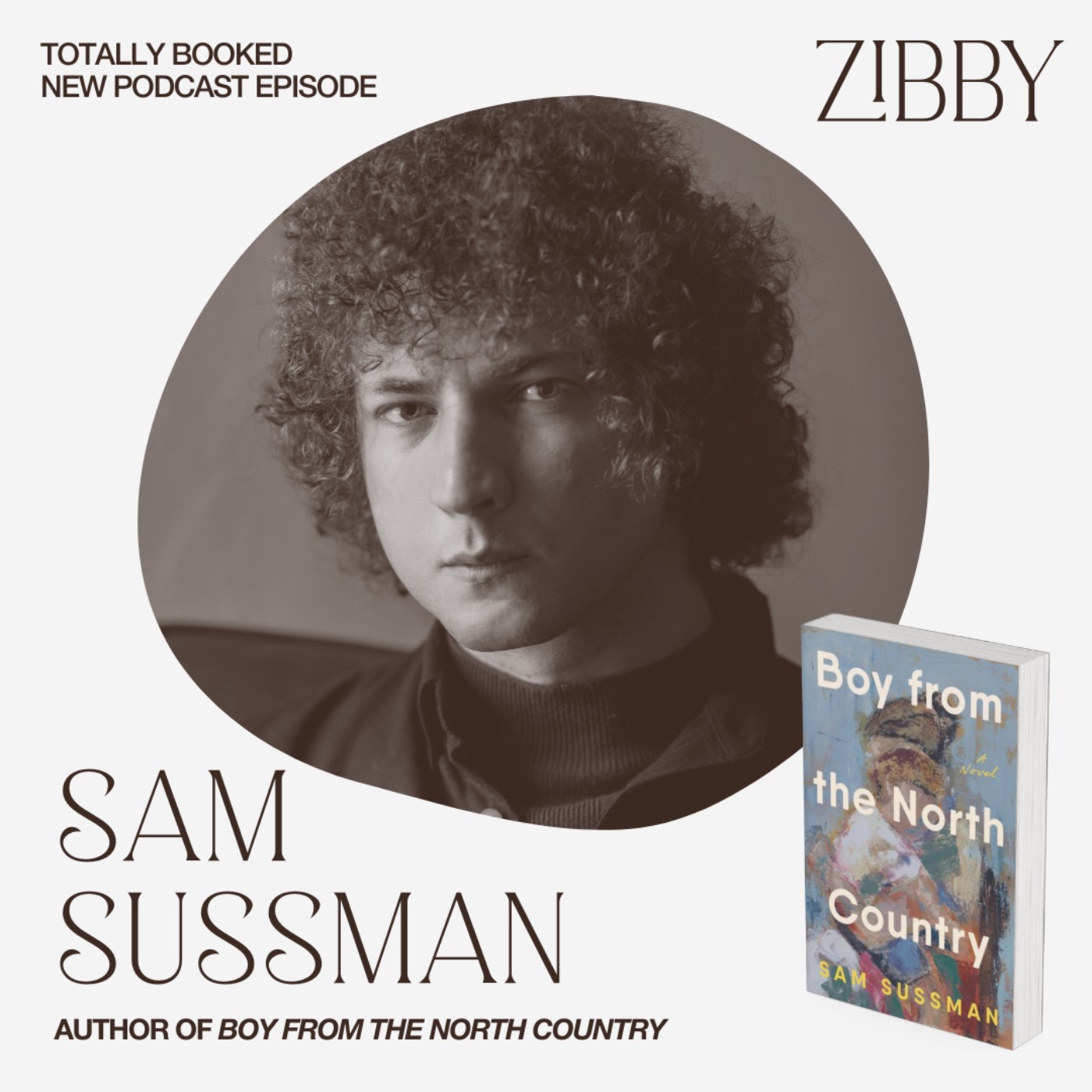
Sam Sussman is the author of Boy from the North Country, a novel. Sam grew up in the Hudson Valley. He graduated with a BA from Swarthmore College and an MPhil from the University.
- [03:26]
Podcast Co-host/Announcer
Of Oxford and has lived in Berlin and Jerusalem.
- [03:29]
Zibby Owens
His writing has been recognized by BAFTA and published in Harper's Magazine. Sam has taught writing seminars in India, Chile and England and participated in the PEN World Voices Festival of International Literature. He lives in the Yorkville neighborhood of.
- [03:43]
Podcast Co-host/Announcer
Manhattan and his native Hudson Valley.
- [03:45]
Zibby Owens
Welcome Sam. Thank you so much for coming on Totally Booked with Zibby to talk about Boy from the North Country. Congratulations.
- [03:52]
Sam Sussman
Thanks so much for having me.
- [03:54]
Zibby Owens
Oh, as you know, I am obsessed with this book. It is one of my Zibby's Book Club picks and I love it so much. Could not put it down. Held it to my heart for like 10 minutes afterwards I was like this is ridiculous. I have more stuff I have to do now, but I can't like stop thinking about the book. Anyway, tell everybody what the book is about, please.
- [04:13]
Sam Sussman
Yeah, well first, thank you Zibby. I really appreciate those kind words. The book is about love and loss and grief and caretaking and it's about mothers and sons. I'll tell the story very briefly. The story is centered on a young man named Evan who grows up with his mother June in the Hudson Valley, and from an early age he's not certain about the identity of his biological father, and strangers begin to tell Evan that he resembles uncannily, he looks like a writer musician. Some people may have heard of Bob Dylan, and it slowly comes out that his mother earlier in her life had a romantic relationship with Dylan, which she will never talk to Evan about. And then slowly, there are a few breadcrumbs. She says, yes, I did have that relationship. Okay, maybe I was with him the year before you were born. But she won't say anything more. So Evan goes off to live his life. He leaves home, he Gets as far away as he can. He goes. He studies at Oxford, he lives in Berlin, he lives in London and Jerusalem. And in his mid-20s, June becomes sick. She's diagnosed with cancer, and she asks him to come home. And as they're spending this time, which Evan does not yet realize is the last month of his mother's life, she begins for the first time, to open up about her life, this wild bohemian youth that she had as an actress and a painter in New York, and. And she's telling him about, for the first time, her relationship with Dylan. And Evan feels that he's being led toward the truth of his story, their relationship closer to Dylan. But what we've really come to see is that he's actually gaining a deeper and more profound appreciation of the mother who raised them. And by the end, Evan is going to realize that everything he values in himself, his goodness, also his artistic ambitions, his desire to be a writer, everything that he's trying to become, doesn't come from this celebrity artist. Artist who he's never met. Rather, it comes from the mother who has raised him.
- [06:16]
Zibby Owens
Wow. And where do you fit into the story yourself?
- [06:21]
Sam Sussman
Oh, you caught me. Well, I did write an essay for Harper's Magazine called On Possibly Being Bob Dylan's Son. And, yes, this is what people these days call autofiction, a novel taken from life. For me, literature and life are deeply intertwined. I want to read great literature so that it makes me more alive to life, more sensitive, more thoughtful. And I want to write from my life. And so this is my story. It is my mother's story. And Evan, it turns out, is my middle name June. My mother's middle name was Juna. She was named for Juna Barnes. And so I've turned that into June here. And like anyone who writes a memoir or an autofictional novel, it. It would be fiction to say that this is all. Every detail is true. When we tell a story, when we write a novel, we compress. We don't have the time or space to explain everything that happened in our lives. There are large chunks of my life that are not in this book, but the heart of the story, the truth of this particular young man's journey is from my life.
- [07:37]
Zibby Owens
And why not write a memoir? Did you think about writing a memoir? And did you also work on a novel for seven years the way that Evan did and then abandoned it to write this one?
- [07:47]
Sam Sussman
I did. I wrote two novels before this over seven years. I had a long and winding road as a writer. You know, they say if you want to be a novelist, do an MFA or come to New York City. And I didn't do either of those things. The writers that I admired the most were out in the world, writing from their life and experience. So I spent my 20s living in all the places that Evan lives. Oxford, London, Jerusalem, Berlin. And that was also a reaction to growing up in the woods in the Hudson Valley and wanting to go out and explore the world and discover myself. And part of what I discovered in writing this book is that actually the deepest parts of myself that I value the most really are rooted in those woods in the Hudson Valley where I grew up with my mother, who gave me such a deep love of literature and art. And my earliest memories of are of her reading to me. So you asked why I didn't write a memoir, and I'll try to explain it this way. Samuel Beckett has a great line where he says, as a writer, you have to find the form that fits the message, form that fits the mess. So for me, at the center of this story is my growth and my growth into a depth of appreciation for the mother who raised me and a desire not to be defined by any other feature or possible feature of myself. And so I chose a form, the novel, which says, I'm not going to tell you what's true or what's not true.
- [09:25]
Zibby Owens
Thanks a lot.
- [09:26]
Sam Sussman
That is form. That is the form that fits the mess of my life. And I knew that if I wrote a memoir, just to put it in slightly more concrete terms, I knew that if I wrote a memoir, that it would be much harder to establish my voice and my mother's story outside of the shadow that a figure of as cultural significance, as culturally significant as Dylan, that he would cast. So this, for me, was an act of freedom, of saying, I'm going to write this story on my terms, in my way. And it helps that I happen to be a novelist.
- [10:02]
Zibby Owens
Yes. Well, I feel like there are almost two parallel novels within your book, two stories that you have intertwining the whole time in a really beautiful sort of braided way, which is the contemporary timeline where you. Okay. Where Evan is helping June through chemotherapy and her illness and learning about that and helping her with that and all the physicality of illness. And I haven't actually. I haven't had anyone go through chemo where I was the main caretaker. I've had friends, but I wasn't like the one. The way that you were for the way that Evan was for June. So that storyline alone would have made a compelling sort of gut wrenching story. But the fact that then she tells the story of her coming of age story herself is Emma's like another one on top of it. So it's really like a two for one special in the book.
- [11:01]
Sam Sussman
I'm so glad that you enjoyed both of those storylines and put it that way. And I think it was so important for me to tell my mother's story in as close to her words as I could. And so, as you say, the way the book is structured is that I or Evan are home with my mother, June. And then every time we go into New York City for her chemotherapy treatment, she draws us back to the 1970s and she's describing this youth that she had and that in life she had almost never talked to me about and was really opening up about that period of her life. And it just so happened that the hospital where she was treated was around the corner where she had lived in Yorkville in the Upper east side, which is actually the apartment that I'm in now that I currently live in. And it was there that she first began this relationship with Dylan in the mid-1970s. So when I'm writing these scenes of my mother and Dylan having this affair, which is creatively intense, and it was happening in this apartment where I was writing, and there was deep magic to me of transporting myself back to that period of time and imagining what these two people would have been like at that moment. And I had a great deal to go on because my mother talked to me about that period and. And I'll say that for those who are drawn to the Dylan element of the story, this is the time when he was riding Blood on the Tracks and he was in this moment of deep artistic crisis. And through the book, we see him turn out of that period and come into this riveting moment where he's able to write as he wants to write again. And what comes out of that is Blood on the Tracks. And my mother had a view, an intimate view of that process for him. And so much of this book for me is about what it means for an artist to become his or her fullest self. And that's what my mother was trying to do. It's what Dylan was trying to do, and it's what I have been trying to do through this book.
- [13:02]
Zibby Owens
Wow. It's just so neat how it all came together, though. I mean, it sounds like we can take it apart, but the end result is like, so seamless, which is really amazing. So just to really double down on Bob Dylan and to immerse myself in this book. I watched the Great Unknown, like in the middle of it. And so this actually, this is way past that. It's after that movie ends and sort of a coda to that for anybody who left that movie. And it's like, well, then what happened? So this is like post motorcycle accident into the time where he was sort of, you know, drawn into himself. And then how your mom played a role of his sort of coming out and writing again. And I feel like having watched the movie and read the book sort of simultaneously this sort of manic element to Dylan's writing. And the middle of the night scribbling and the notes everywhere and the popping in. In the movie. It was the same kind of setup with the apartment and the compilation of women. I feel like you capture that so well. Like, what is it like? And how do you interact with somebody who can be, you know, artistically gifted, yet erratic in their sort of day to day behavior in a way that's not even particularly socially acceptable. What do you make of all of that?
- [14:21]
Sam Sussman
Yeah, well, it was the reason my mother broke up with him because he. I mean, I think you can't know about Dylan as an artist without revering the depth of his commitment to, to his work. And yet, you know, listening to my mother, it was clear the personal cost that that came at for him. The work was the sun and moon. And you know, she would describe. And so just to back up for a moment, when they met, as you say, after a complete unknown which ends in the mid-60s, Dylan is at the height of celebrity. He's in his mid, late 20s and he then he wants to get away from it all. He goes to Woodstock. He thinks that if he has time alone, he can get back to the artistic work that really matters to him. But what happens is that through his late 20s and early 30s, he does not write work that he is satisfied with. Now plenty of other people love the albums that came out in the late 60s and early 70s. But when my mother met him in the early 70s, he was deeply unsatisfied with his work. And he had come to New York City because he'd heard of this painter named Norman Rabin, who is the youngest child of Sholem alaikum, the great 19th century Yiddish short story writer. And my mother meets Dylan in Rabin's class. And Rabin is this enormous figure for Dylan. Dylan later credits him with turning himself around creatively. And so, you know, my book is sort of doing for Dylan of the 70s what a complete unknown is doing. For Dylan of the 60s. Now, you asked what I sort of. How do I relate to that? Creative intensity, admiration. But of course, it's also a cautionary tale because, like, what my mother took from their relationship is that she wanted a fuller life than you can have as an artist who's committed to nothing but your own work. And one of the reasons that she ended their relationship was that she. She wanted more for herself. She wanted family. She wanted to help other people, as she later did as a holistic health practitioner. And those are the things that I've tried to take from her to learn that you can be committed to your work. I worked very hard on this novel. Novel. I was ruthless with myself in trying to get as close, tell the best story, write the best story that I could. And at the same time, I have a lot of love and friendship and people in my life that are disconnected from my identity as an artist. And I think that's something my mother really emphasized to me.
- [16:58]
Zibby Owens
Well, your mother is so amazing, and I'm so sorry for your loss, the world's loss of her. I feel like I know her, which is, of course, the magic of writing and reading is that we can sort of conjure up the souls of those we've lost in such a powerful way. It's really unbelievable. And this is such a prime example of that. But she went through so much, which the reader finds out along the way of, like, some of the things that have happened in her past, her relationship with men. Yes, Dylan is one of them. But, you know, all of her relationships have defined her. And despite what happens, her commitment to love itself overwhelms, overpowers everything else. And she keeps trying to teach you that, like, literally saying it to you, but also showing it to you to the last second. That's what she wanted you to hold onto. And it's so powerful. Most parents don't necessarily have, like, a thesis or something that they're like, no, no, this is it. This is the point of it all. How do you take that? Like, how do you take that into your life? And I know you write about your own relationships here, but it almost feels like a little bit of extra pressure, right? What does that mean, to devote a life to love?
- [18:10]
Sam Sussman
It's an extraordinarily high standard of how to live. And, you know, she would say to me, nothing is holy or than love. And, you know, I think for me, something that I've tried to take from her life is the many forms that love can take. And when she died, she had a dog named Lucy who then came to me and lived with me for six and a half years. Lucy taught me enormously about love. My mother had many clients who she worked with, and part of her work there was focused on taking her own traumas and trying to help other women who had been victims of similar sorts of abuse. And that was a deep and profound form of love in her life. And part of what I'm trying to do with this book is offer love to people who have gone through grief. We live in a culture that often struggles to be imaginative with how to relate to loss and grief. And I really felt after my mother died how hard it was to talk about what that experience was like. And you know, my mother used to say we're here to take the pieces of the universe that we have been given, burnish them with love, and return them in better condition than we received. And what I'm trying to do with this book is take these agonizing pieces of the universe that I've been given and burnish them with love and return them to other people in better condition than I received. And I hope that if there are people struggling with grief or loss that they can read this book and find someone else who went through that experience. And I made a rule with myself that I was going to be completely vulnerable emotionally in how I talked about this loss and this grief in the book. And I hope that stories at their best can be a place where we find that love.
- [20:03]
Zibby Owens
Totally. Oh my gosh.
- [20:05]
Podcast Co-host/Announcer
Today's episode is sponsored by Quints. Fall is in full swing and it is the perfect time to refresh your wardrobe with pieces that feel as good as they look. Luckily, Quince makes it easy to look polished, save warm and save big without compromising on quality. Quince has all the elevated essentials for fall think 100% Mongolian cashmere from $50, washable silk tops and skirts and perfectly tailored denim all at prices that feel too good to be true. I'm eyeing their wool coats. They look designer level but cost a fraction of the price and the quality just as good, if not better. By partnering directly with ethical top tier factories and cutting out the middlemen, Quince cuts out the middlemen to deliver luxury quality pieces at half the price of similar brands. It's the kind of wardrobe upgrade that feels smart, stylish and effortless. Quince's sweaters have become staples in my wardrobe. They are reliable and beautiful and I just get excited every time a Quince package arrives. Quince has really become a one stop shop, so keep it classic and cozy this fall with long lasting staples from quince Go to quince.com zibie for free shipping on your order and 365 day returns. That's Q U I N C E dot com zibby to get free shipping and 365 day returns. Quince.com zibby Today's episode is sponsored by Wayfair. The weather is finally cooling down and the days are getting shorter so it makes me want to make my home spaces even cozier. And Wayfair is the place to go as your trusted destination for all things home. Wayfair has everything you need to comfy up your space this fall, from recliners to warm bedding and autumn decor. Wayfair even has espresso makers so you can make that latte at home. You know the one. I recently got an amazing carpet from Wayfair which makes our dining room feel like a whole new spot. Super cozy and ready for fall. My decor style is pretty, classic and simple and Wayfair has everything that I need.
- [22:16]
Zibby Owens
Plus things come so quickly which feeds.
- [22:19]
Podcast Co-host/Announcer
Into my instant gratification. So head to Wayfair for bedding and bath basics like cozy throw blankets which.
- [22:26]
Zibby Owens
I also have from Wayfair autumn themed.
- [22:28]
Podcast Co-host/Announcer
Throw pillows and all those seasonal decor items like pumpkins and warm colors and even some storage for everything you need. So there is something for every style and every home. No matter your space or budget. Wayfair makes it easy to tackle your home goals with room ideas and curated collections. Plus free and easy delivery. Even on the big stuff. No more huge delivery fees for furniture and no need to shop at multiple stores. You can get it all in one place. So cozify your space with Wayfair's curated collection of easy, affordable fall updates. From comfy recliners to cozy bedding and autumn decor. Find it all for way less@wayfair.com that's W-A-Y-F-A-I-R.com Wayfair Every style, every home. Today's episode has been sponsored by Live It Up Super Greens Moms. You do everything for everyone else and somehow your own wellness always gets bumped to the bottom of the list. And that's where Live It Up Super Greens comes in. It's a daily habit that actually works. No hassle, no fuss, just scoop, mix and go. Whether you're tackling school drop off conference calls, zooms or the laundry mountain, this is one easy win that supports digestion, energy and immune health in just 30 seconds. Live it Up Super Greens is an all natural blend of over 20 superfoods. Formulated with organic vegetables, probiotics, digestive enzymes and naturally derived ingredients. Just one scoop a day can promote gut health, support your immune system and give you the feel good energy you can count on. It's designed by nutritionists, third party, tested for purity and made to be easy on your stomach. No grassy taste or chalky texture. Mix it with water, milk or a smoothie and make it a healthy habit you'll look forward to. You'd never believe a green drink tastes so, so good. If you haven't mixed Super Greens into your routine, Live it up is a must add. It tastes so much better than the others and it's way more affordable. Live It Up Super Greens offers premium quality without the premium price. It's one of the most affordable ways to support your health daily. And by the way, it is absolutely delicious. I love it. Easy to clean up, easy to use, and amazing. Live it up has become a quick and easy way for me to stay on top of my health. So Live it up is offering you 15% off your first order, including subscriptions with code booked. Shipping is always free. Head to letsliveitup.com booked and use code booked for 15% off your first Super Greens order. These statements have not been evaluated by the fda. This product is not intended to diagnose, treat, cure or prevent any disease.
- [25:07]
Zibby Owens
Have you reached out to Bob Dylan? I know it's only one piece of this whole book, right? But does he know? Do you know if he knows? Are you going to send him the book? Have you thought about it? Do you care? Did you need permission? Like, what's the short answer there?
- [25:22]
Sam Sussman
I used to feel that I needed permission, endorsement, inspiration. I used to feel that I needed him. I used to look at his photograph when I was a teenager and look between his photograph and my reflection and feel that I needed him. And when I was young, my mother would say to me, you are loved, you are protected, you are free. And I didn't understand what she was saying. And now at this point in my life, I feel it so deeply. Every day I feel her love. I feel the love of other people in my life. I am loved, I'm protected. I am free. I didn't write the book for Bob Dylan. There are great sections about his creative life for those who will want to hear that story, and I hope that they'll enjoy it. It's the most intimate portrait of Dylan riding Blood on the Tracks that will ever be published. But personally for me, I Thought about my mother and how she would respond to this book every day that I wrote it. And I asked myself every day, am I putting her on the page with the complexity and love that she deserves? Because that was the hardest part of writing this book for me. People are more complex than any character. But personally, for him, listen, if I had an hour with him, I would just ask him about her.
- [26:44]
Zibby Owens
It's amazing. Well, you also do such a good job of setting us in, like, from a technical standpoint, setting us in a place I feel this book literally picks me up and plunks me down. In nature, you can see what you are eating, what you are sleeping smelling. Just like being surrounded by the woods. One moment you said the two of you had been outside, and you were like, was that a dream? But you could see, like, a slight depression in the leaves. I mean, these details are so outstanding. And then you say that you wrote the book. There a lot of it, too, is that. And just being surrounded by all of that. Talk a little bit about how you get, how you brought the outside in, and even Lucy, too. I mean, all the licks and the times you mentioned her. And there. There was one time I was like, wait, what about the dog? And then you were like. And then I called so and so to watch Lucy, and I'm like, thank God. You know, I was getting worried here.
- [27:48]
Sam Sussman
Right. Well, as you mentioned, so I should say, I grew up with my mother in this beautiful place in the woods in the Hudson Valley, near Goshen, in a valley looking up mountains and hills. And my mother loved nature. And two of the great loves that she gave me in life were nature and literature. And I'm bringing those two things together in this book. And, you know, after she passed away, I stayed in that house, and I. Which was a very important place for me to feel connected to her and to grieve. And I ended up writing this book in the two places where it takes place. Just that house in upstate New York and this apartment in. In the city. And when I was stuck writing or when I was struggling, there was a lot of struggle in this book because it was just so painfully from my life. Lucy and I would just go for a walk in nature, and I would look at the trees. I would look onto the mountains. Sometimes I would really just lie in the grass for 15 or 20 minutes and look at the clouds and think about, what is the narrative problem I'm dealing with? Why can't I get around it? I would look at Lucy and I would say, well, what do you think here? And Lucy was my great, great artistic assistant. She was nine pounds. So she sat in my lap almost every moment that I wrote this book. And, you know, when I was working too hard, she would look at me like, you know, don't we. Isn't it time for our afternoon walk? I would say, okay, Lucy. And sometimes I would wake up in the morning with such a passionate intensity to write. I would have an idea, and I would want to go to my desk as soon as possible. And Lucy would remind me that we had to begin our day with a. So, for me, part of the ambition of this book is to integrate all of these elements of life that I loved, that my mother loved, into a work of literature that reflects the beauty of her life and her loves and her legacies and the legacy of that nature of Lucy, all of that house. They were all with me. And I will say, I could not have written the book without that legacy of love. I could not have written that book without Lucy and the house and my memories of my mother. I needed all of those things to sit down and write every day.
- [30:08]
Zibby Owens
By the way, my artistic ambition is laying down here with her legs like, you know, my own dog is. I totally get it. She comes with me everywhere. And she was actually my husband, my husband's late mother's dog, who we took it as well. So right around the same time, she. We've had her for five years now. But anyway, when you wrote about the interaction essentially, of genes and environment and what we inherit and the way we can influence, but not necessarily completely redirect, I feel like it's an allegory, if you will, of life itself, right? What we are given, we can only do so much to change. We have the bodies we have. We are all going to die. Not to be totally depressing today, but it's true, right? And we can live healthy in all the ways your mother did. And I was like, oh, my gosh, should I be taking notes for all the things his mom did? Like, I'm not doing any of those things. When you said you went to the hospital cafeteria and you're like, I guess the most food, like, sustenance is this bar that I have to eat with, like, 48 grams of sugar. I'm like, oh, my gosh, if I have a bar, it's like a good day, you know, Anyway, that's okay. But I will try to eat clean and model myself after your mom in the book. But maybe just talk a little bit about that and where that leaves you.
- [31:29]
Sam Sussman
At the end, we each inherit love and complexity and difficulty and the things that our parents have struggled with. My mom was very conscious of what she had passed to me, what she had given. And by the end of her life, I feel that she knew that I understood the depth of love that she had given me, and she also worried about what she hadn't given me. And she would often say to me, I never modeled a full lifelong romantic relationship for you, but don't let that make you feel that you can't have that in your life. In the novel, as she did in life, she quotes from the Ethics of the Father, where she says, it is not upon you to finish the work, but neither are you free to desist from it. And that's how I think about parental inheritance, that we're given so much, and all of us are given something, even in the most difficult situations. And our project in our lives is to make the most of that and try to pass on something more and also to not feel that we are free to desist from what we. From pursuing what we were not given or what was not perfect for us.
- [32:54]
Zibby Owens
Do you ever listen to Danny Shapiro's podcast Family Secrets? Do you know that if you are not scheduled to go on there, I would like to introduce you, because I feel like you need to talk to her. And she wrote a whole book, I don't know if you've read it, called Inheritance, which is so amazing.
- [33:08]
Sam Sussman
So, yes, yes, yes.
- [33:10]
Zibby Owens
To have you in conversation would be amazing.
- [33:11]
Sam Sussman
I would love that. Thank you, Zabee. I would love that.
- [33:13]
Zibby Owens
Actually, she's coming to that live event, but I don't know if it's the same day. Let me see. Maybe I could do something where you talk there. All right. My wheels are turning.
- [33:21]
Sam Sussman
I would love that. Okay, fantastic. Thank you, Zabee. That'd be great.
- [33:24]
Zibby Owens
Where do you go from here, Sam? You spill your life out as Evan. There seem to be no secrets. It's hard to not root for you. Right? You are rooting for Evan so much. Like the fact that then there's a book is so exciting because we're rooting for you as a character, but also as an author. Where do you go from here?
- [33:44]
Sam Sussman
Well, thanks for rooting for me. That's much appreciated. A novelist spends many, many hours alone in the room at the desk. So to feel that there are others rooting for me is a powerful feeling. When I finished this novel, I was very conscious. How can I possibly write something that's going to feel as significant as I'm dealing with death? Love, mothers, fathers, paternity. And when I finished the book, I remember there was a day where I closed the laptop and I walked around the woods behind my mother's house. And I thought to myself, the only thing larger than everything I've just written is love. And that will be the subject of my next book. And that is also the active pursuit of my life now. And as I was saying before, something that I learned from my mother's relationship with Dylan is that actualizing as an artist is not the totality of one's life. And that has been the great project of my life since my mother's death. To write this book, to make meaning of her death. And now it's time to recreate the forms of love that I was lucky enough to experience with her, with other people, and to move forward and to have my own life and my own family and to make that love the center of my next work.
- [35:03]
Zibby Owens
I love that. Sam, congratulations. This book is so good. It's so powerful. Like, even when you talk about the woods, I'm, like, seeing everything. I feel like I have been to your house and your apartment. I'm just gonna move in at this point. So, anyway, you're welcome to visit.
- [35:19]
Sam Sussman
You're welcome to visit anytime, Zibby. You have a standing invitation.
- [35:23]
Zibby Owens
Thank you. Thank you. Well, I'm looking forward to meeting you in person. Thank you for this. I'm so excited for other people to read it. Last quick question. Why this title Boy from the North Country? I mean, I know it comes from. I know where it came from, and I saw in the book where you referenced it, but you. Are we talking about you? Are we talking about him? Are we talking about both of you?
- [35:43]
Sam Sussman
We're talking about my mother, and we're talking about me, and we're also talking about all the other boys from the north country that are in this novel. There are descriptions of Marc Chagall and Leonard Cohen and Amos Oz. And this book is really a tribute to a certain form of especially Jewish literary, artistic tradition. And it's a tribute to artists who come from the north country, from places nobody has heard of and seek to actualize themselves. And, you know, the last thing I'll say is there's a Basho collection. The Narrow Road to the Deep north, and the Deep North. The North Country. It's the place that we're all going. It's the place that we're from. It's the story that we tell about our origins and what we're trying to. Where we're trying to go. It's, it's the, the way that we understand ourselves. That's what the north country is.
- [36:43]
Zibby Owens
Amazing. I love it. Congrats. Yay.
- [36:46]
Sam Sussman
Thank you.
- [36:46]
Zibby Owens
Okay. All right. Take care. To be continued. All right.
- [36:51]
Sam Sussman
Thank you so much.
- [36:52]
Zibby Owens
Bye. Thank you for listening to Totally Booked with Zibby, formerly Moms don't have Time to Read Books. If you loved the show, tell a friend, leave a review, follow me on Instagram Iby Owens and Spread the Word.
- [37:05]
Podcast Co-host/Announcer
Thanks so much. Oh, and buy the books foreign.
- [37:14]
Jonathan Fields
Hey, this is Jonathan Fields, host of the Good Life Project podcast. Boost Mobile reminds me of what I love when someone reimagines what's possible, offering reliable nationwide coverage backed by a 30 day money back guarantee. While other carriers spend millions on flashy super bowl ads, Boost Mobile puts those dollars towards what matters more, delivering reliable nationwide coverage at prices that make you wonder why we've been paying so much. For just $25 a month, you get unlimited service that will never go up in price. Not next year, not ever. And they're so confident you'll love it, they back it with a 30 day money back guarantee, no questions asked. Want to see if Boost Mobile is right for you? Visit your nearest Boost mobile store or boostmobile.com customers who cancel within 30 days of activation will have Boost service fees refunded, activation fees if applicable, and phone payments will not be refunded.
- [38:11]
Podcast Co-host/Announcer
Imagine a world of extraordinary comfort where Bolin Branch Bedding wraps you in the softest. Embrace the coziest experience made from the world's finest 100% organic cotton, all so you can sleep better. Start building your fall sanctuary with Boland Branch's iconic Signature sheets. Sheets made with a buttery, breathable weave that gets softer with every wash. Enjoy 15% off your first set of sheets with free shipping and returns at b o l l and branch.com with code buttery. See site for details and exclusions.
- [38:44]
Sam Sussman
If you're a maintenance supervisor at a.
- [38:46]
Zibby Owens
Manufacturing facility and your machinery isn't working.
- [38:49]
Jonathan Fields
Right, Grainger knows you need to understand.
- [38:51]
Sam Sussman
What'S wrong as soon as possible. So when a conveyor motor falters, Grainger.
- [38:55]
Zibby Owens
Offers diagnostic tools like calibration kits and.
- [38:58]
Sam Sussman
Multimeters to help you identify and fix the problem. With Grainger, you can be confident you have everything you need to keep your facility running smoothly.
- [39:06]
Zibby Owens
Call 1-800-GRAINGER clickgrainger.com or just stop by.
- [39:10]
Sam Sussman
Grainger for the ones who get it done.