Loading summary
Transcript27 lines
- [00:01]
A
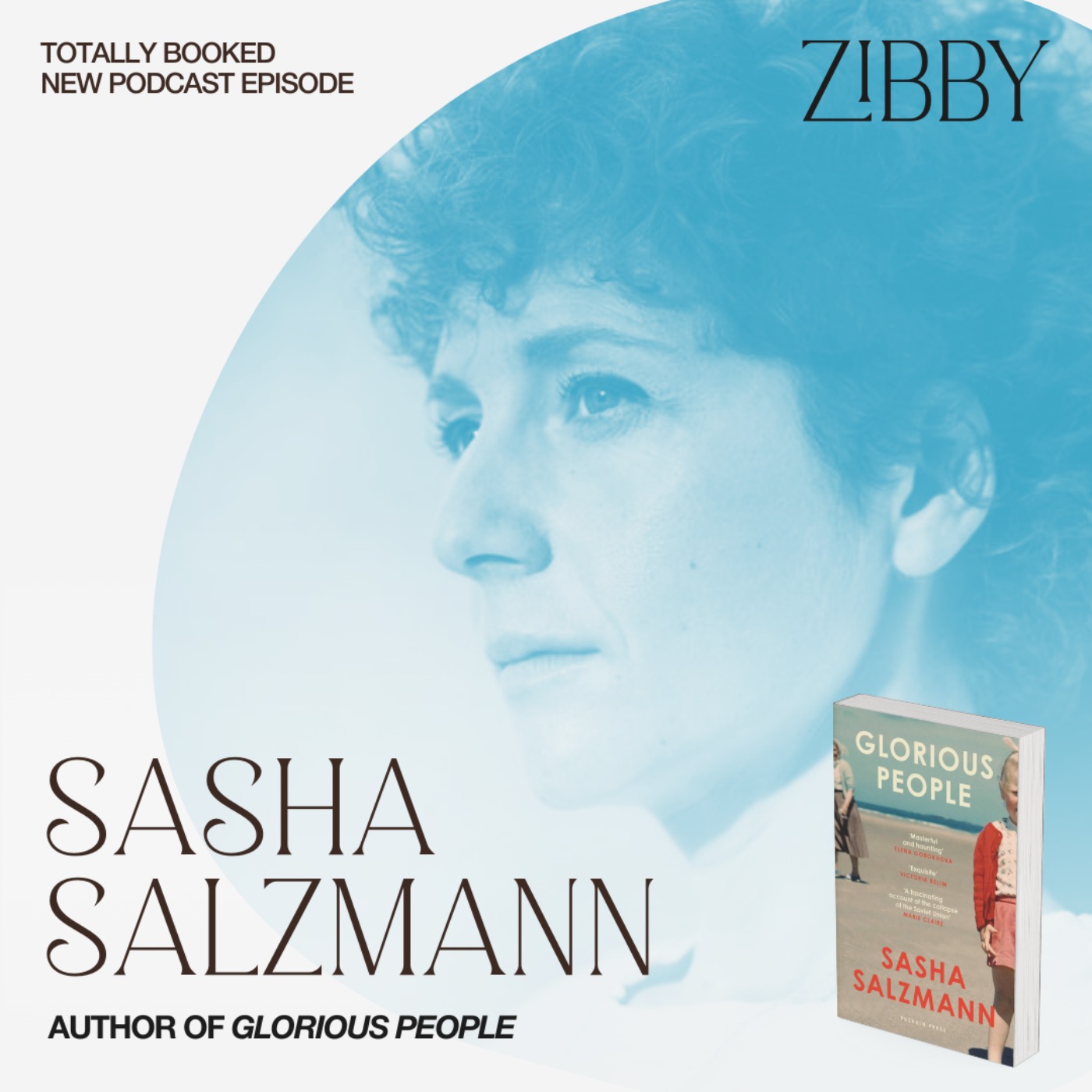
Hi, this is Zibby Owens and you're listening to Totally Booked with Zibby, formerly Moms don't have Time to Read Books. In my daily show, I interview today's latest best selling buzziest or underrated authors and story creators whose work I think is worth your time. As a bookstore owner, publisher, author, and obviously podcaster, I get a comprehensive look at everything that's coming out and spend my time curating the best books so you don't have to stay in the know, get insider insights and connect with guests like I do every single day. For more information, go to zibbymedia.com and follow me on Instagram Ibbeowens Sasha Saltzman is the author of Glorious People. Sasha was born in Volgograd in 1985 and grew up in Moscow. In 1995 they immigrated to Germany with their family. Saltzman is an award winning playwright, essayist, curator and co founder of the culture magazine Freytext. And their work has been translated and performed in over 20 countries. Glorious people was longlisted for the German Book Prize 2021. In 2022, Saltzman received the prestigious Hermann Hesse Literature Priests and the priests Die Literature Hauser. Welcome, Sascha, thank you so much for coming on Totally Booked with Zibby to talk about Glorious. Thank you people. Congratulations.
- [01:27]
B
Oh, thank you. So good to be here. Hi.
- [01:29]
A
Hi. As we were just discussing, I'm in New York today and you are in Berlin. So we are having a very international conversation about this very international type of book. Could you tell listeners what Glorious People is about?
- [01:41]
B
All right, so Glorious People is a book about mothers and daughters who try to look at each other and truly see the individual in front of them, if that makes sense. You know, not a projection of yourself, not of your expectations or hopes, but truly that complex human being that might be your mom or your kid. Actually, it takes place in Ukraine. We started in the seventies and eighties in East Ukraine and follow really just a life of, you know, a young woman who falls in love and then tries to study and goes through all the aftermath of perestroika, then getting pregnant and deciding to bring her kid, Germany, to free from the horrors of the first striker. And for me, it's mostly not necessarily a portrait of Ukraine, but really of the women who made this effort to save their kids from everything that came after the fall of the Wall and the breaking down of the Soviet Union. And to start very specific from my point of view, it started with dinner parties with my mom's. So my mom loves to throw a party and she's really good at it. And she would have this very diverse crew at her table always. And after 2014, when the war in Ukraine started, people who identified as Ukrainians and people who identified as Russians started to have obviously very different conversations, Right? And I was listening, you know, big eyes, big ears, what's happening? Because so I was born in Russia as my mom, and I knew that our family's from Ukraine, but nobody really spoke about or family in that terms. You know, as very typical Ashkenazi Jews, we're from all over the place. So we would speak about Odessa or Chenowitz, but not the Ukrainian culture. And I thought, it's a shame. Why don't I know anything about it? So at one point I figured, I want. I want to know everything. And since I'm a novelist and not a historian, I need to talk to people. So I asked the friends of my mom to take some time to tell me their story. I really wanted to get to know them as people who carry a history that I know so little about. And it's always so much more fun to speak to people than read history books, right? So maybe there was also the benefit of them knowing me as Nadia's kids. So they were very personal. We were not discussing politics, although it was already war. And what did people tell me, of course, about that kid all and about their first love and how it smells in their Ukrainian city and the food they are missing or the food they're trying still to cook in Germany for their kids. And I found it interesting to get into a country and a culture that I could know more about through their stories. They understood that I really want to portray this women and I want to portray mothers and I want to portray how mothers, we're also kids back in the day, and there were daughters and they had the same questions and disbelief and were terrified. But then they became mothers at one point and they had to do the same thing their mother did for them, for their own children. And so this is a book portraying, I'd say, this type of women and this third generational fighting for dignity and your children.
- [05:05]
A
Wow, What a beautiful description. Oh, my gosh. And you really do take us on a ride through different decades and relationships and struggles, medical struggles, fictitious medical struggles, psychological struggles. I mean, there's a lot that goes in here and your writing is just so beautiful. Do you mind if I read like the introductory paragraph? Is that okay? Okay.
- [05:31]
B
Beautiful. Thank you.
- [05:32]
A
And I don't usually read from the beginning and I have like 20 pages dog eared but let me just. Let me read a little bit, just to show people how they will be immediately drawn in. Okay? This is skipping stones, of course. I wanted to know what had happened. What exactly took place before Edie was beaten up in the yard? She was lying on the grass, her hair all pale and dirty. My mother was kneeling beside her. Auntie Lena was yelling at them both. And all three were waving their arms around like they were casting out evil spirits. When they saw me, they started to cry, one after the other, like a Russia doll. The tears of one turning into the tears of the next, and so on. First my mom let rip, then the others joined in as if they were singing a howling, wailing round. I couldn't make head or tail of it. Okay, so it wasn't hard to guess why my mom came over all misty eyed when she saw me standing there after the long radio silence. But Lena and Edie, they seemed to have some score to settle. Mother and daughter. One of them lying on the ground like the other's shadow or the other way round. One of them growing up out of the other's feet like a shrub with broken branches. So beautiful. Oh, my gosh.
- [06:38]
B
Thank you.
- [06:39]
A
And then later you said this. A whole passage about your uncle and everything it said. I wasn't surprised she was in town. Uncle Lev had told me she'd be at the party at the Jewish Community Center. In fact, he paid me an official visit to inform me and to demand a family reconciliation. A big reunion. He came in a clean shirt, his nostrils flaring. He had the best intentions, but I had to disappoint him. When he saw that he wasn't getting anywhere, he. He tried to guilt trip me. You can't break with your own mother. You have to love her no matter what. But I don't think I'm obliged either to love or not to love her. She's my mother and that's all there is to it. Things are what they are, right? Amazing. So beautiful. Talk about that. How we feel about our mothers, the compulsion to have a good relationship and what happens when those relationships fray, right?
- [07:30]
B
To be honest, I thought I said everything about my mom before I wrote this novel. I wrote about 18 plays by now, and half of them are about my mom. My first novel, a lot of text. So I thought, okay, you know what? Now it's not going to be about my mom to ending up with her besties at the table, you know? So it's kind of like circling around this topic. And I learned so much by understanding that it's easier to speak to her friends because there are certain questions I would not have dared to really put out. For example, you know, like in all these conversations, they were going for hours, tea and food and all that they would share with me most intimate experiences. Say, giving birth in Soviet Union. It must have been such a nightmare. We're speaking about abuse, we're speaking about sexualist violence, everything you can think of. And that was not one or two times, but everybody was telling me. At one point, I understood that this is a question I made. So how was giving birth to a child? And it took me a while to understand, wait a second. I was born in. My mom gave birth to me in the 80s. But I would never have dared to just come with a question right to my mom. So it took me this adventure, which really, to understand I know nothing. And I think this is a very typical mistake of kids who, of course, grow up with their parents. So they think I know everything about you, but they just be a reflection and maybe it's part of the deal. I agree that, you know, like, to a certain extent, you. You stay a kid and a mom has to stay a mom. And you. You will not be that kind of friend or you will never be able to see each other just as individuals, but you have to make this effort. So by watching the friends of my mom, observing how they were speaking about their hopes for their children or the sacrifices they made, I got a glimpse of what I never have expected about my mom. And, you know, then I went on a book tour with this one right across Europe. And I encourage everybody to ask their mom about giving birth to them. Literally. This is not a question you would think of, but. But I think it does something to you, to your relationship with your mom, makes her understand that you assume she went through a lot.
- [09:47]
A
Wow, that could be a whole anthology like birth story. You're right. Yes. I recently interviewed someone who said, who's a doula, who said that actually your own birth and how you came into the world does affect a lot about your personality and things that come next for you. And so you need to know your own birth story. So anyway, yeah, and I thought, I.
- [10:09]
B
Know everything about my first story, you know, like the myth around it or the story around it, because everybody hears something and it's always a synthesized and somehow nice and a little funny and not too bloody. But then, like, just, you know, like, just accidentally, I found out things about me when I called up my mom. The main character in my novel is a dog. It was like Similar. You go through a certain, you know, like college degrees years. And it was very different Soviet Union from what I know. I need you like a fact check. So I called my mom and I was like, wait a second. We were starting five years to six years. I'm not getting it and I'm trying to count. It's just like, oh, with you it was six years because I had to take a year off when you were sick. I was like, excuse me, what? Like, I was. I was sick, which means I was sick and just didn't bother to tell me that I had a very serious disease and I nearly died. And she knew that if she leaves me at a hospital back in the day, you mean, I probably will not survive. But she took a year off and was carrying me in her hands for a whole year. He could not lie me down, otherwise I would. And that just came out of her, you know, like just, oh, by the way. And then she would ask me something about, you know, like, how my writing is going. And I just stared at the phone, understanding that for her those are normal stories. How she took care of me and how to care that I will survive in a very harsh situation where you knew that especially in those days, the Soviet Union and former Russia, there's no one to serve. And coming back to all the friends of the interview, dad figured out they all got the stories. And to be honest, maybe I think all mothers got the stories in the end. And we don't ask. And they will not tell on one hand, because it seems obvious to them. And why could they wrong part of motherhood. And I don't have children myself, so I just can't assume. But I'm just so amazed by this creature called mom and what they're able to do, especially in harsh political situations, you know what I mean? When everything is fine, which is rarely the case, but let's say there is Utopia, everyone is equal and everything's great. But in certain realities to get kids who are. It's just. They're heroes to me, really. And this is what I also told them when I was speaking to them all, you know, all these wonderful women that I think that the experience of their own story. And I really wish they would see themselves as protagonists of historical events. It's not only the mother, it's like somehow really unpoliticized term. I think the mother can be a very political issue, obviously. And it was really fun to also observe them, you know, listening to me, encouraging to think of them as actual political figures in our society. And it was another very funny anecdote because they knew, of course, that I interview all of them because they're friends. They tried to exchange, and they were also fighting. Like, why do you tell Stefan this bullshit? Like, it was totally different. Oh, that's nice. Get your pen out, because now it's getting interesting. And they understood by truly looking at themselves and each other differently that they were living very different lives also. You know, if you go through a regime like Soviet Union, you suppose that everybody is going through the same kind of horror, or let's say regime, but they were not. They were rich people and poor people and people in love and very unhappy people. And especially when it came to, you know, like, job opportunities, it was always told that everybody's getting the same and your opportunity is the same, but that's not true. And like, my. Me, myself and my mom and all this, all this kind of family, they said they were doctors, which meant they didn't have any money. You know, a doctor would get the same amount as, like, anybody, like a normal worker. But there were a lot of really rich people who were part of the party who did different jobs my mom didn't know about. So she taught me that we come from a country where everybody would get the same and not enough to survive. And now talking to a friend, I figured out, oh, no, there were actually quite rich people doing very different things in this country. So, yeah, I learned a lot. It was really a journey.
- [14:35]
A
As you're talking, I'm thinking to myself, wow, how interesting would it be if I talked to all my mom's friends and got stories, you know, while our parents are here? Like, my mother is alive, you know, like, so I should just do. She would probably be really interested in what they had to say. And who is collecting these stories of that generation? Nobody. Like, no one is going around, see.
- [14:58]
B
Because they don't think of themselves as protagonists. And by giving them this opportunity to tell their story, they will see themselves differently and you will see your mom differently. And it's fun. You know what I mean? It's not only work, it's somehow also really eye opening. What happened there?
- [15:17]
A
Interesting. Maybe I could do it on zoom.
- [15:22]
B
Sure.
- [15:22]
A
Probably not. Probably not. What is it like in Germany for you now, if you don't mind talking about it? You don't have to. But just wondering. Here I am in New York, and to be Jewish now, of course, is quite fraught as the world is devolving, and I'm just wondering how you feel being there in particular.
- [15:42]
B
Thank you for Asking because that's, I mean, that's a complicated one. Look, we came in the 90s and that's a very specific aliyah, right? People from former Soviet countries are the majority of the Jewish population in Germany. So the whole Jewish crowd changed a lot. We have Mizrahi and Ashkenazi and all kind of Jews really being the faith of the Jewish communities. For me, it's kind of a tricky game because I'm an artist, I'm a writer, and I always try not to be a professional Jew for the German gaze. Germans love their Jews, they need their Jews. I think that's kind of known. That determined identity is deeply rooted in what they think of as guilt, generational guilt, I guess. And they come non stop trying to make up to Jewish to do somehow. It is like it is this other rising and being the good other, which never really worked because you never accepted this part of the society. But in the last years, and this is not new, but of course, October 7th brings to a whole nother level. I don't want to speak for everybody, speak for myself. I feel that, you know, the known Jews, the people from the cultural team, such as myself, they kind of used or at least asked to be the good other against the bad other. So if we play along against other minorities, we're more accepted within the white feminine center. And this is not a place for me. You know, I never tried to be part of the dominant culture, never wanted to prove anything to anyone besides maybe that I can write. And it is kind of. It is tricky to still say yourself and know who you are. And I never understood myself as anything else. And I do it, but at the same time not giving the dominant culture their craze and the need for the sad Jew who is deeply destroyed. Especially after October 7th, we're all reconciled. So it is a tricky situation where I feel grateful to have so many friends from so many different communities. You know, like I'm surrounded by such amazing people from Palestinian, Kurdish, Arabic, Russian, Ukrainian, all kind of communities. And we have been doing this, doing this, meaning not only our friendship, but also cultural work for decades now. So we're not new to the game. We're kind of ready for the dominant gaze to come and say, I pick you. You will be my favorite boy today. Thank you. Because we're also kind of, kind of safe enough because we got each other. And that's this other thing that really offers me, you know, like in this horrible times we're in, that friendship is truly like, you know, a net that Will hold you. That was my experience after October 7th, when I was sure that I going to lose my mind, that all kind of friends called immediately and they were a Muslim background, Christian background, Jewish, all of it. Everybody called and this is where I know or knew that we have a chance.
- [18:51]
A
Thank you. I like that. Hope that's lovely. What are you working on now?
- [18:57]
B
Well, I'm staying with the same topic. I'm writing a novel about friendship. I want to portray exactly that. The friendships among people with very different backgrounds. But we're in this together. And I started in the 90s in Europe, where, you know, after the fall of the Wall, especially in Germany, the rise of right wing extremism was horrifying. A lot of sad stories. Not that in detail now, but the research that happened in 90s, it really shaped our idea of what Germany is. So today where we are grown ups, some have kids themselves, trying to figure out what remains from then, what is new and who do we want to be. And this in the situation we are in now.
- [19:44]
A
That sounds great. So are you doing more playwriting, more novels? Obviously you're doing the one novel. Like how do you decide what format you're writing in? How do you approach your work?
- [19:54]
B
Well, the content decides, really. I wish I could tell you that, you know, like, because I am so experienced, etc. Etc. The truth is every time an empty page tells me what to do. And so I was really a playwright. I. I was really happy there. It really worked out for me. I could live from it. And suddenly my first novel Beside Myself came out of me and I was like, okay, that's going to be scary because theater is my identity. And now, you know, like I'm going through this transition and who are going to be as a novelist. And then I loved it so much and it worked out so well. Then I thought, okay, you know what other people can do theater, they're great playwrights out there. They don't need me anymore. But then my grandfather passed away after October 7th. By the way, he several strokes and it was like, you know, it's the reaction to what happened. And he was to me like this father figure who taught me how to think, how to function. He taught me to be very political. You know, always look for, you know, argument, this Jewish kind of argument. And when he passed away, a plague came out of me, like my way of warning his death. And like really analogy could not have been a novel. So, you know, this form just came out of me. And then I saw it on stages and other people were basically singing. The song for my grandfather was somehow also comforting. I love the idea that he lives forever in this piece, you know, because normally I write quite fictional fictions inspired by family history, like, I guess, with the most brightest. But I never wrote that kind of, like, autobiographic piece, and it had to be a play, and now it's spoken by others. And this is beautiful because reading a book is really such an intimate experience. Now you have, like, this text between, you know, like, and you can decide if you take the book out of yourself or not. And the theater is such a public experience. It's very social. You're always with others, so it's very different. And I also write essays and all these other. And I write poetry, but I kind of don't show it to anyone because it's. So I'm experimenting in very different forms. And when it's there, I figure out do I want to share it with the world or not. I love that.
- [22:16]
A
Amazing. Sasha, thank you so much. Thank you for this beautiful book, glorious people, and for all that you do as this consummate intellectual. So thank you. It was lovely to chat with you.
- [22:30]
B
Thank you so much, Zibby.
- [22:31]
A
Okay, thank you. Best of luck. Take care. Bye bye.
- [22:36]
B
Bye bye.
- [22:37]
A
Thank you for listening to Totally Booked with Zibby, formerly Moms don't have time to read books. If you loved the show, tell a friend, leave a review, follow me on Instagram ibbyowens and spread the word. Thanks so much. Oh, and buy the books.