Loading summary
Transcript101 lines
- [00:01]
Zibby Owens
Hi, this is Zibby Owens and you're listening to Totally Booked with Zibby, formerly Moms don't have Time to Read Books. In my daily show, I interview today's latest best selling, buzziest or underrated authors and story creators whose work I think is worth your time. As a bookstore owner, publisher, author, and obviously podcaster, I get a comprehensive look
- [00:24]
at everything that's coming out and spend
- [00:27]
my time curating the best books so you don't have to stay in the know, get insider insights and connect with guests like I do every single day. For more information, go to zibbymedia.com and follow me on Instagram ibbeowens
- [00:45]
Narrator/Intro Voice
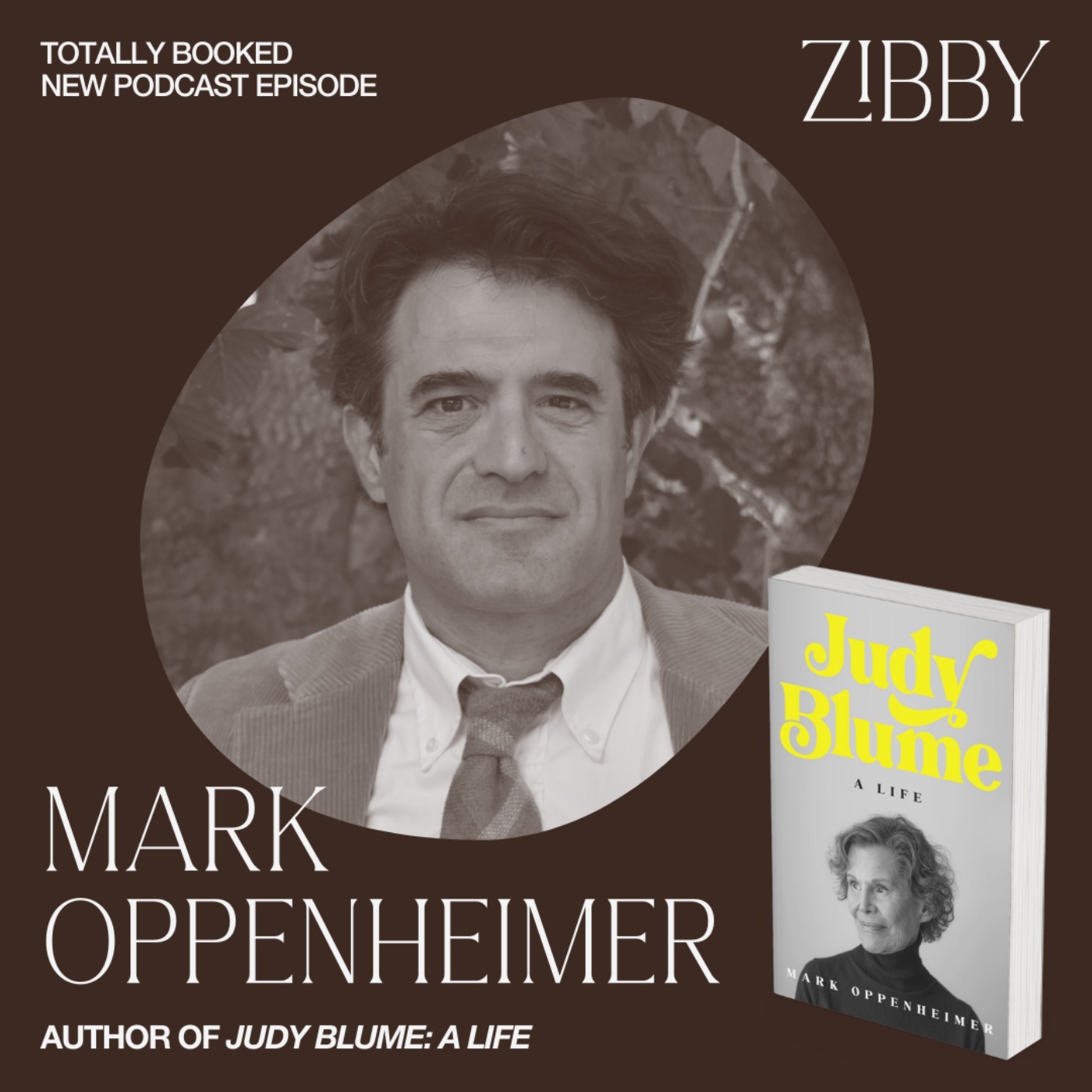
Mark Oppenheimer is the author of Judy Blume A Life. Mark has been covering American religion for 25 years, holds a PhD in religious studies from Yale and has taught at Stanford, Wesleyan, Wellesley, nyu, Boston College, and Yale, where he was the founding director of the Yale Journalism Institute. He also wrote the Beliefs column for the New York Times for six years and has written for many publications including the New Yorker, the Nation, gq, Slate, and more. He created Unorthodox, a show that I was actually on. It's the world's most popular podcast about Jewish life and culture with over 7 million downloads. Most recently he hosted an 8 part podcast called Gatecrashers about the history of Jews and anti Semitism at Ivy League schools. He is the author of five books including the Newish Jewish Encyclopedia. I had his co author on to talk about that, Stephanie Butnik, and most recently Squirrel, the Tree of Life, Synagogue Shooting, and the Soul of a Neighborhood. He edits ARC magazine and lives in Connecticut with his wife, four daughters, one son and one dog.
- [01:43]
Zibby Owens
Welcome Mark, thank you so much for coming on to talk about Judy Blume Alight.
- [01:48]
Narrator/Intro Voice
So exciting.
- [01:48]
Mark Oppenheimer
Thanks for having me. Yeah, my pleasure.
- [01:50]
Zibby Owens
By the way, I posted about the book and then I realized you were not on social media. What is up with that?
- [01:57]
Mark Oppenheimer
It was a sanity saving measure about eight or nine years ago. Do you want the story? I have a 30 second story I
- [02:03]
Zibby Owens
would love to see.
- [02:04]
Mark Oppenheimer
Yes. So, and I should preface this by saying some of my best friends and favorite people are on social media and I'm not, I'm not a scold about it, but you know, everyone has their own social media journey. I was, I think on Facebook engaged in some utterly trivial neighborhood dispute having to do with, I don't know, you know, snow removal or the school playground or something in my neighborhood with some person I liked and I was writing something that came off as snarky or cruel as people do in Facebook fights. And one of my daughters, I honestly forget which one at this point was leaning over my shoulder reading what I was writing, and she said, dad, that isn't kind. I think if I wrote that, you would be mad at me. And I had this, like, come to Jesus moment where I thought, oh, my God, my child. Like, I'm not. I'm not modeling good adulthood. I'm being petty and cruel and stupid publicly. And my child caught me. It was so. I was so ashamed. And within 48 hours, I just posted to Twitter and Facebook, which were the two social medias I was on. I was like, I'm. I'm done. Those of you who care about me and know me have my address and my phone number, and if anyone else doesn't have it, I'm happy to send it to you before I leave. Bye. And it's, you know, and then within two or three weeks, you've detox and you forget it exists. I forget Facebook exists. I'm surprised when I hear people talk about it now.
- [03:19]
Zibby Owens
Wow. Well, yeah, that's. It's powerful to know it can actually be done. And it sounds like here is if you can't be snarky, you're just not
- [03:28]
Narrator/Intro Voice
going to do it.
- [03:31]
Mark Oppenheimer
Right. I mean, I have. Right. That is well said. I have friends who are like, we'll just be nice and polite and kind. Be your best self on social media. And for whatever reason, that was. That wasn't hard for me. That was too hard for me. I even, Even. Even in person speaking, I have too quick a trigger finger. I say things that I wish I could, you know, reel back in. So social media was not good for me.
- [03:53]
Zibby Owens
I am. I'm putting on a metaphorical, you know, night coat of arms here to protect myself from whatever daggers fly in the next few minutes.
- [04:01]
Mark Oppenheimer
Well, I was. I mean, the irony is, like, I actually. I think I'm a really nice person. I don't pick fights and I don't. I don't take offense easily. It was. It was only on social media that I think I was that. I mean, I can be sarcastic and, you know, but I think. I think in person there's good. The goodwill behind it comes across. And in social media, it was. I was just an asshole. So.
- [04:21]
Zibby Owens
Okay, well, good self awareness. Good self awareness in that.
- [04:25]
Mark Oppenheimer
In that, if nothing else. Right?
- [04:28]
Zibby Owens
And that's such a natural segue to talking about Bloom, Judy Bloom. They just follow each other so nicely. Well, Judy Bloom, everyone's hero. How did you end up tackling Judy as a topic?
- [04:40]
Mark Oppenheimer
Sure. So I had always loved Judy Blume as a. There were two or three years of my childhood, probably from ages, you know, 9 to 11, when it's all I read. I just had a dozen of her books, and I read them and reread them and reread them, and I was not interested in the stuff they foist on young boys, which was always like, a lot of fantasy. And, you know, it was pre Harry Potter, but it was, you know, Lord of the Rings and Narnia, and there were, you know, books with robots and biographies of sports heroes. There's all this boy stuff they give you. And I just wanted realism. I just wanted, like, whatever, the junior version of. Of Roth and Meg Wolitzer and, you know, Rebecca Mackay and Updike, like real people doing real things. That's what I wanted. So I loved her books. And then when I was in my early 20s, I wrote a piece about her that I sent to the New York Times Book Review, snail mail. And they wrote back and said, we'd love to publish it. So I had this essay about her that she saw when I was very young as a writer, and she got in touch with me and we struck up. I wouldn't even call it a friendship. Every five years or so, one of us would send the other one a note. And then about 10 years ago, I suggested that I write her biography. And she wasn't interested. She was in her 70s. She felt she had a lot of life left to live. You know, a biography feels kind of like mortality, like you're acknowledging mortality. But then during COVID out of the blue, she sent me an email saying, perhaps now's the time for me to talk to a biographer. You know, she's. She was getting older. I think Covid made us all think about mortality. So she agreed to do it. It's not authorized. It's my book. I have final say. It's not her book. But she agreed to sit for interviews and to, you know, help connect me with some people who could talk about her.
- [06:18]
Zibby Owens
So that's how she read it.
- [06:21]
Mark Oppenheimer
She did. Part of my agreement with her was that I would. And I wanted this agreement. I wanted to show her a draft because I knew that she would catch errors. I mean, inevitably, right? You write 400 pages about a living person, you're going to get some stuff wrong. And. And she. Yeah, she sent it back. She had read it. Her husband George, her husband of 40 years, had read it. And they sent it back with you know, very thorough notes and saved me from a lot of. A lot of. A lot of errors. So that was great. I mean, again, the final product's mine. The errors are my fault, my responsibility. But I was very grateful to have that help along the way.
- [06:59]
Zibby Owens
And I know you've written a lot. You wrote about the Pittsburgh shooting and you write a lot about Jewish issues. You were, you were co hosting Unorthodox. How much of Jewish piece of Judy Blume drew you to her? Or is it just coincidental that she happens to also be Jewish?
- [07:14]
Mark Oppenheimer
I think it's mostly coincidental. You know, if I think back to what drew me to her, it was this love I had for her literature when I was a pre. Adolescent, and I don't know that I knew that she was Jewish. I've encountered a lot of people who don't know, you know, Bloom reads. In fact, a lot of people think it's a pen name. Like what. What could be a better name for a woman who writes for young people? And Judy Blume like flowers and, you know, and it was not. It was the name of her first husband. So I don't think that was weighing heavily. But of course, once I got into it, I think that was an interesting piece of her story, was her Jewish heritage.
- [07:47]
Zibby Owens
Another big piece of her story was Judy's sexuality herself and through her marriages from a very young age. You gave us a much closer look at. Well, from the very beginning, but all through her adulthood. I mean, I'm like, what would happen if anyone ever did a biography of like a regular person's sexuality? Do you know? I mean, when that feels invasive in a way, like. Oh, my gosh.
- [08:13]
Mark Oppenheimer
Yeah. I mean. Right.
- [08:16]
Zibby Owens
I mean, not to say you were invasive. I mean, she's a public figure.
- [08:19]
Mark Oppenheimer
Oh, I was. I mean, I. You know, there's a lot of it that's been public. So if you, if you went into the public record, you would find writing. She did a lovely essay at one point about getting her period, her first period, in a collection about first periods. I don't know that she'd ever spoken about her two abortions. I don't think she had. I think that's new in the book.
- [08:39]
Zibby Owens
Yep.
- [08:40]
Mark Oppenheimer
But I could be wrong. She's done a lot of work for Planned Parenthood and it might have come up at some point, but, you know. Yeah, it was my job to ask about her early sexuality, her masturbatory life, or how she lost her virginity. What, necking in, you know, and fooling around, boys in cars and on porches looked like in suburban New Jersey in the 1950s. You know, her early same sex experiences with one friend of hers came out in our interviews. Usually she was very forthcoming and knew that this was coming. There were definitely times when I like, pushed for details.
- [09:12]
Zibby Owens
Well, it sounded like she didn't even think that was worth commenting on that whole thing. She was just like, this is what we did in our sleepover. And like, whatever, it wasn't a big deal. And you're like, could you tell me a little more about that, please?
- [09:24]
Mark Oppenheimer
Yeah, I mean, she is somebody who I think is not to her great credit and I envy this. I think she doesn't carry a lot of shame about anything. And, you know, she's somebody who lives her life forward looking and doesn't. I mean, she surely has regrets. But no, I don't think she puts certain things away in that, like, pocket of shame that most of us do when we think, oh, there's something I hope this person, I hope I never get asked about or that I hope I don't talk about in my sleep. She had actually done an interview with Lena Dunham for the Organist podcast that also read in the Believer magazine where I think she had talked about fooling around with her friend at a young age. So again, I wasn't the first to ask, but yeah, she doesn't see that as like this incredibly important developmental milestone or something that, especially in today's sort of era of fluid sexuality that gives her a little added insight into what, you know, adolescents with hormones go through. Yeah, you're right. She was a little surprised, I think.
- [10:17]
Zibby Owens
Well, as I was reading, my kids were nearby and so the things that I could comment on, I would. So every so often I would jog your page and be like, ooh, look at this. Judy also got. Got a bad Kirkus review. Like, how great.
- [10:30]
Mark Oppenheimer
Yeah, like all of us. Right.
- [10:33]
Zibby Owens
And then, oh my gosh, well, listen to this. And did you know Judy Bloom is actually married twice? And they were like, whatever. So anyway, thrice. Thrice, yeah, twice before her marriage.
- [10:42]
Mark Oppenheimer
Twice before this. Right. Before yours. Right, right. Well, she had never talked about the second marriage much.
- [10:47]
Zibby Owens
Yeah, well, let's talk a little bit about the reception of her work at the time. Because the way you, the work itself, the way you take us through all of it, like not all of it was so earth shattering at the moment. And some it was sort of like, eh. And some of it was much better. Some of it was controversial and taken together, it's this astounding, amazing amount of work. And as you point out, the fact that it came sort of every year reliably was in and of itself quite a feat. But it wasn't always so amazing.
- [11:17]
Mark Oppenheimer
No, I mean, look, her early books like Iggy's House and Frackle Juice, they took time to find their audiences. Are you there, God? It's me. Margaret was, I think her third book and again didn't initially blow up, but through word of mouth got very, very big, very fast. So that by the time it was in paperback, it was kind of a sensation. There were some very negative reviews of her. I think the big thing that a lot of critics pointed to when they didn't like her was they would say, well, she's just what they called a problem novelist. That is to say, she's got her book on, you know, fat shaming and she's got her book on masturbation, and she's got her book on bras and periods. And she like, like every book just seemed to them a different issue, as if you were checking off a list of like, what's the sexy stuff I can get kids to plug into? And that's not the way she works. She really works like a serious writer character first. She's not looking to make a point or make an argument. She doesn't want to be heavy handed or pedantic. So I think those reviews were fairly painful. She was also compared to some other writers of the time who were seen as a little more highbrow. So El Konigsberg, S.E. hinton was a peer, was publishing in the late 60s.
- [12:20]
Zibby Owens
And so can I just say that until book, I did not know SE Hinton was Susan and a woman. I don't know what I've been living under, but anyway, I did not know that.
- [12:31]
Mark Oppenheimer
Well, I don't think you're the first. I mean, I think so. Did you think S.E. hinton was, was male? Yes. Yeah. Yeah. And. And that's actually, I'm glad you brought that up. That's an incredibly important point in talking about Judy's legacy because she had these peers. I mean, think of Essie Hinton, the Outsiders. That was then, this is now. I mean, major, major classics that have been made into movies and now a Broadway show. Right. And yet none of us, most of us may not know that S.C. hinton was male. What S.C. hinton's name was. None of us can picture S.E. hinton, who is, I think, still alive and living in Tulsa, Oklahoma. And then you have Judy Blume, by contrast, who was always very keen to do readings to go talk to schools, to go to libraries, to be out there, to be a public figure. She is vivacious and effervescent and a good talker and very quick on her feet and very sharp and very funny. And so that does play into her book sales and her legacy. And so there were a lot of people whose books were getting banned. And she was the one who really kind of went out there and was willing to go on Crossfire with Pat Buchanan and, like, be a public debater on these questions, which doesn't come easily to a lot of writers who just want to, you know, be at home writing.
- [13:39]
Zibby Owens
Now it's required. Then it was not expected, and she just rose to the occasion, to high acclaim, or it just deepened that connection that she felt.
- [13:49]
Mark Oppenheimer
Yeah.
- [13:49]
Zibby Owens
By the way, I just remembered another thing that I told my kids as I was reading.
- [13:52]
Narrator/Intro Voice
I was like, oh, Judy Blum had a nose job.
- [13:54]
Zibby Owens
Did not know that.
- [13:55]
Mark Oppenheimer
Yeah. And, you know, that's a funny moment in the book, too, because I'm sure you've talked to people who've given you their nose jobs for about why they had to have their nose job.
- [14:02]
Zibby Owens
Oh, I was like, deviated septum and whatever.
- [14:05]
Mark Oppenheimer
The whole. Right. Do we even say deviated septum anymore? Is that such a cliche?
- [14:08]
Zibby Owens
In the 80s, I'm myself.
- [14:11]
Mark Oppenheimer
Me too. No, when we were 12, the girls were like, having deviated septums. And now don't they just say, like, I, I wanted a prettier nose. I don't know. I, I, so. But Judy had, you know, gave me a story about I was at summer camp and a softball hit my face, and my nose was never the same again. Of course, if you look at the pictures of her with her old nose, it looks almost identical to the new nose. And she was always very pretty. And, you know, that question of vanity is, you know, is, is in the book. I mean, you know, there's always a lot of discussion of her weight because she's always been very thin. I don't necessarily make too much of that, but it's part of the public conversation around her. And, you know, she ultimately told me, I got my nose done because my picture was being taken a lot and I didn't like it. And so, you know, there's, like, all of us, there's some vanity at play, I think.
- [14:59]
Narrator/Intro Voice
Yeah.
- [15:00]
Zibby Owens
The original book fluencer, maybe. Book, I don't know.
- [15:03]
Mark Oppenheimer
Yeah.
- [15:04]
Zibby Owens
Getting at it.
- [15:05]
Mark Oppenheimer
Yeah. Well, she, she was kind of the original book fluencer because she was always promoting other authors also, and she was always like, trying to create around them. And there's that great story from Tayari Jones about how her career was kind of sinking.
- [15:15]
Zibby Owens
I loved that.
- [15:16]
Mark Oppenheimer
Yeah, her career was kind of sinking. And one of her books was out of print, and Judy, like, made a match. They were at a conference, and she pulled her over to the editor at Algonquin Books and said, you have to bring this person into print. You have to do her next book. And then she vanished. And Tayari didn't know it was Judy Blum who had pulled her over to this. To the editor at Algonquin.
- [15:34]
Zibby Owens
Unreal. Well, that's amazing. She's so generous with her time and her efforts and. Yeah, that story was great. And even all the people who she granted interviews to, I have to say, I've interviewed her twice. I was very sad my interviews did not make it into your book, but it's okay. I'll live with that.
- [15:48]
Mark Oppenheimer
You know, I confess I didn't know about them because I have. Think of the thousands of profiles I didn't get a chance to read of her. She has been in the. In the public.
- [15:57]
Zibby Owens
Every. Everyone has done it, you know, and
- [16:00]
Mark Oppenheimer
the other thing I'll say is anyone who's interviewed a thousand times tells a lot of the same stories over and over again, and Judy's no exception. And I should be so lucky to be interviewed a thousand times and sound a bit repetitive. So at a certain point, my hunt became for that next interview that might tell me something that the last 50 or 100 hadn't. And by the way, I don't think she's being fake in these interviews. I think she's being authentic in each one of them. But reviewers tend to. Interviewers tend to ask similar questions. And so it was interesting at a while trying to figure out, do I read the next profile on my pile? Do I interview the next person? Or have I. Am I close enough? You know, and at a certain point, you have to file the book and say, I'm close enough. And I'm sure I could have gotten more. I'm sure you got something out of her the other interviewers didn't.
- [16:41]
Zibby Owens
Well, you'll just. I don't know.
- [16:42]
Mark Oppenheimer
I'll find out.
- [16:43]
Zibby Owens
Volume two, Judy. Volume two, the afterlife. I don't know. Yeah, you wrote about her relationship with George, which. I saw them together. They were at the Stryker center, where I did this event with her. Their relationship is so sort of tender and joking and loving and amazing. And you write about his pancreatic cancer diagnosis. And this is now the first Person I know who's. Who's actually survived pancreatic cancer.
- [17:09]
Mark Oppenheimer
Amazing, right? Right.
- [17:10]
Zibby Owens
It's so amazing. But it sounds like it was not such smooth sailing. And you admit that you didn't go into that and you could have written a whole book just about that year. So that, of course, made me immediately curious about what was not written in that timeframe.
- [17:23]
Mark Oppenheimer
Yeah, I think, you know, I talk to them both a lot about the cancer, I think. I mean, he. It was, I guess, treatable. Right. Pancreatic cancer is usually a death sentence. He had a procedure by a surgeon at Sloan Kettering whose name I've since seen in a couple other cases. I don't remember their names, honestly, but a couple other semi famous people who've survived pancreatic cancer also went to the same guy and had the same procedure. He's the guy. And then they moved to Miami to be closer from Key west to be closer to his treatment. And he was. And he was in intense pain for a lot of the time. And it was very, very moving. And I probably could have said more. It was near the end of her life, and I felt like it was less about her than it was about him. And I was trying to think of ways to, you know, at the end the day. Nursing a beloved husband is not a particularly unique experience. Right. It was. I mean, well, right. We'll all go through it. And there's a way in which it's utterly individual. When we're caring for. When one spouse is caring for the other one, or when we're grieving a parent or whatever, it's utterly individual and also kind of the same. And I, as a writer, wasn't finding a way into how it moved her story forward that she went through this thing that a lot of people have gone through. I did include, you know, the story of how his daughter flew out and gave a note to the surgeon. And I think it was a moment where you saw how close this blended family was. You know, it was. It's a small blended family. Judy has two kids, George has one. Between them all, there's one grandchild, and that's it. I mean, there's this very tight unit. And they all really rallied for George, who is, I think, with Judy, one of the great love stories that there is. They have adored each other since the moment they met.
- [18:59]
Zibby Owens
I love that. And even backing up, you tell us a lot about her family of origin. And I really enjoyed. Not enjoy, maybe that's the wrong word. I found it really interesting, all that you wrote about her older brother and how he would have been diagnosed perhaps as autistic today and had found his way essentially through the military and aircraft and building and all of that. And at that they reconnected after this sort of not rift, but separation, lack of closeness. And at the end that they kind of got back together. Yeah, I mean, the great one in all those books, you know, there are
- [19:33]
Mark Oppenheimer
often sibling relationships in her books and there's often one sibling. Right. I mean, she doesn't. I don't think she has the book where someone's like one of four. And so that's not, you know, that. That's. That's clearly there. There are a lot of beloved dads in her book. She was very. In her books. She was very close to her dad. Yeah, David was. He was a difficult brother to have. He was difficult for their parents. They worried about him. He was. He would stay in the basement tinkering all the time. They moved to Florida for the weather because he had a kidney infection. You know, back then they would tell you, like, go. Go to a warm place that. I don't think anyone says moving to warm climates helps you recover anymore. But that was of course the mode at the time. And he at one point was very offended. She made a comment on Joan Rivers talk show that I talk about where she said. I think Joan Rivers said something like, were you, you know, you must have been a nerdy bookish kid. And Judy just kind of blurted out like, well, my brother was the nerd. I was actually, you know, I loved books, but I was kind of popular. And he. I don't know if he saw it or one of his kids told him about it. And he was very offended. And there's a letter that she wrote trying to kind of stitch things together again that, that apparently she never sent but that she kind of put down on paper. And so it was very moving. I think all of us who have siblings can be moved by these stories. It's like you go through seasons of closeness, but at the end they. Yeah, they kind of pulled it together as a family. You know, she doesn't do estrangement and I admire that about her. She seems to always feel that relationships can be made better, even though they haven't always been perfect.
- [20:53]
Zibby Owens
True. And I love how you fast forward. I know I'm like jumping all over time wise much in this book, but to her experience, not only writing or either gotta sweet Margaret. But then the movie, which I loved, I thought it. I didn't realize it hadn't been a Huge success. I just assumed it had been because everyone I know went and saw it. But I guess box office wise, it was not as much of a success. But what did you think of the movie?
- [21:15]
Mark Oppenheimer
I loved the movie. I thought it was really good. I thought Abby Rider, who played Margaret was really good. I thought the Safdie brother, I always forget which Safdie who played the dad and Rachel McAdams. I mean. And I think it gets the period. Well, I mean, it's set in the early 70s. I was born in 1974, so, you know, I sort of, through the haze of memory can kind of remember all those earth tones and station wagons. I really enjoyed it and I thought it, I thought it was kind of shafted at the Oscars. I thought, I'm glad that it's on. Every airplane flight I take seems to the back of the seat seems to offer me, are you there against me, Margaret? I think it's finding an audience. You know, it was tough because men didn't go see it and a lot of. I think people our age might have taken our children. But I wonder if a lot of 30ish women saw it and would their boyfriends go with them? And, you know, there's how many of the quadrants of possible audience could they hit? And I think in some ways, and also I think period pieces apparently don't do well. I'm just sort of talking about having read Variety and stuff for this book. But I think that's crazy because, like, to me nothing is mana. Like, say, Mad Men, right? Like, I like, give me a good period drama with like the old clothes. And I'm sure you're the same way, right?
- [22:19]
Zibby Owens
Same way, Yep.
- [22:20]
Mark Oppenheimer
It is fricking shocking to me that there are people who don't get off on that, who don't want to see the 70s beautifully recreated on the screen. Or forget the 70s. Maybe you're younger, you want to see the 90s, but they don't. Like, they're, they're. And I've, I've heard this from friends of mine who are showrunners who have like a great idea about something set in, you know, grunge era Seattle in the 90s. It's like, I feel like every human I know would want the soundtrack, would want to see that, would want the clothes. And it turns out in scripted TV and movies, there aren't a lot of people who are curious about, like, other eras unless it was specifically their own. And so I think the movie had a lot going against it, but I thought it Was like just beautifully done. I mean I had a couple minor critiques but you know, definitely three and a half stars.
- [22:59]
Zibby Owens
Did you see Singles? Do you remember that movie Grand Jerry Seattle? Oh my gosh.
- [23:02]
Mark Oppenheimer
I've been meaning to re see it.
- [23:04]
Zibby Owens
Actually, I've been meaning to re see it too. I'm like maybe my kids would like it but they probably, they're probably too young.
- [23:08]
Narrator/Intro Voice
I don't know.
- [23:09]
Mark Oppenheimer
Yeah, I read Cameron Crowe's memoir when it came out and that made me want to go re see everything he's done and I haven't seen it yet.
- [23:16]
Zibby Owens
Do you feel there's a Judy Bloom of today?
- [23:18]
Mark Oppenheimer
So here's, you know, one of my great confessions is that while I'm in a household where my wife and all of my children read, I feel like everything that's popular today as well as, I mean there I'm surrounded by a lot of readers who have a lot to teach me. I mean the joke is I'm the least well read person in this household, but I'm the one writing books about
- [23:37]
Zibby Owens
how many kids do you have?
- [23:38]
Mark Oppenheimer
5 and ages 7 to 19. So you know, there's a lot of children's books, YA books. I mean my 12 year old's now reading adult books. If I hand her. She just read the Queen's Gambit. I handed her Walter Tevis. I said you would dig this. She's reading a lot of Stephen King. She's into horror. But do I think there's one of today, like I'm not reading enough of what there is today. Certainly in terms of sales, there are people who vastly exceed what she did. Right. I mean I think the thinking is that all of her books all told have maybe sold a combined 80 or 90 million copies. I think that's nothing to Suzanne Collins or rick Riordan or J.K. rowling. Maybe I'm not totally right, maybe. But you know, I think these phenomena are much bigger than the old phenomena. I think that in terms of reaching people in that sort of poignant sort of childhood sweet spot, if I think about books like Margaret and then again maybe I won't blubber, sort of like for the 9, 10, 11 year old, not quite adolescent, but. But reading avidly. I think the book I see around a lot that seems to do that for my children the most would be the Raina Telgemeier graphic novels. Right. Which seemed to be like about normal kids having somewhat abnormal things happen to them, but always within a kind of band of like family and normalcy and that like the everyday can have its own form of drama. And those seem to really, really do that for a lot of the children I see. I don't know. What do you think?
- [25:02]
Zibby Owens
Yeah, I was actually thinking. I mean, now it sounds like I just made up that I was thinking that, but I was thinking that too, because, you know, I think back to like a book expo I went to back when they were doing book expo. And the line for Raina Telgemeier was like, literally, like through the entire jazz. Yeah, it was insane. And I like, ran up and I
- [25:18]
Narrator/Intro Voice
was like, here's like a cookie with
- [25:19]
Zibby Owens
my podcast logo just so I could tell, did she do it?
- [25:23]
Narrator/Intro Voice
I spoke to her.
- [25:23]
Zibby Owens
Yeah, she gonna do it.
- [25:24]
Mark Oppenheimer
Yeah. I mean, the other one, I would say, and I don't. I think she's actually at a adult novelist, but seems to really hit with my kids at a very young age is Rainbow Rowell Fangirl. I mean, those books, the excitement level when she comes out with something new in my household is extremely high. But again, in terms of a lingua franca for like, my children and their friends, a sort of common currency that they'll trade back and forth. Like, I feel like again, besides the sort of big selling series, the Rick Reardon, the Hunger Games, the Harry Potter, I would say the rate of Teldrameyer is like, you know, if you've read anything, you've read that. Yeah.
- [25:59]
Zibby Owens
But she has not been a Judy Blume face forward as much so.
- [26:04]
Mark Oppenheimer
In fact, I think of her as kind of shy and retiring. Yeah. Which is like a normal thing for a writer. You know, it's actually a pretty unusual thing. How many of our writers really want to be out there all the time? You know, just think of how many of them are sort of retiring homebodies. It's. That's the norm. And I think that the fact that Judy was willing to be publicly out there talking about not only the issues in her books, but also the importance of the freedom to read and to just sell her books to promote other authors. Like, she's been an extraordinary ambassador for literature and a bookstore, and her bookstore in Key West. Yeah, she was. She was kind of the first. Or maybe she and Ann Patchett were the first of these, you know, authors who decided to also. Her bookstore was technically a nonprofit. It's a little bit different structure. But, you know, now you have Emma Straub and all these. So many authors who are in bookstores.
- [26:51]
Zibby Owens
Amazing. So just to close, how do you feel learning all that you did about Judy and writing this book? How has it changed you.
- [26:58]
Mark Oppenheimer
Oh, interesting. I mean, I think I had never. This is my sixth book, but my first biography. It's a great question. I hadn't thought of it, but. But I think I have an answer. I think that writing a biography, you know, I've written profiles, I've written a lot of magazine profiles. And so I feel, look, the goal is always a kind of critical distance combined with compassion, right? Like, you want to be an empathy. You want to be utterly fair without being a fanboy, right? Like, the job is to not suck up to them, but to present them in a. In a fair and honest way, but also to be utterly fair and not ever. Like, you don't want to give in to snark or sort of wryness or irony. You want to remember that everyone's a human being, Everyone, even people whose politics you loathe. Like, the goal is always as a writer, to understand them better, not to put them in boxes. And so I've tried to grow in my reporting when I write shorter pieces about people in. In that way. But I think writing a biography called on those skills, like, even more, I hope, and I certainly. I'm sure I didn't get there. I'm sure there are places where my own feelings or prejudices or preconceptions like, trampled over the person that she was. I think that writing a biography has made me, I hope, more attuned in my daily life to like the fact that everyone has their struggles, everyone comes from somewhere. Most people are trying their best and that you, just, like you want to be a person who proceeds with. With. With empathy.
- [28:19]
Zibby Owens
Love it. Well, that's what books can do for us, right?
- [28:23]
Mark Oppenheimer
Yeah, exactly.
- [28:23]
Zibby Owens
That's the thing we can hope for. So anyway, Mark, I'm glad I escaped without too much snark. Thank you so much for coming, Zibby.
- [28:30]
Mark Oppenheimer
Thank you for having me. And I'm really honored to be here. I appreciate it. Thanks for reading it.
- [28:33]
Zibby Owens
All right, of course.
- [28:34]
Narrator/Intro Voice
Take care.
- [28:35]
Zibby Owens
Bye bye.
- [28:35]
Mark Oppenheimer
All right, you take care, too. Bye bye.
- [28:37]
Zibby Owens
Thank you for listening to Totally Booked with Zibi, formerly Moms don't have time to read books. If you loved the show, tell a friend, leave a review, follow me on Instagram ibeowens and spread the word. Thanks so much. Oh, and buy the books.