← Totally Booked with Zibby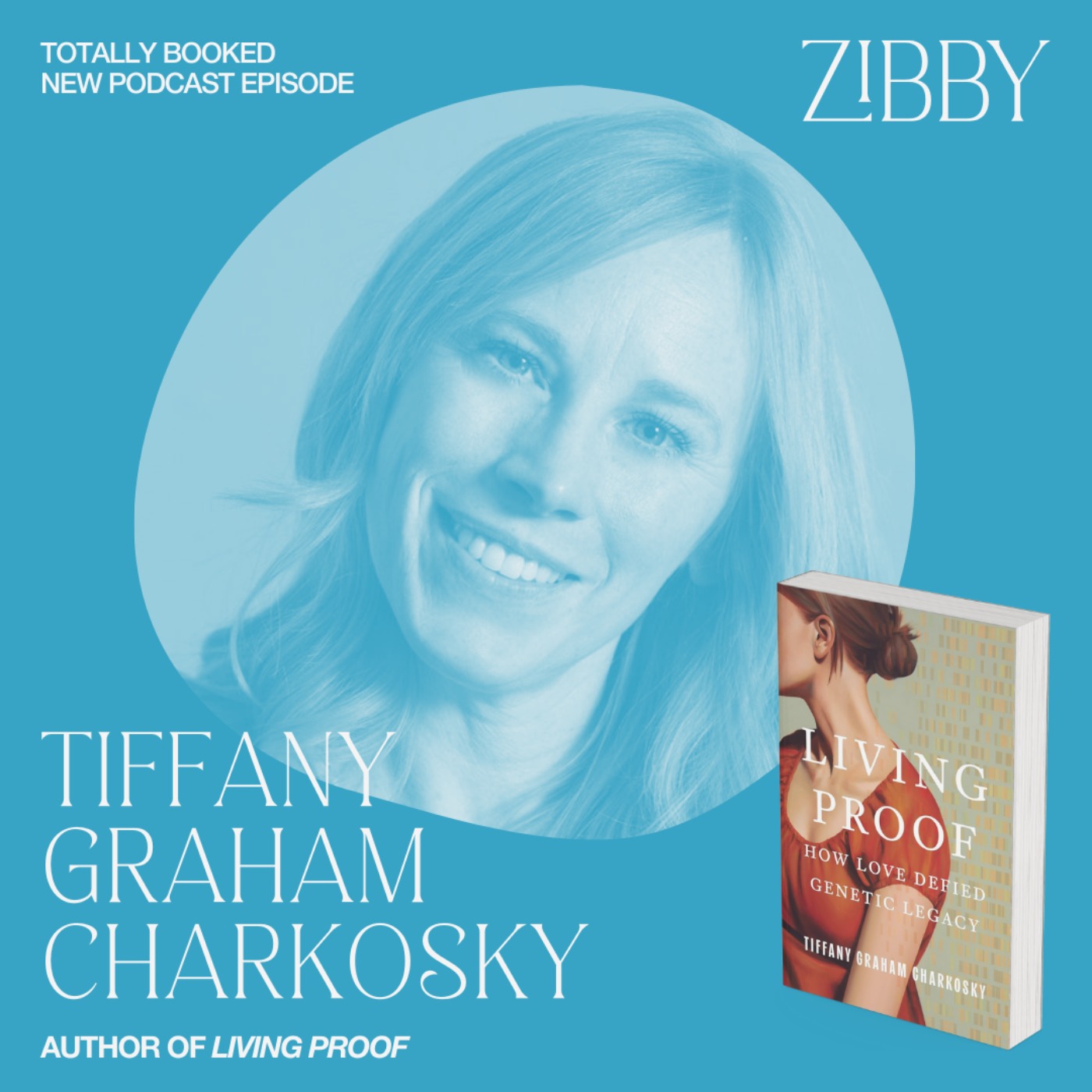
Totally Booked with Zibby
Tiffany Graham Charkosky, LIVING PROOF: How Love Defied Genetic Legacy
00:24:30
Loading summary
Transcript75 lines
- [00:01]
Capital One Advertiser
If you love to travel, Capital One has a rewards credit card that's perfect for you. With the Capital One Venture X card, you earn unlimited double miles on everything you buy. Plus, you get premium benefits at a collection of luxury hotels when you book on Capital One Travel. And with Venture X, you get access to over 1,000 airport lounges worldwide. Open up a world of travel possibilities with a Capital One Venture X card. What's in your wallet?
- [00:27]
Capital One Terms Announcer
Terms apply Lounge access is subject to change. See capitalone.com for details. Did I talk too much? Can't I just let it go? I wish I would stop thinking so much.
- [00:39]
Zibby Owens
Take a breath.
- [00:40]
Grainger Advertiser
You're not alone.
- [00:42]
Zibby Owens
Let's talk about what's going on. Counseling helps you sort through the noise with qualified professionals, and online therapy makes it convenient. See if it's for you, visit betterhelp.com randompodcast for 10% off your first month of online therapy and let life feel better.
- [01:00]
Capital One Terms Announcer
If you're a maintenance supervisor at a manufacturing facility and your machinery isn't working right, Grainger knows you need to understand what's wrong as soon as possible. So when a conveyor motor falters, Grainger offers diagnostic tools like calibration kits and multimeters to help you identify and fix the problem. With Grainger, you can be confident you have everything you need to keep your facility running smoothly. Call 1-800-GRAINGER clickgrainger.com or just stop by Granger for the ones who get it done.
- [01:34]
Zibby Owens
Hi, this is Zibby Owens, and you're listening to Totally Booked with Zibby, formerly Moms don't have Time to Read Books. In my daily show, I interview today's latest best selling, buzziest or underrated authors and story creators whose work I think is worth your time. As a bookstore owner, publisher, author, and obviously, podcaster, I get a comprehensive look at everything that's coming out and spend my time curating the best books so you don't have to stay in the know. Get insider insights and connect with guests like I do every single day. For more information, go to zibbymedia.com and follow me on Instagram ibbeowens. Tiffany Graham Tcharkovsky is the author of Living Proof How Love Defied Genetic Legacy.
- [02:24]
Interviewer
Tiffany's writing explores the dynamics at work.
- [02:26]
Zibby Owens
Within human relationships and has been featured in Gordon Square Review, Mother Magazine, South Dakota Review, and Avalon Literary Review. With a background in creative writing and urban planning, Tiffany has worked in the.
- [02:38]
Interviewer
Arts for over 20 years.
- [02:39]
Zibby Owens
She lives with her husband, two sons.
- [02:41]
Interviewer
And two dogs in northeast Ohio. Welcome, Tiffany thank you so much for coming on Totally Booked to talk about your book, Living Proof How Love Defied Genetic Legacy. Congratulations.
- [02:53]
Tiffany Graham Tcharkovsky
Thank you. I'm so happy to be here.
- [02:56]
Interviewer
I learned so much about you. Sometimes when I read a memoir and then I meet the author, I'm like, oh my gosh. But I know everything. And like, let's just pick right up in the middle here. You shared so much about your motherhood, your, the losses in your life, your husband, your kids, you know, this genetic situation you found yourself in. But really you just took us so in the middle of all of the emotions. It was just. I really, really enjoyed the book. So congratulations. It's very well done.
- [03:25]
Tiffany Graham Tcharkovsky
Thank you so much. It's such a weird place to be in. On the other side of having worked on something for so long and to start seeing that people are having an emotional response to it is just why you write books like this. So thank you.
- [03:39]
Interviewer
You're welcome. Why don't you tell listeners a little bit about what your book is about?
- [03:44]
Tiffany Graham Tcharkovsky
Well, it starts with the discovery that I might have had a genetic mutation. My father calls and tells me that my uncle had genetic testing before he passed away. And all of a sudden all these pieces of my life started to make sense. Having lost my mother when I was 11 and she was only 30, which seemed very weird and obviously terrible at the time. But discovering that she most likely had a genetic mutation called lynch syndrome, which leads to a whole host of early onset cancers, it really made sense. And it also was pretty scary in the sense that I learned I might carry it as well. And I had a two year old son at the time and the worry that I might have already passed something on to him unintentionally. And so the book is really about my journey through the genetic testing process and, and then also rediscovering who my mother was as a mother myself and processing a lot of feelings and fears that I had carried but sort of buried. You know, when you have go through something as a child, I think often you just keep moving and there was no opportunity to keep moving anymore. And it was really a book about learning how to live inside a body that is different than what you thought and how to continue building a meaningful life around it. So I've been working through the genetic testing process and then it really goes through the different sets of decisions that I personally made, which aren't recommendations to others, but wanted to just be really open and honest about what it felt like to have a genetic. A risk for genetic cancers. And then Learning how to kind of live with the miracle of science and build a series of life decisions that I can be proud of.
- [05:37]
Zibby Owens
Wow. My gosh.
- [05:39]
Interviewer
Well, going back to when you were a child and your mother not just passing away, but being very ill for a long time, and you were having to deal with that. And you have one moment in the book where she's quite, quite sick, and you realize, oh, my gosh, she's not gonna make it. Like, she's never gonna get better, even though everyone keeps telling me, like, and telling her, you're gonna be okay. And even later in the book, you talk about how your mother never really accepted that she was going to die, that she was fighting till the last, just wouldn't. There was no sense of peace, really. It was anger, and she wanted to fight it, and she didn't want to go. And that is very hard to cope with. I mean, it's all hard. And I'm so sorry for this loss. Tell me about writing your way through it at this point. Going through it. Just talk about it.
- [06:30]
Tiffany Graham Tcharkovsky
Well, it took a long time, and I think it's hard to go back. And I think this is probably true for all memorists. You can probably relate to this, too. You have to sort of force yourself to sit inside memories that might feel sort of shadowy or, you know, the specific scene that you're talking about where the realization that my mother was never going to get better was really hard. And it lived with me for a long time. And I think what writing this project led me to do was bring the adult experience to what I felt as a child. And that also meant it gave me some compassion for the way that I felt as a child. I now have two children who are older than I was when my mother passed away. And a lot of the writing for this was learning to understand who she may have been and how we might have related to each other. To look at myself without the judgmental eyes of a teenager, a preteenager, and really see just how young I was and how inexperienced at living I was. And so writing this book, I don't want to say it was cathartic, because I don't think anybody should write a memoir as a way of cleansing themselves of an experience. I think that's probably what journaling and therapy and your friends are for. But I think what it did was it helped me find a story inside of all of this and make sense. And it really led to a much deeper understanding of who I am and how I am. And that goes not just for me, but my brother, my sister, my father. And so I think it really helped me have a better sense of empathy for all of us now that we're all, you know, many years down the road from that experience.
- [08:19]
Interviewer
Wow. And you also write about living in Ohio, your commitment to urban planning, and, like, making that place better. And the crazy thing. Well, it's not so crazy, but I happened to be at Oberlin reading this book, and I was like, oh, my.
- [08:37]
Zibby Owens
Gosh, what are the odds?
- [08:38]
Interviewer
I've never been to Oberlin in my entire life, and I read a bazillion books, and yet I was obviously meant to be there.
- [08:44]
Tiffany Graham Tcharkovsky
Reading this book, that makes me so happy because Oberlin is such an important place to me. I didn't go to school there. I moved about eight miles away from there when I was in high school. And Oberlin is a weird, weird and wonderful place. And that it's this amazing liberal arts college surrounded by basically farmland in the middle of Lorain county, which is where my family moved a couple years after my mother passed away. And it's also where I had my first date with my husband. And so it's. You know, these place is really important to me. And I think we're all sort of shaped by the landscape that we live in. And I did end up studying urban planning and still work in the arts. I work for Cleveland Public Library, and we work with artists all throughout the city of Cleveland. And I just feel so informed by it Sounds funny to say I was so informed by this rural space that I lived in, but I think it really gave me a sense of the different kinds of landscapes that can live so close to each other. And I think the metaphor for that, for me, is that we live with all of these different things all the time. All the different versions of me live in the same place at the same time. And it's sort of figuring out what one's getting more oxygen at any given time.
- [10:03]
Interviewer
Well, I think you echo that in the structure of the book too.
- [10:06]
Zibby Owens
Right.
- [10:07]
Interviewer
You have us keep going back and forth to different moments, past, present, which I found made the. The pacing work really well with the book. I mean, as a book, I know it's your life, but just if we're taking it apart as a book, from you being a mom, to you being a child, to you falling in love, to just all the things, one minute you're dealing with your brother and your sister today, and then the next minute, you know, it's your grandfather as a child or whatever. And it's sort of how we think about our lives. Like that is how we go about our day, is that we deal with what's in front of us, then we think about the past, and we go do something now. And so I just felt the way you told the story was incredibly compelling and made the pages really, really turn. And, you know, it just. I felt it worked structurally. I think it worked so well how you did it.
- [10:56]
Tiffany Graham Tcharkovsky
Thank you. I'm so happy to hear that, because life is nothing like a book. It is like a book, and it's not like a book. And I think that that structure is something that took me so long to get to. And any writer, I think, might say, once you find that way, the framework that the rest of your story can hang on, it's just. It opens everything up and you give yourself some constraints to work within. But also it helps with. Well, I'm showing this moment in the past and this other moment in the present. How are they mirroring each other and why are they next to each other? And so I'm really grateful to hear that, structurally speaking, that is something that works for readers who don't know anything about me or my life.
- [11:42]
Interviewer
Yes, 100%. You write about being a mom a lot and being a mom who's pregnant. And you have one moment where you're. You have morning sickness and. Which is such a misnomer, but you were vomiting and you wanted your son Ben to leave because you didn't want to upset him. And of course, knowing your history of watching your mom sick, it's probably just made it all the. All the worse. And you finally had to say to him, no, no, I'm throwing up because there's a baby in here. And you have this moment where his face was crumpling up, and because you were like, I need you to leave.
- [12:13]
Zibby Owens
And he.
- [12:13]
Interviewer
He didn't want to leave. And it's like, it doesn't matter what's going on with our families. Right. You want to be there. Nothing scares you away. But as a mom, our instincts are to protect. So just talk about that for a little bit.
- [12:27]
Tiffany Graham Tcharkovsky
Yeah, I think that, you know, that was a scene that came late in the drafting of this book. For me. It wasn't an odd. There's a couple early scenes with Ben, that being one of them, that wasn't originally part of this story. But I felt like it was really important for me to be able to show, because I try to show what my mother was like and what my childhood was like, but also how our childhood sort of shape how we're responding to our children in any given moment. And I think as mothers, we put a lot of pressure on ourselves to be perfect all the time. We want to be the best possible version of a mother. But anybody who you're with, you know, basically every minute of every day is going to see the good, the bad, the ugly. They're going to learn how to be human by us showing them what being human looks like. And so those scenes were difficult. And they were difficult also because I felt so much guilt during that pregnancy that I wasn't like the mother that I wanted to be, that I was kind of dealing with so many things and that what if. What if I lost this baby? Like, I had all these fears of all, you know, all the things. And so I think that those scenes were really critical for me to sort of grapple with, like, why do I need this to be in here? And what am I trying to show the reader with this information? Because that's the other thing about memoir that is so challenging, is that it's never just what's the experience for me as a writer, but it's why is this beneficial to the reader? And so it's helpful for me to actually hear these responses from people who are reading these books not knowing anything, and they can get a sense from you see why those are in there and what they're trying to move along.
- [14:18]
Zibby Owens
Interesting.
- [14:21]
Interviewer
Really late in the book and not to give anything away, but you basically were given the wrong dosage of a medicine and it had a lot of emotional impact. And I related so much to that. Because when something affects us, especially something related to our hormones in any way, whether it's like a birth control pill when you're younger, like a menopause thing or whatever, when we become irritable or any of those emotional things, we don't view that as a side effect. We don't view that as. We view that as something that is wrong with us or that's just how we're feeling. And thanks to your husband, you were able to figure out that there was actually a cause for your behavior shift, but it's so hard to identify. Tell listeners a little bit more about that.
- [15:09]
Zibby Owens
Today's episode is sponsored by Live it Up. If you are someone who wants real results and not watered down promises, it's time to upgrade your greens game. Most powders out there either taste like grass or overcharge you for hype. Live it up. Super Greens is different. My cabinet is now stocked with so.
- [15:27]
Interviewer
Many different products, and it all tastes good. I have a hard time finding time.
- [15:32]
Zibby Owens
To fit in all of my vegetables. Sometimes I don't even get to eat meals. This is the perfect solution for me and anyone else out there who's really running around trying to just make life.
- [15:42]
Interviewer
Fit it all in and have a good time while you're doing it.
- [15:45]
Zibby Owens
Live It Up Super Greens contains more than 20 superfoods from organic vegetables and natural ingredients, all traceable nutrition designed and third party tasted and did I mention it tastes good? A survey of real Live it up customers who take their greens daily report actual benefits. 98% say it helps them feel healthier overall and 96% say it increased their veggie intake.
- [16:08]
Interviewer
95% say it improved digestion.
- [16:11]
Zibby Owens
Bottom line Live it up delivers premium quality at a price that actually sticks. No gimmicks, no bloated margins. Live it up has become a quick and easy way for me to stay on top of my health. It's such a simple step that fits into my morning routine without any hassle and I love that I don't have to overthink it. One scoop and I am set for the day. Honestly, I was surprised by how good it tastes. Not grassy or chalky like so many others. I actually look forward to drinking it, which makes it easier to stick with. I've noticed I feel more balanced throughout the day when I make it part of my mornings. It gives me that feel good energy I can count on without the crash right now. Get 33% off your first Live It up order when you subscribe at letsliveitup.com booked and use code Booked. You can cancel anytime with a 30 day money back guarantee or to get 15% off when you purchase without a subscription. Head to let's Live it up.
- [17:06]
Interviewer
And.
- [17:06]
Zibby Owens
Use code booked for 15% off your first order. These statements have not been evaluated by the FDA. This product is not intended to diagnose, treat, cure or prevent any disease. Today's episode has been sponsored by Quince. Cooler days call for layers that last and Quince is my go to for quality essentials that feel cozy, look refined.
- [17:29]
Interviewer
And won't blow your budget.
- [17:32]
Zibby Owens
Think $50 Mongolian cashmere, premium denim that fits like a dream and luxe outerwear you'll wear year after year. These are the pieces that'll turn into your fall uniform. I'm eyeing their wool coats. They look designer level but cost a fraction of the price and the quality. Honestly, just as good, if not better because Quince partners directly with top tier ethical factories and cuts out the middlemen they deliver Luxury quality pieces at half the price of similar brands. It's the kind of wardrobe upgrade that that feels smart, stylish and effortless. I am particularly a fan of the fisherman cashmere Mongolian sweater in brown. The light brown is already sold out. I am obsessed and it is so cozy and is a staple. Find your fall staples at quinte. Go to quinte.com zibby for free shipping on your order and 365 day returns. Now available in Canada too. That's quite I n c e.com Zibby Z I b-b y to get free shipping and 365 day returns. Quince.com Zibby.
- [18:41]
Capital One Advertiser
If you love to travel, Capital One has a rewards credit card that's perfect for you. With the Capital One Venture X card, you earn unlimited double miles on everything you buy. Plus you get premium benefits at a collection of luxury hotels when you book on Capital One Travel. And with Venture X you get access to over 1,000 airport lounges worldwide. Open up a world of travel possibilities with a Capital One Venture X card. What's in your wallet Terms apply.
- [19:07]
Capital One Terms Announcer
Lounge access is subject to change. See capital1.com for details.
- [19:13]
Tiffany Graham Tcharkovsky
Sure. So I am on hormone replacement therapy and which is something that, you know, I had never really thought about until I needed to think about. And I was on a dose of medication that was not the right dose for me. It was much too low. And I was, you know, it was a Covid summer. I'm home with my children and my husband and my husband is a teacher. And so they are always home all summer. And I was mad at them the whole summer. Like everything they did bothered me. Everything I did bothered me. And I think that when you are going through those hormonal problems, I could see that like being a moment where you might think, am I in the wrong marriage? Am I in the wrong life? What am I doing here? And that was really, really challenging. And my husband said, you know, tiff, this isn't who you are. You know, I think you need to call your doctor. And I was of course offended by that and you know, quit making the way I feel about, you know, female hysteria. Are we like not allowed to have, you know, I was very, I felt very judged by that. I should also just note that I'm the only woman in the house I live in. I have a husband, I have two sons, I even have two male dogs. And so it was just, I think I was feeling kind of personally attacked. But also that sense of like, I think on the other side of that was, what if he's wrong? And what if this really is who I am now? I think is a scary feeling too. And I ended up having my hormone levels adjusted. And I think part of what your brain does to you is it's really good at convincing you that however you're feeling in any moment is how you have always felt and how you will feel for the rest of your life. And at least that's the way my brain works. And so being able to step back and say, just because this is what my brain is telling me doesn't mean that it's true. And. And it was scary to say, what if I can't trust myself anymore? What if I have to be able to listen to somebody who loves me and I have to trust somebody to like, notice when those calibrations are off? It's putting a lot of like. I think I. Part of the, what I go through in the book is I'm a pretty self sufficient person, but I think that's sort of a trauma response and being able to say, no, I have to let somebody care for me in this way. And I think that that's a hard thing to learn how to do. And I hope that I'm still doing it because it's not a perfect thing that you do once and you keep going. I think it's an active practice.
- [21:45]
Interviewer
And tell me a little bit about your publishing journey because it's not easy to get memoirs.
- [21:51]
Tiffany Graham Tcharkovsky
No, it's not easy to get memoirs out there. I submitted my book to, you know, 60 agents over the course of maybe two years. And I feel like I want to say to anybody out there who's trying to get a book published, I sent my query out in batches and I, you know, batches of like between 4 and 6. If I was getting no bites on a query, I would kind of pull it back and say, how can I tweak this a little? I think there's a lot of advice. Just send out 100 and wait to see what happens. I felt like if I send them out in small batches and I'm getting nothing, then maybe I can tinker with it a little bit more. So I sort of took that approach that you get one shot with every agent who you query. So I just kept saying, if I'm getting nothing, then is it the manuscript or is it the query? And I just sort of kept going back and forth on that. In my case, you know, very early on I wasn't even getting requests for the manuscript. So I'm like, something's not working in the query, so you kind of focus on that. I ended up getting an agent in. It was around March or April of 2024, so I had a pretty quick journey. If you say that this has been maybe 15 months or so since that happened, and we went through two rounds of revisions together, I'm fortunate. I have an agent who's pretty early in her agency career but is very experienced in the book world. And so that, to me, was helpful. I really wanted an agent who had some life experience under their belt and kind of would understand. You know, I'm in my 40s. I have a life, a career. Like, I wanted somebody who would kind of get that whole picture. We went through two rounds of developmental or, I'm sorry, of edits, and then we had a plan to go out on submission in fall of 2024, in August of last summer. So August 24, she said, hey, don't be mad at me, but I soft pitched your project to a publisher that had lost a memoir project for next year. Being this year, they're looking for something that's pretty well cooked, and I think your project could be a good fit for them. We worked really hard. We spent about 10 days updating my proposal, making my first 50 pages as good as they could possibly be. So we had been planning on going out on submission in just, you know, about a month or so after that. So sent them everything. They asked for the full manuscript or what I had of the manuscript with the understanding that it wasn't fully done. And then a couple months later, I had an offer for the book from them. And then I spent the entire, like, month of December going through edits with the editor that I had at little a, who's my publisher. And so it was a long process, and then it became a really fast process. And I feel like that's really unusual, especially in the memoir sphere. You see so much about how hard it is to sell memoir projects. I do not have, like, an incredibly robust social media presence. I am pretty well connected, like, in the field of work that I do, and I work at a library, so I do, you know, understand books and authors and public programming and things to that extent. So I do think it was an untraditional process. And I feel very lucky that I had the process that I had instead of sort of having this project be out on submission for so long. But I do feel like it was a matter of having an agent who gave it a lot of attention and really pitched it to the right to editors. Who really wanted to see it and got what I was trying to do. And it's so amazing because I also hear a lot about authors who their book at the end isn't exactly what they thought it would be when they started. And I feel really fortunate because my team did nothing but help make the book a better version of what I always hoped it would be, but was too close to it for that to happen. So my editor was amazing. The whole team has just been incredible. And I'm kind of pinching myself that it's been such a good process so far.
- [26:08]
Interviewer
Really amazing. What would you say to people who also have a genetic. Not to give things away, but I guess it's okay to say, yeah, it's.
- [26:16]
Tiffany Graham Tcharkovsky
Pretty clear on the back cover and why I wrote the book in the first place.
- [26:20]
Interviewer
I know you just, you know, I don't like to read the back. Like, I decide what I'm going to read, and then when I start reading it, I don't like, remind myself. I like to just be totally surprised.
- [26:30]
Tiffany Graham Tcharkovsky
I love that.
- [26:31]
Interviewer
So I wasn't sure you'd have it or not. I was thinking it would be a shorter book if you didn't. But anyway, you know, for people who are living with a genetic predisposition or marker, whatever, what do you say to them?
- [26:45]
Tiffany Graham Tcharkovsky
I say, feel your feelings and live proactively. And for me, one of the things that I really needed to grapple with was that this wasn't a thing that I had done. I didn't do anything wrong. But I think sometimes when you have a health challenge, it becomes a personal failing, I think. And I think that that can go in a lot of different ways. For me, it felt like I was on a path to build the most solid life for myself that I could. And I know that that was in direct response to the childhood that I had. Whatever I can do, I need to be here with my children, was the mindset that I had. And so I think my feeling would be find a really good genetic counselor and talk through what this means for you. One of the things that I really thought a lot about was that we can get all kinds of genetic information when we take these genetic tests, and you can be told you carry a certain genetic variant and there are risks that associated with it. A lot of that comes to you in language that is hard to decipher, what it means for you. And it also doesn't come with any plan of action for learning how to battle the emotional side of things, like, how do I live with this? How do I accept that my future is different than I had thought it might be? And so I think my recommendations would be try to give yourself space to feel what you feel, but don't be afraid to learn more and forgive yourself if you can for however you're sort of responding to these, responding to the emotional piece of it. And don't feel bad if it takes you longer than you think. I think it's not an overnight thing and your feelings change. We all are always sort of changing all the time. And I mean, I know I wrote this book and I'm here talking to you right now. And I had to say to my agent and editor, like, I don't know how to end this book because this is still a story that I'm living through right now. There isn't like an end date to it. And so but I think for me and I hope for others, it's just eyes wide open and knowledge is power, even if knowledge is scary.
- [29:15]
Interviewer
Thank you so much for coming on and thank you. I read every page. I really enjoyed it. I loved learning your story. I felt so invested in the characters, quote, unquote, meeting you. And thank you for sharing it with.
- [29:29]
Zibby Owens
The rest of us.
- [29:29]
Tiffany Graham Tcharkovsky
Thank you. And thank you so much for tomorrow's news. I'm like floored and thank you. And the timing to get to talk with you is just so perfect in that way. Maybe kind of like the way you felt when you were in Oberlin meant to be. Thank you so much. Thank you so much, Tiffany. Bye bye.
- [29:48]
Zibby Owens
Thank you for listening to Totally Booked with Zibby, formerly Moms don't have Time to read books. If you loved the show, tell a friend, leave a review. Follow me on Instagram ibbyowens and spread the word. Thanks so much. Oh, and buy the books.
- [30:11]
Capital One Advertiser
If you love to travel, Capital One has a rewards credit card that's perfect for you. With the Capital One Venture X card, you earn unlimited double miles on everything you buy. Plus, you get premium benefits at a collection of luxury hotels when you book on Capital One Travel. And with Venture X you get access to over 1,000 airport lounges worldwide. Open up a world of travel possibilities with a Capital One Venture X cost. What's in your wallet?
- [30:36]
Capital One Terms Announcer
Terms apply. Lounge access is subject to change. See capitalone.com for details.
- [30:40]
Grainger Advertiser
If you're a custodial supervisor at a local high school, you know that cleanliness is key and that the best place to get cleaning supplies is from Grainger. Grainger helps you stay fully stocked on the products you trust from Paper towels and disinfectants to floor scrubbers. Plus, you can rely on Grainger for easy reordering so you never run out of work.
- [31:00]
Tiffany Graham Tcharkovsky
What you need?
- [31:01]
Grainger Advertiser
Call 1-800-GRAINGER click granger.com or just stop by Granger for the ones who get it done.
- [31:12]
Tiffany Graham Tcharkovsky
ACAST powers the world's best Podcasts Here's a show that we recommend.
- [31:20]
Joanna Coles
Hi, I'm Joanna Coles.
- [31:22]
Tiffany Graham Tcharkovsky
And I'm Michael Wolff.
- [31:23]
Joanna Coles
No other modern American president has impacted the world like Donald Trump. To understand his mercurial whims, we dive deep inside Trump's head.
- [31:33]
Capital One Terms Announcer
Three days a week, Joanna and I deliver behind the scenes, access and recount insider stories. From hidden health concerns to alleged Epstein.
- [31:43]
Tiffany Graham Tcharkovsky
Connections, we unravel the 47th president in.
- [31:47]
Capital One Terms Announcer
A way you will not find anywhere else.
- [31:50]
Joanna Coles
So search for Inside Trump's Head wherever you get your podcasts. New episodes are released three times a week on all major podcast platforms, or tune in a day earlier on The Daily Beasts YouTube channel.
- [32:06]
Tiffany Graham Tcharkovsky
Acast helps creators launch, grow and monetize their podcasts everywhere.
- [32:12]
Interviewer
Acast. Com.