Loading summary
Transcript56 lines
- [00:01]
A
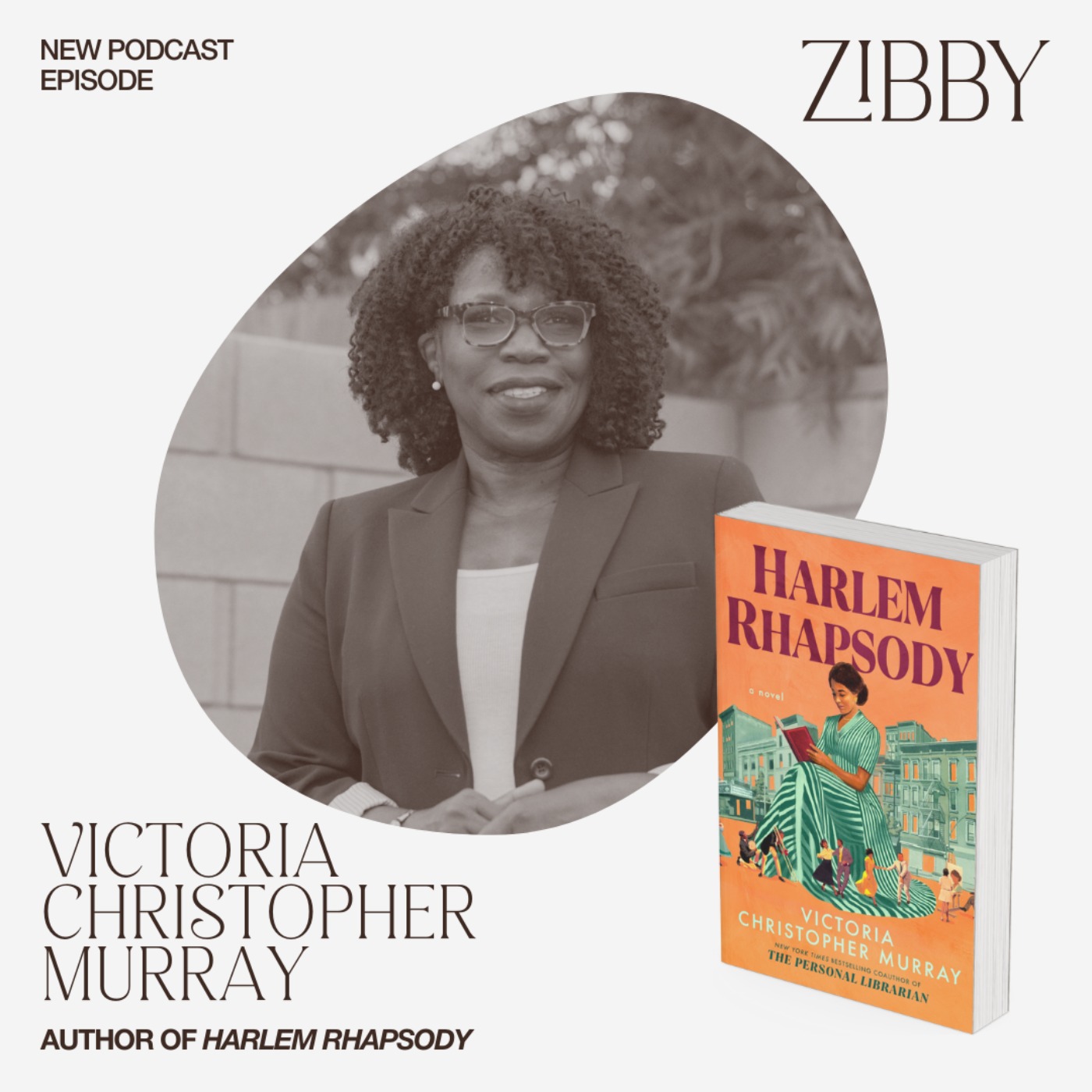
Hi, this is Zibby Owens and you're listening to Totally Booked with Zibby, formerly Moms don't have Time to Read Books. In my daily show, I interview today's latest best selling, buzziest or underrated authors and story creators whose work I think is worth your time. As a bookstore owner, publisher, author, and obviously podcaster, I get a comprehensive look at everything that's coming out and spend my time curating the best books so you don't have to stay in the know, get insider insights and connect with guests like I do every single day. For more information, go to zibbymedia.com and follow me on Instagram. Iby Owens Victoria Christopher Murray is the author of Harlem Rhapsody. She is a New York Times bestselling author of more than 30 novels, including the Personal Librarian, which, by the way, I had her and her co author Marie Benedict on to discuss. So you can go back and listen to that. It was a Good Morning America Book Club pick. And the first ladies, which was Target's 2023 book of the year, both of which she co authored with Marie Benedict. As I said, she is an NAACP Image Award winner for outstanding literary work for her novel Stand you'd Ground, which was also a Library Journal best book of the year. She holds an MBA from the NYU Stern School of Business. Welcome Victoria. I'm so glad you're coming back on my show to now talk about Harlem Rhapsody. Congratulations. So awesome. Thanks for introducing us to Jesse and this whole time period and the many other authors that she's created and inspired and what a story that you found and told so well. So thank you.
- [01:45]
B
Oh, thank you for having me back. Isn't she amazing?
- [01:48]
A
Amazing.
- [01:49]
B
Jesse Redmond Faucet was just so amazing. And you mentioned to be the number of authors that we know them and she discovered them but we don't know her.
- [02:00]
A
And the fact that at the end she couldn't even get a job in publishing after that. I mean, I could not believe it.
- [02:06]
B
Yeah, well, it was 1925 when she left and she really wanted a job in publishing, but. And she was willing to work at home so that no one would see her in the office. And she couldn't get a job in publishing and had to go back to teaching.
- [02:22]
A
Okay, well back up and tell everybody who is this her secret love affair, her place in history, her publication that.
- [02:30]
B
She worked on, everything about Jesse. She was an amazing woman. If I had to sum it up in one word, I would say that she was the woman who ignited the Harlem Renaissance. She was the woman who got it started in more ways than one. It wasn't just that she discovered all the writers that we know. She discovered Countee Cullen when he was 16, Langston Hughes when he was 17. She was a mentor to Nella Larson, all the writers of the Harlem Renaissance. She met them, discovered them, edited them and published them first before anyone else. And so that's what people would say is her claim to fame. We would know Langston Hughes without her, because she probably published his first 20 to 25 poems, if you could believe it. But what she did most was she was a writer herself. She was an author herself. She wrote the very first novel of black characters who were in the middle class. And to be. What was so amazing about that to me is I write novels about black characters in the middle class and had never heard her name. And I stand on her shoulders. And it was actually the launch party for her novel, her first novel, There Is Confusion that started the Harlem Renaissance, but it was a movement that wouldn't have continued if there weren't authors to follow her. And all the authors that followed her were the ones she discovered. Amazing. Just an amazing story.
- [04:13]
A
And you share in the book how you included how you found all this information, the rabbit hole you went down, even scenes at a party that you're like, I didn't make this up. This actually happened.
- [04:26]
B
Oh, letter. You know, the research was so interesting because I first heard about her, just her name in something that Langston Hughes wrote in one of his books, saying that Jesse Redmond Fawcett was the midwife of the Harlem Renaissance. But I couldn't find any information on her. And then I heard a podcast that was called Harlem on My Mind, and it talked about Jessie Redmond Fawcett, this amazing woman who was the literary editor of the Crisis magazine. And one of the very first things I began to look up was who were all the literary editors of the Crisis magazine? Because why didn't I know her? Well, there were no other literary. She was never a literary editor before her and never one after her. When she left the Crisis, they stopped publishing Langston and County, and all of the literary section disappeared. She was the person that put it together. And then she was the one who ran the very first. She was running the Crisis magazine for W.E.B. du Bois, who was one of the great thinkers and activists of our time. He was the first black man to graduate from Harvard university with a PhD and he had this Crisis magazine that was the periodical that told everything to the black community what was going on all across the country that was really the only magazine they had at the time. But he also founded a magazine for black children called the Brownies Book. And even to this day we still don't have another one like that. It didn't survive, but it was wonderful for the time that it was there. And she ran both the children's magazine and the Crisis magazine that is still out today. Still out today.
- [06:26]
A
Oh my gosh, that is amazing. Tell me about when you were doing the research and especially. Well, not especially, but I found it very interesting, this whole love relationship and how other biographers have handled it, how you chose to handle it and all of that.
- [06:41]
B
You know, I didn't realize how big it was, the way I handled it until after I. Until after I handled it and it was kind of published. So. Because there really were three people, well, two people before me who have addressed this or not addressed this. There was someone who did a paper on her for I think it was a dissertation that got published and she chose not to mention it. And then David Leverling Lewis, who wrote two Pulitzer winning, Pulitzer Prize winning biographies on W.E.B. du Bois, chose to not only mention it, he mentioned all of Du Bois affairs. And the only person he named was Jesse Redmond Fawcett. That was the only one he made. So he made a distinction of her from the others and he always called them the others. He would say his wife Nina became friends with the other women, but he named Jesse several times in the book and he called them star crossed lovers and he said they had a parallel marriage. So that's as far as he went in the biography because it was a biography of. Of Du Bois entire life. It wasn't just about them. And so I took that because star crossed lovers, the only time I'd ever heard that term was in high school with Romeo and Juliet.
- [08:10]
A
That's what I was thinking.
- [08:11]
B
Yeah, that's what I think. Everybody, when you hear that, you think Romeo and Juliet, they don't die at the end in this book. But you think that I had no ideas of me, what a parallel marriage was. I had to kind of go with that. So I took that, I took letters that I found other people talking about them. I took articles, especially from jstor, that talked a little bit about how women described him and why they were involved with him. And then there was this one letter that was outside of the storyline, but one letter that Du Bois wrote to Jesse where he said, I sat outside your apartment last night in my car and I saw that your light was on and I wanted so Much to come in. That's not. That's not the typical letter that you kind of write, your co publisher, your literary editor. So I took it and then I created, because it was historical fiction, what I imagined their relationship to be based. Anchoring. Anchoring it in the history. I didn't want to do anything that I felt was outside of what people knew or and didn't want to talk about. It wasn't until after I published it that I was like, wow, this is kind of big. You know, it's kind of big to do this. But I based it all on. On letters. But the biography, research articles, scholarly articles that were written, always mentioning. And one of the things that I found most common between some of the articles about Jesse and Du Bois was that they were always together. People said that all the time. They were always together. And I guess that was the parallel marriage part. So I just kind of built a story around that, to be honest. I thought about trying to write it without that. The challenge with it was there was a plot hole. Why was she in New York? Why was she the only literary editor? Why did they spend so much time together? And they spent all of that time together and nothing happened? I didn't think. And so one of the things, even when I was writing contemporary fiction, I always stayed true to the characters. Even when I'm making them up, I want them to be as authentic, as real as possible. And there was no way to write this story without that storyline.
- [10:52]
A
Yeah, it would be a totally different book. I mean, you must have been like, gasping. I feel like if it were me going through this research and finding certain things, I would have been like, oh, my gosh, no way. Like, wanting to tell everybody, like, look what I found today.
- [11:08]
B
Well, it was one of the very first articles I found was in a research library in California. I was there with another friend who was researching historical fiction. And so we had downloaded a lot of articles. And she's sitting at. We're at Starbucks now, sitting, and she's doing her research. And I kept reading, like, clutching my pearls on how women described him. Like, I can't use the words here. And I kept stopping and say, rashonda, look, read this. And she was like, there were articles that I read with my hands over my eyes, peeking through because I couldn't believe how forthright some people were on some of the things that they said and clutching. So, yes, it would have been a totally different book. The book isn't about their affair, but their affair makes you question, would there have been a Harlem Renaissance without their affairs. And I think you could say maybe not.
- [12:06]
A
Oh, my gosh. Well, it's like a gold mine. What you found here and the way that you told it right. It's all these lost stories of the things that happen in history that we just. We don't realize how instrumental certain people were, and they just get lost. It's crazy.
- [12:22]
B
Yeah. Isn't it amazing? And they're hidden and they're important people.
- [12:27]
A
Yes.
- [12:27]
B
The Harlem Renaissance was this major literary movement. I may not be here as a writer without the Harlem Renaissance. Yet the woman who ignited the whole thing was lost in history. Now, some of it, I think, actually began with Du Bois. I think some of it began with they didn't have a good breakup. They had a better breakup in the book, but they didn't have that great a breakup, even though he stayed in her life. And so I think he began when people would come back and talk to him about certain things. He would say, I did this, I did this, I did this. And because he's given credit for things that I know, I have research that he didn't do. She did. She did so. He did not discover Langston News. He did not.
- [13:18]
C
Today's episode is sponsored by Acorns. Here's a fact that may not surprise you. 66% of men are investing in the stock market, compared to just 48% of women. Here's another one that won't surprise you either. Multiple studies have shown that women are better investors than men. Why? Because men are overconfident and women actually do their research. The investing gap means less. Women have the chance to build wealth now and can have huge repercussions down the road when it comes time for them to retire. The good news is, is that Acorns make it easy for everyone to start investing. I've been using Acorns for over a year now and have absolutely loved how easy it is to use the returns that I've gotten and absolutely everything about it. Acorns is a financial wellness app that makes it easy to start saving and investing for your future. You don't need to be an expert. Acorns will recommend a diversified portfolio that matches you and your money goals. And you don't need to be rich. Acorns lets you get started with the spare money you've got right now, even if all you've got is spare change. Sign up now and join the over 13 million all time customers who have already saved and invested over $22 billion with Acorns. Head to acorns.com books or download the Acorns app to get started. Paid client endorsement compensation provides incentive to positively promote Acorns Tier 1 compensation provided investing involves risk. Acorn Advisors LLC and SEC registered investment advisor. View important disclosures@acorns.com Books Today's episode is sponsored by Wayfair. After the Holiday Hustle There is nothing like giving your home a little tlc. Whether you're tidying up, clearing out, or just want some new looks to start the new year, Wayfair has got everything you need, all within your budget. I am obsessed with Wayfair. I used Wayfair to decorate both Zivi's Bookshop in Santa Monica and my office for Zivi Publishing here in New York City. I love the items. They are all such high quality. The couches are soft and beautifully constructed and the chairs and everything for the office. All of our items are first rate. They came so quickly and were exactly as advertised for such a great price. I'm obsessed and I know you will be too. Whether it's for your home or your office, some spring accents, lighting, art, entry tables, rugs, holiday storage closet, organization, appliances, accessories. They have everything and it's so convenient. The huge selection of home items that Wayfair has makes it easy to find exactly what's right for you. There's something for every style and every home, no matter your space or budget. Wayfair makes it easy to tackle your New Year's home goals with endless inspiration for every space and budget. Whether you need a light refresh or an organization overhaul. Plus free and easy delivery. Even on the big stuff. They'll even help you set it up. So give your home the refresh it needs with wayfair. Head to wayfair.com right now. That's W A Y F A I R.com Wayfair Every style, every home.
- [16:41]
A
So what else? I feel like it's not going to end with this book. Like what else are we going to do to honor Jessie and get her into the mainstream and you know, are you now like advocating like there should be a center? You know what I mean?
- [16:54]
B
I know, I know. Well, one of the things I am doing not on my tour at the beginning part of the book, but maybe in the fall is I really would like colleges to become very aware of her. And there are many colleges. I was at a school recently just speaking and one of the professors came up to me and I spoke a little bit about Harlem Rhapsody and one of the professors said I majored in the Harlem Renaissance and she said, I don't understand why I didn't know her name. And she said it made no sense to her because one of the things that she had focused on were the white women of the Harlem Renaissance, because they would have. But that's something else we don't know. There would not have been a Harlem Renaissance without the white women who were patrons, who allowed authors like Zora Neale Hurston and Langston Hughes and Jean Toomer to actually go out and write freely without having to think about it. Langston Hughes would have never written his first novel. He would have never been able to take the time to write his first novel. So one of the things that I hope this novel shows is the importance of everybody in the Harlem Renaissance movement. And I want to take it down to colleges first and really do a tour of speaking about this book, speaking about the Harlem Renaissance as a whole. And it was that it was much bigger than what we've been taught that it was.
- [18:28]
A
And you said in the book that you went to Harlem and stayed at a hotel. You were like, harlem Renaissance.
- [18:35]
B
So the first time I stayed in an aloft hotel, the other, the new hotel was being built, I didn't know what it was. And then when they opened it and it was the Renaissance Hotel, I was like, oh, y'all are playing Harlem Renaissance, right? And it's right. You look out the window and you look down at the Apollo Theater. It is right in the center. So I go there and stay there all the time now because I spent my most like five weeks up there researching in the Schomburg Library, which was the 135th Street Library in the book, it's the library of the Harlem Renaissance. And Langston Hughes, his ashes are there in that library. It's so historical. And I'm actually going to get to do a signing there. So I'm excited about that. I'm very excited. I feel like I'm taking Jessie home to that. So that is. It's really good. But I am advocating that people need to know her name. They need to know her. And we'll see what happens after I do the college tour.
- [19:37]
A
What about any family members of hers?
- [19:40]
B
I haven't. No one I've met yet. With my last historical books, the family always kind of comes out afterwards. You know, they kind of come out. And we've been really blessed to have family members come out With a book that I wrote with my co author Marie Benedict, the First Ladies, we had the opportunity to meet the granddaughter of Eleanor Nancy Roosevelt Ireland and She invited us to speak at the FDR Library and told us that she was so pleased with our depiction of her grandmother. So that's been good. And then we met one of JP Morgan's great grandsons in his 90s now, and he thought the book was a hoot. He kept saying that book was a hoot. And we're like, okay, well, that's not quite what we were going for, but at least you loved it, you know.
- [20:35]
A
Oh, my God.
- [20:37]
B
He kept saying in the interview when we did a zoom with the board of the Morgan Library. And when he got on, he was like, oh, I love this book. It was a hoot. And Marie and I kind of looking at each other saying, okay, that wasn't quite what we were aiming for, but he must have said it 10 times. He loved the book. So we've had good things. And what I've tried to do, I did run my book past Historians because I really did want to honor. Even with the affair, I wanted to honor Jesse so much and W.E.B. du Bois as well, but I wanted to honor her because she's so important to so many of us.
- [21:22]
A
Well, it's amazing. And, you know, it brought the time to life and the people to life and emotions that you can still have today. You know, there's authenticity of longing, and, you know, all of that is still very much, you know, very much going on today.
- [21:40]
B
You know, one of the things that I found so, so fascinating was the parallel of her life and today, like, the biggest decision, the choices she had to make, was could she have this career and a family? And she decided very early on she could not. Her greatest love, I think, was languages and literature. She would rather speak French than English. And she would have. And one of the things I didn't get to depict as much in the book was she would have these weekly literary salon parties at her home where Langston said there was lots of food but short on the wine. And everybody would speak French. Everybody would speak French. Some of the letters that I discovered were in French.
- [22:32]
A
You had the part about how she had been dreaming in French. And I once spent a summer in France when I was in high school, and I also was dreaming in French by the end. Now I can barely speak it anymore, but I understand everything. I know, but I was like, wow, this is crazy. I didn't know what that meant until it happened, but, yeah.
- [22:50]
B
And I've never dreamt in another language, But I did a festival one time in Dubai with authors from all over the world and a gentleman, one of the guys on the panel with me from Morocco, he and I are still friends. He spoke three languages, and he said he wrote in one, he spoke English, and he dreamt in the other.
- [23:14]
A
Wow.
- [23:14]
B
And I can't even imagine. So you were really blessed to get to be able to dream in French, I think.
- [23:21]
A
Yes.
- [23:22]
B
I think that must be so fascinating.
- [23:25]
A
Yeah. And then have lost everything. But that's okay.
- [23:29]
B
That's okay. You have the memory of that. You have the memory of that.
- [23:32]
A
I know I have the capability, which means anyone has the capability, so I love that. So I know you're totally focused on Harlem Rhapsody at the moment, but knowing the timing of publishing, are you already working on the next thing? Is that almost done? Are you working with Bria again? And I actually just interviewed her this morning, so I feel like I'm having a stay with the two of you.
- [23:54]
B
Yeah. So, yes, Marie and I have just finished the first draft of our third novel together. Really fascinating story. So we're very excited about that. So we'll be in the editing stage of that very, very soon while we're both on tour for our new solo books. I missed her while writing this book because it's so much fun to have a partner with you. And then I will be starting on my second solo historical fiction. I'm not sure I'm going up to Sag harbor, so I'll give you that little bit of a hint to check out something I heard recently.
- [24:32]
A
Interesting.
- [24:33]
B
Interesting.
- [24:34]
A
Well, I also this morning interviewed Jessica Soffer, who wrote a book called this Is Not a Love Story, and she lives in Sag harbor. So if you want me to put you in touch. I'm sorry, this is a love story. Not. This is not a love story. This is a love story. And you have books coming out around the same time. In fact, the same day, even every fourth. So I'll put you in touch on email.
- [24:55]
B
Yes, that would be perfect. That would be perfect. Yes. So I am working because, like you said, the way publishing works. I mean, you know for sure the way publishing works. We have to get started so far ahead of time. So we're already. Harlem Rhapsody. The characters are kind of already trying to slip away from me, but I love Jesse so, so much. Loved her so much that she stays with me.
- [25:21]
A
Amazing. Well, thank you for introducing the rest of us to. In the world to her and her greatness and influence and just the power of what one woman can do and what one relationship and one publication and how it can change history, really. So it's really great. Yeah.
- [25:39]
B
You could change this world with words.
- [25:41]
A
Changing the world with words. I like it.
- [25:43]
B
Yeah.
- [25:45]
A
All right. Well, Victoria, thank you. And thank you again for just being so amazing and supportive on all fronts of my life and so much more. So thank you.
- [25:53]
B
Well, thank you. And thank you for being such a good friend to me and understanding and giving me the information I need that means everything to me.
- [26:01]
A
Anytime. Okay.
- [26:03]
B
Good luck.
- [26:04]
A
Congratulations. Bye. Bye.
- [26:05]
B
Thank you. Bye.
- [26:05]
A
Bye. Bye. Thank you for listening to Totally booked with Zibby formerly Moms don't have time to read books. If you loved the show, tell a friend, leave a review. Follow me on Instagram ibbeowens and spread the word. Thanks so much. Oh, and buy the books.