Loading summary
Transcript52 lines
- [00:01]
Zibby Owens
Hey everyone, it's Zivi. I am so excited to tell you about something I've created just for you, the Zip Membership Program. ZIP stands for Zivi's Important People. It's for anyone who loves books, stories and wants a little peek behind the scenes at what I'm up to and what's on my mind as a Zip member. You'll get exclusive essays, a new podcast called Zivvy's Voice Notes. No interviews, just usually discounts at Zibby's Bookshop, a free ebook, and more perks. I wanted to create a space to connect authentically and deeply, and I'd love for you to be part of it. If that sounds like your kind of thing, become a Zip today. You're already important to me. Now let's make it official. Go to zibioens.com and click subscribe. And if you already subscribe, you can upgrade to the membership program. And now onto today's episode of Totally Booked with Zibby. Thanks for listening.
- [00:56]
Capital One Advertiser
With no fees or minimums on checking accounts, it's no wonder the Capital One bank guy is so passionate about banking with Capital One. If he were here, he wouldn't just tell you about no fees or minimums. He'd also talk about how most Capital One cafes are open seven days a week to assist with your banking needs. Yep, even on weekends, it's pretty much all he talks about in a good way. What's in your wallet? Terms apply. See capitalone.com bank capital1na member FDIC.
- [01:26]
Blue Apron Advertiser
Father or should I call you Steve? Since it's a new year, maybe we should start cooking fresh with fewer smoke alarms this time. Your cooking's improving, but I can see the stress in your eyes. Anna's mom used this Blue Apron assemble and bake thing during our playdate. Pre chopped ingredients, over 40 grams of protein and just one pan to clean up. She just tossed it in the oven and boom plating like she's got followers. So go to blue apron.com steve make 2026 the year you win din blue apron get 50% off your first two orders, plus free shipping with code listen 50 terms and conditions apply. Visit blue apron.com terms for more.
- [01:56]
Equip Health Advertiser
We live in a culture obsessed with dieting, weight loss and exercise, and that can make eating disorder behaviors easy to miss. But the reality is, eating disorders are serious mental illnesses that take a major toll on your health and your life. But recovery is possible. Eating disorders are more common than you might think. Chances are you know someone who is struggling with one or maybe you're struggling yourself. If you're concerned about an eating disorder in yourself or a loved one, I want to introduce you to Equip. Equip is a fully virtual evidence based eating disorder treatment program that helps patients achieve lasting recovery at home. Every Equip patient is matched with a multidisciplinary care team that includes a therapist, dietitian, medical provider, and mentors, and you get a personalized treatment plan that's tailored to your unique goals and challenges. Equip treats patients of all ages and all eating disorder diagnoses. It's covered by insurance and there's no wait list. If you think that you or a loved one could be struggling with an eating disorder, don't wait to get help. Visit Equip Health to learn more. That's Equip Health.
- [03:05]
Zibby Owens
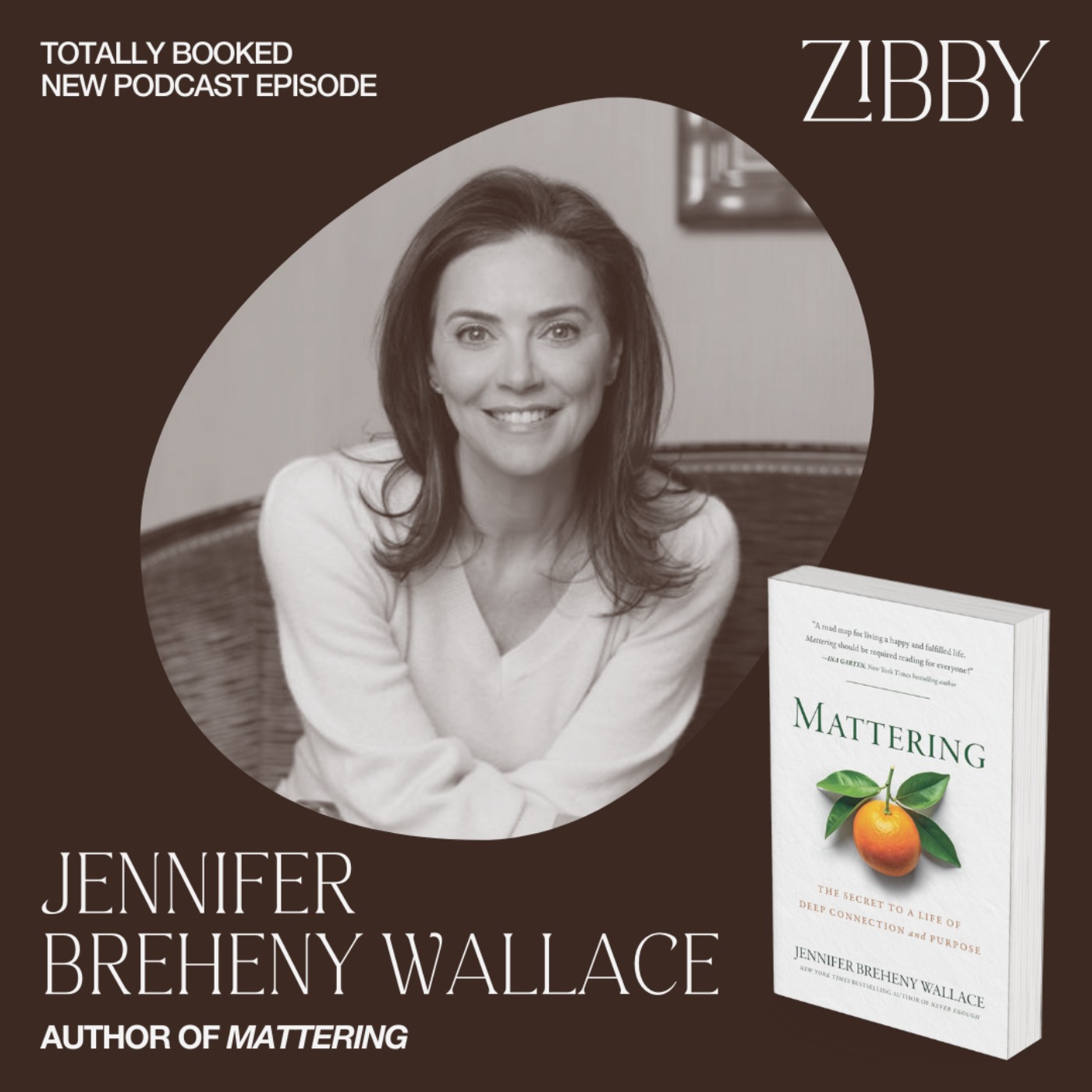
Hi, this is Zibby Owens and you're listening to Totally Booked with Zibby, formerly Moms don't have Time to Read Books in my daily show I interview today's latest best selling buzzies, underrated authors and story creators whose work I think is worth your time. As a bookstore owner, publisher, author and obviously podcaster, I get a comprehensive look at everything that's coming out and spend my time curating the best books so you don't have to stay in the know. Get insider insights and connect with guests like I do every single day. For more information, go to zibbymedia.com and follow me on Instagram ibbeowens Jennifer Briheny Wallace is the author of the Secret to A Life of Deep Connection and Purpose. This episode was recorded live at the Minnie Rose Boutique where we had a Zivy's Bookshop pop up for three months. Jennifer Wallace is an award winning journalist and the author of the New York Times bestselling book Never Enough When Achievement, Culture Be Becomes Toxic and what We Can Do about it, which was named an Amazon Best Book of the Year. Wallace has contributed to the Wall Street Journal and the Washington Post. She began her journalism career in television at 60 Minutes and lives in New York City. This is her third time on the podcast and as we discuss, she was my second guest when I first started this show.
- [04:30]
Zibby Owens (Interviewer)
Welcome Jenny. Thank you so much for coming on Totally Booked to talk about your new book, the Secret to a Life of a Deep Connection and Purpose.
- [04:38]
Jennifer Briheny Wallace (Author)
Thanks Zibby. Thanks for having me.
- [04:40]
Zibby Owens (Interviewer)
So Jenny and I have known each other for a long time and fun fact, she was guest number two on my podcast when I started and you didn't even have a book then no.
- [04:50]
Jennifer Briheny Wallace (Author)
And I can't even remember what the article was. Yeah. Was it about gratitude? Maybe, Maybe, maybe. Yeah. But that was a long time ago and Zibby had just gotten her yeti microphone and we were sitting in your office and I was like, how do you know how to do this? How many years ago was that?
- [05:05]
Zibby Owens (Interviewer)
So seven and a half.
- [05:06]
Jennifer Briheny Wallace (Author)
And how many interviews do you think you've done since then? Have you ever counted?
- [05:09]
Zibby Owens (Interviewer)
2200.
- [05:10]
Jennifer Briheny Wallace (Author)
Oh my gosh, Zibby. 2200. Yeah. Wow.
- [05:14]
Zibby Owens (Interviewer)
I do them every day.
- [05:16]
Jennifer Briheny Wallace (Author)
Extraordinary. Wow, what a practice.
- [05:18]
Zibby Owens (Interviewer)
And you have had a best selling, massive hit book, Never Enough, and now this one, which is going to follow in its footsteps. So good. I am obsessed with this book and everything behind this book and the company that's founded around it. Okay, let's dig in. What is mattering about? How did you come up with this whole thing? Tell everybody.
- [05:39]
Jennifer Briheny Wallace (Author)
So for the first book, Never Enough, it was about achievement culture and achievement pressure and why our kids childhoods felt so different than our own growing up. And so for that book, I went in search of the kids who were doing well despite the pressure to see what they had in common. What was home life like for them and how did they experience school, what did they see as their sort of role in the wider community. And what they had in common was this idea of mattering. Not my idea, it's been around since the 80s and studied in academia. But it's the idea that they felt valued for who they were, deep at their core, and that they were given an opportunity to add value back. The kids who really were struggling the most were kids who felt like they're mattering. Their sense of feeling valued was contingent on their performance. If they got on the A team, what college they got into, et cetera. But the healthy strivers, as I call them in the book, really had this deep sense of mattering. So when they failed, when they didn't get into the college they wanted to, when they didn't make the team, those setbacks did not feel like an indictment of their worth. They felt worthy, no matter what. And as I was interviewing. So this book took me across the country. I interviewed hundreds of people, parents, families, and we had these really intimate conversations where I was at their kitchen tables, in their living rooms, riding with them at pickups. And so many of the adults in these high achieving communities were saying they felt like they didn't matter, that either they grew up with parents who really reinforced the idea that you matter when you do well, when you behave well, that Their worth and their value was very contingent on outside forces. Or they worked at companies that made them feel invisible or replaceable. Doctors in major medical centers saying they felt crushed by insurance companies. First responders feeling burnt out, invisible, disconnected from their impact. So, anyway, what I realized, I actually was writing this book at the same time I was writing Never Enough, because I wish I had written this one first. Because how can parents instill this sense of mattering in young people if they don't have it? And their mattering core, as I call it, if that's weak and not sturdy? And so this is the book Mattering I wish I'd written first about how to build this sense of mattering in ourselves and why we need it so much.
- [08:03]
Zibby Owens (Interviewer)
So to go back, mattering can mean something as simple as feeling seen. It means, well, why don't you break it down? Because you have a couple very specific things that make somebody feel like they matter. And it can be something as simple as saying, like, oh, you know, I loved your shoes today. And just, it can be the littlest things to the biggest things.
- [08:27]
Jennifer Briheny Wallace (Author)
So.
- [08:28]
Zibby Owens (Interviewer)
And it's something we all can do to not only help ourselves, but help other people, like, every single day, which is so exciting.
- [08:35]
Jennifer Briheny Wallace (Author)
Okay. Mattering is so mattering. You have felt it at milestone birthdays or when people give you a toast or write you a beautiful card. It's that warm feeling that hits you that you are valued and that you're making some sort of positive impact on the people around you. So mattering is defined by researchers as a meta need or an umbrella term, meaning that it's a need that encompasses other needs. So it involves a feeling of connection, belonging, mastery, purpose. So researchers who have been studying it say that after the drive for food and shelter, it is the need to matter that drives human behavior, for better or for worse. So when we feel like we matter, we show up to the world in positive ways. We want to contribute, we want to give back. But when we are chronically made to feel like we don't matter, we can withdraw, become anxious, depressed. Some of us might lash out in anger. Think about school shooters. I think about road rage, online attacks, political extremes. These are desperate attempts to say, I'll show you I matter. We. We have this need, and it is going unmet to dangerous consequences. To me, it's at the root of the loneliness and the burnout that so many people are experiencing. So how do we build back this sense of mattering? Researchers have been studying it since the 80s, and they have discovered ingredients that make Us feel like we matter and make other people feel like they matter. And I've put it into a simple framework called sediment. Significance. It's not in the book, but it's what I do when I talk about it because it encapsulates the four main ingredients. Significance, appreciation invested in depended on. So significance. What does it mean to feel significant? Yes, milestone birthdays, big toasts, retirement parties make you feel significant. But it's really we crave to matter in the everyday. It's somebody noticing when we're absent at a mom's night out and texting and saying, we miss you here, that you have that you fit and you're like an essential piece to the puzzle of the world around you. And when you're not there, you are missed. So significance is in these teeny tiny moments, it's feeling known. I was at a national conference where a teacher was winning an award. But what made him tear up was that his colleagues brought a huge jar of M&Ms. And they said, this is the real gift. The award is nice, but this is what he looks for every day at three. It's feeling known that you are remembered. So appreciation. What kind of appreciation really reinforces a sense of mattering? So let's say you have one of these beautiful sweaters and somebody gives it to you as a gift. You can say thank you for this beautiful sweater. I love it. It's so generous. Or you can give appreciation that really feeds a sense of mattering. And that would be something like thank you for giving me this gorgeous sweater in my favorite color blue. And you know I love many rose and it's my favorite store. Thank you for just always being so generous and knowing who I am and what a generous friend you are. So it's reinforcing what you appreciate about the doer, not just the deed invested in. It's having people that can go through life with you and feel a set like. Like Zibby has invested in my in never enough. I remember when we were doing the interview, you said to me, this is going to be a bestsel. And I said, zibby, I have no idea, but I appreciate you. But Zibby was invested in that and I felt her investment. I will also say on the other side of investment, we know how important it is to have people in our lives who are invested in our goals and support us through setbacks. But we often don't talk about the gift that we get from investing in other people. And I often say to my kids, one of the best ways to Double, triple, quadruple. Your joy is, is to get joy from your friends successes. And I will say that 90% of my joy comes from the people in my life and their successes. And that idea of getting joy from other people's joy is sometimes beaten out of us in our zero sum culture today. But I will tell you, we are wired to get that joy, tap into it, because, boy, is that an energizing force. And then the last ingredient is depended on is knowing that people rely on you. They depend on you, meaning that if you're not there, you're missed. So, you know, it could be as simple as I said, you know, at a mom's night out, saying, we really miss you here. So these are. The said framework is just an easy way of building up these moments of mattering. And it is through these moments that we feel this sense of mattering and that we can unlock it in the people around us.
- [13:23]
Zibby Owens (Interviewer)
It's so amazing. I love this. One of the things that you brought up early on in the book and then sort of continued throughout with sort of the plight of firefighters and their mental health and the disconnection from results of what you're doing so that firefighters apparently go out, I mean, obviously go out fight fires, and then as soon as the people are put in the ambulances, that's it. They don't hear about how they are. They don't get any specific rewards or acknowledgement from those people. There's no feedback loop. They just like go back to the firehouse and then go back out on the next mission. And this can really feel debilitating to them. And in one case later on in the book, you know, really serious mental health consequences because they go through all these traumas and then don't know what happens. So talk a little bit about that and, and what the fire chief ended up doing to instill a sense of mattering. And this is so relevant because we can all do this in our lives in such small and big ways.
- [14:19]
Jennifer Briheny Wallace (Author)
So I was attracted to the firefighting industry because I thought, who are the people who are doing the most purposeful and meaningful work? Firefighters. Right. They must have a strong sense of mattering. I was looking for the people who were doing well, like I did with Never Enough. And I was like, oh, it must be firefighters. And then I started doing research about firefighters and I saw that they were really struggling with burnout. They were also tragically more likely to die by suicide than on the job in their dangerous work. And so I wanted to figure out why. And some of it, much of it is the constant secondary traumatic stress that they endure, often without support, not because the departments don't give them support, but often because firefighters believe they're doers, not talkers, and that it's just part of the job. And so Greg is a fire chief that I connected with in North Charleston, South Carolina, and he was reflecting. Firefighters are often the first to arrive, even at the scene of car accidents or medical emergencies. So they will perform cpr and then EMS will take over, and the firefighters will never know if the person survived, if they ever walked again from the car wreck. And so Greg created a system to track the outcomes of rescues so that his firefighters would know when their actions had saved a life or eased someone's suffering, because he knew something vital. It's not enough to do meaningful and important work. We need to know our work makes a difference. We need to know we matter. And that has slowly transformed the station, and that is something we can do in our everyday lives. I often think about, why is it that we give advice to a friend and they don't close the loop? How many times do we do these small acts, these small acts of care, and never know if it's actually doing any good? And so we can close the loop. We can connect each other to our impact. And I've become very. It just requires a mindfulness. I often think that a lot of why we don't feel like we matter is because the world is so busy and we are going through the world on autopilot just to get through the day. But what mattering does is that it. It forces us to wake up and to notice. And so what I do is when somebody offers me advice or gives me advice, I. I now close the loop. If someone connects me to somebody, I follow up and I say, oh, my gosh, thank you so much for connecting me to her. Here's what we talked about. And this wouldn't have happened without you. These small little actions reinforce our sense of mattering.
- [17:00]
Zibby Owens (Interviewer)
I literally just did that two seconds ago with Mikayla. I was like, by the way, see how you're inspiring. I was like, by the way, you introduced me to a friend, like, five years ago. And now we've become, like, super close friends. And thank you so much for doing that. And we're going on vacation together next week.
- [17:14]
Jennifer Briheny Wallace (Author)
How nice is that? And it's. It doesn't take a huge lift, right? One of the things I talk about in the book is a woman I interviewed who sends a simple note to her friends on their birthdays and colleagues. If it weren't for you in the cart. If it weren't for you, our department wouldn't feel as cozy and cohesive. It's because you plan those after work cocktails and you always encourage us to get together. We, we are such a strong unit because of your efforts. If it wasn't for you, I wouldn't have gone for that job interview. Wouldn't have had the courage to do it. But thank you for believing in me even before I believed in myself. So just a sentence to connect people to their impact.
- [18:00]
Zibby Owens (Interviewer)
And by saying these sentences and making other people feel like they matter, actually you feel like you matter more too. So it's like the easiest way. It's like a two to win win situation.
- [18:11]
Jennifer Briheny Wallace (Author)
It is. I say that if you are ever feeling like you don't matter, you are one action away from mattering again. And if you don't have somebody to text the if it weren't for you, walk out of your house, go to Duane Reade and thank the cashier who is always greeting you with a smile and say, you know, the days are long stays, but your smile warms me up. I don't know, but if you know this, but you have such a positive impact on the world. Boy, that simple little thing. There was a quote that I had, I think in Never Enough by a USC professor and I'm blanking on his name. He tweeted out, if you notice the magic in someone, tell them they might not see that version of themselves. And by saying it out loud, you may unlock that version that they don't even know exists about them.
- [19:02]
Zibby Owens (Interviewer)
So aside from us helping other people feel like they matter and getting the benefit from that, if we're having a day where we're just like giving, giving, giving and just feeling like, oh my gosh, does anything even work? Especially by the way, with kids, because talk about long term projects, which you talk about in the book, like you referenced, your husband works on two year projects and sometimes he cooks a meal to make himself feel like there's an immediate impact. With kids, it's like, when does that project end? And like how do we get any sort of reinforcement? So what, what else can we do with when we are in a long term project situation or we're just not feeling like anything is having any impact and we just want to like go to bed just speaking, asking for a friend.
- [19:46]
Jennifer Briheny Wallace (Author)
So I interviewed a few people about this and one woman I interviewed, Lauren Smith Brody, is a workplace consultant and what she does is she's Created this kind of impact file that she keeps on her Google Doc. Anytime somebody writes her a thank you note, acknowledges her work, even sends her a text, or if her work makes it into the newspaper, she'll clip it and even frame it on her home office. Make like a kind of trophy wall. So we can all connect to our own impact and the small ways that we make a difference. Here's a little practice that you could do tonight, starting tonight. You know, I'm often, I know journaling is like, beneficial, but I have no time or energy to journal. But I do have time for this a little too. Question who made me feel valued today, even in a small way? Did someone let me get the parking spot or let me merge into traffic? You know, it merge into their lane? And where did I add value, even in a small way? There was even one day when I was. I don't know if you guys have ever been to the Costco in Harlem. And it was last Christmas and I was buying like this huge thing and I don't love going to Costco, and I found this amazing parking spot, right? Like, it was so close, it would be perfect. And then this other person was coming towards it and I could see they really wanted it too. And so I let them have it. And I wrote that in my little, my little journal. I added value by giving somebody the prime spot today. So there are, you know, there are little ways that we connect, can connect to our impact. And, you know, when it comes to kids, our kids are not necessarily always primed to appreciate us. Although we can instill that sense of gratitude, we can start to encourage it. I actually wrote an article years ago for the Wall Street Journal on how to raise more grateful children. And one way to do this is to teach them how to think gratefully so not just go through the motions. So even from an early age, we could have them start, and we could do this ourselves, start to appreciate the small sacrifices that people do. These small sacrifices are gifts. And so like, for example, if their babysitter, my babysitter, my children's babysitter, was just marvelous at remembering the exact snacks that my kids loved. And she would go to several supermarkets to find the exact chips that my daughter loved. And when they would be in the kitchen, I would say, oh, my gosh, Alexandra hunted these down for you. How lucky are you to have somebody who is willing to put in that much effort to make you happy? So teaching them the effort behind the gifts, teaching them how to truly appreciate it is not just, just like mattering it's not just good for them. I mean, it's not just good for the person. It teaches them how to build these strong, healthy relationships that will guide them through life.
- [22:37]
Capital One Advertiser
With no fees or minimums on checking accounts, it's no wonder the Capital One bank guy is so passionate about banking with Capital One. If he were here, he wouldn't just tell you about no fees or minimums. He'd also talk about how most Capital One cafes are open seven days a week to assist with your banking needs. Yep, even on weekends, it's pretty much all he talks about. In a good way. What's in your wallet terms apply. See capitalone.com bank capital1na member FDIC.
- [23:07]
Equip Health Advertiser
We live in a culture obsessed with dieting, weight loss and exercise, and that can make eating disorder behaviors easy to miss. But the reality is eating disorders are serious mental illnesses that take a major toll on your health and your life. But recovery is possible. Eating disorders are more common than you might think. Chances are you know someone who is struggling with one, or maybe you're struggling yourself. If you're concerned about an eating disorder in yourself or a loved one, I want to introduce you to eqip. EQIP is a fully virtual evidence based eating disorder treatment program that helps patients achieve lasting recovery at home. Every Equip patient is matched with a multidisciplinary care team that includes a therapist, dietitian, medical provider and mentors. And you get a personalized treatment plan that's tailored to your unique goals and challenges. Equip treats patients of all ages and all eating disorder diagnoses. It's covered by insurance and there's no wait list. If you think that you or a loved one could be struggling with an eating disorder, don't wait to get help. Visit Equip Health to learn more. That's Equip Health.
- [24:14]
Grainger Advertiser
If you're an H Vac technician and a call comes in, Grainger knows that you need a partner that helps you find the right product fast and hassle free. And you know that when the first problem of the day is a clanking blower motor, there's no need to break a sweat. With Grainger's easy to use website and product details, you're confident you'll soon have everything humming right along. Call 1-800-GRAINGER clickgrainger.com or just stop by Grainger for the ones who get it done.
- [24:46]
Zibby Owens (Interviewer)
So essentially the book is like why being Nice Matters to the world.
- [24:52]
Jennifer Briheny Wallace (Author)
Right?
- [24:52]
Zibby Owens (Interviewer)
Because that's really what it is. We all know that we should be nice And I know everybody in this room is nice, and you wouldn't be here if you weren't. But I'm just saying, we know that is like, something we learned early on. Be kind to your friends. Treat others the way you want to be treated. But this is like breaking that down to say, no, this is actually key to your survival. Because without this interconnectedness among us, we feel adrift, and loneliness becomes, like, the biggest problem ever and leads to. To depression. There's nothing. And literally a shorter lifespan as a result. So the impetus for this is just so huge.
- [25:28]
Jennifer Briheny Wallace (Author)
It is. And it's not just to be nice. It is to be intentionally nice. It is to know what it is to tune in to the people in your life, even in small ways, to know what you could do to make them feel like they matter. So I'll give you an example. In my marriage, what would make me feel like I matter is acts of service, as those love languages call them. And I remember in my marriage, I thought I was being so nice by helping my husband straighten his closet every day. These little things that I didn't even say, look at how nice I was to straighten your closet. It was such a disaster. And instead. And I said, you never appreciate my acts of service. And he's like, that to me isn't making me feel like I matter. I'm not even noticing that. What makes me feel like I matter is when you appreciate something that I do out loud. So it's not just being nice. It's a tuning to how others in your life can receive that and feel it. So again, we are so busy in life going through autopilot that we don't take time to tune in to each other. It's not because we don't want to sometimes. It's because we don't have the skills anymore because we've lost them. They've atrophied. Other times, we're just so narrowly focused on our own goals, but it is the skills to being kind and generous and warm and valuing the people around us and just as importantly, adding value. I was speaking at an event last night, and the woman was saying to me, well, what if I don't feel like I matter? Like, what if? Can I just, like, get a break from not making other people feel like they matter? And I said, actually, I said, you have a social responsibility. If you are feeling like you do not matter, to find a way to matter again, that is what it is to be a member of the human race is you have a responsibility even when you are going through deep grief, even when you are experiencing a painful life, transition is to find ways to matter again. And it's not just for you. It's for the world around you. You are an essential piece of humankind. You are needed in this world. Your skills, your talents, your warmth, your kindness is needed. It is central. So we have a responsibility to matter.
- [27:52]
Zibby Owens (Interviewer)
Going back to what you said about tuning in, because I really liked that section in the book because there were such a small, specific examples. Instead of, you say in here, like, you're in bed, it's late at night, you're both on your phones, your husband's there. He's like, hey, did you hear about this? Yeah, put the phone down and literally just like, turn and put the phone down and look. And by even just turning your body a few inches and spending a minute to show that you're full on paying attention has huge impact. And I feel like that's something we could maybe do. And that's pretty. It's pretty easy on the list.
- [28:28]
Jennifer Briheny Wallace (Author)
And the reason that it has impact is not just that you're giving attention. It's that you are deliberately sending the signal that you matter more than my phone. You matter more than the laundry unfolding. If you're really, you know, having a deep conversation with someone. And we live in this world. Tech has been great for lots of reasons, but it has primed us to expect life to be frictionless, because that is what tech is great at, is making purchasing frictionless. It is making our everyday lives easier. And I do think that that has eroded our tolerance for dealing with friction in the world. And relationships are friction, and it is part of the friction that makes them so meaningful. And when it is sometimes annoying, when I'm in the middle of an email and my children need my attention, and I sometimes will say, let me just finish this, because I also want to teach my kids that they're not always the center of the universe. But other times when it's important, I know I have to close the computer and turn the light on them and say, you matter more. And we do need to. That is also part of what makes our relationships feel deep is sending the signal that I am willing to sacrifice on your behalf. We were talking earlier about personal policies. It's one of the ways that I protect my own sense of mattering and try to protect the sense of mattering in my relationship. So one of my personal policies is that unless I am sick, I do not cancel plans. So my friends and I will tell you that Is the single biggest factor I think in deep trusting relationships is I trust you to literally show up for me. If you say you're going to call me, I trust you're going to call me. If you say we're going to get together for coffee, I trust you're going to get together with me for coffee. So prior and what that is is the element that we are giving each other of mattering is that sense of significance that you are so important to me that I am willing to make you a priority in my life.
- [30:48]
Zibby Owens (Interviewer)
So nice.
- [30:49]
Jennifer Briheny Wallace (Author)
And it's, and it's. I'm not saying it's easy, it's simple, but it's not easy. But I will tell you that pushing yourself through the cold like you did today, right. How easy would it have been on a freezing cold day like this to sit at home and read your book or do your emails or get your work done and instead you came out in the cold to sit here and listen to this and how grateful I am in making me feel and Zibby feel like we are priorities. So just the simple act of you leaving your house and coming here today, you have filled a mattering cup for us today and it's showing up, it's going through the, it's accepting the friction.
- [31:34]
Zibby Owens (Interviewer)
And one other thing is that in many of your examples of the people you chose to profile in the book, they started with something so tiny and because they saw a little need, it became something huge. You have an example, one in the education world, but also a grandmother who started making breakfast and just inviting all the Sam's friends to come over and saying like, you know what, Wednesday breakfast, I'm just gonna, I'll just make a couple extra pancakes or whatever. And she kept making the pancakes. The friends knew to come. And then tragically in the book, Sam dies in this horrific accident. And because she had established this whole network for herself and the kids, everyone felt better protected from that. And so you almost like don't even know why, maybe you're doing some things, but if you just like listen to that inner voice like she did and like the teacher did, who was totally unsupported and started reaching out to other teachers. As soon as you start reaching out and feeling like things are good, I feel like the universe is somehow rewarding you for that.
- [32:41]
Jennifer Briheny Wallace (Author)
Yeah, I think that's a beautiful way to say it. The way I talk about it in the book. I was, you know, so many people I know are going through life transitions, empty nests, the loss of a loved one, changing Jobs, losing jobs. And so I was like, what is. Is there, like, a formula for finding purpose? Is there a formula for adding value? You know, if you think about mattering as feeling valued and adding value in equal measure. And so in my interviews, I did discover a bit of a formula, and so I'm going to tell me if this resonates with you. So adding value equals finding a need in the world, plus using your time, talent, or treasure to meet. It doesn't have to be a big need. It could be a small need. It could be a lonely neighbor not to bring. I mean, I never go to Costco, and I'm like, bringing Costco up again, but my husband's gonna hear this, and he's gonna be like, never go.
- [33:34]
Zibby Owens (Interviewer)
He goes, today's episode has been sponsored by Costco.
- [33:40]
Jennifer Briheny Wallace (Author)
But he, you know, saying to our neighbor, is there something I can pick up for you? I'm heading over there. What can I get? What do you like from there? And I'll do. That's just finding a small, small need and using your time to meet it. So that, to me, has really worked out in all of the people I have met who went through a life transition where their sense of mattering eroded. It was through finding another need and filling it that they were on the path to building back that sense of mattering again and getting that resilience.
- [34:14]
Zibby Owens (Interviewer)
I'm so sad that our time for this podcast is almost up, because I want to get, like, a hundred more examples from you of, like, what we should do. Just to close. Can we go back to the complimenting part of things? Because I want to make sure that something so easy that we can all do as we walk out of here. Is it enough? Does it make people matter to say, like, oh, my gosh, that sweater looks so great on you. Here we are in the sweater store. That's such a nice color on you. Is that enough? Or do we have to add something more specific to tune in more? What should we say?
- [34:40]
Jennifer Briheny Wallace (Author)
I think you can always tell someone they look great, but that won't necessarily feed their mattering. What feeds the mattering is something about them. That color, you know, that beautiful sweater that you're wearing, that bright yellow, it just reflects who you are. You are such a bright person. So it's really about reaffirming who they are deep inside. That is what makes us feel like we matter. When we feel seen and known and valued beyond our achievements, beyond how we look, even beyond our behaviors, just who we are is enough. We are worthy. We don't get those messages anymore. We used to, I think, through religion and most religious practices, talk about this inherent worth. We've replaced in our culture religion with capitalism, which tells you that you are worthy if you are participating in our capitalistic system and if you are not, you are not worthy. But I'll tell you, here's one challenge that I'll offer you that I'm trying to live in my life and I don't accomplish it every day, but I'm going to offer it to you in case you want to try. This challenge too, is to imagine everyone you meet, including strangers, wearing an invisible sign around their neck saying, tell me, do I matter? And you can answer that question. You can fill that need, that longing with a smile, with your warmth, with your eye contact, and with just saying a few words to your friend about how much they matter to you. You matter to me, Zivi.
- [36:08]
Zibby Owens (Interviewer)
You matter to me. Jenny Aw, this is so nice. I have goosebumps. Thank you so much. Thank you and you all matter for coming here today and making us both feel great.
- [36:17]
Jennifer Briheny Wallace (Author)
Thank you all. Thank you. It was a cold day. Thank you for braving it.
- [36:21]
Zibby Owens
Thank you for listening to Totally Booked with Zibby, formerly Moms don't have Time to Read Books. If you loved the show, tell a friend, leave a review, Follow me on Instagram ibbeowens and spread the word. Thanks so much. Oh, and buy the books.
- [36:43]
Capital One Advertiser
With no fees or minimums on checking accounts. It's no wonder the Capital One bank guy is so passionate about banking with Capital One. If he were here, he wouldn't just tell you about no fees or minimums. He'd also talk about how most Capital One cafes are open seven days a week to assist with your banking needs. Yep, even on weekends, it's pretty much all he talks about in a good way. What's in your wallet? Terms apply. See capitalone.com Bank Capital One NA Member FDIC.
- [37:14]
Tommy John Advertiser
Guys, it's no use putting it off. The best time for an underwear refresh is now. Tommy John Underwear is designed for a perfect fit that stays put all day. There's zero chafe, thanks to four times more stretch than competing brands and their innovative horizontal quickdraw fly is a game changer. With over 30 million pairs sold, there are thousands of men out there more comfortable than you. Don't settle for less. Go to tommyjohn.com today for 25% off your first order with code comfort. That's tommyjohn.com comfort Tommy John comfort perfected.
- [37:47]
Grainger Advertiser
If you're an H vac technician and a call comes in. Grainger knows that you need a partner that helps you find the right product fast and hassle free. And you know that when the first problem of the day is a clanking blower motor, there's no need to break a sweat. With Grainger's easy to use website and product details, you're confident you'll soon have everything humming right along. Call 1-800-GRAINGER click granger.com or just stop by Granger for the ones who get it done.