Loading summary
Transcript187 lines
- [00:00]
ESPN Announcer
Exclusively on ESPN. UFC 313, Saturday. Reigning light heavyweight champion Alex Pereira defends his title against number one contender Magomed on Goliath and an explosive lightweight bout between Justin Gaethje and Rafael Pizzie. UFC 313, Saturday at 10pm Eastern. Buy it on espnplus.com PPB got a musty hair.
- [00:33]
Will Packer
You don't wake up dreaming of McDonald's fries. You wake up dreaming of McDonald's hash browns.
- [00:40]
Torre
McDonald's breakfast comes first.
- [00:43]
Will Packer
Ba da ba ba ba. So one of the things that I do is I actually create a fictional person, a fictional target audience.
- [00:56]
Torre
Yep.
- [00:57]
Will Packer
Every movie that I do, I name one person. One person.
- [01:00]
Torre
Oh, tell me. Oh, who is? You see them, you see their whole life.
- [01:04]
Will Packer
Girls Trip. Her name was Sharonda. She lived in Detroit. She was a pharmacist. She is a single mom because she. Oh, she was 43. She's a single mom because she had recently gotten divorced and she got divorced because she caught her ex husband wearing her panties.
- [01:26]
Torre
So you have a whole story.
- [01:29]
Will Packer
Everything. The tour ratio. Okay though. The tour Ray show. Okay though.
- [01:37]
Torre
That might be the best question I've ever been asked.
- [01:40]
Will Packer
You's a phenomenal person. I mean you legendary. I am a fan of you. My brother.
- [01:50]
Torre
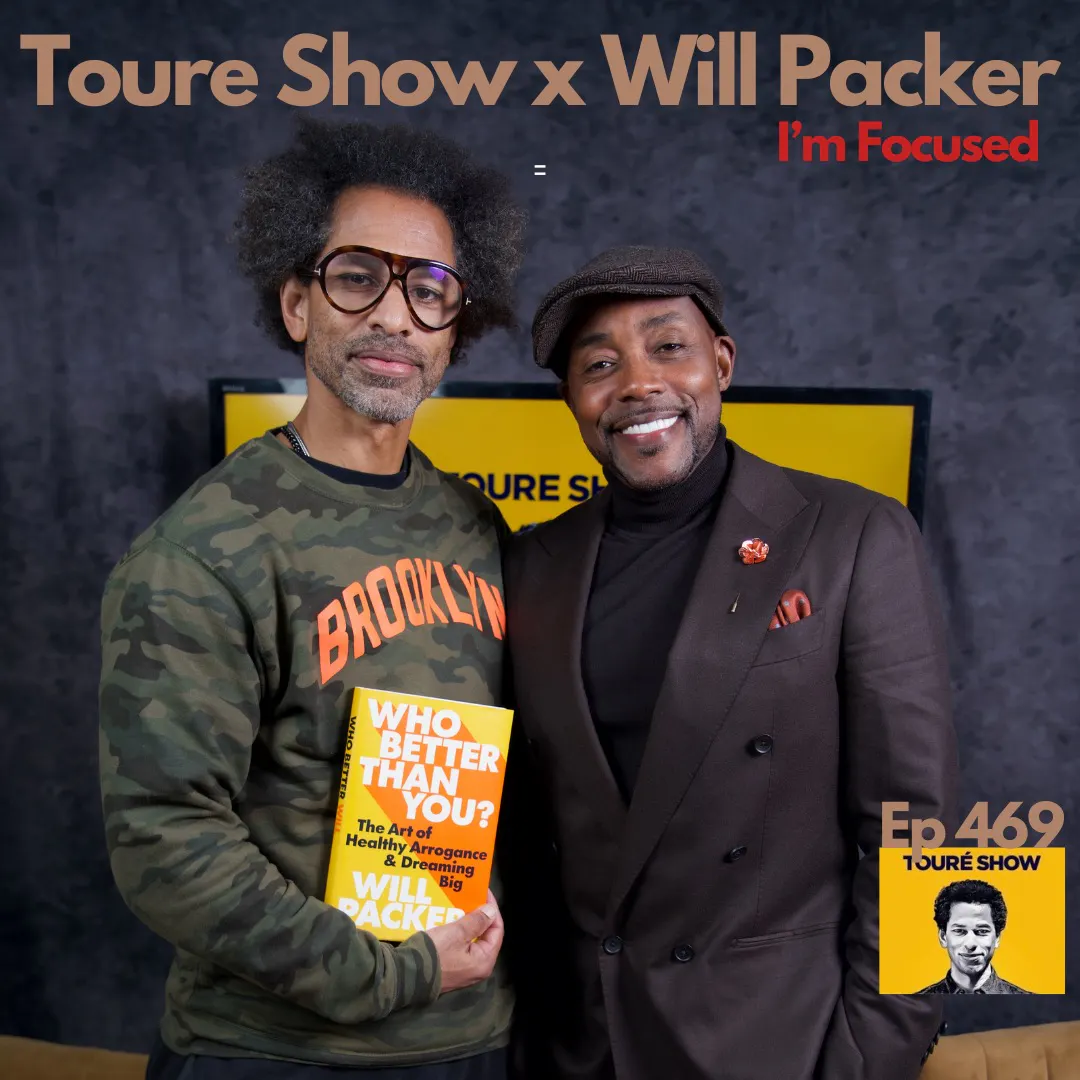
Will Packer is an amazing Hollywood producer, the man behind Girls Trip and Ride along in so many films. He's got a new book, who Better Than youn? It's a motivational book. It's a memoir. We had an amazing conversation about producing movies and about producing the Oscars. He produced the Oscars when Will Smith went. Will Smith. Let's get into it. It's Will Packer on torre show. So Will.
- [02:22]
Will Packer
Yes, sir.
- [02:23]
Torre
You actually wrote this book?
- [02:24]
Will Packer
I wrote it. I literally.
- [02:26]
Torre
You were sitting at the computer writing this book, dude.
- [02:28]
Will Packer
Now I'm not saying I did it all myself, right. I did have an amazing co writer who helped me with the structure, but every single word is mine. So sometimes you get a co writer and they go off. You do an interview with them and they go off. And my co writer was great, right? Dibs bear. Amazing. But I am so particular because it's my first book, bro. I needed it to be my words. So for better or for worse, I'm owning this thing. Those are my words.
- [02:57]
Torre
This is a motivational book, right?
- [03:01]
Will Packer
How to through the lens of memoir esque stories being told. Yes, that makes sense.
- [03:07]
Torre
Yeah. Okay, so it's a blend of memoir and self help motivation.
- [03:12]
Will Packer
It is because I felt like my authority, if you will, my credibility to tell People how I think they should manifest a more full life pivot in a career launch and over launch something, overcome challenges, et cetera. I feel like my credibility is because of my almost three decades in Hollywood dealing with some of the most incredible, famous, toxic, insecure, you know, filling your adjectives, you know, dealing with all those people. That's where I think that I have the credibility to write this book. So I am literally pulling from all these years of dealing with these folks.
- [04:01]
Torre
What is the big message?
- [04:04]
Will Packer
That there is literally no one on the planet more deserving of success than you. And when you understand that the most successful people in the world have the mentality not that they could be successful, that they are striving for success, but that they are destined for success, if it hadn't happened today, it's gonna happen tomorrow. If it doesn't happen tomorrow, it's gonna happen next week, but it's going to happen. Then you can start to do small things that will manifest themselves in ways that you're not even thinking about.
- [04:36]
Torre
So we should be certain that we will be successful no matter what.
- [04:42]
Will Packer
No question. Absolutely. Absolutely. That you're destined for it, that you deserve it. That is going to happen. So the same way that we all sometimes have that little drumbeat of negativity, insecurity, I don't know if I'm good enough. I don't know if I'm ready. I don't know if I have the skill set. The opposite can happen, right? The same way that we have that negative drum beat, you can have a positive drum beat. And I believe that that is a muscle that you can train. I believe in the confidence muscle.
- [05:14]
Torre
Is that how you were or how you learned to be?
- [05:18]
Will Packer
How I learned to be. Now, now I will say, and I encourage my friends and peers and folks that have kids to do what my parents did with me. My parents remember the Lion King where they took Simba to the top of the rock and they lifted him up and they said, everything the son touches is yours. My son, right? My parents did that to me. And I, at that impressionable age, believed them. And so I was always an audacious young kid. I absolutely believe that if I was willing to work at it, I could accomplish it. And I encourage, if you got kids, do that for them, right? But I didn't have, like this outsized confidence, right? You learn that. You learn that when you do something and it works, right? And you go, oh, it works like I know what I'm doing, right? If you do something and it doesn't work, you start to question yourself. All right, I went right and I should have gone left. Maybe I don't know how to make decisions about right and left, but for me, I definitely over time started to trust my instincts more and started to realize that success was there. The more that I realized that I had the ability to make decisions that would drive me closer to my goal.
- [06:37]
Samsung Advertiser
I can say to my new Samsung Galaxy S25 Ultra hey, find a keto friendly restaurant nearby and text it to Beth and Steve. And it does without me lifting a finger so I can get in more squats anywhere I can.
- [06:49]
Torre
1, 2, 3 will that be cash or credit? Credit.
- [06:54]
Will Packer
4 Galaxy S25 Ultra the AI companion that does the heavy lifting so you can do you get yours@samsung.com compatible with select apps. Requires Google Gemini account Results may vary based on input. Check responses for accuracy this season a.
- [07:08]
Metro Advertiser
New hot deal has arrived at Metro. $25 a line for four lines. With all the data you need and four free Samsung Galaxy A15.5G phones, getting Metro's best deals is easy. No ID required, no activation fees. Get a new number or keep your own. It's up to you. That's four lines for $25 a line plus four free phones. Visit a store or go online today only at Metro Buy T Mobile when.
- [07:32]
Samsung Advertiser
You join Metro plus tax for a.
- [07:34]
Torre
Limited time and subject to change max one offer per account. Hmm. I feel like you have what is it that you are looking for? When you get a pitch, a script, an idea that you're like, these are the boxes I wanted to tick that I'm like, that's gonna be a big hitter.
- [07:57]
Will Packer
Yep. Audience. I'm at the stage in my career, I am always thinking about the audience. So and there are a lot of different ways you can examine content. You know, you think about awards, critical acclaim, you can think about social messaging, you can think about global importance, whatever. I always think about the audience. I am still very much that kid who in undergraduate at Florida A and M University made a tiny little movie called Chocolate City starring, you know, myself and my Pratt brothers and friends that were there. And I was thinking about when we screen this for our other buddies at school, what's going to make them laugh, cry, cheer for this film? I'm still that person. So one of the things that I do is I actually create a fictional person, a fictional target audience.
- [08:55]
Torre
Yep.
- [08:56]
Will Packer
Every movie that I do, I name one person. One person.
- [08:59]
Torre
Oh tell me oh who you see them if you see their whole life?
- [09:03]
Will Packer
Girls trip. Her name was Sharonda, she lived in Detroit. She was a pharmacist. She is a single mom because she. Oh, she was 43. She's a single mom because she had recently gotten divorced. And she got divorced because she caught her ex husband wearing her panties.
- [09:25]
Torre
So you have a whole story.
- [09:28]
Will Packer
Everything.
- [09:28]
Torre
Cause I see an audience. Like when I'm writing, does the average black person who's been to college and, you know, has a decent understanding of black, like, will they understand this? Or. I didn't explain that. But you're going way more specific to your audience.
- [09:43]
Will Packer
I have to literally notice. I have to think about everything about them. Because then when I'm thinking about everything from casting to jokes to supporting cast, is Shabronda going, is this gonna be. Is she gonna laugh at this? Is she gonna think this funny? Because she only goes to the movies once a quarter, and when she does, she has to get a babysitter and it's gonna cost her money. And if it's a date, right. With somebody, she doesn't wanna waste the time out with somebody that she just met that she doesn't know if it's going somewhere. Her girlfriends are not always available.
- [10:17]
Torre
Cause sometimes I will think of two people who are different. And can this notion fit for both of them?
- [10:23]
Will Packer
Okay, I respect that.
- [10:25]
Torre
Do you only think of one?
- [10:25]
Will Packer
I have one person. Because if I nail that person, you're gonna. Even though I'm very specific, obviously I'm thinking of them in a way that there should be concentric circles that will envelop other people.
- [10:38]
Torre
Go on.
- [10:38]
Will Packer
And so I am thinking if I nail Sharonda, there's a lot of Sharondas. Right? And then if I get all the Sharondas, then the Becky should come as well as the.
- [10:48]
Torre
Are you typically thinking of a black woman in her 40s?
- [10:51]
Will Packer
It depends. Ride Along. It was a white boy. It was a white dude named Cody living in Miami who used to go to the mall on the weekends, get dropped off by his parents. He was a teen.
- [10:59]
Torre
A white guy who likes black culture.
- [11:01]
Will Packer
Who loves Kevin Hart. Ride Along. It was a young white kid who loved Kevin Hart standup that he would watch on YouTube and he would go to the mall. And he's 15, though he was 15 years old. Yes. Yeah. And ride along with the PG13 movie starring Kevin Hart. Ice Cube. Yeah.
- [11:19]
Torre
Are you. Are you searching for that person who, like, if we nail this person, then we've nailed it, or it just sort of comes to you as an artist of, like, I have to serve this.
- [11:29]
Will Packer
Well, I think when I'm Thinking about and receiving the ideas for the projects, I'm immediately. Because again, you asked how do I choose projects? And for me, it is very specific that I have to know, and I mean know the way I'm describing who the audience is.
- [11:46]
Torre
If I don't know, you'll. If. If you can see.
- [11:49]
Will Packer
Yes.
- [11:50]
Torre
Oh, is there a Sharonda? Oh, I can visualize Sharonda, and she would like this. Now we're cooking.
- [11:55]
Will Packer
You got it. Because I make movies for specific audiences, and I hope to make them inclusive enough that they can broaden out beyond the core. But I make them because, remember, as a produceral responsibility, I have to make sure that if I'm making a movie for X, I know that it can make Y. And so I have to think about, if the Sharonda audience is coming, what should I spend on that? Is it 10 million? Is it 100 million? I have to think of it all in that way. So if you send me an amazing script and I don't know who the audience, I will come to you and say, I'm probably not the producer for you, because that is not the way that I process and I'm able to use my skill set, my network, in order to get this thing.
- [12:38]
Torre
Well, we look at your track record. You have aimed and succeeded more at films for black women, no question. Is that right? Absolutely. That's your niche. Do you feel like you know how to make a film that black women will like more? You've done both.
- [12:55]
Will Packer
I have. I've done other things, but I certainly, without a doubt, that has been the core audience that has been loyal and responsive, and you've been speaking to them. I think they hold the keys to the kingdom, brother. I really do. Yeah, I do.
- [13:07]
Torre
So there's a whole bunch of Sharondas.
- [13:09]
Will Packer
Yeah. Different versions.
- [13:10]
Torre
But how is it that you're able to keep making films that black women want to go see?
- [13:15]
Will Packer
By listening to them. By listening to what they. Because they will tell you. Right. The thing I love about black women is that it's a very loud, persuasive audience. And I mean that in lovingly. Loud.
- [13:27]
Torre
Lovingly. He says lovingly loud, passionate.
- [13:31]
Will Packer
They like something you're gonna know. They don't like something you're going to know. Right. But mainstream culture hasn't listened to them enough. Right. You can't just, you know, every four years when it's time to get votes out, go and say, what do you guys want? Come vote for this part. Like, you can't do that.
- [13:48]
Torre
Is girls trip your best vote?
- [13:50]
Will Packer
Oh, come on. Come on, stop it.
- [13:54]
Torre
And which is your favorite exactly?
- [13:58]
Will Packer
Give me some kind of contextual like.
- [14:00]
Torre
But Girls Trip is extraordinary because you put three superstars in that movie, and young Tiffany Haddish. And generally, stars are like, I need to get the punchlines. I need to get the shine. You're new. You wait your turn.
- [14:17]
Will Packer
Yeah.
- [14:17]
Torre
And they kind of laid back a little and let Tiffany go. And she dominates, and it explodes her into this amazing career that she's had. How did that dynamic even happen that these three superstars were like, let her go?
- [14:32]
Will Packer
Yeah, two reasons. Number one, the structure of the film lent itself to that. And it's not like the other three. We're talking Regina Hall, Queen, Latifah Smith. It's not like they're not without their comedy moments, for sure. Right. And I feel very good about the balance of who had the weight of the jokes, so to speak, throughout. And Malcolm Lee and I talked about that. But without a doubt, the Dina character that Tiffany Haddish plays was the main comedic driver because she was the wild child. Right. She was the one that, you know, shirked responsibility the most, was the most unpredictable and. And spontaneous. And she was a force of nature on set. And when you have actresses that are professionals that have done this, what you're talking about happens when you have younger actors that are worried about, oh, she's got more jokes than me. I need to do more. I need to act outside my character, because she's getting all the shine. She's gonna be the one that the audience is gonna like, and I need to do something different, something louder, something. But that's not your character. Right?
- [15:34]
Torre
Right.
- [15:35]
Will Packer
I had pros. I had those other three actresses have been doing it forever and were amazing. And so they let Tiffany, who came in as a force of nature, do what she did. They weren't intimidated by it. They encouraged it. They supported it. And so that's why that film works. Ensemble casting is tricky.
- [15:53]
Torre
It's very hard. Yeah, it's very hard. Cause you gotta make sure that they dig each other.
- [15:58]
Will Packer
They gotta gel. Audiences can tell if the chemistry is inauthentic.
- [16:01]
Torre
You have a great eye for talent in that. Tiffany's young, and you put her up there. Right. You put Chris Brown on the screen for the first time. Like, there's a bunch of times when you have elevated, given somebody that chance that they hadn't had before. Right. That's another incredible talent.
- [16:18]
Will Packer
I'm proud of that man. I mean, Kevin Hart, I didn't create his talent, but his first breakout movie that set to Hollywood. This guy's not just a supporting actor. Was thing like a man and Ride Along. Idris Elba's first theatrical feature after the Wire. What said you?
- [16:33]
Torre
Kevin Hart could be that guy, could.
- [16:35]
Will Packer
Lead a film, because I saw him outside the bounds of where Hollywood had positioned him prior to. So it wasn't that Kevin Hart was an unknown entity. He had done sitcoms that had failed. He had done. He had even led a movie, Soul Plane, which wasn't a big hit, but he was having a moment with the culture, with the community, with the streets, with real people. And he had these comedy tapes that were out there and they were getting bootlegged everywhere. They were getting bootlegged on YouTube. And so there wasn't a way for Hollywood to quantifiably say, oh, my goodness, Kevin Hart is selling, you know, X number of percentage. More like that's how Hollywood works, quantifiable metrics. But I was able to see, and I credit my son, my oldest son, because him and his friends would just be sitting at the computer watching these Kevin Hart videos all the time. And I would go, okay, this is not something that you can quantify. They watching bootleg DVDs, you know, on the. On either the home computer or the home DVD player. Like, what? Okay, this guy's having a moment. Then I went out and I watched him. I went. Literally, I met Kevin Hart in the airport in la, and I then went and watched him do his stand up in Dallas. I watched him do it at Memphis. I watched him do it in Atlanta. And I saw how he interacted with different crowds and different types of folks, and I saw that it was translating in a very real way. So I knew he was having a moment and he just needed a vehicle and Hollywood, because I talked to a lot of people about Kevin Hart before I cast him, and they were not. They were like, we know Kevin Hart. Like, you're not bringing anybody new to us. I was like, yeah, you don't know this Kevin Hart. He's having a moment. Nah, we know. We know Kevin Hart. Like, he can be the best friend of the best friend. That's how people responded. And of course, you know, soon thereafter, everybody wanted him to be. To save their comedy movie that had been on the shelves forever.
- [18:27]
Torre
Because you were able to see him in a different light that you were able to see he could be this. Yeah, you only see that.
- [18:35]
Will Packer
Correct.
- [18:36]
Torre
That's interesting.
- [18:37]
Will Packer
Yep. And as you know, urban culture has always been a driver that mainstream culture follows and reacts to.
- [18:44]
Torre
Right.
- [18:45]
Will Packer
And. And So I was able to see him in kind of an unfiltered urban culture environment and see what that, like, the velocity of his rise was outside of being in some traditional Hollywood medium.
- [19:02]
Torre
Do you think that if we get a good story, we could get. We could put almost anybody in it and make it. Make it go as a film? Is it really about the story or we gotta get the right people that the audience wants to see, and if we put Tiffany and Kevin together at the moment when they're hot, they'll go to see them do anything.
- [19:23]
Will Packer
Yeah. No, I don't. I don't. I think it's 100% both. You have to have the right story. You have to have the right talent.
- [19:30]
Torre
At the right time.
- [19:31]
Will Packer
And the right time is that part t is so important because timing is everything. There are extremely talented actors in Hollywood that folks will say, why hasn't so and so broken out? Why has it? And a lot of times it's timing. You can go back and look at old stuff that, you know, actors have done, and if that was released today or released at a different time, when the pendulum of culture was swinging in a different direction, it would have had a different response. Timing is everything, Tiffany. It was the time to have that, you know, brash, loud black girl in your face behaving badly in that moment. You do that film 10 years ago, it would not have been received like that at all. And it would. And she would have been viewed not as positively as she was. I absolutely agree. Yes. Yeah.
- [20:21]
Torre
Interesting. What was it about that moment that allowed Tiffany to break through then when she wouldn't have broken through earlier?
- [20:30]
Will Packer
Because I think black women were. There had been, like, the waves of, like, early 90s rom coms. I was, you know, I've produced a few of those as well. Like, you know, through the 90s, the African American rom coms, you'd had more black people on screen. What it is, is once you. When there was a much, much more of a dearth of black content, then there was a feeling that when you put us on screen, we better be comfortable. The way that you portray us right. And doesn't mean always portraying us good, but we need to be comfortable with the portrayal. The more and more we got to see ourselves, the more open that we as an audience. I'm talking and I'm generalizing intentionally, the more open we became to different depictions of us. And that is true of black women. And so in the Waiting to Exhale era, we needed to see for incredible black women with very few flaws. The men were very flawed, and we needed to see them looking for love at that time because we hadn't seen them on screen. That was not the Girls Trip era at all. We needed what Wade next Hale, gave us. Right after having much more depictions, much more portrayal, many more portrayals, seeing other actors break out. Now, as an audience, we're open to a variety of depictions.
- [21:57]
Torre
Okay, I see what you're saying. Because it's a similar thing in mafia movies, that the Godfather portrayed the mafia one way, but then by the time you get to Donnie Brasco, you can say different things about the mob humanity.
- [22:11]
Will Packer
With the mob that you didn't see in other ones. There's nuance that before.
- [22:15]
Torre
So the black audience in particular, because they saw. Set it off. Because. Cause they saw or heard about Waiting to Exhale.
- [22:23]
Will Packer
Yes. They had. Had Love Jones. Yes. You could now have four women behaving the way that maybe four black women on screen had not typically behaved before. Right. Like bathroom humor on a zip line in New Orleans. Right. Like, you know, you couldn't have done that before it would have been received.
- [22:43]
Torre
That movie is. Excuse me. That movie is something special. We talk about the Oscars.
- [22:49]
Will Packer
Sure.
- [22:50]
Torre
You produced the 2022 Oscars. The will Smith Oscars.
- [22:54]
Will Packer
Wow. Hold on, T. Is that. Is that what we called it? Is that the.
- [22:57]
Torre
The coda. Excuse me. The Coda Oscars.
- [23:00]
Will Packer
There you go.
- [23:00]
Torre
Excuse me.
- [23:00]
Will Packer
Koda was the best Love. You know, Sam Jackson got the Humanitarian Award.
- [23:06]
Torre
God loves it.
- [23:06]
Will Packer
There's so many ways.
- [23:08]
Torre
Great moment. Great moment.
- [23:10]
Will Packer
The black conductor that conducted the. The voice of God was an African American female. I had HBCU students that handed out the grandkids.
- [23:18]
Torre
Won't ask you about any of that stuff.
- [23:20]
Will Packer
None of it. None of it.
- [23:22]
Torre
So when Will walked up to the stage, I thought he was doing a bit.
- [23:26]
Will Packer
Did you think he was doing a bit? 100%.
- [23:27]
Torre
But how could. You're like, this was not in the script. This was not in the rehearsal. What are you talking about? Right.
- [23:32]
Will Packer
I mean. But I wasn't like that, though, because it's Rock. And so if there's anybody that you're comfortable with going off script, sure. It's Chris Rock and Will Smith and Will Smith. I mean, they can do anything. But I mean, I just mean in terms of when Rock went off book. Cause he went off book first. Like he. With the Oscars. It's such a big show. You rehearse it, like, multiple times. Okay. And you do a dress rehearsal. You have all the stars. You do the whole thing. And he went up and I. Almost immediately, he was off book. But it was funny. Like, he. I mean, well, before he got to the dating joke, he was telling other jokes and he was off book. And it was like, all right, you know what? It's rock doing what rock does.
- [24:12]
Torre
That's fine.
- [24:13]
Will Packer
Then when it happened and Will went on stage, I absolutely 100% thought that these two had planned something and didn't tell me. And I was literally thinking, okay, we gotta pay this off.
- [24:27]
Torre
Where are you?
- [24:28]
Will Packer
I'm right. When you produce the Oscars, you are immediately. There is a Oscars producer booth that is just off stage left.
- [24:36]
Torre
Okay?
- [24:37]
Will Packer
So when people are coming on and coming off the stage, they pass right by me. Every person that wins, I'm shaking their hand. Congratulations.
- [24:43]
Torre
Can you see the stage?
- [24:45]
Will Packer
You can see an angle where he was presenting was a little closer to the front. So I can. I've got, you know, like, five monitors there.
- [24:54]
Torre
So he hits him. And when he hit him, did you realize what had happened?
- [24:57]
Will Packer
No, no. I thought it was a bit. So I thought that he didn't actually hit him. And I thought this was something that they were gonna pay off. And, like, everybody wasn't happening.
- [25:08]
Torre
Nothing's happening.
- [25:09]
Will Packer
I was thinking, it's not funny. That's what I was thinking. Like, okay, where's the joke? We gotta get to the point. At the end of the day, I'm a producer. I'm producing a show. I want entertainment. So I'm like, okay, we gotta get to the. The funny. And what happened was afterwards, it wasn't until the cameras, which, you know, listen, it's a live television production, is like a tennis match. You're following the ball, right? And you've got cameras all around. And you got, you know, guys in ears going, okay, you know, zooming on, Turret, zooming. Will Packer, zoom in on. And so once that happened, right, we're going back to Will. We had nowhere else to go because the. Everybody in the auditorium was aghast. So we went to him, and when he makes the statement that he made, that's when everybody said, oh, oh, this is real.
- [25:54]
Torre
And then he said it again.
- [25:55]
Will Packer
He's serious. And then we knew, oh, this ain't a joke.
- [25:58]
Torre
No.
- [25:58]
Will Packer
Yeah.
- [25:59]
Torre
And then Chris is like, will Smith just smacked me. And then he was extremely professional from that moment on.
- [26:06]
Will Packer
The reason the show continued.
- [26:09]
Torre
Now, when you went to break, all hell went. All hell broke loose. And we saw Denzel and others, Sam Tyler. And you're part of that group?
- [26:21]
Will Packer
Nope. I'm backstage with Chris.
- [26:23]
Torre
Well, what's going on?
- [26:25]
Will Packer
Everybody's trying to figure out what happened. I'm backstage with Chris. I was back in my office.
- [26:32]
Torre
How's he doing?
- [26:32]
Will Packer
He went into my office. He's in shock. He's in shock at that time. And I'm back there. And the LAPD is back there. They've come at that time and they're very aggressively encouraging Chris to press charges. We can get him right now, we can remove him right now, we can press charges. And Chris is very much like shocked, but also dismissive and saying, I don't want to do that. I want to go to Guy Fieri's party. That's literally what he was saying. And I want to just go get a drink. I like, no, I don't want to press charges. I don't want to get him up, arrested. Like, no, I'm just, I'm out of here. That's. That's how he was. And they were very, you know, it was two, two non black cops who were very much like, yo, we're telling you, you've been assaulted. You are in shock. We can make this happen. And he was like, nah, I'm out. And at that time, I inserted myself because there were other folks that felt like will should absolutely be arrested, removed, accosted the whole thing. Once Chris had the attitude he had and then left, I felt like, okay, we are now. The response is as if there is a violent assaulter on the loose, okay? Like there's somebody that we don't know who is out there just slapping people, right? Who's gonna get the mad slap, right? And I was saying, okay, this was a very specific thing between two people. We don't know why, we don't know really the history what happened. However, one person has left, has said, I do not wanna press charges. The other person is. There is up was a prohibitive favorite ticket actor of the year. That award was coming up in minutes, right? I was like, everybody just. My instinct was to try to de escalate it at that point. And let's not now have that happen and then have somebody go and try to physically remove this black man. Be honest with you, right? Because it was the first time you had an all black producing team at the Oscars. And so to then have that imagery, to then have that action did not sit right with me. So it was not a decision that everybody agree with, still don't, but I stand by it. In that moment, I said, no, let him stay. Chris is gone. This was a singular one off incident. This is somebody with three decades of not being that guy. So we know who this guy is.
- [29:08]
Torre
Yeah.
- [29:09]
Will Packer
And I also, you know, in my. In my heart of hearts, was hoping that he would win and go up and make it all right.
- [29:17]
Torre
Oh, you were hoping that he would win?
- [29:19]
Will Packer
Well, I shouldn't say that. What I should say is that everybody kind of.
- [29:24]
Torre
Not as a producer, as a friend.
- [29:25]
Will Packer
As a friend. I mean, I thought he would, but there were other talented people in the category. What I mean is that I felt like he was going to win. Right. He was the prohibited favor. Everybody thought he was gonna win.
- [29:35]
Torre
Right.
- [29:35]
Will Packer
And I said, there's an opportunity with everything that has happened for him to now go on stage in front of the biggest audience ever and state something that will make this. Maybe not make it okay.
- [29:51]
Torre
But he did not.
- [29:52]
Will Packer
He did not go as far as I think even he, as he has admitted, would have liked to have gone or anybody else. Yeah, yeah.
- [30:00]
Torre
What is. What is Denzel and them saying to him, Will, on the floor?
- [30:06]
Will Packer
I wasn't privy to those conversations, but I think it was the Village coming together. I think it was. It was not a mistake that it was primarily black men. I think Bradley Cooper was one of them, too. But I think the Village came together to get around somebody who was clearly in pain. That's what I'll say. Somebody who's clearly hurting and out of character. And the Village came to surround him.
- [30:28]
Torre
I feel like, lastly on that, I feel like in the aftermath, some people have made it like, you shouldn't do that in front of white folks. And I'm like, I don't care about that. I'm not fixated on this happened in front of white folks. Like, these two people who've known each other for a long time had a conflict, and it went the way that it went.
- [30:50]
Will Packer
Yeah.
- [30:51]
Torre
But I'm like, can we remove the whole thing of, like, it's a stain in front of white folks? What is that?
- [30:57]
Will Packer
Well, you know, I mean, obviously that was the button on Chris Standup when he finally did come out and address it. That's how he chose to portray it. I hear what you're saying, T, but I don't know that you can remove it, because it was an incident that did have an undertone of two black men and two black men who are widely accepted in white mainstream culture as people who are affable and non dangerous. And Regina hall had the best line afterwards when she said, because I had. I had a lot of people as a part of the Oscars who aren't normally like DJ Khaled was in the Oscar show. I had D. Nice dj, right? And Regina said at least it wasn't two negroes that you brought to the show. These negroes are always here. These are they negroes. You know what I mean? So Regina hall is amazing and always knows how to make. It's your Negroes.
- [31:55]
Torre
It's fine.
- [31:56]
Will Packer
She was like, listen, whether you was producing it or not, those two were gonna be here. But now, if P. Diddy had slapped Khaled on that stage, that was all on you. Will Packer.
- [32:05]
Torre
I told you not to pregnant.
- [32:06]
Will Packer
Exactly.
- [32:07]
Torre
We told you that to bring Will. Yeah, he brought all his Negro friends.
- [32:13]
Samsung Advertiser
Your data is like gold to hackers. They're selling your passwords, bank details and private messages. McAfee helps stop them. Secure VPN keeps your online activity private. AI powered tech scam detector spots phishing attempts instantly. And with award winning antivirus, you get top tier hacker protection. Plus you'll get up to $2 million in identity theft coverage, all for just $39.99 for your your first year. Visit McAfee.com, cancel anytime terms apply.
- [32:43]
Discover Advertiser
Are you still quoting 30 year old movies? Have you said cool beans in the past 90 days? Do you think Discover isn't widely accepted? If this sounds like you, you're stuck in the past. Discover is accepted at 99% of places that take credit cards nationwide. And every time you make a purchase with your card, you automatically earn cash back. Welcome to the now it pays to Discover. Learn more@discover.com credit card based on the February 2024 Nielsen report.
- [33:14]
Torre
So I asked people who come on the show what being black means to them and how it shows up in the work. And clearly you love black people and telling their stories and putting them on the big screen.
- [33:29]
Will Packer
Yes.
- [33:29]
Torre
And I just want to hear you talk about, you know, what it means to you and how it fits into your work.
- [33:35]
Will Packer
That's a powerful responsibility. I mean, you got to first start, you know, from whence I came. I am from the south. So that means that I grew up in a certain culture, grew up around a certain type of black person, a certain type of white person. Right. And I didn't always, you know, I wasn't always embraced. I was a kid who often was like the one or two black kids and the gifted program. I was the one of few black kids in the AP classes. And so I grew up being, because of who my parents were, very proud of who I am. But being in the minority, my parents.
- [34:12]
Torre
Yeah, you said you were proud because of your parents.
- [34:14]
Will Packer
Because of who my parents were, yeah. Who were you? Right. They were, well, Bill Packer, William Packer Senior and Byers Packer. But they were two folks who. They were the ones who staged the sit inside at the predominantly white university when they were in college. My dad was the first African American engineering graduate ever from the University of South Florida. My mom staged sit ins when the administration would not listen to their black rights in the 60s when she was in college.
- [34:41]
Torre
Civil rights movement.
- [34:42]
Will Packer
They were those two, you know what I mean? The Afros and the pics and the black power. Right. And so even though I didn't grow up like that, I did grow up knowing that it's important for you to know who you are, never deny who you are and never be ashamed of who you are. And so that certainly is pervasive, I think in my work. I'm always trying to make sure that I've got African American stories that are not just specific and exclusive to black culture. I try to tell universal stories through an African American lens. I try to make sure that I've got actors of all complexions. I think about stuff like that. I try to make sure. I think about the portrayals and make sure they're not just one sided in terms of, you know, antagonists and protagonists. I try to balance them. I try to show the humanity in us.
- [35:31]
Torre
You try to think a lot, you think a lot about color.
- [35:33]
Will Packer
Oh yeah.
- [35:34]
Torre
Make sure it's not all light.
- [35:35]
Will Packer
Everybody does. We do as a people, as a community. So yeah, you're not going to see a Will Packer project where, you know, unless it is somehow servicing the story or the narrative where, you know, all the protagonists are light skinned, all the antagonists are dark skinned or vice versa.
- [35:51]
Torre
And you generally like middle class stories as opposed to working class stories or upper class stories.
- [35:58]
Will Packer
I think that when I came into the game, it was coming off of Boyz N the Hood, menace to society, right. The Hughes brothers, Singleton, even the Hudlin brothers, you know, like some of the greats that upon whose shoulders I stand. But there were a lot of quote unquote, hood Cinema in the 90s, right. That was something that I felt like, okay, that's been done, been told. There's a lot of that. I want to do something different. And there was a desire to see more of African American middle class and upper middle class. And so that was something. I grew up middle class. That was something that spoke to me. Now I absolutely have working class elements. I absolutely have Hood and community and street elements, whatever you want to call it. Like, would I do a project like that? Absolutely. Sure. I do all kinds of movies, but I felt like that was a type of black person. We didn't see as much.
- [36:53]
Torre
Last thing, who was the character in your mind for Straight Outta Compton?
- [36:59]
Will Packer
You know what's interesting there? That was, I give it all to F. Gary Gray. All the credit for that project and the creative thrust and drive, because he grew up in that world. He knew that world. That was not my world for sure. And I was. I was executive producer on that project, not a producer. And it matters because this was a project that had existed at another studio for a long time. I had a relationship at Universal Pictures, which ultimately is who released that project. And so I came in at a time when a facilitator was needed to help be a liaison between the studio and F. Gary Gray, Dr. Dre and Ice Cube and the Eazy E estate. And so I'm very proud of being able to have helped to get that project going. But I in no way claim the creative thrust and drive and narrative for it. F. Gary Gray was made, was born to make that project. I really feel that way.
- [37:56]
Torre
He's brilliant.
- [37:57]
Will Packer
Yeah.
- [37:57]
Torre
Thank you so much. Hey, brother, it's been wonderful.
- [37:59]
Will Packer
Absolutely.
- [38:00]
Torre
Please come back.
- [38:00]
Will Packer
I'll do it.
- [38:01]
Torre
Thanks so much to Will Packer for a great interview and thanks to you for listening. Torre show gives you fuel to power your dreams. Because you can use your dreams like a rocket ship to blast you into another life. You can make your dreams a reality. Maybe this show can help. You can find me on TikTok Torre show and on Instagram orayshow. Torre show is written by me, Torre, and produced by Ashley Hobbs. Our editor is Ryan Woodhull. Our booker is Ray Holiday and we're distributed by DCP Entertainment. And we will be back next Wednesday with more amazing guests because the man can can't shut us down.