Podcast
Trade Policy Decoded
Hosted by IIT / ACITI · EN
Trade Policy Decoded is for anyone with an interest in international trade policy - both experts and trade policy novices. We cover trade policy in Australia and the world.
Hosted by the University of Adelaide's Institute for International Trade and the Australian Centre for International Trade and Investment, TPD provides trade policy updates, information and analysis that’s timely, easy to access, super interesting and insightful.
15episodes
Episodes
Newest firstAll episodes
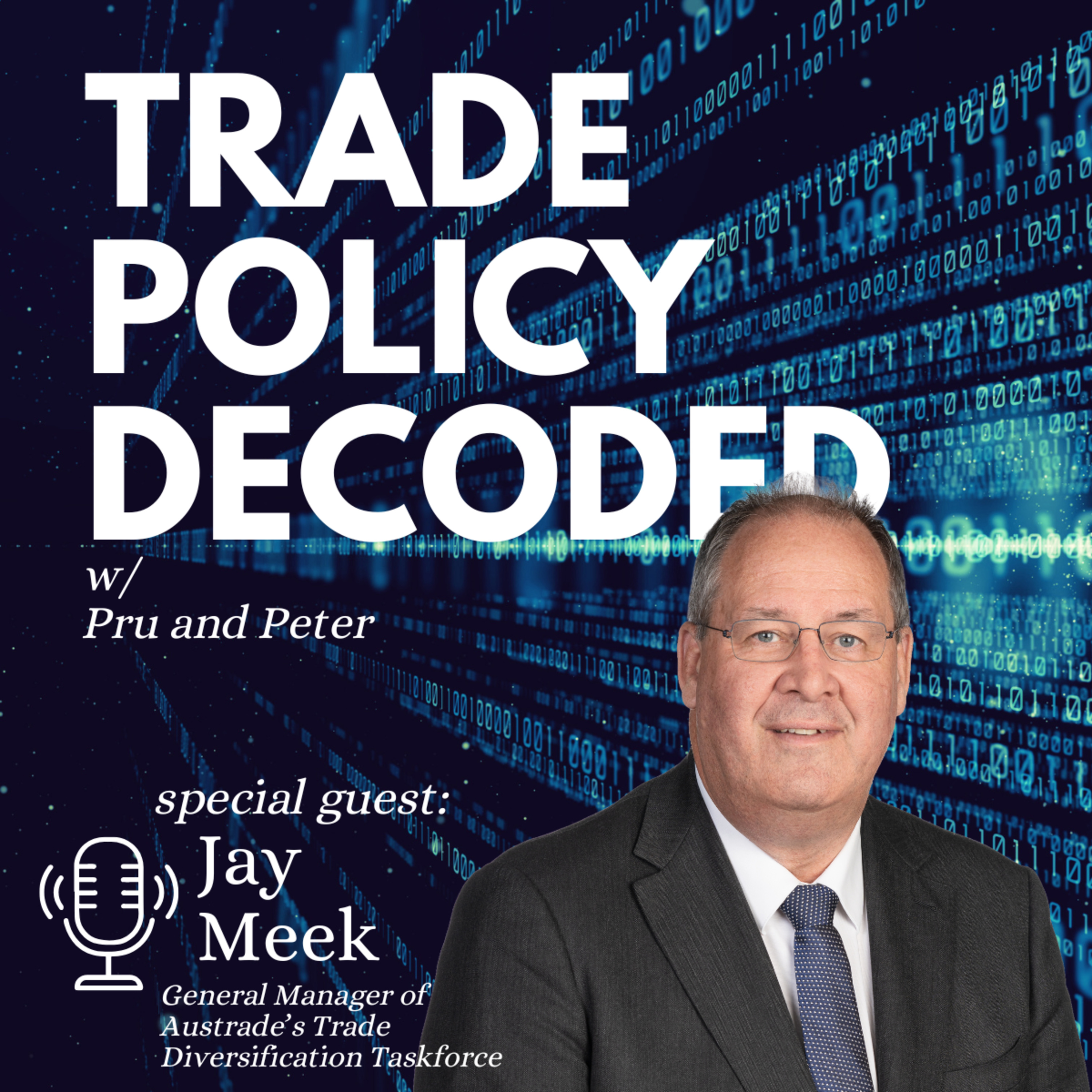
Episode 44: Australia’s Export Diversification mission with Austrade’s Jay Meek
Jun 2300:31:53Tap to summarizeBack from travels to Southeast Asia and Taiwan, Peter and Pru regroup to speak to Jay Meek, Austrade’s General Manager for the Trade Diversification Taskforce.Jay walks Trade Policy Decoded listeners through the work of the Taskforce, why it was established and how it is helping Australian trading businesses manage international market risk.Jay talks about the new partnerships Austrade and other government agencies are forging with business to ensure a ‘team Australia’ approach to the new normal of ‘fluid’ global markets.The discussion traverses what regions represent growth opportunities for Australia, and how Australia needs to manoeuvre through changing trade flows to secure trade resilience and growth.Find more analysis on the IIT LinkedIn Page and ACITI website!
Transcribe →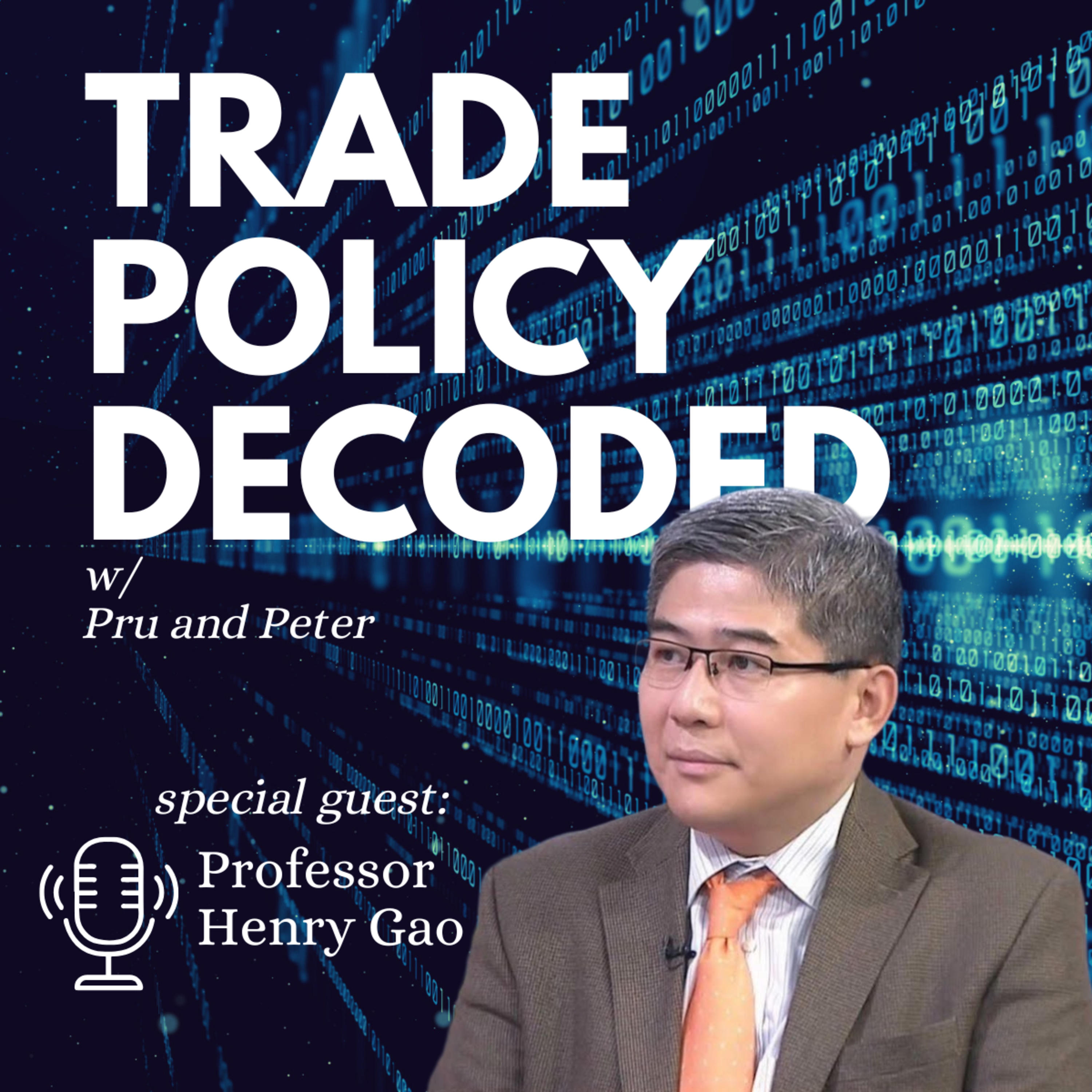
Episode 43: Grand Strategy, Global Trade and Global Security with Professor Henry Gao
Jun 500:33:42Tap to summarizeIn this episode of Trade Policy Decoded, Peter and Pru host Professor Henry Gao, a trade expert and Professor of Law at Singapore Management University.As a review of recent global and trade-world developments, discussion looks into the Reciprocal Tariffs Act and its effects, both temporary and lasting, on trade dynamics between the U.S. and its partners. Honing in on Australia’s neighbourhood, this episode also looks at the intended effects of the increasing tariffs beyond the headlines as a potential element of America’s ongoing Grand Strategy facing China.Professor Gao provides deep analysis on how global trade and national security are inextricably intertwined, and sifts through ‘optics’, ‘substance’, and what matters for the region in the wake of recent talks between the U.S. and China.Managing competition and decreasing the chance of escalation may be the best that can be hoped for where new Cold Peace dynamics are entering the global stage. Given this, this episode focuses on how we might choose to read into recent U.S. actions in Venezuela and Iran, and what the role of major trading powers such as the EU can be moving forward.Find more analysis on the IIT LinkedIn Page and ACITI website!
Transcribe →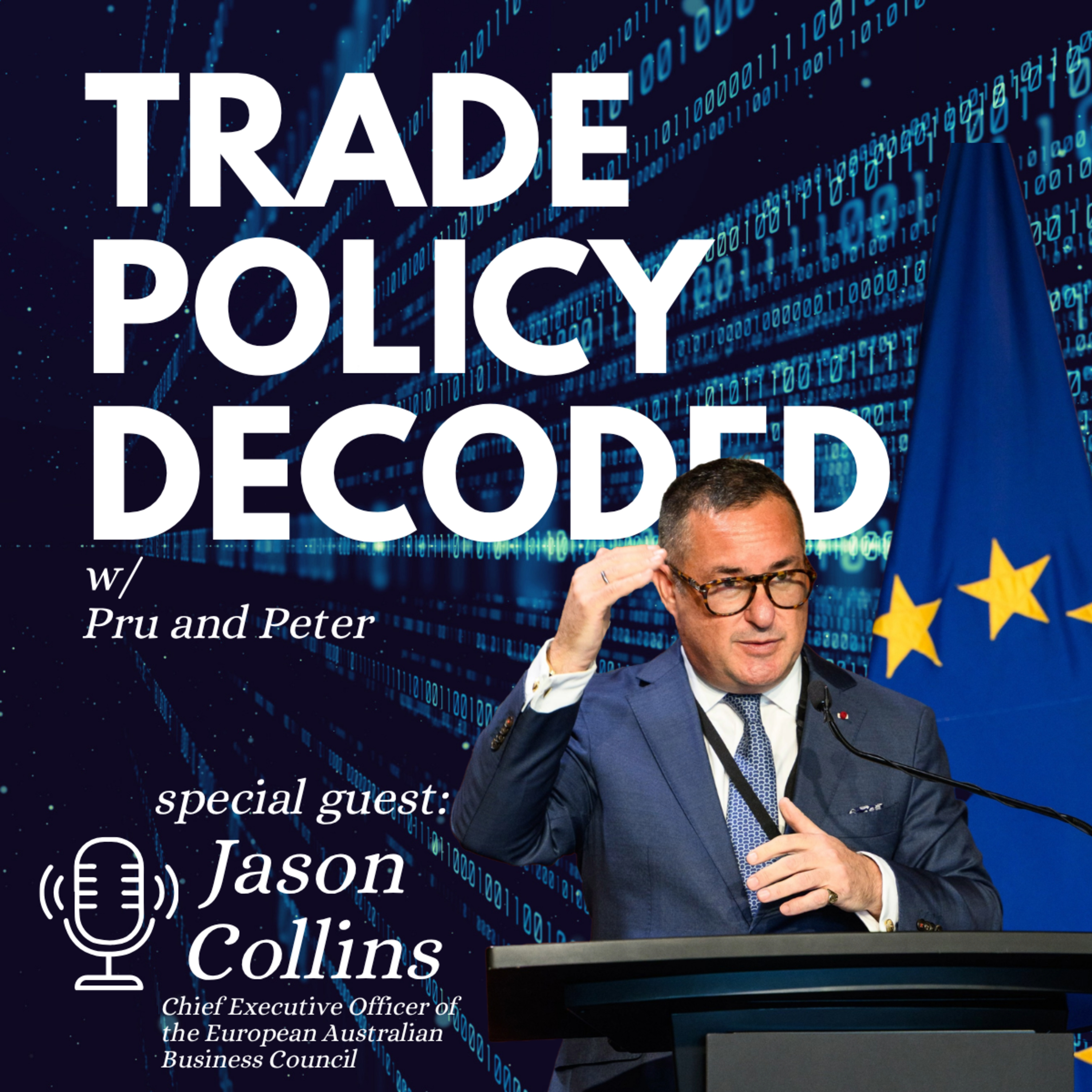
Episode 42: The new Australia-EU FTA, with EABC CEO Jason Collins
May 600:34:55Tap to summarizeIn this episode of Trade Policy Decoded, Peter and Pru host Jason Collins, CEO of the European Australian Business Council, to discuss the recently concluded Free Trade Agreement between the European Union and Australia. The discussion explores the road to launching, and then concluding, the FTA, the benefits of the agreement, and what the FTA means for Australia. It also touches on the difficult issue of agriculture, the impact of the broader trade context and strategic importance of getting the deal across the line, and path to implementation. Find more analysis on the IIT LinkedIn Page and ACITI website!
Transcribe →
Episode 41: MC14 Outcomes on E-Commerce with Pascal Kerneis and Jane Drake-Brockman
Apr 1900:36:22Tap to summarizeIn this episode of Trade Policy Decoded, Peter and Pru investigate the latest developments in digital trade with two special guests, Pascal Kerneis, Founder and Managing Director of the European Services Forum, and Jane Drake-Brockman, Founder and Director of the Australian Services Roundtable.Pascal and Jane explain the e-commerce-related outcomes from the World Trade Organisation’s 14th Ministerial Conference held in Yaoundé, Cameroon. With a mixed bag of positive and depressing news, Jane and Pascal’s insights highlight the relevance of these WTO agreements for business and the importance of continuing to invest in WTO negotiations. The discussion touches on the dynamics influencing MC14 negotiations and the geopolitics making progress in the WTO difficult.Find more analysis on the IIT LinkedIn Page and ACITI website!
Transcribe →
Episode 40: Canada and Australia's trade responses to Coercive Global Powers: 'Strategic Cousins' or adrift in the same boat? (With Guest Speaker, Ken Ash)
Mar 900:36:14Tap to summarizeIn this week’s episode of Trade Policy Decoded, Peter and Pru host Ken Ash in discussing Canadian and Australian responses to the changing behaviour of major global trading powers. Ken is a visiting fellow at the Institute of International Trade, and has served as the Director General of Economic and Policy Analysis with the Canadian Government, and as Director of Trade and Agriculture at the OECD. As part of a special episode, Peter moderates the discussion by posing questions to Pru and Ken, who draw insights from their respective experiences to analyse the responses of Canada and Australia to changing international trade conditions. As the rules-based international order has become increasingly challenged, now resembling more of a power-based international order, discussion centres on what Australia and Canada can hope to achieve given their respective trade dependencies on China and the U.S, what the role of a middle-power coalition may be moving forward, what it might mean for Australia and Canada to be ‘strategic cousins’ (if anything), and where the next arenas for achieving economic resilience could be locatedFind more analysis on the IIT LinkedIn Page and ACITI website!
Transcribe →
Australia’s Trade Remedies System: A discussion with Australia’s Anti-Dumping Commissioner David Latina
Feb 2700:31:55Tap to summarizeIn this episode of TPD, Peter and Pru talk to David Latina, Australia’s Anti-Dumping Commissioner, about the work of the ADC. The episode delves into the basics of the ADC’s purpose, operations and how business can access ADC services. The discussion explores how the ADC balances various competing interests, especially importers vs domestic interests, the recourse aggrieved parties have to legislated appeal mechanisms, and where the interests of consumers fit in the ADCs work. Pru, Peter and David also look at how the ADC’s mandate is expanding to enable it to better assist Australian businesses impacted by shifts in trade flows caused by new tariffs and ongoing industry policies.Find more analysis on the IIT LinkedIn Page and ACITI website!
Transcribe →
Episode 38: Green Energy Statecraft with Professor Elizabeth Thurbon
Feb 1200:35:40Tap to summarizeIn this week’s instalment of Trade Policy Decoded, Pru and Peter host special guest Professor Elizabeth Thurbon to discuss the importance of Green Energy to Australia and newly emerging concepts in Green Energy Statecraft. Having opened and Directed UNSW’s Green Energy Statecraft Project, Professor Thurbon has explored these concepts in depth and provides potential methods that Australia may be able to use in pursuing the frontiers of a green transition. Talking with Peter and Pru, she outlines the national security objectives which would be achieved through pursuing this statecraft, what it would mean for Australia’s trade flows, and how such initiatives might work in a changing international system.Find more analysis on the IIT LinkedIn Page and ACITI website!
Transcribe →Episode 37: 2026 in Focus: Trade Policy in the Year Ahead
Feb 300:31:06Tap to summarizeIn this first episode for 2026, Peter and Pru look at the key developments likely to impact trade policy in the coming year. They break these down into three areas. The first is US domestic factors likely to constrain President Trump’s trade unilateralism. These include US inflation, US bond and stock market fluctuations, the US Supreme Court’s decision on the President’s use of IEEPA powers to impose tariffs, and US Congressional elections in November. Pru and Peter then look at Canadian Prime Minister Carney’s invitation to middle powers to work together to counter the impact of trade unilateralism by the major powers. Pru and Peter explore the scope for middle power cooperation as well as the difficulties in achieving it. Peter and Pru then turn to China and the potential for China’s domestic economic developments and international actions to impact global trade. They finish with a quick look at how Australia is placed and what the Australian Government is doing to navigate the country through the quagmire.
Transcribe →Episode 36: 2025 in Review
Dec 2200:32:59Tap to summarizeLooking back on the year that has been, this episode looks at the key trade policy developments in 2025 – a year dominated by radical shifts in US trade policy.Peter and Pru review some US trade data points to try and identify the impact of President Trump’s tariffs on trade and the extent to which what was predicted came to pass. They then turn to China’s response – the impact of US tariffs on China’s trade, Chinese leverage and the risks and opportunities the new trade context has created. Peter and Pru then delve into how other countries have responded and point to the lack of any joint action from countries seeking to push back against the US.Australia’s response has focused on balancing our relationship with both the US and China while progressing domestic initiatives to bolster resilience. The discussion wraps up with a look at potential new US trade complaints about a number of Australian domestic policies in 2026.From everyone at TPD – we wish you all a very Merry Christmas and a safe and prosperous New Year full of many more great TPD episodes!Recorded on 11 December 2025.Find more analysis on the ACITI website and the IIT LinkedIn Page!
Transcribe →Episode 35: In Discussion with Ernst & Young: Australian Business Operations at the forefront of changing Trade Policy
Nov 700:35:56Tap to summarizeIn this instalment of Trade Policy Decoded, Peter and Pru host Cherelle Murphy, EY Regional Chief Economist, Oceania, and Luke Branson, EY Partner and Oceania Global Trade Leader. Cherelle and Luke provide some awesome insights into the real-world impacts of the current trade disruption as well as the tools they are using to forecast impacts. The discussion begins with an outline of EY’s recent modelling and report on the impact of US tariffs on the Australian economy. It then traverses the challenges of modelling the multiple factors impacted by the tariffs, how business is managing the impacts and the non-tariff costs of tariff chaos, as well as how the Australian Government could best help Australian business manage tariff-created risk. A fascinating discussion even if we say so ourselves!Find more analysis on the ACITI website and the IIT LinkedIn Page!
Transcribe →