Podcast
Trailblaze 2028
Hosted by Trailblaze 2028 · EN
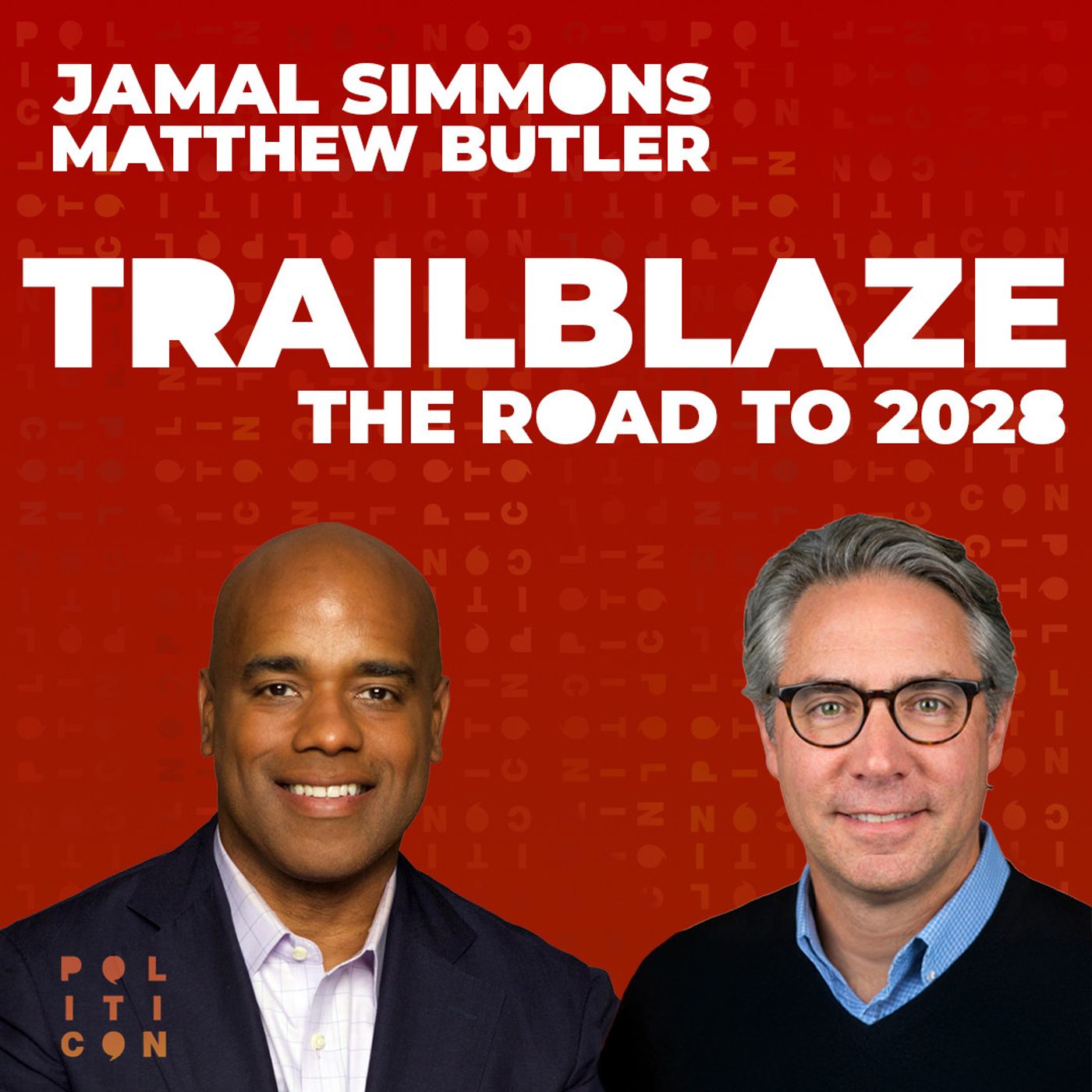
Trailblaze: The Road to 2028 is your insider’s guide to the next great American political showdown. As both parties begin lining up their runners and riders for the 2028 presidential election, this podcast pulls back the curtain on the candidates, the strategists behind them, and the high-stakes decisions that will shape the race long before the first votes are cast. With sharp insight, behind-the-scenes reporting, and a healthy dose of fun, hosts Jamal Simmons and Matthew Butler explore the personalities, power plays, and pivotal moments that will define the road to the White House—making sense of the politics while never losing sight of the passion.
Jamal Simmons has spent years inside the rooms where presidential politics actually happen—and now he’s pulling back the curtain. A veteran strategist and former senior White House adviser, Jamal knows how campaigns are built, how messages break through, and how small decisions can change the course of history. He’s equal parts insider, storyteller, and straight-talker, bringing sharp insight, humor, and a deep love of the political game.
Matthew Butler lives at the intersection of politics, media, and strategy. He’s worked behind the scenes helping campaigns and political brands find their voice, build momentum, and survive the chaos of modern elections. With a knack for spotting patterns, personalities, and power plays, Matthew brings clarity to the decisions and dynamics that shape the road to the White House.
40episodes
Episodes
Newest firstAll episodes
88: AOC To Be Or Not To Be
2w ago00:14:19Tap to summarizeWill AOC run for President? A Deep Dive Into Her Political FutureWe explore whether Alexandria Ocasio-Cortez is gearing up for a presidential run and what factors could influence her decision. From poll numbers to campaign mechanics, we break down the strategic landscape of her potential bid and the broader Democratic race dynamics.Key topics covered include:The rising poll numbers for AOC in New Hampshire and their implicationsThe importance of the four M's—Money, Media, Message, Mechanics—and the addition of AuthenticityHow AOC’s fundraising success, including over $32 million raised, supports her ambitionsThe significance of her authenticity and progressive stance amid intra-party conflictsThe potential influence of swing states like Michigan and Wisconsin on her presidential prospectsThe impact of progressive candidates in local races and how they could reshape national politicsHistorical parallels with other insurgent candidates and cycle repeats in political ideology shiftsThe strategic value of campaign tours in rural and diverse regionsThe importance of voters craving real change and how AOC taps into that desireThe age factor, and whether grassroots support could propel her from Senate to the presidency
Transcribe →87: Lindsey Graham: The Aftermath
4w ago00:26:14Tap to summarizeThis episode takes a smattering of current political chaos—think Kentucky's senate saga, Iowa's early maneuverings, and the twilight saga of Mitch McConnell—and slices through the noise to reveal what it all means for the 2028 presidential chess game. Whether you're a political junkie or just tired of the same old bullshit, this discussion offers a sharper lens on the future of U.S. politics.In this episode: The implications of Lindsey Graham's death for South Carolina's Senate race and the GOP's outlook. How Democrats are maneuvering through the Iowa caucus's evolving rules and the undercurrent of electoral strategy. The bizarre spectacle of Kentucky’s senator crisis and Bashir’s bold move to potentially appoint a new senator The age dilemma in Congress and whether new, younger faces will finally shake up the old boys' club. The potential alliance of Gov. Bashir and AOC for a progressive fuse that could shake the Democratic primary scene. A deep dive into the systemic change fever sweeping across America—what it means for candidates, incumbents, and the political establishment.
Transcribe →86: How Trump's Interference Poisoned the US Soccer Team’s Big Moment
Jul 700:22:23Tap to summarizeHow Politics and Soccer Collide—And Why It’s Still a Spectator SportIn this episode, we dissect the messy intersection of politics, sports, and public perception through the lens of the World Cup and former President Trump's antics. It’s smart, sharp, and a little sarcastic—because if you’re going to discuss global sport, might as well point out how the game is played off the field.In this episode:The environmental impact of 4th of July fireworks in D.C. and urban air qualityThe role of patriotism in political discourse, highlighting historical progress and current challengesAnalysis of potential 2028 Democratic candidates: Westmore, Mamdani, and Gavin NewsomInside look at FIFA city negotiations and their impact on host cities’ economicsThe politicization of the World Cup and its reflection of domestic political tensionsThe importance of active citizenship and service in maintaining American exceptionalismThe humorous yet revealing episode of Trump’s involvement in international soccer, illustrating his tendency to politicize everythingThe uplifting celebration of international unity and spirited fan participation in the World Cup
Transcribe →85: The Blueprint for 2028: Authenticity, Youth, and the New Political Player
Jun 3000:52:59Tap to summarizeJamal & Matt are joined by Ari Rabin-Havt and In this episode, they dive into what the 2028 Democratic primary might look like, exploring voter dynamics, candidate strategies, and the cultural divides shaping American politics. This isn't just guesswork—it's a strategic deep-dive meant to challenge your assumptions about what's next.Main Topics Covered: The shifting electorate: understanding "beer track," "wine track," and the emerging "cookout track" among Democratic voters. The importance of authenticity and youth in future presidential candidates, emphasizing how age and genuine messaging shape voter trust. The evolving influence of social media and grassroots messaging, especially for candidates like AOC, versus traditional campaign tactics. Cultural and racial voter blocs: how African American voters, particularly women, could decisively influence 2028. The impact of recent court decisions on party dynamics and campaign finance, including the rebirth of party-centered power. The dangers of ideological purity versus pragmatic coalition-building in Congress and primary races. The importance of candidate authenticity and alignment with core beliefs over tactical ambiguity, illustrated through campaign lessons (e.g., Kamala Harris, John Kerry).
Transcribe →84: What About Joe?
Jun 2300:27:33Tap to summarizeJamal Simmons and Matt Butler unpack the complex political maneuvers surrounding Joe Biden’s 2024 Presidential run, Gavin Newsom’s bold stance, and the future of Democratic contenders like Kamala Harris and Pete Buttigieg. They slice through the noise to understand what strategies might work—or blow up—in the volatile landscape leading up to 2028.Key topics:Gavin Newsom’s ‘ride or die’ loyalty to Biden and the political gamble it entailsThe legacy of Joe Biden’s decision to run again and its impact on the Democratic primaryThe untapped potential and risks for Kamala Harris in an evolving electoral gameHow figures like Pete Buttigieg and Josh Shapiro might navigate the Biden-era politicsThe age debate of Trump and Biden—does it matter, and are Dems hesitant to attack their vulnerabilities?The importance of authenticity vs. political spin in the upcoming debatesHow the Democratic Party’s internal conflicts, especially on foreign policy, could shape the primary seasonStrategies for attacking or defending based on party loyalty, legacy, and perceived weaknesses
Transcribe →83: Hope & Change 2.0
Jun 1800:32:38Tap to summarizeThe Future of American Politics: Big Ideas, Big Changes & The Role of HopeIn this episode, Jamal Simmons and Matt Butler dissect the shifting landscape of American politics, from the importance of bold ideas to the implications of recent events at the Obama Presidential Center. They explore how current political energy might shape future elections and what strategies will define the fight for a stronger democracy.Key Topics:The necessity of big ideas and comprehensive plans to tackle issues like wealth inequality, gerrymandering, and the Supreme CourtReflections on the Obama Presidential Center's unique concept as a "center" without a traditional library, highlighting the digital shiftThe significance of Michelle Obama’s speech as a moral refutation of divisive politics and the rising influence of aspirational leadershipThe progressive surge in major cities like D.C., Los Angeles, and New York, and what it signals for future electionsThe potential impact of prominent figures like AOC, Pete Buttigieg, and Raphael Warnock on 2028 Democratic primariesThe evolving strategy of political campaigns focusing on selective social media use and high-impact messagingThe implications of increasing investigations into political figures like Gavin Newsom and their political advantagesThe debate on expanding the Supreme Court and overhauling political institutions to reinforce democracy
Transcribe →82: Project 2029
Jun 900:40:19Tap to summarizeThe Future of Democratic Politics: Big Ideas, Big Challenges, and Project 2029In this episode, Jamal Simmons, Matt Butler, and guest Andrei Cherny dissect the shifting landscape of American politics, focusing on the Democratic Party’s evolving identity, the power of bold policy proposals, and the innovative initiative – Project 2029 – aiming to reshape the party's strategic vision.Key Insights:The 2024 campaign reveals a chaotic landscape filled with internal disagreements and shadow organizations, reminiscent of earlier long, chaotic Democratic races.Historical patterns of ideological factions within the Democratic Party, from Jesse Jackson’s progressive movement to Clinton's triangulation, emphasize cyclical tensions influencing today’s debates.The party's ideological spectrum has shifted leftward over the past 30 years, with a majority of Democrats now identifying as liberal or very liberal, reflecting changes in economic outlooks and cultural attitudes.Emerging strategic focus on big, bold ideas—like breaking up utility monopolies or reforming healthcare—is central to Project 2029, aiming to set the stage for future elections.The conversation emphasizes that effective policy must be big enough to resonate in a stagnant economy where growth has declined since the 1980s and 1990s, and where inequality and opportunity gaps persist.Younger generations bring diverse perspectives and greater political flexibility, challenging traditional binary choices and reflecting America’s increasing diversity.The importance of inclusive and innovative thinking is highlighted, with historical examples such as Elizabeth Warren’s Consumer Financial Protection Bureau demonstrating how bold ideas can transform policy and political fortunes.
Transcribe →81: The Platner Problem
Jun 200:23:50Tap to summarizeThis episode dives into the messy, often contradictory world of American politics as it gears up for the 2028 elections. From campaign controversies to policy issues like immigration detention, we're exploring what truly influences voter behavior and candidate viability—and what seems to be losing or gaining importance in the eyes of the public. And then there is Graham Platner !In this episode:The political significance of Jim Clyburn's influence on presidential primaries and campaign strategiesThe impact of personal scandals, like Graham Platiner’s texts, on electoral prospectsHow immigration detention centers in Newark could be pivotal in 2028 candidate positioningThe shifting voter landscape: which issues matter most, and who is paying attentionThe evolving role of moderation and extremism in campaign messaging and voter appealWhy "offering hope" and authentic charisma might trump personal misstepsThe importance of campaign tone—moderate versus passionate—especially in a post-Trump eraHow policy and personal stories blend into political narratives and voter perceptionsThe influence of social media and media coverage on the perceived strength or weakness of candidates
Transcribe →80: The DNC X Files
May 2600:35:10Tap to summarizeThe Democratic Party's Future and the 2028 Outlook: Unpacking Autopsies, Campaign Strategy, and LeadershipMatt and Jamal dive into the messy, complex world of Democratic Party politics — from the recent autopsy report of 2024 to the evolving strategy for 2028. If you're confused about who’s really running the show or what the future holds for Democrats, this is your no-nonsense guide through the chaos, sprinkled with sharp wit and a healthy dose of skepticism.Main insights:The significance of autopsy reports post-election and what they reveal about internal party healthThe strategic positioning of emerging candidates like AOC and Elizabeth WarrenThe challenge of finding new leadership for the DNC and how personality and organizational skills matter more than policyThe importance of messaging consistency and organizational integrity in campaign successThe tension between legacy campaign finance and innovative digital outreachLeadership lessons: owning mistakes vs. deflecting blame in political organizationsPredictions for future leadership figures and the potential roles for Pete Buttigieg, Beto O’Rourke, and others
Transcribe →79: Who's Up, Who's Down: Democrats Edition
May 2000:29:03Tap to summarizeIn this episode, we cut through the political noise to explore the strategic shifts, candidate trajectories, and the underlying factors that could shape the 2028 presidential race. Whether you're a political junkie or just trying to understand the spectacle, this discussion offers clarity and insight into what's really at stake.Key Topics:The impact of foreign policy experience on Democratic and Republican candidates and whether it truly matters.The current state of key contenders like Gavin Newsom, Kamala Harris, Alexandria Ocasio-Cortez, and others—who's rising, who's falling, and why.The potential dark horses and outsiders, including Graham Plattner and JB Pritzker, and what their moves suggest about candidate strategies.The influence of early campaign dynamics, polls, debates, and off-stage factors like fundraising and media presence.How internal party dynamics, geographic considerations, and policy positioning could determine the ultimate nominee.
Transcribe →