Podcast
Transmissions
Hosted by Aquarium Drunkard · EN
Weekly interviews with musicians, artists, authors, and filmmakers presented by Aquarium Drunkard.
42episodes
Episodes
Newest firstAll episodes
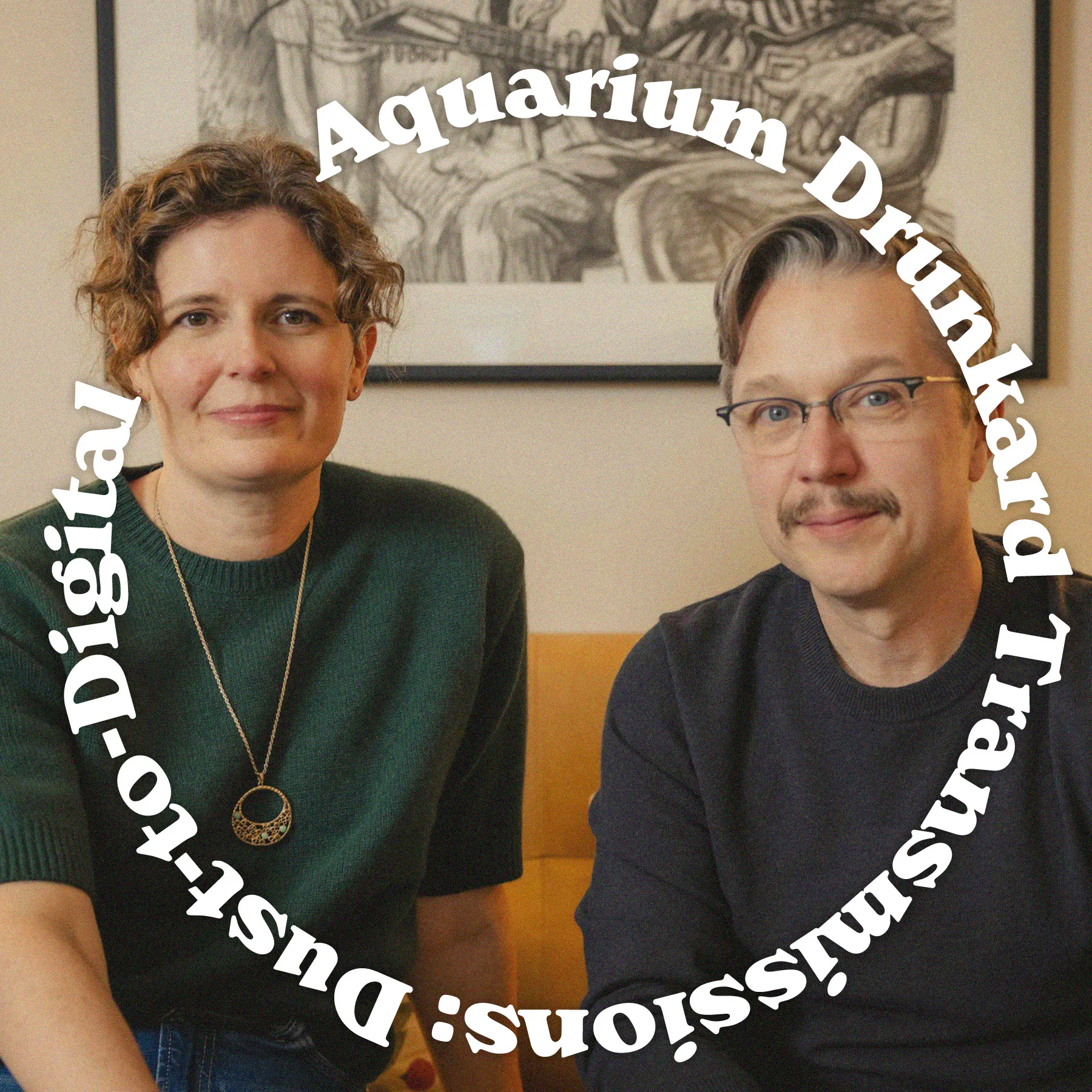
Transmissions :: Dust-to-Digital
6d ago01:06:32Tap to summarizeSince 1999, Atlanta label Dust-to-Digital has created lavish boxsets, books, and collections of gospel, folk, blues, field recordings, and other sounds sourced from deep global archives. Led by April and Lance Ledbetter, the label has been responsible for works like Goodbye, Babylon, a landmark 2003 gospel collection which inspired Brian Eno to say, "I love this kind of archaeology of the beginnings of music, in this case soul and rock ‘n’ roll …[it] features hair-raising sermons, the greatest hits of pastors." Other engrossing deep dives include Music of Morocco: Recorded by Paul Bowles, 1959; Excavated Shellac: An Alternate History of the World's Music; and the John Fahey collection, Your Past Comes Back to Haunt You (The Fonotone Years 1958-1965), alongside many others. This week on Transmissions, we present a loose hang with the Ledbetters, a lowkey look into the normal day-to-day of people who have dedicated their lives to the extraordinary effort of archiving sounds of the past. And now, Dust-to-Digital has launched an app: Dust-to-Digital Radio. Featuring a rotating selection of music released by the label and archival material digitized by the Dust-to-Digital Foundation, the app makes good on the label’s namesake, bringing historical music directly into the digital present. And it’s fun too—in an age of endless choice, it’s a treat to hand your ears over to these expert curators. In late March, we met the Ledbetters at the Big Ears Musical Festival. A few days after we all settled into our respective homes, we reconvened on Zoom to discuss the label’s mission, navigating the algorithms, and of course, some of the most notable Dust-to-Digital fans, including the aforementioned Eno and Law & Order's Carey Lowell. Learn more about your ad choices. Visit megaphone.fm/adchoices
Transcribe →
Transmissions :: Awake, My Soul
2w ago01:06:09Tap to summarizeDescribing the sound of Sacred Harp singing can be difficult. Arcane, otherworldly, and overwhelming, it’s a unique a cappella form of shape note Christian hymn singing that was born in England in the 18th century, but took root in the American south. It’s not something you listen to so much something as experience. This week on Transmissions, host Jason P. Woodbury speaks with Matt Hinton. Along with his wife, Erica Hinton, he’s the director of the 2006 documentary Awake, My Soul: The Story of The Sacred Harp; in 2025, the duo returned to the film, remastering it and crafting a full update. This month, the film is screening in the Los Angeles area, including showings in Glendale, and Santa Monica, at the Laemmle Glendale, Laemmle Royal, and the Monica Film Center. Sacred Harp utilizes a shape note system, in which shapes—triangles, circles, squares, and diamonds—are paired with syllables—fa, sol, la, and mi—to represent the notes in the traditional scale. Awake, My Soul explores the culture that centers around this form of communal worship, and invites viewers into this strange musical world. In addition to his work as a documentarian, Matt Hinton is a musician himself. He’s a member of the rock band Luxury, which features three Orthodox priests. He made a film about that group too, the 2019 movie Parallel Love: The Story of a Band Called Luxury. Though the soundtrack for Awake, My Soul, as well as a companion disc, Help Me to Sing: Songs of the Sacred Harp, featuring John Paul Jones of Led Zeppelin, Danielson, Richard Buckner, The Innocence Mission, author Rick Moody, and more, have long been out of print, they returned to streaming last month as the film celebrates its 20th anniversary. Join us this episode as we dig into the nature of communal singing, folk traditions, and the mysteries of sacred sound. Learn more about your ad choices. Visit megaphone.fm/adchoices
Transcribe →
Transmissions :: Erin Osmon
3w ago01:05:36Tap to summarizeWelcome back to Aquarium Drunkard Transmissions with Jason P. Woodbury. This week on the show, we welcome Nashville-based music journalist, critic and author Erin Osmon, to discuss her tremendous book, Won't Back Down: Heartland Rock and the Fight for America, which chronicles how heartland rock, typified by artists like Bruce Springsteen, John Mellencamp, Tom Petty, Bob Seger, and more, brought a populist, Americana-inspired sound to the airwaves of the radio and MTV. Along the way, Osmon shines a light on lesser heralded artists in the heartland canon, including Bonnie Raitt, Lucinda Williams, and Tracy Chapman, explores the impact of the shift from vinyl and tape to compact discs, the ubiquity of synthesizer technology, and the progressive undercurrent that propels this music. Osmon’s writing has appeared in the Los Angeles Times, Rolling Stone, and the New York Times, and she’s the author of a 33 ⅓ book on John Prine and Jason Molina: Riding with the Ghost. With Won’t Back Down, she traces the origins of heartland rock and its influence on artists like The War on Drugs and The Hold Steady, and best of all, offers deep insight into the complex characters of its most notable figures. Especially intriguing is the Indiana-born Osmon’s focus on fellow Hoosier John “Cougar” Mellencamp, who emerges as one of the most fascinating characters, a hothead with a leftist heart and punk rock verve. This year marks the 250th birthday of America, and this conversation was taped just a few days before the 4th of July. We haven't been feeling all that patriotic—maybe it has something to do with the fascists governing our country and their endless commitment to foreign wars and environmental destruction—but Osmon’s book reminds us that this country has at its core something more noble, some promise that has not been stamped out just yet. As the Boss once sang: “Everything dies, baby, that’s a fact/But maybe everything that dies someday comes back.” Learn more about your ad choices. Visit megaphone.fm/adchoices
Transcribe →
Transmissions :: Mouse on Mars on Lee "Scratch" Perry
4w ago01:03:13Tap to summarizeOccasionally, a song breaks forth from the void and strikes you like a bolt of lightning. That’s how we felt first hearing “Rockcurry,” from the late dub pioneer Lee “Scratch” Perry and electronic duo Mouse on Mars’ Spatial, No Problem, released earlier this summer on June 5th via Domino Recording Co. The song feels a little like plugging a fork into an electrical socket, à la Twin Peaks: The Return. Shock. Boom. A whole new world. This week on Transmissions we're joined by Jan St. Werner and Andi Toma, Mouse on Mars, calling in from Germany to discuss creating Spatial, No Problem with Lee. The two have been friends since they were kids. In 1993, they formed Mouse on Mars, drawing from electronic traditions, live instrumentation, breakbeats, and a propensity for collaboration with other artists, including Mark E. Smith of The Fall, members of the National, and Stereolab—who, hey now, provide our show’s theme song: “Flashes in the Afternoon." Though Lee is best remembered for his foundational contributions to reggae and dub music, his collab with Mouse on Mars is not a reggae record per se. Sure, that’s one element in the stew, but it simmers alongside ingredients suggesting jazz, krautrock, ambient music, and even some blues. Originally recorded back in 2019, Spatial, No Problem showcases just how dynamic Lee was as a creative force in the years before his passing in 2021. The LP demonstrates how The Upsetter could do any sound. From the Neu! ready strut of “Rockcurry” to the Eastern-tinged jazz of “Spatialee” to looping ecstatica of “Hallo Shiva,” the album blends generations and approaches, equal parts live instrumentation and chopped loops. It’s a fitting final statement from a shamanistic artist who vibrated with trickster energy right up to the end. This week on Transmissions, Jan and Andi share memories of working on the album, with detours into discussion of some of their other collaborations, with artists like Mark E. Smith and another Transmissions favorite, Swamp Dogg. Learn more about your ad choices. Visit megaphone.fm/adchoices
Transcribe →
Transmissions :: Bruce Hornsby
Jul 1501:01:50Tap to summarizeWelcome back to Aquarium Drunkard Transmissions with Jason P. Woodbury. Near the end of his latest LP Indigo Park, our guest this week, Bruce Hornsby, sings something of a conclusion. Or perhaps, a belated introduction: "I've been seeking magical thinking/I think I detect a trend/This could be the start of something/Or this could be an end." The lyric isn't cited to suggest the 71-year-old songwriter is going anywhere. If anything, Indigo Park speaks to the hot streak Hornsby's been on since 2019's Absolute Zero. With that album, he began mining his vast bank of musical cues created for various projects with his longtime collaborator Spike Lee, crafting them into full songs. To his surprise, these late period albums caught the attention of fans of adventurous music, his reputation bolstered by artists like Bon Iver, Vampire Weekend, Haim, and others citing Hornsby as an elder statesman. Recorded with co-producers Tony Berg and Will Maclellan at Sound City Studios in Los Angeles and The Large Cloth-Eared Collider in Williamsburg, Virginia, Indigo Park demonstrates just how unexpectedly Hornsby operates. From the chiming folk rock of the title track to the Bonnie Raitt-assisted art pop of "Ecstatic" to "Might As Well Be Me, Florinda," a woozy duet with the late Bob Weir aided by the sparking guitar of Blake Mills and Pino Palladino's liquid metal bass, the album showcases Hornsby's vast—ahem—range. At once funny, poignant, and audacious, it's a gem, one of my favorite records of 2026. Earlier this year, Aquarium Drunkard caught up with him to discuss the album, basketball chants, his work with The Grateful Dead and the Dead’s legacy, his taste in literary fiction, and much more. We published a condensed and edited version of this interview in print on Aquarium Drunkard back in April, but now, we’re pleased to present the full chat in the podcast feed—complete with an exclusive piano performance that sonically illustrates Hornsby’s Protestant hymn-soaked youth in Christian Science congregation. Learn more about your ad choices. Visit megaphone.fm/adchoices
Transcribe →
Transmissions :: Lenny Kaye
Jul 801:09:27Tap to summarizeWelcome back to Aquarium Drunkard Transmissions with Jason P. Woodbury. There are certain artists who straddle the line between music and prose, between songwriting and music writing. Think of Ira Kaplan from Yo La Tengo, who spent his early years as a rock journalist, or the doomed Peter Laughner, or even Lester Bangs, who cranked out a couple of raucous singles on Ork Records in addition to his pioneering criticism. Then there are the patron saints of this dual discipline: Patti Smith and today’s guest, her longtime collaborator Lenny Kaye. Kaye’s creative output is kaleidoscopic: he’s a founding member of the Patti Smith Group, bringing his slashing guitar style to classic records like Horses; he curated the legendary rock & roll compilation Nuggets: Original Artyfacts of the First Psychedelic Era; he’s produced records for artists like Jessi Colter, Allen Ginsberg, and Suzanne Vega; and he’s written a number of books, including one about Waylon Jennings, Waylon: An Autobiography, and Lightning Striking: Ten Transformative Moments in Rock and Roll – An Insider's Exploration of the Crossroads That Shaped Music. Lenny is with us today to discuss Goin’ Local, his first proper solo album, out July 17 on Yep Roc Records. Cut with his longtime bandmate Tony Shanahan and featuring Lenny’s longtime creative partner Patti Smith, Goin’ Local brings a little country & western, a little garage rock, a little folk, and lots of psychedelic energy to the table. Kaye joined us to discuss the new record, his roots in science fiction fandom, getting mystical with Jessi Colter, the queen of outlaw country, and the time your humble host asked Lenny if he could sample one of his songs. Lightning is striking—it’s time for Lenny Kaye on Transmissions. Learn more about your ad choices. Visit megaphone.fm/adchoices
Transcribe →
Transmissions :: Annahstasia
Jul 100:55:15Tap to summarizeAnnahstasia is one of the most exciting singers and songwriters in the modern folk space. Originally courted by major labels in her youth, she found herself drifting away from the bedroom pop and R&B genres where music business execs thought she belonged. Drawn to folkier material, she emerged in the 2020s with a sound that blends the soul jazz of Terry Callier with Nick Drake’s hushed chamber folk, her magnificent voice way out front in the mix, sometimes recalling the fullness of singers like Odetta or the jazzy sway of Hejira-era Joni Mitchell. In March of this year, she released a live album, Live at Glasshaus, recorded at the Brooklyn studio and performance space. Drawing her full discography, Annahstasia and her band re-imagine the material and present in a fresh and intimate way in front of a limited audience of only 100 attendees. On this week’s show, Annahstasia joins us to discuss the spaciousness and quietude required to get into a creative zone, the influence of Terry Callier, blazing her own trail as a self-described “Black girl playing her guitar.” We also get into her earliest memories of listening to her parents CDs, the most frequently cited book on Transmissions, Hazrat Inayat Khan's The Mysticism of Sound and Music, and how creating from the heart puts you in touch with the divine. Learn more about your ad choices. Visit megaphone.fm/adchoices
Transcribe →
Transmissions :: Don Was
Jun 2401:10:45Tap to summarizeHello and welcome to Aquarium Drunkard Transmissions with Jason P. Woodbury, presented by the Talkhouse Podcast Network. We're kicking off our new season with a fantastic guest: Don Was. Was' CV is stunning. In addition to his genre-bending work with Was (Not Was), Don has collaborated with some of the most respected artists in music history: Bob Dylan, Bonnie Raitt, The Rolling Stones, The B-52s, Ringo Starr, Roy Orbison…the list could go on. These days, you can find Don with his band, The Pan-Detroit Ensemble, whose latest album is called Groove in the Face of Adversity, and behind the desk at Blue Note Records—he’s been the president of the legendary jazz label since 2011. But Don has joined us today to talk about one of his very first recording projects: Ted Lucas' Impossible Love, an unheard album he cut with the cult Detroit songwriter in 1979. Impossible Love is part of Third Man Records’ new collection of Lucas gold, Images of Life. Following their reissue of his stoned folk classic 1975 LP, Third Man Records has unlocked the vault, offering a comprehensive look at one of the late ’60s and ’70s’ most dynamic Detroit talents. Spanning Lucas’ career, the set includes recordings by Lucas’ early regional sensations like The Spike Drivers, The Misty Wizards, and The Horny Toads, acoustic demos, and his long-lost second album, produced by Was. Don joined us to discuss his time with Ted–including a disastrous gig they played with Black Sabbath—and help us uncover this lost Motor City counter culture story. And that’s not all—Don also reflected on his work with the late bandmate Bob Weir, the legacy of the Dead, and of course, his work on Garth Brooks’ ill-fated 1999 Chris Gaines project. That's right: we went there. So roll up your sleeves and let's get to it, Don Was on Transmissions. Learn more about your ad choices. Visit megaphone.fm/adchoices
Transcribe →
All One Song :: Lee Ranaldo on "Down By the River"
Jun 1701:03:58Tap to summarizeTyler Wilcox has spent season two of All One Song conversing about Neil Young with musicians, writers, and artists. And now, we’ve reached the end of the road for this Neil journey, with a very special guest: Lee Ranaldo, dropping in to discuss “Down By The River.” Lee is a founding member of Sonic Youth. Along with Thurston Moore, Lee redefined how we hear the electric guitar in a rock setting. Sonic Youth is no more, but they just released a wild Plunderphonic collage from the archives: Diamond Seas. Ranaldo joins us to talk about a Neil classic, one that dips from muder ballad terror to cosmic life affirmation. When we had Micah Nelson on, we discussed how immense this song is. Lee offers a great ramble about, as well as hear about Lee’s own experiences on the road with Neil and Crazy Horse with Sonic Youth. Learn more about your ad choices. Visit megaphone.fm/adchoices
Transcribe →
All One Song :: Matt Valentine on "Berlin"
Jun 1001:15:01Tap to summarizeWe’re coming dangerously close to the end of the road for this latest season of Neil Young deep dives. And the end of the road is the topic at hand when it comes to today’s song — “Berlin.” Now, we’ve covered some deep cuts over the course of the past two seasons. But “Berlin” has to be one of the deepest. It was passed over on the recent Archives Vol. III box and you can’t even stream it via Neil’s site; the only official way to experience this moody tune is to watch In Berlin, the concert film that captures the last performance of the semi-chaotic Trans tour of Europe in 1982. With its doomy synths, piercing guitar, tortured vocals and synthetic handclaps, “Berlin” provides a fascinating glimpse of this short-lived band, which featured a grab-bag, rag-tag bunch of players from Neil’s past, all grappling with a new decade and new sounds. In Berlin itself is an amazing document, highlighted by Neil and Nils Lofgren performing bizarro dances and duets on such Vocoder-laced tracks as “Transformer Man” and “Sample and Hold.” You gotta see it to believe it. Here to talk about “Berlin” with us today is someone we've been fans of for a long time now—the mighty Matt Valentine. MV has been making beautiful noise for over three decades now, from Tower Recordings to MV & EE (with his partner Erika Elder) to various solo excursions and collabs. For the past decade, Matt’s primary focus has been Wet Tuna, which also features Erika and bassist Jim Bliss. The latest Tuna LP is called Vast — and you’d be hard-pressed to come up with a better title for this collection of strange and funky flights. Released on the venerable Three Lobed label, it’s a wide-open, far-flung album, deeply textured and ridiculously detailed, but somehow spacious and inviting. A psychedelic micro-galaxy/macro-dose that teems with life and imagination. You gotta hear it to believe it. You also gotta hear the recent Wet Tuna Lagniappe Session, which was posted up over on Aquarium Drunkard earlier this spring. One of its many highlights is an inspired medley of “Cortez the Killer” and Sonic Youth’s “Providence” that lasts close to 30 minutes. It’s outrageous. Learn more about your ad choices. Visit megaphone.fm/adchoices
Transcribe →