Loading summary
Transcript169 lines
- [00:00]
Francis Foster
I've been making arguments in public for long enough to know that being right is rarely sufficient. You have to be clear, you have to be precise, and you have to understand how language actually works on an audience. Which is why I recommend Hillsdale College's new online course, Classical Logic and Rhetoric. In this course, a Hillsdale College professor teaches you the tools to construct a sound argument. You'll learn how to think more clearly, how to structure your reasoning so it holds up under pressure, and how to communicate your ideas in a way that people can understand and respond to. Rhetoric is not manipulation. Logic is not pedantry. Together, they are the tools that allow you to think and speak at your best. This course makes that accessible to anyone. To enroll, go to Hillsdale edutrigger. There's no cost, and it's easy to get started. That's Hillsdale Edu Trigger.
- [00:50]
Lucy Ann Bingers
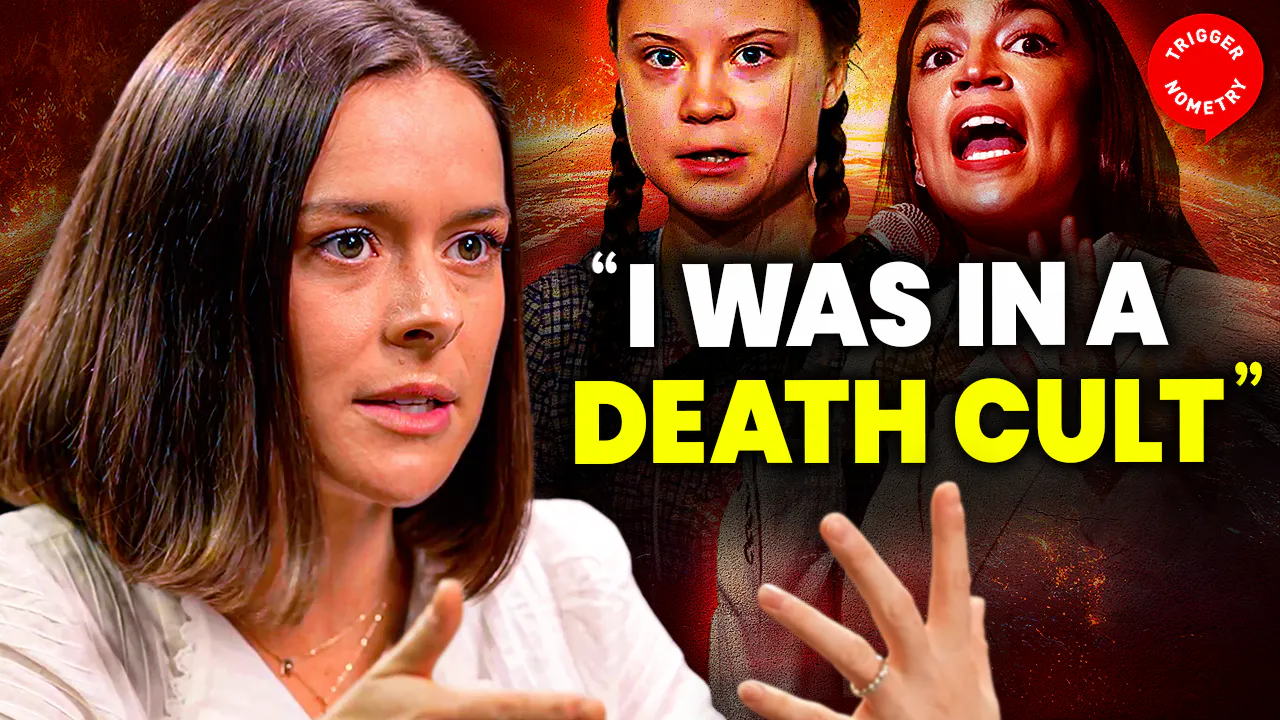
I'm on the right side of history. I'm atoning for being descended from this oppressive group of people. And so it was all in my psychology, a way to be a good person. I gave AOC one of her first interviews. I interviewed Greta Thunberg. And look at her now. I mean, I feel like she's lost the plot. I didn't know, like, how bad Stalin and Mal were. I did not know. I didn't know. I really thought that, like, we were just the worst country, which is really. It's so sad. I truly was the definition of a useful idiot. It's like I have 10 years to live.
- [01:22]
Matt
It's kind of brainwashing, isn't it?
- [01:24]
Lucy Ann Bingers
Yeah, I think it's brainwashing. And I'll be even more hyperbolic. I say it's a crime against humanity.
- [01:29]
Francis Foster
Can you win those people over?
- [01:30]
Lucy Ann Bingers
We can win them over. I think we're moving out of this emotional heightened phase. What I think we are.
- [01:36]
Francis Foster
What?
- [01:36]
Lucy Ann Bingers
I don't think it's getting worse because of social media and because of, like, Trump derangement syndrome for the last 10 years. I think it's like something's gotta give.
- [01:46]
Francis Foster
Lucy, welcome to trigonometry.
- [01:48]
Lucy Ann Bingers
Thank you so much for having me. I am so excited to be here.
- [01:50]
Francis Foster
Oh, it's great to have you. You were a climber activist, and you're not anymore. You have a very interesting story to tell, so why don't we just get started there? What is your story?
- [02:00]
Lucy Ann Bingers
Yeah, so I was a climate activist for half my 20s. So that was from 2016 to around 2020. And I fell into it because at that time, I was a video producer at a very Left wing news company called now this News, which some people know it, some people don't, but we were one of the first news companies to get videos to automatically play on the Facebook feed back in the 2000 teens, which with subtitles. So I moved into that newsroom as a 25 year old and my job every day was just to be scrolling on my newsfeed, which now we know about this, right? It's like doom scrolling and our algorithms. But that was where I first got exposed to this modern climate movement in the form of actually this Dakota Access Pipeline protest that happened in 2016, which was very viral, where there was Native Americans protesting a pipeline going in and all these people commenting would say, cover dapl. DAPL for Dakota Access Pipeline. And so I just started covering that as a 25 year old, kind of bought it hook, line and sinker that there was this narrative that these evil fossil fuel companies are building a pipeline on indigenous land. And I started covering it and all the videos that I made went really viral. And so there was a feedback loop of I'm getting a lot of professional success from this. And so I just made climate change my kind of whole personality and beat me for my 20s, eventually growing my following to 50,000 on Instagram by like 2019. I interviewed Greta Thunberg. I gave AOC one of her first interviews when she was running for Congress in 2017. And that went very viral. So I was very much entrenched in the very progressive and progressive like political movement. And then also the climate stuff from the center of this newsroom, essentially. Yeah. So that was how I basically spent half my 20s, kind of just buying everything as it was sold to me. Never really investigating. Watched a few documentaries that honestly convinced me that this was an existential threat and did not have a deep understanding of the science. And to the point where I'll just anecdotally say, like in 2019, I learned that CO2 is only 0.04% of the atmosphere. Up until that point, I've been covering the climate for four years and I didn't even know what percent of the atmosphere CO2 was. So that was how like turned off my critical thinking was because I was getting so much support from being part of this movement that I just pushed it. Right. And that was five years of my career.
- [04:30]
Francis Foster
And you know, I've listened to a bunch of interviews Francis has as well that you've done. You're clearly an intelligent, very intelligent person.
- [04:37]
Lucy Ann Bingers
Thank you. I mean, I'm a little naive.
- [04:39]
Francis Foster
No, no, we didn't bring you here to humiliate you. I actually.
- [04:42]
Lucy Ann Bingers
No, it's important, though, because I think it's like showing how someone, even if you're intelligent. Thank you. Can turn your critical thinking off when you're in groupthink.
- [04:49]
Francis Foster
So this is what I was gonna ask you. Why do you think you were. And people are susceptible to this thing, even if they are smart and, you know, are capable of thinking things through and using critical thinking in other contexts.
- [05:02]
Lucy Ann Bingers
Yeah. So I think there's a confluence of things, of timing and my generation and technology and politics. Because again, I'm a millennial. I'm like the perfect. I was born in 1990, so this is my mid-20s. It's 20 teens. Social media is picking up. I'm scrolling on my algorithm, which we did not really understand how those things worked then. Right. I feel like I was like patient zero of some of this stuff. And I was also at the same time working in a very left wing newsroom, which cannot be separated from my story because while I was at that newsroom, so it's 2015, I started, and then 2016, Trump's rise is happening. We're all Bernie supporters. Trump gets elected and kind of everyone goes crazy. Right. We've now been living with this for 10 years, especially on the left. And it became a lot about identity politics that kind of came into the newsroom over the slack, over social media. And so I'm give us some examples.
- [05:54]
Francis Foster
Like, what do you mean?
- [05:55]
Lucy Ann Bingers
Just like the idea of like, everyone, like, everyone who's white is a white supremacist, even if they don't know it, they're. You're racist. So, like, you should really question what you believe because more often than not, you're racist. You have cisgender privilege.
- [06:08]
Francis Foster
And did you think this when this was happening, were you like, actually, I am. You know, I must be a white supremacist.
- [06:12]
Lucy Ann Bingers
I literally was just like, I guess this is what is true. Like, I was just like, I'm going to listen to BIPOC, which is like POCs, people of color. I'm going to listen to other people's perspectives and I'm going to sit down and shut up essentially to listen to what other people have to say and not that there's anything wrong. Obviously. I think historically minority voices have been excluded from conversation. So there's seeds of truth. Right. But it just took it such to a degree where we threw out the idea of the MLK would say you should be judged by the content of your character, not the color of your skin that was out the window. And it was like everyone who's white and says cisgender and privileged doesn't have a perspective here. So anyway, that's the culture of the newsroom. Not that anyone's like a gun to my head being like, you must believe this, but it was just the water that I was swimming in. And I want to be a good person. I'm not inoculated against these ideas coming out of the American education system. And we have social media online for the first time, so it's not like my parents can warn me of how these things work. Throw in the Slack channel where everyone group messages, so it's public messaging. And you very quickly just get a culture that's very ideological in the newsroom. And so I just bought into everything because I wanted to be a good ally. And I'm looking around at the ideology as it's really picking up in the 20 teens, like 2017 and not post Trump elected. And it's saying like, if you're a white person, if you're an American, if you're straight, you have all these privileges. And so to me, the climate movement was a perfect way to atone for the sins of my birth, of being a privileged person. I can represent the indigenous Native Americans who have been historically oppressed. I can now help them. So now I'm on the right side of history. I'm atoning for being descended from this oppressive group of people. And so it was all in my psychology, a way to be a good person and fit in with a group, which I felt wasn't gonna accept me if I was just like a normal white person who was like, actually, this country is worth defending. Actually, I'm not racist. Like, I was never gonna say that stuff because I would get my head chopped off by the group think, even if it was never an overt threat. Right.
- [08:24]
Francis Foster
How do you know that you would have been attacked if you'd said that?
- [08:27]
Lucy Ann Bingers
Because you would just see in this Slack channel what was an appropriate opinion to have. And anything that was slightly moderate or pushing against this would very much get shouted down by the vocal, most vocal, most extreme groups in the, you know, most vocal employees in the group. And so it wasn't a conscious thing, you know, it's just a bunch of 20 somethings kind of just figuring out what is okay. And again, this is a very millennial 20something newsroom in the 20 teens. The, you know, virus has left the lap at this point. And I think this ideology is now at the New York Times we know this, it's like the woke stuff that we talk about. But I was just in it, I didn't question it. And it just subverted everything in my worldview, right where it's like I grew up two parent household in Connecticut. Like I did American life. Like I have family who like fought in the Revolutionary War, Civil War, whatever. I have a lot of like national pride. And all of a sudden I, because of this ideology, I was like, I can't have pride in any of that. And I need to just kind of apologize, stay small and like atone and like, hopefully they'll all be accepted by the group because, like, sorry guys, like, so it was a very like, sad ideology to live by. But I think that my experience is very common in my way of just being a good ally. I took it out by building up this climate movement and brand. And again, this is all in retrospect that I'm saying this. At the time, it was all subconscious. And only now, years later, I left that job in 2021, I went to a nonprofit for one year. And that's when I then heard about Barry's podcast. Barry Weiss is my boss now at the Free Press and she started the Free Press. And I've been out the Free Press since 2022. And so that's even been more of a like deprogramming essentially.
- [10:16]
Matt
So yeah, the thing that I found really interesting about this movement because at the time I was teaching primary school, so I could see some of these ideas start to creep into primary school teaching and teaching about climate and the fact that, you know, the world is coming to an end, all this stuff. And I remember reading about it and I stumbled on Greta Thunberg and she was 15 years old at the time. And as somebody who also used to teach special needs kids, I found it deeply weird that the head of this movement was a 15 year old autistic girl. What was your impression when you interviewed her and did you not find that strange as well? Or was it something that was just accepted?
- [10:55]
Lucy Ann Bingers
It was something that was just accepted. In retrospect, I think it's so weird. I think it's such a red flag. But at the time, I think this ideology of the climate movement and the nihilism and the apocalyptic thinking, it has a lot of religious undertones. And so I think Greta was accepted as like this beacon of hope. Right? She was a Joan of Arc character and this idea that the youth are unspoiled by the sins of this world. So she's a truthsayer that's how I saw her, right? I thought she was so brave and I did not. I would laugh when I would see the conservative critique of her that was like, oh, why do you have a 15 year old leading your movement? I'd be like, they just don't get it, you know. And now I think that's a very valid critique. Why does a movement need a teenager to be its leader? We're living in the real world here and things like our energy system are not something that a 15 year old who's never paid an energy bill in her life should be talking about. But again, it was so ideological. And so when I met her, which was 2019, May of 2019, I just was able to. My producer at the time was able to get an interview with her, which was a big get. So we flew to Stockholm, which I put the carbon emissions of the flight out of my mind. I'm like, it's for the greater good. And I interviewed her and the things that I took away from it the most, it was a very professional operation, right? Like she brought her bike in multiple times to get multiple shots for me and other camera crews that were there. I think 60 Minutes Australia was also there and a few other outlets. And I had a designated time with her only about like 20 minutes. And I thought she was actually very articulate and had a great quality actually about her. She has charisma obviously to lead a movement like this. And so I thought my interactions with her were lovely. Obviously like the cultural divide of like her being European and younger and on the autistic spectrum. I felt like she was a little bit more like serious than like the American me. I'm like trying to crack joke. I'm trying to get a smile out of her, not successfully, but I felt that she in person was actually a lovely person. But again, she's so young and her parents, her dad was there, dropped her off and then I know he went to like a nearby coffee shop while she was doing all these shoots.
- [13:09]
Matt
Because to me what it betrayed was a fundamental lack of seriousness about the movement. Because as somebody who wasn't, who saw themselves at the time as being on the left, I had that thought. As somebody who's taught 15 year old girls, I was thinking to myself, number one, she's not an expert in anything. And number two, if I'm being honest, this is a fundamental act of cruelty, putting someone so young and turning them into a celebrity. When you look at what happens to child stars in Hollywood, I mean, it never normally ends well.
- [13:37]
Lucy Ann Bingers
Yeah. And look at her now. I mean, I feel like she's lost the pot. Right. Like, I think. Yeah. And I know, like, her origin story was she had so much anxiety about climate from, like, I think probably watching the same documentaries that I was watching that were very biased. And her way to act out this anxiety was to become an activist. And I think now as a parent, I think if that was my child, I would be showing them counter facts. And there's so much out there around climate change to paint a picture that it's not existential. So the fact that her parents went this route of activism is, I mean, it's reflection, I guess, on their values and everything. And obviously now we see that she is very confused. I think she was just making a video about Cuba and she's just basically gone full Marxist, which is kind of, you know, there's the connections there between climate and. And that movement. So maybe not surprising.
- [14:28]
Matt
Well, let's explore that. So what are the connections between communism, socialism, whatever you want to call it, and the climate movement? Because it does seem to be quite a lot of overlap.
- [14:39]
Francis Foster
If you own gold, you probably bought it for the same reason I did, because you looked at what central banks are doing to currencies and decided you wanted something they can't print. Good reasoning. But here's the thing nobody talks about. After you make that decision, your gold is just sitting there. It's not doing anything. You're paying to store it, you're paying to insure it. And in the meantime, it earns precisely nothing. Until now. What you're about to hear is not a normal gold advert. Today's sponsor is Monetary Metals. They've figured out something that, once you hear it, seems obvious, but almost nobody in the gold world is doing it. Monetary Metals connects gold owners with productive businesses. Refiners, jewelers, companies that actually need physical gold to operate. Those businesses lease your gold and pay you a yield. Not in dollars, not in pounds, in gold. So instead of your gold sitting in a vault costing you money, it's out in the real economy doing something useful. And you're earning more ounces of gold for it, up to 4% annual yield. Paid in gold. If you already own gold, this is the logical next step. Visit monetary-metals.com trigonometry or click the link in the description. See how your gold can stop costing you money and start earning you more gold. That's monetary-metals.com trigonometry.
- [16:00]
Lucy Ann Bingers
There's a lot of overlap that I've seen, and having been in that mindset and then gotten out. I can just say the parallels that I see. One is this idea of the intelligent bureaucrat knowing more than the average person and that the average person is somehow stupid, they're ignorant. So like we, the central planners can plan this better and then also taking away people's property rights and in the name of a greater cause. So socialism we all know is to get to equality and climate change is to save the planet, but they end up being acted out in very similar ways. You need more bloated bureaucratic government. You're always going to prevent some or you're always trying to reach a utopia, right? It's like in 10 years it'll be a green utopia. Just we're going to tax you a little more, you're going to give up some of your freedoms, but in 10 years it's going to be utopia. So there's a lot of ideological overlap and I think again you can't be understated how uninoculated the west is from this. Young people were not educated properly on communism socialism in America at all. We're taught a lot about World War II and Hitler and stuff like that. But I never even learned about the destructiveness of communism and socialism when I was in school and only have had to educate myself later. And so I think I do see the climate movement as sort of the next iterate iteration of that same ideology. It's about control, but in the name of greater good.
- [17:26]
Matt
Because. So just one final thing because then the climate movement entered this really weird phase where then it started to equate its struggle with Palestine.
- [17:39]
Lucy Ann Bingers
No, I know, stop.
- [17:40]
Matt
And I was, and I was like,
- [17:42]
Lucy Ann Bingers
well, while I was still in it in the 2019s too and like the BLM stuff was coming in 2020 then it was all about like everything is social justice and it's all about the global north has been oppressing the global south and Western imperialism and it really like the. I mean, I'm not trying to think of the word, it's like the. They exposed themselves to what they truly were. Right? Like the mask came off is what I was trying to say is that the mask really came off, I think. And you started to realize around 2020, at least for me, I'm like, wait a minute, I thought we were like trying to recycle here and like maybe put in a few solar panels. And now I'm having to like down with the west and like the global north is oppressing everyone in the global south. Very black and white thinking and I think as the years went on, like, the overlaps between those ideologies, like, got more and more and more. Then maybe when I entered it again in the 2015, 2016, I truly was the definition of a useful idiot. I was just ignorant, I was trying to do good. I really just was a well meaning young person who wanted to be on the right side of history, wanted to have my impact. I felt like there was an injustice in this case, evil fossil fuels were taking advantage of a Native American tribe. And it was a very black and white story for me. And then as the movement went on, I started to see everything that we're talking about.
- [19:03]
Francis Foster
Lucy Ann, where did you get this idea that to be on the right side of history was to be on this side?
- [19:10]
Lucy Ann Bingers
Yeah, I think that for my generation, the millennial. So I'm now 35 and I'm 25 at that time. You have to think about the context that we were growing up in, which was the financial crisis in 2008, which happened under Bush, the forever wars. And so we are a very liberal generation and we never live through like Reagan. Right. Like, so we just basically.
- [19:32]
Francis Foster
I love the way she's pointing me. I didn't live through Reagan either. We're all fucking respectable.
- [19:36]
Lucy Ann Bingers
How old you guys are. Why am I like assuming we are elderly millennials like Reagan, like 100% your favorite president? Maybe it's because your opinions are just so mature, guys.
- [19:47]
Francis Foster
That's right.
- [19:47]
Matt
That's right, you're elderly.
- [19:50]
Francis Foster
You can weasel out of this all you want.
- [19:52]
Lucy Ann Bingers
When you were in high school. When you were in high school. When Reagan was in August. No, I'm just kidding. But I guess my point is like, maybe because. Okay, I don't know, I feel really bad now to like age bias.
- [20:03]
Francis Foster
Lucy, I'm messing with you. I actually think this is a really interesting point because we are a little bit older than you.
- [20:09]
Lucy Ann Bingers
A little. Just a little.
- [20:11]
Francis Foster
Well, probably about eight years.
- [20:12]
Matt
And we don't have to be public about it.
- [20:16]
Francis Foster
When we were at school, I actually don't remember being taught anything that would predispose me to this kind of worldview.
- [20:25]
Lucy Ann Bingers
Right.
- [20:26]
Francis Foster
But I went to school in England, so it may be a bit different. I guess what I'm guessing at is when you mentioned that the American education system a didn't prepare you to be critically thinking about some of these things, but did it also prepare you for the view that you just described, which is this is the right side of history. Were you being told about climate change is about to destroy the planet and all this kind of stuff at school, right?
- [20:50]
Lucy Ann Bingers
Yeah. And again, I graduated from high school in 2008. So then I'm even kind of young. I'm kind of the end of the millennial. And I think there's the generation after me is even worse with some of this stuff because I got out of college by 2012. And I will say, like, we're 911 kids. We're like we were 11 when 911 happened. And when Osama bin Laden got shot, we had a party at my college because we were so excited. So we were very much still it was like now there'd be probably like a eulogy for something. So I mean, even I was kind of a transition generation to what this younger generation has been even fed. But I will say I think the context of for me and maybe just not being inoculated against this in my home and at school was like, obviously Obama is the hope president, Obviously Bush is bad. Look at the forever wars, look at the financial crisis, look at income inequality. And so I was just sort of your basic millennial liberal because that was just the path of least resistance. And everyone who was conservative I just kind of thought was like old school or they didn't get it. And I never was articulated to in a way that made me feel like I should be on that side. And only after being on the left for so long and seeing it go completely crazy was I like, hold on, I need to like get out of here and like basically essentially reeducate myself. And I don't know, there was enough cognitive dissonance obviously though, that like I, I was able to leave the movement and I chose to work for Barry, which is like not exactly a safe choice. And when I will say, being now at the Free Press for three years and you know, all of our contributors, our writers, Douglas Murray, Neil Ferguson, all these people who like now they're household names to me and I, you know, now know all their work. And that also helped re educate me because even coming into the Free Press, I was still questioning, right? It's like this is a very long process. Like I, I stopped posting on my social media as a climate influencer in 2020, and then I've had my son in 2022 and I was at a nonprofit. Then I came to the Free press end of 2022, had another son in 2024, and I didn't start posting publicly about my new opinions until 2025, but questioning the whole time I had said before the cameras were rolling, like I remember seeing your guys videos in 2020. And I really liked the name trigonometry because I knew that everyone in my circle was, like, triggered by everything because everyone was such snowflakes. But I was still thinking of myself as in the group. And I think it can't be understated how much it takes to extract yourself from that. And I think now it kind of all ties in. Like, my cause is climate. Right. And we'll talk more about that. But I think you look at the activism now, and it feels like every six months, there's a new cause du jour, and a lot of young women, mothers and people of my demographic are getting whipped up every few months. What's the new thing that you're gonna freak out about? And so my experience is just one, but it continues on, of course. Yeah.
- [23:44]
Francis Foster
And by the way, the reason I'm digging into why you had the views that you had is I actually think, you know, I've always tried to understand where people are coming from. Doesn't mean that I agree or accept or tolerate even. But understanding, I think, is the most important thing. And one of the things you mentioned is kind of interesting. You mentioned young women. This is something that Orwell wrote about in 1984, that it. It is young women that tend to go for all these social. I don't know what the right word is.
- [24:14]
Lucy Ann Bingers
Social justice causes, essentially.
- [24:15]
Francis Foster
Well, right. But also, I. I guess he wasn't really talking about social justice. I think he just meant if there was a kind of social derangement in which everybody went in a particular direction. Didn't have to be about social justice necessarily. It was just about a lot of people who hadn't thought about something critically but felt very passionately that it was the right thing to do. Is that. Does that match your experience with the people around you? Young women?
- [24:41]
Lucy Ann Bingers
It was a mix. It was a mix. It was. It was both, I think. But I would say in the climate movement, yes, Many, many women. And what you said about the not critical thinking is basically everything about it.
- [24:56]
Francis Foster
And why do you think that is?
- [24:58]
Lucy Ann Bingers
Because I think there's an emotional side of women where we're very empathetic, and so we see suffering and we want to fix it. And so I had a lack of boundaries, of individuation between myself and what I can control and the suffering in the world. And then again, social media, kerosene on the fire, where we're now getting exposed to all of these different causes around the world. You have to care about everything. And then if you start to say, I Don't want to care about something. I have an emotional boundary here. The movement will say, well, you're privileged for having an emotional boundary. That's selfishness. And so there was so many ways to hook you back in when you're in this movement. And again, that's why even years after leaving, I would be like, on the edge. Like, I had to like, read every single one of Douglas Murray's books to be like, I'm not crazy, like, and re. Like create a foundation for myself that was not so anti west. And so just like emotionally, like dispersed over the whole globe. I felt like I had the weight of the world on my shoulders with all of these different ideologies that I felt I had to push. And for me, climate was the main one. But again, kind of everything like your textbook, very left person. So. Yeah, I mean, there's so much there, so.
- [26:09]
Francis Foster
Well, you're right, there's so much there. I mean, the thing I'm hearing through all of it is almost like there is a sense of pressure, but there's also almost like a craving for some kind of meaning and purpose as well. Is that, is that part of it?
- [26:22]
Lucy Ann Bingers
100%, I think, yeah. I think the social pressure to be seen with good within the group, wanting to have your impact on the world and to have a legacy and make a difference and having that desire. But because of the Internet and social media, it's kind of dispersed over the globe versus caring about your own community near you. Right. Your own school board or all these things. Again, I was younger. I'm an urban New Yorker at that time, so I'm living, I'm renting an apartment. I don't really have a stake in the game in the way that I do now. And so I fell for all this stuff. And again, I see people that I know now in my life that I know in person, and I see them posting, you know, the memes every few months, whether it's. It would be like the person boasting the black square during blm, right? And then it's like Palestine stuff. Then it's the anti ICE stuff, right? And you can care about immigration and all these different things, but like the level that these women are triggered by this stuff and they're, they're. I think of it now is like their nervous systems are hijacked by this ideology. Even if they're like at home on their phone, like breastfeeding a newborn, but their minds are like. And part of them is in that global cause. And climate was the big cause. In 2018 and 2019. Right. And now it's no longer as fashionable. But I think that's why my story, I think, is important, because there's different causes, but the same tactic is used.
- [27:52]
Matt
We get asked this all the time, which VPN do you use at Trigonometry? The answer is simply CyberGhost VPN. CyberGhost isn't some fringe tool. It has 38 million users and over 20,000 five star reviews on Trustpilot, which frankly is rare for any tech product, let alone a VPN. CyberGhost encrypts your Internet traffic, which means your provider, your employer, your school or anyone else on public WI fi cannot see what you're doing online. It roots your connection through secure servers in 100 countries, hides your IP address and keeps no logs at all so your activity isn't being tracked or stored. On top of that, it unlocks regional content from 40 streaming platforms like Netflix, Amazon prime and Disney plus, and it works on up to seven devices at once. Phones, laptops, tablets, even your smart TV. You can share it with your family if you want. We rely on it when we're traveling for the show because it's simple, fast and it just works. Right now, you can get CyberGhost for about 2 bucks a month with 4 months free, a 45 day money back guarantee and 24,7 support. That's protection for your browsing data and access to blocked content online for two bucks a month, totally risk free. To grab the offer, go to cyberghost vpn.com trigonometry or click the link in the description of this episode. It's completely risk free, so check it out. Today, I really have an empathy for young people, and particularly of your generation and the generation that came after you, which I didn't at the start because of the way that we were treated and the way that things happened in the comedy industry. I was very angry. But the more I step away from it, the more empathy I have because I talk to young people and then they say things like, I don't want to have kids. And I go, okay, why not? And they went, or because of the climate crisis, I don't want to bring children into this world. And you go, this has gone so deep, so deep into your psyche that it's actually affected you to the point where you don't want to carry on your own lineage. Which to me is heartbreaking.
- [30:04]
Lucy Ann Bingers
It's so heartbreaking. And again, I think that generation that's younger than me, the people in their 20s now, they were the ones that were taught climate stuff in school. It became curriculum because all the teachers and people were like, we have to teach this to them to be responsible. And for me, in 2006, I was a sophomore in high school, and we watched Al Gore's Inconvenient Truth during high school assembly, and that was my first exposure to it.
- [30:27]
Matt
Was that widespread or was that just your school, do you think?
- [30:30]
Lucy Ann Bingers
I think it was widespread.
- [30:31]
Matt
Wow. Okay.
- [30:32]
Lucy Ann Bingers
And that was sort of the beginning of the climate movement of my era, where, like, I feel like my parents are baby boomers and they had, like, Silent Spring and, like, they were, like, hippie environmentalists. And then for us, it was the climate and Al Gore's that film. And I will say, I remember watching that film, and I was overwhelmed afterwards with so much existential dread. I remember sitting in, like, a photography class, hanging out with my friends after, and I was, like, thinking in my mind, okay, I'm 16. I have till I'm 26. Like, I have 10 years to live based on whatever I took away from that film. That was what I thought. My mom. I would. I was wracked by anxiety, like, in my nervous system. And then at the same time, my brain was kind of like, well, we're gonna not think about that anymore. We're gonna throw that out of my mind. I'm not gonna think about this every day. But something changed. Like, you're saying this hopelessness, where then my new reality was, there are certain rules I have about reality now. We're ruining the planet. We're burning the planet. The planet is burning. And it's not a matter of if. It's a matter of when. But I guess my future self will have to deal with that, which now I know isn't even true. But, like, that was one film. So again, the younger generation, they're getting this from their teachers as a curriculum, and so they have it way more in their psyche than we do. Elder millennials that we are.
- [31:47]
Matt
I hate to use this term because it's kind of hyperbolic, but it feels appropriate. It's kind of brainwashing, isn't it?
- [31:54]
Lucy Ann Bingers
Yeah, I think it's brainwashing. And I'll be even more hyperbolic. I say it's a crime against humanity. I really do. I think that the teachers and the schools, again, they push this ideology, and I think in their minds, they were saying, we're doing the responsible things. These kids should know the planet is burning. And they should know in fifth grade. Not that they can do anything about it, but they should learn so they can grow up and be an activist or whatever. And I think, unfortunately, again, we now know that the tide's turning a bit. There's been a bit of a vibe shift because reality is hitting with the energy prices and everything. But think about the social costs back in the day of if you're in 2015 saying, actually, maybe we don't teach climate to fifth graders, they'd say, well, you're a climate change denier and you would be ostracized or maybe even be pushed out of a position. So it just was a snowball compounding effect and it really hit every level of our education system and it's such a waste of human capital, it frustrates me so much.
- [32:54]
Francis Foster
And Lucy, obviously, since you've evolved in your views, I'm sure that one of the things you've done is gone through some of the main things that you used to believe and done the research and looked into it. And there are so many things that are now effectively accepted as the truth about this issue that when you actually dig down, are not true. I'd love for you to talk us through, like, the key beliefs of the climate movement and also talk about where they're not actually true.
- [33:24]
Lucy Ann Bingers
Yeah. So the climate movement, when I was in it, the ideology was essentially, we have 10 years to prevent a catastrophic climate change, and basically the planet will become unlivable unless we transition off of fossil fuels as fast as possible to things like solar and wind. And meat was vilified. The capitalism was also vilified because of this endless consumerism and all these things. And so the picture was very bleak. And the only way to change this was again, off of fossil fuels as fast as possible and to renewable energy or else the plan would be unlivable. That was the basics. So I sort of secretly started doing my reeducation all the way back in 2020. And I read Michael Shellenberger's book Apocalypse Never, and he debunked a lot of stuff. And then I read Steve Koonin's book Unsettled. And Steve Koonin was a Department of Energy appointee by President Obama. So I really liked that because he was not like an other to me. And both of those books sort of broke my association with some of these biggest narratives, essentially being like, this is not catastrophic. Steve Koonin, I think, is the best to quote, because his book Unsettled went into what is like basically saying, hey, this science is unsettled. Right. We're all being told that it's settled fact. Anyone who Questions. It is a climate change denier and you're ostracized. But he was like, hey, I'm telling you, it's really not. And one of the things that my jaw was on the floor was that extreme weather, hurricanes, droughts, flooding, have not gotten worse because of climate change. And when I read that, I was like, you're kidding me again. Because every time there's an extreme weather event, the news will say it's because of climate change. It's made worse because of climate change. But the ipcc, which is the Intergovernmental Panel on Climate Change, which is the UN body, that will look up, well, like we'll look at all of the climate research when they do their big studies on all this stuff, and they are not even able to find in their own work that there's a pattern of increase. And hurricanes, I think is a crazy one. There's no pattern. And to the uninitiated, right, you hear in high school, extreme weather's getting worse because of climate change. Then there's Hurricane Katrina, right. And then they're saying, well, look at these billion dollar hurricanes or billion dollar damage, hurricanes are getting worse. And so you never question that original assumption. And then every time there's a storm, it just your brain goes, oh, another horrible storm.
- [35:48]
Francis Foster
Right. An asteroid hit. That was climate change.
- [35:50]
Lucy Ann Bingers
Yeah, yeah.
- [35:51]
Francis Foster
So one of the core claims, I think that is the most ingrained.
- [35:57]
Lucy Ann Bingers
Yeah.
- [35:57]
Francis Foster
Is the idea that 97% of climate scientists agree and then it's kind of unspecified. That's where it gets a little bit hazy in people's minds because no one kind of knows what it is that the claim is they agree on.
- [36:09]
Lucy Ann Bingers
Right, exactly.
- [36:10]
Francis Foster
What is the claim?
- [36:11]
Lucy Ann Bingers
So the claim. Oh my gosh, I'm. That was one study by a man whose last name is Cook. And I want to be careful, I probably will not say it perfectly, but essentially the takeaway was that he said in his research that he looked at like 12,000 studies on climate change, and he said 97% of the scientists said that climate change is happening and it's caused by humans. But no, he just said, I think in that one it was just that it's happening, but then it got retold by people saying that it's, it's happening, it's caused by human and it's dangerous. Was like.
- [36:44]
Francis Foster
So the original claim was the temperature,
- [36:47]
Lucy Ann Bingers
the average temperature, basically. And he would count people, like in a lot of scientists, when they were like, counted, when they heard that they were counted, their papers were counting the 97%. They were like, yeah, but my paper said like it wasn't a big deal, right? So like, but the thing is, it was like a game of telephone because this guy Cook, he really wanted to find this so that like, you know, journalists and everyone can now have this thing to go to. It's like studies say 97% of scientists agree, which is not true at all. But President Obama in 2013, when this study came out, tweeted that and said 97% of scientists agree that climate change is happening, it's caused by humans and it's dangerous. And that was like a really big leap from just the fact that 97% said that it was happening. And again, there's more people that are experts on that specific 97% study. But essentially there is no consensus on the human made aspects of climate change, right? Like how much we're causing it. And there's no consensus on how dangerous it is to us. There is a consensus, I would say that like the planet is warming, but whether it could just be a natural warming cycle that we're in. And I know you just had on Ian Plymouth, maybe I'm saying, is that his last name?
- [37:54]
Francis Foster
Plymer?
- [37:55]
Lucy Ann Bingers
Well, you just said on Ian Plymer and he, I know he is a scientist who went into all of that.
- [37:59]
Francis Foster
Well, he's geologist, but forget about what he said. If you look at, if you look at the graph of the temperature of this planet over a long period of time, sufficiently long period of time, what we're living through now is, you know, just a small and very insignificant change that is not unprecedented in human.
- [38:21]
Lucy Ann Bingers
Right.
- [38:21]
Francis Foster
Its history, etc. Well, you say there's no consensus. So there's no consensus among scientists, in your view that we are contributing to climate change?
- [38:31]
Lucy Ann Bingers
I would say, listen, this isn't, I don't feel like I am necessarily the best expert to be like, these scientists say that stuff. Like I would say, like, for me, what I learned from doing all this research is how many scientists, if you question it, you are kicked out of polite society, you are losing your career, tenured position. And so there's a few really outspoken scientists, like Michael Mann is a very good example, who are touted by the media all the time. And then anyone who questions it, they have been so successfully tarred that people in the media like what I used to be, they don't even go to those people because they're in their minds like they're quacks. So there's no consensus, I would say, among scientists around the impacts we're having and the danger. But the media, like, it's like the media has not caught up with that. And so they always are selling it like the mainstream media, the biggest outlets you can think of, they're always selling it like it's an existential threat. It's like they haven't caught up to the fact that there's so many scientists who say there's not a consensus on this stuff.
- [39:33]
Matt
There's going to be a lot of people who are watching this show who are thinking to themselves, you know, I'm young, I'm in my mid-20s, late 20s, whatever it may be, particularly young women who are enmeshed in these types of movements or social groups, et cetera. What would you say to them is the most effective way of actually deprogramming and leaving?
- [39:55]
Lucy Ann Bingers
Yeah, and I think that's the thing too, is like, where I feel the most comfortable talking about everything is like, what can we observe from the last 40 years? The observational data. Because the climate scientists, they have their, like, fancy models and they're always, like, going with, well, what if? Whatever. What we can observe over the past 40 years is the fact that deaths from natural disasters are down 99% in the past 100 years. So when I always say, if I concede to you that climate change is happening, let's concede everything about the science. Deaths from natural disasters are down 99%, so it's not dangerous. So even if it's happening the way that everyone says it's happening, we're obviously very good at adapting as a species because we've gotten wealthier, we've gotten more technologically advanced. And so we are not dying the way that we used to from storms, floods, droughts and all of that. So I think that's a really great place to start because it doesn't require you to get into the minutiae of all this other stuff. And like, this scientist said this, because I already feel like that's a losing conversation. So the deaths from natural disasters is one I always start out with. Another thing I think is really important is understanding how lopsided the coverage of this is in our media. So they always are pushing the fear and the disaster and saying things like, CO2 is a pollution when CO2 is also a plant food. And so because we've increased CO2 in the atmosphere by burning fossil fuels, we've seen global greening across the globe by 5, 15%, even 25% in regions of the globe. That's good news. And so I like to bring in the good news with the supposed bad news, and say, hey, let's look at this logically. Like CO2, which is the thing that we're releasing into the atmosphere, when we use oil, coal and natural gas, the plants use it for photosynthesis. We learned this in biology class, right? So like before, before you learned about climate, you learned about this. And so because we've doubled that rate of CO2 in the atmosphere, plants are better at performing CO2. They're growing. I mean, sorry, they're better performing photosynthesis. So they're growing bigger, they're growing faster. I love the fact also that greenhouse growers will pump CO2 into their greenhouses up to 1500 ppm parts per million, because the plants love it, versus we're at 420 ppm right now, parts per million. And that's how you measure all this stuff. And so that's like almost three times as much. CO2 is going into greenhouses to grow things like our vegetables and our house plants and all these things. So if CO2 were really such a dangerous boogeyman, why are greenhouse growers putting it into these greenhouses? And that's the thing I think is really important, and maybe I think why my voice is important in this conversation versus someone who's like the climate scientist who's been studying this 40 years is. I know, the misinformation that's in the mind of the activists or just the bystander who. They think that they're choking on carbon dioxide, right?
- [42:49]
Francis Foster
Oh, do they?
- [42:49]
Lucy Ann Bingers
Yes, yes. People just think carbon dioxide is bad. There's an association in their mind that it's a pollution. And so just really attacking those really basic levels of misinformation, I think, is where I play that part, because I don't think climate scientists necessarily would even know that. They have to acknowledge that, because the misinformation, again, is so wrong, it's so blatant. And like I said, I was in the climb movement for years and I didn't even know what percent of the atmosphere was CO2. And I was in the climate movement for four years, and then I learned it was 0.04%.
- [43:22]
Matt
I resisted creatine for years because I assumed it was for people who spend three hours a day in the gym and refer to themselves in the third person. Turns out Francis Foster was wrong on this one. The research on creatine has moved way beyond the gym. For years it was a preserve of bodybuilders and sprinters. But it turns out creatine is something Your body makes naturally and uses as fuel not just for your muscles, but for your brain, your energy levels, your mood, your memory. The problem is that from your 40s onwards, your body produces less and less of it, and you feel it. The slower recovery, the afternoon fog, the sense that you're running on slightly less than you're used to. Talk to anyone who actually knows this stuff and they'll tell you the same thing. Not all creatine is equal, and most of it isn't doing what you think it is. The formula matters specifically where it actually gets into your cells and activates once it's there. That's exactly what Qualia Creatine plus is built around. Two clinically studied forms of creatine combined with electrolytes and sea salt, designed to solve the whole problem, not just half of it. I've just started taking it, and once you understand how the formulation works, you wonder why nobody built it this way Sooner. Go to qualialife.com trig for 50% off and use the code TRIG for an extra 15% on top of that. That's Q U A L I A l I f e.com trig code trig. Thanks to Qualia for sponsoring the show. And a really key part of your journey, I think, is the fact that you had kids.
- [45:06]
Lucy Ann Bingers
Yes, yes.
- [45:07]
Matt
And how did that change the way you saw the world? Because when you talk to a lot of women, particularly women who were hyper liberal at one stage in their life, they have kids or they plan to have kids, and suddenly their view of life is completely shifts.
- [45:22]
Lucy Ann Bingers
Yeah. I think having kids is a really defining moment where you really create boundaries emotionally all of a sudden, because you have this life in front of you, and so you have to kind of. I had to, like, bring in my energy back to, like, the life in front of me. And I. I think you start to reflect on how you were raised by your parents and the values that they gave you. And I started to realize I really wanted to be raised with the values that my parents raised me with. A gratitude for being American, an appreciation of capitalism, all these sort of basic American values. And I had strayed so far from that. And I think having my first son in 2022, it made me kind of take stock of what are my values and what am I passing on to my son? And I don't. Do I want him to be raised to be like some crazy leftist. Like, no, it's actually a really destructive mindset. And then also the guilt for consumption in the modern world. And I'm looking at my son at 20, born in 2022 and going, he didn't choose to be born in 2022. He shouldn't feel guilty for having, you know, fast fashion one day or filling up his car with gas or whatever it may be. Right. We don't choose when we're born. So the fact that I was carrying around so much guilt for living a modern life was something I had to let go of because I didn't want to pass it on to my son.
- [46:35]
Francis Foster
Can I jump in very quickly here? You mentioned that your parents raised you with what sounds like very good, healthy values. How did, how does one go from that to becoming a crazy leftist? What would. Like, what's the pipeline? Yeah, because a lot of parents nowadays, including people who watch us and listen to our show, will be thinking, like, I want to do right by my kids. I know there's a crazy world out there that's going to teach them a bunch of weird things. I want to protect them. But your parents did do that, right?
- [47:05]
Lucy Ann Bingers
Yes, my parents did. But again, I don't think that they realize the power of social media. So I think I started to get. Spending a lot more time on social media through work and in my 20s, and I think I just started getting exposed to ideas. And I think I would say to my parents or like, my dad, I'd be like, the world is such an awful place. Like, there's so much inequality and suffering. He'd be like, it's not that bad. I don't know, like, what you're talking about. I'd be like, oh, he's so out of touch. Like, he's so privileged. And so I think he didn't really know how to. He didn't really say, Lucy, what are you worried about? Like, I think it's like, get specific. What's so bad about the world? What is it about America? What is it about inequality in America? And I think bringing an international context of other countries and how other people live would have really helped ground me because I started to just think that America was uniquely evil and capitalism was uniquely evil. I had no context and I just kind of fell for it hook, line and sinker, which is embarrassing. And I think, by the way, I'm
- [48:01]
Francis Foster
not trying to embarrass.
- [48:02]
Lucy Ann Bingers
No, no, I know, but it's really important because it's very common and I'm not embarrassed at all. I don't. I think it's. Whatever, it's fine. I think it's kind of the issue of our time with this Disconnect between the older generations and the social media. And again, it's only gotten worse as the generations have gone on. I think we're a weird generation where we're the first people to be exposed to all this stuff. And I think obviously the way I'm going to raise my kids and their access to social media is going to be so different because I'm going to know what that technology is versus my parents didn't know. And I think, I don't know. I think I just, I got myself, really, I just got myself hooked up into the group of this very leftist thinking. And again, when you start to also get career accolades and you start to get success from that and it becomes your social circle, even if you start to question it, which I did when I was in it, I didn't leave it because of all the other things that were then part of my life. And again, I will say, I think being part of groupthink and you kind of give up your critical thinking to the group, it's a comfortable way to live. And even when I would see in the climate movement some contradictions of how like these things were working and I go, how are we gonna go exactly Net zero. Like even when I would see those contradictions, I would think, oh well, if I like go against the group, I'm gonna have to do a lot of work on myself. Because it's almost like you're having to stand up against the group and think about all the incoming you're about to get because people are no longer going to be looking at you as like a friendly, you're now like an op and they're going to try to take you down all this stuff. And so I think that's also why it took me so many years between questioning this stuff and going public in 2025.
- [49:46]
Matt
And I think it's really, really commendable what you did because there'll be people who'll be watching this, who'll be quite judgmental and go, you don't know what it's like.
- [49:54]
Lucy Ann Bingers
Yeah.
- [49:55]
Matt
To be in a group that deep seated desire all human beings have for a tribe and then suddenly become aware that actually what you're being told isn't true and then having to stand up and leave it.
- [50:07]
Lucy Ann Bingers
Yeah.
- [50:08]
Matt
And I think a lot of people are going to experience that with a lot of the tribes that they're in. People have joined the MAGA tribe. They're going to find they uncomfortable with certain aspects of that with the Dems, whatever it may be.
- [50:19]
Lucy Ann Bingers
Yeah.
- [50:20]
Matt
And to Actually have that. How can I say, consistency of character is really quite kudos to you, to be honest.
- [50:28]
Lucy Ann Bingers
I think more people need to reclaim their autonomy and their critical thinking and their mind. Because I think that with, again, the algorithms, we've just given up so much of our thinking. And I think there's so many ways. I was talking this a little bit before, but how they hook you back in. And I think, you know, even like one of the last ideas I had that kind of kept me in was like, because it was such a nihilistic movement, being part of the climate change movement. And so I thought, oh, my gosh, I don't want to think that the world's gonna end in 10 years. Right. But then I would think, well, maybe the people who are spreading the doom and gloom are smarter than me. Like, I'm optimistic, I'm positive about the state of the world. Well, I'm naive, right? And so, like, you just, like, there's so many ways your mind plays tricks on you to keep you in the group. And again, years of just giving up my voice to the group, even thinking, like, well, I'm a white woman. Like, who am I to say? Which is so silly. But a lot of people live that way. The identity politics keeps you in. Yeah, it's very pervasive.
- [51:31]
Matt
And it's also as well, on a more basic level, losing friendships, that is always painful.
- [51:36]
Lucy Ann Bingers
Yeah, losing friendships. Although I feel like everyone whose friendship I lost obviously were not like them. They were my fake friends. They were like my colleagues and like, sort of my, like, vaguer, like, social circle. And so it was. I will say for anyone watching this, they maybe need to leave a group. It's really not actually as bad as you think, because the people who are your true friends don't leave you. And the people who leave you were never really your friends anyway. It was superficial connection. And on the other side of leaving something like this and reclaiming your. Your power and over your life and your truth and autonomy is. It's so priceless. It's really worth it.
- [52:11]
Matt
Because I always see, like, these types of groups. And again, maybe it's my bias, like, through the lens of addiction, you get the nihilism. You get addicted to the nihilism. You get addicted to your own sense of self importance. You get addicted to the fact that you are right and other people are wrong. And then the engagement you receive on social media, it's a constant feedback loop.
- [52:32]
Lucy Ann Bingers
It is again. And yeah, like, the phones, like, you can never turn it off. Right. It's just always there. And I remember anytime I used to get a critique when I was still in this group group, think I would spiral. Like, if I had any kind of feedback that was like, signaling to me that I was not part of the group, I would have anxiety for days because my sense of self was built on sand. Like, I truly was just constantly pinging the group to be like, what are my opinions do? Am I. Am I a good ally? Am I a good ally? Am I. Am I doing everything right to show that I'm like part of this movement? And it was so exhausting. And I say this anecdote sometimes that, like, by the end of it, and this is 2020 and I'm at home during COVID and I started to binge watch this reality show, Survivor, and I remember thinking I wanted to post I like Survivor on my Instagram, but I was afraid that people would think it was a privileged opinion because it takes place in Fiji, the global south, and it's like American reality show. And I was like, oh, my God, people are gonna think I'm like a privileged woman for liking Survivor. Wow. Which is like. That was the level of self censorship. And I guess this is tangential to the climate stuff, but honestly, it can't be separated. It was all like an overwhelming thing. I will say too. One thing we didn't talk about other than my having my son was also living through Covid was a huge moment where I created separation from the group because we were shut down, couldn't leave, freedoms were on hold. And during that whole year, our carbon emissions went down by 5%. And at that point, I'm like, net zero by 2050. And then I'm like, wait a minute, what does net zero want from us? Because I don't want to live in a world where we don't have freedom anymore. And I think that was enough of a window of opening for me to read Michael Shellenberger's book apocalypse never in 2020, when it came out. And then that reading began, I read it secretly and that was enough for then. I stopped posting. And then I started reading books and educating myself privately. And I truly thought I was never going to post again. I was like, I'm just gonna keep my opinions to myself, take it to my grave, and just like, help build the free press for Barry and all this stuff. Um, but then I think this past year, in 2025, May of 2025, I was kind of looking around and I started to realize that the climate narrative wasn't like, neutral, right? Like, to stay silent was actually irresponsible because of the damage it's doing to our energy system and the nihilism it's pushing to young people. And so I think I kind of had to have like a come to Jesus moment where I'm like, okay, there's like two roads. What do I want my life to represent? Because in the end of the day, I don't want to be on my deathbed one day and saying, I never spoke up because I was afraid, because. And then it became something bigger than myself. Like, okay, I'm going to speak out because I'm doing this for young people. I'm doing this for affordability. Like, and I had just had to, like, kind of transmute it to be able to then put myself out there because I'm like, okay, this is like, bigger than me. And I mean, look, it's led to conversations like this. And so I'm so happy that I did because I feel like people don't realize this, this climate movement stuff is so destructive.
- [55:39]
Matt
Yeah.
- [55:40]
Lucy Ann Bingers
Whether it's on our economy or just like the mindsets of young people. And so it really needs a change.
- [55:45]
Francis Foster
AI adoption isn't the challenge anymore. Knowing whether your AI investment is actually working, that's a real problem. And right now, most enterprise leaders genuinely cannot answer that question. CFOs and CIOs are being asked to justify AI spend, manage risk, and show ROI. But when your developers and teams are spread across dozens of tools with no central view, that question becomes impossible to answer. Not because AI isn't delivering, because you have no visibility into whether it is. Larry Din fixes that it's an AI impact intelligence platform that tracks real utilization, developer productivity, governance, compliance and actual business outcomes. Not login counts, real data. It also flags where you're leaving value on the table so you know exactly where to invest next. They won the 2025 Intellix Digital Innovator Award and they're backed by the Andreessen Horowitz and Bloomberg Beta. This is a serious platform in a space full of noise. If AI is already running inside your organization, now is the moment to get control of it. Head to LarryDin.com today and book a demo to start maximizing impact from AI. Well, one of the things you mentioned that backtracking a little bit that I've been very curious about recently is you talked about how when your opinion, when you weren't clear what your opinion was supposed to be or if your opinion was challenged in any way, it caused you to feel really strong. Anxiety. And we have noticed that whenever we have engaged with people who have more of that mindset, it's like, you can never talk about ideas because there's always an emotional reaction. Do you think this is what's happening? It's like, if you have that mindset and I say to you, well, have you heard about this? Or are you aware of that? Or, you know, I see a flaw in that logic. It's not like we're discussing the ideas. I'm, like, threatening your entire existence. Is that what's happening?
- [57:31]
Lucy Ann Bingers
Exactly. Yeah. It's threatening the identity, and that's why they can't have the conversation.
- [57:35]
Francis Foster
Wow. So how do you. Can you win those people over?
- [57:39]
Lucy Ann Bingers
I mean, I think you have. We have to, honestly, because.
- [57:42]
Francis Foster
But can you?
- [57:44]
Lucy Ann Bingers
Well, I mean, I'm here.
- [57:44]
Francis Foster
Yeah.
- [57:45]
Lucy Ann Bingers
I don't know how I made it. I think. I think.
- [57:47]
Matt
Can we take credit for that?
- [57:48]
Lucy Ann Bingers
Yeah. I was watching you guys in 2020.
- [57:50]
Francis Foster
We radicalized you.
- [57:52]
Lucy Ann Bingers
The radicalization of Lucy Bingers. No. I think. Yes. Okay. So, yes, I think we can win them over. I think we're moving out of this emotional heightened phase that we were in. I honestly, I keep.
- [58:04]
Francis Foster
What?
- [58:04]
Lucy Ann Bingers
I think we are.
- [58:05]
Francis Foster
What?
- [58:06]
Lucy Ann Bingers
I'm here.
- [58:06]
Francis Foster
Look around.
- [58:07]
Lucy Ann Bingers
It's only getting worse. Yeah, No, I think it's becoming more visible. I think it's not. I don't think it's getting worse. I mean, I don't know. This is, like, where I feel that it is now. I mean, it's not like I'm not, like, taking polling or anything like that, but I think that the fact of the matter is, like, this heightened emotional state we've been in because of social media and because of, like, Trump derangement syndrome for the last 10 years. I think it's like something's got to give. And I think that ultimately more and more people are speaking out against, like, their own experience in, like, what I call, like, the Blob now or the woke, like, ideology and the leftist ideology. There's so many people who are decamping from it. So many. And it's probably as millennials are getting older, but I know so many influencers who are, like, at my level of following, who are similar stories, but maybe, like, not climate activists, but just activists. And so I think we just need more people to tell their story. And I think it has to. I don't know if something has to give, it has to change eventually. Because I think there's a lot of silent people maybe, who. They've stopped posting. Right. Like, even that like, that silent period is really big because for me that was five years. I didn't, I didn't post. I was just sort of taking things in and hopefully, like my story as an example, it helps people who are maybe going through that transition to orient towards something where they can like, relate to bits of my story and then also hopefully not think I'm a right wing nut and like, write me off, which does happen a little bit.
- [59:29]
Francis Foster
Well, I was gonna ask you about that actually, because one of the things that we've, as you well know, I imagine, since you watch our show is. Yeah, we've always tried to find, you know, the highest value for us is balance and truth.
- [59:41]
Lucy Ann Bingers
Yeah.
- [59:42]
Francis Foster
But nonetheless, the moment you question the progressive movement, you immediately become, you know, right wing or whatever, whatever in their minds. When you were kind of in that space, what do you think were some of the most effective ways of reaching someone who has that point of view without being immediately put in a, in a kind of right wing box or whatever it might be? Is there something that, that like, we and others can do to make ourselves more palatable and to actually reach across that aisle or. You're laughing, which makes me worried.
- [60:16]
Lucy Ann Bingers
I mean, I think it's going to have to come from the people who are still in it to be ready for it. Right. And again, my experience of having my son and living through Covid were two shifting experiences that I was open to it. And so I think it has to come from the person because again, it's like, if I had the answer to that, I would be like a millionaire because that's what everyone wants to know. And I get messages a lot that are like, oh my God, help me. Like, you're giving me hope for my daughter. I can't reach her because she's so this way. And so I think also just like, I think in person, showing up as a normal, kind, good person in, in your life and how you act in your life, I think for me that was interesting because I would see people who were very conservative, but they also had a lot of like, really lovely values. And I would be like, wait a minute, they're kind of like a better person than I am, you know, And I'm like this, like always, like a armchair, you know, activist over here, actually, I will say, you know, you guys know who Ricky Schlott is?
- [61:13]
Francis Foster
Yes, we've had her on the show.
- [61:14]
Lucy Ann Bingers
Oh, you have? I love her, actually. She actually plays a really big part in my story because when I left now this, that left wing place and Then I had one year at a nonprofit. Ricky was there, and I sat next to her. And she's a libertarian, sort of like small C conservative, and she wears a cross on her neck. And I had never worked with a conservative who was my peer my whole career. And she was awesome. And I'm like, this girl's so smart. She's so confident in her perspective, and she stands up for what she believes in. And she was modeling to me the type of person that I would want to be. But she had conservative values. But she was so kind about it. And she actually introduced me to Bari Weiss's podcast, honestly. And she said, you should listen to this. You would like her. And she could pick up from talking to me that I was not as left wing as I had once been. But in my mind, Barry was like a fascist, which is crazy because I worked at this really left wing place. And so she was a name that would regularly get tossed onto Slack and then they would, like, drag her. So it's just like, that's where I was coming from, which is pretty crazy. And so when I listened to Barry's podcast back in 2021, whenever that came out, or I guess it was 2022, whenever it came out, I listened to it and I'm like, wait a minute, she's not a fascist at all. She's awesome. And then I was like, actually, this is really great conversation. This is really good content. And that was a big awakening for me because I'm like, oh, I've been labeling this woman as, like, this right wing nut. I'm listening to her podcast. It's normal. It's actually really good because all the content I'd been consuming when I was really on the left was so boring. It was all the same, you know, identity politics and boring stuff. And so that was a huge, like, shift. So again, that one interaction was enough to, like, totally. But I was ready for it.
- [62:55]
Francis Foster
Sure. And I think that's a really important part of it because, like, when the student is ready, the teacher magically emerges. But also, I was wondering if you. And you're a parent now, of course. I'm sure you've thought about this as a parent. What can one do to help their children kind of just navigate this? I'm not saying you have to brainwash them into your worldview, but how do you like the word you used? I love Inoculate.
- [63:19]
Lucy Ann Bingers
Yeah, yeah, yeah.
- [63:19]
Francis Foster
How do you inoculate your children against this craziness?
- [63:23]
Lucy Ann Bingers
Yeah. I think you have to do counter programming. Right. You have to show if they come home with school from school really upset about something and thinking America is the worst, you know, you have to say, listen, we have a complex history, but, you know, we also are responsible for X, Y and Z. And showing them the good parts of American history. Or also, like, showing them other countries that are so awful, like, their leadership. Like, I didn't know, like, how bad Stalin and Mao were. I did not know. I didn't know. I really thought that, like, we were just the worst country, which is really. It's so sad. That's such a common thing. You laugh, but, like, that's what every leftist thinks.
- [64:05]
Francis Foster
So crazy to me. I always say, though, when people ask me the same question, I'm like, I am so lucky because I have family living in poor countries.
- [64:12]
Lucy Ann Bingers
Right?
- [64:13]
Francis Foster
So the moment. If my son ever said something like, oh, we live in the West, I'd be like, okay, three months in Armenia, bye, bye. You're staying with grandma.
- [64:22]
Lucy Ann Bingers
Seriously. You know, it's this, like, Western privilege person that we truly just don't know how good we have it. And unfortunately, the education system, the culture, the movies, the shows, the social media, everything is pushing the same ideology. So it's so pervasive. And unless you just really have someone who's intentionally saying, like, hey, like, hold on, like, let's look at this full circle. And I think for me, if someone had said that to me when I was kind of first getting into it, my early 20s, and I guess I had conversations with my dad, and he just sort of said, the world's not that bad, but he didn't show me evidence. Right. And not no fault of his own. But I think that was a moment where, like, if he had said, hey, look at how tens of millions of people died, you know, under this, like, despotic leader, whatever, I think that would have helped, I think, ground me and not had me get swept up into it as much.
- [65:11]
Matt
But it's also as, well, let's be honest. Your peers at that point in your life are more important to you than your parents.
- [65:17]
Lucy Ann Bingers
So true. Yeah.
- [65:19]
Matt
So if you're surrounded, if that's literally what you imbibe with the opinions that you hear, the conversations that you have, and all your friends are echoing this particular viewpoint, it's quite natural that you're gonna take it on.
- [65:32]
Lucy Ann Bingers
Exactly. Yeah.
- [65:33]
Matt
And I think one of the things is. And one of the things that gives us hope is that we now more aware of social media and the effects that it's having on young people.
- [65:41]
Lucy Ann Bingers
Yes, exactly. I think so. Too.
- [65:44]
Matt
So hopefully we're going to get to a point where we realize that what we see on our phones ain't always the truth.
- [65:51]
Lucy Ann Bingers
I know, well, and with AI and stuff, it's like only getting crazier with, like being able to tell like what the truth is too. So I think you're gonna have to just like, by using the Internet now, you have to just be like, is what I'm saying. You have to fact check every single thing that you see.
- [66:04]
Francis Foster
You totally do. You totally do.
- [66:05]
Lucy Ann Bingers
Especially if it gets an illicit emotional reaction. Because, you know, now I have my own triggers that are more on the other side. And I will. If I get like, really worked up by like a tweet, I have to be like, wait, let me just make sure this tweet's actually like, accurate. Some of the stuff going on in the uk I like, fall. I'm like, oh my God, like, who's getting arrested for a tweet? And then sometimes it is still true. But yeah, I think gabbing that moment of like taking a beat, letting the emotion pass, kind of clear headed. Okay, what actually is happening here is so important.
- [66:34]
Matt
Absolutely. Because when you see a tweet, you go, all right, that can, it's only a tweet. And that can be a small part of the truth, but it's not gonna be the whole truth.
- [66:42]
Lucy Ann Bingers
Right, Exactly.
- [66:43]
Matt
So, yeah, the last bit of this
- [66:45]
Francis Foster
interview is just Francis making points and Lucy going, yeah, exactly. That was the last four questions.
- [66:52]
Lucy Ann Bingers
He's making great points.
- [66:54]
Francis Foster
I don't deny that at all. Lucy, it's been great having you on. We're gonna go to questions from our supporters in a second. Before we do though, what is the one thing that we're not talking about that we really should be?
- [67:05]
Lucy Ann Bingers
Oh, my God, you're putting me on the spot. I was just like, like listening to Francis over here.
- [67:08]
Francis Foster
Yeah. When he was just smashing.
- [67:11]
Lucy Ann Bingers
I was like, yes, yes. I think the thing that people really need to understand, that even took me a while to get through, is that, you know, the climate movement actually is not a force for good. It's not your friend. And I think hearing that depending on when you're coming, where you're coming from, sounds very extreme. But when you actually look at its impacts on reality, with the energy costs going up, our dependence on our adversaries for energy, whether it's China, the renewable supply chain, or even like Europe having to use Russia, and then also the nihilism, the anxiety among young people, basically a mental health crisis for young people all of these things. Oh, and also I will say the vilification of fossil fuels, which I think are the best technology that's ever happened in the last 150 years. When you take all those things objectively, this is not a neutral movement. It's actually hurting society. And the quicker people can kind of come to that conclusion and help push against these really destructive narratives, I think the better.
- [68:15]
Francis Foster
Oh, you know, by the way, I was going to ask you one question that I forgot and I want to ask you. When you were in the kind of climate movement, did you ever get confronted with the idea of nuclear energy and the fact that it's actually incredibly carbon neutral?
- [68:29]
Lucy Ann Bingers
Yeah. And like, yes, but of course, like, for whatever reason, that was also like a third rail and you weren't allowed to support nuclear. Like, supporting nuclear energy in the climate when I was a part of it was, like, edgy. If you're like, well, I support nuclear. Like, they basically. Because the climate movement that I was in was kind of like a degrowth society that, like, hated the West. So they were just like just solar and wind, which are the worst technologies. And nuclear now has kind of come back, and there's a lot of practical people, I will say, who support nuclear. But back in my very activisty world, nuclear was not seen as a solution. And also the climate activists would say stuff like, well, we can't innovate our way out of this problem. We can't innovate our way out of it. I'm like, what? Like, we innovate our way out of every other problem ever. But for some reason, with climate, like this, nihilism was pushed to such a degree that they were like, no, they just want you to say, we can have nuclear so you can keep consuming at the level that you want and keep capitalism the level that you want. Like, it became.
- [69:21]
Francis Foster
That's what we want.
- [69:21]
Lucy Ann Bingers
Yeah, I know. I was like, yeah, sounds great. But once you realize that the movement is founded by people who put, like, the value of life on earth and nature over humanity, it makes sense. Like, they prioritize untouched nature and a perfect untouched earth over human flourishing. And that is like the flip you need to switch and realize that the goal isn't untouched nature. The goal is human flourishing. And once that makes. Once you make that movement in your mind, you can still care about conservation, you can still care about the animals and all these things and cutting down on pollution, but you need to prioritize humans. Which. The climate movement, its most ardent supporters, which is what I was part of, don't prioritize human life over. They want an untouched, perfect planet from like before we were born. So.
- [70:10]
Francis Foster
All right, head on over to triggerpod.co.uk where Lucy's going to answer your questions.
- [70:16]
Matt
If climate Dumerism is exaggerated, what environmental issues do you think actually deserve attention?
- [70:33]
Lucy Ann Bingers
Sam.