← TRIGGERnometry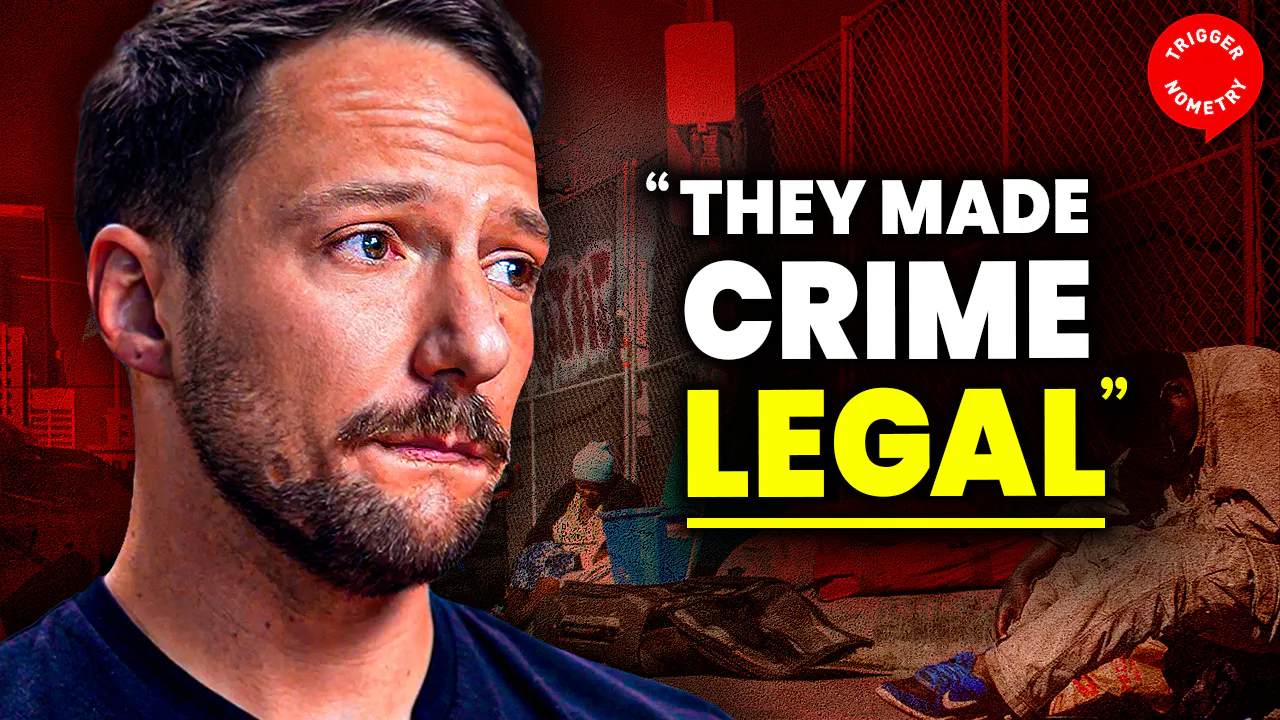
Loading summary
Transcript245 lines
- [00:00]
Interviewer
The world feels increasingly unpredictable. Whether it's inflation, market volatility or global instability, safeguarding your financial future has never been more important. That's why we've partnered with Augusta Precious Metals, a company that stands out for their integrity and expertise in helping people protect their wealth with gold. I've already done that for my family, and Augusta makes the process simple and trustworthy. With Augusta, it's about more than just buying gold. They educate you on why gold matters and how diversifying your savings with a gold diarr can shield your retirement funds from inflation and economic instability. And they make it simple by offering a free no strings attached info kit to get you started. Text trigger to 35052 to get your free gold IRA info kit. That's an SMS to 35052 and simply quote one word trigger. Protect your wealth and take the first step towards securing your financial future today. At one point in your life, you woke up in a bathtub and realized that you were missing your big toe and your bottom lip. Can you describe skid row for people who have never been there?
- [01:09]
Jared Klickstein
Incredibly scary, incredibly violent. You know, you'd walk by, you see pools of blood sometimes dead bodies occasionally. So it was really easy for me to stay sober in jail, but once I got out of jail, you know, they sort of just let you out at 2 o' clock in the morning right next to skid row. Eventually, I pulled out a knife. I sort of lunged at him with a knife. So I got arrested for assault with a deadly weapon and went to jail and was going to go to prison for a year and a half. Addicts will take the path of least resistance. The state currently in places like California are doing everything in their power to make it as easy as possible to keep getting high.
- [01:43]
Interviewer
Jared, you've got what is possibly the craziest life story of anyone we have ever had on the show. You lived on skid row for years.
- [01:51]
Jared Klickstein
Yeah.
- [01:51]
Interviewer
And your autobiography, which is great, is called Crooked Smile. And the reason it's called Crooked Smile is at one point in your life, you woke up in a bathtub and realized that you were missing your big toe and your bottom lip.
- [02:04]
Jared Klickstein
Yes.
- [02:04]
Interviewer
Which you then had to have reattached as part of, like, student training.
- [02:08]
Jared Klickstein
Yes. Yes.
- [02:11]
Interviewer
How does that happen? How do you get to that point in your life? Tell us that.
- [02:15]
Jared Klickstein
Well, first of all, I just want to say thank you for having me on. I'm honored to be here. How do you get to that point in your life? I mean, it's really like, unadultered addiction allowed to just kind of sprawl out and do whatever it wants for 10 years. I mean, nothing was really stopping me. And the logical endpoint of that is death. But if you're lucky enough to live, you might lose a body part. And I lost part of my face from, you know, doing copious amounts of methamphetamine and heroin and crack cocaine. And to my surprise, after waking up, I had done it to myself, actually. I had munched a bit on it, I guess, and it was. Most of it was gone.
- [02:55]
Interviewer
Wow.
- [02:55]
Jared Klickstein
Yeah.
- [02:56]
Interviewer
And tell us your life story, because when I say, how do you get there? I imagine all of that shit starts in childhood, right?
- [03:02]
Jared Klickstein
I'd imagine so. I mean, I grew up in Boston, Massachusetts. Both my parents were heroin addicts. Pretty stable childhood, but still there was the addiction in the household. There was, you know, I got to see a lot of terrible things. You know, no food in the refrigerator sometimes, you know, things like that. I do think that contributed to the fact that I became a drug addict, possibly genetic as well. Both my parents are heroin addicts. I think it's a bit of both, yeah.
- [03:32]
Interviewer
So you. You grew up in a household where. But were your parents using before you were born as well?
- [03:38]
Jared Klickstein
My dad became addicted to heroin when he was about 12 from, you know, the Vietnam vets were coming back to America. Most, A lot of them that my dad knew were addicted to heroin. They would pay him in heroin to do, you know, different tasks and things like that when he was a kid. So both my parents had a history of heroin use, but actually cleaned up before I was born and then got back into it when I was about three or four.
- [04:03]
Co-Interviewer
Yeah, I mean that. I can only imagine how difficult that must have been, because for a child, there is nothing more terrifying than seeing your parents. I can't think of the word for it, but basically out of it on a drug, whether it's alcohol or heroin or something like that, it's. It's incredibly traumatizing.
- [04:26]
Jared Klickstein
Yeah, it was traumatizing. I didn't really understand what was happening. Some of it was fun. I mean, my parents would, you know, act, you know, they would act erratic and then maybe wake me up at 2 o' clock in the morning and take me to get pancakes and things like that. You know, there was those fun times and then there was, you know, other times there was guns in the house. There was a lot of paranoia. There was a lot of waking me up and handing me a gun and telling me to cover them because the CIA was Like outside, you know, doing a perimeter check on my dad for some reason. And, you know, of course, that didn't actually.
- [04:55]
Co-Interviewer
That.
- [04:55]
Jared Klickstein
That wasn't happening, but. But that was like my version of catch. Like, playing catch with my dad was like, doing a perimeter check around the house with a gun. And, you know, so there's that kind of stuff. But then there's also the, you know, the parents going to jail, the parents, you know, falling asleep while driving, you know, things like that. And, yeah, it was generally pretty traumatic.
- [05:16]
Co-Interviewer
So when did your journey with drugs start? Because there's a lot of people I know who, when they see their parents do that, they go, I'm never touching any of that. And then there seems to be the other camp, which is, I'm going to do drugs just to cope.
- [05:30]
Jared Klickstein
Yeah. Yeah. That is interesting how that happens. I definitely had an aversion to heroin specifically. I didn't really ever plan on messing with heroin, but I really liked alcohol in high school and marijuana and, you know, was. Was like an alcoholic, basically, as a teenager. And when I got to college, I went to college at UC Santa Cruz. Everyone was doing heroin, and I was like, the last of my friends to try.
- [05:55]
Interviewer
In college?
- [05:56]
Jared Klickstein
Yeah, in college, 2007, UC Santa Cruz, everyone was smoking heroin.
- [06:02]
Co-Interviewer
Really?
- [06:03]
Jared Klickstein
Yeah. Yeah.
- [06:04]
Interviewer
All right. Don't send your kids to college.
- [06:06]
Co-Interviewer
Specifically, UC Santa Cruz.
- [06:08]
Jared Klickstein
Well, I, you know.
- [06:09]
Co-Interviewer
And that's a good college.
- [06:11]
Jared Klickstein
Well, I think it's, you know, a loser factory. But. But, yeah, but. No, but. But it is ranked well. And I think I. I was in the art dorm, and I really think it was specific to my dorm, so I don't want to, you know, obviously college is probably a bad place to go, but. But I don't think everyone's doing heroin at every single college. But. But I was in the art dorm of a very artsy college where people were experimenting with drugs and. And I experimented with drugs, but I was actually the one that was saying, hey, let's, you know, you probably shouldn't smoke heroin. But. But oxycontin was around, and I. And I had no idea what that was. And. And I didn't know that it was an op. It's an opioid. I didn't know. So I. I started messing around with OxyContin. And, you know, after some.
- [06:52]
Co-Interviewer
Can I just pause you there? Because there's going to be people listening who don't know what that is. Can you just explain what OxyContin is?
- [06:58]
Jared Klickstein
Yeah, OxyContin is a brand name for oxycodone. It is a semi synthetic opioid. It is essentially heroin. I mean, heroin is dicetylmorphine. That's a fully natural opiate, whereas oxycodone is a semi synthetic. It still requires raw plant material, but it's more refined. And actually, through years of research, I guess personal and just general research that people have done, it can be more physically addicting than heroin.
- [07:28]
Interviewer
And can I ask another question? Not to sidetrack this, but one thing we kind of skipped over is you grow up in a home where people are taking hard drugs, getting arrested, go, you know, giving guns, all of that crazy stuff you talked about. How did you even get to college?
- [07:44]
Jared Klickstein
Yeah, that's a good question. When I was 12, I essentially told on my parents. I told my distant relatives. I said, you know, I don't know what's really going on. I thought my parents were doing, you know, smoking marijuana or something like that. I didn't really know what drugs were, but when I sort of found some needles and things like that, I realized it was hard drugs. And I called my extended family, and I was actually adopted by my extended family in Oakland, California. So from 12 to 18, I had a very normal childhood.
- [08:16]
Co-Interviewer
Yeah.
- [08:16]
Jared Klickstein
And prepared me for college.
- [08:18]
Co-Interviewer
So you're in college. You were experimenting with OxyContin? Yeah. What happened there then?
- [08:24]
Jared Klickstein
Well, I got wildly addicted immediately. I mean, it was like the greatest feeling I'd ever felt it allowed, you know, I was very ashamed of who I was, you know, growing up, you know, essentially thinking of myself as a crack baby and sort of the, you know, the offspring of undesirables, you know, in my head, and was ashamed about who I was. And OxyContin fixed that. You know, I could, you know, alcohol fixed that to some extent, but OxyContin didn't have a hangover. And it was just so much more easy. And it just really got to the point and it fully enveloped my entire life within, you know, a month or two, probably. And I did some Googling and I found out that OxyContin is actually pretty close to heroin. And once I was wildly addicted OxyContin, I realized that, well, you know, I might as well just do heroin. It's a lot cheaper. It's actually a lot easier to get, too. It was. It was a lot easier to get at that point because it's, you know, it's not a controlled substance. It was just kind of on the street. You could get it. You know, the dealers were taking the bus up to the campus and selling it. To kids. And it was just super easy to get and super cheap.
- [09:24]
Co-Interviewer
I find that horrific, the fact that dealers were on campus dealing heroin.
- [09:30]
Jared Klickstein
Yeah.
- [09:31]
Co-Interviewer
You know, this is a drug which has destroyed hundreds of thousands, if not millions of lives over the years. Yeah. And did camp, did the university, did the college do anything to try and stem the tide or arrest these dealers, et cetera?
- [09:47]
Jared Klickstein
Not really. I mean, it wasn't campus wide. It was specifically my dorm. It was a very large campus. I did eventually go to a campus therapist and told them I was a heroin addict. And, you know, they prescribed me benzodiazepines, which, you know, I'm not a doctor, but that's. That. That's pretty dangerous to prescribe benzodiazepines to someone actively using heroin. I told my professors. They essentially gave me longer times to complete papers and stuff, so they gave me like a. A break scholastically, but they. No one really did anything. Not that it's really their place to do anything, but they certainly didn't, you know, they didn't do anything.
- [10:26]
Co-Interviewer
Yeah. And so then what happens? Do you graduate? Do you leave college? What goes on then?
- [10:32]
Jared Klickstein
Well, by senior year, I'm wildly addicted to heroin. I can't really afford it. You know, I'm like, committing small crimes to get it. Not really going to class anymore. Definitely on the path to getting kicked out or dropping out. I eventually get a deal with the. The drug dealers who are cartel affiliated.
- [10:49]
Co-Interviewer
They.
- [10:49]
Jared Klickstein
They gave me a job, and I started driving heroin around Santa Cruz and delivering it. And a requirement of this job was to smoke meth before every shift so I wouldn't crash while I was driving, which is actually pretty smart, I guess, because heroin addicts crash cars because they fall asleep. So as a result of that, I got really addicted to meth and immediately dropped out of college and got kicked out of my housing. And my family didn't want to talk to me. They. They knew I was on meth, and my family sort of let me go. And from, you know, within a matter of months, I was homeless on skid row.
- [11:29]
Interviewer
And you mentioned committing small crimes and you mentioned your family letting you go. Was that something they were like, we just can't cope with someone who's an addict? Or had you done things by this point that they kind of like, they didn't know what to do? Maybe because you talk a lot about this. Someone who's that addicted, they will do literally anything, right?
- [11:50]
Jared Klickstein
Yeah. Yeah.
- [11:51]
Interviewer
So tell us not to like, get all kind of, you know, addict porn into it, but what Kind of crimes were you committing, and what is the nature of an addict's relationship with the people around and their family and so on?
- [12:02]
Jared Klickstein
Yeah, the kinds of crimes that I was committing was petty theft, you know, stealing textbooks from campus and then selling them and maybe stealing things from CVS sometimes. That was on heroin. When my family found out about my drug addiction, they had sort of spent the last decade dealing with my parents, in and out of rehabs. You know, my mom ended up passing away. Like, they went through hell with my parents. So I think. I don't blame them. They just said, you know, we can't do 10 years of this with you. We just did 10 years of this with your parents. So they just kind of took a step back and they said, you know, give us a call when you know, when you're really ready. And now, once I started doing meth, meth is very sadistic. It's much different than heroin. You start really doing crimes. I mean, you really. It's like almost part of the addiction. I mean, I started breaking into houses. I started climbing into windows. I started doing some dark, darker things, you know, And I don't know why meth entices people to do much darker crimes, but it seems to always happen.
- [13:02]
Advertiser/Commercial Voice
At Capella University. Learning online doesn't mean learning alone. You'll get support from people who care about your success, like your enrollment specialist, who gets to know you and the goals you'd like to achieve. You'll also get a designated academic coach who's with you throughout your entire program. Plus, career coaches are available to help you navigate your professional goals. A different future is closer than you think with Capella University. Learn more at Capella. Edu.
- [13:34]
Interviewer
And you must have some good, pretty wild stories to tell about those days. Like, I imagine breaking into houses in America is not the safest thing to do.
- [13:44]
Jared Klickstein
Well, it's pretty safe in California. I wouldn't break into a house in Texas, but California, I mean, this was back then. Now it's basically legal to. I mean, you know, you're not going to go to prison if you break into a house in Oakland, California.
- [13:58]
Advertiser/Commercial Voice
Right.
- [13:59]
Jared Klickstein
So I'd say it's a lot easier now, but. And in fact, if someone were to shoot you in Oakland because you broke into their house, they would go to prison, and you probably, you know, get probation or something in a settlement of cash. But. But anyway, yeah, I want to make.
- [14:15]
Interviewer
Clear to people as well, we're going to talk about policy and homelessness and all of that, but we're just trying to get your story first.
- [14:21]
Jared Klickstein
Yeah. So these were the olden days when there was, when there was punishment for crime. There was some amount of punishment for crime. I was breaking into houses with other meth addicts and was sort of an apprentice, like, tagging along and, and I didn't really know the law. I didn't know that it was even that big of a crime. They told me that you can go to prison for like 20 years for doing it. So I stopped doing it. Actually. I didn't know that. So when I found that out, I was. I stopped breaking into houses. I could make money other ways. I mean, it was very, you know, when I landed on skid row, I, I, I made a lot of money. You know, I, I made. Eventually I started making more money than I'm, you know, I've, I've just in my life, at 36, hit a financial point where I'm making as much money as I did when I was homeless on skid row.
- [15:05]
Co-Interviewer
Pretty. How are you? How are you? What? How are you making money?
- [15:09]
Jared Klickstein
Well, the first time I was on skid row, I was just begging for change at the train station. I'd make like 80 a day. And, and. Which is pretty good. But later on, once Prop 47. Sorry to get into policy, but basically, once shoplifting is legalized, I was making, you know, three to $500 a day in cash shoplifting, which.
- [15:29]
Co-Interviewer
Yeah, three to $500 a day. So that's, that's insane.
- [15:34]
Interviewer
Our producers are looking around going, we're in the wrong job, mate.
- [15:36]
Co-Interviewer
Yeah. So that's round about, what, two and a half thousand dollars minimum. That's your base rate.
- [15:44]
Jared Klickstein
Yeah, I think, you know, I made six figures, probably untaxed, and usually went to sleep with $0.
- [15:52]
Interviewer
Because you'd spend it all on drugs.
- [15:53]
Jared Klickstein
Yeah, spend it all on drugs. And now that game has changed a lot. Now, obviously, shoplifting is illegalized. I will just, you know, I know that's not the correct word, but it's essentially legalized.
- [16:04]
Interviewer
Decriminalized.
- [16:05]
Jared Klickstein
It's decriminalized. And with that, now there's a lot more people doing it and there's a lot less things to steal. So I don't think people are making three to $500 a day. But I really caught it at the golden. The golden age.
- [16:15]
Co-Interviewer
You were at the gold rush.
- [16:16]
Jared Klickstein
Yeah, yeah, exactly.
- [16:18]
Co-Interviewer
Wow.
- [16:19]
Jared Klickstein
1849, you know, and I was, you know, I was there and the gold was there. And, and, and, you know, I'm, I don't want to sound braggadocious. About it. I'm not like, proud of this stuff, but there was a code, you know, you know, we didn't attack anybody and, you know, we weren't, you know, we. There was some secrecy to it. You had to have some skill. You had to really act covertly. And, you know, there was. There was some pride in it at that point. Now it's really just run in and grab everything and leave. But, yeah, that was by 2014. 15. I was making with my partner, about 3 to 500 a day.
- [16:52]
Co-Interviewer
And that was all going on drugs?
- [16:55]
Jared Klickstein
Yeah, primarily heroin, but crack cocaine. Methamphetamine. Yeah.
- [17:02]
Interviewer
Can you describe skid row for people who have never been there? What is it like?
- [17:08]
Jared Klickstein
Well, it's different now, but I'd say, you know, I landed there in 2011 for the first time. And it seemed like there was thousands of people just, you know, out and about really in a zombie stage. You know, a lot of them really not. I wouldn't call them conscious. I mean, a lot of them just on methamphetamine and sort of in a different realm. A lot of screaming, a lot of, you know, mental illness shrieking into the. Into the, you know, atmosphere and all that. And incredibly scary, incredibly violent blood on the sidewalk. You know, you'd walk by, you see pools of blood, sometimes dead bodies occasionally, mostly from overdoses. And, you know, I didn't. I had just gotten out of college. I'm 36 now, and I look pretty young. I mean, I looked like a child. And, you know, a lot of people didn't. Didn't look like me. You know, I was, you know, the racially it was. It was primarily African American, some Hispanic, not a lot of white people. So when I showed up, they assumed I was like some rich kid that got addicted to heroin and was just down there to score drugs. And, you know, people messed with me and all that, but once they realized I lived there, they. They respected me and I was treated pretty well.
- [18:23]
Co-Interviewer
So what you're describing is a community.
- [18:26]
Jared Klickstein
Well, kind of, yeah. I mean, everything is based on, you know, can you help me? If you can help me, you're protected in some way. If I can get something from you, you're protected. No one's like selflessly acting out and helping anybody. You know, it's all. Everything. It's a very. It's a free market of, you know, getting over on one another or. Or at least I'll help you as long as you are useful to me in some capacity.
- [18:49]
Co-Interviewer
So what percentage of the people there, Jared, do You think were had severely mental, were severely mentally ill, as in they were unable to cope. How many people could do you think could be helped? And because there's also this narrative, and I would like you to talk about this as well. People like. Well, it's a choice people make. You know, people choose to live like that. They don't want to. They don't want to live in the real world. They don't want a proper job. They just want to hang out, score drugs, smoke, shoot up, and abdicate adult responsibility for want of a better term.
- [19:21]
Jared Klickstein
I'd say now, skid row. Specifically, I'd say now, I never met someone down there that like, lost a job and ended up on skid row. That's not to say that people don't lose jobs and find economic hardships and end up homeless. They just don't go to skid row. I mean, skid row is not for the faint of heart. You know, it's. You just wouldn't go down there if. Unless you are either mentally ill or on drugs. So I'd say close to 100% of people were either mentally ill or addicted to drugs or both. I'd say roughly 25% were probably just purely mentally ill. Now, that could be mental illness that resulted from a past addiction to drugs, or they could just be mentally ill and can't really, you know, they get dropped off there by an ambulance or a police car or something like that. They just ended up there. And then roughly, I don't know, the remainder was on drugs, it seemed. Now, how many of those people are able to be helped? Man, I think, I think a lot of them. I think a lot of them that are just there for purely addiction, those people can be helped. And then a lot of those people that are mentally ill or appear mentally ill, they may not be mentally ill. They may just be on methamphetamine. I mean, I've been known to, you know, cause a scene in a McDonald's dining area. You know, I've been. I would. I appeared like a crazy mentally ill person. And, and. But if you take away methamphetamine, I'm a pretty normal person. I'm a pretty normal guy. So a lot of those people, if sort of, you know, if they dried out for a few days, we'd really be able to determine, oh, this person is totally capable of self sufficiency and leading a life of purpose. It's going to be very difficult. It would require a lot of money and a lot of policy changes. But I think a Good portion of them can be helped.
- [21:01]
Co-Interviewer
And I was going to say, because skid row has expanded hugely over the years.
- [21:07]
Jared Klickstein
Yeah.
- [21:07]
Co-Interviewer
And I was going to, I was going to ask, number one, why do you think that happens? And number two, is it, how much of an influence is fentanyl playing? Because fentanyl was a very new player on the scene, isn't it really?
- [21:19]
Jared Klickstein
Yeah. I got sober in 2018. Fentanyl was around, but it wasn't really. It didn't really replace heroin. Yet. Now heroin's essentially non existent at this point. It's. It's all fentanyl in terms of opiates. So fentanyl has played a huge role. So fentanyl has changed the game in that it. First of all, it kills a lot more people. So it also makes people a lot more. I mean, heroin, you can. I've held jobs on heroin, you know, I've gone to Thanksgiving dinner on heroin. Like you can sort of function badly, but you can still function partially. There's no, there's no functioning on fentanyl. There's no recreational use of fentanyl. I've used it, I've done it before. It's like you snap your fingers and you are a zombie. You know, you're hunched over, you don't know what your name is. I mean, it's a completely debilitating drug.
- [22:13]
Interviewer
So why do people do it?
- [22:15]
Jared Klickstein
Well, I personally didn't like it. It didn't really react well with me. It was not incredibly euphoric for me, although it did give me the physical properties of an opiate, which is, you know, sort of that soothing physical sensation. So I did it because there was no heroin where I was at that time. There was just fentanyl. And if a heroin addict can't get heroin, they will do any opiate. And if fentanyl is the only thing available, they'll do fentanyl. And what we saw around 2019 was essentially the eradication of heroin and fentanyl just came in full force. And a lot of people got addicted to fentanyl not even knowing that it was fentanyl. They thought it was still heroin and everyone sort of transitioned to fentanyl.
- [22:54]
Interviewer
The news moves fast and it's not just about keeping up, it's about seeing clearly. In a world where headlines are constantly shifting and narratives change by the hour, understanding how a story is being reported is just as important as what the story is. That's why I use ground news. It shows you how coverage of any story differs across the political spectrum, helping you break out of echo chambers and actually see the full picture. Take the recent landmark UK Supreme Court ruling on the legal definition of woman. Using Ground News, we can see that cnn, which leans left, ran with UK Supreme Court says legal definition of woman excludes trans women. The Spectator, which leans right, led with the Supreme Court ruling is a victory for women. Same story, two completely different takes. Ground News makes these contrasts easy to spot by letting you compare headlines at a glance. It also shows you ownership information, like the ownership status of both CNN and the Spectator. My favorite feature is the Blind Spot feed. It surfaces stories being ignored by either the left or the right, stories you might not even realize you're missing. So you can stay informed without being trapped in a single world view. Click the link in the description or head to Ground news. Trigonometry for 40% off their unlimited Vantage plan, the same one we use. More than a million people have already downloaded the Ground News app. If you care about seeing every side of the story, join them today. And coming back to this idea of how people end up on Skid Row, you mentioned that, like, you'd never met anyone who, like, lost a job, and then, you know, three weeks later, they're on Skid Row. So reading between the lines, then you, as a college kid, you go there because it's a place where you can get drugs. That's why you. That's why people go to Skid Row.
- [24:40]
Jared Klickstein
That's why I went. And that's why a lot of people go. And because back then, that's really. If you were in LA and you didn't really know what you were doing and you wanted drugs, you went to Skid Row and it's a free market. I mean, there's. They're just everywhere. So that's why I ended up there. A lot of people end up there for that. And then a lot of people end up there because there's services there. I mean, there are some homeless services there. It's also a sort of a safe place to. It's not safe, but it's. You're allowed to sleep there if you're homeless, you know, So a lot of people will voluntarily go down there because back then you couldn't just sleep anywhere. You know, you kind of had to. You got funneled there, really. And then a lot of people get dropped off there. So if you get arrested for some sort of disorderly conduct in Burbank or something and you're on drugs, oftentimes you. You would just get dropped off on Skid Row and. But it's really. That's where the carnival is. I mean, that's that if you're in that lifestyle, that's where you're going to go.
- [25:34]
Interviewer
Wow.
- [25:34]
Jared Klickstein
Yeah.
- [25:35]
Interviewer
And do the police come through there?
- [25:37]
Jared Klickstein
Yeah, the police come through. I don't know if they do anymore, but certainly in my time that they'd come through and they'd arrest you every once in a while. You know, they'd have to sort of make their numbers, I guess, and arrest some people. And I mean, I don't blame them. You know, what are you going to do? You know, you got, you know, two to six cops or something driving around skid row and you got thousands of people on drugs. You know, you can't just arrest everybody. But they sort of monitor and make sure no one's, you know, getting, you know, if they see violence, they'll stop it. Or if they see someone OD'd, they'll, you know, resuscitate or. And then occasionally they'll just make some random arrests that I've been a part of. But, you know, you go into jail for a day and then you come out.
- [26:19]
Interviewer
Tell us about that. Because this is one of the things, as we start to edge towards the policy conversations. One of the things that I think a lot of people are kind of like trying to work out is you mentioned shoplifting and stealing things.
- [26:31]
Jared Klickstein
Yeah.
- [26:32]
Interviewer
Like what happens to a drug addict who gets arrested by the police back.
- [26:39]
Jared Klickstein
Then, maybe three days at the most for various types of crimes. For shoplifting. After Prop 47 passed in 2014, it was a ticket. You know, you might go to the station for a few hours, then you're let go. Basically, if you're not doing something violent, you're not going to jail. And that becomes very difficult because a lot of people start to desire to go to jail for a long period of time. And the only way to really do it is to commit violence. And if you commit violence, you're going to have a violent criminal record. It sort of becomes this tough situation to navigate.
- [27:14]
Interviewer
Why'd you want to go to jail?
- [27:16]
Jared Klickstein
Because I couldn't stop, you know, I just couldn't stop doing drugs. I was going to die. I, you know, you know, your back starts hurting from sleeping on the concrete. You know, you get. You grow tiresome of this and, and, and you want to go to prison. You know, I wanted to go to prison by, by 2015. I wanted to. I wanted to go to prison and I just didn't know how to do it without doing something horrible, you know.
- [27:40]
Interviewer
And how did you end up going to prison?
- [27:42]
Jared Klickstein
Oh, I got really lucky. I, I, well, I, I actually didn't go to prison. I, I faced a prison sentence. So I was on meth and I was in a Panda Express, which is, you know, a restaurant here, and, and it was actually the Panda Express inside of a food court inside of the major library in downtown Los Angeles. And I was in that Panda Express and I reached for a plate. You know, people would leave plates of food sometimes, like when they were done with it. So I went and I started picking at orange chicken. And another homeless man, unbeknownst to me, had claimed this chicken already and sucker punched me in the face. And we started, you know, fighting over this chicken and, and I didn't really know what to do. You know, he was bigger than me and he, you know, we sort of got to a standstill and he was like, you got to pay me for that chicken. And I said, oh, no, you know what? I was on my cell phone. That's what happened. He took my, I had a cell phone. Most homeless people do. In fact, the more cell phones you have, the more likely you're probably homeless. I mean, because they sort of hand them out. So I actually had multiple cell phones, but he took my cell phone and essentially said, you're gonna have to give me $10 if you want your cell phone back. And I said, well, I really, you know, I don't want to do that. And eventually I pulled out a knife and I sort of, I didn't, I sort of lunged at him with a knife. And at this point, security from the library had come and sort of detained both of us. And the police came and looked at the footage and, you know, you can't do that. You know, you can't try to lunge at somebody. So I got arrested for assault with a deadly weapon and went to jail and was going to go to prison for a year and a half for assault with a deadly weapon. I got a public defender and they basically told me they were going to drop the charges and let me go. And I said, please don't let me go. I don't want the charge, but please don't let me go. And they said, well, you know, that's pretty difficult to do. And they said, well, we could give you a six month violation and then drop the charges. And I said, that's the most perfect situation I've ever heard. You know, that that's exactly what I want. And she told the judge, and the judge gave it to me. They gave Me, a six month violation, and I did six months.
- [29:43]
Co-Interviewer
You know, when you're saying that, I'm just thinking, why isn't there a program which takes these people off the streets, drives them out and gets them back functioning and hopefully back into the real world?
- [29:58]
Jared Klickstein
Well, there were programs like that, you know, there was the Midnight Mission, there's the Union Rescue Mission. These are programs on skid row and they're great programs. And I actually went to one one time for about seven months. They're, they're, you know, it's a miracle factory. I mean, but you have to voluntarily go. You know, it's very hard to voluntarily go. And, you know, you can voluntarily leave too. So it's very difficult to, you know, encourage someone on fentanyl to go to one of these programs, especially the detox process. It's so difficult and painful. But there was a, there's SB 1380, which Gavin Newsom passed when he was lieutenant governor. And this is a state bill in California passed, I think 2014 or 2015, which states that any program that desires state funding cannot require sobriety. This was a housing first policy, sort of top down from the federal government under the Obama administration. And that sort of ended everything. So the Midnight Mission does wanted to get that sweet state money, and in order to receive that state money, they could no longer require sobriety tied to housing. So it's essentially a, a fentanyl housing program now.
- [31:07]
Co-Interviewer
Wow. Yeah, I mean, you know, when I was, when I was listening to an interview you were on, you said the words, you were glad that you went to prison because prison helped you get sober.
- [31:22]
Jared Klickstein
Yeah. Yeah. Well, I didn't go to prison. I went to la.
- [31:25]
Interviewer
Brits always get it.
- [31:26]
Jared Klickstein
No, it's okay.
- [31:27]
Interviewer
You went to jail.
- [31:27]
Jared Klickstein
There's a lot of, there's all these podcasts now with guys from prison and like, they always want to call each other out for lying about their time in prison. So I didn't go to prison.
- [31:35]
Interviewer
Call us out.
- [31:36]
Co-Interviewer
It's awful.
- [31:36]
Interviewer
You went to jail, which is worse.
- [31:39]
Jared Klickstein
Than prison, probably, but why? Because it's smaller quarters, there's worse food. You're. Everyone's kind of on edge about their case. You know, they don't. Once you're in prison, you sort of know the deal. Okay, I'm going to be here for six years. It's just a little bit more of a tense place. But I had a great time. I mean, I had a wonderful time. It was one of the, probably the greatest times of my life.
- [32:00]
Interviewer
Because you weren't using or why?
- [32:02]
Jared Klickstein
Because I finally got a bed and a pillow, and I just didn't have any responsibilities. And I just knew that, like, my one task was like, to not just to get off heroin, you know, it took me like three or four weeks to get a full night's sleep and just. I detoxed hard. And I just read books. I read books every day. I just, you know, I pretend I was on a beach and just lay on my bed and just read a book and. And I really grew up. I mean, I really became a man. You know, that's not. There's better places to become a man. But, you know, I really was a boy. I was still a boy. And I got to learn so many things about different cultures and. And, you know, I had to join a gang and. And I had to really, you know, immerse myself in some dangerous situations, and I came out of it unscathed. And I really think that was a. A growth experience. I don't recommend it for everybody, but I had a phenomenally interesting time.
- [32:54]
Interviewer
Yeah, you said you had to join a gang.
- [32:57]
Jared Klickstein
Yeah.
- [32:58]
Interviewer
Talk to us about that. Yeah.
- [33:00]
Jared Klickstein
Well, when you go to LA County Jail, you have to join a gang. Everyone has to join a gang. There's no, like, I'll just opt out of that. You know, everyone goes to a gang, and the gangs are. Are racially based, so you have to join a race gang. I wasn't excited to join a race gang, but, you know, when you went in Rome, you know, you. You join a race gang, and if you're white, you have to join the Peckerwoods or the. Or the Neo Nazis, but everyone just joins the Peckerwoods. I mean, that's really kind of like the easy route, you know.
- [33:27]
Co-Interviewer
Who are the Peckerwoods?
- [33:28]
Jared Klickstein
The Peckerwoods are like diet Nazis, I guess. I mean, they're not really racist. They're just white guys. So, like, if a dad goes in for drunk driving and he's like a businessman, he'll join the Peckerwoods. I mean, there's just. No, that's the lowest level that you can join. But there were Nazis, you know, there were Nazis, and. And I am by birth. I'm half Jewish, half Irish. I don't really look Jewish, so. But my last name is. Is relatively Jewish. So I went in there and, like, a Nazi greeted me and was, you know, asked me what my name asked for, asked me for my paperwork. My name is Jared Klickstein. He, you know, his eyebrow raised a little bit, and then he looked me up and down and he said, you know, he's like, are you German? And I. I just said, yeah, I'm German. And he loved that, you know, because.
- [34:17]
Interviewer
He is one of us.
- [34:19]
Jared Klickstein
And but weeks later, I figured out that they actually didn't have a problem with Jews and.
- [34:24]
Interviewer
What.
- [34:24]
Co-Interviewer
What?
- [34:25]
Jared Klickstein
Yeah, I guess they were like. They've had, like, a reformation or something. Or, you know, they're like. They've DEI has really hit the Nazis.
- [34:31]
Interviewer
I guess, and prison Nazis don't hate Jews.
- [34:34]
Jared Klickstein
Well, I don't think they're, like, fond of them, but. But also, this was, like, 2015, kind of a peaceful time in America. Like, people were getting along, so maybe they had. They had sort of calmed down about that. But I found out there's a kosher meal in jail, and it's, like, worth the most money out of anything. So I actually came clean and admitted that I was. I was Jewish. And the Nazis thought it was funny, and they thought it was fine. And they asked me about legal advice for their cases, and they sort of thought because I was Jewish, I could help them with their case. And then. And to be honest, they were like. At first, they were like, well, what are you doing? You know, if you're Jewish, what are you doing here?
- [35:14]
Interviewer
Right?
- [35:15]
Jared Klickstein
And they're like, can't you make a cousin. Your uncle owned the prison or something? Like, can't you make a phone call? And I. Because they had already gotten to know me as a normal guy, and they're like, this guy's just a street crackhead. And then when they realized I was Jewish, I think it opened up their mind to, like, well, I guess a Jewish guy can just be a normal guy. I mean, I guess anything could happen. You know, people are just people. And. And. And I've stayed in contact with some of them, and one of the guys, like, covered up his swastika tattoo, and he's sort of like a normal. He got off drugs. And I don't think I did that, but I think I might have, like, played a role in it, you know, just kind of opening up people's minds to, like, you know, a Jewish guy can just be a guy, you know, he doesn't have to own the prison, you know, or whatever. So I don't think he'd ever really met a Jewish person.
- [35:56]
Interviewer
Right.
- [35:57]
Jared Klickstein
Ye.
- [35:57]
Interviewer
So you joined the Peckerwoods. And you mentioned, from what I know, which is nothing, there is a lot of tension between the different gangs on a racial basis. Was that going on when you're there?
- [36:09]
Jared Klickstein
Yeah. So the. The Peckerwoods, or The just really the whites are. Are linked up with the Mexicans. So the Mexicans, the South Siders, they have an alliance against the. The blacks and the Asians, which is like a very funny arrangement. So I don't know. I don't know the history of that. I don't know why it's like that. I think it does date back to, like, meth dealing agreements between neo Nazis and the South Siders. I'm not sure. But you're basically linked up with the Mexicans and you're their ally. And really the whites get a lot more benefit from this relationship than the Mexicans. So you have to be a worthy ally, which means you have to work out every day and keep up appearances and, you know, you gotta sort of pretend to give, you know, give a shit about all this stuff.
- [36:55]
Co-Interviewer
And.
- [36:57]
Jared Klickstein
And there is tension, you know, really, mainly between the Mexicans and the blacks. The Asians and the whites are kind of on the sidelines because those are.
- [37:04]
Interviewer
The two biggest demographics in the prison.
- [37:06]
Jared Klickstein
Those are the two biggest demographics. And also on the street, they have a huge rivalry for territory. There's a huge problem, really, specifically in Los Angeles, where there's almost an ethnic cleansing of blacks by Mexicans, which is never reported in the news or talked about. But, you know, there are cities that blacks have essentially been. They call it green lit, meaning, like, there's the green light to kill any black person if you're in a Mexican gang. You know, like places like Highland park and places like, you know, Winnetka and, you know, places in the Valley. So that's sort of a war that isn't really reported. I don't know. Maybe it's died down a bit. I'm not sure. But.
- [37:45]
Interviewer
And how did. How did this affect your life when you were in prison, all of this stuff that's going on?
- [37:50]
Jared Klickstein
Well, since you're allied with the Mexican in jail.
- [37:52]
Interviewer
Sorry.
- [37:52]
Jared Klickstein
It's okay.
- [37:53]
Interviewer
Sorry.
- [37:54]
Jared Klickstein
No, no, it's totally okay. You're allied with the Mexicans. So they sort of set the rules. I mean, they run the place. I mean, they run the place more than the. Than the guards. I mean, they're in charge. And. And because of that, you know, they view blacks as. As lesser than human. And. And. And there are out. The Mexicans are our allies, so we have to do what they say, really. And they make the rules. And the rules are that you can't share food with the blacks and you can't shower with the blacks and you can't sit on a black's bed. You can't get too friendly with a black, but you have to respect them, you know, to prevent a race war. So it's actually a very respectful place. Although there is this sort of nasty racial stuff going on and, and the whites in jail that I, at least in my experience, kind of didn't care about any of it. But they just had to follow these rules in order to sort of impress the Mexicans. It's all about impressing the Mexicans.
- [38:42]
Co-Interviewer
That's, that's, that's, that's, that is, it's a different world. And yeah, were you worried because you, you know, you watch movies about these types of institutions and you know, you're always constantly there, eye over the shoulder, looking around, thinking someone's going to attack me, beat me up. Or is that just not true?
- [39:03]
Jared Klickstein
Well, I think it really is different across the United States. It's very specific though. This is very specific to Los Angeles, really greater California and maybe even the southwest of America. It's all pretty standard. I mean these gangs, this is a gang culture. It's the Peckerwoods, the Southsiders and the blacks and these are the rules. And really there was a lot of violence, but it was inflicted by your own race. So if a Mexican saw you spitting trash into the urinal or something, which is a rule, you can't break that rule, they would then inform your shot caller and your shot collar to show respect to the Mexicans would do an in house punishment. So three white guys would, would beat you up for 23 seconds.
- [39:47]
Co-Interviewer
And why 23 seconds?
- [39:49]
Jared Klickstein
Because W is the 23rd letter in the Alphabet and W stands for wood because we're, you know, we're woods, I guess. And so there's really, the majority of the violence is actually inflicted by your own race to show respect to the other races if something disrespectful occurs.
- [40:06]
Interviewer
So it's maintaining this. It's not like random violence where someone is like, oh, you're new here, I'm gonna beat you up or rape you or whatever.
- [40:13]
Jared Klickstein
I think that definitely goes on in other states and other, you know, regions of America, but it non existent really in Los Angeles.
- [40:21]
Interviewer
And how come there are no drugs in prison? Because we keep being in jail.
- [40:25]
Jared Klickstein
It's totally okay.
- [40:26]
Interviewer
How come I keep. No, I want to be accurate. How come there are no drugs in jail? Because what we hear is there's more drugs in jail than anywhere.
- [40:34]
Jared Klickstein
Well, there are drugs in jail. That is a common line by anti, I guess. D, what's the word for someone that's against prisoners.
- [40:45]
Co-Interviewer
Yes.
- [40:45]
Jared Klickstein
Yeah, so that's a big talking line from them is that there's more drugs in jail than there are in the streets. I mean that's absolutely not true. There are drugs in jail. They're very limited quantities. They're primarily reserved for the shot callers and anyone, they call it politics, like anyone high in politics in jail. They're incredibly expensive. I mean if you want to get a single, you know, serving of heroin in jail, you know, you have to have someone on the outside wire money to someone else's family, like a hundred dollars for like a tiny little five dollar piece of heroin. So it's, it's, it's a 20x you know, price increase. So yeah, there's drugs in jail. It's very, it's, they're very expensive.
- [41:25]
Interviewer
Hypnosis gets a bad rap, but it's not a gimmick. It's a legitimate therapeutic tool backed by research. And when it comes to weight loss, it can be a game changer. Hypnozio is a self hypnotherapy app that helps you break bad eating patterns by working at the subconscious level where the real habits live. It's for people who are done with willpower only plans. Hypnozio helps you tackle emotional eating, stress related cravings and food anxiety using proven techniques that reduce cortisol, improve portion control and build long term habits all in a way that fits into real life from your phone, tablet or your computer. Clinical studies show that users lost twice as much weight as those using traditional diets alone and 94% maintained that weight loss more effectively over time. It's not about hacks, it's about fixing the deeper programming. Hypnosis based programs reduce BMI and emotional eating significantly compared to standard diets. So what are you waiting for? Use our link in the description box and pin comment and grab 15% off your first subscription.
- [42:26]
Co-Interviewer
And was there a sobriety program that you attended in jail? In a way. And so like a 12 step program in order to help you become clean and sober?
- [42:35]
Jared Klickstein
Yeah, they would bring AA meetings into jail, you know, various 12 step meetings into jail. I'd go to the meetings, you know, I, I enjoyed it. But the real problem was that you know, you go to jail and then they just sort of let you go. They let, just let you out of jail after six months and there's no real like landing pad for you to hit. So that was the, you know, I was like wishing that they would mandate me to a treatment place after jail and, and I was Even writing letters to treatment places to try to get them to, to take me in. But, but yeah, so, so it was really easy for me to stay sober in jail, but once I got out of jail, you know, they sort of just let you out at 2 o' clock in the morning right next to skid row. So it's, it's pretty, you know, it's tough.
- [43:17]
Interviewer
So you ended up right back there.
- [43:20]
Jared Klickstein
Yeah, my intention was to stay sober, but I was in a release pod with someone that I knew that had money. You know, they were getting released with 40 bucks. So we, we went and got high and you know, there's nothing I could really do. So this is like, you know, people accuse me of being like a very pro jail. Like let's just send everyone to jail. And, and I'm not, you know, that's not what I'm saying. You know, there, there's that we really need an all encompassing, you know, solution to this and, and jail alone is not that solution. Jail plays a role in, in, in the solution, but you know, there has to be like a process of graduated reintroduction into society and most importantly, like preparation for joining society, you know, in the form of job training.
- [43:57]
Co-Interviewer
Absolutely. Because one of the things, and you know better than me about addiction is that you literally put, you put a pause button on your life. So when you're an addict, you don't care about, you don't care about acquiring skills, getting better, becoming a better person, progressing in a career.
- [44:13]
Jared Klickstein
Yeah.
- [44:13]
Co-Interviewer
So when you get sober, you've, you, you're behind a lot of people.
- [44:19]
Jared Klickstein
Yeah. I mean, you basically don't have anything on your resume. You know, you get tattoos that you probably regret. You know, like me, you know, I just got all these tattoos now and now I have a little bit of a criminal record. You know, I have a felony on my criminal record. Obviously now I have a facial scar. It becomes more difficult to get a job. We are obviously going to need a lot of people working in the coming 10 years, you know, in various industries. We should really have like a labor expert, you know, examine this. You know, where do we need people? Are we going to need 300,000 electricians to support the grid? If so, let's maybe do some training programs for these people. I unfortunately didn't get anything like that, but I did have carpentry skills. So I was always willing to do construction and do carpentry and, and eventually landed at a nonprofit long term rehab where they allowed me to go look for work. I got a decent paying Carpentry job. And that sort of, that's where I got sober. So jail sort of helped me get to that point. But jail was not the, the actual all encompassing solution.
- [45:22]
Interviewer
And speaking of solutions, I mean, one of the things that I can sort of sense in reading between the lines of everything you're saying is getting clean is the most important thing. And it sounds like a very, very, very, very, very hard thing to do.
- [45:36]
Co-Interviewer
Yeah.
- [45:36]
Interviewer
By yourself.
- [45:37]
Jared Klickstein
Yeah, it's incredibly hard. What makes it infinitely more hard is that or more difficult is that the state currently in places like California are doing everything in their power to make it as easy as possible to keep getting high. And when it's, when it's easy to get high and when it's easy to keep doing what you're going to, I mean, addicts will take the path of least resistance. You know, they really don't have agency. I mean, I've been there. You're really not, you. I mean, you will do anything to get drugs. I mean, you will rob your grandmother. You will, you know, sacrifice, you know, you would sacrifice an entire relationship with a family member for $20. I mean, you know, you're not really making the decision. So if you just let that thing coast, it's just going to keep coasting towards death. I mean, that's what's going to happen. So every incentive we currently have is to, is for people to keep doing what they're doing. And we need every incentive in place to be encouraging people to get sober.
- [46:30]
Interviewer
What does that look like?
- [46:31]
Jared Klickstein
That, that looks like, at least in California, where I'm familiar, what, I'm familiar with recriminalizing crime, crime has essentially across the board been decriminalized. This is not good. As a drug addict, when I was out there before Prop 47, which was the, which was the decriminalization of shoplifting, I didn't shoplift. I mean, you actually got consequences for that. You could get a felony. You know, if you stole enough things. I, I just didn't do it. I, I would panhandle or whatever. I remember, you know, we wouldn't smash car windows because there was a thing in LA where if you smashed a car window and you entered the car, you could get breaking and entering, you could get a felony, you go to prison. I've never smashed a car window once. They got rid of that. Now it's like the biggest problem in California is smashing windows. So, you know, people will do what you let them do. So we need to recriminalize crime, especially property crime, which is the, probably the crime that most addicts do to get drugs. So we need to recriminalize that and then we need to actually arrest people for doing these crimes. And if they happen to be drug addicts, we have to give them the option. Do you want to get punished for this crime or do you want to be mandated to a long term treatment program? That's going to take a lot of money. That's going to take a lot of work. I understand why people don't want to do that. The biggest problem is that it's the least easy path to launder and steal money by, you know, non profit, you know, globs or whatever you want to call them. You know, people that, that have made billions off this industry. It's a lot more easy to get a $5 million contract to hand out crack pipes because there's no, you know, you don't, you just need a, you just need a cart and crack pipes and you just need to hand them out. And you know, you just pay someone with like a art history degree to hand them out for $30 an hour and you get to pocket millions of dollars. That, that's really easy. What's not easy is pocketing million dollars from actually having to do some work and help people. Not that people should be pocketing millions of dollars, but it's become a grift. You know, it's, it's. We've spent, California spent $24 billion on homelessness and addiction in the last five years. And until last year, the number just steadily climbed.
- [48:39]
Co-Interviewer
You know, do you think that that's the reason why a lot of crime has been decriminalized because it's just easier than actually tackling it? Or do you think there's an ideological basis behind that policy decision?
- [48:54]
Jared Klickstein
Well, there was definitely an ideological basis for this decision. I mean, during the time of criminalization, we'll call it, you know, I'd say pre2016, especially pre2020 people were getting arrested for doing drugs and selling drugs. And it did ruin some people's lives. And some people had to go to prison for 20 years for selling crack cocaine. And you know, that's, that's a bit harsh. I agree. I think we did go over the line a little bit and the system wasn't working perfectly. So those in charge said this system's not working perfectly. Let's do the exact opposite. It's never going to work perfectly. Definitely some lives got ruined, but a lot of lives did get saved by getting the threat of these repercussions really did encourage people to change their lives and get sober. If you go to any AA meeting or NA meeting, a lot of people will tell you the reason why. I got a judge sent me here, or, you know, I was facing a prison sentence, and I. They told me to come here. And then now I've been sober for 20 years. So definitely ideological. Also, we were just running into an issue where jails were getting full. I mean, people were committing crimes and going to jail, and we were running out of space, and. And then Covid happened, and they wanted to let everyone out of jail so they wouldn't spread. Spread Covid. I mean, it's all kinds of horrific, terrible, you know, mistakes made.
- [50:12]
Co-Interviewer
Because also, the other problem is in going back to the discussion about fentanyl, you've got this deadly drug on the streets, so you need some kind of policies in place, because if your whole thing is, you know what, we're just gonna let it run rampant, and then people come and see us when they see us. If you've got a drug that's killing people at the rate fentanyl is, most people aren't gonna be around for that long.
- [50:34]
Jared Klickstein
Yeah. So now we're seeing a drop in ODs.
- [50:37]
Co-Interviewer
But.
- [50:37]
Jared Klickstein
And I'm wondering, are we, you know, are we doing the right thing and that's why it's dropping, or are we just running out of people to OD? I mean, 806 people OD'd last year in San Francisco. San Francisco is not a huge city. I mean, you know, there's. I don't know, 700,000 people in San Francisco. It has the highest per capita OD rate at 80 per 100,000 residents. It also spends the most amount per capita on harm reduction and, you know, homelessness services. It spends the most per capita probably on anything. And the number has just steadily increased. I mean, we spent $1.1 billion to address homelessness and addiction in 2022. That's a 500% increase from 2016. Meanwhile, homelessness rose 64% in that timeframe. So the more money that we throw at it, doing the wrong thing, it seems to just actually increase the level of ODs, the level of addiction, the.
- [51:26]
Interviewer
Level of homelessness, because you're doing the wrong thing.
- [51:30]
Jared Klickstein
We're doing the complete wrong thing. Yeah.
- [51:32]
Interviewer
And your book has a forward by our friend Michael Shellenberger.
- [51:35]
Jared Klickstein
Yes.
- [51:35]
Interviewer
And one of the things he's talked about a lot, and he talked about San Francisco. He talked in San Francisco about this. His book, San Francisco, is the mental Illness.
- [51:45]
Jared Klickstein
Part of it, yes.
- [51:46]
Interviewer
And one of the things that I've always been persuaded by, I'm happy to be corrected, obviously, is that when the decision was made to deinstitutionalize people, that is to, say, close the mental asylums and basically let people, you know, live their life whatever way they can with mental illness, that became a big part of the problem. How much of a problem do you think that is? And how. How much of this can be solved by creating facilities where people who are not mentally well can be given the help they need instead of like, hey, you're free. This America. Go and live on the street.
- [52:16]
Jared Klickstein
Yeah, I definitely think that that played a big role in the problem. One Flew over the Cuckoo's Nest came out in, I don't know, 1976 or something like that, and rightfully so. It sort of, you know, enraged a lot of people that this. This could possibly, you know, not that it's a real story, but like, you know, that story's happened. Of course, some people have ended up in mental institutions that shouldn't have been there. This was really, you know, Reagan did this. Reagan. Reagan did this as governor of California as sort of like a. Like a deal with. With the. The libertarian left of California. Like, this was a freedom issue, and he sort of cut this deal. So, of course, he. He got something out of the deal by cutting the budget. You know, he. That's what he wanted to do. And then they got something out of the deal by increasing freedoms for people. And then, you know, here we are 30 years later or 40 years later or 50 years later, I don't even know. But, you know, now there's really no place for these people to go. And, you know, when I was out there and I was on meth and I was going crazy, you know, I went to mental institutions. They take you for three days and then they let you loose. I don't even think they're taking you for three days anymore. This is. This is an issue. It seems like people have gotten crazier due to the lower quality of meth. Meth is very low quality right now. It's very cheap. It's made in. We used to make it in America, and it was pretty good.
- [53:31]
Interviewer
You know, you're sounding like Trump.
- [53:34]
Co-Interviewer
It was the greatest. Not my words.
- [53:37]
Jared Klickstein
I mean, you know, meth is terrible. No one should do meth. Even great meth, people shouldn't do it. But. But meth, you know, you used to kind of used to be able to somewhat, you know, function. You'd start to go crazy after like three days or something like that. But meth, now, you take a hit and you're crazy, and it's like $20 an eight ball, you know, not that that means anything to you guys, but. But it's gotten very cheap and people are going insane and, and people have the right to be insane. You know, I believe people have the right to do drugs. I mean, I think if you have your little apartment and you want to do drugs in your apartment, do it, do drugs. But if you're smoking fentanyl on the train around children, I mean, that's not a freedom issue. That, that's, that's a. It's almost like a civil rights issue for the people on the train. You know, they don't want to inhale fentanyl. So we're sort of living with. In this, in this age where, where, yeah, we are feeling the effects of closing down those mental institutions. I. I don't really understand the path, how we get back to creating those and sort of changing the laws to. And being able to mandate some people to these facilities.
- [54:39]
Interviewer
Do you think this is the action overreaction, overreaction, overreaction sequence playing itself out? Like you talked about, There would have been a time when people were very harsh on these things, very harsh on people with mental illness. You know, like the stuff that used to happen in mental asylum is like horrific.
- [54:57]
Jared Klickstein
Yeah.
- [54:57]
Interviewer
So the reaction is the overreaction is we've got to have more freedom. Right. So then you end up with a position that we've ended up in, and hopefully there is a move to a recriminalize crime. I mean, that's just insane.
- [55:10]
Co-Interviewer
Right.
- [55:10]
Interviewer
The fact that you can commit crimes, you can steal things without being punished for it, and hopefully we can now move back to a kind of more sensible middle position where it's like, crimes are crimes, but we aren't going to throw you in an institution and throw away the key.
- [55:24]
Jared Klickstein
Yeah.
- [55:25]
Interviewer
Do you think that's likely or, or are you seeing something else?
- [55:30]
Co-Interviewer
All right, bit of an unexpected one for you, but this actually got my attention the other day. I was scrolling online and came across this video from none other than Chuck Norris. Yes, that Chuck Norris. He's in his 80s now, and according to him, he still feels like he's in his 50s. And honestly, watching it, I could believe it. The video goes through three specific foods he says you should avoid, like the plague, and a few other things he's doing to keep in shape and stay sharp. I was skeptical at first, but the stuff he suggests is genuinely simple and actually makes a lot of sense. If you're interested in health, energy, or just curious what Chuck Norris swears by at 80 plus, this is worth your time. Watch the video now@chuckdefense.com trigger that's chuckdefense.com trigger and we put the link in the description below to make it easy.
- [56:27]
Advertiser/Commercial Voice
Hi, I'm here to pick up my son, Milo.
- [56:29]
Jared Klickstein
There's no Milo here who picked up my son from school. Streaming only on Pico.
- [56:37]
Co-Interviewer
I'm gonna need some.
- [56:38]
Jared Klickstein
The name of everyone that could have a connection.
- [56:40]
Co-Interviewer
You don't understand.
- [56:40]
Jared Klickstein
It was just the five of us. So this was all planned. What are you going to do? I will do whatever it takes to.
- [56:47]
Interviewer
Get my son back.
- [56:48]
Co-Interviewer
I honestly didn't see this coming. These nice people killing each other.
- [56:52]
Jared Klickstein
All her fault. A new series streaming now only on Peacock. Well, that's definitely the way we need to go now. Is it likely? I'm not sure. We're already sort of seeing the overreaction. I mean, even in California, you know, 70% of people voted for Prop 36, which Governor Newsom did not endorse and Kamala Harris did not endorse, and it turned into a 70:30 issue in the most liberal state in America.
- [57:16]
Interviewer
And what was the proposition?
- [57:17]
Jared Klickstein
Proposition 36 was essentially the recriminalization of crime. I mean, especially retail theft. Now we're so. It's like the people want it. I mean, the people voted, I think, 65% in San Francisco to tie welfare benefits to drug testing. In San Francisco, the most liberal city in the world, the people overwhelmingly voted for tying negative drug tests in order to receive your welfare. We're seeing the overreaction, but we're not seeing the politicians really reacting to the will of the people. And it's already bit a lot of them in the ass. I don't really know what's going to happen. But we're also seeing in places like San Francisco, they voted out the da. They voted in more of a moderate da and then we're running into more roadblocks where we see activist judges just not charging people. So we. We got the da but now we're like, okay, now we have to get the judges. When are the judges up for reelection? Now we have to wait another two years. Will people just eventually overreact and say, okay, we're just going to elect Hitler or something? You know, like. Like, are we just going to elect the guy that's going to be the most extreme? Because we're not getting Anywhere with these, like, little moderate steps. So it would really benefit everybody if politicians started listening to the will of the people.
- [58:33]
Co-Interviewer
Jared, this is a. How can I put it? A provocative question, but I think it's one that needs asking. When I look, and I love America, but when I come here, I'm always shocked and horrified and depressed by what I see. When it comes to the homelessness, is that just a symptom of a society that's sick in some way?
- [58:56]
Jared Klickstein
Yeah, we got some major problems.
- [58:59]
Co-Interviewer
It.
- [58:59]
Jared Klickstein
I love America, you know, I love this country. This. My family came here from Ukraine. You know, that's where they came from, and they built a beautiful life. My great grandparents, my father, with high school education, was able to make a very good living as a. As a blue collar union worker and, you know, owned a house by the time he was 30 and was able to support a family, although he was a crackhead and a heroin addict. But, you know, my dad, as a heroin and a crack addict, was able to own a house, whereas I can barely rent an apartment, you know, so we're seeing a loss of hope a lot. You know, my generation, I think, is looking at the future grimly. You know, we don't see a lot of opportunity out of this.
- [59:43]
Co-Interviewer
We.
- [59:44]
Jared Klickstein
I think there is just a loss of hope. I mean, a lot of my generation went to college in droves and came out with really not a lot of opportunities. And I'm not saying let's make fake opportunities for them, you know, but it's like we were sort of sold a lie about. That's our fault. You know, we all got liberal arts degrees and we were basically worthless. So there's just a general loss of hope. And. And the leaders, I mean, I. They're like, I can't name one leader that's like, gives me any sort of.
- [60:13]
Co-Interviewer
Hope, you know, and that's a real issue because it doesn't matter how bad things get. If you've got hope, you're probably gonna be okay. Yeah. The moment the real darkness sets in is when you see no hope. There is no light. That's when you lead to despair, and despair leads you to do some very, very dark things and dark places.
- [60:33]
Jared Klickstein
Yeah, we need to create opportunity. I mean, the reason why I was able to, you know, get off the streets and stay sober was because I saw some kind of path to self sufficiency and self esteem, you know, with.
- [60:45]
Interviewer
With.
- [60:46]
Jared Klickstein
With the carpentry stuff. And I was building. And I was, you know, I was building America is, you know, I was like, building Things and contributing to society and. And we need to figure out how to provide that to a larger pool of people. You know, not everyone can be as lucky as me and like wake up missing body parts and get like shook and, you know, awake from this nightmare. A lot of people are just going to wake up or they're not going to wake up, they're just going to die.
- [61:09]
Co-Interviewer
Yeah. And you know, you said, you know the, about liberal arts degrees. I really have a lot of empathy for people of your generation and our generation. Look, I did a liberal arts degree and I was told that that was a thing to do and you need to go to University. You're 18 years old. What do you know about life? You're all your life, you're told by your parents what to do, how to do it, when to do it, or your guardians and your teachers. So why wouldn't you follow them at that point? Why would you choose to reject them?
- [61:37]
Jared Klickstein
Yeah, I listen, my dad didn't go to college. He made. He was making 51 an hour as a carpenter in 1998 and he wouldn't let me touch his tools. He was like, you can't go down this horrible path of making $51 an hour. You know, you have to go to college where you'll make $30 an hour in 30 years. You know, he didn't know that. He just assumed that, well, if I make $51, people at college must make $500 an hour. You know, he. But he was uneducated. He just didn't, he didn't know. You know, just a very funny situation.
- [62:09]
Interviewer
Well, listen, brother, it's been great having you on and it sounds weird, but I'm really proud of you, man. Thank you. It's so great to see you. Well, and after that kind of journey and you spreading a message I think is really important because one of the things that really worries me, you know, and I think it's partly because of the way America is structurally is you guys don't walk a lot.
- [62:31]
Jared Klickstein
Yeah.
- [62:31]
Interviewer
You drive. And so all the people who have money, all the people who have power, all the people have influence, those DAs and judges and politicians and whatever, they can just drive past the. And they don't see it. But for us, when we walk around in America like we would do, our episode with Joe Rogan will be out by the time this comes out. We talked about this as like just walking down the streets in D.C. and people, fully mentally ill, drug addicted people are just there making their own lives hell and everyone else's Lives hell and all of that's going on. But I think it's very easy, especially in this country, just for that reason alone, for people not to see it and not to talk about it. And you've been there and you, and, and you know, when, when someone says we need to recriminalize crime, everyone go, yeah, yeah. But when you're talking about it, I think it lands in a different way. So I'm really excited about the fact that you are now getting your voice out there and spreading your thoughts on this because it's really, really important. So thanks. I hope everybody gets a crooked smile and reads it and I hope people who have influence hear that message. It's very important.
- [63:36]
Jared Klickstein
Well, thank you so much. It's been an honor and I just really appreciate this opportunity.
- [63:39]
Co-Interviewer
And the final question we end every interview with is what's the one thing we're not talking about that we really should be?
- [63:46]
Interviewer
Before Jared answers the final question at the end of the interview, make sure you click the link in the description. Go to our substack where you will see this. Do you think California and other places like it are just too soft? Allowing homelessness by not scraping tents etc away and jailing people for small crimes.
- [64:03]
Co-Interviewer
Is social media kind of a drug that the young minds get hooked on? Clickbait and outrage clips are a continuous dopamine hit.
- [64:11]
Jared Klickstein
I mean people are talking about this a little bit, but I think it needs to be taken a lot more serious. The labor market over the next five years. It just seems like I've been playing around with some AI stuff and I just really think we need to actually formulate a real plan. I mean, I know people talk about ubi, but I think think there is a situation where we just need to prepare for the worst. What are we going to do? What does society look like if 50% of people are out of work and 50% aren't? Where does this go? I basically just hear people mumbling about ubi. I don't know if that's the solution. I don't know what we do. But it seems to be something that I keep obsessing about as I figure out what I'm going to do with my life.
- [64:51]
Interviewer
Well, let me ask you a question on that. Since you bring up UBI Universal Basic Income, which is the idea that as automation and AI and robots take over, there's not going to be that many jobs. There's going to be a lot of wealth created by AI and robots and whatever. So what we need to do is redistribute it and give it to people as a form of like a monthly paycheck for.
- [65:10]
Jared Klickstein
For.
- [65:10]
Interviewer
Not actually for work and just, you know, we've got loads of money. Let's give it to people.
- [65:13]
Jared Klickstein
Yeah.
- [65:14]
Interviewer
And I always wonder about that because when you tell your story, I'm not hearing. I got clean and straight and decided to, like, focus on. On my life and make my life better when someone gave me money. You got that clarity when A, you had time to be away from that shit when you couldn't get drugs, and B, when you had something in your life that gave you purpose and meaning.
- [65:38]
Jared Klickstein
Yeah.
- [65:38]
Interviewer
Which I think is so important to people. So I guess what I'm wondering is when you were living on skid row, if someone came in and gave you a thousand dollars a month, wouldn't you just stay on skid row forever taking those drugs?
- [65:53]
Jared Klickstein
Yeah. This is a. This is like a giant thing that people talk about, like, what if we just give them money? First of all, I got money. I got food stamps and I got general relief. I got about 550amonth. I spent it within three days, two or three days. So. And then people ask, well, what if we gave them housing? I got housing. While I was on skid row, I got kicked out of housing twice for getting blood everywhere and causing a ruckus. But, you know, the housing did not help me get off drugs. And if. And a lot of people would get housing and actually sell it now, that means rent it out to, like, a pimp or rent it out to their drug dealer. You will take anything given to you and try to convert it into a way to get drugs. If you are, you know, terminally addicted to drugs. So, you know, but. But giving people UBI in general, you know, it could go either way. It could give people enough time to actually find that passion and that purpose in life. Or if you're already sort of prone to doing drugs and things like that, it could create a crisis. I'm not sure we're going to have to. I guess we'll see how that plays out.
- [66:53]
Interviewer
Well, I just think what's true of what you're saying as an addict is also true of all human beings. When you don't have meaning and you don't have purpose, having more money just gives you more leverage to do things that are bad for you.
- [67:06]
Jared Klickstein
Yes. Yeah. So it's like, do we incentivize people? Do we open up, like, art studios everywhere and, you know, ax throwing and, you know, you know, make a clay pot over you know, like, do we open up all these arts and crafts, craft stuff so people can get started with hobbies? I mean, we're going to have to really try to. Because people, A lot of people will take the path, at least resistance, just like drug addicts. And they will lock into Netflix and that could become a very dark future.
- [67:30]
Interviewer
Well, I. The reason I'm honing in on this is like, I know Francis and I, we both have addictive personalities in different ways. Right. For me, work and having a job and then family, that's kind of where I channel that energy.
- [67:43]
Jared Klickstein
Yeah.
- [67:43]
Interviewer
But if you create a world in which I don't need to go to work and no one around me goes to work, I am not sure I come out of that situation a better person. I really am not.
- [67:55]
Jared Klickstein
Well, I'm not that good at anything, so I don't know what kind of hobby I'd take up. I mean, I'm not, like, exceptionally good at drawing or, you know, playing basketball or anything. I don't know where I. I mean, I'd figure something out. But a lot of people. Yeah, I don't know if I think it would. Could be detrimental.
- [68:08]
Co-Interviewer
Yeah.
- [68:08]
Jared Klickstein
You know.
- [68:09]
Co-Interviewer
You know, particularly a lot of people, and understandably so, find a great deal of meaning and men in particular, of having a family doing a job that actually they don't really like. You know, it's a grind, it's a bit miserable, but they get a hell of a lot of pride and deservedly so. And putting food on the table for their family, and you take that away from them, then you take away pride and self respect and men in particular. And I'm saying this from my own experience, I wouldn't cope very well with that, if at all. I would go down a very, very dark path.
- [68:45]
Jared Klickstein
Yeah, I totally agree. I mean, we're seeing it. I mean, that you can go to San Francisco, there's not a lot of smiles. I mean, there's a lot of people that can make just enough to barely survive that no chance of, like, you know, having a wife that doesn't have to work or being able to afford a kid. I mean, now there, of course, are people like that, but the majority, you know, are people that, you know, are my age that, like, couldn't even dream of having a family. Not. Not, you know, what are we going to do about that? I. I don't know.
- [69:11]
Interviewer
Yeah. Yeah, brother, Like I say, great to have you on. Appreciate your time. Head on over to Substack, where we ask Jared your questions. If drugs were legalized or re legalized even. That would immediately take the criminal element out of it, make drugs cheaper, make drugs safer, and make lower dose drug taking, I. E. Opium smoking more likely. What do you think?