← True Crime Garage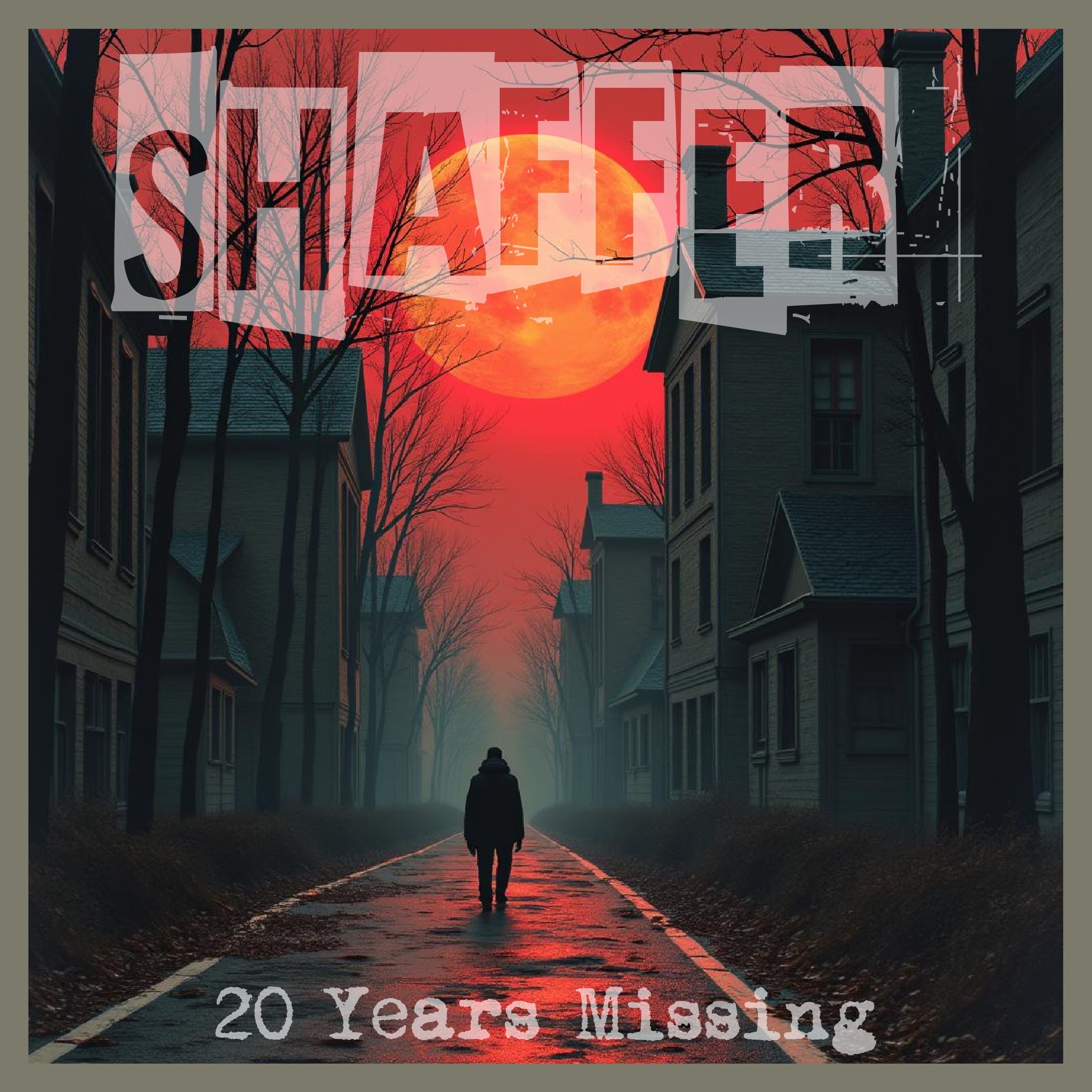
True Crime Garage
Brian Shaffer /// 20 Years Missing /// Theories /// Part 6
00:45:00
Ohio State Medical Student, Brian Randall Shaffer disappeared without an apparent reason on April 1, 2006. His last known whereabouts was a second-floor campus area bar where he was having drinks with friends. Near the entrance of the Ugly Tuna Saloona just before 2 a.m. Brian is seen on security footage talking briefly with two women. Brian later became separated from his friends who have stated that they assumed that Brian had left and gone home. At the time of his disappearance Brian Shaffer was 6’2” tall and approximately 160 to 165 lbs. He’s a caucasian male with brown hair and hazel eyes. Brian had a Pearl Jam tattoo on his upper right arm and he plays guitar. If you have any information regarding Brian’s disappearance or his whereabouts please contact Columbus Police Missing Person Unit at 614-645-2358
Loading summary
Transcript131 lines
- [00:00]
Nick
Exclusively on amc and amc.
- [00:03]
Kelly
You got a possible trained killer out there.
- [00:05]
Nick
A brand new season of the hit series Dark Winds. Big cases put everyone on edge.
- [00:10]
Kelly
And this one's big.
- [00:13]
Nick
She's coming from executive producers Robert redford and George R.R.
- [00:18]
Kelly
Martin. If that girl talks, this whole thing unravels. Dark Winds Sundays.
- [00:27]
Nick
Exclusively on AMC and amc. Well, the holidays have come and gone once again.
- [00:33]
Christine Barconi
But if you've forgotten to get that.
- [00:35]
Nick
Special someone in your life a gift, well, Mint Mobile is extending their holiday offer of half off unlimited wireless. So here's the idea. You get it now, you call it an early present for next year. What do you have to lose? Give it a try@mintmobile.com Switch limited time.
- [00:51]
Christine Barconi
50% off regular price for new customers. Upfront payment required. $45 for three months, $90 for six month or $180 for 12 month. Plan taxes and fees. Extra speeds may slow after 50 gigabytes per month when network is busy, see terms.
- [01:09]
Nick
Welcome to off the Record. I'm your host, Nichols.
- [01:14]
Kelly
It's good to be seen and it's.
- [01:16]
Nick
Good to see you off the record.
- [01:19]
Kelly
Thanks for listening. Thanks for telling a friend.
- [01:21]
Nick
True Crime Podcast Podcast. Be good, be kind, and don't l. Gather around, grab a chair, grab a beer. Let's talk some true crime.
- [01:37]
Christine Barconi
New tonight, inside the investigation of a possible break in one of our area's biggest mysteries. What happened to Brian Schaefer? He was an OSU student who disappeared back in 2006, never to be seen or heard from again.
- [01:52]
Nick
Now, almost 14 years later, Crime Tracker 10 brought a potential clue to police. Angela Ann explains how the FBI got involved, what they found out, and what happens next.
- [02:05]
Angela Ann
When it comes to missing persons in Ohio, there is one name that probably resonates more than any other. Brian Schaefer. His case has the makings of a Hollywood movie. A young medical student last seen going up this escalator to a popular campus area bar. But video never showed him leaving. Or did he? Nearly 14 years after Brian disappeared, this photo recently started circulating of a man, supposedly homeless and American, in Tijuana, Mexico. It said, help locate Facebook groups dedicated to finding Brian. Swore it was him. The theories grew rampant. Brian was alive. So we brought the photo to the attention of Columbus police and Detective Blanche Tucker. When you first saw this, what did you think?
- [02:54]
Gabe Wiedman
I was like, wow. It could be. Could it be as a possibility?
- [02:59]
Angela Ann
Because it does look a little like him.
- [03:00]
Gabe Wiedman
Like him? It does.
- [03:01]
Angela Ann
It was the first big break for the Brian Shafer case. Crime Tracker 10 got unprecedented access to the Files showing the endless interviews and the leads. Police exhausted year after year.
- [03:13]
Gabe Wiedman
We still get calls and we still receive tips.
- [03:16]
Angela Ann
Despite those tips and the neighborhood searches, plus pleas for information, answers never came until this photo.
- [03:25]
Gabe Wiedman
It appeared that it could be Brian Schaefer, but to see if it was him, I contact, you know, the FBI, who assist us in a lot of our cases, to see if they can do a facial recognition.
- [03:39]
Angela Ann
So the FBI compared the Tijuana man photo with the others they already had in a file of Brian. It took four weeks, but finally, till Detective Tucker had her answer that it wasn't him. It was not him.
- [03:54]
Gabe Wiedman
Not him. Correct.
- [03:55]
Angela Ann
Was that a letdown?
- [03:57]
Gabe Wiedman
It was. My hopes were high that it could be him.
- [04:01]
Angela Ann
Foul play has never been ruled out, nor has the fact that Brian maybe just took off the stresses of life, med school and losing a mother to cancer. Do you feel that somebody that has been interviewed in the past, maybe withheld information?
- [04:17]
Gabe Wiedman
I do.
- [04:17]
Angela Ann
You do. But you can't say whom yet.
- [04:20]
Gabe Wiedman
Can't say who.
- [04:21]
Angela Ann
Under CPD's new cold case initiative, Detective Tucker is now reviewing every binder once again. And while this photo is now a dead end, it is, at least for her. Progress in a case that continues to.
- [04:34]
Gabe Wiedman
Haunt, it would mean closure. Not just closure for us, but closure for the family and the friends.
- [04:41]
Angela Ann
For crime. Chapter 10. Angela Ann, 10 TV news.
- [04:45]
Nick
There is still a reward for any information that could help solve this case. You can leave your tip anonymously with Crime Stoppers of Central Ohio. And there's the number. 614461 tips.
- [05:11]
Kelly
So back to the night in question. I think it's reasonable to question Clint. He was there when Brian went missing, quote, unquote. Meredith was there. These two random girls that weren't so random that he was talking to Amber and Brighton. They were there. Who was this third girl that they were with? Did she have any involvement? Why were they going to the bar? These four other guys, what are their relationships? Did they have motivation to get rid of Brian? But also, I think you go even further back and go, well, he had contact with his dad that night. He also wanted his brother to come out, and his brother declined that. But what was going on in the background? His mother passed away, and there was some insurance money. Now, so a lot of people go follow the money. Who. If Brian disappears or Brian dies, who benefits? Well, his brother would benefit financially and so would his father. A lot of people have speculated those two theories. So let's just look into the. The speculation against the brother.
- [06:27]
Christine Barconi
So I did have a Tip that Derek killed Brian for insurance money. And at first, you know, I thought it was a little crazy, but the person that was telling me was Kevin Miles. And I mentioned him before. He's the former president of central Ohio crime stoppers. And while I do appreciate Kevin's opinion and his time, this is a theory that I have been able to eliminate. Derek definitely had an alibi with multiple people. And there is absolutely no evidence that Derek harmed Brian.
- [07:01]
Nick
And has Brian even been declared legally dead?
- [07:04]
Christine Barconi
He has in. In 2013.
- [07:07]
Nick
Waiting seven years for that would be. Would be something, too, to consider. You got to weigh that factor in.
- [07:14]
Kelly
And also, they were all getting money. Randy, the father, was getting money. Brian was getting money. Brian didn't, as far as we know, didn't have that money in his possession at the time. Derek was going to get money, so they were all getting money. I don't want to say that somebody wouldn't kill somebody for not much money, because there's times in your life that a hundred bucks is a lot of money, and then there's times in your life where you're like, 100 bucks wouldn't change much. So I think one of the issues with this is, like you said, Kelly, he had. He's on the other side of town. He has many people that see him there. Obviously, the bar closes. So at some point, he could have left, but it just. There doesn't. It doesn't make a lot of sense. And then it's like, yeah, they had a confrontation at the mother's funeral. But it seemed from everybody I talked to that that was kind of worked out already.
- [08:23]
Christine Barconi
Yeah, it was definitely worked out. And I haven't found anyone that has told me that there were any issues between Derek and Brian. It seemed just to be between Randy and Brian and Derek.
- [08:34]
Kelly
And we don't know where this tip was coming from into crime stoppers.
- [08:40]
Christine Barconi
Right.
- [08:40]
Kelly
And I think that's the. The tough thing, too, is, like, did this tip come in and then did crime stoppers go, hey, we think there's a lot of weight to this, but in the last 20 years, they're not beating a drum, like a very loud drum, that this is what. What happened to Brian Schaefer.
- [09:00]
Christine Barconi
And, you know, based on the way Kevin told it to me, too, I'm not actually sure that this was a tip that came into crime stoppers or if this was his own personal opinion.
- [09:08]
Kelly
My problem with a lot of these theories in the these cases are people come up with the theory, and then they try to find evidence of the Theory instead of looking for answers and having those answers and evidence lead them to a theory.
- [09:25]
Nick
I can't remember the venue that we have discussed this theory before, Captain. I think it was on. Off the record. We've talked about the Derek theory. We've talked about the Randy theory. And in both of those conversations, maybe it was the same conversation that we covered both of those bases. I got pretty worked up, very defensive of Randy, very defensive of Derek and the family. And so I'm not going to repeat that here today. I just don't. I don't. I don't like either one of these theories, but that's just my humble garage opinion.
- [10:03]
Kelly
And then the elephant in the room as far as theories go is when you talk about this case again, I think because only certain individuals are talked about. We're not talking about the four guys that they go to meet. We're not talking about the two random girls as much. We're not talking about the mystery girl so much. But who does Brian go to the bar with? He goes with Clint and Meredith. And I think because Meredith talked with police and because she took a polygraph, that the police have come out and said, hey, we believe what she's saying, and we don't view her as a suspect. She doesn't become a suspect online. But the person that was cooperative for a time period and then gets a lawyer and then refuses to take a polygraph, and then his lawyer makes the statement of, well, if you want to know why Brian went missing, you should ask Brian. That has led to a lot of online speculation that either Clint is involved in Brian's disappearance and that could go multiple ways, that Clint is responsible for his death, or that Clint knows more about what happened and that could be a nefarious thing. Or that Clint knows that Brian went to start a new life and why is he being secretive about this information? The other thing that people say looks strange about Clint is he moved away. Which I should remind people, I think he moved away because of schooling, but he also changed his name. And so those add up to. A lot of people have the theory that Clint knows more.
- [11:49]
Christine Barconi
Yeah, actually, when I first began my deep dive into Brian's disappearance, I 100% thought Clint was guilty. But the more I researched, I kept noticing that there just wasn't really anything there about Clint at all. He showed up to every flyer distribution. He made all the phone calls to the hospitals and jails looking for Brian. He was calling friends. It seemed that he was very involved in everything after Brian's disappearance. But they were basically portrayed like they were best friends, when, in all my research, I just don't see that. I see them more as drinking buddies. They had a little bit of communication, but their communication would pick up right around any drinking holiday, such as St. Patrick's Day or New Year's Eve. So I. I don't really think they were as close as everyone thought they were. One reason that a lot of people think that Clint is suspicious or guilty is because of the Dateline episode that he did. And in that episode, it kind of appears that he's talking bad about Brian. But based on everything I've heard, everything Clint said in that Dateline episode was true. Brian would get drunk and start bar fights or just instigate things. He would get drunk and go flirt with girls and talk to girls. So while it may have seemed a little harsh without all of those details, everything he said was true.
- [13:24]
Kelly
Yeah. And I think that's one of. Just something that I think is maybe a little bizarre in the true crime world is that Brian went missing. Oh, Brian was a guy that lit up the room. Brian was an angel. Well, if that's the narrative that you're going to get, that's not going to help us and the investigation. You just want to know the truth. And so you can have a guy. Everybody said he's a sociable guy. A lot of people said he was a nice guy. But then I think there's different versions of Brian. I think there's the version of Brian when he's sober, and I. I think there's a version of Brian when he's intoxicated. I mean, I think there's evidence on the surveillance footage and evidence of other people that were there at the bars that night. And then also, like, financial records of how much this guy was drinking. And then you have his father coming out and going, well, he wasn't intoxicated. He didn't drink that much. And then. But then knowing what we then learn about Randy, well, Randy drank often, so maybe he just thought, well, yeah, my son drinks, but it's not that much, you know?
- [14:40]
Christine Barconi
Yeah. Like, in comparison, you're.
- [14:41]
Nick
You also mentioned different versions of oneself. I have witnessed, and I think most of us will agree with this statement. There are versions of ourselves, too, that when we are in the company of our parents and he may not have drank a lot in the company of his father, that could be very true to Randy. But again, we. I don't know how much Brian had to drink that night, but I am on record multiple times having Described Brian as visually what I'm seeing there with Brian on the camera. He appears to be intoxicated to me.
- [15:22]
Kelly
Yeah. And I think it's not that far fetched to think that's a possibility. He went to several bars that night.
- [15:28]
Nick
They're celebrating. He's. There's nothing wrong with being. It's legal to drink. I mean, so there's nothing wrong with that. They're out having a good, good time. Does that factor into why he is not here today? I think it absolutely does. And then as far as Clint goes, I won't, I don't want to speak to him specifically, but I do think that I've always said that I believe Brian was met with foul play. And I put that at the top of the list. As, as far as theories go for me. I think he was met with foul play that, that morning between the bar and his home or somewhere, you know, between that bar and wherever his destination would have been for that night. And I think that it was somebody out that night that was responsible for why he is not here today. Now, that doesn't have to be somebody in his direct party, but somebody that was out that night is responsible for why we are having this conversation. And this Brian Schaefer thing has become such a big mystery.
- [16:34]
Kelly
Like you said, they're celebrating the night. Unless you live by a college campus, you wouldn't have a lot of understanding of this. But they're celebrating, hey, spring break time. So guess what happens on that night? More kids are, they're, they're going out to celebrate. They might just be going home for the week. They might just be staying on campus for the week. But it's, hey, let's celebrate. So there's more kids out at the bar that night. And then they're at a complex that has multiple bars. So there's more people in that area. And then the fascinating thing to me with these college campuses is I didn't go to that college, but I went to those college bars. Often you might be at a college bar with a hundred people and 60 of those people don't even go to that college. And I could see a confident, in shape guy rubbing somebody the wrong way. And again, we have evidence of it. I think Clint trying to be as open and honest about his friend and about his former roommate is important to the case. Hey, well, yeah, most people we wouldn't leave behind, but Brian was flirting with these girls and he would. We had other friends there. So after we tried to hunt him down, we couldn't find Him. So we left. But also we walked to the bar. So we figured, again, a lot of times, people treat their male friends different than their female friends. Well, maybe I want to leave my female friend there to walk home alone because she's a female. But, oh, my male friend walked to the bar, so he'll be fine. He'll walk back. And then also, if there's evidence that he gets out of the bar, we have a lot of surveillance footage that we see. A lot of the people that he was supposed to be there with left. So if he is walking home again, not that far of a distance, but not safe, not a safe area to walk home by yourself.
- [18:40]
Christine Barconi
And as far as Clint goes, it's important to know that, you know, he did have an alibi for Friday night going into Saturday morning in Meredith. She was also his alibi for Saturday evening and all day on Sunday, his alibi was basically Alexis and the Shaffer family.
- [18:56]
Kelly
Well, to back that up, Meredith takes a polygraph test. And don't you think detectives are going to say, do you have any more knowledge of where Brian's at? Did. Were you involved in any action that would harm Brian? Did you kill Brian? These are questions that they would be asking her during the polygraph test. So if she's answering them correctly, the polygraph test, she passed. She's not showing deception, and the cops believe her. Then you go, well, chances are, again, unless they're this murderous duo, they don't have any more knowledge. Or at least Meredith doesn't have any more knowledge than she's sharing.
- [19:37]
Christine Barconi
Yeah, a lot of people speculate that when Clint picked up his car Saturday morning, that that is when something happened to Brian, and that is when he killed Brian. But CPD did loom in all Brian's apartment, and they. They definitely went through his apartment with a fine tooth comb, and there were no signs of a struggle or anything like that in Brian's apartment.
- [19:58]
Kelly
Well, I. I like to compare cases. In the Adnan Syed case, they go him and Lee goes missing. Her ex boyfriend, Adnan does not call her ever again. Doesn't call to check in on her. So people point that as evidence that he might. Might be guilty of the crime. Then people look at her current boyfriend at the time that she was supposed to meet up with, and he doesn't call her either once she goes missing. So then people point that as to possible evidence that he's guilty of the crime. And so in the Shaffer case, if you go, well, clink, maybe it's possible that he had Some involvement in Brian going missing. Well, Clint calls him after he sees him last. Well, actually, he doesn't call him. He gives the phone to Meredith, and she calls, but it comes from his phone. And then later the next day, he calls to say, hey, yeah, I know we got. We lost you the other night at the bar, but hey, I'm just calling check in on you. So, again, I don't. To me, that's not much of a. That's not much evidence to anything, but. But there it is. He called him at least twice after they lost contact.
- [21:11]
Christine Barconi
A lot of people think it's strange as well that, you know, he got the attorney and everything so soon after, but so did Meredith. She got an attorney as well. And a lot of people say, well, Clint stopped all communication. Well, he didn't. He stopped all communication with Columbus Police Department unless his attorney was present, which is normal. And what a lot of people would do in that situation. But I actually have letters of communication up until, like, I think it's like a month before Randy passes away, where Clint was still talking to Randy Shaffer.
- [21:45]
Kelly
Again, I think this is where the devil's in the details. And people go, oh, well, he lawyers up. Well, he didn't lawyer up and stop talking. And how many cases have we seen people get alone in the room with detectives and they feel uncomfortable and feel like the detectives are pushing them in a certain direction to confess to something that's not true. And if Clint felt any of that. And again, how close is he with his parents or his friends or whoever, he goes back and says, I was in this room. And they were. They were just being mean. And it could have just been his parents going, you know what? You're going to get a lawyer and you can communicate with them, but we're going to make sure that lawyer is present. And then once you get a lawyer, news flash, listen to that lawyer. So once he gets a lawyer, then some of those actions. Those aren't actions from Clint. Whatever actions are happening from the lawyer, you have to go, well, those are actions coming from his advisors. His lawyer at that point is his advisor.
- [22:54]
Christine Barconi
And I actually had Detective Hearst tell me if I was ever in a situation where someone wanted to give me a polygraph not to take it. So I asked him then why he was so suspicious of Clint. And he said it was just because he said no.
- [23:08]
Kelly
Well, and me and Nick have talked about this multiple times. There's no win if I pass it. And if I pass the polygraph test, people go, oh, well, it's polygraph test and they're not fully accurate. But if I fail, then I look bad and then if it's inconclusive, I look bad. So I don't think there's much of a win in taking one.
- [23:47]
Angela Ann
Hi, I'm Jenny Slate, and believe it or not, someone is allowing us to have a podcast.
- [23:52]
Gabe Wiedman
I'm Gabe Wiedman.
- [23:53]
Nick
I'm Max Silvestri and we've been friends for 20 years and we like to reach out to kind of get advice on how to live our lives.
- [24:00]
Christine Barconi
It's called I need you guys.
- [24:02]
Nick
Should I give my baby fresh vegetables?
- [24:05]
Angela Ann
Can I drink the water at the hospital?
- [24:07]
Kelly
My landlord plays the trombone and I.
- [24:09]
Gabe Wiedman
Can'T ask him to stop.
- [24:11]
Angela Ann
You should make sure that you subscribe so that you never miss an episode.
- [24:15]
Gabe Wiedman
I need you guys.
- [24:27]
Kelly
Hey Sal. Hank, what's going on?
- [24:29]
Nick
We haven't worked a case in years.
- [24:31]
Kelly
I just bought my car at Carvana and it was so easy. Too easy. Think something's up? You tell me.
- [24:36]
Nick
They got thousands of options, found a.
- [24:39]
Kelly
Great car at a great price, and.
- [24:41]
Nick
It got delivered the next day.
- [24:43]
Kelly
It sounds like Carvana just makes it easy to buy your car, Hank.
- [24:47]
Nick
Yeah, you're right.
- [24:48]
Kelly
Case closed.
- [24:50]
Christine Barconi
Buy your car today on Carvana. Delivery fees may apply. I need to start off the new year right by getting the most for my money.
- [25:00]
Gabe Wiedman
I just opened a Goto bank account.
- [25:02]
Nick
And it's paying off out the gate.
- [25:04]
Christine Barconi
I want to save money on filing my taxes.
- [25:06]
Gabe Wiedman
Look no further than GoToBank. You'll get 20% off TurboTax when filing your 2025 taxes.
- [25:12]
Christine Barconi
That sounds like a great way to start the year.
- [25:14]
Gabe Wiedman
Open your GoToBank account today and get started.
- [25:17]
Christine Barconi
Learn more at gotobank.comtaxgreen.bank member FDIC if you're an experienced pet owner, you already know that having a pet is 25% belly rubs, 25% yelling drop it. And 50% groaning at the bill from every vet visit. Which is why Lemonade Pet Insurance is tailor made for your pet and can save you up to 90% on vet bills. It can help cover checkups, emergencies, diagnostics.
- [25:42]
Jenny Slate
Basically all the stuff that makes your bank account nervous.
- [25:44]
Christine Barconi
Claims are filed super easy through the Lemonade app and half get settled instantly. Get a'@lemonade.com pet and they'll help cover the vet bill for whatever your pet swallowed after you yelled drop it.
- [26:08]
Nick
Trending on NBC4i.com tonight, the Ohio Attorney General's office, along with the Columbus Division of Police, they have released an age progression photo of Brian Schaefer. He's the young man who was last seen at an Ohio state bar almost exactly 15 years ago.
- [26:24]
Christine Barconi
Digital anchor Christine Barconi joining us now from the NBC 4i streaming center with more on this picture and what's. What's been done about this cold case. Now, Christine.
- [26:33]
Jenny Slate
Right. And Darlene, I spoke to Ohio Attorney General Dave Yost this afternoon about the case. He said that he actually hates the term cold case, but quote, if there is such a thing, this is probably it. Schaeffer has been missing since April 1, 2006. Video has him entering the Ugly Tuna saloona but never coming out. Police actively investigated for years, but no solid leads. And as to where the then 27 year old medical student could be appeared, why do you think this case continues to captivate the public and continues to draw even national attention, you know, through true crime podcasts and blogs and different things like that, after all of these years?
- [27:12]
Kelly
Well, look, you've got a college kid.
- [27:15]
Nick
Bright future in front of him. We see people go missing on purpose sometimes, but there's usually some kind of a backstory.
- [27:23]
Kelly
We kind of don't see that here.
- [27:26]
Nick
It's just like that TV show vanished almost. And so I think it's something that at the core of our being bothers us because these kind of things are inexplicable.
- [27:41]
Jenny Slate
Anyone with information about the case is asked to call Columbus police. We have their number listed on nbc4i.com as well as at the bottom of your screen.
- [28:00]
Kelly
So we come to our last theory and this is not one that's talked about often, but. And Kelly, let me know if you agree with me on this. This theory is not one that I, that ever really crossed my mind until talking to individuals that have worked on this case.
- [28:21]
Christine Barconi
Yeah, I was the same way.
- [28:23]
Kelly
You know, I mean, like, this is one that comes up. This is one that has been, I won't even say comes up. This theory has been pushed on to me by several individuals and several individuals that I don't find to be like dumbasses. Right. So when they talk about this theory, they'll talk about it obviously more passionately, but it's definitely one that has been coming up for the last 10 years.
- [28:52]
Christine Barconi
Yeah, it's actually a theory that when I was talking to Don Corbett and he told me, I, I thought he was a little crazy, but I kept listening and he told me that he actually had suspicions that Randy Schaefer could have harmed Brian. So of course, me being me, I was like, okay, well, I'm gonna dig into this and try to prove Don wrong. I haven't actually been able to, so it's not a theory that I have eliminated, and it is something that I continue to investigate. Randy had. He had the motive to do it with the infighting over the life insurance, and Brian had told Renee about the affair that Randy was having. Randy was controlling the narrative to the media. He was cut off from cpd. And then in return, they had the tip that Randy had killed Brian and buried him in his backyard. So they took cadaver dogs through his house and through the property. Looking into it, I can't prove Randy ever left Brian's apartment that night.
- [30:01]
Kelly
What you're saying is, one, he has two points of motivation. The insurance money and fighting over that. And then also, Brian's the one that told his wife that he was cheating on him. Right? So those are two motivations. And then we go, well, Randy doesn't have an alibi that night.
- [30:23]
Christine Barconi
Randy doesn't have an alibi until Sunday, so that's weird.
- [30:27]
Kelly
And then I also think the other thing that's weird is Brian was supposed to show up to his house the next day, and he doesn't. And Randy doesn't seem that concerned. Randy doesn't seem to be that concerned until maybe Monday. And then again, so you. When you talk to Don Corbett, you're like, don, you must have lost your mind. But remember, who is Don Corbett? Don Corbett is a private investigator that's working with Randy Schaefer. So the guy he's working with now, he's getting suspicious of. And one of the reasons. Don't take this as a direct quote, but I want to say that Don was saying, hey, I kept telling Randy, you know, we got to look into a different direction other than Clint. And he kept doubling down. Randy kept going, no, we got to look into Clint. Clint is involved. He knows something. So no alibi, multiple motives. Doesn't seem that concerned for a time period. And then the thing that has always bothered me is he pushes a narrative and pushes who Brian was and what he was doing with his life. And pretty quickly, when you start looking into Brian's story, you go, that is not a true version. But like Nick just said earlier, you do act differently around your. Your parents, or you can act differently.
- [31:54]
Nick
Around your parents, and it doesn't hurt your missing person's case or to. To have the public identify and simp and sympathize with your victim. Right? It doesn't hurt. It doesn't hurt the. The case. I mean, what. What Hurts the case. And we've even had pushback on some cases where the victim is somebody who's addicted to drugs or the. The victim is not a saint, let's say, for. For one reason or another. And we'll get an email from somebody like, you know, why did you feature this case? Out of all the cases, you know, this. This guy that you were talking about, who. Who really cares, he was up to no good, or. Or he was drug addicted or whatever. So there is a different level. There are varying degrees of. Of victims as far as the general public is concerned. That's not our thoughts here in the garage. But again, it does not hurt your case to not only get the information out there, to get the people talking, to get people to. To identify with your case, but also identify with your victim and even sympathize with your victim.
- [33:15]
Angela Ann
Yeah.
- [33:15]
Christine Barconi
Randy also portrayed himself in a different light. And I think that is the one thing that keeps this theory hanging in there for me is because, you know, Randy, he was Brian's. I mean, without Randy, Brian's case would not be where it is today and have all of the media coverage that it has. So I totally credit him for all of that. However, Randy wasn't as good of a person as he put it out there to be. A lot of people have no problem knew Randy believing that Randy could be responsible for Brian's death. When Brian and Derek would have girlfriends in high school, they would not even come over until they made sure Randy was passed out because he would make perverse comments. It just seems I didn't know Randy very well. And when I thought Don was crazy, it was because my opinion was based off what I saw on the news coverage that Randy did.
- [34:21]
Kelly
Yeah. Wasn't there some rumor that when they're searching Brian's place that Randy smacked a girl's bottom?
- [34:33]
Christine Barconi
Yes. Alexis's.
- [34:35]
Kelly
Yeah. So. And there was all these other rumors that I heard too, that people that were in communication with Randy about the case that they basically had to tell Randy multiple times, like, you know, you can't talk to me a certain way, or in one case, the. The. The lady wouldn't talk to him unless he was on speakerphone with her husband in the room. Yeah, yeah, There's a lot of stuff like that. But again, being a pervert doesn't make you responsible for killing your son. And.
- [35:14]
Christine Barconi
No.
- [35:15]
Kelly
And then I would also. I. I guess you could play it two ways. If you seem disinterested, then maybe you become more of a suspect. But also, people have talked about this. The searches that Randy did on his own. And so it's kind of like. It reminds me, again, I like to compare cases. The Mara Murray case, There was a lot of speculation that maybe Mara's dad was somehow involved. And then you find out that he was going up almost every weekend and spending hours and days and doing his own search parties for years. And it's like, you might play that card one time to go, hey, look, I'm out here searching for my daughter. I'm not involved. You want to play that card for years. You see what I'm saying? So. And one of the issues here. And again, I think when we first covered this case, I didn't have much of an understanding of Derek. I didn't get it. If my brother went missing, then I'd be shouting from the rooftops. The more I've looked into this, the more I can understand that Derek's relationship with this case is going to be different than anybody's, and we shouldn't force our ideas on what we think we would do with what he should do. And so, at the end of the day, Derek lost his mom, then lost his brother, lost his father. And so this could be a very difficult thing to talk about. And so if there was any. And then could you imagine somebody like Derek talking to other investigators, other people, and if they start speculating your dad, and you don't think that there's any truth to that, I mean, that would be a difficult thing to deal with also.
- [37:19]
Christine Barconi
It would be difficult if you thought there could be some truth to it as well.
- [37:22]
Kelly
Yeah.
- [37:23]
Christine Barconi
And, you know, while Randy didn't seem very concerned when Brian first went missing and Alexis was calling around, to be fair, not a lot of people seemed very concerned at first. And actually, a lot of people seem to think that Brian was going to show up at the airport on Monday. But Randy was the only one that was adamant that Brian was not going to show up. Now, of course, that doesn't mean he's guilty, but it makes me question why he was not concerned initially, but very adamant that he was not going to show up at the airport when no one else seemed to be.
- [37:59]
Kelly
Yeah, and sometimes people get, like, a parental feeling. It's difficult, too. And it's also difficult to judge somebody like Randy, because everybody that we've talked to, friends and family members, they go, yeah, well, Randy drank often, and he drank a lot. And I guarantee you that probably ramped up more once his wife passes away. And I guarantee you that probably ramped up a little bit more when his son goes missing. So some of these weird actions or some of these weird moments, again, I don't want to give him a pass. But you just wonder, was he more intoxicated? You know, because from what I've heard, like, he didn't just have to be intoxicated at night. He could have been intoxicated during the day. And so, again, that doesn't give anybody a pass, but that gives us a better understanding of where he was at. But he's a tough one. And then anybody that's listening to this and go, you guys are crazy to think that it's possible that Brian's dad was involved. Well, it's not that crazy when Columbus PD brings cadaver dogs out to the property twice. They want to waste their time or waste their resources. Sources. I could see them doing it once to go, hey, we got a couple leads. The dad said a couple weird things. Hey, let's just do this so we can check that box. But I, I don't see them doing it twice unless they had some, some solid reason to do it.
- [39:44]
Christine Barconi
And they cut him off as well, like, completely from knowing any information. And they use the excuse that it was because he would go to the media and tell the media everything. But that doesn't seem to be the case based on my communication with Hearst.
- [39:59]
Nick
So I've been on record as saying I think that Brian was met with foul play that morning. And I still think that theory is, to me, anyway, I think it's one of the better theories. It's the theory I like the most, is that somewhere between him leaving the bar and walking home that he was, he encountered the wrong group of guys. And I, I still believe that. I, I, I know that we've had some discussion about conveyor belts and things of that nature, but I still think, unfortunately, I hope I'm wrong. I still think, unfortunately, that he's in the, the landfill.
- [40:43]
Kelly
Yeah, I think all these theories, again, they're not my theory or Kelly's theory. They're just theories that have been put out there from people that we've talked to about this case, that have been looking to this case for a long time. To reiterate the point of this whole conversation is to get this information out there the best way we can so other people that are looking into this case have this information. You can have the band name Rock House. You can have the information that we've talked to them. You can have the information that these two random girls Brian was talking to, There was another girl. Was she involved? Somehow we don't know. But it's just a question that we have. Who was she? Why hasn't she been named? Why wasn't she talked to? Why wasn't these two girls, Amber and Bryden? Why weren't they talked to more in depth from the detectives? Why didn't the detectives look more into the four guys that Brian Clinton Meredith were meeting that night at Ugly Tuna? Why wasn't certain things done? And then I think there's other things that have been done that just haven't been reported on as much. So we want to get that out there. So if somebody's going down this rabbit hole, they know that scent dogs were brought in, that they know that Columbus PD believes that Brian Schaefer got out of the bar and got out of the complex. So it's just to put this information out there to continue the conversation, to shine a light on this situation. It's almost 20 years, and it. It doesn't seem like we're that much closer to the truth than the day he went missing. Want to thank everybody for joining us here in the garage each and every week. Thanks for telling your mother. Thanks for telling your brother. A big shout out to Kelly Bruce. She has been working on this case for many years. And like I've said many times on this podcast, we've been in conversation basically weekly for the last year on how do we get this information out there, what do we do with it? And also trying to track down new leads and new individuals to talk to. If you're not following Kelly on Facebook, she has a Facebook page, Brian Schaefer, dead or alive. She's already posting a lot of stuff, a lot of updates, a lot of new information that she is getting because a lot of people are reaching out to her. So one of the things that we talked about in these episodes was this party picture. Four individuals, some of those individuals being guys that Brian was hanging out with at the Ugly Tuna. And one of those guys we thought possibly could be Brian Schaefer, we're pretty sure, I'd say 99.9. Sure. Based off people reaching out to us, that the guy that we thought on the far right of that photo, which we thought could be Brian Schaefer, the individuals that have reached out to us say, hey, that's not Brian Schaefer. It's actually this other guy. And they've been able to help us identify the individuals in that photo. And yes, some of the individuals in that photo were guys that were hanging out with Brian. But we don't now believe that the guy on the far right is Brian. And that's the whole point of having these conversations. You don't always have answers, but there's information and it's important to get those out. So follow Kelly Brian Schaefer, dead or Alive on Facebook. Like I said, a lot of updates already happening. And it's also exciting because many people of different law enforcement departments have reached out to Kelly, so now they're already setting up interviews and conversations so maybe she can learn more from those individuals that have worked on Brian's case or feel like they have some expertise to lend to the conversation. And the conversation is going to continue. I'm happy to announce that me and Kelly have already talked about gathering up information and trying to do some kind of off the record special episode on any of the Brian Schaefer updates as we get them. But me, Nick and Kelly will be back for a conversation April 18 with not just us, but many others. It's a live panel discussion about the Brian Shaver case April 18 at BrewDog in Columbus, Ohio. The tickets are on sale now. They are going quickly and all the money is going to be raised for Porchlight Project. It's something that's near and dear to Nick's heart. And if you haven't been following the Porchlight Project, they've been doing great work and getting answers, solving cases. And so we're hoping that we can raise this money that will go to DNA testing on other cases. And we hope that this conversation about a cold case can bring closure and answers to other cases out there. And we couldn't do this without you guys. You guys are simply amazing and I'll be forever grateful that you have changed my life. So please join us. Free hugs and free drugs. Scratch that, free free hugs. April 18 at BrewDog in Columbus, Ohio. Tickets are on sale now and they're going fast atTrue Crime Garage.com if you have any tips or information about Brian Schaefer, no matter how big or small, please contact the Columbus Police at 614-645-2358. And thank you so much for sharing all these cases on social media. It means the world. Until next week, be good, be kind, and don't litter.
- [47:16]
Nick
Welcome to off the Record. I'm your host.
- [47:21]
Kelly
It's good to be seen and it's.
- [47:23]
Nick
Good to see you off the record.
- [47:26]
Kelly
Thanks for listening. Thanks for telling a friend.
- [47:29]
Nick
True Crime Podcast Podcast Be good, but be kind and don't l gather around, Grab a chair, grab a beer. Let's talk some true crowd, Finding the.
- [48:10]
Gabe Wiedman
Music you love shouldn't be hard. That's why Pandora makes it easy to explore all your favorites and discover new artists and genres you'll love. Enjoy a personalized listening experience simply by selecting any song or album, and we'll make a station crafted just for you. Best of all, you can listen for free. Download Pandora on the Apple App Store or Google Play and start hearing the soundtrack to your life.