← True Crime Garage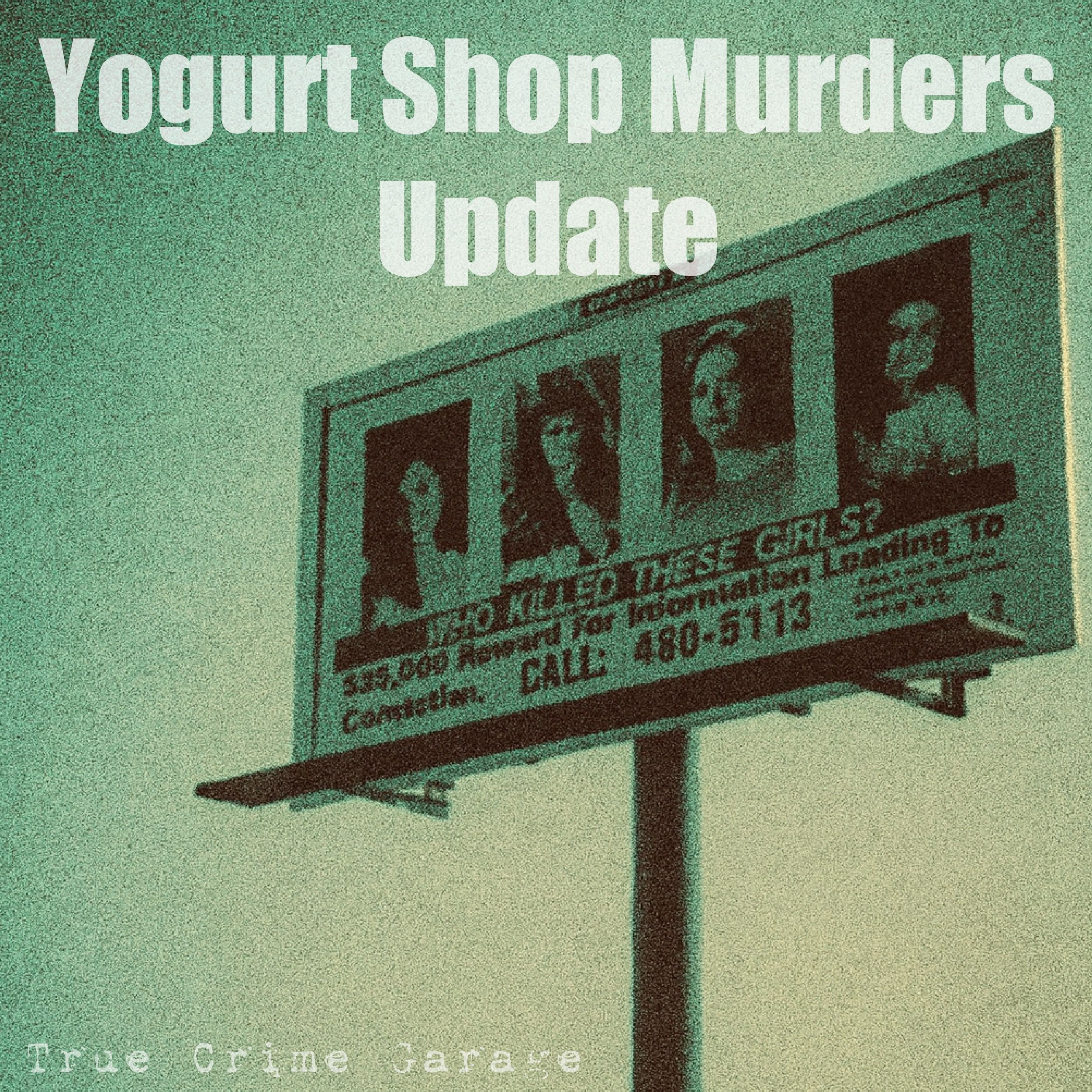
True Crime Garage
Yogurt Shop Murders ////// UPDATE
01:02:11
After more than 33 years we finally get some closure in the infamous Yogurt Shop Murders case that has haunted Austin Texas since that sad and tragic night when four teen girls were brutally murdered. From The Austin Police Department - Austin Police have made a significant breakthrough in the 1991 I Can’t Believe It’s Yogurt murder case and we have new information. Our team never gave up working this case. For almost 34 years they have worked tirelessly and remained committed to solving this case for the families of Jennifer Harbison, Sarah Harbison, Eliza Thomas, and Amy Ayers, all innocent lives taken senselessly and far too soon. We have identified a suspect in these murders through a wide range of DNA testing. The suspect is Robert Eugene Brashers, who committed suicide in 1999. This remains an open and ongoing investigation.
Loading summary
Transcript105 lines
- [00:03]
ExxonMobil Advertiser
When it comes to reducing carbon emissions, the heaviest industries face the toughest challenges. That's where we come in. ExxonMobil is investing in technology to help American industry lower its emissions, including in our own operations, all while empowering businesses and creating job opportunities. It turns out that fewer emissions can mean a stronger economy.
- [00:27]
Almond Joy Advertiser
ExxonMobil let's deliver this episode is brought to you by Almond Joy. With its perfect blend of real creamy coconut, rich chocolatey taste and a satisfying almond crunch, Almond Joy is the taste that simply takes you away. Blissful tropical flavors will have you feeling sunny vibes and ocean breezes in every bite. Almond Joy is the ticket to a sweet, indulgent, laid back escape. One you'll want to return to again and again. Grab the creamy coconut and chocolatey crunch of Almond Joy today and taste paradise foreign.
- [01:11]
Host (True Crime Garage)
I'm your host. It's good to be seen and it's good to see you off the record.
- [01:19]
Co-host (True Crime Garage)
Thanks for listening. Thanks for telling a friend True Crime.
- [01:22]
Host (True Crime Garage)
Podcast Be good, be kind, and don't let Gather round, grab a chair, grab a beer. Let's talk some true crime. Welcome to an Emergency off the Record. It's the good kind of emergency though. We are here because there is a case that we've been talking about for several years. It is finally nearing its conclusion, and a successful conclusion at that, that they're able to start putting the puzzle pieces together to finally figure out exactly what happened in the Yogurt shop murders. On Friday, December 6, 1991, 14 age girls were bound, gagged and killed at an I Can't Believe It's Yogurt shop off of West Anderson Lane in North Austin, Texas. The building was then set on fire, destroying what could have been a trove of physical and forensic clues. But they didn't manage to wipe away every single trip trace. Every killer leaves a trace. Transfer theory wins again. Dr. Edmund Locard's exchange principle wins out once more. Robert Eugene Brashers is the name that Austinites have been searching for for over 33 years. Coming up on 34 years this December. Robert Eugene Brashers is one of the perpetrators in the 1991 yogurt shop murders and a horrific crime. One of the worst crimes that we have reviewed here in the garage. And this was a case that troubled us greatly. So much so that we revisited this case several times. Six episodes from here in the Garage on the yogurt shop case. Our first look was back in February of 2017 with about two hours of coverage. TCG episodes 81 and 82 and then again when we were faced with the sad 30 year anniversary of the then still unsolved case with our episodes Yogurt Shop murders 30 years later episodes 539 and 540. Then most recently this year 2025. After the HBO docu series on the case, we did two follow up episodes, the Yogurt Shop Murders episode numbers 866 and 867 on your True Crime Garage radio. Dial this from our Twitter or on X as they say at True Crime garage from Friday, September 26th we posted. After more than three decades, investigators believe the yogurt shop murders have been solved. We will be diving into our sources to try and learn more details. This is huge news for the true crime world. Got him. Cheers mates.
- [04:14]
Co-host (True Crime Garage)
Got him.
- [04:15]
Host (True Crime Garage)
If you're not following True Crime Garage, go follow us on the social channels at True Crime Garage. So quick recap for those that need one on this case. Four teenage girls were brutally murdered on a Friday night at a yogurt shop in North Austin, Texas in December of 1991. The girls, families and those who worked decades trying to find and prosecute their killer or killers said that the 30th anniversary came with no sense of closure. The details of the crimes have been well documented. Jennifer Harbison, eliza Thompson, both 17, worked at the I Can't Believe It's Yogurt on West Anderson Lane. Jennifer's sister, little sister Sarah Harbinson, age 15, and Sarah's friend Amy Ayers, age 13, arrived that night at the yogurt shop before closing time on December 6, 1991, the plans for young Amy Ayers and Sarah Harbison were to have a sleepover together that night. They were close friends. Amy was only an 8th grader at Burnett Middle School. The other girls attended Lanier High School. Sometime after the yogurt shop closed that night at 11pm the girls were gagged with their own clothing and then shot in the head. Their bodies were stacked on top of one another and a portion of the shop was set on fire. The back portion of this restaurant. Authorities arrested four suspects, but that was almost eight years later. In October of 1999. Only two of the four, this was Robert Burns, Springsteen and Michael James Scott, stood trial and both were in fact convicted. Springsteen received the death penalty and Scott got life in prison. But the Texas Court of Criminal Appeals overturned their convictions, ruling that their confessions were improperly used against each of them at each other's trials. Springsteen and Scott were released from prison and prosecutors dismissed all charges against them. In 2017, there was a potential breakthrough that emerged. A Austin detective submitted DNA evidence found in one of the victims on one of the victims into a database that searches ystr DNA samples, a type of DNA profile that forensic investigators use to identify male relatives of a suspect. A match was found. In 2017, the Austin Police Department requested more information about the identity of of the matching donor, but the FBI at the time refused to release any information, saying a federal statute prohibits it from disclosing identities of anonymous donors. Despite these hurdles, the families continue to work to keep the case in the forefront. Their efforts have led to new crime fighting initiatives at the state and the federal levels and of course led to the recent docu series on hbo. Now this here, Captain, is from a press Release from Friday, September 26, the same day as your post on on X. And it says they gave the immediate release of the following titled Austin Police make significant breakthrough in 1991 I can't believe It's Yogurt Murder Case Austin police have made a significant breakthrough in the 1991 I can't believe it's Yogurt Murder case and we have new information. They said our team never gave up working on this case. For almost 34 years they have worked tirelessly and remain committed to solving this case for the families of Jennifer Harbison, Sarah Harbison, Eliza Thomas and Amy Ayers, all innocent lives taken senselessly and far too soon. We have identified a suspect in these murders through a wide range of DNA testing. The suspect is Robert Eugene Brashers, who committed suicide in 1999. This remains an open and ongoing investigation. Austin Police Department investigators have been in touch with the families. We ask for your patience as we continue this process and remain mindful of the many people whose lives have been deeply affected by this case. Now, Captain, I appreciate and I'm not going to go too far down the old rabbit hole here, I appreciate everybody rejoicing that this case is the investigation is moving along significantly and the identification of this Robert Eugene Brashers. I don't want to piss on anybody's Cheerios here because that would be disgusting and rude, frankly. But I do like the title of what the Austin Police Department chose to title their their press release on Friday that said that Austin police make significant breakthrough in this case rather than a lot of people posting that the case is solved. I think that I think that the line in this press release that came out on Friday from the investigating agency that's in charge of this case that we do need to keep in mind while we. While we are rejoicing and celebrating here in the garage today. But the line that they did choose to include in that press release is this remains an open, an ongoing investigation. So solved might not be the. The proper term at this moment. Making significant breakthrough. Absolutely. And kudos to them for not giving up and continuing to test information. And actually just watching the. The press conference. There was a press conference scheduled for Monday the 29th. So the information comes out on the Friday. Then we hear that there's going to be a press conference. And they held true to their word. It was covered by several of the local media outlets there. And I just finished watching the first, about 25 minutes of the case where the. The current detective gave a full presentation. And after he was done speaking, we flipped on the microphones, ready to talk about this because it is a good day here in the garage and a good day in Austin. It's been. Nothing's going to bring these poor girls back, these four wonderful people back. But this is something that their family has been hoping and praying for for over three decades and many folks in Austin and outside of Austin hoping and praying for for all of this time.
- [11:18]
Co-host (True Crime Garage)
On the Austin public and the victim's families, of course they're going to be somewhat leery of this information because they've had this. We've solved the case before from Austin PD and there was individuals arrested. If the defense didn't make a couple mistakes in that case, then maybe would never get to this point in the investigation.
- [11:47]
Host (True Crime Garage)
Yeah, well, I mean.
- [11:48]
Co-host (True Crime Garage)
Well, I shouldn't say defense.
- [11:49]
Host (True Crime Garage)
I expand on that a little bit.
- [11:51]
Co-host (True Crime Garage)
Prosecutors, because the process. Because during the trial, what they did was instead of having people that confessed testify at the trial, they were using recordings and written confessions to basically cross examine the other individuals.
- [12:09]
Host (True Crime Garage)
Yeah, they used the confessions at the trials against each of the two that were convicted. What they didn't do was allow the. Allow for their. To that information in that evidence to be contested in trial. And since it wasn't contested, that's actually. That's illegal. It's. It's. It's not giving the defendant a proper and fair trial. And thus they overturn those convictions. But then you also realize how, how loose. I mean, you talk about building your case on. On a shoestring. This was more like dental floss. Because as soon as those convictions are overturned, what happens is the prosecutors dismiss all the charges against both of them. And then you had Austin PD come out and say, no, we. We're still convinced we got the right guys. We're Just looking for. The courts got it wrong. And now we're looking for a fifth person that was involved. And so I. There may be somebody sitting out there somewhere that's going to say that Robert E.U. brashers was the fifth perpetrator and these other four were still involved. But that's not what Austin PD said today at the press conference.
- [13:26]
Co-host (True Crime Garage)
Absolutely the opposite.
- [13:28]
Host (True Crime Garage)
I'm still a little confused even after watching the conference because there's something that's being overlooked. You know, we. You and I had traded some texts and thank. Thank you for. You were the first one to notify me that there has been this significant breakthrough in this case. And I had said something to you.
- [13:50]
Co-host (True Crime Garage)
Of why I have a little birdie that follows the true crime world extensively. And so that little birdie tips me off to everything that's happening.
- [14:02]
Host (True Crime Garage)
Yeah. And you can set up notifications when there's a. A news break. I try to distance myself from the news for reasons we don't need to get into here today.
- [14:13]
Co-host (True Crime Garage)
But it's better to have a little birdie.
- [14:15]
Host (True Crime Garage)
There you go. Yes. I had said to you on Saturday in attacks, you. You had mentioned that there was going to be this press conference. And I said, well, are they going to explain why they don't know who the other perpetrator is? I'm not going to go too much into this because I could be. I could be wrong. I could be absolutely wrong. But the information, I. Yeah, I think you are. Well, thanks for your vote of confidence. I appreciate it.
- [14:41]
Co-host (True Crime Garage)
I was just going to say I looked into this. Do they have two samples from a suspect? And they do not.
- [14:48]
Host (True Crime Garage)
Which is. Goes against the information that has been out there for several years now.
- [14:56]
Co-host (True Crime Garage)
Yeah, but that initially that was put out by the defense saying that is this DNA sample an actual DNA sample or are there two individuals that we should be looking for? The prosecution argued that and also forensic reports also contest that. And during the press conference, they said definitively that they're looking into Brasher as the killer and that he killed and did this crime by himself.
- [15:27]
Host (True Crime Garage)
Oh, yeah. I'm not. I'm not pushing back against. On the idea that Robert Brash. I'm not. I want to be clear here. Not saying that at all. He's absolutely responsible for this. I'm just pointing out that all of the scientific information up until what was just released within the last 48 hours has said otherwise. That there were in fact, two perpetrators. Now, to. To be. To put. To put a point on my side here off of the evidence that they presented at the press conference. They are saying that the DNA that led them to Robert Eugene Brashers was taken from Amy A's fingernail clippings.
- [16:09]
Co-host (True Crime Garage)
Yes. And other items. Amy's belt, the ice cream scoop and clothing.
- [16:15]
Host (True Crime Garage)
So the other DNA evidence that has been discussed up until the most recent 48 hours was from other parts of the crime scene, let's say. But let's, we don't, we need to, don't need to get into that here. What we need to do is get into what we do know.
- [16:34]
Co-host (True Crime Garage)
Well, this, the statement that I found was. Defense arguments have claim that the evidence could be, could reflect more than one male contributor, not just one unknown male. The prosecutors and some forensic reports have contested that. So other than that, I can't find, you know, definitive evidence of this second contributor.
- [16:59]
Host (True Crime Garage)
That that's fine. And I'm not asking you to do that. I'm not asking anybody else to know that. It's there, it's out. And I'm, I'm, this is, I'm not making it up. It's, I don't, I don't want to go into the details of that for a lot of reasons, but it's there. And so the information you're discussing is when the two were convicted.
- [17:20]
Co-host (True Crime Garage)
Yeah.
- [17:20]
Host (True Crime Garage)
So that, I mean that would have been years and years ago. The information I'm talking about is stuff that has come out within the last five to six years in this case.
- [17:30]
Co-host (True Crime Garage)
And, and there could be some confusion on this too because the initial sample that they had, this male only sample, which is called a ystr, their initial samples, they had ones with different markers. The most complete one that they had was 17. And then eventually they're able to get that to 25 markers. And it's essentially it's 27 because one of them is kind of split. But you know, going from 17 markers to 27 is A, is a big leap forward.
- [18:05]
Host (True Crime Garage)
Exactly. And what we find here is with that evidence that was under the fingernail nails of Amy Ayers, eventually that's going to lead to a 27 point match, 27 of 27 match for Robert Brashers. So not even much in the, you know, there's no question in there at all. Absolutely. Robert Brasher's involved in, in responsible for the brutal murders of these four young girls. According to his obituary. Robert Brashers, Robert Eugene Brashers was 40 years old. He was from Paragould, Arkansas. He died January 13, 1999. In.
- [18:56]
Co-host (True Crime Garage)
It was a shootout. Right. It was a, it was a Stand Missouri with a law enforcement.
- [19:02]
Host (True Crime Garage)
Well, it was a standoff but, but not a shootout. He, he passes away aft like the captain said after a standoff. And I can tell you, well, I.
- [19:11]
Co-host (True Crime Garage)
Mean it was a shootout because he shot his brains out.
- [19:16]
Host (True Crime Garage)
True, true. It was still a shootout so. But not the traditional definition of shootout. The title is Arkansas man kills self after police standoff. This is from Connect Missouri from the Associated Press. An Arkansas man is dead following a four hour standoff with police at a motel in southeast Missouri. Officers checking on a car with stolen license plates went to the motel unit occupied by Robert Brasher's age 40 of Paragould, Arkansas and his family. Authorities said Brasher's wife told them that he was not there. But officers saw him hiding under a bed. They said Brasher's place a pistol to his head and said he would shoot himself if the officers did not leave. The officers left the room and then contacted Brashers by telephone convincing him to allow his wife and three children to leave the room. Police continued to negotiate with Brashers by telephone, but then they heard a single gunshot at about 4:30 in the morning. Brashers was found on the floor of the room with a gunshot wound to his head. He died later at the hospital and authorities said Brashers was wanted for federal weapons violations. Little did they know at this time in 1999 when this guy kills himself that how much other horrible stuff this guy was actually responsible for and unfortunately didn't face much of a punishment during his time on this earth for these horrible crimes that he committed. The Austin pd the detective telling us today at the press conference, very bluntly and rightfully so says it exactly the way you should say it. He says Robert Eugene Brashers was a violent serial rapist and murderer.
- [21:12]
Co-host (True Crime Garage)
Yeah, this will not be the only crime that they close this year because of, of this DNA testing.
- [21:22]
Host (True Crime Garage)
Yeah, originally the way that they find out, they use DNA to find him for other crimes. So he was identified after death as a being a serial rapist and serial serial murderer. But it wasn't until very recently that they connected the yogurt shop case to this Robert Eugene Brashers who killed other people in several different states. And in fact it was the state of South Carolina that exhumed his body. I think it was in 2017 or 2018. They already had the DNA evidence, but they exhumed his body to make sure that there was no question about it. Exhume the body, take the DNA from the body and then using with the help Of Parabon Nano labs. Back then they confirmed that he was the rapist murderer in their unsolved cold case. They said in, in that cold cases press conference, they said that Robert Brashers lived the majority of his life in Huntsville, Alabama, but lived in paragould, Arkansas after being released from prison in 1997. So he did spend some prison time on a few different occasions here. And unfortunately, like we see in so many other cases, if this guy wouldn't have been let out on early release, well, this yogurt shop murders would not have been committed because he would have still been locked up in 1991. But he was let out early for reasons we that will never make any sense to me. Anyway. In 1986, Brashers was convicted for beating and shooting a woman in Port St. Lucie, Florida. For that he was given a ten year prison sentence. In 1986, he served three and a half years in prison for that. So he was released May 4th of 1989. In April of 1990, Brashers brutally raped and murdered Jenny is tricky in Greenville, South Carolina.
- [23:33]
Co-host (True Crime Garage)
That's the one that they got the DNA from.
- [23:35]
Host (True Crime Garage)
In 1992, Brashers was arrested in Cobb county, Georgia for possession of a stolen pistol and possession of a stolen vehicle. At the time of his arrest, he had a police scanner, a police coat or jacket, burglary tools, and a fake Tennessee driver's license. So he was driving around and ready and willing to present himself as a police officer. We usually know how that goes and why people do that sort of behavior. He was then sentenced to prison once again after being caught for this in 92. And he was released February 17, 1997. So sometime between his release of May 4, 1989, he managed to kill Jenny Ziz Tricky. And I'm going to spell that because I'm probably not saying it exactly correct. It's Z I T R I C K I. Before being arrested in 92. Well, we know that he was down in Austin, Texas where he committed these, the infamous yogurt shop murders case. Now he's released February 17, 1997. And this is what we will typically see with these types of offenders. Serial rapists, serial murders. It's not going to be very long before he's going to be back at it again. And this is March 11, 1997. Less than 30 days after getting out of prison, Brashers entered a home in Memphis, Tennessee where he sexually assaulted a 14 year old who was visiting friends at this home.
- [25:18]
Co-host (True Crime Garage)
Yeah, it wasn't a four victims were.
- [25:21]
Host (True Crime Garage)
In that case, that's correct. There were four people inside the home. He sexually assaulted one of the persons in the home, he fled the home and that case was unsolved for quite some time as well in March of 1998. So the following year, March 28th of 98 Brashers brutally murdered Sherry Sharir and her 12 year old daughter Megan. Sherry Shearer and her 12 year old daughter Megan Shearer. He shot them multiple times. Daughter was sexually assaulted. Until they solved that case in, in South Carolina. This one wasn't solved either. So this is what's weird dude. Like we're seeing him from the after the exhumation in where South Carolina sled is involved solving that cold case connected him to a bunch of these other cases. Now what we're seeing today in 2025 out of Texas is the same thing Brashers we now know did yogurt shop and there's a case in Kentucky that they are working on with him.
- [26:37]
Co-host (True Crime Garage)
Yeah, that's kind of what sent them down this rabbit hole is I guess the way you enter your ballistic information is, is manually and so there's been some errors. So Detective Dan Jackson, this is in June of this year decided okay, well you know I heard that there could be errors here. So I'm going to re upload this information that ballistic evidence brings us to this case in Kentucky. And I think what's fascinating with this case is we have two guns that were used. So by there being two murder weapons maybe you could assume that there's two suspects. But we had a what a 22 and 380. But the 22 there's just fragments, there was no shell casings but there was the shell casing of the 380 and the drain. So they were able to run more ballistic evidence on, on that shell casing.
- [27:43]
Host (True Crime Garage)
With that Shearer case. This is just really exemplifies how violent this guy was. Later that same day after committing a double homicide, he attempted to force his way into a home in Dyersburg, Tennessee. There he encountered a 25 year old mother who was home with a small child who fought with Robert Brashers. She was shot in the doorway of her home. She survived and provided a description to police. So if, if you're staying up on this and you're aware of the news already, you've probably seen some of the composite sketches of that are now linked to Brashers that are floating around now. The projectile retrieved from her body was also later linked to the Shearers murder. So they, they had an idea that those were connected. But until they solved the South Carolina case, that too, this case too remained unsolved. And then in 1998, April 12, 1998, Brashers was arrested as he attempted to break into a single woman's home for whom he had previously done handyman work for Brashers, had cut the phone lines to the home, was armed with a firearm, had a video camera and possessed other tools. He was released from custody the following day. And then he goes on the run.
- [29:20]
ExxonMobil Advertiser
When it comes to reducing carbon emissions, the heaviest industries face the toughest challenges. That's where we come in. ExxonMobil is investing in technology to help American industry lower its emissions, including in our own operations, all while empowering businesses and creating job opportunities. It turns out that fewer emissions can mean a stronger economy. ExxonMobil let's deliver the fantasy footballers are on SiriusXM.
- [29:51]
Host (True Crime Garage)
It's about time you won your league.
- [29:52]
Co-host (True Crime Garage)
And we're here to help.
- [29:54]
Host (True Crime Garage)
Becoming a fantasy football champion begins now.
- [29:57]
Co-host (True Crime Garage)
And the biggest fantasy football podcast has.
- [29:59]
Host (True Crime Garage)
The insight you need. Listen to the Fantasy Football Footballers Podcast right now on the Sirius XM app. Fantasy football is fun. Winning is even more fun. And our listeners do both.
- [30:10]
Co-host (True Crime Garage)
Listen to the Fantasy Footballers Podcast right.
- [30:13]
Host (True Crime Garage)
Now on the SiriusXM app.
- [30:15]
Co-host (True Crime Garage)
Just search Fantasy Footballers.
- [30:17]
Indeed Advertiser
You just realized your business needed to hire someone yesterday. How can you find amazing candidates fast? Easy. Just use Indeed. When it comes to hiring, Indeed is all you need. Stop struggling to get your job post seen on other job sites. Indeed Sponsored Jobs help you stand out and hire fast. With Sponsored Jobs, your post jumps to the top of the page for your relevant candidates so you can reach the people you want faster. According to Indeed data, Sponsored Jobs posted directly on indeed have 45% more applications than non sponsored jobs. There's no need to wait any longer. Speed up your hiring right now with Indeed and listeners of this show will get a $75 sponsored job credit. To get your jobs more visibility@ Indeed.com podcast, just go to Indeed.com podcast right now and support our show by saying you heard about Indeed. On this podcast. Indeed.com podcast terms and conditions apply. Hiring Indeed is all you need.
- [31:17]
Host (True Crime Garage)
Time.
- [31:18]
Carvana Advertiser
It's always vanishing. The commute, the errands, the work functions. The meetings. Selling your car. Unless you sell your car with carvana, get a real offer in minutes. Get it picked up from your door. Get paid on the spot so fast you'll wonder what the catch is. There isn't one. We just respect you and your time. Oh, you're still here. Move along now. Enjoy your day. Sell your car today. Pickup fees may apply.
- [31:53]
Co-host (True Crime Garage)
All right, we are back. Cheers, mates. Thanks for joining us here in the garage. And at least we're bringing good news this time. Cheers to you, Colonel.
- [32:03]
Host (True Crime Garage)
Yes. Thank you, Captain. Cheers to you, buddy. Yeah. Always happy to bring good news. In fact, solve more of these cases so we can bring more good news each and every wonderful week. So it was there that his rap sheet. We'll get more into Brashers, but he's arrested for this. Bne. I mean, I get it. I get it. There's. There's constitutional rights. The dude cut the phone lines, brought a gun with him in a video camera and other tools to the scene. And he's released from custody the following day, goes on the run. And then January 13, 1999, the standoff shootout and takes place at that Super 8 motel in Kennett, Missouri, where Brashers is found dead on the floor of the motel room after the standoff with police.
- [33:09]
Co-host (True Crime Garage)
Yeah, I mean, I think the most fascinating thing here is obviously we have this individual's DNA, but did he ever go to Texas? It's not as simple as we got his DNA and that's it. And I think especially with what has taken place in this case, the families have the right to wonder where law enforcement is at here. And I think they did a really good job during the press conference to stack the evidence to say it's not just this DNA that is important here, but you can stack the evidence against Brasher.
- [33:49]
Host (True Crime Garage)
Yeah. And so I got my notes here from the press conference. So they started off when they giving us the presentation of how we got to where we are today. And like you said, captain, I'm with you. I appreciate that they went through some detailed information because as you said, which is correct, a lot of times we hear in these cases, well, we've figured out who did it. The DNA told us who did it, but that's all we know. You know, we've. We've still not been able to con to connect the perpetrator to the victim or the victim to the perpetrator here in this case. And I'll go through my notes from their presentation and maybe this will clear any questions up this that some folks may have or things they're wondering about here. Says the modus operandi was the perpetrator entered or remained near yogurt shop at closing time when no other customers were present. The girls were found nude and tied up with their own clothing as ligatures and bindings. There was evidence of Sexual assault at the scene. All four victims were shot in the head, execution style, with a.22 caliber gun. Amy was also shot with a.380 caliber gun. The building was set on fire. The evidence collected, they said. In 1991, DNA technology was primitive. All girls had vaginal swabs taken for DNA testing, both at the scene and at the autopsies, which the detective pointed out was paramount to their investigation and where they are today with that investigation. One fired.380 cartridge casing was located in the floor drain, as the captain pointed out. The other other casings were not located at the scene. The fire and the manner in which the fire was extinguished made evidence collection extremely difficult. Tips and leads. There were thousands of tips and dozens of confessions, but most led nowhere and no arrests were made. One of the confessions was from a juvenile named Maurice Pierce. Eight days after the murders, Pierce was at the North Cross Mall with his friend Forrest Welborn. He was carrying a.22 pistol in his waistband. Maurice Pierce, age 16 at the time, was arrested by Austin PD for having a gun at the mall. The.22 pistol was seized. Pierce was taken to homicide office and interrogated for hours by Detective Hector Palanco, where Pierce confessed to Polanco. The next morning, lead Detective Jon Jones arrived at work and spoke to Pierce. Pierce confessed that he had lent the.22 pistol to a friend, Forrest Welborne, and that Welborn told Pierce he had killed the girls. When Welborn was questioned, he mentioned to his two other friends, Robert Springsteen and Michael Scott. Those were the two that were eventually tried and convicted, which is strange, as we've pointed out a couple times prior that Pierce and Wellborn were. Were the ones that were first arrested and had some form of a confession. But those two, they weren't able to even bring them to trial. They never brought them to trial.
- [37:17]
Co-host (True Crime Garage)
But if Blanco wasn't so good at getting people to confess, this part of the case would have not moved forward. And then also if they would have had the ballistic evidence to test against the gun that Pierce was found with at the. At the mall, then the case wouldn't have gone any further either.
- [37:40]
Host (True Crime Garage)
Right. And as they presented here today at the press conference, they say police interviewed all four and they were eliminated. That was, of course, just weeks after the murders, and we know that that will change. They said Ballistics analyzed the.22 gun that was seized from Pierce at the mall to determine if it was the same weapon used in the murders. Results were inconclusive, as the projectiles were highly Fragmented, slash, distorted. But remember publicly, not in 91, but what was it in 99. I think publicly they were saying that it was that the ballistics were a match, even though later we find out that they weren't. And in fact inconclusive at best. Says case had gone cold. The case stalled over the years and personnel were scaled back during the mid-90s. In 1999, a new yogurt shop task force revisited the Maurice pierce confession. Since 2008, numerous items were sent to numerous labs across the country with various testing strategies. Most of the male DNA collected from the crime scene were only a few picograms and was a mixture with the victims. This is where we get into some of the DNA stuff and forgive me, because I'm not a scientist, I don't even play one on TV because that would be impossible. I'm not smart enough. 2018, the Unknown YSTR samples were submitted for retesting. Due to technical technological advancements, the unknown YSTR returned with 27 known markers for a more complete profile. And as the Captain was saying, 25 markers with two having double split, as he said, to give 27 total. The YSTR identified identity remained unknown at that time. The unknown ystr profile was also found on other swabs taken from the girl.
- [39:35]
Co-host (True Crime Garage)
Yeah, I believe what Detective Dan Jackson was saying is these ystr samples aren't something that you can't can really put into codis. You would have to have a more complete filing. Right. And it wouldn't be a ystr sample, it'd be a different sample that would have to go into codis.
- [39:56]
Host (True Crime Garage)
I could be correct. So for. Right, because the CODIS database is not a database of ystr DNA. So therefore if you put it in there, there's going to be no match. You'll never get a hit because it's not a collection of that form of DNA. So you have to have the proper form of DNA to submit it to CODIS in the hopes of getting a match. Late June of 2025, according to Austin PD Detective Jackson, he's the current detective, he deserves a lot of kudos here. Determined that the.380 cartridge had not been submitted to the NIBIN, that's a database in many years. And software had greatly improved database.
- [40:45]
Co-host (True Crime Garage)
Yeah.
- [40:45]
Host (True Crime Garage)
Original ballistics reported in all probability the weapon used was limited to a an AMT backup model.380 semi automatic handgun in the murder of Amy Ayers. So remember, they were all shot with a.22. Amy was shot with the, the Only one being shot with the.380. She's also the one that they used her fingernail clippings to identify Robert Brashers as the killer. 07-02-2025. The detective requested submission submission of fired.380 cartridge casing through ATF. TFO received a hit the same afternoon to an unsolved murder in Kentucky. Now they did go. The detective went out of his way to say, you know, I, I can't give too much information on the, the Kentucky angle here because they're still working and they, and they haven't rather than me answered. I'll let, I'll answer from the detectives words here from my notes. Kentucky cold case homicide from 1998. They have not done their press release yet, so the actual city will not be named. Fair enough. Right there.
- [41:59]
Co-host (True Crime Garage)
They do have some ballistic evidence and matches back, but the complete ballistic results have not come back in the yogurt shop or this Kentucky case. So both of these cases are going to be waiting on those ballistics, but they're, but because of the initial testing, they're pretty convinced of the results that they're going to get.
- [42:22]
Host (True Crime Garage)
Yeah, exactly. And it will be interesting to see how that plays out and what crime they're talking about. As you know, 1998 Kentucky cold case doesn't not ringing any bells for me.
- [42:37]
Co-host (True Crime Garage)
But I think it's a single victim and I think it's a rape and murder and I believe the victim was bound by her own clothes as well. And I believe that the building was set on fire. So very similar to the yogurt shop murders.
- [42:52]
Host (True Crime Garage)
Yeah. So what they're saying is that in July of this year, Austin Police Department cold case and attorney general cold case investigators travel to Kentucky because they wanted to review the cases. They're like the captain's pointing out they are comparing notes on yogurt shop to the notes on this Kentucky cold case from 1998. They say their words are the murders share a similar MO and then they say preliminary NIBIN results, the ballistics database indicate a presumptive positive correlation between the two casings indicating the same gun was used. So same gun, the.380 used at yogurt shop was used in this Kentucky 1998 cold case. The yogurt shop 380 casing was brought to the Kentucky State Police KSP. Shout out to our friends at KSP, we got a bunch of you that listen and we appreciate it. So tool mark, tool mark examiners could do a one to one definitive comparison. It says official results are Pending. But as said, presumptive positive correlation, they believe that it's going to be a match. Aside from the MO and the ballistics hit, no obvious links were found between yogurt shop and the Kentucky murder. Apb, cold case, Texas Attorney General's cold case unit and Kentucky pd. Kentucky had only tested a cigarette butt from the scene and got an unidentified CODIS profile. So in that case, they were testing DNA up in Kentucky. They submit it and we get an unidentified CODUS profile. Testing strategy was developed to test. They noted additional including an untested sexual assault kit was going to be tested. DNA testing had not done a YSTR profile yet, so Detective Jackson requested that they develop one from their evidence to see if it matches the unknown profile. And this is interesting how this is playing out and what we're learning about what was going on behind the scenes because many of you that followed this case over the years will remember that it was in 2028 and 2019 and then again reported in late 2020 about there was something going on with the DNA in the yogurt shop case. And so here from the notes it says in 2018, 2019, a manual YSTR search was requested from any lab that retained Y profiles on CODIS samples at the time. Few CODIS labs were profiling ystrs on CODIS samples at the time. Zero profiles matched our unknown YSTR. In 2025, more labs, profile YSTRs and databases have grown.
- [45:58]
Co-host (True Crime Garage)
Grown.
- [45:59]
Host (True Crime Garage)
August 2025, Detective Jackson requested a ystr keyboard manual search from all labs in the US that keep ystr profiles. South Carolina State lab was the only lab that responded that a complete YSTR match to the yogurt shop ystr was found. All others had no hits at that level. Results were reviewed with for accuracy by South Carolina legal department before the profile was release to Austin pd. So that's what he's talking about at the press conference where he's like, we get told that there's a match, but they say we can't tell you who it is.
- [46:43]
Co-host (True Crime Garage)
They had to wait about two weeks. Could you imagine you've already waited 33 years. You're. You're trying to get some answers in this case and you have to wait another two weeks. I bet that was a long two weeks. And Detective Dan Jackson's life.
- [47:00]
Host (True Crime Garage)
I wouldn't be able to sleep at night. Says August 22, 2025, they received South Carolina lab report that linked the yogurt shop unknown ystr to a known ystr profile from a 1990 Greenville, South Carolina sexual assault and murder. And that is when they identified the unknown ystr to be linked to Robert Eugene Brashers. Robert Eugene Brashers, born March 13, 1958 in Newport News, Virginia and as said, died in January, January 19th of 1999 in Missouri. Yeah, so the captains had mentioned, let's tie this guy to the area at this time period, more than just saying, hey, we got the DNA of the.
- [47:55]
Co-host (True Crime Garage)
Guy that did it.
- [47:57]
Host (True Crime Garage)
So reminder, the yogurt shop murders occurred December 6, 1991 around 11:00pm so sometime between closing the store at 11:00pm and 11:42pm when firefighters arrive on the scene and start to extinguish flames coming from the back of the yogurt shop. December 8, 1991, less than 48 hours after the yogurt shop murders, Robert Eugene Brashers was stopped by border patrol at a westbound checkpoint between El Paso and Las Cruces. Brashers was driving a stolen car from the state of Georgia. Brashers was in possession of a.380 pistol. It was identified as an AMT380 backup model serial number A75213. This is the same make and model identified by ballistics as the weapon used in yogurt shop. So less than 48 hours after the homicides, he stopped somewhere between Texas and Las Cruces. In his possession, they find the murder weapon.
- [49:09]
Co-host (True Crime Garage)
Well, it goes a little deeper than that too because you go, well, why is he in Austin at all? Well, he was passing through Austin to go to Arizona to visit his father and then obviously he was heading back through Austin when he was pulled over. But we also know from, I believe, his ex wife and his daughter that he was known to travel and disappear for weeks at a time.
- [49:35]
Host (True Crime Garage)
Yes, as, as we mentioned, he had a wife and three kids, as said at the time of his suicide in 99. And apparently they, when the cold case was solved in, in South Carolina and I think that was 2018, and then they started linking him to these other homicides again, some of them in different states. This was all sort of news to them. Right. They, they didn't know that he was committing these crimes. It's a little unclear if they. He was locked up and then released, as we had said, and then later locked up and released again. I'm certain that he, they would have known of his later lock and release, but it's unclear if they were aware that he had been in trouble for a violent crime, that violent crime down in Saint Port. Saint Port. Lucy, Florida yeah, I believe the daughter.
- [50:29]
Co-host (True Crime Garage)
Said that sometimes her father would use aliases and sometimes the mother would tell her, you need to call your father by these different aliases. So there's probably some, some of his criminal activity that, that the, the wife and the family were aware about.
- [50:46]
Host (True Crime Garage)
And so he is after that stop. He is charged with auto theft and felony possession of a firearm. And I guess later that gun was released to Brasher's father after Brasher was sentenced for this stolen car in illegal possession of a firearm.
- [51:07]
Co-host (True Crime Garage)
So that puts him in the area. And I think there's stuff that's maybe less important evidence, but he was known to carry multiple guns. He was known to tie up and bound his victims with their own clothing. So I think this just kind of adds to the pile.
- [51:27]
Host (True Crime Garage)
Yeah, absolutely. I mean it fits, it fits his M.O. and, and like we're saying, and like Austin PD saying when they go up to Kentucky and compare notes between a cold case up there and their cold case down here, where it looks like DNA is telling us that Brashers was involved in both and the crimes are very similar. So this, it has all the markings of, of crimes he's committed before or since Yogurt shop. And they go on to say with evidence. Speaking of evidence, Brashers ystr profile has been found in the following three yogurt shop ystr profiles. Sexual assault kits from Jennifer Harbison, Sarah Harbison and Amy Ayers. And we also know about the fingernail clippings. One thing that, that's not in my notes here, Captain, but, but going off of memory from the press conference and I don't know exactly how this played out because it was kind of very quickly discussed and they moved on. But remember when we've covered Gogurt shop in the past, we've talked about items that they know were missing from the crime scene. You know, one of them had a leather jacket. There was some clothing and personal items that were, whoever committed this took with them, presume they took with them. The killer did. The detective did mention that he believes that, that somehow Brashers probably was able to discard some of that stuff. Right. He, he managed to get rid of it, but didn't get rid of the.380 gun that was found on him when he was pulled over just less than two days, less than 48 hours after the murder. And as far as the ballistics go, they say it's a one to one ballistics report that's pending up in Kentucky, but they think that it's going to be a match. But it was the, ultimately the retesting also some of the ballistics, but ultimately the retesting that resulted in a. An STR profile from the fingernail clippings of Amy Ayers. The STR profile was compared directly to Robert Brasher's STR profile and matched. And that's a 2.5 million to one.
- [53:46]
Co-host (True Crime Garage)
Yeah.
- [53:48]
Host (True Crime Garage)
DNA from the Kentucky murder was directly compared to Brashers cannot be excluded is what they're saying at this time. So we'll learn more about the Kentucky case because it sounds like they will. Once they get that sorted out, they will be holding a press conference as well. So still, still more to learn here about the perpetrator. Still learn more to learn about these other crimes. We went through the crimes as said he, he didn't face a conviction or jail time or prison time for most, for most of the crimes that he committed during his lifetime, they were not known. That was not, not known until after 1999, after he had already died. And it's, it's really amazing that while they tie him to a lot of these horrific and violent cases and murders years after he's dead, but in hindsight, that's what, seven years ago, six years ago. But now more now more. So a lot more to. There's probably going to be a lot more to learn about this Robert Brashers who just possessed the ability to go state to state and commit these horrible crimes and go undetected for all of those years. You know, sometimes when you could ask if you could ask a killer. Right. We spent so much time recently talking about Robert Ressler and John Douglas interviewing these killers after the fact that the questions that you would want to ask a killer. But here, here you, you have a dead killer. We can't ask him questions. But wouldn't you want to know, hey, when they knocked on the door at that motel in January of 1999 and saw you hiding under the bed, what crime did you think they were knocking on the door for which one of these horrific murders, rapes and murders did. Was going through your mind at the time while you're hiding under that bed? Was it all of them? Was it one of them? Was it none of them?
- [56:02]
Co-host (True Crime Garage)
Yeah, I like what Bob Aries said because he, this is Amy Aries father. He always had this gut feeling that his daughter, yes, she was a victim, but, but because his daughter was involved, that somehow she would be responsible for getting answers in this crime. And really if she didn't put up the fight that she put up, they might never got this DNA evidence underneath her fingernails. And then also kudos to detectives at the time when DNA evidence is not really a thing to say. Medical examiner, don't take them away yet, lest let us get this DNA testing and then at the autopsy, let's do another testing for DNA, even though it wasn't really much of a thing at all at the time of these crimes.
- [56:59]
Host (True Crime Garage)
And I want to be clear about something that I was dancing around when we first clicked on the microphones here regarding this other DNA information. That's called information. I think evidence would be. Would be an incorrect term at this time, especially when we're hearing that, look, this case may be solved. Here's how we got to where we are. And we're not talking about things that were said, things that were printed prior to the last 48 hours or so. So let's not call it evidence. Let's call it information that. That made its way out. If Brashers was the only person to commit these murders, I have no problems with that at all. I can absolutely see how you get to those answers. The science is telling us that he absolutely did do it. Did he do it with somebody else? What I, what I would like to hear, and I think that we are owed this at this point, especially the families who sat through two trials, sat through two convictions, two sentencing hearings, sat through watching those guys get released, and sat through the press conference here today and through years of torment and grief, a lot of sleepless nights, a lot of heartache. But with information that did come out from law enforcement that says that there were two unidentified male DNA profiles found at the crime scene, found directly on the victims. Just tell us how we got from two to now. One. That's right. We know how we got here today. And I'm so glad that we are here. I am so thankful that we are here. And there will be.
- [58:45]
Co-host (True Crime Garage)
Yeah, I want to know if it was actual evidence or if it's speculation, because what we've seen in this case over and over is people following whatever narrative that they created in their mind. And so I think it's possible to go, well, if you're the prosecutors and this DNA doesn't match the four suspects that we have that fit the narrative that we're trying to make everything fit, well, then there must be another DNA sample. And then I think you could make the argument that the defense team could have done the opposite by speculating that there was not just a mixture, but possibly two complete samples.
- [59:30]
Host (True Crime Garage)
And so I.1 I would like to know that. I think we are owed that information because it did come out at some point and now we're being told differently. I'm willing to accept that. And I'm glad that we are here where we are today. I'm glad that there's answers. I'm glad that. Thankful that the families are finally getting some form of closure on this story in this case and their lost loved ones. The other thing that I'm curious about, too, is now what has to be done with the two innocent men that were convicted because their wrongful conviction. Lawsuits against the state of Texas were tossed because it was clear at the time that while the charges were dropped and while they were convicted and released and charges dropped, that they were never exonerated. And therefore the. The. To the ability to win that lawsuit didn't have any legs because there was no exoneration. So where do we sit now? Here with those two men who were featured during the recent docu series. What is to be done with them and how does Texas try to right that wrong?
- [60:58]
Co-host (True Crime Garage)
Yeah, but that also becomes, I think, difficult because their initial.
- [61:04]
Host (True Crime Garage)
Oh, yes.
- [61:05]
Co-host (True Crime Garage)
The initial convictions are kind of based off of their own words. So I'm sure all those individuals wish they could go back in time.
- [61:16]
Host (True Crime Garage)
And most strong convictions are, though. Right. And so they wouldn't be the first people to successfully win a lawsuit against a state that put them away when. Yeah, but it was their words.
- [61:27]
Co-host (True Crime Garage)
That's a strange to me. Like we're, we're gonna punish the, the state for getting individuals to say they committed a crime that they didn't commit. Yeah, that's a little bizarre.
- [61:41]
Host (True Crime Garage)
Oh, yeah. There's. I mean, there's not been anything in this case that hasn't been difficult. Yeah.
- [61:47]
Co-host (True Crime Garage)
And I think one of the things. And maybe it's not just DNA, but one of the things that might point to Brasher solely responsible is when he was initially arrested two days after the crimes, he was traveling by himself.
- [62:03]
Host (True Crime Garage)
By himself. He's by himself. And there are.
- [62:08]
Co-host (True Crime Garage)
And there's also other crimes he committed that had multiple victims. So it wasn't.
- [62:13]
Host (True Crime Garage)
And he was by himself in those ones as well. Or at least that's what the evidence is. Is telling us. And, and in some of those cases, there's living witnesses who are telling us that as well that he was. That. That seems to be his M.O. so if, if here they're. There was another person involved, that would be a big break from his typical MO and it, and it doesn't, it doesn't Seem to ring true with what we, the little that we currently know about him. It doesn't seem to ring true that, that there would be somebody else involved. And it seems like he would hit the road for periods of time and look to commit these horrible, horrific murders.
- [62:55]
Co-host (True Crime Garage)
That kind of spontaneous.
- [62:58]
Host (True Crime Garage)
Yeah, a little spontaneous. But they all seem to always involve some form of rape and robbery, theft. So I, I hate to try to crawl into the mind of these maniacs, but it's. You wonder was what, what was fueling what, you know, was it the, was it the, the sexual assault slash greed that was driving the murders? Because we know in some cases he did, he did rob and, and rape and didn't kill, but we know a lot of times he did kill. So it's difficult to sort out what was fueling what. What was fueling him at all. Why anybody would do any of this stuff is, is foreign to us, of course. But then the travel. He's traveling from state to state. He was a carpenter and I'm guessing he's leaving his wife and kids under the ruse of he's going out and working. I got a job. I'm going to be gone for two.
- [64:02]
Co-host (True Crime Garage)
Weeks or three weeks.
- [64:04]
Host (True Crime Garage)
That could have put him anywhere. Anywhere for a good amount of time.
- [64:10]
Co-host (True Crime Garage)
Kind of Israel and now.
- [64:13]
Host (True Crime Garage)
Yes. Yes.
- [64:15]
Co-host (True Crime Garage)
The other question that maybe will be answered one day, and one of the biggest riddles of this case that me and you were both fascinated with was that there was two individuals that were seen at the yogurt shop, two customers, and those individuals never came forward. Now, I've never made arguments and have not been identified. Right. I would never make the argument that they should come forward because if they were local to the area, they would have heard pretty quickly that they were investigating people, interrogating people, getting people to confess. So if you're this young kid and you had nothing to do with the crimes and you know that, well, maybe you don't want to get involved just because what could happen to you. But now that we possibly have a definitive answer, maybe these individuals will eventually come forward and say, yeah, we were there and we had nothing to do with the crime.
- [65:45]
ExxonMobil Advertiser
Can lighter structures really be stronger? Yes, they can. Exxon Mobil is helping advance American industrial innovation with Proxima Systems, enabling a lighter and stronger alternative to traditional rebar while lowering greenhouse gas emissions to help build a more efficient construction industry with sustainability in mind. ExxonMobil. Let's deliver.