Loading summary
Transcript58 lines
- [00:01]
Care.com Narrator
It's a strange shift, isn't it? The parent who raised you needs some help, and you want to be there. With care.com, you don't have to do it alone. Whether you're clear on the kind of care your aging loved one needs or still figuring it out, we've got support. Find background checked in home senior caregivers for anything from companionship to dementia care. Or browse senior living communities. Read reviews, even schedule a tourist. Plus access to safety checks to help with your peace of mind. Still not sure what's best? Our senior care advisors, who are all master's level social workers, can help you build a plan. For a limited time, use the code listen20 for 20% off your initial care.com subscription. That's listen20, all one word, good for 20% off. Start your senior care journey with confidence.
- [00:50]
Renita Hora
So I have to ask you, when it comes to writing memoir, how much of that is dialogue? And how creative can you get with dialogue in a memoir?
- [01:00]
Lily Iona Mackenzie
Well, you lie a lot. We lie a lot. We make things up. But you lie in the service of the truth. And so you try to capture those moments from the past and try to recreate them through your imagination. And so teaching memoir isn't unlike teaching fiction, because they have to learn what goes into a good narrative, because they're the foundation of memoir, too.
- [01:31]
True Fiction Project Announcer
Welcome to the True Fiction Project, a podcast series that explores the origins of fiction. Every week, we begin with an interview, nonfiction, followed by a creative piece, fiction inspired by something from the interview. The idea is to demonstrate, of course, that fiction is born out of our life experiences. Now, here's your host, storyteller, author, public speaker, health and wellness expert, Renita Hora.
- [02:01]
Renita Hora
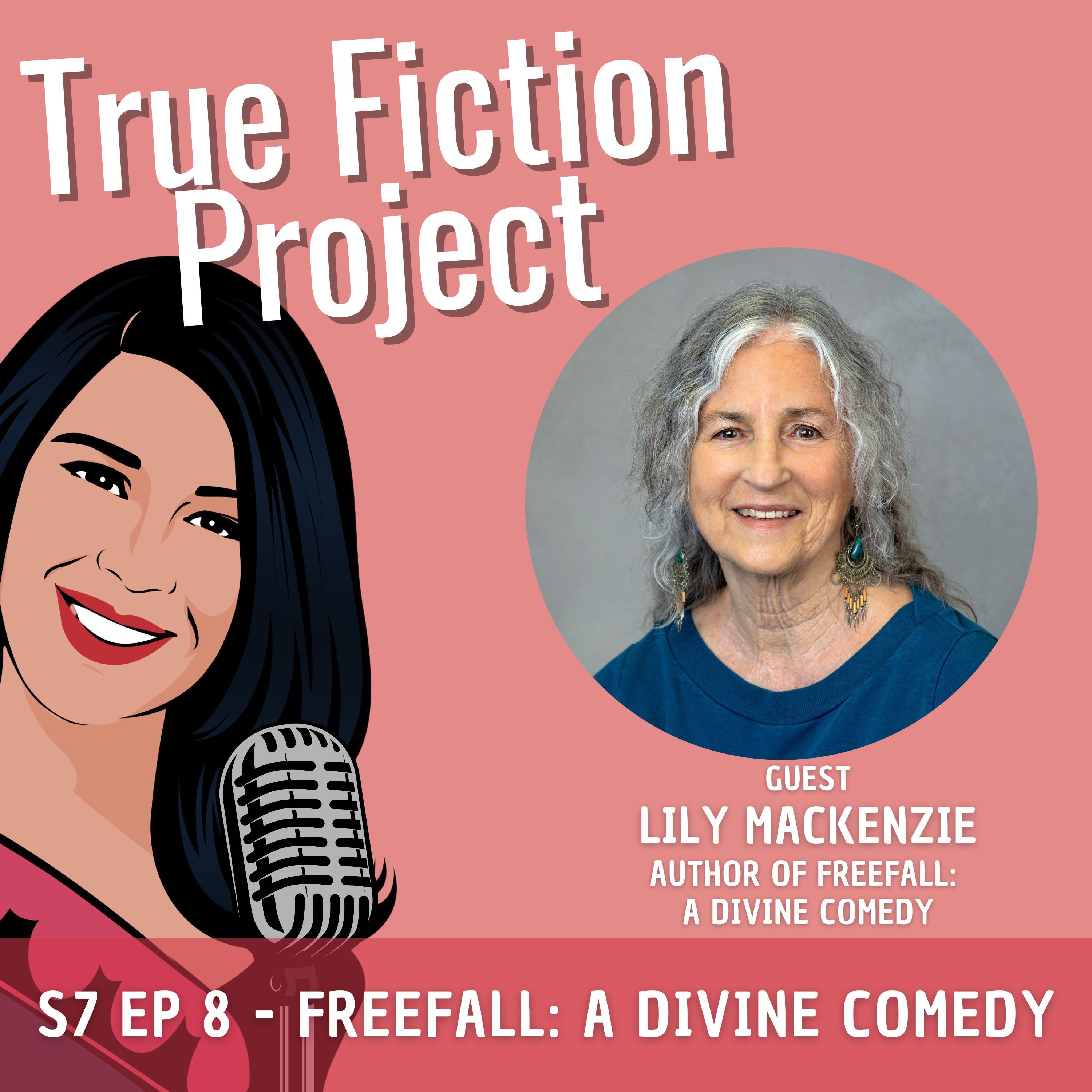
Welcome to the True Fiction Project. I'm your host, Renita Hora. And you know, I love to include writers from diverse backgrounds on this particular podcast, whether that's fiction, nonfiction, poetry, songwriters. And today, we have such a person. Her name is Lily Iona Mackenzie. She has published poetry, essays, short stories in over 170 venues. What does she mean by that? We have to ask her. Hi, Lily. Welcome to the True Fiction Project.
- [02:35]
Lily Iona Mackenzie
Hi, Renita. Thank you.
- [02:37]
Renita Hora
So, 170 venues, what does that mean?
- [02:42]
Lily Iona Mackenzie
Pet means, you know, magazines, journals, online, et cetera. So essays, poetry, short pieces.
- [02:53]
Renita Hora
So prolific it's unbelievable. And you are also faculty, is that right? At the University of San Francisco?
- [03:00]
Lily Iona Mackenzie
Well, I taught at the University of San Francisco. I taught writing there over 30 years. Now, the University of San Francisco also has a program for older adults called the Fromm Institute. And so I teach creative writing there. Now I see older adults.
- [03:19]
Renita Hora
So, I mean, this is an interesting point that you bring up because right before we started recording, we were also chatting about audience and demographics. And what is the difference, I have to ask, between readership or listenership in this case, or it's a bit of both based on age, whether they are older or younger, and then writing, creating the stories based on whether you're older or younger.
- [03:46]
Lily Iona Mackenzie
Yeah, well, certainly I'm assuming that, and this might be a wrong assumption on my part, I'm assuming that younger people wouldn't be as interested in reading my latest book, which is nonfiction. Dreaming Myself into Old Age, One Woman's Search for Meaning. Because they're probably not at that point in their lives where they're thinking of the end game, which when you're my age, that's part of your world, the end game. You're no longer thinking, oh, gee, I've got 20, 30, 40 years yet before I have to think about that. So I do think that age is a major factor. But when I was writing my novels, I deliberately wanted to have women who were over 60 as my main characters. And in one of my novels, the main character is 92 Bubbles, and she's as lively and as interesting as a 20 year old. So in some instances, if you just want a really good read and you're interested in fascinating characters and life experiences and so on, then I think whatever age you are, you're going to read that. Yeah. So I think in some instances, yes, age does have an effect on the readership or listenership. In other instances, it depends on the individual who's listening or reading.
- [05:05]
Renita Hora
You're so on point. And it's important to hear you say this because personally, I don't think any of us, whoever we are, getting any younger, despite the industry is skin care and cosmetics and whatnot out there, which are not about dreaming yourself into old age, but dreaming yourself into young age, if that maybe in a dream. But as a writer, and I know I have felt this all through the years, at every stage of my life. I only knew what I knew at that stage of life and could build a story for audio, print, whatever it might be at that stage of life, because of everything I had experienced before that. So is it not true that as you age you just. You've lived more, you've been around the block, you've just seen more, heard more, got more stories to tell?
- [05:55]
Lily Iona Mackenzie
One host. Well, in terms, I thought what I was hearing you say too, is that if you're A younger writer, you might be limited in being able to write about an older person, but I'm not sure that that's true. I think one of the things that lots of writers do is count on their imagination, use their imagination to feel their way into their characters, and that then can open up. I mean, if you see somebody walking down the street with a cane, hobbling a bit, I mean, it's not hard to begin to imagine what that person's story might be. So I don't think that age is going to necessarily limit you as a writer.
- [06:34]
Renita Hora
Why have you chosen to teach creative writing for the older community at this point?
- [06:41]
Lily Iona Mackenzie
Well, the main thing that they're interested in, if they're over 55, 65, is their past, and leaving some kind of remnants of their past to family, children, or they want to publish their pieces. So memoir is an extremely important and popular genre for them. And the other thing is that they're seeking community. And this particular, the Fromm Institute at the University of San Francisco has created a tremendous sense of community. And the students that go there, they don't just offer my writing workshop. They offer wonderful literature classes, classes on politics, classes on health, et cetera. And so the students who are there really are interested in each other and in hearing each other's stories, so they create an audience for each other as well. And so for those meetings, it's a joy for them to be able to not only share their stories, but to hear others, to listen to others. Yeah, yeah.
- [07:42]
Renita Hora
So I have to ask you, when it comes to writing memoir, since obviously that is so much of your current focus, how much of that is dialogue? And how creative can you get with dialogue in a memoir?
- [07:57]
Lily Iona Mackenzie
Well, you lie a lot. We lie a lot. We make things up. But you lie in the service of the truth. And so you try to capture those moments from the past and. And try to recreate them through your imagination. And so teaching memoir isn't unlike teaching fiction, because they have to learn what goes into a good narrative because they're the foundation of memoir, too. And so you have to start with scenes and what goes into scenes, the imagery, point of view, et cetera, and dialogue.
- [08:34]
Renita Hora
I love that you lie in service of the truth. So, okay, what I'm getting is a memoir. It reads like fiction. But would it be different if I'm writing my own memoir versus I am writing, let's say, my father's memoir and he's no longer around? How creative can I be with the scene and the dialogue, given that I wasn't in the room, I have his rendition, what he told me.
- [08:57]
Lily Iona Mackenzie
I think it's the same thing.
- [08:58]
Renita Hora
Same thing.
- [08:59]
Lily Iona Mackenzie
You're recreating someone else's experience, but when you're writing your own memoir, you're recreating it too.
- [09:06]
Renita Hora
Correct.
- [09:07]
Lily Iona Mackenzie
So it's. Yeah, it's not too different. Right.
- [09:10]
Renita Hora
And in recreating your memoir, or in writing a memoir, yours or someone else's, albeit it reads like fiction, do you need to follow that same story format? The beginning, middle and the plot, the build up, the rising tension, the hero's journey, the what happened? No, she says. No, she's nodding, shaking her head, I should say.
- [09:30]
Lily Iona Mackenzie
I mean, it's unfortunate we get stuck into those limited ideas, how a narrative unfolds, but there's lots of different things that you can do. I'm trying to think of this writer's name who has published memoirs that are just fragments of her life and they don't necessarily follow a chronological path either. And it makes it really interesting because you get this fragment from, say when she's a 20 year old, and then it gets slammed up against, you know, maybe her at 60. And so they begin those pieces begin talking to each other or clashing with each other. So there's so many. I mean, again, you have to let your imaginations flow and lead you. But there's so many ways to create a narrative structure and all. The thing with the narrative arc, that's all fine in a traditional piece, but there are other ways to go too.
- [10:23]
Renita Hora
So here is a bit of an outlandish question. What is written as memoir today, in the years to come, in the deck, many decades later, do you think that it would still be classified as memoir or could it actually become historical fiction? Is that even a reasonable question?
- [10:41]
Lily Iona Mackenzie
Well, is there a difference?
- [10:43]
Renita Hora
Is there? I like it. Yes, I want to know the answer.
- [10:47]
Lily Iona Mackenzie
Yeah, I mean, but is there? Historical fiction is recreating, you know, a period in time from the past. And when you're writing memoir, you're doing the same thing. Yeah. So it merges, don't you think?
- [11:00]
Renita Hora
Yeah, I think so. I have just written a historical fiction book, which is the history part is true, but the characters are fictional, so I made those up. But I'm also writing my father's memoirs, which is all true, but it's his point of view, his brother or sister or mother or father or son or whoever. A friend might have seen things a little bit differently and might have narrated the story a little differently. So it's interesting because, as I say, I wasn't in the room. Who knows?
- [11:31]
Lily Iona Mackenzie
I know. And nobody knows. And even the person who was in the room doesn't know. Exactly.
- [11:36]
Renita Hora
Yeah.
- [11:36]
Lily Iona Mackenzie
Because our memories are. They shift.
- [11:39]
Renita Hora
They shift.
- [11:39]
Lily Iona Mackenzie
Yeah.
- [11:40]
Renita Hora
You have selective memory. Very, very interesting. So, Lily, tell us a little bit about what you're going to read today.
- [11:47]
Lily Iona Mackenzie
Well, I'm going to read from a novel that was published in 2019. It's called Free Fall, A divine comedy,
- [11:56]
Renita Hora
but not the divine comedy that we know of.
- [12:00]
Lily Iona Mackenzie
It's not the divine comedy, but I'm sort of playing off of that title. And so what happens then? It's based on these four women who, in the late 50s, early 60s, were good friends. And they hung out together, they traveled. I'm from Canada originally. And so the novel starts. Part of it takes place in Canada. So they move from Calgary, Canada, to Toronto and hang out there for a while together. And they. They're full of themselves, and they call themselves the Big Four. So here one of those women who's the main narrator in the novel, Tilly Bloom is her name. She's a wacky installation artist. And she decides that it's time for Ghost's friends to get together. They're approaching their 60th birthdays, and they haven't seen each other in years. And so they set up a reunion in Whistler, British Columbia. I don't know. Some of your listeners might know of Whistler. It's a ski resort. And one of the women has a home in Whistler, a second home. And so they all meet there for this reunion. And during this intimate experience that they have together, they decide that they should go to Venice and celebrate their approaching 60th birthdays together, as well as the millennium. So that's when entering into 2000. And so Venice then becomes. About two thirds of the novel takes place in Venice. So during that time, secrets surface. Their stories bind them closer together.
- [13:39]
Renita Hora
So it sounds a bit like the book club, you know, the movie with Jane Fonda and all of the.
- [13:45]
Lily Iona Mackenzie
You know. I didn't see that. I think I need to see that.
- [13:48]
Renita Hora
Yeah, yeah. Just the premise of it. Cause that's also four women, and they get together, they have these reunions. It sounds fascinating because it sounds like me heading towards my 60th reuniting with my crew. So I'd love to read it.
- [14:04]
Lily Iona Mackenzie
It's funny, but it's also very serious. You know, it's a mix of things.
- [14:09]
Renita Hora
And what was the inspiration behind this? Was this you and your friends or.
- [14:13]
Lily Iona Mackenzie
Well, the inspiration was. There are some seeds in my own background. My husband and I had a visit with one of these women in her place in Whistler. And, and while I was there, I thought, oh my God, I've got to write about these women and this world that we lived in. And so that started me off on it.
- [14:38]
Renita Hora
Fantastic. Okay, so before we segue into the reading, Lily, let us know where our listeners and our readers and our viewers can find your work online, offline, everywhere.
- [14:50]
Lily Iona Mackenzie
It's always helpful to a writer and to a publisher to buy a writer's book from the publisher. In this case it's Pennel P E N L Press. But it's also, of course, everything is available on Amazon, so you can find any of my books on Amazon too. Pennell actually published three of my novels.
- [15:14]
Renita Hora
Okay, well, we'll make sure to have links to Pinel and of course to your Amazon pages in the show notes. And Lily, thank you. Thank you so much for joining us on the True Fiction project today. Let's segue straight into your reading.
- [15:30]
Lily Iona Mackenzie
Okay. And so I'm reading right from the first of the book where you'll meet Tilly, the main character, the point of view character in the novel. And it's entitled Tilly Deconstructs Her Fears.
- [15:45]
Grainger Commercial Announcer
If you're the purchasing manager at a manufacturing plant, you know having a trust trusted partner makes all the difference. That's why hands down, you count on Grainger for auto reordering. With on time restocks, your team will have the cut resistant gloves they need at the start of their shift and you can end your day knowing they've got safety well in hand. Call 1-800-GRAINGER Click grainger.com or just stop by Grainger for the ones who get it done.
- [16:17]
Renita Hora
And now to the premise of the trufiction project, which, which of course is to create fiction out of nonfiction.
- [16:42]
Lily Iona Mackenzie
Tilly woke to another overcast morning in San Francisco, rattled by the dragon dream image of her old friend daddy wasting away in a jail cell. Burrowing deeper under the covers, she tried to ignore a tiny flicker of panic in her stomach. She'd lived with this low grade anxiety for years. A tiger prowling the edge of her consciousness, ready to pounce. Her cash wasn't flowing. Her latest artist Grant hadn't come through yet and the rent was due in a few days. She needed to find a new roommate or else get a smaller place. Her golden years didn't look promising. No wonder she was thinking more about her youth, longing to reclaim it. Almost 60, she sooner looked backward than forward. Even her dreams offered up images of her late teens and twenties. The latest was an image of her friend Daddy in trouble. Daddy's original name was Daralyn, but her friends renamed her because Daddy had more zip. She and Daddy talked on the phone and exchanged letters now and then, but they hadn't seen each other all that much over the years. Tillie dreamed of her often, though it was always a variation on the same theme. Her old friend was in the clink, and it was up to Tillie to get her out. She was savvy enough to realize that the imprisoned Daddy could be some facet of of Tilly that was locked up and wasting away. But she hadn't figured out why she was imprisoned or how to free her. Tilly threw back the covers and climbed out of bed, bending and stretching to loosen her limbs, pretending to draw a sword from its sheath on her hip. She parried with unseen foes on the way to the bathroom, refusing to let her fears get the best of her. She reminded herself she still had good health, she loved life, and she was resourceful. Something would turn up. It always did. Bladder emptied, face washed, teeth brushed and ready to meet the day, Tilly turned on her favorite jazz station and danced her way into the kitchen. Stopping to make coffee, she poured it into a mug, added milk, dropped in two teaspoons of sugar, stirred vigorously, and glided over to her favorite perch, a burgundy brushed velvet with wingback she'd picked up at the Salvation army, her command center. The phone sat on the table next to the chair, her sketch pad nearby so she could jot down ideas for installations. How the later stage in life got labeled golden remained beyond her. Pewter made more sense, all that dull drabness. So far her current phase had been anything but golden. Tilly was poor. She didn't have a permanent partner. She was still a nomad, and her work as an installation artist hadn't given her the prominence she'd sought. She also seemed to be experiencing the identity crisis she'd skipped in her teens. Yet Tilly didn't color her hair. There's no point. In spite of everything, she'd still be in her late 50s, trying desperately to fool the world. She couldn't say 60. That fast approaching milestone weighed her down. What she wanted was a completely new body. It was wise. She refused to try some things women did to fend off age Botox, facelifts, body tucks. There was always something the doctors missed. She couldn't remove all of the evidence Tillie had read. They even could give new life to a sagging vagina. The first giveaway. Unless you'd sworn off men. Even now they were the only game in town. That is when she could find an available one who could still get it up. A late bloomer in all ways, Tilly also might be late for her own death, if she were lucky. The phone shattered Tilly's reflection whenever it rang. She feared the worst. Her mother, May had croaked at 94. She was still feisty, her arms dripping with multicolored bracelets, face powdered and rouged, lips painted bright orange, earlobes drooping and under the weight of gold earrings, white hair tinted with loose streaks. So far Millie could care for her one bedroom triplex in Calgary on her own. She did the laundry, cleaned, cooked her meals as independent as she ever was. Most days she took the bus uptown and hung out at the Canadian Legion and other haunts that Tilly hadn't quite sorted out. Tilly picked up the phone. Mother, I'm lonely. It's no fun being on my own. I miss Fred. I. At least he was a warm body to sleep with. I don't even have a cat anymore. I know what you mean. I didn't think I'd miss Frank, that jerk. You're lucky. He's taken a powder. Permanently, I hope. Geez, Mum, I thought you liked him. He wasn't my type too. Arty. If you're lonely, visit me. I'll scrape up airfare. Mother, you're always busy with your work anyway. The things you make give me the creeps, Tilly. Thanks. I love your honesty. Well, I won't lie to you. That's why I won't visit Tillie. Maybe it's time to move to an assisted living place. Mother. Maybe it isn't. The phone went dead. Tillie stared at it. Milly May always had a way with words.
- [22:01]
Renita Hora
All right, I see. Tilly might be lily. I'm always partial to stories about San Francisco being here myself, so yeah, I know. Lily, thank you so much. I cannot wait to read the rest. Thank you so much for joining us today on True Fiction Project.
- [22:26]
Lily Iona Mackenzie
Thank you. It's been lovely.
- [22:28]
Renita Hora
That was Lily Iona Mackenzie reading from her novel Freefall A Divine Comedy. This is the True Fiction Project and I am your host, Renita Hora. Here at the True Fiction Project we are always looking for great stories that make for compelling fiction. So if you have a great story or know somebody who does, or if you are a writer who would like to contribute, then please do get in touch with us@renita.com contact
- [23:04]
True Fiction Project Announcer
thank you for listening to The True Fiction Project with Renita Hora. Be sure to subscribe to the newsletter to receive more inspiring stories showing how fiction is born from our everyday experiences. For more information, visit www.trust truefictionproject.com.
- [23:28]
Grainger Commercial Announcer
If you're the purchasing manager at a manufacturing plant, you know having a trusted partner makes all the difference. That's why, hands down, you count on Grainger for auto reordering. With on time restocks, your team will have the cut resistant gloves they need at the start of their shift and you you can end your day knowing they've got safety well in hand. Call 1-800-granger. Click granger.com or just stop by Granger for the ones who get it done.