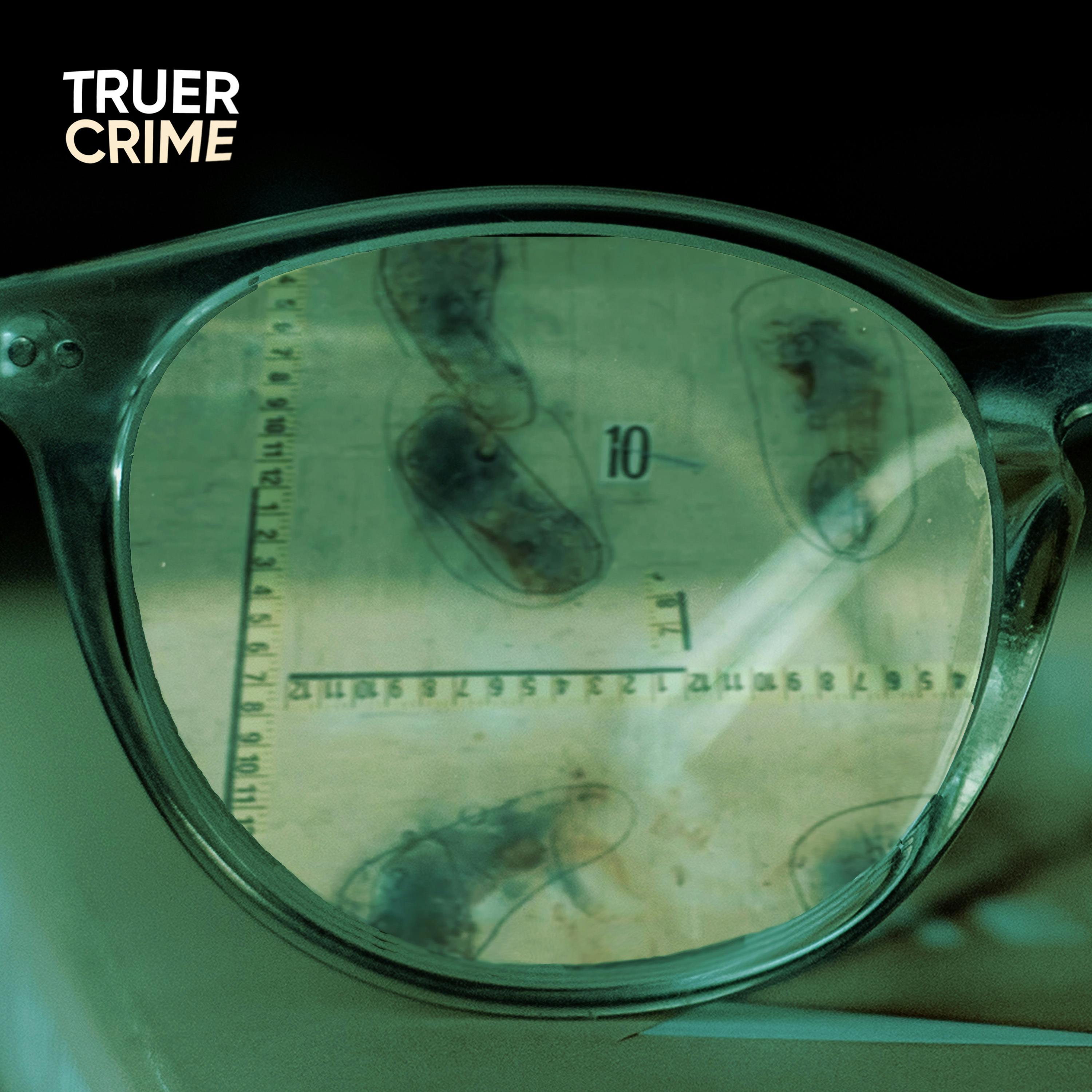
Loading summary
Transcript1 lines
- [00:02]
A
You're listening to a Tenderfoot TV podcast. Ready to level up. Chumba Casino is your playbook to fun. It's free to play with no purchase necessary. Enjoy hundreds of online social games like blackjack, slots and Solitaire anytime, anywhere, with fresh releases every week. Whether you're at home or on the go. Let Chumba Casino bring the excitement to you. Plus, get free daily login bonuses and a free welcome bonus. Join now for your chance to redeem some serious prizes. Play Chumba Casino today. No purchase necessary. VGW group Void where prohibited by law 21/TNCs apply a new true crime podcast from Tenderfoot TV in the city of Mons in Belgium, women began to go missing. It was only after their dismembered remains began turning up in various places that residents realized a sadistic serial killer was lurking among them. The murders have never been solved. Three decades later, we've unearthed new evidence. Le Monstre Season 2 is available now. Listen for free on the iHeartRadio app, Apple Podcasts, or wherever you get your podcasts. Hi friends, I am so excited to share this new episode of True Crime with you. If you want to listen ad free and get early access to all the episodes for this month's case, you can subscribe to Tenderfoot plus at tenderfootplus.com or on Apple Podcasts. It's also one of the best ways to support the show. Hi friends, before we dive into part two, I wanted to share something that happened recently that really meant a lot to me. A listener reached out to email our team to see if there was a way for them to make a one time contribution to support the show. We do not currently have a donation set up like that, but we do have something close and that is our merch. We actually have three different t shirts that are live right now and available for purchase. You can find them at Shop Tenderfoot TV and buying one helps us keep the show going. It's a one time thing you can do and it also means that I get to see you all wearing these shirts out in the wild and I love that. It really makes my day every single time. And of course you know if you want to continue supporting the show, please sign up for our newsletter@truercrime.subsack.com it's the easiest way for me to stay in touch with you, give you updates and just let you know what we have going on. So thank you so much as always. And let's get into today's episode. Please be aware that today's episode contains descriptions of violence. Please take care while listening. For 25 years, the murder of Jeannie Childs sat unsolved. But her family never stopped asking the same question. Who had walked into that Minneapolis apartment in the summer of 1993 and left her dead? But despite the passing of decades, the case wasn't completely cold. In fact, investigators had the DNA of a potential perpetrator. A full profile. It showed up again and again on items inside Jeannie's apartment. But without a name to go with it, the profile was useless. Until in April of 2018, when a headline broke. A four decade old search for one of history's most infamous serial killers may be over. We were able to get some discarded DNA, and we were able to confirm what we thought we already knew. The answer was and always was going to be in the DNA. That was where we left off last week. With California authorities having done the impossible, they'd caught a man who had terrorized the state for decades. The Golden State Killer. His identity had remained a mystery for more than 40 years, until investigators tried something brand new. A method called genetic genealogy, where genealogists build family trees to identify DNA matches outside the federal database. So Minnesota cold case detectives decided to try it out for themselves. They uploaded the DNA profile from Jeannie's case into a genealogy database. And they waited. Days passed until an email arrived. It didn't look like much at all. There was no bold, flashing subject line, no dramatic we found him. Just a few plain sentences from the genealogist working the case. A match not to the suspect himself, but to his first cousin. From there, the genealogist started building out family trees, tracing branches through marriages and kids, filling in names until only two stood out. Brothers. One of them, she felt, had to be the man whose DNA was all over the crime scene. But which one? DNA analysis suggested the killer probably had brown eyes. And that tiny genetic clue, something most of us would never think twice about, was enough to narrow the focus to one man. Jerry Westrom. But naming him wasn't the same as catching him. And investigators were about to learn just how hard that part would be. This is the Story of Jeannie Childs, Part Two. I'm Cecia Stanton, and you're listening to Truer Crime. It's one thing to point the finger at a suspect. It's another thing entirely to prove they did it. That's where investigators were now. A family tree had pointed them to Jerry Westrom. But a family tree doesn't hold up in court. To make an arrest, they needed DNA. Fresh DNA. Something that Would either tie Jerry to the crime scene or clear him completely. But how do you get DNA from someone who has no reason to give it to you? If Jerry was their guy, he wasn't about to walk into a precinct and volunteer. So they started watching him. But Jerry didn't look like the kind of man they might have expected. He was a suburban dad, a husband, a small business owner. The kind of guy you'd see unloading groceries from a minivan or clapping at his kid's school concert. He blended in. Which, in some ways, might have made him harder to catch. Through a little Facebook digging, Investigators learned that Jerry was a hockey dad. He. He regularly showed up to his daughter's games, Usually with his family in tow. That gave them a place to start, so detectives started following him to arenas. They sat in the stands pretending to be other parents, Eyes on the ice, but attention fixed on Jerry. But as Special agent Bokers told wcco, what they were watching for wasn't a goal or a penalty. It was something entirely different. A discarded cup, a food wrapper, a napkin. Anything Jerry might use and throw away that could carry his DNA. We were at a hockey game in duluth, Minnesota, in the arena, hoping that he would get hot chocolate or something and then discard it, that we could discreetly and get a sample from a nun. We wanted to just do a testing and know whether we had the right person. If it hadn't have been his DNA, we could have moved on without him ever knowing that we were even looking. That was the plan. Get something, test it quietly, and if it wasn't a match, drop the whole thing. Jerry would never know. But this is where I need to pause. Because as clever as it is, there's something unsettling about this to me. Following a man to his daughter's hockey game, sitting among the other parents, watching him with his family, Waiting for him to throw away something so you can dig it out of the trash. And beyond that, the bigger picture unsettles me a bit, too. Genetic genealogy raises really hard questions. My DNA is sitting quite literally right now in Ancestry.com's database. What if one day it's used to track down a relative of mine? This isn't about shielding criminals. Like I want to make that clear. It's about trust. Do I trust law enforcement to always get it right? Honestly, no. The system has failed way too many times for me to feel comfortable handing over that level of power without question. And also, there's the DNA evidence itself. It's not as foolproof as we're often Led to believe. Go back to the Josiah Sutton case that I covered in season one. DNA evidence put Josiah behind bars. But the science was misused, and it nearly cost him his life. That's the kind of mistake that's hard for me to brush off. And then there's the future, too. I mean, we all know it. Technology is moving so fast. And I think it's reasonable to wonder how genetic genealogy might be used five years from now or 10. Could it one day be used to sweep up innocent people along the way? To me, those concerns, they're not far fetched. They're real questions, and they don't have easy answers. But here's the thing. Jeannie's family deserved answers. So did the families of the Golden State killers victims. And so do all the families waiting on justice in cold cases across the country. And that's the tension between privacy and justice, between idealism and pragmatism, between what we want the system to be and. And what can deliver answers to grieving families right now. And maybe that's the hardest part. These concerns don't exist in abstract. They collide with real lives, real families who've waited decades for closure. For Jeannie's case, closure depended on one catching Jerry Westrom, leaving his DNA behind. The problem was, he wasn't exactly making that easy. Game after game, there was nothing usable for investigators. They even trailed him to his job, like hoping that they could catch a tossed cup or cigarette. But still nothing. Until he went to Wisconsin. Another hockey trip, another chance. At the hotel, investigators watched as Jerry ate breakfast with his family. This was the perfect setting to them. It was full of half empty cups and tossed napkins. But with everyone eating together, it was impossible to be sure which items were Jerry's versus anyone else's. So there was nothing that they could confidently use later that day during the game. Their break finally came at the end of the first period. Jerry walked out to grab food. He ate, wiped his mouth with a napkin and tossed it into a container. Then he carried it to the trash and walked back to his seat. For investigators, this was the moment. The napkin sat right on top of the garbage bin, undisturbed. But just as they moved in, a kid walked up, maybe 10 or 12, carrying this giant, massive red Slurpee. You can picture the panic. All it would take was one splash of melted ice to ruin the napkin completely. But before the kid could toss it, Agent Chris Bokers acted. He darted forward, reached in, and grabbed the container. The napkin was theirs. They rushed it back to Minnesota and dropped it at the BCA lab. And the results didn't take long. The DNA on that napkin matched the profile from Jeannie's apartment. It was him. That was enough for an arrest warrant. And with that warrant came something just as important. The authority to collect Jerry Westrom's official DNA sample along with his footprints. For the first time, investigators could directly compare him to those bloody footprints left beside Jeanne's bed 25 years earlier. After decades of uncertainty, they finally had proof. And just days later, they made their move. Why does every recipe I try need 18 ingredients, including a jar of something paste I'll never use again but will sit in my fridge for nine months? I just want dinner in the oven fast. That's why I love Blue Apron's new one Pan Assemble and Bake meals. They send you fresh ingredients that are already chopped. All you do is put it all together and bake. That's it. No chopping, no weird leftovers. Just delicious, easy to make meals. Get 20% off your first two orders with code APRON20. Terms and conditions apply. Visit blueapron.com terms for more. Just got a new puppy at Kitten. Congrats. But also yikes. Between crates, beds, toys, treats and those first few vet visits, you've probably already dropped a small fortune. Which is where Lemonade Pet insurance comes in. It helps cover vet costs so you can focus on what's best for your new pet. The coverage is customizable, sign up is quick and easy, and your claims are handled in as little as three seconds. Lemonade offers a package specifically for puppies and kittens. Get a'llemonade.com pet your future self will thank you. Your pet won't. They don't know what insurance is. Mint is still $15 a month for premium wireless. And if you haven't made the switch yet, here are 15 reasons why you should. 1. It's $15 a month. 2. Seriously, it's $15 a month. 3. No big contracts. 4. I use it. 5. My mom uses it. Are you playing me off? That's what's happening, right? Okay, give it a try. @mintmobile.com Switch upfront payment of $45 per three month plan. $15 per month equivalent required. New customer offer first three months only, then full price plan options available, taxes and fees extra. See mintmobile.com when officers came for Jerry Westrom, he didn't resist. He didn't ask why. He didn't shout or argue or even look that surprised. He just went with them, silent. And that silence kind of struck investigators, as they expected Panic, denial, maybe some outrage, but they didn't get anything. But now that they had Jerry in custody, it was time to make a call. Jeannie's mother, Betty, was awoken in the middle of the night by detectives. They told her they had a suspect in her daughter's murder. I had a hard time at first believing it because I thought, you know, they maybe he didn't do it, and they just think he did it. And so I said to Chris the detective, are you sure you're calling me up and giving me information I really have been waiting 26 years for? I really need to know this is the truth. He said, Betty, it is 100% sure. We got your guy. On February 12, 2019, the arrest was made public. For Jeannie's family, Jerry Westrom suddenly had a face, and he wasn't who they expected. He'd grown up in rural Minnesota. He'd married, raised kids, started businesses, went to church, was well respected. He had two arrests for soliciting prostitution, but no record of violence, Nothing that hinted at what he was now accused of. And that contrast was unsettling for Jeannie's family. The man they imagined was some shadowy predator lurking in the night. Instead, here was someone ordinary. For Jeannie's sister, Cindy, it was even closer to home. She lived in the same small town as Jerry. Their sons played hockey in the same ranks. She recognized his face. To her, it was shocking to learn that the man investigators now said killed her sister had been living right there in her own community. Inside the interrogation room, detectives started with the basics. Did Jerry know Jeannie? He said no. Did he recognize her apartment building? Again, no. Had he ever hired a sex worker? Back in 1993, he denied it, said that was the year he met his wife, that he wouldn't have been doing that. But detectives doubted that. They knew. Jerry had two prior arrests for soliciting sex workers. And now his DNA was all over Jeannie's apartment. The questioning didn't last long, though. After just 11 minutes, Jerry asked for a lawyer, and then he was officially charged with Jeannie's murder. Back home, his family was stunned. His wife stood by him. They sold off assets to pay for his defense. Friends and community members spoke to his character, describing him as kind, easygoing professional, devoted to his family. Jerry pled not guilty. And as he continued to insist on his innocence, the case, after decades of silence, was finally headed to court. When Jerry Westrom's trial began In August of 2022, it had been nearly three decades since Jeannie Childs was Murdered in her Minneapolis apartment. By then, so much had changed. Minneapolis itself looked different. Technology had leapt forward, and the names in Jeannie's case file had turned over and over again as detectives retired or transferred. But inside that courtroom, it was like time had collapsed for Jeannie's family. It had all come back to this. Whether a jury believed Jerry Westrom was guilty of her murder, prosecutors laid it out plainly. They told jurors that DNA was everywhere. On the bathroom sink. On towels, on clothing, on a washcloth, on the comforter from Jeannie's bed. And now, thanks to that discarded hockey napkin, they had a fresh sample from Jerry Westrom that matched it all. And then there was the footprint. Investigators had preserved it back in 1993. Bloody, barefoot prints left near Jeannie's bed. It wasn't Jeannie's. She'd been wearing socks when she was killed, which meant they belonged to whoever attacked her. Now, prosecutors told the jury they could compare the prints to Jerry Westrom's. Like fingerprints, footprints are unique. You can see differences in size, shape, or arch. But what really makes them one of a kind is the friction ridge skin on the soles of our feet. It's the same ridges you'll find on fingertips. They help us grip things, but they also form these swirling patterns that act like a sort of biological signature. For prosecutors, that bloody print was the signature that they needed. In their telling, it placed Jerry Westrom inside Jeannie's apartment at the time of her murder. But if the prosecution saw the footprints as damning, the defense saw them as a crack in the case, because the prints weren't perfect. And the man tasked with analyzing them, Minneapolis police forensic supervisor Mark Ulrich, was stepping into unfamiliar territory. Ulrich knew fingerprints inside and out. The ridges, the spacing, the ways no two ever looked the same. But footprints. He admitted to WCCO he'd only ever examined one other footprint in his entire career. So when Jeannie's case landed on his desk, he had to figure it out as he went along. He tried photographs, gels, all sorts of methods to try to transfer the print. But nothing was working. Until finally, he turned to black powder and sticky paper. And for the first time, the bloody print came fully into focus. The ridge detail, the markings that can make one footprint different from another. Seven prints had been collected from Jeannie's apartment back in 1993. Ulrich thought four of them were clear enough to compare to Jerry Westrom's. And to him, they all matched. But here's where things got tricky. Because the prints weren't exact, some Areas were blurred, others distorted. And to Ulrich's credit, he wanted a backup, a way to double check his call. So he sent one of the samples to other examiners for what's known as independent verification. Essentially, he asked other experts, hey, if you compare this print to several others, do you land on the same match I did. The examiners weren't supposed to know which print belonged to the suspect. Kind of like a forensic version of a lineup. But when Ulrich prepared the materials for independent review, he slipped up, leaving part of Jerry's name visible on the card with his print. A small error, but one that really chipped away at the idea that the review had been truly independent. Ulrich later told WCCO he regretted the mistake, but he didn't believe it impacted the results. Still, it handed the defense something to pounce on. If the science wasn't airtight, maybe the case wasn't either. They hired their own forensic analyst, hoping that she'd contradict Ulrich. But instead, the defense's analyst review narrowed the scope. She said only one of the four prints left in Jeannie's apartment was detailed enough for a confident comparison. But much to the defense's dismay, she also concluded it was a match to Jerry Westrom. In fact, she ended up testifying for the prosecution. So if the jury believed both the DNA and the footprints tied Jerry to Jeannie's apartment, what was left for the defense? Well, reasonable doubt. And they tried to build it the old fashioned way by pointing to all other men who could have killed Jeannie. At Maurices, we're all about great jeans. You know, the ones that fit you just right, the ones that simply make you feel good. Because you don't just wear jeans, you live in them. Find great jeans starting at $29.90 in stores and@marisa's.com. thank you for calling the Bombas comfort line. Bombas make socks, slippers, tees, and underwear made with the highest quality materials. Press 1 for comfort, 2 for style, 3 for donation. You chose style. Bombas is styles for whatever you enjoy. You can run in Bombas, lounge in Bombas, dress them up, dress them down, but always give back in Bombas because with every item purchased, another is donated. Bombas comfort. Worth calling for. Go to bombas.com audio and use code audio for 20 off your first purchase. That's B O M b-s.com and use code audio. Avoiding your unfinished home projects because you're not sure where to start. Thumbtack knows homes so you don't have to. Don't know the difference between matte, paint, finish and satin. Or what that clunking sound from your dryer is with thumbtack. You don't have to be a home pro. You just have to hire one. You can hire top rated pros, see price estimates and read reviews, all on the app. Download today. According to court documents, the defense wanted to present evidence about five alternative suspects. Five men who at different times, had looked suspicious. First, there was the man nicknamed Fatal Attraction, A client of Jeannie's with an appointment on the very day she was killed. And then there was John Eswine, whose blood was literally found in the stairwell outside of Jeannie's apartment. You might remember that Eswine admitted he'd been to Horn Towers, but claimed it was two years before the murder. But why was his blood there? Well, that he said he couldn't explain. Investigators did compare his footprint, but the results were inconclusive. But what's more, a witness had described seeing a tall man sprint from Horn Towers around the time Jeannie was killed. To the defense, Eswine fit that description uncomfortably well. Then there was a man named Arthur Gray, Jeannie's boyfriend and the renter of the apartment where she died. Jeannie had accused him of domestic violence in the past, and investigators found his hair on her hand. But he had a strong alibi, and his footprint didn't match. Next up was someone referred to as T.K. a neighbor of Jeannie's with prior convictions for sexual assault. On the day of Jeannie's murder, witnesses saw him going in and out of his apartment. The next day, they saw him threatening other residents, waving a knife, and referring to Jeannie as the prostitute. But finally, there was maybe the most chilling suspect of all. James Luther Carlton. By the time of Jerry's trial, Carlton was already serving a life sentence for killing another Minneapolis woman. Her name was Jody Dover, and her murder looked hauntingly familiar. There was no forced entry. A bloody apartment. A naked victim stabbed repeatedly. And just like in Jeannie's case, bloody footprints were left behind. They matched James Luther Carlton, and he was convicted. But the eerie coincidences don't end there, because James Carlton admitted to having previously been in Jeannie's apartment. And a 2012 lab report showed his DNA couldn't be excluded from a sample found on Jeannie's comforter. So there it was. Five men, all of them once in the orbit of Jeannie's case, All ruled out by investigators. Jerry's defense team felt the jury should hear about them. But the judge didn't agree. He ruled that only one of the Five suspects could be presented. Arthur Gray, Jeannie's boyfriend. The other four, Fatal Attraction, Eswine, TK And Carlton, would stay out of the courtroom for the defense. That decision gutted their strategy. They had hoped to sow doubt with a parade of other names, and instead they were just left with the one. And so they turned back to hammering at the state's case from the only angle they had left. Jerry's attorney, Steve Meshbescher, put it bluntly in an interview before trial. I've made four demands for discovery. This is a 26 year old case. They're alleging a very serious thing of murder. And they don't have a weapon, they don't have a witness, and they don't have any evidence to support their charge. They claim there's DNA, but there's a lot of DNA. On at least one point, he was right. The apartment was full of DNA. And not all of it pointed to Jerry. Semen on that pair of purple underwear, the strand of hair in Jeannie's hand, the blood in the stairwell, none of it matched his client. It gave the defense room to argue that even the DNA that did match wasn't the whole story. They picked the wrong guy. How do you explain the DNA? You'll find out. I'm not gonna sit and give you an explanation of the DNA right now. But there's a lot of ways in which DNA is not that exact. And it's not exact as to time. And like we've discussed already, he's not necessarily wrong here. DNA doesn't carry a timestamp. It can't tell you if it was left the night Jeannie was murdered or months earlier. It can't tell you if it came from direct contact or some other kind of transfer. And in a courtroom, those cracks do matter because history has shown us how DNA can be misused. Flawed analysis can put innocent people behind bars. But still, a verdict needed to be reached. And that was the choice in front of the jury. Trust the science or trust the possibility of doubt. On one side, the prosecution story, Jerry's DNA across the apartment. A bloody footprint matching his. A napkin pulled from the trash, tying it all together. On the other, the defense's rank warning that DNA can't prove time, can't prove intent, can't prove murder. But juries don't weigh cases in a vacuum. They look for patterns for a story that makes sense to them. And here, one story won out. After two days of deliberation, the jurors returned their verdict. Guilty. Jerry Westrom was convicted of first Degree premeditated murder and second degree murder in the death of Jeannie Childs. He was sentenced to life in prison. For the jurors, it was the footprint that did it. One later explained that everything else, the DNA, solicitation history, it could all be debated or explained away. But not those bloody prints beside Jeannie's bed. That was the piece that stuck. For Jeannie's family, this decision was a moment decades in the making. Her mother, Betty, had spent years praying for answers, years desperate for justice. And now she finally had a person to hold accountable. But even after the verdict, the story wasn't over. Jerry appealed. One of his lesser convictions was overturned, but the first degree murder conviction held. And still he maintains his innocence. He's even asked the Great North Innocence Project to take on his case. And this is where things get a bit complicated for me, because there are unanswered questions in this case, things that give me pause. Could someone else's DNA have mattered more than we know? Was that footprint truly definitive? But the fact is, a jury found Jerry guilty. And so I can only imagine the pain that his continued denials creates for Jeannie's family. They've already endured so much. Decades of silence, holidays with an empty chair, birthdays that came and went without her. Cindy moving through adulthood without her sister. Betty left with an ache that never went away, that will never go away. People don't realize what a mother goes through. I mean, I cried a lot. I prayed a lot. It's been a really hard road. We miss her. She missed it all. She missed my kids growing up. And I know she would have been such a good aunt to them. To finally have an answer. And still no admission of guilt, no explanation of why. That's another layer of grief entirely. The truth is, we may never know exactly what happened in that apartment, but we know what shouldn't have happened. Genie should be alive today. She should have grown old. She should have kept dancing, kept riding motorcycles, kept snapping her fingers to Lionel Richie. She should have been there in family photos, laughing at gatherings, watching her nieces and nephews grow up. She should have had the rest of her life. And here in Minneapolis, the city she called home, her story lingers in more than just the courtroom file. Every time I drive past horn towers, I think about Cheney, about how a place can look so ordinary and still hold so much grief. Her absence is still here in her family, in this city, in the lives she should have been a part of. And maybe that's the hardest part. Because no matter the verdict, no matter Jerry's denial. The fact remains Jeannie was taken and the people who loved her are still left carrying that weight. As we prepared to share Jeannie's story, we reached out to her mom, Betty. We told her about the action items we include at the end of each episode and how True or Crime is built on the belief that listening to true crime stories should lead to real world support for the people most affected. These action items are meant to help our community stay engaged with the real lives and cases we cover even after the episode ends. So we asked Betty, what do you want to leave the Truer Crime audience with as we close Jeannie's story? And her answer was pretty clear. She wants young girls and children to be heard. She wants them to have the courage to speak up and for the people around them to truly listen, especially in cases of sexual abuse and trauma. She wants young people to understand the importance of sharing their stories and the consequences when those stories are silenced. That message can be distilled into a simple but powerful call to action. Listen. Be someone others know that they can talk to. Be a safe person Community care starts with showing up, paying attention, and supporting one another in meaningful ways. For another tangible action item, we want to point you towards Alexandra House, a nonprofit based in Blaine, Minnesota, near where Jeannie's family lives. Alexandra House provides 247 services, advocacy and shelter for victims of violence. Their support spans all ages, including youth and elder abuse services, and they even offer a pet haven, helping families in crisis care for their animals during difficult transitions. If you're looking for a way to honor Jeanne's story, consider supporting Alexander House by visiting alexanderhouse.org or seek out a similar organization in your area. The work of healing is ongoing and it starts with all of us. As always, you can find a full list of today's sources and action items@TrueOrkrimePodcast.com and if you want to keep in touch between episodes, Truer Crime is on Instagram and x@TrueCrime Pod. You can also find me on Instagram and TikTok, Alicia Stanton, and through my weekly newsletter. Sincerely, Celicia sincerelycelecia.substack.com True crime is created, hosted and written by me, Celisia Stanton, and is a production of Tenderfoot TV in association with Odyssey. Additional writing, research and production by Olivia Hussingfeld. Executive producers are myself, Donald Albright, and Payne Lindsay. Editing by Liam Luxon, artwork by Station 16, original music by Jay Ragsdale and makeup and vanity set mix by Dayton Cole. Thank you to Orin Rosenbaum and the team at uta, the Nord Group, and the team at Odyssey. For more podcasts like True or Crime, search Tenderfoot TV on your favorite podcast app or visit us at Tenderfoot tv. Thanks for listening thanks so much for listening to this episode of True or Crime. If you want an ad free version of the show, plus early access to every episode for this month's case and tons of other great Tenderfoot podcasts, you can subscribe to Tenderfoot plus at tenderfootplus.com or on Apple Podcasts. It's a small way to support the work, and it makes a big difference if we knew more about our sleep, what would we do differently? Would we go to bed at a consistent time or take steps to reduce interruptions to our sleep? With the all new Sleep Score, Apple Watch measures your bedtime consistency, interruptions and sleep duration. Then every morning it combines these factors into an easy to understand score from 1 to 100 so you'll know how to take the quality of your sleep from good to excellent. Introducing the new Sleep Score ON Apple Watch iPhone 11 or later required if you love true crime but you're tired of hearing the same stories told the same way, I've got a show for you. It's called Pretend, and it's all about the lies people tell and the journalist who chases the truth behind them. Host Javier Leyva dives straight into the world of con artists, cult leaders and scammers who convince people to believe the unbelievable. But what makes this show really different is how close he gets. Javier actually sits down with these people, the liars and their victims, and he gets them talking, sometimes even confessing. You'll hear stories like a podcaster accused of harassing victims to fuel her own content, a cyber stalking case where the so called victims were actually the perpetrators, and a day Javier spent with a cult leader, including the part where they performed an exorcism on him. If you're ready for a podcast that keeps you guessing, questioning, and occasionally gasping out loud, search Pretend. Wherever you listen to podcasts.