Loading summary
Transcript135 lines
- [00:02]
Celisia Stanton
You're listening to a Tenderfoot TV podcast.
- [00:08]
Podcast Advertiser/Host
If you're an experienced pet owner, you already know that having a pet is 25% belly rubs, 25% yelling drop it. And 50% groaning at the bill from every pet visit. Which is why Lemonade Pet Insurance is tailor made for your pet and can save you up to 90% on vet bills. It can help cover checkups, emergencies, diagnostics, basically all the stuff that makes your bank account get nervous. Claims are filed super easily through the Lemonade app and half get settled instantly. Get a'@lemonade.com pet and they'll help cover the vet bill for whatever your pet swallowed after you yelled drop it. The murder of an 18 year old girl in Graves County, Kentucky went unsolved for years until a local housewife, a journalist and a handful of girls killed came forward with a story.
- [00:57]
Celisia Stanton
America, y' all better wake the hell up. Bad things happens to good people and small towns.
- [01:09]
Podcast Advertiser/Host
Listen to Graves county on the iHeartRadio app, Apple Podcasts or wherever you get your podcasts and to binge the entire season ad free. Subscribe to Lava for Good plus on Apple Podcasts.
- [01:24]
Celisia Stanton
Hi friends. I am so excited to share this new episode of True Crime with you. If you want to listen ad free and get early access to all the episodes for this month's case, you can subscribe to Tenderfoot plus at tenderfootplus.com or on Apple Podcasts. It's also one of the best ways to support the show. Hi friends. Before we get into the story, here is week two of our October Challenge. Last week I asked you to share Truer Crime with one person, and this week it's all about visibility. Because here's the reality. Right now, we sometimes have to make what feels like impossible choices. Do we spend another 10 hours checking every last fact in an episode or do we hit publish on time? Do we make the social graphics ourselves at midnight? Or do we let promos slide? That's what cutting corners looks like. And I never want this show to be in a place where quality suffers. And so to get there, we need more people to see us. More people to find us. More people like you. And you're how that happens. So here's this week's mission. I want you to open Instagram or Facebook or Twitter or like whatever your primary social media app is and go toerCrimePod. Pick one post you like and and hit share. Or you can just screenshot this episode and post it on your stories with one sentence about why you listen. Seriously, do it While you're listening to my voice, don't think about it too hard. Just throw it up on there. Send it out and tag me, please. You can tag me lisastanton. You can tag the showruckhrimepod. And we'll see it, we'll reshare it, and you're gonna be a part of this visible group of people who helps keep this show alive. That's how much power that you hold here. Thank you so much for your help. It means the world to us. Let's get into today's episode. Please be aware that today's episode contains descriptions of grooming, sexual assault, and other forms of violence. Please take care while listening. Brothers have pleaded innocent to killing their wealthy parents in 19.
- [03:43]
Podcast Advertiser/Host
If convicted, Eric and Lyle Menendez could.
- [03:46]
Celisia Stanton
Face the death penalty. It's just.
- [03:48]
Lyle Menendez
I wanted it to stop.
- [03:49]
Liberty Mutual/DSW/WhatsApp Advertiser
The Menendez boys are using what's come to be known as the battered child defense, saying they are no different than a battered woman who kills a violent husband out of fear for her safety.
- [04:00]
Celisia Stanton
I'm kind of obsessed with the trial.
- [04:02]
Podcast Advertiser/Host
It's a real interesting trial, and I.
- [04:06]
Celisia Stanton
I want them to be acquitted. This case has been treated like a soap opera by you all for a.
- [04:10]
Interviewer/Prosecutor
Long time, and it isn't a soap opera.
- [04:12]
Celisia Stanton
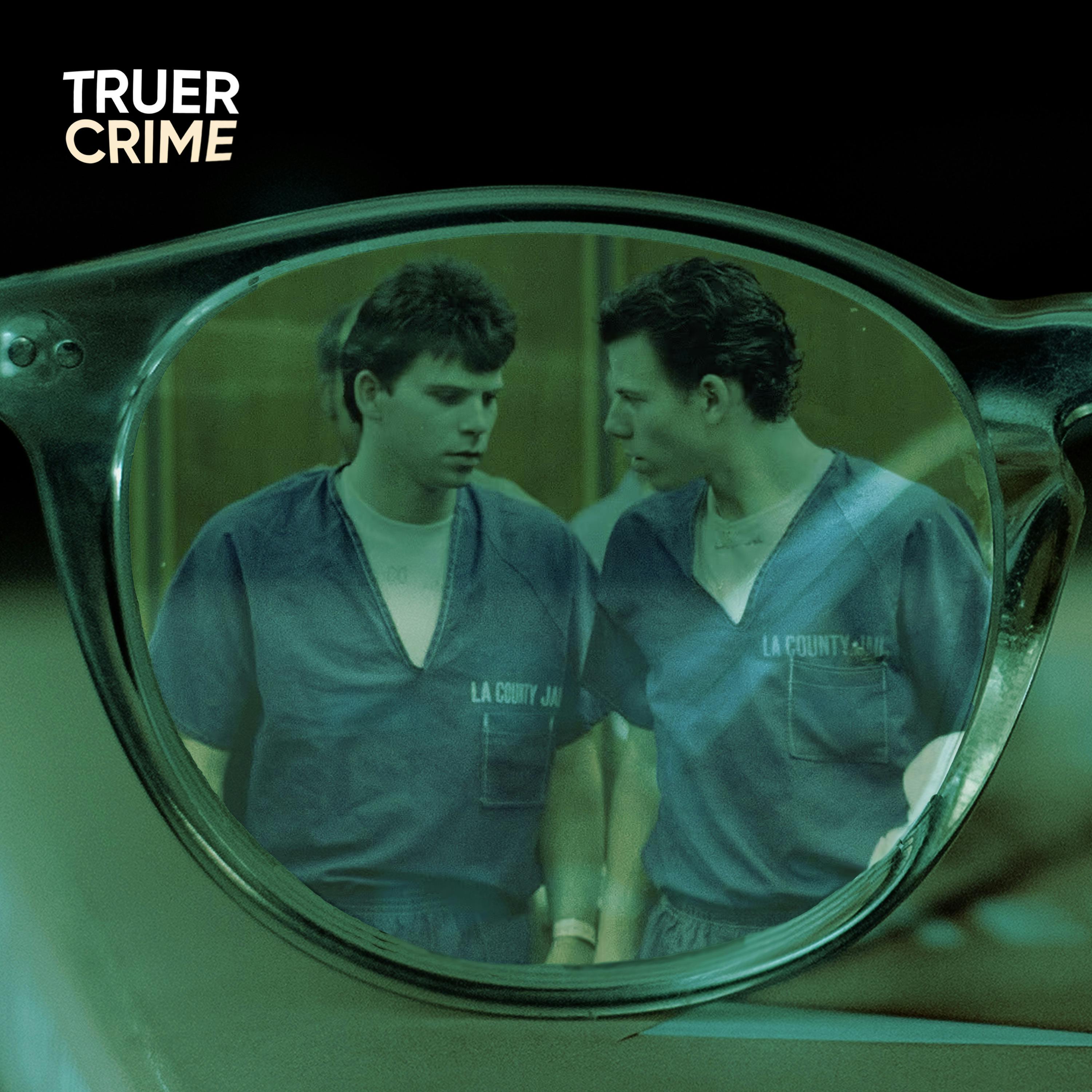
This is real. When we left off, the Menendez brothers finally broke their silence, standing trial for the murder of their parents. They didn't beg for mercy. They didn't say it was a mistake. They said our father sexually abused us for years. And for a moment, the courtroom seemed to freeze. You could hear it in the silence. You could feel it in the shift. This wasn't just a murder trial anymore. It had become something else. A trauma narrative, a courtroom reckoning, a cultural litmus test for who gets believed and who doesn't. Because in 2025, when abuse is claimed by a child, we're taught to listen, to believe them. But what happens when it's 1993 and the person making that claim is an adult? What happens when the victim doesn't look how we expect? When he wears a designer sweater, sits behind a defense table, and admits to murder? What does belief look like then? Today, we're stepping into the aftermath of that moment. The media storm, the trial strategy, the way the world turned these two brothers into characters before the jury ever returned a verdict. This is the story of the Menendez brothers, Part two. I'm Celisia Stanton, and you're listening to Truer Crime. This wasn't supposed to be a complicated trial. Two rich boys, a brutal double homicide. A multi million dollar estate on the line. To prosecutors, it looked simple. A case about materialism and entitlement. Jose and Kitty Menendez were dead, and their sons, Lyle and Eric, stood to inherit everything. The state was pursuing the death penalty. Prosecutors believed this case was clear cut, cold, calculated, financially motivated. There was no need to argue about who had pulled the trigger. The boys had confessed. The question to them was how harshly they should be punished. But the defense had something else in mind. They weren't arguing innocence. They weren't denying that the murders happened. Instead, they were trying to explain why, as prosecutor Pamela Bozanich said, this wasn't a prosecution trial. It was a defense trial. The defense has conceded all the prosecution charges, she explained. They have to prove that the boys were in immense danger from their parents, and they have to prove sexual molestation. At the center of their case was a legal theory called imperfect self defense. The idea wasn't that the Menendez brothers acted reasonably. It was that they acted out of fear. Fear so deep and so conditioned by years of trauma that it made the threat feel real, even if it wasn't. Their attorneys weren't asking jurors to condone what the boys had done. They were asking them to understand it. This trial wasn't about guilt or innocence. It was about belief. Could a jury believe that two sons, now grown men, were. Were so psychologically broken by what they'd experienced behind closed doors that they saw no other way out? That was the question at the heart of this case. Not who did it, but why. The brothers had a joint trial, but each had his own lawyer and his own jury. Each would receive his own sentence. Eric was represented by an attorney named Leslie Abramson. She was fierce, theatrical, unapologetically combative. One reporter would tell ABC that she was one of the most unpleasant people I ever had to cover. And yet I admired her. She fought for her clients like her life depended on it. But there's something else the public didn't know. Something that had quietly shifted the direction of the defense long before the courtroom lights were turned on. It started with a prison cell search and a letter. Before the trial began, guards had searched Eric's cell and found something unexpected. A 17 page handwritten letter from Lyle. It wasn't just some sibling check in. It was confessional, aching, human. At the end, Lyle had written, please destroy. But Eric didn't. And now it was in the hands of prosecutors. And I have to be honest, there's something about that moment that stops me every time. It's not just what the letter revealed. It's about what it meant. In it, Lyle wrote about the abuse they had endured at the hands of their father. He described the fear that had shaped their childhood, the silence that had kept them trapped, and the guilt he felt for breaking that silence now. He wrote that despite everything, telling those secrets in open court would feel like killing their parents all over again. That he couldn't do it. Not out loud. So instead he wrote it down, words he couldn't speak, even to his little brother and Eric. He couldn't bring himself to destroy it. He kept it because it mattered, because it was the first time Lyle had ever said it. And I know this is not a normal situation. These are not ordinary brothers. But still, there's something just so heartbreakingly familiar here. The older brother who can't say the words out loud. The younger brother who messes up, doesn't follow simple instructions, but only because he cared too much. That letter changed their entire legal strategy, because now there was a paper trail. And from that point on, the story the brothers had spent their whole lives trying to hide, it was going to have to be told. Ah, dsw.
- [10:21]
Podcast Advertiser/Host
Earth, place of the humble.
- [10:23]
Celisia Stanton
Brag.
- [10:23]
Podcast Advertiser/Host
Here the shoes are so good. No one would ever know how little you paid if you didn't go telling everyone, that is. And with never ending options for every style, mood and occasion, all at really great prices, they'll definitely give you something to brag about. So go ahead, stock up on fresh.
- [10:38]
Celisia Stanton
Sneakers from your favorite brands or try.
- [10:40]
Podcast Advertiser/Host
Those boots you always secretly knew you could pull off.
- [10:42]
Celisia Stanton
Find the shoes that get you at.
- [10:44]
Podcast Advertiser/Host
Prices that get your budget at DSW stores or@dsw.com Let us surprise you. When did making plans get this complicated? It's time to streamline with WhatsApp, the secure messaging app that brings the whole group together. Use polls to settle dinner plans, send event invites and pin messages so no one forgets mom 60th and never miss a meme or milestone. All protected with end to end encryption. It's time for WhatsApp message privately with everyone. Learn more at WhatsApp.com Limu Emu and.
- [11:22]
Liberty Mutual/DSW/WhatsApp Advertiser
Doug Here we have the Limu Emu in its natural habitat, helping people customize their car insurance and save hundreds with Liberty Mutual. Fascinating. It's accompanied by his natural ally, Doug Limu.
- [11:38]
Celisia Stanton
Is that guy with the binoculars watching us.
- [11:40]
Liberty Mutual/DSW/WhatsApp Advertiser
Cut the camera. They see us. Only pay for what you need@libertymutual.com Liberty Liberty Liberty Liberty Savings Very underwritten by Liberty Mutual Insurance Company and affiliates. Excludes Massachusetts.
- [11:54]
Celisia Stanton
Last Episode I told you the trial was a spectacle broadcast live into living rooms across America. So when Lyle Menendez took the stand in 1993, it wasn't just a courtroom watching. It was millions of people waiting to hear what he'd say. And from the moment he began to speak, it was clear this wasn't about denying what happened. It was about trying to explain how it ever got that far.
- [12:20]
Lyle Menendez
The defense is back in the courtroom.
- [12:21]
Liberty Mutual/DSW/WhatsApp Advertiser
And everyone else is present.
- [12:23]
Lyle Menendez
The defense may call its next witness.
- [12:27]
Celisia Stanton
Thanks.
- [12:27]
Interviewer/Prosecutor
Calls Joseph Lyle Menendez.
- [12:31]
Celisia Stanton
The attorney started at the beginning. Lyle's earliest memories. And those memories weren't just painful. There was love, too. Or at least something that looked like it.
- [12:43]
Interviewer/Prosecutor
What do you remember about your dad from that period in time?
- [12:47]
Lyle Menendez
I remember the little dog, Tristess. I remember her and my dad playing in the snow. And me running out to my dad and jumping on him and playing in the snow.
- [13:06]
Celisia Stanton
He remembered admiration. A little boy desperate for his father's approval. Desperate to feel special. But woven into that affection were moments that didn't quite be feel right. Behaviors from his father, Jose, that at the time, Lyle didn't have the language to question.
- [13:26]
Interviewer/Prosecutor
Do you ever take photographs of you and your brother?
- [13:30]
Eric Menendez
Yes.
- [13:31]
Interviewer/Prosecutor
And what would the circumstances be in which he would take photographs?
- [13:38]
Lyle Menendez
He would take photographs of us, of our private parts.
- [13:47]
Interviewer/Prosecutor
And would he have you come in and pose for these photographs or how would that happen?
- [13:54]
Lyle Menendez
I would just. If we were in the showers or bathtub or changing, he would just. He would just use the same camera that my mother used. And then he would come in, take just a photograph or two, and he wouldn't say anything, and then he would leave.
- [14:15]
Celisia Stanton
Lyle said his father made him feel chosen. He told him their bond was special, that it was a part of a family legacy. Something sacred passed between fathers and firstborn sons. A tradition, a duty. Until that closeness twisted into something else.
- [14:34]
Lyle Menendez
He talked to me about. I don't know, they were like lecturers or traveling lecturers, professors. And they would have arrangements with very close, special students, young boys. And they would have sex and they would touch each other.
- [14:55]
Interviewer/Prosecutor
And did he talk about it with regard to fathers and sons?
- [15:01]
Lyle Menendez
He talked about it with regard to. To our relationship as being very special. And our family history with the firstborn and the father.
- [15:13]
Interviewer/Prosecutor
What was special about the relationship of the firstborn and the father?
- [15:20]
Lyle Menendez
That it was special and that that was really all that mattered was the firstborn and that the sons should do what the fathers say. And then they grow up and they become like the father. And the father teaches them and Molds them. And someday, me and my son do the same.
- [15:47]
Celisia Stanton
This was grooming, plain and simple. But even that word doesn't capture how confusing it must have been. Being told that this was love, that it was expected, that it was your role. And then it escalated.
- [16:07]
Interviewer/Prosecutor
And between the ages of 6 and 8, did your father have sexual contact with you?
- [16:15]
Lyle Menendez
Yes.
- [16:17]
Interviewer/Prosecutor
And how did it start?
- [16:25]
Lyle Menendez
Just started with after sports practices. He would massage me, and we would have these talks, and he would show me, and he would fondle me, and he would ask me to do the same with him. And I would. I would touch him. We would undress.
- [16:50]
Interviewer/Prosecutor
Where would this take place?
- [16:52]
Lyle Menendez
In my bedroom.
- [16:57]
Interviewer/Prosecutor
And how often would this happen?
- [17:04]
Lyle Menendez
Like two or three times a week.
- [17:09]
Celisia Stanton
Listen, I've watched this testimony over and over, trying to figure out how to tell this part of the story. And truthfully, I still don't know if I'm getting it right. The details here are horrifying, and sharing them feels complicated. How much is too much? How do you honor the truth without turning it into a spectacle? And maybe what's hardest to sit with is the way it was all broadcast, aired like it was some daytime drama. A boy describing the worst parts of his childhood. Not to a therapist or a trusted friend, but to a nation. There's not a perfect way to share this, but I think I know what the wrong way looks like. And to skip it, flatten it, pretend it wasn't central to the case, sugarcoat it. That would be wrong. This mattered. It still matters. Sadly, Lyle explained the abuse escalated. He told the court that his father used objects to assault him, that he bled, that he asked him to stop.
- [18:23]
Interviewer/Prosecutor
Were you scared?
- [18:25]
Lyle Menendez
Very.
- [18:27]
Interviewer/Prosecutor
Did you ask him not to?
- [18:30]
Lyle Menendez
Yes.
- [18:31]
Interviewer/Prosecutor
How did you ask him not to?
- [18:34]
Lyle Menendez
I just told him. I don't. I don't. I just told him that I didn't want to do this and that it hurt me. And he said that he didn't mean to hurt me. He loved me.
- [19:17]
Interviewer/Prosecutor
Was that important to you? That he loved you?
- [19:21]
Lyle Menendez
Yes. Very. But I still didn't want to do it.
- [19:28]
Celisia Stanton
Lyle worked up the courage to tell his mom what was happening. He hoped she'd believe him, hoped she'd intervene.
- [19:38]
Interviewer/Prosecutor
What did your mom say?
- [19:42]
Lyle Menendez
She told me to stop it. And that I was exaggerating and that my dad has to punish me when I do things wrong. And she told me that he loved me.
- [19:58]
Celisia Stanton
That was it. That was the response. She didn't protect him. She dismissed him as a child.
- [20:07]
Interviewer/Prosecutor
Did you ever tell anybody else what had happened with your dad?
- [20:13]
Lyle Menendez
As A child? No.
- [20:15]
Interviewer/Prosecutor
Why not?
- [20:20]
Lyle Menendez
I was afraid. And my dad didn't want me to.
- [20:26]
Interviewer/Prosecutor
What did he tell you about telling people?
- [20:33]
Lyle Menendez
He just said that it was our secret. That bad things would happen to me if I told anybody. And I told him I never would.
- [20:56]
Celisia Stanton
And then came a moment that cracked something open. Not just in the courtroom, but in Lyle's little brother. In Eric. There he was, sitting at the defense table, listening to his brother testify. He had no idea what was coming next.
- [21:16]
Interviewer/Prosecutor
So during the time between 6 and 8 when this was going on, did you tell your brother?
- [21:25]
Lyle Menendez
No.
- [21:26]
Interviewer/Prosecutor
Did you do something to your brother?
- [21:32]
Celisia Stanton
Yes.
- [21:36]
Interviewer/Prosecutor
What did you do to your brother?
- [21:43]
Lyle Menendez
I took him out to the woods whenever I felt. I don't know. I took him out sometimes. And I took a toothbrush also. And I played with Eric in the same way. And I'm sorry.
- [22:20]
Celisia Stanton
It was the first time Eric had ever heard his brother say it out loud. The apology, the guilt, the pain. Eric bit his hand as he listened. His lawyer reached over and placed a hand gently on his back. Lyle said the abuse stopped when he was around 8 years old. But years later, he confessed he started to worry. What if, he wondered? Jose had never actually stopped. What if he'd just moved on?
- [23:00]
Interviewer/Prosecutor
When you were about 13, did you think that it might be happening to someone else?
- [23:07]
Lyle Menendez
Yes.
- [23:09]
Interviewer/Prosecutor
And who did you think it was happening to?
- [23:11]
Lyle Menendez
Eric.
- [23:14]
Interviewer/Prosecutor
And did you do something about it?
- [23:18]
Lyle Menendez
Yes.
- [23:20]
Interviewer/Prosecutor
What did you do?
- [23:22]
Lyle Menendez
I talked to my dad.
- [23:26]
Interviewer/Prosecutor
What did you say to your dad?
- [23:29]
Lyle Menendez
I told him that I knew what was going on with him and Eric. And I heard noises and that I wanted him to leave Eric alone.
- [23:44]
Interviewer/Prosecutor
What did he say to you?
- [23:48]
Lyle Menendez
He told me that Eric was. That Eric made things up sometimes, but that it would stop and we should keep it just between us or. He killed me.
- [24:14]
Interviewer/Prosecutor
Did you ever tell anybody what you thought was going on?
- [24:17]
Lyle Menendez
No. I told him I would never tell anybody. I just wanted to stop.
- [24:22]
Interviewer/Prosecutor
Did he tell you it would stop?
- [24:24]
Lyle Menendez
He did.
- [24:26]
Celisia Stanton
Jose Menendez told Lyle it would stop. But that was a lie. And the proof of that lie rang out in the courtroom just days later.
- [24:45]
Podcast Advertiser/Host
This episode is brought to you by Netflix. Everyone is telling her she dreamt it. But in the woman in cabin 10. Lo Blacklock is determined to uncover the truth in the gripping new thriller coming to Netflix October 10th. Keira Knightley plays a journalist aboard a luxury yacht who witnesses a crime she can't unsee. Adapted from Ruth Ware's best selling novel, directed by Simon Stone. Watch the woman in cabin 10 now only on Netflix. Imagine fast hydration combined with balanced energy. Perfectly flavored with zero artificial sweeteners. Introducing Liquid Ivy's new energy Multiplier, Sugar Free. Unlike other energy drinks, you know the.
- [25:29]
Celisia Stanton
Ones that make you feel like you're glitching.
- [25:31]
Podcast Advertiser/Host
It's made with natural caffeine and electrolytes so you get the boost without the burnout. Liquid IV's new energy multiplier Sugar Free Hydrating Energy Tap the banner to learn more. This episode is brought to you by Rakuten. If you're shopping while working, eating, or even listening to this podcast, then you know and love the thrill of a deal. But are you getting the deal and cash back? Rakuten shoppers do they get the brands they love, savings and cash back. And you can get it too. Stack sales on top of cash back and feel what it's like to know you're maximizing savings. It's easy to use and you get cash back sent to you through PayPal or check. The idea is simple. The brands you love pay Rakuten for sending them shoppers, and Rakuten shares the money with you as cash back. Download the free Rakuten app or go to rakuten.com to start saving today. It's the most rewarding way to shop. That's R A K U t e n rakuten.com.
- [26:29]
Celisia Stanton
When Eric took the stand, he didn't sound angry. He didn't sound rehearsed. He sounded like someone still trying to understand what had happened to him, still trying to survive it. And what he described was even more harrowing than anything we'd heard so far. Because while Lyle said the abuse ended when he was 8, Eric said his never did. From age 6 until just before the murders. He said it went on behind closed doors, hidden under layers of fear, shame, and silence. And the longer it went on, the more twisted it became. You see, while Jose's grooming might have started out with warmth and affection, it wasn't long Eric shared before the psychological warfare began.
- [27:23]
Eric Menendez
He told me that I was the biggest sissy and the biggest coward he had ever seen in his entire life, and that he was ashamed to have me as a son because I couldn't take the pain and I couldn't be brave from what he had seen.
- [27:38]
Interviewer/Prosecutor
What was he referring to? Do you know?
- [27:40]
Eric Menendez
He was referring to a shot I got in the doctor's office. When I was in this doctor's office and he was there, the doctor had pulled out this needle and I was real calm and I was real relaxed until he stuck it in Me. And I was screaming and crying and really crying out.
- [28:02]
Podcast Advertiser/Host
And after this, he made this announcement.
- [28:04]
Interviewer/Prosecutor
To you about your being Sicilian coward.
- [28:06]
Eric Menendez
Yes.
- [28:07]
Interviewer/Prosecutor
And what did he tell you he.
- [28:08]
Podcast Advertiser/Host
Was going to do about that, if anything?
- [28:10]
Eric Menendez
He told me that he was going to train me how not to. Not to feel pain, not to have to feel the hurt of the pain. And that he was going to eliminate that from my senses, my feelings.
- [28:29]
Celisia Stanton
What followed, Eric testified, was a twisted routine of punishment disguised as preparation. He said his father used needles, tacks, even a knife. That the abuse was physical, sexual, psychological. He called it pain training. It was horrifying. And it wasn't just about dominance. It was about control, about keeping Eric scared and quiet.
- [29:01]
Eric Menendez
I was sitting in front of the mirror. He used to do this every once in a while. And I would sit in the. In the chair in front of the mirror. And he would ask me if I've told anyone. And I said, no. And he would say, what's going to happen to you if you tell anyone? And I remember the first time I said that you will hurt me. And he said, wrong. And so I hit myself. And he said, what's going to happen if you tell someone? And I didn't answer. And he said again, he said, what is going to happen if you tell someone? And I said, you'll kill me. And he said, right.
- [29:34]
Celisia Stanton
And that happened more than once?
- [29:35]
Eric Menendez
Yes. You got it right. The second time, though.
- [29:40]
Interviewer/Prosecutor
Excuse me.
- [29:42]
Eric Menendez
I would learn how to get it right, the answers.
- [29:45]
Celisia Stanton
He would learn how to get it right. The answers. Hearing all of that, I couldn't say I was surprised that Eric didn't reach out for help. Not to a teacher, not to police, not even to Lyle at first. Because in a painful and complicated way, he still loved his dad. Because love doesn't always disappear just because it should. What Lyle and Eric described on the stand was disturbing, devastating, and for some people, hard to believe. But their story didn't exist in a vacuum. Eric's cousin, Andy Kanno, testified that when they were just kids, Eric confided in him more than once that his father was touching him inappropriately. Eric had sworn his cousin to secrecy, and Andy kept that promise all the way up until that 1993 trial. Another cousin, Diane Vandermolen, said that Lyle had confided in her. She took it to Kitty. But Kitty, she said, didn't believe her. And then there were the broader patterns. Relatives described Jose Menendez as domineering, controlling, prone to outbursts of anger. A man who demanded obedience, not closeness, and yet not a Single person came forward to defend him. No character witnesses, no heartfelt letters, no old friend from work. In a case where belief meant everything, that silence, it said a lot. As the courtroom began to absorb this new version of events, testimony after testimony, painting a portrait of trauma and dysfunction, there was one figure who lingered quietly in the background. If Jose Menendez was the monster in this story, what did that make Kitty? That question haunted the courtroom. And the answer wasn't simple, because Kitty wasn't innocent. But she wasn't safe either. She was vulnerable in that house, caught between her husband's control and her son's pain. She wasn't violent. She didn't command fear. Fear. But she wasn't powerless. And that's what made her so hard to place. The defense didn't quite know what to do with her. She didn't fit neatly into the villain mold or the victim one. She wasn't on trial, but in many ways she was being judged the same. Vanity Fair wrote that the courtroom portrait of her was brutal. Desperate, demented, drunken, drugged, suicidal, A dangerous driver, a lousy housekeeper. Ferret feces under the bed, dog feces on the floor, all used as metaphors for her instability. She was described as messy, broken, inconvenient, someone whose struggles became a legal strategy. One defense attorney called her a crazy woman who got even crazier, citing her depression and suicidal ideation as courtroom evidence. But this wasn't just character assassination. There was real unraveling behind that rhetoric. According to biography, Kitty Menendez, born Mary Louise Anderson, was the youngest of four raised in Oaklawn, Illinois. Her father was abusive. Her childhood was marked by depression and emotional withdrawal. Friends said she rarely talked about her past. The Los Angeles Times described her as glamorous and mysterious, a bit of a rebel. And then, as her college roommate said, all of a sudden she was hit by a bulldozer. She met Jose and swept up by his charm and ambition, she married him at 21. From the outside, Kitty and Jose looked like a dream couple. But behind closed doors, Kitty was unraveling. Jose had been engaged in a long term affair that devastated her. Her psychologist testified that she became suicidal and dependent on drugs and alcohol. Her friend Karen Lamb said she attempted suicide three times. But that wasn't all Kitty was. There were moments, small ones mostly, that stuck with Lyle.
- [34:04]
Lyle Menendez
I remember Christmases, her, she was always up, it seemed, and she would be up when I got up and. And she would take us down to open the presents, even though my dad would sleep in. So we got to do that. That was Usually a nice day. And I remember her taking care of the birds that would hit the window. Especially in Muncie, the birds would hit the window and be kind of like hurt or wounded in some way. She would put them in a special cage she had for birds that did that. She was just amazing with birds. I remember watching.
- [34:53]
Celisia Stanton
There's a tenderness in that memory, a glimpse into who Kitty could be. A mother who woke up early for Christmas morning, who tended to wounded birds. It's a memory that softens the edges just before the story hardens again. Because Kitty's failure to protect her sons had hurt them deeply. If you remember, Diane Vandermolen, a cousin, had said that Lyle had disclosed abuse to her. And when she brought it to Kitty's attention, Kitty didn't believe her. And of course, there was Lyle himself, who testified that he tried to tell his mom about what Jose was doing, but that instead of intervention, he was met with denials. Kitty, the defense argued, was someone who numbed out, who turned away and let it happen. But then came something even harder to sit with. Lyle testified that Kitty may have crossed boundaries herself. While on the stand. He claimed that when he was around 11, she invited him to bed and asked him to touch her, quote, everywhere. He said she often walked around the house fully or semi nude. And he accused her of physical and psychological abuse, that she dragged him by the hair, had thrown his stuffed animals out the window as punishment. These allegations were deeply painful and they remained contested. But they were central to the defense's argument that this wasn't just a dysfunctional household. It was chaos. It was danger. It was a home where no one was safe. And maybe that's why Kitty's story never made the headlines. In the same way, she didn't make for clean storytelling. She didn't invite sympathy. She was messy. Too complicated. But I keep thinking about what we do with women like Kitty. Women who were caught in their own pain and caused pain too. This story asks us to hold multiple truths at once. That Kitty may have been both victim and enabler. That her suffering was real. But so was her silence. By now, the courtroom had been flooded with testimony. Testimony that painted the Menendez home not as a mansion, but as a minefield. There were no safe parents, no safe rooms. Just shifting roles and buried trauma. But even after everything you've heard about Jose, about Kitty, about the boys childhoods, there's one part of this story I haven't told you yet. What exactly happened that night in Beverly Hills? What happened inside the Menendez home in the final days, the final hours, the final moments before that 911 call. The jury heard it in painful, meticulous detail. But I haven't taken you there yet. Not to the moment Eric broke down and told Lyle the abuse hadn't stopped. Not to the confrontation that followed. Not to the doors that closed, the threats that were made, the decisions that would set everything in motion. What pushed two sons from fear to murder?
- [38:09]
Interviewer/Prosecutor
Did you love your mom and dad?
- [38:11]
Lyle Menendez
Yes.
- [38:12]
Interviewer/Prosecutor
And on August 20, 1989, did you and your brother kill your mother and father?
- [38:18]
Celisia Stanton
Yes.
- [38:20]
Interviewer/Prosecutor
Did you kill them for money?
- [38:23]
Lyle Menendez
No.
- [38:25]
Interviewer/Prosecutor
Did you kill them because you wanted to pay them back for the way they had treated you?
- [38:32]
Lyle Menendez
No.
- [38:34]
Interviewer/Prosecutor
Why did you kill your parents?
- [38:38]
Lyle Menendez
Because we were afraid.
- [38:42]
Celisia Stanton
But that fear, what it looked like, what it meant, what it drove them to do, it didn't come out all at once. It came in fragments and sobs and contradictions and memories that didn't always make sense but still carried weight. Because the night of August 20th wasn't just the night Jose and Kitty Menendez died. It was the night Lyle and Eric say they tried to survive. That's where we're headed next on Truer Crime. While looking for action items for today's episode, I was struck by how many organizations are dedicated to supporting female survivors of sexual assault, and that work is vitally important. But it's also true that far fewer organizations focus specifically on male survivors like Lyle and Eric. One group doing that work, though, is called Male Survivor. They've been around since 1995, and they're largely funded by donations from the people they serve. It's a space for men from all over the world to connect, talk to heal. They run 247 online forums and chat spaces, plus in person events where survivors can connect with each other and with trained therapists. If you want to learn more, volunteer or donate to support their work, head to malesurvivor.org as always, you can keep up with truer crime on Instagram, x Threads and blueskyuhocrime Pod. And if you haven't already, make sure to subscribe to the Official newsletter@truercrime.substack.com to stay in the loop. If you want to follow along with me personally, I am on Instagram and TikTok at Celicia Stanton and I also write a weekly newsletter called Sincerely Celicia where I share my favorite recommendations and unfiltered thoughts on politics, culture and life. You can read past issues and sign up to get it straight to your inbox@sincerely sia.substack.com A full list of sources and action items related to today's episode is available on our website atrucrimepodcast.com true crime is created, hosted and written by me, Celisia Stanton, and is a production of Tenderfoot TV in association with Odyssey. Additional writing, research and production by Olivia Hussingfeld. Executive producers are myself, Donald Albright and Payne Lindsay. Editing the by Liam Luxon, artwork by Station 16, original music by Jay Ragsdale and makeup and vanity set mix by Dayton Cole. Thank you to Orin Rosenbaum and the team at uta, the Nord Group and the team at Odyssey. For more podcasts like True or Crime, search Tenderfoot TV on your favorite podcast app or visit us@Tenderfoot TV. Thanks for listening.
- [41:42]
Interviewer/Prosecutor
Foreign.
- [41:55]
Celisia Stanton
Thanks so much for listening to this episode of True Crime. If you want an ad free version of the show, plus early access to every episode for this month's case and tons of other great Tenderfoot podcasts, you can subscribe to Tenderfoot plus at tenderfootplus.com or on Apple Podcasts. It's a small way to support the work, and it makes a big difference.
- [42:19]
Liberty Mutual/DSW/WhatsApp Advertiser
It started with a scream inside a quiet Maryland home, a mother trying to protect the family dog and her son in the grip of a violent hallucinogenic rage. By the time it was over, she was dead and he claimed LSD made him do it. His name? David Minor iv, and we talk to him listen to Invisible Choir every other week as we uncover the most haunting True crimes you've never heard of. Available wherever you get your podcasts.