
Podcast
Truly Passive Income
Hosted by Truly Passive LLC · EN
Are you ready to build true wealth and financial independence for your family and live life exactly as you've always wanted? Each week, tune in to Truly Passive Income, as Neil Henderson and Clint Harris interview guests who are experts in using passive investing to achieve financial and location independence, design more meaningful and intentional lives, and make a positive impact on the world. If you're seeking freedom from the grind of trading your time for money and want to prioritize what truly matters in life, this podcast is for you.
30episodes
Episodes
Newest firstAll episodes
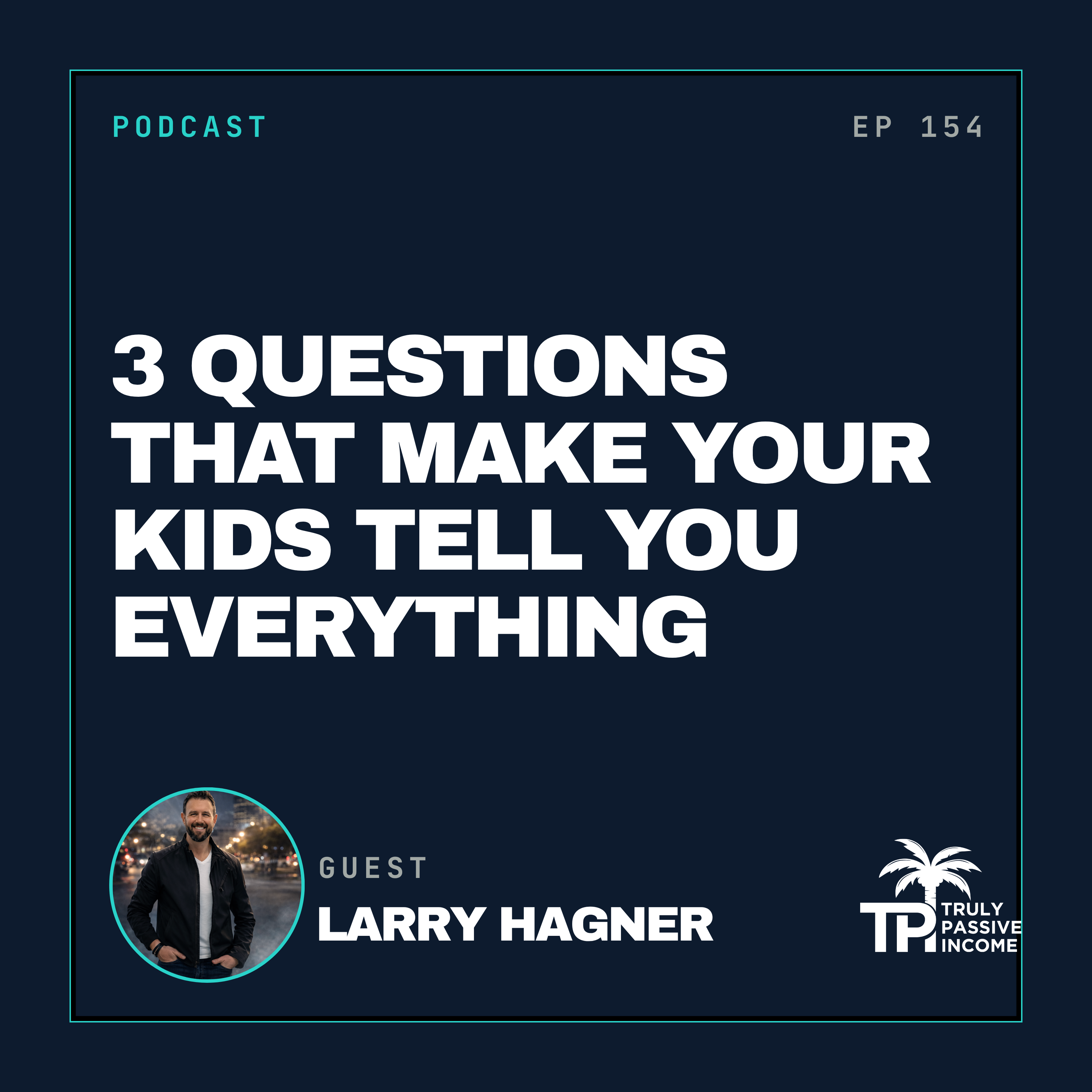
3 Questions That Make Your Kids Tell You Everything
Jun 2900:54:55Tap to summarizeOnly 12% of couples who walk down the aisle end up in a truly fulfilling marriage, the same success rate as making it through Navy SEAL training. Larry Hagner has spent 11 years and 1,500 interviews figuring out why, and what fathers can do about it.Larry Hagner is the founder of The Dad Edge, host of one of the longest-running fatherhood podcasts in the world, and author of The Pursuit of Legendary Fatherhood. In this conversation, Larry shares the three questions he asks his kids every day to build trust and connection, why 80% of the time your spouse and children want validation instead of solutions, and how emotional intelligence is a learnable skill that most men were never taught. He explains why the couples who thrive share one trait: a purposeful commitment to keep growing together. For high-income professionals building passive income and financial freedom, Larry offers a critical reminder that the "why" behind the wealth is what matters most, and that being a great father and husband requires the same intentional skill-building we bring to our careers and investments.Chapters[0:00] Meet Larry Hagner[2:50] Why Larry started The Dad Edge[6:52] Marriage stats that will shock you[10:30] The dark moment that changed everything[30:40] Three daily questions for your kids[36:31] Validation over problem solving[48:22] What Larry still struggles withResourcesDisclosure: Some links below are affiliate links. We may earn a commission at no cost to you. As an Amazon Associate we earn from qualifying purchases.The Pursuit of Legendary Fatherhood by Larry HagnerThe Dad Edge: Book + Free Courses Bundle25 Intimate Conversation Starters for Your Wife (free)Questions for the Car: Kid Questions by Age (free)"It's Not About the Nail" by Jason HeadleyThe Dad Edge on FacebookThe Dad Edge on XGet our free Passive Investor Starter KitFollow us: YouTube @trulypassiveincomepod | Instagram @truly_passive_income
Transcribe →
This ER Doctor Doesn't Want Cash Flow (Here's Why)
Jun 2200:41:41Tap to summarizeWhat if chasing cash flow is actually costing high-income earners more in taxes than it's worth? Dr. Benjamin Aaker, an ER physician and multifamily syndicator, built a contrarian strategy around equity growth and tax-deferred wealth that made work optional a full decade ahead of schedule. Dr. Benjamin Aaker is an emergency medicine physician, multifamily syndicator, and author of Your Authority Problem. Operating out of South Dakota, he scaled from a single rental property to a 226-unit multifamily syndication by prioritizing equity over cash flow. His reasoning is simple: as a high-income earner, every additional dollar of passive income gets taxed at the top marginal rate. By structuring deals to be cash flow neutral and building equity instead, he plans to take income later when his tax bracket drops in retirement. Aaker also shares hard lessons from a syndication where occupancy plummeted to 25% after a nonprofit pulled tenant subsidies, and how setting investor expectations upfront saved those relationships. His approach offers a valuable alternative framework for high-income professionals who already have enough income and want to build long-term, tax-efficient wealth. Chapters [0:00] Meet Dr. Benjamin Aaker [2:45] The 50-year plan to optionality [8:12] First rental property story [10:55] Equity over cash flow explained [16:30] Scaling to 226-unit syndication [22:18] Occupancy crash and hard lessons [30:40] Setting investor expectations Resources Disclosure: Some links below are affiliate links. We may earn a commission at no cost to you. As an Amazon Associate we earn from qualifying purchases. The Millionaire Real Estate Investor by Gary Keller and Jay Papasan DoctorEquity.com, Dr. Benjamin Aaker's blog Get our free Passive Investor Starter Kit Follow us: YouTube @trulypassiveincomepod | Instagram @truly_passive_income
Transcribe →
The Hidden Bottleneck Blocking New Housing in America
Jun 1500:36:18Tap to summarizeA single infrastructure bottleneck, municipal sewer capacity, is quietly killing housing deals across the country. Tom Bartlett has spent 27 years solving it with compact wastewater treatment plants that cut developer costs by 40 to 50%. Tom Bartlett is the founder of Aquatech Systems, a company building decentralized wastewater treatment plants that allow developers to bypass overburdened municipal sewer systems. Joined by development partner Charles Poindexter of CG Design and Build, Tom explains how these compact, stainless steel plants treat wastewater to the highest standards while costing a fraction of traditional hookups. For real estate developers and land investors, the implications are significant: cheaper land outside municipal sewer lines, higher unit density per acre, faster permitting through North Carolina's engineered optional permit process, and phased infrastructure that reduces carry costs. In a country where aging sewer systems are failing and housing remains unaffordable, Bartlett's technology represents a real solution to a problem most investors never think about until it kills their deal. Chapters [0:00] Why sewer is a real estate bottleneck [2:48] Tom Bartlett's background [5:22] How decentralized sewer works [10:15] Cost savings per lot [14:52] Infrastructure and phased building [19:30] Unit density and land value [25:10] Failing systems across North Carolina Resources Aquatech Systems (Community Sewer) CG Design and Build Get our free Passive Investor Starter Kit Follow us: YouTube @trulypassiveincomepod | Instagram @truly_passive_income
Transcribe →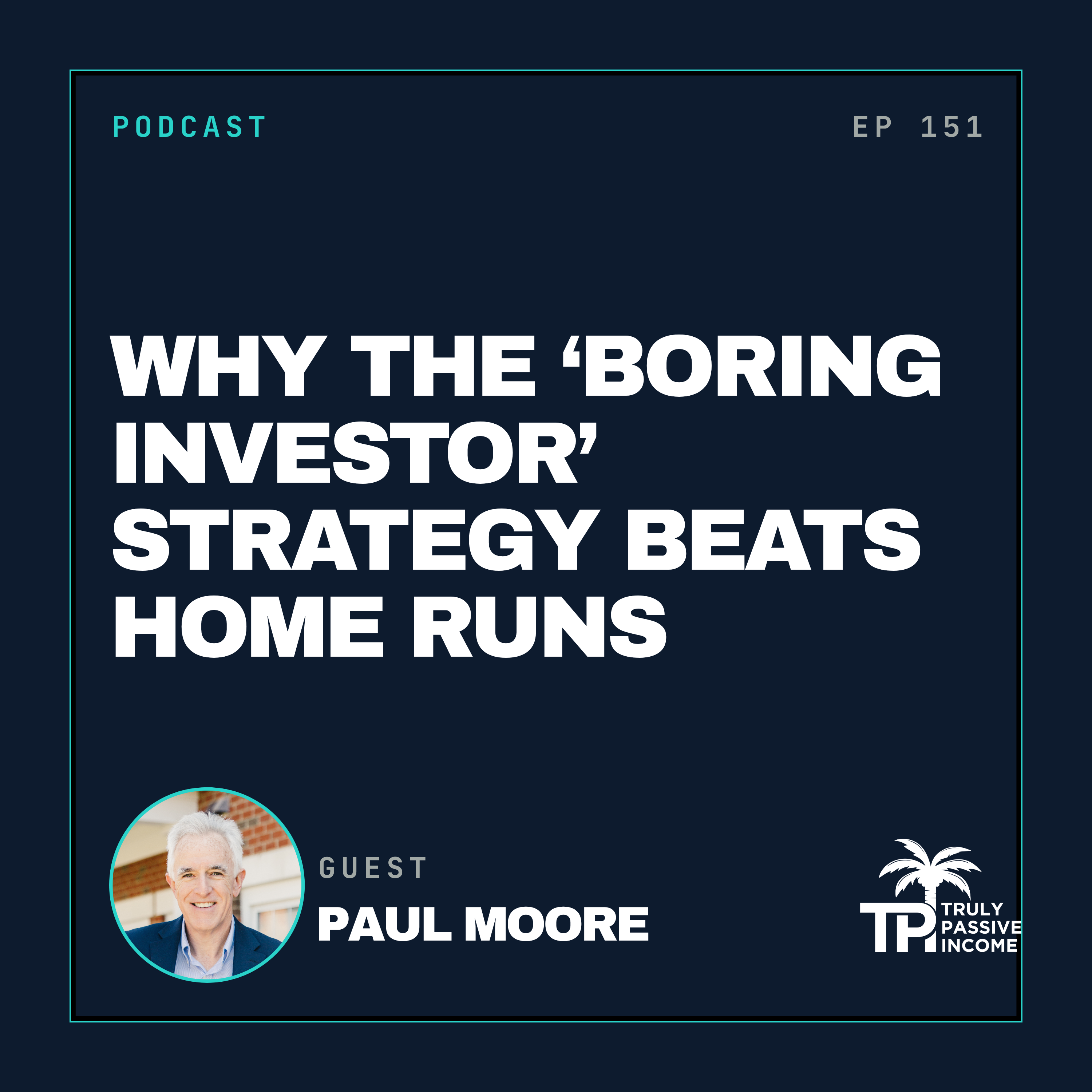
Why the Boring Investor Strategy Beats Home Runs
Jun 800:38:37Tap to summarizePaul Moore reviewed over 1,100 deals last year and invested in only six, a filter rate that reveals just how seriously the founder of Wellings Capital approaches risk in today's market.Paul Moore runs Wellings Capital, a real estate private equity firm managing roughly $180 million across self-storage, mobile home parks, industrial, and multifamily assets. A self-described former "certified shiny object chaser," Paul now applies Warren Buffett's principles directly to commercial real estate, focusing on what he calls the boring investor approach. In this conversation he breaks down the critical difference between investing and speculating, explains how his team uses preferred equity and JV hybrid equity positions to protect downside while preserving upside, and shares the 31-point due diligence checklist Wellings Capital uses to vet operators. Paul also discusses why fraud remains the number one risk in passive investing and how capital stack positioning has become central to his strategy after the painful lessons of the last three years.Chapters[0:00] Investing vs. Speculating[3:52] Lessons from the Market Shift[10:22] Capital Stack Positioning[18:15] Due Diligence on Operators[25:42] Asset Classes Right Now[33:40] How Wellings Capital WorksResourcesDisclosure: Some links below are affiliate links. We may earn a commission at no cost to you. As an Amazon Associate we earn from qualifying purchases.The One Thing by Jay Papasan and Gary KellerThe Hands-Off Investor by Brian BurkeWellings Capital free resources and 31-point due diligence checklistGet our free Passive Investor Starter KitFollow us: YouTube @trulypassiveincomepod | Instagram @truly_passive_income
Transcribe →
Can AI Replace Your Worst Tasks and Double Your Revenue?
Jun 100:39:21Tap to summarizeAI for small business owners is no longer optional - but most people are decorating the penthouse before the foundation is laid. Former NYC managing broker Gus Waite spent 20 years leading over 100 agents in corporate relocation before retiring and going all-in on artificial intelligence for independent real estate professionals. Now he helps business owners close gaps, simplify operations, and spend more time on the work they actually love. In this conversation, Gus joins Neil and Clint for a candid discussion about where AI adoption really stands, why small business collectives are the antidote to corporate workforce slashing, and how to use AI as a personalized coach to identify your blind spots and build systems around your strengths. You will also hear why the first step is never a complex workflow, what the "source code" method is, and how the intersection of human connection and AI might reshape your business and your life. Hit play if you are a business owner trying to figure out where to start with AI without losing yourself in the process.WHAT YOU'LL LEARNHow to identify your "source code" - your values, voice, and ideal client profile - so every AI output sounds like you instead of generic slopWhy decorating the penthouse before the foundation is laid is the most common AI adoption mistake and how to avoid itThe reason most business owners stall with AI tools after one technical glitch and the simple fix that keeps momentum goingHow to use personality assessments with AI to get daily personalized coaching on your blind spots and decision-making patternsWhy small business collectives and masterminds are the antidote to the PE-driven workforce replacement playbookThe exact approach Gus uses in his Independent Brokers Collective: one workflow, one agent, implemented together over two sessionsWhy both early-twenties graduates and early-sixties professionals are entering the same uncertain job market and what that means for youHow to reframe the AI conversation from "cut costs" to "increase revenue 20%" using your existing team as a force multiplierTIME STAMPS[00:00] - Introduction and guest background[02:14] - The AI adoption cycle: remember, forget, try, fail[04:47] - Decorating the penthouse before the foundation[06:30] - Using personality scores as AI coaching tools[09:52] - The source code: values, voice, and vision[12:18] - What happens if all work disappears in 5-10 years?[14:03] - The $11 trillion wage market PE firms are targeting[17:25] - Small business collectives as the antidote[20:47] - Reframing AI: revenue growth vs. cost cutting[24:30] - The documentary revelation: early 20s and early 60s face the same crisis[27:15] - Eternal truths and why human connection wins[29:40] - Recommended resources and where to start[31:10] - How to connect with Gus WaiteABOUT THE GUESTGus Waite is a former actor, standup comedian, and 20-year veteran managing broker who led more than 100 agents in corporate relocation across New York City. After retiring from traditional real estate, he spent four years studying artificial intelligence before launching Real Estate Rewired AI With a Heart, a podcast and consultancy helping independent brokers access the same tools and technology available to the top 1%. He now runs the Independent Brokers Collective, a mastermind where small business owners implement AI workflows together. Gus is the founder of Growth Pilot Partners.Website: https://www.growthpilotpartners.comEmail: gus@growthpilotpartners.comPhone: (914) 420-8358LinkedIn: Gus WaiteFollow Us On Social MediaYouTube: Truly Passive IncomeTikTok: @trulypassiveincomeInstagram: @truly_passive_incomeFacebook: Truly PassiveTwitter: @trulypassiveDownload Our FREE Passive Investor ToolkitEverything you need to get started in passive investing - Download Here
Transcribe →
How a Podcast Built a 95-Unit Real Estate Empire
May 1800:51:19Tap to summarizeCory Jacobson grew a 95-unit real estate portfolio by turning a podcast into a deal-sourcing and capital-raising engine, without cold-calling a single investor.Cory Jacobson and his partner Ryan launched the Wealth Juice Podcast during COVID to share their early investing mistakes publicly. By year six, that real estate podcast had become their primary capital-raising tool: limited partners found them through the show, general partnership deals formed through podcast relationships, and the show opened rooms they had no business being in. Their current focus is value add multifamily in the Upper Valley, a micropolitan market on the Vermont and New Hampshire border near Dartmouth Health. With a 0.4% vacancy rate and a projected shortage of 10,000 housing units through 2030, the market sits below institutional radar and above retail competition. They target mismanaged A-minus and B-plus properties, bring rents to market, and in some cases furnish units for traveling nurses, capturing midterm rental premiums of 25 to 40% above long-term rents. The GP-LP structure is laid out plainly: preferred return goes to limited partners first, GP windfalls come at refinance or sale, and cash-on-cash distributions during the hold period are secondary.The episode also covers the 1033 casualty exchange, a tax deferral mechanism triggered by total property loss from a fire, hurricane, or natural disaster. It functions like a 1031 but is almost unknown, even among CPAs. Cory explains the two-year replacement window, the IRS extension process, and why adequate insurance is non-negotiable for any real estate investor. The conversation rounds out with seller financing, a 10-year compounding ground-up development fund in the Phoenix-Scottsdale market, the distressed debt wall coming due before 2027, and the case for staying focused in one micropolitan market rather than chasing equity multiple across too many geographies.In This Episode You Will LearnHow the Wealth Juice Podcast replaced cold calls as Cory and Ryan's primary deal-sourcing and LP capital-raising toolWhy general partners get paid last in a syndication and what that means for limited partner preferred returns and timingHow to target value add multifamily in micropolitan markets that sit below institutional and above retail competitionHow furnishing units for traveling nurses and medical professionals produces midterm rental premiums of 25 to 40% above marketWhat a 1033 casualty exchange is, how it differs from a 1031, and why almost no CPAs have ever processed oneHow Cory structures GP-LP acquisitions: LP capital covers the down payment and renovation costs, commercial financing covers the restWhy staying focused in one market protects against over-leverage as you scale toward 500 unitsChapters[0:00] Intro[3:56] How It Started[9:19] STR Mistakes[13:09] Raising Capital[16:59] LP Structure[20:17] Micro Market Advantage[25:11] Passive Real Estate[31:33] The 1033 Exchange[36:37] Value Add Execution[41:16] Growth and Goals[43:18] Arizona Development Fund[45:23] Book RecommendationsAbout Ryan Bevilacqua and Cory JacobsonRyan Bevilacqua and Cory Jacobson are real estate investors, entrepreneurs, and co-hosts of the Wealth Juice Podcast, ranked in the top 1% of podcasts globally. With over 12 years of experience in business, sales, and hospitality, they have built a portfolio spanning long-term rentals, short-term rentals, multifamily apartments, and a 43-unit multipurpose resort, and actively raise LP capital for value-add multifamily acquisitions in Vermont and New Hampshire.Resources MentionedDisclosure: Some links below are affiliate links. We may earn a commission at no cost to you. As an Amazon Associate we earn from qualifying purchases.Rich Dad Poor Dad by Robert KiyosakiSet for Life by Scott TrenchWealth Juice Podcast: Apple Podcasts, Spotify, YouTubeConnect with Cory JacobsonInstagram: @wealthjuiceofficialYouTube: youtube.com/@wealthjuiceofficialPodcast: Wealth Juice on Apple Podcasts, Spotify, and YouTubeTruly Passive Income is hosted by Neil Henderson and Clint Harris. New episodes drop weekly.Download our free Passive Investor ToolkitFollow the show: YouTube @trulypassiveincomepod, Instagram @truly_passive_income, Facebook Truly Passive, Twitter @trulypassive#PassiveIncome #RealEstateInvesting #RealEstateSyndication
Transcribe →
Your CPA Is Trained to Work for the IRS, Not You
May 1100:41:29Tap to summarizeYour CPA may be costing you $50,000 or more every year without even knowing it. Tax strategist Chris Miller reveals why.Chris Miller, founder of One Atlanta Tax Solutions with over 15 years bridging the financial and tax worlds, explains why most CPAs are trained to be reactive rather than proactive and how that gap costs high earners tens of thousands annually. You will learn about leveraged charitable deductions with 5X multiples, aviation leasing strategies that wipe out W-2 income, tiny house depreciation plays that turn $17,000 into $170,000 in deductions, and why qualified retirement accounts may actually be "money jail" for your wealth. Chris also breaks down how the tax code is designed as an economic incentive, not a punishment, and how high-income professionals can build what he calls an "untaxable lifestyle" through proper entity structuring and trust planning.TIMESTAMPS[00:00] - Introduction to Chris Miller[01:12] - Bridging the financial and tax worlds[04:45] - Why CPAs leave money on the table[08:20] - When to engage a tax strategist[10:33] - Leveraged charitable deductions explained[11:45] - Aviation leasing for W-2 earners[15:02] - Tiny house bonus depreciation strategy[19:30] - Building an untaxable lifestyle[24:15] - Self-made millionaire wealth patterns[28:40] - Avoiding the tail wagging the dog[32:10] - Recession-proof business investing[34:50] - AI tax analysis tool coming soon[36:30] - Special offer for TPI listenersRESOURCES & LINKS MENTIONEDOne Atlanta Tax Solutions (Chris Miller's firm) - https://oneatlantataxsolutions.comTruly Passive Income Passive Investor Toolkit - https://trulypassiveincome.com/toolkit/TPI Episode 098 with Dr. Tyson Cobb on tax strategy for physiciansTPI Episode 049 with Shannon Robnett on CPAs vs. tax strategistsTPI Episode 088 with Eric Gordon on renewable energy tax creditsThe One Big Beautiful Bill (2025 federal tax legislation restoring 100% bonus depreciation)1031 Exchange (tax-deferred real estate exchange strategy)Qualified Opportunity ZonesCost Segregation StudiesRoth Conversion Strategies
Transcribe →
Don't Buy SpaceX Stock Before You Understand This
May 400:48:05Tap to summarizePre-IPO investing lets you buy into proven companies before the public stock market ever gets a chance - and the returns can dwarf traditional assets.Neil Kayal, founder of Grain Ventures and senior M&A executive at a Fortune 10 healthcare company, breaks down how late-stage private market investing works and why it belongs in a diversified portfolio alongside real estate and public equities. You will learn how special purpose vehicles let you invest deal by deal without blind pool commitments, how institutional due diligence filters separate real opportunities from hype, and why the biggest mistake private market investors make is simply waiting too long. Neil brings 15-plus years of evaluating acquisition targets at the highest level, and he has built Grain Ventures to democratize that same institutional rigor for accredited investors. If you have been looking for a growth allocation beyond syndications and index funds, hit play and discover a new asset class you may have been missing.What You'll LearnHow late-stage private market investing differs from early venture capital and why it carries a fundamentally different risk profileWhy 90% of the world's companies are privately held and what that means for investors who only access public exchangesThe exact due diligence framework Neil uses to evaluate competitive moats, revenue flywheels, and exit probability for pre-IPO companiesHow special purpose vehicles (SPVs) let you invest deal by deal without blind pool fund commitments or multi-million-dollar minimumsWhy the biggest mistake new private market investors make is simply waiting for the next opportunity instead of acting when windows are openHow to think about sizing a pre-IPO allocation using a barbell investing strategy alongside real estate and public equitiesThe real fee structure and alignment model behind deal-by-deal pre-IPO investing, including carry, minimums, and SPV costsWhy real estate investors already think in the frameworks that make private market investing intuitive - location timing equals market timingTime Stamps[00:00] - Introduction[01:12] - How late stage private investing works[04:48] - Barbell investing and wealth creation[07:22] - Accredited investor misconceptions[10:15] - The institutional due diligence process[13:30] - Evaluating competitive moats in defense tech[18:05] - Reading fundraising signals and exit thesis[21:40] - Public vs. private market analogy for real estate investors[25:10] - How SPVs work and why deal-by-deal matters[30:45] - Fee structure, minimums, and alignment[34:20] - Biggest mistakes new private market investors make[37:50] - Sizing a pre-IPO allocation in your portfolio[40:30] - Book recommendations and how to connectAbout the GuestNeil Kayal is the founder of Grain Ventures, a curated investor network providing accredited investors with access to late-stage pre-IPO companies in sectors including AI infrastructure, energy, aerospace, and defense technology. By day, he serves as a senior mergers and acquisitions executive at a Fortune 10 healthcare company, where he has spent more than 15 years evaluating hundreds of acquisition targets with institutional-grade diligence. He built Grain Ventures to democratize the same deal access and underwriting rigor that was previously available only to billion-dollar pension funds and endowments.Website: https://grain-ventures.comLinkedIn: https://www.linkedin.com/in/neilkayalBooks & Resources MentionedDisclosure: Some links below may be affiliate links. We may earn a commission at no cost to you. As an Amazon Associate I earn from qualifying purchases.Sidecar (SPV administration platform)Canopy (SPV administration platform)EQ Applied: The Real-World Guide to Emotional Intelligence by Justin BarisoBlue Ocean Strategy by W. Chan Kim and Renee MauborgneAnti-Fragile by Nassim Nicholas Taleb (referenced by Neil Henderson)Follow Us On Social MediaYouTube: Truly Passive IncomeTikTok: @trulypassiveincomeInstagram: @truly_passive_incomeFacebook: Truly PassiveTwitter: @trulypassiveDownload Our FREE Passive Investor ToolkitEverything you need to get started in passive investing - Download Here
Transcribe →
Why Being the Bank Beats Owning Rentals Right Now
Apr 2700:49:53Tap to summarizeEddie Speed has purchased over 50,000 mortgage notes in a 45-year career, and he believes today's market is uniquely primed for seller-financed note investing. In this episode, Eddie breaks down how landlords can convert rental portfolios into performing notes, dramatically boosting cash flow while shedding maintenance headaches. He explains his mortgage-bank-style underwriting system, how he creates liquidity for note sellers, and why 40% of qualified buyers are locked out of conventional lending. Whether you are an accredited investor exploring a new asset class or a burned-out landlord hunting for better NOI, this conversation reframes what truly passive income can look like in 2025.Time Stamps[00:00:00] - Introduction[00:01:07] - How Eddie Got His Start Buying Notes in 1980[00:03:30] - Why Rental Expenses Are Crushing Landlord Cash Flow[00:05:45] - Notes as the Middle Ground Between Syndications and Rentals[00:08:15] - What Is a Note? A Simple Explanation for Beginners[00:10:00] - How Seller Financing Differs from Subject-To and Wraps[00:13:30] - Eddie's Mortgage Bank Approach to Underwriting Notes[00:17:00] - The Math: Rent vs. Note Income on the Same Property[00:20:30] - Who Qualifies as a Seller-Finance Buyer Today[00:24:00] - How Mortgage Banking's Tightening Index Creates Opportunity[00:27:30] - Return Profiles and What a Grade-A Note Looks Like[00:30:00] - How Eddie Scales: Secondary Markets, Hedge Funds, and Investors[00:33:45] - The Rental Conversion Program for Landlords with 25-500 Units[00:37:00] - Why Land Contracts Destroy Note Value[00:39:30] - What Sophisticated Investors Still Underestimate About Notes[00:42:00] - Book Recommendation and Final AdviceReferences and SourcesDisclosure: Some links below may be affiliate links. We may earn a commission at no cost to you. As an Amazon Associate I earn from qualifying purchases.Book: "Never Split the Difference" by Chris VossResource: Note SchoolResource: Note School Rental Conversion ProgramCompany: HomeVestors (founded by Ken D'Angelo)Mastermind Groups Mentioned: Collective Genius, Boardroom, Investor FuelIndex Referenced: Mortgage Bankers Association Credit Availability IndexGuest LinksWebsite: noteschool.com/trulypassiveFacebook: https://www.facebook.com/thenoteschoolLinkedIn: https://www.linkedin.com/in/eddiespeed/YouTube: https://www.youtube.com/@NoteSchoolIf you liked this, listen to our most popular episode on mortgage note investing here: https://trulypassiveincome.com/captivate-podcast/earn-passive-income-without-hassle-through-mortgage-note-investing-with-nathan-turner/Follow Us On Social MediaYouTube: Truly Passive IncomeTikTok: @trulypassiveincomeInstagram: @truly_passive_incomeFacebook: Truly PassiveTwitter: @trulypassiveDownload Our FREE Passive Investor ToolkitEverything you need to get started in passive investing - Download Here
Transcribe →
Why High-Income Professionals Are Investing in Dirt, Not Buildings
Apr 2000:29:07Tap to summarizeEpisode DescriptionBrandon Cobb, CEO of HBG Capital, reveals how he turns raw land into approved housing communities and sells finished lots to national builders like Lennar and D.R. Horton. In this episode, he breaks down the three phases of land development, explains how entitlements force appreciation before construction begins, and shares the seven-figure lessons that reshaped his approach to deal structure, interest reserves, and investor communication. Whether you are an accredited investor seeking passive income through real estate syndication or a builder looking to scale, this conversation delivers actionable insight into one of the most overlooked cash flow strategies in the market.Time Stamps[00:00:00] - Introduction [00:00:30] - From Medical Device Sales to Real Estate Developer [00:03:18] - The Failed Businesses Before the Breakthrough [00:05:08] - Why Most Entrepreneurs Start the Wrong Way [00:06:15] - Three Phases of Land Development Explained [00:09:00] - How Entitlements Create Massive Value on Raw Land [00:10:30] - The Hack for Working with City Officials and Planning Directors [00:12:15] - De-Risking Deals Before Spending Real Money [00:13:05] - When You Need a Land Use Attorney [00:14:30] - Why AI Is a Game Changer for New Developers [00:15:30] - Entry Level Housing and the Supply Demand Imbalance [00:17:00] - Why Chasing Maximum Density Backfires [00:18:45] - Designing Lots with the End Buyer and Builder in Mind [00:20:30] - Seven Figure Losses in 2022 and the Lessons Learned [00:24:00] - Interest Reserves, Loan Terms, and Negotiating with Lenders [00:26:00] - Investor Communication When Things Go Wrong [00:27:30] - Multiple Exit Strategies and the Skinny Dipping Test [00:29:00] - Book Recommendation: The Untethered Soul [00:31:30] - How to Connect with Brandon Cobb and HBG CapitalResources & Social Media:Book: The Untethered Soul by Michael SingerBook: The Surrender Experiment by Michael Singer Book: Tools of Titans by Tim Ferriss Resource: Learn Land Development Free CourseResource: HBG Capital Investor Waitlist Resource: HBG Capital Free EbookConnect with Brandon CobbGuest: Brandon Cobb, CEO of HBG Capital and Founder of the Land Development Accelerator Website: hbgcapital.net Facebook: https://www.facebook.com/hbgcapital Instagram: https://www.instagram.com/hbgcapital LinkedIn: https://www.linkedin.com/in/hbgcapital/ YouTube: https://www.youtube.com/@hbgcapital662Follow Us on Social MediaTruly Passive Income website: www.trulypassiveincome.comTruly Passive Income Twitter: @trulypassive
Transcribe →