
Podcast
The Institute for Liberal Values
Hosted by Institute for Liberal Values · EN
We offer the tools to build and strengthen liberal values, promoting democratic, diverse, and pluralistic societies across the world.
ilvalues.substack.com
ilvalues.substack.com
11episodes
Episodes
Newest firstAll episodes

Ep. 81: 360 Degrees of America | Roifield Brown
May 26, 202201:06:54Tap to summarizeThis conversation ends this podcast where it started off… A progressive and a conservative walk into a bar… and have a drink… share a laugh… engage in dialogue.The conversation isn’t ending, but starting in June, Hold my Drink will fully integrate with Counterweight to become the new Counterweight podcast. I’ll probably still show up with a drink and we have an exciting line-up of guests. I’ll continue to share the new podcast here (so don’t go anywhere!), on the weeks when I’m hosting or writing, so you, my lovely listeners, won’t miss a beat. And thank you for all the support over the past two years; the next few years will be even more exciting.But I digress… This week I’m joined by Roifield Brown, a self-proclaimed “leftie” and global citizen. Roifield and I met about a year back in a Clubhouse conversation. We didn’t always agree, and that is precisely why we wanted to have the conversation again, and hopefully again, and again. Maybe he’ll even join me as a guest on the new Counterweight podcast.In our conversation we take a full 360 degree look at the United States. He really got me thinking with this question: When did World War II start? For the United States it started in 1941 after the attack on Pearl Harbor. That’s not when it started for other countries. Our view of the war is particular to our history.Roifield notes that the stories that the majority population in America tells itself about its founding are legit, and they are (mostly). But they are just one view. It’s not a bad view per se, but it’s not the full story.As we cluster more and more on one side of the political spectrum or another, or into one identity group or another, our vision narrows. Confirmation bias sets in and we become more confident of the “correct” view or the “correct” story, and as a result divisions grow and our country suffers.What is crazy is that it really is no longer about politics and policy opinions, but just about choosing sides. Geoffrey Cohen illustrates this in a 2003 study. As Liliana Mason explains:In an experiment in which [Cohen] varied the policies of the two parties, liberals expressed support for a harsh welfare program and conservatives expressed support for a lavish welfare program when they were told that their ingroup party supported the policy. Notably, these respondents did not believe that their position had been influenced by their party affiliation.This motivated reasoning is heightened when we cluster into increasingly homogeneous groups. Our beliefs and values diminish as our group allegiance expands.There is a way out of this, but it means we must step outside of our bubbles. The scariest thing about doing so isn’t engaging with the “other”, I’ve found, it’s the threat of losing group identity. It’s what Brene Brown calls, “Braving the Wilderness.” It’s what Wink and I call, becoming a dissident.We can’t speak to everyone who looks or thinks differently than we do. But we can all speak to someone.It requires an embrace of the nuance and complexity of life that stands outside the confined chambers of 280 characters, slogans, rigid ideologies and identities into a multidimensional 360 degree perspective. It is the courage to listen to another view with humility and curiosity. As Irshad Manji says to “stand your ground and create common ground.”I know that Hold my Drink has been that place for me. I hope maybe it has been for you too. We will continue to add a dissident voice and to be a “counterweight” to ideological conformity and rigid authority as we move forward with the new podcast.In the Hold my Drink — navigating culture with a chaser of civility, and Counterweight podcast, Episode 81, I speak with professed “leftie” and global citizen, Roifield Brown. We knew we had different views, and that delighted rather than detracted us from discussion. We take a nuanced view of America (and a peek at the UK too) - a 360 degree view - and explore ideas like individuality, community, agency and where they intersect. All discussed with a chaser of civility, of course, and an orange beer.Hold my Drink welcomes all people with all kinds of beverages to join us as we explore the truths of a chaotic and beautiful world, together.Jen’s Podcast Resources:Uncivil Agreement, Liliana MasonBraving the Wilderness, Brene BrownDon’t Label Me, Irshad ManjiBob’s Mini Lectures: Confirmation Bias, YouTube, Robert WrightBob’s Mini Lectures: Attribution Error, YouTube, Robert WrightRoifield Brown is an experienced podcaster, media strategist and host leader, with a track record of creating and activating campaigns and shows for a wide range of categories, including politics, history, culture and entertainment. He has been working successfully in media for 30 years, across television, radio and the internet as a creator and business owner. He has an intuitive understanding of how to create programming and content with the ability to engage listeners and create a community, and has a record of helping companies enhance and grow their media properties to diverse audiences. Get full access to Truth in Between at truthinbetween.substack.com/subscribe
Transcribe →
Ep. 80: Diversity, Inclusion & Stoicism | Kai Whiting
May 19, 202201:08:15Tap to summarizeWe like to add words into our Diversity, Equity & Inclusion (DEI) lexicon. In some places they’ve added belonging to the mix – DEI & B. There’s also JEDI – Justice, Equity, Diversity, and Inclusion. What’s next?Kai Whiting has a suggestion to replace it all with the ancient wisdom of Stoicism, and I think he’s onto something.There is only one static identity in Stoicism and that is our common humanity. Outside of this commonality we are all a composite of multiple identities, that are constantly being drawn upon depending on our interaction.In one moment, I may be pulling on my identity as a mother when figuring out the best education decision for my son. The next moment, when speaking on China, I’m drawing on my identity as an international relations specialist and teacher. Within the next hour, I’m a student, learning the principles of Moral Courage.While there is a common thread to these identities, they not only have their own very distinct internal characteristics, but also follow different external social mores. The confidence that I may exhibit as a teacher is not at play when acting as a student, and similarly the power that I hold in each role is mutable. Each of these identities calls me to draw on different attributes and, of course, they show up differently in different contexts. My various identities co-exist without tension because they represent different parts of the whole of our humanity.When we adhere to one identity, we are locking ourselves into a paradigm that doesn’t allow for us to express the fullness of our human experience. Likewise, when we allow an immutable identity to completely define how we present to the world, our ability to interact fully is diminished.When these rigid identities define our full selves, conversation and connection are lost. After all, why even have a conversation with someone if there is no way that they could ever understand your “lived experience”. And when we limit our encounters only to those with similar identities, we deny ourselves the richness of the full human experience.The nuance and complexity that defines the multiplicity of this human experience is stripped of detail and we are left as avatars for a group identity that only captures a sliver of who we are and what we are capable of. The context of our daily lives becomes monotonous as we twist every experience, interaction, and relationship to fit narrow parameters that allow us to sit in the comfort of a tribe.According to Stoic principles, as adults, we all have the agency to change this drab insistence on a stagnant identity. We may not be able to change the world, but we can change ourselves. One conversation at a time. Conversations and connections that disrupt the comfortable patterns of a monochromatic existence. This brings us into the messy, often uncomfortable, but colorful world of vibrant individuality that embraces the multiple identities that define a life worthy of being lived.In the Hold my Drink — navigating culture with a chaser of civility, and Counterweight podcast, Episode 80, I speak with Stoic Kai Whiting. Kai explains how applying Stoicism to practices of diversity and inclusion, both provides important context and introduces the complexity and nuance of our various identities. When we focus on our common humanity, and also recognize that we are not locked into static identities, we open up conversations and cross divides. All discussed with a chaser of civility, of course, and a Red Bull.Hold my Drink welcomes all people with all kinds of beverages to join us as we explore the truths of a chaotic and beautiful world, together.Find us on Apple Podcasts and Spotify, or watch the conversation unfold on YouTube, and follow us on Facebook, Twitter and Instagram.Podcast Resources:Stoicism & Free Speech, The Walled Garden Podcast with Kai Whiting and Jonathan ChurchStoicism & Racial Justice, Hold my Drink Podcast with Jonathan ChurchJen’s Resources:Your Emotions Aren’t What You Think, Mind & Life Podcast with Lisa Feldman BarrettYou aren’t at the mercy of your emotions - your brain creates them, TED Talk, Lisa Feldman BarrettKai Whiting is a co-author of Being Better: Stoicism for a World Worth Living In. He is a researcher and lecturer in sustainability and Stoicism based at UCLouvain, Belgium. He Tweets @kaiwhiting and is a co-founder of theWalledGarden.com, a place for Stoic community, discussions, and mentorship! He is also the co-founder of Wisdom Unlocked, a non-profit organization that uses Stoic principles to help people cultivate good character in difficult circumstances. Please see: https://wisdomunlocked.org Get full access to Truth in Between at truthinbetween.substack.com/subscribe
Transcribe →
Ep. 79: The Politics of Bones | Elizabeth Weiss
May 12, 202200:51:24Tap to summarizeIn a world where politics becomes more and more like our new religion, everything is politicized, even bones.Dr. Elizabeth Weiss found this out after a seemingly innocuous picture of her posing with a skull dredged up her work on repatriation and a new frenzy and firestorm emerged over her views, which unexpectedly had her labeled with all the tedious epithets of the day — racist, ethno-centric, culturally insensitive, and so on.Elizabeth will be the first to tell you that her views on the repatriation of bones is on the more extreme end of the spectrum. Her lawyers will tell you that it is exactly these kinds of views that are most in need of protection. Views that push the boundaries and force us to consider and wrestle with uncomfortable truths, is the highest aim of scholarship.In her classroom, Elizabeth teaches the full spectrum of views so that her students can engage in the critical thinking and robust exchange of ideas, that is the stated, but subsumed mission of much of higher education, as diversity statements, loyalty oaths and purity tests take precedence.In her research, Elizabeth has been open to working with other specialists who object to her ideas of repatriation, as long as the collaboration follows guidelines that don’t bury or dismiss findings to fit a particular narrative. In essence, she believes the purpose of education and research is not about who is telling the story, or even about the race of the storyteller; it’s about the most accurate representation of the truth. However, too often university policy is more interested in coddling our kids to avoid discomfort, and placing more emphasis on lived experiences over objective truth.Elizabeth is currently in a First Amendment battle with San Jose State University after she was locked out as the curator of their skeletal collection. A collection she was using to study the importance of grandparents, and the biological and evolutionary implications of our elders on the health of their grandchildren.Have there been injustices and asymmetry in the way we treat the ancestors and artifacts of indigenous groups vis-à-vis the majority white population? I have no doubt. Do we carry those injustices into the future when we politicize science and research to fit subjective parameters to frame scientific dialogues? I believe so.You don’t have to agree with Elizabeth on repatriation. She’ll be the first to say as much. But silencing her with popular slogans of the day to shame and demean scientific research highlights a trend of squashing unpopular speech, that contributes to the crumbling foundation of “veritas” that has long been the cornerstone of both academic freedom and inquiry.In the Hold my Drink — navigating culture with a chaser of civility, and Counterweight podcast, Episode 79, we continue our conversation with Elizabeth Weiss. In our first discussion Elizabeth gave us the backstory on her kerfuffle over the repatriation of bones that had her dismissed as the curator of skeletal remains at her university. In this podcast, she joins us with her lawyers from the Pacific Legal Foundation, to discuss the danger in stifling academic inquiry, especially research that is unpopular, in our continued search for accuracy and truth, no matter how uncomfortable. Disagreement, rather than stifling research, is often the heartbeat of discovery and breakthroughs, which is now in danger itself of flatlining. All discussed with a chaser of civility, of course, a beer, and a blackberry cider.Hold my Drink welcomes all people with all kinds of beverages to join us as we explore the truths of a chaotic and beautiful world, together.Find us on Apple Podcasts and Spotify, or watch the conversation unfold on YouTube, and follow us on Facebook, Twitter and Instagram.What Elizabeth is Reading:Wampum: How Indian Tribes, the Mafia, and an Inattentive Congress Invented Indian Gambling and Created a $28 Billion Gambling Empire, Donald Craigand watching to…Rational Disputations, hosted by Frances WiddowsonWhat Jen is Reading:Native American Graves Protection and Repatriation Act, H.R. 5237, 101st CongressPickering v. Board of Education, The First Amendment Encyclopedia, David L. Hudson, Jr.Dr. Elizabeth Weiss completed her B.A. in anthropology from University of California, Santa Cruz in 1996 and finished her M.A. in anthropology from California State University, Sacramento in 1998. She holds a Ph.D. from the University of Arkansas in Environmental Dynamics (an interdisciplinary program involving anthropology and the geosciences), which she completed in 2001. From 2002 to 2004, she was a post-doctoral research associate at the Canadian Museum of Civilization. Weiss started at San José State University in 2004.Weiss is also the author, with attorney James W. Springer, of Repatriation and Erasing the Past (University of Florida Press, 2020), which takes a critical look at repatriation laws and the ideology behind these laws. Her other books include Reading the Bones: Activity, Biology, and Culture (University Press of Florida, 2017) and Paleopathology in Perspective: Bone Health and Disease through Time (Rowman and Littlefield, 2014). Currently, both Repatriation and Erasing the Past and Reading the Bones: Activity, Biology, and Culture are deeply discounted over 50% off and free shipping with the code ARCH22.You can read more from Dr. Weiss at: https://elizabethweiss74.wordpress.com/And follow her on Twitter @eweissunburiedLawsuit: The Pacific Legal Foundation is representing Dr. Weiss’ in her Free Speech lawsuit against San Jose State University, and they have put out these statements:Tenured professor sues San Jose State University officials for stifling free speech and blocking researchProfessor challenges university’s unlawful viewpoint discrimination Get full access to Truth in Between at truthinbetween.substack.com/subscribe
Transcribe →
Ep. 78: The Language of Klingons
May 5, 202201:14:40Tap to summarizeThe prejudices people feel about each other disappear when they get to know each other. -Captain KirkA lot of lessons on how to live in the present in such a way that promises a better tomorrow can be found in the timeless wisdom of Star Trek. Through co-author & co-host W.F. Twyman, Jr. (aka Wink), I’ve become a Trekkie by proxy. With these universal insights we often deliberately fashion our words to reflect current realities, even as we pen hope for the Next Generation. So what is one to do when reality is subsumed with dogma? That is the big question we tackle after a book club discussion Wink attended on Reconstruction. A discussion where two ideas were so foreign to each other, that they must have been speaking a different language. The language of Klingon. The origin of dogma can be found in the language we use. Framed by slogans that mask reality, we unwittingly flatten the experiences of others when we shoehorn them into niches that fit the paradigms these manufactured words represent.Today, much of our language around American slavery and black history is framed in despair. Despair is the appropriate emotion to accompany this period of history. The problem is when we relive this despair in the present we allow it to shape our future. To study history and despair is one matter, to discuss the despair as it is the only thing that shapes black history, current reality and our future is quite another. When we teach our children that the misery of a time long past will always be the cornerstone of their identity, we strip them of hope. Striving becomes an effort in futility. Into this void, Wink speaks not only of the true horrors of slavery but also of the amazing triumph of the black spirit to overcome. This is the legacy he hopes to lead with and write into the future of our nation. When he speaks of “letting go” it is not a plea to erase history, but rather to let go of the resentment and grudges that keep American slavery alive today and threatens our future with an ongoing, omnipotent and dogmatic slavery of our hearts and minds. Change is the essential process of all existence. -SpockIn the Hold my Drink — navigating culture with a chaser of civility, and Counterweight podcast, Episode 78, co-author & co-host, W.F. Twyman, Jr. (aka Wink) and I discuss his recent encounter with “Mr. Klingon” in a book club dedicated to the topic of Reconstruction. The language of Klingons, completely foreign to Wink, is one of slogans, manipulations and bullying. The imposed outlook of “blackness is oppression” doesn’t speak to his own lived experience. When dogmatic adherence to oppression negates one’s worldview, what can we do to build hope and resiliency for the Next Generation?Hold my Drink welcomes all people with all kinds of beverages to join us as we explore the truths of a chaotic and beautiful world, together.Find us on Apple Podcasts and Spotify, or watch the conversation unfold on YouTube, and follow us on Facebook, Twitter and Instagram.What Jen is ReadingAll Hail America’s New Truth Czar, Common Sense, Katie HerzogWhy the Past 10 Years of American Life Have Been Uniquely Stupid, The Atlantic, Jonathan Haidtand listening to…Letters in Black & White, The Charles Love ShowA Problem Well-Stated is Half-Solved, Your Undivided Attention Podcast with Daniel SchmachtenbergerWhat Wink is ReadingReconstruction, Eric FonerThe Bully Pulpit, Doris Kearns GoodwinReport on the Presidential Committee on Harvard & the Legacy of Slavery, Harvard UniversityThe Power of the Powerless, Vaclav Haveland listening to…Grimes: Music, AI, and the Future of Humanity, Lex Fridman Podcast with GrimesW. F. Twyman, Jr. is a former law professor at California Western School of Law and George Mason Law School. Twyman has been published in The ChicagoTribune, The Richmond Times-Dispatch, The Baltimore Sun, The San Diego Union-Tribune, The National Black Law Journal, Pennsylvania Lawyer Magazine, St. Croix Review, National Black Law Journal, South Carolina Law Review, Virginia Tax Review and other publications. His book, Letters in Black & White with co-author Jennifer Richmond, published by Pitchstone Publishing is out on Amazon for pre-order and will be released in the fall. Twyman grew up in the Green House on Twyman Road, then-Chesterfield County, Virginia. Get full access to Truth in Between at truthinbetween.substack.com/subscribe
Transcribe →
Ep. 77: Coffee with a Black Guy | James Joyce III
Apr 28, 2022Tap to summarizeI’ve learned something so simple, and yet so groundbreaking, that it has literally changed how I engage. Well, when I remember to do it, that is.Breaking a bad habit is a work in progress, but I’m on a mission.What is this new habit I’m working to develop? Listening.Crazy, right?In a polarized world, we are not listening to hear, we are listening to win. And that’s not really listening. Shocker, I know. Disagreements turn into debates instantaneously, and something happens in our brains when we find ourselves in a debate. This curious little beastie called the ego gets to work to make sure that you win and win at all costs.How novel is it then to enter a discussion, even a disagreement, armed not with the ego’s defenses, but with true curiosity? Not to win, but to listen.This curiosity, mixed with a dose of humility, is a game-changer. It’s not just counter-cultural, but counter-evolutionary even. The ego’s fear of (literally) being left out in the cold to fend for itself, has not kept up with evolution. The saber tooth tiger of our neanderthal ancestors lives on lurking behind every Twitter comment, every news story, every disagreement.Threatened with the fear of exile from our ideological tribes, we soldier through ensuring the safety of our group with the appropriate slogans and groupthink, at the expense of true diversity.James Joyce, III, founder of Coffee with a Black Guy, and I have several areas of disagreement in this conversation – reparations, critical race theory, the role of systems – but our mutual curiosity and our commitment to engagement was the common ground that allowed us to hear and not fear each other.For me, personally, it was uncomfortable. My little beastie sat on the sidelines looking for a place to interject. Whispering to me that my questions would label me with terrible epithets not just from outside my “group” but also that entertaining different ideas may excommunicate me within my own ideological tribe. But we are the dissidents, as my co-author W.F. Twyman, Jr. is fond of saying. And I’m trying to be ok with that.I don’t agree with James on some of his ideas, nor he with me, but we both agree that if this democracy thing is going to work, we need to create new spaces for conversation. Not safe spaces, but spaces for good faith disagreement, critical thinking, curiosity, the humility and willingness to change our minds, and the courage to stand our ground.I hear a lot of lip-service given to the idea of creating new spaces, and it’s noble. But saying these words, and repeating this mantra, is simple and comes with little danger.The danger is in the doing.In the Hold my Drink — navigating culture with a chaser of civility, and Counterweight podcast, Episode 77, I have coffee with James Joyce III, Founder of Coffee with a Black Guy. James and I don’t always see eye-to-eye, but we have a lot of common ground, namely that conversation and even disagreement are good, and are needed if we’re going to do this democracy thing together. There was no walking on eggshells or shaming in this sometimes uncomfortable conversation, just curiosity and open-minds to hear each other out, with the promise to keep the connection and conversation going. All discussed with a chaser of civility, of course, and you know… coffee.Hold my Drink welcomes all people with all kinds of beverages to join us as we explore the truths of a chaotic and beautiful world, together.Find us on Apple Podcasts and Spotify, or watch the conversation unfold on YouTube, and follow us on Facebook, Twitter and Instagram.What James is ReadingWillow Weep for Me: A Black Woman's Journey Through Depression, by Nana-ama DanquahOn Being Human: A Memoir of Waking Up, Living Real, and Listening Hard, by Jennifer PastiloffTeam of Rivals: The Political Genius of Abraham Lincoln, by Doris Kearns Goodwinand watching…Atlanta, FX, produced by Donald GloverSnowfall, FX, created by John Singleton Abbott Elementary, ABC, created by and starring Quinta Brunson What Jen is ReadingMy Testimony on Reparations, Quillette, Coleman HughesThe Alternative Reading Guide for the 1619 Project Essays, Medium, J.D. Richmond & W.F. Twyman, Jr.To the Coming of a Better Time, Medium, W.F. Twyman, Jr.and watching…What Have We Learned About Culture, Disadvantage and Black Youth?, YouTube, Orlando Patterson at Case Western Reserve UniversityAmerica's Black upper class - Rich, successful and empowered, YouTube, DW DocumentaryWeCrashed, AppleTVJames Joyce III is Founder and Chief Visionary Officer of Coffee With A Black Guy, an innovative movement in which he facilitates conversations about race and perspective for community groups and organizations. Joyce is a former award-winning journalist and runner up in the 2021 Santa Barbara mayoral election. To learn more about Coffee with a Black Guy, which provides both private and community offerings visit www.cwabg.com Get full access to Truth in Between at truthinbetween.substack.com/subscribe
Transcribe →
Ep. 76: A New Kind of Conversion | James Esses
Apr 21, 202200:57:25Tap to summarizeBy Neil BarnesThe complexity and controversy surrounding transgender rights, and in particular the right to self-identification and medicalisation for children is one of the most salient issues of our day.The dramatic and unprecedented rise in the trend of gender dysphoria, particularly amongst young girls, coinciding with an ever-present narrative of medical intervention as an answer to emotional and identity issues should warrant enquiry and a deeper understanding of what is happening. Not to mention, the claims of gender dysphoria being life threatening, specifically through suicidal ideation. The drivers for such enquiry should be the safety and wellbeing of young people, the effectiveness of proposed treatments, and understanding the causation of this explosive trend. There is huge growth in the multi-billion-dollar biotech industry, including pharmaceutical treatments such as puberty blockers, feminizing hormone therapy, testosterone therapy, and sex reassignment surgery. The controversy around statistical evidence in itself should be a reason to take pause and better understand what is working, and what is not. It seems possible to find “evidence” supporting both the effectiveness and absence of effectiveness of treatments, their reversibility, and their impact on suicidal ideation.Biotech is not the only industry to have gained financial benefit from the distress of young people. Social media, entertainment, and the fashion industry have capitalised on opportunities to sell a narrative with a product or service to back it up. Furthermore, there is an ideological driver too, identity politics has risen in popularity and influence over the last few decades, not just through academia and human resources departments, but increasingly in schools where our children are educated to accept concepts that have yet to be fully understood. Perhaps more disturbing is a growing trend in schools, and on social media, to encourage children to break away from their families due to “lack of support” if their parents do not immediately affirm their new identity. James Esses recognised the growth in these trends over a number of years whilst volunteering for Childline, a counseling service for young people in the UK. In fact, it was the rewarding experience of counseling young people that lead James to seek a career change from criminal lawyer to psychotherapist by enrolling on a 5-year psychotherapy training course.He decided to raise awareness of these issues by lodging a public petition to safeguard therapy and counseling for vulnerable children with gender dysphoria. Despite his right to do so, and a response from the government, who agreed to many of the safeguards he had been seeking, the petition caused a social media backlash against James. This culminated in his expulsion by email from his course provider – Metanoia Institute. In addition, Childline ended James’s 5 years of voluntary service.All this despite the fact that James recognises and supports that for some, gender reassignment will be the appropriate treatment. For others, it will not. Careful and appropriate talking therapy allows each individual properly to explore underlying causes and options for their care. This is the approach that therapists pursue for all clients, and it should be no different for gender dysphoria.The push to accept only gender-affirming therapy has, in effect, become a new form of conversion therapy, not dissimilar from the backwards treatments often witnessed in religious communities, which have been appropriately maligned. A new evangelism replaces the old, but the puritanical rituals and collateral damage are unchanged.In the Hold my Drink — navigating culture with a chaser of civility, and Counterweight podcast, Episode 76, Neil and Jeff speak with James Esses on his expulsion from his psychotherapy course and his abrupt removal as a volunteer therapist in the UK. While attending school and volunteering for a national helpline, James was taken aback by the rise in gender dysphoria among children and the resulting therapy prescription that not only advocated but also pushed for gender transition as the only and best solution for children struggling through the confusion of puberty. James likens this therapeutic trend to a new kind of conversion therapy, which has had damaging effect on the health and well-being of children. James discusses his efforts to safeguard – not outlaw – gender affirming therapy as one of many alternatives, and his resulting defamation and cancellation. All discussed with a chaser of civility, of course, and a beer.Hold my Drink welcomes all people with all kinds of beverages to join us as we explore the truths of a chaotic and beautiful world, together.Find us on Apple Podcasts and Spotify, or watch the conversation unfold on YouTube, and follow us on Facebook, Twitter and Instagram.What James is ReadingCynical Theories, Helen Pluckrose & James LindsayRationality, Steven PinkerWhat Neil is ReadingAgency, William GibsonThe Brothers Karamazov, Fyodor DostoevskyEntangled Life, Merlin Sheldrakeand listening to Awakening from the Meaning Crisis, John VervaekeWhat Jeff is WatchingThe Disintegration of Woke, Zarathustra's SerpentIn Search of Walt Whitman, Part One: The Early Years (1819-1860), East Rock FilmsJames began his career as a Criminal Defence Barrister before transitioning into the Civil Service. Since then, he has held several policy posts relating to criminal justice, including Head of Prosecutions at Transport for London and Head of Policy at the Crown Prosecution Service.Most recently, he was Head of Strategic Legislation at the Home Office.After he was expelled from his psychotherapy program, James co-founded Thoughtful Therapists.You can find James’ Crowdfund here - https://www.crowdjustice.com/case/expelled-university-free-speech/ Get full access to Truth in Between at truthinbetween.substack.com/subscribe
Transcribe →
Ep. 75: United Notions? | Carlos Hoyt
Apr 14, 202201:00:07Tap to summarizeBy Jennifer Richmond & Carlos HoytWell, it happened again. Folks who might seem to be on opposite sides of a subject got together for a second time to have meaningful, respectful, and generative dialogue - a rare occurrence in today’s factious, cynical world.In our efforts to fashion a new American identity, we continue to not just talk, but also to write together. Who knows, perhaps our conversations and collaborations may just end up with a book on how to doing diversity constructively. We’ll see… (Speaking of books, you can pre-order Jennifer’s forthcoming book with co-author Winkfield Twyman, Jr. Letters in Black & White on Amazon.)In our latest conversation we focus on systems. Jen sees the word as pejorative. Systems are something you burn or crush. The “system” is often synonymous with “the man”, and we all know you’re supposed to “stick it to the man”, right? But there will always be systems. It’s a baseline of operation for most of what we do. Often, even the best of systems come with unintended consequences. Carlos offered that, stripped of the contentious charge that’s been applied to it, all system means is an arrangement of elements, designs, practices, policies, etc. that lead to outcomes (intended or unintended) that may have positive or negative consequences for individuals and groups. Whether we’re talking about natural systems like ecological systems, deliberately discriminatory systems such as Jim Crow segregation, or legacy admission policies, systems can reflect non-human directed outcomes (ecological systems), oppression (Jim Crow segregation), or de facto discrimination (legacy admission policies). Understanding this allows and obliges us to acknowledge that systems of social bias play out in many ways. Arguments against the existence, past and present, of systemic social bias defies logic and evidence and offends those who must push through social bias every day.We agree that there are systems at play with consequences that produce biased outcomes but discuss the extent that it permeates our society. Does systemic social bias explain everything that ails us? Of course not, but who ever said it did? Our opportunity and obligation are to seek clear data, acknowledge facts, and work together to reduce both intentional and unintentional social bias. When we instead, opt for simplistic explanations without exploring the nuance and complexity of our world and the systems within, real solutions are elusive. And until we put aside piddling pedantic fussing, we remain locked in a system of our own making that keeps us in stasis. We’re just playing the same game that ensures that systemic bias remains a fixture in our polarized landscape.As long as there are humans, there will be the risk of social bias. An Us-and-Them ethos; we are hard-wired this way. We can never be infinitely inclusive and must build a resilience to accommodate realities outside of ourselves. However, we can strengthen our resiliency while working to ensure that our Us-and-Them nature doesn’t morph into an Us-against-Them reality. Yes, there is a difference. And no, it doesn’t have to be a zero-sum game. In the Hold my Drink — navigating culture with a chaser of civility, and Counterweight podcast, Episode 75, we continue our conversation with Carlos Hoyt on how to do diversity without division. In the fraught dynamics of what to teach, how to teach, and when to teach about history, justice, and social issues, we come together across our differences to seek solutions to one of America’s most polarizing topics. Despite our differences we find common ground in our belief that a new American identity is a real possibility, if only we hold space for difficult conversations. In our latest conversation we explore “systems” and conclude that a singular focus on systems doesn’t reflect reality or result in lasting solutions. Systemic bias, however, remains an enduring part of the human mindset. How to outwit this human tendency is the key to a new national dialogue that brings our commonalities into sharper focus. All discussed with a chaser of civility, of course, and a whiskey & coke, a chocolate Rooibos tea, and a bottle of cool and lucid water for Carlos.Hold my Drink welcomes all people with all kinds of beverages to join us as we explore the truths of a chaotic and beautiful world, together.Find us on Apple Podcasts and Spotify, or watch the conversation unfold on YouTube, and follow us on Facebook, Twitter and Instagram.What Carlos is Reading:Systemic racism: What research reveals about the extent of its impact, Humans, Layal Liverpool26 simple charts to show friends and family who aren't convinced racism is still a problem in America, Business Insider, Shayanne Gal, Andy Kiersz, Michelle Mark, Ruobing Su, and Marguerite WardWhat Jen is Watching: Jordan Peterson debate on the gender pay gap, campus protests and postmodernism, Channel 4 NewsWhat Have We Learned About Culture, Disadvantage and Black Youth? Talk at Case Western Reserve University, Orlando PattersonCarlos is a Licensed Independent Clinical Social Worker and a Ph.D. in social work. He provides psychotherapy to children, adolescents, adults, couples, and families, and consultation and training on matters related to social identity, social bias, and social justice to a number of organizations that wish to optimize their inclusivity efforts and outcomes.More information on Carlos can be found here.Below is a collection of Carlos’ writings:The Pedagogy of the Meaning of Racism: Reconciling a Discordant DiscourseWhat if the Spirit Does Not Move Me? A Personal Reconnaissance and ReconciliationEmpathy in the Service of Intra- and Interpersonal Peace Get full access to Truth in Between at truthinbetween.substack.com/subscribe
Transcribe →
Ep. 74: Truth, Power & Gender | Debbie Hayton
Mar 31, 2022Tap to summarizeby Jennifer Richmond & Debbie HaytonThe debate over transgender issues has energized both the authoritarian right and left, exacerbating our pernicious polarization. Most recently Lia Thomas and Rachel Levine have been the avatars for these divisions, underlining the illiberal slide of our society.Sadly, the collateral damage in this intense scuffle are trans people themselves. As they become pawns of political gambits and groupthink, we jeopardize the welfare of those we say we intend to protect. And this, is the root of true injustice.Even the “side” that claims to fight for trans rights too often uses the issue to push agendas that devolve from the lofty aim of seeking truth, to merely peddling power.Let’s take a brief look at both sides and the weapons used in this battle over identity.The authoritarian left, instead of accepting trans people as their full selves, try to shoehorn them into an identity that defies science. Biology has been abandoned in too many minds because it contradicts a new ideology that claims we all have a “gender identity” - a soul like quality - that alone determines whether we are men or women. But since we cannot identify the gender identity of newborn babies, they are merely "assigned" a sex according to their genitals. In this crazy worldview, however, feelings take precedence over pesky facts like penises and vaginas. As soon as someone decides their gender identity does not correspond to the sex assigned at birth, they can announce they are transgender, and demand that society treats them according to their gender identity. If “woman” is a label to be claimed by anyone who wants to claim it, then no wonder a judge cannot tell you what a woman is.The departure from science gives rise to serious consequences. If we cannot define the word woman, then we cannot demarcate the group of people who can claim the rights of women. As such those rights become meaningless. More worryingly still, young children have been led to believe that they can choose to be boys or girls. Some of them have become guinea pigs in an uncontrolled medical experiment where natural puberty has been halted and their young bodies subjected to synthetic cross-sex hormones. What future generations will make of this reckless approach remains to be seen, but it will be too late for some of these kids when they later decide that they might want children of their own. Or simply change their minds.The authoritarian right’s approach is more simplistic and transparent. Instead of toying with words like gender identity, words that have the power to, over time, transform both the way we act and think, they ardently and aggressively seek to strip the rights of anyone trans. They look fondly on authoritarian regimes and figures like Putin and Xi Jinping, as models for a society that doesn’t have to meddle with democratic messiness, pluralism, or basic human rights. Nasty memes circulate that are meant to humiliate and dehumanize trans people. A dehumanization that threatens the well-being and livelihood of people who, like anyone else, are worthy of dignity and self-actualization.As with most issues in our polarized world, both sides have abandoned any rationality in pursuit of power. As they hash it out with their weapons of choice, real people suffer. In between these extremes are actionable and achievable solutions that honor both those who identify with their natal sex as well as those who emphasize a spectrum of gender identities.When these solutions are ignored in favor of the fight, we are left to wonder if in the thirst for truth, we’ve instead sipped from the cup of power.In the Hold my Drink — navigating culture with a chaser of civility, and Counterweight podcast, Episode 74, we speak with frequent guest Debbie Hayton on the latest transgender debate involving Lia Thomas and Rachel Levine in the U.S. and the recent developments in the U.K. As trans issues dominate our public discourse, we lament the missed opportunities to generate real solutions that adhere to the simple truth of human dignity and worth, as illiberalism festers across the political spectrum. The result is a power play between the authoritarian left and right that has implications for both the trans community and our larger national identity. All discussed with a chaser of civility, of course, and a mango chile michelada.Hold my Drink welcomes all people with all kinds of beverages to join us as we explore the truths of a chaotic and beautiful world, together.Find us on Apple Podcasts and Spotify, or watch the conversation unfold on YouTube, and follow us on Facebook, Twitter and Instagram.What Jen is Reading:The Three Faces of Victim - An Overview of the Victim Triangle, Lynne Forrestand watching…The Drama Triangle | Transactional Analysis Games, Lauren KressWhat Debbie is Reading:Two Sides of the Moon, David Scott and Alexei LeonovDebbie Hayton is a high school teacher and trade union officer. She teaches science to 11-18-year-olds at a school in central England. As a transgender person, she has written extensively about what it means to be trans and how trans people can be included in society without compromising the rights of other vulnerable groups. Her work can be read in publications from across the political spectrum, where rational scientific debate is allowed and encouraged. You can read more about her and her transition on her page: https://debbiehayton.com/ and follow her on Twitter @DebbieHayton Get full access to Truth in Between at truthinbetween.substack.com/subscribe
Transcribe →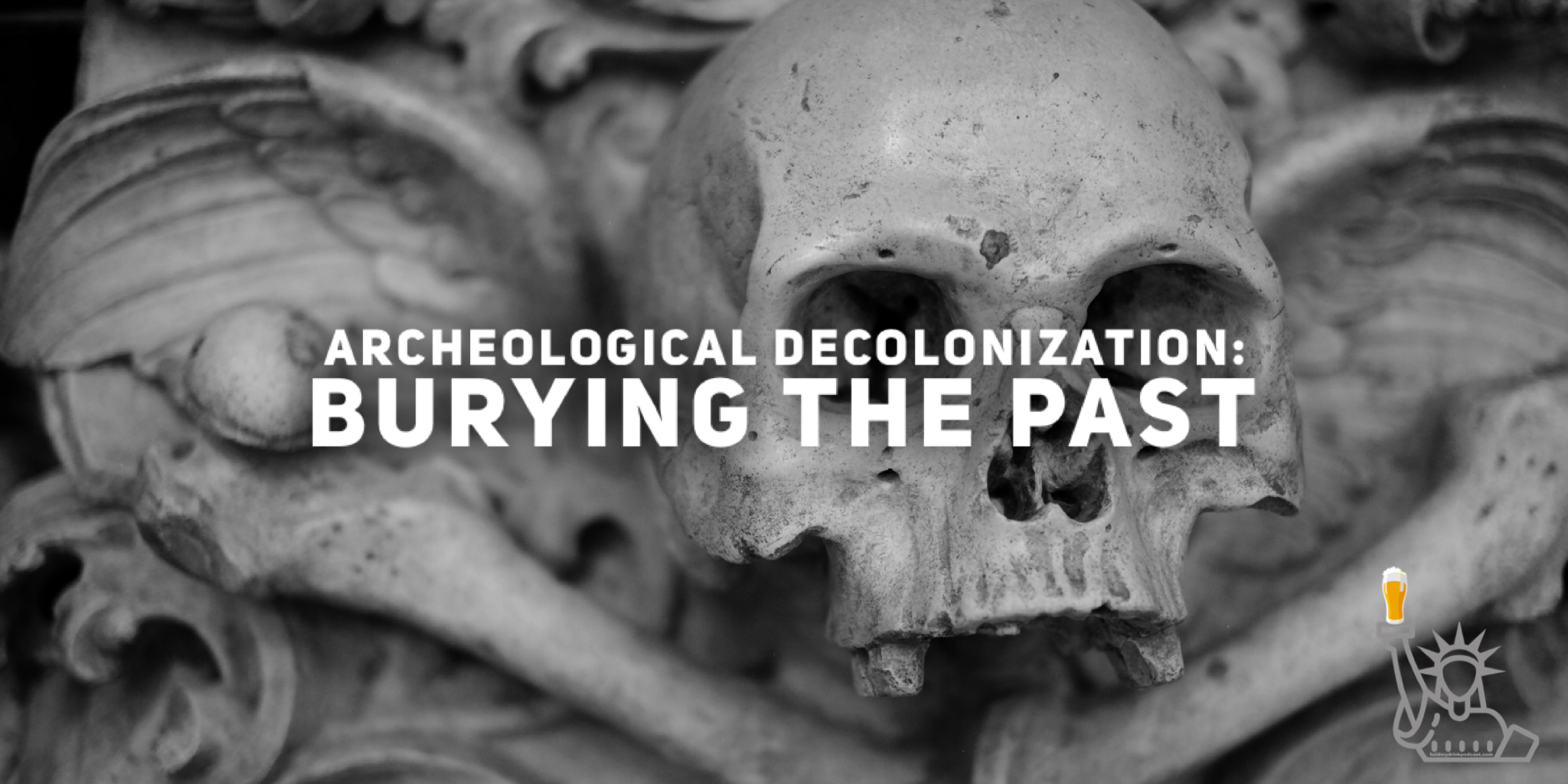
Ep. 73: Archeological Decolonization: Burying the Past | Elizabeth Weiss
Mar 24, 202201:01:28Tap to summarizeWhat difference does a bone make? What if a skeleton is the key to unlock mysteries that lead to medical breakthroughs and scientific advancements? Uncovering ancient civilizations unveil stories of both awe and horror that provide modern society with cautionary tales as well as inspiration for generations to come.There is a current debate that opines that those wary of critical social justice (CSJ) ideologies want to bury history. In truth, there may be a minority who do. A minority who only want to tell stories of the greatness and grit of European settlers. Countless discussions, however, underline that the vast majority of those who caution against many of CSJ’s excesses do not fear the horrors of history, but rather an ideology that frames the past in a narrative that ensures continued victimization and prejudice into the future. In essence, a narrative that only recreates segregation and racism, worthy of the Antebellum South, without making any real strides towards healing or reconciliation.In the case of Dr. Elizabeth Weiss, her concern is with those who literally, not just metaphorically, want to bury the past and erase history. Weiss’ concern over the damage of repatriation has resulted in the cancellation of her work at San Jose State University. In fact, her stance against the reburial of bones has her now locked out as the curator of the University’s collection of remains.Her kerfuffle questions whether these remnants of early ancestors’ remains and artifacts belong to all of humanity or only a select few. Would the fight for repatriation be so bitter if the skeletons Weiss studied turned out to be those of white Christian settlers? Does a bone whisper to her of race and religion, and speak to her of ancestral resentments and grudges?Given the grave injustices that many indigenous groups have faced, there has been a push to “decolonize” just about everything, including bones. Some of this comes from a good place — a respect for different cultures and atonement for past harms. But the resulting hyper-tribalism has created its own injustices and an erasure of the past, that doesn’t bode well for our future.Moreover, in many instances of repatriation claims, there are no distinct ties of bones to a certain group or tribe, indeed they may even be those of early European settlers, or even further back to native tribes long forgotten. After all, without research we just can’t know. However, the mere geographical presence of the remains gives rise to claims of direct ancestry that is often tenuous at best. When in fact, a study of these bones may not only advance our scientific community, but also give us a better understanding of the frequent migration of groups, that better informs our history. Research may also uncover some uncomfortable truths, including the warring and “colonization” within and among native tribes, pre-European settlement, which may call into question some ancestral claims and creation myths.This ideological demonization of colonizer/oppressor/white doesn’t just erase history, it repeats it. The frenzy to decolonize everything from language to an ancient femur reveals the hand of an old power game that ends not with justice, but with continued bitterness and division.We are stuck in a cycle of an either/or mindset where diversity has soured to division. Realizing our common humanity — the good, bad, and ugly — of all our ancestors, and uncovering that knowledge to promote honest history and scientific discovery leads us all to a more enlightened future. A future that is as agnostic to our differences as Weiss’ beloved skeletons.In the Hold my Drink — navigating culture with a chaser of civility, and Counterweight podcast, Episode 73, we speak with Dr. Elizabeth Weiss on the problems with critical social justice ideology in the field of anthropology and archeology. Dr. Weiss, who studies skeletal remains, has been repeatedly cancelled for her views on repatriation and the reburial of bones. Too often claims of cultural insensitivity have resulted, literally, in burying history that may have implications for the future of not just select tribes, but all of humanity. All discussed with a chaser of civility, of course, and a mojito.Hold my Drink welcomes all people with all kinds of beverages to join us as we explore the truths of a chaotic and beautiful world, together.Find us on Apple Podcasts and Spotify, or watch the conversation unfold on YouTube, and follow us on Facebook, Twitter and Instagram.What Elizabeth is Reading:Without Reservation: The making of America’s most powerful Indian tribe and the world’s largest casino, Jeff BenedictA Book Too Risky to Publish: Free Speech and Universities, James R. FlynnStones of Contention, Timothy H. IvesThe Swordfish Hunters: the History and Ecology of an Ancient American Sea People, Bruce BourqueWhat Jen is Reading:Much More Than Bones, Inside Higher Ed, Colleen FlahertyResponding to Claims of Archeological Racism, National Association of Scholars, James W. Springer & Elizabeth WeissMoving Beyond Weiss and Springers Repatriation and Erasing the Past: Indigenous Values, Relationships and Research, International Journal of Cultural Property, Siân Halcrow, Amber Aranui, Stephanie Halmhofer, Annalisa Heppner, Norma Johnson, Kristina Killgrove and Gwen Robbins SchugDr. Elizabeth Weiss completed her B.A. in anthropology from University of California, Santa Cruz in 1996 and finished her M.A. in anthropology from California State University, Sacramento in 1998. She holds a Ph.D. from the University of Arkansas in Environmental Dynamics (an interdisciplinary program involving anthropology and the geosciences), which she completed in 2001. From 2002 to 2004, she was a post-doctoral research associate at the Canadian Museum of Civilization. Weiss started at San José State University in 2004.Weiss is also the author, with attorney James W. Springer, of Repatriation and Erasing the Past (University of Florida Press, 2020), which takes a critical look at repatriation laws and the ideology behind these laws. Her other books include Reading the Bones: Activity, Biology, and Culture (University Press of Florida, 2017) and Paleopathology in Perspective: Bone Health and Disease through Time (Rowman and Littlefield, 2014). Currently, both Repatriation and Erasing the Past and Reading the Bones: Activity, Biology, and Culture are deeply discounted over 50% off and free shipping with the code ARCH22.You can read more from Dr. Weiss at: https://elizabethweiss74.wordpress.com/And follow her on Twitter @eweissunburiedLawsuit: The Pacific Legal Foundation is representing Dr. Weiss’ in her...
Transcribe →
Ep. 72: Ukraine & CSJ in the USA | Brandy Shufutinsky
Mar 17, 202200:58:16Tap to summarizeby Brandy ShufutinskyCritical Social Justice relies on a few factors being accepted as canon without question. First, that CSJ ideology is the only acceptable ideology for self-defined progressives. It requires complete and total fealty by those looking for acceptance by its vanguard. Next, it does not allow scrutiny. Close scrutiny of CSJ exposes it as the paper tiger it is. Lastly, it embraces hypocrisy and double-standards… as long as both suit the CSJ narrative. The reactions from self-defined progressives to the invasion of Ukraine provide examples to all three factors listed above. Adherents to CSJ have been caught off guard with how to respond to the invasion of a sovereign democracy by a nation led by an authoritarian ruler. Specifically, they have no idea how to react to claims of genocide because their limited view does not allow them to differentiate between groups of people that CSJ ideology defines as “White” and “oppressors”. Because of their simplistic manner of grouping people by race and ethnicity, they cannot conceptualize that, even though both Ukrainians and Russians are Slavic, they are different… so different, that one side views the other as racially, culturally, or nationally inferior. Close scrutiny, discussion, and debate about CSJ reveals that it has zero merit when applied to real world experiences. Besides its flawed position on race, CSJ ideology fails to meet the standards expected from progressive ideology. Specifically, the idea that questioning or debate are microaggressions is central to critical social justice – whereas liberalism openly embraces questioning, debate, and discourse. An example of this is the blaming of entities like NATO for Putin’s invasion of Ukraine. CSJ fails to acknowledge individual agency and national sovereignty – ignoring the fact that an independent nation (Ukraine) should be able to choose which international organizations (NATO, EU) it wishes to be a part of. The last example I will discuss is immigration. During the Syrian war CSJ-believing-progressives have shouted slogans like “no person is illegal” and called for open borders to address the refugee crisis. However, now we are hearing those same individuals and groups demonizing countries and people for opening their borders and homes to Ukrainians fleeing foreign invasion. The hypocrisy and double-standards are obvious –where CSJ advocates believe that there should be different standards for different people. Ultimately, what is so problematic about critical social justice ideology is not that it is ‘liberal’ or ‘progressive,’ but that it is fundamentally illiberal and regressive, based on ideas that have been extremely harmful to progress and liberal democratic values. In the Hold my Drink - navigating culture with a chaser of civility, and Counterweight podcast, Episode 72, we speak with Brandy Shufutinsky on the problems with Critical Social Justice in the United States as viewed through the current Ukrainian crisis. When applied to existential crises in the “real world”, CSJ ideology crumbles under the weight. As we debate the “whiteness” of Ukraine, a real catastrophe is underway that cares not for the pedantic elite allegiance to identities. All discussed with a sober chaser of civility, of course.Hold my Drink welcomes all people with all kinds of beverages to join us as we explore the truths of a chaotic and beautiful world, together.Find us on Apple Podcasts and Spotify, or watch the conversation unfold on YouTube, and follow us on Facebook, Twitter and Instagram.What Brandy is Reading:Woke, Inc, Vivek RamaswamyThe Other Wes Moore-One Name: Two Fates, Wes MooreIt’s Time for BDS to Stop Clout Chasing, The Times of Israel Blog, Dmitri ShufutinskyWhat Jen is Reading:Covered with Night, Nicole EustaceThis is a Uniquely Perilous Moment, The Atlantic, David FrenchUkraine Faces West, City Journal, Razib KhanBrandy Shufutinsky is a social worker, writer, researcher, and advocate. She holds a Doctorate in Education from the University of San Francisco in International and Multicultural Education and her MSW from the University of Southern California. Brandy has worked towards advancing the rights of victims and survivors of domestic violence and sexual assault within the military community through practice, education, and research. She is the Director of Education and Community Engagement at the Jewish Institute for Liberal Values. Brandy was a 2021 Scholar-in-Residence at the Institute for the Study of Global Antisemitism & Policy Oxford Summer Institute, where she worked to develop curriculum in Critical Antisemitism Studies. Currently she is working towards developing intercultural and academic opportunities to enhance liberal democratic ideals. Get full access to Truth in Between at truthinbetween.substack.com/subscribe
Transcribe →