
Podcast
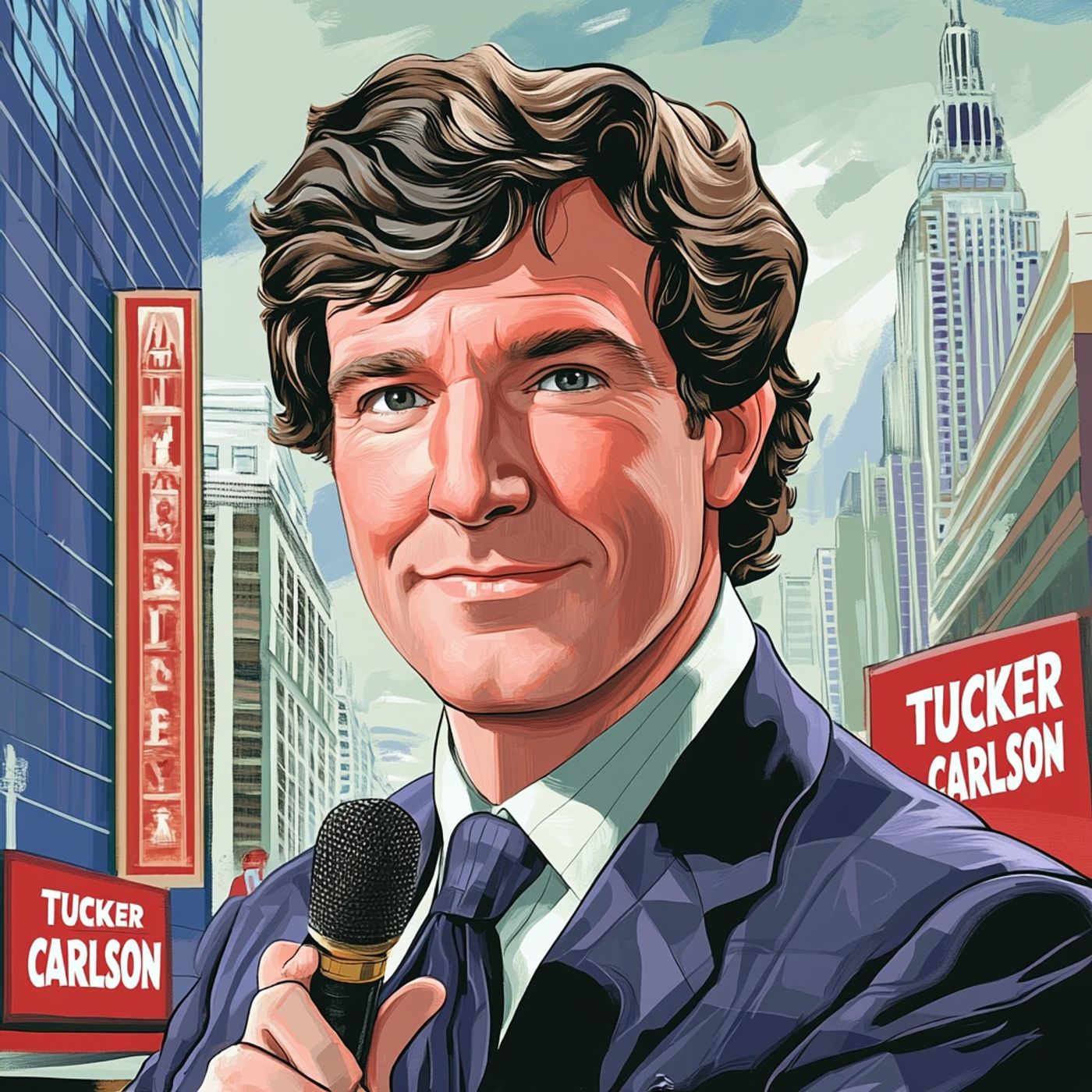
Tucker Carlson - Audio Biography
Hosted by Inception Point AI · EN
Tucker Carlson: A Controversial Figure in the Landscape of American News Tucker Carlson, the name synonymous with provocative political commentary and high ratings, is a complex figure defying easy categorization. He's a conservative broadcaster, a cultural provocateur, and a media icon, wielding the megaphone of the popular "Tucker Carlson Tonight" on Fox News. His rise to stardom has been meteoric, but it's also been riddled with controversy, leaving audiences and critics alike scrambling to understand the man behind the microphone. From Journalism to Cable Giant: Born in San Francisco in 1969, Carlson's early life was steeped in privilege and intellectual curiosity. He attended elite boarding schools and graduated from Trinity College with a history degree. His journalistic career began with fact-checking at the conservative magazine Policy Review, followed by stints at various publications like The Weekly Standard and Esquire. It was his move to television, first on CNN and then MSNBC, that propelled him into the public eye. His outspoken conservative perspectives, delivered with a sardonic wit, garnered both fans and detractors. Breaking the Mold at Fox News: In 2009, Carlson landed at Fox News, initially hosting a daytime talk show. But it was his 2016 primetime slot that launched "Tucker Carlson Tonight" into the stratosphere. The show's format, a blend of monologue, interviews, and pre-recorded segments, resonated with a segment of the American audience hungry for a stark take on the news. Carlson's unapologetically conservative voice, his talent for framing issues in stark binaries, and his willingness to tackle controversial topics fueled the show's popularity. A Master of Controversy: Carlson's success cannot be separated from the controversy that shrouds him. His critics accuse him of spreading misinformation, stoking racial and cultural divisions, and promoting conspiracy theories. They point to his segments questioning climate change, promoting skepticism about the 2020 election, and his sympathy for white nationalist viewpoints. Supporters, on the other hand, see him as a fearless truth-teller, a lone voice challenging the liberal media establishment and defending traditional American values. Beyond the Show: Carlson's influence extends beyond "Tucker Carlson Tonight." He founded and currently serves as the editor-in-chief of The Daily Caller, a conservative news website. He's also a prolific author, with several books to his name. His social media presence is equally impactful, commanding a loyal following and generating viral content. Legacy and Implications: Tucker Carlson's legacy is still being written. His ascendance to the pinnacle of cable news reflects the changing media landscape and the growing prominence of conservative voices. His style has redefined political commentary, blurring the lines between news and opinion. Whether loved or loathed, there's no denying that Tucker Carlson has become a defining figure in con...
62episodes
Episodes
Newest firstAll episodes
SEO-Optimized Headline: "Destiny vs. Tucker Carlson: The Growing Tension in Political Discourse"
Nov 24, 2024Tap to summarize### The Growing Tension Between Destiny and Conservative Commentators Like Tucker CarlsonIn the ever-evolving landscape of political commentary and debate, Destiny, a prominent figure known for his incisive take on politics, social issues, and media, has recently sparked considerable attention. Garnering 9.8K views within just six hours on a recent clip, it's apparent that Destiny's critique of Tucker Carlson and the broader conservative movement has struck a chord with the audience. This engagement underscores a significant and growing divide in the discourse surrounding American politics, especially in the realms of digital and televised media.### The Core of the Controversy: A Clash of IdeologiesAt the heart of this burgeoning tension lies a fundamental clash of ideologies. Destiny, whose real name is Steven Bonnell II, has made a name for himself in the digital space for his readiness to engage in debates that often challenge the status quo of conservative thought. His recent focus on Tucker Carlson, a figure synonymous with right-wing commentary and the face of conservative thought for many Americans, has brought to light the palpable rift within the current political dialogue.Tucker Carlson, hosting his prime-time show on Fox News, commands a considerable audience, wielding significant influence over public opinion and the conservative narrative. His stances on various social and political issues often reflect, and arguably shape, the views of a substantial segment of the American populace. Destiny's critique of Carlson isn't just a personal vendetta but rather a critique of the ideologies Carlson champions, which Destiny argues are indicative of broader issues within current conservative movements.### The Impact of Digital Platforms in Shaping Political DiscourseThe rapid ascent of digital influencers like Destiny in the political arena illustrates a shift in how political discourse is conducted and consumed. Platforms where Destiny thrives offer a more direct, often unfiltered avenue for political engagement and debate, contrasting with the polished, narrative-driven approach of traditional media outlets like Fox News. This divergence in mediums also symbolizes a deeper, more nuanced conflict: the battle for shaping the narrative and influencing public opinion in an age where information is abundant and attention is the ultimate currency.### Moving Forward: The Path Ahead for Political DiscourseThe intense interest in Destiny's critique of Tucker Carlson and, by extension, current conservative thought leaders, signals a critical juncture for political discourse. It's a reminder of the power of platforms, be they digital or traditional, in influencing public opinion and the importance of critical engagement by the audience. As the landscape continues to evolve, the voices like Destiny's play a pivotal role in challenging norms, encouraging debate, and fostering a more informed and engaged populace.As society moves forward, the intersection of politics with digital and traditional media will undoubtedly continue to be a battleground. The question remains, however, about how these debates will shape public opinion and policy. Will the clash of ideologies prompt a deeper understanding and bridge divides, or will it further entrench existing polarizations? Only time, and the continued engagement of voices across the spectrum, will tell.
Transcribe →"Tucker Carlson's Rise: Examining the Intersection of Media Influence and American Politics"
Nov 23, 2024Tap to summarizeIn contemporary American politics, the interplay between media personalities and political figures has garnered substantial attention, further underscored by developments involving former President Donald Trump. Among the names that frequently surface in discussions about this intersection is Tucker Carlson, a prominent media figure known for his influential opinions and conservative commentary.Former President Donald Trump, a figure no stranger to the limelight thanks to his tenure as a reality TV star before his ascension to the presidency, has long understood the significant impact of media, particularly television. This understanding of the media's power has been a critical factor in his political strategy and decision-making process. Trump's background in entertainment has afforded him a unique perspective on the importance of media presence and messaging, an insight that he has carried into his political career, continually emphasizing the role of television personalities in shaping public opinion.Trump's selection process for various positions and endorsements has often appeared to center on individuals' media presence and their ability to resonate with audiences through the small screen. This approach underscores a broader trend in modern politics, where the lines between entertainment and political governance increasingly blur, highlighting the growing influence of media personalities on political processes and public sentiment.Tucker Carlson stands out in this context, not just as a media personality but as a significant figure within the conservative movement. His commentary and viewpoints have consistently attracted attention, making him a central figure in discussions about the influence of conservative media on American politics. The speculation and discussions surrounding his relationship with political figures like Donald Trump further accentuate the evolving dynamics between the media and politics.As politics continue to be heavily influenced by media figures, the understanding and manipulation of media dynamics by politicians like Trump remain pivotal. The strategic selection and endorsement of individuals with strong media presence and influence, exemplified by Carlson, highlight a new era of political strategy that merges entertainment with governance. This trend raises critical questions about the future direction of political discourse and the role that media personalities will play in shaping not only public opinion but policy and political outcomes as well.In conclusion, the relationship between media figures like Tucker Carlson and politicians like Donald Trump underscores a transformative phase in American politics. It reveals the growing power of the media in political realms, demonstrating how the lines between entertainment and political governance continue to blur. As this trend progresses, the impact on political discourse, public perception, and the fundamental operation of democracy remains a topic of significant importance and concern.
Transcribe →