Loading summary
Transcript171 lines
- [00:05]
A
I'm Alan Sepinwall. I'm a TV critic.
- [00:07]
B
I'm Kathryn Van Arendok. I am also a TV critic.
- [00:09]
A
We are friends and neighbors, and we love to talk about TV with each other.
- [00:13]
B
And now we are going to talk about it with you.
- [00:16]
A
That's right. This is the TV is Good podcast. And every week we're gonna look at one current show and one classic show as we try to answer an important question. Is the TV good?
- [00:26]
B
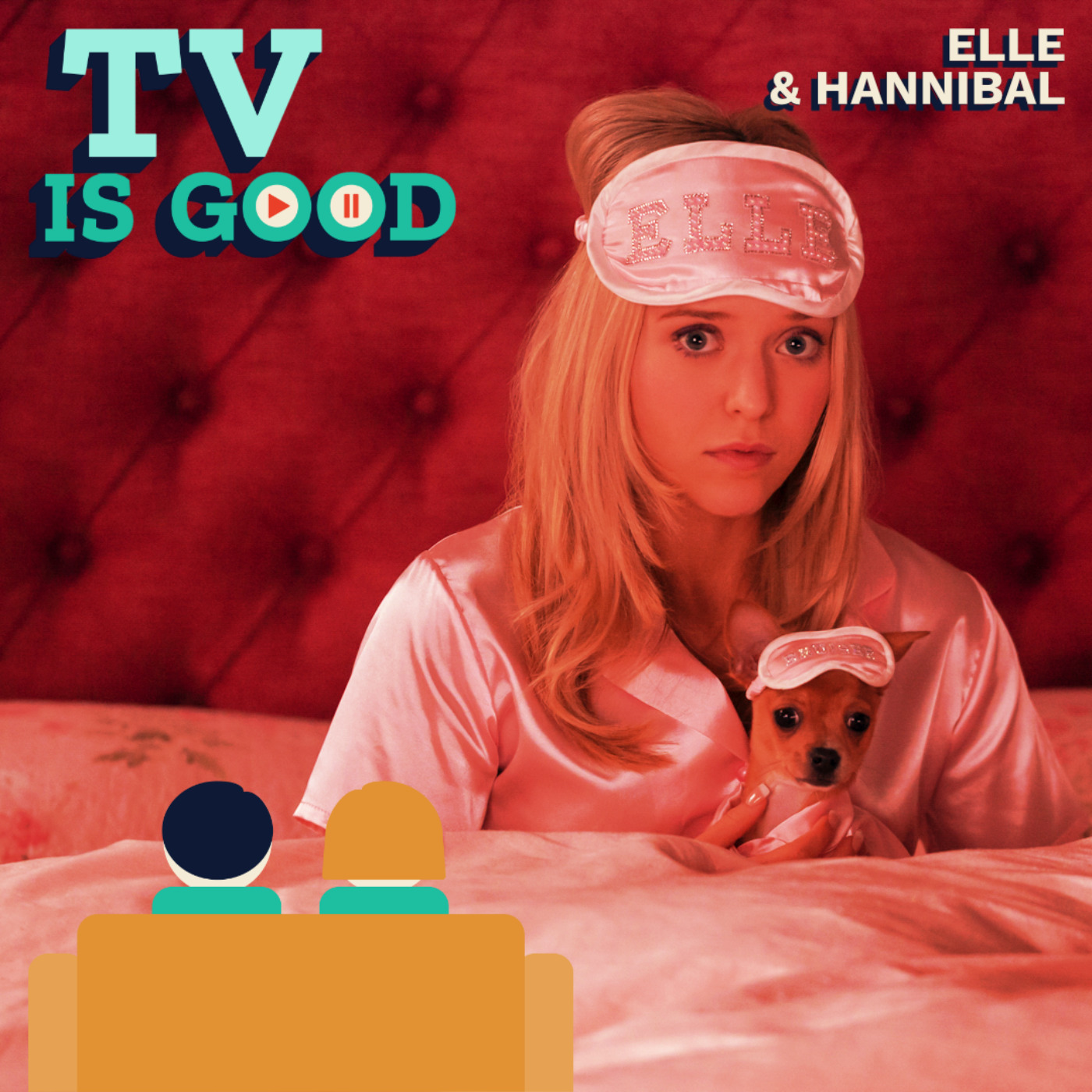
This week, we are going to be talking about Elle, a Legally Blonde prequel show that asks a really important question that lots of people wanted to know the answer to, which is what Elle woods of the film Legally Blonde was doing before the beginning of the film Legally Blonde.
- [00:45]
A
Yes, we are. This week, our specific question is, are prequels good? And so to answer that, we'll be talking about Legally L, we'll be talking about some other things. And we'll also be talking about Hannibal, the Silence of the Lambs prequel that asks who Hannibal Lecter was eating before he met Clarice Starling.
- [01:02]
B
That's right. Let's get to some housekeeping first. It is the first Monday of the month of July, which means that our second Patreon episode is out. You can find it at patreon.com tvisgoodpod and we are talking about the series finale of the Americans. It was a really fun conversation. It did, as I mentioned in last episode, caused me to immediately start the Americans again from the beginning. I am watching it with my husband, who has never seen it before, and I am doing such a good job of not saying anything about anything that's going to happen. I am sitting on my hands. I did not tell them anything about character actress Margot Martindale until she showed up. And the only issue that I'm having is that I can't stop saying poor Martha. And it's not. It's not inaccurate. But he.
- [01:56]
A
He has no idea. He has.
- [01:58]
B
But clearly I'm not saying that, like, are. Are appropriate yet. And so he's just like, oh, you know, she seems.
- [02:06]
A
She.
- [02:07]
B
It's sad, but I'm like,
- [02:10]
A
all right, here's the one thing. And we talk about it in the Patreon. We talk about my wife's reaction to the. The episode involving the suitcase. And it's not the Mad Men episode, the suitcase. It is an Americans episode with a literal suitcase. I want to hear about his reaction when that happens. Please tell me.
- [02:25]
B
Oh, oh, I will. I will. We have been laughing about. It's, you know, one of the things rewatching it has reminded me of is aside from things like heated rivalry, TV has gotten, I think, more sexless recently. And when you go back and you watch the Americans, you're like, they are doing a lot of like the big TV machine explicit sexual content warning at the beginning of every single one of them. And so we were sort of joking about like how many different types of content it warns us is going to be happening in each one of the episodes. And he's like, this is really explicit. And I was like, you don't, you don't even.
- [03:05]
A
Oh, he hasn't even gotten to the. There's one in particular that if you've seen the show, you know. Yeah. Etched in your memory for good or for ill.
- [03:14]
B
So we're having a, having a great, great, great time. And then we were also thinking about the Americans because we are recording this on the same day. We. Because I am taking a week off and I have another week off that's coming up later this summer. We are recording some episodes in batches and we took a break between this one and the last one and I came back and I was like, I've done the most important thing, which is that I have checked up on my online auctions that I am currently trying to track. Which reminded us both though we. We occasionally show up and purchase auction props from TV shows, including from the Americans.
- [03:54]
A
The Americans ended and they did a big auction of all the stuff I bought because I just sort of. I like like ugly old ties. I bought a collection of Arcadi's ties that he wore in the resident Torah. And they're I think like hanging somewhere deep in my closet and I've not yet like found the perfect occasion to wear them. But maybe in one episode of the show I will just. It'll subject will be so important. I will get dressed up and I will wear an arcade tie.
- [04:20]
B
Yes, we. I can't wear any of my American stuff because right now. Because all of it is cold weather stuff, as it so often was in the Americans, but they are all items that were worn by. By Elizabeth Happily. Keri Russell, while being a very tiny person, was often dressed in very oversized things, making it possible for me to wear a gray overcoat that she had, a woolen sweater which I often wear on airplanes because it's very breathable. And a green L.L. bean child sized puffer jacket, puffer vest which again possib possible to wear.
- [05:02]
A
Is it the gray overcoat she wears in the finale?
- [05:04]
B
No, no, no, no.
- [05:06]
A
Okay.
- [05:07]
B
It's a. It's I part of why. I mean, we all. I have so many things to look forward to as I'm watching this show again from the beginning. But, but. But oddly, the spoilers that David has are the objects of clothing that I own. And so the only thing he knows is coming is that at some point there's going to be a hunter green puffer vest from L.L. bean. And so, yeah, I'm looking forward to finding. Finding all my friends again.
- [05:34]
A
What is, like, I don't buy a ton from auctions. What is the best thing you've ever bought from a TV show?
- [05:38]
B
I mean, those are the ones that I use the most. I deeply, deeply regret not. I considered it at the time. I had young kids. I was really trying to be careful with money. And so I did not buy anything from the last Bones auction that I saw. And I'm. I.
- [05:58]
A
What would you have bought? What would.
- [06:00]
B
Oh, they had everything, Alan. They had all of their IDs, they had props, they had glasses, and they had you, you know, like, little boxes of paperwork and pictures, photos that they had printed out for various crime scenes. They had so much that they had lab coats.
- [06:21]
A
As critics, we get a lot of swag, you know, with things. So for instance, I have. To my right, I'm looking at it right now, a replica Jeremy Baramy clock from the Good Place that was not purchased somewhere around here. Yes, of a Dunder Mifflin thing that says Alan Sepenwall, assistant to the regional manager. One of the few things I went out of the way to obtain, though. If you're watching on YouTube, you can see it over my left shoulder. It is the painting that Leslie Knope makes for April Ludgate for Christmas of April as Xena, Warrior Princess, holding the severed heads of the Black Eyed Peas. As she says, it's a Christmas miracle. I've owned this thing a long time. I used to have, like, an office I went to when I worked at, like, Hit Fix and Uprox. I just rented a small office in town so I could be out of the house because my wife made it very clear she does not want this on display anywhere in our home where people can see it. And I understand why. But now that we're in this place and I've got my whole, like, closed office set up, it is there. So every week, if you watch us on YouTube, and if you're watching us on YouTube, please, like, subscribe rate, et cetera, you get to enjoy April Ludgate holding the severed heads of the Black Eyed Peace.
- [07:27]
B
I mean, I can't why would you not want that on display, like, immediately in the entryway to your home?
- [07:33]
A
I mean, the first time I got it, like, my kids were the age that your kids are now. So I think it was more concern of, like, when their friends come over, what are they going to think of this?
- [07:43]
B
I just feel like you gotta. You gotta advertise who you are right up front. If you try to hide the weird, it only surprises them later. But maybe that's.
- [07:52]
A
Yeah, fair enough. If they sneak in and. Oh, my God, I can't even believe I'm sliding over for one second. We did a whole Americans episode.
- [08:00]
B
Yeah.
- [08:01]
A
The other day. And I forgot to mention, and you may have this, too, Russian nesting dolls.
- [08:07]
B
I don't have those. I was not on staff. I was not on the mailing lists at the time.
- [08:12]
A
So you've got, let's see, Elizabeth. Then we open her up. Then you've got Philip Crooked. Then we have Stan, of course.
- [08:22]
B
So good.
- [08:24]
A
Then we have character actress Margo Martindale as Claudia. Then we've got Paige. My hand is covering poor Paige. And then there is no, no, hold on, hold on, hold on. There is a tiny, tiny little Henry. So.
- [08:42]
B
Yeah.
- [08:44]
A
There's so much swag in here. I've got a Jim Brockmire talking bobblehead. I got rid of my Dexter Morgan bobblehead. I gave it to my son who watched Dexter a couple of years ago and, you know, did not finish, but liked the original parts of it enough that he kept the bobblehead.
- [08:59]
B
We'll have to do the game where we just pull out all of the random things that we have from our job stationed around. Currently, all I have is a photo of Nick Vile from the Vulture Reality Masterminds party standing next to a man nobody can identify. And it's gold Bond X Vulture. And I'm going to keep it forever. Anyhow, let's talk about the TV that we are here to talk about.
- [09:21]
A
Yes, L l debuted on Prime Video earlier this month. Created by Laura Cottrell. It's a whole who has written for a number of notable teen shows that I should have had in the notes and didn't. So I will get back to that. It's a prequel to the iconic she wrote for High School, the really good prime video show. Really good show based on Tegan and Sarah's childhood. It's a prequel to the iconic 2001 Reese Witherspoon film Legally Blonde. This one is set in 1995, six years before Elle woods, played here by Lexi Mindtree is a High school junior living the good life in Beverly Hills, where she receives the horrifying news that she and her parents, played by June Diane Rafael and Tom Everett Scott, have to move to Seattle for a few years as if we have each seen three episodes of Elle. Catherine, what did you think?
- [10:15]
B
I. Okay, okay, okay. I want, wanted to come into this with an open mind because you never know. And I, I like June David Raphael and I also like the idea just in general of somebody who looks like Elle woods in Seattle with grunge and flannel all around her. And I like Legally Blonde. Like that, that film has been, it has been such a surprisingly enduring piece of storytelling. And there are all kinds of stuff you can get into about why and what exactly its ideology and politics and sort of message about female empowerment is and bending and snapping. But I, I wanted to come into this with a sense of hopefulness and optimism because why not? Because why not? And I, I, I'm having a hard time understanding why I need to watch more of this show, let me put it that way.
- [11:34]
A
Here's my question. And we're going to talk a lot about prequels in this episode. I don't know that we're going to talk a ton about l, but we're using this as an excuse to talk about the challenges and sometimes the benefits of, of doing a prequel. I do not understand how the movie Legally Blonde can happen.
- [11:50]
B
Yeah.
- [11:51]
A
If this show has happened, it's not one of these things where like, it literally, like someone dies and therefore you can't do the show. It's the plot of the show is identical to the plot of the movie. Elle woods, very nice, but very sheltered rich girl in Beverly Hills, winds up in a different educational environment that forces her to recognize all of her blind spots and to grow up and sort of take all of the things that are great about her and apply her in, apply them in this new context and prove that she is more than the dumb blonde that everybody thinks that she is. So if she learns this lesson as a high school junior, how can she learn the exact same lesson when she is finishing college and going to law school? How is that possible?
- [12:37]
B
Yeah, I mean, you, the only way to watch this prequel is to ignore that Legally Blonde will later exist. And then you get into all these other questions about, like, why would I want to watch this 10 episode version of this thing that exists in this perfect form in like 90 minutes and that I already know and care about, but, but also, like, the characters would have to. There is just no way. You could take a high schooler who is like Elle woods at the age of 16 and then transport her into Seattle in 1995 and then expect her not even from a. Like, does she need to learn about other people? Does she need to examine her own assumptions about the legal profession or, like, her ambitions? Not even the literal text of what Legally Blonde is later gonna do, but just who you are as a teenager and a person. If you have lived in Seattle in 1995 and then you go to college, like you. You are not showing up at college after hanging out with all these grunch kids. You are not showing up at college in your, like, perfect pearl and pink Chihuahua self. Like you are. You would. Only a sociopath would not have been changed by all of the flannel around her. And so it just like, it can't. I don't.
- [14:14]
A
There's. When they did the Obi Wan TV show on Disney plus a few years ago, there was a lot of discussion of, wait, if Princess Leia as a little girl knew Obi Wan? Doesn't this change a whole lot of things about the first Star wars movie? Or, you know, for that matter, like, if C3PO and R2D2 were built by Anakin Luke's dad? Doesn't that complicate things? This is way more than that. This is literally, like, the person in the movie cannot be the person in the movie. If this happens, this has to basically be just a complete alternate reality version of Legally Blonde where similar things happen to her when she's younger and then her entire adult path will be different. And, like, you can do that. You can rewrite history if you want. I used to have this conversation all the time about Better Call Saul and we'll talk about that later. Of, like, wouldn't it be fun if, like, sometime in season two or season three, Saul is reading the newspaper and there's an article, local high school science teacher dies of cancer, and they make it explicit. No, this is. We're starting off in the same place, but it's different. And we're no longer bound by that. They. This could be that. But. But then.
- [15:22]
B
Well, it couldn't. I mean, there's something. So look, we got to talk about Saul now. Yeah, there's something very different about that. Not just the fact that it is Breaking Bad. Like a very. It's a different genre.
- [15:34]
A
Yeah.
- [15:34]
B
But it's the same protagonist.
- [15:36]
A
Yes.
- [15:36]
B
And I think if you are doing that kind of alternate. Look into it. I like alternate universes. I like. We all.
- [15:44]
A
We.
- [15:44]
B
We are for all mankind fans. If essentially this is an alternate history of Legally Blonde where instead of this happening to her later, it happens to her now, fine. But, like, I need there to be enough more space in this fictional world where, like, you are acknowledging then that that is what is happening. Or I need you to find some. Some other POV into, like, if it's instead from the point of view of the high school kid who then sees her coming in and is like, who is this stranger? And we are getting to know her from the outside. I don't think that was necessarily going to work as a TV show, but it would be a more. Like, I would then be more understanding of the experiment of this.
- [16:31]
A
Yeah. And the thing we run into a lot. And you joked about it early on, like, everyone's been wondering what Elle woods was like before. Yeah. Okay, so you get that all the time. Like, everyone's wondered, like, how Han Solo. I keep going back to Star wars because they've done a lot of dumb prequel shit. Like, how did Han Solo get the pair of dice in the Millennium Falcon Bridge? No one has ever asked that. Nobody cares. And yet the Solo movie has all of these things all happening to him in the space of like, three days, including that it's just dumb. Like, if you want to do an alternate version of Elle woods where it's a TV show and everything's longer and it's like ten 45 minute episodes, that's unfortunately what a lot of TV is right now. But I would at least understand that turning it into this prequel again, where she goes on the identical emotional journey, at least based on we did not finish the season because we were not super into it, in part for the reasons we're talking about. But where she's going on what seems like it's going to be the same emotional journey only, you know, in the end, like C3PO at the end of the third prequel, her memory is going to be wiped because otherwise you can't have plot of Legally Blonde. What are we even doing?
- [17:35]
B
Yeah, well, okay, so let's. Let's do our best to just talk a little bit about Elle as a show.
- [17:41]
A
And then before we talk about prequels
- [17:42]
B
more generally, think about the prequels situation. Yes. All right.
- [17:46]
A
Did you like Lexi Mindtree as Elle?
- [17:48]
B
I think she's perfectly fine. I don't think she has the. I mean, so much of what makes Legally Blonde work is that you watch Reese Witherspoon walk onto a screen and you're just like, no one has ever had that level of insane Manic energy. I am terrified of that woman. And I. I completely understand not just the kind of privilege that has put her in this spot, but that there is something deep in her soul that is driving her ability. Like she would. She would dominate the world even if this had not been her opening circumstances. And I don't think Lexi Mindtree is communicating to me quite that same. It's the like Reese Witherspoon in election thing that she does not quite have. I mean, who can do. Do that? That's. This is what you get.
- [18:44]
A
Elle woods is like Tracy Flick with more polish. Like there's. There's this thing inside Rhys or at least there's this thing that Rhys can play really, really well. That is a key part of Elle that goes beyond the like sunny and beautiful and high, you know, flirtatious thing. And I don't know that like either as written or as played by Lexi Mindtree. This version of Elle has that.
- [19:07]
B
No, no, she. This. The. The film opens with her gorgeous birthday. Not the film. The TV show opens with the. The birthday party, which is also like the film.
- [19:18]
A
It's a shot for shot pretty much of the opening of the movie.
- [19:21]
B
Right. She's walking out into the pool and I also don't know if. If it was my screen. Like I hate to blame or screeners. I. It's tricky to know color wise whether I am actually seeing anything as intended, but it does not look as saturated as it should. I was feeling like it was. It is a. Even in that opening. Like the be. It should look like wizard of Oz it. But reverse. You should be going from Oz into just, you know, the darkest, rainiest clouds that you've ever seen. And instead everything feels kind of washed out anyway. She. Elle, is coming out into this. This birthday party. And when that happens in Legally Blonde, you get the sense that all of this happened in her brain also because she's just a little bit older. It's like this is who she is as a person and she has shaped the entire world to match that. Whereas because Lexi Mindtree doesn't have quite that same again, potentially sociopathic like thing that she should have. And because she's younger, it's like her parents did this, her family did this. She is just a part of this system. You don't believe that she's the leader of this thing.
- [20:43]
A
Yeah. And they're trying. I mean, the parents who you see briefly in the movie are just completely shallow and superficial and can fathom why she would want to go to law school. And here in the movie. They're trying. Because they've cast, like, real actors here
- [20:54]
B
in the TV show.
- [20:54]
A
Yes. For the TV show, they've cast real actors who they want to, like, give material to.
- [20:59]
B
Because it's a TV show.
- [20:59]
A
Yes. They've given them more depth, more empathy. Like, there's a whole subplot about the mom really struggling in Seattle because she just sort of doesn't have a purpose, and El is trying to go do her own thing, and they're deeper, but I don't. I just don't. I don't know that it's working. Like, it's very much just trying to be like, what if you had a CW drama from the 2000s with a character who is very much like Elle woods that, you know, someone created the show, really liked Legally Blonde. What if we took a character like that and we moved her from Beverly Hills to Seattle? I think it could work. I think that there's some interesting ancillary characters here. There's a love triangle with two different cute guys of two very different, you know, persuasions. She. She makes a friend with someone who's really into alternative music and is queer and sort of, you know, you're seeing her get used to that. You have some thoughts on the general queerness of the show set in Seattle of 1995, please.
- [21:54]
B
Yes. This is a bigger problem that I have, which is with the 1995 elements of this show more broadly. I was in fifth grade in 1995, and I. I then watched through middle and high school and as plays as, like, the world of America of, like, mainstream America said, is it okay if Ellen comes out? Is this not the most alarming and sort of groundbreaking thing that anyone has ever happened? James Burroughs, who directed Will and Grace, as we talked about, that doesn't happen until two years after this. And I think there is a. A really 2026 inflected approach to gender and sexuality in Elle in 1995 that I very much understand. Because you want your audience, who exists right now to feel comfortable with the politics of your show that is happening 30 years in the past. Yeah, but chimes discordantly for me against the social realities of just being a high schooler. In 1995, like, gay straight alliances were barely a thing. Now, yes, this is Seattle and this is Los Angeles. So this is not southwest Michigan where I was growing up. But. But it. It is part of the show's broader approach to the era, which is exactly about as much 1995 as is palatable and marketable. But for people watching in 2026. The other big moment like that for me was when Elle is trying to fit in. In one of the, I think episode three, she is wearing her cute little Elle pink shirt and. And a. Or a cute little Elle pink skirt and a Nirvana T shirt. And it seems like that Nirvana T shirt is designed to help her fit in in Seattle. Except if you have a tween or teen in 2026, what you know is keep Nirvana T shirts in stock. Half of the middle school has and wears a new Nirvana T shirt. And so it is this carefully curated sort of plausible thing, rather than actually feeling realistically grounded in what this moment in culture was like.
- [24:22]
A
Yeah, it's. You get this a lot of times with period pieces to go even older school, like Happy Days, there's a certain point where they burn the diner down and rebuild it to look more contemporary because clearly at a certain point the network was like, nobody cares about the 1950s stuff anymore. Let's just treat it as present day. Except that Fonzie wears a leather jacket. And so like, it's. It's a struggle. And I agree with you, it definitely feels like 1995 cosplay. And then you also run into this weird thing that Elle in 1995 in Beverly Hills basically is Cher Horowitz. And I very long had this theory that Reese Witherspoon stole Alicia Silverstone's career out from under her. Like, Rhys just shows up and suddenly all of the parts that Elisa, Alicia could have gotten are just going to her because Rhys is a little bit better at it than her. And so that just was created this weird cognitive dissonance that will probably not matter to like the target younger audience of the show. But, you know.
- [25:20]
B
Well, but I do think that is an interesting question. I was watching this, these screeners when my 12 year old came home from school and she walked in and as I always do to run the mental math of like, should I turn this off or do I keep it playing?
- [25:38]
A
And.
- [25:39]
B
And then it was like, who is this for? Like, is this show actually for her or is it for me, Millennial, who feels nostalgia for this movie? I. I am actually not. I'm not totally sure. And I think because the show is not necessarily sure of what that answer is, it is doing a midway job at trying to serve both of those audiences and not really crushing it with either one.
- [26:08]
A
Yeah, I mean, you've James Van Der Beek and one of, I guess his final performances has a small role.
- [26:13]
B
Yeah, that was really hard to watch.
- [26:14]
A
Yeah, we've Had a lot of that lately. We talked in the last episode about how I saw Rob Reiner in an episode of Life Larry and the Pursuit of Unhappiness. It's just I watch both of those screeners on the same day and it's like you watch them and then you get to the title tribute, title card at the end and it's. But like Van Der Beek is clearly there to appeal to the same audience that like watched Legally Blonde in theaters. Yeah, and it's. Yeah, it's just complicated and.
- [26:42]
B
And a lot of the way it treats 1995 is through this kind of reference Y stuff. Just like chucking in names of brands and TV commercials. And you know, a 12 year old is going to have no idea who those are for or what those even mean, but they will recognize the Nirvana T shirts. There is a fantasy of a tea of like a high school TV show like this that I also wish Elle could be where it is just a 90s it's freaks and Geeks. Like what was it like to be in high school without a cell phone? And I think there's probably an audience for that. But it is again this situation where if it were farther away from its source material or indeed didn't have to have anything to do with its source material, it could actually explore those ideas and feel more confidently itself as it was doing all of that stuff. And instead it's just perpetually coming. It's like, where did she get her dog from? Why does she have the dog?
- [27:50]
A
Oh yeah, I forget. She gets Bruiser and in this.
- [27:54]
B
Yes. And then Bruiser has to be a character because Bruise is a big character in the movie. And yeah, it, you know, it's okay.
- [28:01]
A
I mean, it's. We run into the whole IP problem that is just a plague on all popular culture right now. Which is why you get things like solo is everyone is afraid to do something that's an original idea. Even though when things are original, you know, like Pluribus, they can be. If they're done really well, they can be even better than the. The IP stuff. And so like, if. If Laura Kittrell wanted to like go and pitch, I'm going to do a period show again about an original character who lives in Beverly Hills and has to move to Grungiera Seattle. Would Amazon have bought that?
- [28:33]
B
Probably.
- [28:34]
A
No. No, probably not. But because they can sell it as here's young Elle Woods. You do that even though that creates many more problems than it solves.
- [28:42]
B
Yeah, it's a short term benefit for For a long term flop is really how that.
- [28:49]
A
And then also we just run into the problem of if everything is IP, then who's creating the stuff that will be the IP of 15 years from now.
- [28:57]
B
But that's okay because we do have Widow's Bay.
- [28:59]
A
We do. No, there's still original things. There are some good original things out there, and we like them. But now we really mainly talked about Elle because we didn't think it was that great in order to talk about the prequel problem. So we're gonna take a quick break and let's get into. Prequels are difficult. Right? Do we agree with that?
- [29:23]
B
Really hard. Really hard.
- [29:26]
A
Okay. Because while we. I think we both agree that, like, what. What the story is about is maybe not as important as, like, seeing the characters go through it. If you know the end point going in, it creates a lot of problems. And even something like Better Call Saul, which, you know, you can see over my shoulder, my Better Call Saul book, still available wherever books are sold. Plug, plug, plug. That's a show that's great and way better than it had any business being. And at times I liked it more than Breaking Bad, but it is also very hemmed in by the events of Breaking Bad, particularly in, like, the drug cartel stuff, because, you know what's gonna happen, like, to Mike, you know what's gonna happen to Gus. Certain people just cannot die. And so they have this weird plot armor and it's a lot of, like, hemming and hawing and, you know, here's. Here's another Salamanca we have to deal with before we can deal with Tuko, that kind of things. And Lalo is an incredible character, but it's. There's a lot of strain there.
- [30:23]
B
Yeah.
- [30:24]
A
In that. And if a show is not executed at as high a level as a Better Call Saul, then it can be really enervating really, really quickly. Right.
- [30:33]
B
Yeah. Yeah. And I want to say that. I mean, we'll talk about this too as we are getting into sort of what. How. How it is possible that some prequels are. Are incredibly great because there are examples of them. But it is the kind of constraint tv, often art exists. Really great art exists because of constraints, because there are these weird boxes that people have to work inside. And the. The rules about what you cannot break, what you cannot escape are the things that force you to come up with the most interesting ideas for how to work around them. That's why the TV episode exists as a form, because you had to slot things into a programming grid that was an hour or a Half hour long. And so suddenly, you have only 42 minutes to work with in commercials. And so you are killing all your darlings and you are figuring out how to actually make. How to compress storytelling into these beautiful, concise, tiny storytelling, episodic bits. Constraints, like when actors pass away or when it turns out that your main character, who you are now stuck with contractually sucks, and it turns out you also. You actually like everyone else in your show better. Constraints, like, I'm not thinking of Northern Exposure. Definitely not thinking of that. I'm never, ever thinking about Northern Exposure. All the time. I. You know, show constraints, like your child actors got too old too fast. All of these weird sort of physical things or to do with economics, the realities of production, they can be these remarkable opportunities for artistic invention that would never have happened without those constraints being put on them. Prequels are like that, too. The problem, one of the many problems, is that the. The prequel is not seen as a constraint, or at least it's not like it is marketed in some. Instead of being a bug, it's a feature. And the featureness of it is then not. You. You cannot try to work around it if you're doing a Star wars show. I mean, except for one specific example, which we cannot. Yes, you cannot try to say, like, we have to be a Legally Blonde prequel, but, like, clearly we're not actually just going to do that, because that would be. We have to figure out some other kind of show to be. Instead, you are supposed to pretend that this constraint is the best thing about your project. And that, I think, is often where prequels go awry.
- [33:34]
A
So you've got something like Smallville, where it's like, okay, there is a history in the comic books of Superman having powers as a teen, sometimes as Superboy, sometimes not.
- [33:45]
B
And the comics are a little easier because there's so many canonical threads already.
- [33:50]
A
So let's. Let's do Teenage Clark Kent. But they decide right away. They come up with this catchphrase, no tights, no flights. And they declare, we will not see him in costume as Superman flying until the very end of the show. The show runs 10 years. Tom Welling may be older than Christopher Reeve was the first time Christopher Reeve plays Superman, but at least close to it. And, like, the show just keeps going. And they're like, well, we said no tights, no flights. And so then they have to do things like, he has a different superheroic identity. He's known as the Blur because literally, the people of Metropolis can't see him clearly. Because then he's not super. And it's just, again, like I said, with what are we even doing here? You know, Or Gotham. That's another one where it's like you have all of these arch villains of Batman rising up, but Bruce Wayne is still a little boy and then an early teenager. And you can't have him actually be, you know, you can't see Batman be going through growing pains until the very end of it. And it's just, it's frustrating. And then you get. You get something like Strange New Worlds, which is interesting. And we're going to talk about Bryan Fuller in a little bit when we get to Hannibal. But Star Trek Discovery, when Star Trek begins its streaming era, they hire Brian Fuller, who's a really creative guy, and they say, what would you want to do with Star Trek? And his idea was Star Trek anthology series where every season is set in a different era of like, the future, different things going on in Starfleet. And he thought, well, wouldn't it be fun if the very first season was set a couple of years before the original show? And so you're seeing, like, someone who knew Spock. But then we will jump ahead and the next one will be set around next generation times or whatever. And then, as always happens, Bryan Fuller, you know, quits the show and the people who take over decide, you know what, nobody wants an anthology. We will just go with his original idea and the entire show will take place before the original series. And then you're stuck in this really, like, narrow set of circumstances and strange new worlds, has kind of become slightly an alternate reality version of it where certain things, they just do no longer match up with the show. And you have to go with it, but it's. It's a headache. You don't need to do it.
- [35:55]
B
Yeah, yeah. I mean, I also tend to think about stuff like the Newsroom, which is not a prequel, but because it takes place.
- [36:03]
A
No, the Newsroom is a prequel to America.
- [36:05]
B
That's exactly what I'm saying. Like, it is sort of forced up against the same kinds of constraints where it's like, we all already know what happened. Like, how will we then watch this team of people? Like, what I'd really like to know instead of the next thing in the news story is how these people covered that news story that I. That I followed two years ago. And there are examples of TV shows that figure out ways to make that, in fact, the most compelling thing that you've ever seen.
- [36:38]
A
Yeah.
- [36:41]
B
What are the qualities that make a prequel work for you?
- [36:44]
A
Okay. You need to have something to say. It can't just be about ip. So again, to use Better Call Saul, you know, Saul Goodman, pre Saul was something of a blank slate. They come up with essentially a new character, Jimmy McGill, and it's we're going to show how this guy becomes that guy. And there's a story there. And obviously you've got Bob Odenkirk back. And they start finding other things. They find Kim Wexler, you know, they find Rhea Seehorn doing all the things she does. And so that makes it ultimately worthwhile, whereas it very easily could just be Breaking Bad fan service. And it evolved away from that almost immediately. Bates Motel, which was an uneven show, flawed in many ways. It's like, well, what is the story of teenage Norman Bates, which has been told before? There's at least one Psycho sequel, I think maybe straight to video with Henry Thomas as teenage Norman Bates. So you've seen it, so that's been done. But it's really Norma Bates is dead, his mom at the time of Psycho. What is she like? And specifically how did she shape him into becoming the person that he is? And so you hire, you know, Vera Farmiga as Norma and Freddy Highmore as Norman, and you really dig into that. And then you fill a lot of time with extraneous other plots that don't matter, but eventually you get to the real messed up psychological relationship with them that leads to what happened in Psycho. And by the time it ended, that felt really worthwhile. I wish it wasn't as long and I wish there weren't as many side quests, but they had something to say there. A lot of these things don't. Why is Andor a good prequel?
- [38:15]
B
Catherine Andor is a good prequel because is made by Tony Gilroy and it just, even without having any other relationship to any Star wars thing, is one of the best TV shows of the 21st century thus far. Yes, it has that. This is about something like the point of this prequel is to explore a specific idea that happens to align with where these characters would need to be in order to end up with the canon of the later Star wars stuff. But what I really care about is the idea. What I really care about is. And it is so helpful if the prequel can do this. What I really care about is like, yes, the main body of the text cares about all of these other themes. It has all this big world that it's created. It has these main characters. I want to tell a story from before then, but my story because. Because Andor is really A prequel of a prequel. Like, it's Rogue One. And then Andor, I'm gonna find a minor character from the main mothership text, then becomes more of a protagonist in this other prequel. But, like, I'm gonna find this corner of this earlier space that has a different tone, that has a different sort of approach to, in the case of Andor and Star wars, the political reality of the world that they're exploring. It is not trying to do. It is trying to do exactly the opposite of L. Where El is like, do you remember Legally Blonde? I hope so. I'm going to show it to you again. And Andor is like, do you remember Star Wars? Great. Set it aside for a moment. Here are these people in this place, in this time. And yes, there is a droid, and yes, there is that particular alien. But what you really need to care about is just this one guy who you do not even know that well. And you get to be very attached to this thing, not because you care about this later thing, but because you care about this thing right now.
- [40:27]
A
And I would almost argue that, like, Andor himself was the least interesting part of Andor, and that's the thing I bumped up against in the first few episodes because they're very heavy on him. And once it starts, like, expanding and you're meeting Luthen and all of the other people involved in the rebellion, and you realize, like, this is kind of a show about how Andor gets to the part of Rogue One, but it's really about how does the rebellion get built. What is, like, what is the dirty work that is necessary to get to the moment where Luke and Han Solo and Chewbacca are standing on a stage being cheered on by all the rebel pilots, all the compromises you have to make, all the ways in which you basically have to turn yourself into an enemy. That's fascinating. And Gilroy and everybody else really dug into that beautifully, to the point where when you get late in season two and they remember, oh, yeah, we have to get Lycassian to the start of Rogue One, I was like, okay, I don't really care about this, but sure, do it. But in between, it is spectacular because, again, Gilroy looked at this beloved franchise, and rather than saying, here, I will just give you more of that, it's, well, if this is happening in this franchise, then what else would be necessary to be happening in this franchise? And would that be interesting? And it was.
- [41:43]
B
Yeah. And not just what else would be happening in this franchise to get to that later place, but, like, what if there are very different answers to the questions that Star wars provides? Star wars is like, how do you have a rebellion? You have this hero guide. He's perfect, and he is a Christ figure, and he is gonna. He's gonna be the greatest wamp rat shooting guy anyone's ever seen, and he will be this beacon. And Andor is like, yeah, that guy does need to exist. But actually, the answer to how you get to rebellion is all of this other much darker, much messier, much more morally compromised stuff. And the idea that you could have two things be true at the same time feels like some of the most potent prequel that you have to figure out how to work out. Even if the plots are. Are. They don't match up, if they are emotionally true. If you believe that. That Jimmy McGill can somehow be emotionally the same guy that he is in Better Call Saul and in Breaking Bad, they both feel correct to you. Even if you, like, don't quite the exact points, then the prequel works. And if instead, it's just like an arithmetic project where you're adding very carefully so that everything comes out round numbers in the end, that's not storytelling.
- [43:09]
A
Yeah, nobody. Nobody needs that. Before we get to Hannibal, are there any other prequels we want to talk about here?
- [43:17]
B
Okay, real fast. Yellowstone prequels work because they are these kind of disconnected things. And Yellowstone is actually not about plot at all. It has plot in it, but it is a very scattershot plotting that nothing really actually matters for more than a couple episodes at a time. So the prequels are really just vibes, Western vibes, which is how that. How those work. Lord of the Rings is all based on lore, and all of those things do matter a great deal. And that, to me, is part of why Rings of Power feels as lead in as it is, because they're like, hey, hey, do you know who this guy is? I'm not going to tell you what his name is, but do you know what his name is? I bet you do know what his name is. And I'm like, I don't fucking know what his name is. Or maybe I do, but I don't. I don't care. So that. That is a little bit of that element. I'm trying to think, was there another one? Well, House of the Dragon, of course, is.
- [44:11]
A
Yeah. Which we talked about at length, a few episodes. And that, again, is sort of hemmed in by a couple things. One, we know where it's going. But two, which is less. They've just picked, like, the least interesting part of Game of Thrones to expand out into, like, remember those people you kind of liked? What if they were the whole show? So, all right, let's talk about Hannibal, because this is a really improbable one. This had no, no business being any good at all. And so before we talk about Hannibal, we have to talk about, like, the history of Hannibal Lecter as a character. Hannibal Lecter is introduced in a novel by Thomas Harris called Red Dragon. He is not even the main villain of Red Dragon. Red Dragon is about Will Graham, an FBI profiler, you know, of serial killers. He has the gift of like, he can catch serial killers because he can think like them. And this was basically. Harris invented this, this idea in fiction, even though to a degree it had already existed as, as we've seen dramatized in the short lived Netflix show Mindhunter. But pop culture wise, this was the thing. Will Graham is chasing a killer, Francis Dollarhyde, whom they call the Tooth Fairy, he calls himself the Red Dragon, etc. He goes to see Hannibal Lecter in the mental hospital to get advice on how to deal with this. Then Harris writes a second book, Silence of the Lambs, where there's now a new FBI agent, Clarice Starling. She's a trainee. She goes to Lecter to get help dealing with another serial killer, Buffalo Bill. Red Dragon is adapted into a movie by Michael Mann from 85 or 86 called Manhunter. Really good, really cool. Mostly faithful, kind of not with William Peterson as Graham and Brian Cox as Lecter and the late Tom Noonan as the Tooth Fairy. Who's one of the most scary motherfuckers that's ever been put on screen.
- [45:53]
B
Nope, don't like that.
- [45:54]
A
Okay, not. Not ahead at the time, sort of was rediscovered later in part because Jonathan Demme adapts Silence of the Lambs into like a juggernaut. Massive hit, dominates the Oscars. Like, in one of the few movies to sweep all five top Oscar categories, an incredible, incredible. Anthony Hopkins plays Lecter. He's in a movie for 20 minutes, wins the Oscar for best actor. And like anyone who whines, oh, it's a supporting role, no, you're wrong. Like, he dominates that movie as much as Jodie Foster does as Clarice, even though he's in it much less so. This is great. And this starts a land rush of serial killer profile shows. And I just watched so many of these, especially early on in my career as a TV critic. They were just everywhere. There was a British show that was on Masterpiece mystery called Touching Evil with Robson Green and It's like. And it was a good show. I liked it. But it's very much like, you start watching enough of these and you really get tired of it.
- [46:52]
B
I know there's the Mentalist. That was the big sort of contemporary one to Hannibal.
- [46:56]
A
Simon Baker. So, like, at a certain point, I just grew really tired of it. I did not see the Hannibal sequel movie where Julianne Moore stepped in for Jodie Foster, because Jodie Foster was understandably, like, why do we need to keep doing this? Then Brett Ratner, totally normal, great guy, does a new version of Red Dragon, this time with Hopkins as Lecter. And then there's a Hannibal Rising prequel movie. And I. I've never seen that or Red Dragon. And it's just like, it's so tired. It's so played out. We don't need this anymore. Early 2000 and tens, NBC and Gaumont International production company start talking about doing. Hey, we. We've acquired the rights to Red Dragon because Harris sold the rights to the MO to the two books separately, which means you cannot have Clarice Starling in a story with Will Graham and vice versa. It's very complicated. They start going around, and someone at NBC says, hey, Bryan Fuller's really good at this kind of thing. And Fuller had a reputation at the time as a really talented and creative guy who basically, like, quit or got fired from every job he had, or his shows got canceled quickly. But his main thing was he was one of the top writers in the first season of Heroes, and arguably, like, was the most important contributor to the success of that show. They put Fuller in charge of this, and he decides, I'm going to begin the show before the events of Red Dragon. I'm going to show how Will and Hannibal meet each other, and I'm also going to approach it entirely differently. He gives David Lynch a huge credit as inspiration. And basically the version of the show that he and everybody else makes is, like, it's science fiction. It's Lecter. And the other serial killers on the show create these impossible tableaus. You have the killers turn victims into a cello, a mushroom garden.
- [48:48]
B
The one that looks like an eye.
- [48:51]
A
Yes. No, no. Where it's like dozens of bodies at the bottom of a grain silo all, like, put together to look like a human eye. There's a human totem pole, a person turn. Their skull is made into a beehive. It's all this stuff they hire Mads Mikkelsen, Danish actor, relatively unknown in America. You know, also in Rogue One, by the way. To play Lecter, A completely different physical type from either Hopkins or Brian Cox. Completely different vibe. They put him in these amazing plaid suits and, you know, bespoke ties and everything. And they hire Jose Frickin Andreas to design Lecter's food to make this. This cannibal food look like the most delicious meal you could possibly have. And they really lean into the, like, homoeroticism of the relationship between Will and Hannibal. And they hire Hugh Dancy to play Will. They hire Laurence Fishburne to play Will's boss, Jack Crawford, who's played in the movies by Dennis Farina, and then Scott Glenn. And it's a miracle.
- [49:53]
B
It's a miracle. It's a miracle. Okay, so a couple of things. One, I do think that there is something worth just noting about the whole Bryan Fuller project, because Hannibal is. Is very different, but also not that different from a lot of the Bryan Fuller sensibility that he has been sort of dealing with on television before. Bryan Fuller, Wonder Falls, a very beloved cult, canceled early. Kind of a show which was about a woman who can speak to in, like, death and people who have died.
- [50:31]
A
No, no, no, no, no, no, no. That's a different one.
- [50:35]
B
No, that's pushing me.
- [50:35]
A
Wonderfall is Inanimate objects talking.
- [50:38]
B
Oh, inanimate objects.
- [50:38]
A
There was another show, Dead Like Me.
- [50:40]
B
Dead Like Me. Yes, yes, yes.
- [50:42]
A
Which I think Dead Like Me was also a Fuller show, I think.
- [50:44]
B
Yes, it was also a Fuller show. Wonderfalls is the one that she could talk to Inan. Objects. Pushing Daisies is another. This is the Lee Pace origin story. Shout out to Lee Pace. Pushing Daisies was one where he is actually kind of also a weird match with, like, procedural tv. That show was canceled after one season.
- [51:03]
A
Two seasons. It survived because of the writers strike.
- [51:05]
B
Yes, there were, like, a weird. But this other season was short, the
- [51:09]
A
first season short because the writers strike, and then they brought it back mainly because they just couldn't make pilots that year. And then it canceled quickly.
- [51:15]
B
Yes, yes. And in every one of these projects, it's. It's like this show could be normal. And it's. And it has things like where you could say to someone the. The log line of the show, and they'd be like, oh, that sounds kind of normal. And. And then you actually sit down and you watch them, and you're like, somebody who's kind of a freak was here. And Bryan Fuller tends to also then have fraught creative relationships, as you mentioned. He leaves some of these. Sometimes it's because the shows just don't go Sometimes it's because he leaves. American Gods, adapted from a book by Neil Gaiman, another extremely normal and cool person. And that is they are in a creative partnership that Fuller then leaves that show. I should mention also that in 2023 there was a report, a sexual harassment suit against Fuller that was filed that I as my light Googling does not suggest what the resolution of that was. It was for his show, Queer for Fear. Harassment and I think bullying and potentially sexual assault was also part of that. It is difficult to encounter any Brian Fuller, either his the work or even his online Persona. He does this thing on Instagram where he's just writing in all caps all the time. And it. See, like if somebody was. Came to me and was like, you know who's kind of exhausting to work with is Bryan Fuller, I would be like, that sounds right. But I. But I. It's hard. I don't have any more.
- [52:56]
A
We have to acknowledge that unfortunately, in the course of doing this and revisiting classic shows, a lot of the time, unfortunately some questionable people are going to be involved.
- [53:06]
B
And I don't know. I truly, I have no idea what the situation is with working with Bryan Fuller. Hey, if anyone wants to just DM me and be like, you know who I worked with, I would love to hear that story. It is always interesting to me when the work that somebody produces also seems to be reflecting something about who this person is that says, like, I think it would be a good idea to put a bunch of human bodies in a gray and silo so that they look like an eye. And you cannot deny how incredibly effective it is. In this show. There is something naked. And I mean often literally naked. There's a lot of nudity on the show. There's no way to watch Hannibal. I remember watching it at the time and being like, this is on NBC, like regular NBC. How did this happen?
- [54:06]
A
It's because. It's because Gomont basically paid for almost everything about the show. So as far as NBC was concerned, this was acquired programming. And I get standards and practices, I guess just threw up their heads and says, this is not our problem. Do whatever. Air it on like Friday or Saturday night at 10. No one's gonna notice.
- [54:25]
B
It's still so fucking crazy to look at this show and think of it with a little peacock bug on the corner of it, which it had. But what makes. It's hard to look at something like Silence of the Lambs and say, I can get freakier than this. But that is where the Juice is.
- [54:50]
A
That's the only way to do it.
- [54:52]
B
That's the only way to do it.
- [54:53]
A
We've just had all of those straightforward versions of this. Sometimes involving the actual Thomas Harris characters, sometimes just ripping them off. And it was dead. There was no life left in it. And so he does this thing where it's so much stranger that you like you in some ways you can't take it seriously. Like it gives you license to just step back and say, wow. Like there's a character gets like her. Her body is sliced up onto gigantic microscope slides and you're like, on the one hand that's horrific. On the other hand it is so out there that you just look at and go, cool.
- [55:31]
B
Yes. It's very, very, very beautiful. I have, as we have talked about before and we'll talk about again. I struggle with horror. And when it is aestheticized to this extent, I am able to access it in a way that is very difficult for me when it's just jump scares and more quotidian looking gore. I don't react very well to grittiness in. In horror contexts.
- [55:59]
A
Also they also show also makes an interesting choice which is for the most part the victims on the show are mad and sort of it's a. And we'll get to that in a second. But it's a big part of the genre that like and probably because that's the nature of crime is because the world sucks. Is women are the victims in these kinds of stories. And so it has that added weight to it that's mostly not happening here.
- [56:23]
B
So.
- [56:23]
A
And that that changes the way we look at it. I feel.
- [56:27]
B
Yes. In there is there are a lot of conversations happening about gay romance in the context of heated rivalry conversations about why straight women like to consume gay romance. And one of those conversations is always like you don't have the same heterosexual dynamics that so often are to do with power and fear. Instead you just have two people who don't have any of that gendered baggage. And Hannibal, because it does all of the gay subtext does eventually become text. And. And as we just did like the male bodies. You can access this thing without or with a completely different framework for what you are watching. And I don't have a lot of that. Yes, violence against women trigger as I when I watch this show.
- [57:20]
A
So as I've talked about several times in recent episodes. I used to do this podcast too long didn't watch. We made two seasons, only one was released. One of the episodes we did for the second season was Natasha Lyon and I watched the very first and very last episode of Hannibal together. And, like, I thought, oh, she's gonna love this. Like, this is freaky shit. You know, it. It felt right up her alley. And instead she watched the first episode and was really cold to it. And then we watched the last episode and she did not like it at all. And I'm watching her watch it and I start thinking, well, the first. The third season is them finally just adapting the story of Red Dragon. And so they bring in Richard Armitage to play the Tooth Fairy. And so, A, like, then you get into female victims again. But B, the first episode and the last episode are about as straightforward serial killer stuff as you get. And so she was not seeing all the freaky stuff we've been talking about. And when I showed her clips later in that episode, she said, you know, I. Maybe you're right. Maybe I would have really liked this if I'd seen the rest of it. So it's. The further away the show got from its origins, the better that it was. In the same way that, like, andor the strongest parts of it are the parts that have the least to do with what we think of when we think of Star wars. The same way that Better Call Saul, the best parts are the parts that have the least to do with the cartel. So it's a tricky thing to do. And did you ever watch a few years after Hannibal ended, CBS did a Clarice Starling show?
- [58:48]
B
No, I did not see that.
- [58:50]
A
It's. It's exactly what you think it is.
- [58:53]
B
Yeah.
- [58:53]
A
It is just completely down the middle. They cannot mention Hannibal Lecter because, again, they only own the rights to Clarice. But it's Clarice in the aftermath of the Buffalo Bill case, and she's, you know, she's got a bunch of male colleagues who don't trust her and are all much, much taller than her. And, you know, you know, we're doing profiles maybe.
- [59:12]
B
I did watch this. I think I mostly remember, like, oh, yep, she's got the sweats on and she's running. That's all I remember.
- [59:18]
A
Yeah. And it's just, again, it gets to, why. Why bother? Like, the only reason to do these things is if you can find a new way into it. Hannibal absolutely did. Clarice did not.
- [59:31]
B
No, The. The performances are always important for what you have. This character who is so familiar.
- [59:41]
A
Yeah.
- [59:41]
B
And Mads Mikkelsen being so unlike Hopkins, but not just physically, but as a completely different interpretation of who that character is also helps so much. I. You. It's Worse when it falls into that uncanny valley where you are constantly reminded of the original as you are looking at the new one. If you're gonna go for the original, you gotta hit it. Exactly. Something like El is a little bit more. In that uncanny valley thing. You were just constantly imagining Rhys in your brain, Mads is like, I'm Mads Mikkelsen and I'm Hannibal. And you're like, bet, let's go. I don't know what this is, but you seem like you would like to eat people, and you are now immediately your own version of who this guy is.
- [60:32]
A
Yeah. I had a female friend who was like, I need to get like seven suits like that. That's just, you know, that is my new aesthetic.
- [60:40]
B
Yeah. Yes. Yeah. It is also a situation where the art design, I don't want to say it does the heavy lifting of this show because everyone is lifting very heavy boxes and they're all doing a great, great job.
- [60:57]
A
Yeah.
- [60:57]
B
Art design, though, in Hannibal is somatically so powerful because investing resources in making you actually want to eat the bodies immediately gives you this curling disgust inside of yourself. And, and you are a lot. You are drawn close to Hannah. You see his point of view, not because. And you're just like, I don't know. I, I might, I might like to. It does look so good.
- [61:36]
A
It looks really good.
- [61:37]
B
So good. And I, I, I don't want. I feel unnerved by my own reaction to this thing. It's such a powerful visual response.
- [61:47]
A
Yeah. It's incredible show. I don't, I do not. I cannot believe it was allowed to be made.
- [61:53]
B
No.
- [61:53]
A
I cannot believe it was allowed to air on NBC. No. I mean, not all of it works. I think the first half of that third, like, there's definitely some super self indulgent, like, overly gross parts.
- [62:03]
B
Yeah, yeah.
- [62:03]
A
But when it was good. Holy.
- [62:06]
B
So, so great. So great. So, so good.
- [62:09]
A
Catherine, was the TV good this week?
- [62:12]
B
This is your classic mixed bag situation. Some of the TV was exquisite to the point of finding it disgusting. That I find it exquisite. And some of the TV is Elle.
- [62:25]
A
Yes.
- [62:26]
B
Yes. So that's where we are. Next week. We're going to be talking about the Netflix revival of Little House on the Prairie. It comes out July 9th. I am really excited to talk about this one. This is one that is very near and dear to my heart. We all get to then find out, like, Gilligan's island, how many of the original Little House of the Prairie on the Prairie plot lines Alan does or does not remember just rattling around his brain, which I'm very excited about. I have also, just to let you know, started describing this show as Little House on the Prairie meets Flowers of Killers of the Flower Moon. And so if that sells this to you differently than you thought it might, you know, just keep, keep an open mind.
- [63:12]
A
Then we will be talking about another great story of how the west was won, the David Milch HBO drama Deadwood. We'll be doing some general talk about the series, but we're going to try to orient the discussion as much as possible around the series first episode, which is conveniently also called Deadwood, that's streaming on HBO Max. And so half of this episode will likely be very wholesome and half of it will be full of both of us saying cocksucker.
- [63:37]
B
Yeah, that's right. That's right.
- [63:39]
A
You can find my writing@whatsalanwatching.com and katherinesulture.com, my Rod Serling book is available for pre order. You can find links to all three in the show Notes.
- [63:48]
B
If you want to get in touch with us directly because you need to confess how much you also want to eat the food on Hannibal, you can find us@tvisgoodpodmail.com please. Please remember to rate, review and subscribe because it is the only way to beat the algorithm.
- [64:07]
A
And we hate the algorithm. But we love tv.
- [64:11]
B
Thank you to Joe Kennedy for our theme music, Kate Bergener for our artwork, and Riley Routh for editing.
- [64:16]
A
And thank you for listening.