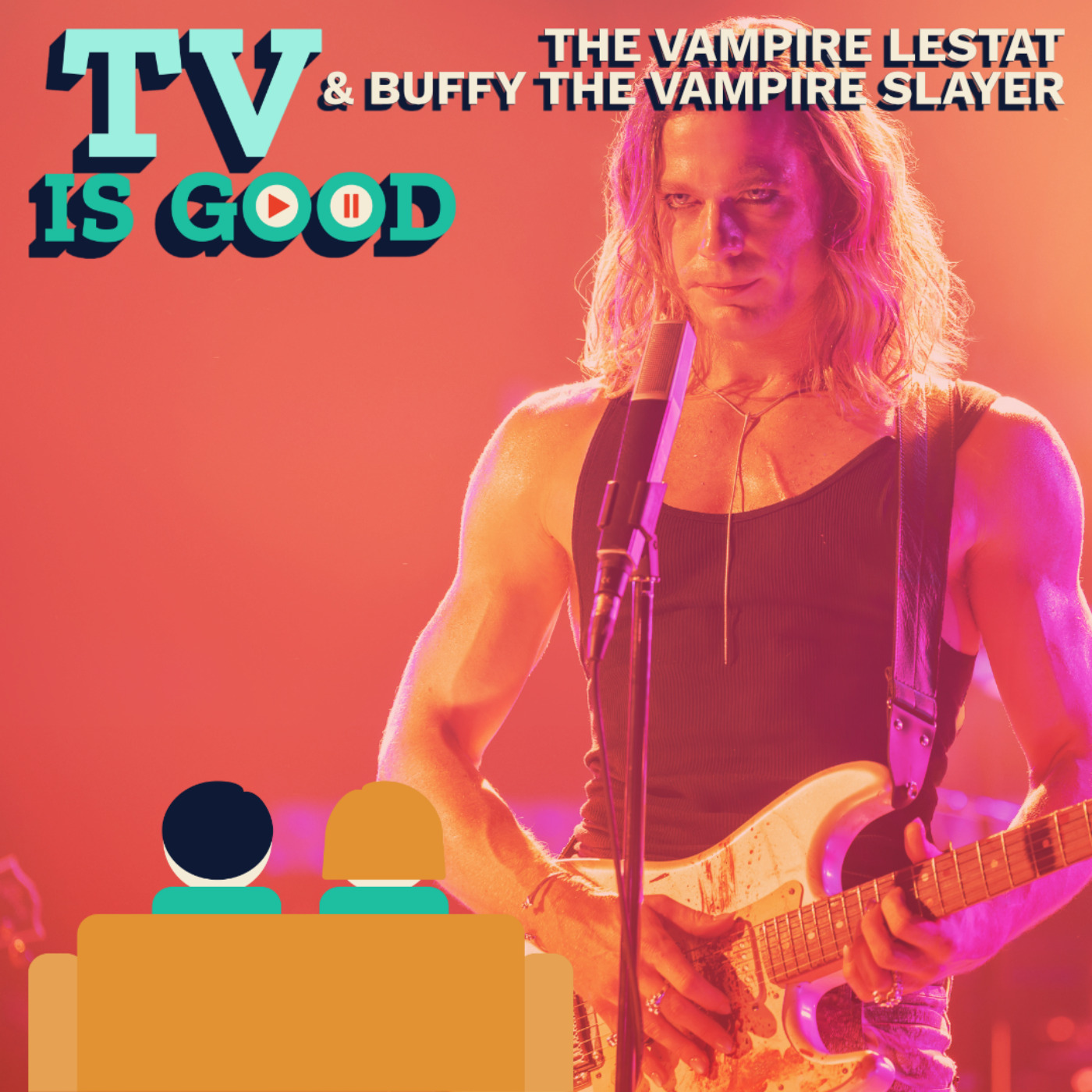
Loading summary
Transcript314 lines
- [00:00]
A
Howdy, howdy ho, and welcome to Fantasy Fan Fellas. I'm Hayden, producer of the Fantasy Fangirls podcast and your resident lover of all things Sanderson. And I'm Stephen, your bookish Internet goofball, but you can call me the Smash Daddy. And we are currently deep diving Brandon Sanderson's fantasy epic Mistborn. But here's the catch. Steven here has not read Mistborn before. That's right. Hey. Hey. So each week you'll get my unfiltered raw reactions to every single chapter. And along the way, we'll do character deep dives, magic explainers, and Steven will even try to guess what's next. So, spoiler alert, he'll be wrong. News flash, I'm never wrong. Episodes come out every Wednesday and you can find Fantasy Fan fellows wherever you get your podcasts.
- [00:42]
B
Acast powers the world's best podcasts. Here's a show that we recommend.
- [00:52]
C
Hello there. I'm James Richardson and I host the Tony Football Show. Now this summer, the the biggest sporting event in the world, the Football Men's World cup, is heading to Canada, Mexico and especially the United States. We're going to be there too. We are packing up and heading to Los Angeles for the duration. Which means that every day straight after the last match has concluded, you can catch some hot takes, instant reaction and insightful analysis from ourselves sat around the pool in la. Sounds like we're going to have a lot of fun doing it.
- [01:23]
A
We.
- [01:23]
C
I hope you're going to be joining us too. It's from June 10th all the way up to July 19th, the day of the final. Just search for the Totally Football show wherever you get your podcasts.
- [01:42]
B
ACAST helps creators launch, grow and monetize their podcasts everywhere. Acast.com Foreign.
- [01:57]
A
I'm Alan Sepinwall. I'm a TV critic.
- [01:59]
D
I'm Kathryn Van Arendyck. I am also a TV critic.
- [02:02]
A
We are friends and neighbors and we love to talk about TV with each other.
- [02:05]
D
And now we are going to talk about it with you.
- [02:07]
A
That's right. This is the TV is Good podcast. And every week we're going to try to answer an important question. Is the TV good?
- [02:14]
D
We are going to talk this week about the vampire Lestat, a show that if you have not seen, we recommend you do not watch with children.
- [02:25]
A
No, no, no, no. Did you watch it with your children?
- [02:30]
D
No, I did not. But I am regularly in a context where a kid will be home or will have come home from school and I will be trying to catch up on something and I'll be kind of mentally rolling the dice on like, how bad would this one be? Which is why, for example, my 12 year old has watched an entire episode of Summer House. And if that ruins her, then so be it. But this was one where I just, I was like, nope, nope, nope. We're going to watch it at 5am While everyone is asleep.
- [03:04]
A
Yeah. This is the advantage of having my little underground dungeon with a door I can lock is, you know, no one is going to stumble in on me watching the vampire Lestat.
- [03:13]
D
Yeah, but I, even if I had a door in a dungeon, there would still be somebody on the other side of the door being like, I need you to look at my picture.
- [03:24]
A
Was the picture good?
- [03:26]
D
Oh, the pictures are always good. They're, they're increasingly good. They're impressive, in fact. But sometimes you're like, oh, I see I've paused my screen in an interesting place.
- [03:39]
A
So we're going to do Lestat. We are then going to stick with the undead theme. We are going to talk about an older TV tale, a vampire love gone awry with the classic Buffy the Vampire Slayer. Two parter, surprise and innocence. Both of my kids have tried Buffy. It didn't quite take with them.
- [03:53]
D
I have thoughts about why that might be. We will get there in time.
- [03:59]
A
We will get there. First, however, we got to catch up on some stuff that happened previously. As always, we're recording this ahead of time. This is Wednesday, June 3rd. The Knicks have not even played a finals game. Hopefully by the time you're hearing this, they're destroying the San Antonio Spurs. Otherwise, I will be very sad. But here's some stuff that's gone on. We dropped two episodes of our Patreon last week. One a full one about the suitcase, one a mini one about hacks because I messed up. And we tried to record it for the main feed for an episode that was going to drop before the finale had debuted. So that was not great on my part.
- [04:31]
D
You know, these things happen. But we, we use the content, we keep it, we find a place for it to go. And that gets to be a thing that you guys, you guys get to experience now, which is great. The other thing we want to talk about for Patreon is we are starting to figure out what we're going to be doing for the next couple months of Patreon episodes and would really, really love any kind of feedback that everyone has about what sounds good. We have a post on the Patreon where we are getting comments from people who are suggesting all kinds of things, only one so far of which is the Bone Zone. But, you know, there's always time for more. And eventually the comments from there and from Alan's discord and from, you know, people coming to talk to us on social media also, all of those things are going to get funneled down into a couple choices, which I think are going to be a poll that we're going to let Patreon people vote on, and that will help decide our direction.
- [05:29]
A
And that's@patreon.com tvisgoodpod yes.
- [05:33]
D
Yes.
- [05:34]
A
All right. So, Katherine, you have spent the last couple of months on a big project. It has finally seen the light of day. A cover story for New York magazine about Jimmy Kimmel.
- [05:46]
D
Yes.
- [05:47]
A
Tell us about it.
- [05:48]
D
James Kimmel. Yeah.
- [05:50]
A
Very, very well done on your part. I applaud.
- [05:52]
D
Thank you. Yeah, we wanted to talk about it just a little, because it's something, as always happens with, like, big features like this. There are little bits and pieces that I love that, you know, I couldn't get into the final, final version. But the idea of this piece was we were already planning to profile him, and then I happened to be there shadowing him the day after the first show, after the White House correspondence dinner, when Trump once again started tweeting about how Jimmy Kimmel needs to be fired. Um, and so that became kind of the framing element of the piece. I also was talking with him throughout the end of Colbert's Late Show. So a lot of that piece is Kimmel reflecting on this really weird moment that he's in where he and Trump kind of want the same thing. Trump wants the show to be done, and Kimmel, I think, also wants the show to be done, but he can't let it be done for that reason. And so.
- [06:54]
A
Can't give him the satisfaction.
- [06:56]
D
Can't give him the satisfaction. And also doesn't want it to be like we're ending the show because Late Night died either. And. And that is also part of the context of this thing. So it's just a really. It was a really coincidentally good moment to be hanging out with Jimmy Kimmel. A couple of. I, I always. My favorite things about profiles are secondaries. And when you get to talk to all of these other. The person that you have been following. I had a really lovely conversation with Dave Letterman, only some of them.
- [07:31]
A
Oh, he's. He's Dave Letterman to you. Got it.
- [07:33]
D
Well, you know, and he. He was an interesting voice, obviously, to weigh in on where Kimmel is right now. But a lot of that piece is About Kibble's, I think compulsive need to prank people. Truly compulsive. He can't stop himself. And so I then was describing some of these pranks to David Letterman and he described them as cute. And I was like, oh my God, that's devastating. Like, I just, oh my God, when
- [08:07]
A
Letterman calls you cute, that's trouble.
- [08:09]
D
But the other thing was, like, I asked him whether Kimmel has ever tried to prank him and he said no, he knows not to screw with daddy. And that is the quote that I wish was in this piece, but is not.
- [08:19]
A
And I always, you always got to kill your darlings with this kind of thing.
- [08:24]
D
Kill those darlings. So the. If anyone ever wants to come over to my house, I still have the red wine vinegar that Jimmy Kimmel made me bring home for my husband. It's a very good red wine vinegar. It's made from Camino in out of San Francisco. You can order a bottle for yourself for about $25.
- [08:42]
A
All right, so you're in the midst of this. You're telling me that Kimmel is like texting you. So like, are you, the piece is over. Are you going to remain texting buddies with Jimmy Kimmel?
- [08:52]
D
We are email friends, not texting friends, although. Well, we'll see. I, we are email people.
- [08:57]
A
Okay.
- [08:58]
D
I, I do not know. I, I, you know, my rule with profiles is you get, you have this weird intimacy with this person that you are sort of required to have as a part of the process and they have to tell you all of this personal stuff, really personal stuff. And my own rule for profiles is you have to talk to me a bunch for the process of writing this. And at the end you get to decide whether you ever have to talk to me again. I mean, it is possible I have to approach you for some very professional work related reason, but that the, the subject of the profile gets to decide whether they have any interest in ever communicating with me in any kind of friendly way in the future. Because that's, that's fair. Like, that's how these things work. I found him to be really insightful and reflective and a really interesting conversation. And I'm, I'm really happy with how the piece came out.
- [10:03]
A
As you should be. And folks, you can find that@nymag.com or you could even go to a newsstand and pick up a physical copy, physical
- [10:11]
D
copy magazine, which I, I had to go to my office, my office in the financial district. It was the night of the Gotham Awards that the magazine cover came out and So I was like, I'm just going to swing by the office real fast to pick up a copy of the magazine. And I was an idiot who brought a tiny purse with me, which meant that I then had to show up in a black tie outfit at the Gotham Awards, physically carrying my own cover story around, which was really. I was like, what kind of jerk am I?
- [10:47]
A
You're just. You're holding it out in front of you like a shield, like, hi, have you seen this? Hello, cover.
- [10:52]
D
Hello. Yes. Would anyone like to check my id? This is me. Yeah.
- [10:56]
A
Don't you know who I am?
- [10:58]
D
Exactly. All right. And so that is what I have spent the last little bit of time doing. Alan, what did you do last weekend?
- [11:08]
A
I ate so much barbecue and so many tacos.
- [11:11]
D
You need to say it that way.
- [11:14]
A
Look, look, you could have gone. I was. I was at the ATX Television Festival in Austin, the 15th annual ATX Festival, a delightful event that you and I have attended together in the past. And you didn't go.
- [11:27]
D
I'm sorry, that hurt me.
- [11:28]
A
I had the migus, like, twice. I could have gone at Veracruz. I could have gone every day. But more importantly than the food was the chance to actually be at the festival, which is just this fun thing where you have people working on current shows, but also people working on past shows, just getting together with, like, TV superfans to talk about the TV that they love. And so, because I have a book about Rod Serling coming out in the fall, which you can pre order now, and that link will be in the show notes. I did a screening. I hosted a screening of an episode of the Twilight Zone called Walking Distance, which is a super autobiographical episode written by Serling. And then Dan Feinberg and I, we talked about Serling and about that episode. So that was great. There was a screening of one of the great TV episodes of all time. Three Men and Adina from Homicide, Life
- [12:16]
D
on the Street, a beautiful episode.
- [12:18]
A
And after it ended, I spoke about it with the showrunner, Tom Fontana, with David Simon, whose book obviously inspired the show and inspired that episode, and later created a show called the Wire, which I'm also writing a book about. So this is all just book, book, book, book, book. And Kyle Secor, who was one of the two main actors in that episode, along with the late, great Andre Brower. That was cool. I did a panel with the creators of the FX comedy Adults, and there was just. And I started going to other things. Our friend Mo Ryan had a wide ranging conversation with Warren Littlefield, who ran NBC in the 90s. He told Lots of great stories. And then there was the big 15th anniversary Friday night Lights reunion with the majority of the cast and several writers and producers. And it was like 15, 16 people on stage, which is an unwieldy and difficult thing. And as a result, unfortunately, three actors on the stage barely got to speak and were basically only called on at the very end, including Gaius Charles. And you could sense the crowd was getting a little restless about that. And when he finally did get to speak, he got this thunderous ovation just so everyone would understand. No, we love you, Smash. We wanted to hear you much earlier. But on the other hand, you had Connie Britton and Kyle Chandler, still, after all these years, just having perfect chemistry, talking over each other in a way that seemed rehearsed and was hilarious. And it was just great to have them back. But most importantly, Adrian Policki, at one point, unprompted, said, do you remember that time Landry killed a guy? Which, yes, everyone in the theater remembers that. And we are.
- [13:50]
D
We all remember the time.
- [13:51]
A
We are grateful for it. And I feel like at some point we have to do either for the Patreon or on main, a thing about the episode where Landry kills a guy.
- [14:00]
D
100%. 100%. It. I. 1 of those. I mean, it's not quite up there with jumping the shark, like, as an image, but like, in the modern era, the part where Landry kills a guy is. It's such a useful. Every time you need to say, this show has made a baffling choice. It's the. Like, they killed a guy. They had a Landry kill a guy.
- [14:27]
A
Okay, I should probably be saving this for when we do it, but because it came up, Mo and Dan and I were all sitting together with this event, along with my wife and with Mo's husband, and we start talking about the fact that when we initially got the screener for that episode, the killing plays out differently. The guy is still attacking Tyra and Landry runs in and, like, kills the guy in defense of tyranny. Yeah, which makes sense.
- [14:53]
D
Makes sense.
- [14:54]
A
And then. Yes, then when the actual version aired, it was an alternate take where the Assaulter has already started to walk away and Landry runs up behind him and kills him.
- [15:05]
D
Yeah, yeah.
- [15:06]
A
It's like. It's. It's a awful idea to begin with, but they made it so much worse. They had the two choices and they picked the bad one.
- [15:14]
D
Do we know why? Is there, like, an oral history of why that take changed?
- [15:19]
A
There isn't. And again, one of the reasons, I think that unfortunately, several of the actors didn't get to talk much during the panel is that the moderator went down a long rabbit hole trying to figure out what went wrong with season two. And Jason Katums, the showrunner of the show, clearly just didn't want to get into that.
- [15:36]
D
Yeah.
- [15:37]
A
Yeah.
- [15:38]
D
Well, panels. I have lots of things. It's a really.
- [15:41]
A
Panels are very hard.
- [15:42]
D
Panels are hard.
- [15:43]
A
One time, Dan and I did a San Diego Comic Con panel for the TV show Chuck. And it started late, and there was a musical performance, and there were two of us moderating, and it was a big panel. And suddenly, without warning, the panel ended without audience Q and A. And that still haunts me. So. Yeah, it's not an easy job.
- [16:00]
D
No, it's not. And particularly when there's a billion people on stage, it's really.
- [16:04]
A
Yes, it's not great. Okay, so now, Katherine, what are we here to talk about?
- [16:09]
D
First, we are here to talk about the sexiest gay vampire show that has ever existed on television. That list is shorter than it should be. But I don't think there can be any doubt that this is the sexiest gayest of the vampire shows ever.
- [16:28]
A
I mean, is what we do in the shadows might be gayer, but I would not describe that show as sexy.
- [16:33]
D
Is what we do in the shadows gayer than the vampire Lestat? I don't think so.
- [16:43]
A
Okay. I'm just saying it's. It's at least a discussion.
- [16:46]
D
It's a discuss. I don't think. I don't.
- [16:48]
A
Okay, that's fine. That's fine.
- [16:50]
D
Okay. All right. All right.
- [16:52]
A
I'm taking you off track. Please, please continue.
- [16:53]
D
Yeah. Poll Patreon. Poll.
- [16:57]
A
Yes.
- [16:58]
D
So we are talking about the vampire Lestat, which is a new title for a continuing series. It is the third season in the AMC Anne Rice show Interview with a Vampire. The first two seasons were called Interview with a Vampire. This third season has this new title, which is reflecting also the titling conventions for the original Anne Rice novels. The series has strayed quite dramatically from the books. I don't know the books very well, so, you know, I can't speak to that in a lot of detail, but the first two seasons are set in the 1910s and 20s in New Orleans
- [17:41]
A
and then the 40s in Europe and.
- [17:43]
D
Yes, and the 40s in Europe. And they tell the story of the vampire Lestat, who's played by Sam Reed, and they are narrated by his lover, Louis de Pontullac, and who is being interviewed by a journalist who is trying to get the story of whether or not vampires are real. The journalist is Daniel Malloy, played by Eric Boghossian. And the whole of those first two seasons has this frame narrative where we are in modern day Dubai in this glass walled sort of conference room, basically, and Louis is telling Maloy all about his time in love, this, like, nightmarish time with Lestat and the fact that vampires are real. And you know, Malloy, particularly in the beginning, is like, I don't. I don't really believe you. This is all a fantasy. And it has this kind of almost. Almost realistic way of thinking about how if a person were to prove that vampires were real, you could kind of imagine something like this going down. Ish.
- [18:56]
A
Yes.
- [18:56]
D
By the time you get to season three, we are completely in a world that has been remade by the existence of Interview with a Vampire, which I find fun, but it is fully eating its own tail at this point. It is called the Vampire Lestat. It. There has been a time jump. Much of the show now takes place in the contemporary moment. And rather than just being a rich, sexy vampire in New Orleans and in Europe, Lestat is now a rock star. And he is on.
- [19:30]
A
Yes, he is.
- [19:31]
D
With his band. All right, so that. That is. And also he is. We've switched the narrator roles so we can talk about that too. Alan, what is your familiarity with this, like, franchise?
- [19:46]
A
Okay. I've never read the books. I do not remember if I have seen the Neil Jordan movie from the 90s with Tom Cruise as Lestat and Brad Pitt as Lou.
- [19:56]
D
Saw part of it on tv and I knew I wasn't allowed to, and I was like, what's happening?
- [20:00]
A
It's one of those things where it's become so ubiquitous that I may have just Mandela affected the fact that I saw it. I definitely seen a million clips of the young Kirsten Dunst in the role that made her as Claudia, who gets turned into a vampire while she's still a little girl, and all the complications.
- [20:16]
D
Yes.
- [20:16]
A
So I may or may not have seen it, but I definitely know it. The show debuted for whatever reason, I just didn't get to it or ran when it was debuting. And as unfortunately often happens in. In TV today, if I'm not, like, watching a show from the beginning, it just falls by the wayside. And yet many friends of ours, including the great Joanna Robinson, kept evangelizing on its behalf and talking about how wonderful it was. And I kept it on my list of I should get to it. I should get to it. I should get to it. And finally, you and I created this podcast, which created an excuse because we looked at what was going to be debuting in our first month on the, on the air. We're, whatever we're doing here. And we saw hey Lestat. So this was my excuse. I went back, I watched the first two seasons of Interview with a Vampire in a rush, and then I dove into this. So I've now seen it. What did you think of the, the Interview with the Vampire seasons?
- [21:06]
D
So I, I had a sort of similar but quicker arc from you. I watched the first episode or two, I think, on screeners before it came out and was like, I think I get what this is doing, but I, I, I don't feel the need to continue with it. But meanwhile, my many of my colleagues at Vulture finished that first season were like, this is the best show that exists. Why? And I think that is something really notable about this show. This is for sure one of those situations where not that many people know about it, but the people who know about it and love it believe that it was created on Earth just for them, which is one of those. I, I always have that, I always love that kind of a thing, even if I am not specifically that person. But Vulture is like half of Vulture staff is. This show was created specifically for me. So if you are looking for coverage also more deeper sort of reporting and interviews of this show, I can highly recommend my own website in this case.
- [22:13]
A
And I will also say that I decided yesterday that I, I'm going to recap all the episodes of this new season of the Vampire. What's Ellen watching? So if you want my, my take as an initiate, you're about to get it.
- [22:26]
D
Great. Great. Excellent. I, I found it to be Halt and Catch Fire esque in the sense that I needed to watch the first season to understand that was going on. What was going on? It was around the end of the first season when I finally locked in and thought this show is. I'm not just doing this out of curiosity anymore. I am legitimately invested. And then season two, which involves recasting Claudia, also is its own whole thing has this crazy. All of the dials get turned up quite a quite a few notches. Oh yeah. But I think Vampire Lestat is my favorite of the three seasons from what
- [23:09]
A
I have seen 1 million percent. We've each seen four episodes so far. We just didn't have time to get to all the screeners. But oh boy, it's so good. I like you. I thought that the first season was good with moments of greatness but other moments that frustrated me. And weirdly, I didn't really like Lestat himself that much in the first season. He seemed like, Sam Reed is incredibly hot, charismatic for days, all of that. And yet, because we're seeing him from Louis perspective and he's just like, he seemed a little bit too cliched of the coolest, most charismatic, cruelest, most vampire of all time. And part of that is because AN Rice invented a lot of these cliches and it becomes one of these things where you're coming to it after decades of other people who have been ripping her off.
- [23:56]
D
Yeah.
- [23:57]
A
And then. But still, the. The last few episodes of that season I thought were great. Season 2, Lestat is mostly backgrounded. He is largely existing as a figment of Lou's imagination until near the end of the season. And I think Jacob Anderson is just wonderful as Louis. And there was a lot of wild stuff going on there, including the. The theater of the vampires in Paris. And you're getting a lot more sense of vampire lore. And there's just some, just absolute banger episodes there, including one where Louis and Daniel Malloy are forced to confront what really happened the first time they met in the 70s. And yes, yes, fantastic.
- [24:33]
D
So good.
- [24:35]
A
But when I got to these new episodes, you were like, yes, because again, it's funny. Like, I didn't really like Lestat that much. And when you put him front and center, I love is there's something about making him. He works so much better as a protagonist than an antagonist. When you're getting a sense of his inner life and how utterly messed up he actually is and how he is not in any way this like, you know, cock of the walk guy that he is playing for Louis and for the rest of the world. That's good. It's funny. I mean, the show had moments of humor in the first two seasons, but not to this degree. Like I found myself laughing.
- [25:10]
D
It's so, so funny. And also there is something like it is doing actually a thing that Shadows does too, but in a very different way. But when you have a like centuries old vampire with a weird accent and the way that Sam Reed sort of uses his eyes like they are just daggers and then he is talking about how much he wants to see Joey Chestnut eat hot dogs.
- [25:37]
A
Yep.
- [25:38]
D
That's so good. I mean, come on, come on.
- [25:41]
A
And the thing is, the danger always when you take a show that has been so serious and melodramatic in a good way and you start making it funny, is that you're just gonna Undercut everything and it doesn't. If anything it makes the scarier somehow.
- [25:55]
D
Yeah.
- [25:56]
A
Moments. Yeah, they're more effective because it's like you can tell that the rest of it is him. It's a coping mechanism because as we're learning, we're cutting between his present day as a would be rock star and his origin story and how utterly awful and bonkers it is involving his mother Gabriella, played by Jennifer Hill, which we'll have to talk about in a moment. But like it's. The comedy is coming as a relief from the tears and vice versa. And it melds together really well. Roland Jones, who's adapted the books for tv, worked on Friday Night Lights. He was actually there in the theater for the reunit at ATX because he also did a panel there. And like you can. There's some of that same like really hard on sleeve emotion to it. Even though this is a much like more arch and strange and you know, people are getting bit constantly. There's so much blood and sex and everything else. And if we'd seen that much blood and sex involving Landry and Tyra, I would have. I think it would have broken television in the year 2007.
- [26:59]
D
Yeah, it would have. I agree with you that something about the humor of season three actually makes a lot of these emotional beats hit better for me than they did when everyone was just glowering at each other in a very campy but still pretty straight faced way in the first two seasons. The other thing that I really love is the switch to Lestat as the narrator. The sort of framing device of this third season is that Lestat has created these voice memos essentially to himself, recordings of his thoughts about his time in this band. The Sorry, just to back up a tiny bit the way that this world works is that the Louis interviews with Daniel Malloy become get published as the book Interview with a Vampire. And this book then proves to the world that. That vampires are real. Except.
- [28:04]
A
Well, no, no. Some people think. A lot of people think it's a novel.
- [28:07]
D
Well, yeah, but like it is proof that vampires are real but the world is so crazy that most people are just like, I can't even deal. There's a montage in the sort of first episode about how most people just cannot process the immense craziness of what this would mean for the world. And so they're just like, I don't, I can't, I can't believe it. I think it's all fake. There's deep fakes everywhere. Anyhow, how do I know that this is real.
- [28:36]
A
Yes.
- [28:36]
D
I. You know, not to get all political or anything, but I find that to be a meaningfully, like, appealing, stupid way of just getting at a little bit of what it is. Again, so arch. But that is a little bit of what the world feels like, just generally, anyhow. I don't know.
- [28:59]
A
I don't know what you mean. Everything. Everything's great out there.
- [29:01]
D
Everything's so, so great. And so the idea that vampires would exist, which Lestat is in a vampire cover band and all of the fans show up at these things being like he's pretending to be a vampire. And of course, he really is a vampire. And he's just saying over and over again, I am a vampire.
- [29:21]
A
Yeah. Wait, wait, wait.
- [29:25]
D
Sorry.
- [29:25]
A
It is not a cover band.
- [29:27]
D
Sorry.
- [29:27]
A
They're playing original.
- [29:28]
D
They're playing. Yes. A vampire band. I meant, like, covering as a vampire.
- [29:35]
A
Sort of like the theater of vampires in Paris. It's like we're coming out and saying what we are, but we're putting it in a context where no one in theory is going to believe it.
- [29:44]
D
Yeah. It's like we're a vampire band. I'm doing air quotes.
- [29:48]
A
Yes, yes. If you're. If you're listening rather than watching it on YouTube, Katherine just did very dramatic air quotes.
- [29:53]
D
Vampire. All right. What did you think about the music?
- [29:56]
A
I liked it. I mean, we talked in that little Hacks minisode for Patreon about how hard it is to make. To be a convincing fake comedian. Being a convincing fake band, much, much easier. There are so many great, like, songs out there. When I was still at Rolling Stone, we did a whole list of, like, best real songs by fake bands. And, I mean, I don't. I don't know that if Lestat actually. If these songs existed by a real band in our world, if they would be smash hits. But the show factors that in because the thing is, his band is it. It's a modest success. Daniel Malloy, who is now following Lestat, so they can recreate that dynamic only, you know, with. With the protagonist flipped, keeps pointing out that they're. They've been capped out at a thousand seat venues. So the idea is they're kind of an underground thing and the music feels good enough for an underground thing. They also play one of the songs over the opening credits. The opening credits are so good this season. It's a dying art. I think the last show where I actually wanted to watch the main title sequence every time was Duster on hbo Max, the Josh Holloway show, and it's just nobody does it well. And this is really, really good. The music works. I am convinced that the people who were into Lestat would be very into Lestat. And Sam Reed on a stage, shirtless, singing, occasionally levitating. I mean, come on.
- [31:17]
D
Yeah. Yes, the music is good enough that they did a premiere event last night as we were talking in New York City where you could go and Sam Reed sang like six songs from the. From the show. And it, you know, I don't think it worked as well as that kind of event would work at the end of the season when all of the audience will know what the songs are and can kind of sing along. I was not there. I was just watching a bunch of videos from. Again, many of my colleagues who were like, this is a must see event. But to even feel like the songs function enough that you can do that kind of thing sort of speaks to how well they work in the context of the show and Reid's ability to perform them, to stand on a stage and absolutely convince you that he is the problematic vampire frontman of this band. There's a great scene at the very beginning of the first episode where they talk about how you acquire the. These narratives that he. That you get to listen to. I was surprised to see Jennifer Ely Ailey. Jennifer.
- [32:26]
A
I think it might be Ely because I remember she was very briefly on some completely mid CBS drama, maybe also with Patrick Wilson where. So I think she was introduced as Ely in that one.
- [32:39]
D
Yeah, she was also. I think the first time I saw her was in the sort of mid as by it novel adaptation Possession, which was. But she was good in that.
- [32:52]
A
Great, great actress of the stage and screen.
- [32:54]
D
Yes. Oh, and in 1923 as a really angry nun. This is the other thing that I have seen her in recently.
- [33:03]
A
Yes.
- [33:05]
D
She's bananas.
- [33:08]
A
Oh my God.
- [33:08]
D
Bananas in this.
- [33:10]
A
Oh my God.
- [33:12]
D
I was like slacking people at work like, what is she doing? What is happening on the television that I am watching? She is. She plays.
- [33:21]
A
How much should we say about who she's playing?
- [33:23]
D
Yeah, that's a great question. She plays another vampire. So I think that's fair.
- [33:28]
A
Who has a very complicated relationship with
- [33:31]
D
Lestat from Lestat's past. And she is. And sucking her way through this show. I don't just.
- [33:43]
A
Yep. That she is.
- [33:45]
D
That's. That's the only way I know how to. It's true. And. But I. It is hard to imagine anyone. Sam Reed's performance is very pointy. I mean, both his teeth are pointy, but also he Has. He does not look like anyone else on screen. He does not talk like anyone else on screen. He exists in this show as a curiosity. He has to. The whole point of Lestat is that he is so magnetic and so unlike anything else that you've ever seen that people are just like, what the hell is that guy's story? And Sam Reed really embodies that. It is very hard to imagine anyone showing up and being like, well, yes, of course, this is a person who is close, closely related to Lestat, but she does. And you are like the duo of them together.
- [34:35]
A
Yes. And the way. The way that she puts him on his heels anytime she's in a scene, which would seem impossible based on what we've watched of him in the first two seasons, and yet it instantly makes sense.
- [34:48]
D
Instantly. Instantly. Where the two of them somehow, like, if you. If you just had her performance by itself, I cannot imagine another show that could support that. Think it's another testament to how well this series has figured out its own lane that you put her in it and you're like, yes, totally tracks. I also enjoy Eric Bosian, who is.
- [35:15]
A
Oh, my God. See, that's when. Early on, when I was watching the show and I was. Was like, you sort of uncertain. The thing that was pulling me through was Bosian. There's a thing in, I think, the second or third episode of season one where Louis is telling the story of, like, he's just been turned. His sister, who has no idea he's a vampire, is showing off her new baby. She has to leave the room for a moment, and you can see Louis is very hungry. And you cut to the framing device, and Eric Boghossian just bluntly says, did you eat the baby? And it's the way that he says it is so funny. No, he's. He's delightful. Here's a question for you, because I had to. I had to binge the first two seasons pretty quickly in order to get up to speed from this. And every now and then, like, you get distracted.
- [35:57]
D
Sure.
- [35:58]
A
Did I miss him getting turned into a vampire by Armand, or is that just meant to be a surprise at the very end?
- [36:06]
D
It's a surprise. It's a surprise at the end. Yes.
- [36:08]
A
Good.
- [36:08]
D
Yes.
- [36:08]
A
All right.
- [36:09]
D
Yes. So he's a vampire now. He gets to wear a cool leather jacket, which I think is a fun upgrade for him. But also, there is something about him where he is. He was always cool and interesting, but in a dorky journalist way. And how he does and does not translate those elements of this Personality into cool vampireness is really fun to watch.
- [36:35]
A
No, he's great. Justin Kirk is fun, too, even though I have zero idea what his agenda is or the agenda of this secret group, Talamasca. There's a whole other show about Talamasca which I've never seen. Yeah, there's like several different Anne Rice shows on amc. This is the only one I've watched. By all accounts, it's the only one that's good. So.
- [36:54]
D
Yeah. Yep.
- [36:55]
A
But, yeah, but it doesn't matter. Like, there's vampire lore. It does not really impact you very much. It's just. It's about this guy. It's about Louis. Jacob Anderson is still fairly prominent in the show and framed very differently because now he is not the protagonist and he is not. He has confronted all of his issues with Lestat and with Armand, and in the new season, he's still dealing with guilt over the death of Claudia, but it's like he gets to have fun. It's sort of. This is a more fun season in general. Even though there's all this tragedy and other stuff in Lestat's backstory.
- [37:28]
D
It's so fun. It's a season where vampires pee bloody piss into urinals and then, like, rinse the urinals down with. With champagne. Like, that's. And I. I mean, my thing about this show is that I think it is miraculous that it feels. Feels as dirty, complimentary as it does, even though it can't have the same kinds of nudity that something like Heated Rivalry has, even though it is so, so, so, so sexy. A lot of that has to be expressed in the way that these characters talk to each other and interact sort of implicitly, suggestively, rather than through on screen. Now, there is on screen sex, but it is often it is. It can't go full nudity the way that we tend to associate like a super filthy, explicit show with being.
- [38:25]
A
Can't go full nudity. There's much less talk about positions and technique than there is on Heated Rivalry.
- [38:31]
D
Rivalry.
- [38:31]
A
All right, so we should. Let's talk about that. I mean, Heated Rivalry, obviously, it became a phenomenon. Connor Story, I think, is going to be a big star now. Although, you know, we. We will see if that translates. We'll also see if Sam Reed, that can translate. The thing is, Interview with the Vampire was on amc and that's linear cable channel and they have their own streamer, but obviously much smaller now. The first two seasons are on Netflix. There is something of a history of AMC shows suddenly becoming a phenomenon when the back catalog. Catalog goes up on Netflix. We will see. I'm curious if, like being able to watch Interview with a Vampire makes people seek out Lestat now, or at least makes them excited when that eventually arrives on Netflix as well. I think that it potentially has a much bigger audience than just the obsessives at Vulture and the Ringer and some other media publications because people love them, some sexy vampires. And this is a really well done version of that.
- [39:28]
D
My colleague Roxanna Hadati did a set visit for this season of Vampire Lestat and that piece, if you go check it out, which I really recommend, gets you into the question of how you make the show feel as balls to the wall as it is without being able to have those obvious tools in the toolbox. And whether the this audience that I think we are slowly coming to accept actually exists for things like sexy queer shows wants to have something that's like sexy queer dark vampire shows. And how big that audience can be I think is a really an open question. But I agree with you. The Netflix thing is its best hope for a bigger set of eyeballs.
- [40:27]
B
Acast powers the world's best podcasts. Here's a show that we recommend.
- [40:35]
D
Hello?
- [40:35]
E
Hello, it's Brooke Devard from Naked Beauty. Join me each week for unfiltered discussion about beauty trends, self care, journeys, wellness tips, and the products we absolutely love and cannot get enough of. If you are a skincare obsessive and you spend 20 plus minutes on your skincare routine, this podcast is for you. Or if you're a newbie at the beginning of your skincare journey, you'll love this podcast as well. Because we go so much deeper than beauty. I talk to incredible and insane inspiring people from across industries about their relationship with beauty. You'll also hear from skincare experts. We break down lots of myths in the beauty industry. If this sounds like your thing, search for naked beauty on your podcast app and listen along. I hope you'll join us.
- [41:18]
D
Summer smells like citrus in the sun. Turn your home into a daily getaway with Pura's new summer collection. Find your flow and fragrance and explore the scents@pura.com.
- [41:34]
A
All right, now we are gonna party like it is 1999. I think that's when these episodes debuted. If not, it would have been late 98, but I think 99 with the Buffy the Vampire Slayer Season 22 parter, surprise and innocence. Last time when we talked about Lost, I completely did not occur to me to explain the premise of Lost.
- [41:55]
D
You were like, okay, there's an outrigger. And I was like, yes, let's go.
- [42:00]
A
Still don't know who's in the outrigger. It pains me. All right. Buffy the Vampire Slayer first began life as a movie written by a hotshot 90s screenwriter named Joss Whedon. The movie starred Kristy Swanson and the late great Luke Perry. It was a flop. Whedon was not at all happy with the way the director adapted his script, decided, I'm going to do it again myself. I'm going to do it for television. He made it for the fledgling WB network, which was at the time either the fifth or sixth place network out of six, very low rated. And as a result, they were a little more free to experiment. The TV version starred Sarah Michelle Gellar as Buffy Summers, a teenage girl who one day discovers that she is the latest in a centuries old line of slayers who are born there can only be one at a time. And Buffy has supernatural gifts that allow her to track and kill vampires. And she has to do that while just trying to be a normal high school girl in Sunnydale, California. And the town of Sunnydale, it turns out, is built on top of a hellmouth, which means that she does not just have to battle vampires, she has to battle zombies and all sorts of other creatures so that the show was able to fill 22 episodes a season and not just not get stale that way. Buffy is given a whole supporting cast that she did not have in the movie, who get nicknamed the Scooby Gang, including Willow, who's a great hacker and later a witch, but not at this point. Xander, who is sort of the goofball of the group. Cordelia, who's the mean girl who gets reformed. Giles, who is the librarian at the school and also a watcher again, another centuries long tradition of people who aid the Vampire Slayer. And then there is David Boreanus as Angel, Buffy's boyfriend, who is himself a vampire, but a good vampire because he has been cursed to have his soul. In the lore of Buffy, when you become a vampire, your soul leaves your body and you are just like this monstrous vampire that has taken over. Angel has a soul. He has to deal with this. So we get to season two. The middle of season two. The bad guys of the season, the big bads, as Joss Whedon liked to call them, are Spike and Drusilla. Spike is basically punk rock vampire and Drusilla is his crazy, you know, goth girlfriend.
- [44:12]
D
Manic Pixie vampire.
- [44:14]
A
Manic Pixie vampire. Exactly. And they've been sort of dealing And Spike is injured at the time in a wheelchair. I forget exactly how that happened. And it is going to be Buffy's birthday. And all Buffy wants is to finally sleep with Angel. Keep in mind, angel is centuries old. He is centuries old. Buffy is 16 or 17.
- [44:36]
D
Age gap discourse.
- [44:37]
A
Age gap discourse. And even if he wasn't centuries old, Boreanus was in his late 20s at the time and looked it. Even if Sarah Michelle Gellar could pass for a teenager, so that's problematic. She wants to lose her virginity to Angel. They have a bunch of sexy adventures where they keep winding up wet and having to change their clothes.
- [44:59]
D
Hate when that happens.
- [45:00]
A
They do sleep together. And it turns out that part, a wrinkle of the curse placed on angel by gypsies is that if he ever experiences a moment of pure happiness, he loses his soul again. Which, to me, this doesn't sound like a great idea, does it?
- [45:16]
D
No, it's a bad curse. I think there are a lot of really significant errors that the, The. I don't think we're supposed to call them gypsies anymore, but they sure do.
- [45:29]
A
Yeah. I mean, you call them Romani now, but the show uses the term gypsy because. Yes, Joss Whedon, as we will get to, is a somewhat problematic figure. Somewhat.
- [45:36]
D
Somewhat. Somewhat.
- [45:39]
A
Maybe a lot. Maybe he's very problematic.
- [45:41]
D
Who can say? And, but regardless, whatever group of people who decided that they wanted to really enact revenge on this particular vampire by giving him this curse, they. They were not thinking through the long term implications of how this works.
- [46:01]
A
Because he's like, the deadliest vampire in the world and if his soul goes away, he's back to being the deadliest vampire in the.
- [46:08]
C
Yeah.
- [46:08]
D
Also, the whole point of it is that he can't be perfectly happy, which is endlessly torturing him. So why would you then say, like, remove his feeling of torture? Like, wouldn't you want him to continue? Isn't the having the soul the curse?
- [46:27]
A
Yeah, because he's still going to feel guilt over everything he's done, even if he feels blissful in the afterglow of sleeping with his much, much, much, much, much, much, much, much, much younger girlfriend.
- [46:38]
D
Yes. Like, isn't the point that you don't want him to be happy and so then you, like, let him be happy and then you let him never feel it's a bad curse. Don't do this curse.
- [46:50]
A
Terrible. Not thought through at all.
- [46:51]
D
Yeah. Yes.
- [46:53]
A
He experiences a moment of bliss. Suddenly his soul leaves his body again and he is Angelus, as he used to be known. And goes back. And now he is the big bad of the season and is determined to torment and destroy Buffy emotionally and. All right, so let's. Let's start here. What is your Buffy history? Because I was already a working TV critic at the time it debuted.
- [47:15]
D
I was in ninth grade and so young and I. I was not allowed to watch TV on weeknights. It's an important part of my lore. And as a result, I was not watching Buffy. And this was a show that I first heard about as a ninth grader because people showed up to school the next day after this two parter came out and were like, buffy slept with Angel. And I was like, who are we talking about?
- [47:49]
A
Did you think it was like, classmates?
- [47:51]
D
No, I. They knew I knew it was a show. But like, I. I was like, I need to be read in on everything that's happen, happening here. I. All I know is about Babylon 5 and have since then, obviously.
- [48:03]
A
5. Okay, we'll unpack that later.
- [48:06]
D
That was my jam. Oh, we'll unpack it later. Okay.
- [48:10]
A
All right, good.
- [48:10]
D
And the moment when I actually sat down and watched this whole series. I was in college and I was renting the DVDs one at a time from a library. So I would bring them back and like, put them into my laptop and watch all of the DVDs, and. But that is. That is how I experienced Buffy. There are, I think, six episodes I may still have never seen because they were missing that dvd.
- [48:38]
A
Okay. This is. To many fans of the show, this is the peak of the show, this two parter. Because one of the things that Whedon liked to do was use monsters as metaphors for the trials of adolescence, of coming of age. That was its big innovation. And obviously this is the most concrete example of that. You know, girl, young, like, has sex for the first time, and suddenly the boyfriend, who she thought was perfect, wants no part of her. He was just using her for sex.
- [49:06]
D
And in this case, turns out he's an asshole and he leaves her. And it's devastating.
- [49:12]
A
Yes. But in this case it's much worse because he is a vampire who is now trying to kill her and all of her friends. And remember how I said before the thing about Lestat in season one of Interview with the Vampire is he seemed kind of like a cliche because so many other people had ripped it off. The whole monsters as metaphors thing has been used a lot in genre storytelling in the decade since Buffy. How did that play to you now, after all this time? Obviously you'd seen the episode before.
- [49:39]
D
I had. Yeah, I was. I knew exactly what happened. It was described to me in great detail in ninth grade. I have then also seen it, you know, since then. And I was not really. I was noticing all the things you notice when you go back to a show you haven't seen in a while. What it looks like, what the performance are like, how you feel about different characters now that you have gotten older. All of those things. I was really impressed with how upsetting it still is to wake up the next day and have finally have slept with your boyfriend and have him be like. And have him be cruel to you and have you be completely baffled as to what is going on. And almost more devastating is that for the. The rest of that second episode after this has happened, everyone around her keeps being like, where is he? What's going on? And she feels so much shame about what's happening and so much confusion that she. Giles in particular, being the, like, clueless adult watcher type, keeps being like, something has to have triggered this, like, what made him change? And she is the only one who knows. And.
- [50:51]
A
And Willow figures it out, though, which is. Which I want to talk about.
- [50:54]
D
Willow does figure it out, but like her. The way Sarah Michelle Geller's face.
- [51:00]
A
Yes.
- [51:01]
D
Just absolutely falls apart in those scenes. Like anything there's. You can pick this show apart in a million different directions, but she absolutely crushes it. And you. I was completely taken in with the emotion of that element of this. This story.
- [51:22]
A
Yeah, she's incredible. And I remember the discourse at the time was that Buffy was not necessarily a show with the protagonist problem, but it was a show where, like, everybody seemed to love the supporting characters more. There was such Willow fandom. You know, there was such Xander fandom. And we'll. We'll unpack that in a little bit. You know, Cordelia, eventually Oz, who is, you know, becomes a part of the group in this episode. Seth Green shout out all of these things. But holy hell, Sarah Michelle Geller is so good and so vulnerable. The way she. Before she realizes what's really happened to angel and she says, you know, was it me? Was I bad? Heartbreaking.
- [51:59]
D
Oh, it's so. It's so heartbreaking. And often when they do the monster as metaphor thing, they have to. You know, it's like you were made literally invisible. And now you feel invisible walking around the school. But because the metaphor also gets to do. It is so literal as far as this. The thing that she is concerned about is.
- [52:26]
A
Yes.
- [52:26]
D
Having sex with her. With him. And, like, was she Actually bad, and she doesn't know, and. Oh, God, it's. Oh, it's so. It's so good.
- [52:36]
A
All right, so I want to talk very briefly about the Willow thing because I had forgotten that this was how it played out. And I'm watching it, and Buffy's being very upset. And I'm starting to assume, oh, Cordelia is going to be the one to notice because Cordelia is much more experienced. She has almost certainly been with a dude who ghosted her like that.
- [52:53]
D
Sure.
- [52:54]
A
But she's not. And instead, it's Willow. And obviously we love Willow more, and she is more sensitive and she's much closer to Buffy, whereas Cordelia is very much stuck inside her own head. But it was. I thought for a second, I. I wonder if, in hindsight, they could have gone the other way. I don't know. That's just a minor thing.
- [53:10]
D
I. The thing that I liked about it is that Willow clearly has not had sex. And so there is this. The dynamic that I think plays so well. There is that Willow feels so much awe for this thing that she doesn't understand. And it. It really emphasizes the horror of it for Buffy, the shame of it for Buffy, that it is Willow who has seen this about her. And it makes her feel like, everyone can see this on me. Right. Even Willow can tell that this is what has happened.
- [53:46]
A
And what I like about this episode, and it's a thing that obviously was easier to do in a network show when you had, you know, 22 episodes, which almost nobody makes anymore, is the supporting cast is so fleshed out that even though this is this big thing between Buffy and Angel, there is so much going on with the Scooby gang. You get this whole sort of love rhombus where Willow is still crushing on Xander. Xander is still, to some degree, still into Buffy, but is right now dating Cordelia and sort of can't get over it. Cordelia is baffled that she is attracted to Xander, and now Willow is pursuing Oz. But Oz can tell that she's doing it in part to make Xander jealous or, you know, to deal with her own jealousy. So there's a lot of complicated things going on there.
- [54:29]
D
Yeah. As. As you do. You watch them and you think a lot about friends and you think a lot about the way they're. They're sort of character types on 90s TV, where you were like, he's the sarcastic one and she's the hot, aloof one. And, like, the fact that they're sleeping together is sort of shocking to everyone, you know, There are. It's a rhombus with. Well, the grooves are pretty well worn, so there's a little bit of that that's happening to help navigate through all of these character types. But I, I. It is part of the success of this show that they are able to keep all of that going in the background. And for whatever else you feel about Joss Whedon, he is able to do a lot with dialogue so that you can feel these relationships happening in quite concise ways, even though they're on the margins of, you know, this much bigger monster situation that he's got to deal with.
- [55:30]
A
All right, okay, so I think. I think we need to talk about Joss now, both in the. In the larger context, but also even in the context of this love rhombus, because I feel like of the aspects of the show that have not aged well, I would say Xander Harris is the aspect that has aged the worst. In the 90s and the 80s, there was this whole trope of, like, the. The sarcastic nerd, you know, with the heart of gold, who feels basically entitled to the love of the pretty girl and you. And you're supposed to feel bad that he doesn't get it. And you've got the great Jon Cryer as Ducky in Pretty in Pink. You know, Chandler to a degree on Friends, Xander here, a bunch of others who are not necessarily occurring to me. And Xander is by far most obviously the character who is the closest in voice, I think, to Joss Whedon and what we know of Joss. And you can sort of see him projecting. And I think we're all aware now that, like, that guy's kind of an asshole. Yeah, Ross. Ross Geller. More. Even more than Chandler.
- [56:24]
D
Even more.
- [56:25]
A
Ross feels like he owns Rachel. Like, he's just offended that she would date anybody else, that kind of thing. And now that just does not play as well. I mean, how do you feel watching Xander now?
- [56:37]
D
I. I don't know. It's. It. There's, like, too many elements of my emotional reaction to that character to even.
- [56:46]
A
Yeah.
- [56:47]
D
Tease apart, because it would be a lie to say I have never found that character funny or sort of curious. And particularly when given the, like, snappy Joss dialogue, he plays it the way that it needs to be played in order to work at all. Like, it kind of is inventing this thing in front of your eyes that, once you've seen it, is this indelible element of what these shows feel like. But it is absolutely. Like, you write down any three things that he has said to someone else, and then read them dispassionately without the context of the show and the performance. And you're like, that guy sucks. What is his problem? Gross. Gross.
- [57:39]
A
But Nicholas Brendan rip, Like, as you say, delivers the dialogue really well. So in the moment, you think, oh, he's adorable, you know, go get. Go get the girls, Andrew.
- [57:48]
D
Which is precisely the upsetting, horrible thing about how those characters work is because we are so primed to see there is such a. Like. But he's so fun and like, he's. Yeah, he's being mean and awful, but in, like, a funny way. And maybe it's not serious and maybe he's self aware. This is the other really, really dangerous element of those characters is that there's this performance of self awareness that then leads you to believe that surely they understand and self deprecation. So as they're saying, like, I'm an awful asshole, you're like, yeah, he knows he's an awful asshole. And then you're like, I don't think he does know, actually, that he is an awful asshole. Yeah.
- [58:30]
A
And the. And the dynamic with Cordelia is the whole idea is supposed to be that they're. They're constantly negging each other, but it feels like the stuff he says to her is always way worse than anything
- [58:39]
D
she says to him. Way worse. And eventually this show does decide that Cordelia needs to be kind of a person. But it takes so long to get there. And I don't think they ever fully embody that as much as they could. How could you if you start with her as just this shell of a hot person? Yeah, it's really charisma.
- [59:07]
A
Carpenter definitely got more to play when they moved her over to angel than she ever does on Buffy.
- [59:11]
D
Yeah. But, like, I'm trying to imagine showing this to my daughters now. And it would be a. A lot of conversations about, like, what you let people say to you.
- [59:23]
A
So how. All right, so then how much, again, I feel like Xander is the avatar of Joss. And in hindsight, it's really a tell. And in the 90s, Joss had the. Weeden had this whole, like, cult following.
- [59:35]
D
Similar, like, self. I'm very self aware. I'm so self aware.
- [59:40]
A
Yes. And also, like, I'm a feminist. I will write stories of empowered women and all of that. And it turns out he was a toxic boss who was not, like, literally not allowed to be left alone in the room with one of the young female actors on the show. You know, charisma. Carpenter would later complain about how he treated her on Angel. There was obviously the entire catastrophe of him taking over Justice League from Zack Snyder and the way that he. He was dealing with the actor who played Cyborg, whose name I'm instantly blanking on. There's all of this stuff to the point where, like, nobody wants to work with him now. He. He created a show called HBO a while back called the Nevers. Remember the Nevers? I mean, you want to talk about a show that doesn't exist.
- [60:25]
D
I do remember the Nevers. I remember more about the Nevers than perhaps anyone should. What a time that is.
- [60:38]
A
But I guess the point is, like, again, we get to separating the art from the artist. Nobody wants to work with Joss Whedon now. The. The Firefly cast is going to go try to make an animated series that he is not involved in. And that's sort of, I guess, the way in which the audience can return to it, because we love these actors and we love these characters. Knowing what. What has all been exposed about this guy now. How did it feel to be diving back into, like, his most famous creation in this episode where it's so very Joss Whedon? Y.
- [61:09]
D
You see all of this in a kind of telling, on yourself way that I did not see at the time. The thing is, I think you and I are. I don't want to say jaded by or experienced with, because it's a really sad way to, like, be in the world, but we have developed pretty frequently used muscles about. I feel weird about this person, but I still have to think about their work in a cultural context. Like, this is unfortunately a conversation that I have had many, many times in the past about many, many people. People, and am positive will continue to have in the future about many, many people. Some of them vastly more. Not vastly, but, like, even worse than what has been reported about Whedon. There's a guy. It's really sad, but I sat down and watched these and was like, yeah, yep, here, here, here it is. Like, maybe I'm dead inside. Cool. Cool. Discovery.
- [62:16]
A
All right. It's just. I mean, the first big book I wrote was Revolution was Televised. And there's a whole chapter, you know, canonizing Joss Whedon. There's a whole chapter canonizing Matt Weiner. There's a chapter about Lost. And, you know, you just have all of these people who have later been revealed to have done some pretty terrible things, and it's. And yet the shows are great, and you. Everyone has to. Everyone has to decide, like, what line they're going to draw in terms of, like, whose art am I still going to consume and whose art do I never want anything to do with?
- [62:48]
D
And where that line is like, you know, I've got my guys that I've just completely. I'm not going to do any Neil Gaiman stuff. I'm never going to ever again. But a lot of these, you know, fall into. It's important to try to retain the nuance. I think to try to be like, this version of being a complicated person in the world is easier for me to feel bad about and live with than this other version of, like, being a legitimate horrible monster. And I think it. Buffy is also one of those shows that has so much meaning for a lot of people. Kind of invented academic TV studies, which is sort of fascinating. And it is legitimately revolutionary enough that to dismiss it all together. I think it doesn't work. Doesn't. It doesn't help me think about television. Yeah, yeah.
- [63:52]
A
And then you get into, again, the thing we've talked about before, like, how much these episodes work because of Sarah Michelle Geller. Like, TV is a collaborative medium and we sometimes act, and I certainly have acted, like, oh, this is all Joss Whedon. Everything that's good about this is Joss Whedon. Fuck that. It's everybody. And you don't want, you know, it's. You don't want to throw out the rest of the work along with that. And it, you know, you know, Malcolm Jamal Warner died last year, and the only way to write about him is you've got to write about the Cosby show. And he was great on the Cosby show, and you just have to accept that. Yes.
- [64:22]
D
You gotta keep many contradictory things in your head at the same time.
- [64:25]
A
All right, so let's, let's talk a little bit more about these episodes beyond the fact that he's an asshole and abusive. Boreanis. David Boreanis. If you go back and you watch the first season of Buffy, and especially those first few episodes, you would be shocked to learn that he has been a TV leading man for the last 30 years. He has basically never been without a television show. Catherine, are you aware that for a long time he was one of the two leads of a procedural drama called Bones?
- [64:55]
D
I'm sorry, sorry, what was the name? What was the name of the show?
- [64:58]
A
It was Bones.
- [65:00]
D
Bones. Bones. You know, this is news to me. Was it good?
- [65:06]
A
Yes, yes. I thought it was a very well made procedural drama on the Fox network in the 2000s. Okay, interesting. All right, but like you would. He was so stiff and so clumsy and so, like, didn't understand himself on the camera. It's unbelievable. And he'd gotten better by the point of these episodes. But there is something about him having to play Angelus that really unlocked him as an actor.
- [65:31]
D
Yes.
- [65:32]
A
He's so much better as Angelus. And then by the time he spoiler goes back to being angel again, he is just a vastly improved actor where they could make a spin off about angel that he could then do. That he could then do Bones could then do whatever the special Forces show on CBS was.
- [65:48]
D
And now he's will be on your television. If there is one thing he is going to do is be in a network television show.
- [65:55]
A
Nobody is better at being on network television than David Boreanas. But no, he is excellent.
- [66:01]
D
Let me profile you. David Boreanas, Please, please.
- [66:04]
A
She did a great cover story on Jimmy Kimmel. Go read it and you will want to be on it. This episode also introduces the idea, in addition to bringing Oz into the Scooby gang in a delightful way where he's just like, yeah, that makes sense. I love how he's unfazed with that. You also have the fact that earlier in the season they did an episode for Halloween where everyone gets magically turned into whatever figure they are costumed as. And so Xander becomes a super soldier. And we discover in this episode that he still remembers everything about being a super soldier, which will be a really convenient, like, plot device for the rest of the series.
- [66:40]
D
It is also a little bit of like, okay, Joss Whedon really. He remembers being like an incredibly powerful super soldier who's, like, so good at.
- [66:51]
A
And. And he is my, like, avatar. Yeah, that's. That's a thing.
- [66:56]
D
That's fine. That's a choice.
- [66:57]
A
Look, he's the one who never has any powers. You know, almost everybody else in the Scooby gang at some point or other becomes supernatural in some way, and he doesn't. So I guess you got to give him something so he can be useful.
- [67:09]
D
But I don't think that's true.
- [67:10]
A
It's. It's silly. Do you have Jenny Callender thoughts?
- [67:15]
D
Okay, what's. So Jenny Callender is this teacher. She's been. She's like a descendant of a group of people who put this curse on angel. And she and her, I don't know, tribe are. Are watching him to see if the curse is ever broken because they are the stewards of this, again, terribly conceived curse. And she has this kind of almost David Lynchian guy who's just there wearing a kind of bolo tie to be
- [67:52]
A
like, hey, the great Vincent Chiavelli. Love him.
- [67:55]
D
What's going on with the curse? And then she's like, I don't know what's going on with the. I. Have you. Have you seen what's going on with the curse? And he's like, have you done anything? And she's like, I haven't done anything. Why have you done anything? Is there anything we should be doing? And I love him every time he shows up. Just the way that his face looks on screen and his hat and they costed him perfectly. And he. That man is a vibe. Why is Jenny Callender here?
- [68:23]
A
Because she's. She's Giles sexy, you know, love interest.
- [68:29]
D
She's not. He doesn't care about her. I'm sorry. She's not. It's not working. I do like that. Eventually there's a incredibly important pivotal plot. Jenny Calendar thing that all rests on a lost floppy disk, which is really a beautiful, beautiful 1999 specimen. It's like a floppy disk that falls behind a desk. And they show you the slow mo floppy disk just like falling into a crevice. Which is. That's my favorite thing about Jenny Calendar is the floppy.
- [69:05]
A
There we go. So you found something good about Jenny. This was when it was made. Arg. Almost inarguably the cheapest drama on any broadcast network. It's. You just. It's so. It looks so bad. It looked bad in 1999. It looks even worse now. They've remastered it. I remember there were times where it was that Mad Men situation where you could see like boom mics and other stuff in the shot because it was never remotely designed to be both in widescreen and to be, you know, higher definition. But things like when Buffy kills the Judge, and that's a really cool moment when she takes the Judge is this unkillable monster they introduce here.
- [69:45]
D
Somebody got one packet of blue makeup from Party City and they like. They like taped a bunch of cotton balls to someone and then spray painted him blue. And then they sent him out into Buffy and were like, you're. You're the craziest super killer anyone's ever seen. And he was like, check. Yeah.
- [70:04]
A
Yes. And the lore that Giles is researching, he keeps saying over and over, he cannot be killed by any weapon forged. And eventually it occurs to Xander, they were talking about any weapon forged in 17. Whatever.
- [70:15]
D
That's a funny joke. I think that's funny.
- [70:17]
A
He goes with Cordelia while selling her out as some, like, slutty girl who just wants to sleep with him. Cause, again, he's garbage. He steals a rocket launcher, Buffy uses it, and there's this great moment where, like, the judge looks at and says, what does that do?
- [70:30]
D
Yes.
- [70:31]
A
And she. She. It's an iconic moment.
- [70:33]
D
Great scene.
- [70:33]
A
She shoots the rocket at him, and the explosive squibs go off before the rocket hits him. He starts blowing up before the rocket hits. And they didn't have the money to fix that in post.
- [70:47]
D
So beautiful. I really love that so much. But to get back to, like, a question we asked at the beginning, which is, why kids? Why this is a hard show to give to any contemporary kid and say, this was one of the best things that ever had happened to television. They have become so acclimated to a baseline level of sort of Netflix live action quality. It doesn't look great, but it also is hyper hd. And it is. It's smoothly edited, probably by AI and everything kind of flows cleanly and sharply into each other. And showing a kid Buffy is a little bit like handing a person a handwritten letter from the 18th century, where they're like, are there letters here? What? I think that's the word monster.
- [71:43]
A
You know, there's that. And I think there's also the fact that, like, because he directed Avengers, and Avengers was such a, like, key text of the mcu, almost everything that followed it. Like, the characters talk, like Joss Whedon characters. And so you have this voice that in 1997 was revolutionary, as you said, and, like, sounded like nothing. And it's so exciting. And now, again, like Lestat, in the first couple, since seasons of Interview with the Vampire, it's been copied so many times that if you go back to the original text.
- [72:14]
D
Yeah.
- [72:14]
A
It feels a little. Oh, this again.
- [72:16]
D
Yeah, yeah, yeah, yeah, yeah. I. I mean, it. The age. What. How stuff ages is always just. It's always interesting to me because you can come back decade after decade and have completely different answers. But this one, this one particularly is a complex, rich text, and yet I
- [72:36]
A
watched it, and I'm like, yes, no, this is the best part of Buffy. This is everything that Buff do well, but also some of the things that did not do as well and certainly that don't look good now, but Geller Boreanus, even when he's being Irish.
- [72:49]
D
And then you said that show was called. It was Bones.
- [72:52]
A
Yes, Bones. There may be some podcasts about it you can explore later.
- [72:57]
D
Y.
- [72:57]
A
Yes. Okay. All right. So that is it. That's our vampires. Are all vamp, all love, all sexy episode for this week. Catherine, was the TV good this week?
- [73:09]
D
The TV was good. The tv, it was as good as watching Joey Chestnut just absolutely destroy a hot dog.
- [73:16]
A
We just hit. Today is the 30th anniversary of the first article June 3, that I published in the Star Ledger. And so I wrote this reminiscing piece.
- [73:24]
D
Happy anniversary.
- [73:26]
A
Thank you. And I wrote this reminiscence piece for what's Alan Watching, where I looked back at some of the earliest stories I wrote. And one of the very first things I did at the Ledger before I was covering TV was I went to Coney island to watch the hot dog eating contest on the 4th of July.
- [73:39]
D
How appropriate.
- [73:41]
E
Aw.
- [73:41]
A
Yep, it's all coming back together.
- [73:44]
D
Full circle, baby. Yeah.
- [73:46]
A
Time is a flat circle. Thank you, Rust Cole. Next week we will be checking in on the horror comedy that swept the TV landscape by storm. Apple TV's Widow's Bay. We will be talking spoilers for everything through, like, the penultimate episode of the show. It'll be before the finale, so now is the time to catch up. It's really, really good.
- [74:06]
D
Yeah.
- [74:07]
A
We will also be going very old school to talk about Gilligan's island and
- [74:12]
D
when the comedy more horrific than Widow's Bay.
- [74:15]
A
Exactly. When comedy is the only way to ignore the horror when you're trapped on an island. We're going to. To keep the discussion focused, we're going to mainly talk about two episodes. The Friendly Physician, which is the 29th episode of season two, and the Bard, which is the fourth episode of season three. Whole show is streaming on Tubi. You don't have to watch any of it to follow along with our conversation, but just if you want to, you can. And if you're upset, remember that this was Catherine's idea. Hey, everybody. Sorry to interrupt myself and Catherine, but we realized after we recorded yesterday that there were a few things missed. One, while Gilligan's island was recently on Tubi, it no longer is. The the curse of the streaming era is you never know when things are coming and going. So it's not on any streamer at the moment. It is, however, available to rent or purchase. If you want to buy the two episodes, you can. Again, you don't have to. We're going to explain everything you need to know about both the series and these episodes for a larger philosophical conversation. Second is the episode from season three is called the Producer, not the Bard. What messed me up is I still have all the Rod Serling stuff in my my head. The Producer is about Shakespeare. The Bard is an episode of the Twilight Zone also about Shakespeare. And so I conflated that bad job by me. And finally, the actor who played Cyborg in Justice League is Ray Fisher. I had it on the tip of my tongue and then I googled it later in the episode and then neglected to actually mention it. So shout out to Ray Fisher, who endured a lot of crap from Joss Whedon, who is not a great boss whatsoever. Thanks. Let's get back to the end of the show.
- [75:47]
D
Show. We are so happy that to be interacting with all of our lovely Patreons. It is a continuing experiment and how that's going to work. But we are, I'm particularly delighted with that Suitcase episode and we are really hoping that more people come and check that out. But for everyone else who is listening,
- [76:11]
A
before we do that, I left it out of the outline. You can again find that at Patreon.com TV's Goodpod. Sure, you can find my writing at whatsalan watching dot com. You can find Catherine's writing at vulture.com we always have to tell the people where they can find us.
- [76:24]
D
Oh, I assume they know by now. We've already.
- [76:26]
A
Anyway, people, people like repetition in podcasts. Everyone has told us this.
- [76:30]
D
Okay, all right, all right. Speaking of repetition, not sure if you've ever been told to rate, review and subscribe to a podcast before, but we really, we dislike and do not trust the algorithm. And this is the only way to beat the algorithm. So, Alan, how do we feel about the algorithm?
- [76:48]
A
We hate the algorithm, but we love tv.
- [76:52]
D
Yeah. Thanks to Joe Kennedy for our theme music, Kate Bergener for our artwork, and Riley Routh for editing.
- [76:58]
A
And thank you for listening.
- [77:12]
B
Acast powers the world's best podcasts. Here's a show that we recommend
- [77:19]
F
if you've ever dreamed of quitting your job to take your side hustle full time. Listen up. This is Nikayla Matthews Akome, host of side Hustle Pro, a podcast that helps you build and grow from passion project to profitable business. Every week you'll hear from guests just like like you who wanted to start a business on the side. And if you can't run a side Hustle, you can't run a business. They share real tips.
- [77:40]
D
And so I started connecting with all
- [77:42]
F
these people on LinkedIn and I saw Target supplier diversity was having office hours. Real advice.
- [77:46]
D
Procrastination is the easiest form of resistance
- [77:50]
F
and the actual strategies they use to turn their side hustle into their main hustle. Getting back in touch with your tangible cash and sitting down and learning to get your money. A job like it changes something. Check out side Hustle Pro Every week on your favorite podcast app and YouTube,
- [78:09]
B
Acast helps creators launch, grow and monetize their podcasts everywhere. Acast.com Acast powers the world's best podcasts. Here's a show that we recommend.
- [78:27]
D
I'm Lara Marie Shanehals.
- [78:29]
A
And I'm Carrie o', Donnell, and together
- [78:31]
D
we are the hosts of Sexy Unique Podcast, a podcast for geniuses about reality tv, pop culture.
- [78:39]
E
And every once in a while, a
- [78:40]
D
tangent about 9 11.
- [78:42]
A
I mean, it really affected all of us.
- [78:44]
D
On Sexy Unique Podcast, we insist on discussing the creme de la creme of reality television.
- [78:50]
A
From the current season of Van Pump Rules to tried and true classics like early seasons of Real Housewives of New Jersey to underrated gems like VH1's Rock of Love and even Gallery Girls, we're talking about all of it.
- [79:03]
D
So what are you waiting for? Listen to Sexy Unique Podcasts now on itunes, Spotify, and wherever podcasts matter.
- [79:13]
B
Acast helps creators launch, grow, and monetize their podcasts everywhere. Acast.com.