Loading summary
Transcript188 lines
- [00:02]
Alan Sepinwall
Acast powers the world's best podcasts. Here's a show that we recommend.
- [00:10]
Nikayla Matthews Akome
If you've ever dreamed of quitting your job to take your side hustle full time, listen up. This is Nikayla Matthews Akome, host of side Hustle Pro, a podcast that helps you build and grow from passion project to profitable business. Every week you'll hear from guests just like you who wanted to start a business on the side. If you can't run a side hustle, you can't run a business. They share real tips and so I started connecting with all these people on LinkedIn and I saw target supplier diversity was having office hours real advice.
- [00:37]
Katherine Vanirendonk
Procrastination is the easiest form of resistance
- [00:41]
Nikayla Matthews Akome
and the actual strategies they use to turn their side hustle into their main hustle. Getting back in touch with your tangible cash and sitting down and learning to give your money a job like it changes something. Check outside Hustle Pro every week on your favorite podcast, app and YouTube.
- [01:00]
Alan Sepinwall
Acast helps creators launch, grow and monetize their podcasts everywhere.
- [01:06]
Aura Advertiser
Acast.com Most people don't realize how much of their personal information is being bought and sold every day. Data brokers are making billions, pulling details about you from public records and the Internet, then packaging and selling it, usually without your consent. That's how your information lands in the hands of scammers, science spammers, even stalkers. It's why you get endless robocalls and why ads seem to follow you everywhere. That's where Aura comes in. Aura actively removes your data from broker sites and keeps it off. They also instantly alert you if your information shows up in a breach or on the dark web. But Aura goes beyond data protection. With one app you get a vpn, antivirus, password manager, spam call protection, Dark web monitoring, and even up to $5 million in identity theft insurance. All backed by 24, 7 US based fraud support. Other companies might sell just credit monitoring or just a vpn. Aura gives you all of it together at the same price. Competitors charge for just one service. Start your free trial today@aura.com safety. Protect yourself now@aura.com safety.
- [02:22]
Alan Sepinwall
I'm Alan Sepinwall. I'm a TV critic.
- [02:24]
Katherine Vanirendonk
I'm Katherine Vanirendonk. I am also a TV critic.
- [02:27]
Alan Sepinwall
We are friends and neighbors and we love to talk about TV with each other.
- [02:30]
Katherine Vanirendonk
And now we're gonna talk about it with you.
- [02:32]
Alan Sepinwall
That's right. This is the TV is Good podcast. And every week we're gonna look at one current show and one classic show as we try to answer an important question, Is the TV good?
- [02:42]
Katherine Vanirendonk
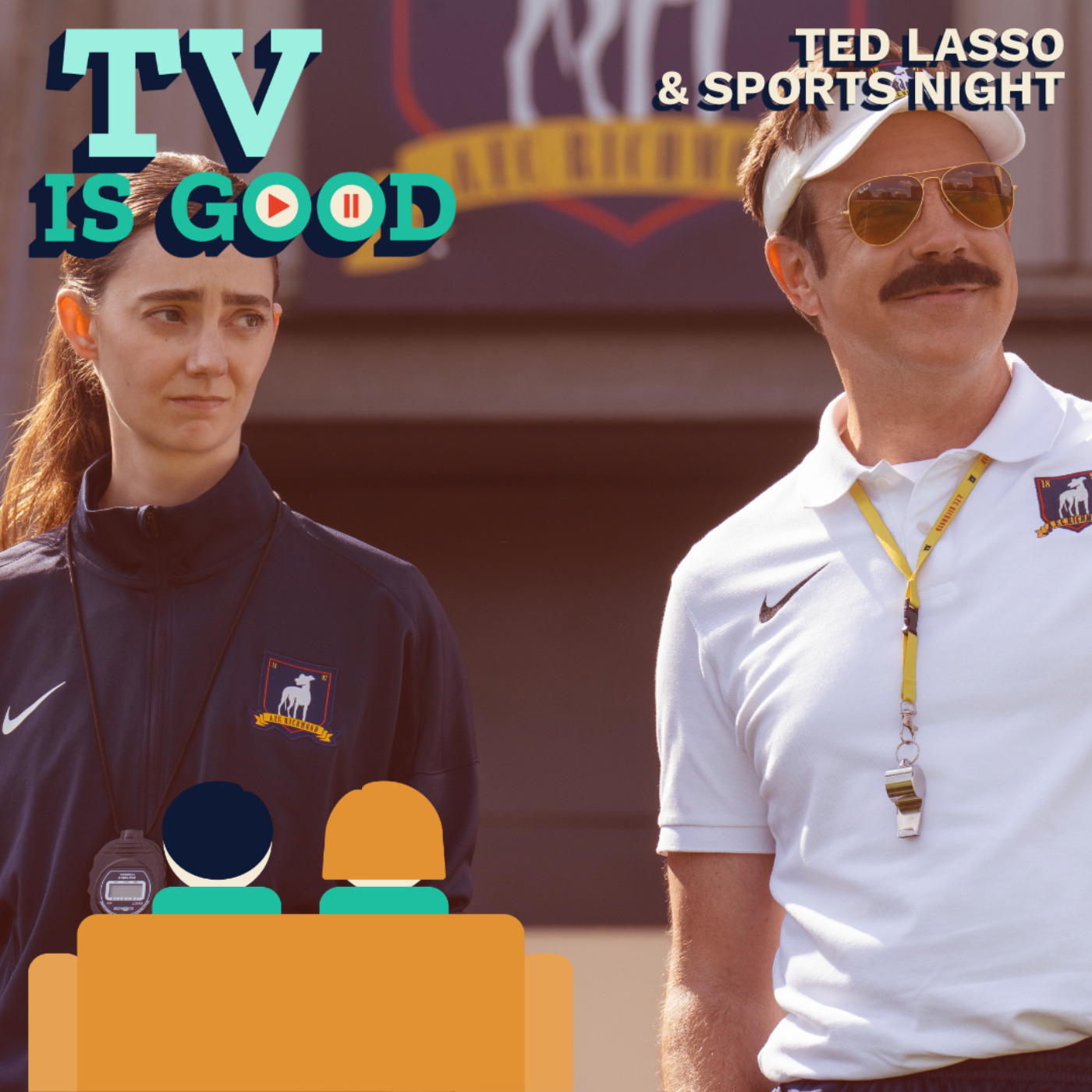
For our current segment this week, we are gonna be talking about the return of Ted Lasso, a topic that I fear will make a answering our typical question a little challenging.
- [02:57]
Alan Sepinwall
Today we're just spoiling the answer every single episode lately.
- [03:03]
Katherine Vanirendonk
Catherine, I think that people can tell.
- [03:04]
Alan Sepinwall
Yes, I think that people could tell from your tone when we teased this in last week's episode as well. We'll be talking about this. We're recording these way in advance. I believe this episode is dropping after the Ted Lasso season premiere. Is that right?
- [03:19]
Katherine Vanirendonk
I think so.
- [03:19]
Additional Advertiser Voice
Okay.
- [03:20]
Alan Sepinwall
All right. So the people will have had a chance to see it and perhaps they will agree with us. Or perhaps you'll spend this entire episode listening or watching and yelling at us and saying, why do you hate fun?
- [03:30]
Katherine Vanirendonk
Yes. I know that many people disagree with me and I think also with us about Stuart fails to save the universe. And so I'm happy for them about that.
- [03:43]
Alan Sepinwall
Yeah, I want people to like the TV they watch. It's like, this is yolo. Like, you're watching this, you're. You should get pleasure out of it.
- [03:51]
Katherine Vanirendonk
Yeah, sure. And you know, TVs also, we are in a strange position whenever these things happen because it's like, TV's not obligatory. You don't have to watch things you don't want. Except for unfortunately we do.
- [04:05]
Alan Sepinwall
I mean, that's one way to frame it. The other way to frame it is we get to watch TV for a living.
- [04:10]
Katherine Vanirendonk
Which I think is of course. Yes, of course. That is 100% the case. It's just always funny to me when one of the responses to a review of something that I did not like is like, then don't watch it.
- [04:23]
Alan Sepinwall
Yes. No, entirely fair. All right, well, we'll get to Ted Lasso. We will have plenty of time for that. And then I'm looking forward to. For our classic segment this week, we will be talking about another sports related dramedy with a lot of heart, Aaron Sorkin's Sports Night.
- [04:39]
Katherine Vanirendonk
Oh, Aaron Sorkin. I mean, an urtext for so much. For so much.
- [04:45]
Alan Sepinwall
I mean, we could do like, I don't know why we haven't already put Sorkin on the Patreon.
- [04:51]
Katherine Vanirendonk
Why haven't we? But, well, there's so many options.
- [04:56]
Alan Sepinwall
Yes. So we'll figure that out. But our Patreon poll is currently active@patreon.com tvisgoodpod and because the next episode is going to drop on Labor Day, we decided to pick four options that are TV episodes about Workplace dynamics, labor organization,
- [05:13]
Katherine Vanirendonk
strikes, et cetera, which could be a Sorkin, actually. Also, when we talk, I can think of a couple potential, but. Yes, yes. Yeah, we'll. We'll think about it. Okay, well, we'll think about it because we are recording this in the past and we haven't actually decided what that list is. But you already know because you can go to Patreon and find out for yourselves.
- [05:32]
Alan Sepinwall
Yes. So why are we recording so far in advance? Catherine?
- [05:35]
Katherine Vanirendonk
We are recording far in advance because I am traveling with my family in early August because we are going to a family wedding in another country, which is very exciting. And I was ruminating as I was thinking about podcasting today and also about just getting ready to go and having kids in hotel rooms, about one of my favorite favorite things, which is tv. When you are traveling, and particularly when you are traveling to another country, um, there's a certain, you know, when you're traveling domestically and you already know the whole routine, but it's like a somebody else's TV in a hotel room that looks kind of strange and you turn it on and you end up watching House Hunters International or a Law and Order marathon. This is its own kind of delight. But what I treasure maybe more than anything is tv. Like, there, there, here's, here are my favorite things, my very favorite things about international television. Number one, TV newscasters, local TV newscasters from not your locality. And they have all of these weird, like, they have the same morning TV smiley ness that is required of any morning TV newscaster the world round, except they have their own weird, culturally specific version of it. I remember watching Wrapped to a very beautiful man in New Zealand talking about the weather and. And I was just like, look. Look at the bounty that the world has all everywhere. So local TV news is always great. The kinds of like mid level daytime repeat fair that ends up playing particularly oval over local channels. In the middle of the day. I was, I can remember vividly not wanting to go to our next destination because I was absorbed by Joanna Lumley on the Nile, which is available in the United States. But it doesn't hit the same as it does when you're sitting and you're in an anglophone country and Joanna Lumley's like, I'm here to discover the source of the Nile. And you're like, yeah, get on the boat, Joanna. Like, it just is. It's indescribably good. And then my top tier international travel TV experience is American tv, ideally bones dubbed into another language.
- [08:23]
Nikayla Matthews Akome
Yep.
- [08:24]
Katherine Vanirendonk
I cannot even Tell you how much time I spent watching French Bones. And it is. It was. I mean, you can tell, first of all, that the French appreciate Bones as. As it should be appreciated, because it was like many hours of Bones that was on. And then just what, you know, what voice actors did they pick for these people? What do they sound like? How do the performances feel? You enter this kind of fuzzy, dissociative state where you both are and are not home. It's. It's exquisite. I am once again traveling to countries that do not have English as the. As the primary language. And I'm very much looking forward to exploring. Some. Some tea.
- [09:10]
Alan Sepinwall
So, I mean, you're in France, a beautiful, beautiful country with people whose temperament is different from ours, and you're spending hours and hours watching the television program Bones.
- [09:23]
Katherine Vanirendonk
Well, I wouldn't say hours and hours, but I also travel with children. Yes, often. And so what this means is you can only drag them through the Louvre for so long. And I go, because I did that too, in the same day. And then they want to do what all kids want to do, which is go back to the hotel. Their favorite thing about traveling generally is being in the hotel. And at some point. And so you. You have no. Like, you pulled them through the Louvre, you took them to lunch, and they were so cranky about it because you thought. And they thought that they were ordering a hot dog and they got a hot dog, but for some reason it's covered in sauces and cheeses, that they had no business ever being close to a hot dog. According to a Wild. And now they're done. They have nothing left. And so you just gotta go back and watch Bones for a little bit. And because it's in French, it's still a cultural experience.
- [10:19]
Alan Sepinwall
And they are watching French Bones with you, or they are on their own devices.
- [10:23]
Katherine Vanirendonk
They are sometimes on their own devices. But this is one of the also important things about TV with international traveling is that you think that Disney plus is still gonna have all the things you want, and it doesn't because of region locking. And so you crash out for a while about how the Pokemon season that you were watching is not here anym, even though your parent did warn you to try to download as much as you wanted for the entire week. And you listened, but did you really hear? No. And so now you are watching French Bones and you are learning something about how Bones are pronounced in French.
- [10:55]
Alan Sepinwall
Now, this is the thing that I wanted to bring up more than anything. First of all, you do way more international travel than I do. And when I do travel internationally, I'm not really watching a lot, if any, tv. The only TV memories I have from being overseas in is on our honeymoon to Italy in the spring of the year 2000. Every time we put on the television, no matter what city we were in, all the newscasts could talk about was an injury to soccer star Ronaldo. It was just everywhere, every single place you went.
- [11:24]
Katherine Vanirendonk
That's important.
- [11:25]
Alan Sepinwall
Yes. But the thing is, when I do, I have a lot of family in Canada, and so I go there fairly often, which is technically international, but I'm still not leaving the continent. And what's fun there is, like, you will be there, and I will open up, like, Netflix. And all of a sudden, there are all of these shows that are not available to me in American Netflix or movies or whatever. And that's exciting. And the first time it happened, I forgot that it was because I was in Canada.
- [11:52]
Aura Advertiser
Ah.
- [11:52]
Alan Sepinwall
I was like, oh, Netflix added this. And I started watching a couple of episodes. I can't even remember what it was now. This is about 10 years ago. I started watching a couple of episodes of something. I'm like, this is my new bin. Yeah. And then I got back to New Jersey and that binge ended.
- [12:06]
Katherine Vanirendonk
Yeah. I find it particularly in children's programming. We were in Japan and I. We were doing one of these, like, mid afternoon hotel TV crash outs, and I turned on Japanese, like, daytime children's programming. And they were showing a program about. In Japanese for kids about what the year 1500 was like in Japan, in Europe and in India. And it was just like, different artwork from the year 1500, like a preschool show. Like, here's what the music sounded like in these three different places in the year 1500. Here are some important historical figures. And I was like, wow, this is we. PBS wishes that this was what was happening.
- [12:54]
Alan Sepinwall
Joy of joys. So I hope by the time you and I speak next after this trip, you will have seen a lot of awesome stuff. And perhaps because we will be relatively current by the time we do our next episode, you can report back.
- [13:09]
Katherine Vanirendonk
I can come back and tell you what the morning newscasters look like over
- [13:13]
Alan Sepinwall
there, but it's enough filibustering, Katherine. You have to do it.
- [13:18]
Katherine Vanirendonk
All right. Okay, here we are. Okay. Great. Ted Lasso. Is this a show no one's ever heard of before? And so I will introduce it to you now. It is one of the first Apple TV hits. Apple TV is Apple TV now. It's not Apple. They ditched the plus. They're not.
- [13:36]
Alan Sepinwall
No they were Apple TV plus when they debuted with the morning show and For All Mankind. And a third show that I cannot remember now what it was.
- [13:44]
Katherine Vanirendonk
Well, that early slate was Morning show for All Mankind. See?
- [13:50]
Nikayla Matthews Akome
See?
- [13:51]
Alan Sepinwall
Yeah. With Jason Momoa.
- [13:52]
Katherine Vanirendonk
The Jason Momoa Show. There were a couple other ones that sort of ended immediately. But although morning show has been a very successful thing for them and is now run for many seasons, it has not been the kind of breakout like you must subscribe to Apple TV show that other things have been later. So a lot of the question about Apple TV Plus's success was going to be like, will they ever get a show that actually makes people subscribe to this platform for the show? And not just like, I got six months of free Apple TV plus with the purchase of my Apple product. And so now I will check out some of their things, which for a long time I think was a great deal of where their audience came from. And the first show that really has been that for them is Ted Lasso. It premiered in 2020 and that's an important thing about why it was as has been as successful as it is. It is. It was initially a Bill Lawrence show. Bill Lawrence is the creator of shows including Scrubs and Cougar Town, which we have talked about a little bit on this podcast. And Shrinking and. And Rooster are the kind of current Bill Lawrence things. There's a lot about Ted Lasso in that first season that feels very much like the qualities of a Bill Lawrence show, which we can talk about more in a minute.
- [15:34]
Alan Sepinwall
Yeah.
- [15:35]
Katherine Vanirendonk
As the show went on though, there began to be a lot of rumors and messiness about the creative direction. It's a soccer show. It's about. It's based on a commercial that. A very strange adaptation of a television commercial into a full blown TV series.
- [15:55]
Alan Sepinwall
Yeah, These were promos for NBC Sports's coverage of, I believe, Premier League Soccer. And the idea was, let's have this buffoonish Midwestern American football coach go over to England and try to coach soccer and ha ha ha, he doesn't know what the fuck he's talking about. And that was the tone of those ads. And that's almost 10 years before Ted Lasso debuted.
- [16:16]
Katherine Vanirendonk
Yes. And so those ads also starred Sudeikis.
- [16:19]
Alan Sepinwall
Yes. And they was created by Sudeikis and Joe Kelly and I think the actor who plays Coach Beard, Brendan Hunt.
- [16:27]
Katherine Vanirendonk
Brendan Hunt, yes. So it was a sort of return of that character, but now transformed into a Bill Laurency feel good hangout sitcom with Sudeikis once again playing the rube American Ted Lasso, who's not really a rube, he just seems like he is. And that first season hit so hard. Oh yeah, it was inescapable. It was inextricable from COVID era television storytelling. And it was both the sense of comfort and there's goodness in the world and the kind of like liberal gloss of a lot of its politics, which fed comfortably into the sense of political turmoil that was happening, particularly for the kind of audience who might be subscribing to Apple TV or have already purchased Apple products. And it was also a like, this is what non toxic good masculinity looks like. Which was likewise a feature of a lot of that late Trump one era politics. Yes, in the world. But the rumors and messiness that came later have never been fully confirmed. There's been a lot of reporting swirling around, but the what is indisputable is that Bill Lawrence was no longer involved in the show. Left at some point.
- [18:06]
Alan Sepinwall
He's technically still an executive producer, but like with each ensuing season, his name is listed further and further down in like any press release.
- [18:15]
Katherine Vanirendonk
Yeah, I think he may not even have been on the. I remember looking for his name on one of the press releases for season four and it was like gone. And coincidentally or not, and I truly do mean like coincidentally or not, like there's not a lot of solid reporting about this Ted Lasso also started to get worse as a TV show. And in my opinion, and yes, this is in my opinion and other people may have different opinions, but by season three was a real slog.
- [18:46]
Alan Sepinwall
Oh yes.
- [18:47]
Katherine Vanirendonk
So TED Lasso ended in 2023. And my feeling about it, and I believe yours as well, was like, thank you, God, it's time to put this out of its misery. They don't know what they're doing with this show anymore. It has become everything. Any magic the first season has is long since gone. And now somehow in 2026, we're doing it again.
- [19:11]
Alan Sepinwall
So a few things to note before we get into season four. One is like that transformation from the Ted of the commercials to the Ted of the show. And I don't think that the Ted of the commercials would have been sustainable. He's just too big of a moron. But it goes really far in the other direction. And now he's the most sensitive, empathetic, forgiving human being alive. And that drives some of the comedy. Although I remember my initial reaction when the show debuted is, well, this is really charming. And I get that they're in the first season, they're doing a whole riff on the plot of the 1989 baseball comedy major League. And I appreciate that. And, you know, Sudeikis is around my age, so all of the show's references are all of my references and all of that. But I'm like, well, is this funny? And then it turned out for the audience, it didn't really matter because they just needed the heart of Ted Lasso. And I got that, and I respected that, and I really appreciated it, too. And then, as you say, whether coincidentally or not, around the time the rumors start that Sudeikis and Lawrence are not getting along and Lawrence is no longer as involved. You know, you have this guy who's been making television for almost 30 years at this point, and really, whether you like all of Bill Lawrence's shows or not, really knows how to make television. Suddenly, Ted Lasso starts to feel really, like, baggy. The episodes become incredibly long, and yet at the same time, major moments between characters are happening off screen.
- [20:36]
Katherine Vanirendonk
This was one of the most annoying things about it for me, particularly in season three. You would have characters have these conversations that would seem to be leading up to some kind of conflict. There would be a scene break. You would maybe then skip to some other plotline. And then when you came back to those first characters, they were like, wow, it's a good thing we've talked through all of our problems. Let me describe this important thing that happened yesterday.
- [21:01]
Alan Sepinwall
Yes. And there's this whole arc over the three seasons of the character of Nate, who starts out he's the team's kit man, the equipment manager. And somehow Ted realizes that Nate is a genius, elevates him to assistant coach. Then Nate gets a huge ego, starts sabotaging people, and then leaves, you know, screws over Ted, leaves the team to run his own team, realizes that he hates that, comes back to the team by the end of the third triumphant season, and it's like, again, so much of it is happening off screen. And then when they decide we're going to do a Nate Redemption arc in season three, the redemption arc is almost exclusively about whether or not Nate can work up the nerve to ask out this, like, blonde barista who has no personality whatsoever. She barely even had a name, I think, for a while. And it's like. And then finally he decides to come back to the team, this team where he has burned every single bridge possible. And they do. And they have a scene where, like, the other, like, the three captains of the team go to meet or two of the captains and the replacement kit man who Nate was incredibly emotionally abusive to all. Come to meet Nate and like, Nate, please come back to the team. We miss you, we love you. And like, you don't see a single scene where like the other players like talk about this. It's just, well, it's time for Nate to come back.
- [22:23]
Katherine Vanirendonk
There's not even really a scene where he decides to come back or like he walks in and they're like, it's so good that you've decided. Like, it just is. Every single element of what I think is a pretty ill conceived arc to begin with that could then make it interesting has been totally discarded.
- [22:43]
Alan Sepinwall
Yes. So all of these problems are happening at the same time. Also in season three, Ted spends the entire season wondering, why am I still here in England? I went here because, like my marriage was over. I had stuff to work through. I feel like I've worked through it. Why am I still here? And even though the show is created by Sudeikis, it's a Jason Sudeikis vehicle. Everybody loves him. Ted just becomes completely superfluous to the show. There's just long stretches where he doesn't even need to be there. Nothing would change. And the season ends this seemingly. The series ends. Ted decides, I'm going to go back to America. Roy Kent, played by Emmy winner Brett Goldstein, is elevated to become the new coach. Everyone's going to move on. Everyone is better for their association with Ted Lasso. Ted doesn't need to be here anymore. Our story is complete.
- [23:29]
Katherine Vanirendonk
Yes.
- [23:30]
Alan Sepinwall
Guess what?
- [23:31]
Katherine Vanirendonk
He's coming back.
- [23:32]
Alan Sepinwall
Let's talk about season four. Season four picks up. It's been several years, I think roughly real time. Ted is back in Kansas City. He and his wife have not reconciled. Like they're not back together. But they're getting along very well. They're co parenting their kid. Ted is working various part time jobs. I assume he was so well paid as a premier league football coach that he does. He's fine. Just like I have a job as an assistant manager at a grocery store part time, just, you know, for something to do.
- [24:01]
Katherine Vanirendonk
Sure.
- [24:02]
Alan Sepinwall
And then Rebecca and Keely come to Kansas City to convince Ted they're starting up a Richmond women's team and they need Ted to launch it to help instill the same culture he did with the men's team. Guess what? Ted comes back.
- [24:19]
Katherine Vanirendonk
Ted comes back. Somehow. Somehow. Ted Lasso returned.
- [24:22]
Alan Sepinwall
Yes. I'm going to keep making that joke because it's the only thing that makes sense, really is.
- [24:28]
Katherine Vanirendonk
Yeah. So a couple things about this. There is some I can't Remember exactly how they described this in the first episode. But the team sort of already exists. It's like some, one of these other leagues of teams that they are then making a Richmond team. Or, or like these women are not brand new to each other totally because they have been practicing in a locker room, which I think they're called dressing room in the uk.
- [24:54]
Alan Sepinwall
No, no, no, I, I, I don't think you've got that right. It's, it's, I think, I think they are forming, like there is this team, but they have these, there's women's football in, in England, but there's not a lot at the high level, at least as it is explained. And if we have any, like, English or European listeners now, they're all yelling at us at getting all of this wrong. But we, our understanding of all of this comes from the television program Ted Lasso.
- [25:17]
Katherine Vanirendonk
Lasso. What I, what I am referencing in particular, though, is that there is this scene where Ted comes in and he is being introduced to these women who are already assembled without him. Like, it's not.
- [25:29]
Alan Sepinwall
Yeah, the team has been put together, but they have not played anything yet.
- [25:32]
Katherine Vanirendonk
Yes. And, but they have been practicing because when he comes in, they are explaining that, like, they are in this dressing room and they, they can't keep their stuff there overnight because it, like, belongs to some. They only get access to it for certain days of the week. Like, there is this already sense of, like, they don't have enough money, the, the field is not well maintained, their kit is not there. And so what he is walking into is this sense of women's sports as lesser than, as, you know, underfunded, all of these kinds of things. Now, I don't know if I've made clear on this podcast sufficiently, but I don't know anything about sports really. Really at all. Really, really. Almost entirely.
- [26:21]
Alan Sepinwall
Should we talk more about the Knicks?
- [26:22]
Katherine Vanirendonk
And yet I have seen enough of what has happened in women's sports in the past, like 3 ish, 3 to 5 ish years, to already feel like this depiction of women's sports is, like, accurate, but also like it feels date. Like we are already in a place where these conversations about what a women's sports team deals with are like, if this is some circa 2015 shit, am I wrong?
- [26:56]
Alan Sepinwall
I mean, on, on, welcome to Wrexham, which is the other, the other source of any, like, English soccer knowledge I have, or British. They're in Wales. Okay. Any of my football knowledge comes from these two programs. And there is a Wrexham women's team and While they are certainly not at the level of the men's team and they usually play in, like, smaller fields and all of that, there is never a suggestion that, like, their facilities are as garbage, for instance, as the one that the Richmond women's team is dealing with when Ted returns.
- [27:24]
Katherine Vanirendonk
Yes. And this is. I mean, this is one of those things where it's like, just because it's been persistent for as long as women's sports have existed doesn't mean it is now fixed and is now true, now no longer true that they're. They're not paid adequately. Like, these are all these kinds of battles that are, yes, certainly still happening. But it. It just leads to this increasing sense that the show is really out of step with its own supposed subject matter and that, like, football itself is not something it cares about very much. And this is even further exacerbated by this plot line that Rebecca has, particularly in the first couple episodes. Rebecca is the owner, the Richmond owner that. That somehow she has failed to ever consider a woman to be head coach. And suddenly she is forced to recognize her own internalized misogyny. And she's, like, on the phone ordering bell hooks books so that she can catch up with feminism. And this is such a bizarre thing, because it. How do you not watch this? And you're like, did somebody tell Jason Sudeikis about bell hooks? Who did that? Is he, like, how is this where you're starting from in 2026?
- [28:45]
Alan Sepinwall
And. And also, like, among the whole Rebecca backstory was she was the. She was, like, the trophy wife.
- [28:53]
Additional Advertiser Voice
Yeah.
- [28:53]
Alan Sepinwall
Of the owner of Richmond. And she got the team in the divorce and has since evolved into, you know, a badass businesswoman. And among her most defining relationships is her relationship with Keely, who she takes under her wing and mentors and turns into a business badass in her own right. So Rebecca, we know, is someone who, like, looks to other women, even a woman who, when we meet Keely, who seems like this flighty influencer and she sees potential in her.
- [29:20]
Katherine Vanirendonk
Right. Like, the character has been, if anything, almost obnoxiously or unsubtly, rah, rah, girl power for the last. Since we have known her in the last two seasons.
- [29:35]
Alan Sepinwall
And so it's like, that story is kind of painful. And then there's. There's others. It just feels like they have kind of turned Rebecca into a buffoon because it's like, we love Hannah. Emmy winner Hannah Waddingham. She's wonderful. We have to give her things to do. And again, the problem is everyone has been through a complete character arc in the original run of the show. Where do we go from here? And this is a problem throughout the series. So we return. The men's team is not. I mean, we don't see the men's team. They are talked about because Roy Kent, played by Emmy winner Brett Goldstein, is still a character on the show, but we otherwise don't see the men's team. And so Roy is just kind of there to have scenes with Keely where they debate, should we get back together? Shouldn't we? Are we just friends? Has Roy changed at all at one point? And this unfortunately ties into Sports Night, which we're going to talk about, which is a show that in some ways I love and in some ways drove me crazy on Sports Night. There was a plotline in the second season of that show where two of the characters were like, who had been. Will they or won't they forever are finally on the verge of dating. And one of them says to the other, you know what? Like, we can't just dive into dating. You need to, like, date a bunch of other women first, and then we can do it. And. And guess what is a storyline in Ted Lasso season four, Katherine.
- [30:55]
Katherine Vanirendonk
Well, is it that Keely makes Roy Kent date a bunch of other women first?
- [31:00]
Alan Sepinwall
Yes. Wow. And it plays just as well now as it, you know, we're gonna make it 1998 again by science or magic.
- [31:10]
Katherine Vanirendonk
Yeah.
- [31:11]
Alan Sepinwall
So there's a problem. It's. No one has an arc anymore. Ted, especially, does not have an arc anymore. Even more than in season three, other than the episode in Kansas City, which is very self indulgent and is. Jason Sudeikis is a Missouri guy. And it's like, I want to go visit the, you know, the Negro Leagues Baseball museum, which is a wonderful place. I want to, like, go to all my favorite barbecue joints, all of that, and have Apple pay for it. It's just. It. That's nothing. And then once you get back to England, Ted just never needs to be there. There's almost no scene that would be. You know, it's the Indiana Jones and Raiders of the Lost Ark thing where if you took Ted out of almost any scene, nothing would be different about that scene.
- [31:53]
Katherine Vanirendonk
I was going to say it was Garfield without Garfield.
- [31:55]
Alan Sepinwall
Yes.
- [31:56]
Katherine Vanirendonk
Yes. Yeah. But it's similar in that you also realize as you watch him sort of say all of these cutesy aphorisms throughout the show that he seems to be. It's not even just that he's not there. Necessary for a plot Mechanic because he's completely unnecessary for a plot mechanic because they have introduced this other coach who is really making most of the decisions and is the character who we care about, which I'll. We'll get to in a minute. It is also like he is on a completely different wavelength emotionally in the way that he talks, in the way that he interacts with the story than anyone else. And the whole point of the first three seasons was that that that different wavelength was in direct conflict with the way football is practiced in. In England. And his whole thing is so completely at odds with Rebecca's whole thing. And isn't it so funny to watch this odd couple interact? And now it's just like they're. He. He's like, on this sort of floating raft that they're just toting around with them from scene to scene. And he, like, keeps talking, keeps doing all the Ted Lasso stuff, and everyone's just like, ted Lasso. Why is he here? What is the point of him?
- [33:14]
Alan Sepinwall
The point of him is that it's the biggest thing Sudeikis has ever done. And, you know, I guess he's gonna keep doing it now.
- [33:20]
Additional Advertiser Voice
Yeah.
- [33:20]
Katherine Vanirendonk
But if it's. The thing that I can't quite understand is from all. From all of our ability to discern, Sudeikis is the primary creative voice behind this show at this point.
- [33:33]
Alan Sepinwall
Although Jack Burdett from 30 Rock is now technically the new showrunner.
- [33:38]
Katherine Vanirendonk
Yes. And I'm not sure for season four whether that mix has changed at all, whether the. You know, what the actual breakdown of who is doing what is. But if it's gonna be your vanity project, I just think you should give yourself better stuff to do, you know?
- [33:55]
Alan Sepinwall
Yeah. All right, so you mentioned the other coach. This is Coach Chilton. She's played by Tanya Reynolds, who is really, really good on sex education as the girl who was, like, into alien sex and fanfic and cosplay and all of that.
- [34:08]
Katherine Vanirendonk
Yeah. Tanya Reynolds is also. She plays Caroline Bingley on the real breakout hit this year, the Other Bennett Sister. She's great in that. She is also. I know her from the extremely strange Netflix Decameron. Decameron adaptation. And I mean, extremely strange. Parentheses, complimentary. She is very, very weird in that role. And she has this really excellent ability to be pleasantly but not distractingly odd on screen. And it fits really well with the sort of Muppety qualities of a Ted Lasso vibe. The Chilton, Alice Chilton character is. And I say this because I think, as I talked about in a previous episode, I've been watching a lot of Gilmore Girls with my. With my kid has a kind of Paris Geller angry at the world mode where she lives for from. And you can just. And is really fun in that. And I am already resentful about the fact that I can feel the great iceberg softening. Like the point of her being so brusque is that gradually we will discover her heart, you know, and you know
- [35:24]
Alan Sepinwall
who's going to bring her heart out?
- [35:27]
Katherine Vanirendonk
Is it Ted Lasso?
- [35:28]
Alan Sepinwall
It is Ted Lasso. I think she's really good. Tanya Reynolds is really good. Brendan Hunt still funny as Coach Beard. And they. They still, I think, are smart about not giving you too much beard. Yeah, the one episode that was all beard mistake.
- [35:42]
Katherine Vanirendonk
Really bad mistake. You can't. Dwight Schrute, that guy, you gotta keep him small.
- [35:47]
Alan Sepinwall
So we've only seen the first four episodes of the season so far. So for all we know, they're gonna do like one or two of those spotlighty kind of episodes. And maybe we don't know. But really, it's like I kind of. I like the Alice Chilton character. I like Tanya Reynolds a lot. They're setting up some dynamics with the team. They have not come quite as in focus yet as the Richmond players had. But also Roy and Jamie were much more prominent elements of the beginning of the first season than any of the female players are so far.
- [36:18]
Katherine Vanirendonk
Yeah. They have introduced in by the number of episodes that we have watched. They've also introduced a character played by Faye Marseille who you might know from Andor who I really, really love and was really thrilled to see her show up in this show. And I'm hoping that she also becomes a bigger part of what this season is.
- [36:36]
Alan Sepinwall
Yes. And, you know, I'm recapping the show every week at. What's Alanwatching.com it's been a while since I've picked a show that I know I'm probably not going to like most weeks to do. One of the previous ones of those was another Aaron Sorkin show, which we'll be talking about in a minute, is not Sports Night. But this is like, this is fascinating because a. It's a rare relative monoculture show. But it's just, it's at this point where I like, I like so many of these people and I like a lot of these characters as they were written in earlier seasons. Leslie Higgins and I just don't. I don't know why the show exists anymore. And every week it's like I'm scratching and clawing and maybe by the time we get to the end of the season, you know, Alice will be pushed more to the forefront, the female players will be pushed more to the forefront, and the legacy characters will be a bit less. I don't expect that to happen because you're not paying Hannah Waddingham and Juno Temple and everybody else to be back to take second fiddle to these less famous actors, but who knows?
- [37:40]
Katherine Vanirendonk
Yeah, I just remembered another element of this show that I found to be just weirdly anachronistic, which is that Juno Temple, inevitably, as Keely, is struggling to get the women's team off the ground, and she's frustrated, and she worries that she can't do it. And Hannah Waddingham reminds her that she was featured in Vanity Fair as a bad bitch on the move or something. I can't remember exactly what the term is. And they're like, yes, Vanity Fair. And already in my head, I'm like, well, if only journalism, you know, actually mattered that way anymore. And then there is a scene where a guy's like, keely, bad bitch on the move. And I was like, print culture is dead. Like, what is ha. I mean, and I say this as a person.
- [38:28]
Alan Sepinwall
You write for a print magazine.
- [38:30]
Katherine Vanirendonk
Catherine, I'm very grateful to still work for the print magazine that I love and respect and care. I'm so thrilled to be. But the iceberg is. Is shrinking. And it's just like this show doesn't seem in touch with what the reality of any of these scenarios would be in the real world in 2026.
- [38:49]
Alan Sepinwall
All right, as I said, I've committed to writing about every episode of this season, which means I will be watching the rest of the season. Catherine, will you make it to episode five?
- [38:59]
Katherine Vanirendonk
I am not going to watch any more of this unless somebody tells me something interesting about why I need to.
- [39:07]
Alan Sepinwall
Okay, well, conveniently, you do know me.
- [39:10]
Katherine Vanirendonk
That's true.
- [39:11]
Alan Sepinwall
I can keep you posted.
- [39:12]
Katherine Vanirendonk
Okay, great.
- [39:20]
Additional Advertiser Voice
Most people don't realize how much of their personal information is being bought and sold every day. Data brokers are making billions, pulling details about you from public records and the Internet, then packaging and selling it, usually without your consent. That's how your information lands in the hands of scammers, spammers, even stalkers. It's why you get endless robots calls and why ads seem to follow you everywhere. That's where Aura comes in. Aura actively removes your data from broker sites and keeps it off. They also instantly alert you if your information shows up in a breach or on the dark web. But Aura goes beyond data protection. With one app you get a vpn, antivirus, password manager, spam, call protection, dark web monitoring, and even up to $5 million in identity theft insurance. All backed by 24, 7 US based fraud support. Other companies might sell just credit monitoring or even just a vpn. Aura gives you all of it together at the same price competitors charge for just one service. Start your free trial today at aura.com safety. Protect yourself now at aura.com safety.
- [40:37]
Alan Sepinwall
In 1998, Aaron Sorkin was an acclaimed playwright and successful screenwriter for movies like A Few Good Men, the American President, Malice. And he decided, all right, I'm going to try to do television. And Aaron Sorkin loved sports. He loved watching SportsCenter, which was the nightly ESPN highlight show. And he said, I'm going to do a fictionalized version of that. And it will be a workplace comedy ish, set at, you know, the third place csc I think Continental Sports Corp, Something, whatever Continental Sports Channel and their their flagship show, Sports Night. Led by Peter Krause as Casey and Josh Charles as Dan Rydell and Felicity Huffman as Dana, the producer and Robert Guillaume is Isaac the Wise executive producer. A young Josh Molina is Jeremy the I don't know if he's an intern or an associate producer or what. And Sabrina Lloyd is Natalie, the slightly senior producer who very quickly becomes Jeremy's girlfriend. This was the first time that Aaron Sorkin was working in television. It was the first time he was working with director Tommy Schlamme. The two of them would then obviously go on together to work fantastically in the early seasons of the West Wing. This Sports Night ran two seasons, had a very complicated history which we will get into. Incredible highs, some baffling lows, a lot of seeds planted for both the good things Sorkin would do later in television and some of the awful things Sorkin would do later in television. Where should we begin with this, Catherine?
- [42:12]
Katherine Vanirendonk
I mean, first, I think it's useful to begin with what Sports Night. It is a classic show that unlike Brady Bunch variety hour, has an interesting ongoing legacy for television because Sorkin has this continuing sort of role in what pop culture and screen storytelling is. And his next several years slash decades of TV creation were so clearly development of what he is starting here. And that is not always the case with television and in fact rarely the case with television creators where you can, where the thumbprint, the DNA is so unmistakable for someone else that every new show you're like, how will they take the exact project they have been working on in the past and translate it barely into this. Into this new thing. So it is the kind of thing where it is just unusual to see something this distinctively associated with the rest of somebody's oeuvre in. In television, where usually you are asked to mold yourself as a writer, particularly, or. Or as a director to a model that somebody else has created.
- [43:44]
Alan Sepinwall
Yeah. And you. If you watch, like, other shows of his and then you go back to Sports Night, it's all already there. Characters are constantly, like, reciting their resumes to other people so that, you know, to take them seriously. Like, he would take lines from this almost word for word and put them in other shows. There's a running gag in one episode about how Dan has writer's block, and he says something like, you know, my talent is somewhere in the building. I can't find it. They did that exact subplot on West Wing where Sam and Toby cannot find their talent. They just know it's somewhere in the building.
- [44:14]
Katherine Vanirendonk
Yeah. The way that he cribs from himself should be shameless and inexcusable and kind of is, except that there is something so musical about his dialogue that he is able to get away with it, which would be inconceivable for a lot of other TV storytellers. And instead, if you approach all of his television together, it's almost like you're hearing the chorus of a song that you know and like. And so you are happy to hear the returning chorus again. It's a really strange and an unusual thing for tv.
- [44:52]
Alan Sepinwall
I want to go back. I remember when they did the ABC upfront. For those who do not know, upfronts are still technically a thing that exists, but not in the same form. The idea was, every May, the broadcast networks would announce their fall schedules via a lavish and expensive presentation at some big New York venue like Carnegie hall or Radio City, where you just have all of the major ad buyers in New York come and sit down, and the network presidents will announce, here's a new show. And then they'll show a highlight reel of that show.
- [45:24]
Katherine Vanirendonk
And.
- [45:24]
Alan Sepinwall
And then the actors from that show will walk across the stage and wave, and then some, like, famous musical act will come on and perform a song, and everybody goes to a party and goes home. And I remember watching the Sports Night cut down for the 98 ABC up front. And it died in the room. It just died. And I'm someone. I liked Sorkin's movie stuff. And so I was interested in this. And I'm at the party afterwards and I'm talking to two, like, Veteran TV writers, and they're like, this is the worst thing I've ever seen. Like, this is going to be the first show canceled. I said, well, maybe, like, I've seen Sorkin's movies. It doesn't feel like the kind of thing that would cut down well and you need to see it in context. And they just sneered, said, no, no, first show canceled. This is never going to work. This guy will never work in television again. Well, that was wrong. But there was this ongoing conflict of like, is this a comedy? Isn't this a comedy? And abc, Sorkin and Shlami wanted to film the single camera, which means on film. No live studio audience, no laugh track. And ABC was like, no, you're a half hour comedy. You will damn well have bleachers on your studio with people watching and laughing. And what they found was the audience didn't know where to laugh. You know, if you watch the pilot episode, there's really only one scene that the audience is hugely responding to. And it's a super broad monologue by Josh Molina where he's like having a panicky job interview to get his role on Sports Night and does a rant where he talks about all the things that the Knicks need to do differently. Again, it comes back to the New York Knicks. And beyond that, the audience just doesn't know. Sometimes they're laughing at things that are not laugh lines. Sometimes there's long dead air. They did. The producers of the show kept arguing with ABC about it. Eventually they did a very serious episode early on called Mary Pat Shelby, which is terrific, involving an athlete who had been accused of sexual assault and Sports Night's attempt to interview him. And they were able to convince abc, okay, no studio audience for this one. Let's just let it play without laughter and see how it goes, because it's very serious. And then they. Their next maneuver was, hey, we need space to build more sets. The only space left in the studio is where the bleachers are. Can we get rid of the bleachers? And ABC says, sure, but now you're going to use canned laughter, which is pre recorded laughter, some of which may date back to the 1950s. And so they do a few episodes with that and suddenly you're hearing way more laughter, even though, again, Sorkin is not. Sometimes he's writing jokes, sometimes he's not. Sometimes it's just, I'm repeating a line over and over again. In the pilot, there's the runner about a place kicker who can't kick. And this is Dan and Casey over and over saying, yeah, but he can't kick. Finally, at a certain point, I think ABC decided, you know what? The show, it's not doing well enough in the ratings that we think it can ever be a big hit. I'm sick of arguing with these guys. Fine, you don't have to have your laugh track anymore. But it's this whole, like, it's Sorkin is a funny writer, but he is not a comedy writer. Which then became a really big problem with a later show about a TV show called Studio 60 on the Sunset Strip.
- [48:37]
Katherine Vanirendonk
Yes, yes, yes, yes. Yeah. So there is something really obviously unfinished and frustrated about how much Sports Night feels at war with itself. But at the same time, it is such a Sorkin y behind the scenes thing. He is a guy who loves to. To be a show about the show. The West Wing is the show about the show. It's like the behind the scenes of what is happening in the White House. Obviously, Studio 60 newsroom, again, is the show about the show. Is the show about the show. And so although it had to have been infuriating to have this image of what this thing is and then be constantly told by ABC or NBC, no, abc, ABC executives, that, you know, he had to do this other thing, it's so apt for this show that they were constantly battling with this other version of what they were supposed to be that you cannot help but assume that those kinds of struggles were some of the juice of, like, what gives Sports Night the energy and frustration and, like, exciting tension that it has, which it needs to have because it, as you have been saying, does not have hard jokes that an audience knows when to laugh at. Yeah.
- [50:03]
Alan Sepinwall
And every now and then, there's one. There's a. I've written down some lines of dialogue here from. From going back through it. So there's one where there's a big secret. And Dana says, you know, and, like, who knows and who doesn't? And Dana says, natalie's my second in command. She's the only one I told. Natalie says, jeremy's my boyfriend. He's the only one I told. And Jeremy says, I told many, many people.
- [50:24]
Katherine Vanirendonk
Yeah, yeah, yeah, yeah, yeah.
- [50:25]
Alan Sepinwall
So that's a laugh line. But I think where the show was most potent is when Sorkin and Shalomi and everybody else were able to, like, dovetail the comedy and the drama. So in the very second episode of the show, Dan gets in trouble for making, like, for an interview, I think, talking about, like, smoking pot. And they're like, you need to get on the Air and make an apology about this because this is 1998 and you can't say anything remotely. Politics about drugs. And Dan gives a long monologue about how, like, his little brother died while high. And he says, I'm sorry, you know, and that he apologizes to his brother and not to the audience. And there's been a running gag throughout the episode about how Casey is not cool and loves Starland Vocal Band. And so Dan gives this monologue. He's very upset by the end of it. And Casey slides in next to him during the commercial break and starts to going off about Starland Vocal Band because he knows Dan needs the distraction. And it's lovely. And I'm literally choking up talking about it.
- [51:22]
Katherine Vanirendonk
Yeah, I, you know, the episode that I rewatched to remind myself about Sports Night and prepare for this was Mary Pat Shelby.
- [51:30]
Alan Sepinwall
Yeah.
- [51:30]
Katherine Vanirendonk
And that episode, likewise, as you mentioned, is this really. It has this strong moral compass. And not just that the episode has a strong moral compass, but the characters are really wrestling with their moral responsibility to each other, to the truth, to journalism, to thinking through their position relative to what sports ethics are and journalistic ethics are, and their responsibility to each other as friends. And throughout the running gag is that Dan is going to maybe grow a goatee. And so they just constantly have him be like, I, I think the goatee is going to be this. And, and finally at the end, they are having this confrontation.
- [52:16]
Alan Sepinwall
I wrote it. I wrote it down. You want me to do it?
- [52:18]
Katherine Vanirendonk
Give it to me.
- [52:19]
Additional Advertiser Voice
Okay.
- [52:19]
Alan Sepinwall
So the, the lawyer for the athlete says this, you know, this is a third place show on a fourth rate network. And Dan says, yeah, but that's all about to change once I grow a goatee. And Casey punctuates it by saying he's just crazy enough to do it.
- [52:35]
Additional Advertiser Voice
Right.
- [52:35]
Katherine Vanirendonk
Right. I think part of the reason that I look back at this and feel like it is a comedy, even when they are doing an episode like this that is really primarily about this very dramatic topic, is that so much of what TV drama is like now has forgotten that it can also be funny without sort of turning in its I'm a drama card. So to have any kind of comedy and drama balance in, in a drama is like, I think it's a comedy. I don't know. This doesn't even. I'm laughing like that can't be a drama. Like, it's so, it's so unfamiliar at this point. But it is a more comfortable show, and most Sorkin work is a more comfortable show when it is doing, like, the drama is the core of it. And then we get, I, I, he might just grow a goatee on the ornamental side skirts.
- [53:34]
Alan Sepinwall
And, and those mo. That moment and the, the moment with Dan and Casey with the Starline vocal band I talked about before ties into, I think, what was the show's best strength and what was ultimately the best strength of the West Wing, which is Sorkin creates these sort of idealized, these fantasy workplaces where it's like, these are the people you would love to work with because they're all smart and they all, like, get the same references. And while they will argue and they will make mistakes, they will ultimately always rally together. And there, there's a speech Isaac gives to Jeremy in an episode. Jeremy's upset. I think he's been assigned to, like, cover hunting because that's considered a sport. And, like, that really upsets him. And Isaac, like, tells him. Yeah. And he talks about how he's never fit in anywhere. And Isaac says, if you're dumb, surround yourself with smart people. And if you're smart, surround yourself with smart people who disagree with you. And that's kind of the Sorkin ethos. And sometimes it can be annoying and self indulgent. And I really hate almost Everybody on Studio 6, and I hate most of the people in the newsroom, but when it works, God damn it works.
- [54:36]
Katherine Vanirendonk
Yeah. It's also really interesting going back and looking at the sexual politics of this show. I was watching Mary Pat Shelby, which is the dramatic topic of that episode, is that there is this football player who has clearly had some sexual harassment, potentially sexual abuse allegations made against him. And in a classic Sorkin device, everyone is talking about this interview that they've landed with him and why it's going to be good and why it's important, but without actually ever naming what it is that they are hoping to talk to him about. And they're just excited about it. And you, the audience, are sort of behind the curve. He's. When this works, when he can pull it off, it's very successful. An really infectious way of making you feel like you are involved in this thing. Natalie then gets sent to talk to him because they've. They've had, like, the interview falls through. They're not allowed to ask about this one thing. You're not really sure what this one thing is, but they're mad they can't ask about it. Natalie goes and talks to him, comes back with an injury on her wrist. And of course, it turns out that Natalie has. He has grabbed her in an aggressive way and exposed himself to her. And the episode is now they're trying to deal with the fact that Natalie is the story. Dana is trying to deal with the fact that she unconsciously or not, sent Natalie hoping that something would happen so that she could make a story for them to then report on and get at his abuse issues that. That way, which is then what happens. And she's now responsible for it. And it's like he can be in these moments so nuanced and interesting in the way that people talk about sexual politics and issues of abuse and misogyny and. But his female characters will then revert so quickly to these women who are like, I'm in charge, I'm important. I can't remember my own Social Security number and I will trip over every single object between me and my office and I don't know where my wallet is. It is like he, he wants to write them so that he can both respect and undermine them constantly. And it is this almost self soothing thing where it's like they are so great and important and I, and I care about them so much, but also they're incredibly unthreatening because of how they couldn't even button their sweaters, you know, and do all the buttons up in a row.
- [57:26]
Alan Sepinwall
Yeah, it's so like the Jeremy Natalie relationship is interesting. And I went back like 15 years ago, something like that on, on the original version of what's Helen Watching and the Summer. I re recapped the first season of the show with some help from our friend Linda Holmes. And it's like the thing you notice when you go back and rewatch the whole thing is every single Jeremy and Natalie story, the resolution is Jeremy is right and Natalie is wrong, like every time. And she is senior to him. She's older than him, she's been on this job longer. And yet it's always like, Jeremy has to be right. And she's ultimately attracted to him for that and for his love of obscure trivia. She's like the like, nerds fantasy.
- [58:08]
Katherine Vanirendonk
Oh, there is nothing hotter than a man correcting me. Oh, boy.
- [58:14]
Alan Sepinwall
God.
- [58:15]
Katherine Vanirendonk
So good.
- [58:16]
Alan Sepinwall
So you've got that. You've got other elements that continue in later Sorkin works. There's a storyline in the first season where Dan, like, becomes attracted to a woman who works in network business affairs, Rebecca, played by Terry Polo. And like, it becomes one of the early Sorkin cases of a man will not take no for an answer from a woman.
- [58:35]
Katherine Vanirendonk
Cute and charming. It's cute and charming.
- [58:37]
Alan Sepinwall
Yes. Until we get to Studio 60 where Bradley Whitford tells Amanda, Pete, I'm coming for you, Jordan. I'm coming for you, Jordan. And it's again, supposed to be charming.
- [58:50]
Katherine Vanirendonk
Not a threat.
- [58:51]
Alan Sepinwall
No, not a threat. We have to root for this. So there's that. I will say Dana is probably the best written of all of the Sorkin women.
- [59:00]
Nikayla Matthews Akome
Yes.
- [59:01]
Katherine Vanirendonk
This is the other thing that was so sad. Strange rewatching it because I kind of remembered it this way. And then. And then was like, really? But it is like he started from Dana or someone did. Either Schlami who. I mean, there's always some question about, like, what other notes was he. He was getting more network notes at this point than at almost any other point in his career. So who knows what was happening? But it's like he started from Dana and then devolves for the next decade and a half. Yeah.
- [59:27]
Alan Sepinwall
And Dana eventually does some ridiculous stuff like the dating plan we about talk talked about in season two. But while she is a flawed person and she does some of that daffy, like, you know, I don't know how to put a shoe on or whatever, she is, for the most part, much tougher. She does not need shit explained to her like C.J. craig did on the west wing. C.J. craig, the White House press secretary, constantly needs, like, basic facts of American government explained to her.
- [59:53]
Katherine Vanirendonk
Where is Darfur Shell at? Like, yes, yes.
- [59:56]
Alan Sepinwall
So Dana doesn't need that at least. And Felicity Huffman is wonderful and they do some complicated stories with her with Casey. She and Krausa have really great chemistry. But yeah, and just like it, he peaked with women with that character, at least on television, and it was all downhill from there.
- [60:15]
Katherine Vanirendonk
Yeah. Part of what also saves her daffiness from being too obnoxious is that she's just weird. Like, she will have these moments where people will correct her. She's oblivious about something, but she's also just an incredibly strange person without any other relation to other people. The.
- [60:32]
Nikayla Matthews Akome
The.
- [60:33]
Katherine Vanirendonk
One of the things that I have always remembered, oddly, is this weird side plot where she seems to. She, like, hates musicals and doesn't want to have to go to musicals and then goes to see the Lion King and comes back and it's just like, has everyone heard about the Lion King? They bring in the puppets and the sun rises and, like, this is a legitimate human reaction to the Lion King. I think this is the most accurate description of it, frankly.
- [61:02]
Alan Sepinwall
And at the time, everybody got upset about this because ABC is Disney, Lion King is Disney. Everyone assumed, oh, this is product Integration. And Sorkin was like, no, I went to see the Lion King and my reaction was Dana's reaction.
- [61:17]
Katherine Vanirendonk
It's so palpable. It's so palpable.
- [61:21]
Alan Sepinwall
Yeah. I mean, you know, every, you know, in the Rod Serling book, I talk about how Serling was Aaron Sorkin before Aaron Sorkin. And every character in a Rod Sorling show talks like Rod. Every character in an Aaron Sorkin show talks like Aaron Sorkin and has the reactions that Aaron Sorkin has for good and for ill. And what I like about the show, in addition to the workplace thing, is when the characters are excited about something, you feel excited. Their passions really translate. You know, in the very first episode, there's a thing about, I think, a marathon. And like this, like, last place runner named Ntozake Nelson improbably, like, achieves this amazing victory. And it restores Casey's faith in sports at a moment when he's feeling really burnt out. And you watch the scene where Casey is watching Ntozake Nelson, it's like, holy shit. Like, I wish I was watching this race with him. Sorkin and Shlomy are really able to get that across, and they're obviously able to get that across in West Wing. And then they make a show about a fake Saturday Night Live and nothing is good.
- [62:19]
Katherine Vanirendonk
No, it's really terrible. And the newsroom then is one of the more fascinating television documents of the 2000 and tens derogatory. So I think, you know, I am positive that this will not be the last time that we encounter Sorkin on this podcast. His shadow looms large over certainly my TV history, just as a, like, TV watching person. A lot of these lines are, are carved very deep in, in my brain stem and have shaped me for good and for ill as a per. As a person whose taste continues to run around in the world. But it is, I don't know, I was watching this, I was like, should I show this to my kids? I can't tell.
- [63:07]
Alan Sepinwall
Yeah, it's. I mean, there, there's obviously a love. There's a love quadrangle at one point involving Ted McGinley wearing the wrong shirt, which is like just a fantastic draw jobping moment. But, yeah, I don't know. Shirts play a big role in this show. I mean, Jeremy is right about everything. And yet Natalie can win any argument just by putting on Jeremy's shirt and nothing else. Yeah, because that's ultimately a woman's power.
- [63:34]
Katherine Vanirendonk
I mean, women, ladies, we know this, right? This is true. This is always.
- [63:39]
Alan Sepinwall
Yes, yes. Catherine was the TV Good.
- [63:42]
Katherine Vanirendonk
This week, you know, this was in the ups and downs kind of a week both within and outside of our segments. So.
- [63:52]
Nikayla Matthews Akome
Yeah.
- [63:52]
Alan Sepinwall
Yes. What are we doing next week?
- [63:55]
Katherine Vanirendonk
Next week we are going to be talking about the new HBO series. It's inspired by DC Comics. Green Lantern. It's called Lanterns. It stars Kyle Chandler and Aaron Pierre as the Green Lantern. Both of them somehow kind of. And it's a show that is co created by Damon Lindelof, who is somebody who we have talked about on the podcast in the past and we'll talk again about in the future.
- [64:22]
Alan Sepinwall
And.
- [64:22]
Katherine Vanirendonk
And we're really looking forward to. What are we pairing it with?
- [64:25]
Alan Sepinwall
Okay, we talked about this. We're like, well, we could do it. We could do Watchmen, which is another Lindelof superhero show. But again, we've done a lot of Lindelof already. We did a Patreon about the leftovers. We talked about Lost. Let's space that out. Then there's all of the Arrowverse shows from the cw. We could have done Heroes, lots of things.
- [64:43]
Katherine Vanirendonk
I want to be clear. We will be talking about Mrs. Davis at some point. No one will be able to escape. Yes.
- [64:49]
Alan Sepinwall
But we decided to go for a really deep cut that we both love and that if you have not heard of, we hope at some point, either before the episode or after we've talked about it, we'll inspire you to sample it. It's not on any streaming service, but you can purchase or rent the entire one season of. It is the late 2000s comic book show the Middleman starring Natalie Morales in like, the very first significant Natalie Morales thing. It is a delight. Again, you don't have to do the homework. We're going to explain everything you really need to know and why we ultimately chose this over some of these other more high profile options that we talked about.
- [65:27]
Katherine Vanirendonk
Yeah. I will say that unlike Sports Night, where I'm like, should I like. I. We decided to watch Middleman and I was like, great. Guess what the kids are watching. It's Middleman.
- [65:36]
Alan Sepinwall
I think I got. I have the DVD on a shelf. If you want, I can bring it over.
- [65:39]
Katherine Vanirendonk
All right, we'll talk about. Yeah, I think I might need it. I might have to buy it anyway because I think we're traveling internationally.
- [65:46]
Alan Sepinwall
Oh, you're gonna bring the Middleman to Europe? I like this. Okay, this is good. Although that means you have to actually bring a physical media player with you.
- [65:54]
Katherine Vanirendonk
No, no, I'm gonna buy it, like digitally.
- [65:57]
Alan Sepinwall
Oh, buy the digital. Yes, yes, yes. Okay, good to go.
- [65:59]
Katherine Vanirendonk
Download it ahead of time and we could watch it on the plane because obviously you can't watch it in the hotel room because we're going to be watching Swiss Bones.
- [66:04]
Alan Sepinwall
It all comes back to Bones no matter what. When we are not podcasting, we are writers. You can find my writing@whatsalan watching.com and Catherine's@vulture.com my Rod Serling book is available for pre order and if you pre order it you will get a free bonus essay for me about my favorite episode of the Twilight Zone. You can find links to all of that stuff in the show Notes.
- [66:25]
Katherine Vanirendonk
If you want to get in touch with us directly, you can find us at tvisgoodpodmail. We also want to take a moment, of course, to thank everyone who has joined our Patreon and gets to listen to our Patreon episodes, which I think is some of our favorite stuff that we get to do for this podcast. So please join us, check that out, come vote on our current Patreon poll and please remember to rate, review and subscribe because it is the only way to beat the algorithm.
- [66:55]
Alan Sepinwall
And we hate the algorithm. But we love tv.
- [66:58]
Katherine Vanirendonk
Thank you to Joe Kennedy for our theme music, Kate Bergener for our artwork, and Riley Rose for editing.
- [67:03]
Alan Sepinwall
And thank you for listening.
- [67:16]
Aura Advertiser
Most people don't realize how much of their personal information is being bought and sold every day. Data brokers are making billions, pulling details about you from public records and the Internet, then packaging and selling it, usually without your consent. That's how your information lands in the hands of scammers, spammers, even stalkers. It's why you get endless robocalls and why ads seem to follow you everywhere. That's where Aura comes in. Aura actively removes your data from broker sites and keeps it off. They also instantly alert you if your information shows up in a breach or on the dark web. But Aura goes beyond data protection. With one app you get a vpn, antivirus, password manager, spam, call protection, Dark web monitoring, and even up to $5 million in identity theft insurance. All backed by 24. 7 US based fraud support. Other companies might sell just credit monitoring or just a vpn. Aura gives you all of it together at the same price competitors charge for just one service. Start your free trial today at aura.com safety protect yourself now@aura.com safety.