← Twenty Thousand Hertz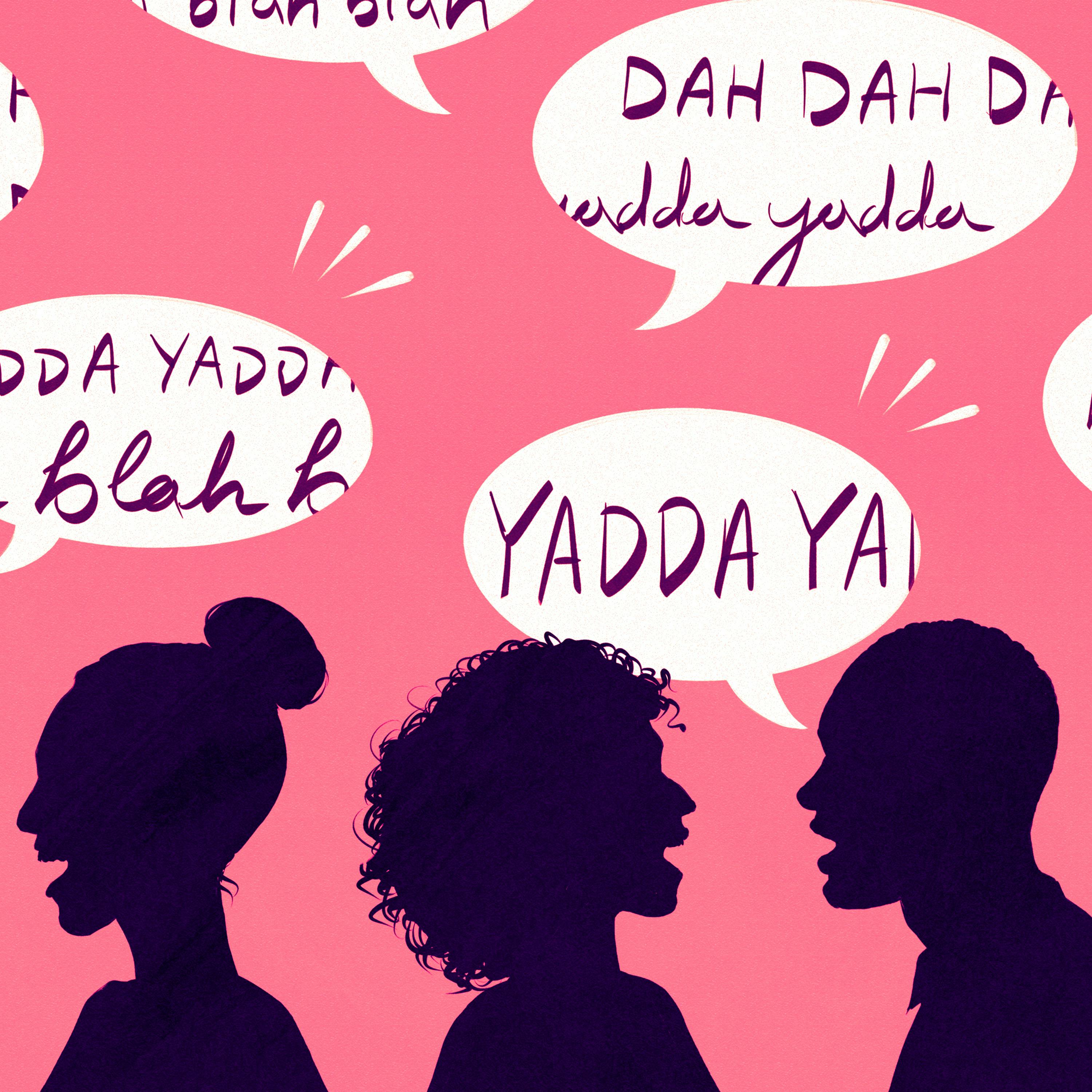
Loading summary
Transcript148 lines
- [00:00]
Dallas Taylor
Hey, listeners. It's hard for me to believe, but this is actually the 200th episode of 20,000 Hz. And whether you've been with us from the beginning or if this is your very first episode, I want to thank you for being here. Now, I started this show eight years ago, and since then, the way podcasting works has changed a lot. Many podcast apps are moving closer and closer to an algorithmic model, which is more like YouTube. This means your podcast app may start to send you suggestions based off of your preferences as a listener. This is a great way to discover new show shows, but it can also make it easy to miss specific episodes from the shows you already love. So to make sure you catch every 20,000 Hz story, go to our show page in your app and make sure you're following. Then consider turning on auto downloads and notifications. That way you can listen right when we launch our episodes and participate in the new episode buzz. During the holidays, it can be hard to stay healthy, but while you're enjoying all of that tasty food and trying to avoid catching a cold, you can stay on top of your health. Health with Zocdoc. Zocdoc is a free app and website where you can find and book high quality in network doctors instantly. With over 100,000 providers across every specialty, you can get appointments within 24 to 72 hours or even the same day. Visit Zocdoc.com 20K to book your top rated doctor today. That's Zocdoc.com 2 0K. You're listening to 20,000 Hz. I'm Dallas Taylor. Well, hello there, 20,000 Hz producer Amelia Tate.
- [01:40]
Amelia Tate
How's it going, Dallas? How's your day been so far? I mean, it's the morning for you, right?
- [01:43]
Dallas Taylor
I just drank three cups of coffee, so hopefully it's going to get a lot better real quick.
- [01:48]
Amelia Tate
Nice, nice. And do you know what we're talking about today?
- [01:52]
Dallas Taylor
I know we're talking about blah blah blah.
- [01:55]
Amelia Tate
I mean, it's really funny. I was talking to my husband last week and I was like, oh, I'm doing a podcast episode on blah blah blah, yada yada yada. And he looked at me really concerned and I was like, what? And he was like, tell me what it's about. And I was like, exactly. No, it's literally about blah, blah, blah, yada yada yada, blah blah blah and yada yada yada are terms you've probably heard before, whether it's in everyday conversation or in a movie or TV show. For instance, there's the classic Seinfeld episode, the yada yada.
- [02:28]
Paul Sacca
Are you close with your parents?
- [02:30]
Amelia Tate
Well, they gave birth to me and.
- [02:32]
Helen Abadzi
Yada, yada, yada, yada.
- [02:34]
Dallas Taylor
What? Yada yada, yada.
- [02:39]
Amelia Tate
I mean, these aren't confusing terms to you, right? You've heard them before. You would know how to spell them.
- [02:45]
Dallas Taylor
Yeah, it's, you know, if somebody's just droning on and on and on about a subject, you would go, you know, and blah, blah, blah. You get the gist of it.
- [02:53]
Amelia Tate
Right. The word blah was first recorded in print in 1918. It showed up in the published diaries of journalist Howard Vincent O'Brien, which were titled Wine, Women, and War. Here's a quote.
- [03:08]
Dallas Taylor
Colonel H here today pulled old blah about service, doing one's bit, etc.
- [03:15]
Amelia Tate
As for yadda yadda, comedian Lenny Bruce popularized the phrase in his performances in the 1960s.
- [03:22]
Dallas Taylor
Yada, yada, yada, yADA, yada, yada. 1.
- [03:26]
Amelia Tate
Since then, yada, yada yada, and blah, blah, blah have had plenty written about them. They're googleable, they're spellable. And there have been articles written about their origins. But what fascinated me is that there's a sort of longtime cousin of blah, blah, blah and yada yada yada, which is not in the dictionary. It's not really Googleable. I hear my friends say it all the time. I've never seen it written down. I'm hoping that you recognize it. It is. Let me clear my throat. Sorry, I need to get it right because there's five. It is da da da da da. No, hang on. So I'm telling a story. Me and Dallas are chatting. Da da da da da da da. Do you hear what I'm saying? Like when you say da da da.
- [04:12]
Dallas Taylor
Da da da da da da da da da da da da da da.
- [04:16]
Amelia Tate
Da da da da da da da da da da da da.
- [04:19]
Dallas Taylor
That's a thing. I have never heard that before in conversation.
- [04:22]
Amelia Tate
It's actually so hard to say it consciously. Like, I'm trying to read it from a sheet and I'm like, actually, it only works when you say it naturally. Okay, maybe some examples will help. Here are some dars in the fantasy cartoon adventure Time.
- [04:38]
Dallas Taylor
So, yeah, this all goes down again. Bomb goes off.
- [04:42]
Amelia Tate
So, yeah, the crown is totally gone. And here's a clip from the film Florence Foster Jenkins, where Meryl Streep shows a newspaper review to Hugh Grant, page.
- [04:52]
Paul Sacca
Seven, here, here, down below.
- [04:56]
Dallas Taylor
And the consensus was that she'd never sung better.
- [05:00]
Amelia Tate
These stars also show up in the first episode of the TV drama Scorpion, when a hacker is searching for the ideal person to call in an emergency.
- [05:09]
Helen Abadzi
Can't make over six figures, can't work for a tech company. Salesmen. Salesmen never turn off their phones. They risk losing business.
- [05:16]
Dallas Taylor
And Gordon Tooley.
- [05:19]
Amelia Tate
And there's a meta reference to them in the BBC mockumentary W1A while characters are debating what to write in a statement to the press.
- [05:27]
Dallas Taylor
Exactly, Simon.
- [05:28]
Amelia Tate
Yes.
- [05:28]
Dallas Taylor
In response, the BBC issued a statement in which it described the role of.
- [05:31]
Paul Sacca
Head of Values as, you know, da da da da da da something or other.
- [05:35]
Amelia Tate
Brilliant. Yes.
- [05:35]
Dallas Taylor
Although, is it just me or is duh duh duh duh duh duh something or other not quite going to do it somehow?
- [05:40]
Amelia Tate
A lot of the times we use it, it might be if you were reciting a list or reciting a story. So I'd say me and Dallas had a chat. Da da da da da. The episode will be out in a few months. See there, I managed to get the intonation right.
- [05:53]
Dallas Taylor
Maybe I have.
- [05:54]
Amelia Tate
Da da da da da da da da da da.
- [05:56]
Dallas Taylor
It's really fun because it seems like you can really put any drum cadence you want with it, you know? Da da da da da da da da da da da da da da da da.
- [06:04]
Amelia Tate
Yeah, it is quite musical. You can mix up the intonation and often it's five DAZ. Sometimes it's three DAHs, like Da Da Da. Sometimes it's four. Here, for example, are three DAHs followed by four DAs in the reality TV show the Real L Word. And I was like, yeah, I was like, she's cute, like, not her type, but I'm like, she's not my type.
- [06:27]
Dallas Taylor
And all I said was that, yes.
- [06:30]
Helen Abadzi
I may have made, like, joke in.
- [06:32]
Amelia Tate
The heat of the moment, like, but, like. But five does seem to be the magic number, like here in the film the Age of Stupid.
- [06:40]
Dallas Taylor
And she just basically took me straight over to Piers and say, hey, look, you, you know Piers, this is Lisa, you know, da da da da da.
- [06:48]
Amelia Tate
And that was it. The problem that I had, which I seem to have a lot with these stories, is that I couldn't Google it because I couldn't spell it right. Is it duh with a U? Is it da with an A? Is there a H on the end? Is it even just kind of like the letter D by itself, like, da da da da da?
- [07:08]
Dallas Taylor
Is there any sort of official spelling or can we just make it up?
- [07:11]
Amelia Tate
So I think we can make it up.
- [07:13]
Dallas Taylor
Ooh, I like that.
- [07:14]
Amelia Tate
I Think I'd like to go for a dah that feels right to me.
- [07:18]
Dallas Taylor
Let's name it and claim it. Dah it is, if you deem so.
- [07:22]
Amelia Tate
Okay, maybe we should christen it, like the 5 duh or the 5D phenomenon or something. But what exactly are the 5 DAHs? What do they mean and where do they come from? Why do we use them but never acknowledge them? I wanted to email a bunch of experts to be like, does anyone know what I'm on about? It's a very hard email to draft because, as I said, you can't spell it. You just have to kind of hope that people know what you're talking about and have come across the sound. But thankfully, one expert did get what I meant.
- [07:55]
Helen Abadzi
You approached me with your email and gave this example, and I thought, yeah, this sounds like something I probably heard before. My name is Paul Sacca. I teach at the University of Texas, and I have a PhD in linguistics and a PhD in philosophy.
- [08:14]
Amelia Tate
In 2017, Paul published a paper entitled Blah, blah, Blah, Quasi Quotation and Unquotation. He explained to me exactly what quasi quotation is.
- [08:24]
Helen Abadzi
When you report what someone else has said, you can do it with different reasons in mind and you can do it in different ways. So, for example, if I tell you about what John told me, John said his boss is an effing nut job. That claim of mine is open to interpretation. I could mean it strictly in the sense that he himself used the slightly euphemistic way of describing his boss. Or I can mean to convey that he himself used the full expletive. And I'm the one who is being a little euphemistic about it. You see those two interpretations. So the first one is called strict quotation, and the second interpretation is known as quasi quotation. I'm quoting John. I'm reporting what he said, but I'm not using entirely his exact words.
- [09:22]
Amelia Tate
Blah, blah, blah is one common way that we use quasi quotation. Here's a clip from Family Guy that pokes fun at this idea.
- [09:29]
Dallas Taylor
Carter sent $100,000 to a Nigerian prince who's going to give him a million.
- [09:33]
Paul Sacca
Oh, Peter, don't tell me you two fell for that scam. It's the oldest email scam out there. The assets are frozen. You cover legal fees. Blah, blah, blah.
- [09:43]
Dallas Taylor
Oh, my God, he did say blah, blah, blah.
- [09:46]
Helen Abadzi
It's not just blah, blah, blah. There are other, I call them, devices of quasi quotation.
- [09:52]
Amelia Tate
One example is so and so, and another is such and such. Here's some narration from the movie Magnolia.
- [09:58]
Helen Abadzi
And we generally say, well, if that.
- [10:01]
Paul Sacca
Was in a movie, I wouldn't believe it.
- [10:03]
Dallas Taylor
Someone's so and so met someone else's so and so and so on.
- [10:08]
Amelia Tate
And of course, there's yada, yada, yada. Here's a scene from Frasier showing what Eddie the dog hears when the humans talk.
- [10:15]
Dallas Taylor
Yada, yada, yada, yada, yada, yada.
- [10:17]
Paul Sacca
Eddie.
- [10:17]
Dallas Taylor
Yadda, yadda, yadda, yadda, yadda, yadda.
- [10:19]
Amelia Tate
Oh, God.
- [10:20]
Paul Sacca
Yada, yada, yada, yada, yada.
- [10:21]
Amelia Tate
But where exactly do these nonsensical sounding terms come from?
- [10:26]
Helen Abadzi
These words don't occur out of nothing. The first yadda, yadda, yadda was Lonnie Bruce. But looking a bit earlier in the 1940s, the OED reports yatta, yatta, yatta.
- [10:40]
Amelia Tate
In the 1947 musical Allegro, there's a song called yatta, yatta, yatta that mocks meaningless conversation. You can hear here how the phrase is a pretty perfect onomatopoeia of a chatty room.
- [10:55]
Dallas Taylor
Broccoli hogwash, salder dash, foamy.
- [11:00]
Amelia Tate
Baloney stripe and trash.
- [11:06]
Helen Abadzi
And you can see how yatta, yatta, yatta may become yadda, yadda, yadda. It's just a little reduction, a little simplification. I should also add that it has been speculated yada, yada, yada derives from the verb to yadder, and yadder is comparatively recent. It is conjectured that it's a blend of to yak or yammer and to chatter.
- [11:37]
Amelia Tate
Similarly, blah, blah, blah likely evolved from the word blabber, which then got shortened to blab and eventually just blah.
- [11:45]
Helen Abadzi
So we live in this environment where there are tens of thousands of words floating around and we have imperfect memory of them. So whoever first used yatter might have honestly believed that they were not innovating, that they were not creating a new word, that they were not blending yammer and chatter. But this is just a brain glitch, and these brain glitches are one source of linguistic change.
- [12:15]
Amelia Tate
It turns out it is pretty easy for these brain glitches to spread from person to person.
- [12:21]
Helen Abadzi
I saw an estimate that yada, yada, yada makes up less than 1 in 100 million words. So you statistically need to hear more than 100 million words before you ever run across yada, yada, yada. Yet the human mind is genetically programmed to be a kind of sponge for vocabulary. You might have only heard it once or twice in your whole life, but you remember the word even in the meager context where you first heard it. You were able to arrive at a reasonable hypothesis as to what the term means.
- [12:58]
Amelia Tate
Of course, not everyone uses these terms.
- [13:01]
Dallas Taylor
I actually practice the opposite. It's very hard for me not to use filler words, but because I've been on podcasts before, I have naturally used filler words and had listeners write me and be like, stop using like like you just did just then. Dallas I want to be more da da da da da naturally. But all of my public speaking books and gurus say the opposite.
- [13:31]
Amelia Tate
Regardless of whether we should yadda blah and da, the simple fact is that many of us do. But if we can trace blah to 1918 and yadda to the 1940s, where on earth did da da da da da come from? That's coming up after the break.
- [13:51]
Dallas Taylor
It's hard to overstate just how much I love my Sonos speakers. And they have speakers for just about every situation you can think of. So no matter who you're shopping for this holiday season, these devices make excellent gifts. Personally, I have almost 20 Sonos devices throughout my house. For instance, I have my record player hooked up to the Sonos port. This wirelessly sends the audio signal to any Sonos speaker. For me, that's mainly my Sonos Move 2, which is super portable. That way I can listen to vinyl records in my studio, out on the porch, or playing in the backyard with my kids. I also have several Sonos speakers linked together. For my home theater setup. I like to turn on both night sound and speech enhancement features so I can still hear the dialogue without waking up the kids. Sonos is a huge part of my daily routine. For me, every product they make has been easy to set up, and they all sound fantastic. Sonos has great gifts for everyone on your list. Visit sonos.comhertz to wrap up your holiday shopping. That's sonos.comhertz and just as a reminder, be sure to use our unique URL so they know that you came from us. Sonos.comHertz Congratulations to Asaph alone for getting last episode's mystery sound right. That's some guitar feedback from the beginning of the Beatles song I Feel Fine. During a recording session, John Lennon casually leaned his guitar against an amp and it made that noise. The band liked that sound and asked producer George Martin to include it somewhere on their upcoming album today. It's widely considered the first intentional use of feedback in recorded music, and here's this episode's Mystery Sound. If you know where that sound came from, tell us what it is at the web address mystery.20.org Anyone who guesses it right will be entered to win one of our super soft 20,000Hz T shirts. Or you can head to 20k.orgshop to grab a T shirt right now. When it comes to the future, I tend to be an optimist. But when it comes to business decisions, it's best to make them based on what you really know rather than what you hope will happen. And netsuite from Oracle can help you do just that. Netsuite is a cloud based system that handles nearly all of your business needs. That includes accounting, payroll, project management, inventory, HR and more. As a business owner, I can tell you that having a unified system like this will save you a ton of time and effort. It means you don't have to transfer data from one platform to another or train people on multiple systems. Another benefit of having all that information in one place is that it can help you spot patterns and Trends. And with NetSuite's real time insights and forecasting tools, you can find business opportunities that you hadn't even thought of before. Speaking of opportunity, download the CFO's Guide to AI and Machine Learning at netsuite.com 20,000. The guide is free to you at netsuite.com 20netsuite.com 20,000 in the 1960s, some scientists predicted that by now we'd be living on the moon, driving flying cars and taking all of our daily nutrition in a single pill. And yet, here we are. The point is, it's hard to predict the future, but you can still make smart decisions for the future of your business thanks to NetSuite. NetSuite by Oracle is the number one cloud based enterprise resource planning system. And what that means in normalspeak is that it brings all of your accounting, financial management, inventory and HR software into a single platform. The result is all of that crucial data ends up in one unified place. Then you can use NetSuite's Real Time Insights and forecasting tools to make informed decisions. On top of that, netsuite will save you a ton of time. And as we all know, time is money. If you're ready to stop looking backwards and start looking forwards, then I highly recommend signing up with NetSuite. Chances are there are opportunities for your business that you never even considered. Speaking of opportunity, download the CFO's Guide to AI and Machine Learning at netsuite.com 20k. The guide is free to you at netsuite.com 2 0k.
- [18:36]
Amelia Tate
In the English language, there are a variety of terms that essentially mean etc. Here's Lisa Simpson demonstrating one.
- [18:44]
Paul Sacca
I don't understand. Dad would never miss an open bar with chicken wings. Plus, he loves mom and us. Yada, yada, yada.
- [18:51]
Amelia Tate
And here's Louise Belcher with another.
- [18:53]
Paul Sacca
What if we read her journal?
- [18:55]
Dallas Taylor
Blah, blah, blah, teen stuff, hormones.
- [18:59]
Amelia Tate
She is going to the top of.
- [19:00]
Dallas Taylor
Mount Windayap by herself.
- [19:04]
Amelia Tate
But there's another similar phrase that gets a lot less attention, and that's the humble da. It comes in threes. Da, da, da and fours.
- [19:13]
Dallas Taylor
Da, da, da da.
- [19:14]
Amelia Tate
But very often you hear five DAHs in a row. Here they are in a YouTube video from the Insider Food Channel, the Taco.
- [19:22]
Helen Abadzi
Bell ization of Mexican food. Like, oh, I'll be getting sour cream and diced onions and tomatoes and shredded.
- [19:27]
Amelia Tate
Cheese and da, da, da, da, da. But sometimes you get even more. Here's Pharrell Williams with seven daz. In fact, whenever I did say, man.
- [19:37]
Dallas Taylor
I'm gonna do da, da, da, da.
- [19:38]
Helen Abadzi
Da, da, da, it does the exact opposite.
- [19:40]
Dallas Taylor
Didn't work like that.
- [19:41]
Amelia Tate
Here's philosopher Dan Dennett with eight. They'll get together and they'll say, you know, my uncle, I got an uncle.
- [19:49]
Dallas Taylor
Who thinks, da, da, da, da, da, da, da, da.
- [19:50]
Amelia Tate
What do you think of that? And here's former governor and pro wrestler Jesse Ventura with a whopping nine dars. Let me explain why.
- [20:00]
Helen Abadzi
Because everybody right away went, oh, what a joke.
- [20:06]
Amelia Tate
As far as I can tell, no one has yet explained where da came from.
- [20:11]
Helen Abadzi
Yes. So I wrote and published a whole big article which looks at blah, blah, blah and yada, yada, yada. And it never occurred to me to talk about da, da, da.
- [20:22]
Amelia Tate
But Paul does have a few theories. First, he told me that in Morse code, the dots and dashes are colloquially called dits and das. So potentially the word da spread from there.
- [20:37]
Helen Abadzi
So that's one possibility. I think it's an esoteric possibility because not a whole lot of people know that users of Morse code use these terms dit and da.
- [20:49]
Amelia Tate
Another possibility is that da is a reduction of dash or dot, two pieces of punctuation we use to convey that we're skipping over something or missing it out. When you're writing something down, you might add a, also known as an ellipsis. Here's a clip from Mamma Mia. We danced on the beach and we kissed on the beach. And.
- [21:11]
Paul Sacca
What.
- [21:12]
Amelia Tate
That's what they did in the olden days.
- [21:14]
Helen Abadzi
Da might come from dot if somehow that final T gets reduced down to nothing.
- [21:21]
Amelia Tate
I mean, when I came to you, I called it a verbal ellipses. Do you think that that's a fair thing to call? Could I, Chris, edit that?
- [21:33]
Helen Abadzi
Yes. I think that's a marvelous description of the phenomenon, verbal ellipsis. We are used to seeing the three to four dots as a sign of ellipsis in writing. So that might be a reason why blah blah blah and da da da might often appear, you know, within a set of three.
- [21:52]
Amelia Tate
Repeating it more times, say five, just adds that extra bit of emphasis and even a sense of melody which linguists call prosody.
- [22:03]
Helen Abadzi
One thought that did occur to me is that coronal consonants in English, such as the d and T are very frequently used for non lexical purposes.
- [22:17]
Amelia Tate
Coronal consonants are sounds we make when our tongue curves upwards and touches the spot behind our front teeth. So da da da da da and ta ta ta ta ta.
- [22:27]
Helen Abadzi
It occurs a lot in music, right? The police have a song, di do do do do.
- [22:39]
Amelia Tate
And then there's Tom Steiner by Suzanne Vega.
- [22:49]
Helen Abadzi
We also find it. And zippity doo dah Zippity doo dah zippity A. Or if you want to refer to an object without specifying what kind of object it is, you might call it a doodad. We also find interjections like whoop de doo.
- [23:07]
Amelia Tate
I've also noticed that people use the letter D when interrupting someone. Here's a scene from the film Big Fat Liar.
- [23:14]
Dallas Taylor
You almost cost me my job, Frank.
- [23:17]
Amelia Tate
I'm sorry.
- [23:18]
Dallas Taylor
I can explain. You hear that? If you said that, I don't want to hear it, okay?
- [23:25]
Amelia Tate
People also use it when they're telling someone to hold their horses. Here's a clip from the sitcom Happy Endings, where one character is anxious to get in the hot tub.
- [23:35]
Paul Sacca
First we have to hand out the candy.
- [23:37]
Helen Abadzi
So the point is, if you want to utter an interjection that has comparatively little meaning in and of itself, which syllables do you utter? In English, it looks like D is somehow favored.
- [23:52]
Amelia Tate
But why do we prefer D? It might just be because it's an easier sound to make.
- [23:57]
Helen Abadzi
Wild speculation might be that there's a smaller cost to enunciating it if it takes a little less muscular innervation to flip the tip of your tongue against the front of your mouth that way.
- [24:11]
Paul Sacca
Sing along with us dee dee dee.
- [24:14]
Helen Abadzi
Da da da da da yeah, we're happy. And I think the most important possibility is that these various speculations are not mutually exclusive. A lot of linguistic phenomena are the result of what's known as multiple motivation.
- [24:34]
Amelia Tate
In other words, it's most likely some combination of several of these factors. So English speakers favor das and we're also partial to some blahs and some yaddas. But what do people from other parts of the world use to convey the same meaning?
- [24:50]
Paul Sacca
My name is Helen Abadzi. I am a Greek cognitive psychologist who speaks 19 languages. Incidentally, the languages that I know are your usual list of European stuff, but also Romanian and Albanian, Hindi, Nepali, Bangla, Sinhala, Arabic and Hebrew, Malay, Malagash, of course I'm Greek, of course I know some English. My Spanish is essentially native level. I forget what else you remind me. I'll tell you.
- [25:22]
Amelia Tate
Helen was the perfect person to ask about blah, blah, blahs around the globe. We focused on times when these sayings are used to express impatience. For example, something like blah, blah, blah. I get it, I get it. Hurry up already.
- [25:33]
Paul Sacca
Somebody might say, you know, in Hebrew they may say kvar, kvar. It's already done it. In Greek we can say ade, ade, adedet finish. Or Elijah, he was saying, he was saying, he was saying. In Sinhalese you can say something like whatever somebody said in Nepali, same thing. It became boring. So you can say in Portuguese they can say something, there it goes again. Etc. In French I hear the word.
- [26:08]
Amelia Tate
Here's a similar phrase from the YouTube channel, Learn French with Georges.
- [26:13]
Helen Abadzi
So repeat after me.
- [26:19]
Dallas Taylor
So what is this?
- [26:21]
Helen Abadzi
It means etc.
- [26:25]
Paul Sacca
In Hindi, something to say of the sword would be Vaguera, Vaguera, etc. Etc. Which interestingly, it's Arabic. In Russian they may say blah, blah, blah. Frankly, I asked a few people because this is the stuff that isn't found in dictionaries. In Malay, come on, hurry up. In Albanian, skamousum. There's nothing more to say. Please, please. In Spanish, et cetera, et cetera, por favor. What we see overall, either you use some word like he was saying, he was saying, hurry up, come on, get done. Or you imitate the sound onomatopoeia.
- [27:12]
Amelia Tate
Helen was sort of the opposite opinion to me. She said that they're not found in dictionaries. And I said, you know, is that a shame? Should we be writing these down? And she was kind of like, eh, it doesn't really matter. You pick it up. You hear people talk and you pick it up. Whereas I think I just love a bit of knowledge. I love to know where things came from and trace things through time and have them recorded.
- [27:34]
Dallas Taylor
I just think it's always cool to zoom into patterns of linguistics and not only linguistics, but just patterns of everything. I think it's easy to gloss over humanity or how it's being filtered through our little devices. But you can learn a lot through very specific, nerdy things like this about how all humans speak to each other and how that nuance in each language means a slightly different version of a similar thing.
- [28:07]
Amelia Tate
And it's interesting, I suppose, to think about languages that might not have it and that might indicate that they actually are better listeners and that there might be an actual slower pace of life somewhere out there. Because, you know, people are just going, da da, da, da da, blah, blah, blah, blah, yada, yada, and they're actually bothering to say everything.
- [28:23]
Dallas Taylor
Well, I grew up in a really rural area, you know, pre Internet, and when I think back of grandparents or older people, even now speaking, there's not a whole lot of filler words. I'd have to consciously think about it. But I do suspect that in storytelling, in very verbal listening environments, that there's probably a culture of allowing more space. If someone doesn't have the words right away, it is still a sign of love to give them the space to try and work out what they're trying to communicate.
- [29:01]
Amelia Tate
Of course, there's nothing wrong with saying blah, blah, blah or da da da da da da da when you're trying to skip over the unimportant parts of a story. After all, words and phrases develop because we find them useful. But from time to time, we might all benefit from slowing down and giving ourselves space to tell the full story.
- [29:19]
Dallas Taylor
One of the things that I would encourage people to practice is when you do hear someone else who is very fast and breathless and using all these filler words, when they finish a thought, I always count to three or five to make sure that they know that I'm listening. And they can also slow down. I'm getting into the weeds right now. This probably isn't even about this show.
- [29:44]
Amelia Tate
No, I love something I think about, and I think it is about this show. And I think that's why these topics are so interesting, because we start with something like, oh, I noticed my friend said da da da da da when she was telling me a story. And then we end up in a conversation about active listening and communicating with each other, which is essentially what this is. You know, it is maybe something that some people don't think is worth thinking about or aren't necessarily curious about. But when you do get a bit curious and you do chat about it for a while, this is where we end up. Which I love.
- [30:14]
Dallas Taylor
Yeah, I find it fascinating. 20,000 Hz is produced out of the sound design studios of Defacto Sound to hear more Follow Defacto Sound on Instagram.
- [30:35]
Amelia Tate
This episode was written and produced by Amelia Tate and Casey Emmerling with help from Grace East.
- [30:41]
Dallas Taylor
It was sound designed and mixed by Brandon Pratt and Joel Beuter. Thanks to our guests Paul Sacca and Helena Bodsey. To learn more about their work, follow the links in the show Notes I'm Dallas Taylor. Thanks for listening. My name is Phil Corbett, friend of 20,000 hertz and occasional contributor. I make a podcast called the Wind. It's a sound rich show made outside from a handmade desk and it is all about listening. It's been featured on 99% Invisible Snap Judgment and if you're here, I think you'll like it. Subscribe in your podcast app or@thewind.org Listen each episode of 20,000 Hz takes 2 to 300 hours to make. That's because we jam packed this show with as much ear candy, immersive sound design and amazing music as we can fit in. But with all of that work, you might wonder how we actually pay for it. Well, about 5% of our revenue comes from the listeners who've signed up for our ad free feed. You can sign up over@20k.org plus or directly within Apple Podcasts. The next 25% comes from the work we do over at my sound design company, Defacto Sound. So if you happen to work in advertising, streaming film, games or television, introduce yourself by writing hi@Defactosound.com the remaining 70% of our revenue comes from our advertisers. Now we actually turned down quite a few potential advertisers because they're not really the right fit for our show. But every company that you do hear me talk about is one that I sincerely believe is useful and a good deal. Now here's the thing. The biggest thing these advertisers care about is seeing results. So if you try out any of these services, make sure to use our unique URL or promo code. It's the only way to show these companies that we're sending them new customers. And if enough people do that, they'll book with us again. Which means we can keep making this show. It really is that simple. You can find today's sponsor codes in the show notes of this episode, and to view all of our discount codes and offers, just head to 20k.org sponsorship.