← Ukraine: The Latest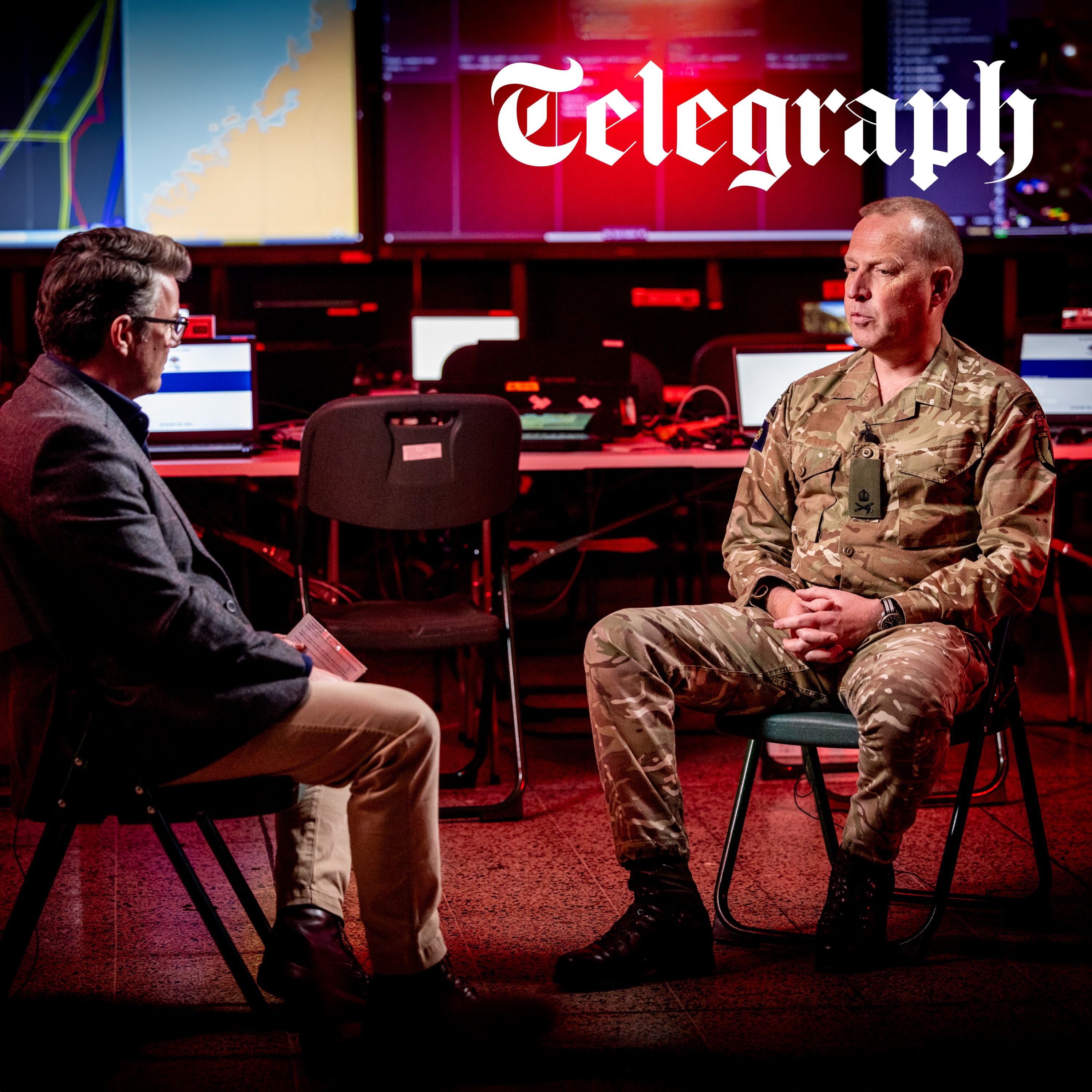
Loading summary
Transcript71 lines
- [00:04]
Alexander Fairweather
The telegraph.
- [00:10]
David Knowles
Insurance isn't one size fits all. That's why drivers have enjoyed Progressive's name your price tool for years now. With the name your price tool, you tell them what you want to pay and they'll show you options that fit your budget. So whether you're picking out your first policy or just looking for something that works better for you and your family, they make it easy to see your options. Visit progressive.com find a rate that works for you with the name your price tool Progressive Casualty Insurance Company and Affiliates Price and Coverage match limited by state
- [00:38]
Jake Stauch
law I'm Jake Stauch, co founder and CEO of Cervel. We built Servl to automate the IT work that slows companies down. Onboarding password resets, access to applications. My laptop stopped working. While employees wait for help, their real work is put on hold. It desperately wants to automate this work and that's why they need Serval. You just tell Serval what you want to automate in plain English and it's built. No drag and drop workflows, no expensive consultants. Employees get unblocked and IT teams go from drowning in tickets to building what actually matters. With Cerbal, it becomes the AI engine powering the entire company. This is a new way to run it. We guarantee you'll automate 50% of all tickets and we'll prove it to you in a free four week pilot. Go to cervel.com acast that's S-E-R-V-A-L.com acast.
- [01:41]
David Knowles
Acast powers the world's best podcasts. Here's a show that we recommend. What makes a leader worth following?
- [01:50]
What should you really care about in your job? As technology is changing so quickly, is
- [01:55]
it just gonna be about machines talking to other machines? I mean, should you quit your job and start something on your own, what would that take?
- [02:01]
What does success and risk look like when we're all at the starting gate together?
- [02:06]
These are the questions we answer each week on Lead Human with Jack Myers and Tim Spengler. Join us each week and subscribe at your favorite podcast platform and YouTube. We'll tell stories, we'll hear from some
- [02:18]
Francis Darnley
of the best, and we'll try to figure this out together.
- [02:23]
David Knowles
ACAST helps creators launch, grow and monetize their podcasts everywhere.
- [02:29]
Alexander Fairweather
Acast.com.
- [02:36]
David Knowles
I'm Dom Nichols and this is Ukraine. The latest Today, as the US Administration releases details about its participation in Putin's flagship business and investment conference. Russia and Belarus wind up their nuclear exercises just as Ukraine continues its exercise in hitting oil and gas facilities near Moscow. Then we look at the latest bout of political trolling as Kyiv releases a refinery advent calendar detailing how many strikes it's conducted this month alone. And later I talk about a day I spent recently in a secret part of the London underground network where I interviewed a top NATO commander who said of the Russians, the people, pound for pound don't scare me, but they're battle hardened and battle tested and significantly more lethal than they were in 2022. Bravery takes you through the most unimaginable hardships to finally reward you with victory.
- [03:30]
Francis Darnley
The Russia does not want peace.
- [03:41]
David Knowles
If I'm president, I will have that war settled. One day, 24 hours we are with you. Not just today or tomorrow, but for 100 years.
- [03:54]
Francis Darnley
Nobody's going to break us.
- [03:56]
General Mike Elvis
We are strong.
- [03:57]
David Knowles
We are Ukrainians. It's Friday 22 May, four years and 87 days since the full scale invasion began. And today I'm joined by my co host Francis Darnley. Dr. Jade McGlynn is away this week, but she'll be back soon to give her regular updates on the occupied territories. Now then, President Zelensky said earlier today that Ukrainian drones had hit the Yaroslavl oil refinery. That's about 700 kilometers inside Russia. He said we are bringing the war back home to Russia and that's only fair, adding, we are also preparing other forms of our long range sanctions and mid range strikes in response to Russia's attacks on our cities and communities. He said Russia has lost more than 145,000 personnel since the beginning of 2026, including nearly 86,000 killed and at least 59,000 seriously wounded, plus more than 800 Russian service personnel taken prisoner. So more numbers to go with Syrsky's this week. The news comes as Ukraine's MOD published a refinery advent calendar for May with the tagline stay tuned. We're not done. Also, as Reuters reported on Wednesday and Francis referenced yesterday, citing unspecified official data and sources, virtually all major oil refineries in central Russia have halted or scaled back their fuel output following recent Ukrainian drone strikes. A source told Reuters that the Kurishi oil refinery in Leningrad Oblast as one of Russia's largest oil refineries that has a processing capacity of 20 million metric tons a year, has fully halted operations since strikes overnight on May 4th and 5th. Some additional reporting there from the Institute of the Study of War. Now, as Frances said yesterday, Russia and Belarus have been conducting China joint nuclear weapons drills this week citing threat of aggression. Well, they finished Yesterday, the Russian MOD said the exercises included the launch of a Yars intercontinental ballistic missile from the Plesetsk State Test Cosmodrome that's 600 kilometers north of Moscow, another intercontinental ballistic missile from a submerged nuclear powered submarine, plus a load of cruise missiles. The exercises cement Belarus's place now as basically another Russian oblast. The the Belarusian constitution had directed that Belarus was a non nuclear state, but that was amended in 2022 to renounce the country's neutrality and non nuclear status. Now in Ukraine, Mykhailo Fedorov, Ukraine's defense Minister, said the country has slowed Russia's battlefield advance and is gradually regaining the initiative along the front line. Connected to that, President Zelenskyy said an SBU drone strike on an FSB headquarters in the Kherson region had killed or wounded 100 Russian personnel. Also hit was a Pantsir air defense system. No great moves on the line yesterday. About 820 Russian casualties 115 of 124 drones were shot down yesterday. Five people killed and over 50 injured across the country, 20 of them in Dnipro. That city was particularly hard hit yesterday during daylight hours. Now Ukrainian officials say Russia has been using missiles armed with depleted uranium warheads, causing radiation levels to spike around bomb sites. The sbu, the security service of Ukraine, said it found harmful levels of radiation emanating from an unexploded R60 air to air missile after an attack on the village of Kamka in the Chernihiv region last month. The source of the radiation was identified as Uranium 235 and Uranium 238. Our colleague Antonia Langford says in an article to which we will link Depleted uranium is a leftover material from the enrichment process used to produce nuclear fuel. It is less radioactive than natural uranium and and incredibly dense. It's roughly two and a half times more dense than steel, which makes it particularly good for armor piercing rounds. The British army has been using DU rounds depleted uranium rounds for decades in tank munitions. However, the dust that can be released when a DU round hits something is poisonous and slightly radioactive. Investigators in Ukraine recorded a Gamma radiation level of 12 microsieverts per hour at the bomb site, which significantly exceeds natural background radiation and is a threat to human health. They say ambient background gamma radiation is between 0.05 and 0.3 microsieverts per hour. Now in a statement, the SBU said given the toxicity and radioactivity of depleted uranium, we urge citizens to be especially careful if they encounter fragments of UAVs, missiles or other munitions. A 2022 United Nations Environment Program reports that depleted uranium was an environmental concern in Ukraine. The report said depleted uranium and toxic substances in common explosives can cause skin irritation, kidney failure and increase the risk of cancer. The chemical toxicity of depleted uranium is considered a more significant issue than the possible impacts of its radioactivity. Now a couple more for me. Again, sticking with the Security Service of Ukraine, the sbu, along with Ukraine's national police, say they've blocked eight more mobilization evasion schemes across the country, arresting the organisers for amounts ranging from 7 to 15,000 US dollars. The dealers offered people the opportunity to avoid conscription through forged documents or help them escape abroad. In Odessa, military counterintelligence officers of the SBU exposed a state employee who was writing off draft evaders for military registration based on health conditions. Two people were also arrested in the Mykolaiv region, one of whom is a foreigner with permanent residence permit for Ukraine. Now then, Mark Rutte, NATO Secretary General. He's been in Sweden yesterday and today. NATO foreign Ministers are meeting today in Helsingborg for the first NATO foreign ministers meeting hosted by Sweden. Mr. Rutte said the aim of the meeting is to prepare the ground for the NATO summit in Turkey in July, particularly regarding defence investment, industrial production capabilities and continued support for Ukraine. He said in Ankara, we must show that we are making real progress, that we are delivering and that means producing more, strengthening our supply chains and stockpiles, bringing producing faster and ensuring that our militaries have what they need to deter and defend. He was asked about the idea of countries spending a quarter of a percent of their GDP to support Ukraine, the Estonian plan that we've discussed many times. And his answer praised Sweden, Canada, Germany, the Netherlands, Denmark and Norway, and also a couple of others, he said. However, he then said there are also many not spending enough when it comes to the support for Ukraine. This is why I made the proposal, the 0.25% proposal, and it will not get unanimity, so it will not work. But it has at least started the debate between allies that if we are all saying that Ukraine has to make sure that it stays in the fight as strong as possible and to bring this fight to a peace, then of course we all have to chip in in equal manner and that debate is now at least heavily taking place in NATO and that's very good. Now, Andrei Sibia was there too for the NATO Ukraine Council ministerial meeting. He tweeted this morning, I informed the Secretary General about Russia's increased threats to Ukraine and wider Europe from the duration of Belarus. We need strong collective deterrence to prevent regimes in Moscow and Minsk from making mistakes. Well, that's us for the updates, Francis. Diplomatic stuff. The US Administration's woken up. Its eye is no longer just staring at Iran. It's now looking at Russia and Ukraine again. What's the latest there?
- [11:01]
Francis Darnley
Yeah, well, we've been talking a lot, haven't we, about former red lines being crossed this this week, not least here in London. And we're hearing this morning that a representative of President Trump's administration will attend the St. Petersburg International Economic Forum next month. Now, of course, that is Russia's flagship forum for business and investment, sometimes seen as their alternative to Davos. I think that's over egging it somewhat, but nonetheless, this is a significant thing. So we understand that the U.S. fine Arts Commission chair, Rodney Mims Cook, told a Russian state media outlet that he would be going. This will mark the first known attendance by a representative of any US President for many years at this forum. Last year, Washington did decline to send anybody. It would seem that that is not the case this year, although it's not completely clear whether he's going ordered or whether he's going on his own volition, as it were, and just happens to be a member of the administration in some respect. Now, he is, as I say, chair of the U.S. commission of Fine Arts and began that role in he's also the founder and president of the National Monuments Fund and previously worked with the World Monuments Fund as a Russia specialist, according to the Kyiv Independent. Before taking the post, he served as an independent expert on the restoration of the Resurrection Cathedral at the New Jerusalem monastery belonging to the Russian Orthodox Church in Moscow oblast. He also spoke at the Russian Embassy in Washington and delivered lectures at the Kremlin armory. So there's a little bit of heat on him today, to put it mildly. Many will see this as representative of the shift that we've been tracking now for, well, the best part of a year or so relating to the US Position, not least, of course, on the oil sanctions. But again, there are some unanswered questions in relation to this. So I think we should continue to monitor it. And as I say, it isn't until, I think, the first week of June. So there's some time to go before that forum really gets underway. Now, earlier in the week, I talked about the new Hungarian pm, Peter Magyar, of course, and him visiting Poland to reset relations there. Well, now Hungary is resetting with Ukraine, So Andriy Sibia, who you just mentioned, is meeting with his counterpart from the Hungarians, Anita Orban, no relation to Mr. Orban, who was governing the country for 16 years. Now, we understand that the ministers had expert level consultations on the minority rights issue and more on that in a second. But I think we can also see that there are other, other conversations happening in the background. This feels like they're portraying this as a reset in the relationship between the two capitals. Now, as I say, we've talked about this issue before, but there has been quite a significant development in the last few weeks relating to it. So Verity Bowman here at the Telegraph has just published a piece on how, when Orban was ousted from power, Kremlin forces reportedly began targeting that furthermost region. From the Russian perspective, in Ukraine that is home to many of the dual Ukraine and Hungarian nationals, that is such a key issue for Budapest in its conversations with Kyiv. It's been a major source of tension. As I said, I've talked about it quite a lot before, so I'm not planning to go over it in great detail again, but we understand that within 12 hours of the new prime minister taking over, we had strikes on that region where they are clearly intended as some kind of signal from Moscow that this territory that previously had been seen as being somewhere that Hungary was very involved with, that was being protected in some way as a sort of task agreement between the two capitals, that now this was open season in some way a kind of a warning shot, I think it's fair to say. And this has led to some concern in Hungary about the direction of travel between the relationship between them and Moscow. But as I say, I don't think it's necessarily anything that's surprising anybody. Now, Orban repeatedly used the Hungarian population as leverage against Kyiv, blocking Ukraine's EU accession talks and vetoing military aid packages because of what Budapest claimed were violations of the community's language and education rights. The tactics turned the grievances of a minority population in the country into a political weapon. As I spoke about in detail before, of course, ironically, the very fact that they've attacked it now would give Peter Magyar and the Hungarians even more justification for a stronger alliance with, with the Ukrainians in the longer term, if indeed that's the direction of travel they decide to go down. So an interesting event and one, as I say, that we'll continue to monitor now. Magyar has now just arrived in Vienna for another reset, this time with the Austrians. And Austria is interesting, a country we've spoken about many times before, sort of a hotbed from the Cold War of spy and Espionage tales very familiar from those who are familiar with the work of John Le Carre. But the BBC has done a great report on this. So the former intelligence official Augusto Ott, what a great name. Was found guilty of spying for Russia in what is being called Austria's biggest spy trial for years. The jury convicted him, he's 63 years old, of passing information to Russian intelligence and to Jan Marsalek, a name that will familiar to anybody who's been following Hayley Dixon's reporting for the Telegraph. She was only talking about him last week in relation to the spy who came in via a cow. As we were gonna spy.
- [16:25]
David Knowles
You came in from the cold cow.
- [16:27]
Francis Darnley
Cow. Cold cow, indeed. So if you're not sure what we're talking about, listen to the episode last week and it all will be revealed. But anyway, so this story has been rumbling on for some time, and he denies the charges, but was sentenced to four years and one month in prison, though his lawyer has appealed that. And it's renewed concerns that Austria remains this hub for Russian espionage. O also convicted of misuse of office, bribery, aggravated fraud and breach of trust. Essentially, between 2015 and 2020, he was said to be gathering secret information and personal data from police databases, which he then passed on to Marsalek and Russian agents for payment. The court heard that he was tasked with obtaining a laptop containing secret EU security hardware used for secure communications, which was then allegedly handed to the intelligence services of Moscow. That's what he was convicted of. He was also convicted of copying data from Austri Interior Minister official phones after they accidentally fell into the River Danube during a boating trip, then passed on that information to Moscow as well. So an interesting case and one that's leading to a lot of commentary over there. If you're in Austria and are following this one, do let us know how it's being reported. As I say, this is something that has been on people's radar for some time about issues around Austria and being one of the leakier countries in relation to intelligence, it's been a concern. But this, of course, has been something that the government itself has been very quick to condemn. So the former Austrian Chancellor called this affair a threat to democracy and our country's national security. So strong words from him. And then one just very last quick update, because we've been talking recently about these military exercises by Western armies. There's been loads of them happening. So there's another one taking place this week. So Ukrainians are currently teaching 18,000 NATO troops on the Swedish island of Gotland somewhere that we've spoken about many times previously. This is the Aurora 26 exercise bringing together 12 NATO members with Ukraine as a tutor. So Ukrainian soldiers are sharing their experience, particularly in drone warfare. Radio Free Europe, Radio Liberty have got fantastic footage of it, which if you're watching on video, you'll be able to see now. It's got jets, tanks, the full works, but that's where we are at the end of this week.
- [18:37]
David Knowles
Domestic insurance isn't one size fits all. That's why drivers have enjoyed Progressive's name your price Tool for years now. With the Name youe Price Tool, you tell them what you want to pay and they'll show you options that fit your budget. So whether you're picking out your first policy or just looking for something that works better for you and your family, they make it easy to see your options. Visit progressive.com find a rate that works for you with the name your price tool. Progressive Casualty Insurance Company and affiliates Price and coverage match limited by state law.
- [19:21]
Jake Stauch
I'm Jake Stauch, co founder and CEO of Cervel. We built Cerval to automate the IT work that slows companies down. Onboarding password resets, access to applications. My laptop stopped working. While employees wait for help, their real work is put on hold. It desperately wants to automate this work and that's why they need Serval. You just tell Serval what you want to automate in plain English and it's built. No drag and drop workflows, no expensive consultants. Employees get unblocked and IT teams go from drowning in tickets to building what actually matters. With Cerval, it becomes the AI engine powering the entire company. This is a new way to run it. We guarantee you'll automate 50% of all tickets and we'll prove it to you in a free four week pilot. Go to serval.com acast that's S-E-R-V-A-L.com acast.
- [20:30]
David Knowles
Now for our next item, I can reveal what I was up to a few days ago when I was off from the podcast. Let's start with a clip from a new documentary we've just released on the main Telegraph YouTube channel, which we'll link to in the show notes. You never know what's happening beneath your feet.
- [20:45]
General Mike Elvis
I would just take Russia at face value.
- [20:47]
Interviewer
What scares you most about the Russian army?
- [20:49]
General Mike Elvis
It's the fact that they're battle hardened. They're a formidable foe. Do we need to be ready to deal with that threat then? Absolutely.
- [20:58]
Interviewer
What would you say if I Told you. The British army was exercising in central London underground, just feet below the commuters and tourists. I've come to this NATO exercise to see what the future commanding war looks like from Charing Cross Station. This is a simulation of war with Russia. It's run by the Allied Rapid reaction corps, or arc, one of NATO's two emergency response forces. In a major reorganisation in April this year, virtually the entire British army is now commanded by the arc. So while he's not the actual head of the British Army, General Mike Elvis in effect owns all the heavy metal. Why are we in an underground tube station?
- [21:38]
General Mike Elvis
Why we're here. Underground in London is really demonstrating a departure from hitherto core headquarters. You would have been used to going to think season. Seas of tents, arrays of maps and map tables into. In keeping with what we've seen in the war in Ukraine is to survive, you either need to not be there to move or to be protected. And we're moving now to a digital headquarters, increasingly with decision support provided by artificial intelligence that allows us to operate faster and be more deadly at range.
- [22:11]
David Knowles
We are notionally.
- [22:12]
Interviewer
Well, where are we in central or Eastern Europe? We're somewhere under a ballistic missile threat. If you've got the connectivity, secure communications back to your headquarters, do you need to come forward? Why can't you do all this from a really nice ballistically secure place back in Gloucester?
- [22:26]
General Mike Elvis
It wouldn't be back in Gloucester, not least because there's a load of signs that point out headquarters are in big red writing as you get there, like it does many of our other headquarters quarters. So you'd want it to be closer to the battlefield, but you don't want to have it up close. It's not willing to. Sitting on a horse, looking through his telescope at the action unfolding before him. What we're showing here is that we've learned that against, you know, a threat from ballistic missiles, you know, you have to be subterranean, you have to disperse when you move. You do it in a very deliberate way and you do it in a way that is hidden in the electromagnetic spectrum. And again, you would want the headquarters to be
- [23:02]
Interviewer
now, under the new NATO plan, it is focused very clearly against Russia. There's no more sort of generic enemy force. It's Russia. How is the Russian army that crossed the border into Ukraine 2022 different from the army we see today? And what problems does that present for NATO?
- [23:18]
General Mike Elvis
To your point about the principal adversary, that which we spend most of our time thinking about because of the nature of the threat and its Relative proximity to it is Russia. You know, you have reported with great acuity just how those forces have learned over the time since February 22nd to become much more lethal and much better at the nature of 21st century, you know, war fighting, the third decade thereof. So they're significantly more lethal than they were and they're used to, you know, having been, you know, tested fulsomely for the last four years. So they're a formidable foe.
- [23:50]
Interviewer
What scares you most about the Russian army that you see today in Ukraine?
- [23:54]
General Mike Elvis
It's the fact that they're battle hardened and battle tested. You know, the people, pound for pound, don't scare me against the Western army at all, but it's the fact that they've been looking at this and living it for as long as they have
- [24:08]
David Knowles
now.
- [24:08]
Interviewer
Are you expecting any contribution to the coalition of the willing for whatever happens in Ukraine? Post some ceasefire at an interminable point in the future to come out of your formations assigned to your units assigned.
- [24:20]
General Mike Elvis
The politics around the coalition universally positive. The Prime Minister and the political direction has been clear that, you know, the UK is prepared to support a cease fire and put British soldiers into Ukraine. We've had money to support the preparation of that. And that would be a formation from within the corps that would be taken, as I've said, by the land force out for that task by time and would deliver against the direction given to us by our political masters.
- [24:43]
Interviewer
So, yes, what kind of size and duration would you be able to, to commit?
- [24:47]
General Mike Elvis
So. Well, the duration is entirely dictated by the size, but the size is, is undecided. We are looking at formation level for now to prepare.
- [24:56]
Interviewer
So formation, you're talking a division. Would a British division be sustainable on an enduring basis?
- [25:01]
General Mike Elvis
So that we're talking about a multinational division of which a British formation will be a sort of brigade sized organization. So, you know, two or more battle groups, battalions.
- [25:10]
Interviewer
Yeah. And on an enduring basis basis that's sustainable.
- [25:13]
Francis Darnley
Okay. Isn't that underground station where they filmed James Bond one of them?
- [25:17]
David Knowles
Yeah, it is. No, it's that place.
- [25:19]
Francis Darnley
It's that place.
- [25:20]
David Knowles
So it's the, it's the closed bit of Charing Cross underground station, which must be like an absolute rabbit war. And if there's because a bit weird. There's no. It wasn't small, it was behind a special door. You go down. Well, an escalator. There's three escalators. None of them were working, thankfully. It's a bit weird walking down an escalator that's not moving. Freaks me out.
- [25:38]
Francis Darnley
How many takes did it takes?
- [25:39]
David Knowles
A fair few. And I was. I was very trumpy and I was kind of holding on, desperate not to. Not to collapse. But no. So it's in the Chamcros underground station there. The rails are live. I mean, no trains came through, but we were told there's just this little kind of plastic, flimsy chain link thing along the platform to stop you falling in. Because the guy who gave us the health and safety brief said it's a live line. If you step on it, you will weld yourself to the underground network. It's like, oh, great, thanks. Yeah, so it was quite, quite bizarre to be down there. But yes, that was where they filmed a bit in Inspector when. When the Vauxhall Cross blows up and they, they all relocate down there.
- [26:17]
Francis Darnley
They also always got those red lights on. Must be quite inconvenient for when you're working at your desk.
- [26:21]
David Knowles
Well, yeah, so it was all. No, it was all very, very theatrical there. Lots of red lights and, and what have you. But no, they were demonstrating the ability to. To command from underground. They say that the days of having any kind of level of headquarters above ground are over. You know, drones and ballistic missiles and satellites and see everything, et cetera, et cetera. You just. Well, Mike Elvis, General Mike Elvis, who commands the Ark, the Allied Rapid Reaction Corps, he said, you've either got to not be there or be underground and keep moving. Every few hours moving. So this was. This was simulating either an underground station, a metro station, an underground car park, something like that plugged into the civilian infrastructure, running all their secure comms through that, and then commanding troops from there. So, yeah, it's just all run out. It's not a brand new idea, this thing about maybe doing it from underground locations. It's been around for a little while.
- [27:08]
Francis Darnley
Dine of the day. Aston Martin. Call it the Vanquish. We call it the Vanish.
- [27:14]
David Knowles
I don't.
- [27:14]
General Mike Elvis
What.
- [27:14]
David Knowles
Which bit was that? I don't know.
- [27:16]
Francis Darnley
I'm not. We're not, not gonna go there. When the car comes in, it's invisible. And then John Cleese taps it and it all appears and he goes, oh, very good.
- [27:23]
David Knowles
That was a bloody awful film.
- [27:24]
Francis Darnley
No, it's one of my favorites. The sword fight sequence in Blades Club, which is actually the Reform Club. My favorite sequence in any Bond film. That 10 minutes is just perfect. Anyway. Anyway, going back to the base, the Americans, right. So this was one of the subjects that you'd have to watch. If you want to see the full interview, check out the, in the show notes, but he talked about the Americans and their potentially leaving. What was it that he, was he giving any indication away about where we are now?
- [27:48]
David Knowles
I have rapid reaction call one of one of NATO's two standby quick reaction calls. The other one being French is the, it's the first thing that NATO will probably throw at a big problem with a Russian accent. So the trick is how do you get across likely, how do you get across Europe very rapidly, how do you know where you're going, what's going to meet you there, et cetera, et cetera, without US Enablers like, like heavy lift, strategic lift, intelligence, surveillance capabilities, all that kind of stuff. So I said, could you do this if the US Were disinclined to help or busy elsewhere? And he said, absolutely, of course, but it might take a little bit longer. So the timing was the whole sort of point there. But now he said, he said we could replicate the, replicate the capabilities that the US Have. I'm not, not so sure. But I mean they're gonna, they're gonna practice this. And I said, so you're not, you're not concerned about these. Is the talk we hear of Trump taking 5,000 out, putting 5,000 in, in, out, in, out and all the rest of it. And he said obviously wouldn't want to see any US troops leave Europe. But it was not front and center of his concern. I mean, in the ARC in his command, there's basically the entire British army, all the heavy, all the war fighting bits, really, there's some other standing tasks like Estonia and other bits and pieces around the world, but essentially all the heavy metal capability of the British army is now under command arc as of the 1st of April this year. He's also got an Italian division, a Swedish division and a Canadian division. So there's no, no us in there, some us in the, in headquarters. He's got 21 partner nations represented in his headquarters, but no large formations of, of U. S. Military capability in the ark.
- [29:22]
Francis Darnley
It's really interesting and I think another interesting thing that jumped out when I was watching it earlier on is he was pretty candid on his assessment of Putin and the threat level.
- [29:32]
David Knowles
Yes. In line with NATO's slightly changed posture of late. They, they, they no longer, NATO no longer practices against a sort of generic enemy. They've said it's Russia, that's what we're going to build ourselves against. All the new NATO plans that finally kind of all knit together both in terms of capability and geography. It's looking at Russia that's what it is there to deter or to retake any ground if it, if a shooting war, war happened. So, yeah, he was very, very clear. He said Putin's been clear about his desire for the whole of Ukraine. He's made threats to, of Warsaw, Berlin, London, you know, other, other places. So he said it's very, very clear he knows what the threat is. He was lamenting the fact that British society isn't seemingly as aware of it or prepared to put up with some of the hardships that the societies are. The further north and the further east you go in Europe and we, I was saying to him, here we are, we're directly underneath Trafalgar Square, tourists and pigeons just a few, a few feet above us. And I said, do you think that, what do you think the people up there, if they saw a load of, of soldiers cutting about, you know, could they link it all together and see the, see the threat? And he said, well, no, not really at the moment. He said the conversation's just starting. It's a political lead, obviously to have that conversation with the public about what the threat is and political choices, as we were discussing just this week about where you put your money and what you do. So he said, no, British society is just not in that space yet. It's not a regular thing, a discussion around British society in the letters pages of the Telegraph, for example, it sort of occasionally bubbles up. But no, he, he says we need to have that conversation.
- [30:57]
Francis Darnley
Yeah, it's very worrying, isn't it? Because people tend to forget, I think, that they lean on the fact, oh, you're a long way away. Well, actually, realistically, you know, the missiles that are attacking Ukraine night after night wouldn't take them very long to hit London in worst case scenarios. And more than that, we are signatories of Article 5. So whatever changes in Eastern Europe impacts us, we're there day one. So no, a really interesting interview which again we'll link to in the show notes. Highly recommend it.
- [31:23]
David Knowles
Thanks, Francis. Right, that's it, folks. That's us for the week. Bank holding Monday here in the UK coming up. So we won't have an episode then. We'll be back on Tuesday. Thanks for your company today, Francis, and this week. I hope you can join us on Tuesday, folks. See you then.
- [31:36]
Francis Darnley
See you then, everyone. Ukraine the latest is an original podcast from the Telegraph created by David Knowles. Every episode featuring us in the studio. Maps and battlefield footage is now available to watch on our YouTube channel. Subscribe@www.YouTube.com crane the latest. There's a link in the description. You can also sign up to the Ukraine the Latest Newsletter. Each week we answer your questions, provide recommended reading and give exclusive analysis and behind the scenes insights plus diagrams of the front lines and weaponry to complement our reporting. It's free for everyone including non subscribers. You can find the link to sign up in the episode description. If you appreciate our work, please consider following Ukraine the Latest on your preferred podcast app and leave us a review as it helps others find the show. Please also share it with those who may not be aware we exist. You can also get in touch directly to ask questions or give comments by emailing ukrainepodelegraph.co.uk we continue to read every message. You can also contact us directly on X. You'll find our handles in the description. As ever, we're especially interested to hear where you're listening from around the world. And finally, to support our work and stay on top of all of our Ukraine news, analysis and dispatches from the ground, please subscribe to the Telegraph. You can get one month for free, then two months for just one pound at www.telegraph.co.uk. ukraine the latest Ukraine the Latest was Today produced by Rachel Porter. Executive producers are Francis Dernley, Louisa Wells and David Knowles.
- [33:22]
David Knowles
My name is David Knowles.
- [33:24]
Thank you all for listening. Goodbye.
- [33:32]
You're listening to this podcast, so I know you've got a curious mind. Here's a helpful fact you might not know yet. Drivers who switch and save with Progressive save over $900 on average. Pop over to progressive.com, answer some questions and you'll get a quick quote with discounts that are easy to come by. In fact, 99% of their auto customers earn at least one discount. Visit progressive.com and see if you can enjoy a little cash back. Progressive Casualty Insurance Company and affiliates national average 12 month savings by $946 by new customers surveyed who saved with Progressive between June 2024 and May 2025. Potential savings will vary.
- [34:09]
ACAST Powers the World's best podcasts. Here's a show that we we recommend.
- [34:17]
Alexander Fairweather
I'm Alexander Fairweather, raised by one of the world's great creative geniuses, John Chamberlain, on his famous foam couches. Now I'm on the couch again with today's boldest creative minds for conversations that will spark your creativity and give you the courage to create something new. On the couch. Launches May 19 with John Gray of Ghetto Gastro, whose food will make you rethink who Belongs at the table. Season 1 Daniel Arsham, Alexander Wang Annabel Selldorf and more. Subscribe wherever you stream and follow along at John Chamberlain Estate.
- [34:56]
David Knowles
ACAST helps creators launch, grow and monetize their podcasts everywhere.
- [35:02]
Alexander Fairweather
Acast.com.