← Ukraine: The Latest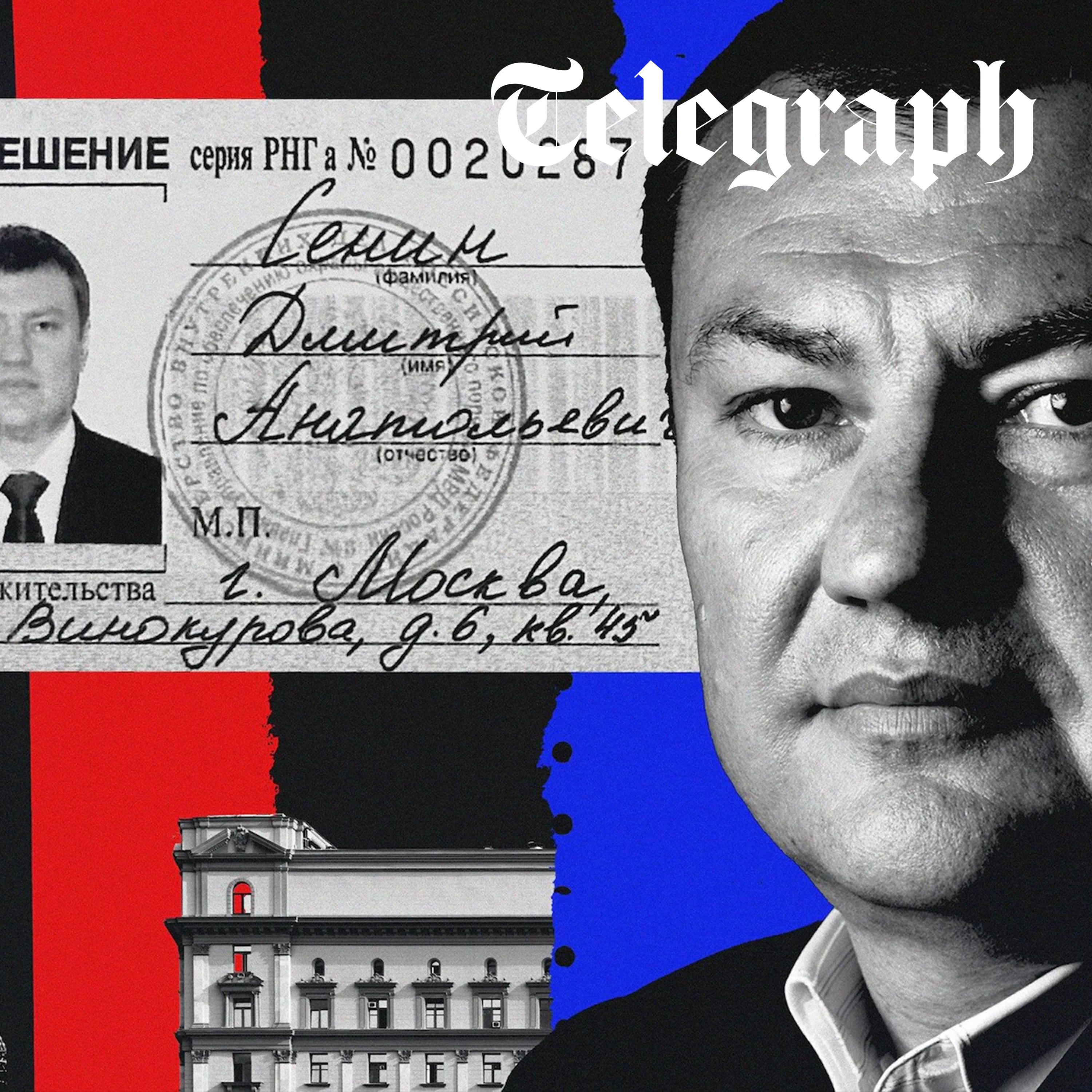
Ukraine: The Latest
Exclusive: ‘Putin won’t last’ – Russian agent who fled Moscow in a dead cow
00:51:55
Loading summary
Transcript119 lines
- [00:04]
Hayley Dixon
The telegraph.
- [00:09]
Podcast Advertiser/Host (Various)
When everything is moving all at once, your workforce, your tech stack, your business. You don't need more tools, you need one solution. That's why Paylocity built a single platform to connect hr, finance and IT with AI driven insights and automated workflows that simplify the complex and power. What's next? Because when everything comes together in one place, growth comes easy experience. One place for all your HCM needs. Start now at paylocity.com 1 what makes
- [00:40]
Francis Darnley
a leader worth following?
- [00:41]
Dominic Nicholls
What should you really care about in your job? As technology is changing so quickly, is
- [00:46]
Francis Darnley
it just gonna be about machines talking to other machines? I mean, should you quit your job
- [00:50]
Dominic Nicholls
and start something on your own?
- [00:51]
Francis Darnley
What would that take?
- [00:52]
Roland Oliphant
What is successful and risk look like when we're all at the starting gate together?
- [00:57]
Francis Darnley
These are the questions we answer each week on Lead Human with Jack Myers and Tim Spengler.
- [01:02]
Dominic Nicholls
Join us each week and subscribe at your favorite podcast platform and YouTube.
- [01:07]
Roland Oliphant
We'll tell stories, we'll hear from some
- [01:09]
Francis Darnley
of the best, and we'll try to
- [01:11]
Roland Oliphant
figure this out together. Dish has been connecting communities like yours for the last 45 years, providing the TV you love at a price you can trust. Watch live sports news and the latest movies, plus your favorite streaming apps all in one place. Switch to DISH today and lock in the lowest price in satellite TV starting at $89.99 a month with our two year price guarantee. Call 888-D dish or visit dish.com today.
- [01:49]
Francis Darnley
I'm Francis Darnley and this is Ukraine. The latest two days of near continuous strikes against Ukraine with over 1600 drones and missiles fired on the country and at least 12 killed. We hear the latest round of American withdrawals of thousands of troops from Europe and then a sobering assessment from experts at Chatham House about the direction of the war. Then we have an extraordinary exclusive interview with a Russian agent who says he fled Moscow in a dead cow.
- [02:21]
Dominic Nicholls
Bravery takes you through the most unimaginable hardships to finally reward you with victory.
- [02:30]
Francis Darnley
The Russia does not want peace.
- [02:41]
Dominic Nicholls
If I'm president, I will have that
- [02:42]
Francis Darnley
war settled in one day.
- [02:44]
Dominic Nicholls
24 hours. We are with you. Not just today or tomorrow, but for 100 years.
- [02:55]
Francis Darnley
Nobody's going to break us.
- [02:56]
Dominic Nicholls
We're strong.
- [02:58]
Roland Oliphant
We're Ukrainians.
- [03:01]
Francis Darnley
It's Friday the 15th of May, four years and 80 days since the full scale invasion began. And today it's a telegraph full house. I'm joined by our Associate editor of Defence, Dominic Nicholls, our Chief Foreign Analyst, Roland Oliphant, and our special Correspondent Hayley Dixon. But first as ever, over to Dom for the latest in the military realm. Dom, where do you want to start?
- [03:21]
Dominic Nicholls
Well, thanks, Francis. Hello, everyone. So it's now been six days since Putin's May 9th parade that was able to take place, you'll remember, because of the ceasefire that had reportedly been brokered by Washington and agreed to by Moscow in exchange for a thousand to thousand prisoner of war swap. Nothing's happened yet of that scale. Something has happened, much reduced scale. Come on to that in a moment. But not only has, as you say, there's now been two days near continuous strikes against Ukraine with over 1,600 drones and missiles. So the death toll in that apartment attacking Kyiv, which President Zelensky says was hit with a newly produced Russian missile, now stands at 24. But the prisoner of war swap in its entirety hasn't happened. I note that Donald Trump is on his way back from China. I can see it out there on the live telegraph breaking news screen. Be interesting he can now turn his attention to other matters. I will keep an eye on what messages come out of the administration regarding Ukraine and this clear nose thumbing, I think, by Putin regarding American diplomatic eff. It's an absolute slap in the face. If that was broken by the U.S. russia then just turned around and said, right, we're not going to do anything if there's a ceasefire, we won't do anything. Over the weekend, if you attack us, we are going to fire a load of missiles at Kyiv, cease fire, and then they fire a load of missiles at Kyiv. I mean, extraordinary. Now, on that missile that killed 24, President Zelenskyy says it was a KH101 ballistic missile, and he says it's been manufactured in the second quarter of this year, which is only in the last sort of six weeks. And he says it shows that Russia is still able to import the components and all the equipment necessary for missile production, circumventing the global sanctions regime that's in place. He said stopping Russia's sanctions of Asian schemes must be a genuine priority for all our partners. He's also instructed Ukraine's military forces to prepare what he says are possible formats for our response. And Foreign Minister Andrei Sibia said following the attack, he's called for a United Nations Security Council meeting and quote, to respond to Russia's killings of Ukrainian civilians and attacks against humanitarian personnel. Now, the United nations may take interest in that, certainly that last phrase, humanitarian personnel, as yesterday, another United nations humanitarian mission was attacked, this one in Kherson. Now, there Was this was a vehicle convoy delivering humanitarian aid. It was hit twice by first person view drones. The point there, first person view. These are flown, these are not on a, a pre programmed trajectory. They are flown into a vehicle that clearly has UN on the side of it. There were no injuries. The aid was delivered. But the UN representative on the ground said that both sides have been made aware of that run in to deliver the aid and they had been accompanied by local authorities. The UN official described the attack correctly saying that attacks on civilians and humanitarians are simply unacceptable. But then he said I don't know who did the attack. It's like, you know, have a guess mate, just offer an opinion. My views here is outrageous and disgusting that the UN is attacked. I was hoping the United nations website would carry something on it. Front page, the UN website Today four headlines. International Families Day. The Afghan economy is in crisis. They talk about the Hantavirus ship. And the fourth story was headlined Recycled plastics for food use require stronger safeguards. Warn UN food security experts no room for their own people Being hit by a permanent member of the UN Security Council. Now on the ground across Ukraine yesterday. No move in the lines. A lot of activity. Russia is still very interested in Kupyansk up in the northeast of the country. They are not achieving anything there but they are losing a lot of soldiers showing us how much they care about the town. It's a similar situation throughout the Donbass. Konstantinivka very active there generally across the country. Some ground taken and lost by both sides but no overall shift in the positions in Russia. Ukraine's large scale drone attacks continued last night. They hit Russian military and energy infrastructure across multiple regions of Russia. Russian telegram media channels said there was a huge fire at the Ryazan oil refinery. That's one of the largest oil refineries in Russia. The oblast governor there, Pavlo Malkova said that three people have been killed, 12 is injured after drone debris had struck an unspecified enterprise in the region as well as several residential buildings. There's no way of verifying any of this. Moscow Mayor Sergei Sobianin said that five Ukrainian drones had been shot down while approaching the Russian capital just before midnight, forcing Moscow's Domodidovo and Chmetyevo airports to temporarily halt flights. In total, the Russian mod said that 355 Ukrainian drones had been shot down across the country last night. Now Ukraine's Unmanned Systems Forces commander Robert Magyar Brovda, Major Brovda, he posted geolocated footage yesterday showing Ukrainian forces had hit another Russian tor air defence system near occupied bersivka. That's about 100ks inside the occupied Luhansk Oblast. This is a continuation of Ukraine's mid range strike campaign. Major Brovda said also that they'd hit targets in Crimea. They'd hit a Beriev BE200 Altair as a fixed wing aircraft and a Ka27 helicopter in the Russian city of Yeysk. That's in Krasnodar Kran. And I've also seen reports now Magyar didn't say this, but I've seen also seen reports of a ship in Berdiansk that have been hit. And I've seen reports of a missile boat and a minesweeper at the Russian naval base in Kaspisk in Dagestan was also hit last night. But I'm looking for confirmation for those last couple. A couple more interesting things here. Putin has replaced two governors of oblast along the border. It's likely a scapegoat operation. He likes to find somebody to blame. They're going to be taking the heat for all the Ukrainian strikes along the border and other security failures there. Only yesterday the Ukrainian General Staff said that they'd hit a Russian counter battery radar near Novoselyvka and another Russian Tor air defence system near Staryozkol. They're both in Belgorod Oblast, about 50 and 100 km inside Russia respectively now. Anyway, back to the border areas get hit quite a lot. The people complain there that clearly air defence is not working. Putin doesn't like that. He doesn't like people grumbling. So he has to deflect all this. And he shoves the blame on the oblast governors saying they're not doing enough. Might be because Putin's got all the air defense back from his palace just north of Moscow, but there we go. So they're taking the blame now. So he's replaced with these two yesterday. That means all three of the oblast governors bordering the north of Ukraine have been replaced since the start of the full scale invasion. So this is Belgorod Oblast Governor Vasistav Gladkov and Bryansk Oblast Governor Alexander Bogomaz. Apparently they both resigned their post yesterday at their own requests. Fine. The reason I raise this, look at the Belgrade Oblast area. So the guy there has been replaced by the current Irkutsk Oblast Deputy Governor, Major General Oleksandr Shuvayev. Now Shuviev is a graduate of Russia's Time of Heroes program. This is a program that seeks to install Veterans of the War special military operation into various positions But Shvayev has been in command of units that have been reportedly committing war crimes in Ukraine, including the 1st Motorized Rifle Brigade during the seizure of Avdiivka in Donetsk oblast. Now, the Institute for the Study of War says that the first Motorized Rifle Brigade has committed numerous war crimes, including executing Ukrainian prisoners of war in and around Avdiivka while Shovayev was in command. Gives you a flavour of the kind of guy that Putin is favoring these days in that the Time of Heroes program. I'm sure we're going to hear more of that. But in a sign that the Kremlin is increasingly concerned about public reaction to Ukraine hitting Moscow and other areas deep inside Russia, the Moscow City Anti Terrorist Commission adopted a regulation earlier this week prohibiting government authorities, media organizations, emergency services and citizens from disseminating information about strikes prior to official publications. Okay, so this is basically taking photos of an oil refinery that's on fire or something that's hit. So now posting that.
- [11:28]
Francis Darnley
Maybe they've been following our video version, they don't like that it gets, gets such a good coverage.
- [11:34]
Dominic Nicholls
Well, yeah, so we're, we may be, we may be sanctioned by the Moscow City Anti Terrorist Commission again, but, you know, it's just another way of closing down the, of closing down civil discourse. So if they can't shoot down the drones, they're going to shut down the posts, basically. And then just finally for me, so I said that the. So the thousand for thousand prisoners, what the Putin promised would happen in return for that ceasefire last weekend hasn't happened. But it was announced this morning, 205 Ukrainian prisoners of war between the ages of 21 and 62 have returned from Russian captivity. Hopefully a start of the thousand for a thousand. Similar number went back to Russia. President Zelenskyy said almost all of these Ukrainian prisons of war had been held for over four years. He thanked the United States and the United Arab Emirates for their critical mediation and assistance. There's very powerful footage you'll find online. We'll be able to include some of them returning home and President Zelenskyy's tweet. But that's us up to date, Francis.
- [12:31]
Francis Darnley
Well, thanks very much, Dom. So we were both off yesterday and we'll be seeing your report on what you were up to in, I think, a couple of weeks time or so. We can't talk about that yet, but I was moderating a panel at the Royal Institute of International affairs, of course, known as Chatham House. It was titled From Destruction to Recovery. And we're gonna have a Chat about that shortly because there's some very interesting ins that came from that. But just to talk us through the diplomatic updates, first Adli mentioned on Thursday the sudden awakening in the Trump administration regarding Ukraine's cards. And I want to start there. So we heard how Secretary of the Army Driscoll praised Kyiv's Delta Common Operating System at a hearing, calling it absolutely incredible and not just talking about your documentary on Delta Dom. Fully integrating every single drone, sensor and shooting platform into just one single network, ours being the US's does not. So on top of that, we now see the US Secretary of State Marco Rubio calling Ukraine's armed forces the strongest and most powerful military in Europe. Quite a turnaround from where we were last year when Vance and Trump said that Ukraine had no cards. He said, if you look, the Russians are losing five times as many soldiers a month as the Ukrainians are, and Ukraine is a smaller country and a smaller army, for that matter. This war has caused the Ukrainians to develop new tactics, new techniques, new equipment and new technology that is causing a sort of hybrid asymmetrical warfare. Just remind us, Tom, what does he mean when we talk about that term?
- [14:02]
Dominic Nicholls
Well, he's mixing a few terms there. First of all, I would say, isn't it interesting that these people find these voices when the boss is thousands of miles away in China? Anyway, by the by, hybrid means essentially a mixture, literally. So when we talk about hybrid warfare, we don't just mean big, heavy metal things shooting at each other. Includes cyber attacks and sabotage, media campaign, all the rest of it. So hybrid warfare is kind of using every. Every lever of national power. Asymmetric just means out of balance, which is what you always want. I mean, you never want. You do not want to go into a fair fight. As a soldier, I never wanted to go into a fair fight. Might not be the Queensberry rules from Oxford or Hull or whichever, you know. No. You went to East East Anglia Polytechnic, didn't you? So maybe not Queensberry rules, but I didn't want to go into a fair fight. You wanted to be so overwhelmingly powerful that the other side just didn't have a chance. So. So you want an asymmetric now in this, it doesn't just mean the size of things in. In military terms, it means coming at it from a different angle. So asymmetric means if you're attacking me with tanks, then I might do a cyber attack to turn off all the traffic lights in Moscow and say to you, have you had enough or do you want to keep going? So It's a different way of wielding or threatening force. So when he's talking about hybrid asymmetric military things, I think Marco Rubio's probably just read a briefing note recently and
- [15:19]
Francis Darnley
that underlined what sounds quite good highlight
- [15:21]
Dominic Nicholls
of these things, these kind of zapping them all out because they don't, they don't naturally sort of sit together or they do kind of mean the same thing depending on how you want to define them. I think it just means that Ukraine have been really clever for the size. He outlines the size of the countries and the number of personnel and as you know, I'm pretty sure your ex girlfriend told you size isn't important. Francis but you know, he's trying to say that there are different ways of wielding military power.
- [15:47]
Francis Darnley
Just because it's a Friday. Honestly, Dom, not just because it's a Friday. Anyway, should we carry on? Should we be sensible here? So the US House of Representatives Representatives is tentatively expected to vote on the Ukraine Support act as part of all of this pent up frustration. I know the feeling in Washington at the moment, says a source told the Kyiv Independent that supporters of the bill moved to force a vote through a discharge petition. So this basically will allow them to bypass the usual procedures. Now to be clear, this is not the Graham Blumenthal bill in the Senate which was introduced. We talked about it at the time and has gone absolutely nowhere. This is a different one and this actually will matter. So it's divided into three sections. The first reaffirms US Support for Ukraine and NATO and includes measures related to reconstruction, of which we'll hear more later. The second authorizes more from $1 billion in direct assistance and up to 8 billion in additional support through loans. And the third introduces expanded sanctions and export controls as well as potentially limiting Trump's ability to lift sanctions. So if that does pass, it will potentially have an impact on the US at the moment. But of course because of the way that things are over there in terms of power structures, Mr. Hegseth, the Secretary of War, as he dubs himself, is able to do what he likes and he has just made another announcement on top of the Germany withdrawal of troops. I think it was 5,000 we talked about last week where another 4,000 are no longer going to be deployed to Poland. They were planned to be moved there, but he said that no, that won't be happening now. This apparently is cause of a huge shock in Warsaw and caught them completely off guard and no explanation has been given by the US Defense Secretary Hegseth but again Indicative of the direction of travel that we've been predicting now, what, for a year, maybe more, that this was likely where we would be end up. It would be drip, drip, drip. It probably wouldn't be drastic and radical. But this reduction of numbers now, these are not fatal reductions. It's not like we're seeing 50% withdrawn overnight. There's tens of thousands of American troops in Europe, but nonetheless this is a pattern that we are seeing here now, staying in Europe. The incursion of Ukrainian drones in Latvian airspace a couple of weeks ago has sparked a political crisis in Latvia, ultimately leading via a rather roundabout route to the Prime Minister's resignation. So it just speaks to how seriously they take this over there. So the short version of the remarkable turn of events there. So several drones entered Latvian airspace from Russia on May 7th. I think you reported on that at the time. Two crashed into an oil storage facility. For several days, Latvian officials avoided publicly confirming the drone's origin despite reportedly possess evidence about where they came from. Eventually, Ukraine clarified the situation, saying that the Russian electronic warfare deliberately diverted Ukrainian drones, so the drones were Ukrainian from their targets in Russia. And then the Defence Minister was asked to resign as a consequence of the incident because it revealed failures in defence capabilities in terms of Latvia's military failing to intercept the drones and because residents had received air raid alerts only after the danger had already. So, I mean, for one, it does talk about the lack of preparedness on this issue in certain countries, but just imagine if there was that kind of accountability in Russia, given the reports at the moment. I mean, quite a staggering way. I mean, as I say, the government's literally effectively collapsed as a consequence of this issue. Now, before we get to the main subject in this section, which I'll be interested in hearing, your thoughts on Dom. Serbia and NATO have launched their first ever joint military exercise. So this is historic, of course, given that NATO was bombing the country less than 30 years ago. The two week long drills, which began on Tuesday and will run until May 23, involve about 600 troops from Serbia, Italy, Romania and Turkey. Military planners and observers from France, Germany, Italy, Montenegro, the UK and the US are also participating. So another of those military exercises in response to the more febrile security environment in Europe at the moment, and on that score, Chatham House. So the core focus, as I say, was on the future of Ukraine, in essence about the reconstruction that it's very keen to underscore the fact that reconstruction can't only happen after the war. You have to lay the foundations and the groundwork and the protocols and have the channels of funding all in place beforehand and that the reforms need to take place that happen to go alongside the EU accession pathway. So they're basically saying that even if that doesn't happen for decades, you may as well make the same reforms to enable the reconstruction efforts, which was quite interesting. And Marta Koss, the EU Commissioner for EU enlargement, somebody that we've spoken, spoken about a lot on the pod. In her panel, she told a story about how she'd been speaking to one of the Ukraine's foreign ministers and apparently their idea of applying for EU membership happened only four months into the war when they were considering in a bunker the ways in which their cause could be assisted. So this is not something that has only come about recently or in the last, in the second year of the war. This was something they were considering very, very early on. She also had this to say. In 1991, Ukraine had higher GDP than Poland. So when it left the Soviet Union, Poland has now tripled that during its time as a member of the eu. Partially explains why Ukraine is so keen for membership alongside other reasons, not least defense. The changes in Hungary, she said, have brought about positive changes for enlargement. By summer, I hope that the six clusters will open. That will allow Ukraine to move to the next stage of the process. Now, Alexei Kuluba, who's the Deputy Prime Minister for restoration of Ukraine, he actually was the man who rebuilt Bucha, emphasized the importance of Turkish drones early in the war. He described them as a game changer. Yep. I remember when they came in, he said they were a game changer in terms of how that transformed the situation. Then he talked about completing a huge infrastructure project in just eight months at the same time, while certain Western partners were still advising about how best to approach the project. So speaks to the speed in which Ukraine is able to do some of this stuff. And indeed the technological development he said, in Ukraine is a matter of weeks. Another interesting panel, the Deputy Minister of, of the economy in Ukraine said the biggest challenge for Ukrainian businesses is energy. We have the most expensive energy rates in Europe. Just underscores that when we talk about energy, it's not just about people heating their homes, it's the cost of business for businesses. And that, of course, matters in a country at war with a very fragile economy. But then the main, I think, in many respects, interesting aspect of the day, albeit one that I have to be careful how I talk about, because it was under Chatham House rule, was with a very senior Western security official and if mood had been quite optimistic earlier on in the day, this was sobering analysis. Now they painted a stark picture of the war and European preparedness for possible endgames. Not that they expected this to be necessarily anytime soon. So if people were expecting a ceasefire in the coming weeks, some at least involved in looking at this issue, this person was saying that they expect it more likely to be a culmination point reached in 2027, more likely after another winter and early 2028. So I mean, it doesn't, doesn't disagree with any of our analysis here. But nonetheless, to hear it said so starkly by such a senior figure was, I think, noteworthy. They emphasized that Europe wants a reassurance force that is not a deterrent. Why? As well, some are considering would we put mobile forces in Ukraine when Russia might be actually moving its armies after a ceasefire into other parts of Europe? That's an interesting point. Also very keen to underscore how long it will take for a Western reassurance force to be deployed. The expectation is weeks, the UN would say a year, and even those countries with expeditionary forces like the uk, three months. So really what they were trying to underscore is the importance of planning for these scenarios way in advance. Way in advance and seem to be pretty critical about where the coalition of the willing and other entities considering these questions actually were. But he said a couple of other interesting things. But first of all, just want your reaction on that, Dom.
- [24:03]
Dominic Nicholls
Yeah, I don't. I think I share the pessimism. I'd be surprised. I mean, a year is quite a long time in the build up. You big military build up for invasion of Iraq didn't take a year and that was shipping a load of stuff. I'd be surprised. It would, I think it would take quite some weeks. There have been a lot of exercises recently with NATO done literally to look at this, about how quickly could you move heavy armor across Europe. But it would take some time and that needs a lot of thinking about it beforehand, some of which is being done with these exercises and so on and so forth. But I mean the whole we get wrapped around about these phrases, reassurance, deterrence. I think some people might use them as something to hide behind. What is the difference what size of force would reassure Ukraine if it didn't also at the same time deter Russia? Because anything short of deterring Russia is not going to reassure Ukraine. So I think it's unhelpful to talk about, oh no, that's a reassurance force, that's a deterrent. Force.
- [25:04]
Francis Darnley
This was that official's exact point. Reassurance force is described in some European capitals as being lesser than this strong deterrent that is required.
- [25:15]
Dominic Nicholls
Yeah, yeah. I mean I think it's all, it's largely semantics. I mean what would be, what could we put in the field? I mean I, people I speak to, very senior military figures talking about that Britain would probably, on an enduring basis, probably be able to put a divisional headquarters together and a brigade, probably an armored brigade on an enduring, a rolling six month commitment. But that commitment, a brigade and a, a divisional headquarters, that would consume the British Army. That would be the army's task until stop.
- [25:49]
Francis Darnley
Yes.
- [25:50]
Dominic Nicholls
You know, because that, to have a brigade on operations, you've got one recovery, you've got one preparing to go and that's pretty much all the British heavy metal third UK Div. Taken care of. So just generating those forces, fixing everything, keeping that going on an enduring basis for, you know, year after year after year, that is effectively going to fix the British Army.
- [26:07]
Francis Darnley
Well, that was another point that this individual was keen to emphasize, which is that because it would need to be a rolling thing, as you say, with no clear end in sight because it's not there to rebuild something, it's there to act as a permanent deterrent. You might be thinking 10 years, 15 years. I mean, because they're not expecting either. The other thing was, as we've talked about many times, not expecting this to be a clean end. We're not expecting there to be a pact signed and everybody rolls up the red carpets and says, well done everybody. There's a ceasefire or the war is over. This is more likely to be messy, grubby, no really clear clarity, more like a North Korea, South Korea kind of scenario. And in that situation that means that this is going to be a permanent problem for Europe and European security for, well, potentially, yeah, decades. And we need to be thinking about that. Is this what this individual was, was arguing and are we? Is the fundamental question.
- [27:02]
Dominic Nicholls
Yeah. I mean the flip side to that is that actually it's quite helpful to know the thing that you are building your force against. So if Europe, or just European, NATO or Jeff or whatever you want to call it, the coalition of the winning said Russia is the problem. Now let's work on the, let's work on a 20 year solution at least you can then build towards it. You can make sure there is largely common operating procedures and caliber of weapon across NATO. But you could say, right, who's going to do artillery or who's going to join in this, the artillery bit, who's going to do the tanks? Where are we going to repair all these things? Where are we going to have the joint training areas? You could actually build a force. If Europe sets said, this is what we're going to do and nothing else. We're not going to do any out of area, as Lauder as it may be out of area, humanitarian stuff, or we're not going to go chasing insurgencies in North Africa and, you know, Central Asia again for a little while. We're going to focus much closer to home. If that's the answer. Well, at least you've got a problem set you know how to handle. As the great military historian Michael Howard said, you can't when you're building a. Building a military. The answer is not to try to be right because there are so many possible scenarios that you'd have to answer. So if you tried to build a scenario, build a force for each one of those, you'd bankrupt the treasury. You just couldn't do it. So the answer is not to try to be right. The answer is not to be so wrong that when the problem and the threat really does reveal itself, you can't just quickly adjust what you've got to face it. And that might be what Europe's capable of doing now if they get their, you know, strudel in one sock.
- [28:32]
Francis Darnley
It was a fascinating day and very grateful to the Chatham House for having us there. And I respect that some of these questions, as we've been raising before, will become ever more pertinent in the months ahead. If indeed we are heading towards this culmination point that we've talked about so readily, you'll be pleased to hear, Dom, I narrowly avoided a diplomatic incident at Chatham House. So we were in the dining room at the end of the day and this used to be the former cabinet room that was used by Earl chatham in the 18th century. Father, of course, of William Pitt the Younger, one of our greatest prime ministers. Prime minister at 24, extraordinarily. But anyway, we were in this, in this historic space and somebody asked, oh, what was, what was Chatham known for? Of course, I perked up and said, thrashing the French, of course, and didn't quite realize that directly opposite me was the head of the European bank for Reconstruction and Development, who is, who's French? And yeah, she sort of looked at me with a. With a sort of slightly stunned look.
- [29:33]
Dominic Nicholls
Did you give her your business card?
- [29:35]
Francis Darnley
Funnily enough, she ran off after that
- [29:37]
Dominic Nicholls
with Dominic Nichols on it.
- [29:38]
Francis Darnley
Yeah, yeah, yeah, exactly yeah, she's now, she's now going around Paris saying do not speak to Dominic Nichols at the Telegraph. But anyway, at least I didn't mention Napoleon. At least I didn't mention Napoleon. It was the generation before. Well, let's go to our next story now with two, well, regulars on the podcast. We've got Hayley and we've got Roland joining us now. Let's. Well, where do you want to start with? With this pretty extraordinary story, an interview that you did with a former Russian official.
- [30:05]
Hayley Dixon
So we did an interview with a Russian former FSB operative whose name is Dmitry Sennen. And the reason that I got in touch with him in the first place was because I was investigating a Russian spy ring that was operating across Europe run by a man called Jan Marsalek, who your listeners might have heard of before. And Dmitry Senen was named in Secret Service files as a victim of Jan Marslek, who was being hunted across Europe by kind of Putin's henchmen. And so I had started, tried to contact him around two years ago, and I can't really talk in too much detail about how we did get in touch with him. But eventually, after putting out a lot of feelers to let a lot of people know that I was looking for him, I got a mysterious message on an encrypted app one night and it went from there, really. Roland and I have met with him before. This is the second time that we've met with him. So it took a lot of trust to build up. But eventually he's decided that he wants to go on the record and tell his story about what's happening to him. This is Dmitry Senin. He's a former FSB operative who fled Russia in 2022 after the full scale invasion of Ukraine. During his time at the fsb, he had access to secret, top secret and special importance documents, the very highest level of clearance. In an exclusive interview, Dmitry has now spoken to the Telegraph and told us how he escaped from Russia not once, but twice while being hunted by his former colleagues. How his absence sent a wave of panic echoing up to the Kremlin and how power players in Russia are already planning for the fall of Putin. He first escaped Russia in 2017 after he says he was falsely implicated in a major corruption scandal that he had helped to expose. He believed he was being punished because he had stumbled upon a $140 million haul of cash that was actually destined for the very top of the Kremlin. You will notice here that Dmitry is keen to differentiate himself from Russian defectors such as Sergei Skripal and Alexander Litvinenko. This was an often repeated and key point of our interview. They, he implies, betrayed the Russian state, whereas Dmitry stresses that he has never served nor collaborated with any foreign power. He disagrees with and dislikes Putin and believes that the war in Ukraine is nonsense. But he remains loyal to the Russian state, not Putin, but Russia itself. Such was his commitment to his country that in 2017, when he realized Putin's death squads were hunting him across Europe, he used the FSB's logic against them and he went back to the last place that they would look, Moscow. He fought for five years to clear his name, but it was clear to him that the system would not forgive him, and so he fled again. Dmitry has just described how he was reported dead in Russia to serve as a warning to others. He says that he encourages in his own way these reports. He stresses that this keeps both himself and his colleagues safer. When fleeing, Dmitry says he left via the 6,000 kilometer Russia Kazakhstan border. So we asked him how exactly he crossed it. To cross safely, Dmitry had to make sure that he would not be detected by the thermal imaging technology. To get around the thermal imaging tools, Dimitri took the extraordinary step of hiding inside a dead cow. It's a fantastical, dangerous escape. While under pursuit, Dmitry still rightly fears for his life and says that Putin may have signed an order for his death. To kill a former Russian state operative on foreign soil typically requires approval in the Kremlin, he says, so why speak out? On a filmed interview, at the end of our interview, Dmitry spoke on the power structures operating close to the Kremlin. For reasons of security, we cannot disclose his exact comments on camera. But Dmitry stressed that Russia cannot be defined by Putin. He believes that powerful people and institutions within Russia are already preparing for the end of Vladimir Putin. What he will say on camera is his opinion on the war in Ukraine.
- [34:03]
Francis Darnley
And so you've published a long read on this and a video as well, which of course we'll link to in the show notes. But Roland, what jumped out at you, first of all, about the things he said?
- [34:13]
Roland Oliphant
I mean, it was extraordinary. I mean, the story is proper John Le Carre stuff or even. I don't even know if it's John Lecarre. It's just the experience of doing it was proper. Meet him in a, in an anonymous place and listen to this extraordinary tale. What jumped out at me is that he considers himself to be still a loyal member of the Federal Security Service. He considers him a Russian officer, doesn't consider himself a traitor, really wanted to emphasize throughout the interview that he is not Sergei Skripal or Oleg Gordievsky or any other defector. He hasn't gone to a Western intelligence service to sell secrets, and he seems to think that people back in Moscow are going to believe him. That was one of the things that stood out to me. And the other thing was the frankness with which he described, I suppose, the kind of office politics inside Lubyanka, inside the very heart of the Russian Secret Service machine. Because this is a cast of people. The brilliant Russian journalist Andrei Soldatov and Irina Borgan have called them the new nobility, this cast of security officer who became the new ruling class in Russia. He's one of them. But his story is essentially that he fell out with them, that he unintentionally got on the wrong side of people much more powerful, and that's why he had to leave the country. So very interesting discussion.
- [35:33]
Francis Darnley
Well, we'll come to the method of how he left the country in a moment, because it's pretty wild stuff. But, Hayley, what did he have to say about the war in Ukraine specifically?
- [35:41]
Hayley Dixon
So I think that one of the things that he. And I think actually it's important to go back to what Roland was just saying about the way that he still feels that he is a Russian officer, because one of the things. Things that stood out was the fact that he still supports Russia very much, but he doesn't support Putin. And I think that that really was played into the way he felt about Ukraine, because he talked about it as an unprofessional war that never should have been started. And I think that from what he was saying, there are people among his ranks when he was there who would agree with him, who don't think that Putin should have ever gone back in with the special operation or whatever he called at the time. I think. Think he very much believes that it shouldn't have gone ahead. And actually, when he left Russia, they were trying to get him to go back into the FSB in order to help with the Ukraine war, because he was. I mean, he was a terrorist interrogator in the North Caucasus back in the second Chechen War. And so he obviously had a set of skills which would have been useful in warfare. But the way he talked about it, he said with the second Chechen war, he was motivated to get involved because he saw terrorist attacks across Russia and he saw innocent people being killed. But he said with Ukraine, he never intended to get involved because he didn't have the motivation from seeing those things that inspired him in the Chechen war to get involved this time. Really?
- [36:55]
Dominic Nicholls
I saw in your piece that he said he decided to join the FSB in I think 2000 was it, or 99. But he referred to those apartment block bombings that occurred. There were four weren't there over Russia at that time. There's been a lot of controversy about those. This isn't the time, we haven't got the space to go into those. But there's a lot of, of a lot of controversy suggestion that they were staged in order to propel Vladimir Putin to the presidency. Did he offer any kind of comment at all about those or he just saw what he, he suggested was a terrorist outrage, thought patriotic Russians going to do his thing, join the fsb. Did he offer any sort of counter view at all?
- [37:32]
Roland Oliphant
It was very much the latter. I mean, when he mentioned it and he mentioned because he grew up in southern Russia in, in Kalmykia, so he wasn't that far away, a couple hundred kilometers from somewhere. Some of these bombs were going off during the interview. It crossed my mind when he said that to raise that question. But we were so deep in trying to untangle this incredibly complicated story, I'm afraid I deliberately thought, I just can't open this can of worms. Now as I was thinking, okay, so he's oh, that morning and I was like, okay, should I, do you think Putin? I just thought I was looking at my watch.
- [38:06]
Dominic Nicholls
I don't believe it's clear from the rest of your story. Story. He wouldn't have, I don't think he would have anyway because he, you know, he's a seller patriotic FSB officer which, which made me, I mean, there were some quite significant gaps through his, his account. As you say in the piece. There's some pops up in strange places without really accounting where he's been and what he's, what he's been doing. So he, he's an odd character. It's a very odd story. I've been, I was wondering through it all what his motivation was. And as you kept saying, he still considers himself a very packed shot. He doesn't consider himself a traitor, doesn't think he's done anything wrong. He's hoping one day to go back and carry on his career. I thought his motivation was on the one hand very clear, but also quite murky because he's been on the run for a long time. He's been separated from his family a long time for something that he says is quite demonstrably not of his doing led me to. I've got to ask you, do you believe him?
- [38:59]
Hayley Dixon
I think when you talk to him, I really believe that he believes in a Russia that he wants to fight for. I think that there are elements of the story which are difficult to stand up independently, but a lot of it is stood up by kind of investigations by secret services across Europe. I believe that he wants to go back because I believe that he thinks that there's going to be a change coming in the next few years. Whether I believe that's ever possible, especially now he's publicly known as somebody who's spoken out. Whether that's possible or not, I don't know. But I think he certainly looks to that as something that he wants to do. I believe his. His motivation, even if I don't believe that necessarily it's possible. But I don't know if Roland felt any differently to me on that.
- [39:40]
Roland Oliphant
He was very open. He was someone who had a lot to get off his chest. I felt like he wasn't holding back that much. He was really pleased to be able to speak Russian. He's been in exile for a long time. He loved speaking. He just wouldn't stop. So there's a degree to which you kind of feel when you're talking to someone that you feel is genuine. On the other hand, how much of it of what he's telling is truthful and how much isn't? There are things we can't corroborate. Sometimes when you're doing youth's job, you get the sense that you are actually in a movie, because then the narrative is it unfolded. You realize it is literally a movie trope. I mean, this guy is the rogue man, the guy with a very particular set of skills who's been accused of a crime he didn't commit, and he's had to go on to run solo, hunted by his own side, while he tries to clear his name. How many times have we heard the movie? And that was literally. That is literally the narrative essentially he lays out. So it was incredibly compelling to listen to.
- [40:33]
Francis Darnley
But is it too good to be true?
- [40:35]
Roland Oliphant
I did challenge him on, like, look, you served in EFSB very happily for many, many years, and you climbed it. And then, okay, you didn't go to the war, but if you were still there and on your way to general, would you have said no? And look, a lot of your mates, I said did go along with it. So is it just a matter of circumstance that you happen to find yourself on the outside? Why did all your mates go along with it, if everyone's so happy with it? His answer was, look, in an organization like the fsb, you follow orders, but that doesn't mean you can't find ways to get assigned elsewhere or find ways to be at home at certain times or things like that. So what he was describing was, he claimed that there's a large constituency within the FSB who think the war was a really bad idea, think everything's going really, really badly. Now, his claim was that a lot of them, although they didn't resign in protest or anything, a lot of them have found ways to work on other things as a way of just not getting dragged into that mess. Whether you believe that or not, I don't know. For that self justification, that was his answer to that question.
- [41:38]
Dominic Nicholls
Okay, so we don't have to do the whole story. We have more time to do the whole story here. So he's back in Russia. So can we now move the story on a little bit? What happens next?
- [41:51]
Hayley Dixon
So basically, he tries to clear his name, fights to clear his name, fights to get back in the fsb. Doesn't work. So he decides, I've got to get out again in order to be free, live with my family, be safe, not to go to prison, etc. And so he sends his family on ahead to Montenegro at this point, and he hatches a plan where he's going to get over the border between Russia and Kazakhstan, between Siberia and Kazakhstan. And he plans it quite carefully, doesn't he, Rowan? So he chooses a cool day in September when the light fails early, and he hatches a plan with some smugglers.
- [42:22]
Roland Oliphant
He's trying to work out how he's going to get out of the country after getting his family out. And then everything gets more complicated because Russia invades Ukraine and suddenly border security goes through the roof. So this huge border with Kazakhstan, Russian border, longest border in the world, pretty open in certain places. Suddenly, border security stepped up. The border guards are issued with thermal goggles. The Russians are terrified that Ukrainian teams are going to come across the board from Kazakhstan. The Kazakhs are terrified the Russians are going to invade. So suddenly, everyone's looking at me thinking, oh, damn, how am I going to get across? Someone's saying, how did you get out last time? And he said, have you seen the Revenant with Leonardo DiCaprio? So this was one of those moments in the interview where I had to kind of take a pause and blink and just ask him to repeat it and then repeat it to Hayley in English. Have I got that right? And it took me a while to realize what. Because I didn't know what the film the Revenant was in Russian. He said, a film with Leonardo DiCaprio. And I thought, Titanic. Like what? And then he starts talking about cows and horses. I'm like, hold on a second. The simple answer was he was thinking, how do I get past the thermal imaging goggles that the FSB border guards have been issued with? I will conceal myself in a dead cow.
- [43:30]
Dominic Nicholls
Inside the dead cow.
- [43:31]
Roland Oliphant
Inside the dead cow.
- [43:32]
Dominic Nicholls
Right, okay. Hence the revenant.
- [43:34]
Roland Oliphant
That's literally the revenant.
- [43:36]
Dominic Nicholls
I mean, I would have said the Empire Strikes Back, but never mind the
- [43:39]
Francis Darnley
spy who came in via a cow.
- [43:40]
Roland Oliphant
Then he starts twisting, talking about how farmers dispose of. So a bit of research I've done on this, actually, the English term is fallen stock, right? And the British Government has a on gov.co.uk for British farmers. You can see the regulations for disposing of fallen stock. Fallen stock are animals that have died on your farm. They haven't been to the abattoir, but maybe they got sick, maybe they fell over. They got whatever you had to euthanize them, whatever. And of course, that creates a public health problem. Dimitri's account was looked at. Under Russian law, they're meant to dispose of the body properly. They're meant to dig a big pit, six feet deep and whatever. No one does that because it's just too much hassle. And out here it's quite remote and whatever. So what they do is they just. They shove the body on a tractor, they drag it out into the steep. Cow. That cow, or the back of a vehicle, and they just dump it in the field. He said, this is so common. The border guards there don't, you know, are the farmers. They're just dumping a cow because there's a little patch of area where they. They dispose of dead bodies. So he spotted an opportunity, and he talks about this as an operation. He goes into his kind of professional FSB jargon here, and he talks that this was an operation. It took him at least two months to prepare. It involved a network of local smugglers and others. He talked about a network of former KGB operatives and stuff. But he had help doing this. This wasn't something he could do by himself. But yes, and as Haley was saying, he talked about the time of year was very important, so he timed it for September because it's just getting cold enough. It's Siberia. Like, winter's coming, but the snows haven't arrived. But it's cool enough that the dead cow isn't reeking.
- [45:13]
Hayley Dixon
No flies.
- [45:14]
Roland Oliphant
No flies. And also, it's just getting dark in evening. So it's dark enough, it's reasonable for the farmers to be out in the dark or towards dusk without arousing attention. And he doesn't have to lie too long on the ground before it's dark enough for him to come out, out and abscond.
- [45:30]
Dominic Nicholls
So he climbs inside a cow.
- [45:32]
Hayley Dixon
Well, he dresses himself appropriately first. So you can't breathe.
- [45:35]
Dominic Nicholls
What is appropriate dress for climbing inside
- [45:38]
Hayley Dixon
a cow, now you ask? Well, you can't breathe inside a dead cow. You can't breathe the blood because you can get poisoned. So he puts on a gas mask, right. And a rubber suit in order to kind of protect himself from any of the. The noxious substances that you'd find inside.
- [45:51]
Roland Oliphant
An extra layer, a foil blanket or something against. There's an extra protection against the thermal imaging stuff. So he's bundled up like that and put into the belly of the cow
- [46:03]
Dominic Nicholls
and then driven across the border.
- [46:06]
Hayley Dixon
Yeah, I mean, the border. If you look at the border there, it's not border in the sense that we would think of it. Often it's open grass with a couple of markers on it. Yeah. So, yeah, the tractor. The two guys apparently pick the cow up by the legs and put it on the back of the tractor and then across the border and do the same thing onto a sort of grassy bank. And I think he said, didn't he?
- [46:22]
Roland Oliphant
He said, I think it was something like a ravine. And then he talks about how he laid in the cow for about an hour because he had to have time for the guards to get back and for the smugglers to get back and give the guards time to go, oh, they're dumping the cow. Oh, they've gone back. Nothing to look at here to lose interest. And then he talked about rolling out of the belly of the cow and down a bank of earth and into the grass and then crawling along for, I think, several hundred meters, he said, didn't he?
- [46:46]
Hayley Dixon
On his stomach.
- [46:47]
Roland Oliphant
Yeah, on his stomach, yeah. Crawling on his stomach for several hundred meters through the undergrowth to a rendezvous point where he was picked up by a guy on a motorcycle. It wouldn't tell us much about that guy. He just said this guy was a former member of the KGB who had
- [47:01]
Dominic Nicholls
lost all olfactory capabilities, I presume. Drive along with this guy.
- [47:09]
Francis Darnley
Well, it is an extraordinary story, and as I mentioned earlier on, we'll put the link to the full video in the show notes and the long read as well, which has has more information. So thank you both very much for talking us through it. It's a very memorable one indeed.
- [47:25]
Dominic Nicholls
Thanks.
- [47:26]
Roland Oliphant
You're welcome. Thank you.
- [47:28]
Francis Darnley
Very amusing.
- [47:30]
Dominic Nicholls
Very moving story.
- [47:32]
Roland Oliphant
One of the things that I'm very pleased with about this story is that the reader's having great fun in the comments.
- [47:37]
Dominic Nicholls
Yeah,
- [47:40]
Roland Oliphant
I've seen his life was at stake.
- [47:43]
Hayley Dixon
Yeah, there's a lot of state jokes by Hoof. Loved you.
- [47:46]
Roland Oliphant
He clearly had beef with the Kremlin. They were going to give him a grilling.
- [47:51]
Francis Darnley
All the more reason to go and check out the long reversion.
- [48:09]
Dominic Nicholls
Acast powers the world's best podcasts.
- [48:12]
Podcast Advertiser/Host (Various)
Here's a show that we recommend it if you've ever dreamed of quitting your job to take your side hustle full time, listen up. This is Nikayla Matthews, aome host of Side Hustle Pro, a podcast that helps you build and grow from passion project to profitable business. Every week you'll hear from guests just like you who wanted to start a business on the side. If you can't run a side Hustle, you can't run a business. They share real tips and so I started connecting with all these people on LinkedIn and I saw target supplier diversity was having office hours. Real advice. Procrastination is the easiest form of resistance and the actual strategies they use to turn their side hustle into their main hustle. Getting back in touch with your tangible cash and sitting down and learning to give your money a job like it changes something. Check out side Hustle Pro every week on your favorite podcast app and YouTube.
- [49:06]
Dominic Nicholls
Acast helps creators launch, grow and monetize their podcast everywhere.
- [49:12]
Podcast Advertiser/Host (Various)
Acast.com with Verbo Care Help is always ready before, during and after your stay. We've planned for the plot twists so support is always available because a great trip starts with peace of mind.
- [49:38]
Francis Darnley
Let's go to our final thoughts. Now then, Dom. Where do you want to leave listeners this week?
- [49:41]
Dominic Nicholls
Week Russia has issued an arrest warrant for Sir Ben Wallace, Britain's former defense secretary. So Moscow's Basmani District Court. Basmani, Basmani. Anyway, District Court in Moscow sentenced Ben Wallace in absentia on charges of justifying terrorism. They say this is connected to comments he made at the Warsaw Security Forum last September. So back then, speaking at the conference, Sir Ben said Putin is in love with the idea of dominating Ukraine. So we have to help Ukraine have the long range is to make Crimea unviable. We need to choke the life out of Crimea. We need to smash the Kursk Bridge because that's a statue to Putin's ego. Didn't go down well. Didn't go down well in Moscow. So last November, a Russian corps ordered him. You'll remember he was longest defense chief actually in either ever or at least. No, don't start on the history stuff. Anyway, 2019 to 2023, he was defense Secretary. So he was ordered in absentia to be placed in pre trial detention. The decree was only publicly made available this week. I saw this in, in Media Zone. I had a quick chat with Saban, who's very pleased with himself. He thinks this is wonderful news. I did approach, obviously, being a good little journalist. I did approach the Russian embassy here in London. Did approach them for comment. Balanced story. That's what we. That's what we always aim to do. Didn't take my calls. Still not taking my calls. They're not answering. I must. There must be call screening to bring
- [51:07]
Francis Darnley
back memories of your youth when you were calling girls D. What?
- [51:11]
Dominic Nicholls
In the Russian embassy.
- [51:12]
Francis Darnley
They didn't reply.
- [51:13]
Dominic Nicholls
Yeah, well, no, true, fair enough. But yeah, so if anyone from the Russian embassy wants to. Wants to come and have a chat about, you know, sentencing or putting out an arrest warrant for Ben Wallace, I think that.
- [51:24]
Francis Darnley
I think it just goes straight to voicemail by automatic now on your. Whenever you call them. Well, thanks very much, Dom. And just to end. We've been covering this story for a little while and we finally have confirmation. So I'm going to read a statement from Kyiv's Foreign Minister, Andrey Sibyl. He said, today marks a historic turning point. 80 years after Nuremberg, a new special tribunal in the Hague has now been established to restore justice from the ruins of war. This is not an abstract legal exercise. Yesterday, a Russian strike on Kyiv killed 24. With the agreement now approved by 37 states across three continents, the tribunal has passed from political aspiration into legal reality. By the standards of international criminal justice. The speed of this is extraordinary. The moral foundations of Europe and the wider international order cannot be restored until the crime of aggression against Ukraine is punished. For years, many dismissed the idea of such a tribunal as impossible. Yet the agreement now exists in black and white. Ukraine believed it from the beginning. Over centuries, Ukraine has endured occupation, repression, genocide, war, Stalinist terror, Chernobyl, and countless other injustices without ever seeing true accountability. The special tribunal is intended to break that cycle. And it is only the beginning. Cases will proceed. Verdicts will come. Ukraine needs this. Europe needs it. Even Russia ultimately needs it. Now, as we've talked about before, that tribunal is going to be, I think, a constant thorn in the side for Moscow for potentially decades to come. It is a sizable achievement and one that we will of course continue to monitor here. But thank you all very much for your time this week. We'll be back same time, same place on Monday.
- [53:16]
Dominic Nicholls
Thanks everyone.
- [53:22]
Francis Darnley
Ukraine the Latest is an original podcast from the Telegraph created by David Knowles. Every episode featuring us in the studio maps and battlefield footage is now available to watch on our YouTube channel channel subscribe at www.YouTube.com crainethelatest. There's a link in the description. You can also sign up to the Ukraine the Latest newsletter each week we answer your questions, provide recommended reading and give exclusive analysis and behind the scenes insights, plus diagrams of the front lines and weaponry to complement our reporting. It's free for everyone including non subscribers. You can find the link to sign up in the episode description. If you appreciate our work, please consider following Ukraine the Latest on your preferred podcast app and leave us a review as it helps others find the show. Please also share it with those who may not be aware we exist. You can also get in touch directly to ask questions or give comments by emailing ukrainepodelegraph.co.uk we continue to read every message. You can also contact us directly on X. You'll find our handles in the description. As ever, we're especially interested to hear where you're listening from around the world. And finally, to support our work and stay on top of all of our Ukraine news, analysis and dispatches from the ground, please subscribe to the Telegraph. You can get one month for free, then two months for just one pound at www.telegraph.co.uk Ukraine the latest Ukraine the Latest was Today produced by Rachel Porter. Executive producers are Francis Dernley, Louisa Wells and David Knowles.
- [55:02]
Roland Oliphant
My name is David Knowles.
- [55:03]
Dominic Nicholls
Thank you all for listening. Goodbye. Acast Powers the World's Best Podcasts Here's
- [55:17]
Podcast Advertiser/Host (Various)
a show that we recommend hello hello, it's Brooke Devard from Naked Beauty. Join me each week for unfiltered discussion about beauty trends, self care, journeys, wellness tips and the products we absolutely love and cannot get enough of. If you are a skincare obsessive and you spend 20 plus minutes on your skincare routine, this podcast is for you. Or if you're a newbie at the beginning of your skincare journey, you'll love this podcast as well. Because we go go so much deeper than beauty. I talk to incredible and inspiring people from across industries about their relationship with beauty. You'll also hear from skincare experts. We break down lots of myths in the beauty industry. If this sounds like your thing, search for naked beauty on your podcast app and listen along. I hope you'll join us. Acast powers the world's best podcasts.
- [56:09]
Dominic Nicholls
Here's a show that we recommend it
- [56:12]
Francis Darnley
do you want to know the best part about being married to a woman? That there's no man involved. I mean, true, but I was going
- [56:18]
Podcast Advertiser/Host (Various)
to say that it's a sleepover every single night with your best friend.
- [56:21]
Hayley Dixon
Oh yeah, that part's cute too.
- [56:22]
Francis Darnley
I'm Taryn, she's Cami. We're married, and staying up is our
- [56:25]
Podcast Advertiser/Host (Various)
weekly pillow talk out loud with you.
- [56:27]
Francis Darnley
We're giggling, we're gossiping, we're arguing.
- [56:30]
Podcast Advertiser/Host (Various)
Classic marriage stuff. Just having fun being wives while we navigate growing up and building a family together.
- [56:35]
Francis Darnley
Then our sleepover grows gross.
- [56:37]
Hayley Dixon
Our listeners call the PP hotline with
- [56:39]
Francis Darnley
their own gossip, burning questions, late night spirals, all the stuff they'd only tell their best friends. So it's a private sleepover, but you are invited.
- [56:46]
Podcast Advertiser/Host (Various)
Staying up with Taryn and Cami.
- [56:48]
Francis Darnley
New episodes weekly follow wherever you listen.
- [56:52]
Dominic Nicholls
ACAST helps creators launch, grow, and monetize their podcasts everywhere. Acast.com.