← Ukraine: The Latest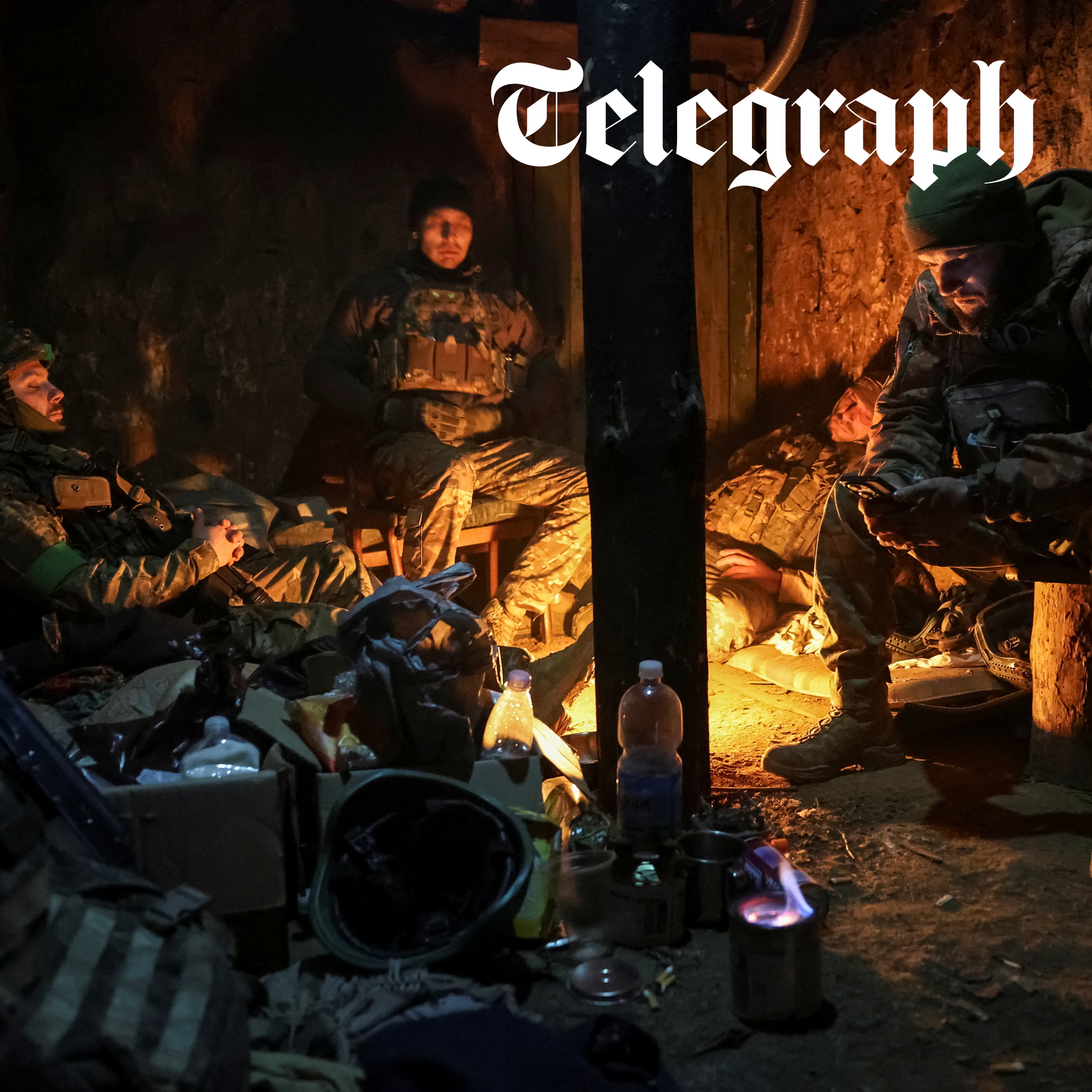
Ukraine: The Latest
Frontline 'breaking point' discovered when troops 'stop caring if they survive' & exclusive: Ukraine sanctions chief begs allies to 'seize Russia’s shadow fleet'
00:52:50
Loading summary
Transcript82 lines
- [00:04]
Francis Darnley
The telegraph.
- [00:10]
VRBO Advertiser
Whether it's a birthday trip, a family reunion, or just a fun getaway, booking a VRBO vacation rental means no worrying about surprises. VRBoCare and 247 Life Support have your back if something's off. The Loved by Guest filter helps you find top rated homes. And verified reviews mean real feedback from real VRBO guests so you know exactly what you're booking.
- [00:28]
David Knowles
Honestly, I just booked my VRBO because there was a sweet wine fridge.
- [00:32]
VRBO Advertiser
Hey, we all have our reasons. Don't walk into a surprise if you know you. VRBO terms apply. See vrbo.com trust for details.
- [00:44]
Francis Darnley
I'm Francis Darnley and this is Ukraine. The latest Today, as Russia's Tuapse oil refinery is hit yet again, we discuss a new study underscoring the breaking point for soldiers on the front lines and the length of time many spend there, exceeding some of the worst wars of the 20th century. We then consider a new museum opening up in North Korea dedicated to its soldiers killed for Russia. And then our Brussels correspondent, Joe Barnes speaks to the international sanctions representative for Ukraine. What more can be done?
- [01:19]
Vladislav Vazouk
Bravery takes you through the most unimaginable hardships to finally reward you with victory. Russia does not want peace.
- [01:29]
Interviewer
In essence, Freiheit und unsre europischen Werther.
- [01:38]
Vladislav Vazouk
If I'm president, I will have that war settled in one day. 24 hours.
- [01:42]
David Knowles
We are with you. Not just today or tomorrow, but for a hundred years.
- [01:52]
Francis Darnley
Nobody's going to break us.
- [01:53]
Interviewer
We are strong.
- [01:55]
Vladislav Vazouk
We're Ukrainians.
- [01:58]
Francis Darnley
It's Tuesday 28 April, four years and 63 days since the full scale invasion began. And today I'm joined by our Brussels correspondent, Joe Barnes. But before I go to him, let's go to the major military and diplomatic updates of the last 24 hours. In a move that feels both routine and yet heavy with consequence, the Ukrainian parliament has just voted to extend martial law for another 90 days until until 2 August. It was a relatively quiet night relative to the weekend. In terms of air raids, the most significant was Ukrainian, with another strike on Tuapsi oil refinery in Krosnodar Krai in southern Russia, site of the notorious volcano last week dubbed Hiroshima by locals, Given the incredible scenes of thick clouds of smoke and oil raining from the skies, it begs repeating that if such scenes had been recorded before the war, it would have been front page news around the world for a week or more. Now it barely gets a mention now. The strike on April 20 at that site reportedly destroyed 24 storage tanks, which then reignited and significantly worsened the situation. Last night's raid has sparked yet more fires, which the authorities blame on. Yep, you guessed it. Drone debris now on the front lines. The fiercest activity seems to be around Sumy City in the northeast, Kupiansk in the east and Pokrovsk in the southeast. The Russian Ministry of Defence claimed that elements of the Russian 34th separate motorised rifle Brigade seized Tarotnyi, southeast of Sumy City, though this has not yet been verified independently, there continue to be reports of Moscow's forces using those pipelines for infiltration missions in Kupiansk while sustaining heavy casualties, up to 70%, according to Ukrainian forces stationed there. Around Bukrovsk, Russian forces are trying to advance beyond the site of so much of that fighting last year, but are apparently struggling to supply troops nonetheless. The Ukrainian 7th Rapid Reaction Corps of the Air Assault Forces report the Russian forces are accumulating heavy equipment, artillery and tanks there for the next push. We'll of course continue to monitor the situation there as we do across the entire front. Now, I wanted to mention a study conducted by Ukraine's Military Ombudsman that makes sobering reading even when it only confirms what we already know. It's found that soldiers deployed for over 40 days on frontline positions stop caring whether they survive or not. Speaking publicly, the Ombudsman said that anything beyond this period of time cannot be considered effective. Now, one assumes she is referring to the very most forward position, sometimes known as the zero line or the kill zone, where existing regulations already limit how long a soldier is supposed to stay there to 15 days. But as we've reported many times, that is a rule very widely discarded. We've reported on some soldiers deployed for months or longer without being removed from the line, one of the consequences of Kyiv's so called manpower crisis. Now, just to put that into historical perspective, in the first war each British unit spent roughly one week in the very front line, one week in the support line, so a little bit further back and then two weeks either in the reserves or way further back from the front, or of course on leave. Now, this is another motivator for Ukraine's investment in drones, as it allows defence of a wider area without troops needing to be stationed there. And just on that subject, yesterday the Polish Prime Minister Donald Tusk announced a new project to build a modern drone fleet with the help of Kyiv's technical expertise and European funding. It speaks again to Ukraine's success at making itself a modern arsenal for European powers, and now some in the Middle east too. A clever move economically, but also politically for obvious reasons as it makes them ever more indispensable. Now the German Chancellor Friedrich Merz was also speaking yesterday about the war, saying that if Ukraine had to effectively lose territory to secure a peace deal, then it may inversely act as a prime mover for Ukrainian integration with Europe. His argument is that because it would mean the continent having to have no choice to offer President Zelenskyy a great deal that is a clear pathway into Europe which he could put to the Ukrainian people in a referendum, that thereby it makes it more, not less likely that Ukraine becomes part of the European Security Bloc, the political alliance that we've spoken about so often. It's an interesting argument and what we don't know of is the degree to which Ukraine is also planning for that. Now on the eu Specifically, the bloc is considering sanctions against Israeli individuals and companies over their alleged involvement in schemes to supply stolen Ukrainian grain exported by Russia from the occupied territories. An EU spokesperson said Brussels has taken note of reports that a vessel from Russia's shadow fleet carrying stolen grain was able to unload in Israel despite prior appeals from the Ukrainian government. President Zelenskyy's frustration is clear. In a post that he's put out in any normal country, he said purchasing stolen goods is an act that entails legal liability. This applies in particular to grain stolen by Russia. Another vessel carrying such grain has arrived at a port in Israel and is preparing to unload. This is not and cannot be legitimate business. The Israeli authorities cannot be unaware of which ships are arriving at the country's ports and what cargo they are carrying. Now there are also questions being asked of the Iranians and the Americans too, for both seemingly permitting a Russian superyacht to cross the Strait of Hormuz despite the blockade. As our very own Iona Cleave writes for the Telegraph, one of the largest superyachts in the world, owned by a Russian sanctioned billionaire, sailed through the strait unimpeded on Saturday, one of very few vessels allowed to do so. So did it pay Iran as part of this so called Tehran toll booth or how was it able to break the US barricade? We just do not know. But nonetheless an interesting development. Now before I go over to Joe, another interesting story in our paper is by our Africa correspondent Ben Farmer, who's been looking at the crisis evolving in the West African nation of Mali, where the regime has been left in a crisis as Russia's Wagner group was left humiliated by a wave of attacks by jihadists and separatists that killed the Defence Minister and led to besieged Russian mercenaries to pull out of a northern desert town. For context, Mali ejected French and UN peacekeepers and turned to Russian mercenaries instead when the Kremlin promised them better security. In retrospect, perhaps not the wisest decision. We've been reporting on the stripping of Africa by the Wagner group for years now, a key priority for them after they were pushed out of Ukraine following the mutiny by Prigozhin. Kremlin spokesperson Dmitry Peskov has called for the situation to be stabilized. No doubt. Also in his intro is the opening of a new memorial museum in North Korea to honour soldiers killed fighting for Russia in the war. As leader Kim Jong Un and senior Russian officials pledged to strengthen bilateral ties and expand long term cooperation into the2030s, you'll remember that many of those thousands of North Koreans were massacred in Kursk, sent to attack Ukrainian positions with inadequate support or training. Pyongyang has also been very keen to show off its collection of captured US Abrams and German Leopard 2 battle tanks, presumably gifted by Russia after being captured in Ukraine. There'll be some concern that having these will have enable them to better understand Western security systems, though it seems a large part of it is also just the propaganda of having these machines on display seemingly humiliated. But let's go straight over to Brussels now and our correspondent there, Joe Barnes, although actually he was in the office here yesterday and we were very much hoping to have him on the pod, but timings didn't quite work out because you're going to hear the interview that he was doing here in London instead in a moment. But we thought it would be good to have a chat about some context relating to that as well as some other stories that you've been working on. Joe, first of all, how was the trip back to Brussels from London this morning?
- [10:32]
David Knowles
Oh, you know the Eurostar is always a delight. It's two hours without signal, many different emails were ignored, but I'm now catching back up only after I've spoken to you guys.
- [10:42]
Francis Darnley
Oh, nice. Well, thanks for coming on, Joe. After a long morning of travel fun, I mean, it was surprised listeners to know that we've obviously been chatting to Joe on Ukraine, the latest for years now, ever since the start of the force conversion. I think yesterday was only the fourth time we've ever met in person.
- [10:57]
David Knowles
I think so, yes, that's sort of friends from afar.
- [11:00]
Francis Darnley
Indeed. Well, let's jump into the first of your stories, Joe, that you've reported on for the paper. Your first big interview. Now this is Something who's familiar to listeners, somebody we've quoted several times on the podcast and actually played an interview from that Roland did about a month or so ago, which is Mr. Rasmussen, ex NATO chief. But he had some interesting things to say given the context, I think, how things have evolved in relation to the Middle east and beyond. So perhaps you could just talk through some of the top lines of this, Joe.
- [11:24]
David Knowles
Yeah, so really fascinating. Great opportunity to sit down with Anders Rasmussen, who is, as you announced, the former Secretary General of NATO. He has been a Danish Prime Minister. He's a very influential man and he now runs his own sort of global consultancy and is still sort of listened to. He's worked, been working with Ukraine on various different projects since the start of the full scan of agents. So he's a really interesting guy, has lots of interesting ideas and his main talking point that he wanted to speak to me about was this idea of, you've got Donald Trump is taking America out of NATO, maybe not withdrawing, but he's realigning. His changing priorities mean that he wants Europe to take care of its conventional defence. You've got a few different ideas brewing on the continent. You've got the EU is looking at its own sort of Article 5 like mutual defence clause, which is known as Article 42.7 in the Lisbon Treaty for some nerdy.
- [12:22]
Francis Darnley
Can't wait to look it up immediately after we finish.
- [12:24]
David Knowles
Joe, jump in, jump in. But Rasmussen was like, no, we need to work out and use a structure that already exists for something that can contribute to the conventional defense of Europe. So that's tanks, planes, things on the ground. It's not nuclear weapons that, that we hope the Americans are going to stick around for, but it's the art of defending ourselves from a Russian invasion on the ground, in the air, at sea. And he said, why not use the coalition of the willing? We of course know the coalition of the willing is set up by 34 countries plus Ukraine to help defend Ukraine after any ceasefire comes about. But he was like, let's extend that. Let's get Ukraine inside the coalition, the willing, use them as the bulwark of defense against Russia. This battle hardened army with all this great drone tech, real life war fighting experience, they're going to be involved and have to be involved in what would be a fresh coalition of the willing that would move and defend Europe should Vladimir Putin or Russia do what is we think is the unthinkable, but people are warning about. I know, yeah, it was just a really sort of fascinating chat the full link in the show notes, which is always great, but it was just interesting that he fought that the UK France should basically use the system that they've been building. These two nuclear powers that have been building this system to support Ukraine should actually be used to support Europe as essentially in it is a coalition of the willing. So countries who are willing and able to basically defend Europe should Russia attack. A fascinating comment from him. There was only one other thing that I think I should mention on that interview was he also came up with the idea about boosting support for Ukraine and he proposed doing that by convincing Donald Trump that he needs to start helping Ukraine again with military support and actual aid rather than purchases from European countries being given to Ukraine. And he said that European countries should club together, stop being so precious about refusing to join his war in Iran and say, look, we will help you unblock the Strait of Hormuz. You can count on our navies, you can count on our sailors, you can count on our planes and other troops, but only if you drop tariffs on European countries and if you start helping Ukraine again properly. So he was basically proposing what Donald Trump's good at, a transactional deal. So really fascinating interview from Anders Rasmussen. I recommend that you have a reading.
- [14:58]
Francis Darnley
Well, it's funny you should mention that idea, Joe, because that was put to Alexander Stubb by a friend of the podcast, Latika Bourke, when Dom and I were listening to Mr. Stubbs speak at Chatham House and he sort of looked for a moment and thought, actually that's a very good idea. So it's interesting to hear that that's also being mooted by other senior Western officials. Whether it's, it's correlated or not, I don't know. But it doesn't seem to have really got off the ground, this idea of doing something transactional, perhaps because there's so much reluctance within NATO to see them actually doing something very proactive in relig relation to the war in Iran. And we've of course been speaking about that on the podcast for some time. But another issue, Joe, that you were looking into is something that will be, well, it's a shame Dom's not here because he loves Jeff. This is Jeff or a future plan for Jeff Bank. Tell us about this.
- [15:46]
David Knowles
Yeah, so been speaking to multiple parties across the Joint expeditionary force. That's 10 countries that basically focus on the North Sea, the High north, the Baltic. It's a UK led organization, I guess we can call it an alliance. Also a coalition of the willing. As such, probably Heard about this before, but the uk, especially Rachel Reeves, is looking at the idea of coming up with some sort of institution, financial institution that's going to help boost defense spending because currently we can't do it in the uk, but also other countries are struggling, economies aren't great. Iran has sort of only made that worse. We're also pumping in lots of money to Ukraine. So where's the money coming from? From defence. So one of the ideas floating around Whitehall at the moment is that the Jeff countries basically copy what the European Union has done with its SAFE programme. That's a 150 billion euro loan which the EU has sort of clubbed together, used its joint heft to give itself a better credit rating, which means it can borrow money at get sort of less interest costs. And the UK wants to do that for the Jeff countries. We haven't got it. It's still very much in its infancy. They hope to have something sort of on the table and a proper idea by 2027. But it's really interesting proposal that the UK are sort of trying to roll out something not to compete with the EU's program, but in tandem, sort of using that same idea that we can, if we club together, if we can spend together. Because I think the idea of joint procurement is a really important one rather than everyone buying loads of different bits of kit, which means that not only is it going to be more expensive because you're not bulk buying, but also it then makes it harder to fight together if you've got 100 different types of artillery shells rather than one standard artillery shell. That's gonna if when push comes to shove and you're sort of all firing off your tanks and you suddenly, oh, I can't reload your artillery shell onto my artillery howitzer, that's a problem. So actually you're trying to kill two birds with one stone. Bulk purchases, but also interoperability between systems. The UK is really proud of its leadership of Jeff, the Joint Expeditionary Force. So it wants to basically build on that and become something that is more able to be a war fighting component of whatever European conventional defense architecture looks like going forward.
- [18:10]
Francis Darnley
Well, we've been talking about the potentiality inherent in Geoff for years now. So perhaps somebody in there has been listening or in the British government. Because it does seem to your point, Joe, that you've got a group of countries there who want to do more than perhaps certain other countries within the EU bloc, within the coalition of the willing would feel safe doing. And so interesting to see that potentially being an avenue for further opportunities relating to defensive procurement, as you say. But, Joe, let's hear now about your interview that listeners are about to see in full. Just give us a little bit of an overview of who this gentleman is and the context behind it.
- [18:47]
David Knowles
Yeah, so Vladislav Vazouk is Ukraine's top sanctions official. I believe his official title is the Ukrainian Commissioner for Sanctions Policy. So he is essentially the guy who Volodymyr Zelensky has tasked with putting a wrench in the Russian war machine, not through kinetic means, but from basically corralling the international community to do things like clamp down on the Shadow fleet. And you bet you'll hear some interesting language about the UK's probably reluctance to tackle the Shadow fleet. He's talking about the Abramovich money. Where has this money gone? Well, I think it's two and a half billion pounds were the proceeds of the sale of Chelsea, which, to unlock that money, it was meant to go to Ukraine, but is now currently stuck in legal wrangling. Vladislav is essentially saying, get this money unlocked and give it to Ukraine and that's going to reduce the burden of British taxpayers when it comes to supporting Ukraine. And he's got some really fascinating stuff to say about the Russian economy and how he actually thinks if the west get its act together and really help Ukraine sort of shut down the Russian war machine, Vladimir Putin's election prospects in September might not be looking so great after all. But, yeah, have a listen.
- [20:07]
Francis Darnley
An interesting argument, but, yeah, it's a fascinating interview on this subject, which is pivotal at the moment to the Ukrainian strategy. So we'll of course play that now and I think the written version will be published at 6am tomorrow, so we'll link to that in tomorrow's episode. But let's hear that interview by Joe now. And. And if you're watching this rather than just listening, you should definitely check out Joe's strong sock game.
- [20:30]
David Knowles
Yep.
- [20:32]
Interviewer
On March 25, the UK announced its military was ready and able to start boarding and seizing Russian Shadow fleet vessels which were transiting through British waters. The argument was that this would put pressure on Vladimir Putin's war machine, but to date there hasn't been a single seizure. What message do you think this sends to the world?
- [20:52]
Vladislav Vazouk
Yeah, I mean, to me, the interdictions of the vessels certainly sent a strong signal, so I would really, really love to see that happening. I don't know if there were any particular reasons for that, has not been happening yet. I think that that will eventually start happening and any of the vessels being stopped and seized and ideally confiscated, that would made a real say, In a way, enforcement of sanctions. The UK has already sanctioned about 600 vessels. At least half of those are still operational. And you have to make it sure that sanctions actually work. And the next move would rather be this seizure of those vessels. So this is something that we would love to start seeing. And by the way, the French has already did it with three or four vessels. So I don't think that the UK should not catch up with the French.
- [22:13]
Interviewer
So your message is please start it?
- [22:16]
Vladislav Vazouk
Yeah.
- [22:18]
Interviewer
Do you think it would genuinely help? How many shadow fleet vessels do you think need to be seized and detained before Vladimir Putin goes?
- [22:27]
Vladislav Vazouk
Yeah, I would love to see all of the shadow fleet vessels system stop to have some significant impact. Let's say 10 vessels seized by the UK government, that would help. Plus of course we have the other sanctions still in force, plus the Ukrainian government being quite successfully implementing the other type of sanctions, which are called the kinetic sanctions, which also causes a lot of losses for the Russian economy, for the Russian oil revenues. So altogether that should cause a lot of of economic pressure over Russian government. I still think that they will be trying to survive before the next election, though. They have the election since September. It looks to me, unfortunately, that Vladimir Putin really needs to keep this as he thinks a small victorious war, which is effectively not anymore neither small or victorious, but he has to keep something to get himself re elected. The only thing that can really, really impact the result of that election, that would potentially be the fridge. We know that that the Russian citizens already are spending around half of the money for feeding themselves. That's a significant change comparing to what was before 2022. And yeah, my guess would be that that would implicate the elections. If enough or not, we will see and only after that we will.
- [24:27]
Interviewer
Is your message perhaps to the UK government, to other European governments who are talking a big game when it comes to seizing shadow fleet vessels. Detaining them is actually not only can you help Ukraine defeat Vladimir Putin, you can help defeat Vladimir Putin in Russia, which is a big bonus because everyone is worried that, that Vladimir Putin is not ready to stop at Ukraine and wants to go into Europe. So how better to stop him early on than seizing shadow fleet vessels?
- [24:59]
Vladislav Vazouk
Well, of course that would be a very smart move to try to get the best out of this situation, to get rid of Vladimir Putin. The bad news though would be that it doesn't look to me that that is Vladimir Putin. The only problem, I still think that quite a lot of People in Russia are being not exactly friendly toward the west for their own reasons, which I don't understand. To me also, it looks like the Russia as a state needs a huge and painful lesson. And that is something that would help them not to go into any kind of special military operations anytime soon.
- [25:59]
Interviewer
One of the arguments the British government have used for not seizing vessels to date is that the cost of holding and maintaining them would run into tens of millions of of pounds. But doesn't the cost of properly clamping down on Putin's war machine and the funds that they use to drive that war machine forward in Ukraine outweigh the huge cost of supporting Ukraine?
- [26:25]
Vladislav Vazouk
Well, I would say that there are certainly some ways to mitigate that extra costs. You can always, I don't know, seize also the cargo, which costs a lot of money. We can also put a hold on the Russian Soviet assets available in the uk There is also still Abramovich money. I know that that all might be legally challenging, but anything that helps us to stand against putting anything that helps also to relieve the taxpayers burden here in the uk, I think those options
- [27:12]
Interviewer
should be discovered on the frozen assets. Not in my questioning. The big discussion was in the eu. The EU couldn't reach a decision on it because of Belgium, but the UK then went instantly quiet on that. Have you spoken to any of your British counterparts about what they're doing with the Abramovich money, what they're doing with the frozen sovereign Russian assets that sit in the uk?
- [27:35]
Vladislav Vazouk
Yeah, I mean, I've heard that the Abramovich money has been kind of a legal challenge, which again, the British government is confident that that challenge will be resolved. So I think that that Ukraine will eventually get hold on the Abramovich money. As for the sovereign asset, that might be a little bit different situation for us. From the very beginning and across different jurisdictions, we think that every certain money of Russia should be confiscated. End of story. If all the governments are comfortable that probably not. If there are any other options, probably, yes. But that does not mean that we would stop saying please confiscate all this. We think that this is both the easiest and the most rightful ways to deal with this situation. Just confiscate all that money. I mean, the Russians have already spent more for the war than the total sum of the Solomon assets.
- [28:51]
Interviewer
So going back to the Shadow fleet, do you have any figures for how many Russian Shadow fleet vessels have passed through the English Channel? I was flicking through just before we came out and at a quick glance they weren't none of these were sanctioned tankers but there was the Zondar Sohar Germ, Sofia, the INS, Ankara, the Dongchen Lang Tian which were all either going from Russia or to Russia through the channel.
- [29:21]
Vladislav Vazouk
Right. I mean that most of the old tankers working for deliveries of Russian oil, those are under sanctions, not necessarily under the UK sanctions but also the EU sanctions, the Canada sanction, the US sanctions, Ukrainian sanctions. So usually you can find some sanctions over a vessel in question. Plus you can also, you know, find some different reasons or grounds for stopping and seizing of a vessel. Primarily that would be a false flag or checking on of the insurance or checking the condition of the vessel. Yeah, we've been also trying to talk with the partners about why don't you take the actions in the high seas? Because for us, I mean, you know, I like the how the way how the Americans treated some of the Venezuelan shadow fleet vessels and Iranian shadow fleet vessel recently also stating that the high city should not be refugee for sanction innovation. So I like that station. I understand that that might be some more difficult from the legal perspective, but still, I mean this is either enforcing sanctions or not. I would always choose enforcing sanctions.
- [31:03]
Interviewer
Yeah, sure. I guess one of the ones while you're here in London, one of the tankers that was on a sanctions list, Russian LNG tanker, the Yakov Gakkal. It's on a Ukrainian sanction list but it doesn't appear on the UK's EU's Americans. Would you argue that Britain and the EU should move faster to align with your list? Because you obviously spend a lot more
- [31:32]
David Knowles
time
- [31:34]
Interviewer
going through and drawing up ideas and reasons for why these.
- [31:38]
Vladislav Vazouk
I think that there is kind of quite a lot of alignment already between the different sanctions list and that is also good this different governments can work their own homework in a way of a case. So we've identified some of the vessels, let's sanction them, let's then share the information about those vessels. It all takes some time, it all takes some resources. So if the 100% of alignment is better, I think yes, if that is a problem, that is not also not. I mean we have a fair part a fairly good level of alignment already and that is also again merely the issue of using any sanctions as ground for further actions.
- [32:42]
Interviewer
In recent days we've seen or weeks now, we've seen ships that have previously been associated with moving weapons between Russia, Iran and its things moving through the channel. We've also seen lots of stories about civilian aircraft being used to move weapons and parts around Jeep, have you Been seeing Russia ramping up the use of civilian transport options to bring in sort of components and weapons that are being used against Ukrainians.
- [33:18]
Vladislav Vazouk
Yeah, that is something they've been doing from the very beginning of the Volsky invasion. So they've been using all the SEAL infrastructure, including the airports in Russia or vessels around the world, either civilian or half civilian, I don't know. Of course they have their primary goals which unfortunately are to keep the war going on. And they would of course be using all the accessible vessels, the aircrafts or ships or any others. So this is why we've been always supporting the idea about designating as many parts of the infrastructure as possible. So in Ukraine we've sanctioned some good port, a good portion of the airports of seaports. This is good to see that some of those been already synchronized across different jurisdictions. And I mean we would love to see it happen further on.
- [34:25]
Interviewer
And would you, would you then support countries like the UK organizations like the European Union sanctioning more Chinese ports, more foreign ports which are associated with the transport of these pieces of equipment? They might, they might not be military equipment exactly, but dual use parts, machine tools that are being used to build Russian missiles.
- [34:48]
Vladislav Vazouk
That is not exactly about having more on sanctions. This is always about the efficiency of the sanctions. So what is always important is to see the effect of the sanctions. If sanctioning another couple of Chinese ports be sufficient, I don't know, maybe. If so, please do it. If not, let's concentrate. And some other ways to me that might be the, I don't know, sanctioning certain financial institutions, including these third countries, because the transaction, this is something which can also always be the bottleneck. And then I would also say the speaking of the western components, this is also about the internal screening procedures of the manufacturer. It's also about the export controls of the government. So there are always, you know, different areas to improve.
- [35:56]
Interviewer
So keeping on the theme of weapons and especially western components, it was your colleagues in the military intelligence, I think last week or the week before, who said Russia is now able to produce at least 60 Iskander ballistic missiles a month. How much of that is using parts recently procured from western sources? Because I know this is one of your big things. Often we see on social media you standing next to a shahed, which you can then say, this is from here, this is from here.
- [36:27]
Vladislav Vazouk
First of all, I would say that the Russians cannot produce as many of missiles as they wish for also because of the sanctions. So not all of the parts are available for them, not the amount that they wanted to is available for them. Fortunately, and because of sanctions mostly, that would also be, let's say, important to realize that the efforts of the Western governments are not sufficient enough, unfortunately. And yeah, I mean, seen in recent Shahid UAVs, the western parts produced in the end of 2025, this is certainly not good. That means that we have to do more of the actions, Expo controls, internal screening procedures. What we've been trying to do, we've been trying to share as much of information as quick as possible about the components which we find in the Russian weapons. I would also say that this is really important to loop the Gulf country scene in a way that the Iranian weapons, most likely, and I'm 100% sure by the way, also can have the Western components inside. And altogether this is a huge challenge to the global security. I mean, suddenly a lot of countries realize that two Shahid UAVs, total worth below 100,000 can destroy or damage 20% of global energy. So it is much cheaper and efficient to prevent that from happening. This is why we are talking that much about the issue of the c spriteness of the components microelectronics. This is why we think that the government first of all in the west should be doing more.
- [38:43]
Interviewer
The UAE in the Gulf countries was once seen as a place where Western components would go and then potentially go from there onwards to Russian sources. Do you think that because of the war in Iran and they've now come accustomed to the fact that Iran and Russia make these drones using Western components, that that's going to help your cause? Are you seeing a sort of, Is there a positive to be taken from the discussions? Obviously your president has had great success selling drone technology to partners in the Gulf. But now potentially, is there new avenues that you could work on, on sanctions with them?
- [39:20]
Vladislav Vazouk
Yeah, exactly. I mean, this is what we've been also trying to follow up with the Gulf countries recently. We can see much of interest in some of those countries to start doing more to prevent the parts from going into either Iran or Russia? Of course, we've shared all the relevant information that we had on these potential supply chains and we'll see if that helps. I think, yes.
- [39:53]
Interviewer
Have you noticed, is there like a change in the way that Russia is using supply chains and are they continuously shifting? Because the UK and the EU officials will talk about circumvention and shutting down washing machine sales to Kazakhstan and. But it's clear that as you say, that there are components that were created in 2025 that are now landing inside Ukrainian cities.
- [40:18]
Vladislav Vazouk
Recently that's been not washing machine thankfully, but the CNC machines forbidden from being exported from EU to Kyrgyzstan. And that's very first time that we see the application of this so called anti circumvention tool. And that's a huge thing I guess and that a huge reason for the other countries in the region to start thinking about, okay, so we either help Russians do sanctions or we get export bans from the EU and that's a big deal. I mean that the even sounds like a very huge political move. So we'll see what would be the results. And we think that again everybody, all the countries are truly trying or supporting the idea of Russia Ukrainian war to stop, to cease. They should just, you know, either stop buying Russian oil and gas or stop helping Russians getting the components sort of.
- [41:25]
Interviewer
I say it as a joke, but it's not a joke that Russians were generally using washing machines and stripping them down for components. Is there a new product that they're
- [41:33]
Vladislav Vazouk
going for or that I think that the washing machines think that was, that was not made up, that was real but that was in a way considered bigger than it was. Plus that was kind of three years ago. Yeah, not anymore. So they just don't have to have the washing machine because they can buy everything that they want, almost everything that they want in like in the market just being re exported from the, from the countries where those been manufactured. Plus that is usually a bit more, more complicated stuff than the washing machine have. Nevertheless, I think that we've been quite capable of tracing most of the chain supplies down and seeing and closing some of them. That is of course a little bit of a whack a mo game. But this is why I, I keep talking about the crucial role of the manufacturer themselves. We've been trying to reach out to most of the key producers and we've been also sharing with them the sets of the serial numbers of the parts found in Russian weapons. We think that that's going to be helpful. And yeah, I think that we are starting to see first results and we are starting to see that some of the parts that we used to see in the Russian weapons starting to vanish from there.
- [43:14]
Interviewer
On the EU sanctions there has been one man who has often been. I see you laugh. Who has been blamed for being responsible for blocking or watering down the EU sanctions on Russia.
- [43:25]
Vladislav Vazouk
Russia.
- [43:26]
Interviewer
He is now heading out of office, Viktor Orban. So do you now, do you think there is now it changes the calculation around what you can do with your EU Counterparts is for instance Patriarch Kirill, the leader of the Russian Orthodox Church. Now back in the games, you can actually maybe start going after.
- [43:45]
Vladislav Vazouk
Yeah, no, I mean, this is exactly the point. I'm going to Brussels Wednesday and this is certainly one of the topics I'm gonna flag out the oligarchs and patriarchs who've been missing on the list for a while because of powerful advocates, governmental ones. I think that this is something that should be reconsidered, I would say.
- [44:13]
Interviewer
I guess it's probably good to ask things. We were speaking about oligarchs. We were speaking about oligarchs, Russian oligarchs deliberately lobbying the Hungarian government. And we saw the leaked audio of the foreign minister. Well, yeah, that's. But I guess to be expected, maybe not to that level, but. So now you feel like there's actually some renewed hope that you can go back and have decisions that were blocked and watered down change, which is I guess a positive. There was a lot of controversy around a tanker linked to grain stolen from Ukraine that had landed in Haifa.
- [44:51]
Vladislav Vazouk
This is crazy stuff. I've been doing this all the day today.
- [44:55]
Interviewer
Tell me.
- [44:58]
Vladislav Vazouk
I mean some good part of the vessels shipping around stolen grain is under sanctions, Ukrainian sanctions, EU sanctions, some of them. And those vessels being recepted, received in Israel, in Egypt, Syria and yeah, that certainly looks like not exactly friendly act, I would say. And we've been trying to make it clear that we don't want to see the stolen grain from the occupied territories of Ukraine being purchased elsewhere. So. Well, I mean, yeah, we've been, we've been on it. We'll see.
- [45:49]
Interviewer
I don't know if you can tell me, but what sort of evidence are you sending to them? Are you be able to track this via satellite from the point it was loaded onto?
- [45:57]
Vladislav Vazouk
More or less, yeah.
- [45:58]
Interviewer
So you could literally show them red handed.
- [46:00]
Vladislav Vazouk
Yeah, no, I mean we have very solid packages of evidence showing the load of the vessel, the unload of the vessels, the shipping route information, the documents and certificates, the origins of that crane.
- [46:25]
Interviewer
And have you had any sort of interactions with the Israeli government about the
- [46:28]
Vladislav Vazouk
latest that is with the mfa? I think they certainly has a lot of interaction with them, but that lays with the mfa.
- [46:36]
Interviewer
I think the last time that your government tried to reach out to the Israeli government, they only responded once it had departed the country. One of the recent tankers. And then I just wanted to speak about, as the last sort of question and theme, sort of a bigger broader point about where you see sanctions policy fitting in the idea of a wider Ukrainian victory. Is it working? Are we at a point where we're starting to see a buy it and actually all of this hard work that you've been doing since 2022 is now starting to pay off. And the Europeans who are sort of concerned that sanctions may have affected their economy, are we finally starting to see this moment where it's actually paying off and working?
- [47:18]
Vladislav Vazouk
Yeah, I mean we certainly see a lot of indication that Russia's economy is shrinking. They're in very difficult situation. Even the recent favorable oil market situation around ormost trade that is not enough, not good enough for them. Even that they've been hitting record high deficit region budgets deficit. There is no way they can help to the economy. The only option, the two options they have are either stop the war or stop spending so much money on the war. Both options look a little bit difficult for them at least before September. So they will continue having those difficulties in the economy. And of course that is mostly because of the long going sanctions policy of the sanction coalition countries. But still we have at least maintained that pressure and even as we think even to keep it up because well, I mean this is not worse which is important but the actions and we haven't seen any much of the actions from the Russian side which can be indicated as something that is speaking. Okay, we are ready to discuss the we are ready to engage with peace negotiations like for real. We don't see it as of now so we have to keep the pressure up.
- [49:09]
Francis Darnley
Well thanks very much Joe for that interview and as I said earlier on, the written version of that will be published at 6am tomorrow and we'll link to that in tomorrow's show notes. But let's go to our final thoughts now. Just a quick one from me, a story in our paper by Antonia Langford in Kiev with Harry Brennan, a remarkable one. This about the Ukrainian state postal service describing a postman barely escaping with his life after delivering post near Kharkiv. Such incidents have become routine for Ukraine's frontline postman. The piece says since the invasion began, Russia has killed 45 of Ukraine's postal service employees, leveled 47 offices and destroyed hundreds of vehicles. Regardless, incredibly, 98% of the deliveries are still on time, making it one of the highest performing postal services in Europe. Beat that Royal Mail. Now for the pensioners as we've talked about before, who are in some of those further away villages in the east, particularly near the front lines, the postal service is a real pivotal lifeline because they don't have Internet Coverage in many cases it is how they settle bills, always in cash. So they require the delivery of the cash via the postal service. And they also get their groceries, toiletries, medication as well. So if you want to read a little bit more about this service and what it provides to people near the front lines, I highly, I highly recommend that piece. But let's go over to Joe again now. Joe, where do you want to leave listeners today?
- [50:39]
David Knowles
I'm going to be a bit. Is it sad, is it heartwarming? But it knows. Oh, as you said, that we'd only probably actually met in person about four or five times, a handful of times. And I think when I came over to you and Adelie in the office, Adelie was like, I don't think we've ever met in person, Joe. And I was convinced I had met her before. But it's just really nice to sort of be back in London from Brussels seeing the team and people we speak to and speak about so much. And I, I guess you can sort of draw a parallel with us in Ukraine because we've got so many friends, contacts, people that we speak to there, but we don't have this daily interaction because it's so hard to get in and out of the country. So actually it's just to draw a nice parallel there. It's the importance of being able to see people face to face and sort of share a hug rather than a virtual thumbs up emoji or whatever we do these days. And yeah, I think that's what I'm looking forward to when it becomes easier for us to get in and out of Ukraine and be able to see our friends and people that we've met. A sort of a journey we wouldn't want to have taken. But we've, we've taken that journey and met many people who started out as contacts and have become friends and hope one day that, yeah, we'll be able to sort of do that more easily.
- [51:46]
Francis Darnley
Yeah, well said, Joe. Well, thanks very much for your time today and congratulations on that scoop as well. We'll be back, everybody, same time, same place tomorrow. Goodbye from us for now.
- [52:00]
Podcast Narrator
Ukraine the Latest is an original podcast from the Telegraph created by David Knowles. Every episode featuring us in the studio. Maps and battlefield footage is now available to watch on our YouTube channel. Subscribe@www.YouTube.com crane the latest there's a link in the description. If you appreciate our work, please consider following Ukraine the Latest on your preferred podcast app and leave us a review as it helps others find the show. Please also share it with those who may not be aware we exist. You can also get in touch directly to ask questions or give comments by emailing ukrainepodelegraph.co.uk we continue to read every message. You can also contact us directly on X. You'll find our handles in the description. As ever, we're especially interested to hear where you're listening from around the world. And finally, to support our work and stay on top of all of our Ukraine news, analysis and dispatches from the ground, please subscribe to the Telegraph. You can get one month for free, then two months for just one pound at www.telegraph.co.uk UkraineTest the latest was Today, produced by Phil Atkins.
- [53:15]
Francis Darnley
Executive producers are Francis Dernley, Louisa Wells and David Knowles.
- [53:20]
David Knowles
My name is David Knowles.
- [53:21]
Interviewer
Thank you all for listening. Goodbye.
- [53:35]
VRBO Advertiser
Whether it's a birthday trip, a family reunion or just a fun getaway, booking a VRBO vacation rental means no worrying about surprises, verbo Care and 247 Life Support. Have your back if something's off. The Loved by Guest filter helps you find top rated homes, and verified reviews mean real feedback from real VRBO guests so you know exactly what you're booking.
- [53:54]
David Knowles
Honestly, I just booked my VRBO because there was a sweet wine fridge.
- [53:58]
VRBO Advertiser
Hey, we all have our reasons. Don't walk into a surprise if you know you. VRBO terms apply. See vrbo.com trust for details.