← Ukraine: The Latest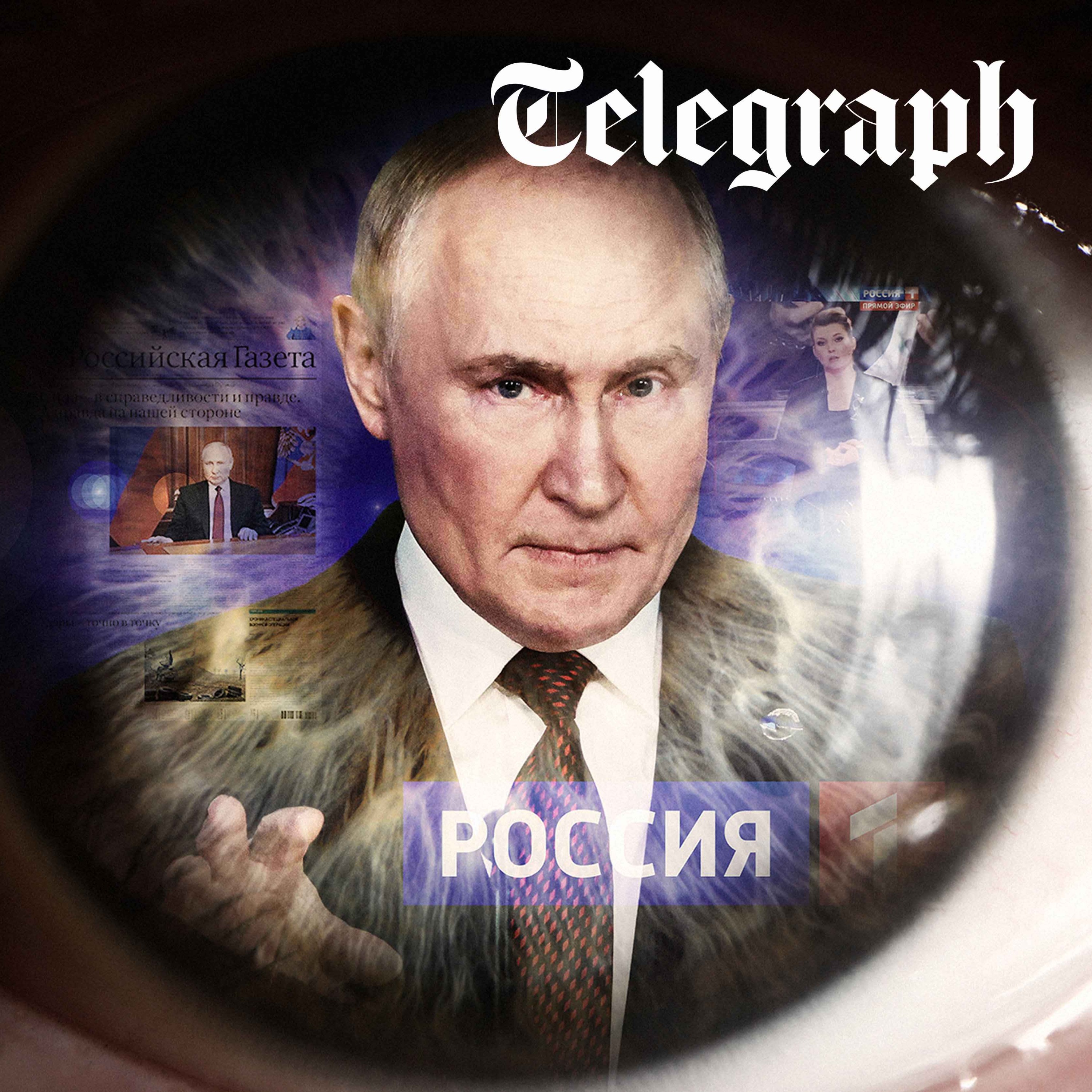
Ukraine: The Latest
Kremlin insider: ‘we don't plan to win the war’ & FSB claims 150,000 Russians used special ‘helplines’ to denounce fellow citizens
00:49:13
Loading summary
Transcript116 lines
- [00:04]
Wayfair Announcer
The telegraph.
- [00:09]
David Knowles
Let's be completely honest. Are you happy with your job? The fact is, a huge number of people can't say yes to that. Too many of us are stuck in a job we've outgrown or one we never really wanted in the first place. But we stick it out and we give reasons. Like what if the next move is worse? And I I've put years into this place, and maybe the most common one. Isn't everyone miserable at work? But there's a difference between reasons for staying and excuses for not leaving. It's time to get unstuck. It's time for Strawberry Me. They match you with a certified career coach who helps you get from where you are to where you want to be, either at your existing job or by helping you find a new one. Your coach helps clarify your goals, creates a plan, and keeps you accountable along the way. Go to Strawberry Me Career and get 50% off your first coaching session. That's Strawberry Me Career.
- [01:04]
Wayfair Announcer
We interrupt this program to bring you an important Wayfair message. Wayfair's got style tips for Every home. This is Stiles MacKenzie helping you make those rooms sing. Today's style tip when it comes to making a statement, treat bold patterns like neutrals. Go wild like an untamed animal. Print area rug under a rustic farmhouse table. From wayfair.com Fierce, this has been your Wayfair style tip to keep those interiors superior.
- [01:31]
Dr. Jade McGlynn
Wayfair Every style, Every home.
- [01:35]
James Kilner
ACAST powers the world's best podcasts. Here's a show that we recommend.
- [01:43]
Hayden
Howdy, howdy, ho, and welcome to Fantasy Fan. Fellas, I'm Hayden, producer of the Fantasy Fangirls podcast and your resident lover of all things Sanderson.
- [01:51]
Stephen (Smash Daddy)
And I'm Stephen, your bookish Internet goofball. But you can call me the Smash Daddy.
- [01:55]
Hayden
And we are currently deep diving Brandon Sander fantasy epic Mistborn. But here's the catch. Steven here has not read Mistborn before.
- [02:03]
Stephen (Smash Daddy)
That's right.
- [02:04]
Dr. Jade McGlynn
Hey.
- [02:04]
James Kilner
Hey.
- [02:04]
Stephen (Smash Daddy)
So each week you'll get my unfiltered raw reactions to every single chapter.
- [02:08]
Hayden
And along the way, we'll do character deep dives, magic explainers, and Steven will even try to guess what's next. Spoiler alert. He'll be wrong.
- [02:16]
Stephen (Smash Daddy)
News flash. I'm never wrong. Episodes come out every Wednesday, and you can find Fantasy fanfellas wherever you get your podcasts.
- [02:24]
David Knowles
ACAST helps creators launch, grow, and monetize their podcasts everywhere.
- [02:30]
James Kilner
Acast.com.
- [02:36]
Francis Dernley
I'm Francis Dernley.
- [02:38]
Don Nichols
I'm Don Nichols.
- [02:39]
Francis Dernley
And I'm Adeli Pojoin Ponce and this is Ukraine. The latest. Today we bring you dispatches from northern, eastern and southern Ukraine following fresh Russian attacks overnight as the US delegation meets Ukrainian officials to prepare for the next round of trilateral peace talks in Geneva. We also provide the latest updates on resistance activities in the Russian occupied territories and take a broader look at the state of Russian society after four years of Putin's war, including the impact of sanctions, economic strain and yes, reports of even higher prices for cucumbers.
- [03:17]
Don Nichols
Bravery takes you through the most unimaginable hardships to finally reward you with victory.
- [03:27]
Francis Dernley
The Russia does not want fees.
- [03:37]
Dr. Jade McGlynn
If I'm president, I will have that
- [03:39]
Francis Dernley
war settled in one day, 24 hours.
- [03:41]
James Kilner
We are with you, not just today
- [03:44]
Francis Dernley
or tomorrow, but for a hundred years.
- [03:46]
James Kilner
Nuna Povon Pam Nobody's going to break us. We're strong. We are Ukrainians.
- [03:57]
Francis Dernley
It's Friday the 27th of February, four years and three days since the full scale invasion began. And today I'm joined by my co hosts Dominic Nicholls reporting from Mykolaev, Adli, Pojo and Ponte in Kyiv and Dr. Jade McGlynn in formerly occupied territories near Kharkiv. And here in the studio in London, ready to talk us through how the Russian media has been reporting or not on this historic week, our Russia analyst, James Kilner. If you want to see Dom, Adeli and Jade in Ukraine, plus maps and battlefield footage during the updates, James and me in the studio and lots else besides, do check out the link in the episode description to our full video version on our YouTube channel Crainethelatest. Now to the updates. Compared to yesterday, which saw one of the heaviest bombardments Ukraine has suffered for some time, last night and this morning saw modest attacks. There were no missiles and only 87 long range attack drones fired by Russia, with the Ukrainian air force saying that it downed 165 of them. An 89% success rate if true. We're still assessing the damage at some of the locations across the country that we're looking into and that we know were hit. But neither Don or Adli, who you'll hear from in a moment, heard explosions overnight in Kyiv or Mykolaiv. The most dramatic footage out of Ukraine in the past 24 hours or so is from Konstantinivka in Donetsk, where footage of phosphorus reportedly being dropped by Russian forces has spread very widely across social media. Due to the dramatic nature of the footage, a cascade of projectiles falling on the city from on high before each explodes one by one. It's believed that There are still around 2,000 civilians in the city. There have been incidents we've reported on the podcast of some of them being hunted by FPV drones, which is something that also took place in Pokrovsk some months ago. Also in the air war Ukraine reportedly launched overnight himars strikes on a thermal power station in Belgorod oblast. According to eyewitnesses, just as a reminder, Belgorod is located around 34km from Ukraine's north eastern border with Russia. It's been the center of considerable activity over the last couple of weeks or so. But let's hear from Dom now who's just left the east of the country where he was reporting yesterday and is now in the south in Bashtanka near the old front line. Over to you, Dom.
- [06:35]
Don Nichols
This is where the Russian army tried to push through to get to Odessa in the first few weeks of the full scale invasion. Ukrainian troops, but mainly civilians from the local village had prepared this position, this trench. I heard expecting and anticipating the Russian assaults come from the south. They only had small arms, so rifles, grenades, things like that. They didn't have anti tank weapons, they didn't have very sophisticated weaponry. But they managed to hold the Russian armored column here. With the defenses that they had produced and the other activities of compatriots on other sides of the village, the Russians got stuck here. They weren't able to push past Westanka and get onto Odessa and for that reason they then had to push further north and everything slowed down and that meant that they weren't able to get to Odessa, they weren't able to facilitate an amphibious landing and they weren't able to take the south of the country. If it hadn't been for the stand of the people in the village of Bashtanka, it could have been a very, very different picture. The start of the full scale invasion and perhaps the war would be over by now. And a lot of that, not all of it obviously, but a lot of it started right here in this trench.
- [07:43]
Francis Dernley
Thanks very much Dob. Now we're also hearing reports today of attacks on Kharkiv and the surrounding area, something confirmed by Dr. Jade McGlynn of King's College London, who is currently in that region and is going to talk to us now before giving us her usual updates on resistance in the occupied territories. Jade, it's always a pleasure to have you on the podcast. Perhaps let's just start by ask, where are you at the moment?
- [08:09]
Dr. Jade McGlynn
I'm to the northeast of Harkyd in a territory that was previously occupied I'm by a school that was originally occupied actually by DNR fighters. Then the Ukrainians freed it, then the Russians came and they took it back over, leading to the destruction that you can see.
- [08:29]
Francis Dernley
And are there still people living there, Jade?
- [08:31]
Dr. Jade McGlynn
Obviously the school isn't functional, but we just had tea with a local villager who was here during the occupation. He was telling the story of a 19 year old boy who was taken on the second day of the invasion. Obviously the village has since been freed. It was freed quite early on. The 19 year old boy is still in Russia in prison. His family also moved to Russia just to be able to be closer to him and to have some way of contacting him or getting him legal support. But apart from two letters that he's managed to get out via the Russian Red Cross or the icrc, I'm not quite sure which one. There's not much news and there's been no case, there's no legal process. He was also telling us about how when the Russians were finally kicked out by the Kraken, which is a local special division here, they then took some civilians with them, forced them to march on foot to a village about 6 km away and tried to force them to go to the Urals for their own safety. Some people were scared and did go to the Urals, but then they, after that they left basically via Europe. And there are only two people of that group left. One of them is that boy who's in prison now, a man. And another individual who I'm not sure about, about one quarter of the kind of local Gramada died during the invasion and the occupation and the fighting. So it hit here quite hard.
- [09:54]
Francis Dernley
And is this still a very active sector in terms of fighting, shelling or attacks?
- [10:00]
Dr. Jade McGlynn
Yes. As we were driving in to go and visit the local for some tea, there was, I have to be honest with you, I'm not entirely sure exactly what hit it. Definitely wasn't a drone, it was something heavier than that and it gave rise to this really horrible smoke bomb that I sent you, Francis. It looks like a kind of evil jellyfish of destruction. And since being here, probably heard about seven times different explosions. It's very clear driving around this area that it was a really beautiful area before the war. It's right by some water and you can see the houses are beautiful. It was clearly a relaxed area for people from the city or for people in retirement maybe wanting to retire somewhere nice. I actually just heard another bang, but it's quite far away, so there's nothing that will Take me away from my dedication to Ukraine, the latest podcast.
- [10:51]
Francis Dernley
Well, do be careful, Chad, as much as we appreciate that, what brings you there today when you're doing your research search on the occupied territories, when you go to a place like this, what are you looking out for?
- [11:02]
Dr. Jade McGlynn
Particularly so when I come to these areas, most interesting to me are the conversations, for example, that the villagers shared about the people being marched off to the village and then sent to the Urals. Amidst those little details, I want to work out, you know, and the stories, because I think so often in the west, you think about this, you know, as, oh, what happened four years ago? But what happened four years ago is still happening, not just in terms of the war, but also in terms of that man still sitting in a prison cell, God knows where in Russia he's just been kept since that point. So I think it's those stories and the fact that it's like the 24th of February never ended that long 24th of February, 2022. So those are the stories that I'm looking for, I suppose, both because they reveal patterns about systemic things that the occupiers did, but also, I suppose for it sounds trite, but maybe that human element of thinking about the personal, human tragedies that sometimes are easier to protest than just the sheer scale of what's happening here.
- [12:00]
Francis Dernley
And, Jade, when you speak to locals there, obviously the conditions are terrible, not only from the attacks that you've just been describing, but also just in terms of the damage that was caused by this territory being occupied by Russia and being a center of such fighting. Why do people still stay there? What do they tell you?
- [12:20]
Dr. Jade McGlynn
This is their homes. Obviously, a lot of people have left, but it's their homes. And directly the older generation, they just don't want to leave. I was talking to a friend last week whose parents stayed in occupation and only left at the last moment when they found out that the husband was on a list for execution. They only left at that point when, in fact, they didn't even leave at that point. They left after the Russian started going around and knocking on his neighbors and calling his friends to try and find where this man is. So, I mean, really at the last moment, and that place was since liberated, they have moved back there, even though it's an incredibly unsafe place to live. So people just feel, particularly the older generation, feel very attached to their homes in the sense of, if I'm going to die, I'm going to die at home. Obviously, for younger people, perhaps you feel more mobile. It's Less noticeable.
- [13:09]
Francis Dernley
Well, thank you, Jade. Now, obviously you're there on the ground. We don't want to take up too much of your time, particularly because you're in a dangerous place, but you always do a segment this time every fortnight from you dedicated to the resistance in the occupied territory. So perhaps you could talk us through now some of the updates of what's taken place in that period.
- [13:28]
Dr. Jade McGlynn
Sure. Thank you. So between 12 February and 25 February, there were at least 15 confirmed operations. Once again we saw the focus in the south, also Crimea, and a strong preference, if you want to put it that way, for sabotage against transport and logistics. So on the 13th of February in Kherson region, for example, there was sabotage of a vehicle, an UAZ Patriot, and that was carried out by the Free Kherson region movement, and of course aimed at reducing the occupier's ability to move people, to move equipment, especially because in the Kherson region there tends to be perhaps sometimes a limited fleet in some areas, and so it then just reduces, has an effect even the ability to carry out routine movements and indeed others. In the left bank of Mariupol, on 16 February, there was arson at a Russian base, so it's near the settlement of Rychny. And this attack on the base shows that the resistance is still able to carry out not just these one off, I don't want to say smaller, because they can have a big effect, but obviously more targeted operations, but is still able to carry out quite large operations in terms of hitting an operational site where troops live, where there's equipment stored, and where movements and operational plans are made. In the Left bank of Kherson region, on 19 February, the Sorok movement carried out an arson of a Neva vehicle that was transporting ammunition and military medical supplies. So medical supplies for the troops. So again, the micro logistics focus In Crimea, on 20 February, the Crimean Partisan seemingly disabled and damaged a Russian railway's train. So a rail sabotage action. This date of course, is quite important because the 20th of February 2014 was when the Russian occupation of Crimea is argued to have begun, or when they started to appear. And of course, even limited destruction of the railways can cause delays, rerouting and so on. And then the final one that I'll speak about today, on the 24th of February in Melitopol, so in the occupied part of Zaporizhzhia region, there were arson attacks on vehicles. In Melitopol, they were attributed to something called the People's Resistance of Ukraine. So Narodni, Sprot, Ukraini and of course Melitopol is a pretty important transport node. It sits on routes that connect Russian controlled areas of Crimea and with other occupied territories. And the attacks on the vehicles there really fit the wider pattern of what we've been seeing. The efforts to reduce local mobility to assist the Ukrainian armed forces by destroying logistics that could be used against them, obviously from the other side of the front line.
- [16:01]
Francis Dernley
Well, Jay, thank you very much for talking us through those updates in the most extraordinary circumstances. And obviously it's amazing that we can actually see you in one of the places that of course has been a centre of focus for us now for the past four years and suffice to say, stay safe out there. Is there any other parting thoughts you'd like to leave us with?
- [16:23]
Dr. Jade McGlynn
There's so many. Sometimes I can't think through all of my thoughts until I return, you know, home or at least Kyiv or somewhere safer. But only that I do perhaps not to hear, but I do wish that people who come to Ukraine would also take more time like you guys have to come out to the east because it's such a different sense. You know, everybody here really is fighting as much as they can and. And in a weird way I don't feel the same exhaustion that actually I felt more centrally and further west. And I do think it's because so many of these places have lived under occupation or been right at the front of nearly being under occupation and they understand what they're fighting against. And I suppose just to bring to that point, that looking at this utterly destroyed school and talking to the villager, just that reminder of these are the sort of conditions that some people in Florida are suggesting. Tens of thousands of people in Slovyansk and Kramatorsk and Kostatinivka should be handed over to. And no wonder the Ukrainians are fighting so hard to avoid that, because I think anybody would.
- [17:23]
Francis Dernley
Thank you so much, Jade, for your time. Safe travels. Take care.
- [17:27]
Dr. Jade McGlynn
Bye bye.
- [17:28]
Francis Dernley
Well, thanks very much, Jade. Stay safe out there and we look forward to having you on the podcast in a couple of weeks time. Now, just on the subject of the suffering of civilians and especially children, the Telegraph has published a long read into the physical and psychological trauma of 5061 children in three regions. As you'll know, according to the UN, one in three children in Ukraine have witnessed someone being killed or injured during the last four years of war. Just let that sink in for a moment. One in five reported losing a friend or a relative. And in the frontline regions, 83% of young children have shown signs of emotional distress and delayed development. Now, I'll be honest with you, this is a harrowing read. It describes the horrific circumstances in which two children lost their hearing and many cases of children self harming, having night terrors, bedwetting, panic attacks, emotional outbursts and complete withdrawal from communication to the point of near constant silence. In many ways, they are the forgotten victims of this war, so rarely talked about when politicians speak of land swaps or trade deals, all of those subjects that so often are the subject of our reporting. And of course, we continue to draw attention to the stolen children as often as we can. But before we turn to the rest of the updates and hear how Russia's been reporting this historic week with James, let's catch up with Adli in Kyiv.
- [19:07]
Adeli Pojoin Ponce
I'm here in front of the French Embassy in Kyiv and I've just finished an interview with the French ambassador. As I was leaving and so was the ambassador in the car right there. The air alert that you can hear behind me has just started. So I've not even had time to look at my phone to see what it is. It's actually been a really quiet night last night. The weather is really beautiful. So yes, you can hear the air alert behind me. I've just had quite a long chat with the French ambassador. It was really fascinating to hear about what the plans may look like in case of boots on the ground, extended cooperation with the UK when it comes to the coalition of the willing. We've also talked about the energy crisis, about France and Ukraine being both big producers of nuclear energy and what that means in terms of cooperation. And we've also talked a lot about what it means to be an ambassador in a country at war. So this will be on the podcast very soon. Please stay tuned. And in the meantime, this is my last morning of this first week in Kyiv on the week of the anniversary. And I'm going to go and look at telegram channels and see what's up.
- [20:15]
Francis Dernley
Thanks very much, Adali. Stay safe and of course we'll be hearing from you again next week. Two other quick bits of news before we go to our deeper dive into Russia. Ukrainian delegates met US Envoys Steve Witkoff and Jared Kushner in Geneva after our broadcast yesterday, laying the groundwork for the next round of trilateral negotiations with Russia. The US And Ukraine said that they aim to synchronize positions ahead of this next stage, said Kyiv's top negotiator, Umarov Witkoff. US President Donald Trump's special envoy to the Middle east, of course, as well as Ukraine. And Kushner, the president's adviser and son in law, are currently involved in complex negotiations with Iran, which is also being hosted in Geneva, which does beg the question how they've got time to tackle two of the biggest geopolitical issues in the same week. I mean, it's just not really being talked about that. But I think it is worth us mentioning. And there are still major questions over just how committed Russia is to these peace talks. The Spectator reports that intercepted phone calls and messages from senior Russians ridiculing Trump have been shared by the British with the Americans. We have continually shown them intelligence that shows the Russians are lying, a senior security source tells the Spectator. The Russians are privately mocking Trump over his naivety about Putin's intentions. Putin does not want to end the war, but that doesn't seem to really have had very much of an impact on the American position. Only last week, as we reported, Wyckoff was saying that Putin, a former KGB officer, had only ever been straight with him. Now a final story which leads neatly into James. There are reports that Russians are taking antidepressants at unprecedented levels. At least 22.3 million packages of drugs such as Prozac, were sold last year, almost double the number sold in 2022. That's coming from a Russian analytics company. Up to 8.4 million packages were sold in 2019, 13 million in 2022, and 15.3 million in 2023 before a record 17.9 million in 2024. The worsening cost of living crisis has been one of the speculated causes, as well as anxiety, welfare, pension and education funding being cut and redirected to fund the war in Ukraine. So, as I say, this does feel like an optimal moment to bring in James. Not because I think you need antidepressants at all, but rather just because of us doing our deep dive into the Russian state at the present moment. Let's begin, James, with the four year anniversary, something that's been, of course, very widely reported in Ukraine and in the wider West. But how have Moscow been covering this, if at all?
- [23:10]
James Kilner
Well, exactly. Francis, thank you first for having me on at the end of the long week. I gather it's been a huge week moving the podcast onto YouTube. Congratulations for that. So the fourth year anniversary of the war in Ukraine, unsurprisingly, really passed most Russian media, newspapers, TV, by and Putin himself. Putin spent February 24th handing out medals to FSB officers, praising them for perpetuating his his war in Ukraine, the special military operations, as he's called it, his newspapers, mouthpieces for his propaganda. We're talking about the demilitarization of Ukraine, the denazification of Ukraine, the fact that Ukraine and Europe are scuppering peace prospects, this sort of nonsense. And we've spoken about this loads and unusual lines. Yeah, we've spoken about this loads of times on the podcast here. But I think even the determination by the Kremlin to ignore the fourth anniversary of this huge war which we now know is generated a million or so casualties, Russian casualties alone, half destroyed. Ukraine as a nation brought misery to millions of Russians. The fact the Kremlins ignored this fourth anniversary is rather telling, I would say, in its determination to pretend it's business as usual in the banality of evil. Hannah Ont coined the phrase in 1963, the trial of Adolf Eichmann, talking about banality like Eichmann's inability. He was a logistician who planned the murder of millions of Jews in the genocide in Nazi Germany. And of course I'm not broaden parallels, but the banality of the Kremlin and its ability to ignore such a sort of yet another milestone is remarkable.
- [24:49]
Francis Dernley
And they certainly wouldn't be doing that if they'd been successful in the invasion in the way that they had expected.
- [24:55]
James Kilner
Well, yeah, and you're quite right, and it's very important for the Kremlin for Putin to keep dressing up as a success, as a defense of the motherland, etc. So they ignore it. They can tell Russians that they have to suffer these privations, et cetera. And all the time say we're just doing this is very serious business we need to sort out down in Ukraine against NATO, et cetera. You just carry on your normal lives. But all the time, as we know, the economy is crashing, et cetera, et cetera. And honestly, there was no statement by a single serious Kremlin insider on Tuesday for the anniversary. It was quite remarkable. Peskov said something rather withering. Putin said very little. There was one chap, you may remember him, Zakhar Pdeplin. He's an arch nationalist fantasy writer who survived an assassination attempt in 2023 at carbon by Ukrainian operative, we assume. And he put out an early telegram, ironically post. It was one of these confused posts that you come to expect on days like this from Kremlin insiders where they row back on what the Kremlin's trying to do in the war. And his quote was, it's not even that Russia can't win yet, he wrote. The point is that we don't even have such a goal. We're not even planning to get to Kyiv and we're not even planning to get to Odessa. This means there'll be no demilitarization and no denazification. And then his whole post goes on to he's talking about an internal fight in Russia to strengthen Russian society against Western customer mores. So he's talking about a much more existential contextual fight. So this is the new propaganda wave that Kremlin's contextualizing its war in Ukraine around.
- [26:33]
Francis Dernley
Well, thanks very much for talking us through that, James. I mean it doesn't necessarily surprise us, but nonetheless it is just remarkable and worthy of note that this is not being talked about Russia's bloodiest war for decades, and yet it received so little comment. Now, another story that we were talking about on the podcast yesterday and indeed over the last, let's say, week and a half or so, is relating to Telegram and its potential banning. And Srilana Moranec was saying that there is some speculation in Ukraine that it could be because they are laying the groundwork for a possible general mobilization. I'm interested in whether you think that's a prospect, James, and just generally your view on this story.
- [27:11]
James Kilner
Okay, I've seen and read that comment, not particularly the comment in the podcast, but more generally I've not seen anything on well sourced information on Russia media which suggests there's any validity in that line. I do think it's very important to work through the Kremlin's ban on Telegram, which we're pretty certain now is going to happen on April 1st. There's been pretty well sourced reporting around that. To put it in the correct context here, you may well have done this already on another podcast, Francis, but it is equivalent of the UK government turning off WhatsApp and forcing everyone onto some UK government made snooping instant messaging when you know everything you send is going to be snooped on. It is that seismic shift. It's going to cause problems on the front line. We know that Russian soldiers use it. They're angry about it. You've got United Russia. United Russia is the political party of Putin. You've got his deputies in Parliament complaining about this. You've got some division even within the Normandy hardcore Russian newspapers, the propaganda outlets. So dissent in there as well, which in basically an almost totalitarian state shows you just how much division this policy is generating. So for my mind, it's like for them to take such a risk, there must be a very serious reason behind it. And I can only surmise that they're not confident that they've got control of the people and by this they've noticed more opposition as this war has gone on. We're now in year number five, start of year number five. We know the economy's dire. There's been lots of complaints on telegram by ordinary people about cost of utilities going up, food prices going up. Everyone knows someone whose brother or son or husband was injured or killed in the war. There's more and more dissent. I was there in 2024, as you know, in October 24th in Russia for the Telegraph newspaper, and I found dissent. Then another 15, 18 months later is more and more dissent. So I don't think they're about to pull off another mobilization that would completely undermine the Kremlin strategy of pretending the war doesn't exist. It's not important for Moscovites or people in some Petersburg. We know this is a war perpetuated by mercenaries, Russian mercenaries and increasing foreign mercenaries as well, who have been tricked or bribed into coming.
- [29:22]
Francis Dernley
More on that in a moment, because that's going to be one of the
- [29:24]
James Kilner
subjects we talk about. Exactly. These are important points. So when you talk about general mobilization, no, I don't buy into it. It would be such a shift. They tried that in September 22nd and it generated a huge problem. I don't think they're going to go down that route. So I think they've either cotton on some rise in internal opposition, which I'm not surprised about, being an avid reader of the Telegram, you can see that, or and this is just an outlier. And I'm not saying, obviously, I don't disagree with UK intelligence, snippets to the us, et cetera, about how Russia is deriding Russian officials are deriding Trump. But with Wyckoff coming out, and I don't know if, again, if this is the first time he said this, that there might be a possible meeting between Putin and Zelensky. It seems quite important potentially. Maybe Putin is considering some sort of shifting back of his forces. We know that he fears peace because he's got a huge standing army there and it's all regionalized, et cetera. So there might be something in that. It is worth pointing out just before we move on. Very quickly, Frances, that yesterday as well, a woman called Yekaterina Duntsova was detained, you may remember her, did some reporting around her, around the presidential election in 2024 in Russia. And she very brave TV journalist, Russian woman, who put herself forward on an anti war platform before the presidential election in 2024 got banned. Presidential election was in March. I think she was banned in February. Whatever. Sometime around there she is. She since then has set up another little political party and she was detained yesterday in the Tverdezen region of Russia, which is between St. Petersburg and Moscow. She'd gone to an event to write letters to political prisoners. She was detained, taken away, questioned and then released without charge. But anyway, an escalation, another pressure point in opposition. So at the same time that you've got the Kremlin going after the telegram set up by Russian Pavel Dudov and openly accusing him of aiding and abetting terrorism through telegram, et cetera, et cetera, you've got them also beginning to pressure known oppositionists.
- [31:30]
Francis Dernley
Very interesting. Just staying on this theme for one more moment. If they do this, and you say it seems very likely that they will on April 1st, could this backfire for them?
- [31:39]
James Kilner
Well, yes, there's lots of discussion already online about how you can use Telegram through vpn. So in a technical way, it can already backfire. So they're trying to get people to move on to Max, which you already know about, which we discuss about. That's the Kremlin built instant messaging app released around September last year. They're forcing students to go on it now to get into exams. They're forcing people in the street who are stopped. Max app sort of thing. Yes, it could backfire, partly because they've said they're going to allow it to still Telegram still operate on the front line. It's too critical for their military operations. So how are you going to have people in the front line using Telegram and their friends and family back home not using Telegram? I mean, that in itself is a quandary. It will generate disgruntlement and will feed into an increasingly heavy river of displeasure against the Kremlin. So I think they have to be careful. They clearly have labeled and isolated and targeted certain oppositionist figureheads. There are not many left in Russia and they're already beginning to turn that screw. So April 1, I think is going to be an important day.
- [32:46]
Francis Dernley
Absolutely. Well, thanks very much, James. We look forward to having you on around that period to talk about it. Let's turn to the economy then. Our favorite subject, something you're always looking into in more detail for us. I'm hoping there's going to be an update on cucumber prices.
- [32:59]
James Kilner
James, I do have an update on cucumber prices.
- [33:03]
Francis Dernley
We don't have to stop There, don't worry. But I know people will ask if we don't mention it now.
- [33:07]
James Kilner
I mean cucumber prices, it was a nice place to start because one of the strengths of this podcast over the years has been our focus on the economy and the key components and now cucumbers. But cucumbers, just the latest product as we know to spike hugely spike in price. We've done bread, we've done eggs, we've done poultry, whatever. Now it's cucumbers turn. There apparently has been a new record for cucumbers sold in. Yeah, Kursk. You shouldn't look.
- [33:32]
Francis Dernley
Sorry, I'm just not really a big fan of cucumber sandwiches, which I know is a thing no Englishman should ever admit. I find it absurd that anyone would pay overpriced for a cucumber.
- [33:42]
James Kilner
So you wouldn't pay 20 quid for a cucumber?
- [33:44]
Francis Dernley
I certainly would not. I don't think I'd pay more than 20 quid for any vegetable, to be honest.
- [33:49]
James Kilner
Sorry, Mum. Apparently a gig number has been sold for just over 2,000 rubles in Yakuts, which is about 20 quid. And it's actually now been. You can order from. Yakuts is in Siberia. Difficult place to get to. Obviously products in the middle of winter are more expensive there. But apparently now they're so expensive, cucumbers in Yakuts, you order it by the grab. So people like I will have a slightly cake this big place. But really you shouldn't laugh. This is the privations of poor people in Ukraine who didn't choose this war. Probably, possibly, maybe. But from our point of view sitting here in London, it's an important indication of where the Russian economy is. The chaos, the built in entropy of the Russian economy.
- [34:32]
Francis Dernley
They try and fix one part of the market sometimes with food and then it sort of starts creaking somewhere else.
- [34:38]
James Kilner
Absolutely. This is it. It's built in inflation. This chaos is pinging around somewhere and it's almost like a different product every six months. They will get on top of the cucumber prices when spring comes, your cucumber sandwiches when you do get back to
- [34:53]
Francis Dernley
Moscow, you know, probably about 95 years old.
- [34:56]
James Kilner
Yeah, exactly. But they will get back under it, but then another product will come along and we'll see this whole cycle happen again. But bring it back to economy. Some quick updates. Teenagers now in Russia have been approved to do hazardous industrial work because there's just not enough men to do the work. As we know, they're out on the front line. Men have been killed, et cetera. That's part of the economy. There's new data showing that there's the lowest consumer sentiment In Russia since March 2022 Russian regions have posted a massive deficit, 360% higher now than it was a year ago. This is all part of sort of running out of money and paying bounties for soldiers. Also, if you remember, I came on the podcast two, three weeks ago and described how a special presidential fund which has been used to top up the regions had been effectively hollowed out and disbanded. So that comes at the same time as that. Vladimosti, that's a Russian business newspaper linked to the Kremlin. Again, it's creating official stats saying that wage arrears in Russia now is growing by 500% from last year. Again, a really important stat, more sort of circumspectral data really, is how heavily government newspaper has been promoting domestic tourism. We know that numbers of Russians traveling abroad has been massively crimped. They're trying to get people to go to different parts of Russia, not just some Petersburg and Sochi. Those places go elsewhere. Demand for meat Is down by 8% according to government data. This is a very base, rather crude data point on a luxury item in Russia. Really, that's probably the best way of putting it, they say, particularly interestingly, France has drilled down into that data point a bit. Demand for stakes, actual stakes, is down heavily. Stakes are not really. It's not really a Russian staple at all, and it's certainly considered a luxury staple. So that demand in meat dropping off and particularly sharp demand in stakes is actually another indicator of Russia just getting poorer.
- [36:50]
Francis Dernley
Fascinating. And yet in that context, we've just heard today, I believe, that the US has postponed sanctions against Lukoil's international assets again for the fourth time. So I'm just checking that that's moving the deadline February 28th to April 1st. So yet more reluctance from the United States to put pressure on Russia. And we know, given the US's economic heft, that that could have massive ramifications. And yet the reluctance will be having an impact. And you just imagine in an alternative world where they are willing to apply that pressure, what might be happening in
- [37:21]
James Kilner
Russia right now, but at the same time, their sanctions or their threat of secondary sanctions on people buying Russian oil is having huge impact. Euro's crude, the Russian benchmark crude, is selling about $12 a barrel cheaper than Brent. That's about 20% cheaper. You've got this bifurcation of oil prices in the world You've got Western and Middle Eastern producers selling their oil at market prices and you've got Iran and Russia heavily discounting to China, their biggest client. They are racing to sell their oil to China. So there was a nice stage point where Russia sold more oil in the last 12 months, about 6% more oil in the last 12 months. Months than it did in the previous 12 months, but it earned 18% less. So, yeah, you can just see the step change. And that is primarily actually due to the US Secondary sanctions specifically. Well, particularly on India.
- [38:11]
Francis Dernley
Yeah, we've always said that sanctions is a tricky art because just because it doesn't work 100% that is leading to the collapse of the Russian economy doesn't mean it doesn't have an impact. And that's true, obviously, on drone components as well. So maybe you don't stop stop drone production completely, but you reduce it by 20% and that's 20% fewer missiles on Kyiv. How many fewer people has that killed? And so I think the all or nothing debate around sanctions, that's how it's often framed, is unhelpful. And that's something, of course, we've talked about, as I say on the podcast, many times. But our next story, James, is one that we talked about on the podcast yesterday. This is the law passed protecting foreign mercenaries who fight in Ukraine from extradition and the Kremlin banning the recruiters from finding mercenaries in multiple African countries and indeed other countries like China, that are allies of theirs. So where do you want to start on this, James?
- [39:05]
James Kilner
Well, from my perspective, Frances, this is really, you know, the ban on recruiters in Kenya or wherever. There was apparently a kingpin recruiter guy rested in Nairobi this week. But I wouldn't take that too seriously. The Kremlin is not interested in banning people recruiting on its behalf. And we know with its Africa Corps, the rebranded Wagner group in Africa, they got very strong links to Africa. So I definitely wouldn't take that route.
- [39:29]
Francis Dernley
Do you think they'll find a workaround?
- [39:31]
James Kilner
I think on no interest, I think they want mercenaries from Africa or elsewhere in the world. They're definitely not going to close off that avenue. That's just lip service to governments in Africa who are getting rather stressed about the situation. We know that an increasingly large number of soldiers in the Russian army are foreigners from all over the world. Not just Africa, but some Gurkhas from Singapore and India, people from Thailand, you know, all over Central Asia is obviously a big draw as well. And in the South Caucasus, what I do think that law really does it will encourage criminals from overseas. If they can get to Russia, they're safe. Get to Russia, sign up to the Russian army, do some time on the front line. They basically get a pass and they get to live, live the rest of their lives in Russia. This is an extension of policy that we saw in 2023 when Wagner, then the Russian army started taking people out of prison, sending to the front line and said, you do a six month stint down in Donbas, survive the bombs and the bullets come back, you're free, man. It's an extension of that policy to my mind. And just to finish off on this segment, France says another couple of stories I've got for you about Russia perpetuating its war. Fiber optic orders from Russia have increased by tenfold. According to data. It now buys 10% of the world fiber optic cables. These are for those drones they operate with fiber optic cables rather than remote control, stops them being jammed, that sort of thing. So huge increase. We know that Russia fires thousands of drones at Ukraine. So they need as much of this stuff as possible. That's an important data point. And then another bit of data showing really how the war has impacted society in Russia with the recruitment of rather young students to be policemen. A lot of policemen have signed up to go to the front line in Ukraine. There's that. We've also had an interesting press release by the FSB. Data point from the FSB saying that last year 150,000 people in Russia used their telephone, their helplines, to denounce their friends, their colleagues, their family members. I'm not making this up.
- [41:39]
Francis Dernley
I know a few colleagues I'd like to denounce over the, over the phone.
- [41:42]
James Kilner
150,000 to the point where the FSB on their press statement said, we're experiencing very high call numbers. You may have to, you know, you may experience a waiting time. Please bear with us.
- [41:56]
Francis Dernley
I'd be more than happy to hold the line to complain about Dom. I have to say, it sounds like
- [42:01]
James Kilner
trying to get a refund on your car.
- [42:02]
Francis Dernley
It does, rather. Wow.
- [42:04]
James Kilner
But yeah, the fsb, rather proud of themselves turning Russia into not just a totalitarian police state, a snooping state with 150,000 people. People last year phoned up their helplines to denounce a friend or a colleague.
- [42:19]
Francis Dernley
My word. I mean, beware. That's all I'd say. Because I remember reading a great book a couple of years ago that was looking at the opening of the Stasi files and of course there were revelations in there for everybody because you had the access to be able to look at who had reported on you if you had a file. And it turned out that your neighbor, your former lover had said something to the Stasi at the time and this all came out. And you never know that one day this could be what happens in Russia. So I'm sure, I'm sure not recommending.
- [42:45]
James Kilner
No, no, I'm sure. I mean they've got a long history of this and they're really encouraging us and they're saying they've had an overwhelming response. So it says an awful lot about where Russia currently is. I mean when I was living in Russia 15 years ago, it was much more of a normal Western society. And the point here is it retrograded back to something from the Soviet Union, from Stalin times, almost with this encouragement by the FSB to ring up these so called help lines to dob your mate in or dob your, the guy who's annoyed you at university or whatever.
- [43:18]
Francis Dernley
One of the most powerful moments in a fantastic BBC documentary called the A Warning From History is when the documentary makers interview an elderly woman who they'd found reported on Jews to the Gestapo. And she's confronted with this thinking that they're just going to be asking her about her memories of that time. And they put this in front of her and of course she denies it. She says that I have no memory of ever doing this. They've made it up, it up. But it's a. I think there's something in her eyes that tells you that this is bringing, bringing forth a memory.
- [43:47]
James Kilner
Yeah. So it sounds chill, chills up you.
- [43:50]
Francis Dernley
Yeah. And I, as I say, I think this is one of those things that it's very easy to do but you live with the, with the consequences.
- [43:56]
James Kilner
Yeah, but, but it's also, I mean it's Exactly. So this FSB data point,150,000 people dobbing in people on, on their helplines really circles. Circles back to the Kremlin's determination to get people off telegram and onto their Macs into messaging app. It's the same mentality. It's state determination to bully people, to create this aura of mistrust, to get people to shop their friends to the police if they don't quite like what they're hearing. It's all the same thing. This is a very dark society. This is a society forged on the anvils of Putin's war in Ukraine. And this is the result. Big news.
- [44:50]
Wayfair Announcer
Wayfair's tax refund sale is on now, right now through March 2nd. You can score up to 70% off furniture, decor, appliances, brush and more with fast and easy shipping straight to your door. Plus amazing flash deals. Shop Wayfair's tax refund sale now to make the most of your refund with huge savings through March 2nd@wayfair.com Wayfair Every style, every home Based on a New York Times best thriller comes 56 Days, starring Dove Cameron. A story of love. Oh, sorry, sorry.
- [45:28]
James Kilner
I'm Oliver.
- [45:29]
Wayfair Announcer
I'm Siara Lies.
- [45:31]
Francis Dernley
So do you like secrets?
- [45:32]
Wayfair Announcer
No, I like reveals, seduction. It's like they were obsessed with each other.
- [45:38]
James Kilner
And murder we got here. Body in the bathtub.
- [45:42]
Wayfair Announcer
56 days is now streaming on Prime Video. I'm going to get you.
- [45:47]
Stephen (Smash Daddy)
Not if I get you first.
- [45:59]
Francis Dernley
Well, let's go to our final thoughts now then. Thank you first of all to all of you, the tens of thousands of you who have watched our first video editions this week. It's been frankly humbling reading all of the comments and I'm so glad that you found value in, of course, seeing the dispatches from the team in Ukraine, as well as being able to see the maps and our faces. Maybe that's the least advantage, but nonetheless, it's been so much appreciated by us and we. It adds not a replacement for audio, but an alternative way of viewing our content. But of course, it's bittersweet for two reasons for us here this week. Not only because of the terrible nature of the week itself being the fourth anniversary and the memories associated with that, which, of course, we've spoken about at length this week, but also because of who's not here. And David Knowles, of course, the creator of this podcast, well known to so many of you, would have loved this. And the fact that he's not here. Well, he is here. We've got his picture and of course his presence is constantly felt. And it's been lovely reading your comments about how he's been in your thoughts this week, but it feels like there's an empty chair, let's put it that way. And I'm sure that he would be thrilled that we're still able to continue our reporting day in, day out and are still trying to find new ways to do that. So thank you all again for your thoughts and your kindness and for still being here. We'll continue as long as you want us. But James, where would you like to leave listeners today?
- [47:32]
James Kilner
Okay. Well, I thought that was some very nice points just made around David. Yeah, I mean, his wit and lyricism is irreplaceable and I think his character is very much still stamped all over Ukraine. The latest. But I do think also that you, Dom and Annerly have taken it forward, the programme forward with full courage, commitment and conviction. And I think everyone's very grateful to you and very proud of what you've done. You guys have all done. So hats off to you as well. I think that's really important to remember. I think Ukraine latest is in a very good spot and it's been a pleasure to join you on the last episode of your first week on YouTube. So thank you very much.
- [48:09]
Francis Dernley
Thank you, James.
- [48:10]
James Kilner
But full credit to you guys as well. That has to be, you know, have to keep reminding yourselves of that.
- [48:15]
Francis Dernley
Can I just add a credit to all of the production team as well that have made this possible. It is not an easy undertaking to do this, particularly on a tight turnaround. We basically, to be completely honest with you, we started the year and we thought this might be something we would do later in the year, but then a decision was made that, no, we're going to try and do this for the, for the anniversary and make a statement with that, that we're not going to drop off our coverage when so many others are. And to make that possible has required a big, big team effort behind the scenes. So credit to all of those as well, to, to Megan, to Ryan, to everybody who's been working behind the scenes.
- [48:49]
James Kilner
Yeah, it's very impressive. I came into the office about an hour ago and was amazed that you guys are still standing off. It's a huge workload. Very impressive. To put it back to our core interests. I just want to leave readers with a typical segue to South Caucasus, if I may, Francis wouldn't be your interest without it, James. Interest? It has been for 25 years. Why not continue? Continue. But it's important for Ukraine watchers and Russia watchers. This is Nikol Pashinian. He's the Prime Minister of Armenia. He's in Poland this week. He's been chatting up with Polish leadership, getting their support for his drive to take Armenia into the European Union or push it that way in any case. Obviously, this is irritating the Kremlin enormously and they have vowed to stop this. They have openly said they're going to launch an information and persuasion campaign in Armenia ahead of parliamentary elections later this year. Of course, Armenia is also hosting the European Community Summit in May. That's the annual jamboree designed to pull peripheral countries into the European embrace. And what this is, Frances, as we've talked about so many times, is a shift from former Russian allies, from the Kremlin's orbit to the west, based really almost entirely on the way the Kremlin has behaved since its invasion of Ukraine. Pashinian he came to power in Armenia in a peaceful revolution in 2018. Not as an anti Russian guy, not at all. He felt let down by the Kremlin in 2023 when Armenia was in conflict with Azerbaijan and Russia was meant to defend it and failed. Since then he's worked very hard to pull Armenia away from the Kremlin. Something else is similar places going in Azerbaijan for different reasons. You have a rather extraordinary scene here of Mr. Pachinian in Warsaw chatting up Polish leaders who are trying to get him, encouraging him to put forward a formal application to join the eu.
- [50:48]
Francis Dernley
Fascinating. Well James, thank you very much for your time. Thank you to all of our team in Ukraine and of course all of you around the world listening in. We'll be back same time, same place next week. Until then, thank you all very much. Ukraine the Latest is an original podcast from the Telegraph created by David Knowles. Every episode featuring us in the studio maps and battlefield footage is now available to watch on our YouTube channel. Subscribe@www.YouTube.com crane the latest there's a link in the description. You can also sign up to the Ukraine the Latest newsletter Better each week we answer your questions, provide recommended reading and give exclusive analysis and behind the scenes insights plus diagrams of the front lines and weaponry to complement our reporting. It's free for everyone including non subscribers. You can find the link to sign up in the episode description. If you appreciate our work, please consider following Ukraine the Latest on your preferred podcast app and leave us a review as it helps others find the show. Please also share it with those those who may not be aware we exist. You can also get in touch directly to ask questions or give comments by emailing ukrainepodtelegraph.co.uk we continue to read every message. You can also contact us directly on X. You'll find our handles in the description. As ever, we're especially interested to hear where you're listening from around the world and finally to support our work and stay on top of all of our Ukraine news, news, analysis and dispatches from the ground. Please subscribe to the Telegraph. You can get one month for free, then two months for just one pound at www.telegraph.co.uk Ukraine the latest Ukraine the Latest was Today produced by Rachel Porter. Executive producers are Francis Dernley, Louisa Wells and David Knowles.
- [52:43]
David Knowles
My name is David Knowles.
- [52:44]
Francis Dernley
Thank you all for listening.
- [52:45]
James Kilner
Listening Goodbye.
- [52:54]
Wayfair Announcer
Big news Wayfair's Tax Refund Sale is on now. Right now through March 2nd. You can score up to 70% off furniture, decor, appliances, rugs and more with fast and easy shipping straight to your door. Plus amazing flash deals. Shop Wayfair's Tax Refund Sale now to make the most of your refund with huge savings through March 2nd@wayfair.com Wayfair Every
- [53:23]
James Kilner
style, every home, dear McDonald's, your breakfast menu. Fire tens across the board. I could be happy with anything even though I ordered the same thing every time. Thanks for not judging me. I'll try something new next time.
- [53:41]
Wayfair Announcer
Maybe score a 2 for $5 deal on a sausage McMuffin with egg and more. Limited time only price and very cannot be combined with any other offer single item at regular price.
- [53:56]
James Kilner
ACAST powers the world's best podcasts. Here's a show that we recommend.
- [54:04]
Hayden
Howdy, howdy ho, and welcome to Fantasy Fan Fellas. I'm Hayden, producer of the Fantasy Fangirls podcast and your resident lover of all things Sanderson.
- [54:12]
Stephen (Smash Daddy)
And I'm Stephen, your bookish Internet goofball. But you can call me the Smash Daddy.
- [54:16]
Hayden
And we are currently deep diving Brandon Sanderson's fantasy episode epic Mistborn. But here's the catch. Steven here has not read Mistborn before.
- [54:24]
Stephen (Smash Daddy)
That's right. Hey hei. So each week you'll get my unfiltered raw reactions to every single chapter.
- [54:29]
Hayden
And along the way we'll do character deep dives, magic explainers, and Steven will even try to guess what's next. Spoiler alert. He'll be wrong.
- [54:36]
Stephen (Smash Daddy)
Newsflash. I'm never wrong. Episodes come out every Wednesday, and you can find Fantasy fanfellas wherever you get your podcasts.
- [54:45]
David Knowles
ACAST helps creators launch, grow, and monetize
- [54:49]
James Kilner
their podcast, Us Everywhere acest. Com.