← Ukraine: The Latest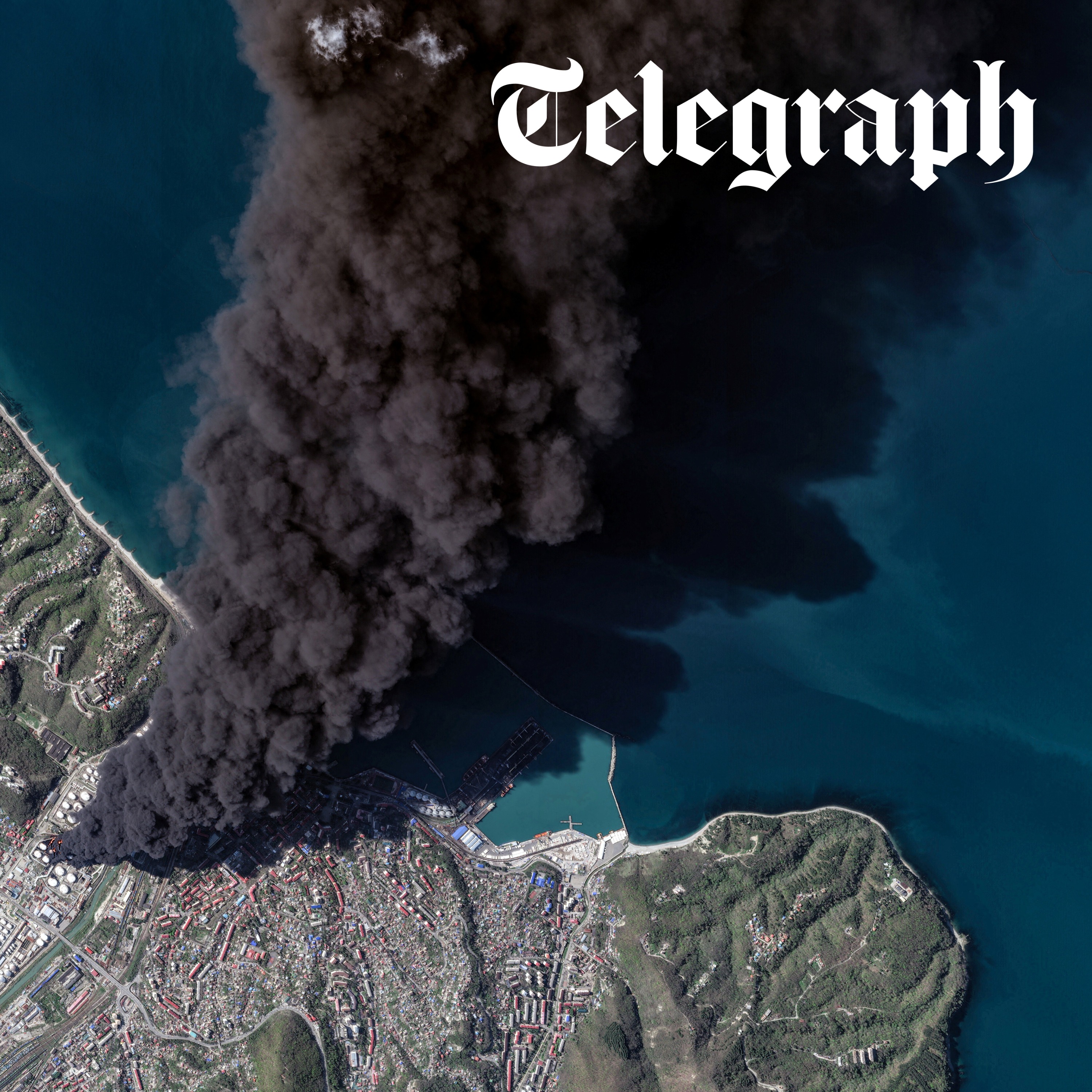
Ukraine: The Latest
Massive ‘volcanic’ refinery blaze erupts again ‘only hours’ after being put out & witnessing Russia's 'spiral into madness' under Putin
00:48:15
Loading summary
Transcript82 lines
- [00:04]
Podcast Advertiser
The telegraph.
- [00:11]
Acast Announcer
ACAST powers the World's best podcasts Here's a show that we recommend.
- [00:20]
David Knowles
What if you laughed all through your commute? Or if you heard the funniest story while at the gym?
- [00:25]
Podcast Advertiser
Well, now you can.
- [00:26]
David Knowles
I'm Jameela Jamil and guests on my new podcast Wrong Turns share their most mortifying and hilarious hilarious disaster stories. I'm talking people like May Martin, Bob the Drag Queen, Katherine Ryan, Jake Johnson, Margaret Cho, Simon Pegg, Penn Badgley, and so many more. So listen wherever you get your podcast. Wrong Turns Where Dignity Goes to Die
- [00:50]
Acast Announcer
ACAST helps creators launch, grow and monetize their podcasts everywhere acast.com acast powers the world's best podcasts. Here's a show that we recommend
- [01:07]
Brooke Devard
hello hello, it's Brooke Devard from Naked Beauty. Join me each week for unfiltered discussion about beauty trends, self care journeys, wellness tips, and the products we absolutely love and cannot get enough of. If you are a skincare obsessive and you spend 20 plus minutes on your skincare routine, this podcast is for you. Or if you're a newbie at the beginning of your skincare journey, you'll love this podcast podcast as well. Because we go so much deeper than beauty. I talk to incredible and inspiring people from across industries about their relationship with beauty. You'll also hear from skincare experts. We break down lots of myths in the beauty industry. If this sounds like your thing, search for Naked Beauty on your podcast app and listen along. I hope you'll join us.
- [01:50]
Acast Announcer
Acast helps creators launch, grow and monetize their podcasts everywhere. Acast.com Foreign.
- [02:03]
David Knowles
I'm Francis Sternley and this is Ukraine. The latest today, as President Zelensky warns of increased Russian military activity in neighboring Belarus, we discuss weekend Ukrainian air raids targeting the oil refineries around Moscow. We then examine a shock election result that's brought another pro Russia leader to power within both the EU and NATO, following in the footsteps of Hungary's Viktor Orban. And later, we speak to a veteran foreign correspondent who spent 25 years in Russia and who has made more than a dozen trips to Ukraine since the full scale invasion for his memories of how Putin built a system of ever greater repression and violence.
- [02:41]
Dominic Nicholls
Bravery takes you through the most unimaginable hardships to finally reward you with victory.
- [02:51]
David Knowles
The Russia does not want peace.
- [03:01]
Dominic Nicholls
If I'm president, I will have that
- [03:03]
David Knowles
war settled in one day.
- [03:04]
Mark Bennett
24 hours.
- [03:05]
Dominic Nicholls
We are with you. Not just today or tomorrow, but for 100 years. Nobody's going to break us. We are strong. We are Ukrainians.
- [03:21]
David Knowles
It's Monday the 20th of April, four years and 55 days since the full scale invasion began. And today I'm joined by our associate editor of Defence, Dominic Nicholls and foreign correspondent at the Times and Sunday Times of London, Mark Bennett.
- [03:35]
Mark Bennett
Welcome, Mark.
- [03:36]
David Knowles
But first over to Dom for the latest in the military realm.
- [03:40]
Dominic Nicholls
Let's start, as you say, without warning from President Zelenskyy about Belarus or increased Russian military activity in Belarus. So he was speaking on Friday afternoon and he said it's quite a long quote but bear with us. He said the high pace of eliminating occupiers continues in April. The Russians are not succeeding in seizing the the initiative on the front and that is important. We are also observing attempts by the occupying forces to regroup, most likely in order to compensate for a shortage of personnel which we've spoken about before. He said in this context it's becoming increasingly clear why military activity in Belarus has increased. According to our intelligence, the construction of roads towards Ukrainian territory and the development of artillery positions are underway in the Belarusian border areas. We believe that Russia may once again attempt to drag Belarus into its war. Interesting phrasing there. I've instructed the appropriate channels to be used to warn the de facto leadership of Belarus about Ukraine's readiness to defend its land and independence. The nature and consequences of recent events in Venezuela should serve as a warning to the Belarusian leadership against making mistakes. So there we go, all good stuff. Talking about roads and artillery positions near the border. A nice little phrase there. Talking about the de facto leadership of Belarus. Obviously a nod to Svetlana Sikhanyskaya who's widely seen as the accredited legitimate president or having won the presidential election. But that last line I pointed out. The nature and consequences of recent events in Venezuela should serve as a warning to the Belarusian leadership against making mistakes. I mean, is he hinting at some sort of. I know Badanov is no longer in charge of the Ukraine's military intelligence but some kind of strike to go and whip Lukashenko out of Minsk. God, it would be be interesting if we open the episode with that. Anyway, we will see. We will see. Now then, elsewhere it's been a very busy weekend of Ukrainian long range strikes. Let's go back overnight. Friday, Saturday, Russia's Novokubishevsk and Syzran oil refineries were set ablaze after successful strikes. They're both about 600km inside Russia from Ukraine. The Ukrainian General Staff said on Saturday that in addition to those two, the Visotsk Lukoil 2 oil terminal in Leningrad or blast by St. Petersburg and the Tikorets pumping station in Krasandar region were also hit. Then Russian milbloggers said that a fifth facility had been hit by drones. They said an oil depot in Sevastopol had been struck. Now I can't verify that. I've not seen reporting of that anywhere else, so take that with a salt mine. But a mill blogger said on telegram the problem of increasing the number of Ukrainian armed forces drones and their regular flights over distances of 1,000 to 1,500 kilometers is already snowballing. He said hat tip to Jay and Keev for pointing me to that one. Thank you, Jay. Now then, also, the fire at the Tuapse oil terminal volcano down the coast. The volcano down the coast, down the sort of Black Sea coast. It was finally extinguished after burning for three days. Extinguished over the weekend. But hold that thought, okay, Elsewhere, so we're still on Friday, Saturday, the sbu, the security service of Ukraine, they said that overnight Friday, Saturday it had conducted a strike on the Sevastopol, which might be the thing that the millblog was talking about. They said that they'd hit multiple naval and infrastructure assets hit there. So same place, not an all terminal, hence I can't verify that mill blogger. But the SBU said that they'd hit the large landing ships, Yamal and Azov. Now they mention Azov, but I've seen Ukrainian media outlet measure saying that it wasn't the Azov, it was the Nikolai Filchenkov. Unless the two vessels are the same now again, I don't know. I'm just trying to bring you the reports. As I see it, I can't see that one might be that Nikolai Filchenkoff will also be known as Yazov. But anyway, they both agree, both outlets, the SBU and measure agree that two land landing ships were hit. They also say there was the probable destruction of what Russia calls an anti sabotage boat. Never heard. I mean, I think it's a Russian terminology. We don't use that in the Royal Navy, but I think it's some kind of offshore patrol vessel, a small kind of river class type ship. The sort of thing we were on.
- [07:38]
David Knowles
I was about to say, yeah, in
- [07:39]
Dominic Nicholls
Odessa, SBU said they also hit radar comms and all the rest of it in Sevastopol. So a big strike there. That was Friday, Saturday, Saturday, Sunday, another Ukrainian attack on the Atlant aeroplane in Taganrol. So that's Bernie again. So this is right in the northeast corner of the Sea of Azov. That place produces Russian drones, Molnya drones and components for Orlan drones. It's not the first time that's been hit and battle damage assessment there shows at least two buildings badly damaged on the site now, possibly connected to that. But another drone strike hit a seaport a little bit further to the south. So that part, the Sea of Azov, kind of goes around the corner. So a little bit further south or around the coast. Stick with me if it's getting too geographic. So you're now in Krasnodar Krai region that was hit on Saturday overnight. Saturday, Sunday, the port of Yeysk that we've spoken about before in Krasndar Krai reportedly visited by Ukrainian drones. This comes from independent Russian outlet Astra. Now, over the weekend, on the ground, not a huge amount of movement, quite a lot of activity. As we've been saying in recent months, Russia seems to have tried to push up and down the line. So let's start in the Donbass in the Chasiv yar area. Ukraine's 24th separate mechanised brigade said that they had repelled an attempted breakthrough there. They said Russia tried to push with a tank, five infantry fighting vehicles, 10 motorbikes and other quad bikes and that kind of thing. There's footage you'll see of them racing along and just getting wiped out. In a statement, they said, for the second day in a row, the enemy has been launching mechanized assaults in the sector of the 24th Brigade. The attack was repelled. Enemy armored vehicles, transport and assault troops were destroyed. I mean, here we are over four years into this thing and Russia is still driving. When they've got vehicles, they're just, they're driving in straight lines again down roads and tracks. They're not trying to maneuver in any way, they're just racing as fast as they can. Back in the days when I was in the Royal Armored Corps, we used to just say, hey, diddle diddle, tanks up the middle. That's what they're doing. They just drive in a straight line and they are doing it and they're getting hit. Now the Institute for the Study of War, the US based think tank, citing geolocation from sites such as Maxim, Osint said, this is just one of four platoon sized or smaller mechanised or motorised assaults across Ukraine over the weekend. So as well as those two roughly platoon sized mechanised assaults around Chasiv Yar, they say that there was another motorised assault with using Ural transport trucks and at least six Motorbikes east of Sivatopetriivka, that's down in southwest of the country. They said that was on Saturday. And then a roughly platoon sized mechanised assault in near Kucharov in Kursk Oblast on Sunday. Right. So when I saw that, I thought Kursk, that's obviously that's in Russia. So are there Ukrainian troops in Kursk still? If this is a platoon sized assault by Russia in Kursk, what's going on there? There's been a lot of border skirmishing along there, as we've been reporting, so it is very confused. You'll remember last week there was more border activity around Vovchansk, So just north of Kharkiv, that border area there, just that, the 16th Army Corps, Ukraine's 16th Army Corps, said on Friday that they have contained Russian attempts to advance in the Vovchansk area. But what I'm saying is there's a lot of activity up and up and
- [10:47]
David Knowles
down the line, all under that umbrella of this spring offensive.
- [10:52]
Dominic Nicholls
Well, yes, yes, they. I guess we would say, yes, it is the spring offensive. But the fact that we're talking, this is news that there were four platoon sized assaults, a platoon being 30 people. I mean, this is newsworthy because it doesn't often happen. That speaks of how, how successful the spring offensive is and the state of the Russian army right now. Anyway, stick on the border, kind of Sumy area. Then a few hours ago, just this morning, the head of Ukraine's center for Countering Disinformation, Andrey Kovlenko, who we've quoted before, he says there are heavy clashes ongoing as Russian forces are attempting to infiltrate the border around that Sumy oblast. In that border area up there. He said Russian forces have reportedly gained fire control, that is, they can accurately hit. It's taken to mean that they've got human eyes on and you can bring accurate fire down rather than relying on radars and drones and all the rest of it. So fire control on well over the Udava River. Now that's between the villages of Miropilia and Miropilska, and that's in Sumy Oblast. It's right, as I say, on the border area. A Russian Mill blogger has also said that Russian troops are advancing in the area of Miropilska, but again, we can't confirm that. Now, ISW says that there's no evidence that these assaults have resulted in any tactically significant gains. And they say three of those four assaults we've just described do not appear to have been made any gains. Beyond the currently assessed line of contact. So they've not gone forward at all. They are suggesting that maybe they weren't actually an attempt to push the line forward. There might have been reconnaissance in force. Russians fight for information. Generally we in the west, our doctrine is that we try and hide and sneaky beaky find information. Russians are prepared to push people forward to fight for the information. So maybe this was a reconnaissance in force, a probe testing Ukrainian position. We don't know. But none of it worked. So they'll come back again. Across Ukraine as a whole over the weekend, fewer than 10 killed and fewer than 100 injured. Thankfully, 500 of 600 drones were brought down. And I note Foreign Minister Andrei Sibyer's comments on Saturday that Russian forces are planning to carry out seven, he said seven large scale drone and missile attacks against Ukraine each month. And he said a large scale attack is at least 400 drones combined with 20 missiles. He was citing intelligence reports, but it does all seem very specific about 7, 7amonth. Anyway, there we go. That's Andrei Sibir. A couple more for me now. Trapsy, I told you to hold Tuapse. The fire was burning for three days. Volcano, volcano, Volcano was erupting for three, three days. It was extinguished over the weekend. Saturday, I think. Well, just after midnight this morning it went up in smoke again. More Ukrainian drones hit Tuapse this morning. Air raid alarms activated across the region just after midnight. Local explosions reported in the city. There's damage reported to the oil refinery and there was. There's further drone activity reported through the early hours, although I've not seen any. Anything to really back that up, but Krasnodar Krai, Governor Fenjamin Krondatov, he confirmed the attack just after midnight. He said one person had been killed. There are reports that at least two storage tanks burning at the refinery. And you'll find footage on social media. Hopefully we'll be able to include it, of residents wiping down the houses and the kind of the windows and outdoor chairs and all this kind of thing. There's covered in oil. It's been raining, raining from the sky right away from the front line. A couple of points which we need to note and we will discuss it at some other time. But Ukraine says it's building a network of military technology centers focused on different areas of modern warfare. They say the first such hub, which they're calling Defence AI Center A1 is going to be built in conjunction with British support. They say it's going to secure a technological edge on air land and the economy. They say the focus of this thing is going to be real battlefield impact. AI that turns combat data into decisions. We were talking about how data is so important. They say they're going to be developing autonomous drones and robotics operating without gps, so Global Positioning system, so satellites operating without satellite guidance and under electronic warfare, so being able to operate within an area where Russian EW systems are jamming the frequencies. Basically, they say the next step is scaling innovation, AI powered simulations to design, test and deploy faster. It's all part of this building in the defense industrial base, not only for their war now, but also as an incubator and as a hub for future European.
- [15:11]
David Knowles
This is one of Fedorov's big initiatives.
- [15:13]
Dominic Nicholls
Oh, well, funny you should say that because he. Do you see that? Anyway, Defence Minister Mikhailo Fedorov, he said technological advantage is critical in modern warfare. We must be faster than the enemy at every stage. Now, you'll remember last week Ukraine signed an agreement with Germany on defense data exchange and joint military technology projects. So really interesting how they're pushing this at the moment. The defense industrial knitting. Knitting it all together. A couple of more things just on the theme of technology. The Ukrainian Defense Ministry announced over the weekend that for the first time ever, an interceptor drone had been launched from a. Well, an unmanned surface vessel. I'm trying not to say drone in every blooming sentence, but basically an aerial drone was launched from a sea drone and it shot down a shahed drone. Okay, gonna have to have a swear jar. They say this is a breakthrough in sea air drone integration, expanding air defense and strengthening protection for Ukrainian cities. Now, the unmanned Systems Forces commander, Major Robert Maggior Brovdi, he said yesterday that Kiev had already formed a naval drone battalion for these kind of missions in one of his brigades, and they're working on a second battalion for another brigade. In a statement yesterday, we were told the interception was carried out by a naval drone unit of the 412th Nemesis Brigade. They say they successfully destroyed the shahed drone launching from a sea based unmanned platform. Now, why do we go on about this? We've seen the damage that the airstrikes can do. Imagine having just unmanned platforms that are able to launch interceptors with obviously a human in the loop somewhere deciding what, where and how many, because you don't want to use up all your munitions. But this is a technological leap. This does not mean, as we said before, one person, one human to one effector. This could be one human to many, or ultimately no humans to many. So this is a very Interesting development, I think. And just finally, also on tech, Ukrainian drone manufacturer Wild Hornet, they announced a record breaking launch of one of its Sting interceptor drones, saying it had flown, they'd been controlled over 200 kilometers from the pilot. The company didn't specify in the statement when the mission took place, what the target was, even which country this test had taken place. But if they're able to control a drone from over 2,000 kilometers, that is significant. Now, I don't usually report press releases and trials, but Wild Hornets have got a very good pedigree. Sting is battle proven and as I've said before, I'm not particularly interested in reporting stuff that's battle tested because it might have been tested and found to be rubbish. But if it's battle proven, as Sting is, and Wild Horn is known to be known to be good for their comments, that's why I bring it to you. So a busy weekend of technology and drone strikes, but I'm not going to, I'm going to try and get through the rest of this, this episode without saying the word.
- [17:59]
David Knowles
Right, let's get the jar ready, somebody and see whether we can get away with it before we go to Mark, beginning with a quote for you. Just when I thought I was out, they pull me back in. That's going to be the mentality in the eu. Channeling Michael Corleone over the weekend, they thought they were the clear with Orban gone, but we seem to have another pro Russia leader elected for. Well, in a shock election in many ways. We did touch on it on Friday that this is where we expected it would go, but not by this scale. It's been a landslide for Ruben Radev, the pro Russian former fighter pilot in Bulgaria, crushing Europe leaning parties and sidelining long dominant political forces in the country. Now, just as a reminder, Bulgaria is a NATO and EU member and joined the Eurozone only back in January, something that he's actually been vocally opposed to. He said he wants the bloc to be pragmatic in its relations with the Kremlin. We've heard that phrase before and is unlikely, he said, to make energy independence from Russia a priority. It's one of the strongest results by a single party in the country for many, many years and it's believed that this will end the instability that's rocked Bulgaria for the last eight years or so. I think they've had five elections in that time, so quite extraordinary. Now, he isn't necessarily expected to be another Viktor Orban in the sense of trying to block major legislation in the eu. But nonetheless, this will lead to some concern in Brussels that they've got somebody here who might throw more spanners in the works. Now the next biggest story is relating to the U.S. treasury Department, who you'll recall had said that they didn't plan originally to extend those temporary licenses on the sanctions waiver, but have now gone back on their word and say that they will, after all, be extending the reprieve on Moscow following the war in Iran. So the latest general license that they've just released is set to expire on May 16 and is effective immediately. Effectively they've u turned and Scott Bennett has come under immense pressure as a consequence of this. Over the weekend, the Senate Democrats condemned the U.S. treasury Department's decision, calling the move shameful. Besants basically tried to say that it's a narrowly tailored short term measure that will provide only tiny financial benefit to the Russian government. But some people take a rather different view and see it as indicative of the general direction of travel from Washington. Now that might explain why the Kremlin is more bullish than they have been of late. Foreign Minister Sergei Lavrov is now claiming that any peace talks are basically unnecessary. He says, we haven't tried to force negotiations on anyone. We've always operated on the principle that if our partner is ready, we're ready, but it's not a top priority. So something that we've been saying now for some time, effectively the process has stalled. Now, the last trilateral talks was all the way back on February 16th. I think we haven't had any major movement since then. Not that we were really seeing any major movement in the negotiations either way. But nonetheless, it has now been some time since all of the parties met. And of course a major reason for that is because of the war in Iran. Two very final quick stories before we go to mark some political ramifications in Kyiv for a Moscow born gunman killing at least seven people and injuring 13 others after opening fire on a supermarket in the capital. He was killed by special forces as they attempted to detain him after 40 minutes of negotiations. Negotiations. Four hostages were rescued. Kyiv authorities have called it a terrorist act, but we don't know anything more and we don't get the sense that it's relating to the war as things go at the moment. Although the head of Ukraine's patrol police has resigned after video emerged of two officers running away from the scene after hearing shots fired. So not a good look for the Kyiv authorities after this incident. And just the final story I wanted to mention, it is creeping up on U.S. victory Day, May 9, something we've all always talked about. Last year we were speculating whether President Trump would take part. I think he's got other things going on this year. I'm sure that Marx saw quite a few victory days during his time in Russia. We might hear about that shortly. But the development here is that Lithuania and Latvia have denied airspace access to Slovak Prime Minister Robert Fico after him saying that he plans to go to Moscow for the celebration, something he did last year, causing a little bit of a furore within the eu although actually, I don't think there were any real ramifications for Slovakia. Despite the threats that were made by many of the officials at the time, questions remain over quite how difficult Slovakia is going to be after their threats fall on the 20th sanctions package. But at the moment, it seems that they're not going to be vetoing the 90 billion euros loan, which of course, was the major fear after the direction of travel in Hungary. But let's go to Mark now. Mark Bennett's been covering Russia and the former Soviet Union for the Times and Sunday Times since 2015. He has reported from across Russia, Chechnya and Siberia and lived in the country for 25 years. He left Russia 2022 after the start of the full scale invasion, and he's since made over a dozen trips to wartime Ukraine. His new book, the Descent, which I finished this morning, witnessing Russia's spiral into madness under Putin, is out now. And there's just so many subjects that we could cover, Mark. But first of all, could you just give us a summary of your time in Russia, beginning with that phase of optimism that you first saw when you moved there and how it descended into what you call the madness under Putin.
- [23:28]
Mark Bennett
I mean, in the 1990s in Russia was obviously a very, very different time. And to use a cliche, it was a different country essentially to what Russia is today. I mean, there were massive problems in Russia in the 1990s. There was poverty, there was crime, there was corruption. But essentially people could say what they wanted and there wasn't really the sense that you would be killed or locked up for saying something against the Kremlin, unless, of course, you happened to be in Chechnya and you wanted independence or you kind of stepped on the toes of Kremlin connected crooks. So, I mean, it wasn't a paradise by any means. But compared to Putin's Russia today? Well, as I said, it was very far away from what we see now in Russia, where even the slightest criticism of the Kremlin, or of the war indeed in Ukraine, can get you locked up for a very long time.
- [24:12]
David Knowles
Were there turning points, Mark, in terms of the decline, the descent, as you call it, or was this so incremental that it was hard to see until it was too late?
- [24:21]
Mark Bennett
I think there were a few. Not all of them were particularly. I don't think at the time we realized how important they were, how significant they were. But I mean, looking back, the protests in 2011, 2012 against Putin, which were the biggest since he'd come to power, I think they kind of installed a fear in Putin that he could be toppled if they got out of hand, that he needed to a kind of crack down on the opposition and that he needed to b, ramp up his rhetoric against an external enemy to inspire this fortress mentality in Russia and so that the whole world is against you Ukrainian Nazis, as he put it. I mean, he wasn't talking about Ukrainian Nazis back then, but that was where it, I think, stemmed from. And then obviously 2014 with the Maidan revolution, where Putin really got the enemy he'd been looking for. I think. I mean, NATO was always there, but I mean, NATO was something a lot of Russians couldn't really relate to that much. But when Russian state television is pushing the line that like Nazis have taken over in our neighboring country, obviously that's quite a powerful message. The enemy is literally at the borders and coming to get you. And it was very successful for a while. And I think that was when the madness really took root, especially among state media propaganda, where we started to see just the outrageous things that you would never have dreamt that they would have said on Russian television. For example, casually threatening to nuke Britain. America talking about how boasting openly on air, how Russia was the only country in the world that could reduce America to radioactive dust. And then, and then it just stepped up the rhetoric against anyone who opposed Putin. The fifth column, the traitors. Putin started calling them national traitors, echoing Adolf Hitler's kind of famous term for the people who opposed him. So, yeah, 2014 and then obviously 2022 was with the full scale invasion where we reached a level of hatred and propaganda that Russia hadn't seen since the Stalin era, basically.
- [26:16]
David Knowles
Well, there's a memorable incident in the book where you go to your local bookshop which you say, for as long as I could remember had contained a wide selection of English language book, including many critical of Putin. Now they were gone. And that just being one sign of how things changed. And there's something else in the book that jumped out at me, where he said, the strength of Russian propaganda is that while not everyone is fooled all of the time, it is so ubiquitous that it is still capable of poisoning people's minds and crippling their capacity for rational thought. I mean, can you just paint a picture for us, Mark, of you were there for so long, how are people seeing this information? And just how when you say it's ubiquitous, in what form is it being consumed on a daily basis?
- [26:55]
Mark Bennett
I mean, the kind of stereotype is people sitting in front of their television and just watching television and then being brainwashed, which happens. It happens to a lot of people. That's one factor. But it's also because it's everywhere. I mean, it's sometimes kind of hard, I think, for people in the west to understand that in Russia there is or there has, especially now, there's like, no kind of real alternative of information for the mass of people. I mean, you have to look for alternative sources of information. You have to want to find them, especially now. And so when the message from state television is the same, basically, whichever channel you watch, and when there's so much hatred, it kind of just seeps into everyday discourse. So it's everywhere. It's like in the conversations you hear in the metro, it's on the radio, it's in the magazines you read. It's in the conversations you might have when you're sitting outside in the playgrounds with your kids, parents, whatever. So, yeah, I mean, state television is the seed. But these seeds blow across the entire country, basically, and infect a lot of people, not everyone. A lot of people, which I describe in the book as madness or a kind of, like, medieval kind of type delirium which led to the witch hunts.
- [28:01]
David Knowles
Was this at every rung of society?
- [28:03]
Mark Bennett
Well, that's an interesting question because, I mean, the people pushing the propaganda, do they believe it or are they doing it because they're getting paid? Well, it's a career move. I mean, I've had discussions with Russians about this and also tried to grill the people pushing the propaganda. And I still don't know, to be honest. I mean, I think that some of them maybe started because they saw it as a kind of path to riches, as a path to kind of a modicum of fame, whatever. And then a kind of aging actor who's been playing the same kind of roles throughout their life, they just eventually took on the Persona of rabid pro Kremlin mouthpiece. And it's difficult now for them to separate their real identity with their on screen identity. Basically, like the guy who played Freddy Krueger had turned into Freddy Krueger. And his part, that kind of looks, look, as it were. So, yeah, I think there's a lot of cynicism, but I think as years have gone by, a lot of the kind of propagandists genuinely started to believe their own message. And the same goes for Putin as well. Yeah, I mean, Putin's trapped in this echo chamber now. So he is the person, essentially. I mean, he's not sitting there every day saying, today you should broadcast this. Today you should broadcast this. But they all know what the message is. They all know what they're supposed to be saying. And so he turns on the television, watches it, and then he gets trapped in this echo chamber of his own thoughts, his own paranoia, his own kind of complexes being broadcast back to him by national television. And, I mean, it's pretty hopeless, really.
- [29:25]
David Knowles
There's a memorable exchange you have with what a lady you describe as an educated, fluent English speaker who had lived for some time in the West. And you see, she'd never stopped to consider that Putin is merely a temporary representative of the Russian state, or that true patriotism does not equal blind loyalty to the leader, but rather the desire to improve your country, even if that means pointing out the faults of leaders. Now, when you pointed this out to her, which is an organic part of, I'd say, democratic Western understanding of what a state is, she said, that's the cleverest thing I've ever heard. I mean, when you reflect on the way that Russians view the state and its relationship with the Kremlin, can you break that down a little bit more for us in terms of the mentality towards it and how it isn't broken down in the way that we might think about in most democratic countries?
- [30:15]
Mark Bennett
When that conversation took place, I was asking her about her support for Putin, about his support for United Russia, which is his ruling party. And she's at me, and she said, I don't actually like Putin or United Russia. Really? I was like, so why do you support them publicly? She was like, because I'm a patriot. And I was like, but that's entirely the wrong idea. As I read in the book. I mean, I've had other people say things like that to me over the years. An elderly woman I know said that when people criticize Putin, she feels personally affronted, personally offended, because Putin is Russia. And when they criticize Putin, they're criticizing Russia and she's a Russian. I mean, historically, we can look at back centuries, Russians have never had democracy as we know it in a very kind of brief period of flawed democracy in the 1990s. And there's always been this kind of reverence for the man at the top, as we can see in even proverbs from the tsarist period, such as when they beat you, say thank you for the lesson, do the work of seven, but obey only one. Things like this. So it has been frustrating to try to crack through this kind of wall, break through this kind of wall of like, if you're criticizing Putin, that doesn't mean you're Russophob. It's like you're Russia phobic. And he's like, why am I Russia phobic if I'm criticizing Putin? I mean, I wouldn't never. If you criticize, for example, the Prime Minister of Britain, I would never say you're anti British. I would just say you were criticizing the. I mean, that's kind of obvious. Yeah, to us, but to a lot of people in Russia it isn't. And I think that's why we get this kind of personality cult, especially now around Putin. But sometimes you hear strange things. I mean, there was an official from the Foreign Ministry I was chatting to once, and he was like, I really like your article. And I was like, but don't you mind that they're all against Putin? And he was like, I don't care. They're well written. I say to my colleagues, look how they write about their own guys. Look about how they write about the British prime ministers. And he said, but none of them understand me. And they just walked off. So there is some hope.
- [32:03]
David Knowles
I've got a couple of quick questions on Russia before going to Dormund. I know he's got some questions about your time in Ukraine, because as I say, you've been there a dozen times since the full scale invasion. You're pessimistic at the end of the book about the prospects of a brighter future for Russia. You say change may come eventually, but I fear that much of Russian society has been hollowed out of the qualities necessary to build a freer, fairer country. In place of empathy and a sense of civic responsibility, Putin has encouraged cynicism and apathy, as well as an acceptance of violence against anyone suspected and loyalty towards his regime. My penultimate question is, what's your assessment of why the opposition failed?
- [32:41]
Mark Bennett
First of all, there are lots of reasons. The main reason is they didn't have enough supporters. At the height, they had 150, maybe 200,000 people. On the streets. That's a very kind of high level estimate which basically wasn't enough. They didn't have the weight of numbers. Also they were prepared to march peacefully, but also they were prepared to get permission. I mean, when the biggest protest took place in 2011, 2012, they were protesting against rigged election results, but they still went and got the permission from the authorities, who they just accused of vote rigging to hold their election. And they were told where to hold it. But this was 2011. Yeah. So I mean, a lot of people, especially in Ukraine, said the Russians were cowards. They weren't ready to give up their lives, they weren't ready to fight and for fight to the death, as it were. But in 2011, they didn't know what was going to happen. No one knew how high the stakes were going to be. I mean, a lot of people in the opposition realized it was like now or never. They realized if they didn't get Putin out now, he'd just entrench himself in power. But then no one could have realized that within 10 years, just over 10 years, he would be bombing Ukrainian cities, the Russian troops would be slaughtering people. So, I mean, there are many reasons again, and people criticize the Russian opposition for not being braver, I guess, as it were. But then when I spoke to a lot of Russians at the time who didn't take part in the protests, they were genuinely scared that there would be another revolution, that they would go back to the 1990s. I mean, they'd already seen what happened after the split of the country. And I just don't think they felt that the stakes were high enough to risk their freedom or their lives.
- [34:09]
David Knowles
Final question for me before handing over to Dom, where do you draw the line between collective guilt and individual responsibility?
- [34:18]
Mark Bennett
I mean, I think the answer was in the question. The individual carries out individual acts for which they're responsible collectively. People on one hand say that Russia is a kind of totalitarian state ruled by a dictator. And on the other hand, the Russian people are all individually responsible for what happened in Ukraine. That doesn't correspond. Either they're all being told what to do all the time, or they're living in a democracy where they're voting for this leader. That's not to say there isn't massive support for all that wasn't massive support for the full scale invasion when it started. Started. But I find it very problematic to hold an entire people who are basically living in a dictatorship responsible for the actions of the dictator. I mean, we could go on Forever. Could they have done more to stop this dictator becoming more powerful, which we basically just spoke about just now, about the protests, But I don't know. I mean, do we hold the people of North Korea responsible for the actions of Kim Jong Un? I don't know. Would we? If he was to drop a nuclear weapon on South Korea, for example, we would say it's the fault of the people in Pyongyang for not rising up
- [35:17]
David Knowles
one of the great ethical conundrums of the war. But, Dom, over to you.
- [35:21]
Dominic Nicholls
Mark, thank you so much for joining us today. Before we look at Ukraine specifically, just to stay in Russia for a moment, I mean, what you've suggested there and what many others have suggested is that Putin's going nowhere. There's no opposition, the public aren't organized enough or prepared to stand up against him. So he's impounded. He does eyes, essentially.
- [35:44]
Mark Bennett
Well, technically until 2036, but I mean.
- [35:46]
Dominic Nicholls
Yeah, right, okay.
- [35:47]
Mark Bennett
And then they'll be faced with the issue of rewriting the constitution or taking on some other role. But, I mean, yeah, I think it's clear to everyone he's there for life now.
- [35:55]
Dominic Nicholls
So is there a difference between Putin and Putinism? As in, is he a symptom of the structure of the machine, or has he now warped the machine to such a degree that there doesn't seem to be anyone else with the stature that he has? Maybe won't allow them to have that kind of stature at the moment. But is he an outlier, or would this kind of repressive, autocratic regime exist beyond him?
- [36:20]
Mark Bennett
That's a good question. I think we can look back to what happened after Stalin, right? I mean, Stalin died. We had Stalinism, we have Putinism. No one talks about Yeltsinism, for example. Yeah, no one really talks about Brezhnevism. It is not a thing. Both men have shaped the country in their own image, in their own malevolent images.
- [36:36]
Dominic Nicholls
But it was extraordinary that after Stalin, you had Khrushchev, who denounced.
- [36:39]
Mark Bennett
Exactly. Yeah, yeah, fine.
- [36:40]
Dominic Nicholls
Yeah. Quite a repressive place, Soviet Union. So maybe that was quite. Maybe that's a bit more performative. But, I mean, there were noises, there were voices and opinions around which people could have rallied, I suppose, or in the present day, maybe would do with the ability, the access to information, shutdown of telegram notwithstanding. But if there was a similar outburst after the death of. Of Putin, I mean, counterfactuals were always very difficult in predicting the future. A bit of a mugs game, but. No. I just wonder how much he can do whatever he likes, he can anoint the next person, or whether or not there is any kind of belief in, in politics. The people you interview, for example, would they ever envisage that they could be a politician? Or is politics something that just happens to them?
- [37:25]
Mark Bennett
I mean, going back to your initial question, I think that after Putin leaves office, which realistically is when he dies. Yeah, it's quite possible that we could see the dismantling of Putin's entire system. That doesn't necessarily mean a kind of pro democracy, pro Western leader is going to come to power. It's just that someone will come to power and they will probably need a scapegoat for all of Russia's problems. That's why the power of Russian propaganda, Russian state propaganda is so strong and it seems as if there's no hope. And I'm one of the people who, I don't really think there's any hope, but if it's so powerful and persuasive that if, if someone better than Putin, it's kind of very low level, but someone better than Putin was to come to power, they could use state media to their advantage. I mean, they could tell Russians, Putin led you down this path towards a disastrous war in Ukraine, he lied to you, he was evil. And I think within six months and a year, he'd probably be the most hated person in Russia, which, I mean, that very much, of course, depends on who comes to power. And I don't really hold in my breath for a pro democracy leader to come to Russia in the next 10 years or whatever. But even if it's a kind of nationalist leader, they also need their own agenda. They will have their own people. And if they feel that we don't know how long the war is going to last, it lasted a lot longer than most people thought it would. So if they feel the need to get Russia out of the war, Putin will be the scapegoat. This insane guy took us to war against our brotherly people in Ukraine, and they would just use the power of state propaganda to take him down piece by piece. And then we'll be left with the Russia that we'll be left with, which will probably still be quite anti Western, but hopefully it won't be invading its neighborhood anymore.
- [39:02]
Dominic Nicholls
Now, looking at the war more specifically, perhaps giving the game away a little bit for my final thought, but Colin Freeman, our colleague here at the Telegraph, has just interviewed Steve Rosenberg, BBC's editor in Moscow. Steve's been there since, I think, 2003, but very long time. And he, and he's stayed there in the face of some pretty tough opposition. And Colin was asking him about the attitude on the street, many, many things, but specifically on the war. And Steve Rosenberg did say he detected. Detects no opposition at all. No, no, no organized opposition to the war or to Putin. But he said he does detect a why is this happening? Question regarding the war coming more to the fore. Have you picked up these kind of little. These. Is this stray voltage or is there a not questioning Putin, not questioning the war, but just questioning why their lives are not improving or actively getting worse because of the, the impact on the cost of living or whatever else that Putin's blaming.
- [39:56]
Mark Bennett
I mean, it should firstly be noted that it's extremely dangerous to publicly oppose the war in Russia right now. Y. When you have a Western journalist say do sport the war, what do you think of Putin? Unless you know the person you're talking to very well and you can guarantee that it's going to be an anonymous quote, it's very difficult to get kind of direct criticism of the war and Putin himself. I think. Yeah, I mean, your second question. I think dissent is starting to bubble. Recently, ludicrously, we saw a model called Victoria Borgna who's never really been. Well, she criticized the war in Ukraine when it started, but she's never really been. She's not a member of the opposition. Ye. And she did this long video on Instagram talking about the problems that Russia is going through that Putin hasn't seen because he's not given the right information. And it had like, I think it was like 9 million views in 36 hours. So she was very careful to kind of make sure she wasn't going to be arrested. Even though she lives in Monaco, she flies to Moscow quite often and she was. So yeah, we support you. You're a strong president, but you're not getting the information. I think even more interesting than her actual video, which, which was quite cautious, was the fact that how it resonated. Just millions of people watched it. And so there's obviously this groundswell of people thinking Putin's not delivering right now and he is ignoring our problems and he isn't connected to the people. But there's also the danger of over exaggerating this importance. I mean, essentially it doesn't matter if lots of Russians are annoyed that they don't have telegram or even if they're annoyed that the casualty figures in Ukraine are so high. I mean, there's no organized opposition. And one of the kind of Clever things that Russia did at the beginning of the war was to introduce laws making it an offense to criticize the war and to kind of discredit the army during the full scale invasion. So these are serious laws. It's like seven years in prison, 15 years in prison. So anyone who wasn't extremely brave left the country and they're now exiled. And these were the people who would have led the protest. So one stroke, you just remove the troublemakers, as the Kremlin sees it. So now, yeah, you get like ordinary people saying they're annoyed, my pension's not big enough, my salary is falling, I lost my job. But the ultimate, it's like, and what's going to happen?
- [42:10]
Dominic Nicholls
And so then into Ukraine itself, what do you detect there in terms of democracy and the political landscape and people's ability to challenge how they all govern? There's been a couple of sort of heavy handed missteps by Zelensky and his administration last year, in particular with the kind of action over the National Anti Corruption Bureau and these episodes that we reported on and from which he quickly retreated. But how healthy is Ukrainian democracy?
- [42:38]
Mark Bennett
I think Ukraine, it's an interesting position because for years now, a decade, over a decade, Ukrainians have been told, you are the champions of democracy, you are the champions of the free world. From 2014, essentially when the Russian aggression started. And if Russians are being told, kind of your enemies of the west, we must defend traditional values, et cetera, et cetera, Ukrainians are getting the opposite message from high up as well, from the media. So when the government does, would you say, make a misstep, that kind of guarantees that the reaction will be quite harsh because people have been told, basically, you don't need to worry if you're defending democracy. I think on a kind of ground level, Ukrainian democracy is quite strong and the desire to improve the democracy is very noticeable. But on the other hand, of course, it is a country again, which had long experience of being a part of the Soviet Union. And that also affects the mindsets of people in the older generation, people, officials, generals. Which has always been the great struggle in Ukraine since 2014, 2013, to break away from that kind of Soviet idea towards more kind of pro Western democratic idea, which they've been largely successful, I would say.
- [43:57]
David Knowles
Mark, thanks so much for your time today. Before we go to our final thoughts, just one final question from me, which is that you and I spent some time together in Hungary when we were in the company of some of Mr. Orban's officials. And actually, if you've watched the first episode of the documentary series that I did. You'll see Mark and I both critiquing the remarks of the former Shadow Defence Minister. I think that's right in saying we've obviously had election since then, Mark. And when you reflect on the trip that we made and what's happened since, do you think this is a game changer from Hungary's perspective?
- [44:27]
Mark Bennett
I mean, it doesn't seem.
- [44:33]
Acast Announcer
ACAST powers the World's best Podcasts. Here's a show that we recommend.
- [44:40]
Knox
Do you like being educated on things that entertain but don't matter? Well, then you need to be listening to the Podcast with Knox and Jamie everybody. Every Wednesday we put together an episode dedicated to delightful idiocy to give your brain a break from all the serious and important stuff.
- [44:53]
Jamie
Whether we're deep diving a classic movie, dissecting the true meanings behind the newest slang, or dunking on our own listeners for their bad takes or cringy stories, we always approach our topics with humor and just a little bit of side eye. And we end every episode with recommendations on all the best new movies, books, TV shows or music.
- [45:09]
Knox
To find out more, just search up the podcast with Knox and Jamie. Wherever you listen up, podcast and prepare to make Wednesday your new favorite day of the week.
- [45:19]
Acast Announcer
Acast helps creators launch, grow and monetize their podcasts everywhere. Acast.com
- [45:28]
Podcast Advertiser
what's the most sustainable way to love fashion? It's changing the way you shop by shopping with the RealReal. The RealReal is the world's largest and most trusted source for authenticated luxury resale. When you shop with the RealReal, you'll find the luxury brands you own love like Prada, Celine and Loewe, all for up to 90% off retail. And when you're ready to refresh your wardrobe, you can sell the pieces you no longer wear to fund your next new to you finds. Buy. Sell. Repeat. Guilt free. The RealReal extends the life cycle of luxury by keeping coveted items in rotation. Sell to shop. Shop to sell with the RealReal. It's better for the planet and better for your closet. Plus, during Earth Month you can earn $100 extra when you sell with the RealReal. Go to therealreal.com to get started. Earn $100 extra during the entire month of April at therealreal.com that's therealreal.com terms apply.
- [46:26]
Knox
Hey listeners. Meet Russell Hey. Russell just launched a fitness app and he needed to get the word out to busy professionals looking to stay fit. So I turned to acast. I Used their Smart recommendations feature feature to easily find shows that talk about health and fitness. Booking sponsorships through their platform was a breeze. And just like that, my app was in their ears during their morning run. Sounds like a smart move. Russell, how's business looking now? Sweat is pouring and so are the installs. Spread the word about your business with podcast ads on Acast. Start today@go.acast.com advertise
- [47:05]
Mark Bennett
as if the new ruling party is going to be radically pro Ukraine. And that obviously comes from attitudes within the country, irrespective of what they might like to do. They also have to make sure it's what the voters would like to see them do. But, yeah, I mean, I think it's a game changer in the sense that Ottoman's gone and it's quite a big, big blow for the Kremlin's bids to spread its influence in Europe. I mean, irrespective of what Moscow says, we were never friends with him. Who is he anyway? Kind of thing, you know, which is the message recently. But yeah, I mean, I think in Moscow they will be obviously disappointed that Orban's gone, but I mean, they can try again somewhere else as they are. So, yeah.
- [47:47]
David Knowles
Right, Well, let's go to our final thoughts then. Dom, over to you first.
- [48:11]
Dominic Nicholls
Well, it may not come as a surprise, Francis, that my final thought is to direct folks to a brilliant article by Colin Freeman. Our colleague here at Telegraph has interviewed Steve Rosenberg, BBC's editor in Moscow. The article is called I'm Walking a Tightrope in Russia. It could all end tomorrow. Put a link in the episode notes. But it is well worth a read. I guess it's probably a primer for your book, Mark. I mean, Colin's a great, a great, a great journalist, great interviewer and Steve, likewise. So it's a really good, really good long read to put the link in the episode notes, but well worth, well worth a look before you start the book.
- [48:45]
David Knowles
Mark, where would you like to listen today? Thanks. Your time.
- [48:48]
Mark Bennett
I think when it comes to Ukraine, I mean, the big question is when is the war going to end and how will it end? And I can't see it ending until Putin dies or leaves office, essentially, because, I mean, people say the Russian economy is collapsing. It's not collapsing even if it is deteriorating. The Russian army is suffering. But I think Putin is so obsessed with the idea of subjugating Ukraine that he doesn't care. I mean, for Putin, this is World War II and the Soviets lost 25 plus million people in World War II. So while we look at the casualty figures now, I think they're horrific. Putin's like, okay, Stalin lost a lot more. Let's push on for him. In his kind of warped, insane mind, it's a rerun of World War II. And I think that he believes that Russia has to sacrifice anything it can for victory, which isn't a very optimistic message. I also think that he feels that he can't stop now, also because the casualty I've been conversely, but also because Russia has lost so many people. If he stops now and he hasn't taken Kyiv, he hasn't taken even the whole of Donbas, people are going to start asking, so, what was all that about? So I think there are two things. Like, one, Putin's totally insane and obsessed with Ukraine. On the second hand, he realizes that he needs to push forward to have at least some kind of victory.
- [50:06]
David Knowles
Do you think, just as an addendum to that, that it is possible, therefore, for the west to put enough pressure on him for him to say, okay, the risk is too high for me? Or do you think that he is so much more of an ideologue than many people appreciate, rather than a sort of pragmatist in a sense, that he would just go even further if that were to happen?
- [50:28]
Mark Bennett
I mean, Putin's not the one suffering, right? I mean, his friends aren't suffering. The inner circle's not suffering. So even if Russians are impoverished, even if there will be, like, shortages, he's not going to be impoverished. He's not going to have food shortages. His friends aren't going to have food shortages. Even if the Russian army is left with nothing but old rifles, I think he will still continue sending them forwards because he feels that he has no choice. So, unfortunately, I think there's much that the west can do to pressure Putin, which isn't to say it shouldn't try, because we never know, because Russia is very unpredictable. But at this moment in time, I think that he's totally focused on the war and he's willing to sacrifice anything, apart from his own life and wellbeing, of course.
- [51:10]
David Knowles
Well, Mark, thanks so much for your time and your sobering analysis today. Thank you, Dom, as ever. We'll be back same time, same place tomorrow. Goodbye, everyone, for now.
- [51:17]
Dominic Nicholls
Thanks, everyone.
- [51:21]
David Knowles
Ukraine. The latest is an original podcast from the Telegraph created by David Knowles. Every episode featuring us in the studio maps and battlefield footage is now available to watch on our YouTube channel. Subscribe at www.crainethelatest. there's a link in the description if you appreciate our work, please consider following Ukraine the Latest on your preferred podcast app and leave us a review as it helps others find the show. Please also share it with those who may not be aware we exist. You can also get in touch directly to ask questions or give comments by emailing ukrainepodelegraph co.com we continue to read every message. You can also contact us directly on X. You'll find our handles in the description. As ever, we're especially interested to hear where you're listening from around the world. And finally, to support our work and stay on top of all of our Ukraine news, analysis and dispatches from the ground, please subscribe to the Telegraph. You can get one month for free, then two months for just one at www.telegraph.co.uk Ukraine the latest Ukraine the Latest was Today produced by Rachel Porter. Executive producers are Francis Dernley, Louisa Wells and David Knowles.
- [52:42]
Dominic Nicholls
My name is David Knowles. Thank you all for listening.
- [52:45]
Mark Bennett
Goodbye.
- [52:54]
Knox
ActiveCampaign is the marketing automation platform built for big swings and big dreams, generate ideas in seconds, import your brand, and create full campaigns with simple prompts. Get started for free@activecampaign.com
- [53:11]
Acast Announcer
Acast Powers the world's best podcasts. Here's a show that we recommend.
- [53:19]
Knox
Do you like being educated on things that entertain but don't matter? Well, then you need to be listening to the Podcast with Knox and Jamie Everybody. Every Wednesday we put together an episode dedicated to delightful idiocy to give your brain a break from all the serious and important stuff.
- [53:31]
Jamie
Whether we're deep diving a classic movie, dissecting the true meanings behind the newest slang, or dunking on our own listeners for their bad takes or cringy stories, we always approach our topics with humor and just a little bit of side eye, and we end every episode with recommendations on all the best new movies, books, TV shows or music.
- [53:47]
Knox
To find out more, just search up the Podcast with Knox and Jamie wherever you listen the podcast and prepare to make Wednesday your new favorite day of the week.
- [53:57]
Acast Announcer
Acast helps creators launch, grow and monetize their podcasts everywhere.
- [54:03]
Podcast Advertiser
Acast.com the hottest plate in town right now. Yeah, it's at Applebee's. Applebee's. Om Cheeseburger is back you guys. A juicy bacon cheeseburger coming in hot on a sizzling skillet of even more cheese. Cheese on cheese on cheese. I'm telling you, this burger is absolute fire. Head to your nearest Applebee's to try the even cheesier om cheeseburger for $11.99 or on the 2 for 25 menu dine in only for a limited time. Price and participation varies. No substitutions offer valid per person per order.