← Ukraine: The Latest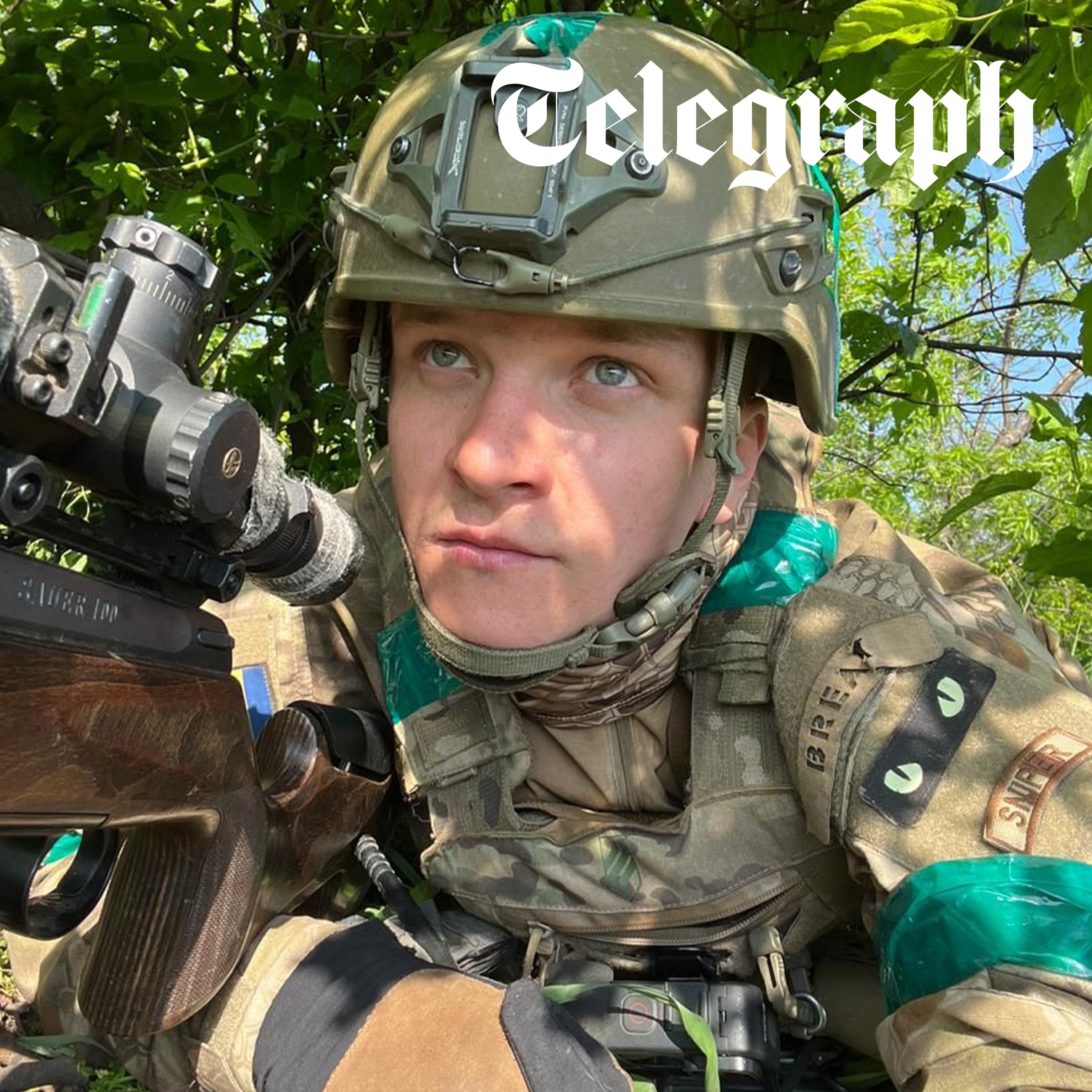
Ukraine: The Latest
Nuclear fears as atomic agency warns power plant a ‘direct threat’ & interview with Ukrainian sniper Roman Trokhymets
01:00:27
Loading summary
Transcript140 lines
- [00:04]
Dom Nichols
The telegraph.
- [00:09]
David Knowles
Introducing the new Chicken Bacon Ranch Street Chalupas at Taco Bell. You can't get just one because they come in twos. One for you and want to share
- [00:18]
Roman Trochomets
with a friend who loves Taco Bell
- [00:20]
David Knowles
and Slow Roasted Chicken Bacon and Avocado Ranch as much as you do. Or just eat both of them because. Because nobody really loves Slow Roasted Chicken Bacon and Avocado Ranch like you do.
- [00:32]
Roman Trochomets
Go ahead.
- [00:33]
David Knowles
I won't tell the new Chicken Bacon Ranch Street Chalupas at Taco Bell. Get two today at participating US Taco Bell locations for a limited time only while supplies last Acast Powers the World's Best Podcasts Here's a show that we recommend
- [00:53]
Roman Trochomets
if you've ever dreamed of quitting
- [00:55]
Dom Nichols
your job to take your side hustle full time, listen up.
- [00:58]
Roman Trochomets
This is Nikayla Matthews Akome, host of
- [01:00]
David Knowles
side Hustle Pro, a podcast that helps you build and grow from passion project to profitable business. Every week you'll hear from guests just like you who wanted to start a
- [01:09]
Dom Nichols
business on the side. If you can't run a side Hustle, you can't run a business. They share real tips and so I started connecting with all these people on LinkedIn and I thought target supplier diversity was having office hours. Real advice Procrastination is the easiest form of resistance and the actual strategies they
- [01:26]
David Knowles
use to turn their side hustle into their main hustle. Getting back in touch with your tangible cash and sitting down and learning to give your money a job like it changes something. Check out side Hustle Pro every week
- [01:38]
Dom Nichols
on your favorite podcast app and YouTube.
- [01:43]
David Knowles
Acast helps creators launch, grow and monetize their podcasts everywhere. Acast.com. I'm Dom Nichols and this is Ukraine. The Latest Today we report that just as the US Asked Ukraine to help bring down Iranian drones in the Gulf, Washington removes sanctions on the trade of Russian oil and votes with Moscow to oppose a motion condemning attacks on Ukraine's nuclear power plants. We assess the worsening diplomatic relationship between Ukraine and Hungary after Kyiv accuses Budapest of taking seven Ukrainian banking officials and a huge stash of gold hostage and ask if President Zelenskyy's perhaps undiplomatic response might actually help Viktor Orban's election campaign. Bravery takes you through the most unimaginable hardships to finally reward you with victory.
- [02:41]
Roman Trochomets
The Russia does not want peace. Freiheit und unsre Europation Werther if I'm president, I will have that war settled in one day.
- [02:54]
Dom Nichols
24 hours.
- [02:55]
David Knowles
We are with you, not just today or Tomorrow but for 100 years,
- [03:05]
Dom Nichols
Nobody's
- [03:05]
Roman Trochomets
going to break us. We are strong. We are Ukrainians.
- [03:11]
David Knowles
It's Friday the 6th of March, four years and ten days since the full scale invasion began. And today I'm joined by Latika Burp of the Nightly later you'll hear my interview with Roman Trochemets, a sniper in the Ukrainian Armed forces who fought in several of the major battles we've reported on these past four years. I started with the latest military updates and we'll go straight into Ukraine. There's been no significant moves on the ground. I've been saying that for a number of weeks now. But let's have a look at Konstantinivka. That's at the southern end of the fortress belt in the Donbas. That's been under pressure for a while. They've been very minor and I underline very minor Ukrainian counterattacks in the city. One person injured in the city yesterday. Civilian, that is. The Institute for Study of War, a US based think tank, citing a commander of a Ukrainian battalion in the area says yesterday that Russian forces have managed to restore their communication capabilities to about 50 to 60% of their pre Starlink shutdown levels of effectiveness and continue to install these WI fi bridges on key tactical heights. These WI fi bridges, basically large towers that some unlucky chap has to skin up and then put a new WI fi router at the top of it. They keep getting whacked by drones Now a little bit further to the southwest and Russian forces are now through the city of Pokrosp. There is possibly still one or two Ukrainian positions in the city, but essentially the city has been taken by Russia. However, the rate of advance thereafter has massively slowed. That's possibly due to exhaustion of the Russian forces, although a spokesperson for a Ukrainian brigade operating in the area said yesterday that Russian forces have decreased the intensity of their infiltration efforts. These flag dashes around Perkost, possibly because Russian forces have insufficient ground drones to provide the logistics support for the forward assault groups across the country as a whole yesterday, 111 of 141 drones brought down by Ukraine's air defence, either shot down or brought down by electronic warfare. Two people killed across the country, eight injured. As a snapshot of that, because those statistics are mercifully small, there were no deaths, but three districts in the Dnipropetrosk region were hit yesterday with artillery, drones and multiple launch rocket systems. This comes from regional Governor Oleksandr Hansa. Ukrainian drones for their part hit an aircraft repair plant and two Russian Pantsir air defense systems overnight in occupied Crimea. Now, a couple of stories here, Euromaidum Press I'll point you to. First of all, they say that two years ago Belgium promised to deliver 30 F16 fighter jets to Ukraine. But so far not a single aircraft has been handed over. They say this is according to Belgium media. They're citing a response from the Belgian Ministry of Defense. The main reason, they say, say, is the modernization of the Belgian Air Force. They are moving from F16 to F35 and it's only after the F35 fleet is in at full operational capability that they say the F16s will be released. Now, the Belgian Ministry of Defence says that there's never been a specific timeline for delivering the aircraft to Ukraine, which is a little bit of a fudge if you ask me, but I suppose it's technically correct to date. As a bit of an update, Ukraine has received 44 of the 87 promised jets from European partners. Now, the Netherlands have completed the delivery of all 24 promised F16s that happened last year, along with F16 simulators. Denmark has provided Ukraine with 12 of 19 planned jets. And that was as far as I was able to find. There'll be some others around somewhere, but they are slowly dribbling through. That does not include the 150 Gripen that Ukraine has essentially done a deal with Sweden to buy. That should start coming in from next year, I believe. Now, remember Sergei Shoigu? Shoigu Kurdasimov. He was a former Russian Defense Minister. He fell out of favour, luckily not a window, but fell out of favor with Putin. He was promoted, you may remember, from Defence Minister, a sideways promotion, I think it's fair to say, to the third undersecretary for paperclips or whatever the Kremlin equivalent is. But he must still be seen as a threat to Putin and to a power base in the Ministry of Defence because the campaign to winkle out people deemed loyal to Shoigu continues. Yesterday, Russian authorities arrested Ruslan Slykov, the fourth Deputy Defence Minister who was supposedly loyal to Shoigu, arrested on charges of founding a criminal organization that embezzled Russian defense budget between 2017 and 24. He's also accused of money laundering and bribery. Now, Mr. Salikhov resigned as deputy defense minister in May 2023. That was shortly after Putin invited Shory you to go and spend more time with his family or, you know, look for other opportunities or whatever he did. But he must still have a bit of clout in the mod. Now then, Yesterday there was a meeting of the International Atomic Energy Agency Board of Governors at which a resolution was debated and voted on that was going to warn that strikes on Ukraine's energy system supply the nuclear power plants, including the Russian occupied Zaporizhzhia nuclear power plant, pose a direct threat to nuclear safety and security. Now, this resolution was backed by 20 countries. Ten countries abstained and four voted against. The four voting against were Niger, Russia, unsurprisingly, China and the United States. Now this is the seventh resolution on Ukraine adopted by the IAEA board since the start of the full scale invasion. But it's the first time Washington has voted against Ukraine such similar measures. Now, in a statement before the vote, the United States said, while we continue to support the IAEA's work in country, we do not support the board's current consideration of an unnecessary resolution that does not help achieve peace between Ukraine and Russia. Bit surprised by that, I'm sure. We will hear some more. There'll be some fallout, no pun intended, about the diplomatic ramifications of that. Now then, an extraordinary development in the worsening relations between Ukraine and and Hungary overnight. Ukraine's Foreign Minister, Andrei Sibia, he's accused Budapest of taking a number of Ukrainians hostage after seven employees of a state owned Ukrainian bank were detained while transiting the country yesterday, returning from Austria, part of their official duties. Now furthermore, alongside the bank employees, Hungarian authorities also impounded their two cars, reportedly, and this is a little odd, reportedly carrying US$40 million, US$35 million and 9 kg of gold bars. Okay. Now then, Hungary's tax service authorities said that they were detained as part of criminal proceedings into possible money laundering. Hungarian news outlet Index reporting this. The Hungarian National Tax and Customs Administration also alleged that a former Ukrainian intelligence general responsible for this shipment was amongst those detained. This has not gone down well, as you might imagine. This is all part or a continuation of the spat over the Druzhba pipeline which supplies Russian crude oil to Hungary and Slovakia and elsewhere. But it's Hungary and Slovakia that have really bunged the toys out the cot about it. Now, that pipeline has been offline since January after a Russian strike damaged energy infrastructure in Western Ukraine, according to Kyiv. But Budapest and Bratislava accuse Ukraine of deliberately halting the transit or delaying the repairs and all these kind of stuff. Hungarian Prime Minister Viktor Orban said yesterday that he would use political and financial tools to force the reopening of the Druzhopa pipeline. He said there will be no deals, no compromise. Now, in response to all of this, Kyiv has sent an official note demanding the release of the seven employees and I would imagine the gold as well. Andrei Sibia added that Ukrainian officials have so far been given no explanation for the banker's detention, whom he claims have not been provided consular access. Mr. Sibia said, we are talking about Hungary taking hostages and stealing money. If this is the force announced earlier today by Mr. Orban, then this is the force of a criminal gang. This is state terrorism and racketeering. You know, this is not good stuff between partner nations. You, you would hope anyway. Amid all this, President Zelensky then said, we hope that one person in the eu, as in Victor Orban, but he didn't mention any names. We hope that one person in the EU will not block the 90 billion euros, or at least the first tranche of it. That's that loan from the EU so that Ukrainian soldiers receive the weapons they need. Otherwise, we will simply give the address of that person to our armed forces. Our guys can call him and speak to him in their own language. Now, that is the bit that made Viktor Orban drop his chips. So, Latika, two big international stories I want to talk to you about and get your perspective on. This is the first one. Now, this whole spat is pretty unseemly. I bet Putin is rubbing his hands with glee. You've said, in relation to those comments by President Zelenskyy, you said, is Zelenskyy trying to win or ban the election? Hungarian general election on 12 April. What do you think? I mean, it's quite undiplomatic language.
- [12:20]
Dom Nichols
This was a big mistake from Zelenskyy, and I think that has been acknowledged privately. I know that European diplomats in Kyiv have transmitted that message to the president's office directly. And also from Russell's. I know that this is a huge. But it's not just isolated, and I think that's a point to remember. Don't forget the Davos speech where Zelenskyy was lashing out at Europe. There is a track record of Zelenskyy, and who can blame him, let's be honest. He is fighting for his country's survival and expressing the frustrations and PTSD of that country. But he does act emotionally, and the political reality is that that does not help Kyiv when it could and should. And this is one of those instances. And today we've actually seen a formal and public re from the European Commission saying that this was not appropriate. They want everybody to calm down. It's very clear now that Brussels is in the middle of this spat between Hungary and Ukraine. And I know that Brussels has been trying to ask Ukraine, particularly on the pipeline, to get repair works going. We know that's been reported also, and they have not found Ukraine as helpful as they were hoping. So this is a real live issue. Then, of course, we have the detainment of these bank employees, which is just absolutely stunning and bizarre. And there's absolutely no way. I mean, the MFA of Ukraine has just put out a warning saying nobody should go to Hungary because we cannot guarantee citizens safety. So this is really quite real. None of this, in my view, helps Ukraine. And there's a lot about Ukraine's actions that could determine how this goes for Orban electorally. Of course, everyone's waiting till April to see what happens to Orban's fate, but right now, these moves from Kyiv, they're a gift. And I think it is interesting that we're seeing Andriy Sibia, the Foreign Minister, lead the response on the bank employee detention and not Zelensky today.
- [14:14]
David Knowles
Oh, you think someone said to him, just, you know, cool your jets.
- [14:17]
Dom Nichols
I don't have that information, but I think it's an observation worth making.
- [14:21]
David Knowles
Yeah, yeah. Okay. Interesting. I mean, the last I saw, Orban was 11 points under his. His opposition at the moment in the opinion polls in. In Hungary. So, yeah, this is possibly a bit of a gift and he's obviously playing it up as much as he can. Can't really blame Ukraine for making it a priority to fix this oil pipeline such that Hungary and Slovakia can buy Russian oil and send more money to the Kremlin coffers.
- [14:44]
Dom Nichols
No, but if the price is two months of calm and a political issue that Orban cannot capitalise upon, isn't that a price worth paying for the longer game?
- [14:52]
David Knowles
Yep. Interesting, Interesting. So, as you said, Ukraine's Foreign Ministry has warned Ukrainian citizens to avoid travelling to Hungary for safety reasons. They put out a press release a couple of hours ago saying we also draw the attention of. Of Ukrainian and European businesses to the threats of arbitrary theft of property in Hungary and recommend taking these risks into account in the context of any business activity in this country. So, yeah, I mean, he's got no signs of slowing down, unlike the car with the 9kg of gold in the boot. Now, this obviously comes after Ukrainian authorities accused Putin and, obliquely, Hungary of using Ukrainian prisoners of war as bargaining chips. Their words. This comes after two men with dual Ukrainian Hungarian citizenship have been released by Russia. Putin apparently gave his sort of personal word and ordered them to be released, claiming they'd been forcibly mobilized by Ukraine into the army. This follows a meeting with Hungary's Foreign Minister Peter Sejato in in Moscow. And this was said to be or Putin said it was at Budapest's request that these two individuals were were released. Now last night Scijiato released photos of the prisoners of war getting off the plane in Hungary, vowing to, as he said, protect every single Hungarian person from the consequences of this war and from the war itself. Ukraine's Coordination Headquarters for the Treatment of prisoners of war condemned it, calling it a Russian provocation and said on telegram we call on all those involved in this provocation to abandon their illegal intentions and not to use Ukrainian servicemen who have been taken prisoner by Russia as a bargaining chip. So the diplomatic rhetoric is absolutely ramping up. But the second big international story I'd like to get your opinion on Latika before we turn to your recent reporting trip to Ukraine. Is the United States easing oil sanctions on the Kremlin? Quite remarkable. So this is US Treasury Secretary Scott Besant said in a social media post yesterday they were doing this to enable oil to keep flowing into the global market. The Treasury Department is issuing a temporary 30 day waiver to allow Indian refiners to purchase Russian oil. So you may remember there was a right old song and dance about India buying Russian oil. There were secondary sanctions levied or threatened on basically anyone who said the word oil. And this follows months of Washington trying to pressure India to stop buying Russian oil. But now Mr. Bessant says this deliberately short term measure will not provide significant financial benefit to the Russian government. So that's fine as it only authorizes transactions involving oil already stranded at sea because it allows Indian refineries to buy the millions of barrels of Russian crude oil that's currently floating. These new rules only cover oil loaded into a tanker yesterday. So if it's already at sea, then it's fair game to be bought on the open market. A little bit of a kind of sort of wonkology, but that's the technical reason for what's happening here. Mr. Bassant noted actually, by the way, that Washington expects India to increase purchases of U.S. oil. So yeah, that's got absolutely nothing to do with it. But he said this stopgap measure will alleviate pressure caused by Iran's attempt to take global energy hostage. So this is all down to Iran taking global energy hostage. Who would have predicted that the oil price would be affected by starting a massive war in the Middle East? Now Javier Blass, who's an energy and commodities columnist at Bloomberg, says it's a massive win for Putin. You've said that Trump has just given Putin a financial lifeline. How long is the lifeline and how strong do you think it is?
- [18:13]
Dom Nichols
Well, let's wait and see. But I would make three observations about this development. The first is what you just referred to. Who would have thought that oil prices would go up when you start bombing Iran? I think that does tell us how much planning or not may have gone into this Iran war which is now unfolding. The second thing I would say is that one of the reasons this is so troubling is it just has an air of the Americans champing at the bit to want to trade with Russia. It does feel like they've always wanted to do this, seize the sanctions on Putin. They were trying to wait for a ceasefire, but hey, they can slip this in under the radar. Perhaps. Another observation I would make is that this is a bit of a blow for some of the neocon hawks. John Bolton, good example. I interviewed him on Sunday night and he made the point that actually denting Iran, wiping out the leadership, is a big blow for China and Russia. Well, maybe not, maybe. Actually this is a big gift for Russia. And the final thing I would say is that where was the information for Europe? The Trump administration makes much about Europe and India and these third countries still receiving Russian oil. But this morning I interviewed the Estonian Foreign minister, Marcus Sakhna, who I know is a friend of Ukraine, the latest. And I asked him, were you informed about this? Did you know and what can you do to reverse it? Can you reverse it? Well, his answers were very illuminating. He said they weren't informed, of course, they're not happy about it. And then I had to push him and say, well, can you do anything to try and reverse the administration's decision? And he essentially gave up its defeat for Europe. So it's really alarming. To answer your original question, I don't know, let's wait and see. But it's not a good trend, is it?
- [19:59]
David Knowles
No, and it's not a great message. I mean, as I say, the right old song and dance about oil sanctions and, and what have you, and now just to allow this temporary 30 day waiver. But as Mr. Bessant said, it's not going to provide significant financial benefit to Russia. So we'll wait and see. Now, Lysika, you've just come back from a reporting trip to Ukraine. You were out there the same time as we were, although, yes, we did
- [20:19]
Dom Nichols
not cross rail paths, unfortunately.
- [20:21]
David Knowles
Turns out it's quite a big Country. But where were you? What? Where? When? Who? Why? What were you looking at? Who did you talk to?
- [20:26]
Dom Nichols
Yeah, it was a really interesting trip, my third time now to Ukraine and this was with alongside a delegation of UK Friends of Ukraine. So I went with a bunch of UK MPs and some also Australians, some lawyers. So a nice mixed group flew in via church, which was a nice way to go. Hadn't been in Ukraine that way. Much more tolerable through the border, I must say. Visited Odessa. What a beautiful city. Bombs during the night. Seven minutes from where we're staying. I found out the next morning from there we went to Kyiv. Obviously it was the four year anniversary, so there were a lot of people in town for that week. And then headed onto Kharkiv and onto Sumy before heading out from Kyiv. So a good week and a half there and a good amount of time to really get a good read of the temperature.
- [21:15]
David Knowles
Now I want to talk about Sumi in a minute. I've never visited Sumi. Never been Sumi up there in the north, Northeast. Been Hakiv, but not Sumi. I'd like to talk about your visit there in a moment. But first of all, you met an interesting chap from the United States, Bambi. 20 year old Bambi.
- [21:29]
Dom Nichols
This was amazing.
- [21:29]
David Knowles
What was he doing?
- [21:30]
Dom Nichols
So we had just returned from a day at Chernobyl. Have you been to Chernobyl?
- [21:34]
David Knowles
No. Okay.
- [21:35]
Dom Nichols
Incredible, incredible. And one of the standout lines or impressions that stayed with me about Chernobyl was, you know, this icon and it's become obviously a tourist hotspot. And they were hoping to really cash in after the HBO series, which of course was stopped by Covid and now the war. But one of the lines that really stood out to me, the cultural forces took us there and they said, you know, this unlike Avdiivka, unlike some of these other cities that have been totally flattened by the Russians, here you have nature regrowing from this Soviet disaster and it's part of a regeneration. I thought that was a very beautiful line about the difference between the scale of tragedy and disaster that happened at Chernobyl compared to what's happening to the country on the Eastern front. And that was an incredible experience. Anyway, we get back from a day in Chernobyl, stomping around in the snow. It was absolutely freezing, but magical. And walk on in to meet a 20 year old American. We're going to call him Bambi. That's his call sign. Turns out Bambi is a drone pilot from Georgia. United States decided seven months ago that he could do something about Ukraine. He has epic drone skills because he's been in drone championships in the us, competing in them. Comes to Ukraine, turns out to be a great drone pilot, and as we speak, he's fighting in Prokhovsk and. And he described some of his conditions to me to buy. And I know they won't be completely alien to listeners of Ukraine. The latest. But even for me, who keeps a good eye on Ukraine, the description of his Life. He spent 62 days on his last rotation because, of course, mobilisation is such a problem. His bunker is about two by three and a half metres wide. Four guys in there. He lost chair privileges because of the space concerns and he lies on his side on his bunk bed flying drones all day with three other guys. He can't communicate with his natural language because they're Ukrainian.
- [23:32]
David Knowles
Oh, he doesn't speak. Doesn't speak anything.
- [23:34]
Dom Nichols
He said to me that he understands enough and that actually there's a way that when you know what you're doing, you can all communicate. He knows a few words, but he certainly is not having a long, in depth conversation with these guys. Phenomenal story. I've interviewed him on my own podcast and I know you'll be generous enough to put a link in there, but he was ani. Yes, I know you will. He was an exceptional, extraordinary person. In a country where you meet so many figures of resilience and inspiration, it really stood out to me.
- [24:05]
David Knowles
Did he talk at all about before he left Georgia in southeast United States? Did he talk about what family and friends said to him?
- [24:13]
Dom Nichols
I asked him about this. He said his family's very supportive. His dad was a soldier, so I think that's partly where his motivation and desire to fight comes from. He says his family does support what he's doing. They'd like him to come home in one piece and they'd probably like him to come home sooner rather or later, but they absolutely accept that that's not happening. He told me he's planning to stay in UKRA until the war is over, one way or another, whether that's as a drone pilot or going into a drone lab and helping other drone pilots and training them up. So he very much, I think, sees a future in Ukraine. But one of the most important things I think he said in that interview to me was when I asked him what he'd learnt in the time between picking up and deciding in Georgia that he could make a difference in eastern Ukraine and going there and lying underground for 62 days in a row. And he said, the rules matter, but only if you enforce them. And I thought, wow, what clarity from a 20 year old guy. It was just incredible.
- [25:10]
David Knowles
Let's hope he goes into politics now. In Sumi, we talk about Sumi quite a lot, but I've not been there. We've not been there as a podcast over the last four years, so we don't know the city well at all. What were your impressions of it? It's not especially well known. I guess all the sort of boundaries get sucked up by, by Kharkiv, a little bit down to the southeast. What's Sumi like?
- [25:29]
Dom Nichols
So we were in Kharkiv, we go to Sumi. It was a much smaller group, only two of us at this point, the driver and Sumy. First thing to say is a very industrial town. So it looks and sounds different to some of these more beautiful, well known cities like Kharkiv and Lviv, for example. Not to say that Sumy is not beautiful, but it's just very different. It's industrial now. They've renamed one of the main streets Britain Street. Such is their, such is their love of the UK's support for Ukraine. But this to me was a city that really looked like a frontline city. I mean, it's 10 kilometres from the Russian border and as the saying goes, by the time you get the air alert, it's too late, it's on the ground or it's hit you. And as you go through the main city there, the thing that strikes me so much about being in Kyiv and also in Odessa when I was there and in Kharkiv to a degree, is how much the Ukrainians are on top, quick, smart about repairing destruction once the Russians come through. And Sumy does not look like that. There are still gaping holes where buildings were, where children were killed. One of the saddest things I saw was a memorial in the main street of Sumy in the main square where children were killed in a missile strike. The building's gone, the whole remains and on a chair outside the main administration building are just toys, just in the snow on the chair. It was so, so sad. The other thing to note about Sumy, and I hadn't had this said to me before by Ukrainians, was they took us to a lot of universities that had been attacked, continuing to be targeted by Russia. And we noticed this trend all around and they actually said to us they think this is a deliberate campaign from Putin to try and displace young Ukrainians, try and force them out of their studies and get them over the border into Russia and being Russians. And of course, that fits with the terrible issue of stolen children. So that was a very interesting experience in Sumy. Obviously very close to the front lines, so a hairier place to be.
- [27:31]
David Knowles
Yeah. Well, the suggestion is that he's just trying to totally mess up a generation's worth of education so that the future generations of Ukraine are simply not educated.
- [27:40]
Dom Nichols
Well, they're closer. No, I think we asked this a couple of times because we were so curious about the connection of why they felt education institutions were being targeted so much. And it was their strong belief that. That the more they disrupted young Ukrainian lives, the more, I guess, opportunity, and I use that word in inverted commas, Russia might present to them, but just general displacement. The stolen children was. I mean, this was one of the saddest observations I made during this trip. Joanna Baxter, mp, she's Labor.
- [28:15]
David Knowles
She was a British mp. Yes, British.
- [28:18]
Dom Nichols
Yes. She was on this trip. And I watched her with admiration as she raised this issue and over again every single meeting with Ukrainians that we were in. And it was quite horrifying to see that in some of these meetings she was being told by Ukrainians that the issue is so challenging, it's one that they may have to give up on, and that they don't feel that it's an easy or probable thing to do to get back these stolen children, the
- [28:49]
David Knowles
circa 20,000 Ukrainian children that have been been taken by Russia.
- [28:53]
Dom Nichols
Yes. So I spoke with Save Ukraine, one of these NGOs, and they are just doing phenomenal work. I'm not going to reveal some of the details about how they actually go in and try and get these kids and some of the things that they do, because that's all very sensitive and I wouldn't want to expose their operations. But this is painstaking work that they do. And once they get these kids back over the border, it doesn't stop there. It is weeks, if not months, in intensive rehab. Lithuania. So one of the conferences I went to in, in Kyiv was Olena Zelenska speaking at the Justice Conference. You know, justice is not something we talk about in these discussions about peace anymore, is it? We don't hear about reparations, we don't hear about putting Putin on the dock. It's peace. And so the US can do some business with Russia. So it was actually refreshing to go to a conference where everybody was focused on how they can get justice for Ukraine, not just peace, back on the table. And Olena Zelenska was highlighting the role of Lithuania in becoming the first state to offer some psychotherapy, counseling and hospices and respite places for these children to go to to try and have some counseling and healing so that they can recover, if there is any recovery available to them after what they've been through.
- [30:09]
David Knowles
That's amazing. Anyone listening from the organization or from Lithuania's official channels who want to get in touch and tell us about this initiative, we'd be delighted to. To talk to you. Who's in charge of Save Ukraine? We've interviewed them. Mr. Kaleba, isn't it?
- [30:22]
Dom Nichols
No, I spoke to no Relations Foreign Minister, I think her name was. No, that's right, Maroslav. And she was a former protection officer, because she's this gutsy lawyer. And I said, what did you do before the war? She said, I was a child protection officer. And I thought, yes, this makes sense. I said, look, I've been in these meetings and seen people say the stolen children is not a priority issue for Ukraine or some of these people in Ukraine. What do you say? And she said, well, every single life and attempt, we're going to keep going.
- [30:49]
David Knowles
Yeah.
- [30:50]
Dom Nichols
They're the people you want in charge of these NGOs, aren't you?
- [30:52]
David Knowles
Yeah, yeah, yeah. So, Joanna Paxter, the British mp, did she give any views on representing this issue back into.
- [31:00]
Dom Nichols
Look, you should get. I think she'll be a good guest on your podcast at some point. She is trying to do a body of work here to get tracing schemes up. She's certainly trying to lobby the British government and it's not just about stolen children. I watched her and observed her raising a lot of issues. One of the most fascinating ideas I saw suggested to her from a Ukrainian counterpart, which I think she's very keen on, because she represents a constituency with Scottish universities, is trying to get British universities to establish campuses in Ukraine, because one of the huge problems, of course, is how to stop the flood of young Ukrainians out of the country. They need them to be in country and learn and get exterior expertise, but not leave the country to do it. So I think. Watch this space. There was a lot of brainstorming going on this trip and it was actually. It was quite exciting. It was a good representative of HMG.
- [31:57]
David Knowles
Yeah, good stuff. Well, Ms. Baxter, if you're listening, very welcome. Come sit in and have a chat. I'll follow up on that. Now, you mentioned you were in Kharkiv. What were you doing over there?
- [32:07]
Dom Nichols
Well, Kharkiv. This is my second visit to Kharkiv and my Second chat to with Achilles. Now, Achilles is very famous, decorated commander in Kharkiv. If you are driving in from Kyiv, you're. He's the guy on the billboards, on the recruiting billboards. So big face in Ukraine. Achilles was really interesting. He was telling us that they have developed independently in their own unit a software that is using AI and Russian radio calls and a bunch of other data that they can input. And now they can reduce from minutes to seconds where they think Russian targets are launching drones at them and go and get them. One of the frustrations he expressed to us, which was really fascinating, was that they cannot very well load this software onto the hardware they've got. And drone companies in Ukraine are so flooded now with foreign manufacturing orders that they're finding it hard to get prototypes for drones to actually evolve this software that they've developed themselves. So that was quite fascinating. Another idea Achilles had, which I think shows maybe a transition from military leader to potentially a society political figure. Let's wait and see. But he was also saying one of the huge issues in Ukraine is obviously military veterans, how to integrate these people back into society, how to look after these men. And one of the brilliant ideas he had was that these veterans should be deployed across Europe to help train European armies. Hello. Have we seen this in the last few days about how to deal with modern warfare and particularly drone warfare? And I just thought that was a totally genius idea and showed, as I'm sure you can appreciate, Dom, just that pastoral care that I think comes in the unforeseen.
- [33:59]
David Knowles
Yeah, it is interesting. Ukraine's relationship with her veterans is an area I don't know brilliantly well, I have to say, but I'm interested to see how tightly they are interwoven and how. And that pastoral care is, as you say, I'm not saying it's absent at all from, from the UK model, but there is always this tension that the military and the MOD is built to look that way at the enemy and actually then looking behind you and looking after those people who have served and some of whom have been been damaged through their service, you know, it's always a second order priority to delivering death and destruction to the enemy, but it's quite often not a second priority and it's much lower down. And I think Ukraine, from what I've seen, seems to have a closer relationship. I think probably because it's society after 2014 that stepped up. And as we're seeing now, it's not the regular army, it's the society. It's Society that fought in 2014, as well as the regulars.
- [34:50]
Dom Nichols
And I think it's also their youth dominant. You know, Achilles is in his 30s. Most people you meet who are operating. Yes, I know the old days. Most people you meet in Ukraine who are in government and leadership are in their 40s. And I actually said this to someone senior in government circles. I said, how old are you? 43. I said, this is crazy. And everyone here is in their 40s and said, well, this is deliberate because after Maidan, we got rid of all those guys out of government. So we are a young generation of leadership. And I think that that does make a difference because they're constantly looking to what the future is and the hope of post war Ukraine. Ukraine.
- [35:29]
David Knowles
Now a special interview with Roman Trochomets, a sniper in the Ukrainian armed forces who has fought in some of the defining battles of this war. He served in the Donbass after the annexation of Crimea and later during the battle for Kyiv at the start of Russia's full scale invasion, where he hunted Russian tanks at night. He was wounded near Bakhmut, the site of some of the worst fighting of the conflict. Conflict. And in 2023, he survived the Russian missile strike on a restaurant in kramatorsk that killed 13 civilians seated around him. In this conversation, Roman reflects on those moments and on what comes after them. The trauma, survivor's guilt and the constant awareness that death is always close. He also speaks about writing as a way to process war and begin to heal. This is our conversation. So, Roman, thanks so much for coming to talk to Ukraine. The latest today. If I, if I could start please by asking you to give us a little feel for your background. Where do you come from in Ukraine? What was your life before the full scale invasion?
- [36:27]
Roman Trochomets
Yeah. Thank you very much for inviting me here. Okay. My story is pretty similar to many Ukrainians and it starts from resistance in a revolution of dignity of 2013, 2014, where it was like first block blood happened actually in fighting for freedom and for what you actually believe. And after that I was really, to be honest, I had a strong PTSD effect because I've seen death. I studied in Kyiv National Architectural University and one of our students was killed near me by sniper. And it was in the center of the city of the Kyiv. And after that I had a really tough almost year when Russia already invade Crimea and Donetsk and Luhansk. But to be honest, I was scared to do something. I was 21 year old guy after Maidan, after revolution. But then at the beginning of 2015 and dropped everything. I was a breakdancer, student, have a girlfriend, good life in Kyiv. But I drop everything and join Azov battalion, volunteer and going to the the anti terroristic operation against separatists and Russians.
- [37:45]
David Knowles
So you joined the military in 2015?
- [37:48]
Roman Trochomets
Yes.
- [37:48]
David Knowles
And went east with Azov?
- [37:51]
Roman Trochomets
Yes.
- [37:51]
David Knowles
And did you serve constantly from then? You didn't take a break or as in you didn't go back to civilian life between 2015 and the full scale invasion?
- [37:59]
Roman Trochomets
It was break almost a year I was fighting there. But then it was Minsk agreement where we can't fight anymore. It means that that Russian keep on shooting at us and separatists. But we was holding the Minsk agreement and we couldn't fight back. But our battalion wasn't obeyed. If they shooting us, we shooting back. That's why it wasn't comfortable for our government who tried to be friendly with European Union and with NATO. And so they set us back to the rear. And at this point I drop army because I hate army. I would never been in army if it's not war. So if we can't fight anymore, I just resigned and get back to my normal life.
- [38:41]
David Knowles
And that is in Kyiv. You went back to Kyiv?
- [38:43]
Roman Trochomets
Yes.
- [38:43]
David Knowles
Your normal life and then full scale invasion happens. Was it a sense of duty? What made you rejoin the military? And when did that happen?
- [38:52]
Roman Trochomets
Yeah, actually it happened at the beginning of 2022. I start packing my old uniform, trying to shop in because I realized that it's going to be full scale war. Because nobody in their mind just bringing the whole army and almost surrendered Ukraine and just to threaten Ukraine. It's going to be big war. So I was preparing and my idea was to get back to Mariupol, to our Azov base. But they postponed my offer to join them. And they said tomorrow, maybe tomorrow you will join us. And then full scale invasion start. So I was in Kyiv and there was no chance to go to Maravi and we fought in Kyiv battle.
- [39:36]
David Knowles
So you had some idea of what to expect by going back into uniform service and operational duty and the front line. What were your family and friends saying to you at this time? Were they. Were they supporting you? Was it, was it any difficult conversations about rejoining so quickly this time?
- [39:52]
Roman Trochomets
No, it was harder first time. But now it was full scale invasion. And all people who knew me, me, they knew that I'm gonna fight again. Except of I did real estate with foreigners in Kiev and they invited me to Sydney, to Paris, to London, just to live here and run away from war.
- [40:11]
David Knowles
That was in your your time Away from the military. You worked in real estate in Kyiv?
- [40:16]
Roman Trochomets
Yes, yes.
- [40:16]
David Knowles
And they offered you a route out?
- [40:18]
Roman Trochomets
Yeah, yeah. Because they say, Roman, you can come and you can run away to us and leave whatever you like.
- [40:24]
David Knowles
Have you ever considered.
- [40:25]
Roman Trochomets
No, never, Never. I would never just run away from problem, from war. It was opposite, actually. It was the massive Runway from Kyiv. I just remember that morning that I was the only guy underground because I live in city center in Kyiv. So I just go to Independence Square metro station and with my military uniform and backpack and going just 10 station there to our bases, Azov bases. But most of the people just was civilian and they were just those who run away from city. And for me it was something amazing moment because I realized that at least I was blessed with this inner power to go and face this war, not to run away and protect all these people. It was something that I was honored to have it inside.
- [41:17]
David Knowles
How quickly was it before you specialized as a sniper?
- [41:20]
Roman Trochomets
It was because that was so chaotic. Battle for Kyiv start so fast. And we veteran of Azov and other volunteers, like civilians who never fought before, we get some weapons, but most of them it was AK assault rifle and 400 soldiers. There was no sniper or machine gun. And I just realized, okay, I need to cover our guys at least because there's no point to have hundreds of automatic guy soldiers. And that's all we need some longer distance. And yeah, this is how I become sniper. But actually my commander was against it because there was some promises that they means UK and US give us Javelin and Nlao. So it was anti tank unit. And this is how I start being in sniper and anti tank soldiers. So my weapon was Javelin and Lau and sniper rifle and ak.
- [42:10]
David Knowles
Yeah. So the law, the light anti tank weapon was supplied by UK Javelin by the US and there were other anti tank weapons as well. What was that like those first few weeks? That chaotic, almost wolf pack idea of hunting Russian tanks at night with the confidence of allowing the first few vehicles past in order to hit them at the rear so they couldn't get back and then pick them off one by one. It was. We were reporting on it and it must have taken immense calmness under fire to be able to think and operate like that in those days. What were your memories?
- [42:44]
Roman Trochomets
It was very strange because of course we had lack of Javelin rockets and we have a lot of broken endlavs. I mean that was okay, but the battery was dead already and we had not this luxury to use them on the training ground. So we have 15 minutes training in our Classroom or in dangerous where we just realized how to shoot them. And in battle for Kyiv I couldn't do anything because the only thing that where we fight in treeline in forest near Kyiv I tried to shoot one armored vehicle, but then I didn't know that the battery is dead. So it was just like I tried to shoot and nothing happened. And after that we have Ukrainian special forces who told me bro, the battery is gone, it's just trash.
- [43:32]
David Knowles
Now. You were injured a number of times, I understand and you received number of concussions?
- [43:38]
Roman Trochomets
Yes.
- [43:38]
David Knowles
What treatment did you have for that?
- [43:41]
Roman Trochomets
So in second year of full scale invasion, I was a sniper and I was also in assault infantry and I had a lot of concussion on our counteroffensive summer operation near Bakhmut and it was non stop. I had five concussions for four months. It was just. You spent one week in hospital after medicine and returned to the front line again in a again. And yes, the medics, they try their best, but we don't have a lot of knowledge about concussions and ptsd. And we just start to realize that this is big problem. And all of the soldiers, they need unique treatment. And of course first of all we need to realize how to scan brain and to understand how tough damage which is impossible right now.
- [44:29]
David Knowles
The issue of traumatic brain injury is only just starting to become. Become understood in. Well, the US I think are much further ahead than the UK and Europe. But did you have a brain scan at all? Did anyone talk to you about traumatic brain injury? About how. How the it may have come about and how it may be exhibiting itself and what may happen?
- [44:50]
Roman Trochomets
All that medic could say that Roman, you need some time and you need some peaceful break from the front line. But this is impossible not only in frontline hospitals, but also in the rear. Because when I get back to Kyiv, it's shooting above your head every single night and just waking up again and again. And I can't realize am I still on the front line? Is it a dream? What the hell is going on? So it's impossible to have this peaceful time. And of course there was no professional or high precision skill on. They had something, but that's not enough. This system, they are too old.
- [45:32]
David Knowles
Yeah. And then in 2023 you were caught in that. That terrible incident in Krama Tors when the. The restaurant was hit by two Iskander missiles which killed 13 people. You were involved in that or you were caught up in that. Now obviously trauma is very individual, but you've experienced trauma both at the front line. And then here in this awful situation, in a restaurant, having your dinner, did you process the battlefield and non battlefield trauma in different ways or is it all the same for you? And I know trauma is individual, but what was your experience?
- [46:09]
Roman Trochomets
Yeah, for sure it's totally different. Even though on the front line on the combat mission, all of us realized that we could die. For example, if we go into assault mission like in group of 10 soldiers, we realized that one or two would be killed on this mission and most of us would be injured in this mission because enemy outnumbered us. We prepared. We don't want to die. Of course we have this fear of death for sure as a human being. But it's some kind of preparation that you. On this mission in Pizzeria, I was just after another concussion and I spent in hospital three weeks and I had two vacation days before coming back to the front line.
- [46:52]
David Knowles
So you'd been in hospital for three weeks, you had two days of free time before going back to your unit.
- [46:58]
Roman Trochomets
And I decided to spend one of these days sitting in Kramatorsk with some of volunteers who come from different countries and with my sister who sometimes visit me there and bring in some supply to soldiers. And it's totally different. It's absolutely what Russia calculated escalatingly doing to physically break the people because this horrible, especially for soldiers, especially for volunteers to see how innocent people die. All of people who was killed there was civilian and two of them, there was two twin girls, 14 years old. And I just look at them because they was the same, they looked the same, you know. And they entered the restaurant and one or two minutes before explosion, we're talking to Victoria Amelia, who doing this investigation on the occupied territory.
- [47:49]
David Knowles
Victoria Amelia the journalist?
- [47:51]
Roman Trochomets
Yes. We just exchanged with her our Twitters because we just starting to know each other and it's totally horrible. And unfortunately it works. This Russian method works harder than any horrible things that I've seen on the front lines. Because my mission back there was just to put my life between Russian invaders and innocent civilians and be in the middle of this horror when you can't do nothing to save people. And 80 people around was injured, different level of injured, but still, yeah, it's. I believe it almost broke me down. It was the hardest what I've seen. This pure terror. And actually that's why I believe we need to find the way about ptsd. Because many people around the world struggle about PTSD in car crash, witnessing violence thing and being war zone. That's why we need to work about it more. Because this is something universal and it could happen in any countries.
- [48:59]
David Knowles
Now, in terms of your routes to recovery, you started right writing. You are translating your combat experience into a book. You've written chapters from trenches, from hospitals, from rehabilitation centers. How has the act of writing about the war helped you process trauma from one side?
- [49:20]
Roman Trochomets
It's re traumatized me again and again because that was so difficult to write my emotions. It's like cutting your wound again and again. It creates flashbacks and sleepless nights and tremor and tears. And a lot of things happened from the other side. This is very necessary to realize and doing this self reflection about my emotions and realized what actually happened to me. And also it's opportunity to talk to only person who could understand me for 100%. And this is only me, me because I was with myself all this time. No person, no matter how he love me or appreciate or professional psychology could do such things. I believe the only this conversation with those who was witness all these things helps. And that's why writing diary or memoir is so important, yet dangerous. Because I believe you must be undersized supervision during this process. Because this is hard as hell. But also I still believe that it helps to realize emotions and in some tough situations, even as if you will forgive yourself, which is very important for many soldiers and for those who can't survive, all the people who die around them.
- [50:47]
David Knowles
You forgive yourself for surviving. You have to find a way to. Is that what you're saying?
- [50:54]
Roman Trochomets
Yeah. Guilt of surviving. It's the powerful thing. Even though I learned about psychology from 18 years, knew a lot about it and I know how it works, but still being in this situation, it's one of the toughest things.
- [51:13]
David Knowles
But you then went a stage further, which for all the reasons you've just said, I think it would be be nobody would ever criticize you if you didn't want to write in the first place or take another step and take on a public Persona. You took to social media. You write on social media a lot. You became, well, maybe reluctantly, but a bit of a social media star, I believe. How did that happen?
- [51:39]
Roman Trochomets
Actually this is so confusing topic even now for me. Even talking to you right now. Writing book or talking to working in. I was in Cambridge University. We did some film about documentary film for 22 minutes with Jason Bellini. And from one side I hate myself because I'm showing the war from inside. And as you said, some people call it being popular or something like this. And I would appreciate to be popular if I was some famous rap singer or breakdancer or writer later, it's okay. But being popular soldier, it means that you just luckily survive where other people dies. And it's nothing about famous or bloggers or all this fancy TikTok or these words. It's absolutely different from the other side. I realized if I had this energy to talk and write, because when I asked almost all my combat fellow fellows, nobody wants to talk about it. Nobody wants to write because they said, I just want to forget about it. I don't want to talk to anybody, nobody will understand. And most of the soldiers, they would never talk about it. But I realized that if I was lucky enough to survive in trenches and I had this knowledge, I can take them and bring them to civilians who never was there to understand what war is. And because I realized that many of methods how to survive and how psychology work in critical situation, you can take them and bring to civilian life and to help people work more effective with the stressful life, with the unhappy relationship or crazy boss or other things. When they said there's no exit from here, it is. So this is valuable knowledge which you can bring from hell to normal life. And the last part is that I'm just honored to represent those soldiers who still in trenches or those who in hospitals badly injured and those who was killed in actions.
- [53:51]
David Knowles
So when is the book out? When can we read this?
- [53:53]
Roman Trochomets
Trick question. I almost finished it. It's like 95% of finishing, but I'm just right now. Maybe on the surface I look okay, but this is half how this invisible trauma works, this concussion in ptsd because nobody see in this guy like sleepless night or crazy screams or afraid of flashing lights or sounds. All these consequences from war. And I'm still ready as you talking, if or when I will publish the book. It would be some kind of another war because some people would hate me for that, that I'm publishing something about war. Because many soldiers, they want to be hurt. They want that other people would hear about them, but they don't want to do nothing. And it's really sensitive topic. You know, it's like being in the middle of these fires. I need some energy to be ready to do this.
- [54:48]
David Knowles
Do you feel that this is something that you can do from all the trauma you've experienced here is something positive that you can do. You can inform people and you can help people who may be going through similar experiences. Does it feel like a duty for you? Is it helpful in that way?
- [55:06]
Roman Trochomets
Yes. Yes. Because in the trenches, on the front line, when situation was crazy as hell, it was almost surrounded with no armor and a lot of injuries and dead fellows. For me it was not only the mission to survive but but for me it was very interesting to observe how I reacted on everything, what motivates me, how I'm feeling and also look at other guys and just observing what people think in the edge between life and death. And I was just lucky. I was far from best soldier but I was lucky to survive and take this knowledge here. And when I did some of videos from trenches when I appreciate some sunlights or do they find some energy bar while I was starving for a few days and just sitting on their shelling and eating it they had sometimes a lot of views like millions of people watching such videos and some of them texting me that Roman, I was about to kill myself like to I don't know, it's YouTube. So they was about to do suicide but then they realized that their problem not so bad actually compared to other people. And in such comparison people can realize that their problem not as bad and it could motivate them to appreciate life better. I believe this is my mission to show people that Franz, your life actually is amazing. It's pretty doable. Just get yourself together and find something that you could appreciate and value.
- [56:43]
David Knowles
Well Roman Trocheemats, thank you so much for talking to Ukraine the latest.
- [56:47]
Roman Trochomets
Yeah, thank you Robert.
- [56:48]
Dom Nichols
Much. Influencer marketing isn't what it used to be. We're shifting from reach to resonance, from impressions to impact.
- [57:10]
Roman Trochomets
It's no longer about how many people
- [57:11]
Dom Nichols
see your content, it's how deeply you can connect with them. And nothing creates that connection quite like podcasts. Acast's podcast pulse 2025 report reveals how podcast creators are redefining influence through resonance multi platform fandoms and their ability to shape culture. So if you're a marketer who's tired of vanity metrics and looking for meaningful results, podcasts are where you need to be. Download the full research free@podcastpulse2025.com.
- [57:49]
David Knowles
Thanks Latika. Do hang around if you wish. If you have any final thoughts, I will look forward to hearing them in a moment, but I will start if I may. A final thought. Thanks to Terry. Thank you Terry for writing in about Ukrainian sumo Wresser Anishky we spoke about recently. Terry writes Ianishki has been mentioned before on your podcast. I just said that that but if the Ukrainian sumo wrestler wins the March sumo tournament, which begins this weekend, he will likely be promoted to yokozuna, the highest rank in sumo wrestling, and will be the first European to have achieved this despite being only 21. He's very skillful and regularly beats wrestlers that are much larger and stronger than him with his perfect execution of techniques and intelligence to overcome brute power. A real credit to his country. Well, thanks, Terry, and good Lucknowishki. The last time we mentioned this, actually, we were delightfully flooded with a lot of messages about sumo. I know nothing about it, so please do all that again. Tell me what I should be looking out for and where I can follow the March Sumo tournament. It's fascinating stuff. Ever done any sumo wrestling?
- [58:48]
Dom Nichols
No. No.
- [58:49]
David Knowles
Okay, just one thing by it.
- [58:52]
Dom Nichols
I'm very intrigued at what kind of gathering you'll assemble to watch sumo matches. Dom.
- [58:57]
David Knowles
I'm gonna give it a while. I mean, we had that big tournament here in the, in the Albert hall, didn't we? I didn't manage to go to it, but yeah, I went down storm. I'll give it a whilst.
- [59:04]
Dom Nichols
I'll take your word for it.
- [59:05]
David Knowles
Any final thoughts, Zeka?
- [59:07]
Dom Nichols
Yeah, something that I've been tossing over in my mind since my interview with Marcus Sackman. I'll be putting that on my podcast on Sunday morning. It's called Latika Takes. You can find it@latikaremberg.com or on any of the podcast apps. Searching that. But Mr. Sackner said to me that late last year he had a bilateral with the Chinese Foreign Minister, Wang Yi and was making all the usual pleas about stopping the war in Ukraine, Ukraine. And I did say to him, one of the questions, I can hear the eye roll in your voice as he recounted the messages back from Wang Yi about, yes, China believes in rules based, blah, blah, blah. But he, I think was on the verge or if not saying something I've heard a couple of times now, once from Dmytro Kuleba, the former Foreign Minister, and I heard it again from some senior figures in government in Ukraine during the last week. Really we focus on Trump stopping this war, but it's actually China, to use the Trumpian phrase, who holds the cards. And the minute China decided to make the call and say Russia, it's time to stop. That's when it could and would happen. And that was essentially my line of questioning to Mr. Sakhna this morning about when that might ever happen and what leverage Europe could ever have or hope to gain over China or be able to use or exercise with China. And he was not optimistic, shall we say?
- [60:29]
David Knowles
Interesting, yeah, China, well, how happy do you think they are that they were sold a good three week punch on the nose for the west and four years later they're still saddled to this thing.
- [60:37]
Dom Nichols
I think China has sat back and watched everyone around them self destruct. I mean, Russia is locked in a war it can't win. It's weakened and reliant on China. Iran has been taken out. I don't think there's particular kindred spirit love there. It's not like a NATO alliance. It's not like the European Union where they yes, they bicker, but they do care about each other's freedom and sovereignty at the end of the day and they're watching the United States torch its soft power and influence around the world. I think China comes out of this an absolute winner. Ukraine the Latest is an original podcast from the Telegraph created by David Knowles. Every episode featuring us in the studio maps and battlefield footage is now available to watch on our YouTube channel. Subscribe@www.YouTube.com crane the latest there's a link in the description. You can also sign up to the Ukraine the Latest newsletter. Each week we answer your questions, provide recommended reading and give exclusive analysis and behind the scenes insights plus diagrams of the front lines and weaponry to complement our reporting. It's free for everyone including non subscribers. You can find the link to sign up in the episode description. If you appreciate our work, please consider following Ukraine the Latest on your preferred podcast app and leave us a review as it helps others find the show. Please also share it with those who may not be aware we exist. You can also get in touch directly to ask questions or give comments by emailing ukrainepodelegraph.co.uk we continue to read every message. You can also contact us directly on X. You'll find our handles in the description. As ever, we're especially interested to hear where you're listening from around the world. And finally, to support our work and stay on top of all of our Ukraine news, analysis and dispatches from the ground. Please subscribe to the Telegraph. You can get one month for free, then two months for just one pound at www.telegraph.co.uk Ukraine the latest Ukraine the Latest was Today Produced by Rachel Porter. Executive producers are Francis Dernley, Louisa Wells and David Knowles.
- [62:52]
Roman Trochomets
My name is David Knowles.
- [62:54]
David Knowles
Thank you all for listening.
- [62:55]
Roman Trochomets
Goodbye. So good, so good. So good.
- [63:06]
David Knowles
New markdowns up to 70% off are at Nordstrom Rack stores now. And that means so many new reasons
- [63:13]
Dom Nichols
to rack because I always find something amazing.
- [63:16]
Roman Trochomets
Just so many good brands because there's always something new.
- [63:20]
David Knowles
Join the Nordy Club to unlock exclusive
- [63:22]
Dom Nichols
discounts, shop new arrivals first and more.
- [63:26]
David Knowles
Plus buy online and pick up at
- [63:27]
Dom Nichols
your favorite rack store for free. Great brands, great prices.
- [63:32]
David Knowles
That's why you Rack ACAST Powers the World's Best Podcasts Here's a show that we recommend.
- [63:43]
Dom Nichols
You may have heard something somewhere about
- [63:45]
David Knowles
the crisis of recycling and the problem
- [63:47]
Dom Nichols
of microplastics, but have you heard about how scientists are discovering very cool and creative solutions to fight this problem?
- [63:54]
Roman Trochomets
There is so much fake news about
- [63:56]
David Knowles
everything I think that it is quite dangerous to talk about this, but microplastics are one of the biggest silent pollutions of all time and they are getting everywhere in the sea, in the soil, in the air and already inside of bodies.
- [64:10]
Dom Nichols
That was scientist and self described bacteria trainer Patricia Ima Maldonado. Here, a special interview for our fellow Friday series with her. To find out the fascinating scientific and technological solutions she's working on to combat
- [64:24]
David Knowles
the invasive problem of microplastics.
- [64:27]
Dom Nichols
Listen only on TED Talks daily.
- [64:34]
David Knowles
ACAST helps creators launch, grow and monetize their podcasts everywhere. Acast.com.