← Ukraine: The Latest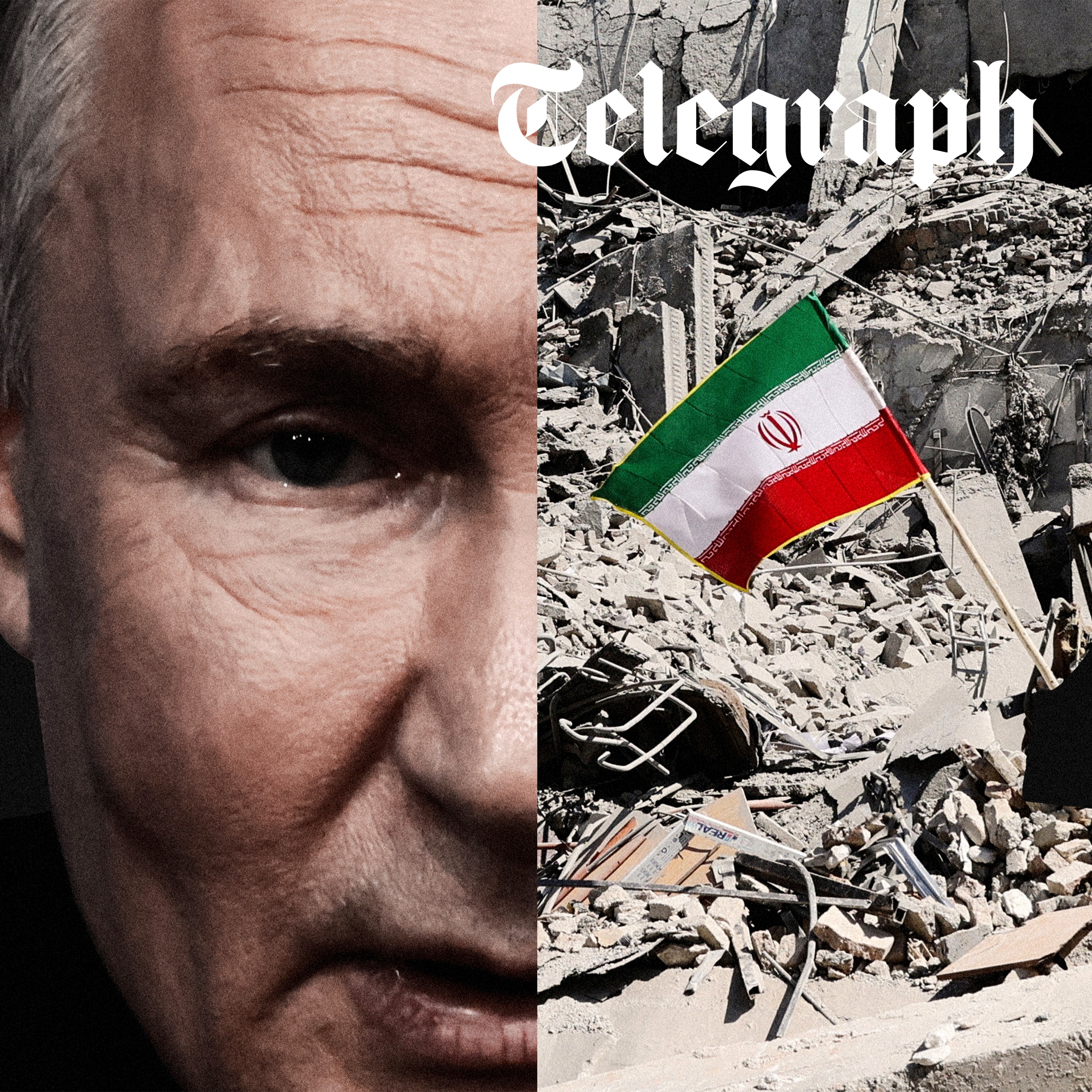
Ukraine: The Latest
Putin pledges ‘unwavering support’ to Iran's new supreme leader & leaked video shows Russian president have coughing fit
00:58:50
Loading summary
Transcript96 lines
- [00:00]
Dom Nicholls
Foreign. I'm Dom Nicholls and this is Ukraine. The latest today, as Ukrainian counter drone experts head to the Middle East. Vladimir Putin offers unwavering support to Iran's new supreme leader, a promise Mojtaba Khamenei will do well to check the small print on Russia unleashes its latest mass aerial attack after a pause that has had some people wondering if Moscow is a little more dependent on Tehran than is currently thought. Slovak Prime Minister Robert Fico says his country will take up the baton from Hungary and block European Union funds to Ukraine if Hungarian Prime Minister Viktor Orban loses the upcoming election. And if shooting yourself in the foot was an Olympic sport, we explain why the International Paralympic Committee would be in gold medal position. And later a panel I took part in of the by the Black Sea Security Forum in Odessa looking at misinformation, innovation and the brittle flexibility of the defence industrial sector.
- [01:04]
David Knowles
Bravery takes you through the most unimaginable
- [01:09]
Volodymyr Zelenskyy
hardships to finally reward you with victory.
- [01:14]
Francis Durnley
Russia does not want peace.
- [01:24]
Volodymyr Zelenskyy
If I'm president, I will have that war settled in one day, 24 hours.
- [01:28]
Kurt Volker
We are with you, not just today or tomorrow, but for a hundred years.
- [01:38]
David Knowles
Nobody's going to break us. We're strong.
- [01:41]
John Foreman
We're Ukrainians.
- [01:44]
Dom Nicholls
It's Monday the 9th of March, four years and 13 days since the full scale invasion began. And today I'm joined by the Telegraph's executive editor for audio, Francis Danley. I started with the military updates. So Ukraine has deployed interceptor drones and a team of specialists to help protect US Military bases in Jordan. President Zelenskyy has said in an interview published today in the New York Times. He said we reacted immediately. Furthermore, speaking yesterday, he said Ukrainian experts, including military personnel, will leave today for the Middle east to pass on Ukraine's knowledge on how to destroy drones. He he said three unspecified Gulf states likely to be the uae, Qatar and Kuwait seek to buy Ukrainian shahed interceptors. Now more from Francis on all of that shortly. But just briefly as we're on the subject, where do these interceptors come from? Well, the Institute for the Study of Warp, in looking at this, they've got a report today that says the company Skyfall, that's a major Ukrainian drone and drone interceptor manufacturer, said on Saturday that it could produce up to 50,000 interceptor drones per month, of which 10,000 could be exported. So Ukraine keeps the other 40,000, 10,000 exported. And also Oleksandr Yakovenko, who's the head of TAF Industries, that's another Ukrainian drone manufacturer. He said that uae, Qatar And Kuwait had expressed interest. He said the main limiting factor for countries looking to use Ukrainian technology were the several months that it takes to train drone interceptor operators. So just buying the stuff is one thing. As we've said many, many times before, that's just one part of a capability and training is largely the big stumbling block and looks like that's about to come home to roost in the Middle east now. Then over the weekend, Friday, Saturday, Russia attacked Ukraine with 29 missiles, nearly half of them ballistic, and 480 drones. We thought it had been odd. Been thinking for a little while that so few drones and missiles have been fired at Ukraine since the start of the Iran war. Wondered if this was Russia's normal pulsing every couple of weeks, keeping back a load of stockpiles and then this, then firing them off at Ukraine, or whether there was something more going on in the defence industrial link up between Iran and Russia. We still don't know the answer to that. But I think it's interesting that there have been so few mass aerial attacks if that's not an oxymoron, since the start of the Iran war. Anyway, seven people were killed just in Kharkiv in a ballistic missile attack during that barrage. Energy infrastructure in Kyiv and in the Khmernitsky and Chernivsky regions were hit as well as well as regional railway infrastructure in Zhytomir region. Damage also reported across the Dnipro, Zaporizhzhia Venetsia, Odessa, Poltava, Sumy and Cherkasy regions. Ukrainian's Foreign Affairs Ministry said these brutal attacks demand a strong response from partners. The Pearl program must continue to operate actively. Now you'll remember Pearl prioritize Ukraine requirements list. That's the pot of money that Europeans and others can fund to go to the US to buy military stocks, primarily air defence stuff, I. E. Patriots. Now there is some concern, we've seen it in the chatter, some concern at the loss of access to air defence and Patriots in particular. So whether Pearl is going to be able to survive if the US is busy firing Patriots Al Azuba La Platz in the Middle East. We will see still on Saturday, a Euromaiden press have a story. We'll put the link in the episode notes. They have a story reporting the Ukrainian strike on Russia's Armavir station. That's about 500 kilometers southeast of the front line in Ukraine. Now they say this importantly is not an oil refinery. Rather it's the reservoir buffer for Transneft's whole pipeline section in that region. So when it burns it's not just the site of the strike that goes up in smoke, it's all along the pipeline, the whole fuel flow along that route that is then stopped. Now this facility is said to be a critical node in Transnef's pipeline fuel fuel logistics network and its destruction disrupts fuel supply across the entire pipeline section that it serves. You'll see very dramatic imagery on social media of it going up in smoke still on Saturday. And an ATACMS or scalp storm shadow, same thing, scalp French Storm shadow, British strike on a Russian jihad storage and launch site. The old Donetsk International Airport was reported over the weekend. There's very dramatic footage of the aftermath on social media showing the site absolutely obliterated again, possibly a reason why there have been so few mass aerial drone strikes of late. Now, no real move on the ground. That picture was borne out by President Zelensky yesterday. On Sunday when he said he was referring to this so called Russian spring offensive that we sort of hear about. He said the main goals are the east of our state, namely capturing the Donetsk and Luhansk regions. He then also went on to say that Russia has designs on the Zaporizhzhia region, adding in the south of our country over the past month and a half they've carried out a number of important actions in defence and in some areas offensive operations. As in that's Ukrainian forces that have done that, he said. We believe we've quite successfully regained control over about 400-435 km of Ukrainian land. Very specific, he said as of today, that's the case. This direction is difficult. The tension remains there. It's really very hard for our guys, very hard. But everyone, and I'll say this carefully, everyone is in a much more positive place than they were at the end of 2025. Interesting comments there from President Zelenskyy. Now those words yesterday Sunday come after comments on Saturday by the hor Ukraine's military intelligence. They say they've stopped Russia's advance in the southern area towards the city of Zaporizhzhia as part of a three month defensive operation in the country's south. That's where we were just a couple of weeks ago in the HU Opsram operations room. In fact, in Zaporizhzhia there were certainly no signs of panic nor jubilation either.
- [07:29]
Francis Durnley
I should say just on this more optimistic tone, Dom, I think it's also worth just adding that this is exactly what people were saying on and off the record out of the Munich Security Conference that the Ukrainians seemed more bullish than they seemed at any time in 2025. Just an interesting observation that.
- [07:46]
Dom Nicholls
Yeah, I mean, we've spoken about it before, the metrics in terms of the ground taken by Russia or the relative ground taken, because, of course, the last month Ukraine has taken back more land than Russia has seized. Or the number of Russian casualties, which for the last two months has finally overtaken the number of assessed new arrivals at the front line. Look at the Russian economy, look at the pace of innovation in Ukraine and the sheer number of interceptor drones and other innovation, particularly in the defence industrial sector, they're able to push out. So, of course, this isn't happening in a vacuum. Russia also is innovating. But, you know, a lot of the standard metrics that we'd reach for as a ready reckoner of where the war's going, a lot of them are starting to tick in Ukraine's favor. So, yeah, back to that old question of who's winning. I still think John Foreman, the former defence attache, I thought his comments were probably still most appropriate here when he says both sides are losing, but Ukraine seems to be losing more slowly. I think that's where we are. But, yes, you're right. It's interesting what a number of these metrics and the comments, the feel from places like Munich Security Conference, just suggesting. Suggesting there are things to be. I'm not going to use the phrase cautiously optimistic because I blooming hate it, but there are some interesting metrics.
- [08:56]
Francis Durnley
Well, particularly because of the Middle east as well, which obviously we'll come to in a moment, which I think there's room for more pessimism around that.
- [09:01]
Dom Nicholls
Yeah, there's some stuff going on there. Right. Anyway, that's enough about the. So onto Saturday, Sunday, overnight, 98 of 117 drones brought down by Ukraine's air force. However, the remaining drones and two Iskander M ballistic missiles made it through. Three people killed, 20 injured across the country. Now, looking slightly wider. And thank you to Christopher from Denmark, who was talking about, in the context of that seizure last week by Belgian and French military, the military action there to seize that Athea oil tanker. Christopher says that since January 26, Danish authorities have detained two more vessels. He said they've detained the Nora container vessel. And on Saturday, just gone, the Swedish coast guard seized the Kaffa, which is suspected of sailing with a cargo of stolen Ukrainian grain. Now, the first one of those, the Nora, the container vessel that was initially sailing under the flag of Comoros, but Comoros informed Denmark that the vessel was not in its registry Bit of an oversight, you might think.
- [10:01]
Francis Durnley
Yeah.
- [10:01]
Dom Nicholls
This is the Danish authority speaking to Reuters passing this on. Danish authorities said the ship is detained until a flag state can demonstrate the Danish Maritime Authority that it is registered and fully certified.
- [10:14]
Francis Durnley
Just fancy that.
- [10:16]
Dom Nicholls
Amazing. Now, they later said that they carried out an inspection and they found no significant safety deficiencies. So I don't know if the NORA is still impounded or if she's allowed to. To go on her way, but she's changed her registration. No longer flagged to Comoros, now sailing under the Iranian flag. Okay.
- [10:34]
Francis Durnley
I'm not sure I'd want to be sailing under the Iranian flag if I've
- [10:37]
Dom Nicholls
been under another sort of recent precedent might suggest. Now still on Saturday. I'm still with Reuters. Thank you, Reuters. They're citing a Swedish police report. They said another ship, the CAFA that I mentioned was suspected of violating maritime law and the National Ship Safety act because of its lack of seaworthiness. Police and coast guard on Friday took control of the vessel off southern Sweden, saying that it had unclear flag status and was thus suspected of being stateless. They said they've launched a probe into suspected violation of maritime law. Chap called Johan Anderson, who's deputy head of Swedish police's national operations department, said our investigation so far strengthens our suspicions and our opinion that this ship has extensive sea safety deficiencies. He added that Most of the 11 crew members of the guinea flagged vessel were Russian. Anyway, just interesting and thank you again
- [11:29]
Kurt Volker
to Christopher for pointing this out.
- [11:30]
Dom Nicholls
I wonder if that is as Christopher also questions if this is a more robust European posture regarding so called Shadow Fleet or just unseaworthy or dodgy vessels. Flags of convenience, all that kind of. All that kind of.
- [11:44]
Francis Durnley
George, it does feel like something's changed, I think, doesn't it? Just the sheer number of these reports now and of course the ones even being sunk as well. It does feel like there's been a robust. But is it anywhere near enough? That's the question.
- [11:57]
Dom Nicholls
Well, as I'm sure you'll mention shortly, the oil price means that Putin's probably a bit more relaxed about how many of these things are stocked. If indeed they're all Shadow fleet, which I'm sure some of them aren't. Maybe. Anyway. Andrei Sibyer, Ukraine's Foreign Minister. This is the last one for me. He said yesterday. Remember that story we talked about on Friday? He said that Hungary had taken seven Ukrainian nationals hostage and the ton of gold and a load of banknotes. He said today is the third day. So this is him speaking yesterday. Today is the third day since Hungarian authorities robbed two Ukrainian armored banking vehicles which were transiting from Austria and stole money and precious metals in broad daylight. This money does not belong to Hungary or its government. It is owned by Ukraine's state bank, Oyster bank, and thus by Ukrainian taxpayers. We demand their immediate return and urge Europe wide condemnation of this unprecedented act of state banditism and racketeering. I encourage all of our European partners to speak out. I mean, it was an extraordinary story on Friday. We were speaking to Latika about it. I mean, they weren't in armored vehicles, but so it was all legal. Does seem a bit of an odd way to be Transporting. Was it €30,000 load of dollars and nine kilos of gold. But you know, who am I? I've never had to do it. So I don't know. I don't know if you just need an up armored Skoda or something, but it does seem, it seem a bit odd. But no, no sign of this spat between Hungary and Ukraine lessening. I mean, you know, phrases like they've stolen the money, banditism, bracketeering, these are great, you get extra points for that, Andre, but I mean, it doesn't do anything for the diplomacy. What have you been looking at? Any racketeering and banditism in your world, Francis?
- [13:32]
Francis Durnley
I don't know what you get up to on your weekends, Dom, but certainly not that sort of behavior. It's been another quiet weekend, hasn't it? I've never known a period like this. And we're only three months into the year and we've had, well, escalating on, on so many different fronts. I mean, I think after the initial predictable success of shock and awe in Iran, we are now seeing events over the last perhaps two or three days take on a momentum of their own. So global oil prices now have risen to over $100 per barrel as that war escalates and expands across the Middle east and beyond. Tehran's closure of the Straits of Hormuz, that's the only sea passage from the Persian Gulf to the open ocean, critical for energy markets, has spooked global trade, making prices pass their highest marker since Russia launched its invasion of Ukraine back in 2022. Now, as we've spoken about that, and the war, depending on its outcome, may play into Russian hands. As you discussed last week, US Treasury Secretary Scott Besant said on Friday that Washington is considering lifting some sanctions on Russian oil to address the global supply shortage linked to their military operations. He said this. There are hundreds of millions of barrels of oil in the water that are sanctioned. And in essence, by lifting the sanctions, the Treasury Department can create supply. Hence what you were alluding to a moment ago, that the shadow fleet may now be breathing something of a sigh of relief if that were to take place. But there's no evidence that it has just yet. Now, that means that the US would effectively, if it happens, be leaning on the Ukrainians for supporting countering Iranian drones and on the Russians for their oil. Now, that's despite the fact that the Russians have reportedly given drones and intelligence to the Iranians which is being used against America and other countries being attacked by Tehran. Now, President Zelenskyy, as one can understand, is very keen to underscore this fact. And as he wrote on X, Russia provides assistance to the Iranian regime. We know what has been provided so far, although the exact volumes of such are not fully known. And then he went on, the focus has shifted to the Middle East. I hope the war will not be long, not only because I'm worried about Ukraine, but also because every human life lost or destroyed is a trag tragedy. Meanwhile, we don't see progress in peace negotiations. If a lasting peace or ceasefire are not negotiated during the first days of a conflict, there is a big risk of its prologation. This will definitely have influence on the situation in Ukraine. Less focus means less support. Less support means less air defense. Now, the New York Times followed Zelenskyy last week on one of his regular visits to the front line. And they said that in their conversations he repeated made two points, that his country was willing to use its battle tested expertise and technology to help America and its allies in the Middle East. But Ukraine also needed help in exchange for fighting off Russia. Now we know because of the Wall Street Journal, the US is now supplying Ukraine tested anti drone systems to partners in the Middle east, something we reported last week as being on the cards. The Pentagon was in talks with Kyiv, we understand, but that does now seem to be happening. That's been expedited. Very, if so. But what we don't know is about the scale up and how much this is happening. How much more may be required if this war goes on beyond the few weeks that President Trump predicted last week. The battle lines are being drawn as we speak. So in just the last couple of hours or so, Putin has said that he is giving his full throated support to Iran's new Supreme Leader, that is the son of the Ayatollah who was killed last weekend, so only a week ago and who Trump said a couple of days ago, that would not be a suitable candidate to succeed him. And this is what Putin said. I would like to reaffirm our unwavering support for Tehran and solidarity with our Iranian friends. Russia has been and will remain a reliable partner at a time. I know, I know at a time when Iran is confronting armed aggression, your tenure in this high position will undoubtedly require great courage and dedication. Now, I think that is a considerable step for the Russians to take, actually. Perhaps their attempt to position themselves as being a key player in the region, trying to underscore that so the Americans can't ignore them. But I think it also may be a blunder here. You know, if they try to play both sides a little bit more, try to be distanced from this, that may well play into their hands, particularly because it seems that the Americans are very hesitant at the moment to be critical of the Russians. So just listen to US Secretary of War Pete Hegseth over the weekend, on the one hand, saying this in a
- [18:40]
Pete Hegseth
speech, if you kill Americans, if you threaten Americans anywhere on earth, we will hunt you down without apology and without hesitation, and we will kill you.
- [18:51]
Francis Durnley
But then, when pressed on 60 Minutes about whether his condemnations would extend to Russia, seeming to pull back considerably, does
- [19:00]
Pete Hegseth
this put US Personnel in any more danger than they otherwise would be? Well, the Russian involvement, no one's putting us in danger. We're putting the other guys in danger. That's our job. So we're not concerned about that. We mitigate it as we need to. Our commanders factor all of this. But the only ones that need to be worried right now are Iranians that think they're going to live.
- [19:19]
Francis Durnley
Then at the same time, listen to what President Trump and his envoy, Steve Witkoff, said when pressed on that by a journalist on Air Force One.
- [19:28]
John Foreman
Mr. Wikov, have you communicated to the Russians not to send targeting information and
- [19:32]
Dom Nicholls
other assistance to the Iranians?
- [19:35]
Volodymyr Zelenskyy
Strongly said that.
- [19:36]
John Foreman
And do you believe that they are.
- [19:39]
Volodymyr Zelenskyy
I hope they're not. Do you see any evidence? We don't know, but it's not doing very well. If they are, it's not helping much. If you take a look at what's happened to Iran in the last week, if they're getting information, it's not helping them much.
- [19:55]
Francis Durnley
You can really, I think, sense their hesitancy in those comments. But with Putin backing this new supreme leader so openly, might that change their stance? One has to wonder. I'm interested in your thoughts on that, Dom.
- [20:09]
Dom Nicholls
Yeah, I mean, I was interested when I saw that comment by Putin because, firstly, he didn't need to say anything. He loses nothing by, by not saying anything. And we know the shallowness of those words. You know, he says he's reaffirmed Russia's position. Well, the position that he took when the war kicked off 10 days ago or nine days ago was to do, quick as a flash, do bugger all. So for him to reaffirm, it's just, it's rubbish. So Iran know that. Everyone knows, anyone looking at it sensibly knows that. So why does he decide to do it? And I just, maybe I'm leaping two, two steps everyone I shouldn't do. But I just wonder. I made those comments earlier on about we've been surprised that this latest pause in the Russian mass aerial overnight bombardment of Ukraine made us wonder if actually we thought Iran sold the blueprints of the Shaheds to, to Russia and then I'm making the Garan. And so there's no leverage Iran has over Russia technically about these drones. Well, maybe they do, maybe they do in some, in some area. Maybe Russia on some level has to keep that link open to Iran because we know that Putin's doing everything he can to keep Trump on side and so to overtly take a position like this when it's not obviously necessary, unless, as I say, something happens, it's happening behind the scenes, probably in the drone front. So I thought it was, I thought it was interesting by Putin. I mean, it won't matter. I mean, Trump's not going to say, oh, right, okay, we're going to put all our chips on Ukraine, then it's not going to do anything. So maybe Putin felt that it was a free pass. I don't know. But I thought it was an interesting comment when he didn't need to make.
- [21:45]
Francis Durnley
Yeah, that's another way of thinking about it, is he's so confident that the Americans are not going to go firmer on Moscow that he feels he can make this statement and try and leverage himself in the Middle east more.
- [21:55]
Dom Nicholls
But I still don't, I still don't see what's in it for him. What's in it for him? What's the, what's the relationships he cares about right now? China, America, possibly India or anyone who wants to buy some oil. But China and America are the biggies and that statement does nothing positive really for him in either of those regards. So I'm just wondering if there's something else.
- [22:14]
Francis Durnley
As I say, unless he feels that putting Russia in the mix here is very helpful because Russia can't be ignored in negotiations around how this may all end up. And so if you're a key ally of Iran, if you're giving them political cover, as they have over recent decades, that they want to maintain that role because it gives them leverage in other fields, like in the war in Ukraine. It's possible. I think it also could be a blunder here. I mean, I think, you know, this is. Dictators make mistakes, right? The Kremlin, which has been pretty intelligent, I think, in many ways, in how it's played diplomacy in the last year or so, they can make mistakes with everything going on. So it'll be interesting. And just one, one more story, if I, if I may, John, since we're speaking about Putin, I think we have to mention this. It's small in the grand scheme, but it does matter, I think because of just the amount of comment that's been made about this. Over the weekend, Putin was caught struggling to speak and coughing in an outtake from a recorded address released by the Kremlin. Interestingly so, in this video, which was posted online for about four minutes before it was removed, Putin suddenly stops speaking and then starts gesturing towards his neck and trying to clear his throat. So you can hear that now. Now, 20 minutes later, that was very swiftly removed and another video was uploaded where Putin was speaking very fluently about International Women's Day. So what happened? We don't know. Did somebody just upload the wrong video? Possibly. But in that case, I would recommend that they stay away from Windows for a while. There are others who are saying that this may well have actually been deliberate to distract from something else or indeed somebody within the, within the Kremlin who wanted to embarrass Putin. So one Russian watcher wrote this. Anyone who has even a passing understanding of the behind the scenes process will confirm that this should not have been possible. They couldn't have failed to check before publishing it. In systemic terms, this looks like a revolt. Now, that might well be going completely over the top, but either way, it does offer a rare crack in Putin's public facade. And I think that that is the sort of thing that does tend to cause a lot of embarrassment when these things go out. So. And it has, it's a front page story in many places.
- [24:40]
Dom Nicholls
Well, God forbid that we show that video of him falling over when he's playing ice hockey again. Do you remember that? When he was, he was going around on the ice hockey and he didn't notice that someone had laid out a red carpet for him at the sort of entrance bit. And of course, the skates go straight on the carpet. He goes A over T. And yes,
- [24:57]
Francis Durnley
now we're on video. People can actually watch this kind of.
- [25:00]
Dom Nicholls
Yes, well, yeah, Google, I know. What would you Google? Putin arse over tit ice hockey. Yeah.
- [25:06]
Francis Durnley
Well, anyway, we'll see if we can find that for a future episode. I think we've got enough footage today, but we'll dig that one out. Just two last bits of news. Dom, if I may, Slovakia's pledge that it will take up the baton from Hungary and block those 90 billion euro loans to Ukraine if the Hungarian Prime Minister, Viktor Orban loses the election on April 12th. That's coming from the Slovak Prime Minister, Fico. As you'll know, Hungary is currently blocking that loan to Ukraine, ostensibly due to disputes over the Druzba pipeline, which stopped transiting Russian oil back in late January. Hungary and Slovakia are the two countries in the EU that are still directly importing Russian energy from that route. And so they are now escalating the political pressure. Fico said in his Facebook video that he plans to discuss the pipeline. In a conversation that he has with Commission President Ursula von der Leyen tomorrow, he said this. I'll ask her a simple question. Question how long will the commission prioritize the interests of Ukraine, a non EU member state, over the vital national issues of Slovakia and Hungary? EU member states. So the row continues to escalate and if it's true that Slovakia would, if Orban loses, become another Hungary as a chief blocker. Hungary's been the big one, let's face it. But if that's true, then we're going to be talking about Bratislava a lot more over the coming months. But this could just be a bluff to try and get some more leverage before this conversation with Ursula von der Leyen. And actually Slovakia, which is generally seen as a little bit more malleable than Hungary, might actually not do what they said that they would do here. But anyway, one we'll continue to monitor. And just finally one for our Dutch listeners. Rob Yetin, the newly appointed Prime Minister of the Netherlands, paid his first official visit to Ukraine over the weekend. It is a clear and powerful signal of the Dutch sustained political commitment and unwavering solidarity with Ukraine at a critical juncture of its struggle against Russia's unprovoked and unjustified war of aggression. He said in a statement. Now, as we'll all recall, the Netherlands is one of those key suppliers of weaponry and also a zone for the future build with Ukraine arms production initiative. So an important partner. I just thought it was worth mentioning that and that's us up to date.
- [27:17]
Dom Nicholls
Domestic While attending the Black Sea Security Forum in Odessa, I was on a panel titled Innovation Wins Systems Win Wars. I was joined by Roman Paroli, who's co founder of Deep State and Ambassador Kurt volker, the former U.S. ambassador to NATO and President Trump's special representative for Ukraine until 2019. As you're about to hear, our discussion ranges from the challenge of verifying information in a modern conflict environment to the more subtle problem of navigating between hard facts and narratives that may be technically true, yet still misleading in what they imply. We also explore a broader strategic does the private sector inevitably outpace the public sector in wartime innovation? Or is the decisive factor something deeper? A culture that genuinely rewards experimentation and adaptation and ultimately are western countries agile enough to keep pace? And I also got to trot out my DARPA photocopier analogy. Again, this is our conversation Dominic.
- [28:21]
Roman Paroli
The innovations and technologies change not only the battlefield in terms of how we operate, but also how we cover it. Because now you as a journalist can see very often the real time shooting videos from what been happening, how the weapons operate for example, what is happening at the battlefield, the projects like Deep State who are just presenting de facto live map of what is changing on the battlefield. As a journalist and as the retired military, what are the pro and contra because you see as a journalist and enemies also can see the same. Will you have any limits in publishing understanding how it can influence the situation on the ground?
- [29:06]
Kurt Volker
So limits?
- [29:06]
Dom Nicholls
Well, firstly, if I might take the
- [29:08]
Kurt Volker
picture that we see. So we've just been talking about Starlink and the effect it may or may not have on the battlefield and the lessons for everybody there of assured access to real time information and the importance of it. Well, we see that as well in the journalism world. I mean there is so much information now which is.
- [29:24]
Dom Nicholls
That's good.
- [29:25]
Kurt Volker
However, that pushed the onus on the analysis and the verification. So I use Deep State a lot,
- [29:31]
Dom Nicholls
thank you very much.
- [29:32]
Kurt Volker
There are other sites that I use and I have to do all the things that I tell my kids not to do. So I'm constantly doom scrolling, I'm constantly consuming news and information, I'm checking stories all the time. It's unhealthy, it's not good. But I have to do that to stay on top of this torrent of information and verify it because I could just take all the information that we see out there. Let's take an example of the flag dashers. We see verified imagery so definitely have happened of Soldiers, generally Russians, the Ukrainian forces have done as well, but it's generally Russians that appear somewhere waving a flag to a drone. And then normally Sergey Lavrov bumps his gums a bit and says, well, there you go, we've taken four more villages because we can see a Russian flag. Nothing of the sort, or very rarely is anything of the sort. Now, those individuals who are told to go and do that are probably dead five minutes later because they're on their own, they're overextended, and they just get killed. So it is incorrect to say that that event did not happen, because it did. We can verify it. We believe that those people were standing there waving a flag. But the analysis of that, to say, therefore we should change the lines on the map and say Russia holds that village. Now that is incorrect because it doesn't mean that. And I think what we're seeing on the flank just to the east of here, around Zaporizhzhia, because of the starling, a switch off, I still think it's a series of limited counter attacks rather than one overall counter offensive that's happening near Zaporizhzhia, but I'm very happy to be told otherwise. So I think we've got to be very careful with information that we receive. And that is before you even get into deep fake and the quality of the disinformation that is available out there now. And the problem is that you have to be so fast to shut down those areas of disinfecting information. Because once the idea takes root that event A happened or person B said the following quote, Even if you prove that to be incorrect after the event, unless you are very, very fast, and I mean usually hours, single number of days, certainly double digits, and you're gone. Unless you can shut down that avenue of disinformation, that idea takes hold and it sits in the collection collective consciousness of the world. And it is very, very difficult to dislodge. So from a journalist, my access to information now is unparalleled, unlike any other war in history, I would venture. And that is, that is a very good thing for reporting. It's also a very, very difficult thing for reporting because there are so many bad actors out there that do not verify that, do not explain where their sources come from, do not explain the statistics that they use, and just push stuff out. Whether they knowingly use false information or are happy to push a certain narrative, or are state sponsored and are doing it for a job, it is very, very hard. The information environment at the moment, as Never before is a flank in this war.
- [32:28]
Roman Paroli
The next question I would like to ask to all three of you. When we speak about innovations, predominantly we speak about private sector. So it is the change for Ukraine, first of all, because we used to have the state owned enterprises with certain rules, certain controls, certain procedures that been long term. Now we are speaking about the private. So it can make it quicker, more flexible, probably sometimes more effective. But at the same time it's always the question of the private state cooperation. And if we speak about strategy, what should we really take into consideration? If we would like to have lessons for other countries from Ukrainian experience, but also from the cases like Sterling that we had in the U.S. for example, or other big private companies that became a game changers during this war. So if I would ask you about good and bad lessons here, or the trends we need to follow to put to the strategy about the private innovations and state use, because armed forces always would be the state owned entity.
- [33:46]
David Knowles
Well, first of all, indeed, when we talk about the innovation and the interaction between the private and the public sectors, a public private partnership is ideal. But only when both parties understand the challenges of war, understand each other and can adapt to one another. The state, for its part, must help the private sector create and work and help facilitate change. In addition to the positive moments when something is being produced or discovered, it is also necessary to hear the problems that need a response in order to fix them. Very often the state doesn't like criticism or problems because for some it affects political ratings or reputation. But for all of us, especially in a time of war, it is important to understand that we are all on the same side. If someone brings a problem forward constructively, it must be worked on jointly. The private sector will always be ahead in terms of innovation and understanding what is needed at the front. Because of the competition created during the process of invention and development, they all need to keep pace with the times. At this moment, the state must primarily ensure the processes it has already doing, supporting and developing effective management, which is vital today. Today in the Ministry of Defence, we see that we have finally reached a time when priority is given, effective management and real tasks have been set based on what today's war demands. Innovation, technological development, scaling them up and understanding that the enemy doesn't stop. To summarize, it is important to develop and understand which needs accurately relevant at the front. Only in a mutual partnership, where one side understands and helps and the other brings innovations and truly necessary constructive fixes and inventions will there be a success in a war or any other Field.
- [36:20]
John Foreman
Thank you, Al. I'll follow on that. First off, the state and state owned activities very seldom produce real innovation. Private sector can. And on the other hand, there is no guarantee of innovation from the private sector. And if you look at American defense industries, they are often very slow and cumbersome in the way they develop and advance new technology. So I think the answer to your question really is one of mindset. Ukraine, because of battlefield needs, has developed a mindset of the need to change dynamically and constantly. We don't have that mindset of that dynamic and constant change. But I think if you look at the lesson that we need to try to import into our western militaries, it is that idea. It's that mindset. We shouldn't think of buying a weapons system, we should think of buying a dynamic capability so that you get something and then six weeks later something new happens. It has to be able to be built in and embedded. That's something that first off, the private sector has to produce as an option and say, okay, we are developing systems that will change over time and try to sell that to the government. And it requires, I would argue, a fairly fundamental reform of our procurement process processes so that we are not looking at single system purchases, we are looking at dynamic capability development and paying for that. And I don't think we're structured for that right now. So I think on both sides we have to adopt this mindset that has really developed in Ukraine because of the battlefield.
- [38:13]
Kurt Volker
At the risk of this becoming a bit of a group think answer.
- [38:16]
Dom Nicholls
I agree with everybody.
- [38:17]
Kurt Volker
Everything you've heard so far, and I think the most important point that's just been brought out by Ambassador Kirk is that mindset. And I don't think state bodies, certainly I can speak for my country, I don't think they have the right mindset. What do we mean by innovation? Well, if we take a very simple lesson of innovation which is fail, fail fast, fail better get better each time, say that to the military and probably the rest of government writ large to save fail, fail fast and fail better. Say fail three times in a sentence and they're not going to be happy.
- [38:48]
Dom Nicholls
They just don't want to hear that.
- [38:50]
Kurt Volker
I don't want to hear about failing. So they're just not in the mindset of failure leads to improvement. It's just not in the DNA. And I think it's particularly bad in the uk. I think you're better in the US
- [39:01]
Dom Nicholls
And I would point to the lessons of darpa.
- [39:04]
Kurt Volker
But even here I think there's a lesson for us.
- [39:05]
Dom Nicholls
Also darpa, the Defence Advanced Research Project
- [39:08]
Kurt Volker
Agency, people who are told to think ahead, break physics, come up with amazing new stuff. Now they get a huge amount of money and Congress complains each year that DARPA only turns around 3% of that money into stuff on the shelf that you can then go and buy in future years. And Congress says this is a terrible waste of money. Look at the amount of billions of dollars that we spend on DARPA and you only turn 3% of it into something I can then go and buy down at the shop. DARPA say, well that's because we're doing our job. We are trying to be so innovative and we are really throwing that vision out there that most of it doesn't work today, it might work in the future. We invent things like the Internet, which is pretty good. We all agree that eventually comes along, but for all your money, yes, most of it doesn't work today. If you want more bang for your buck, fantastic.
- [39:58]
Dom Nicholls
We will just produce a slightly better
- [40:00]
Kurt Volker
photocopier next year than the one you've already, if that's what you want. Congress. So there's this constant dynamic, but at least DARPA has the confidence, I would say, to keep doing what it's doing and failing overwhelmingly most of the time and is allowed to that structure. I just can't see it in Britain and Western Europe really, that willingness to embrace failure over and over and over again because eventually something brilliant will come along but you can't be guaranteed when that's going to be. And I heard it a lot when I was in the military, this sort of mantra of don't let the excellent become the enemy of the very good. If the Mark 3 is perfectly good enough, then don't keep asking for the Mark 4 just because it's new and it's shiny, because it costs a lot of money. And even though this mantra, don't let the excellent become the enemy of the very good, is said time and time again, I've heard it in so many conferences, military gatherings, it happens all, all the time and it's in the DNA as is the utter rejection of the, the concept of failure being a good thing. And I think until you get past that at a state level, then you're just not going to be able to embrace the small and medium sized enterprises that are out there doing the brilliant things in the twos, fives, tens of people producing amazing stuff that hits that as we call the valley of death when they've proven a concept and they just need go government's help to scale it up massively. And it more often than not falters at that point. It's just not that cultural willingness to take the risk to really throw it into the future and scale it up. So I'm a bit of a skeptic on the state level of innovation.
- [41:34]
John Foreman
Can I just introduce some skepticism about DARPA too? Because what they do well is basic research, basic science. Pushing the envelope on what's possible costs a lot of money and doesn't produce a lot. What they don't do is the application of technology and the learning cycles on known technology built into military capabilities and evolving military capabilities. So the private sector will not do what DARPA does because it's just not enough return on investment to do that kind of business. Basic research, but nobody is doing the application of the evolution of known technology in the ways that need to be done. And finally with darpa, because the sky's the limit is also sky's the limit on spending. The goal has got to be to spend the least amount and produce things.
- [42:34]
Unnamed Panelist
Innovation is always about money. Let's be honest. No strategy can just be a dream. It needs investment. For a country at war, deciding what to invest in is always the hardest choice. Over the last year, discussions have centered on whether we invest in innovations like drones, small, numerous, diverse, etc. Or if Ukraine needs its own missile. I don't want to name specific brands, but we know we are talking more and more about long range weapons weapons lately. This is more expensive and takes more time. But Ukraine cannot abandon such technology. Can we speak of this also as innovation? Or will we be in a constant rivalry between proven technologies, many of which in long range weaponry are old in a sense, and these innovations that are absolutely new to modern warfare.
- [43:33]
David Knowles
We will always be in this rivalry where everyone will either ask whether we need to invest the most or someone will come and say we only need drones or we only need missiles, or we need it for military salaries. All of this is necessary. When the state and competent people make decisions on what to invest, there is no easy answer. That is why competent, smart people who participate in the war and in communication sit down, think and look where it's most effective. Similarly, the state must follow the strategy it develops. If we are talking about the need to knock the enemy out economically, of course we will prioritize long range weaponry to strike oil, electricity, fuel and the like. This is necessary. An enemy like Russia is a very large, complex machine. Strikes. They are a necessary component to push them out. If we are Talking about the line of combat conduct which must not be forgotten, Then of course, those are FPV drones, which also require the investment, development and maximum resources. We must remember both aspects. The complexity lies precisely in finding the most effective things from all of this, the things that bring benefit and truly damage the enemy, and investing resources there. That is exactly what the Russians are doing today. The best example is the Kursk region, when fiber optic drones were just gaining momentum. When the Russians saw the effectiveness in this, they began not only to increase the quantity, but improve the quality. The result, they knocked out all of our logistics. And because of that, we were forced to leave the Kursk region because we were surrounded. This is only one example and small one, showing that if you find a weak spot, see the effectiveness, choose the strategy, a move towards it. Every day is complicated by the fact that you must search for resources, calculate and understand what will happen tomorrow, the day after, in a week, in a month or a year. Everyone involved in the defense sector must see the effectiveness, see the strategy and devote resources and thought to the directions that bring the greatest benefit in combat, both at the highest level and the smallest local level. It is an eternal struggle, eternal questions, and an eternal conflict that countries have faced, are facing and will continue to face regardless of their situation. Thank you,
- [46:37]
Roman Paroli
Ambassador. Another tricky question. Military industry is always about competition and national interest. It's still business. But when we speak about innovations, very often we need the accumulation of the efforts of several actors. And we already see how some NATO countries are working with Ukraine investing in Ukrainian startups, or we see the cooperation between the several NATO member states trying to present a new innovative product. Do you feel that with the space for innovations at the military sphere, because of the Russian Ukrainian war, we will see much more of the cooperation between the different member states of NATO instead of the more commercial oriented military industry production that we used to see before?
- [47:30]
John Foreman
No, look, the way this actually works is whoever is defining the needed capability chooses a prime contractor to deliver it. And that prime contractor goes out and tries to find the best components to put that together into a system. And these tend to be highly multinational. Multiple countries, multiple defense industries, all developing pieces into something. And that's true whether it is the US defining the F35 or the Swedes defining the gripen. All these national efforts coming together and that's the way it actually works. Governments don't get together and say, let's cooperate on our defense industry. And even defense industries don't get together and say, oh, let's work together. They need a Contract and they need to fill the contract and then they piece that together. That's still going to happen.
- [48:28]
Roman Paroli
Okay, Dominic, your countryman Julian Lindefrensch usually joked that it is so small that it is not the same imperial army that we used to think about the UK at the same time, a lot of his counterparts are usually saying that, okay, but we have innovations now. Do we really need the same big armed forces and maybe all these drones and long range missiles and we just need more skillful armed forces that know how to use it. But in terms of thousands, that's less important in the nowadays, however, the Ukrainian example is showing that we still need numbers of infantry, even those who would operate these drones at the battlefield. From your perspective, what strategy most of the countries, including yours, are chasing now, do we still think more in terms of the numbers?
- [49:20]
Kurt Volker
Well, thanks. I think this absolutely is the fundamental point. I'm really glad we were able to talk about, for me, the most important, but I think it's one of the most important. Most people would suggest lessons that Ukrainian armed forces have been able to flag to NATO or to anyone that will pay attention is that you go into a peer on peer armed conflict. Your regular forces are just a speed bump. They are used up very, very quickly. Regular forces start a war or they're at the start of a war and it's your civilian force that then wins the war. Because war is, since the Industrial Revolution always been so brutal, so costly that you just can't survive for any length of time. Your regular forces are used up very, very quickly. We saw that with the British army in the Second World War. We've seen it in pretty much every war game. And I think the lesson is brought out here. Russia has observed that lesson. I don't know if they've learned it at all, but their regular forces were used up in the first few months, if that, and now they're going backwards, aren't they? You're taking more Russians off the battlefield each month now, for the last two months running, than they were able to put in there. So your regular forces are there at the start of the war. It's your civilian forces that finish the war. And therefore, for all this innovation and for all this talk of exquisite kit as we talk in the uk, really high technology, high cost, small number. I mean, we've seen what happens there. That just is not a model for success. It is very helpful. It is arguably necessary, but is it? It in and of itself will not win the war. So, you know, if that's where you're putting your whole strategy, you better make sure that that works and you better be leaps ahead of any potential rival in terms of technology because Ukraine has shown that mass is back. And I think further north and the further east in Europe that you go, that lesson has been learned and is being enacted with state policy. Poland ramping up its defense budget beyond 5% etc. The Baltic states, the Nordic states having a very firm and practiced and rehearsed relationship between defense and security and the civilian population, Sweden.
- [51:28]
Dom Nicholls
Now I'm going to get the stats
- [51:30]
Kurt Volker
wrong, but is it any building above a thousand square feet has to have a bomb shelter in it. If you try to have this argument in London about you want to build a new tower block in east London, well, you've got to make sure it's going to have an air raid shelter. People look at you like you're mad. We just don't have the information landscape to have that complex conversation with our public. You want me to build a bomb shelter? So I think the further north and further east you go, they get it. The further west and south they really don't. And they're still hanging on to this idea of exquisite kit small numbers, all defense costs too much. So I said earlier on I was a bit of a skeptic. I think I am here as well. I think there are too many politicians still bearing their heads in the sand hoping that this war goes away. We can all observe the less lessons we don't actually have to learn them and price them in and do something about it. So I think the fundamental lesson that masses back that the penny has not dropped everywhere.
- [52:28]
Dom Nicholls
Let's go to final thoughts. I would like to say thank you and hello to Norma. Norma, thank you for your email. Lovely, lovely photo with your NAFO T shirt. Your Make Russia small Again sweatshirt. So thank you for that interesting photo. Don't know where the bar was you're in, but why would you pay $12 for a bloody Mary? And I bet it was awful as well. I bet they had no Tabasco, celery salt and all that kind of stuff. Anyway.
- [52:52]
Kurt Volker
Was it worth it, Norma?
- [52:53]
Dom Nicholls
That's what I asked. And what the hell is a Mexican coffee? Irish coffee.
- [52:56]
Kurt Volker
Yes.
- [52:56]
Dom Nicholls
What's a Mexican coffee?
- [52:57]
Francis Durnley
Coffee with tequila in is how I'm imagining it. Yeah, I don't know.
- [53:00]
Dom Nicholls
That sounds bloody awful.
- [53:01]
Francis Durnley
We're gonna get a lot of emails about that now, aren't they?
- [53:03]
Dom Nicholls
All right, showing. Thank you. Thank you, Norma Francis, final thoughts.
- [53:07]
Francis Durnley
I can't stand Bloody Marys.
- [53:08]
Dom Nicholls
I love them. No, spicier the better.
- [53:10]
Francis Durnley
Oh, awful, awful. Tomato juice is just repugnant, I'm afraid. No, it shouldn't. I just think you should drink through.
- [53:18]
Dom Nicholls
You're a vegetableist. You must love all that stuff.
- [53:20]
Francis Durnley
Yeah. Not every vegetable, though. I mean, I feel like.
- [53:23]
Dom Nicholls
Well, technically it's a fruit.
- [53:24]
Francis Durnley
It wasn't it Robert Ray. It was Ronald Reagan. No, wait, knowledge, hang on.
- [53:29]
Dom Nicholls
Is knowing that tomato is a fruit. Wisdom is not putting a tomato in a fruit salad.
- [53:34]
Francis Durnley
Right. George H.W. bush hated broccoli so much that I knew it was either him or Reagan. He hated it so much that he banned it from the White House when he came president, he said that his mother had forced him to eat it for so long that when he became president, the United States, that was power enough for him to say no to his mother. So, anyway, that isn't my final thought today. My final thought today is that the Ukrainian athletes at the 2026 Paralympic Games in Italy won six medals over the weekend, three golds, two bronzes and one silver, with, at one point, Ukraine actually leading the medal tally, I think the second at the time of broadcasting, just behind China. Now, the event, of course, though, has been seriously blighted by the fact that this is the end of Russia's exile from world sport. It wasn't the case, quite, at the Winter Olympics two weeks ago, but it is at this one, because the Paralympics has allowed the country's athletes to compete under their national flag for the first time since 2014. So a big step, and as we've talked about many times, why? What is the justification for this? They are claiming the ipc, that the original decision four years ago to ban them again had nothing to do with the war in Ukraine per se. It was more to do with the way it was being used in military propaganda, having Olympic flags and things like that. But it wasn't to do with the fact that there'd been an invasion. So now that they're not using the flags in their military propaganda, the Russians, they're allowed back. I mean, it seems on pretty thin ice, if you'll excuse the pun. But as a consequence of this, Austria, Romania and the UK have confirmed that their officials wouldn't attend the opening ceremony. That brings the tally up to 14. So it's all backfiring in quite a serious way. I think this for the ipc, the Ukrainians said that they appreciated this morally sound stance. They said these aren't simply flags, they are symbols of an aggressive war that killed at least 650 Ukrainian athletes and coaches and damaged 800 sports facilities and resulted in hundreds of thousands of war crimes. Say no to war propaganda and sports washing. Now, just to end a similar row has also erupted in Italy for this year's Venice Biennale, with the organizers allowing Russia to open its own pavilion once more. All the different countries have their own pavilions. I mean, it's an amazing event. The Italian Minister of Culture said that this was an independent decision by the foundation despite the government's opposition. This is actually a bit of an open revolt about this in Italy. Apparently it's quite a big story there. If you're in Italy, be very interested to hear more about that. It does seem strange, I have to say, that the city that was once famously sacked of its art is celebrating a country that's doing the same in occupied Ukraine and has sought to destroy so much more. Incredibly, I think I'm right in saying that only 4% of the art that was in Venice before 1797 when it was sacked, is still there to this day. And it's still obviously renowned for its for its global art. So it just gives you so what Venice was like at the height of its power. Do you know who did that? Dom the Sack?
- [56:37]
Dom Nicholls
No, he says with certain trepidation. Gone. Who sacked Venice in 1799?
- [56:42]
Francis Durnley
Napoleon Bonaparte. Not his finest hour, I have to say. The Italians actually call him Bonaparte, which means, forgive the pronunciation, which means the one who took a good part. I so they butchered his name because he took so much from them. He took a large part. Not his finest hour, everyone. I'm not. I'm not actually a Bonapartist. I want to dispel this rumor. I'm just interested in the period. Okay, Ukraine the Latest is an original podcast from the Telegraph created by David Knowles. Every episode featuring us in the studio maps and battlefield footage is now available to watch on our YouTube channel. Subscribe@www.YouTube.com crane the latest there's a link in the description. You can also sign up to the Ukraine the Latest Newsletter each week we answer your questions, provide recommended reading and give exclusive analysis and behind the scenes insights plus diagram of the front lines and weaponry to complement our reporting. It's free for everyone including non subscribers. You can find the link to sign up in the episode description. If you appreciate our work, please consider following Ukraine the Latest on your preferred podcast app and leave us a review as it helps others find the show. Please also share it with those who may not be aware we exist. You can also get in touch directly to ask questions or give comments by emailing ukrainepod elegraph.co.uk we continue to read every message. You can also contact us directly on X. You'll find our handles in the description. As ever, we're especially interested to hear where you're listening from around the world. And finally, to support our work and stay on top of all of our Ukraine news, analysis and dispatches from the ground, please subscribe to the Telegraph. You can get one month for free, then two months for just one pound at www.telegraph.co.uk Ukraine the latest Ukraine the Latest was Today, produced by Rachel Porter. Executive producers are Francis Durnley, Louisa Wells and David Knowles.
- [58:48]
David Knowles
My name is David Knowles.
- [58:50]
Dom Nicholls
Thank you all for listening. Goodbye.