← Ukraine: The Latest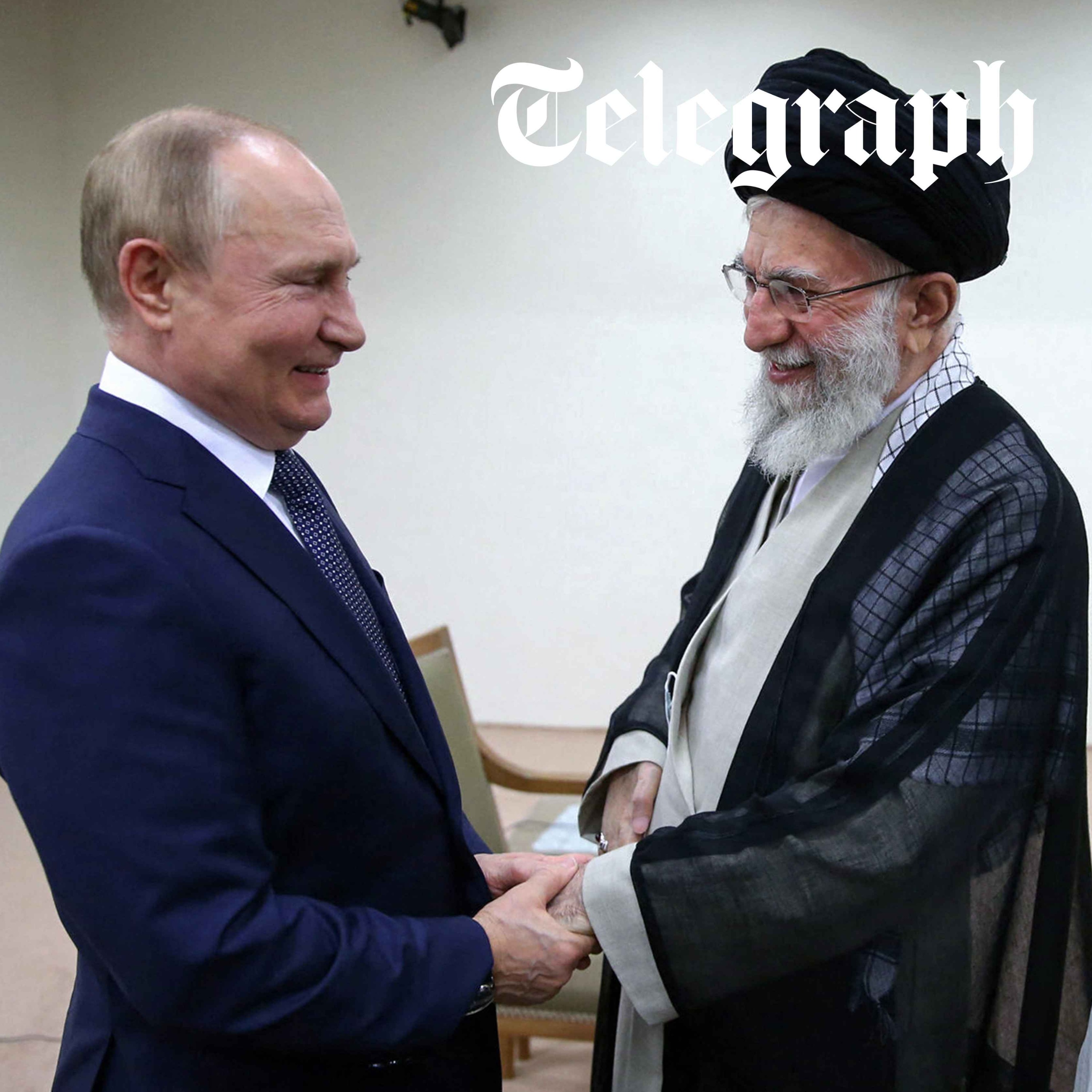
Ukraine: The Latest
Putin slams ‘murder’ after US-Israel kill Khamenei & what war in Iran means for ‘humiliated’ Russia
00:56:30
Loading summary
Transcript119 lines
- [00:04]
Valery Chalyi
The telegraph.
- [00:09]
Sarah or Tanya (Mom Archie hosts)
Are you noticing your car insurance rate creep up even without tickets or claims, you're not alone. That's why there's Jerry, your proactive insurance assistant. Jerry handles the legwork by comparing quotes side by side from over 50 top insurers so you can confidently hit buy. No spam calls, no hidden fees. Jerry even tracks rates and alerts you when it's best to shop. Drivers who save with Jerry could save over $1,300 a year. Don't settle for higher rates. Download the Jerry app or visit Jerry AI Acast Today,
- [00:45]
David Knowles
ACAST powers the world's best podcasts. Here's a show that we recommend.
- [00:53]
Sarah or Tanya (Mom Archie hosts)
You're listening to Mom Archie. I'm Sarah. And I'm Tanya and this is a podcast where two millennial moms get real about raising kids and making sense of the world. We're calling out the bs, breaking down the headlines and laughing through the mess because honestly, what else can we do? So whether you're here to learn, vent, or just feel a little less alone, we're so glad you're here. Hit subscribe and let's navigate the chaos together. We are about to take the drama out of politics and the shame out of motherhood. Because this is.
- [01:26]
David Knowles
ACAST helps creators launch, grow and monetize their podcasts everywhere.
- [01:31]
Gianni Vanetti
Acast.com.
- [01:38]
David Knowles
I'm Dom Nichols and this is Ukraine. The latest today as the world reacts to the situation in the Middle east with many people taking note for the first time of what attack drones can do when fired into civilian areas, we ask how Ukraine and Russia may be impacted by Donald Trump's war against Iran. We report on the latest shadow fleet tanker boarding operation. Get an update from Adelaide in Kyiv and later we have a panel I moderated at the Black Sea Security Forum last week in Odessa with Valeriy Chalyi, Ukraine's Ambassador to the US during Donald Trump's first presidency. William Taylor, a former US Ambassador to Ukraine and and former Italian Senator and Deputy Foreign Minister Gianni Veneti. Bravery takes you through the most unimaginable
- [02:23]
Gianni Vanetti
hardships to finally reward you with victory.
- [02:28]
Adeli Pojman Ponte
The Russia does not want peace.
- [02:38]
Gianni Vanetti
If I'm president, I will have that
- [02:40]
David Knowles
war settled in one day. 24 hours.
- [02:42]
Valery Chalyi
We are with you.
- [02:43]
David Knowles
Not just today or tomorrow, but for 100 years. Nobody's going to break us. We're strong. We're Ukrainians. It's Monday 2 March, four years and six days since the full scale invasion began. And today I'm joined by my co host Francis Dernley and We have a dispatch from Ukraine from Adli Pojman Ponte. Well, the weekend's big news obviously was the attack on Iran by US And Israel. Russia has raced to support its ally. Yesterday, Putin expressed condolences for the death of Iran's supreme leader, Ayatollah Ali Khamenei. Well, that's about it. That's about all that Russia did. Yeah. No weapons, no other military aid, no use of the radars in Syria to try and confuse Israeli jets. Certainly no criticism of the United States and Donald Trump. We will discuss more of the impact about the events over the weekend impact for Russia and Ukraine shortly. But now let's go to the normal updates. Let's start inside Ukraine and 10 of 94 drones got through air defense in the last 24 hours, hit four locations. Nine people were killed, 19 injured. Most of the deaths occurred in the south and the east of the country or southeast of the country around Kherson, Dntsk, Dnipro, Petrovsk, that kind of area of also deaths in Chernihiv, attacks that cause injuries across the whole country. Basically Sumy Kharkiv, Zaporizhzhia. No significant move on the ground, although that doesn't lessen the violence. There were 960 Russian casualties yesterday according to Ukraine's general Staff. Obviously casualties being killed, wounded, missing and taken prisoner. Ukraine Unmanned Systems forces say they caused 30,090 Russian casualties during the winter months that just finished December to February. Now most of those casualties would have been killed. We've all seen, seen the effects of drone strikes on individuals. So we can imagine Most of those 30,000 were actually deaths. Commander of the Unmanned Systems Forces, Major Robert Magyar Brovdi said, I thank every bird and warrior of the defence forces of Ukraine for their resilience, heroism and struggle. Eternal memory to the fallen defenders of Ukraine. Respect to the home front, retribution continues. Now in terms of the casualties, how they can be so certain that the numbers they say 960 as I said yesterday, and most casualties from drones killed. So last week I was in Ukraine and Jack Leather, our videographer and I, we spent a day near Zaporizhzhia in one of the operations rooms with the hua with Ukraine's military intelligence. We've got a longer piece that's going to come out maybe next week and we were, we were watching in real time watching their combat operations and they showed us we had access to their Delta system. Delta is the Ukrainian armed forces combat management and situational awareness platform. It basically provides real time battlefield intelligence, integrating data from drones, from satellites, from sensors, from soldiers on the ground, etc. Etc. Puts it all into one big digital map that different, different units can interrogate, etc. Etc. And we, and we could see, we could see exactly what was going on. We could see the forces, Ukrainian and Russian, in the time that we were there, they killed 13 Russian soldiers and they showed us all the drone footage and you can see exactly where they were. And so these figures I suggest are pretty accurate.
- [06:07]
Francis Dernley
Yes. So when we get those figures that we sometimes quote, as you have today from the UKRA, presumably those 13 were factored then into the national statistics.
- [06:15]
David Knowles
Yeah, well, yes. So Delta moderates the whole picture across the country and Ukraine's General Staff are able to take the totals. Yeah, as simple as that. Whilst we were there, also their forces, the Ukrainian forces, the HoR, came under gas attack from the Russians. This was. I was trying to get to the bottom of the. We needed Hamish with us. I couldn't remember the name of the riot control agent. Basically the, you know, CS gas. So there were no injuries, no casualties there. And Russians, they didn't follow it up with a ground assault. So the Ukrainians had to put their respirators on and carry on. But yeah, it was quite a busy day. As I said, we'll put that out in the next couple of weeks. We interviewed two company commanders and one of them said that actually point about talking about Delta is firstly to give you the idea about how we can confidently report the accurate figures. But also they heard from prisoners of war that have been returned to Ukraine that one of the first questions the Russians asked them or try to force out of them is for their individual Delta logins so that they, Russia can try and get into Delta to see all this information because it's got all the drone feeds from the, from the unit we're with and their units either side, et cetera, et cetera. So Delta is a hugely sought after situational awareness tool. Anyway, carrying on with the updates. On Saturday night, Ukrainian forces hit S300 air defense systems in occupied Donetsk Oblast. This again comes from Ukraine's General Staff. They said they hit that and amongst other military units and also confirmed that they'd hit drone control centers in, in Russia's Belgorod Oblast. So north of kind of Kharkiv area now into Russia. And the Shishkaris oil terminal in Novorossiysk was hit by Ukrainian drones last night. That's the first time that oil terminal has been hit since November last year. The Russian mayor, Andrei Krovchenko said at the moment damage is known to have occurred to two apartment buildings and five houses. He said fires broke out at two addresses and are being extinguished. He made no mention of the massive fire at the oil terminal. That is all over social media. But then maybe he's a busy guy, I don't know. All right, now, yesterday President Zelenskyy said despite everything, Ukrainians made it through this difficult winter. As I said, yesterday was the start of spring. President Zelenskyy was marking that. He said in the final week of winter alone, just the final week, Russia launched over 1,720 drones, nearly 1300 guided aerial bombs and more than 100 missiles of various types against Ukraine. Now looking a little bit wider. In the early hours of yesterday Sunday, it was confirmed that Belgian armed forces, assisted by the French, boarded an oil tanker. This is one of Russia's so called shadow fleet vessels. That ship is now being escorted to the point the port of Zeebrugge, where authorities are going to impound it and have a look and see what they're doing, check the paperwork, all that kind of stuff. Now this was the ship's called the Athera. It flew a flag of guinea when it was headed towards Russia. Been sanctioned by the EU and the us. The starboard maritime intelligence company, the ship tracking platform, said that the Ethera had previously sailed under flags of Panama, Martinique and Equatorial Guinea. Just to give you the idea of how the shadow fleet actually work now, Theo Franken, who's Belgium's defense minister, he said Operation Blue Intruder was carried out by a team of exceptionally brave service members. Excellent work. President Zelensky said. We welcome this strong action against Moscow's floating purse and thank France for supporting the operation. It is also important to modernize European legislation so that tankers carrying Russian oil are not just stopped but seized with their oil repurposed for Europe's security. Interesting idea. We must be resolute, he said. Russia operates like a mafia organization and the response must match that reality. If they reject the rules for the sake of war, they the rules must foresee a clear and firm answer. For his part, President Macron said it was a major blow to the shadow fleet. Europeans are determined to cut off the sources of funding for Russia's war of aggression in Ukraine by enforcing sanctions. Now just finally for me, there's an interesting tweet by Mykhailo Fedorov, Ukraine's Defence Minister, who said last week, last week I worked on the front lines in Zaporizhzhia, Ddipro and Kharkiv directions. I met with corps and brigade commanders as well as air defence and drone units. He said. The goal is to synchronize decisions, strengthen our defenses and prepare systematically for spring. That comment there about synchronizing their systems and what have you I thought was interesting in light of what I learned about Delta last week. Anyway, he said we are launching a guaranteed monthly baseline drone supply for brigades, both FPV recon drones and bomber drones, in addition to state deliveries and other procurement. Centralized delivery of Starlink systems and pickup trucks is also underway, he said. This is building that all informed net that I was describing earlier on, he said. We're launching a battlefield loss audit. Every combat loss will be analyzed to identify systemic problems and enable management decisions to address them. Human capital is our highest value. We fight for every soldier's life. I was a bit surprised by that. I would have thought, I would have hoped that was already happening, that every time you lose a soldier you kind of think what happened? Could we have done something better? But anyway, maybe they are centralizing or doing something else with that. Mr. Fedorov said we're scaling ground robotic systems this year, significantly increasing the number of UGVs, unattended ground vehicles to shift logistics to robots and reduce personnel losses. We are also developing AI based alternatives to mavics. Now Mavics, you remember the drones, actually not the biggest ones, but they are the most ubiquitous attack drones. We're also developing AI based alternatives to mavics. These solutions are already being tested and will soon scale across the front lines, Mr. Fedorov said. Now you'll remember last week I mentioned briefly, but more than one person that we spoke to who works very closely with drones said that the area for biggest potential growth is in ground drones. Obviously the whole innovation and technological leap is happening in aerial and maritime drones, but ground drones seem to be the area that most people are coming around to saying that's where we really need to be backing it. Mr. Fedorov seems to be suggesting something similar there as well. And AI targeting. AI targeting is very interesting at the moment. It's for air drones. They haven't got the power to get off the ground with a huge great box of computers. Stop me at the back if I'm getting too technical, but basically an AI targeting is saying I can see something square, that's a house, I can see something square, that's a civilian truck, I can see something square, that's a tank. I'll go and hit the tank. So an AI is able to work that out for itself. That is kind of the next level.
- [12:43]
Francis Dernley
I thought you were going to call me a square.
- [12:45]
David Knowles
Then I would shudder, shudder to think. For instance, I would never say something, something like that. Yeah. So I thought those are interesting, interesting comments by Mr. Fedorov. And they sort of struck with a lot of things that, that I saw last week in Ukraine. Now then, Franco, let's have a look at what you got. Let's start with, with Iran. I saw a comment over the weekend by Greg Bagwell, a former air marshal here in the raf. He said he sort of listed a lot of the drone strikes and missile strikes that had been conducted by Iran. He said it's just a normal 24 hours in Ukraine, but had been spread across nine Middle east countries. It flavor to quite what's normal in Ukraine. And also the reaction of people seeing some of the, very, well, I would say alarming imagery over the weekend, but actually it's quite normal for anyone who lives in Ukraine. Always been looking at this stuff every day as, as we have, but interesting to see the world's reaction. But what's your, what's your view on the stuff that's been going on over the weekend? And what else have you been looking at?
- [13:38]
Francis Dernley
Well, thanks, Tom. It's been. It's been rather quiet whilst you've been away, hasn't it?
- [13:41]
David Knowles
God, blow. You can miss people, can you?
- [13:42]
Francis Dernley
It's good to see you wearing a proper shirt as well.
- [13:45]
Sarah or Tanya (Mom Archie hosts)
Okay.
- [13:45]
David Knowles
Yeah, it's good to be back. Yeah, of course it's good to be back. I mean, yeah, no air raids and all the rest of it. Yeah. I don't want to get all hurt locker about it, but I got back on Saturday night and one of the first things my wife said to me was, we need to fix the toilet. And I felt like I wanted to walk out and get back on the first plane back to Ukraine. And if. If you are a military veteran and you know what I'm talking about and you want to have a chat, you know how to get hold of me. But yes, it is good to be back and I'm going to fix the toilet. Don't worry about that.
- [14:17]
Francis Dernley
Well, it took only a minute to change the world whilst you've been gone. Within the first 60 seconds of operation Epic Fury, that joint U. S. Israeli mission, Iran's supreme leader and his chief henchmen were dead. Now, the impact of that cannot be underestimated. Of course, it's something that our sister podcast Battle Lines is looking into in great detail. So I'd point to everybody towards that if you want to dissect exactly what's happened in the last 48 hours or so. But for our purposes, of course, we need to assess the impact of this for Russia and its war in Ukraine. The top line is very simple. In the space of two months, President Trump has removed the leaders of two countries, Nicolas Maduro in Venezuela and Khomeini in Iran. Now, if one adds the Syrian revolution that removed Bashir Al Assad from power, that is three key allies for Putin gone in the space of just over a year. Now, for any dictator, that is disconcerting. Iran, lest we forget, has been a key ally for the Russians throughout this war. Tehran supplied Russia very early on with its shahed type attack drones, which Moscow later adapted into the Garan 1 and Garan 2 models. Of course, we've talked about many times how Russia has diversified its drone supply since then. It is not as transformative this as it would have been, say two years ago when Moscow was dependent on the shahed drones for its air war. But nonetheless, I think this does matter. In December, Iran reportedly signed a deal to purchase 500 Russian Vrba man portable launchers and 2,500 surface to air missiles to try and patch up its sky shield. But it, of course, Russia held back, as we talked about at the time, on giving weapons that would really have a transformative strategic difference to Tehran. And that almost certainly was because they didn't want to upset the apple cart with regards to their relationship with the United States. That matters, and we'll come on to that now. Since the 2010s even wider, Russia has provided Iran with communication interception systems, monitoring tools and training for suppressing unrest, fearing for the regime's stability. This is a long standing relationship and they have worked together to circumvent Western restrictions by operating the shadow fleet, allowing them to build and sustain vital oil revenues, as we've been talking about. So no wonder after this assassination, Russia described the attack, as you say, as an unprovoked act of armed aggression against a sovereign and independent state.
- [16:55]
David Knowles
The irony, they'd know all about that.
- [16:56]
Francis Dernley
Yeah, with Putin offering his deep condolences. Offering and. Sorry. With Putin offering his deep condolences. Now, lest we forget, Putin tried to have Zelensky killed within the opening weeks of this war. Strong words from Moscow. But no condemnation of Trump, interestingly. And no action fundamentally taken, all it can really offer is sympathy. Now that matters, as it's trying to build leverage and relationships around the world. And that's a message Kyiv is very keen to drive home. With Kyiv's Foreign Minister, Andrei Sibilla posting this on. Putin has lost three of his closest pals in little more than a year. He's also not helped any of them. This dynamic proves three things. First, Russia is not a reliable ally, even for those who rely heavily on it. Second, while Russia is stuck in its senseless war against Ukraine that it will never win and refuses to end, its influence across the world is dramatically falling. Third, the domino of deposed dictators must continue, and Putin's fall one day is inevitable. Together, we must make every effort to bring this joyous day closer and ensure accountability for all Russian crimes. Justice is inevitable now. President Zelensky also had a few interesting things to add yesterday in response to the events in the Middle East. He underscored that the Iranian regime has brought so much evil to Ukraine and then offered Ukraine's expertise in air defence, particularly in shooting down Iranian drones. Lest we forget, to its allies. Very clever positioning. As more and more countries are suffering bombardments of ballistic and drone technology as a consequence of what's happened now, the situation shows just how difficult it is to provide 100% protection against missiles and shaheds. Everyone now sees that our experience in defense is largely irreplaceable. The words of President Zelensky. Now, just bear in mind, as you said at the beginning, Dom, the total number of drones aimed at, say, Dubai is considerably lower than what Kyiv has suffered on an average night most days this year. But we have seen numerous buildings across the Middle east burning as a consequence of this because of their lack of air defense. So significant developments indeed, which mean that many, many countries are going to be looking to Ukraine now for advice and support, because this has massive ramifications for their domestic stability at home in these regimes. Lest we forget, you know, if you have missiles falling on your population very quickly, you become very unpopular. People begin to judge you for that. So there is leverage here. There are opportunities for Kyiv afforded by all of this.
- [19:35]
David Knowles
I wouldn't disagree fundamentally with that, Francis. I have a slightly different view. I don't think Russia and Iran are allies. They're friends with benefits. It's convenient for when it works for them. I mean, Lavrov said last year that the sky was the limit in their relationship, Russia and Iran. Turns out the sky is just the limit for how many ballistic missiles you can squeeze into at any one time. But, you know, this idea that, oh, Syria's fallen and Venezuela, I don't think these fundamentally weaken Russia. I don't think anyone looks at Russia and seriously sees them as a great strategic ally. You only have to look at the csco, the Collective Security Treaty Organization, what Russia would like to consider their equivalent of NATO, to see that Russia is not a reliable military ally. It was not going to come rushing in to help Maduro. Well, it couldn't. It was over in 30 hours. But it wasn't going to come charging in here, try and help Iran. They've taken from Iran what they wanted, the blueprints for their shaheds. They're now turning into garands, as you say. So I don't see Russia too damaged by the loss of Iran. Certainly the Snow Dome being shaken again is not in their interest because they're a bit like China. They like things to be stable at the moment. They would consider things politically to be working in their favor. But I wouldn't go as far as to say that, oh, no, they're gnashing their teeth because they've lost another ally. I don't think they think of it like that. Ukrainian drone expertise is interesting. What can Ukraine offer the world here? You know, these images of drones hitting Dubai, some areas that we, we see very. On lots of glossy travel shows and all, and all the rest of it. And the song and dance that the British MOD made over the weekend when, when a British Typhoon jet shot down one shahed drone or one drone, don't know if it was a shahed. I mean, in the words of the great SAGE Inspector John McLean, welcome to the party, pal. I think Ukraine might be forgiven for saying, well, it's about time you woke up and saw what was actually going on here. So I think, I think Ukraine's in a very interesting position here. They've got huge experience of being under this kind of bombardment. They've got to be very careful that they don't come across as in any way cocky or gleeful. But there clearly is a moment here where they can try and say to the world, well, look, this is what we've been under. You say it is an absolute outrage of flying these drones into civilian areas. That's what's been happening to us. So there's a chance here to try and influence some of those parts of the world who might be either neutral or soft leaning towards Russia. Chance here for Ukraine to maybe try and win the argument, take a step back from come and support us and win the argument of that's clearly wrong, isn't it? And I wonder if there's room for them to sponsor something through the UN Security Council, a UN resolution condemning civilian. I know there's laws against firing at civilians, but some way in which it's very obvious that what they're pointing out is Russian activity inside Ukraine whilst making. Making the broader points or drawing the world's attention to this type of activity. Because if they do it right, and if they don't come across as, as I say, needy or gleeful, then Russia would obviously try and veto something like that, and then they would be seen to be on the wrong side of history again, but to a more a much wider global audience. I think there's a moment here if Ukraine does nothing and lets the moment pass. Not necessarily the wrong answer, but I think there's an opportunity, if they get the diplomacy right, that they might be able to further their cause in the unaligned areas of the world.
- [22:49]
Francis Dernley
I definitely agree with that. But I'm going to gently push back against what you were saying about Iran not being an ally for Putin. I agree that it's not an alliance in the same way that we would see as like a NATO ally where you're subscribed to, say, Article 5. But I think if we look at the way that Moscow tries to project its power around the world, it sees itself or wants to see itself, and tries to project this image of it being a great global player, which means that when Trump is talking to Putin or Putin's talking to Xi, that there is some artifice here that they are the three great powers. And so when you are losing countries that you are closely affiliated with and trying to say to other countries around the world, look, the United States is in terminal decline here, you need to come to our side of the fence. If you cannot make the case and show that you are able to support your allies in their time of need, or if not allies, then even just countries that you have strong relationships with over economic or political bill over many decades, then you lose power, you lose face, I think. And so, yes, it's true that we're slightly getting into linguistics here about what is an ally versus just a transactional relationship, as you say, a friends with benefits. It gets complicated. But I think fundamentally the Russian image does lose something as a consequence of what's happened here. If it were the other way, if this was happening in another way and the west was losing allies and they were all going in the direction of Moscow, then I think we would comment on it and say that this is quite something potentially quite harmful for, say, the United States and the west, and very positive for Moscow. But if I may, Dom, just it's worth adding, I Think here that this is going to have ramifications on the peace negotiations because Zelensky yesterday said that the Middle east and the level of real diplomatic possibilities available will probably reduce. So an obvious point, but a negative consequence of this is that Ukraine is no longer going to be the central diplomatic issue of the moment. Now Kyiv might see that as a strength, they might see that as a weakness at the present moment. But I think it is also something that's worth bearing in mind here is that eyes are not going to be on our war, Europe's war, as much as it is going to be on the Middle east for a while.
- [25:04]
David Knowles
Yeah. And it's going to be interesting to see what, what language comes out of the Kremlin because they would love to further this idea that there is no such thing as international law. You know my views on it. So they would be at once at great pains to say Americ, America and Israel are within their rights to do this kind of preemptive action if they perceive a threat, because that's the argument they use against Ukraine. But at the same time they've got to play it a bit cute because they are trying to look as if they are fully in support of the UN Charter. So yeah, we will wait to see. Maybe that's why we've not heard a huge amount. There were some mixed messages over the weekend out of, out of Russia. Nothing especially full throated. So I guess they're trying to work out exactly how they try and make an opportunity out of this crisis.
- [25:44]
Francis Dernley
Yeah. And just one more thing on this issue before a few other updates if I may. I think it's very much worth us reflecting for a moment on the oil price as a consequence of this. Now it's more complicated than you might think. So yes, oil prices as a consequence of what's happening in the Middle east at the moment have surged to a seven month high. And we can expect there to be some sort of benefit for Moscow obviously of a price hike.
- [26:07]
David Knowles
What's it now? It's kind of low, $80 a barrel,
- [26:10]
Francis Dernley
but it's still lower than it was. So it's interesting that this has not had huge consequences yet, but the overall global trend is still of increasing production and shrinking demand, as we've talked about before. So the International Energy Agency's oil market report published in mid February I think predicts global oil demand will rise by about 850,000 barrels per day this year. On the supply side, however, world oil output is forecast to rise by 2.4 million barrels a day. Now that is a surplus of 1.5 million barrels every day. So even if there is a hike now, the trend is still quite negative for the Kremlin over this period, though. Crucially. Crucially though, if Iran were, as a consequence of all of this, to become closer to the west, no longer a prisoner to the sanctions in the way that it has been over recent decades, that would have huge consequences for global energy supplies. Iran could theoretically replace Russia as a chief energy provider for Europe instead of them. So, I mean, I'm not saying this is the most likely outcome, but that would have big, big ramifications. And more widely, as I was saying, Beijing and Moscow will find it harder, I think, to persuade potential partners that American power is in terminal decline in that scenario. And that would also matter. So lots of complexities around the oil market issue, but potentially a devastating blow for Putin.
- [27:43]
David Knowles
Potentially. Yeah. We will see and we will report. Yeah. What else you've been looking at?
- [27:47]
Francis Dernley
A few smaller updates. General Badanov, of course, head of Silency's office now, he's an old chum of yours, said that he would accept us.
- [27:54]
David Knowles
I don't think he'd agree with that. He wasn't very smiley.
- [27:58]
Francis Dernley
He was not very smiley. Do you remember he asked us to dim the lights when we interviewed him? Anyway, sorry, story for another day, everyone.
- [28:05]
David Knowles
I was asked last week actually if I'd, when I visited the HUA and said I met, met Bodanov, they said, oh, did you meet his frog? It's like the first question they asked.
- [28:13]
Francis Dernley
Well, yes, yeah, we met Gunther the cat. Gunther is the name of the cat
- [28:17]
David Knowles
and the canary that didn't have a name because it wasn't expected to live that long. Okay, moving swiftly on.
- [28:24]
Francis Dernley
Moving swiftly on, indeed. But yeah, anyway, Badanov, head of Zelensky's office, of course, says Russia would accept US backed security guarantees for Ukraine. So at past negotiations, he said the Russian side directly have said that they would accept security offers to Ukraine by the States. Now that matters a lot because we've talked recently about how supposedly Moscow would have a veto on any security guarantees as part of a deal, but essentially this would fly in the face of that. So I think worth commenting on briefly, another quick update. Former British Prime Minister Rishi Sunak will advise Zelensky on Ukraine's economy. He's taking up an unpaid role as part of Zelensky's International Advisory Council for the Economic Renewal of Ukraine. Bit of a mouthful according to documents released on Friday. Of course, Rishi Sunak, former Chancellor of Exchequer here seen as being very economically competent and experienced. That would be quite a coup, I would say, for Kyiv. And then finally, Denmark's Mette Fredriksen has called an early election following the Greenland bounce, hoping to profit from her stand against Trump's attempt to claim the Arctic territory. She's been in office since 2019 and is required by law to call an election by the 31st of October. Now, Denmark is, as we've talked about so many times, a key, key ally for Ukraine, as I wrote about in the newsletter last week, I believe I'm right in saying Denmark has given more aid to Ukraine per capita than any other nation. So if Frederickson continues in office, that again will be another boon for Keev, I would say. But there you are. That's the updates, a full spread for you, Dom.
- [29:55]
David Knowles
Americans coming over here, interfering with our elections, like, you know, okay now. Thanks, Francis. I think we've got an update from Adelaide Adeli in Kiev. Let's see what she's been up to. Hello, Adders.
- [30:07]
Adeli Pojman Ponte
Hi, London. It's a very sunny Sunday here in Kyiv. It's actually a balmy 5 degrees. The snow is melting everywhere. There are puddles everywhere, which is better than black ice. You'll hear around me it's really loud. A lot of people hooting because I'm at a protest happening every Sunday where families, loved ones and people supporting the USOV Battalion are gathering in order to ask for those who are still in captivity to be released. So a lot of people asking for their brothers, their sons, their husbands to be back. A lot of people not related to anyone in captivity but who are supporting the cause. Obviously the Azov battalion was involved in the siege of Mariupol and they were defending the plant in 2022. Some of them have been released in prisoner of war exchanges, but others are still in Russian captivity. That's about 1,500 addition can hear. It's really loud around me because the protesters are asking everyone to hoot. But I'm here with Konstantin. Konstantin is a civilian detainee who was in Russian captivity for seven and a half years and he's going to tell us about his experience and why he's here today.
- [31:14]
Gianni Vanetti
I sometimes went to Crimea to do the property documents for Ukrainian peoples who have property in Crimea. And that's why Russians taken me and
- [31:26]
Valery Chalyi
say I'm a spy.
- [31:27]
Adeli Pojman Ponte
Can you tell me a bit about your time in captivity? I know it must be very difficult memories.
- [31:32]
Gianni Vanetti
I spent first year in Moscow in the Porto prison. It's first prison where PSB always telling
- [31:40]
Valery Chalyi
Their torture while you do not tell what they want. They want to hear that I am spy, that I am working for Ukrainian Spoon.
- [31:52]
Adeli Pojman Ponte
And they wouldn't stop until you told them so.
- [31:54]
Gianni Vanetti
Yes. I must write in paper that I am a zoo man. And when I write this, then stop torturing me.
- [32:02]
Valery Chalyi
I'm here because in Saratov region, where
- [32:06]
Gianni Vanetti
I was from last five years, the
- [32:09]
Valery Chalyi
Saratov region, I was in captivity with this guy.
- [32:14]
Adeli Pojman Ponte
Yes, yes. So you've got a flag with the picture. What's his name?
- [32:17]
Valery Chalyi
This is Rustam, Rustam from Azov. And he is still in captivity. We was in one cell with him.
- [32:27]
David Knowles
That's why I'm here, so you can
- [32:29]
Adeli Pojman Ponte
hear the car still behind me. The protest is coming to an end, but I'm with a lovely family here, Yulia, Serhi and Svetlana, and they come every week to the protests to ask for Yulia's brother. And so he and Svetlana's son's release. His name is Yaroslav, and he signed up to the azov Battalion in 2018, and he's been in captivity since the siege of Mariupol in 2022. The last time they saw Yaroslav alive was in 2021, and that's the last time they saw him face to face. Yulia's son was a few months old. He's now five years old. And Yaroslav was in the prison Olenivka, which has been famously set on fire by Russia, and a lot of defenders may have died in that prison. They managed to get a text message from Yaroslav after that, so they know he's alive, but that was the last time they were in contact with him. Over the last couple of years, they've heard through word of mouth, people who have heard Yaroslav's voice, but no one has seen him. And I think the last time that they heard news from him was last summer. So it's been six months without news of Yaroslav, and they're still hoping to hear anything from him and for him to come back home. They come every week to the protests, and every time there's a prisoner swap, they just don't know if he'll be released because Russia doesn't disclose which prisoners come back in the prisoner swap. So every time there is one, you on the day get a text message if your loved one, your son, your brother, is part of the prisoner release. But for this family, for Serhi, Svetlana and Julia, it's still waiting for that text message telling them that their son and their brother is going to come home. Thank you so much for talking to me. I really appreciate it. And best of luck. Thank you.
- [34:29]
Sarah or Tanya (Mom Archie hosts)
Are you noticing your car insurance rate creep up? Even without tickets or claims, you're not alone. That's why there's Jerry, your proactive insurance assistant. Jerry handles the legwork by comparing quotes side by side from over 50 top insurers so you can confidently hit buy. No spam calls, no hidden fees. Jerry even tracks rates and alerts you when it's best to shop. Drivers who save with Jerry could save over $1,300 a year. Don't settle for higher rates. Download the Jerry app or visit Jerry AI Acast Today, a KFC Tale in
- [35:03]
Gianni Vanetti
the pursuit of Flavor the greatest insult
- [35:06]
David Knowles
the Colonel ever suffered was being served
- [35:08]
Gianni Vanetti
a wrap that was just a snack by a friend.
- [35:10]
David Knowles
So he took two crispy tenders, lettuce,
- [35:13]
Gianni Vanetti
tomatoes and pepper mayo and wrapped them
- [35:15]
David Knowles
in a soft tortilla. It wasn't a snack, it was a meal. He called it a twister and never called that friend again.
- [35:21]
Gianni Vanetti
The Colonel lived so we could chicken the twister now back at KFC Classic or with bacon.
- [35:27]
David Knowles
Also try it spicy. It's finger licking.
- [35:30]
Gianni Vanetti
Good. Prices and participation may vary.
- [35:32]
David Knowles
Say hello to Mia hey there.
- [35:34]
Gianni Vanetti
Mia runs a pet grooming service in
- [35:36]
David Knowles
Chicago, but getting new clients was rough
- [35:38]
Sarah or Tanya (Mom Archie hosts)
until I started using acast. I recorded my ad, targeted pet owners in the area and let ACAST do the rest. Now people all over the city know about my grooming services.
- [35:46]
David Knowles
Mia's business is looking sharp. What's your secret for happy pets and happy clients?
- [35:51]
Sarah or Tanya (Mom Archie hosts)
A fresh cut, a friendly vibe and a well placed podcast ad.
- [35:55]
Gianni Vanetti
Get the word out about your business through Acast. Visit go.acast.com advertise to get started.
- [36:12]
David Knowles
As the largest city in southern Ukraine and one of the biggest ports on the Black Sea, Odessa has long been a hub of trade, finance and culture in Eastern Europe. It is both Ukraine's maritime gateway and a focal point of global geopolitics. Launched in 2024 by a group of Ukrainian parliamentarians, the Black Sea Security Forum in Odessa is the largest such conference in southern Ukraine since the start of the full scale invasion. Last week, I moderated a panel comprising Ambassador Valery Chalyi, Ukraine's Ambassador to the United States from 2015-19Ambassador William Taylor, a former U.S. ambassador to Ukraine, and Gianni Vanetti, former Senator and Under Secretary of Foreign affairs of Italy. Here is my attempt to control them. It has been known throughout history the joys and the pain of Alliances. But Ambassador Valeri, if I could start with you. In terms of alliances and Ukraine's relationship with the United States in particular, but also the EU and the rest of the world. There is great strength in staying closely tied economically, militarily, politically. But there are dangers as well. Do you think Ukraine at the moment has the balance just about right? Or where do you see room for improvement?
- [37:26]
Valery Chalyi
If we not have in the very first day of Russian attack on Kyiv direction Javelins and some additional equipment. Believe me, it will be much, much difficult to defend the capital.
- [37:40]
David Knowles
So.
- [37:40]
Valery Chalyi
So we can consider formal alliance like NATO membership. It would be much, much better. I can say you that Shiva's ambassador results to sign the defense agreement with the United States. But I believe President Zelenskyy will be more successful in that sign with President Trump defense agreement as security guarantees. But in that time the level of our relationship with United States, with Great Britain, with Italy, because Italy the country that surprised me a lot. A lot of these years. And not because of we now have a big delegation. By the way, thank you very much for that you come to Ukraine and Vice President and former Deputy Minister of Foreign affairs and also of dissident book who is also divided this authoritarian regime and democracies. It's helped a lot US but not less. Your engines from your military forces also comes to Ukraine before the war. So that's why we are not part of alliance. Unfortunately. And I would say it was one of the reasons why Putin decided to go in. If Ukraine be in that time in NATO. Believe me, Putin will not attack on us in that time. Now the head of the military administration when spoken remained us. It's the 20th of February when began war. So on a full scale invasion special operation forces from your country from other countries be on the ground. And the formal task for them was to bring back British, American, Italian diplomats. But in reality this also help Ukrainians in this situation. Special operations for the so alliance matter. Alliance like security defense alliance matter more. But if you have friendly people, if you have bilateral relations, if you have the non formal alliance, it also helps a lot. And thanks to our cooperation in the previous time in my position and foreign policy advisor to the President of Ukraine. We signed with the United States, we signed the strategic partnership agreement, we signed the charter of strategic partnership. So I can say only one thing. Alliance not only matter, but for Ukraine critical importance. There's another thing about they don't. It's very bad for Ukraine because Ukraine is not a superpower. We face the threat from nuclear very big country on our border. And that's why we need alliance. We must create alliance. And it doesn't matter this immediately we will have alliance with NATO for example. But we can sign agreement with Britain nuclear power now more and more important country in the terms of security or sign the agreement with Italy that the country was more important for us as a political partner. And European Parliament did a lot of sanctions. By the way, you are new decision. We applaud for this because with your political position, it would be very difficult to push bureaucrats during that sea. And Alexei and Cherenko doing well keep in contact with such people in Europe. That helps Ukraine a lot. So we not only in the beginning of war being the some alliance like morale or even bilateral, but we in the future critical needs alliance, critical needs. But probably it would be with countries like Great Britain, northern countries of Europe, these Baltic states, in Italy, such a Baltic Black Sea border. And in Ukraine I come and send TV channels many times. What we need to do now, we try to find the real alliance. And Ukraine still do not have any defense agreement. So please, Ukraine, as you heard of the first panel, now have the great opportunity to contribute to new security with new technologies. So not only for that, but also for other some other reasons. Ukraine very important country for the future security architecture. So it's not only the question of the previous day, it's a question of the future.
- [41:47]
David Knowles
Thank you, Valerie. We will come on to the issue of security guarantees later. And I would like to ask is there any guarantee short of Article 5? Hold that thought please, gentlemen. We will talk about that a little bit later. And Senator Gianni Valeria has just said that the critical importance of relationship with the EU and Italy in particular, and I know it's early in the session, so I don't want to upset you by telling you. A senior member of the Black Sea Security Forum today has already talked me that their favorite pizza has got pineapple on it. But please, just don't start there. If we look at the eu, how good a partner is the EU for Ukraine? If we look at the difficulty of getting the Russian frozen assets unlocked, in the end proved too hard. And the EU came up with a 90 billion euro loan, which is terrific, but it still doesn't mean that they managed to unlock the frozen assets. Question. So how strong an alliance member is the EU for Ukraine?
- [42:36]
Gianni Vanetti
As my friend and colleague Pina Picerno just said a few minutes ago, the Vice President of the European Parliament, I feel that the alliance matter more than ever. And that's Europe from one side And I will answer to you. But also the transatlantic alliances because they will hear from the voice of the Ambassador Taylor. I think it's not just an issue of a precedent that come and go. The transatlantic alliance still matter for you Europe. So we cannot think that it's over. Transatlantic alliance is still in our horizon and still will matter for a long time in the future for Ukraine and for the single European Union country going back to Europe. Europe still is in a crucial moment because let's say that in the last four years I really feel that Europe wake up and the large scale aggression of Ukraine by the Russian Federation oblige Europe to wake up. But still Europe is not at the end of its path because still there is an issue. We still could have a single country that could block a strategical choice like releasing a frozen fund. That could really be a game changer on the ground here in Ukraine. But I really think that Europe made a lot just in the last 12 months. For example, the safe the security action for Ukraine Europe and that's something that really could allow a new step forward in providing armaments and providing new defence capability. I want to mention for example something that it seems not very related to Ukraine, but it is. 10 days ago European Union signed the new free trade agreement with India. I think this was a crucial steps, but also signed a defense and security partnership. In this defense and security partnership with a large Indian democracy is included the possibility that Indian military assets could be actively involved in the production for new armaments and defence capability for Ukraine. So this is another proof that really alliance matters. So I think, let me conclude on that. Europe is a big building but also is made of very important single country. So. So every single European Union can also do much more. I'm thinking about bilateral defence pact with Ukraine, more advanced bilateral defence agreement of each single European Union country. So I think that's my point.
- [45:03]
David Knowles
You raised safe the security action for Europe fund which is a 150 billion euro fund into which EU member states can bid for defence industrial work. Those that are not in the EU can apply to join and to have a go at the pot. The EU has allowed Canada into the scheme at the price tag of 10 million euro. Negotiations with the United Kingdom broke down because the demand of the UK was somewhere around 2 billion euro. Now is that not an example of where the EU and Britain were all at fault if a deal doesn't happen? Just can't get past the politics right now at this time of absolute existential demand. We can't get past the politics and find a way of allowing the great defence industrial base of the United Kingdom to be part of SAFE to the benefit of us all. Is that not an example of the failure of the EU right now?
- [45:59]
Gianni Vanetti
Yeah, in a way, yes, I agree with you. But we needed to do as much as possible to bring back again United Kingdom on board on this initiative because United Kingdom has a very important industrial military base. I'm talking about this in Italian and Italian government promoted the GCAP together with uk the Global Compact Air program that we between Italy, UK and Japan so that it for the sixth generation fighter jets. So I'm really convinced that we have to do as much as we possible, as much as we can to bring back again United Kingdom on board on the SAFE project.
- [46:33]
David Knowles
Ambassador Taylor, Bill John Healey, Britain's Defence Secretary, he wrote in the Telegraph over the weekend. He wrote an op ed for us. He said the only thing Ukraine fears is Western fatigue. Is he right to be afraid? And do you detect any fatigue both in the west and in particular from the United States, which if I may seemed a little bit detached in the last year or so?
- [46:53]
William Taylor
No fatigue. We've heard about this for a long time. It's an indulgence and it's an indulgence that we can't abide. The people who experience fatigue live in Ukraine, allowed to field and they don't stop. So Europeans shouldn't stop, Americans shouldn't stop. And no, I don't see the fatigue that he worries about.
- [47:11]
David Knowles
Charlie, we talk about the coalition of the willing and security guarantees I mentioned earlier on. Is there any guarantee short of the NATO Article 5? I'd be interested in your view on that. But also the coalition of the willing is supposed to deter Russia and reassure Ukraine. Do you feel reassured by what you hear about the coalition of the willing at the moment?
- [47:33]
Valery Chalyi
First of all, I appreciate this creation of coalition of the willing. Ukrainian journalists translated a different way. But it's a coalition of the villain this reality. And I appreciate very many countries, European countries and not by the way, not only Europeans. And I want to remind you Ramstein format also now Europeans take responsibility from the United States. Frankly, I'm not very happy with that. But it's reality. So this coalition is a new example how international order will proceed next time I think years. Why? Because United nations not efficient OSCE Russians making many first just destroy security component of Osceola. NATO also face some question. For example, I will be not surprised if President Trump will apply for withdrawing us from NATO in October. Why October? Because NDAA finished. NDAA is only law in the United States. This prohibit to President Trump to begin the procedure of withdrawal. But it's a pessimistic thing, but optimistic. It will not finish by withdrawal. But I think in any case, we'll not finish by the US decision of go out from NATO. So and we have some discussion this political order, international order is changed significantly. And what's main thing happen? The main thing that the superpower like China and the United States, mostly by their leadership now try to destroy. Using Putin as a leader of Russia destroy international order. This will live for a long time. And one Ukraine important in that. Because Ukraine will defend sovereignty, territory, integrity. So it will be not the message for the whole world. This such an attempt for dividing all the world. The rule of strength will not happen. That's why Ukraine is so important for Europe. Very important for Europe. I like your discussion about money between Great Britain and Italy. It's great discussion finally.
- [49:43]
David Knowles
But I can't speak for the whole of it.
- [49:46]
Valery Chalyi
But I waited for such a discussion for many forums. And finally it's happened because this year 100% support we received from Europe money from not only coalition of Willem, not only Ramstein, but also financial support. All the pearl program is European countries. We receive also from United States a part of directly to Ukraine. But more does Europe take responsibility. So I am not only appreciative coalition of villains. I also wanted to as try Alexei Gencherenko in Munich conference push President Macron. He clear demonstrate that Ukraine won't have action. Not only just discussion, but also we need presence of European forces on our level. That's it. It would be very clear message to Putin. There's no other attempts can lead him for results. And finally, Minister of Defense of Great Britain ready for that? Only waiting political decision. Minister of Pastorius of Germany ready for that. Just waiting pay for that. Not on the ground. German will pay for that. But France it's interesting France not ready yet doing that. President Macron discussed many things, but President Macron now very active to make connection with President Putin. I don't know why. So we not only appreciate coalition, we need the next steps of this coalition. We need this there not discussion. Not just tell us something, but doing something and doing something. 60,000 Europeans on Ukrainian ground. It doesn't mean immediately on the front line. No, it could be operated training center for like Russians have in Belarus territory. Why Russians allowed to have this training center? We do not have this opportunity and other things. So I am really not only supporter of this idea coalition of women. But I am very optimistic about future. Why? Because Europe in that case, if we will not be optimistic and not achieve the presence of European forces on Ukrainian territory, you Europeans will face Russia on your ground.
- [52:02]
David Knowles
Believe us, coming from such a distinguished diplomat, an expert in foreign and international affairs as Ambassador Valery, surely comments like the US Will be out of NATO by the end of this year or will seek to start the process of leaving NATO by the end of this year should chill us all. How much start with you, Ambassador Bill if I may, how much do you think that is accurate? And then Senator Gianni, how do you feel about the US and their relationship to NATO right now?
- [52:29]
William Taylor
No, no, Valeri, no thank you. The United States has said and this President Trump has said that he's committed to NATO. He said he's committed to Article 5. Plus it's against the law to even start from pulling out of NATO. So all to say that that's one thing we don't have to worry about.
- [52:49]
David Knowles
Johnny Yeah, I agree.
- [52:51]
Gianni Vanetti
I don't think that we need to worry about a possibility that the United States could leave NATO. Nevertheless, I think that single European country, the European component of NATO could do much more alone. That's no need to wait United States, for example, for bilateral military agreement. No need to wait United States, for example, to deploy European troops for training activities. Ambassador said on Ukrainian soil. So I think that really much more can be done from even from the single European country member of NATO, of
- [53:25]
David Knowles
course, so Western troops, but European troops on Ukrainian territory in some sort of training capacity or the coalition of the willing deterrence force reassurance. John Healey said this weekend that he wants to be the British defense secretary that deploys British troops troops to Ukraine. He was talking about a post ceasefire model. Now Russia has always said they will not accept any NATO troops in Ukraine post any kind of negotiation ceasefire. The answer to that up to now has been well, it's not up to them to say who can and cannot enter the the territory of Ukraine. So it's Ukraine to invite foreign forces if they so wish onto their territory. Started at the end of the panel here, please, if I may, Ambassador BILL Is it really that simple? Does Russia not get a vote?
- [54:11]
William Taylor
Russia does not get a vote. Russia gets a vote as to whether they sign a ceasefire or adhere to a ceasefire. We know there are NATO soldiers in Ukraine right now. No one asked the Russians if they could be there. They're here. We know that no one asked Russia if it was okay with them for Finland and Sweden to join the alliance. No, you don't ask them. You don't ask the Russians if it's okay to deploy coalition of the willing forces backed up by the United States by the way, in Ukraine either before or after a ceasefire. I would agree with the deployment early now in training capacity and other logistical and communications. There are a lot of things that NATO forces could do there now. But you don't ask the Russians. It's there to deter the Russians. So you don't ask them if it's okay with them to do it. If that means they don't sign a ceasefire. That's why the Defense Minister. Exactly right. That it should deploy now.
- [55:05]
David Knowles
And just on that then, Johnny. So very clear view there from the United States. So you're saying that we've got to worry about what Russia may or may not do post ceasefire about NATO troops in Ukraine. You think these conversations are just not happening in the corridors of European power. It is so unequivocal that Russia does not get a vote that this is not a consideration.
- [55:23]
Gianni Vanetti
Yeah, I totally agree with what Ambassador Teller said just before. I really think that after the ceasefire the sovereign Ukraine, which was her path and that means full European integration, Ukraine will have all the rights to sign bilateral defense agreement with a single country. We will have the full right to continue process of integration in euro Atlantic security. So I think Russia won't have nothing to say on that.
- [55:52]
David Knowles
NATO has raised its spending target by was it 2035 to 5% of GDP spent on defence with 3 and a half percent being spent on heavy metal and 1 and a half percent being spent on defence related infrastructure. So Gianni, you could probably see where this is coming. Can I ask you about a bridge? Giorgio Meloni wants to spend 13 and a half billion euro on a bridge to Sicily which she tried to claim was in that one and a half percent of defence related infrastructure. Does that not just show the bad practice that is going to be sought by a number of people around the NATO alliance? If you start coming out with phrases like 5% but only 3 and a half percent on heavy metal, is there enough wiggle room there in the gaps for bad practice to take hold?
- [56:39]
Gianni Vanetti
Yeah, first of all, I totally agree in the increase of spending of the, let's say European NATO allies. So the real issue was that in the last 20 years we do not increase enough budget for the military spending. And that was one correct point that was raised several times by the United States. And we have to totally agree with our American partner on this point. I disagree with Prime Minister Meloni statement when she said we can fit the bridge between Sicily and Calabria within the 1.5% of, let's say, related in military investment. No, I think every country need to be serious. Every country, every European country need to commit, pinnaciano said. Clearly, Ukraine security is European security. Ukraine freedom is our freedom. Ukraine democracy will protect our democracy. So we need to be serious. We need to commit. Of course, for every country to increase military spending is a dramatic choice. It's a tough choice because of course budget is budget and, and there are limitations. But I think we cannot be too much creative on this side.
- [57:46]
David Knowles
My panel, thank you so much. Ambassador Valeri, Ambassador Bill, Senator Gianni, thank you very much for your time.
- [57:56]
Francis Dernley
Ukraine the Latest is an original podcast from the Telegraph created by David Knowles. Every episode featuring us in the studio maps and battlefield footage is now available to watch on our YouTube channel. Subscribe at www.YouTube.com Crainethelatest. There's a link in the description. You can also sign up to the Ukraine the Latest newsletter. Each week we answer your questions, provide recommended reading and give exclusive analysis and behind the scenes insights plus diagrams of the front lines and weaponry to complement our reporting. It's free for everyone including non subscribers. You can find the link to sign up in the episode description. If you appreciate our work, please consider following Ukraine the Latest on your preferred podcast app and leave us a review as it helps others find the show. Please also share it with those who may not be aware we exist. You can also get in touch directly to ask questions or give comments by emailing ukrainepodelegraph.co.uk we continue to read every message. You can also contact us directly on X. You'll find our handles in the description. As ever, we're especially interested to hear where you're listening from around the world. And finally, to support our work and stay on top of all of our Ukraine news, analysis and dispatches from the ground. Please subscribe to the Telegraph. You can get one month for free, then two months for just one pound at www.telegraph.co.uk/ukraine the latest Ukraine the Latest was Today, produced by Rachel Porter. Executive producers are Francis Dernley, Louisa Wells and David Knowles.
- [59:35]
David Knowles
My name is David Knowles. Thank you all for listening. Goodbye. So good, so good.
- [59:48]
Adeli Pojman Ponte
So good.
- [59:49]
Sarah or Tanya (Mom Archie hosts)
New markdowns up to 70% off are at Nordstrom Rack stores now. And that means so many new reasons
- [59:56]
Adeli Pojman Ponte
to rack because I always find something amazing.
- [59:59]
David Knowles
Just so many good brands because there's always something new.
- [60:02]
Sarah or Tanya (Mom Archie hosts)
Join the Nordy Club to unlock exclusive discounts shop new arrivals first and more. Plus, buy online and pick up at your favorite rack store for free. Great brands, Great prices.
- [60:14]
David Knowles
That's why you rack with Venmo Stash. A taco on one hand and ordering a ride in the other means you're stacking cash back with Venmo Stash.
- [60:22]
Gianni Vanetti
Get up to 5% cash back when you pick a bundle of your favorite brands.
- [60:25]
David Knowles
Earn more cash when you do mobustache venmo stash terms exclusions apply.
- [60:29]
Gianni Vanetti
Match $100 cash back per month.
- [60:30]
David Knowles
See Terms of Venmo Mesh Terms ACAST
- [60:34]
Valery Chalyi
powers the world's best podcasts.
- [60:37]
David Knowles
Here's a show that we recommend. Howdy, howdy ho, and welcome to Fantasy Fan Fellas. I'm Hayden, producer of the Fantasy Fangirls podcast and your resident lover of all things Sanderson.
- [60:49]
William Taylor
And I'm Stephen, your bookish Internet goofball. But you can call me the Smash Daddy.
- [60:53]
David Knowles
And we are currently deep diving Brandon Sanderson's fantasy epic Mistborn. But here's the catch. Steven here has not read Mistborn before.
- [61:02]
William Taylor
That's right.
- [61:02]
Gianni Vanetti
Hei hei.
- [61:03]
David Knowles
So each week you'll get my unfiltered raw reactions to every single chapter. And along the way, we'll do character deep dives, magic explainers, and Steven will even try to guess what's next. Spoiler alert. He'll be wrong. News flash.
- [61:15]
William Taylor
I'm never wrong. Episodes come out every Wednesday, and you
- [61:18]
David Knowles
can find Fantasy fanfellas wherever you get your podcasts. ACAST helps creators launch, grow, and monetize their podcasts everywhere. Acast.
- [61:29]
Gianni Vanetti
Com.