← Ukraine: The Latest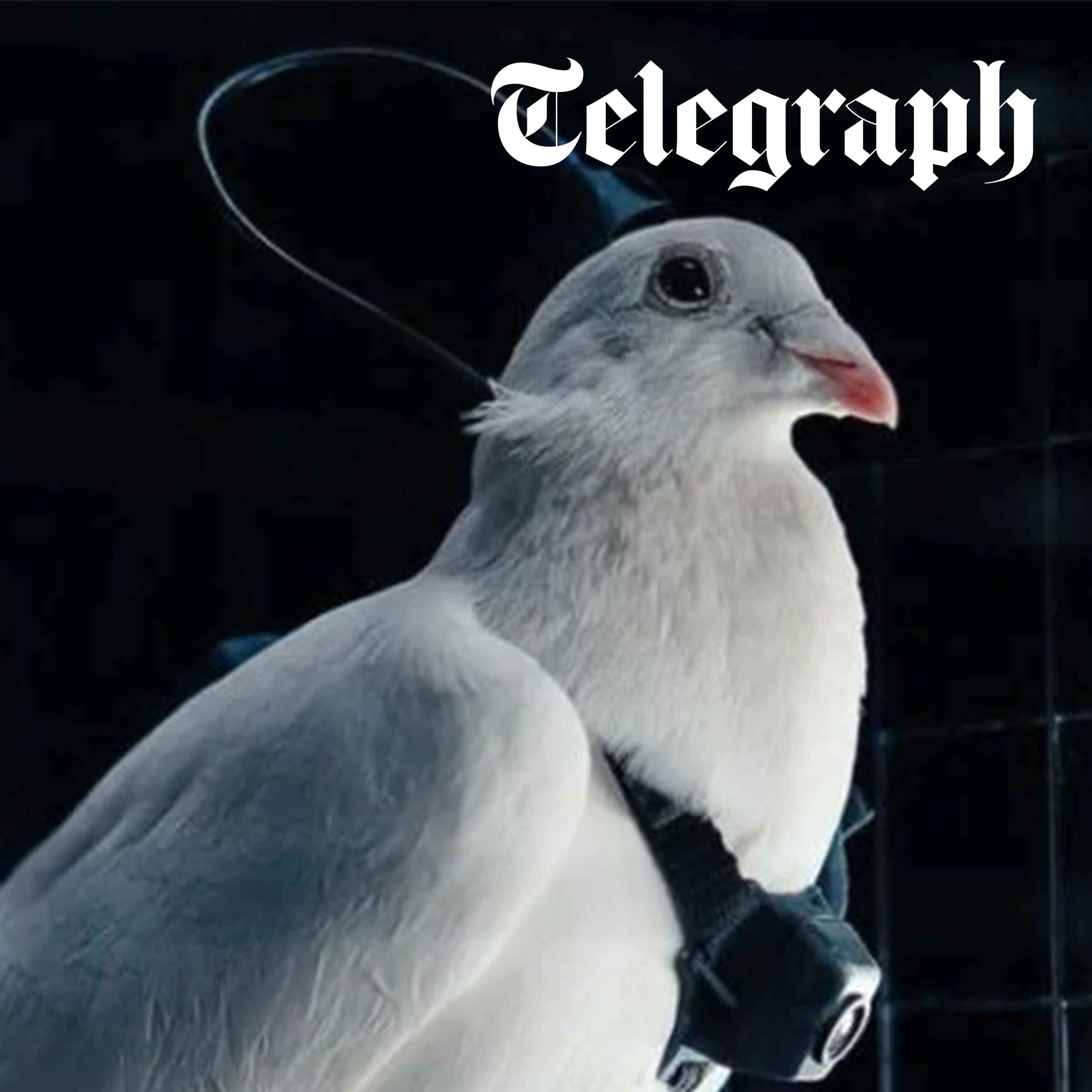
Ukraine: The Latest
Putin spends 50% of state budget on military, says intelligence service & Russia tests turning pigeons into drones
00:47:51
Loading summary
Transcript99 lines
- [00:00]
Antonia Langford
Foreign.
- [00:09]
Dom Nicholls
The longer you stay alive, the longer you can enjoy Boost Mobile's unlimited plan with a price that never goes up. So here are some tips. Do not parallel park on a cliff. If you want to enjoy an unlimited plan with a price that never goes up, do not mistake a wasp nest for a pinata. If you want to enjoy an unlimited plan with a price that never goes up. Do not microwave a hard boiled egg. If you want to enjoy an unlimited plan with the price that never goes up, stay alive and Enjoy Unlimited for $25 a month forever. With Boost Mobile, after 30 gigs, customers may experience slower speeds. Customers will pay $25 a month as long as they remain active on the Boost Mobile unlimited plan.
- [00:40]
James Kilner
Knock knock.
- [00:40]
Francis Durnley
Ooh, who's there?
- [00:41]
Antonia Langford
A Boost Mobile expert here to deliver and set up Your all new iPhone 17 Pro.
- [00:45]
Francis Durnley
Designed to be the most powerful iPhone ever.
- [00:47]
Dom Nicholls
You called that a knock knock joke?
- [00:49]
Francis Durnley
This isn't a joke.
- [00:50]
Antonia Langford
Boost Mobile really sends experts to deliver and set up your phone at home or work.
- [00:54]
James Kilner
Okay.
- [00:54]
Dom Nicholls
It's just that when people say knock knock, there's usually a joke to go with it.
- [00:57]
Antonia Langford
Like I said, this isn't a joke.
- [00:59]
Dom Nicholls
So the knock knock was just you knocking?
- [01:01]
Francis Durnley
Yeah, that's how doors work.
- [01:02]
Dom Nicholls
Get the new iPhone 17 Pro delivered.
- [01:04]
Antonia Langford
And set up by an expert wherever you are.
- [01:06]
Francis Durnley
Delivery available for select devices purchased at boostmobile.com, terms apply.
- [01:10]
Antonia Langford
Big news. Boost Mobile is now sending experts nationwide to deliver and set up customers new.
- [01:14]
Francis Durnley
Phones at home or work.
- [01:15]
Dom Nicholls
Wait, we're going on tour?
- [01:16]
Antonia Langford
Not a tour. We're delivering and setting up customers phones so it's easier to upgrade.
- [01:20]
James Kilner
Let's get in the tour bus and hit the road.
- [01:22]
Antonia Langford
No, not a tour bus. It's a regular car we use to deliver and set up customers phones at home or work.
- [01:27]
Dom Nicholls
Are you a groupie on this tour?
- [01:28]
Antonia Langford
We deliver and set up phones and it's not a tour.
- [01:31]
Dom Nicholls
Oh, you're definitely a groupie.
- [01:32]
Antonia Langford
Introducing store to door switch and get a new device with expert setup and.
- [01:36]
Francis Durnley
Delivery wherever you're at.
- [01:37]
Dom Nicholls
Delivery available for select devices purchased@boostmobile.com.
- [01:45]
Francis Durnley
I'm Francis Dernley and this is Ukraine. The latest today as Russian troops are reportedly in turmoil across the front line as they're denied access to Starlink. We return to Abu Dhabi for the latest from the ongoing trilateral peace talks. Then we hear live from Kyiv for the latest reaction and descriptions of the situation there. Before hearing the latest from the Russian press, particularly on the state of the economy. We then end with a remarkable story about how Russia might be trying to turn pigeons into drones.
- [02:16]
Dom Nicholls
Bravery takes you through the most unimaginable hardships to finally reward you with victory.
- [02:26]
Francis Durnley
Russia does not want peace auch unsere Freiheit und unsre Europischen Werther.
- [02:36]
Dom Nicholls
If I'm President, I will have that.
- [02:37]
Francis Durnley
War settled in one day.
- [02:39]
Dom Nicholls
24 hours. We are with you. Not just today or tomorrow, but for 100 years.
- [02:49]
Francis Durnley
Nobody's going to break us.
- [02:51]
James Kilner
We're strong, we're. Ukraine is.
- [02:55]
Francis Durnley
It's Thursday the 5th of February, three years and 348 days since the full scale invasion began. And today I'm joined by our associate editor of Defence, Dominic Nicholls, our Russia analyst James Kilner. And dialing in from Kyiv Telegraph foreign reporter Antonio Langford. But first, over to Dom for the latest in the military realm.
- [03:17]
Dom Nicholls
Well, thanks, Francis. Let's start in and with Russia. So Ukraine's General Staff said yesterday that its armed forces had inflicted a series of strikes on the Kapustin Yar airfield, that's in Russia's Astrakhan, or blast, throughout the course of January. Now that is a key hub for Russia's intercontinental ballistic missiles, including the Ereshnik that we've heard a lot about recently. That's the, the nuclear capable missile that has so far been fired twice, I think Dnipro and Lviv, I think just for Christmas, fired into Ukraine. Now that site is 400 kilometers east of Ukraine, right over near Kazakhstan. In a telegram post, Ukraine's General Staff said based on current information on the territory of the testing ground, part of the buildings have taken on various degrees of damage. One of the hangars was significantly damaged and part of the personnel was evacuated from the territory. No further details known about the battle damage assessment, but they did say that they'd used long range strike weapons of Ukrainian production and then nailed it down even further, saying particularly the FP5 flamingo. So we've not seen an awful lot of the Flamingo long range missiles so far or they've not been claimed by Ukraine's General Staff. So I thought that was an interesting comment there. Now it comes as Russian troops are reportedly in turmoil across the front line as they've been denied access to Starlink. This comes after those reports that Russia has been using Starlink on drones to extend the range and perhaps offer better control. You'll remember Last Friday, Ukrainian SpaceX said that they're working together to block Russian access to the Starlink service within Ukraine, using what amounted basically to a mass registration scheme that would stop unauthorized access to the Starlink satellite, Ukraine's Defence Minister Mikhail Fedorov said if you remember, he personally tweeted saying thank you to Elon Musk for stepping in. So they've come up with an approved list of users, a white list and a blacklist. And Then shortly before 3am Kyiv time this morning, Elon Musk retweeted a new guide from Ukraine's Digital Transformation Ministry for registering Starlink terminals within Ukraine. This led to a series of alarmed Russian social media posts suggesting that Starlink terminals were disconnecting en masse along the front line. Now, Sergei Flash Beskrintsov, who's the advisor to Defence Minister Mikhail Fedorov, he said the enemy at the front doesn't have a problem. The enemy has a catastrophe. Although he did also say it impacted Ukrainian users who had yet to register their Starlinks on the so called white list. He said, among our soldiers it came to light that there had been problems among those who hadn't filed their lists of private Starlinks. The process is ongoing. Now from the Russian mill blogger community, one channel said, this will hit harder than anywhere at our frontline assault groups. For example in Kupiansk. They will be deprived of any chance of connection with the wider world. Alas. Alas indeed. Then another pro Russian mill blogger said, all along the front starlinks have lain down. Now this was met with a certain amount of derision, as you might suggest from Ukrainian sources. One open source intelligence analyst called Cloud on X said, I'm still trying to wrap my head around the sheer absurdity of it. How did the self proclaimed second army of the world, the one that spends every waking hour threatening to destroy the west, become so pathetically dependent on a wi fi connection provided by a US company? It is peak irony they spend billions on propaganda about their unrivaled homegrown tech and analog free weaponry, yet their entire frontline communication seems to rely on the goodwill of of an American billionaire. It turns out you can't really fight NATO when your entire military command structure is one terms of service violation away from total silence. It's a masterclass in geopolitical clownery.
- [07:02]
Francis Durnley
We might need to steal that phrase. I think that's a good one, isn't it?
- [07:05]
Dom Nicholls
It could be. Could be used around here a few times now. Still, with those supporting Russian forces, we've not spoken about them for a while, but North Korean troops fighting under Russian command are said to be carrying out attacks along Ukraine's border areas. This comes from Ukraine's military intelligence agency, the HUA speaking Yesterday in a statement, they said that as of January this year, North Korean troops are stationed in Russia's Kursk Oblast from where they launch attacks on Ukrainian border areas. Now, we know they come under Russian command. They're fighting on the ground to eject Russian troops from Kursk Oblast after that incursion in August 2024. But they've also, we know they've come from or are operating artillery units and they are still using artillery, Both barrel and MLRs, multiple launch rocket systems. And they're said to be conducting aerial and artillery reconnaissance to adjust those strikes. Now, it comes from the HOH that comment about using adjustment. I'm guessing they are operating drones. In a statement, the HUA said a key objective of North Korea's participation in the war is mastering unmanned technologies and gaining hands on experience in modern high intensity warfare. It's thought about 6,000 of the circa 12,000 North Korean troops that were deployed to Russia have become casualties.
- [08:20]
Francis Durnley
Just one thing on this, Dom, I think there are open questions still exactly how far North Korean troops got into Ukraine, if at all. Obviously, the Ukrainians have claimed several times that there have been North Korean troops at certain points firing into Ukraine or in Ukraine itself, which for some European countries might be seen as a red line of sorts. Others have just claimed that the operations only took place in Kursk. Inside Russia, it's an open question, but if North Korean troops are actually involved in Ukraine, it has massive ramifications for the arguments that Western troops can't enter Ukraine without it being an escalation because Russia will have sent forces inside Ukraine that are from its allies. So I think it's just us always returning to that North Korean question.
- [09:02]
Dom Nicholls
Yeah, I wouldn't bother trying to fight Russia with logic. But yeah, you make a semi reasonable point now that inside Ukraine, over 50,000 households are without power in the city Zaporizhzhia today after overnight strikes. This comes from Governor Ivan Fedorov. He said Russia had been targeting Zaporizhzhia all and the region, the wide region, all day long yesterday throughout the rest of the country yesterday, Ukraine's air defenses brought down 156 of 183 Russian drones. Kyiv was hit badly. There were a number of injuries. I've not seen any reports of deaths, but a number of injuries from building debris falling on people blasted by drone strikes on buildings. That comes from Mayor Vitali Klitschko. And the strikes there in Kyiv occurred just ahead of a visit today by Polish Prime Minister Donald Tusk. Elsewhere in the country, the main rail Station in Sumy was also badly hit. Russia does seem to be going for transportation hubs a lot more recently. Ukrainian officials say that one of the invincibility trains, those are these points as in hardened shelters and also train carriages that have been built up and used to provide warmth and basic services to civilians. So one of those was also hit in Sumy. Across the country, 13 people killed, 39 injured. We are told today not a lot of movement as usual across the front line. Let's go and have a look in the Donbass though. A report from the Institute for the Study of War, the US based think tank looking at the Konstantinivka and Duke area. That's the bottom, the southern end of the fortress belt. They say they've noticed an increase in Russian strikes, mainly drone strikes there at intermediate depths. So not the immediate front line and not the bound the kilometre or 2,5 km immediately behind that, but the area behind that from where the logistics and fuel supplies and the troop concentrations may be. So in that area that's where they're saying there's a concentration of Russian fire. The commander of a Ukrainian brigade operating in the Konstantinivka area said yesterday that Russian forces have recently focused on hitting Ukrainian logistics rather than conducting combat operations. And at the front in part due to freezing temperatures, but also as they've seen these kind of tactics working around Pokrovsk and also in Zaporizhzhia oblast. Now this is said to be forcing Ukrainian forces to rely more heavily on ground drones to supply troops and positions within Konstantinivka. The commanders said that they'd had to double the number of such operations just in January alone. They say Russian first person view drones are being used for surveillance, also strike operations but, but they're also remotely mining routes. So we've seen images of drones dropping anti tank mines on roads and they're also used as sleeper drones. So they will park up if you like, they will sit on the road waiting to either see or hear or be queued by another asset onto passing Ukrainian vehicles or personnel from which at which point they will leap off the ground or leap off from their hiding place and go and attack them. So called drone ambushes. We have seen a bit of footage, I've seen some just in the last couple of days actually of Ukrainian soldiers halting a vehicle move, getting out the vehicle and shooting sort of 50 or 60 yards ahead to hit these things that are on the ground, on the road ahead and haven't seen them yet. Now the Ukrainian commander reported that it's becoming Increasingly difficult to rotate Ukrainian drone operators in and out of Konstantinivka because Russian forces seem to be prioritizing, hitting the drone operators from Ukraine now continuing the isw. They say Russian forces are likely trying to replicate a new campaign design that, as I say, Russia was successfully employing in Pokrov and Zaporizhzhia area. So they've been striking various targets in the near rear in areas in a distance of sort of 25 to 100 kilometers. That is quite a piece of real estate. But it obviously really impacts what you can then do or resupply or reinforce the front line. Now, these targets include roads, railways, bridges, et cetera, that support Ukrainian, as the parlance goes, G locks, the ground line of communication, roads and railways, that kind of thing, ahead of subsequent intensified ground operations. It sort of shapes the environment, if you like. Russian forces are also targeting Ukrainian drone operators to try and create gaps in the so called wall of drones, the drone wall that Ukraine is increasingly using because they're unable to fill it with people. Now, Russian forces spent months conducting these kind of campaigns to set the conditions for offensive operations around Pokros and in Zaporizhzhia Oblast, which is being seen as one of the reasons why they've established a better rate of advance in those areas, although it's all very relative. Now all that comes as the former deputy head of Ukraine's military intelligence, the HUR, again Major General Ilya Pavlenko. He says Russia is reorganizing the 87,000 strong unmanned systems forces, I.e. drones, to improve decision making and alleviate fragmentation between forces. They say now this new force is going to be separate from the, the Rubicon that we've spoken of before. The formal title is the, the center for Advanced Unmanned Technologies. Rubicon's thought to be about 5,000 people strong. We think it's the kind of experimental, very innovative and well resourced area of Russian drone operations. So this new, well, a new grouping, it's still there. The people are already there, 87,000. That's a big old drone force, but that's going to be separate from the Rubicon. Now then a couple more for me. Russia is said to have spent half of its state budget on its military last year, according to analysis by German's foreign intelligence agency, the BND. They also found that Russia's real defense spending was 66% higher than had been officially declared, with expenditure rising sharply every year since the start of the full scale invasion. Now this comes from our colleague Jorg Lyken, who's a Berlin based journalist, a writer for the German Review, a weekly newsletter on German current affairs. So writing for us today, Jorg says that according to the analysis, the Kremlin's true military outlay was approximately 250 billion Euro in 2025, equivalent to roughly half of total state spending and about 10% of the country's GDP. That is up from about 6% of Russia's GDP spent on defence at the start of the full scale invasion. Now, the BND found that much of the additional spending, including on construction projects, military IT stuff, and all that kind of social benefits for armed forces personnel, was hidden elsewhere in the state budget. Some interesting stats there. Just last one for me, Francis. The Ukraine's Foreign Ministry this Morning said that 157 Ukrainians have returned home from Russian captivity. They say service members of the armed forces, the National Guard and the State Border Guard Service have been returned. 139 of them had been held captive since 2022. The Foreign Ministry says the youngest freed Ukrainian defender is 23 years old. He was captured aged 19 while defending Mariupol and was illegally sentenced by a Russian court to life imprisonment. The oldest offender released today is 63, an equivalent number, the same number, 157Russian prisoners of war, was also returned by Ukraine to Russia. And that's us up to date. Francis.
- [16:04]
Francis Durnley
Well, thanks very much, Tom. Let's head to the Middle east next then for the latest on those talks in Abu Dhabi between the us, Ukraine and Russia. We heard little after the first day yesterday, and our understanding is that the second day, so today concluded within the past couple of hours. No indication yet of how they've gone. A spokesperson said details would be provided soon. The only concrete result of the first day is that other prisoner exchange which we were just talking about. Whether it's exactly connected, we don't know, but it does seem to be something of a step forward because Zelenskyy himself called it a significant result. And it comes a week after Zelenskyy said Russia had halted those exchanges because they said, quote, they do not feel that it gives them anything. POWs are a huge story in Ukraine. I remember when we were in Kyiv a couple of years ago, the largest scale protests we'd ever seen in Ukraine were around POWs that were still being held in captivity that had been captured in the battle of Mariupol. And so this is a domestic issue in Ukraine as much as it is, of course, an issue relating to the military. Now, while these talks are ongoing in Abu Dhabi, the bombardments on Ukraine's population continue. And I'm very grateful to Joshua for sending in the Centre for Information Resilience Analysis for their data from 2025. That underscore that despite all of the US initiatives regarding peace talks in that year, Russia launched over 32,000 drones between 1 January and 28 August, more than double the total recorded for the entire war up until that point. So it is simply a myth that Moscow has reduced its attacks during Trump's attempts to get a deal across the line. In fact, on frenetic periods of diplomatic activity such as we're seeing now, there are often more attacks as he seeks to increase pressure. Now that is the context in which the Polish Prime Minister Donald Tusk arrived in Kyiv today, hot on the heels of NATO Secretary General Mark Ritter, which Don was talking about earlier in the week. At this critical time, Ukraine cannot be left all alone, he said ahead of the visit. Now, if you're listening to this in Poland, I'd be interested to know more about how Warsaw has refused to send any peacekeeping forces to Ukraine in the event of a ceasefire. Has this been talked about very much so far? It's only London and Paris, of course, that has agreed to that principle. But given the size of Poland's army and the country's geography, one has to wonder whether in the long term, that is a sustainable position. But I want to dedicate a little bit more time today on the New START treaty, signed by Russia and the US in 2010 and set to expire today. The Russian Foreign Ministry said the US has ignored its proposal to extend the arms control agreement by another 12 months, calling Washington's response regrettable. Essentially, our ideas are being deliberately ignored. The Kremlin said this US Approach appears mistaken and regrettable. Russia will act responsibly and prudently, but remains prepared to take decisive military technical countermeasures to mitigate potential additional threats to national security. Now, just as a reminder, this is the same nuclear treaty that Obama posted about on X a few days ago. Thank you to all of the listeners in the US who offered their perspective on the perception of Obama regarding foreign policy. Jeffrey, Michael, Doug, Robin, Stephen, Roy, many more. Very, very interesting to hear your perspective and it is a topic that we will return to. But staying on this President Trump has not yet made any announcements regarding the expiration date of New start. A White House official told the Kyiv Independent yesterday that Trump will decide the path on nuclear arms control, which he will clarify on his own timeline. He has indicated that he would like to keep limits on nuclear weapons and involve China in arms control talks. Now, US Secretary of State Marco Rubio, speaking afterwards, said that there would also be a statement later, so there might be some development in this space. It's worth reflecting on the leverage that this situation gives Putin, and it provides yet another excuse for him being able to argue that a good dialogue between the two countries is essential. Russia currently possesses the largest nuclear arsenal in the world, as we've talked about before. According to estimates from the Stockholm International Peace research institute, in 2024, the US has 3,708 warheads, while Russia has 4,380, excluding retired weapons. China, meanwhile, has doubled the size of its nuclear arsenal from 300 to 600 over the past five years. My dad always says you can't expect to sit at the table if you haven't got any cutlery. And as cutlery goes, nuclear weapons continue to be the shiniest in town, unfortunately. But someone who we don't expect to be invited back to the White House for dinner anytime soon is Trump's former special envoy, Keith Kellogg, widely considered one of the most pro Ukrainian voices in the administration, but who left the government at the end of last year without much fanfare, although it was speculated to be in part because of the attitude shown by Trump towards the Russians. Well, Kellogg's just given an interview to our friends at the Kyiv Independent, where he described his move away as having nothing to do with any friction, but because he wanted to have more freedom to speak directly about the war. I wanted to spend more time on the outside where I could be more open and free to talk about Ukraine than when I was inside the government. None of the claims around tension are true. It was time to move and time to go on. There's absolutely no truth to any type of friction or imbalance at all. Now, that might well be his argument, but I'm not sure the historical record will quite validate that view. I hope you kept a diary, Keith. Now, just lastly, because James is going to give us a more detailed update on the Russian economy shortly. The EU's sanctions envoy, David O', Sullivan, has given a rare interview to the Guardian where he said Western sanctions are having a significant impact on the Russian economy. I'm fairly bullish, he said. I think that the sanctions have really had a significant impact. We may be in the course of 2026, coming to a point where the whole thing becomes unsustainable because so much of the economy has been distorted by so much building up of the war economy at the expense of the civil economy. I think defying the laws of economic gravity can only go on for so long. Now we bear the scars of years of pundits getting over excited about the imminent collapse of the Russian economy, but I think it's worth us remembering that quote over the months ahead. So that's where we are in terms of the updates. But let's go now over to Kyiv and Antonia there. Perhaps you can give us a flavour of the situation there at the moment.
- [23:13]
Antonia Langford
Yeah, thanks for having me on. We've certainly seen some very cold and very dark days here in Kyiv. I'm actually in a friend's apartment right now. My entire district is in blackout. That's been fairly frequent. Russia's attacks early on Tuesday, which were some of the biggest strikes on the energy system in 2026, came just hours after DTEC, which is Ukraine's largest private energy company, announced that it had somewhat stabilized the energy situation after obviously some very difficult weeks. But now people are back to having sort of two or three hours of access to electricity and heat per day. There are huge water shortages. Luckily, the temperature today, I will say is a bit more forgiving at minus 6 degrees, but it's being minus 20 degrees or even colder. Very little electricity, very little heat. And one official has said as well that Kyiv will probably only see around four to six hours of electricity per day this month, since the Kyiv thermal power plant is said to have been completely obliterated in the strikes early on Tuesday.
- [24:11]
Francis Durnley
Well, let's hope we're not wasting too much of that valuable power. Antonia, thank you for those reflections. I have to also ask, just on the reaction among Ukrainians to the peace talks going on at the moment, is this a subject of conversation?
- [24:23]
Antonia Langford
I wouldn't say it's really a subject of conversation. Of the people I've spoken to about the current round of talks, frankly, many were not aware that they are happening quite similar in a way to Trump's announcement of the so called energy truce, which, you know, was obviously done with a lot of fanfare, but here I found people hadn't even heard that it was supposed to be happening. I think the kind of consensus among Ukrainian officials that at least Russia is taking the current round of talks somewhat more seriously than before, has trickled down a little bit and maybe there's a tiny bit more optimism about that. But in general among people I've spoken to, the perception would still very much be that Russia has no interest or of course incentive to strike a peace deal. And I did speak earlier today as well to one American Foreign Legion soldier who said that at this stage, he sees it as a kind of mere performance and thinks that of the three parties involved, Ukraine, the US and Russia, only Ukraine is being sincere in its approach. So you can make of that what you will.
- [25:20]
Dom Nicholls
Antonio. On the strikes on Kyiv, there was a rare outbreak of domestic politics, I suppose you might call it, a couple of weeks ago when President Zelensky specifically criticized the authorities in Kyiv and Mayor Vitaly Klitschko personally, saying that they weren't ready or they hadn't prepared enough or for whatever reason. We never quite bottomed out exactly what his criticism was, but it was slightly rare to see this sort of outbreak of partisan behavior, if you like. They're obviously from different political parties. But it struck us as slightly odd. I mean, has that rumbled on? Is there still any ill feeling? Was that at an unnecessary intervention, do you think? How's it got? Are people still talking about that?
- [26:00]
Antonia Langford
I don't think it was unnecessary. It's actually a sentiment I've heard reflected quite widely and particularly, actually, among relatives of particularly elderly people who are stranded at home, who I was speaking to last week. There is this widespread kind of idea that the authorities were not sufficiently prepared for Russia's kind of bombardments, which were obviously going to happen and have been happening for a long time now on the energy system. So I think that kind of infighting was not particularly unexpected for people here, and certainly it's kind of damaged morale to a certain extent when unity is particularly important.
- [26:34]
Dom Nicholls
Just a follow, if I may. Just a quick follow up. I mean, does this in any way burnish Klitschko's political credentials? Is it helpful at all for him to just remind people that he and President Zelensky aren't always on the same page?
- [26:46]
Antonia Langford
Yeah, I mean, I think people are aware of that, that there is occasionally enmity between the two of them. But I would say people's assumption is that it goes beyond just Klitschko.
- [26:55]
Francis Durnley
Well, thank you very much, Antonia. We're going to come back to you shortly for a story that you've been working on, on pigeons. So I can't wait to get into this, but just let's. Because we're focused a little bit on Abu Dhabi at the moment. Going to bring in James now, James, our Russia analyst. I know that you've been working through the Russian reactions to what's going on at the moment in Abu Dhabi. I mean, are Moscow talking about this? Very much. James, is this a core focus for them? Very interested to hear what they're saying.
- [27:20]
James Kilner
Well, there has been no official reaction. Talks have only just wrapped up. We got some initial early reaction from Kremlin propaganda media, the usual suspects who are really saying Wyckoff has actually gone up on X and posted a sort of upbeat assessment of what happened, although no details. The Kremlin media is basically playing this down. They're saying that despite Wyckoff coming out next, the only real progresses on this prisoner exchange, which I think is actually quite significant. It's the first time in five months that does take some sort of trust, some sort of negotiations behind the scenes. As you know, the Russian lead negotiator is the head of the Foreign Intelligence Service, so they're used to running these back channels and prison exchanges, etc. So I think. I think that is genuine progress. And the Russian media is talking about that as progress. They're saying this is important, this is the result of careful negotiations, et cetera. It's the tactic. We've seen the whole time. They have deferred. They have literally said, this is about Wyckoff. Ignore the jubilation. It's the US trumpeting yet again about major progress if there is a breakthrough. We haven't seen it yet and it will be completely unexpected. Those are quotes from the Russian media.
- [28:34]
Francis Durnley
Interesting. So they're not getting their hopes up either, are they? But let's go now to the subject that I know you want to give a particular emphasis to, James, which is the economic situation. I think it's been a couple of weeks since we've. We've done a bit of a deep dive on this. I'm looking forward to hearing your perspective on it.
- [28:46]
James Kilner
There was a story which came out of Venerusty, one of the Russian newspapers, a bit more cyber than some of the red tops in Moscow. And he's talking about how the federal budget in January has received half the amount this year as it did last year from oil and gas, the main driver of the federal budget. This is very significant. We know that Putin basically funds his war in Ukraine from oil and gas reserves. This comes the same sort of time that India are now saying that they're on the brink of really cutting back on Russian oil imports. India became the largest importer of Russian oil after the Ukraine war started. So that is majorly significant. Fairly hot off the press. That news came out this morning. At the same time, the National Welfare fund, this is the Russia Sovereign Welfare Fund, sort of. It sits adjacent to the federal budget. It is talking about stopping financing projects altogether. This is a major blow to the Kremlin if it's true, this is being reported in the media. Again, no official announcement. The National Welfare fund does fund major infrastructure projects, energy projects, bails out corporations, tops up federal budgets, et cetera, et cetera. It basically frees up the federal budget to fund the war in Ukraine. And they're now saying that it may have to stop financing projects altogether. That is still to be fully announced, but it's been talked about in the Russian media at the moment. And this would definitely impact Russia's ability to prosecute its war in Ukraine. Pro Kremlin bankers are now openly talking about a banking crisis. 11% of corporate loans now in Russia are deemed problematic. 6% of retail loans are problematic. This is a huge, huge amount of, you know, we're not talking about defaults or certainly not defaults from the major banks, but the central bank and the Kremlin is getting increasingly worried about the stability of the Russian banking sector. This comes at the same time we've seen the first top 10 Russian bank declaring a net loss. This was in Q4 last year. That was specifically, they said, because its loan portfolio has gone so much worse. There's a bank called Moscow Credit bank declaring a Q4 or loss. It's the first time that's happened, well, since the war in Ukraine started. So definitely for listeners to watch out for. We've had notifications that regional government debt in Russia is at a 15 year high. We know that the regions have had to spend a lot of money recruiting soldiers with massive bonuses to the war in Ukraine. They've been very important in that recruitment drive, et cetera. 15 year high. Again, refer back to national welfare funds saying that they're going to struggle to finance all the projects that they had been financing. And one of them was topping up these regional budgets. There's a systematic problem here. Car sales down 9.5%. Even Putin admitting this week that the economy slowing to around 1% growth. If you speak to a real economist, they will tell you that Russia outside the military economy may well be tipping into a recession. So even Putin is having to talk about major economic slowdown. Got Russian diplomats doing deals in Afghanistan now trying to recruit migrant workers at top of its workforce which has shrunk so much because of the war in Ukraine, etc. Etc. Remarkable story from Gazprom. So this is a Gazprom press release saying that they've now successfully tested flying passenger planes using old cooking oil from Russia's version of McDonald's for Kusna E Toshna. Hundreds of Thousands of tons of cooking oil which it disguised every year. They've now converted this into fuel for passenger planes. So clearly a budget concern there.
- [32:30]
Francis Durnley
Well, thanks very much for that overview. Diplomacy next then. James, I know you were talking about some of your favorite countries last week and Russia's efforts there, but I see that it's Africa this time that's caught your eye.
- [32:41]
James Kilner
Yeah, it's a really quick couple of points on this one. Francis Putin turning his cabinet meeting this week that he wanted to do more military deals in Africa. Quite striking. We know that Putin's very keen on propping up his property states in Africa. He sponsored a few coups there. He's particularly keen on West Africa. He's actually told his cabinet to build more military ties to Africa. So this comes, if you remember, a week after we saw the Syrian leader in Moscow and a lot of discussion about Russia really permanently being able to hold onto its military bases on this, on the Mediterranean case, which they used to project influence in Africa. So I think those two issues are linked. The other item I wanted to just flag up France is was Israel's foreign minister has been in Azerbaijan and Kazakhstan. So both former Soviet states, Azerbaijan and South Caucasus, Kazakhstan in Central Asia. Azerbaijan is a well known ally of Israel, sells oil to Israel. It also borders Iran. So Israel's foreign minister was in Azerbaijan sort of a few days after the US really started to get its armada together to sail towards Iran and threaten Iran. Ostensibly he was there to promote relations with Azerbaijan. I think really behind the scenes. It's trying to gauge whether sort of Azerbaijan's reaction to any military intervention in Iran, Israeli US Military intervention in Iran. He then went on to Kazakhstan. First Israeli foreign minister to Visit Kazakhstan in 16 years to ostensibly again to improve bilateral relations. My hunch is very much that this was to gauge sentiment in Central Asia, in Central Asia's biggest economy, for potential Iran military action. Iran does have ties, economic ties, political ties with Central Asia as well as Azerbaijan. Kazakhstan has signed up to Trump's Abraham's Accords, which are all about normalizing ties between Israel and Middle east and widening out and seeing more Islamic countries, Muslim countries. Kazakhstan has been spearheading that. And the wider point I'm trying to make here is that Kazakhstan, to a lesser extent Azerbaijan, they feel more comfortable talking to Israel, especially around US Action in the Middle East. Since this war in Ukraine, they've drifted further and further towards the west and the US sphere of influence and further away from Moscow. Links with Moscow are more fractured. It was only 13 months ago that Iran and the Russia was celebrating a strengthened strategic deal. And we've seen that sort of come to nothing. And here we have Israel going into Russia's backyard and Sikh Kremlin's backyard and holding talks with these countries about how they feel about US Israel, action towards what was once Moscow's strongest ally.
- [35:39]
Dom Nicholls
Thanks, James. Might be a little left field. Epstein, how's that being reflected in the, in the Russian press? It's obviously doing all the rounds here. I noticed Trump has been very quiet on it, apart from shouting down a young female reporter from CNN in the White House yesterday when she asked a question or tried to ask a question, a question about Epstein. Always a good look when you're talking about this sort of subject matter to start shouting at young female reporters. Nothing to see here. But how's it been reflected in the, in the Russian press?
- [36:04]
James Kilner
Well, it runs daily. They poke fun at the, the Western elite. It very much speaks to the Kremlin's point about this decadent, useless, self interested Western elite which are leading their countries in the, in the wrong direction. Whereas, you know, the Russian traditional societies, what they're trying to promote, they are very careful to steer clear away from references to Trump. There's a lot of references to Bill Clinton, Bill Gates, et cetera. There's been no real mention of the references. There are several hundred references or a thousand references to Putin in the Epstein files. I mean it was a very, they're very tangential references to Putin. It's more like Epstein trying to arrange a meeting with Putin and not getting, seemingly not getting very far doing that. That has not been covered in the Russian press. It's just, you know, enjoying the meltdown of some of these hyper Western medias.
- [36:59]
Francis Durnley
Well, James, thanks so much for your time and of course we'll come back to you for your final thoughts shortly. But a great story on which to end a coup, you might say. This is one that Antonio has been working on for the Telegraph and of course we'll link to it in the show notes. And I almost don't want to give the game away because the headline is so, so good. So perhaps you can tell us about this, Antonia.
- [37:21]
Antonia Langford
Yeah, so this is a particularly wacky story. Scientists from a Russian startup have been developing pigeon bio drones wittily codenamed PJN1, which they posit can actually outperform conventional first person view drones. The setup is a bit less sleek than you might imagine. So a regular pigeon has electrodes inserted through its skull which are linked to a head mounted stimulator which allows operators to supposedly steer it mid flight. And the little pigeon cyborg then wears a solar powered backpack which carries a controller preloaded with a flight path, let's say, hypothetically guiding it towards a military base or maybe a particularly hairy stretch of the front line. And in theory, the handler can then guide the pigeon remotely and scout its surroundings using a camera, which is strapped rather conspicuously, I would say, to its chest.
- [38:11]
Francis Durnley
Does it work? I mean, they've been doing these experiments and it's been a renounce. I mean, I'm guessing, if we're hearing about it, that they're keen to tell the world, but it just seems utterly bizarre, this.
- [38:21]
Antonia Langford
Yeah. So it should be said that none of the science itself has been independently verified and we have no indication that any of it could actually work. Nary Group, the company that's developing the technology, has made some other fairly fancy fanciful claims, including that it has programmed a rat to answer questions on a keyboard using AI. So it's definitely worth retaining a bit of healthy cynicism, but I think it still says something. The NHERI Group has said that, in fact, it's vehemently denied that any of its technology could be put to military use. And it told the Telegraph yesterday that it makes every effort to ensure that these cyborgs are only used for civilian purposes. But their public advertising of the product says they could be used to operate in restricted airspace. And experts have made the admittedly fairly obvious point that they could easily be used for covert surveillance, or obviously, in theory, to even transmit dangerous diseases into enemy territory.
- [39:14]
Francis Durnley
Well, thanks, Antonia. I highly recommend people read the article which we'll link to, As I say, because the imagery is extraordinary. Certainly if you saw this pigeon flying through the air, I think you'd certainly notice him. I was going to ask Donworth, were there still pigeons in the army? Army in your time, were they still sort of. Was there a division of pigeons that were in coops?
- [39:34]
Dom Nicholls
Pigeons? I don't think so, no. We had a lot of dogs, a lot of horses.
- [39:41]
Antonia Langford
Yeah.
- [39:41]
Dom Nicholls
No, not to. No, not come across pigeons.
- [39:43]
Francis Durnley
I think I'm right in saying the first we knew in Britain that Arnhem Bridge had been captured, or at least half of Arnhem Bridge was from a pigeon. I know you weren't there. I was looking at this, if you were going to say, yeah, I remember it well.
- [39:56]
Dom Nicholls
No, I mean, it's amazing. One of the most amazing stories. There was a German politician who once said that, you know, it's quite a high bar, but he Said the worst thing the German army did in the Second World War was winning the battle for Arnhem. I say quite a high bar compared to some of the other things the German army got up to. But he said, you know, if we'd got across that third bridge, then it would have been a race across the North German plain and a battle for Berlin, if not peace by the end of 1944. But all because of the snag. Just snagged a German patrol, almost a section. Just sort of six or eight people in the, in the forest. One Para, as they were piling through the woods, just snapped. And then it all got, all got amazing. Bridge Too Far was on the, on the telly last weekend. I watched it again.
- [40:38]
Francis Durnley
It's a great film. It is, it's a great. And actually pretty historically accurate as well. And a lot of them, a lot of them aren't. I was at the 71st anniversary of ARM. I spoke about this on the podcast before, way back in 2015, and I remember speaking to a gentleman who trained for months obviously to be dropped into Oosterbeck, which is the nearby village, and as he left the plane, he was hit by a bullet. So his war ended as soon as it began because he landed and he was captured. But yeah, he's still alive and he was still dancing 80 odd years later. So extraordinary. But it turns out, folks, that we actually have a shared pigeon passion here on Ukraine. The latest, because Adli shared an article yesterday. Do you want to guess at home the last time a foreign correspondent filed from a war zone via a carrier pigeon? I'm doing a pause there so people can be talking amongst themselves. It was in 1979. Alan Cowell, his name was, and I pulled up the information. He said, I worked for Reuters before embarking on a career as a foreign correspondent in the run up to the election in 1980 that brought Robert Mugabe to power. I was part of the coverage of the ceasefire in Zimbabwe's seven year bush war that preceded the vote in late 79. Two colleagues and I were deployed in a Land Rover to accompany Special Forces who under the terms of a ceasefire preceding the elections and independence, set up at an assembly point which hundreds of Soviet armed guerrilla fighters had fought for. It was in the remote Savannah and Scrub. And this was an era long before satellite phones, cell phones, smartphones, or indeed any phones in this far flung spot. There were no communications available to the outside world. But we had a lucky break. A friendly editor at the Bulawayo Chronicle secured for us a wicker crate of 10 carrier pigeons trained to fly back to their home loft in the city. From there, our messages would be sent by runner to the Chronicles newsroom and transmitted to the Reuters bureau in the capital for onward telexing to Johannesburg and finally to the Reuters headquarters in London. We'll link to that article as well. Just so much to say about pigeons. We could go on for hours. When the flu is keeping you up.
- [42:51]
James Kilner
At night, don't try to tough it out. Knock out your flu symptoms with NYQUIL Intense Flu.
- [42:56]
Francis Durnley
You got this. It provides powerful relief of your flu symptoms so you can sleep well through the night.
- [43:03]
James Kilner
NYQUIL Intense Flu the nighttime Sniffling, aching, aching fever.
- [43:07]
Francis Durnley
Best sleep with a flu medicine. Use as directed. Keep out of reach of children. Hey listeners, meet Russell.
- [43:13]
Antonia Langford
Hey.
- [43:13]
Dom Nicholls
Russell just launched a fitness app and he needed to get the word out.
- [43:16]
Francis Durnley
To busy professionals looking to stay fit.
- [43:19]
Dom Nicholls
So I turned to acast. I used their Smart Recommendations feature to easily find shows that talk about health and fitness. Booking sponsorships through their platform was a breeze. And just like that, my app was.
- [43:29]
James Kilner
In their ears during their morning run.
- [43:32]
Francis Durnley
Sounds like a smart move, right? Russell, how's business looking now?
- [43:34]
Dom Nicholls
Sweat is pouring and so are the installs.
- [43:37]
Francis Durnley
Spread the word about your business with podcast ads on Acast. Start today at go.acast.com advertise to our final, final thoughts now. Don, where do you want to leave listeners today?
- [43:53]
Dom Nicholls
I'm keeping an eye on Abu Dhabi. More so the reaction from it, because if nothing comes out of it, then what's the world going to say? What's Donald Trump going to say? What's the reaction going to be that no one's interested in peace? Well, we know Ukraine is very interested in peace. So what's the takeaway if people say, wait, who's not interested in peace then? Or is Russia going to try and put this on Ukraine and say that they still wouldn't give up any of the territory that they are supposed to under the Anchorage format? I just think it's going to be a very interesting reaction. We can't just go, oh, that was nice few days of chit chat and they're going to meet again at some point in the future. But yeah, we had a couple of nice days in Abu Dhabi. There is going to be a reaction and I can't see how in the absence of anything tangible quite how Donald Trump is going to say that these were meaningful talks if Russia hasn't offered anything in the way of concession.
- [44:43]
Francis Durnley
Well, thanks, Dom. We reported how the Washington Post was rumored to be gutting its foreign desk. Of course, we were saying that would be a tragedy not just for Ukraine coverage, but for global affairs coverage generally, given the importance of, importance of the Post. And yesterday that came to pass. So people were laid off at the Post, including Lizzie Johnson, Ukraine correspondent. And she tweeted afterwards, I was just laid off in the middle of a war zone. I have no words. I'm devastated. And another person was commenting on X that the paper's now laid off its Asia editor, its New Delhi bureau chief, its Sydney bureau chief, its Cairo bureau chief, the entire Middle east reporting team, China correspondence, Iran correspondence, Turkey correspondence, and many more. The world is becoming less America centric by the minute while the US is becoming more America centric than ever. What a perfect encapsulation of where we have arrived. As I. It's terrible for journalism and I'd argue for American prestige too. And our hearts go out to all of those who've been laid off. Our infinite respect and thanks to all of you in Ukraine in particular who have worked there for so long and who we've quoted on this podcast over the years. We hope we'll be able to continue quoting you in the months ahead. But let's go to our guests now. James, where would you like to leave listeners?
- [46:04]
James Kilner
Well, I didn't know about the Washington Post, so thanks for telling us about that, Frances. I'm friends with Robyn Dixon, the Washington Post Russia bureau chief. She lives in Riga. So I'll see you soon, See how she is and some of the other crew as well. It's terrible when that happens. Absolutely terrible. We all suffer, like you say. Through my 25 year career I've seen this sort of go on rote. It's like, you know, it happens. It's very cyclical process and, and it's always so it's always going in the wrong direction. But so, so that's my first observation and a sad one to Dom's point, about these Abu Dhabi peace talks or so called peace talks. I will be looking at Russian reaction across the newspapers. I'm not expecting anything. They did dwell on it, like I said, in a rather negative way. And they were very strong yesterday in saying that they now expected the entire world, not just Ukraine and the US to accept that Donbass would be Russian. And I think that is actually slightly moving the posts. I mean, I think they're particularly aiming that comment at the Europeans. It was leaked in the, in the Russian media. I don't know whether it's across in the British media or not. But Macron sent his top diplomatic advisor to the Kremlin on Tuesday to have talks with Putin's aides. Get in on the show. So you know there is stuff happening. I think the Kremlin angles sides become more entrenched, but we'll see.
- [47:39]
Francis Durnley
Antonia, where would you like to leave listeners?
- [47:41]
Antonia Langford
I guess I'm just looking out of my window for inspiration and it's getting dark here and I'm watching people clambering up the hill with no street lights, and I'm looking at buildings with no lights and I'm listening to this roar of generators that are powering all of the cafes and occasionally cutting out. It's very startling that even in these unlivable conditions, polling has showed this week that Ukrainians, a majority of Ukrainians, still categorically reject accepting any of Moscow's maximalist demands on territory in exchange for security guarantees. And I think that's a really exceptional and inspiring thing.
- [48:19]
Francis Durnley
Ukraine the Latest is an original podcast from the Telegraph created by David Knowles to support our work and stay on top of all of our Ukraine news, news, analysis and dispatches from the ground. Please subscribe to the Telegraph. You can get one month free, then two months for just one pound at www.telegraph.co.uk UkraineTest deploying cutting edge technology, we also release Ukrainian and Russian versions of this podcast. These translations retain our voices and delivery so that it can reach listeners in every region of Ukraine and those parts of Eastern Europe where Russian is still widely spoken. Links to those can be found in the podcast description to this episode. You can also now sign up to the New Ukraine, the latest weekly newsletter. Each week Dom Nichols and I answer your questions, provide recommended reading and give exclusive analysis and behind the scenes insights plus maps of the front lines and diagrams of weapons to complement our daily reporting. It's free for everyone, including non subscribers. You can find the link to sign up in the descriptions for this episode. We regularly have a Ukraine Live blog on our website where you can follow updates as they come in throughout the day, including insights from regular contributors to this podcast. We also do the same for other breaking international stories. If you appreciate our work, please consider following Ukraine the latest on your preferred podcast app and leave us a review as it really helps others find the show. Please also share it with those who may not be aware we exist. You can listen to this conversation live at 1pm London time each weekday on X Spaces. Follow the Telegraph so that you don't miss it. You can also get in touch directly to ask questions or give comments by emailing ukrainepodelegraph.co.uk we continue to read every message. You can also contact us directly on X. You'll find our handles in the description for this episode. As ever, we're especially interested to hear where you're listening from around the world. The latest was Today, produced by Phil Atkins. Executive producers are Francis Durnley, Louisa Wells and David Knowles. My name is David Knowles. Thank you all for listening.
- [50:30]
Antonia Langford
Goodbye.
- [50:40]
Francis Durnley
This is Paige desorbo from Giggly Squad. Boost Mobile gives you the same network coverage, speed and service you're used to, just at a more affordable price. Why pay more if you don't have to? Offering reliable nationwide coverage backed by a 30 day money back guarantee. Love your service or get your money back, no questions asked.
- [51:00]
Antonia Langford
Visit your nearest Boost Mobile store or.
- [51:02]
Francis Durnley
Head to boostmobile.com to learn more. After 30 gigabytes, customers may experience slower speeds. Customers who cancel within 30 days of activation will have Boost service fees refunded, activation fees if applicable, and phone payments will not be refunded. Hey listeners, Meet Russell. Hey, Russell just launched a fitness app.
- [51:23]
Dom Nicholls
And he needed to get the word.
- [51:24]
Francis Durnley
Out to busy professionals looking to stay fit.
- [51:27]
Dom Nicholls
So I turned to acast. I used their Smart Recommended Recommendations feature to easily find shows that talk about health and fitness. Booking sponsorships through their platform was a breeze, and just like that, my app.
- [51:37]
James Kilner
Was in their ears during their morning run.
- [51:39]
Francis Durnley
Sounds like a smart move, Russell. How's business looking now?
- [51:42]
Dom Nicholls
Sweat is pouring and so are the installs.
- [51:45]
Francis Durnley
Spread the word about your business with podcast ads on Acast. Start today at go.acast.com advertise.