← Ukraine: The Latest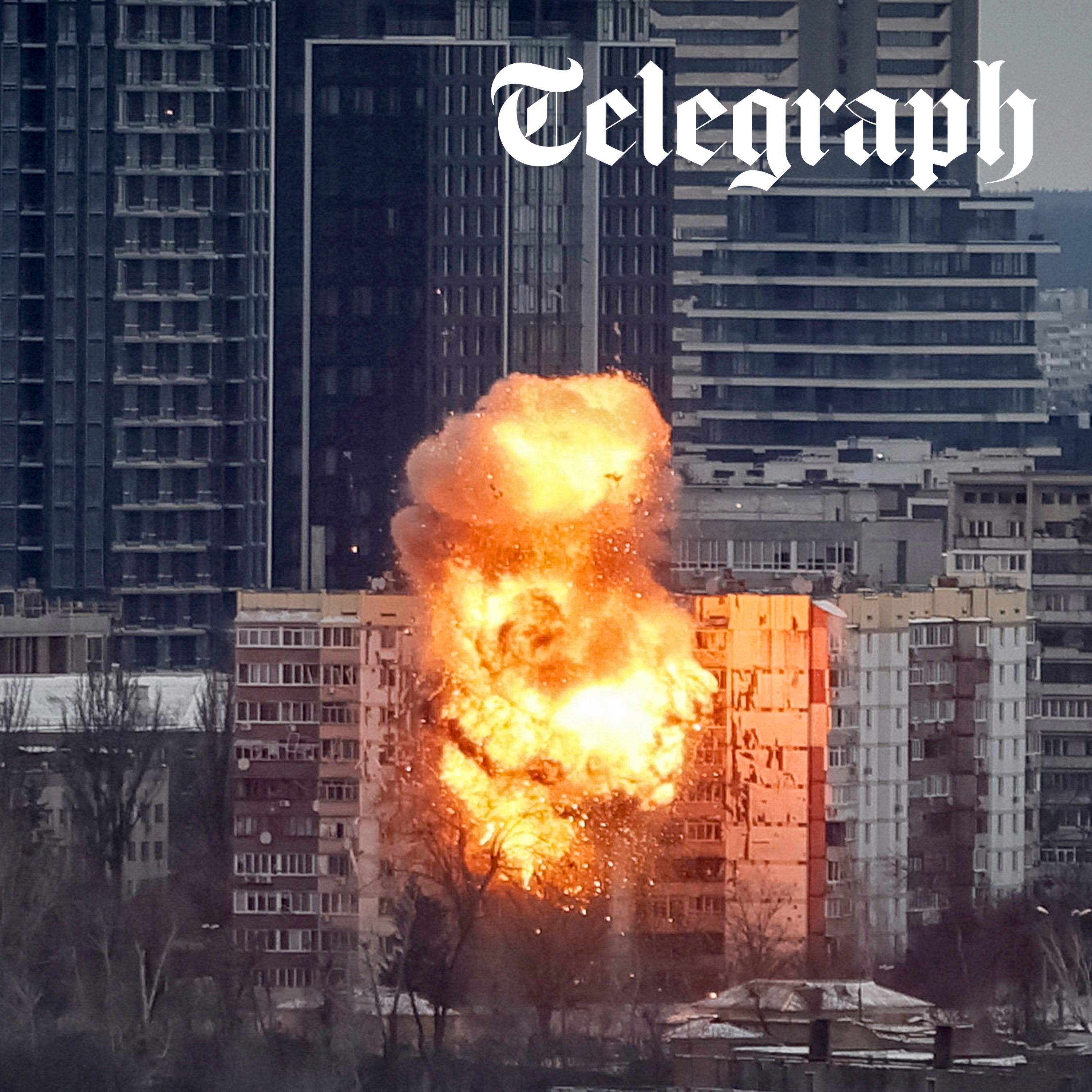
Ukraine: The Latest
Putin waits until Kyiv hits -20C before knocking out power with missiles & FIFA president calls for lifting Russia sports ban
00:49:47
Loading summary
Transcript95 lines
- [00:04]
David Knowles
The telegraph.
- [00:09]
Paige Desorbo
This is Paige Desorbo from Giggly Squad. Boost Mobile gives you the same network coverage, speed and service you're used to, just at a more affordable price. Why pay more if you don't have to? Offering reliable nationwide coverage backed by a 30 day money back guarantee. Love your service or get your money back, no questions asked. 50 Visit your nearest Boost Mobile store or head to boostmobile.com to learn more. After 30 gigabytes, customers may experience slower speeds. Customers who cancel within 30 days of activation will have Boost service fees refunded, activation fees if applicable, and phone payments will not be refunded.
- [00:48]
Boost Mobile Announcer
Lunch was great, but this traffic is awful.
- [00:51]
Dom Nichols
Um, can we stop at a bathroom? Are you alright?
- [00:54]
Paige Desorbo
I keep having stomach issues after eating.
- [00:56]
Dom Nichols
Like diarrhea, gas and bloating, abdominal pain and sometimes oily stools.
- [01:00]
Francis Durnley
Sound familiar? Those stomach issues may actually be a pancreas issue called Exocrine Pancreatic Insufficiency or epi. Creon pancrelipase may help manage epi. Creon is a prescription medicine used to treat people who can't digest food normally because their pancreas doesn't make enough enzymes.
- [01:17]
Boost Mobile Announcer
Creon may increase your chance of fibrosing colonopathy, a rare bowel disorder. Tell your doctor if you have a history of intestinal blockage or scarring or thickening of your bowel wall, if you are allergic to pork or if you have gout, kidney problems or worsening of painful swollen joints. Call your doctor if you have any unusual or severe gastrointestinal symptoms or allergic reactions. Take Creon as directed by your doctor and always with food. Do not chew capsules as this may cause mouth irritation. Other side effects may include blood sugar changes, gas, dizziness, sore throat and cough. These are not all the side effects of Creon. Call 800-633-9110 or visit creoninfo.com to learn more. That's C R E O N info.com.
- [01:45]
Dom Nichols
I'm asking my doctor about EPI and.
- [01:47]
Paige Desorbo
If Creon could help.
- [01:49]
David Knowles
Want to upskill on one of the most effective ad channels out there? With ACAS Ads Academy, you can learn everything you need to plan and run podcast advertising campaigns completely free. Whether you're new to audio or ready to sharpen your skills, our self paced courses fit your schedule and finish with an industry recognized certification. So if you want to grow your expertise and stand out in a competitive industry, head to go.acast.com academy.
- [02:21]
Dom Nichols
I'm Dom Nichols and this is Ukraine. The latest today as Ukrainians shiver under temperatures of minus 20 degrees Celsius and and the end of the so called energy ceasefire is marked by Russia's latest mass aerial attack. We ask what's stopping Donald Trump just asking Vladimir Putin not to hit energy facilities for another week. We look at NATO Secretary General Mark Rutter's comments in Ukraine's parliament this morning and discuss what he might have meant by the difficult choices Kyiv will have to make for peace. And later in the month the START treaty is due to expire. Adaly talks to two researchers about nuclear signaling and and how to decipher what each side really means behind their public statements. Bravery takes you through the most unimaginable.
- [03:06]
Michael (Researcher)
Hardships to finally reward you with victory.
- [03:10]
Francis Durnley
Russia does not want fees. In essence. Werfer teidegen mit unsre Helfeferne auch unse Freiheit und unsre Europischen Werter.
- [03:20]
Boost Mobile Announcer
If I'm president, I will have that war settled in one day, 24 hours.
- [03:24]
Dom Nichols
We are with you. Not just today or tomorrow, but for a hundred years.
- [03:34]
Francis Durnley
Nobody's going to break us. We're strong. We're Ukrainians.
- [03:40]
Dom Nichols
It's Tuesday the 3rd of February, three years and 346 days since the full scale invasion began. And today I'm joined by my co hosts Francis Durnley and Adelaide Pojamo Ponte. I started with the latest the battlefields of Ukraine. The anticipated next Russian pulse of mass aerial attacks on Ukraine occurred last night as multiple energy facilities among other areas across the country were hit. Hundreds of drones and missiles landed. It had been expected for some time. Russia takes about 10 days to build up stockpiles of these things with which to try and overwhelm Ukrainian air defenses. Anyway, air alarms sounded just after midnight in Kyiv, Kharkiv and Dnipro, also badly hit. Kharkiv Mayor IHOR Trekharov said that as a result of the strikes, it'll be necessary to temporarily cut heating to over 800 buildings in the city as repairs are made. He said, I understand how hard this is in minus 20 degree temperatures. But the enemy's unprecedented attack on critical infrastructure leaves no other choice. Our specialists see no alternative now. The city of Vinnytsia, that's in the oblast from which it takes its name, just to the southwest of Kyiv Oblast, was hit by cruise and ballistic missiles from around 0630 this morning. More missiles rained down on the wider Kyiv oblast along with Chernihiv oblast to the east and Zhytomyr oblast to the West. From around 10am this morning when temperatures there were about minus 20 Celsius. Ukraine's air force said 450 drones, including nearly 300 Shahed type attack drones plus 71 missiles were fired. The missiles were four Zircon or Onyx anti ship missiles, 32 Iskander M or S300 ballistic missiles, seven KH22 or 32 variant cruise missiles and 28 KH101 or Iskander K cruise missiles. At least 27 missiles and 31 drones made it through Ukraine's air defense, hitting 27 locations. 412 drones were downed and just over half the missiles residential buildings in Sumy, Pavlorad, Zaporizhzhia, Odessa were also hit. Local media report and 50,000 residents of Odessa were left temporarily without power, Governor Ole Kipper said. Now President Zelensky, he said taking advantage of the coldest days of winter to terrorize people is more important to Russia than turning to diplomacy. Without pressure on Russia, there will be no end to this war. Right now Moscow is choosing terror and escalation and that is why maximum pressure is required now. Detec, that's Ukraine's largest private energy company, said the attack caused significant damage to equipment at thermal power plants. They said it marked the ninth mass attack on its thermal facilities since October of last year. The company had to reintroduce emergency power outages to the left bank of the Dnipro river in Kyiv. Commenting on the apparent energy ceasefire, President Zelenskyy had said yesterday throughout the day there were no missile strikes or shaheds targeting our infrastructure. This demonstrates that when the United States has the motive to really change the situation, the situation can change. Now that was yesterday before this attack. All of which makes it more interesting that there's been no comment yet from the White House about last night's strikes, but temperatures have stayed the same. So I ask what's stopping Donald Trump calling Putin again and just asking for another week's ceasefire? He was very pleased with himself for apparently stopping all the missiles, apart from all the missiles that landed of course. So what's the harm in doing that anyway? Foreign Minister Andrei Sibier said Putin waited for the temperatures to drop and stockpile drones and missiles to continue his genocidal attacks against the Ukrainian people. Neither anticipated diplomatic efforts in Abu Dhabi this week, nor his promises to the United States kept him from continuing terror against ordinary people in the harshest winter. During the strikes last night, the Polish air force had to scramble jets to to protect Polish airspace, although I've not seen any reports that drones or missiles entered Polish airspace or landed in the country. Amazingly, in inverted commas, only four people were said to have been killed and 32 injured across the entire country. Now, in his nightly address last night, President Zelenskyy said Russia has shifted attacks away from energy infrastructure to logistics. This was of course, before the overnight strikes, but he was highlighting strikes on road and rail arteries and hubs now, possibly in response to the so called energy ceasefire. Or perhaps it's just a new line of activity made possible by Russian drones that now seem to have greater range, payload and sort of electronic warfare evasion capabilities. I hear that the E40 Sloviansk Izyum road is particularly hit. If anyone has an update about that, if anyone's on that road or travels on that road, if you could let us know, be very interested. I've seen a number of reports that fuel tankers have been hit, but is it just obvious? Sort of fuel and logistic vehicles or normal civilian cars as well? Be very interested to hear now the attacks overnight and into this morning were ongoing as NATO Secretary General Mark Rutte arrived in Kyiv. This is his first visit to the capital since August last year. That is an observation, not a criticism. Just as it's an observation to say that Steve Wyckoff, in his apparent role as Donald Trump's peace envoy, hasn't yet found the time to visit Ukraine once. Anyway, Mark Rutte met President Zelenskyy this morning. He then placed some memorial candles at the memorial on Independence Square in the center of the capital before making a speech at the opening of the 15th session of the Vakovna Rada, that's Ukraine's parliament. In his speech. I won't read the whole thing, he said. I do recognize that a focus on other global events might have caused concern. Concern that our attention might be divided at a moment that you needed our support more acutely than ever as the temperatures plummeted, attacks on your energy infrastructure intensified and the talks to bring this terrible war to a lasting end continued. But I want to assure you that our attention has not been diverted. Ukraine is and will remain essential to our security and our commitment to supporting Ukraine is steadfast. He then talked a little bit about Pearl Prioritize Ukraine requirements list. You know, the big pot of money people can donate to from which it's possible to buy weapons for Ukraine. Started last summer, he says it's now supplied around 75% of all missiles for Ukraine's Patriot batteries and 90% of the missiles used in other air defense systems. On the coalition of the willing he said there'll be troops on the ground, jets in the air, ships on the Black Sea. The United States, he said, will be the backstop. Others have vowed to support in other ways. The security guarantees are solid and this is crucial because we know that getting to an agreement to end this terrible war will require difficult choices. I thought that little bit there about the requiring difficult choices. We was interesting. He didn't go on to talk about any territorial deals or concessions or what have you, but I thought it was an interesting marker that he laid down. Now elsewhere, Ukraine's state railway operator, Yukra Zalinitsiya, warned yesterday that several of its routes in eastern Ukraine were becoming increasingly, quote, high risk. I think that's Ukrainian understatement. They've urged passengers to instead use buses. Now in particular, they said the Luzova Barvinkove Kramatorsk section, so that's basically from Dnipro to the east over to into the Donbas. They say that section remains a high risk zone and passengers have advised to use buses with bypass routes. Comes to something, if your national railway carrier is saying use the buses, that's, that's an indication of the severity of the situation. In a statement, the, the company said, if the security situation permits, we will try to break through with trains on a case by case basis as we did on Sunday. But the safety of passengers and railway workers is paramount in this case. You'll remember was it two weeks ago on Tuesday that there was a train that got hit by, we think three or four drones, five people killed on the train that had just left Parvenkove. Now, Juka Zalinitsiya also noted that in Sumy region, despite the shelling of Konotop, train traffic continues with the situation monitored. They said in case of immediate UAV danger, uninhabited air vehicle or drone, we will make stops near shelters. I mean, it's just extraordinary, the resilience. Right? A couple more for me. There's a story in the Financial Times today that says German police yesterday arrested five men on charges of running a smuggling operation for Russia to supply European tech to Russian arms manufacturers. Now this is in violation of EU sanctions. The group is accused of smuggling 16,000 shipments worth at least 30 million euros to at least 24 Russian arms companies since the start of the full scale invasion. Information here came from the German federal prosecutor, now the bnd, that's Germany's foreign intelligence service. They say it's Russian spy agencies that are behind the operation, as per this article. Also Denmark and Sweden have jointly said earlier today that they're going to supply Ukraine with additional air defence systems. In a joint press conference, the country's defence ministers so that the military aid supplied will total $290 million and be spent on Trident air defence systems. Now that's basically a 40 mil cannon on a wheeled flatbed truck. Swedish Defence Minister Paul Johnson said this means that Ukraine can develop an air defence battalion if they so wish. Okay, so back to NATO Secretary General Mark Rutte in his speech this morning to Ukraine's parliament, Francis, he said Russian attacks like those last night do not signal seriousness about peace. So I ask you, Francis, ahead of the next round of talks in Abu Dhabi, what have you heard about who is and who isn't serious about peace?
- [13:12]
Francis Durnley
Well, thanks, Dom. Would you like to guess at home who said, I think we're doing very well with Ukraine and Russia for the first time? I'm saying that. I'll give you a clue. It wasn't the first time he said that. I think we're going to maybe have some good news. President Trump continued he's sending the cavalry to Abu Dhabi for the next round of U. S Ukraine and Russia talks tomorrow with special envoy Steve Witkoff en route. We don't yet know who else is going, but I think it's safe to assume familiar faces from the previous talks. Now to your question, Dom. Our friends at the Financial Times have a very interesting piece today which we'll link to that reveals what's been agreed between Ukraine's Western partners around what would actually happen if Russia were to violate any future ceasefire agreement. Now that is of course a big if, but it's worth unpacking this. So to quote the piece, the proposal discussed between Ukraine, European and American officials on several occasions in December and January would involve a multi tiered response to any breaches of an agreed armistice by Russia under the plan. Three people familiar with the matter said a Russian ceasefire violation would trigger a response within 24 hours, beginning with a diplomatic warning and any action required from the Ukrainian army to halt the infraction if hostilities continue beyond that, a second phase of intervention to halt the infraction. It would be initiated using forces from the so called coalition of the willing. If the violation turned into an expanded attack 72 hours after the initial breach, a coordinated military response by a Western backed force involving the US military would take effect. Now, immediately. Some questions rise from this which I think is worth us discussing for a moment. First, how would this be monitored? That's where the US theoretically comes in. But again, how reliable is the Trump administration or A future administration, if they are integral to the whole enterprise, then pull out. What hope is there for a lasting peace? Secondly, more fundamentally, how do we get to that ceasefire? Now, I know we keep banging on about this point, but how meaningful are these proposals and especially them being public when so many argue There is little evidence Moscow has warmed to the idea of freezing the conflict beyond saying the right things so as to not upset Trump. But I was interested. Trump. Tom, sorry, that is a mix up I don't want to make. We've talked before about this, but I was really interested in your response. That point about 72 hours after the initial breach is when certain powers will get involved. Surely that's too late. So I'm interested in your perspective on this.
- [16:03]
Dom Nichols
Yeah, I mean, it's a kind of military, strategic, diplomatic, word salad. I mean, it all sounds good, like they've been really thought through and war gamed and everyone's ready to go. And this is chaff as far as I'm concerned. I mean, it's irrelevant. Firstly, they're Talking about after 24 hours there'd be, what was it, a strong diplomatic warning. After 24 hours, well, almost by definition, if something's happened that you've then got to respond, your diplomacy has failed, your deterrence has failed. So what does that mean? After 24 hours, you say you should stop, but all sides should cease fighting, blah, blah, blah, go back to their start positions. That's just fanciful stuff. Whoever's dreamt that up is just putting words down on a bit of paper to say something.
- [16:43]
Francis Durnley
And also the Ukrainian army there would be involved to halt the infraction. So only the Ukrainians are involved for the first 24 hours.
- [16:49]
Dom Nichols
Well, that's when you come on to this coalition of the willing. Now, it's largely irrelevant what Russia say about we won't allow NATO troops on the ground, because it's not up to them, that sort of soft narrative, to say that Ukraine doesn't have its own sovereignty. That is, it's for Ukraine to decide which troops they allow in on visas or visas with guns or what have you. So it's up to them, you know, it's their country. So it's not for Russia to say there are risks, of course, of allowing troops in. But, yeah, they can't just say, Russia cannot be taken seriously by just saying, no, you can't do that. You can do that. We'll allow this. We won't allow that. That's just rubbish. That's just them just trying to set the narrative so the whole coalition, the willing thing is designed on a sort of hub and spoke type model. So you have some very large bases, let's say for answer in Kyiv, Dnipro and down south somewhere, Kherson Zaporizhzhia, something like that. And then from those large rear areas you project power forward and that it's those forces that would then be monitoring whatever's happening and they would be the first ones to respond. So this idea that it's within, well, what do they say? Up to 72 hours. So for the sake of argument, let's say 36 or 48 hours, you then have the coalition of the willing. Well, that's not the model because as you saw in Hostomel in the opening hours of the full scale invasion when Russia tried to take the airport just to the north of Kyiv. I mean, trying to project force into a contested environment is very, very difficult. So, so if the coalition and the willing are on the borders of Poland and Romania and elsewhere, and then they say right after 48 hours we're going to come piling in, it's too late. You know, it's an exceptionally dangerous military activity.
- [18:22]
Francis Durnley
So bear in mind that Russia wanted to seize the entire country in three days.
- [18:26]
Dom Nichols
Well, yes, the second best army in the world, which when Prigozhin went on the march showed itself to briefly be the second best army in Russia. But anyway, that's by the wayside. I mean, I just don't think this is, this is just not realistic. This would, I mean, this is one course of action, if you like. And I think as soon as you sat down with a large map and did a proper war game about this, it would just fall apart. You couldn't get in there in 72 hours or the risk would be so high that any military planner I would imagine would say actually the much lower risk option, as possibly perverse as it sounds, is to have forces much further forward, much earlier. That is a lower risk operation than trying to do some enormous great sort of division level air assault into contested airspace. So I just don't think this is serious. It is just trying to give the illusion of diplomatic progression and momentum when actually it offers nothing.
- [19:19]
Francis Durnley
Yeah. Designed to put more pressure on Russia, but actually they probably will be looking at this and have a wry smile on their faces.
- [19:25]
Dom Nichols
Well, it invites questions. We have been asking for four months about the coalition of the willings. Well, what do you mean by that? How many forces would that take? What does that force look like? Are you including amphibious forces? I mean, Mark Rutter Says what does he say? Land, sea and air on the Black Sea, all the rest. I mean these are huge numbers and if you're saying you're going to put coalition of the willing forces onto the Black Sea, for example, I mean what is that to deny? Is that sea denial? Is that to deny the Black Sea to the Russian what's left of the Russian Black Sea Fleet? Is it to deny the ability for Russia to launch an amphibious land. What does it mean? I mean there's no detail here, nor necessarily would we expect there to be at the moment. I hope there's sort of detail behind closed doors in which case don't come out with this stuff because it just invites us to go. Well go on then. What do you mean by that big guy? What are you talking about? Are you talking about hub and spoke in country or are you talking about massing troops on the border and flying in a contested air assault operation after hour 36 what do you mean by that? Because they can't then turn around and say oh no, no, no, you can't ask us those kinds of questions. You're putting this information out there. So it's perfectly legitimate that we ask questions about it.
- [20:28]
Francis Durnley
Yeah, and they reference the coalition of the wing there. Thus far we only know the British and the French are willing to put troops on the ground. So how meaningful is that in this conversation as well? It's not even being talked about.
- [20:38]
Dom Nichols
No, I mean yeah, this takes us no further forward. I think we've given it more credence than it deserves. Perfectly honest.
- [20:45]
Francis Durnley
Indeed. But anyway, interested in your thoughts at home Just to continue with the diplomatic updates, sticking with the US Briefly I was lamenting the other day in light of Greenland. Remember that you know, when the leader of the free world threatened a NATO ally with the use of force. We're not talking about that.
- [21:00]
Dom Nichols
How the Is James Rothwell still there? He basically arrived. He arrived just as the story ended and I don't. We haven't heard from him since.
- [21:08]
Francis Durnley
He did a great write up actually about what people were saying there but yeah, we haven't heard from him since. James, if you're listening to this, let us know if you're all right and you haven't frozen. But yes, I was lamenting at that time about how the former presidents of the US were silent on the issue. Well a rare intervention from Obama into foreign affairs posting an article on his X account from the New York Times with this comment. If Congress doesn't act the last nuclear arms control treaty between the US and Russia will expire. It would pointlessly wipe out decades of diplomacy and could spark another arms race that makes the world less safe. This piece is worth the read. Now, the article is about that expiration of the new start on Thursday. That treaty we've talked about many times before argues, quote, it will mark the end of half a century of collaboration between the world's two largest nuclear powers. Prominent lawmakers in Congress said much this year about its end, despite the looming potential for an unconstrained three ways arm race with China's participation. Now, you'll hear more about the nuclear issue later in the episode, but for now, one has to wonder, given all of the escalation, the saber rattling from Moscow these past few years, whether this is the cause for Obama to intervene on, rather than, say, calling for more pressure to be applied on the Kremlin in order to try and force a ceasefire condemnations around Trump's rhetoric towards NATO allies. I'm interested in your thoughts on that, especially if you're a listener in the United States. Do you think Obama is right to be saying as little as he is at the moment? No intervention from Bush, the only intervention from Clinton in recent weeks has been around ice. Now, I know that of course in the domestic context is very important as well, but as I said before, from the perspective of those of us in Europe, it just seems very strange that you would have leaders. And I know our culture is different where our former leaders are much more involved in the political scene, but even so, it does feel like this is a curious intervention from the former president. Have you got any thoughts on that, Dom?
- [23:17]
Dom Nichols
Yeah, well, I would ask you put the appeal out to our listeners from anywhere, but particularly if you're in the United States. How is Obama seen now in terms of foreign policy and international diplomacy? Because he wasn't massively interested when he was in power. Okay, yes, they got Osama bin Laden, but I think that operation would have happened whether or not there was a Democrat in the White House. But of course, Obama's famous for the 2012 Syria Red Line became a line in the sand that just which is.
- [23:44]
Francis Durnley
Talked about a lot here in Europe. Yeah, I don't know if it is.
- [23:47]
Dom Nichols
In the US So I don't know if he's. Is he credible on foreign affairs now, particularly the hard edge of military stuff. Talk about start the strategic arms reduction talks. I mean, this is. Yeah, this is nuclear weapons we're talking about. This is big, big league. Is Obama a credible witness? Question mark.
- [24:03]
Francis Durnley
Well, let's turn to the EU now then, picking up the latest on the weapons purchasing saga we talked about last week. Joe Barnes reports that the EU will demand a fee for Britain to be able to sell weapons to Ukraine as part of that 90 billion euro defence scheme. A group of countries, including the Nordics, Baltics, Netherlands, Germany and Poland had wanted British Britain to be given access to the scheme as if it was still an EU member state. But this was blocked, as we talked about, by France, which wants the money to be used to boost the bloc's own domestic arms industry. And France, of course, being a major contributor in that aspect. Now, a leaked compromise text seen by the Telegraph has said third countries such as the UK can be treated equally should their government provide a fair and proportionate financial contribution to the costs arising from borrowing. The European Commission has estimated that interest payments could be as high as 20 billion euros. Ukraine has been told it only needs to pay back the debt should it receive reparations from Russia. Now, two thirds of the 90 billion euros loan will be used by Ukraine to purchase weapons from its own defence industry or from arms firms in EU member states. Kyiv will only be able to use the war chest outside of the block if there are no homemade alternatives or delivery time is significantly shorter. Now, one can see the argument from both sides. As we discussed previously, though, I would just politely add that if a part of this is genuinely because of the cost of the borrowing, then maybe there should have been more of a concerted effort to use other sources of funds, like the over 300 billion euros of frozen Russian assets, perhaps. Just a thought. Now, last few stories. Dom Maya Sandhu, President of Moldova, of course, has been nominated for the Nobel Peace Prize by a Norwegian MP for protecting democracy and the rule of law in Moldova against Russian hybrid warfare. Winners will be announced in October this year. No doubt Trump will be raging if he's not on the shortlist. If you missed the Telegraph's exclusive interview with Ms. Sandu, we'll link to it again in the show. Notes she is an extraordinary lady in the Ukraine war context and in the context of her own country, but ending with Ukraine. Kyiv has designated Iran's Islamic Revolutionary Guard Corps as a terrorist organization, President Zelensky announced last night. That move brings Kyiv in alignment with the EU, which labelled the IRGC a terrorist group on January 29, in addition to imposing a new raft of sanctions against Iran. Now, I just mention this because I think it's been notable how vocal Ukraine has been about the massacre of of thousands of people by the regime in Tehran, in contrast to so many other European countries. Does Europe have a stake in the tragedy that is unfolding there? If the answer is yes, why the silence? Why the dependence on what the United States is doing? And just Finally, Ukrainian Foreign Minister Andrei Sibir has launched a furious rebuke of the FIFA president because he supports the lifting of a ban on Russia's participation in international football competitions. Infantino told Sky Sports that FIFA should lift the ban on Russia, particularly in youth categories. We have to, he said. Definitely this ban has achieved nothing. It's only created more frustration and hatred. Allowing boys and girls from Russia to play football in other parts of Europe could help. It's something we have to do, definitely, at least in the youth categories now. Sibia dismissed this reasoning, invoking the hundreds of young Ukrainians already lost to the war. 679 Ukrainian girls and boys will never be able to play football, he said. Russia killed them and it keeps killing more. While moral degenerates suggest lifting bans despite Russia's failure to end its war, future generations will view this as a shame, reminiscent of the 1936 Olympics. At the end of the day, what has changed in Russia's actions that justifies an end to any boycott? Nothing. It's simply about money and war weariness, neither which are justifiable moral positions. But again, interested to hear your thoughts at home.
- [28:36]
Dom Nichols
In the week that the New START treaty is set to expire, Adelaide talks to Livia Horovitz Amikau Smitana of the Peace Research center in Prague about their recent research. With their team, they went through over 400 public statements about nuclear use from both Russia and the west since February 2022 in order to understand what each side inferred about their nuclear doctrine and how the war in Ukraine may reshape it. Here is their conversation.
- [29:00]
David Knowles
I'll start on this because this project started in our offices at the SWP in Berlin. So basically Russia invades Ukraine and in the same night Putin is saying, whoever tries to stay in our way must face consequen that are unseen in all of history. And there were many other statements in the days and weeks that followed that touched somehow on nuclear policy. So suddenly everybody was talking about nuclear weapons, something that had not happened, especially in a country like Germany, for decades before. There wasn't a lot of expertise going around. We're like, okay, hold on, can we.
- [29:34]
Michael (Researcher)
Keep track of all of this?
- [29:35]
David Knowles
So that's how we started, of course. On the one hand, we tried to keep track of statements that were explicitly nuclear related, where someone talked about nuclear weapons in a certain way, or made illusions, as in Putin's clear case, that were quite clearly related to nuclear weapons or took actions that were related to nuclear weapons. But we also wanted to have some background so that when such a statement occurred, or, God forbid, when nuclear use happened, we had the ability to place that in a certain context. What kind of events led to this statement? Or potentially it was very clear to us that we didn't have capacity to be sure that this was the actual background, but we wanted to at least have some context. So then we looked at what could lead to potential nuclear escalation, and we tried to trace those developments as they happen. So we did that for three years, and we ended up with 500 pages.
- [30:26]
Interviewer
You have given the example of Putin at the very beginning of the invasion. Can you give me some examples from both sides?
- [30:32]
Michael (Researcher)
Sure, absolutely. And I just want to highlight that there were a couple of researchers involved, mainly the interns on both sides, who have done a lot of very hard work on collecting all these statements. I mean, you can imagine how much stuff has happened since February 2022 in the context of this war and how many things we actually consider potentially important for the escalation dynamics. So there was a logic behind it, and there was really a lot of work by everyone in our team to try to read very carefully all the developments and then try to jointly understand what can be relevant and what not. And as for examples, there's quite a difference between signals that are, for example, tested. That means that it's based on some physical actions that are trying to communicate some sort of intention, such as exercises, weapon launches, weapon tests that kind of convey the message by the very fact of just using something to send a signal. And obviously, many rhetorical signals, which some of them are fairly explicit. Some of them are, let's say, more conservative in the sense that they are just restating some of the doctrinal principles that are behind nuclear use in the Russian Federation. Some of them are more, let's say, vague and opaque in the sense of making others feel more insecure and elicit this feeling of potentially increased risks in the conflict, probably in the hope of influencing or shaping the decision making in other countries.
- [31:56]
Interviewer
Can we just go back to the basics a little bit? And what are the doctrines we're working from for each side? NATO, on the one hand, and then Russia.
- [32:05]
Michael (Researcher)
Sure. When we talk about doctrine, there are at least, like, three ways of how to look at it.
- [32:10]
David Knowles
Right.
- [32:10]
Michael (Researcher)
Because one thing is this official published Russian nuclear doctrine, what we call the declaratory Policy which every nuclear armed state has a published declaratory policy, which in very vague and broad terms kind of specifies under what conditions the state will consider using nuclear weapons. Right. Russia has recently revised this doctrine in the context of the war in Ukraine. There's been a big debate among the experts on nuclear weapons. I mean, what this revision actually means, to what extent this is lowering the threshold. But I think it's very important to understand it is a political document which is meant for political signaling. The potential conditions for nuclear use are very vaguely specified in the doctrine. For example, Russia says that they might respond not only to nuclear weapons, but potentially to a conventional attack that creates a critical threat to sovereignty and territory integrity to either Russia or its ally Belarus. Right. We can actually imagine a very wide array of potential scenarios. Right. I mean, we can imagine that this could be like an all out conventional invasion of Russian confederation by NATO forces, but technically we're just looking at the boundary conditions. We can also imagine that this could apply in the context of Ukraine attempt to liberate Crimea. Right. Or even some parts of the Donbass that by obviously this is illegal under international law, but it's something that obviously would count under this, like expanded definition, what it means threat to sovereignty and threat or to integrity. Right. So we should understand it as a political document that obviously is in no way limiting Vladimir Putin in deciding when it would be beneficial to use these nuclear weapons. It's mainly a signaling function.
- [33:52]
David Knowles
We totally agree. I think it's important to understand that, yes, Russians are playing with the risk and they're signaling risk to various other parties. So it is very hard to disentangle to whom they are signaling at what point in this situation, because different people in Moscow are saying different things. And some of them are Vladimir Putin, but some of them are experts, some of them are members of parliament, some of them are ministers, some of them are spokespeople to this other people. And they're saying it in various contexts. And then they're saying one sentence about nuclear weapons. And one never knows how much signaling there is or in how far this just became normalized. That being said, I think it is fair to disentangle three angles. And one of them is the one that is most discussed in the media. And Russians have spent quite a bit of time on that is signaling to the Americans that even thinking or having a debate about a direct military intervention on the ground in Ukraine is a bad idea. So deterring intervention obviously as a final goal, but deterring even the debate. And then there is a minor attempt to coerce or to influence the Ukrainians. But the Ukrainians pretty quickly showed the Russian side that they are too resolved for such narratives to work against them. They called the Russian bluff and said, yeah, come on, you won't do this for this. And then not much happens. Biggest part of it is indeed this attempt at addressing the Western alliance, whoever that is in it. And then specific countries that seem to be more receptive to such signals to then think twice or three times or at best for seven months in a row about what kind of weapons they would deliver, could deliver and should deliver to Ukraine and in what frameworks and so on and so forth. So at least delaying this supplies if not preventing them.
- [35:45]
Interviewer
And would you say therefore that this third aspect has played an important role in how the west has delivered or not delivered enough weapons to Ukraine and in the decision it's made since the beginning of the invasion, then is that a causal effect that you've been able to determine?
- [36:01]
David Knowles
So again, I think it's difficult to make yes, no, for sure, because we also don't sit in the chancelleries of the various. Of all countries that supplied material and weapons to Ukraine. From what we can observe, it seems reasonable to assume that this had effects. Now, how large they were, I think it depends on which country you're looking at and then in which particular situation we're looking at. So I would say from what we can observe, yes, they definitely play their role. How big that is, that, that's hard to judge at this point in time.
- [36:36]
Michael (Researcher)
I would highlight the fact that our report does not try to establish this causality. Right. We are tracking the signals without really tracking the consequences of these signals. So that's important aspect. But I think it's fair to say that judging from different interviews with people from, for example, Biden administration, this has been a factor. Right. And I think it's fair to make an American argument that if Russia would not be a nuclear armed state, or if Russia basically would not engage in any signal whatsoever, if it would be very restrained in nuclear realm, that at some points in this conflict we would see, let's say, faster, more active deliveries or quicker decisions on sending specifically some types of weapons which were considered by the US or some extreme allies as potentially escalatory in the way they were.
- [37:27]
Interviewer
We've talked a bit about the signaling from Russia and the doctrine from Russia and how you said it's not a prescriptive document, it's political signalling. So the red lines and the conditions that Putin and his spokespeople Layout keep on shifting. What is the position of the west as a whole? And the West, I'm aware is not a consistent whole. There's NATO, there's the us, There's France. That has a different nuclear policy. It's not declared it's arsenal to NATO. So how does the west respond and how does the west signal and what are the variations?
- [38:01]
Michael (Researcher)
All three nuclear armed states in NATO, I.e. united States, France and United Kingdom have their own declaratory policies. They are common in the sense that they are also relatively vague and ambiguous. None of them has this so called North Resist doctrine. That means the pledge that they wouldn't use nuclear weapon first. So they basically keep options open for nuclear weapon used. In my view, all the signaling that took place during the Biden administration has been focused on trying to lower the nuclear temperature, obviously maintaining deterrence on the side of NATO.
- [38:39]
David Knowles
There is a dual dimension here that has been difficult for the Biden administration. I think it's important to say that. So on the one hand as the United States, you want to say, well this is not okay what you're doing, you shouldn't be doing this. And by the way, you are not afraid, we're not scared. You cannot do much to us. This is just talk. And on the other hand, you have a bunch of non nuclear allies that you have to tell them that if push comes to shove, you're going to defend them, you're going to use nuclear weapons in an extreme scenario or you're going to use at least various other tools to prevent nuclear weapons being used against them. So on the one hand you want to tone it down. On the other hand you do need to say something about what's going to happen if the Russian Federation is using such tools to exercise. And it's hard to do such a catch 22.
- [39:29]
Interviewer
So let's take the recent example of the Ureshnik strike on Lviv. Correct me if I'm wrong, but it's a missile that could have carried a nuclear head. Thankfully it didn't. It's one of the furthest strike into Ukraine, very close to the Polish border. How does that fit in the different categories of escalation and of threat making that you've established? Is that a change in scale? Is that a change in nature?
- [39:57]
Michael (Researcher)
No, I mean, I definitely don't want to underplay it, but we should highlight the fact that this is by far not the first use that Russia has been using. Dual use weapons that can carry nuclear warheads in this conflict. I mean Iskander missiles can carry Nuclear warheads, Kinjal weapons can carry nuclear warheads, etc. So this is definitely the first time, it's not even the first time that oresting has been used in this conflict. You are absolutely right that let's say the target and its position closer to NATO borders, it's a sensitive issue. And also here, I would say also from my view, normatively, I think sometimes it's actually not such a good idea to give too much respect to Russia in these cases. And I mean, we should be definitely concerned about the possibility of nuclear use. It's not a probable threat, but it's a serious one. It's a realistic one. Absolutely. But we shouldn't always play into Russian cards by over emphasizing how dangerous this is. I think that sometimes this is what exactly Kremlin wants to have increasing this perception or risk in NATO countries which can they ship decision making. So let's take them absolutely seriously. Let's condemn them absolutely. I just think that all these articles about another Russian potentially wonderful weapon that can do all of these things are sometimes not really in our best interest.
- [41:19]
David Knowles
I fully agree with Michael. I think it is very hard to disentangle what exactly the Russians wanted with this and so on. If you assume that under the Biden administration they were more careful, the assumption is that the more they believe that the Western Europeans are less trustful of the guarantee that the United States is offering, and the more they believe that this guarantee is maybe not as solid as as it used to be, the more steps they can take now. Does this fit a little bit in that picture? Is this congruent with other actions that they have taken over the past couple of months? Yes, it fits. Did they intend to send this signal? Did they do it for this particular reason? We don't know. But it does fit in this greater matrix.
- [42:08]
Interviewer
What is this new phase that we've entered with the Trump presidency? I know your analysis doesn't yet cover the Trump administration. What do you see of what has changed and what hasn't?
- [42:22]
David Knowles
So these are more impressions than they are statements based on some numbers. As a scientist, I would say that in advance, at least in my perception of it. We see fewer statements, fewer narratives that are being circulated, and to a little degree or to some degree, more action. Which again fits into this picture of, on the one hand, they want to be able to talk to the US Administration. They don't think they need to deter even a discussion about intervention because Trump really doesn't want to intervene and they want to give space to negotiating with the United States, over European, over Ukrainian hats. Again, this is an interpretation. We don't know whether this is indeed the case, but this is one way to see it versus they feel they are slightly less inhibited by potential US Actions. Now, is this the case? Is this what we're seeing? This is my way of reading this. But even if when we collect the data, I would wager there are not sufficient data points to actually know that this is happening and we have not yet even collected the data.
- [43:28]
Interviewer
Mikhail, what's your view on the year that we've just lived through?
- [43:31]
Michael (Researcher)
I absolutely agree with that. And Russia has been in a very specific place in this conflict after Trump's inauguration last January. Right. Because it get itself a sort of ally in many ways, something that many people suspected that Trump's approach will be different. I'm not sure how many expected. How exactly would this develop with respect to Russia? I'm actually very critical of the approach of Trump's administration. Probably unsurprisingly to you, am I understanding.
- [44:01]
Interviewer
That our threshold for Russia's threat has kind of gone up. So, like the same statement in 2022 would have resonated with the west and appeared as a threat much more than it would now.
- [44:16]
David Knowles
Is that fair in a particular situation in which Russia feels it loses the war or it loses something important or it might face a regime change at home, sounds that it produces? Narratives that emerge out of Moscow have a different weight than when Russia feels comfortable and thinks, okay, this is probably going on and we're just saying something because this is what we said last week and we're saying it again. So I think this is one dimension, and the other dimension is indeed one in which we've heard these narratives, we've heard these stories, we've heard a lot of, if you do this, this is going to happen. A lot of also red lines that Russia has been drawing on and on and that to some degree were then not implemented. If you deliver this weapon, then bad things are going to happen, and then the weapons get delivered and bad things don't happen that much, and so on and so forth. That people have become, to a certain degree, I wouldn't say it more relaxed, but it's harder for them to take every statement as seriously as they took it before, which depends from your perspective, might be a good thing, because then they will actually get some stuff done quicker in one logic and not so good in the other logic as they might misinterpret Russian actual willingness to communicate something and then take decisions that don't Respond to to certain and there is a debate also within the nuclear policy community which one? You know which one it is so it's hard to judge. Dreaming of getting the all new iPhone.
- [45:54]
Boost Mobile Announcer
17 Pro designed to be the most powerful iPhone ever. Then stay in bed and let a Boost Mobile expert deliver and set it up for you. Oh actually they will have to get up and open the door.
- [46:02]
Dom Nichols
Oh right.
- [46:03]
David Knowles
Delivery available for select devices purchased@boostmobile.com terms apply.
- [46:07]
Boost Mobile Announcer
Big news. Boost Mobile is now sending experts nationwide to deliver and set up customers new phones at home or work. Wait, we're going on tour? Not a tour. We're delivering and setting up customers phones so it's easier to upgrade. Let's get in the tour bus and hit the road. No, not a tour bus. It's a regular car we use to deliver and set up customers phones at home or work. Are you a groupie on this tour? We deliver and set up phones. It's not a tour. Oh you're definitely a groupie. Introducing store to door switch and get a new device with expert setup and delivery wherever you're at. Delivery available for select devices purchased@boost mobile.com the longer you stay alive, the longer you can enjoy Boost Mobile's unlimited plan with a price that never goes up. So here are some tips. Do not parallel park on a cliff if you want to enjoy an unlimited plan with a price that never goes up. Do not mistake a wasp nest for a pinata if you want to enjoy an unlimited plan with a price that never goes up. Do not microwave a hard boiled egg if you want to enjoy an unlimited plan with the price that never goes up. Stay alive and enjoy Unlimited Wireless for $25 a month forever. With Boost Mobile after 30 gigs, customers may experience lower speeds. Customers will pay $25 a month as long as they remain active on the Boost Mobile unlimited plan.
- [47:10]
Dom Nichols
Let's go to final thoughts now. And actually that that chimes with with what I've been thinking about which I started today's episode with. And it's I mean we all knew this energy ceasefire thing was a sham, but it does open up some very interesting questions that I really do hope people are putting to Donald Trump. If you're in the pool in the White House, I mean what has changed there? Why was it deemed necessary to ask Putin not to fire energy infrastructure last week? But apparently it's fine this week. So if I was in the press pool I would ask him something like would you like to see Putin extend the energy ceasefire? I mean how can you not if it was justified last week. Why? As I said at the time, there were pitfalls for every side here on this so called energy cease fire. There were no details, but that in itself is quite interesting because we can literally turn around to Trump now and say, so what is it? Minus 20? Minus 18? Fine, yeah, go for your life. Do what you like, lads. So what has changed? Because nothing has changed in the geographic sense. Nothing has changed in Ukraine over the last week. But now Putin apparently is back to normal. So Donald Trump, why can't you just pick up the phone and ask him to extend it for another week? And if you got him on the phone, ask from Dom, if it's a week, then can you make it a month? And if a month, then why not the 60 days that you asked for quite a few months ago? And Putin has always fudged. So what's changed? Because I don't think anything's changed anyway. For instance, now with a certain sense of trepidation because I've heard a whisper about this, but what is your final thought?
- [48:43]
Francis Durnley
Well, thanks to everyone who sent this. I couldn't resist, Tom. I couldn't resist. Breaking news. Napoleon is in the headlines. Previously unpublished letter has been discovered where he personally intervened to prevent more than a thousand soldiers from being dismissed for being too short. Not only that, the letter's for sale now. Do you want to guess how much it would cost to buy that for me as a present for you?
- [49:09]
Dom Nichols
You weren't very. Okay. For you as a present.
- [49:12]
Francis Durnley
What would you pay to get. Imagine the joy on my face, Dom, the sheer pleasure of owning it, you know?
- [49:17]
Dom Nichols
Much joy. When I gave you that signed picture of Kai Callis last year, I was just in awe. Signed by me. So it wasn't a genuine sign, but okay, what would I bet? £5,000 to £5,000. £5,000.
- [49:28]
Francis Durnley
Well, you're in luck then, don't we? You're in luck. I know. You thought there's gonna be tens of thousands, didn't you? Well, actually, you can buy it for me for a thousand euros.
- [49:34]
Dom Nichols
I don't want to buy it.
- [49:35]
Francis Durnley
That's the, that's the, that's the auction's estimate. I couldn't believe that. I thought that's an absolute bargain. Anyway, anyway, sorry, I couldn't resist. We'll link to that story in, in the show notes. It is actually quite interesting. Well, it made me think, what are the requirements for the armed forces now, in terms of height requirements?
- [49:55]
Dom Nichols
I think they used to be in the household division or in the guards. The Brigade of Guards here in the uk. I think there used to be a height requirement, but I don't think there is. In fact, I'm pretty sure there isn't any more. I don't think there's any height requirement. There's not in the police force either, sorry service any longer here in the uk. I haven't seen anything in Ukraine and we've made met soldiers of all heights. So no, I don't think, I don't think there is. But if we got that wrong folks, let us know.
- [50:21]
Francis Durnley
Yeah, I'd be interested to know. And just one final thing. If you're in London and fancy coming down to the Frontline Club tomorrow night, there's a screening and a Q and A of Kharkiv War Diaries BBC Documentary by Albina Kovalyova. I'll be there on a panel talking about reflections on the significance of Kharkiv. John Simpson, the BBC's World Editor, was supposed to be there but he's had to pull out a short notice. But if you're in the area and would like to watch that really good documentary and have a Q and A with us, then do come along and I'll add a link in the show notes.
- [50:51]
Dom Nichols
Thanks folks. We'll be back again tomorrow, same time, sort of 5pm ish London time, midday ish East Coast US thanks for joining us on the podcast today and we'll see you tomorrow.
- [51:01]
Francis Durnley
Thanks everyone. See you tomorrow.
- [51:07]
Podcast Narrator
Ukraine the Latest is an original podcast from the Telegraph created by David Knowles to support our work, work and stay on top of all of our Ukraine news, analysis and dispatches from the ground. Please subscribe to the Telegraph. You can get one month free then two months for just one pound at www.telegraph.co.uk the latest deploying cutting edge technology, we also release Ukrainian and Russian versions of this podcast. These translations retain our voices and delivery.
- [51:36]
Dom Nichols
So that it can reach listeners in.
- [51:37]
Podcast Narrator
Every region of Ukraine, Ukraine and those parts of Eastern Europe where Russian is still widely spoken. Links to those can be found in the podcast description to this episode. You can also now sign up to the New Ukraine, the latest weekly newsletter. Each week Francis and I answer your questions, provide recommended reading and give exclusive analysis and behind the scenes insights plus maps of the front lines and diagrams of weapons to complement our daily reporting. It's free for everyone including non subscribers. You can find the link to sign up in the descriptions for this episode. We regularly have a Ukraine Live blog on our website where you can follow updates as they come in throughout the day, including insights from regular contributors to this podcast. We also do the same for other breaking international stories. If you appreciate our work, please consider following Ukraine the latest on your preferred podcast app and leave us a review view as it really helps others find the show. Please also share it with those who may not be aware we exist. You can listen to this conversation live at 1pm London time each weekday on X Spaces. Follow the Telegraph so that you don't miss it. You can also get in touch directly to ask questions or give comments by emailing ukrainepod telegraph.co.uk we continue to read every message. You can also contact us directly on any X. You'll find our handles in the description for this episode. As ever, we're especially interested to hear where you're listening from around the world. Ukraine the latest was today produced by Phil Atkins, executive producers of Francis Dernley, Louisa Wells and David Knowles.
- [53:12]
David Knowles
My name is David Knowles.
- [53:13]
Boost Mobile Announcer
Thank you all for listening.
- [53:15]
Dom Nichols
Goodbye.
- [53:21]
Michael (Researcher)
Foreign.
- [53:28]
Paige Desorbo
This is Paige desorbo from Giggly Squad. Boost Mobile gives you the same network coverage, speed and service you're used to, just at a more affordable price. Why pay more if you don't have to? Offering reliable nationwide coverage backed by a 30 day money back guarantee. Love your service or get your money back, no questions asked? Visit your nearest Boost Mobile store or head to boostmobile.com to learn more. After 30 gigabytes, customers may experience slower speeds. Customers who cancel within 30 days of activation will have Boost service fees refunded, activation fees if applicable, and phone payments will not be refunded.
- [54:07]
Boost Mobile Announcer
The longer you stay alive, the longer you can enjoy Boost Mobile's unlimited plan with a price that never goes up. So here are some tips. Do not parallel park on a cliff if you want to enjoy an unlimited plan with a price that never goes up up. Do not mistake a wasp nest for a pinata if you want to enjoy an unlimited plan with a price that never goes up. Do not microwave a hard boiled egg. If you want to enjoy an unlimited plan with the price that never goes up, stay alive and enjoy Unlimited Wireless for $25 a month. Forever with Boost Mobile. After 30 gigs, customers may experience slower speeds. Customers will pay $25 a month as long as they remain active on the Boost Mobile Unlimited plan.
- [54:37]
David Knowles
Say hello to Samantha.
- [54:38]
Dom Nichols
Hi there.
- [54:39]
David Knowles
Samantha built a SaaS platform that helps small businesses manage their workflow, but she needed a smarter way to reach decisions.
- [54:46]
Dom Nichols
That's where Acast came in. They helped me produce a professional audio ad which played to business owners and.
- [54:51]
Paige Desorbo
Ops leads using their audience attributes, targeting tools Suddenly my platform was showing up.
- [54:56]
Dom Nichols
In the ears of the exact people I needed to reach.
- [54:58]
David Knowles
Now that's streamlined marketing. Samantha, what's your tip for scaling smart?
- [55:02]
Dom Nichols
Solve a real problem and make sure the right people hear about it.
- [55:06]
David Knowles
Promote your business with podcast ads on Acast. Get started@go.acast.com advertise.