← Ukraine: The Latest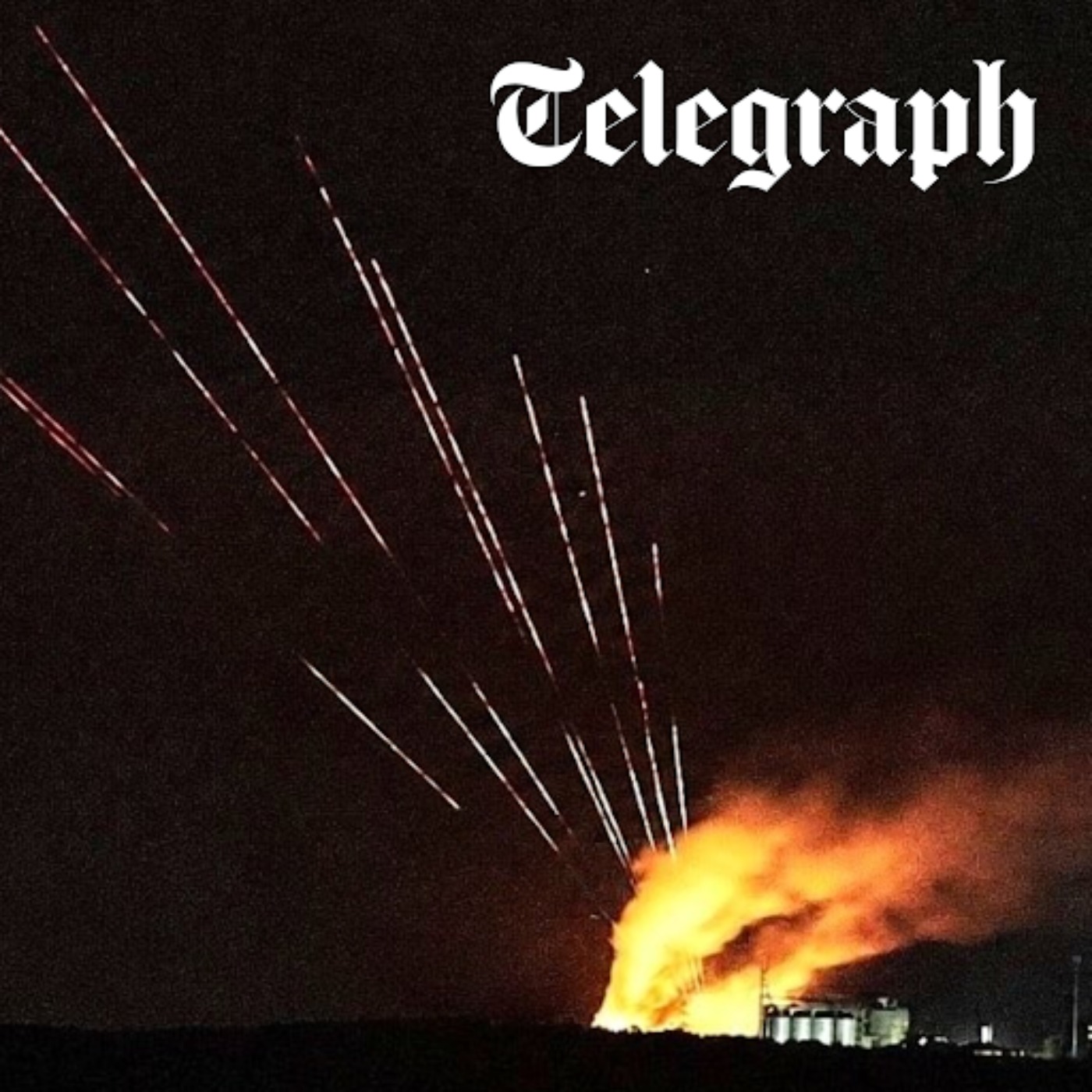
Ukraine: The Latest
Putin's troops abandon positions as supply lines 'at breaking point' & Russian commander 'assassinated by car bomb'
00:56:39
Loading summary
Transcript107 lines
- [00:04]
David Knowles
The telegraph.
- [00:10]
Advertisement Voice
Let's be honest, if you have a cat, you've probably wondered what your house smells like before guests walk in. Thankfully, Arm and Hammer Cat Litter helps take that worry off your plate, because not all litters are the same. Arm and Hammer Hardball Cat Litter gives you long lasting odor control plus strong clumps that make scooping quick and easy with with low dust too. It's a five in one litter made for busy people, helping your home stay fresher every day so you can feel confident opening the door for family and friends. Candles, air fresheners not needed here. Odor control is Arm and Hammer cat Litter's job, not yours. Be guest ready with Arm and Hammer Hardball cat litter. Find it now at Walmart or Amazon.
- [00:48]
Dominic Nichols
What makes a leader worth following? What should you really care about in your job? As technology is changing so quickly, is it just gonna be about machines? Technology? Talking to other machines? I mean, should you quit your job and start something on your own?
- [01:00]
Francis Durnley
What would that take?
- [01:01]
Dominic Nichols
What does success and risk look like when we're all at the starting gate together? These are the questions we answer each
- [01:07]
David Knowles
week on Lead Human with Jack Myers and Tim Spengler.
- [01:10]
Dominic Nichols
Join us each week and subscribe at your favorite podcast platform and YouTube. We'll tell stories, we'll hear from some of the best, and we'll try to figure this out together.
- [01:22]
Advertisement Voice
We all belong outside. We're drawn to nature. Whether it's the recorded sounds of the ocean we doze off to or the succulents that adorn our homes, nature makes all of our lives, well, better. Despite all this, we often go about our busy lives removed from it, but the outdoors is closer than we realize with Alltrails. You can discover trails nearby and explore confidently with offline maps and on trail navigation. Download the free app today and make the most of your summer with AllTrails.
- [01:57]
Francis Durnley
I'm Francis Durnley and this is Ukraine. The latest today as Russian forces are reportedly withdrawing from part of the southern Ukrainian front line amid mounting supply problems. We examine claims that logistics networks in that sector are approaching breaking point. We also report on a huge explosion in Russia's Belgrade region and a car bomb in Moscow oblast as the war's effects continue to be felt far beyond the front line. Then we assess the EU's proposed 21st sanctions package, including plans to ban Russian military personnel from entering the bloc, and consider what a two tier Europe allowing some countries affiliate membership without full participation in all EU structures would mean. Then finally, later, we explore what a war between NATO and Russia might look like if the US were to withdraw from the alliance.
- [02:48]
David Knowles
Bravery takes you through the most unimaginable
- [02:53]
Dominic Nichols
hardships to finally reward you with victory.
- [02:58]
Francis Durnley
Russia does not want peace in essence.
- [03:00]
Dominic Nichols
Werfer teidegen mit undre helveti o kraine auch unsere Freiheit und unsre Europischen Werther. If I'm President, I will have that war settled in one day.
- [03:11]
David Knowles
24 hours. We are with you not just today or tomorrow, but for 100 years.
- [03:21]
Dominic Nichols
Nobody's going to break us. We are strong. We are Ukrainians.
- [03:27]
Francis Durnley
It's Tuesday the 9th of June, four years and 105 days since the full scale invasion began. And today I'm joined by my co host Dominic Nichols. And later you'll hear dom's in depth interview with Reuben Stewart, senior fellow for Land Warfare and at the International Institute for Strategic Studies. But first let's go over to DOM for the latest on the battlefield.
- [03:48]
David Knowles
Well, thanks Francis. Hello everyone. So Russian forces are reportedly withdrawing, as you say, from the Kinburn Spit in southern Ukraine as supply lines have come close to breaking point there. Now the Kinburn Spit is that bit in the Black Sea. It's very close to the coast running from Odessa to Mykolaiv. It's technically part of Mykolaiv Oblast, but it's the bit of land that loops around from Kherson Oblast. Like I say, it runs sort of east, west along the coastline. The nearest point to the mainland is about 4 km, the town of Orikhiv. That's what they use it for. They're firing artillery from there into Orikhiv. However, Crimea based Ukrainian partisan group Artesh said yesterday that elements of Russia's 337th Airborne Regiment, part of the VDV, the airborne forces are abandoning their positions on the north and western parts of the Kinburn Spit due to completely disrupted supplies. The Institute for the Study of War reports. Now Artesh say they have an agent in the headquarters of the Russian Dnieper group of forces reporting this. We obviously have no way of verifying that or of the of the information, but I have seen these reports echoed elsewhere. Now the agent says that ammunition, fuel and food deliveries have stopped. Losses they say from Ukrainian drone attacks are mounting. Now, Ukrainian Southern Defence Forces spokesperson Colonel Vlasyslav Volozhin neither confirmed nor denied the story when asked yesterday. So Kimbundsmit, it's very vulnerable as a piece of land. It offers very little operational or strategic advantage. Russia used it, as I say, basically to fire artillery into southern Mykolaiv oblasts into the town of Orikhiv and elsewhere. But this does show the impact of Ukraine's mid range strike campaign against Russian supply lines and it may well be replicated elsewhere. It's certainly not good news for Russia. However, in a sign that all is fine in the Kremlin, Russia's deputy Foreign minister has said, apropos nothing, nothing at all, that Russia and Belarus are ready to use all available means to ensure their security, including nuclear weapons. Oh, just textbook. This is Mikhail Galuzhin. He made the comments in an interview with the Izvestia newspaper. He said Russia and Belarus regularly conduct readiness checks in case such weapons are needed. And then referring to the so called union state of Russia and Belarus, Galusin said, we remain in a constant state of readiness to employ all means, including nuclear ones, to ensure the security of the state. It just thought he'd say it. Nothing to do with Kinburn at all.
- [06:20]
Francis Durnley
Just, you know, sort of spontaneous tick, isn't it?
- [06:23]
David Knowles
Yeah, it had been a while and no one's heard from Medvedev. Must be, must be having a long weekend actually.
- [06:28]
Francis Durnley
Yeah.
- [06:29]
David Knowles
Now, no other significant moves on the ground. 10 people killed, over 100 injured. Across Ukraine yesterday. 146 of 168 drones were brought down, but two KH59 69 variant cruise missiles did get through. Kharkiv seems to have been the worst hit. However, as I say, it is reported the number of drones and missiles, but please do remember that there are glide bombs, artillery, mortars, first person view drones as well that also kill civilians. Zaporizhzhia Oblast governor Ivan Fedorov said Russian forces had launched 884 strikes against 46 settlements yesterday just in his region alone. In Zaporizhzhia, two people killed and 38 injured there. Now into Russia and as you say at the beginning, an enormous explosion yesterday in Belgorod Oblast. It's thought from what I've seen, no one really knows exactly what it was. It's thought not to have been a Ukrainian strike. It's not been claimed by the general staff. They don't claim everything, but they do offer an opinion on most things. I have seen some reporting that it was a Russian glide bomb that had been launched or lobbed into or towards Ukraine that then for some reason malfunctioned. Drop short. What have you hit? An ammo compound. But whatever it was, it created a very, very big bang. And then into Moscow. A car exploded in the Balashika area of Moscow Oblast that's the eastern suburb of Moscow this morning. Reportedly killing the driver. Numerous reports say a 62 year old Russian lieutenant general number of Russian telegram channels came out with that quite early on this morning. He was said to be in a BMW X thing 3 at the time of the explosion which was said to be 5:30am local time. There's imagery showing I guess from nearby building. You can't actually see, you just see the flash of the blast and then the, the vehicle comes into, into shot smoking and it crashes into another vehicle and continues to smoke. The individual is, is eventually dragged out by passersby. Yeah I think reported reported dead later on. Russia's investigative committee have opened a criminal case into the incident. Now on some tech news, Ukrainian drones are now said to be able to autonomously bring down shahed drones. Ukraine is scaling up a new generation of interceptor drones capable of autonomously detecting and destroying Russian shahed drones. This comes from Mykhailo Fedorov, Ukraine's Defence Minister. Now this is developed through Brave 1. You know that's the sort of defence innovation platform. Research development, government money, etc. Etc. Linking government and the military to industry. The system Mr. Fedorov says has already completed combat testing in the Kharkiv region and says the drones automate about 95% of the whole interception process, independently tracking, identifying and engaging targets after an operator, human operator has authorized the attack. Mr. Fedorov said the technology progressed from prototype to battlefield deployment in less than a year which is pretty impressive. This is a obviously a development of the, the interceptor technology. So it used to be the relationship used to be one to one, one human, one drone flies a drone, intercepts, goes and brings down the drone. Then now on to and this is an expression of it sort of one to many one human can control many drones. So they, they launch, they go to their assigned sectors and then when something is, is detected the human then either guides it, flies it or, or gives in this case gives authorization for the thing to go and go and actually hit it itself. The end state. The next development which I was told is going to be a year, 18 months ish is going to be zero to many as in no humans and many interceptors. Now you can't do this just anywhere. So it wouldn't work for kind of Europe's drone war for example but if you've got effectively a free fire box. So in that bit over there it's just baddies, you know, you lay out the technology to receive information either by sound or by vision, but to tell something's coming, radars, et cetera, et cetera. And then the technology can classify it and say that's a drone, that's a missile, and, and launch interceptors on its own if given the autonomy. So that zero to many is the next step.
- [10:26]
Francis Durnley
And this is the tech that they're selling to Middle Eastern countries and others that's being used in. Well, we don't know if it's definitely being used yet, but the reports are that this kind of technology is being used in relation to the Iran war.
- [10:41]
David Knowles
Yeah, we don't know exactly what. And they would be, I think, unwise to give the total, you know, the crown jewels. But I mean, bearing in mind where the rest of the world is in drone and anti drone development, then you only need to be a few months behind to be perfectly able to second tier development. So this is the kind of thing that they'd be taking around to build these defence partnerships. Okay, a couple more for me. In an emergency sitting yesterday of the UN Security Council, some officials. Some officials condemned Russia's recent large scale attacks. Now, Indrika Ratwarte, who's the acting UN humanitarian chief, said that at least 30 civilians were killed and more than 200 injured across Ukraine between Friday and yesterday alone. He was setting the scene. He warned that the scale and intensity of attacks on major cities continues to increase and made this plea to the Council.
- [11:32]
Dominic Nichols
First, use all your influence to reverse
- [11:36]
Francis Durnley
the erosion of the protection of civilians.
- [11:39]
David Knowles
Do not allow this level of civilian
- [11:41]
Dominic Nichols
harm and suffering to become the new normal. Second, help preserve and expand our humanitarian operations to reach civilians in need wherever they are. Where access is possible, it must be safeguarded. Where it is impeded, it is vital to open it.
- [12:01]
David Knowles
Thirdly, ensure humanitarian organizations have the funding
- [12:05]
Dominic Nichols
needed to remain present where the needs are greatest.
- [12:09]
David Knowles
Now, more representatives on the Council said the latest attacks demonstrate the urgent need for a ceasefire and renewed diplomatic efforts to end the war. There was one notable voice of disagreement. That was Russia's, unsurprisingly, Russia's UN envoy, Vasily Nabezha, who stuck to his script, sorry, who said Russian forces only conduct highly targeted strikes against military infrastructure and any civilian casualties are caused by Ukrainian air defenses. He also called President Zelensky's open letter to Putin last week. You remember, he called it a clumsy provocation intended to mask Kyiv's attempts to undermine any prospect of talks. I mean, it's proper Orwellian doublespeak. What else did he accusing Kyiv of? Megaphone diplomacy. He said of President Zelensky's letter, this reveals his true neo Nazi face.
- [12:58]
Francis Durnley
God, I haven't used that one for a while.
- [12:59]
David Knowles
I mean, I was in Ukraine, what, three, four weeks ago? I couldn't move for the Nazis. Nazi Nazis. Just Nazis released. God, bloody Nazis everywhere.
- [13:07]
Francis Durnley
Oh, it's like we're back in 2022. We said that yesterday. Some of these as well.
- [13:11]
David Knowles
It's obviously working so well. Well, maybe not. Anyway, he said this reveals his true neo Nazi face. As long as Keev resorts to the language of ultimatums, we cannot achieve our objectives. Well, all right, mate. You can't achieve your objectives as it is. So whatever. However, what do I do at this point? Yeah, the lead story on the UN website today marks yesterday's World Oceans Day with the headline Reimagine Our Relationship with the Ocean. Okay, but. But to be fair, if you scroll down the bottom of the page on the UN website and then you click on Security Council, there is a report. There is a report on the session in which the UN concludes. So this is the UN on the UN site, not quoting Anyone. This is UN's conclusion. The meeting ended with no breakthrough. Calm down.
- [13:58]
Francis Durnley
Shock.
- [13:59]
David Knowles
The meeting ended with no breakthrough, but with broad agreement that the war's human toll is worsening and that diplomacy remains urgently needed.
- [14:06]
Francis Durnley
Oh, right. I wonder if they do a world Beard Day.
- [14:10]
David Knowles
Oh, God, it's too early. Too early.
- [14:13]
Francis Durnley
Save for the final thoughts.
- [14:14]
David Knowles
Last one for me. Last Thursday, the US House Armed Services Committee looked at the fiscal year 2027 National Defence Authorization act, the NDAA. Now, this sets the Department of Defense authorises funding levels for defence programs for the next financial year. Representative Austin Scott, senior Republican from the state of Georgia, he put forward, he authored three amendments which were passed unanimously. There's a lot of detail, but just to give you the basic rundown, first one, it's going to set up a joint, or it's calling, I'll come back to this, but it's going to set up a joint US Ukraine Explosive Ordnance Disposal Partnership Program. So bombs stuff, bomb disposal, going to set up a joint program, U.S. ukraine. Secondly, they're calling for Ukrainian military officers and defence experts to be able to work as instructors, fellows and visiting faculty at the National Defence University and the Army, Navy and Air War Colleges, and also the Marine Corps University. And thirdly, the third amendment going to look into how feasible it would be to have Ukrainian candidates at the U.S. service academies. So West Point for the army and also the Naval and Air Academies. Now, there is substantial room for the DOD or anyone else, there's wiggle room here. So they can say warm words and ultimately do Nothing. But all three of these amendments require a response from the DoD by March 1st next year. So either an explanation of how you're going to do these things or come up with some reason as to why you're not going to do it, because these were formal amendments and they all passed unanimously. Like I say, Representative Austin Scott of Georgia but those four NASA's up to date.
- [15:54]
Francis Durnley
FRANCIS well, thanks very much, Tom. Well, let's go straight over to Brussels now, where the European Commission President Ursula von der Leyen has unveiled the EU's proposed 21st sanctions package against Russia this morning.
- [16:05]
Dominic Nichols
Today we are putting forward the 21st sanctions package. We focus on the sectors with the highest impact, that is energy. It is financial services and crypto trade. And this time it includes, for the
- [16:20]
Francis Durnley
very first time, fisheries. The measures would freeze the current cap on Russian energy prices until the end of 2026, preventing Moscow from benefiting from those higher fossil fuel prices triggered by the war in Iran, which we've discussed so much. The package also targets countries and entities helping Moscow evade sanctions. According to the EU foreign policy chief Kaja Kallis, it includes the bloc's largest sanctions expansion in more than two years, with over 170 new listings focused on finance, energy and drone product. Other proposed measures include so I've just jotted these down in the last 30 minutes or so. This is a big one, Dom, given our conversation yesterday. Entry bans for current and former Russian military personnel. That is significant new restrictions on crypto and financial services, including a first ever EU ban on crypto asset services linked to jurisdictions that facilitate sanctions evasion. Now, crypto was one of the key focuses of the British Foreign Office. Recently they put out a statement which we reported on the podcast. Interesting to see that being a key issue. Also in Brussels, first time import restrictions on Russian fish, rather bizarrely also applied to Belarus to prevent circumvention. Additional sanctions on individuals and sanctions on 30 more vessels in Russia's shadow fleet, plus penalties for ships providing ship to ship support. Now, the EU said it didn't disclose targeted individuals or entities before the publication. Some measures could be approved by EU foreign ministers on June 15, with the remainder potentially adopted in July, subject of course, to unanimous backing from member states. Now, it used to be Hungary that was a chief blocker of these or at least delaying it. Obviously that's now been taken off the table. There might be a few others who are hesitant, like Slovakia, but they've also gone rather quiet on this. So I think we can expect potentially this to pass pretty soon. Now, Dublin takes over the bloc's rotating presidency very soon, but it is the centre of major controversy, as I know you spoke about last week, over the investigation in the Irish Times revealing that its alumina plant is allegedly providing metals used in Russian drones. I know you talked about it, as I say last week, we've got a few developments on this.
- [18:30]
David Knowles
Yeah, so this is the Organisch alumina plant in County Limerick. It's a plant that produces alumina, which is the base product for aluminium aluminum for our U.S. cousins. A lot of drones and missiles use aluminium. So, you know, putting the two together, great investigation by the Irish Times and freelance journalist Kalyn Robertson are saying this factories, the output is about 80 high, 80% going to Russia and the rest going to the EU. Taoiseach Michael Martin is saying any sanctions on the plant or on alumina would hurt the EU and hurt Ireland more than it would hurt Russia. I don't think the statistics support that. Anyway, we expect in the next few days to have a quite a significant development on this, which we'll be able to bring to folks probably early next week.
- [19:14]
Francis Durnley
Well, hold that thought then, everybody. Let's stick with the EU though, because chatting yesterday, of course, about the steady but consistent integration of Ukraine into European political and security structures, there's been some updates on this. So the EU outside of NATO membership is one of Ukraine's biggest desires, really, in the next few years. It's widely accepted, though, that it's unlikely to happen in the short term. As we spoke about many times, despite the overtures from both sides, that progress is being made. But there is an update on the affiliate EU membership scheme. Politico reports that the Commission is considering a membership lite model that would allow EU candidate countries to gain access to parts of the bloc before full accession. So under this proposal, which again, we've mooted before, I believe Friedrich Mertz has been pushing this behind the scenes. German Chancellor countries could participate in selected EU policies so funding programmes and elements of the single market, while continuing reforms required for full membership. So this is a stepping stone, potentially. That's how it's being sold behind the scenes now. Supporters argue that phased integration would deliver tangible benefits sooner and strengthen the EU's geopolitical influence. But critics say that the approach could create a two tier Europe, leaving some candidates trapped in this permanent limbo between the two states. That essentially would mean that some don't hold equal rights within the bloc and that they are basically being kept there, potentially for decades, because they never reach the point of actually cross the threshold of being full time members now. While the proposal of course is intended ostensibly for Western Balkans, countries who have been on the periphery of the EU for a long time, we know that Ukraine is often being talked about in the same vein. But publicly at least, Kyiv is extremely sceptical. Ukraine's ambassador to the EU warned that it creates a risk of forming two categories of candidate countries, those for whom integration leads to membership, and those for whom integration risks becoming a substitute for membership. Ukraine is not asking for privileged treatment, he said, but for equal application of agreed rules. But realistically, it's widely believed that a swift integration would be incredibly economically disruptive, especially in agriculture, negatively impacting several other countries industries. As it is, the EU is introducing a quota system on steel imports on 1 July, which Ukraine's largest steel maker, Metinvest has warned could severely damage Ukraine's steel industry and even undermine its wartime economy. So these measures will half the tariff free import quotas and impose a 50% tariff on imports above the set limits. Metinvest claims reduced exports could cut vital tax revenues that help fund Ukraine's defence. The eu, though, maintains that the measures are necessary to shield European steel makers from global market distortions and excess supply. Now this issue is more profound, I think, than it actually appears. Now they're talking about this two tier Europe in terms of countries that want to have a halfway position before becoming full members. But there is an even bigger discussion about whether actually the future of Europe will have two tiers where they're not stepping stones, but actually people remain on the periphery, certain nations. So a two tier Europe that is more flexible and less ideological, especially regarding the key issue, freedom of movement would probably have kept Britain in, for instance, and would allow expansion further down the line. Now, in an increasingly fractious, historically tumultuous world, it might allow that model enough inherent adaptability especially at speed, for the EU to survive and even thrive in the decades ahead. Yet flexibility can also breed instability. Too big, too diverse, without enough shared values regarding what the EU should be, could lead to it being even more ungovernable than we've already seen on display the last four years. What some see as the EU's salvation, others see as the seed of its demise. This is a big issue, and I think it's one that will become even bigger over the years ahead as this discussion continues to expand. Hungary, of course, offers perhaps a case study of opportunities in a two tier Europe. It could hypothetically be A member of aspects of full membership and outside of others, leading to less likelihood and power of it blocking initiatives like the 90 billion euro loan. And just speaking of Budapest, because I know you're interested in this just as much as many of our listeners are, Dom, there's an investigation going on at the moment. The Hungarian watchdog has basically launched a big initiative to try and work out where some of the missing EU funds have gone. As we know at the moment they're trying to unlock more funds from Brussels that have been withheld because of concerns around corruption and certain policies that Budapest installed. But there is now actually an official investigation into where some of Viktor Orban's officials put some of that money. Colour are shocked. But nonetheless an interesting development there. Of course, Britain is another country which might hypothetically in years ahead, put itself forward for a two tier version of the eu outside of freedom of movement, but inside other initiatives. There is an, an update on President Zelensky's visit here, but I'm just aware I've just dumped a lot of information relating to the complexities of the eu. Any reactions to any of that, Dom,
- [24:57]
David Knowles
we need to get the Brussels beardy on this, the other beardy, Joe Barnes, because I would be really interested to know what the institutional memory of this period of EU history is. So does the EU then see itself as being too inflexible and then having Britain popped out, whereas you say a more elegant model might have kept the UK in somehow? Does the EU say, phew, thank goodness, all bands gone, everything's fine again? Or think actually there were some legitimate concerns there. Maybe we need to be able to accommodate people who have a, have a different view this, this whole. Yeah, there's great strength in saying that everyone, you know, voting with unanimity, but also it's an inherent weakness, as you say. So I'd be really interested to see if they think going forward. Horrible, clunky term. But in the future, especially faced with a huge security challenge as we have now, where it'd be really helpful to have the United Kingdom inside the tent, really helpful to have Ukraine inside the tent. But with, with the natural caveats that we've, we've discussed at length whether you think, ah, we should come up with a slightly more malleable, flexible available model, or they just go, wow, we rode out those rough few years, let's carry on as we were. But I think Joe is the guy to answer that.
- [26:08]
Francis Durnley
Absolutely. And it bears repeating as well that. And let's say there was a consensus among some countries that this would be the future direction of travel of a kind of two tier model. Good luck passing that through the EU mechanisms because in many cases it will need to be unanimous and it would not interest certain countries to enable a two tier Europe. So this is again, it comes up against these things about how do you actually, if there's an acknowledgement there needs to be change, how do you actually facilitate that and can the model enable the change?
- [26:35]
David Knowles
But it was there when UK was in the eu, we didn't have the euro. I mean not all countries in the EU has the euro. So there are, there's always been exceptions and carve outs and yeah, there's, there's one rule you've got to do this except under the following circumstances. It's always been there. So like say more elegant decision making and bureaucratizing, whatever the word is.
- [26:58]
Francis Durnley
Yeah. It will be interesting for historians to, as you say, determine the EU's role in all of this and how perhaps the war also brought Britain closer to the EU than otherwise would have been the case following Brexit, as we've seen. And I think this is not a controversial argument. I think probably in the first year of the war, let's say, and certainly this would be the Ukrainians view. London, Britain was the most important European country in relation to supporting the country. It certainly compelled Europe to do a lot more, despite what had happened in the previous years and the tensions between Brussels and London, which for those of us who were in Britain at the time, and I was in Parliament at the time, can recall all too vividly it was a very, very fraught period indeed. It's quite remarkable how much things have calmed down since then in terms of relations between the bloc and London. And one gets the sense of the strength of the relationship between Ukraine and Britain, in particular with the fact that whenever President Zelenskyy visits the country, he meets with King Charles and he's done so again. Yesterday he met up with the King at Windsor Castle. There's been a photograph that's been released. I'm sure the King's recent visit to Congress where he referenced Ukraine was discussed, but they don't discuss ever release much detail of what is talked about between the monarch and world leaders. President Zelenskyy thanked the UK and the King for their continued support. He described British backing as ironclad. Now that was the term that Keir Starmer used yesterday as well. So I'm sure they agreed that term. And he also invited King Charles to a future state visit in Ukraine. So more evidence as say of an increasingly close relationship in some respects. And that, of course, follows that meeting on Sunday where British Prime Minister Keir Starmer hosted President Macron of France, German Chancellor Friedrich Merz, along with President Zelensky, where they all reaffirm their commitment for Ukraine and for a just and lasting peace. So Europe is still key in all of this and arguably even more key than it was in the first year of the war when the US Was more on board, as we discussed in greater detail yesterday. But I will end with the US because we know that the Ukrainians spoke with US Envoys TIV Wykoff and Jared Kushner yesterday. President Zelenskyy thanked them for their willingness to intensify diplomatic efforts in the coming weeks. The discussion apparently focused on prospects ahead of the upcoming G7 summit and other international events scheduled for June. But I don't think we should be optimistic about the reopening of any trilateral talks. I think that it feels like the momentum has very much gone out of the sales of those, as we predicted all those months ago. But that's where we are in the diplomatic realm. Dom, do you want to introduce your interview briefly?
- [29:34]
David Knowles
Yes. So we've been talking a lot recently about what would NATO look like if the US Were not there? Would NATO survive? This is not if the US Were to pull out. But let's say there was a big security challenge, confrontation in Europe, and the US Were busy elsewhere or didn't want to turn up. What would that look like? So we talked about it most recently, actually, in that Charing Cross exercise. You remember, I went to where I interviewed the commander of the Allied Rapid Reaction Corps. Well, I've been speaking to Reuben Stewart. He's at the International Institute for Strategic Studies, former New Zealand infantry officer. He commanded UN troops in East Timor. So he knows his stuff. He's the senior fellow for land warfare there. And we, we were looking at what would European NATO be able to do if the US Was not present.
- [30:18]
Francis Durnley
Well, let's hear that interview now with Ruben Stewart, senior Fellow for Land Warfare at the International Institute for Strategic Studies.
- [30:25]
David Knowles
So, Reuben, you've written this article for IIS Survival Journal entitled A European Way of War without the United States, how likely is it, do you think that Europe will have to go alone, or is this a sensible worst case planning? And could you, by way of answering that question, just introduce the article for us, please? Welcome to the podcast.
- [30:46]
Dominic Nichols
Thank you very much, Dom. Pleasure to be here. So the genesis of the paper was that when I arrived in the post, I was attending a number of briefings, meeting a number of people. And there was a heavy reliance on the US to provide not just critical enablers, but was very much like the operating system that European nations were operating to as part of NATO. And that sort of got me curious as to what would happen if any of those were removed for various reasons. And obviously there's a broad range of reasons as to why that US support might not be forthcoming. There's the obvious political ones, which we've seen at the start of the year, but since then we've also seen the degradation of magazine stockpiles in Iran, which will have a flow on effect not just to the European theater, but the Indo Pacific theater as well. So there's a number of reasons why those assets would not be available. And I was curious to examine, I guess, like you say, from a prudent military planning perspective, what a European way of war would look like if the US was absent. I did take a rather severe approach, which was no US presence or support whatsoever. So that meant everything from succour being vacant right through to very small enablers such as strategic air to air refueling, for example, which might not be so relevant for Europe, but would definitely have an effect on Europe's ability to fight.
- [32:15]
David Knowles
Brilliant. Thanks. Well, I'd like to dig into a few of the areas in the report. Now you talk about the US being the kind of operating system for NATO, and in the article you say a less integrated force will tend to fight differently, more cautiously, more deliberately, and with a greater reliance on firepower and positional advantage than on maneuver and dislocation. You say the absence of an integrator does not make European NATO incapable, but it does make it less able to apply combat power to achieve decisive operational effect. So drilling into the detail, then you mentioned air to air refueling then. But what is the integration glue that might be denied Europe if the US was absent?
- [32:54]
Dominic Nichols
So the integration glue covers a number of elements. So I touched on one previously, which was U.S. leadership. There's also U.S. expertise in the form of staff offices that are dotted around various NATO headquarters to quite low levels. There's the doctrine, and there are generations of NATO officers who have been to US staff colleges and war colleges and been trained on maneuver warfare and now multi domain operations. So the US way of thinking about war is heavily inculcated into the minds of European officers, some who have over the last decade, decade and a half fought side by side with these US officers in a very different environment. But it's also the more tangible elements that Is the communications, for example, the electronic warfare, the intelligence, surveillance, those critical elements to command and control and the reliance that Europe has on those is quite significant. And if you take just a few of those away, Europe's ability to operate in a cohesive, functioning form is severely reduced.
- [34:07]
David Knowles
You describe that everything, I mean, slowdown is too easy a shorthand. But you're talking about things taking longer to arrive and the decentralization. So the lack of being able to concentrate forces really. In your article you say slower comprehension of the battle space, as in Europe denied US intelligence surveillance reconnaissance assets would have a poorer view of what was going on. So slower comprehension of the battle space would raise decision thresholds and encourage more deliberate risk averse behavior. Units would have to be distributed to hedge against uncertainty and to absorb surprise. Now, to take that idea of dispersion a little further, you then say dispersion would reduce vulnerability to fires, but at the cost of local mass. The result would be a defence that is spatially broader and better able to absorb and react, but less sharply focused and less able to preempt and disrupt. Now, on the face of it, that doesn't sound too bad. I'd kind of hope that they'd be more able to, or any force be more able to absorb and react to surprise. And isn't that the model of new decentralized warfare that we're supposed to be moving to with, with the digital spine? That means elements can be dispersed and then come together at a point and time of influence when required. So isn't this actually heading in the right direction?
- [35:21]
Dominic Nichols
And maybe that is what they need. But I think it's important to compare the dispersion, for example, that we see on the battlefield in Ukraine and a forced dispersion that would be caused by, you know, a lack of coordination or command and controls. So in Ukraine, for example, dispersion is possible because they have UAVs, especially the first person view drones that are able to surveil and strike in those gaps between the physical presence of troops and those physical presence of troops are also connected through uninhabited ground vehicles, UGVs that can transport the logistics and casualty evacuation between those locations. You and I have probably seen quite a few NATO exercises up close and personal. I don't see that level of UAV or UGV usage, for example, that would allow a joined up, decentralized approach by Europe. So I think Ukraine is a good example, but I don't think it's one that Europe is in a position to emulate at this stage. The other element is because it's being forced upon them. It's not prepared for in the way that you would expect. So you talked about, for example there, the digital bank backbone that connects those dispersed elements. But if that digital backbone is because of a lack of US electronic warfare presence or a lack of intelligence, means that these dispersed groups not only providing a very sort of thin line of defense, but will be unable to see beyond the horizon, see what's coming towards them, being able to coordinate their effects effectively between things them. So yes, it might push behavior in the right direction, but that needs to be done with the right tools and with the right preparation, rather than having it forced upon them.
- [37:15]
David Knowles
Now, of course, none of this would exist in a vacuum. The enemy is there, the enemy gets a vote, as we always, as we always say. So let's look at the adversary for a moment. In the article you say across the theatre, the result for Europe this would be, would be uneven vision. And where ISR gaps, so intelligence, surveillance and reconnaissance gaps emerge, even temporarily, a capable adversary can anticipate, manipulate and exploit them, shaping movement, masking intent and concentrating forces. Is that not the start point for Russia now? That is what Russia is experiencing now. So we're not necessarily a parity. I think NATO is ahead in capability terms of Russia without the US Would Europe now be on parity, do you think, with that sort of model?
- [37:57]
Dominic Nichols
So Russia is already in the situation, but I think it would be dangerous for us to underestimate the four years of experience that they have. They've been operating under exactly the kind of persistent ISR examination that Europe would face in this type of scenario. And they've been able to develop, you know, or build on a long Russian history of deception or maskarovka, building dummies, building decoys, ensuring that a electronic signature remoted from, for example, where those actual headquarters might be, so that that on the ground experience is extremely useful to them. And I don't think that Europe has necessarily learned those lessons from Ukraine at the same rate that the Russians have had to, because for them it is literally a matter of life and death. Whereas within Europe it seems to be more of an academic exercise about what lessons can be drawn from Ukraine.
- [38:55]
David Knowles
Now, have you seen any of the recent exercises, have you seen real effort put into drawing the lessons from Ukraine into NATO exercises? We see this thing recently, recently where was a small number of visiting Ukrainian troops were said to have wiped out God knows how many NATO units. I forget, but it was, it was significant. But because of the pace of development in Ukraine, it's very difficult for, for a country or for NATO as a whole to sort of stop and press, print and get the drones and then practice with those because it's going to be out of date in a few, in a few months time. So I can, I can sort of see why a large military bureaucracy doesn't invest in all this stuff and run it out and see what it's like until they have to. Do you see proper effort from NATO to actually try to work through some of the issues that have been presented in Ukraine?
- [39:39]
Dominic Nichols
In short, and to be blunt, no. And many of the developments we're talking about don't necessarily require the commitment of capital or purchasing additional equipment. For example, like you said, when you've been to NATO exercises, you often see troops milling about in the open, armored vehicles parked in the open. And as you talked about, you know, there's two exercises I'm aware of now, the one in Estonia and a more recent one on the island of Gotland where it appears that the Ukrainian drone crews are flabbergasted that NATO troops seem to be out in the open in a way that they just can't even imagine. And this can be addressed through basic battle drills and training. We're not saying that they need to go out and spend large amounts of money on counter UAS system, but there are passive measures to address drones, such as dispersing, as we talked about, making use of overhead cover so that you know, your, your locations are concealed. These are basic things that can be done without any funding. But that requires a mindset shift within commanders. And it comes down to the point that we talked about before, that the Ukrainians and the Russians have an existential reason to adapt, whereas NATO at that stage is not faced with the same consequences if they don't.
- [41:02]
David Knowles
Now, one of the areas that we know Russia has particular strength and capabilities, electronic warfare. You've alluded to it already. That is an area where Europe, I think, would be found wanting. And in your article you say that without U.S. participation, European forces would face a persistent adversary electronic warfare threat, let's say Russia with fewer means to manage or offset it. Rather than assuming continuous awareness and control, commanders would plan for periods of disconnection and design operations that would proceed under degraded conditions. You say redundancy in communication pathways, mission orders and delegation of authority would become more important, shifting the emphasis from exploiting connectivity to enduring its absence. Now, I'm surprised that they're not preparing for that already. This surely is the resilience that we would hope for our forces. So they're not totally reliant on an assured digital backbone and dominance of the electromagnetic spectrum. Are you worried that there's nothing the practice put into loss of gps, for example, and other kind of EW measures that would almost well undoubtedly come from Russia against a NATO force?
- [42:07]
Dominic Nichols
So I think you can see this demonstrated most clearly when you examine the UAVs and UGVs that Ukraine uses versus the ones that Europe are trialling. If you talk to Ukrainian operators, they will acknowledge that they have to use fiber optic because if they use wireless communication, be it radio, satell link, or, you know, mobile phone signals, they will be jammed or spoofed with such a frequency that, you know, fiber optic. Even for UGVs, fiber optic controls are vastly better than having no control at all. They realize that it slows down and prohibits some of the movements they would like to be able to undertake with their UAVs and UGVs, but they do that anyway. And when you see NATO, when they are trialing UGVs and UAVs, they are almost never using fiber optic, always relying on their wireless communication connections. And I think that's illustrative of the point that the US and NATO, through its experience, especially in Afghanistan, has come to rely on a completely uncontested electromagnetic spectrum. And that can be extremely dangerous. I mean, the Israeli forces, for example, have found in Lebanon that they've had to go back in some cases to paper maps because digital mapping no longer works in the same way that Israel is running into trouble now with fiber optic drones of Hezbollah. But again, these hard lessons learned that these militaries are learning in these theaters need to be adopted by the European troops quickly. And it might not be that there is 100% fix available now, but some of these things can be addressed just through changing the tactics, techniques, and procedures that are employed and without necessarily buying new equipment. That doesn't mean they shouldn't be buying equipment to fill some of those capability gaps. But these lessons need to be learned and need to be learned quickly.
- [44:13]
David Knowles
Now, slightly away from lessons back to the impact of losing the United States, there's obviously there are a huge number of US originated platforms or certainly systems that incorporate US software, F35, Patriot, MLRS, etc. What would be the impact on Europe, do you think, of the loss of the US on those kind of things?
- [44:32]
Dominic Nichols
Nothing. The F35S is a really good example. There is no doubt that the software updates the data packages, some of the more tangible physical spare parts, for example, entirely reliant on a US supply chain to provide those going back to Israel, for example. Israel built that into their procurement for the F35s to ensure that they had the ability to add national components. Electronic warfare data links their own software updates to the F35 package. So it is there, it's available and allies can push for that, that. But for now, most European countries still rely heavily on what the US has provided them as is and hasn't asked for those sort of sovereign carve outs that Israel has in regards to some of the other technologies. Yes, it goes back to the point of some of the magazine expenditure that we talked about before. It's not necessarily a political decision that would result in these not being available, but the fact that that in some cases half of the stockpiles for the precision strike missiles or Tomahawks, for example, that Europe would like to have and have the capacity to launch won't physically be available to them. So there's both a technological element, but also a physical availability that would reduce
- [46:01]
David Knowles
their availability to Europe at the sort of maximal scale. If we talk the nuclear deterrent, obviously France and Britain do have nuclear weapons. How dangerous would it be before you even get anywhere close to the use of such weapons? But how dangerous would it be in terms of the calculation and nuclear deterrence? If the US was absent, what do you think NATO would have to do over the nuclear question? And what kind of calculus might be made in the Kremlin? For example, like you said, if the
- [46:29]
Dominic Nichols
US to withdraw their nuclear umbrella, Great Britain and France have the ability to provide a part of that. The scale was vastly different when we're talking about the 3,700 warheads that the US has available versus about the 500 that Britain and France have available, for example. But NATO's use of nuclear weapons is laid out by NATO's Nuclear Planning Group, of which France has absented itself since it was created in the 60s. So whilst they maintain an independent nuclear deterrence absent of the us, we only are actually left with the UK being part of that nuclear planning group. It doesn't mean that France would not provide it, but France are not contributing to those discussions now. So there's a scale element and there's a coordination element that's missing as well. And the third part of the deterrence three Cs that is credibility, capability and communication, is that without that coordination there are different messages being provided or being perceived by the opponent as to where those red lines for the NATO alliance would be. And that can be problematic. It's interesting when you read NATO's nuclear strategy, they actually tout those independent decision making lines as something that would confuse the enemy. I actually find that when you're trying to deter someone, it's better to have clarity than confusion as to what it is that you might be hoping to achieve. I think it's also worth noting that if it comes down to France and the uk, they have limited delivery options as well. The US obviously has a full nuclear triad. France has sea and air, but the UK has just sea. So there are limitations there in terms of the delivery options. And the US weapons that are available in Europe, in the four different countries of Europe where they're based are scalable yield weapons. So therefore they can be tailored from about 0.3 kiloton to 50 kiloton to escalate as required. So there's more gradual increments within that escalation ladder. If the US weapons were available, for example. Example. In fact, if we're talking about the escalation ladder, if we talk about the non nuclear escalation efforts, things like US deep precision strike, add an extra rung to the escalation ladder that Europe is unable to replicate.
- [49:06]
David Knowles
Blimey, it's not good news really, is it? Thanks for that. Just finally. So what's the risk of exercising all of this? It might be seen as prudent good military activity. It might show Russia that Europe is prepared for the US not to be there. Or it could also send a signal, could send a signal to Russia that Europe is seriously thinking that the US is going to disengage, which might not be the case. And that in itself might run the risk of an increase in more bellicose activity from Russia. So how does NATO prepare for this?
- [49:40]
Dominic Nichols
You're right, that is a dilemma. I guess my response that would be, well, what happens if you don't prepare here? And I think it could actually send a message to Russia, for example, that this is a sign of Europe standing on its own two feet and being a more credible opponent, whether the US is there or not. Because those European preparedness measures will strengthen NATO, whether the US is part of that or not. I think a more dangerous message to send would be to, to say that there is no problem here and not prepare for that. Because I think it's blatantly obvious to anyone who's picked up a newspaper in the last three months that we shouldn't rely on US support going forward. And if steps are not being taken and if it's not being communicated that this is an eventuality that we're preparing for that runs the risk of actually encouraging Russia. I mean, if we were to again, be prudent military planners, we would plan for every eventuality. We would plan, for example, the loss of electronic communications. We would plan for satellites not being available. Well, this is just another course of action that we're preparing that is that US Support is not available. So again, cautious and responsible military planners should be planning for the fact that some of the elements that they plan on having are not necessarily available and that they adjust their doctrine and their planning and all of their preparations around that eventuality.
- [51:15]
David Knowles
Thanks, Reuben. And can't let you go without just one final question. Slightly out of area, but you were, you were an infantry officer in the New Zealand Defence Force. You led UN peacekeepers in East Timor. But looking at Southeast Asia and looking at China, the lessons that China has taken from the war in Ukraine and the US war with Iran and elsewhere and the huge military buildup in the last few years is how much of this do you think is applicable to them or how well prepared you think China is for some of the issues that we've just been talking about?
- [51:46]
Dominic Nichols
I think China is well equipped, obviously, and they recognize this themselves. The peace problem in terms of their lack of recent military experience is probably problematic to them. I think absent or outside of the military sphere, the scale at which China can produce military capabilities, be those aircraft, aircraft carriers, even vessels, armored vehicles, is going to be the largest advantage that they have if it were to come to that. I think it's also important to note that their control of rare earth elements, diplomatic and political influence that they have around the world, especially in their neighborhood, elements that are also critical in the lead up to any kind of conflict as well. But yeah, again, any responsible military commander would be watching Ukraine in any of the ongoing conflicts closely to try and draw the right deductions out and ensure that they are being applied.
- [52:49]
David Knowles
Brilliant. Thanks, Reuben. Plenty more there we could dig into and we will do, I'm sure, in the future. So the report was out on Friday. We will put a, put a link in the episode notes, but thanks so much. Reuben Stewart, senior Land Fellow at the International Institute for Strategic Studies, thanks so much for talking to Ukraine. The latest.
- [53:05]
Dominic Nichols
Thank you, Dom. My pleasure.
- [53:13]
Advertisement Voice
Let's be honest, if you have a cat, you've probably wondered what your house smells like before guests walk in. Thankfully, arm and hammer cat litter helps take that worry off your plate because not all litters are the same arm and hammer hardball cat litter gives you long lasting odor control plus strong clumps that make scooping quick and easy with low dust too. It's a five in one litter made for busy people helping your home stay fresher every day so you can feel confident opening the door for family and friends. Candles, air fresheners not needed here. Odor control is Arm and Hammer Cat Litter's job, not yours. Be guest ready with Arm and Hammer Hardball Cat Litter. Find it now at Walmart or Amazon.
- [53:53]
David Knowles
Acast powers the World's best potential Podcasts Here's a show that we recommend
- [54:01]
Advertisement Voice
if you've ever dreamed of quitting your job to take your side hustle full time. Listen up. This is Nikayla Matthews Akome, host of Side Hustle Pro, a podcast that helps you build and grow from passion project to profitable business. Every week you'll hear from guests just like you who wanted to start a business on the side. If you can't run a side Hustle,
- [54:20]
Dominic Nichols
you can't run a business.
- [54:21]
Advertisement Voice
They share real time tips and so I started connecting with all these people on LinkedIn and I saw Target supplier diversity was having office hours. Real advice Procrastination is the easiest form of resistance and the actual strategies they use to turn their side hustle into their main hustle. Getting back in touch with your tangible cash and sitting down and learning to give your money a job like it changes something. Check outside Hustle Pro every week on your favorite podcast, Acast app and YouTube.
- [54:51]
David Knowles
Acast helps creators launch, grow and monetize their podcasts everywhere.
- [54:57]
Advertisement Voice
Acast.com We All Belong outside. We're drawn to nature. Whether it's the recorded sounds of the ocean we doze off to or the succulents that adorn our homes, nature makes all of our lives, well, better. Despite all this, we often go about our business lives removed from it, but the outdoors is closer than we realize. With Alltrails, you can discover trails nearby and explore confidently with offline maps and on trail navigation. Download the free app today and make the most of your summer with Alltrails.
- [55:31]
Francis Durnley
Dom Final Thoughts where do you want to leave listeners?
- [55:34]
David Knowles
Well, in a similar part of the pond, to be honest, we've been talking a lot about European strategic strategic defense autonomy of late. As in, if you don't want to spend all your defense money in the United States, then you need a European industry to be able to compete well in the air domain. There are two big programs at the moment. There's the Franco German Future Combat Air System. This is looking at future jets. And then you've got the British and the Italians and the Japanese and the Global Combat Air Program. So next generation jets. Well, it's just been announced that by the shouting, the Franco German thing has collapsed. There is not going to be a future combat air system. A next generation fighter jet from France and Germany. So what does that mean about European defence sovereignty? Is this an opportunity for gcap? So, like I say, the Global Combat Air Program, Britain, Italy and Japan, we've had a number of other interested parties. At the moment, the program is not in any danger because it's. Well, there are suggestions that it needs. Needs a lot of money, which it does. But this is Talking about the mid-2030s when this thing might come in. So it's not immediately pressing. But what's the future for that program? Is there a role there for. Well, for France and Germany? Almost certainly France would not want to join, but Germany were very active founding members of the Typhoon and the Tornado program. So when it comes to air, it's certainly not beyond the wit of man for Germany to get involved with Global Combat Air Program and maybe others. So. So just keep your eye on what's happening in terms of European defence sovereignty. And right now it's in the air domain where all the focus is with this collapse of the French German thing and what that means for the Global Combat Air Program, maybe room for Germany and others to jump on board.
- [57:14]
Francis Durnley
Well, thanks very much, Dom. Time to address it then. Thanks everybody for your comments, which have come in thick and fast. Unlike the beard, I should add. My goodness, we were flooded yesterday in our inbox and on YouTube. I thought I'd read a few out to you, Dom. I think it's pretty, pretty pretty pro. No, I think. I think it's pretty, pretty pro. On the whole, not unanimous. We've got. Just read just a few samples. Keep the beard, Francis. Dom is just jealous. Thank you for that, Francis. If Dom doesn't like your beard, then it's your duty as a work colleague to grow it into a style that upsets him the most. Stick it to him. I'm loving this. This is great. Not everybody was as supportive watching the video version. I literally can't see it. The beard, I mean. Excellent report. Beard doubtful. Had to pause the screen and zoom in. It's a four o' clock shadow at best. That is not a beard. But it could be Francis F. Around and find out. I don't know what that means.
- [58:14]
David Knowles
I'll tell you later.
- [58:15]
Francis Durnley
Okay. Well, anyway, thanks everyone.
- [58:16]
David Knowles
Hang on, hang on.
- [58:17]
Francis Durnley
Oh, God. Oh, no.
- [58:20]
David Knowles
I also have been looking through the comments. SL Ramsey the beard must stay Every teenage boy must start somewhere. Dave Miller the thing on his chin has a right to exist. Mr. Light Rail Beard More like Peach Fuzz. Charming and Vertu Flyboy says I'm pro beard on a seasonal basis. Frances may need to work on it year round for a while though.
- [58:47]
Francis Durnley
A year? I'm not keeping this for a year. I might push it two weeks. I think that's the limit. If we can get to that far and there's an improvement, then maybe we'll see where we go from there. But I'm not optimistic folks. But thanks as ever for everybody who's written in. Do keep them coming as this develops. Maybe. Well, maybe he'll get more annoyed and that'll be quite fun. Let's leave it there for today. Thanks everyone. See you tomorrow. Ukraine the Latest is an original podcast from the Telegraph created by David Knowles. Every episode featuring us in the studio maps and battlefield footage is now available to watch on our YouTube channel. You can subscribe at www.YouTube.com crane the latest there's a link in the description. If you appreciate our work, please consider following Ukraine the Latest on your preferred podcast app and leave us a review as it helps others find the show. Please also share it with those who may not be aware we exist. You can also get in touch directly to ask questions or give comments by emailing ukrainepodelegraph.co.uk we continue to read every message even if we can't reply to all of them. You can also contact us on X. You'll find our handles in the description. As ever, we're especially interested to hear where you're listening from around the world. And finally, to support our work and stay on top of all of our Ukraine news, analysis and dispatches from the ground, please subscribe to the Telegraph. You can get one month for free, then two months for just one pound at www.telegraph.co.uk UkraineTest Ukraine the latest was Today, produced by Phil Atkins in audio and Sophie O' Sullivan in video. The executive editor is me, Francis Dernley. The series creator is David Knowles.
- [60:42]
David Knowles
My name is David Knowles. Thank you all for listening. Goodbye.
- [60:57]
Advertisement Voice
Let's be honest, if you have a cat, you've probably wondered what your house smells like before guests walk in. Thankfully. Arm Arm Hammer Cat litter helps take that worry off your plate because not all litters are the same. Arm and Hammer Hardball Cat litter gives you long lasting odor control, plus strong clumps that make scooping quick and Easy with low dust, too. It's a five in one litter made for busy people helping your home stay fresher every day so you can feel confident opening the door for family and friends. Candles, air fresheners not needed here. Odor control is Arm and Hammer Cat Litter's job, not yours. Be guest ready with Arm and Hammer Hardball Cat Litter. Find it now at Walmart or Amazon.
- [61:35]
David Knowles
Howdy, howdy, ho, and welcome to Fantasy Fan Fellas. I'm Hayden, producer of the Fantasy Fan Girls podcast and your resident lover of all things Sanderson. And I'm Stephen, your bookish Internet goofball. But you can call me the Smash Daddy.
- [61:47]
Advertisement Voice
And we are currently deep diving Brandon
- [61:49]
David Knowles
Sanderson's fantasy epic Mistborn. But here's the catch. Stephen here has not read Mistborn before. That's right. Hey. Hey. So each week, you'll get my unfiltered
- [61:59]
Dominic Nichols
raw reactions to every single chapter.
- [62:01]
David Knowles
And along the way, we'll do character deep dives, magic explainers, and Steven will
- [62:05]
Advertisement Voice
even try to guess what's next. Spoiler alert.
- [62:07]
David Knowles
He'll be wrong. News flash.
- [62:09]
Dominic Nichols
I'm never wrong. Episodes come out every Wednesday, and you
- [62:12]
David Knowles
can find Fantasy Fan Fellows wherever you get your podcasts. Okay, caller one wins courtside seats to tonight's game. What? I won floor seats. You did? I've been calling for 13 months.
- [62:25]
Advertisement Voice
Wait. Chris.
- [62:26]
David Knowles
Yes. I finally did it.
- [62:27]
Advertisement Voice
What are you gonna wear?
- [62:28]
David Knowles
Men's Warehouse. They've got got today's looks for any occasion, and I need to look like a celebrity. Don't want to stick out. Exactly. They've got Chill Flex by Kenneth Cole, Joseph Abood, and a tailor at every store for the perfect fit. Congrats. You can stop calling now.
- [62:41]
Dominic Nichols
Not a chance.
- [62:42]
David Knowles
Hit any look for every occasion at Men's Warehouse.
- [62:44]
Advertisement Voice
Love the way you look.