← Ukraine: The Latest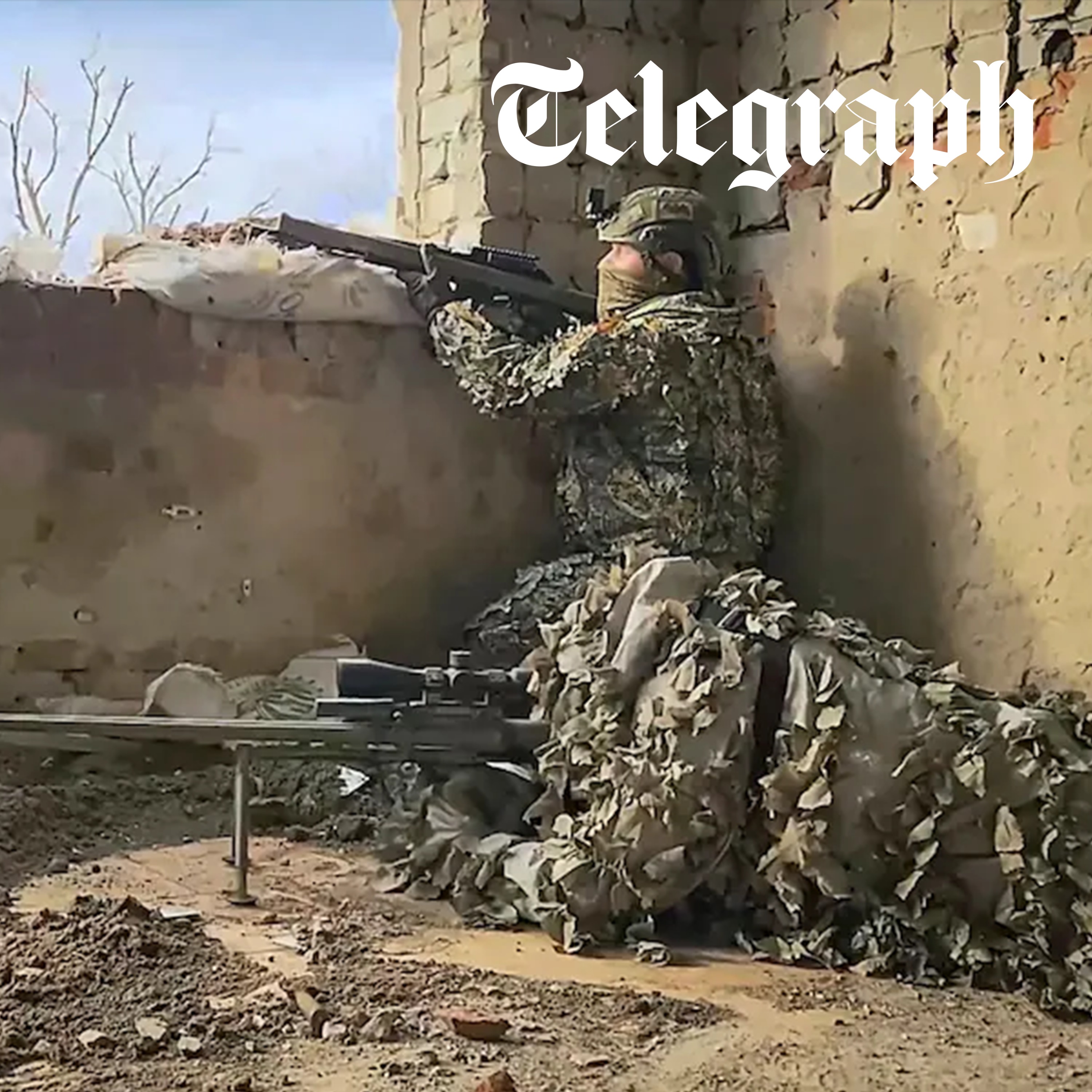
Ukraine: The Latest
Russia abandons ‘meat-grinder’ tactics to try four-man ambushes as ‘staggering’ scale of losses revealed
00:56:54
Loading summary
Transcript85 lines
- [00:04]
Sophia Yan
The telegraph.
- [00:11]
David Knowles
ACAST powers the world's best podcasts. Here's a show that we recommend. What makes a leader worth following?
- [00:21]
Joseph Lindsley
What should you really care about in your job? As technology is changing so quickly, is
- [00:26]
David Knowles
it just gonna be about machines talking to other machines? I mean, should you quit your job
- [00:30]
Sophia Yan
and start something on your own?
- [00:31]
Joseph Lindsley
What would that what does success and risk look like when we're all at the starting gate together?
- [00:37]
David Knowles
These are the questions we answer each week on Lead Human with Jack Myers and Tim Spengler.
- [00:41]
Joseph Lindsley
Join us each week and subscribe at your favorite podcast platform and YouTube.
- [00:47]
David Knowles
We'll tell stories, we'll hear from some of the best, and we'll try to figure this out together. ACAST helps creators launch, grow and monetize their podcasts everywhere. Acast.com Foreign.
- [01:07]
Francis Darnley
I'm Francis Darnley and this is Ukraine. The latest Today we assess the reported scale of Russian military losses since 2026 began and examine the new battlefield infiltration tactics Moscow has developed in an attempt to break through Ukrainian positions. We also take a closer look at the impact of Kyiv strikes on Russian oil refineries and investigate whether there's more behind London's apparent easing and of sanctions. Later, we explore how Putin's visit to Beijing is viewed in China, and ask whether the evolving relationship between Moscow and Beijing resembles a genuine strategic partnership or something closer to vassalage. Bravery takes you through the most unimaginable
- [01:50]
Sophia Yan
hardships to finally reward you with victory.
- [01:55]
Joseph Lindsley
The Russia does not want peace.
- [02:06]
Sophia Yan
If I'm president, I will have that
- [02:07]
Joseph Lindsley
war settled in one day, 24 hours.
- [02:10]
Francis Darnley
We are with you, not just today or tomorrow, but for 100 years.
- [02:19]
Joseph Lindsley
Nobody's going to break us. We are strong. We are Ukrainians.
- [02:25]
Francis Darnley
It's Thursday, 21 May, four years and 86 days since the full scale invasion began, and today I'm joined by my Telegraph colleagues Alex Nicol and Sophia Yan, and my guest, American journalist Joseph Lindsley, who has been reporting from Ukraine ever since the invasion and as a former Fox Network man, now works to change MAGA minds. But first, as ever, the latest military and political updates. Since the beginning of 2026, Russia's total losses have exceeded 141,500 military personnel, of whom more than 83,000 were killed. That's according to Kyiv's commander in chief, Oleksandr Syrsky. He's revealed those figures in a report at a Ukraine NATO Council meeting at NATO headquarters in Brussels yesterday, presumably utilising the data acquired from Delta and other battlefield management systems we've discussed in recent weeks. He said this I emphasise that active defence tactics allow us to wear down the enemy, regain ground and inflict maximum losses on the enemy. Every day the Russian army loses at least 1,000 soldiers killed or wounded. He then added that Ukraine's unmanned systems units have been essential to this effort and largely as a result of its work, Russia has been losing more personnel than it can mobilise. You'll recall that back in March, President Zelenskyy claimed that out of 100% of losses, 62% are killed and 38% wounded now, a ratio of nearly 2 to 1. If true, Syrsky's figures from this week equate to a slightly lower percentage of 58% killed to 42% wounded, but that is still considerably higher killed than in previous modern wars, one of the consequences of the increased accuracy afforded by drone warfare now going to the front lines first, Ukrainian forces claim to have now cleared most Russian positions within Kupiansk in Kharkiv Oblast. A company commander operating in that direction reported two days ago that Ukrainian forces killed or captured the remaining Russian sabotage and reconnaissance elements operating in the city. As Dom has talked about before, Kupiansk is one of those sectors where Russian troops have infiltrated in smaller groups, utilising gas pipelines rather than the so called meat wave assaults that we are all familiar with. Verity Bowman here at the Telegraph recently wrote an interesting piece on this subject with footage and diagrams showing the development and significance of this new warfare based on infiltration attempts in small teams. As she writes, they move on foot, often at night with minimal radio contact, probing for gaps in Ukraine's front line and slipping through unseen. Their mission is to hold their hidden positions behind enemy lines and guide more small groups through the same gap to create a force large enough to launch an effective attack on Ukrainian positions from the flank or the rear. The goal is not to win an instant firefight, but to establish a presence deep enough to threaten enemy positions from unexpected directions, forcing defenders to fight a war on several fronts. The tactic has been evolving in response to changing battlefield conditions for some time, but appears to have been used more and more in recent months now, as experts like Keir Giles underscore. In that piece, Verity wrote, the shift away from human wave assaults is not because Russia has found the scale of its casualties inconvenient, but is more likely to reflect the fact that small group infiltration has proven to be far more effective as a means of taking ground on a battlefield field that because of ubiquitous drone surveillance is far less densely occupied. But turning to the air war next, a Russian oil refinery in Syzran Samara oblast, more than 800 km northeast of the Ukrainian border, has been struck in an overnight attack with footage recorded and shared by locals showing it ablaze. The governor there claims two were killed. One video shows what appears to be a UAV brought down by electronic warfare and then exploding when it falls out of the sky and hits a house. I think it's worth us taking a moment to tally up the Ukrainian strikes this month alone. So on the 1st we had Tuapse refinery. As we talked about in great detail. On the third, Primorsk oil terminal. On the fourth, Samara refinery. On the fifth, Kurishi refinery. On the seventh, Perm refinery. On the eighth, Yaroslavl refinery. On the thirteenth, Taman oil terminal. On the fifteenth, Ryazan refinery. On the seventeenth, Moscow's refinery. And on the twentieth, Koustovo refinery. Now, according to Reuters, all now of central Russia's major oil refineries have completely halted or rolled back production following these recent strikes. Kharishi, that I just mentioned, one of Russia's largest, has been shut down since May 5th. The impacted refineries account for 30% of Russia's gasoline output and 25% of its diesel. Now, a relatively low number of long range attack drones were fired by Russia overnight. About 117, with 109 reportedly stopped by air defence. That's a 95.6% success rate. But I think we should stay with Russian oil for a little bit longer. Yesterday we brought you that breaking story that the British Prime Minister was under attack for buying dirty Russian oil after the UK was seen as quietly relaxing sanctions against Moscow. Well, Alex, you were reporting that yesterday, but there have been some updates on this since our broadcast. Where do you want to take over now?
- [08:27]
David Knowles
Yeah, so after recording yesterday, went back into the newsroom, logged back onto the computer and there was a sort of flurry of updated headlines from several news websites. Also there was a slight confusion about whether the government had in fact installed a new sanctions package. Where are we actually buying oil, etc. So I dove back into the quite fiery PMQs that we had yesterday and saw the clip from Chris Bryant, who was Trade Minister, who spoke after Zakir Starmer. And essentially he became the sort of fall guy and said there's been a massive miscommunication. The message that we put out is that we're actually buying oil, etc. From Russia, but actually there's a whole raft of sanctions and we're weakening the regime and not strengthening it. And then they continue along this line. That was just all miscommunication and everything was going as normal, but this isn't quite the case. So what actually happened after this is then there's an exchange between the Ukrainian government and our own government, Downing Street. And the Ukrainians were pretty diplomatic in their response. They were overall disappointed, but in a way almost understanding. And I imagine there was some pretty panic phone calls amongst British circles and meetings going on behind closed doors. Now, the reason why there's been this sort of confusion, I think to understand it we need to go back in time slightly. So if we go back to 2022, December, the British government imposed sanctions on the import of Russian crude oil and oil products.
- [09:51]
Francis Darnley
I remember.
- [09:51]
David Knowles
Yeah, yeah. So very easy. And that's invented by lots of other countries as well. Fast Forward again to 2024 and a report comes out that shock the Russians have found a loophole and are still managing to export their oil and profit from it. And it turns out they're doing it through third party countries. So India, Turkey, where they're sending the oil that's being refined into jet fuel and then countries like the UK are still importing it to the tune of billions of pounds worth. So serious, like fuel for the Russian economy in 2025. The labor government then decides they want to announce a new raft of sanctions on the Russians. And this is a huge variety of things, different products, things like uranium, other forms of tech, but also mainly or centrally, at least for this story, is that the closing of this loophole of using third party countries to, to essentially get jet fuel to countries like the uk, this then takes almost a year to implement. So fast forward again to this week and the government discusses them again and they say, right, we're going to launch these new sanctions green light. And they do. So there is a raft of sanctions which are now being implemented about those other products that I mentioned that in
- [11:02]
Francis Darnley
a sense have been signposted a year before.
- [11:04]
David Knowles
Yes, exactly. But what they also say is that whilst our intent was to put sanctions on these products coming from third party countries, we're not going to do that now. So we can call that a waiver, watering down or a footnote, whatever you want to call it. So in summary, currently what is happening is, yes, the government has put across a new package of sanctions, that is true, but as it stands, the UK is still allowing the import of products, oil products made from Russian oil via third party countries and they're going to review this every few months and that allows them to say that they're going to potentially phase it out. The other package was or license they've issued was to do with LNG being exported from two separate terminals in Russia. And that won't be reviewed until January next year. Now if you're in Parliament every few months or January next year, it may not feel like a long time. But if you're in Ukraine facing another summer offensive or another winter under siege, that is a long time. And if you're in the Kremlin, you're thinking about the profits from that amount of time. So in summary, we're still allowing the import of these oil products via third party countries, therefore allowing the Russian economy to profit and therefore their war machine to benefit. And overall, we're letting down Ukraine. We've said that we're going to sanction issues like this and, but we're not following through yet. At the same time, as part of this strategy, Ukraine's long range sanctions, which they're as you clearly listed, doing a really good job on, we're not and we're not holding our end of the deal. So overall it is a disappointing result. And I think the government, the UK government tried to smoke a mirror the whole situation last night by saying it's a miscommunication. Overall, they're doing as we imagined yesterday in the original pod.
- [12:53]
Francis Darnley
Interesting. So thanks for talking us through that complicated situation. So basically they are easing the sanctions, but it was the confusion came about because of the announcement of the sanctions that were being input that had been announced a year before. Yeah, that clears that up.
- [13:06]
David Knowles
No, it's, you know, obviously they couldn't have predicted the Iran crisis.
- [13:10]
Francis Darnley
Well, I was about to. That was going to be my next question is was this is basically these waivers that have been thrown in, is this because of the war in Iran?
- [13:17]
David Knowles
Yeah, I mean we've seen discussions about the price of jet fuel in particular and they're worried about that and they're trying to combat domestic pressures by I guess, taking off the sanctions. So for a government that is so keen on taking a moral standpoint, it seems slightly at odds that they're going to give up on these sanctions just because they need to ease their own situation back home. There's room to debate on that one. But yeah, not great from Keir Starmer and his government.
- [13:44]
Francis Darnley
Well, as I say, thanks very much Alex for talking us through that. A couple more diplomatic updates from me before we hear from Sophia for her take on China's current perspective on the war and its relationship with Moscow. We've discussed this one before. A proposal being discussed within in the EU for some kind of associate membership for Ukraine, which would allow participation in EU meetings and events, plus some security guarantees, but without voting rights. There are reports today that Germany's leader, Friedrich Merz, has written to EU members urging them to accept Ukraine almost immediately as a member with such a status. Problem is that even that associate membership is controversial, let alone full membership one day further down the road. And the Ukrainians themselves are reportedly sceptical. They want all or nothing, at least publicly, fearing that a halfway house is simply not enough. So we will of course, continue to monitor that. And just lastly, to end these updates with a bang, or not, as the case may be. Russia and Belarus has just begun joint nuclear weapons drills this week, citing a threat of aggression. They actually end today and have led the NATO Secretary General, Mark Rutte, in response to questions from journalists, to say that if Russia ever use these weapons against Ukraine, the reaction from NATO will be devastating. The real significance of this, though, is that there remain concerns that Belarus is being drawn deeper into the war, expanding military infrastructure that could support future Russian operations against Ukraine or indeed NATO's eastern flank. In fact, only yesterday President Zelenskyy said that there are concerns that Moscow could seek to open a new front north of the capital while involving Belarus. It is precisely from there, he said, that Russians are considering scenarios for additional attacks against UKRA targeting our northern regions. Lest we forget that it was from Belarus that Russia invaded in the full scale invasion in 2022 in that northern axis. But for another big story this week, let's go to the Telegraph's senior foreign correspondent, Sofia Yan. Now to further unpack Putin's visit to China from a slightly different angle. Well, Sofia, it's great to have you back on Ukraine. The latest. I know you've been doing a lot of work with Iran. The latest, our sister podcast at the moment. So thank you very much for taking the time to talk to us today. Now, we were hearing from J. Kilner yesterday about Putin's visit to Beijing and the significance of this for the Russians. But we thought this was a good opportunity to reflect on China's evolving position around the war in Ukraine and what is in this meeting and of course, President Trump's meeting previously for them. So that feels like a good sort of place to start. I mean, what was your reaction to Putin's visit? First of all, what did he get out of it and who's benefited him more? Is it Beijing or is it Moscow, Sophia.
- [16:32]
Sophia Yan
Well, it's an interesting moment for the China, Russia relationship. First Xi hosted Trump, then Putin. Next, she is potentially due to visit North Korea as early as next week. And this is on the back of hosting a spade of European leaders recently. It looks great for Chinese leader Xi Jinping this place to his advantage at home and abroad as the guy who can talk to all the other guys. Trump, Putin, I mean, these are people who are at odds most of the time. And all these countries need China for different reasons. The US Wants China to do more to push Iran to resolve the war in the Middle East. Russia relies on China as an economic lifeline under sanctions. North Korea needs China, one of the big world players to make the hermit kingdom seem less like a hermit. Also, economic ties there have helped North Korea weather sanctions. In this time of fractured global order, it certainly means something that there is someone who can talk to everyone and possibly be a go between. But there is a question of how much China is willing to stick its neck out, how much it's willing to be the go between. And the short answer to that is that Beijing will only stick out its neck and pass along messages, for instance, if it's to their benefit.
- [17:36]
Francis Darnley
Well, I wonder if we can bring in a story here that's been reported in Reuters this week, an exclusive for them looking at China's involvement in assisting Russia in Ukraine specifically. I mean, perhaps you could give a summary of the story first of all, but then your reaction to it.
- [17:52]
Sophia Yan
Yeah. China's armed forces secretly trained about 200 Russian military personnel. Sometime late 2025, some of those Russian military personnel return to fight in Ukraine. This is according to European intelligence agencies and documents reviewed by Reuter. Now training Russian military personnel at this operational and tactical level. This means that China is far more directly involved in the war in Ukraine than previously known. It's significant information to emerge because Beijing has continually said that it remains neutral in this conflict. It keeps presenting itself as a peace mediator, and it adds to a growing body of Chinese Russian cooperation that clearly has boosted Russia's ability to continue its invasion of Ukraine. Now, there have been joint military exercises between the two countries since the invasion began in early 2022. China has also over the years, increasingly exported goods like drone parts, machine tools. I've reported on that a lot for us at the Telegraph. These are items that allows Russia to
- [18:51]
Francis Darnley
continue about to mention it.
- [18:52]
Sophia Yan
Yeah, yeah. I mean, these are things that Russia needs to continue producing defense goods so that it can continue fighting in Ukraine. So China has not sent full on Weapons, they're sending everything that Russia needs to keep making them. And this particular area of trade between the two countries has only grown since 2022. So what it all means is that it gives China still plausible deniability. I mean, Beijing's perspective on this training agreement, I mean, these were specific events that occurred. There was a lot of training over drones, electronic warfare, army aviation, armored infantry. The Reuters report is really worth a read for listeners because it goes into specific detail on some of these trainings that took place. But really what this is showing is that from an outsider perspective, it looks like China's getting a little bit bolder, taking more risks in what it's willing to do when it comes to Russia. But Beijing's take on this is that military to military cooperation, mill mill cooperation is in the regular course of bilateral relations. China and Russia have been doing this for a while. Beijing's stance is, okay, training may have happened, but who are we to say what the Russians can or cannot do after they leave our soil? We don't meddle in internal affairs in other countries. This is always what Beijing says. Where relations are headed in the long term between the two countries is really about asymmetry. The more Russia depends on China, the more powerful China becomes. We've seen that in the trade relationship. We've seen that diplomatically as Russia's become so ostracized on the world stage over Ukraine. And one last thing to note here is that the Chinese military does not have experience in modern combat. They have a very serious interest to learn from the current theaters of war, whether that's Ukraine or Iran. And so this is an opportunity where China does need and want to have these exchanges to boost its own capabilities. China has fearsome numbers, 2 million troops, the world's largest military. They've got so much kit, but can they use it? And can they use it? Well, this is something that even Xijin doesn't necessarily know. So they need to train their own personnel as well. And these kinds of exchanges actually do help Beijing to develop further.
- [20:51]
Francis Darnley
Yeah, it's a crucial point. And of course, that was one of the concerns about North Korea's involvement in the Kursk operation as well, is that's gaining valuable intelligence not only for the North Koreans, which is relevant threat in the Pacific, particularly to South Korea, but also as well, that information being passed on presumably to the Chinese too. I mean, you've alluded to it there. Sophia, I'm fascinated in your perspective on this. You know, the Russians, as James was talking about yesterday, big up this relationship between Xi and Putin. They see it as a special relationship and a hundred year partnership. This is the term that's often being thrown around. But at the same time, there are those analysts who say that really this is becoming almost vassalage, that Russia's dependence on China is such that really this is not a relationship of equals. This is very much becoming something very different and much more negative from Russia's perspective. I mean, what is fundamentally, what is your read on this and the state of play at the moment? Is this essentially the great decline of Russian power as a consequence of the sheer cost of this war in Ukraine?
- [21:53]
Sophia Yan
Well, I think from the Chinese perspective, there's a moment here where China can take the lead. Both countries are like minded. Xi and Putin share the same view. They're frustrated by the US Dominating global order. There's a lot of spectacles in the relationship. Yes, they call each other, they're longtime friends, they give each other gifts, they toast each other on birthdays. It's like a, this bromance on the world stage between these two countries that share a very long land border. They're neighbors too. But the balance of power has shifted significantly. Russia used to be more powerful. Now it's China by far. And this meeting comes at a moment where that relationship has never been more lopsided. Russia is unhappy with being the junior partner, that's clear. I mean, it's got a larger nuclear arsenal, for instance. In some ways it's still perhaps more important or bigger in some respects. But the dependency that Russia has developed over time on China is really a significant part of the relationship to note. And this is something that really plays well in China's advantage because China sees itself as the leader of this new multipolar global order, one where the US no longer gets to call all the shots, as it has been for so many decades, but where many more perspectives, many more voices, many more nations, but with China still at the forefront leading the way. So this is where things are going, I would say, you know, the, the Russian perspective on this is that they do need some way to communicate out to the rest of the world. And at this particular moment, China has become really a support for Russia.
- [23:23]
Francis Darnley
I have to ask, given what you've just said, your assessment of Trump's visit there. I mean, I thought in years gone by, it would have been impossible for a US President to have agreed to a visit to Beijing knowing that Putin was going to be going so shortly afterwards, because the optics would have been seen as too negative.
- [23:39]
David Knowles
But.
- [23:39]
Francis Darnley
But we're in A different world now. I mean, who benefited more, do you think, from that visit by the US
- [23:44]
Sophia Yan
President between Trump and Xi from optics, it does look like China in the long term wins out of this. There were some areas where the two countries could agree, which is really on some cessation of hostilities in Iran, for instance. But the focus from the US Side was more on the Middle East. That was in a very brief statement out of the White House. Whereas on the Chinese side there was a long statement. And for them, their point, the main point they wanted to make make was actually on Taiwan. They were making clear that that was the reddest of red lines. They couldn't, that the US Couldn't cross, that it's a matter of domestic interest, not one for the world to debate or to think about or to get involved in. And it's not necessarily new language. Certainly China has become sharper on Taiwan in its rhetoric over the years. It's not necessarily a big shift. But that China took the moment in this Xi Trump meeting to make that clear yet again is of note. And Trump going over to China, what the US has really wanted all this time is for China to use its relationship with Iran to try to push Iran towards some sort of resolution in the Middle East. Again, whether or not Beijing first has the power to do that and the influence to do that, and the wherewithal and the means, the willingness to do that is up for debate. Again, China does not want to get involved so materially, despite saying that it is an actor that can help out on global matters, because this is very messy. The Middle east is a very messy situation from Beijing's perspective. What they want is for global trade to resume, for energy supplies to be stable, because this is hurting their economy, too. And when there's economic stability, that can translate at home to political instability, which is a huge problem in the eyes of the ruling Communist Party.
- [25:25]
Francis Darnley
Well, you mentioned Taiwan there, and I feel like I have to ask you what the latest is on this. As you say, there has been over the last few years, increased rhetoric, to put it mildly, from Beijing. There are those who are still, still throwing around the prospects of some kind of blockade or even invasion I've heard put forward by 2027. I mean, how likely do you think that something akin to that is, Sophia, given that you've been following how the country approaches this country for so many years?
- [25:53]
Sophia Yan
Well, for China, they're definitely looking and learning at what's going on. They've had in the last couple of years a number of big military operations to really study carefully what just happened in Venezuela, what's ongoing in the Middle east, what's still ongoing in Ukraine. These are all very live areas that allow Beijing an opportunity to look at what other countries have in terms of their weapons arsenal, how the response is, how the US Is planning, what their operational capabilities are. This asymmetric warfare is an area that China can learn a lot from. Also, at the same time, Taiwan can learn a lot from this in terms of how Ukraine has gone up against Russia. The state David versus Goliath situation, it also gives Beijing pause. Looking at what has happened in Iran has made it very clear that if you start something the way that the US And Israel did in terms of going into Iran, starting this war against Iran, you have to be able to adapt and be flexible because what happens next will not be entirely in your control. Things can escalate as it has in Iran. This is now a conflict like that from the very beginning. Of course, experts are pointing out that there was no clear end date, but now that's become even more clear as we move on. And this is an area that China needs to be thinking about. It might actually be giving them pause on Taiwan because they will know very clearly that they cannot get into something where they don't necessarily see an ability to finish or to win with a victory that they can claim. On the whole, the timeline, this has been discussed a lot about whether China would move on Taiwan because the world is distracted or whether their thinking might mean that they move more quickly or sooner. When they do this, it will only occur when Xi Jinping decides that it's going to work out in his favor. And that timeline is dependent on a number of factors. The domestic situation, economically, politically depends on where he thinks the PLA in China, the Chinese military is. It depends on where things are with the world. I mean, there's a whole set of factors that go into that matrix for Xi's decision making. And I would say that, that it's not appropriate to look at this from the lens of, well, the world's distracted, so China might move. Really, you should look at the situation as to when China, when Xi thinks it will be favorable and to his advantage to move on Taiwan if he so chooses to go in that direction.
- [28:13]
Francis Darnley
But do you think that the US Position is relevant to that conversation? You were talking about the domestic situation in China. They're in economic, but Trump is not going to be around forever. Presumably, both Putin and Xi are thinking, well, if we are going to be making. Making moves to shatter Article 5 in the Russia case or to make a move on Taiwan in the Chinese case. We've only got potentially a couple of years to be doing this before potentially there's a Democrat in the White House or somebody who takes a slightly different, more hawkish view than President Trump on foreign affairs. Do you think that is a factor here in the conversation that's no doubt taking place in Beijing?
- [28:44]
Sophia Yan
You mean trying to take advantage of the fact that Trump is a destabilizing actor and trying to.
- [28:49]
Francis Darnley
Yes, and that he seems to be be far less inclined towards interventionism with respect to its allies than previous presidents.
- [29:01]
Sophia Yan
So from China's perspective on this, this whole situation, how unpredictable Trump is and how bombastic he is is something that's very likely actually to give Beijing pause because they don't know how he will react. Yeah, this runs counter to what you would think would be the case. But this Trump Xi meeting was really important for China because they basically wanted to have guardrails on the competition as strategic rivals or however you so wish to cast the US China relationship. They do see themselves as the leader going forward on the world stage in this, as I said before, the multipolar world. They see this whole situation these last couple of years as the US in decline as a global superpower. They are capitalizing the rise of the east, fall of the west. But they need some sense of the parameters around which to operate, love, stability. They want to know what to expect, they want to know how to position themselves. They put out these five year plans, they think in 5, 10, 15, 20, 25 year chunks. They want to know how to arrange themselves to win in 20 or 30 years time. I mean, this is why, for instance, now we've had a very deep debate on national security issues around critical minerals. The whole world is very reliant on China, for instance, on rare earths. This was something that China developed and invested in for decades, knowing that it was going to be an area of importance so the world to be reliant on China, and they are thinking that far ahead. So for a few years of instability with Trump, it could be an opening to act and maybe they could get ahead. But really, if you're thinking about how China has operated all these years, what they want to know is to be able to have as much of a sense of what might occur if they're going to do something that big, which would be obviously an invasion of Taiwan, if it gets to that point, would be a huge move on the world stage. And again, the US still has in law this Commitment to support Taiwan, to come to Taiwan's aid, to support in its defense. And so there might be different things that are being said now from the U.S. from China's side, but that commitment from the U.S. which is codified in law, which is different than other security agreements or PACs, for instance, this is something that was approved by Congress. This is something that the US has to abide by. So rolling that back is really difficult.
- [31:18]
Francis Darnley
Thank you. It was really fascinating hear your perspective on that. And of course, for, for people who want to follow this more in terms of the US position relating to Pacific and in the Middle east and do listen to around the latest, which sphere contributes to much more regularly. Before you go this fear, I have to ask, because it was a big story that you did for us this week, a really fascinating one, and may seem a little bit of a tangent from what we've just been talking about, but I think it's very, very interesting nonetheless. Perhaps you could just briefly summarize your work on Chinese surveillance and a recent revelation on that score.
- [31:47]
Sophia Yan
Yes. This week we appreciate. Published in the Telegraph and exclusive. Looking at the back end of a Chinese surveillance database in which I'm in. So this is a government database pulling a national level and local provincial level data tracking where foreigners are in China, what they're doing, what they're up to. So my record's in there along with that of other foreign journalists, foreign spouses of Chinese citizens. There was a category marked fugitives, which is obviously problematic because China deems people of interest in, in vast ways. A political dissident, for instance, is in a category of problematic, as would a serial killer. So this was very interesting. I've always known that China was surveilling me, for sure. I know because I was always, often facing obstruction in my reporting in the fields I was followed. Sometimes I would be stopped en route to report. Sometimes I remember sitting, I was on a flight once and this guy, this plainclothes agent, sat down next to me and I was, I was like, well, you don't look like a regular passenger. They just walk in funny ways, move in funny ways. They're not so smooth and slick. So in practice, I and other foreign journalists operating in China, of course, always knew that the state was keeping tabs on us because they wanted to restrict what we could do and what we could see, what we could report and to intimidate us, to try to push us not to do things and to report on issues like human rights abuses that the government would see as unfavorable. To its own narrative. Right. It counts. Counters their narrative of being a happy, wonderful, growing global superpower that's benevolent and in the interest of the world. This is how Beijing casts itself all the time. So what was interesting about these documents in this leak that I was looking at at this database is that it's a proper back end. Look at how China is able to take in all this data from security cameras from entry points in China has become very common to enter places like you go to the gym or, or you go skiing at the ski lift. There's like a camera that'll capture your face. Data points like that, even if you've been captured on camera with the same person more than once. Basically it's a way to bring in all the data that they do have and to make it usable in a, in a way that's practical for China's security apparatus and for them. They're interested in tracking certain people that they deem of interest, like me. And it was just, it was fascinating because the question has always been, well, they've got all this data, data, what can they do with it and how usable is it? And so now the answer is that this kind of platform shows that the Chinese government is able to cull all these different data points and find a way to make it useful for analysis. I will note because we're on Ukraine, the latest, there were a few groupings, other groupings other than what I mentioned that were really interesting. There's a way to break out, for instance, citizens of five eyes countries. There was also a way to break out specifically Ukrainians, Russians and Belarus Russians. So unclear why China's interested in these groups specifically. You can make your own assessment on that. But it was very interesting to note that those were groups that they had made available to separate out for analysis.
- [34:41]
Francis Darnley
It's an extraordinary report and of course we will link to it in the show notes. And what really jumped out at me as we were chatting about when you published it is the, the way in which it actually visualizes the web of the connections between people. So it will say one person is connected so and so who also knows this person who happens to be married to this person. And just seeing that laid out almost presumably automatically by the system was terrifying, as was being able to see that it says that so and so was spotted at this intersection 200 times between these dates. And you can tell that this is automated, that this isn't somebody manually inserting this. And I think that certainly my position when I was reading this story was how easily presumably this technology would be able to be rolled out elsewhere as well.
- [35:25]
Sophia Yan
Yeah, the relational mapping tool is really interesting because you can then see over time you can cast some sense of behavior patterns. I mean, looking at some of those individual records, you don't need to know who that person is, but you can basically tell that person lives in this one place because they were exiting certain areas or spotted at certain intersections. And so it's this holistic view on patterns of movement that the Chinese government can track. And it, it looks like any other data dashboard when you log in first. It's called a Dynam dynamic control platform for overseas personnel. This is how they've translated from the Chinese to the English. It's bright blue. You log in and then this big dashboard pulls up with maps and graphics and you can drill down. There are bar charts you can make. There are pie charts. You can have to look at what it all means. How many people on work visas, how many people on other kinds of visas who are colleagues, if you've been seen on camera together. I mean, all of these little dots that then connect into a way that makes it easy to visualize and understand what is happening on the ground amongst the foreign community. Now, there are likely databases that are similar for Chinese citizens, also something that we know in practice in terms of how they're treated at home. I just wanted to comment on the point that you had about China being able to roll this out. I've been thinking about this and talking about this for a long time. I've always joked about it as dictatorship in a box, per se, that Chinese tech companies can sell all of this. And they have started to do this for years already. We've had Chinese, Chinese security cameras sold to other countries. They're used widely, including in Western nations. And there are very real concerns about what that means going forward. Some of the technology that China uses for its great firewall, the censorship of the Internet that's been rolled out to other countries, that's used now widely in many places. And that experience is something that can be then just taken out of China and implemented abroad.
- [37:11]
Francis Darnley
Yeah, absolutely. Well, as I say, we'll link to that in the show notes, a really important piece of reporting. Thank you so much for your time today, Sphere. It's been fascinating to talk to you and I'm sure that we'll hear again from you very soon.
- [37:21]
Sophia Yan
Thank you.
- [37:23]
Francis Darnley
Well, thanks very much, Sophia, for your time. Let's go to our final guest of today, who's in London for, well, the first time, leaving Ukraine for Many, many years. Somebody who will be familiar to some viewers and listeners at home. Joseph Lindsley, thanks for finding the time to come on Ukraine, the latest today. There's certain angles that we're going to cover together, together here. But first of all, I think it's worth hearing your life story, as it were, at least the relevant bits of it for our purposes before you ended up spending time in Ukraine for as long as you have reporting on the war.
- [37:57]
Joseph Lindsley
Yeah. Francis, great to be here in London. And I'm glad this is one of my first stops here at your wonderful podcast, which has been such a lifeline to everyone in Ukraine. And until last week, I was in Ukraine every single day of the full scale war. And before that, in 2020, I flew from US to Sweden and to Ukraine to give a lecture at a university. And I planned to stay there for two weeks. And then of course, everything shut down for the pandemic. And the lecture was actually because of my previous career, which I had escaped from Fox News. I was mentored by the founder of Fox, and Showtime had just come out with a TV show called the Loudest Voice, where Russell Crowe played my boss and some other guy played me. And I didn't want to be in America when my life was being told on the screen in that way. And so I just, I was traveling around and I, I came to Ukraine. I'd been there before, and when everything began to shut down for the pandemic, I said I had a suspicion that Ukraine was going to be probably one of the freest and best places to be during that time, because I already got to know the Ukrainian devotion to freedom. And I think part of this is born from their Soviet experience. But people knew how to survive despite the rules. And then January of 2022, it was clear I had a lot of friends from my past experience who'd worked in the Pentagon and other places like that, and we knew Russia was going to invade. A lot of Ukrainians didn't want to believe it. And I said, you know, I've had this nice break here and maybe it's time I get back into doing something with a real purpose and get back to journalism. My whole life I sought to be a journalist. In fact, the Daily Telegraph ever since I studied in London in 2004 was my favorite newspaper. But I had been pulled up into the. I started my career at the weekly Stuff magazine, and then I was pulled up into the ranks of News Corp and Fox News. And Roger Ailes told me he was teaching me to become him. One day, the founder and chairman of Fox, a guy who got Nixon and Reagan elected. And so for two years I had this kind of very intense experience. And for various reasons, I wanted to get out of there. And when I said I quit, they said, you can't quit. So I escaped in a car chase to the Hudson Valley. And so I had sort of left journalism. But being in Ukraine at the end of the pandemic, when we knew the war was going to happen, I said, maybe this is my moment to get back into the profession that I loved. And so from the very first day of the full scale war, like everyone, we had networks of people, we were volunteering, we were buying trucks and boots and everything. But I began reporting on American radio Chicago, WGN Radio, every single day. And that went on for a few months. And after the first three months, it coincided with there was one city in Donbas falling just about every week. And finally the American Himars arrived and Bakhmut was due to fall. And I was actually, I was going to Bakmut at that time I was based in Dnipro and Bakhmut was due to fall. But when the Himars arrived, Bakhmut held on week after week. And that coincided when the global media started to lose, except for you guys, started to lose attention. And I realized if I wanted to keep my daily radio show, I was gonna have to fight for it every single day. It was Monday through Friday. I never took a day off for three years, the first three years of the war. As long as that audience in Chicago, America's third biggest city, was willing to listen, I was going to be there for them. But I realized I had to really respect the audience so I wouldn't lose them. So, for example, on Mondays, I know people are driving to work in Chicago and maybe they need some inspiration. So if I could, I would try to have inspirational stories because Ukraine is full of those. It's the world's best self help book in a way. And so I really was attentive to the audience. After October 2nd 7th, my 10 minute segment was cut to 5 minutes. And I said I saw what was going to happen. Russia was very happy after October 7th because Ukraine suddenly fell out of focus. And I said, I cannot let this happen. And so I was scrambling to see what I was going to talk about the following Monday after October 7th. And I found that Israel's national anthem was written by a guy from Lviv. And I would always scramble and find some hook to Ukraine. And we were back to 10 minutes a few days later. Later, it takes a lot of devotion to the audience and to the cause to keep it going. So I kept it going. And then at the end of 2024, after Trump was elected, my show was canceled and we don't quite know why. And instead of leaving Ukraine, that's when I said, okay, there's a new level to the mission here because the fight's not over. And so my team and I created Under Fire News and the mission became clear to me starting in 2025, especially with that Zelensky Trump Oval Office meeting, that my mission the past year has been to help people in Kiev and pro Ukraine voices understand how to talk to America and to maga. And that remains the mission to this day.
- [42:25]
Francis Darnley
Yeah, well, that's, I think, the most fascinating angle for us to talk about today. There are so many other things that we could talk about, but that seems an important one. And you saying to me before we started coming on air that Chuck Carlson, you know, you would have been, have been believing some of the things that we've talked about over the years that Tucker Carlson has been saying about Ukraine and Russia were it not for the fact that you found yourself in Ukraine and you've, to use your own words, seen the light, as it were. I mean, when you reflect on that transformation in terms of an understanding and a perspective and a shift, a quite dynamic shift in perspective, I think it's, it's fair to say. What do you account for being the main reason for that shift of understanding? Why do you think that so many people don't see it the way that you do?
- [43:05]
Joseph Lindsley
So I put myself through this thought exercise many times. 2023, 2024. Why are so many Americans, American conservatives in particular, why do they not understand what's happening here? Ukraine, I mean, it's probably the most traditional, freedom loving, actively Christian country in Europe. I mean, Lviv here in your map there, Lviv is a more Catholic city than almost any city in Europe. Americans don't understand this. And I realized that if I had never been to Ukraine, the first time I visited was 2018amid world travel, I would have been opposed to Ukraine for this reason. I started my career working for Bill Kristol at the Weekly Standard, the people that created the Afghanistan and Iraq wars. And over the years, I and then also many friends who served in the American military, we began to question all that. The American forever war machine. And if I had never been to Ukraine, I easily would have said whenever Washington speaks about war, we got to the point like we believe that under George W. But we're done with that. And there's a deep skepticism about this, and it's a righteous skepticism, and the Russians have exploited it. So if you don't know anything about Ukraine, it's very easy to fall into that trap. And that's why one thing that we started to do, my team and I and our whole coalition working for Ukrainian victory as journalists in 2025, after the Trump Zelenskyy meeting. When Trump came to power for the second time, he kept saying this, saying, stop the killing. And I hated that phrase because it equivocates between Ukrainians and Russia. Russians. Or when people say the war in Ukraine, it makes it sound like a tornado, you know, no, it's Russia's war, and we have to show the agency clearly. But Stop the killing was very effective for Russia because it made Ukraine equally culpable. European leaders thinking that the best way to influence Trump was to kiss up to him, they would just repeat, stop the killing. Stop the killing, which was not effective. And so we began to see this shift to saying, stop the Russian war movement machine. And the reason why that works so well, because Russian propaganda understood, because Americans were so disgusted after 20 years of Iraq and Afghanistan, for what if supporting Ukraine meant supporting forever war, but when you frame it as stop the Russian war machine, supporting Ukraine means stopping forever war. And once we began to change that language, we created an opening to begin to influence people in maga. And I go on podcasts to argue with Maga people, usually 3am Kyiv time time. And when I use that language, I'm able to get them to listen at least for a few minutes and then make the case in additional ways.
- [45:31]
Francis Darnley
Do you think there has been any real positive shift within MAGA with relation to Ukraine over the past couple of years or so that is having a meaningful impact in Ukraine? Or do you see it really as just trying to hold back an inevitable decline of not only the Ukraine theater, but also how MAGA and the White House see NATO.
- [45:56]
Joseph Lindsley
Yeah, I think that strategically there's a lot of work that needs to be done. I think we're very complacent often on this strategy. So, I mean, firstly, everything you guys were just reporting on, Ukraine is doing well in many ways, and Russia's looking weak. And that May 9, so called victory Day Putin looks pitiful, but everyone on our side tends to get complacent. But that's when Russia excels at its propaganda, the efforts, and they find new opportunities. And I can plot every single time Ukraine has carved out an advantage, whether it was when the ATACMS arrived in September of 2023, right before October 7. Or the cursed concursion in 2024 or now. Every time Ukraine has carved out an advantage, instead of doubling down and seizing that moment to win, we sort of get complacent. Oh, things are going great. And then things start to happen that are not in our favor, like Sir Kerstock armor easing up in the sanctions.
- [46:44]
Francis Darnley
Ukraine becomes a victim of its own success, in a sense, because the west
- [46:47]
Joseph Lindsley
allows it, because we're not sharp on. You know, the Russians are the very best at communicating. And so there are moments when Trump has started to have an opening of understanding to Ukraine. And I've been trying to shout from the rooftops, I guess not loud enough.
- [47:00]
Francis Darnley
So you think Trump can be swayed in a positive direction for Ukraine? You're still a believer in that sense?
- [47:05]
Joseph Lindsley
Yeah, I think we have to be. But I think we see seen evidence of this since February 28th, since America's war in Iran began, there's been all of a sudden sort of a newfound appreciation for Ukraine. Right. Or we could seize the advantage and we can make the case to Trump and Trump people, look, all of your enemies are actually pro Russian. They don't see that. And, you know, my time at Fox working for the boss and the chairman, because I went in there thinking the world was much more complicated than it is. No, they're just regular people and they're busy and they have their own paranoias and biases, and there's a lot of things they don't know. Probably the supreme example of this is the story of Burisma. Pretty much everyone calls this a Ukrainian energy firm. When I debate MAGA people and I go on these podcasts, and I've also coached a lot of people, even the Ukrainian Olympian with the helmet that he was banned, we've been coaching him on going on podcast. And we can sell Ukraine and we can get people to believe in Ukraine. MAGA people, people. But at the end, they'll say, we even can get over the forever war stuff by saying, stop the Russian war machine. But we always hit this barrier. And I think people here in Europe don't realize the hold that this one particular barrier has in the American imagination. The MAGA people will say to me, you know, Joe, I'm seeing your point, but Joe Biden's son worked for Burisma, and that's why he was helping Ukraine. And in the end, I just can't get past that.
- [48:27]
Francis Darnley
So when you reflect on your time in Ukraine, That's a long time, a long period. What are the biggest things that you've learned about the country? And, of course, the corollary to that, you're now out for the first time for many years. What's it like being out? It must be a pretty. Pretty shock to the system.
- [48:45]
Joseph Lindsley
Yeah. You know, I'd heard from so many Americans and Brits and others who've come to Ukraine to volunteer. They all tell me that they're incredibly sad when they leave. And in Ukraine, the one thing that you have is the solidarity. You know, I think about after a missile attack. I mean, I think I spent a lot of time in 2023 and 24, especially in Kharkiv, 30 miles from Russia. And that city, Kharkiv is. I've never seen a cleaner city in the world. And even amid regular bombings, they're rebuilding. I mean, there's. That's why I hate these rebuilding conferences. Ukrainians are rebuilding every day. Regular coffee shop I would go to in Kharkiv. I was two blocks away when a missile hit, and in the middle of the night. And by 8am you had to step over glass, but there were worse working and still going. And there's this when you walk into after a night of a massive Russian air raid with drones and missiles. And as I talk about it, I can still hear. Every single one is in my mind, contained and remembered forever, even though I've been through scores of them. And this applies to most. You know, you go, maybe you have 20 minutes of sleep, then it stops at 7am and I go to the coffee shop at 8am and you know that everyone there has just been through the same. Same exact thing. And that creates this incredible sense of solidarity that is unmatched. And it's been quite difficult for me, even here, just a few days in London, I speak in Ukrainian when I order coffee and I feel quite out of sorts. And so there's this driving sense of purpose, and that's what has enabled Ukrainians to survive to this. And I think this is where our intelligence in the west, especially the us, it always misses this part of the story. So in 2022, because I've been in Ukraine in the pandemic, we all kind of knew Russia was going to invade. We could see it. But everyone pretty much was assuming that Ukraine would fall, and I was confident that Ukraine would not. And I would go on American TV the week before I got kicked off because they thought I was crazy. You know, I kept saying, I've gone to Kharkiv two weeks before the full scale invasion. And I heard the stories of how they resisted in 2014, 14 with no resources. Russia tried to take over then. And I said, there's no way these people are going to fall. And this was a catastrophic failure of Western intelligence. And it's easy to know, to read the satellites and see what the Russian military is doing. But if you're, as an intelligence officer, if you're only in Kyiv and you don't know the place, then you're actually not intelligent and you don't actually know the mettle of the people. And to this day, Ukraine's key to survival. And this is what's also missed with the talk of drones. Drones, it's starting to break through a bit. But the fact Ukraine's drone innovation is a success because it's horizontal, it's not top down, and it's embedded throughout the country. And this is where Zelenskyy's gotten better about this. But when he was in the White House in October 2025, Trump was talking about Tomahawks and Zelenskyy says, oh, we have drones. And it was the worst thing to say because American defense experts, when Zelenskyy said drones, they're picturing some Walmart drones drone for a brilliant Tomahawk missile. But now he's gotten better at it. He's saying what Ukraine has, what I would call it, is this rapid iteration, tight feedback loop drone miltech ecosystem where the soldiers are, they need an update on the drone and they get it within hours or days. It's almost impossible for the west to understand. And then the American defense people who do understand it are terrified of it. And I've seen this a lot, lot. They want to hide that story because it means they have to rethink everything they're doing in the West. And so the essence of Ukraine is a story that still is not well told. And I've talked with senior Ukrainian officials who I can't name or I won't name, but to understand what they think their challenges are. And everyone confirms to me that while even the people in America who understand what's happening, like Rubio, they know Russia's bad, they know Russia's scary and has to be stopped, but they don't know why Ukraine is good. They come to Kyiv, they stay at the Intercontinental, they don't go beyond. And as you guys know, because you're deeply reported on it, this is a story of it's Ukraine and Russia are the two polar opposite ways to live on this planet and the rest of us are in the spectrum in between. Ukraine is a land of human agency and dignity. That's why the revolution. I mean, like I learned that the revolution was called that for a reason. Reason. This is a land where, yeah, people are pretty rebellious and they're hard to control, but they insist on their freedom. And Russia. So that's a completely horizontal society and Russia is a completely vertical.
- [53:13]
Francis Darnley
Well, thank you very much, Joseph, for your perspective of it going from the maga mine to a different perspective on this. It's very interesting and I think many people who are in Europe and indeed even in the United States who didn't come from that world view will find it very interesting hearing your perspective on on how they think and how they got to the positions that they did. So I appreciate that.
- [53:51]
Sophia Yan
Everything you want for summer is at Nordstrom rack stores now and up to 60% off. Stock up and save. Save on the brands you love like Vince, Sam, Edelman, Frame and Free people. Join the NordicLub to unlock exclusive discounts. Shop new arrivals first and more.
- [54:10]
David Knowles
Plus buy online and pick up at
- [54:12]
Sophia Yan
your favorite rack store for free. Great brands, great prices. That's why you rack Instacart makes grocery shopping easier.
- [54:21]
Francis Darnley
And just because you're not doing the shopping yourself doesn't mean you don't care how it's done.
- [54:26]
Sophia Yan
With Instacart Shopper notes, you can get particular about what you want right in the app, like rotisserie chicken that's extra crispy steak with marbling the Romans would have loved, and lettuce you'd actually pick yourself. Just leave a note for your shopper so they can get it right for
- [54:42]
Francis Darnley
you without having to ask.
- [54:43]
Sophia Yan
That way you can get groceries just how you like. Download the Instacart app and shop today. Foreign
- [55:00]
Francis Darnley
for our final thoughts. Now you are a listener to us, so you know the format here it is of course, the third Thursday of May and that being the case, it is Vishyvanka Day and for the benefit of our listeners, I'd say that Joseph is wearing one here and so was Krylo. Budanov himself has put out a video today showing wearing a very fetching one which you'll be able to see on the video version now. This time last year actually on Vishivanka Day, I went to a fashion show in London and I think, as I may have talked about at the time, the amazing thing about Vijyvankas is that the embroidered nature of the shirt is it's different for the different regions of the country. So each region has its own patterns and styles and you don't have to wear the particular part of the country that you're from, but it's known which parts which have a certain style to them. And so if you want to learn a little bit more about that, I'll link to the piece that I wrote at the time. Time for those who are interested. But Joseph, where would you like to leave listeners today? As our guest in the studio?
- [55:55]
Joseph Lindsley
I would say President Zelensky. The best speech he ever gave was his Davos speech in January of 2025. And we need to listen to what he was saying there. We are stuck in a loop. Russia commits an atrocity, America blusters and Europe has a conference and we have to get out of this. And Zelenskyy said Europe is stuck in Greenland mode forever hoping that maybe someday somebody will do something, something. And this ties to Vanka Day. We had this Russian Victory Day the other V Day. And Russia always controls the narrative. We need a ceasefire for they can have their special parade and we often hear about the history of that holiday and what I was pushing for as an example. We needed a ceasefire for Vanka Day. We have to be more active and aggressive. Instead of talking about sending troops to Greenland, talk about sending uniformed troops to Lviv to assess air defense, we have, we have to be bolder and to cross these red lines and to keep the enemy guessing and to keep some of our friends and allies even in the US guessing on our actions. That's how to break the loop. And then I think I'm confident Russia has not given up on its propaganda efforts in the US and as long as they haven't given up, it means it's not over and we can still change people's minds in the United States. That's my mission Under Fire News. You can follow us there. Instagram, substack everything.
- [57:07]
Francis Darnley
Thank you very much for your time today, Joseph. Thank you all very much for listening and watching around the world. Thank you. We'll be back same time, same place tomorrow. Ukraine the latest is an original podcast from the Telegraph created by David Knowles. Every episode featuring us in the studio. Maps and battlefield footage is now available to watch on our YouTube channel. Subscribe@www.YouTube.com crane the latest, there's a link in the description. You can also sign up to the Ukraine the latest newsletter. Each week we answer your questions, provide recommended reading and give exclusive analysis and behind the scenes insights, plus diagrams of the front lines and weaponry to complement our reporting. It's free for everyone, including non subscribers. You can find the link to sign up in the episode Description if you appreciate our work, please consider following Ukraine the Latest on your preferred podcast app and leave us a review as it helps others find the show. Please also share it with those who may not be aware we exist. You can also get in touch directly to ask questions or give comments by emailing ukrainepodelegraph.co.uk we continue to read every message. You can also contact us directly on X. You'll find our handles in the description. As ever, we're especially interested to hear where you're listening to from around the world. And finally, to support our work and stay on top of all of our Ukraine news, analysis and dispatches from the ground, please subscribe to the Telegraph. You can get one month for free, then two months for just one pound at www.telegraph.co.uk Ukraine the latest Ukraine the Latest was Today, produced by Rachel Porter. Executive producers are Francis Dernley, Louisa, Walter Wells and David Knowles.
- [58:58]
David Knowles
My name is David Knowles.
- [58:59]
Joseph Lindsley
Thank you all for listening. Goodbye.
- [59:09]
David Knowles
ACAST Powers the World's best podcasts. Here's a show that we recommend.
- [59:16]
Francis Darnley
I'm Kai Wright.
- [59:17]
Sophia Yan
I'm Carter Sherman. Welcome to Stateside with Kai and Carter. We're a new show from the Guardian.
- [59:21]
Joseph Lindsley
We're talking to big thinkers and the
- [59:23]
Sophia Yan
best journalists just trying to understand the
- [59:25]
Joseph Lindsley
world through smart conversations, conversation and honest reporting.
- [59:28]
Sophia Yan
We don't have billionaires telling us what to say.
- [59:30]
Joseph Lindsley
Stateside with Kyan Carter will come out three times a week, Monday, Wednesday and Friday starting May 13.
- [59:35]
Sophia Yan
Subscribe on YouTube or wherever you get your podcasts.
- [59:44]
David Knowles
ACAST helps creators launch, grow and monetize their podcasts everywhere. Acast.com.